WO2022123777A1 - 運転者評価装置、保険料算出システム、方法、及びコンピュータ可読媒体 - Google Patents
運転者評価装置、保険料算出システム、方法、及びコンピュータ可読媒体 Download PDFInfo
- Publication number
- WO2022123777A1 WO2022123777A1 PCT/JP2020/046317 JP2020046317W WO2022123777A1 WO 2022123777 A1 WO2022123777 A1 WO 2022123777A1 JP 2020046317 W JP2020046317 W JP 2020046317W WO 2022123777 A1 WO2022123777 A1 WO 2022123777A1
- Authority
- WO
- WIPO (PCT)
- Prior art keywords
- route
- driver
- evaluation
- vehicle
- road
- Prior art date
- Legal status (The legal status is an assumption and is not a legal conclusion. Google has not performed a legal analysis and makes no representation as to the accuracy of the status listed.)
- Ceased
Links
Images



Classifications
-
- G—PHYSICS
- G06—COMPUTING OR CALCULATING; COUNTING
- G06Q—INFORMATION AND COMMUNICATION TECHNOLOGY [ICT] SPECIALLY ADAPTED FOR ADMINISTRATIVE, COMMERCIAL, FINANCIAL, MANAGERIAL OR SUPERVISORY PURPOSES; SYSTEMS OR METHODS SPECIALLY ADAPTED FOR ADMINISTRATIVE, COMMERCIAL, FINANCIAL, MANAGERIAL OR SUPERVISORY PURPOSES, NOT OTHERWISE PROVIDED FOR
- G06Q40/00—Finance; Insurance; Tax strategies; Processing of corporate or income taxes
- G06Q40/08—Insurance
-
- B—PERFORMING OPERATIONS; TRANSPORTING
- B60—VEHICLES IN GENERAL
- B60W—CONJOINT CONTROL OF VEHICLE SUB-UNITS OF DIFFERENT TYPE OR DIFFERENT FUNCTION; CONTROL SYSTEMS SPECIALLY ADAPTED FOR HYBRID VEHICLES; ROAD VEHICLE DRIVE CONTROL SYSTEMS FOR PURPOSES NOT RELATED TO THE CONTROL OF A PARTICULAR SUB-UNIT
- B60W40/00—Estimation or calculation of non-directly measurable driving parameters for road vehicle drive control systems not related to the control of a particular sub unit, e.g. by using mathematical models
- B60W40/08—Estimation or calculation of non-directly measurable driving parameters for road vehicle drive control systems not related to the control of a particular sub unit, e.g. by using mathematical models related to drivers or passengers
- B60W40/09—Driving style or behaviour
-
- G—PHYSICS
- G01—MEASURING; TESTING
- G01C—MEASURING DISTANCES, LEVELS OR BEARINGS; SURVEYING; NAVIGATION; GYROSCOPIC INSTRUMENTS; PHOTOGRAMMETRY OR VIDEOGRAMMETRY
- G01C21/00—Navigation; Navigational instruments not provided for in groups G01C1/00 - G01C19/00
- G01C21/26—Navigation; Navigational instruments not provided for in groups G01C1/00 - G01C19/00 specially adapted for navigation in a road network
-
- G—PHYSICS
- G16—INFORMATION AND COMMUNICATION TECHNOLOGY [ICT] SPECIALLY ADAPTED FOR SPECIFIC APPLICATION FIELDS
- G16Y—INFORMATION AND COMMUNICATION TECHNOLOGY SPECIALLY ADAPTED FOR THE INTERNET OF THINGS [IoT]
- G16Y10/00—Economic sectors
- G16Y10/40—Transportation
-
- G—PHYSICS
- G16—INFORMATION AND COMMUNICATION TECHNOLOGY [ICT] SPECIALLY ADAPTED FOR SPECIFIC APPLICATION FIELDS
- G16Y—INFORMATION AND COMMUNICATION TECHNOLOGY SPECIALLY ADAPTED FOR THE INTERNET OF THINGS [IoT]
- G16Y10/00—Economic sectors
- G16Y10/50—Finance; Insurance
-
- G—PHYSICS
- G16—INFORMATION AND COMMUNICATION TECHNOLOGY [ICT] SPECIALLY ADAPTED FOR SPECIFIC APPLICATION FIELDS
- G16Y—INFORMATION AND COMMUNICATION TECHNOLOGY SPECIALLY ADAPTED FOR THE INTERNET OF THINGS [IoT]
- G16Y20/00—Information sensed or collected by the things
- G16Y20/40—Information sensed or collected by the things relating to personal data, e.g. biometric data, records or preferences
Definitions
- This disclosure relates to a driver evaluation device, an insurance premium calculation system, a method, and a computer-readable medium.
- Patent Document 1 discloses a driving evaluation system that evaluates the driving of a vehicle driver.
- the traveling data processing unit acquires driving data from the vehicle.
- the travel data includes vehicle speed, engine speed, date and time information during travel, position information, and acceleration information.
- the evaluation processing unit generates evaluation data showing the evaluation results of the evaluation items related to the driving condition of the vehicle based on the driving data acquired by the traveling data processing unit.
- the evaluation items include peculiar events such as sudden braking or sudden acceleration, and historical information of overspeed.
- the evaluation data is output to the insurance premium calculation device of the insurance company.
- the insurance premium calculation device determines the discount rate of insurance premiums using the evaluation data. The higher the evaluation result, the higher the discount rate is set. In this case, the driver will always try to drive more safely in order to obtain a high discount rate. Therefore, in Patent Document 1, the discount rate of insurance premiums contributes to increasing the motivation for enforcing safe driving.
- Patent Document 2 discloses an autonomous driving vehicle having a route determining unit for determining a route on which the vehicle can travel safely.
- the route determination unit calculates a candidate route on which the self-driving car travels.
- the route determination unit refers to high-precision map data in calculating route candidates, and searches for an arbitrary route based on search conditions such as the time required from the current location to the destination, the distance, the traffic congestion situation, and the number of left / right turns. Calculate multiple route candidates using an algorithm.
- the route determination unit evaluates the degree of risk for each of the calculated route candidates.
- the risk level includes an index for evaluating the risk level at which the self-driving car comes into contact with or collides with another object while driving.
- the route determination unit evaluates the degree of danger based on lane information such as the shape, slope, and travel lane configuration of the road included in the route candidate.
- the route determination unit evaluates the degree of danger based on road feature information such as pedestrian crossings, school zones, cyclist zones, and Chuo Line poles existing in the route candidates.
- the route determination section is frequently used by intersections, places where accidents have occurred frequently in the past, places where vehicles have collided or are likely to come into contact with each other, roads where emergency vehicles frequently travel, and children or the elderly. Roads are rated as high risk.
- the route determination unit determines a candidate whose evaluated risk level is lower than a predetermined threshold value as a route.
- the route determination unit evaluates the degree of risk of each candidate route and selects a route having a low degree of risk from the candidate routes.
- the route determination unit determines the route on which the self-driving car travels. Therefore, the degree of danger of the route traveled by the autonomous vehicle is not related to the characteristics of the driver.
- the present disclosure aims to provide a driver evaluation device, an insurance premium calculation system, a method, and a computer-readable medium that can evaluate a driver according to the route in which the driver has driven the vehicle.
- the present disclosure provides a driver evaluation device as a first aspect.
- the driver evaluation device is a travel danger of the route based on the route acquisition means for acquiring the route information indicating the route on which the driver drives the vehicle, the route information, and the road characteristic information of the road on which the vehicle travels. It has a route evaluation means for evaluating the degree and a driver evaluation means for evaluating the driver characteristics of the driver based on the evaluation result of the route.
- the present disclosure provides an insurance premium calculation system as a second aspect.
- the insurance premium calculation system includes a driver evaluation device that evaluates the driving characteristics of the driver who drives the vehicle, and an insurance premium calculation device.
- the driver evaluation device is based on a route acquisition means for acquiring route information indicating a route for the driver to drive the vehicle, the route information, and road characteristic information of the road on which the vehicle travels. It has a route evaluation means for evaluating a driving risk and a driver evaluation means for evaluating the driver characteristics of the driver based on the evaluation result of the route.
- the insurance premium calculation device acquires the driver characteristics from the driver evaluation device, and calculates the insurance premium of the vehicle driven by the driver based on the acquired driving characteristics.
- the present disclosure provides a driver evaluation method as a third aspect.
- the driver evaluation method acquires route information indicating a route on which the driver drives the vehicle, and evaluates the travel risk of the route based on the route information and the road characteristic information of the road on which the vehicle travels. , Including evaluating the driver characteristics of the driver based on the evaluation result of the route.
- the present disclosure provides a computer-readable medium as a fourth aspect.
- the computer-readable medium acquires route information indicating the route on which the driver drives the vehicle, evaluates the travel risk of the route based on the route information and the road characteristic information of the road on which the vehicle travels, and evaluates the travel risk.
- a program for causing a computer to execute a process of evaluating the driver characteristics of the driver based on the evaluation result of the route is stored.
- the driver evaluation device, insurance premium calculation system, method, and computer-readable medium according to the present disclosure can evaluate the driver according to the route in which the driver has driven the vehicle in view of the above circumstances.
- FIG. 1 shows a schematic configuration of the insurance premium calculation system according to the present disclosure.
- the insurance premium calculation system 10 includes a driver evaluation device 30 and an insurance premium calculation device 50.
- the driver evaluation device 30 includes a route acquisition means 31, a route evaluation means 32, and a driver evaluation means 33.
- the route acquisition means 31 acquires route information indicating a route in which the driver drives the vehicle.
- the route evaluation means 32 evaluates the travel risk of the route based on the route information and the road characteristic information of the road on which the vehicle travels.
- the driver evaluation means 33 evaluates the driver characteristics of the driver based on the evaluation result of the route.
- the insurance premium calculation device 50 acquires the driver characteristics from the driver evaluation device 30.
- the insurance premium calculation device 50 calculates the insurance premium of the vehicle driven by the driver based on the acquired driving characteristics.
- the route evaluation means 32 evaluates the traveling risk of the route by using the road characteristic information.
- the driver evaluation means 33 evaluates the driving characteristics of the driver based on the driving risk of the route on which the driver drives the vehicle.
- the driver evaluation device 30 can evaluate whether the driver travels on a route having a high driving risk or a route having a low driving risk, and the driver can evaluate whether the driver travels a route in which the vehicle is driven. Can be evaluated.
- the insurance premium calculation device 50 determines the insurance premium based on the evaluation result of such driver characteristics. By doing so, it becomes possible to discount insurance premiums for drivers who are trying to drive safely.
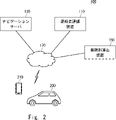
- FIG. 2 shows an insurance premium calculation system according to the first embodiment of the present disclosure.
- the insurance premium calculation system 100 includes a driver evaluation device 110, a navigation server 130, an insurance premium calculation device 150, and a user device 210.
- the insurance premium calculation system 100 corresponds to the insurance premium calculation system 10 shown in FIG.
- the driver evaluation device 110, the navigation server 130, and the insurance premium calculation device 150 are connected to each other via the network 170. Further, the driver evaluation device 110, the navigation server 130, and the insurance premium calculation device 150 are connected to the vehicle 200 and the user device 210 via the network 170.
- the network 170 includes, for example, a wireless communication network using a communication line standard such as LTE (Long Term Evolution).
- the network 170 may include a wireless communication network such as WiFi® or a 5th generation mobile communication system.
- the user device 210 is configured as a portable information communication device such as a smart phone used by the driver (user) of the vehicle 200.
- the user device 210 may be an information communication device mounted on the vehicle 200.
- the user device 210 includes a processor and a memory. In the user device 210, various functions in the user device 210 are realized by executing the process according to the program read from the memory by the processor.
- the user device 210 includes a display device such as a liquid crystal display device, and displays various information on the display screen.
- the vehicle 200 is a vehicle driven by the user.
- the vehicle 200 is configured as a land vehicle such as a car, a bus, a taxi, a truck, or a two-wheeled vehicle.
- the user shall use the user device 210 in the vehicle 200.
- the user device 210 has a position measuring unit that measures a position using a system such as GNSS (Global Navigation Satellite System).
- GNSS Global Navigation Satellite System
- the user device 210 transmits, for example, the position information measured by the position measurement unit, that is, the position information of the vehicle 200 to the navigation server 130.
- the navigation server 130 is a server that provides a route search and route guidance service for the vehicle 200 to the user device 210.
- the navigation server 130 receives a route search request from the user device 210.
- the route search request includes, for example, the current location (departure location) and destination of the vehicle 200.
- the navigation server 130 refers to the map information and searches for a route from the starting point to the destination using a known algorithm.
- the navigation server 130 can acquire a plurality of routes (route candidates) having the same departure point and destination but different waypoints.
- the navigation server 130 transmits the route search result to the user device 210.
- the navigation server 130 starts the route guidance.
- the driver evaluation device 110 is a device that evaluates the driving characteristics (driver characteristics) of the user.
- FIG. 3 shows a configuration example of the driver evaluation device 110.
- the driver evaluation device 110 includes a route acquisition unit 111, an information acquisition unit 112, a route evaluation unit 113, and a driver evaluation unit 114.
- the driver evaluation device 110 corresponds to the driver evaluation device 30 shown in FIG.
- the route acquisition unit 111 acquires route information indicating the searched route from the navigation server 130.
- the route acquisition unit 111 acquires route information of the plurality of routes.
- the route acquisition unit 111 corresponds to the route acquisition means 31 shown in FIG.
- the information acquisition unit 112 acquires road characteristic information of the road on which the vehicle travels.
- the information acquisition unit 112 acquires, for example, at least one of information indicating a past accident occurrence situation (accident statistical information), information indicating a pavement state of a road surface, and information indicating a road width as road characteristic information.
- the information acquisition unit 112 may acquire accident statistical information and information indicating the pavement state of the road surface from, for example, open data published by an administrative agency or a local government.
- the information acquisition unit 112 may acquire information indicating the road width from the map information.
- the route evaluation unit 113 evaluates the travel risk of the route based on the route information acquired by the route acquisition unit 111 and the information acquired by the information acquisition unit 112. When a plurality of route information is acquired by the route acquisition unit 111, the route evaluation unit 113 evaluates the traveling risk of each of the plurality of routes.
- the route evaluation unit 113 calculates, for example, an index indicating driving difficulty or driving danger when the vehicle travels along the route as an evaluation value. Alternatively, the route evaluation unit 113 may calculate as an evaluation value an index indicating the ease of travel or the safety of travel when the vehicle travels along the route. In the following description, the route evaluation unit 113 shall calculate the degree of risk as an index indicating driving difficulty or driving danger.
- the route evaluation unit 113 corresponds to the route evaluation means 32 shown in FIG.
- the route evaluation unit 113 refers to, for example, accident statistical information, and examines whether or not the route includes a place where an accident occurs. If the route includes a place where accidents occur frequently, the route evaluation unit 113 evaluates the route as having a high risk level. Further, the route evaluation unit 113 examines whether or not the route includes a place having a large number of cracks or a pothole and the pavement condition is poor. If the route includes a place with poor pavement, the route evaluation unit 113 evaluates the route as having a high risk level. The route evaluation unit 113 checks whether or not the route includes a place where the width of the road is narrow.
- the route evaluation unit 113 may determine a narrow road by using, for example, information indicating whether the road is one-way or two-way, and information indicating the width of the road.
- the route evaluation unit 113 may determine that the road is narrow, for example, when the road is one-way and the road width is not sufficiently wide with respect to the total width of the vehicle.
- the route evaluation unit 113 may determine that the road is narrow when the road is two-way traffic and the road width is narrow enough for vehicles to pass each other.
- the route evaluation unit 113 evaluates that the route has a high risk level when the route includes a place where the road width is narrow.
- the route evaluation unit 113 aggregates the risk levels of each location included in the route and calculates the risk level of the route.
- the route evaluation unit 113 calculates the risk level of the route according to the number of places where accidents frequently occur, the pavement condition is bad, and the road width is narrow.
- the information acquisition unit 112 may acquire weather data of the road on which the vehicle travels, in addition to the road characteristic information.
- the information acquisition unit 112 can acquire weather data from, for example, an external server that provides weather information.
- the information acquisition unit 112 may acquire weather data from the vehicle 200 or the user device 210.
- the route evaluation unit 113 may evaluate the traveling risk of the route using the weather data. For example, if the route includes a place where accidents frequently occur in the weather indicated by the acquired weather data, the route evaluation unit 113 evaluates the route as having a high risk.
- the route evaluation unit 113 may increase the traveling risk of the route when the weather data indicates rain or snow.
- the route evaluation unit 113 may consider the time zone and the day of the week when the vehicle travels on the route in the evaluation of the traveling risk of the route. For example, when the time zone in which the vehicle travels on the route indicates night, the route evaluation unit 113 refers to the accident statistics information, identifies a place where traffic accidents occur frequently in the night time zone, and determines the travel risk level of the route. May be evaluated. You may evaluate it. The route evaluation unit 113 may refer to the accident statistical information, identify a place where traffic accidents occur frequently on the day of the week when the vehicle travels on the route, and evaluate the travel risk of the route. The route evaluation unit 113 transmits the evaluation result of each route to the navigation server 130.
- the navigation server 130 receives the evaluation result of each route from the driver evaluation device 110.
- the navigation server 130 transmits the route information and the risk level (evaluation result) received from the driver evaluation device 110 to the user device 210.
- the user device 210 displays the route and the risk level on the display screen, and prompts the user to select the route.
- the user device 210 displays the distance, required time, and risk level of each route for a plurality of routes (candidates).
- the user selects a travel route of the vehicle 200 (see FIG. 2) from the displayed routes.
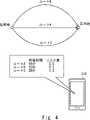
- FIG. 4 shows a display example of the route selection screen in the user device 210. It is assumed that the navigation server 130 has searched for three routes, route A, route B, and route C, as routes from the departure point to the destination.
- the user apparatus 210 presents the required time “15 minutes” and the risk degree “2.5” to the user for the route A. Further, the user apparatus 210 presents the required time "25 minutes” and the risk degree "0.5” to the user for the route B.
- the user device 210 presents the required time "20 minutes” and the risk degree "1.2” to the user for the route C. The user can determine the route in consideration of the required time and the degree of risk.
- the time required for route A is the shortest.
- Route A has a high degree of risk because it includes an area where traffic accidents occur frequently or a place where the road width is narrow.
- the user selects route A if priority is given to distance or required time. If there is time to spare, the user can select Route B or Route C, which has a low risk level, even if the required time is slightly longer.
- the degree of risk of the route selected by the user is considered to be related to the user's intention for safe driving. For example, a user who selects a route with a low risk may be trying to drive to reduce the risk.
- the driver evaluation unit 114 acquires information on the route selected by the user from the navigation server 130.
- the driver evaluation unit 114 evaluates the driver characteristics of the user based on the evaluation result of the route evaluation unit 113 for the route selected by the user.
- the driver evaluation unit 114 calculates, for example, an index indicating the safe driving degree of the user as an evaluation value. For example, the evaluation value is assumed to be larger as the risk level of the route selected by the user is lower.
- the driver evaluation unit 114 corresponds to the driver evaluation means 33 shown in FIG.
- the driver evaluation unit 114 has a driver characteristic based on the difference or ratio between the risk degree of the route selected by the user and the risk degree of the route selected by the user among the plurality of routes presented to the user. May be evaluated. For example, when the user selects a route having a relatively low risk level, the driver evaluation unit 114 may evaluate that the user has a high degree of safe driving, assuming that the user is trying to drive safely. When the user selects a route having a relatively high risk level, the driver evaluation unit 114 may evaluate that the safe driving level is low, assuming that the user is not trying to drive safely.
- the driver evaluation unit 114 may acquire the position information of the vehicle 200 from, for example, the navigation server 130, and determine whether or not the vehicle 200 is traveling along the route selected by the user based on the position information. .. Whether or not the vehicle 200 is traveling along the route selected by the user may be determined by the navigation server 130. When it is determined that the vehicle 200 is not traveling along the route selected by the user, the driver evaluation unit 114 may re-evaluate the traveling risk of the route on which the vehicle 200 travels.
- the driver evaluation unit 114 outputs the evaluation result of the driver characteristics to the insurance premium calculation device 150 that calculates the insurance premium for automobile insurance.
- the insurance premium calculation device 150 acquires driver characteristics from the driver evaluation device 110, and calculates insurance premiums for the vehicle 200 driven by the user based on the acquired driving characteristics.
- the insurance premium calculation device 150 calculates, for example, a discount rate for the basic charge of the insurance premium based on the characteristics of the driver. For example, the insurance premium calculation device 150 increases the discount rate for users with a high degree of safe driving.
- the insurance premium calculation device 150 may reduce the discount rate for users with a low degree of safe driving.
- the insurance premium calculation device 150 corresponds to the insurance premium calculation device 50 shown in FIG.
- the driver evaluation device 110 and the insurance premium calculation device 150 do not necessarily have to be configured as separate devices.
- the driver evaluation device 110 may be included in the insurance premium calculation device 150, and the insurance premium calculation device 150 may have the function of the driver evaluation device 110.
- the driver evaluation device 110 and the navigation server 130 do not necessarily have to be configured as separate devices.
- the navigation server 130 may include the function of the driver evaluation device 110.
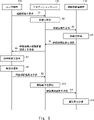
- FIG. 5 shows an operation procedure (driver evaluation method) for driver evaluation in the insurance premium calculation system 100.
- the user operates the user device 210 and requests the navigation server 130 to search for a route (step A1).
- the navigation server 130 searches for a route (step A2).
- the navigation server 130 transmits the route information of the searched route to the driver evaluation device 110 (step A3).
- the route acquisition unit 111 (see FIG. 3) of the driver evaluation device 110 acquires the route information transmitted in step A3.
- the route evaluation unit 113 evaluates the route based on the route information acquired by the route acquisition unit 111 and the road characteristic information acquired by the information acquisition unit 112 (step A4).
- the route evaluation unit 113 calculates, for example, the risk level of each route.
- the route evaluation unit 113 transmits the evaluation result of the route evaluated in step A4 to the navigation server 130 (step A5).
- the navigation server 130 transmits the route information of the route searched in step A2 and the evaluation result of the route transmitted from the driver evaluation device 110 in step A5 to the user device 210 (step A6).
- the user device 210 presents the route information and the evaluation result of the route to the user (step A7).
- the user refers to the presented route information and the evaluation result of the route, and selects a route (step A8).
- the user apparatus 210 transmits a route selection result indicating the selected route to the navigation server 130 (step A9).
- the navigation server 130 starts route guidance for the selected route (step A10).
- the navigation server 130 transmits the route selection result to the driver evaluation device 110 (step A11).
- the driver evaluation unit 114 of the driver evaluation device 110 evaluates the driver characteristics of the driver based on the evaluation result of the route indicated by the route selection result (step A12).
- the driver evaluation unit 114 generates an evaluation value of the driver's safe driving degree based on, for example, the risk degree of the route.
- the navigation server 130 may transmit the route traveled by the vehicle 200 to the driver evaluation device 110.
- the driver evaluation device 110 receives the travel route of the vehicle 200 from the navigation server 130, the driver evaluation device 110 may re-evaluate the travel risk of the travel route and re-evaluate the safety travel degree of the driver.
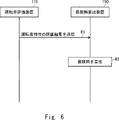
- FIG. 6 shows an operation procedure of insurance premium calculation in the insurance premium calculation system 100.
- the driver evaluation device 110 transmits the evaluation result of the driver characteristics evaluated in step A12 of FIG. 5 to the insurance premium calculation device 150 (step B1).
- the insurance premium calculation device 150 calculates the insurance premium for the user's automobile insurance based on the evaluation result of the driver characteristics (step B2).
- the insurance premium calculation device 150 calculates, for example, the discount rate applied at the next renewal of the user's automobile insurance.
- the insurance premium calculation device 150 for example, lowers the insurance premium of a user who selects a route having a low risk level.
- the route evaluation unit 113 evaluates the traveling risk of the route based on the road characteristic information, the weather data, and the time zone.
- the driver evaluation unit 114 evaluates the driver characteristics based on the driving risk of the route selected by the user.
- the driver evaluation unit 114 evaluates, for example, that a driver who goes on a safe road is a driver who keeps in mind safe driving. Further, the driver evaluation unit 114 evaluates that, for example, a driver who travels while avoiding the weather and time zone where an accident is likely to occur is a driver who keeps in mind safe driving.
- the driving risk of the route on which the user drives the vehicle 200 is used for the evaluation of the driver, not the driving skill.
- the driver evaluation device 110 evaluates the user according to the traveling route. Therefore, even if the user has poor driving skill, the user selects a safe road and tries to reduce the risk, and is highly evaluated. Can be obtained.
- the insurance premium calculation device 150 calculates the insurance premium for the user's automobile insurance based on the evaluation result of the driver evaluation device 110.
- driving skills are evaluated, so users with low driving skills cannot receive insurance premium discounts even if they do not drive in high-risk areas.
- the driver evaluation device 110 evaluates the driver characteristics according to the driving risk of the traveling route. Therefore, the user selects a safe road and tries to reduce the risk, thereby insuring. You can get a discount on the fee.
- automobile insurance companies can optimize insurance premiums by lowering the insurance premiums of users who are trying to reduce risk.
- FIG. 7 shows a driver evaluation device used in the insurance premium calculation system according to the second embodiment of the present disclosure.
- the configuration of the insurance premium calculation system according to the present embodiment may be the same as the insurance premium calculation system 100 according to the first embodiment shown in FIG.
- the driver evaluation device 110a used in the present embodiment is different from the driver evaluation device 110 used in the first embodiment shown in FIG. 3 in that a traveling data acquisition unit 115 is added.
- the driving data acquisition unit (driving data acquisition means) 115 acquires driving data indicating the traveling state of the vehicle from the vehicle 200 (see FIG. 2).
- the travel data includes information acquired by using a sensor mounted on the vehicle 200, for example, information such as vehicle speed and acceleration.
- the traveling data may include data generated by various ECUs (Electronic Control Units) mounted on the vehicle 200.
- the driving data includes information indicating the operating state of the airbag, information indicating the operating state of the anti-lock braking system (ABS: Anti-lock Braking System), and information indicating the operating state of the electronic stability control (ESC). It may be included.
- the driver evaluation unit 114 evaluates the driver characteristics of the user based on the travel data acquired by the travel data acquisition unit 115 in addition to the travel risk of the route on which the vehicle 200 travels.
- the driver evaluation unit 114 determines whether or not the user is driving safely based on the driving data, for example, when the route includes an accident-prone area or when the route includes a place with poor pavement. You may. Whether or not the vehicle is safe can be determined by comparing the speed of the vehicle in an accident-prone area and the speed of the vehicle in other areas and determining whether or not the speed is reduced.
- the driver evaluation unit 114 determines whether or not the vehicle is driving safely on a rainy day, for example, when the weather is rainy, depending on whether or not the speed is slower than when the weather is sunny. May be good.
- the driver evaluation unit 114 evaluates the driver characteristics of the user based on the travel risk of the route and the travel data acquired from the vehicle 200.
- the driver evaluation device 110a can evaluate the driver characteristics of the user in consideration of not only whether or not the user is traveling on a low-risk road but also the driving skill of the user.
- the insurance premium calculation device 150 calculates the insurance premium based on the driver characteristics evaluated by the driver evaluation device 110a. In this case, the insurance premium calculation device 150 can calculate the insurance premium in consideration of the driving skill.
- a user mainly requests a route search from a navigation server 130 using a user device 210 which is a portable information communication device, and the navigation server 130 performs route guidance.
- the user device 210 may be a navigation device mounted on the vehicle 200, and the user device 210 may perform route search and route guidance.
- the navigation server 130 can be omitted.
- the driver evaluation device 110 may acquire information such as route information from the user device 210 which is a navigation device.
- the driver characteristics of the user evaluated by the driver evaluation device 110 are used for calculating the insurance premium for automobile insurance.
- this disclosure is not limited to this.
- the evaluation result of the driver evaluation device 110 may be used for other purposes.
- the evaluation result of the driver evaluation device 110 is not particularly limited, but can also be used for evaluation of employees in work involving driving a vehicle.
- the driver evaluation device 110 may be configured as a computer device (server device).
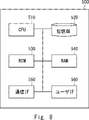
- FIG. 8 shows a configuration example of a computer device that can be used as the driver evaluation device 110.
- the computer device 500 includes a control unit (CPU: Central Processing Unit) 510, a storage unit 520, a ROM (ReadOnlyMemory) 530, a RAM (RandomAccessMemory) 540, a communication interface (IF: Interface) 550, and a user interface 560.
- CPU Central Processing Unit
- ROM ReadOnlyMemory
- RAM RandomAccessMemory
- IF Interface
- user interface 560 a user interface 560.
- the communication interface 550 is an interface for connecting the computer device 500 and the communication network via a wired communication means, a wireless communication means, or the like.
- the user interface 560 includes a display unit such as a display. Further, the user interface 560 includes an input unit such as a keyboard, a mouse, and a touch panel.
- the storage unit 520 is an auxiliary storage device that can hold various types of data.
- the storage unit 520 does not necessarily have to be a part of the computer device 500, and may be an external storage device or a cloud storage connected to the computer device 500 via a network.
- ROM 530 is a non-volatile storage device.
- a semiconductor storage device such as a flash memory having a relatively small capacity is used.
- the program executed by the CPU 510 may be stored in the storage unit 520 or the ROM 530.
- the storage unit 520 or ROM 530 stores, for example, various programs for realizing the functions of each unit in the driver evaluation device 110.
- Non-temporary computer-readable media include various types of tangible storage media.
- Examples of non-temporary computer-readable media include, for example, flexible disks, magnetic tapes, or magnetic recording media such as hard disks, such as optical magnetic recording media such as optical magnetic disks, CDs (compact discs), or DVDs (digital versatile disks). Includes optical disk media such as, and semiconductor memory such as mask ROM, PROM (programmable ROM), EPROM (erasable PROM), flash ROM, or RAM.
- the program may also be supplied to the computer using various types of temporary computer-readable media. Examples of temporary computer readable media include electrical, optical, and electromagnetic waves.
- the temporary computer-readable medium can supply the program to the computer via a wired communication path such as an electric wire and an optical fiber, or a wireless communication path.
- RAM 540 is a volatile storage device.
- various semiconductor memory devices such as DRAM (Dynamic Random Access Memory) or SRAM (Static Random Access Memory) are used.
- the RAM 540 can be used as an internal buffer for temporarily storing data and the like.
- the CPU 510 expands the program stored in the storage unit 520 or the ROM 530 into the RAM 540 and executes the program. By executing the program by the CPU 510, the functions of each part in the driver evaluation device 110 can be realized.
- the CPU 510 may have an internal buffer that can temporarily store data and the like.
- a route acquisition means for acquiring route information indicating a route for a driver to drive a vehicle, and a route acquisition means.
- a route evaluation means for evaluating the travel risk of the route based on the route information and the road characteristic information of the road on which the vehicle travels.
- a driver evaluation device including a driver evaluation means for evaluating the driver characteristics of the driver based on the evaluation result of the route.
- Appendix 2 The driver evaluation device according to Appendix 1, wherein the road characteristic information includes at least one of information indicating a past accident occurrence situation, information indicating a pavement state of a road surface, and information indicating a road width of a road.
- the route acquisition means acquires route information of a plurality of routes having the same departure point and destination but different waypoints.
- the route evaluation means evaluates the travel risk for each of the plurality of routes.
- the driver according to Appendix 1 or 2 wherein the driver evaluation means evaluates the driver characteristics based on the evaluation result of the route selected by the driver as the travel route of the vehicle among the plurality of routes. Evaluation device.
- the route evaluation means determines whether or not the vehicle is traveling along the route selected by the driver based on the position information of the vehicle, and the vehicle determines whether the vehicle is traveling along the route selected by the driver.
- the driver evaluation device which re-evaluates the travel risk of the route on which the vehicle travels when it is determined that the vehicle is not traveling along the same route.
- the driver evaluation means is based on the difference or ratio between the risk level of the route selected by the driver and the risk level of the route selected by the driver among the plurality of routes.
- the driver evaluation device according to Appendix 3 or 4, which evaluates the characteristics.
- Appendix 6 Further, it has a traveling data acquisition means for acquiring traveling data indicating the traveling state of the vehicle.
- the driver evaluation means according to any one of Supplementary note 1 to 5, which further evaluates the driver characteristics based on the driving data.
- the driver evaluation means is the driver evaluation device according to any one of Supplementary note 1 to 7, which outputs the evaluation result of the driver characteristics to the insurance premium calculation device for calculating the insurance premium for automobile insurance.
- a driver evaluation device that evaluates the driving characteristics of the driver who drives the vehicle, It has an insurance premium calculation device and
- the driver evaluation device is A route acquisition means for acquiring route information indicating a route for the driver to drive the vehicle, and a route acquisition means.
- a route evaluation means for evaluating the travel risk of the route based on the route information and the road characteristic information of the road on which the vehicle travels. It has a driver evaluation means for evaluating the driver characteristics of the driver based on the evaluation result of the route.
- the insurance premium calculation device is an insurance premium calculation system that acquires the driver characteristics from the driver evaluation device and calculates the insurance premiums for the vehicle driven by the driver based on the acquired driving characteristics.
- the insurance premium calculation device is the insurance premium calculation system according to Appendix 9, which calculates a discount rate for the basic charge of the insurance premium based on the driver's characteristics.
- the insurance premium calculation system according to Appendix 9 or 10, wherein the road characteristic information includes at least one of information indicating a past accident occurrence situation, information indicating a pavement state of a road surface, and information indicating a road width of a road.
- the route acquisition means acquires route information of a plurality of routes having the same departure point and destination but different waypoints.
- the route evaluation means evaluates the travel risk for each of the plurality of routes.
- the driver evaluation means is one of the appendices 9 to 11 for evaluating the driver characteristics based on the evaluation result of the route selected by the driver as the travel route of the vehicle among the plurality of routes.
- [Appendix 13] Acquires route information indicating the route on which the driver drives the vehicle, Based on the route information and the road characteristic information of the road on which the vehicle travels, the travel risk of the route is evaluated.
- [Appendix 14] Acquires route information indicating the route on which the driver drives the vehicle, Based on the route information and the road characteristic information of the road on which the vehicle travels, the travel risk of the route is evaluated.
- a non-temporary computer-readable medium that stores a program for causing a computer to execute a process of evaluating the driver characteristics of the driver based on the evaluation result of the route.
- Insurance premium calculation system 30 Driver evaluation device 31: Route acquisition means 32: Route evaluation means 33: Driver evaluation means 50: Insurance premium calculation device 100: Insurance premium calculation system 110: Driver evaluation device 111: Route acquisition Unit 112: Information acquisition unit 113: Route evaluation unit 114: Driver evaluation unit 115: Driving data acquisition unit 130: Navigation server 150: Insurance premium calculation device 170: Network 200: Vehicle 210: User device
Landscapes
- Engineering & Computer Science (AREA)
- Business, Economics & Management (AREA)
- Accounting & Taxation (AREA)
- Finance (AREA)
- Development Economics (AREA)
- General Business, Economics & Management (AREA)
- Economics (AREA)
- Physics & Mathematics (AREA)
- General Physics & Mathematics (AREA)
- Computing Systems (AREA)
- Remote Sensing (AREA)
- Radar, Positioning & Navigation (AREA)
- Marketing (AREA)
- Theoretical Computer Science (AREA)
- Technology Law (AREA)
- Strategic Management (AREA)
- Automation & Control Theory (AREA)
- Operations Research (AREA)
- Mechanical Engineering (AREA)
- Transportation (AREA)
- Mathematical Physics (AREA)
- Financial Or Insurance-Related Operations Such As Payment And Settlement (AREA)
- Traffic Control Systems (AREA)
- Navigation (AREA)
- Control Of Driving Devices And Active Controlling Of Vehicle (AREA)
Abstract
Description
運転者が車両を運転する経路を示す経路情報を取得する経路取得手段と、
前記経路情報と、車両が走行する道路の道路特性情報とに基づいて、前記経路の走行危険度を評価する経路評価手段と、
前記経路の評価結果に基づいて、前記運転者の運転者特性を評価する運転者評価手段とを備える運転者評価装置。
前記道路特性情報は、過去の事故発生状況を示す情報、路面の舗装状態を示す情報、及び道路の道幅を示す情報の少なくとも1つを含む付記1に記載の運転者評価装置。
前記経路取得手段は、出発地及び目的地が同じで経由地点が異なる複数の経路の経路情報を取得し、
前記経路評価手段は、前記複数の経路のそれぞれについて前記走行危険度を評価し、
前記運転者評価手段は、前記複数の経路のうち、前記運転者が前記車両の走行経路として選択した経路の評価結果に基づいて、前記運転者特性を評価する付記1又は2に記載の運転者評価装置。
経路評価手段は、前記車両の位置情報に基づいて、前記車両が前記運転者が前記選択した経路に沿って走行しているか否かを判断し、前記車両が前記運転者が前記選択した前記経路に沿って走行してないと判断した場合、前記車両が走行する経路の走行危険度を再評価する付記3に記載の運転者評価装置。
前記運転者評価手段は、前記複数の経路のうち、前記運転者が選択した経路の危険度と、前記運転者が選択しなった経路の危険度との差又は比に基づいて、前記運転者特性を評価する付記3又は4に記載の運転者評価装置。
前記車両の走行状態を示す走行データを取得する走行データ取得手段を更に有し、
前記運転者評価手段は、更に前記走行データに基づいて、前記運転者特性を評価する付記1から5何れか1つに記載の運転者評価装置。
前記経路評価手段は、前記車両が走行する道路の天候データを取得し、更に前記天候データに基づいて、前記経路の走行危険度を評価する付記1から6何れか1つに記載の運転者評価装置。
前記運転者評価手段は、自動車保険の保険料を算出する保険料算出装置に、前記運転者特性の評価結果を出力する付記1から7何れか1つに記載の運転者評価装置。
車両を運転する運転者の運転特性を評価する運転者評価装置と、
保険料算出装置とを有し、
前記運転者評価装置は、
前記運転者が前記車両を運転する経路を示す経路情報を取得する経路取得手段と、
前記経路情報と、車両が走行する道路の道路特性情報とに基づいて、前記経路の走行危険度を評価する経路評価手段と、
前記経路の評価結果に基づいて、前記運転者の運転者特性を評価する運転者評価手段とを有し、
前記保険料算出装置は、前記運転者評価装置から前記運転者特性を取得し、該取得した運転特性に基づいて、前記運転者が運転する車両の保険料を算出する、保険料算出システム。
前記保険料算出装置は、前記運転者特性に基づいて、前記保険料の基本料金に対する割引率を算出する付記9に記載の保険料算出システム。
前記道路特性情報は、過去の事故発生状況を示す情報、路面の舗装状態を示す情報、及び道路の道幅を示す情報の少なくとも1つを含む付記9又は10に記載の保険料算出システム。
前記経路取得手段は、出発地及び目的地が同じで経由地点が異なる複数の経路の経路情報を取得し、
前記経路評価手段は、前記複数の経路のそれぞれについて前記走行危険度を評価し、
前記運転者評価手段は、前記複数の経路のうち、前記運転者が前記車両の走行経路として選択した経路の評価結果に基づいて、前記運転者特性を評価する付記9から11何れか1つに記載の保険料算出システム。
運転者が車両を運転する経路を示す経路情報を取得し、
前記経路情報と、車両が走行する道路の道路特性情報とに基づいて、前記経路の走行危険度を評価し、
前記経路の評価結果に基づいて、前記運転者の運転者特性を評価する運転者評価方法。
運転者が車両を運転する経路を示す経路情報を取得し、
前記経路情報と、車両が走行する道路の道路特性情報とに基づいて、前記経路の走行危険度を評価し、
前記経路の評価結果に基づいて、前記運転者の運転者特性を評価する処理をコンピュータに実行させるためのプログラムを格納する非一時的なコンピュータ可読媒体。
30:運転者評価装置
31:経路取得手段
32:経路評価手段
33:運転者評価手段
50:保険料算出装置
100:保険料算出システム
110:運転者評価装置
111:経路取得部
112:情報取得部
113:経路評価部
114:運転者評価部
115:走行データ取得部
130:ナビゲーションサーバ
150:保険料算出装置
170:ネットワーク
200:車両
210:ユーザ装置
Claims (14)
- 運転者が車両を運転する経路を示す経路情報を取得する経路取得手段と、
前記経路情報と、車両が走行する道路の道路特性情報とに基づいて、前記経路の走行危険度を評価する経路評価手段と、
前記経路の評価結果に基づいて、前記運転者の運転者特性を評価する運転者評価手段とを備える運転者評価装置。 - 前記道路特性情報は、過去の事故発生状況を示す情報、路面の舗装状態を示す情報、及び道路の道幅を示す情報の少なくとも1つを含む請求項1に記載の運転者評価装置。
- 前記経路取得手段は、出発地及び目的地が同じで経由地点が異なる複数の経路の経路情報を取得し、
前記経路評価手段は、前記複数の経路のそれぞれについて前記走行危険度を評価し、
前記運転者評価手段は、前記複数の経路のうち、前記運転者が前記車両の走行経路として選択した経路の評価結果に基づいて、前記運転者特性を評価する請求項1又は2に記載の運転者評価装置。 - 経路評価手段は、前記車両の位置情報に基づいて、前記車両が前記運転者が前記選択した経路に沿って走行しているか否かを判断し、前記車両が前記運転者が前記選択した前記経路に沿って走行してないと判断した場合、前記車両が走行する経路の走行危険度を再評価する請求項3に記載の運転者評価装置。
- 前記運転者評価手段は、前記複数の経路のうち、前記運転者が選択した経路の危険度と、前記運転者が選択しなった経路の危険度との差又は比に基づいて、前記運転者特性を評価する請求項3又は4に記載の運転者評価装置。
- 前記車両の走行状態を示す走行データを取得する走行データ取得手段を更に有し、
前記運転者評価手段は、更に前記走行データに基づいて、前記運転者特性を評価する請求項1から5何れか1項に記載の運転者評価装置。 - 前記経路評価手段は、前記車両が走行する道路の天候データを取得し、更に前記天候データに基づいて、前記経路の走行危険度を評価する請求項1から6何れか1項に記載の運転者評価装置。
- 前記運転者評価手段は、自動車保険の保険料を算出する保険料算出装置に、前記運転者特性の評価結果を出力する請求項1から7何れか1項に記載の運転者評価装置。
- 車両を運転する運転者の運転特性を評価する運転者評価装置と、
保険料算出装置とを有し、
前記運転者評価装置は、
前記運転者が前記車両を運転する経路を示す経路情報を取得する経路取得手段と、
前記経路情報と、車両が走行する道路の道路特性情報とに基づいて、前記経路の走行危険度を評価する経路評価手段と、
前記経路の評価結果に基づいて、前記運転者の運転者特性を評価する運転者評価手段とを有し、
前記保険料算出装置は、前記運転者評価装置から前記運転者特性を取得し、該取得した運転特性に基づいて、前記運転者が運転する車両の保険料を算出する、保険料算出システム。 - 前記保険料算出装置は、前記運転者特性に基づいて、前記保険料の基本料金に対する割引率を算出する請求項9に記載の保険料算出システム。
- 前記道路特性情報は、過去の事故発生状況を示す情報、路面の舗装状態を示す情報、及び道路の道幅を示す情報の少なくとも1つを含む請求項9又は10に記載の保険料算出システム。
- 前記経路取得手段は、出発地及び目的地が同じで経由地点が異なる複数の経路の経路情報を取得し、
前記経路評価手段は、前記複数の経路のそれぞれについて前記走行危険度を評価し、
前記運転者評価手段は、前記複数の経路のうち、前記運転者が前記車両の走行経路として選択した経路の評価結果に基づいて、前記運転者特性を評価する請求項9から11何れか1項に記載の保険料算出システム。 - 運転者が車両を運転する経路を示す経路情報を取得し、
前記経路情報と、車両が走行する道路の道路特性情報とに基づいて、前記経路の走行危険度を評価し、
前記経路の評価結果に基づいて、前記運転者の運転者特性を評価する運転者評価方法。 - 運転者が車両を運転する経路を示す経路情報を取得し、
前記経路情報と、車両が走行する道路の道路特性情報とに基づいて、前記経路の走行危険度を評価し、
前記経路の評価結果に基づいて、前記運転者の運転者特性を評価する処理をコンピュータに実行させるためのプログラムを格納する非一時的なコンピュータ可読媒体。
Priority Applications (3)
| Application Number | Priority Date | Filing Date | Title |
|---|---|---|---|
| JP2022568017A JP7524972B2 (ja) | 2020-12-11 | 2020-12-11 | 運転者評価装置、保険料算出システム、方法、及びプログラム |
| US18/265,157 US20240020768A1 (en) | 2020-12-11 | 2020-12-11 | Driver evaluation apparatus, insurance premium calculation system, method and computer-readable medium |
| PCT/JP2020/046317 WO2022123777A1 (ja) | 2020-12-11 | 2020-12-11 | 運転者評価装置、保険料算出システム、方法、及びコンピュータ可読媒体 |
Applications Claiming Priority (1)
| Application Number | Priority Date | Filing Date | Title |
|---|---|---|---|
| PCT/JP2020/046317 WO2022123777A1 (ja) | 2020-12-11 | 2020-12-11 | 運転者評価装置、保険料算出システム、方法、及びコンピュータ可読媒体 |
Publications (1)
| Publication Number | Publication Date |
|---|---|
| WO2022123777A1 true WO2022123777A1 (ja) | 2022-06-16 |
Family
ID=81974283
Family Applications (1)
| Application Number | Title | Priority Date | Filing Date |
|---|---|---|---|
| PCT/JP2020/046317 Ceased WO2022123777A1 (ja) | 2020-12-11 | 2020-12-11 | 運転者評価装置、保険料算出システム、方法、及びコンピュータ可読媒体 |
Country Status (3)
| Country | Link |
|---|---|
| US (1) | US20240020768A1 (ja) |
| JP (1) | JP7524972B2 (ja) |
| WO (1) | WO2022123777A1 (ja) |
Families Citing this family (1)
| Publication number | Priority date | Publication date | Assignee | Title |
|---|---|---|---|---|
| CN118810831B (zh) * | 2024-09-19 | 2025-01-24 | 山东新云鹏电气有限公司 | 一种基于人工智能的井下自动驾驶路线规划系统 |
Citations (6)
| Publication number | Priority date | Publication date | Assignee | Title |
|---|---|---|---|---|
| JPH10185604A (ja) * | 1996-12-26 | 1998-07-14 | Mazda Motor Corp | ナビゲーション装置 |
| JP2010257486A (ja) * | 2004-02-26 | 2010-11-11 | Aioi Insurance Co Ltd | 走行コスト算出システム |
| JP2018505485A (ja) * | 2015-01-28 | 2018-02-22 | オールステイト インシュアランス カンパニー | リスクユニットベースのポリシー |
| JP2018505422A (ja) * | 2014-12-02 | 2018-02-22 | ワング,ケビン,スンリン | 事故回避方法及びシステム |
| WO2018096688A1 (ja) * | 2016-11-28 | 2018-05-31 | 本田技研工業株式会社 | 運転支援装置、運転支援システム、プログラム及び運転支援装置の制御方法 |
| JP2020052905A (ja) * | 2018-09-28 | 2020-04-02 | Kddi株式会社 | 難易度推定装置、難易度推定方法及びコンピュータプログラム |
-
2020
- 2020-12-11 JP JP2022568017A patent/JP7524972B2/ja active Active
- 2020-12-11 WO PCT/JP2020/046317 patent/WO2022123777A1/ja not_active Ceased
- 2020-12-11 US US18/265,157 patent/US20240020768A1/en not_active Abandoned
Patent Citations (6)
| Publication number | Priority date | Publication date | Assignee | Title |
|---|---|---|---|---|
| JPH10185604A (ja) * | 1996-12-26 | 1998-07-14 | Mazda Motor Corp | ナビゲーション装置 |
| JP2010257486A (ja) * | 2004-02-26 | 2010-11-11 | Aioi Insurance Co Ltd | 走行コスト算出システム |
| JP2018505422A (ja) * | 2014-12-02 | 2018-02-22 | ワング,ケビン,スンリン | 事故回避方法及びシステム |
| JP2018505485A (ja) * | 2015-01-28 | 2018-02-22 | オールステイト インシュアランス カンパニー | リスクユニットベースのポリシー |
| WO2018096688A1 (ja) * | 2016-11-28 | 2018-05-31 | 本田技研工業株式会社 | 運転支援装置、運転支援システム、プログラム及び運転支援装置の制御方法 |
| JP2020052905A (ja) * | 2018-09-28 | 2020-04-02 | Kddi株式会社 | 難易度推定装置、難易度推定方法及びコンピュータプログラム |
Also Published As
| Publication number | Publication date |
|---|---|
| JP7524972B2 (ja) | 2024-07-30 |
| US20240020768A1 (en) | 2024-01-18 |
| JPWO2022123777A1 (ja) | 2022-06-16 |
Similar Documents
| Publication | Publication Date | Title |
|---|---|---|
| US11175152B2 (en) | Method and system for risk determination of a route | |
| US12060062B2 (en) | Route risk mitigation | |
| US11599948B2 (en) | Determination and display of driving risk | |
| US11847667B2 (en) | Road segment safety rating system | |
| US11067404B2 (en) | Vehicle usage-based pricing alerts | |
| US8612139B2 (en) | Systems and methods for planning vehicle routes based on safety factors | |
| US10782143B2 (en) | Data processing system communicating with a map data processing system to generate a display of one or more segments of one or more vehicle routes | |
| US20190347739A1 (en) | Risk Based Automotive Insurance Rating System | |
| US10883850B2 (en) | Additional security information for navigation systems | |
| EP3303083B1 (en) | Route risk mitigation | |
| WO2023021162A2 (en) | Automated dynamic routing unit and method thereof | |
| KR20180091902A (ko) | 인터랙티브 텔레매틱스 시스템 | |
| US10745010B2 (en) | Detecting anomalous vehicle behavior through automatic voting | |
| JP6786376B2 (ja) | 評価装置、評価方法及び評価プログラム | |
| CN106382939A (zh) | 一种基于历史数据的导航路径行驶时间预测系统及方法 | |
| US12073424B2 (en) | System for dynamic autonomous vehicle service pricing | |
| US20250085135A1 (en) | Method and system for measuring extrinsic crash risk | |
| JP6931159B2 (ja) | 交通予測プログラム、交通予測装置、及び交通予測方法 | |
| JP7524972B2 (ja) | 運転者評価装置、保険料算出システム、方法、及びプログラム | |
| JP4576955B2 (ja) | ナビゲーションシステム | |
| JP2018180906A (ja) | 混雑予測プログラム、混雑予測装置、及び混雑予測方法 | |
| CN115649177A (zh) | 冰雪路段预测方法、装置、电子设备和可读存储介质 | |
| US20250328855A1 (en) | Systems and methods for planning a route using operator safety scores and identified hazardous zones as factors | |
| US20230017376A1 (en) | Method, apparatus and computer program product for estimating hazard duration | |
| US20240378998A1 (en) | Method, apparatus, and computer program product for defining a geo-defense area related to presence of a roadworker entity |
Legal Events
| Date | Code | Title | Description |
|---|---|---|---|
| 121 | Ep: the epo has been informed by wipo that ep was designated in this application |
Ref document number: 20965159 Country of ref document: EP Kind code of ref document: A1 |
|
| ENP | Entry into the national phase |
Ref document number: 2022568017 Country of ref document: JP Kind code of ref document: A |
|
| WWE | Wipo information: entry into national phase |
Ref document number: 18265157 Country of ref document: US |
|
| NENP | Non-entry into the national phase |
Ref country code: DE |
|
| 122 | Ep: pct application non-entry in european phase |
Ref document number: 20965159 Country of ref document: EP Kind code of ref document: A1 |