WO2022196698A1 - Procédé et système pour réduire le volume de liquide de matière première - Google Patents
Procédé et système pour réduire le volume de liquide de matière première Download PDFInfo
- Publication number
- WO2022196698A1 WO2022196698A1 PCT/JP2022/011704 JP2022011704W WO2022196698A1 WO 2022196698 A1 WO2022196698 A1 WO 2022196698A1 JP 2022011704 W JP2022011704 W JP 2022011704W WO 2022196698 A1 WO2022196698 A1 WO 2022196698A1
- Authority
- WO
- WIPO (PCT)
- Prior art keywords
- raw material
- material liquid
- volume reduction
- solvent
- treatment
- Prior art date
- Legal status (The legal status is an assumption and is not a legal conclusion. Google has not performed a legal analysis and makes no representation as to the accuracy of the status listed.)
- Ceased
Links
Images


Classifications
-
- B—PERFORMING OPERATIONS; TRANSPORTING
- B01—PHYSICAL OR CHEMICAL PROCESSES OR APPARATUS IN GENERAL
- B01D—SEPARATION
- B01D61/00—Processes of separation using semi-permeable membranes, e.g. dialysis, osmosis or ultrafiltration; Apparatus, accessories or auxiliary operations specially adapted therefor
- B01D61/58—Multistep processes
-
- B—PERFORMING OPERATIONS; TRANSPORTING
- B01—PHYSICAL OR CHEMICAL PROCESSES OR APPARATUS IN GENERAL
- B01D—SEPARATION
- B01D61/00—Processes of separation using semi-permeable membranes, e.g. dialysis, osmosis or ultrafiltration; Apparatus, accessories or auxiliary operations specially adapted therefor
- B01D61/002—Forward osmosis or direct osmosis
-
- B—PERFORMING OPERATIONS; TRANSPORTING
- B01—PHYSICAL OR CHEMICAL PROCESSES OR APPARATUS IN GENERAL
- B01D—SEPARATION
- B01D61/00—Processes of separation using semi-permeable membranes, e.g. dialysis, osmosis or ultrafiltration; Apparatus, accessories or auxiliary operations specially adapted therefor
- B01D61/002—Forward osmosis or direct osmosis
- B01D61/0024—Controlling or regulating
-
- B—PERFORMING OPERATIONS; TRANSPORTING
- B01—PHYSICAL OR CHEMICAL PROCESSES OR APPARATUS IN GENERAL
- B01D—SEPARATION
- B01D61/00—Processes of separation using semi-permeable membranes, e.g. dialysis, osmosis or ultrafiltration; Apparatus, accessories or auxiliary operations specially adapted therefor
- B01D61/02—Reverse osmosis; Hyperfiltration ; Nanofiltration
- B01D61/025—Reverse osmosis; Hyperfiltration
-
- B—PERFORMING OPERATIONS; TRANSPORTING
- B01—PHYSICAL OR CHEMICAL PROCESSES OR APPARATUS IN GENERAL
- B01D—SEPARATION
- B01D61/00—Processes of separation using semi-permeable membranes, e.g. dialysis, osmosis or ultrafiltration; Apparatus, accessories or auxiliary operations specially adapted therefor
- B01D61/02—Reverse osmosis; Hyperfiltration ; Nanofiltration
- B01D61/027—Nanofiltration
-
- B—PERFORMING OPERATIONS; TRANSPORTING
- B01—PHYSICAL OR CHEMICAL PROCESSES OR APPARATUS IN GENERAL
- B01D—SEPARATION
- B01D61/00—Processes of separation using semi-permeable membranes, e.g. dialysis, osmosis or ultrafiltration; Apparatus, accessories or auxiliary operations specially adapted therefor
- B01D61/24—Dialysis ; Membrane extraction
- B01D61/243—Dialysis
-
- B—PERFORMING OPERATIONS; TRANSPORTING
- B01—PHYSICAL OR CHEMICAL PROCESSES OR APPARATUS IN GENERAL
- B01D—SEPARATION
- B01D61/00—Processes of separation using semi-permeable membranes, e.g. dialysis, osmosis or ultrafiltration; Apparatus, accessories or auxiliary operations specially adapted therefor
- B01D61/24—Dialysis ; Membrane extraction
- B01D61/32—Controlling or regulating
-
- B—PERFORMING OPERATIONS; TRANSPORTING
- B01—PHYSICAL OR CHEMICAL PROCESSES OR APPARATUS IN GENERAL
- B01D—SEPARATION
- B01D71/00—Semi-permeable membranes for separation processes or apparatus characterised by the material; Manufacturing processes specially adapted therefor
- B01D71/02—Inorganic material
- B01D71/028—Molecular sieves
-
- B—PERFORMING OPERATIONS; TRANSPORTING
- B01—PHYSICAL OR CHEMICAL PROCESSES OR APPARATUS IN GENERAL
- B01D—SEPARATION
- B01D2311/00—Details relating to membrane separation process operations and control
- B01D2311/04—Specific process operations in the feed stream; Feed pretreatment
-
- B—PERFORMING OPERATIONS; TRANSPORTING
- B01—PHYSICAL OR CHEMICAL PROCESSES OR APPARATUS IN GENERAL
- B01D—SEPARATION
- B01D2311/00—Details relating to membrane separation process operations and control
- B01D2311/06—Specific process operations in the permeate stream
-
- B—PERFORMING OPERATIONS; TRANSPORTING
- B01—PHYSICAL OR CHEMICAL PROCESSES OR APPARATUS IN GENERAL
- B01D—SEPARATION
- B01D2311/00—Details relating to membrane separation process operations and control
- B01D2311/25—Recirculation, recycling or bypass, e.g. recirculation of concentrate into the feed
-
- B—PERFORMING OPERATIONS; TRANSPORTING
- B01—PHYSICAL OR CHEMICAL PROCESSES OR APPARATUS IN GENERAL
- B01D—SEPARATION
- B01D2317/00—Membrane module arrangements within a plant or an apparatus
- B01D2317/02—Elements in series
-
- B—PERFORMING OPERATIONS; TRANSPORTING
- B01—PHYSICAL OR CHEMICAL PROCESSES OR APPARATUS IN GENERAL
- B01D—SEPARATION
- B01D2317/00—Membrane module arrangements within a plant or an apparatus
- B01D2317/04—Elements in parallel
Definitions
- the present invention relates to a method and system for reducing the volume of raw material liquid.
- raw material liquids in purification processes for peptides, DNA, RNA, enzymes, derivative compounds thereof, and raw materials thereof include water, various organic solvents, They may contain organic acids, salts, etc., respectively.
- the composition of the solvent and the concentration of the organic acid, salt, etc. are each adjusted within a predetermined range, so that the valuable substance can stably exist in the raw material liquid. Therefore, in the volume reduction process of the raw material solution, if the solvent composition changes, or the concentration of the organic acid, salt, etc. fluctuates, peptides, etc. will precipitate, aggregate, denature, etc., resulting in a poor volume reduction yield.
- peptides and the like are very expensive, a high yield is required for a volume reduction process for a raw material solution containing them.
- the present invention is capable of adjusting the component composition of the raw material liquid to a desired value when reducing the volume of the raw material liquid, thereby suppressing precipitation, aggregation, and denaturation of valuable substances. It is an object of the present invention to provide a volume reduction method and a raw material liquid volume reduction system for use in this method.
- a raw material liquid volume reduction method for reducing the volume of a raw material liquid containing at least a valuable substance and a first solvent The raw material liquid is further comprising a secondary component other than the valuable substance and the first solvent, or comprising a mixed solvent containing the first solvent and the second solvent as a solvent
- the raw material solution volume reduction method includes: a first process of removing the first solvent from the raw material liquid; a second treatment for adjusting the concentration of the second solvent or the subcomponent in the raw material liquid by a dialysis method using a dialysis membrane; is a method that combines Raw material liquid volume reduction method.
- the concentration measurement is performed by specific gravity measurement, pH measurement, conductivity measurement, liquid level measurement, optical rotation measurement, refractive index measurement, near-infrared spectroscopic analysis, and gravimetric measurement.
- ADCs antibody-drug conjugates
- the second solvent is one or more selected from water, acetonitrile, methanol, ethanol, and isopropanol
- the secondary component is one or more selected from the group consisting of organic acids, polymers (excluding the valuables), and buffer salts.
- a raw material solution volume reduction system for reducing the volume of a raw material solution containing at least a valuable substance and a first solvent,
- the raw material liquid is further comprising a secondary component other than the valuable substance and the first solvent, or comprising a mixed solvent containing the first solvent and the second solvent as a solvent
- the raw material liquid volume reduction system includes: a first unit that removes the first solvent from the raw material liquid; a second unit that adjusts the concentration of the second solvent or the subcomponent in the raw material liquid by a dialysis method using a dialysis membrane; is a system that combines Raw material liquid volume reduction system.
- ⁇ Aspect 28>> The concentration measurement mechanism performs specific gravity measurement, pH measurement, conductivity measurement, liquid level measurement, optical rotation measurement, refractive index measurement, and near-infrared spectroscopic analysis of the raw material liquid whose volume is cyclically reduced.
- the raw material liquid volume reduction method of the present invention when reducing the volume of the raw material liquid, the component composition of the raw material liquid after volume reduction can be adjusted to a desired value. Therefore, the raw material liquid volume-reduced by the method of the present invention has the precipitation aggregation and modification of valuable substances suppressed to the utmost limit, has an excellent yield of valuable substances, and has a composition that meets the requirements of the next step. have.
- the volume reduction system of the present invention the raw material liquid volume reduction method having the above advantages can be efficiently implemented.
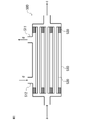
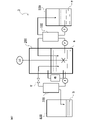
- FIG. 1 is a conceptual diagram for explaining an example of a raw material liquid volume reduction system of the present invention
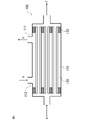
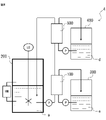
- FIG. 4 is a conceptual diagram for explaining another example of the raw material solution volume reduction system of the present invention
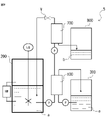
- FIG. 4 is a conceptual diagram for explaining still another example of the raw material solution volume reduction system of the present invention
- FIG. 4 is a conceptual diagram for explaining still another example of the raw material solution volume reduction system of the present invention
- FIG. 4 is a conceptual diagram for explaining still another example of the raw material solution volume reduction system of the present invention
- FIG. 4 is a conceptual diagram for explaining still another example of the raw material solution volume reduction system of the present invention
- the raw material liquid volume reduction method of the present invention is a raw material liquid volume reduction method for reducing the volume of a raw material liquid containing at least a valuable substance and a first solvent,
- the raw material liquid is further comprising a secondary component other than the valuable substance and the first solvent, or comprising a mixed solvent containing the first solvent and the second solvent as a solvent
- the raw material liquid volume reduction method includes: a first process of removing the first solvent from the raw material liquid; a second process of adjusting the concentration of the second solvent or the subcomponent in the raw material liquid by a dialysis method using a dialysis membrane; It is a method of combining
- the present inventors focused on the dialysis method as a means of maintaining or gently adjusting the solvent composition and the concentration of subcomponents.
- the solvent composition or subcomponent concentration in the raw material liquid gradually approaches the solvent composition or subcomponent concentration of the dialysate over time.
- the raw material liquid to be volume-reduced by the volume-reducing method of the present invention is a solution or dispersion containing at least a valuable substance and a first solvent.
- This raw material liquid is It further contains an auxiliary component other than the valuable substance and the first solvent, or it contains a mixed solvent containing the first solvent and the second solvent as the solvent.
- Raw material liquids applicable to the volume reduction method of the present invention include, for example, foods; pharmaceuticals; seawater; and produced water discharged from gas fields, oil fields, and the like.
- a non-natural amino acid is an artificial compound that does not exist in nature and refers to a compound having one amino acid skeleton in the molecule.
- Non-natural amino acids as pharmaceutical raw materials in the present disclosure include labeled amino acids, functionalized amino acids, and the like.
- a labeled amino acid is a compound in which a desired labeled compound is attached to the amino acid skeleton.
- Labeling compounds include, for example, dyes, fluorescent substances, luminescent substances, enzyme substrates, coenzymes, antigenic substances, protein-binding substances and the like.
- Examples of functionalized amino acids include photoresponsive amino acids, photoswitch amino acids, fluorescent probe amino acids, fluorescent labeled amino acids and the like.
- Sugars include, for example, monosaccharides, disaccharides, sugar chains (excluding disaccharides), sugar chain derivatives, and the like.
- Monosaccharides include, for example, glucose, fructose, galactose, mannose, ribose, deoxyribose and the like.
- disaccharides include maltose, sucrose, lactose and the like.
- vaccines include hepatitis A vaccine, hepatitis B vaccine, hepatitis C vaccine, and the like;
- nucleic acids include oligonucleotides, RNA, aptamers, decoys, and the like;
- Antibiotics include, for example, streptomycin, vancomycin;
- Antibody drug conjugates (ADCs) include, for example, brentuximab vedotin (ADCETRIS), trastuzumab emtansine (Kadcyra), gemtuzumab ozogamicin (Mylotarg) and the like; Each is mentioned.
- yeast examples include Saccharomyces cerevisiae, Pichia stipitis, Candida shehatae, Pachysolen tannophilus and the like, including mutant strains thereof.
- vitamins include vitamin A, vitamin B, vitamin C and the like, and derivatives and salts thereof are also included.
- Vitamin B includes, for example, vitamin B6, vitamin B12, and the like.
- a solvent is a compound capable of dissolving or dispersing the value and, if present, secondary ingredients.
- Solvents are typically one or more selected from water and organic solvents.
- the organic solvent is an organic compound having one or more carbon atoms, and in one aspect, it is a compound that exists as a liquid at normal pressure at 0°C or higher and lower than 50°C. However, carboxylic acid is excluded from the solvent in the present invention.
- organic solvents include alcohols, esters, ethers, aprotic polar compounds, aromatic compounds, aliphatic compounds, chlorinated hydrocarbons, ketones and the like.
- Polymers used as subcomponents exclude those that fall under the category of valuable substances.
- Examples of polymers that can be used as subcomponents in the present invention include polyethylene oxide, polypropylene oxide, copolymers of ethylene oxide and propylene oxide, and the like.
- a raw material liquid often contains a plurality of subcomponents.
- the amount of the subcomponents in the raw material liquid is arbitrarily set according to the solubility and chemical stability of the valuable substance, the convenience of the reaction scheduled after volume reduction, and the like. you can
- forward osmosis membrane module can be used by reading "forward osmosis membrane” as “nanofiltration membrane”.
- Determination of the concentration of at least one of the components in the raw material liquid is performed, for example, by specific gravity measurement, pH measurement, conductivity measurement, liquid level measurement, optical rotation measurement, refractive index measurement, near-infrared spectroscopic analysis, weight measurement, etc. of the raw material liquid. can be determined using the measurement results of Then, when the raw material liquid is reduced to the desired volume reduction rate, both the first treatment and the second treatment are stopped to complete the volume reduction of the raw material liquid.
- the volume reduction rate can be known by an appropriate method such as weight measurement of the raw material liquid, liquid level measurement, or the like.
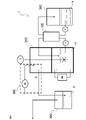
- the raw material liquid volume reduction system in FIG. 5 applies an evaporation unit as a first unit that causes gas to flow into a container that stores the raw material liquid to evaporate the first solvent in the raw material liquid and move it out of the container.
- the raw liquid volume reduction system (1) in FIG. 5 includes an evaporation unit (900), a dialysis membrane module (100), a raw liquid tank (200), a dialysate tank (300), and a trap (400). have.
- the evaporation unit (900) has a blower (BL) for flowing gas in the raw material liquid tank (200) and a pipe for sending the evaporated first solvent (b) to the trap (400).
- Adjustment of the concentration of the second solvent or subcomponents by the dialysis membrane module (100) is performed in the same manner as in the raw liquid volume reduction system (1) of FIG.
- the pump (P) is placed from the bottom of the raw material liquid tank (200) to one space (for example, the space inside the hollow fiber membrane) of the forward osmosis membrane module (500). is used to supply the raw material liquid (a) at an appropriate flow rate. After passing through the hollow fiber membrane, the raw material liquid (a) is returned to the raw material liquid tank (200) and circulated.
- This return position is preferably a position far from the collection position for supplying to the forward osmosis membrane module (500) and at the bottom of the raw material liquid tank (200).
- This return position is preferably a position far from the collection position for supplying to the forward osmosis membrane module (500) and at the bottom of the raw material liquid tank (200).
- the raw liquid volume reduction system (4) in FIG. 8 is another embodiment in which a forward osmosis membrane module (500) is used as the first volume reduction unit, and in the flow direction of the raw liquid (a), It is a system in which a dialysis membrane module (100) as a second unit and a forward osmosis membrane module (500) as a first unit are arranged in series in this order.
- the raw liquid (a) taken out from the bottom of the raw liquid tank (200) first passes through the dialysis membrane module (100) and then passes through the forward osmosis membrane module ( 500) has passed.
- it may be configured to first pass through the forward osmosis membrane module (500) and then pass through the dialysis membrane module (100).
- the raw material liquid volume reduction system (5) in FIG. 9 is another embodiment in which the nanofiltration membrane module (700) is used as the first volume reduction unit.
- the raw material liquid (a) taken out from the bottom of the raw liquid tank (200) first passes through the dialysis membrane module (100) and then passes through the nanofiltration membrane module ( 700).
- it may be configured to pass through the dialysis membrane module (100) after first passing through the nanofiltration membrane module (700).
- ⁇ Dialysis membrane module 1> A hollow fiber ultrafiltration membrane made of polyethersulfone and having an inner diameter of 0.7 mm and an outer diameter of 1.0 mm was used as the substrate layer. 130 of these hollow fiber ultrafiltration membranes were packed into a cylindrical plastic housing with a diameter of 2 cm and a length of 10 cm. was made. 2.5 g of piperazine and 0.8 g of sodium lauryl sulfate were placed in a 0.5 L container, and 489.2 g of pure water was added to dissolve them to prepare 0.5 kg of the first solution used for interfacial polymerization.
- ⁇ Nanofiltration membrane module 1> A module prepared in the same manner as the "forward osmosis membrane module 1" was used as the “nanofiltration membrane module 1".
- ⁇ Evaporation unit> a blower (BL) for sending air into the raw material liquid tank (200), a pipe for discharging the introduced gas and the first solvent (b) evaporated by this gas to the outside of the raw material liquid tank (200), Evaporation unit 1 having the same configuration as the evaporation unit (900) shown in FIG.
- the length of the portion of the hollow fiber membrane not embedded in the adhesive resin was about 10 cm, and the total membrane area of the inner surface of the hollow fiber membrane was adjusted to about 0.02 m 2 .
- Two membrane modules with the same specifications were produced. In these membrane modules, FS-392B manufactured by Fluoro Technology Co., Ltd. is passed through the outer space of the hollow fiber membranes in a state of being concentrated three times, applied to the outside of the hollow fiber membranes, and then dried. Thus, a membrane module 1 for membrane distillation was obtained. Of the membrane modules 1 for membrane distillation obtained by the above method, one module was disassembled and the contact angle was measured without analyzing the porous hollow fiber membrane.
- the evaluation of acetonitrile permeability was performed using water as a reference liquid and a 1 M aqueous solution of acetonitrile with a concentration of 1 mol/L as a test liquid.
- the test liquid is applied to the inner space of the hollow fibers of each module at an average linear velocity of 0.04 m/sec, and the reference liquid is applied to the outer space of the hollow fibers at an average linear velocity of 0.025 m/sec.
- this raw material liquid (a) was filled in a raw material liquid tank (200) having a capacity of 1,000 mL.
- a draw solution (d) 1,200 g of a 50 wt % isopropanol aqueous solution was filled in the draw solution tank (600).
- the dialysate tank (300) was filled with 1,200 g of water as the dialysate (e).
- the raw material liquid (a) and the draw solution (d) were passed through the forward osmosis membrane module (500) as the first unit.
- the raw material liquid (a) was flowed at a flow rate of 120 mL/min, and the draw solution (d) was flowed at a flow rate of 240 mL/min.
- the dialysis method as the second treatment the raw material liquid (a) and the dialysate (e) were passed through the dialysis membrane module (100) as the second unit.
- the raw material liquid (a) was flowed at a flow rate of 120 mL/min, and the dialysate (e) was flowed at a flow rate of 240 mL/min.
- the concentration of acetonitrile in the solvent of the raw material liquid (a) was Later, the concentration decreased from the initial concentration of 50 wt% to 31 wt%, and the water-rich composition was maintained thereafter.
- the volume of the raw material liquid was reduced while maintaining the solvent composition of the raw material liquid within the desired range, and the volume of the raw material liquid was reduced without damaging valuables. was verified.
- Examples 2 to 6 In the same manner as in Example 1, except that the composition of the raw material liquid and the dialysate (e) to be circulated in the dialysis membrane module (100), which is the second unit, were changed as shown in Table 2, did the driving.
- Example 8 the nanofiltration membrane module 1 produced above was used as the nanofiltration membrane module (700) using the raw material liquid volume reduction system (3) shown in FIG. 7 in which the first treatment was performed by nanofiltration. The operation was carried out in the same manner as in Example 1, except that .
- Example 9 the raw material liquid volume reduction system (1) shown in FIG. Operation was carried out in the same manner as in Example 1, except that the composition of the liquid and the dialysate (e) to be circulated in the dialysis membrane module (100), which is the second unit, were changed as shown in Table 2. did
- Example 1 Operation was performed in the same manner as in Example 1, except that the dialysis membrane module (100) was not used. After 4 hours from the start of the operation, when the volume reduction ratio reached 2.6 times, cloudiness was confirmed in the raw material liquid, so the operation was stopped. The white turbid raw material liquid was filtered to remove the precipitated solids, and the glutathione disulfide concentration in the filtrate was analyzed to calculate the yield of the valuable substance. The yield of valuables in Comparative Example 1 was 59.9%. In addition, a small amount of the raw material liquid was extracted every hour from the start of operation, and the concentration of acetonitrile was tracked by gas chromatography analysis. It was confirmed that the content had increased to 61 wt% at the time.
- the membrane distillation membrane module 1 was used instead of the dialysis membrane module (100), and instead of the dialysis treatment, the membrane distillation treatment was performed while cooling water at 10°C was circulated.
- the operation was carried out analogously to Example 1. After 4 hours from the start of operation, a change in the appearance of the membrane module for membrane distillation suggesting membrane wetting was confirmed, so the operation was stopped.
- the glutathione disulfide concentration in the raw material liquid (a) was analyzed by ICP-MS analysis, and the yield at the time of shutdown was calculated. The yield of glutathione disulfide was 45%.
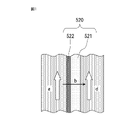
- Reference Signs List 1, 2, 3, 4 raw liquid volume reduction system 100 dialysis membrane module 110 housing 111 dialysate inlet 112 dialysate outlet 120 dialysis membrane 121 base layer 122 active layer 130, 530 adhesive resin 200 raw liquid tank 300 dialysate tank 400 Trap 500 forward osmosis membrane module 510 housing 511 draw solution inlet 512 draw solution outlet 520 forward osmosis membrane 521 substrate layer 522 active layer 600 draw solution tank 700 nanofiltration membrane module 800 permeate tank 900 evaporation unit a feed solution b first solvent c reduced raw material solution d draw solution e dialysate f raw material solution with adjusted component concentration g second solvent or auxiliary component BL blower HM hydrometer LG level gauge P pump V valve
Landscapes
- Chemical & Material Sciences (AREA)
- Engineering & Computer Science (AREA)
- Water Supply & Treatment (AREA)
- Chemical Kinetics & Catalysis (AREA)
- Nanotechnology (AREA)
- Inorganic Chemistry (AREA)
- Health & Medical Sciences (AREA)
- Urology & Nephrology (AREA)
- Separation Using Semi-Permeable Membranes (AREA)
- Peptides Or Proteins (AREA)
Abstract
Priority Applications (5)
| Application Number | Priority Date | Filing Date | Title |
|---|---|---|---|
| EP22771443.3A EP4309769A4 (fr) | 2021-03-15 | 2022-03-15 | Procédé et système pour réduire le volume de liquide de matière première |
| CN202280009464.1A CN116710189B (zh) | 2021-03-15 | 2022-03-15 | 原料液减容方法和系统 |
| JP2023507136A JPWO2022196698A1 (fr) | 2021-03-15 | 2022-03-15 | |
| US18/281,533 US20240149220A1 (en) | 2021-03-15 | 2022-03-15 | Method and System for Reducing Volume of Raw Material Liquid |
| JP2024214619A JP2025026619A (ja) | 2021-03-15 | 2024-12-09 | 原料液減容方法及びシステム |
Applications Claiming Priority (2)
| Application Number | Priority Date | Filing Date | Title |
|---|---|---|---|
| JP2021041457 | 2021-03-15 | ||
| JP2021-041457 | 2021-03-15 |
Publications (1)
| Publication Number | Publication Date |
|---|---|
| WO2022196698A1 true WO2022196698A1 (fr) | 2022-09-22 |
Family
ID=83322326
Family Applications (1)
| Application Number | Title | Priority Date | Filing Date |
|---|---|---|---|
| PCT/JP2022/011704 Ceased WO2022196698A1 (fr) | 2021-03-15 | 2022-03-15 | Procédé et système pour réduire le volume de liquide de matière première |
Country Status (5)
| Country | Link |
|---|---|
| US (1) | US20240149220A1 (fr) |
| EP (1) | EP4309769A4 (fr) |
| JP (2) | JPWO2022196698A1 (fr) |
| CN (1) | CN116710189B (fr) |
| WO (1) | WO2022196698A1 (fr) |
Families Citing this family (1)
| Publication number | Priority date | Publication date | Assignee | Title |
|---|---|---|---|---|
| CN116510539B (zh) * | 2023-05-04 | 2026-02-27 | 安徽普朗膜技术有限公司 | 一种低温热致相分离法制备聚酮分离膜的方法 |
Citations (6)
| Publication number | Priority date | Publication date | Assignee | Title |
|---|---|---|---|---|
| JPS63221805A (ja) * | 1987-03-12 | 1988-09-14 | Sumitomo Bakelite Co Ltd | 濾過装置 |
| CN205874272U (zh) * | 2016-06-15 | 2017-01-11 | 赛普特环保技术(厦门)有限公司 | 一种大豆肽脱盐提纯浓缩装置 |
| WO2020050282A1 (fr) * | 2018-09-03 | 2020-03-12 | 旭化成株式会社 | Système de concentration d'écoulement de solution de charge d'alimentation |
| WO2020241865A1 (fr) * | 2019-05-31 | 2020-12-03 | 旭化成株式会社 | Système de concentration de liquide de matière première |
| WO2020241795A1 (fr) * | 2019-05-31 | 2020-12-03 | 旭化成株式会社 | Système de concentration de solution de matière première |
| JP2020196009A (ja) | 2019-05-31 | 2020-12-10 | 旭化成株式会社 | 中分子溶液の濃縮回収装置及び運転方法 |
Family Cites Families (10)
| Publication number | Priority date | Publication date | Assignee | Title |
|---|---|---|---|---|
| JPH09220455A (ja) * | 1996-10-04 | 1997-08-26 | Toyobo Co Ltd | 中空糸型選択分離膜 |
| JPH11347384A (ja) * | 1998-06-12 | 1999-12-21 | Terumo Corp | セルロース系透析膜の製造方法 |
| ES2364130T3 (es) * | 2001-05-04 | 2011-08-25 | Burcon Nutrascience (Mb) Corp. | Producción de aislado de proteína de semilla de aceite. |
| US20050202154A1 (en) * | 2002-05-28 | 2005-09-15 | Diosady Levente L. | Production of high-quality protein isolated from defatted meals of Brassica seeds |
| JP2006212512A (ja) * | 2005-02-02 | 2006-08-17 | Kawamura Inst Of Chem Res | 膜分離デバイスおよび膜分離方法 |
| JP5398577B2 (ja) * | 2010-02-23 | 2014-01-29 | 月島環境エンジニアリング株式会社 | 目的物質の分離・回収方法および装置 |
| JP2013010704A (ja) * | 2011-06-28 | 2013-01-17 | Tokyo Univ Of Science | イオントフォレシス用ナノ粒子及びその製造方法 |
| EP3015542A1 (fr) * | 2015-05-07 | 2016-05-04 | Bayer Technology Services GmbH | Installation modulaire et procédé de production continue, présentant une réduction de germe et/ou préparation d'un produit |
| JP2020196007A (ja) * | 2019-05-31 | 2020-12-10 | 旭化成株式会社 | 原料液の濃縮方法 |
| EP4146378A1 (fr) * | 2020-05-05 | 2023-03-15 | GlaxoSmithKline Biologicals S.A. | Dispositif de mélange microfluidique et procédés d'utilisation |
-
2022
- 2022-03-15 WO PCT/JP2022/011704 patent/WO2022196698A1/fr not_active Ceased
- 2022-03-15 CN CN202280009464.1A patent/CN116710189B/zh active Active
- 2022-03-15 US US18/281,533 patent/US20240149220A1/en active Pending
- 2022-03-15 EP EP22771443.3A patent/EP4309769A4/fr active Pending
- 2022-03-15 JP JP2023507136A patent/JPWO2022196698A1/ja active Pending
-
2024
- 2024-12-09 JP JP2024214619A patent/JP2025026619A/ja active Pending
Patent Citations (6)
| Publication number | Priority date | Publication date | Assignee | Title |
|---|---|---|---|---|
| JPS63221805A (ja) * | 1987-03-12 | 1988-09-14 | Sumitomo Bakelite Co Ltd | 濾過装置 |
| CN205874272U (zh) * | 2016-06-15 | 2017-01-11 | 赛普特环保技术(厦门)有限公司 | 一种大豆肽脱盐提纯浓缩装置 |
| WO2020050282A1 (fr) * | 2018-09-03 | 2020-03-12 | 旭化成株式会社 | Système de concentration d'écoulement de solution de charge d'alimentation |
| WO2020241865A1 (fr) * | 2019-05-31 | 2020-12-03 | 旭化成株式会社 | Système de concentration de liquide de matière première |
| WO2020241795A1 (fr) * | 2019-05-31 | 2020-12-03 | 旭化成株式会社 | Système de concentration de solution de matière première |
| JP2020196009A (ja) | 2019-05-31 | 2020-12-10 | 旭化成株式会社 | 中分子溶液の濃縮回収装置及び運転方法 |
Non-Patent Citations (2)
| Title |
|---|
| BIOTECHNOL. PROG., vol. 35, no. 2, 2019, pages e2763 |
| See also references of EP4309769A4 |
Also Published As
| Publication number | Publication date |
|---|---|
| CN116710189B (zh) | 2026-02-03 |
| JP2025026619A (ja) | 2025-02-21 |
| US20240149220A1 (en) | 2024-05-09 |
| JPWO2022196698A1 (fr) | 2022-09-22 |
| CN116710189A (zh) | 2023-09-05 |
| EP4309769A1 (fr) | 2024-01-24 |
| EP4309769A4 (fr) | 2025-06-11 |
Similar Documents
| Publication | Publication Date | Title |
|---|---|---|
| JP7249427B2 (ja) | 原料液濃縮方法および原料液濃縮システム | |
| JP2008043948A (ja) | 耐溶剤性ナノフィルトレーション・メンブレン | |
| JP7233530B2 (ja) | 原料液濃縮システム | |
| US20260115663A1 (en) | Raw Material Solution Concentration System | |
| JP7555456B2 (ja) | 原料液濃縮システムおよび濃縮装置 | |
| JP2025026619A (ja) | 原料液減容方法及びシステム | |
| JP2020138119A (ja) | 原料液濃縮システム | |
| JP7735435B2 (ja) | 原料液の濃縮方法及び濃縮システム | |
| WO2022270495A1 (fr) | Système réactionnel et procédé de réaction | |
| JP2024002708A (ja) | 組成推定方法 | |
| JP2024002633A (ja) | 原料液濃縮方法 | |
| WO2025249563A1 (fr) | Membrane semi-perméable composite et procédé de concentration de liquide de matière première | |
| WO2024204207A1 (fr) | Système de concentration d'écoulement de liquide de matière première et procédé de concentration d'écoulement de liquide de matière première | |
| JP2024144379A (ja) | 原料液の濃縮方法及び濃縮システム | |
| WO2024204166A1 (fr) | Système de déshydratation d'écoulement de liquide de matière première et procédé de déshydratation d'écoulement de liquide de matière première | |
| WO2025249554A1 (fr) | Membrane semi-perméable composite, procédé de production de membrane semi-perméable composite, et procédé de concentration de liquide de matière première au moyen d'une membrane semi-perméable composite | |
| WO2023249115A1 (fr) | Procédé d'élimination de solvant organique |
Legal Events
| Date | Code | Title | Description |
|---|---|---|---|
| 121 | Ep: the epo has been informed by wipo that ep was designated in this application |
Ref document number: 22771443 Country of ref document: EP Kind code of ref document: A1 |
|
| ENP | Entry into the national phase |
Ref document number: 2023507136 Country of ref document: JP Kind code of ref document: A |
|
| WWE | Wipo information: entry into national phase |
Ref document number: 202280009464.1 Country of ref document: CN |
|
| WWE | Wipo information: entry into national phase |
Ref document number: 18281533 Country of ref document: US |
|
| WWE | Wipo information: entry into national phase |
Ref document number: 2022771443 Country of ref document: EP |
|
| NENP | Non-entry into the national phase |
Ref country code: DE |
|
| ENP | Entry into the national phase |
Ref document number: 2022771443 Country of ref document: EP Effective date: 20231016 |