WO2022209689A1 - 光造形用硬化性樹脂組成物、硬化物及び立体造形物 - Google Patents
光造形用硬化性樹脂組成物、硬化物及び立体造形物 Download PDFInfo
- Publication number
- WO2022209689A1 WO2022209689A1 PCT/JP2022/010456 JP2022010456W WO2022209689A1 WO 2022209689 A1 WO2022209689 A1 WO 2022209689A1 JP 2022010456 W JP2022010456 W JP 2022010456W WO 2022209689 A1 WO2022209689 A1 WO 2022209689A1
- Authority
- WO
- WIPO (PCT)
- Prior art keywords
- meth
- resin composition
- curable resin
- stereolithography
- acrylate
- Prior art date
- Legal status (The legal status is an assumption and is not a legal conclusion. Google has not performed a legal analysis and makes no representation as to the accuracy of the status listed.)
- Ceased
Links
Classifications
-
- C—CHEMISTRY; METALLURGY
- C08—ORGANIC MACROMOLECULAR COMPOUNDS; THEIR PREPARATION OR CHEMICAL WORKING-UP; COMPOSITIONS BASED THEREON
- C08G—MACROMOLECULAR COMPOUNDS OBTAINED OTHERWISE THAN BY REACTIONS ONLY INVOLVING UNSATURATED CARBON-TO-CARBON BONDS
- C08G18/00—Polymeric products of isocyanates or isothiocyanates
- C08G18/06—Polymeric products of isocyanates or isothiocyanates with compounds having active hydrogen
- C08G18/70—Polymeric products of isocyanates or isothiocyanates with compounds having active hydrogen characterised by the isocyanates or isothiocyanates used
- C08G18/72—Polyisocyanates or polyisothiocyanates
- C08G18/77—Polyisocyanates or polyisothiocyanates having heteroatoms in addition to the isocyanate or isothiocyanate nitrogen and oxygen or sulfur
- C08G18/78—Nitrogen
- C08G18/79—Nitrogen characterised by the polyisocyanates used, these having groups formed by oligomerisation of isocyanates or isothiocyanates
- C08G18/791—Nitrogen characterised by the polyisocyanates used, these having groups formed by oligomerisation of isocyanates or isothiocyanates containing isocyanurate groups
- C08G18/792—Nitrogen characterised by the polyisocyanates used, these having groups formed by oligomerisation of isocyanates or isothiocyanates containing isocyanurate groups formed by oligomerisation of aliphatic and/or cycloaliphatic isocyanates or isothiocyanates
-
- C—CHEMISTRY; METALLURGY
- C08—ORGANIC MACROMOLECULAR COMPOUNDS; THEIR PREPARATION OR CHEMICAL WORKING-UP; COMPOSITIONS BASED THEREON
- C08F—MACROMOLECULAR COMPOUNDS OBTAINED BY REACTIONS ONLY INVOLVING CARBON-TO-CARBON UNSATURATED BONDS
- C08F290/00—Macromolecular compounds obtained by polymerising monomers on to polymers modified by introduction of aliphatic unsaturated end or side groups
- C08F290/02—Macromolecular compounds obtained by polymerising monomers on to polymers modified by introduction of aliphatic unsaturated end or side groups on to polymers modified by introduction of unsaturated end groups
- C08F290/06—Polymers provided for in subclass C08G
- C08F290/067—Polyurethanes; Polyureas
-
- B—PERFORMING OPERATIONS; TRANSPORTING
- B29—WORKING OF PLASTICS; WORKING OF SUBSTANCES IN A PLASTIC STATE IN GENERAL
- B29C—SHAPING OR JOINING OF PLASTICS; SHAPING OF MATERIAL IN A PLASTIC STATE, NOT OTHERWISE PROVIDED FOR; AFTER-TREATMENT OF THE SHAPED PRODUCTS, e.g. REPAIRING
- B29C64/00—Additive manufacturing, i.e. manufacturing of three-dimensional [3D] objects by additive deposition, additive agglomeration or additive layering, e.g. by 3D printing, stereolithography or selective laser sintering
- B29C64/20—Apparatus for additive manufacturing; Details thereof or accessories therefor
- B29C64/264—Arrangements for irradiation
-
- B—PERFORMING OPERATIONS; TRANSPORTING
- B33—ADDITIVE MANUFACTURING TECHNOLOGY
- B33Y—ADDITIVE MANUFACTURING, i.e. MANUFACTURING OF THREE-DIMENSIONAL [3D] OBJECTS BY ADDITIVE DEPOSITION, ADDITIVE AGGLOMERATION OR ADDITIVE LAYERING, e.g. BY 3D PRINTING, STEREOLITHOGRAPHY OR SELECTIVE LASER SINTERING
- B33Y70/00—Materials specially adapted for additive manufacturing
-
- B—PERFORMING OPERATIONS; TRANSPORTING
- B33—ADDITIVE MANUFACTURING TECHNOLOGY
- B33Y—ADDITIVE MANUFACTURING, i.e. MANUFACTURING OF THREE-DIMENSIONAL [3D] OBJECTS BY ADDITIVE DEPOSITION, ADDITIVE AGGLOMERATION OR ADDITIVE LAYERING, e.g. BY 3D PRINTING, STEREOLITHOGRAPHY OR SELECTIVE LASER SINTERING
- B33Y80/00—Products made by additive manufacturing
-
- C—CHEMISTRY; METALLURGY
- C08—ORGANIC MACROMOLECULAR COMPOUNDS; THEIR PREPARATION OR CHEMICAL WORKING-UP; COMPOSITIONS BASED THEREON
- C08F—MACROMOLECULAR COMPOUNDS OBTAINED BY REACTIONS ONLY INVOLVING CARBON-TO-CARBON UNSATURATED BONDS
- C08F299/00—Macromolecular compounds obtained by interreacting polymers involving only carbon-to-carbon unsaturated bond reactions, in the absence of non-macromolecular monomers
- C08F299/02—Macromolecular compounds obtained by interreacting polymers involving only carbon-to-carbon unsaturated bond reactions, in the absence of non-macromolecular monomers from unsaturated polycondensates
- C08F299/06—Macromolecular compounds obtained by interreacting polymers involving only carbon-to-carbon unsaturated bond reactions, in the absence of non-macromolecular monomers from unsaturated polycondensates from polyurethanes
- C08F299/065—Macromolecular compounds obtained by interreacting polymers involving only carbon-to-carbon unsaturated bond reactions, in the absence of non-macromolecular monomers from unsaturated polycondensates from polyurethanes from polyurethanes with side or terminal unsaturations
-
- C—CHEMISTRY; METALLURGY
- C08—ORGANIC MACROMOLECULAR COMPOUNDS; THEIR PREPARATION OR CHEMICAL WORKING-UP; COMPOSITIONS BASED THEREON
- C08G—MACROMOLECULAR COMPOUNDS OBTAINED OTHERWISE THAN BY REACTIONS ONLY INVOLVING UNSATURATED CARBON-TO-CARBON BONDS
- C08G18/00—Polymeric products of isocyanates or isothiocyanates
- C08G18/06—Polymeric products of isocyanates or isothiocyanates with compounds having active hydrogen
- C08G18/08—Processes
- C08G18/16—Catalysts
- C08G18/22—Catalysts containing metal compounds
- C08G18/24—Catalysts containing metal compounds of tin
- C08G18/244—Catalysts containing metal compounds of tin tin salts of carboxylic acids
- C08G18/246—Catalysts containing metal compounds of tin tin salts of carboxylic acids containing also tin-carbon bonds
-
- C—CHEMISTRY; METALLURGY
- C08—ORGANIC MACROMOLECULAR COMPOUNDS; THEIR PREPARATION OR CHEMICAL WORKING-UP; COMPOSITIONS BASED THEREON
- C08G—MACROMOLECULAR COMPOUNDS OBTAINED OTHERWISE THAN BY REACTIONS ONLY INVOLVING UNSATURATED CARBON-TO-CARBON BONDS
- C08G18/00—Polymeric products of isocyanates or isothiocyanates
- C08G18/06—Polymeric products of isocyanates or isothiocyanates with compounds having active hydrogen
- C08G18/28—Polymeric products of isocyanates or isothiocyanates with compounds having active hydrogen characterised by the compounds used containing active hydrogen
- C08G18/67—Unsaturated compounds having active hydrogen
- C08G18/671—Unsaturated compounds having only one group containing active hydrogen
- C08G18/672—Esters of acrylic or alkyl acrylic acid having only one group containing active hydrogen
-
- C—CHEMISTRY; METALLURGY
- C08—ORGANIC MACROMOLECULAR COMPOUNDS; THEIR PREPARATION OR CHEMICAL WORKING-UP; COMPOSITIONS BASED THEREON
- C08G—MACROMOLECULAR COMPOUNDS OBTAINED OTHERWISE THAN BY REACTIONS ONLY INVOLVING UNSATURATED CARBON-TO-CARBON BONDS
- C08G18/00—Polymeric products of isocyanates or isothiocyanates
- C08G18/06—Polymeric products of isocyanates or isothiocyanates with compounds having active hydrogen
- C08G18/28—Polymeric products of isocyanates or isothiocyanates with compounds having active hydrogen characterised by the compounds used containing active hydrogen
- C08G18/67—Unsaturated compounds having active hydrogen
- C08G18/671—Unsaturated compounds having only one group containing active hydrogen
- C08G18/672—Esters of acrylic or alkyl acrylic acid having only one group containing active hydrogen
- C08G18/6725—Esters of acrylic or alkyl acrylic acid having only one group containing active hydrogen containing ester groups other than acrylate or alkylacrylate ester groups
-
- C—CHEMISTRY; METALLURGY
- C08—ORGANIC MACROMOLECULAR COMPOUNDS; THEIR PREPARATION OR CHEMICAL WORKING-UP; COMPOSITIONS BASED THEREON
- C08G—MACROMOLECULAR COMPOUNDS OBTAINED OTHERWISE THAN BY REACTIONS ONLY INVOLVING UNSATURATED CARBON-TO-CARBON BONDS
- C08G18/00—Polymeric products of isocyanates or isothiocyanates
- C08G18/06—Polymeric products of isocyanates or isothiocyanates with compounds having active hydrogen
- C08G18/70—Polymeric products of isocyanates or isothiocyanates with compounds having active hydrogen characterised by the isocyanates or isothiocyanates used
- C08G18/72—Polyisocyanates or polyisothiocyanates
- C08G18/73—Polyisocyanates or polyisothiocyanates acyclic
-
- C—CHEMISTRY; METALLURGY
- C08—ORGANIC MACROMOLECULAR COMPOUNDS; THEIR PREPARATION OR CHEMICAL WORKING-UP; COMPOSITIONS BASED THEREON
- C08G—MACROMOLECULAR COMPOUNDS OBTAINED OTHERWISE THAN BY REACTIONS ONLY INVOLVING UNSATURATED CARBON-TO-CARBON BONDS
- C08G18/00—Polymeric products of isocyanates or isothiocyanates
- C08G18/06—Polymeric products of isocyanates or isothiocyanates with compounds having active hydrogen
- C08G18/70—Polymeric products of isocyanates or isothiocyanates with compounds having active hydrogen characterised by the isocyanates or isothiocyanates used
- C08G18/72—Polyisocyanates or polyisothiocyanates
- C08G18/74—Polyisocyanates or polyisothiocyanates cyclic
- C08G18/75—Polyisocyanates or polyisothiocyanates cyclic cycloaliphatic
- C08G18/751—Polyisocyanates or polyisothiocyanates cyclic cycloaliphatic containing only one cycloaliphatic ring
- C08G18/752—Polyisocyanates or polyisothiocyanates cyclic cycloaliphatic containing only one cycloaliphatic ring containing at least one isocyanate or isothiocyanate group linked to the cycloaliphatic ring by means of an aliphatic group
- C08G18/753—Polyisocyanates or polyisothiocyanates cyclic cycloaliphatic containing only one cycloaliphatic ring containing at least one isocyanate or isothiocyanate group linked to the cycloaliphatic ring by means of an aliphatic group containing one isocyanate or isothiocyanate group linked to the cycloaliphatic ring by means of an aliphatic group having a primary carbon atom next to the isocyanate or isothiocyanate group
- C08G18/755—Polyisocyanates or polyisothiocyanates cyclic cycloaliphatic containing only one cycloaliphatic ring containing at least one isocyanate or isothiocyanate group linked to the cycloaliphatic ring by means of an aliphatic group containing one isocyanate or isothiocyanate group linked to the cycloaliphatic ring by means of an aliphatic group having a primary carbon atom next to the isocyanate or isothiocyanate group and at least one isocyanate or isothiocyanate group linked to a secondary carbon atom of the cycloaliphatic ring, e.g. isophorone diisocyanate
-
- C—CHEMISTRY; METALLURGY
- C08—ORGANIC MACROMOLECULAR COMPOUNDS; THEIR PREPARATION OR CHEMICAL WORKING-UP; COMPOSITIONS BASED THEREON
- C08G—MACROMOLECULAR COMPOUNDS OBTAINED OTHERWISE THAN BY REACTIONS ONLY INVOLVING UNSATURATED CARBON-TO-CARBON BONDS
- C08G18/00—Polymeric products of isocyanates or isothiocyanates
- C08G18/06—Polymeric products of isocyanates or isothiocyanates with compounds having active hydrogen
- C08G18/70—Polymeric products of isocyanates or isothiocyanates with compounds having active hydrogen characterised by the isocyanates or isothiocyanates used
- C08G18/72—Polyisocyanates or polyisothiocyanates
- C08G18/77—Polyisocyanates or polyisothiocyanates having heteroatoms in addition to the isocyanate or isothiocyanate nitrogen and oxygen or sulfur
- C08G18/78—Nitrogen
- C08G18/7806—Nitrogen containing -N-C=0 groups
- C08G18/7818—Nitrogen containing -N-C=0 groups containing ureum or ureum derivative groups
- C08G18/7831—Nitrogen containing -N-C=0 groups containing ureum or ureum derivative groups containing biuret groups
-
- C—CHEMISTRY; METALLURGY
- C08—ORGANIC MACROMOLECULAR COMPOUNDS; THEIR PREPARATION OR CHEMICAL WORKING-UP; COMPOSITIONS BASED THEREON
- C08G—MACROMOLECULAR COMPOUNDS OBTAINED OTHERWISE THAN BY REACTIONS ONLY INVOLVING UNSATURATED CARBON-TO-CARBON BONDS
- C08G18/00—Polymeric products of isocyanates or isothiocyanates
- C08G18/06—Polymeric products of isocyanates or isothiocyanates with compounds having active hydrogen
- C08G18/70—Polymeric products of isocyanates or isothiocyanates with compounds having active hydrogen characterised by the isocyanates or isothiocyanates used
- C08G18/72—Polyisocyanates or polyisothiocyanates
- C08G18/77—Polyisocyanates or polyisothiocyanates having heteroatoms in addition to the isocyanate or isothiocyanate nitrogen and oxygen or sulfur
- C08G18/78—Nitrogen
- C08G18/7806—Nitrogen containing -N-C=0 groups
- C08G18/7818—Nitrogen containing -N-C=0 groups containing ureum or ureum derivative groups
- C08G18/7837—Nitrogen containing -N-C=0 groups containing ureum or ureum derivative groups containing allophanate groups
-
- C—CHEMISTRY; METALLURGY
- C08—ORGANIC MACROMOLECULAR COMPOUNDS; THEIR PREPARATION OR CHEMICAL WORKING-UP; COMPOSITIONS BASED THEREON
- C08G—MACROMOLECULAR COMPOUNDS OBTAINED OTHERWISE THAN BY REACTIONS ONLY INVOLVING UNSATURATED CARBON-TO-CARBON BONDS
- C08G18/00—Polymeric products of isocyanates or isothiocyanates
- C08G18/06—Polymeric products of isocyanates or isothiocyanates with compounds having active hydrogen
- C08G18/70—Polymeric products of isocyanates or isothiocyanates with compounds having active hydrogen characterised by the isocyanates or isothiocyanates used
- C08G18/72—Polyisocyanates or polyisothiocyanates
- C08G18/77—Polyisocyanates or polyisothiocyanates having heteroatoms in addition to the isocyanate or isothiocyanate nitrogen and oxygen or sulfur
- C08G18/78—Nitrogen
- C08G18/79—Nitrogen characterised by the polyisocyanates used, these having groups formed by oligomerisation of isocyanates or isothiocyanates
-
- C—CHEMISTRY; METALLURGY
- C08—ORGANIC MACROMOLECULAR COMPOUNDS; THEIR PREPARATION OR CHEMICAL WORKING-UP; COMPOSITIONS BASED THEREON
- C08G—MACROMOLECULAR COMPOUNDS OBTAINED OTHERWISE THAN BY REACTIONS ONLY INVOLVING UNSATURATED CARBON-TO-CARBON BONDS
- C08G18/00—Polymeric products of isocyanates or isothiocyanates
- C08G18/06—Polymeric products of isocyanates or isothiocyanates with compounds having active hydrogen
- C08G18/70—Polymeric products of isocyanates or isothiocyanates with compounds having active hydrogen characterised by the isocyanates or isothiocyanates used
- C08G18/72—Polyisocyanates or polyisothiocyanates
- C08G18/77—Polyisocyanates or polyisothiocyanates having heteroatoms in addition to the isocyanate or isothiocyanate nitrogen and oxygen or sulfur
- C08G18/78—Nitrogen
- C08G18/79—Nitrogen characterised by the polyisocyanates used, these having groups formed by oligomerisation of isocyanates or isothiocyanates
- C08G18/791—Nitrogen characterised by the polyisocyanates used, these having groups formed by oligomerisation of isocyanates or isothiocyanates containing isocyanurate groups
-
- C—CHEMISTRY; METALLURGY
- C08—ORGANIC MACROMOLECULAR COMPOUNDS; THEIR PREPARATION OR CHEMICAL WORKING-UP; COMPOSITIONS BASED THEREON
- C08G—MACROMOLECULAR COMPOUNDS OBTAINED OTHERWISE THAN BY REACTIONS ONLY INVOLVING UNSATURATED CARBON-TO-CARBON BONDS
- C08G18/00—Polymeric products of isocyanates or isothiocyanates
- C08G18/06—Polymeric products of isocyanates or isothiocyanates with compounds having active hydrogen
- C08G18/70—Polymeric products of isocyanates or isothiocyanates with compounds having active hydrogen characterised by the isocyanates or isothiocyanates used
- C08G18/81—Unsaturated isocyanates or isothiocyanates
- C08G18/8141—Unsaturated isocyanates or isothiocyanates masked
- C08G18/815—Polyisocyanates or polyisothiocyanates masked with unsaturated compounds having active hydrogen
- C08G18/8158—Polyisocyanates or polyisothiocyanates masked with unsaturated compounds having active hydrogen with unsaturated compounds having only one group containing active hydrogen
- C08G18/8175—Polyisocyanates or polyisothiocyanates masked with unsaturated compounds having active hydrogen with unsaturated compounds having only one group containing active hydrogen with esters of acrylic or alkylacrylic acid having only one group containing active hydrogen
-
- B—PERFORMING OPERATIONS; TRANSPORTING
- B29—WORKING OF PLASTICS; WORKING OF SUBSTANCES IN A PLASTIC STATE IN GENERAL
- B29C—SHAPING OR JOINING OF PLASTICS; SHAPING OF MATERIAL IN A PLASTIC STATE, NOT OTHERWISE PROVIDED FOR; AFTER-TREATMENT OF THE SHAPED PRODUCTS, e.g. REPAIRING
- B29C64/00—Additive manufacturing, i.e. manufacturing of three-dimensional [3D] objects by additive deposition, additive agglomeration or additive layering, e.g. by 3D printing, stereolithography or selective laser sintering
- B29C64/10—Processes of additive manufacturing
- B29C64/106—Processes of additive manufacturing using only liquids or viscous materials, e.g. depositing a continuous bead of viscous material
- B29C64/124—Processes of additive manufacturing using only liquids or viscous materials, e.g. depositing a continuous bead of viscous material using layers of liquid which are selectively solidified
Definitions
- the present invention relates to a curable resin composition for stereolithography, a cured product, and a three-dimensional model.
- a curable resin composition is selectively polymerized and cured with an active energy beam such as an ultraviolet laser based on three-dimensional shape data designed by a three-dimensional design system such as three-dimensional CAD.
- an optical stereolithography method stereolithography method for producing a three-dimensional object is used.
- This optical three-dimensional modeling method can handle complicated shapes that are difficult to machine, and the production time is short, and it is easy to handle. is becoming widely used in
- a typical example of the optical stereolithography method is to irradiate a liquid photocurable resin in a container with a computer-controlled spot-shaped ultraviolet laser from above to harden one layer of a predetermined thickness, and then shape it.
- a three-dimensional object can be obtained by repeating this operation of supplying a liquid resin on the layer by lowering the object by one layer, and similarly irradiating and curing with ultraviolet laser light in the same manner as described above.
- a DMD digital micromirror device
- a light source other than a laser such as an LED
- Ultraviolet light is irradiated from below through a transparent container containing a photocurable resin through a so-called planar drawing mask to harden one layer of a predetermined cross-sectional pattern, and the modeled object is pulled up by one layer. Therefore, a surface exposure method is increasing in which the next layer is irradiated and cured in the same manner as described above and sequentially laminated to obtain a three-dimensional object.
- the properties required for the photocurable resin used in the optical stereolithography method include various properties such as low viscosity, ability to form a smooth liquid surface, and excellent curability.
- resin compositions based on radically polymerizable compounds are known (see, for example, Patent Documents 1 and 2). It did not satisfy the increasing required performance.
- An object of the present invention is to provide a curable resin composition for stereolithography that can form a cured product that has a low viscosity, a large elastic modulus, a large impact strength, little change over time, and excellent impact resistance.
- a specific urethane (meth)acrylate exhibiting a specific value for the content of acryloyl groups in the urethane (meth)acrylate is a curable resin for stereolithography.
- the inventors have found that the above-mentioned problems can be solved by including it in the composition, and have completed the present invention.
- a curable resin composition for stereolithography containing a urethane resin (A) having a (meth)acryloyl group and a photopolymerization initiator, A curable resin composition for stereolithography, wherein the content of (meth)acryloyl groups in the urethane resin (A) is 0.8 mmol/g or more and 2.2 mmol/g or less.
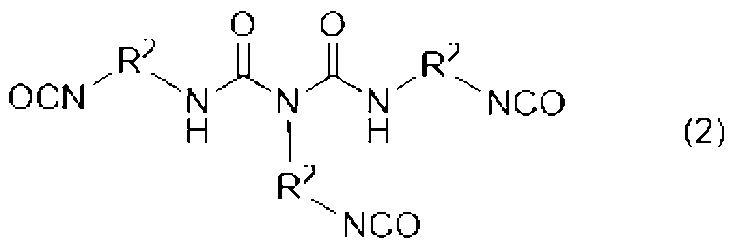
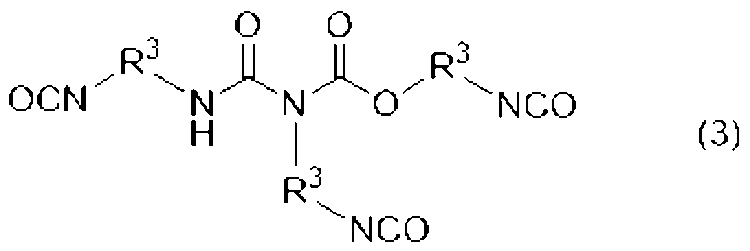
- the urethane resin (A) contains at least one polyisocyanate (a1) represented by any one of the following formulas (1), (2), and (3), a hydroxyl group, and a (meth)acryloyl group.
- R 1 , R 2 and R 3 each represent a hydrocarbon group having 1 to 20 carbon atoms which may have a substituent.
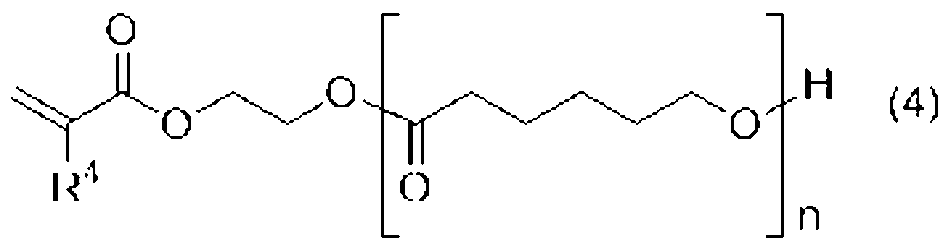
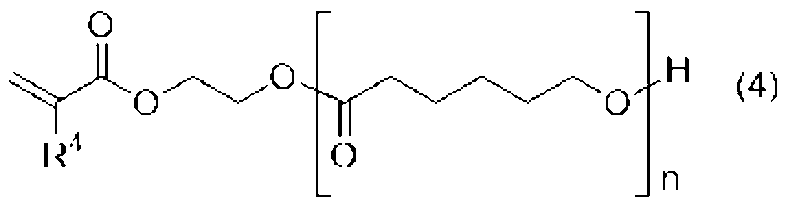
- the urethane resin (A) is represented by at least one polyisocyanate (a1) represented by any one of the formulas (1), (2), and (3) and the following formula (4).
- the curable resin composition for stereolithography according to [2] or [3], which contains a compound (a2) having a hydroxyl group and a (meth)acryloyl group as an essential reaction raw material.
- R4 represents a hydrogen atom or a methyl group
- n represents an integer of 0 or more and 10 or less.
- the curable resin composition for stereolithography contains a monofunctional (meth)acrylic compound (B1) and/or a bifunctional (meth)acrylic compound (B2),
- the curability for stereolithography according to any one of [1] to [4], wherein the content of the urethane resin (A) in the curable resin composition for stereolithography is 1% by mass or more and 50% by mass or less.
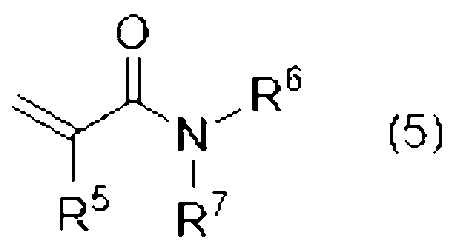
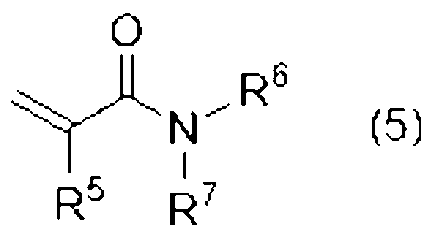
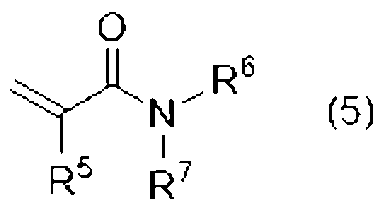
- R 6 and R 7 each independently represent a monovalent hydrocarbon group having 1 to 40 carbon atoms which may have a ring structure. , a group in which a portion of the carbon atoms of the hydrocarbon group is substituted with an oxygen atom or a nitrogen atom, or a hydrogen atom, and R 6 and R 7 may be bonded to each other to form a ring ;
- the monovalent hydrocarbon group having 1 to 40 carbon atoms represented by may or may not contain an unsaturated double bond.
- a curable resin composition for stereolithography that can form a cured product that has a low viscosity, a large elastic modulus, a large impact strength, little change over time, and excellent impact resistance.
- (meth)acrylate means acrylate and/or methacrylate.
- (meth)acryloyl means acryloyl and/or methacryloyl.
- (meth)acryl means acryl and/or methacryl.
- the curable resin composition for stereolithography of the present invention contains a urethane resin (A) having a (meth)acryloyl group and a photopolymerization initiator.
- the content of the (meth)acryloyl group in the urethane resin (A) is It is 0.8 mmol/g or more and 2.2 mmol/g or less.
- the curable resin composition for stereolithography of the present invention comprises, in addition to a urethane resin (A) having a (meth)acryloyl group and a photopolymerization initiator, a monofunctional (meth)acrylic compound (B1) and/or a bifunctional A (meth)acrylic compound (B2) can be contained.
- the curable resin composition for stereolithography of the present invention includes a monofunctional (meth)acrylic compound (B1) and/or a bifunctional (meth)acrylic compound (B2) within a range that does not impair the effects of the present invention. It is also possible to contain other (meth)acrylic compounds having three or more functionalities other than the above. Furthermore, the curable resin composition for stereolithography of the present invention can also contain other additives such as photosensitizers, ultraviolet absorbers, polymerization inhibitors and inorganic fillers, if necessary.
- the urethane resin (A) used in the present invention has a (meth)acryloyl group content of 0.8 mmol/g or more and 2.2 mmol/g or less.
- the curable resin composition has a low viscosity, as shown in the following examples.
- a cured product having excellent elastic modulus and impact resistance can be formed.
- Urethane resin (A) can be obtained by reacting polyisocyanate (a1) with compound (a2) having a hydroxyl group and a (meth)acryloyl group.
- the polyisocyanate (a1) is not particularly limited as long as it can form a urethane resin (A) having a specific content of (meth)acryloyl groups used in the present invention, and can be appropriately selected depending on the purpose.
- aliphatic diisocyanate compounds such as butane diisocyanate, hexamethylene diisocyanate, 2,2,4 trimethylhexamethylene diisocyanate, 2,4,4 trimethylhexamethylene diisocyanate; norbornane diisocyanate, isophorone diisocyanate, hydrogenated xylylene diisocyanate, hydrogenated diphenylmethane
- Alicyclic diisocyanate compounds such as diisocyanate; aromatics such as tolylene diisocyanate, xylylene diisocyanate, tetramethylxylylene diisocyanate, diphenylmethane diisocyanate, 1,5 naphthalene diisocyanate, 4,4' diisocyanato 3,3' dimethylbiphenyl, o tolidine diisocyanate group diisocyanate compounds; polymethylene polyphenyl polyisocyanates having a repeating structure represented by the following formula (6); (In
- the polyisocyanate (a1) is at least one polyisocyanate particularly represented by any of the following formulas (1), (2), and (3), the content of (meth)acryloyl groups is It is more preferable for forming a urethane resin (A) exhibiting a specific value defined in the invention.
- Preferred embodiments of the polyisocyanate (a1) include the following ⁇ first embodiment >>>.
- the polyisocyanate (a1) is at least one polyisocyanate represented by any one of the following formulas (1), (2) and (3).
- R 1 , R 2 and R 3 each represent a hydrocarbon group having 1 to 20 carbon atoms which may have a substituent.
- the polyisocyanate (a1) it is more preferable to use a polyisocyanate having an isocyanurate structure, a burette structure, or an allophanate structure, as represented by the above formulas (1) to (3).
- each of R 1 , R 2 and R 3 is more preferably a linear alkyl group.
- the polyisocyanate (a1) described above can be used alone or in combination of two or more.
- Compound (a2) having a hydroxyl group and a (meth)acryloyl group is not particularly limited as long as the urethane resin (A) having a specific content of the (meth)acryloyl group used in the present invention can be formed. can be selected as appropriate.
- (poly)oxyalkylene chains such as (poly)oxyethylene chains, (poly)oxypropylene chains, and (poly)oxytetramethylene chains are added to the molecular structures of the compounds having various hydroxyl groups and (meth)acryloyl groups.
- Introduced (poly)oxyalkylene modified products, and lactone modified products obtained by introducing a (poly)lactone structure into the molecular structure of the above various compounds having a hydroxyl group and a (meth)acryloyl group can also be used.
- the compound (a2) having a hydroxyl group and a (meth)acryloyl group is particularly a compound having a hydroxyl group and a (meth)acryloyl group represented by the following formula (4), the content of the (meth)acryloyl group is It is more preferable for forming the urethane resin (A) exhibiting the specific values specified in the present invention.
- Preferred embodiments of the compound (a2) having a hydroxyl group and a (meth)acryloyl group include the following ⁇ second embodiment >>>.
- the compound (a2) having a hydroxyl group and a (meth)acryloyl group is more preferably a compound having a hydroxyl group and a (meth)acryloyl group represented by the following formula (4).
- R4 represents a hydrogen atom or a methyl group
- n represents an integer of 0 or more and 10 or less.
- the compound (a2) having a hydroxyl group and a (meth)acryloyl group it is more preferable to use a caprolactone-modified hydroxyl group-containing (meth)acrylate as represented by the above formula (4).
- the compound (a2) having a hydroxyl group and a (meth)acryloyl group described above can be used alone or in combination of two or more.
- the method for producing the urethane resin (A) is not particularly limited, and any method may be used.
- the polyisocyanate (a1) and the reaction raw materials containing the compound (a2) having a hydroxyl group and a (meth)acryloyl group may be reacted together, or the reaction raw materials may be divided and sequentially prepared. You may manufacture by the method to make it react.
- the compound (a2) having a hydroxyl group and a (meth)acryloyl group has The equivalent ratio (OH/NCO) between the hydroxyl group (OH) and the isocyanate group (NCO) possessed by the polyisocyanate (a1) is in the range of 0.95/1.00 to 1.05/1.00. It is preferably 1/1 and more preferably 1/1.
- urethane resin (A) for example, dibutyltin laurate, dibutyltin acetate, or the like can be used as a catalyst, and the production can be carried out under the conditions of a normal urethanization reaction.
- a solvent such as ethyl acetate, butyl acetate, methyl isobutyl ketone, toluene, or xylene, or a radically polymerizable monomer that does not contain a site that reacts with isocyanate and that does not contain a hydroxyl group or an amino group. etc. can also be used as a solvent.
- the content of (meth)acryloyl groups in the urethane resin (A) is the amount per unit mass (mmol/g) of the urethane resin (A).
- the content of (meth)acryloyl groups in the urethane resin (A) is 0.8 mmol/g or more and 2.2 mmol/g or less. /g or more, more preferably 1.2 mmol/g or more, more preferably 2.0 mmol/g or less, and even more preferably 1.9 mmol/g or less.
- the content of (meth)acryloyl groups in the urethane resin (A) can be determined, for example, by assigning each peak of a measurement sample and an internal standard using a 1 H NMR spectrometer and determining the integral ratio, or by using an IR spectrometer. , a method of preparing a calibration curve from the ratio of the peak due to the acryloyl group and the specific peak of the standard substance, and quantifying it.
- the (meth)acryloyl group content of the urethane resin (A) was calculated based on the (meth)acryloyl group content (theoretical value) of the raw material.
- the curable resin composition for stereolithography of the present invention further contains a photopolymerization initiator.
- photopolymerization initiators include 1-hydroxycyclohexylphenyl ketone, 2-hydroxy-2-methyl-1-phenylpropan-1-one, 1-[4-(2-hydroxyethoxy)phenyl]-2-hydroxy -2-methyl-1-propan-1-one, thioxanthone and thioxanthone derivatives, 2,2′-dimethoxy-1,2-diphenylethan-1-one, diphenyl(2,4,6 trimethoxybenzoyl)phosphine oxide, 2,4,6 trimethylbenzoyldiphenylphosphine oxide, bis(2,4,6-trimethylbenzoyl)phenylphosphine oxide, 2-methyl-1-(4-methylthiophenyl)-2-morpholinopropan-1-one, 2 -benzyl-2-dimethylamino-1-(4-morpholinopheny
- the amount of the photopolymerization initiator to be added is preferably, for example, in the range of 120% by mass in the curable resin composition for stereolithography.
- (Meth)acrylic compounds may also include nitrogen-containing (meth)acrylic compounds.
- (meth)acrylic compounds include (meth)acrylic compounds such as (meth)acrylate compounds and (meth)acrylamides.
- Examples of the monofunctional (meth)acrylic compound (B1) include phenoxyethyl (meth)acrylate, phenoxybenzyl (meth)acrylate, cyclohexyl (meth)acrylate, trimethylcyclohexyl (meth)acrylate, cyclohexylmethyl (meth)acrylate, Cyclohexylethyl (meth)acrylate, 2-ethylhexyl (meth)acrylate, dipropylene glycol mono(meth)acrylate, isobornyl (meth)acrylate, norbornyl (meth)acrylate, isononyl (meth)acrylate, benzyl (meth)acrylate, phenylbenzyl (meth) acrylate, lauryl (meth) acrylate, tetrahydrofurfuryl (meth) acrylate, ethoxyethoxyethyl (meth) acrylate, 2-(meth) acryloyloxye
- Monofunctional (meth)acrylic compounds can be used alone or in combination of two or more.
- a curable resin composition having low viscosity and capable of forming a cured product having excellent mechanical properties can be obtained, so monofunctional (meth)acrylic compounds
- the glass transition temperature (hereinafter abbreviated as “Tg”) of the polymer of is preferably 50° C. or higher.
- a (meth)acrylic compound having a cyclic structure such as a condensed polycyclic structure or a heterocyclic structure is preferable, and isobornyl acrylate (Tg: 94°C), isobornyl methacrylate (Tg: 180°C), Dicyclopentenyl acrylate (Tg: 120°C), dicyclopentanyl acrylate (Tg: 120°C), and dicyclopentanyl methacrylate (Tg: 175°C) are preferred.
- the Tg of the copolymer of the two or more monofunctional (meth)acrylic compounds is preferably 50°C or higher.
- the (meth)acrylic compound (B1) may also include a nitrogen-containing (meth)acrylic compound. It is more preferable from the viewpoint of adhesion to.
- R5 represents a hydrogen atom or a methyl group.
- R 6 and R 7 each independently represent a monovalent hydrocarbon group having 1 to 40 carbon atoms which may have a ring structure, and part of the carbon atoms of the above hydrocarbon group is substituted with an oxygen atom or a nitrogen atom. or a hydrogen atom, R 6 and R 7 may be bonded to each other to form a ring, and the monovalent hydrocarbon group having 1 to 40 carbon atoms represented by R 6 and R 7 is an unsaturated group. It may or may not contain a saturated double bond.
- Examples of monofunctional (meth)acrylamide compounds represented by formula (5) include acryloylmorpholine, isopropylacrylamide, dimethylacrylamide, hydroxyethylacrylamide, and diethylacrylamide, and among them, condensed polycyclic structures and heterocyclic structures.
- Bifunctional (meth)acrylic compounds include, for example, bifunctional (meth)acrylate compounds. More specifically, the bifunctional (meth)acrylic compound (B2) includes, for example, 1,6-hexanediol di(meth)acrylate, 1,4-butanediol di(meth)acrylate, 1,3- butylene glycol di(meth)acrylate, 1,9-nonanediol di(meth)acrylate, 1,10-decanediol di(meth)acrylate, neopentyl glycol di(meth)acrylate, ethylene oxide-modified 1,6-hexanediol di(meth)acrylate (Meth) acrylates, neopentyl glycol hydroxypivalate di(meth) acrylate, propylene oxide-modified neopentyl glycol di(meth) acrylate, tripropylene glycol di
- bifunctional (meth)acrylic compounds can be used alone or in combination of two or more.
- a curable resin composition having a low viscosity and capable of forming a cured product having excellent mechanical properties can be obtained.
- the Tg of the polymer of is preferably 40°C or higher.
- neopentyl glycol hydroxypivalate diacrylate Tg: 111°C are more preferable.
- the Tg of the copolymer of two or more bifunctional (meth)acrylic compounds is preferably 40°C or higher.
- a monofunctional (meth)acrylic compound (B1) and a bifunctional (meth)acrylic compound (B2) can be used together.
- the copolymer of the (meth)acrylic compound used in combination preferably has a Tg of 40° C. or higher.
- the curable resin composition for stereolithography of the present invention may contain the above monofunctional (meth)acrylic compound (B1) and/or the above bifunctional (meta )
- a trifunctional or higher (meth)acrylic compound can be used in combination.
- the Tg of the (meth)acrylic compound copolymer to be used in combination is preferably 40° C. or higher.
- Trifunctional or higher (meth)acrylic compounds include, for example, EO-modified glycerol acrylate, PO-modified glycerol triacrylate, pentaerythritol triacrylate, EO-modified phosphoric acid triacrylate, trimethylolpropane triacrylate, caprolactone-modified trimethylolpropane triacrylate, Trifunctional (meth)acrylates such as acrylates, HPA-modified trimethylolpropane triacrylate, (EO)- or (PO)-modified trimethylolpropane triacrylate, alkyl-modified dipentaerythritol triacrylate, tris(acryloxyethyl) isocyanurate;
- tetrafunctional (meth)acrylates such as ditrimethylolpropane tetraacrylate, pentaerythritol ethoxytetraacrylate, and pentaerythritol tetraacrylate;
- Pentafunctional (meth)acrylates such as dipentaerythritol hydroxypentacrylate and alkyl-modified dipentaerythritol pentaacrylate;
- hexafunctional (meth)acrylates such as dipentaerythritol hexaacrylate.
- These trifunctional or higher (meth)acrylic compounds (more specifically, (meth)acrylates) can be used alone or in combination of two or more.
- the curable resin composition for stereolithography of the present invention may optionally contain a photosensitizer, an ultraviolet absorber, an antioxidant, a polymerization inhibitor, a silicon-based additive, a fluorine-based additive, and a silane cup.
- Various additives such as ring agents, phosphate ester compounds, organic beads, inorganic fine particles, organic fillers, inorganic fillers, rheology control agents, defoaming agents, and colorants may also be contained.
- the curable resin composition for stereolithography of the present invention can be further added with a photosensitizer to improve curability.
- photosensitizers include amine compounds such as aliphatic amines and aromatic amines, urea compounds such as o-tolylthiourea, condensed polycyclic compounds such as anthraquinone derivatives, sodium diethyldithiophosphate, and s-benzylisothiuro.
- sulfur compounds such as nium-p-toluenesulfonate;
- UV absorbers include, for example, 2-[4- ⁇ (2-hydroxy-3-dodecyloxypropyl)oxy ⁇ -2-hydroxyphenyl]-4,6-bis(2,4-dimethylphenyl)-1, 3,5 triazine, 2-[4- ⁇ (2-hydroxy-3-tridecyloxypropyl)oxy ⁇ -2-hydroxyphenyl]-4,6-bis(2,4-dimethylphenyl)-1,3, Triazine derivatives such as 5-triazine, 2-(2'-xanthenecarboxy-5'-methylphenyl)benzotriazole, 2-(2'-o-nitrobenzyloxy 5'-methylphenyl)benzotriazole, 2-xanthenecarboxy -4-dodecyloxybenzophenone, 2-o-nitrobenzyloxy-4-dodecyloxybenzophenone and the like. These ultraviolet absorbers can be used alone or in combination of two or more.
- antioxidants examples include hindered phenol-based antioxidants, hindered amine-based antioxidants, organic sulfur-based antioxidants, and phosphate-based antioxidants. These antioxidants can be used alone or in combination of two or more.
- polymerization inhibitors examples include hydroquinone, methoquinone, di-t-butylhydroquinone, p-methoxyphenol, butylhydroxytoluene, and nitrosamine salts.
- Silicon additives include, for example, dimethylpolysiloxane, methylphenylpolysiloxane, cyclic dimethylpolysiloxane, methylhydrogenpolysiloxane, polyether-modified dimethylpolysiloxane copolymer, polyester-modified dimethylpolysiloxane copolymer, fluorine-modified dimethyl Polysiloxane copolymer, polyorganosiloxane having an alkyl group or a phenyl group such as an amino-modified dimethylpolysiloxane copolymer, polydimethylsiloxane having a polyether-modified acrylic group, polydimethylsiloxane having a polyester-modified acrylic group, and the like. be done. These silicon additives can be used alone or in combination of two or more.
- fluorine-based additives examples include the "Megaface” series manufactured by DIC Corporation. These fluorine-based additives can be used alone or in combination of two or more.
- Silane coupling agents include, for example, vinyltrichlorosilane, vinyltrimethoxysilane, vinyltriethoxysilane, 2-(3,4-epoxycyclohexyl)ethyltrimethoxysilane, 3-glycidoxypropyltrimethoxysilane, 3- glycidoxypropylmethyldiethoxysilane, 3-glycidoxypropyltriethoxysilane, p-styryltrimethoxysilane, 3-methacryloxypropylmethyldimethoxysilane, 3-methacryloxypropyltrimethoxysilane, 3-methacryloxypropylmethyl Diethoxysilane, 3-methacryloxypropyltriethoxysilane, 3-acryloxypropyltrimethoxysilane, N-2-(aminoethyl)-3-aminopropylmethyldimethoxysilane, N-2-(aminoethyl)-3- aminopropyl
- styrene-based silane coupling agent such as p-styryltrimethoxysilane
- (Meta) such as 3-methacryloxypropylmethyldimethoxysilane, 3-acryloxypropyltrimethoxysilane, 3-methacryloxypropyltrimethoxysilane, 3-methacryloxypropylmethyldiethoxysilane, 3-methacryloxypropyltriethoxysilane, etc. acryloxy-based silane coupling agent;
- ureido-based silane coupling agents such as 3-ureidopropyltriethoxysilane
- Chloropropyl-based silane coupling agents such as 3-chloropropyltrimethoxysilane
- mercapto-based silane coupling agents such as 3-mercaptopropylmethyldimethoxysilane and 3-mercaptopropyltrimethoquinsilane;
- sulfide-based silane coupling agents such as bis(triethoxysilylpropyl) tetrasulfide
- silane coupling agents such as 3-isocyanatopropyltriethoxysilane. These silane coupling agents can be used alone or in combination of two or more.
- Examples of the phosphate ester compound include those having a (meth)acryloyl group in the molecular structure.
- Commercially available products include, for example, Nippon Kayaku Co., Ltd. "Kayamer PM-2", “Kayamer PM-21 ”, Kyoeisha Chemical Co., Ltd.
- organic beads examples include polymethyl methacrylate beads, polycarbonate beads, polystyrene beads, polyacrylicstyrene beads, silicone beads, glass beads, acrylic beads, benzoguanamine resin beads, melamine resin beads, polyolefin resin beads, polyester resin beads, polyamide resin beads, polyimide resin beads, polyethylene fluoride resin beads, polyethylene resin beads, and the like. These organic beads can be used alone or in combination of two or more. Moreover, the average particle size of these organic beads is preferably in the range of 1 to 10 ⁇ m.
- inorganic fine particles examples include fine particles such as silica, alumina, zirconia, titania, barium titanate, and antimony trioxide. These inorganic fine particles can be used alone or in combination of two or more. In addition, the average particle size of these inorganic fine particles is preferably in the range of 95 to 250 nm, and more preferably in the range of 100 to 180 nm.
- a dispersing aid When inorganic fine particles are contained, a dispersing aid can be used.
- dispersion aids include phosphoric acid ester compounds such as isopropyl acid phosphate, triisodecyl phosphite, and ethylene oxide-modified phosphoric acid dimethacrylate. These dispersing aids can be used alone or in combination of two or more.
- examples of commercially available dispersion aids include "Kayamer PM-21” and “Kayamer PM-2” manufactured by Nippon Kayaku Co., Ltd., and “Light Ester P-2M” manufactured by Kyoeisha Chemical Co., Ltd., and the like.
- organic fillers examples include plant-derived solvent-insoluble substances such as cellulose, lignin, and cellulose nanofibers.
- inorganic fillers examples include glass (particles), silica (particles), alumina silicate, talc, mica, aluminum hydroxide, alumina, calcium carbonate, and carbon nanotubes.
- rheology control agents examples include amide waxes such as "Disparlon 6900” manufactured by Kusumoto Kasei Co., Ltd.; urea-based rheology control agents such as “BYK410” manufactured by Big Chemie; and “Disparlon 4200” manufactured by Kusumoto Kasei Co., Ltd. and cellulose acetate butyrate such as “CAB-381-2” and “CAB 32101” manufactured by Eastman Chemical Products.
- defoaming agents examples include oligomers containing fluorine or silicon atoms, or oligomers such as higher fatty acids and acrylic polymers.
- coloring agents include pigments and dyes.
- pigment known and commonly used inorganic pigments and organic pigments can be used.
- inorganic pigments examples include titanium oxide, antimony red, red iron oxide, cadmium red, cadmium yellow, cobalt blue, Prussian blue, ultramarine blue, carbon black, and graphite.
- organic pigments examples include quinacridone pigments, quinacridonequinone pigments, dioxazine pigments, phthalocyanine pigments, anthrapyrimidine pigments, anthanthrone pigments, indanthrone pigments, flavanthrone pigments, perylene pigments, diketopyrrolopyrrole pigments, perinone pigments, and quinophthalone pigments. pigments, anthraquinone pigments, thioindigo pigments, benzimidazolone pigments, azo pigments and the like. These pigments can be used alone or in combination of two or more.
- dyes examples include azo dyes such as monoazo and disazo, metal complex dyes, naphthol dyes, anthraquinone dyes, indigo dyes, carbonium dyes, quinoimine dyes, cyanine dyes, quinoline dyes, nitro dyes, nitroso dyes, benzoquinone dyes, and naphthoquinone dyes. , naphthalimide dyes, perinone dyes, phthalocyanine dyes, triallylmethane dyes, and the like. These dyes can be used alone or in combination of two or more.
- the content of the urethane resin (A) in the curable resin composition for stereolithography of the present invention is 1% by mass or more and 50% by mass or less from the viewpoint of securing a practically effective viscosity range without excessively increasing the viscosity. It is preferably 3% by mass or more and 50% by mass or less.
- the cured product of the present invention can be obtained by irradiating the curable resin composition for stereolithography of the present invention with an active energy ray.
- active energy rays include ionizing radiation such as ultraviolet rays, electron beams, ⁇ rays, ⁇ rays, and ⁇ rays.
- irradiation may be performed in an atmosphere of an inert gas such as nitrogen gas, or in an air atmosphere, in order to efficiently perform a curing reaction using ultraviolet rays.
- UV lamps are generally used as the source of UV light from the standpoint of practicality and economy. Specific examples include low-pressure mercury lamps, high-pressure mercury lamps, ultra-high-pressure mercury lamps, xenon lamps, gallium lamps, metal halide lamps, sunlight, and LEDs.
- the integrated amount of active energy rays is not particularly limited, it is preferably 50 to 5,000 mJ/cm 2 , more preferably 300 to 1,000 mJ/cm 2 . It is preferable that the integrated amount of light is within the above range because the generation of uncured portions can be prevented or suppressed.
- the three-dimensional object of the present invention can be produced by a known optical stereolithography method.
- optical stereolithography methods examples include the stereolithography (SLA) method, the digital light processing (DLP) method, and the inkjet method.
- the stereolithography (SLA) method is a method in which a tank of a liquid curable resin composition is irradiated with active energy rays such as laser beams at points, and solidification is performed layer by layer while moving the modeling stage to create a three-dimensional model.
- the digital light processing (DLP) method is a method in which a tank of a liquid curable resin composition is irradiated with active energy rays such as LEDs on the surface, and three-dimensional modeling is performed by curing one layer at a time while moving the modeling stage. .
- the inkjet stereolithography method is a method in which fine droplets of a curable resin composition for stereolithography are ejected from a nozzle so as to draw a predetermined shape pattern, and then ultraviolet rays are irradiated to form a cured thin film.
- the DLP method is preferable because it enables high-speed modeling using surfaces.
- the DLP stereolithography method is not particularly limited as long as it is a method using a DLP stereolithography system.
- the pitch is in the range of 0.01 to 0.2 mm
- the irradiation wavelength is in the range of 350 to 410 nm
- the light intensity is in the range of 0.5 to 50 mW/cm 2
- the integrated light amount per layer is 1 to 1
- the range of 100 mJ/cm 2 is required, and above all, since the modeling accuracy of the three-dimensional model is further improved
- the lamination pitch of stereolithography is in the range of 0.02 to 0.1 mm
- the irradiation wavelength is in the range of 380 to 410 nm
- the light intensity is in the range of 5 to 15 mW/cm 2
- the integrated amount of light per layer is in the range of 5 to 15 mJ/cm 2 .
- the three-dimensional object of the present invention has a high elastic modulus and excellent impact resistance, it is used, for example, in automobile parts, aerospace-related parts, electrical and electronic parts, home appliances, building materials, interiors, jewelry, medical materials, etc. It can be used preferably.
- Sumidule N3300 isocyanurate-type hexamethylene diisocyanate represented by the following formula (a1-1)
- Duranate 24A-100 biuret-type hexamethylene diisocyanate represented by the following formula (a1-2)
- BasonatHA300 the following formula ( Allophanate-type hexamethylene diisocyanate represented by a1-3)
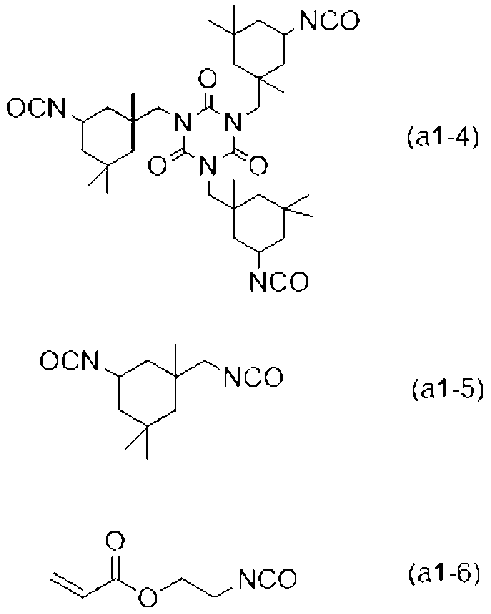
- ⁇ VESTANAT T1890 isocyanurate-type isophorone diisocyanate represented by the following formula (a1-4)
- ⁇ Isophorone diisocyanate diisocyanate represented by the following formula (a1-5)
- ⁇ Karenz AOI 2-acryloyloxyethyl isocyanate represented by the following formula (a1-6)
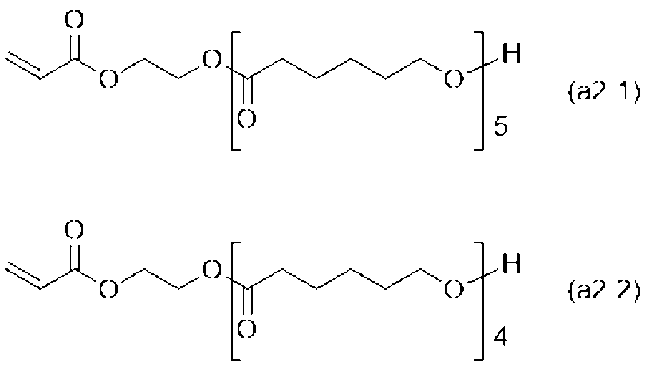
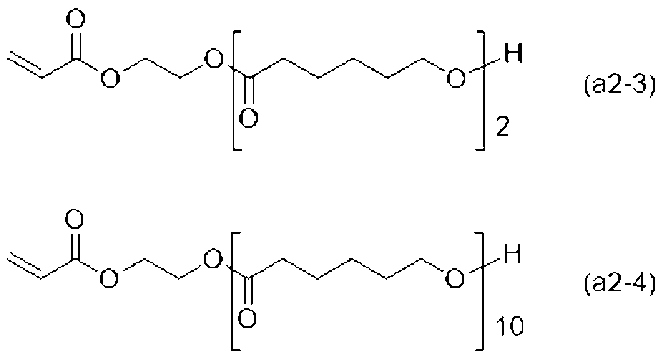
- ⁇ Placcel FA5 caprolactone 5 mol addition type 2-hydroxyethyl acrylate represented by the following formula (a2-1), hydroxyl value: 81.8 KOH mg / g, (meth) acryloyl group content (theoretical value): 1.46 mmol / g ⁇ Praxel FA4DT: 4 mol of caprolactone addition type 2-hydroxyethyl acrylate represented by the following formula (a2-2), hydroxyl value: 98.1 KOH mg / g, (meth) acryloyl group content (theoretical value): 1.76 mmol / g ⁇ Praxel FA2D: Caprolactone 2 mol addition type 2-hydroxyethyl acrylate represented by the following formula (a2-3), hydroxyl value: 163.1 KOH mg / g, (meth) acryloyl group content (theoretical value): 2.87 mmol / g Praxel FA10L: 10 mol addition type 2-hydroxyethy
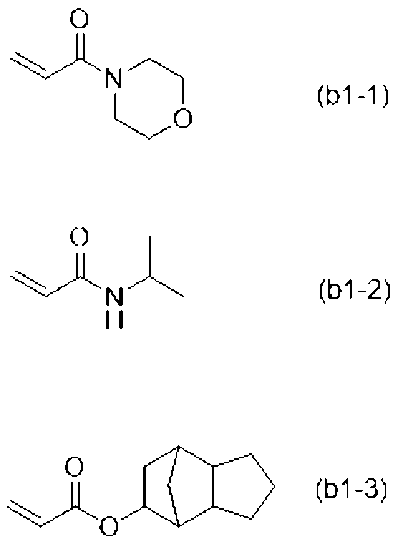
- ACMO acryloylmorpholine represented by the following formula (b1-1) (manufactured by KJ Chemicals Co., Ltd.), Tg 145 ° C., number of functional groups 1 ⁇ NIPAM: isopropyl acrylamide (manufactured by KJ Chemicals Co., Ltd.) represented by the following formula (b1-2), Tg 134 ° C., number of functional groups 1 FA-513AS: dicyclopentanyl acrylate represented by the following formula (b1-3) (manufactured by Showa Denko Materials Co., Ltd.), Tg 120 ° C., number of functional groups 1 DMAA: dimethylacrylamide (manufactured by KJ Chemicals Co., Ltd.) represented by the following formula (b1-4), Tg 119 ° C., number of functional groups 1 - IBXA: isobornyl acrylate represented by the following formula (b1-5) (manufactured by Osaka Organic Chemical Industry Co., Ltd.), Tg
- ⁇ MIRAMER M210 Neopentylglycol hydroxypivalate represented by the following formula (b2-1) (manufactured by MIWON), Tg 111 ° C., functional number 2 ⁇ MIRAMER M262: tricyclodecanedimethanol diacrylate represented by the following formula (b2-2) (manufactured by MIWON), Tg 110 ° C., number of functional groups 2 ⁇ MIRAMER M222: Dipropylene glycol diacrylate represented by the following formula (b2-3) (manufactured by MIWON), Tg 102 ° C., number of functional groups 2 ⁇ MIRAMER M240: Bisphenol A EO-modified diacrylate represented by the following formula (b2-3) (manufactured by MIWON), Tg 42 ° C., functional number 2
- urethane (meth)acrylate (A1) The content of (meth)acryloyl groups per 1 g of urethane (meth)acrylate (A1) calculated from the acryloyl group content (theoretical value) of the raw material was 1.14 mmol (described in Table 1 below.
- the (meth)acryloyl group content in each urethane (meth)acrylate obtained in Synthesis Examples is also shown in Table 1).
- Example 1 Preparation of curable resin composition (1)
- urethane (meth)acrylate (A1) obtained in Synthesis Example 1
- IGM Resins 2 parts by mass of Omnirad TPO manufactured by Co., Ltd. was added, and the mixture was stirred at 60° C. or lower until uniformly dissolved to obtain a curable resin composition (1).
- Examples 2 to 23 Preparation of curable resin compositions (2) to (23)
- a curable resin composition was prepared in the same manner as in Example 1, except that the urethane (meth)acrylate and (meth)acrylic compound were changed to the compositions and blending amounts shown in Table 1 or Table 2. Products (2) to (23) were obtained.
- dumbbells for tensile tests and test pieces for Izod impact tests were produced.
- the dumbbell for the tensile test was produced in a shape similar to ASTM D638 TYPE 1 with a total length of 55 mm.
- the dumbbell for the tensile test obtained by stereolithography and the test piece for the Izod impact test were washed with isopropyl alcohol, dried at room temperature for 1 hour, and then post-cured using "Multicure 180" manufactured by XYZ Printing. Both surfaces were irradiated with an LED having a wavelength of 385 nm for 10 minutes each to obtain test piece 1 (dumbbell for tensile test) and test piece 2 (test piece for Izod impact test).
- a tensile test was performed using a universal material testing machine "5965" manufactured by INSTRON to measure the elastic modulus. The test was carried out under the conditions of a load cell of 1 kN, a tensile speed of 1 mm/min, and a distance between tensile jigs of 38 mm.
- compositions and evaluation results of the curable resin compositions obtained in Examples 1 to 23 and Comparative Examples 1 to 3 are shown in Tables 1 to 3 below.
- the viscosity of the curable resin composition is 1,100 mPa ⁇ s or less, preferably 1,000 mPa ⁇ s or less, from the viewpoint of formability and load on the forming machine.
- the modulus of elasticity in the tensile test of the shaped article should be 0.5 ⁇ 10 9 Pa or more in terms of hardness, and the higher the better.
- the Izod impact strength is 18 J/m or more, preferably 20 J/m or more, and more preferably 30 J/m or more.
- the rate of change in Izod impact strength over time is less than 50%, the smaller the better.
- the curable resin composition of the present invention had a low viscosity. Moreover, it was confirmed that the curable resin composition of the present invention can form a cured product having an excellent elastic modulus. Furthermore, it was confirmed that the curable resin composition of the present invention can form a cured product having high impact strength, little change over time, and excellent impact resistance in an Izod impact strength test.
- the curable resin composition of the present invention can be effectively used for stereolithography.
Landscapes
- Chemical & Material Sciences (AREA)
- Health & Medical Sciences (AREA)
- Chemical Kinetics & Catalysis (AREA)
- Medicinal Chemistry (AREA)
- Polymers & Plastics (AREA)
- Organic Chemistry (AREA)
- Engineering & Computer Science (AREA)
- Materials Engineering (AREA)
- Manufacturing & Machinery (AREA)
- Physics & Mathematics (AREA)
- Mechanical Engineering (AREA)
- Optics & Photonics (AREA)
- Toxicology (AREA)
- Macromonomer-Based Addition Polymer (AREA)
- Polymerisation Methods In General (AREA)
Abstract
Description
[1](メタ)アクリロイル基を有するウレタン樹脂(A)と光重合開始剤とを含有する光造形用硬化性樹脂組成物であって、
前記ウレタン樹脂(A)における(メタ)アクリロイル基の含有量が0.8mmоl/g以上2.2mmоl/g以下である、光造形用硬化性樹脂組成物。
[2]前記ウレタン樹脂(A)が、下記式(1)、(2)、及び(3)のいずれかで表される少なくとも一つのポリイソシアネート(a1)と、水酸基及び(メタ)アクリロイル基を有する化合物(a2)とを必須の反応原料とするものである、[1]に記載の光造形用硬化性樹脂組成物。

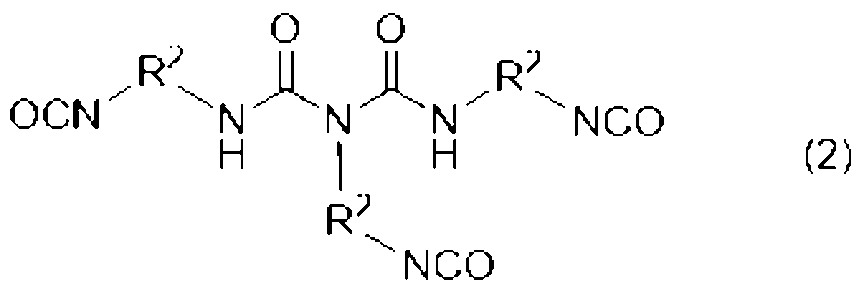

[3]前記式(1)、(2)、(3)中、R1、R2、R3が、それぞれ直鎖のアルキル基である、[2]に記載の光造形用硬化性樹脂組成物。
[4]前記ウレタン樹脂(A)が、前記式(1)、(2)、(3)のいずれかで表される少なくとも一つのポリイソシアネート(a1)と、下記式(4)で表される水酸基及び(メタ)アクリロイル基を有する化合物(a2)とを必須の反応原料とするものである、[2]または[3]に記載の光造形用硬化性樹脂組成物。
[5]前記光造形用硬化性樹脂組成物が、単官能(メタ)アクリル系化合物(B1)及び/または2官能(メタ)アクリル系化合物(B2)を含有し、
前記光造形用硬化性樹脂組成物における前記ウレタン樹脂(A)の含有量が、1質量%以上50質量%以下である、[1]~[4]のいずれかに記載の光造形用硬化性樹脂組成物。
[6]前記単官能(メタ)アクリル系化合物(B1)の重合体のガラス転移温度が、50℃以上である、[5]に記載の光造形用硬化性樹脂組成物。
[7]前記2官能(メタ)アクリル系化合物(B2)の重合体のガラス転移温度が、40℃以上である、[5]に記載の光造形用硬化性樹脂組成物。
[8]前記単官能(メタ)アクリル系化合物(B1)が、下記式(5)で表される、[5]または[6]に記載の光造形用硬化性樹脂組成物。
[9][1]~[8]のいずれかに記載の光造形用硬化性樹脂組成物の硬化反応物である硬化物。
[10]活性エネルギー線の照射を硬化条件とする、[9]に記載の硬化物。
[11][9]または[10]に記載の硬化物からなる立体造形物。
本明細書において、「(メタ)アクリレート」とは、アクリレート及び/またはメタクリレートを意味する。また、「(メタ)アクリロイル」とは、アクリロイル及び/またはメタクリロイルを意味する。さらに、「(メタ)アクリル」とは、アクリル及び/またはメタクリルを意味する。
本発明の光造形用硬化性樹脂組成物は、(メタ)アクリロイル基を有するウレタン樹脂(A)と光重合開始剤とを含有する
ウレタン樹脂(A)における(メタ)アクリロイル基の含有量は、0.8mmоl/g以上2.2mmоl/g以下である。
本発明の光造形用硬化性樹脂組成物は、(メタ)アクリロイル基を有するウレタン樹脂(A)及び光重合開始剤の他に、単官能(メタ)アクリル系化合物(B1)及び/または2官能(メタ)アクリル系化合物(B2)を含有することができる。
また、本発明の光造形用硬化性樹脂組成物は、本発明の効果を阻害しない範囲で、単官能(メタ)アクリル系化合物(B1)及び/または2官能(メタ)アクリル系化合物(B2)以外の3官能以上の他の(メタ)アクリル系化合物を含有することもできる。
さらにまた、本発明の光造形用硬化性樹脂組成物は、必要に応じて、光増感剤、紫外線吸収剤、重合禁止剤、無機フィラー等のその他の添加剤を含有することもできる。
本発明で用いるウレタン樹脂(A)は、該ウレタン樹脂(A)における(メタ)アクリロイル基の含有量が、0.8mmоl/g以上2.2mmоl/g以下を示す。
(メタ)アクリロイル基の含有量が特定の値であるウレタン樹脂(A)を硬化性樹脂組成物に含有させることで、該硬化性樹脂組成物は、下記実施例でも示す通り、低粘度であり、かつ弾性率、及び耐衝撃性にも優れた硬化物を形成することができる。
ウレタン樹脂(A)は、ポリイソシアネート(a1)と、水酸基及び(メタ)アクリロイル基を有する化合物(a2)とを反応させることにより得ることができる。
ポリイソシアネート(a1)としては、本発明で用いる(メタ)アクリロイル基の含有量が特定の値であるウレタン樹脂(A)が形成できれば特に制限はなく、目的に応じて適宜選択することができる。例えば、ブタンジイソシアネート、ヘキサメチレンジイソシアネート、2,2,4 トリメチルヘキサメチレンジイソシアネート、2,4,4 トリメチルヘキサメチレンジイソシアネート等の脂肪族ジイソシアネート化合物;ノルボルナンジイソシアネート、イソホロンジイソシアネート、水添キシリレンジイソシアネート、水添ジフェニルメタンジイソシアネート等の脂環式ジイソシアネート化合物;トリレンジイソシアネート、キシリレンジイソシアネート、テトラメチルキシリレンジイソシアネート、ジフェニルメタンジイソシアネート、1,5 ナフタレンジイソシアネート、4,4’ ジイソシアナト 3,3’ ジメチルビフェニル、o トリジンジイソシアネート等の芳香族ジイソシアネート化合物;下記式(6)で表される繰り返し構造を有するポリメチレンポリフェニルポリイソシアネート;これらのイソシアヌレート変性体、ビウレット変性体、アロファネート変性体等が挙げられる。
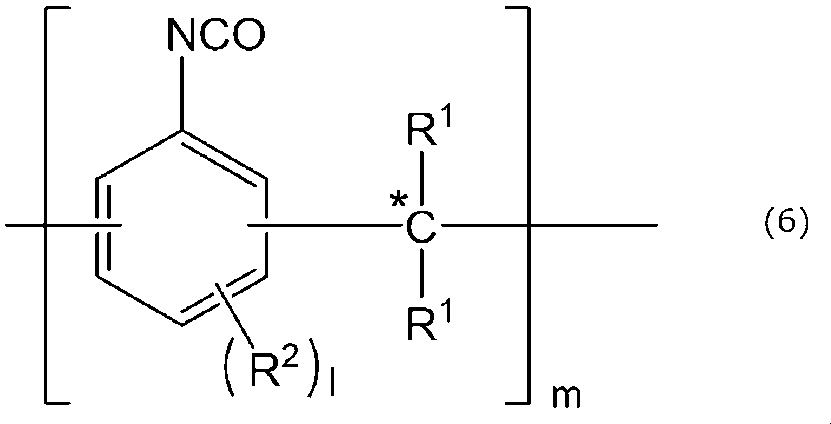
ポリイソシアネート(a1)の好ましい実施態様として、下記<<<第一の実施態様>>>を挙げることができる。
ポリイソシアネート(a1)が、下記式(1)、(2)、及び(3)のいずれかで表される少なくとも一つのポリイソシアネートであるとより好ましい。


ポリイソシアネート(a1)として、上記式(1)~(3)で示すように、イソシアヌレート構造、ビュレット構造、またはアロファネート構造を有するポリイソシアネートを用いることがより好ましい。
式(1)、(2)、(3)中、R1、R2、R3は、それぞれ直鎖のアルキル基であるとより好ましい。
水酸基及び(メタ)アクリロイル基を有する化合物(a2)としては、本発明で用いる(メタ)アクリロイル基の含有量が特定の値であるウレタン樹脂(A)が形成できれば特に制限はなく、目的に応じて適宜選択することができる。例えば、ヒドロキシエチル(メタ)アクリレート、ヒドロキシプロピル(メタ)アクリレート、トリメチロールプロパン(メタ)アクリレート、トリメチロールプロパンジ(メタ)アクリレート、ペンタエリスリトール(メタ)アクリレート、ペンタエリスリトールジ(メタ)アクリレート、ペンタエリスリトールトリ(メタ)アクリレート、ジペンタエリスリトール(メタ)アクリレート、ジペンタエリスリトールジ(メタ)アクリレート、ジペンタエリスリトールトリ(メタ)アクリレート、ジペンタエリスリトールテトラ(メタ)アクリレート、ジペンタエリスリトールペンタ(メタ)アクリレート、ジトリメチロールプロパン(メタ)アクリレート、ジトリメチロールプロパンジ(メタ)アクリレート、ジトリメチロールプロパントリ(メタ)アクリレート等が挙げられる。また、上記各種の水酸基及び(メタ)アクリロイ
ル基を有する化合物の分子構造中に(ポリ)オキシエチレン鎖、(ポリ)オキシプロピレン鎖、(ポリ)オキシテトラメチレン鎖等の(ポリ)オキシアルキレン鎖を導入した(ポリ)オキシアルキレン変性体や、上記各種の水酸基及び(メタ)アクリロイル基を有する化合物の分子構造中に(ポリ)ラクトン構造を導入したラクトン変性体等も用いることができる。
水酸基及び(メタ)アクリロイル基を有する化合物(a2)の好ましい実施態様として、下記<<<第二の実施態様>>>を挙げることができる。
水酸基及び(メタ)アクリロイル基を有する化合物(a2)が、下記式(4)で表される水酸基及び(メタ)アクリロイル基を有する化合物であるとより好ましい。
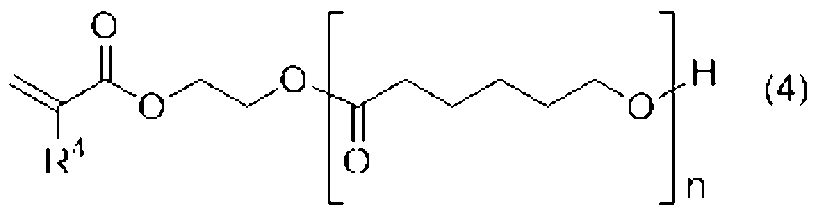
水酸基及び(メタ)アクリロイル基を有する化合物(a2)として、上記式(4)で示すように、カプロラクトン変性されている水酸基含有(メタ)アクリレートを用いることがより好ましい。
ウレタン樹脂(A)の製造方法としては、特に制限されず、どのような方法にて製造してもよい。例えば、上記ポリイソシアネート(a1)と、上記水酸基及び(メタ)アクリロイル基を有する化合物(a2)とを含有する反応原料を一括で反応させる方法で製造してもよいし、反応原料を分けて順次反応させる方法で製造してもよい。なお、低粘度であり、優れた弾性率及び耐衝撃性を有する硬化物を形成可能な硬化性樹脂組成物が得られることから、上記水酸基及び(メタ)アクリロイル基を有する化合物(a2)が有する水酸基(OH)と、ポリイソシアネート(a1)が有するイソシアネート基(NCO)との当量比(OH/NCO)は、0.95/1.00~1.05/1.00の範囲であることが好ましく、1/1であることがより好ましい。
ウレタン樹脂(A)における(メタ)アクリロイル基の含有量は、ウレタン樹脂(A)の単位質量あたりの量(mmоl/g)である。
ウレタン樹脂(A)における(メタ)アクリロイル基の含有量は、0.8mmоl/g以上2.2mmоl/g以下を示すが、硬化物の硬度と耐衝撃性の両立という観点からは、1.0mmоl/g以上であることがより好ましく、1.2mmоl/g以上であることがさらに好ましく、2.0mmоl/g以下であることがより好ましく、1.9mmоl/g以下であることがさらに好ましい。
ウレタン樹脂(A)における(メタ)アクリロイル基の含有量は、例えば、1HNMR分析装置を用いて測定サンプルと内部標準の各ピークを帰属し、積分比により求める方法や、IR分析装置を用いて、アクリロイル基に起因するピークと標準物質の特定ピークとの比から検量線を作成し、定量する方法などで求めることができる。本出願においては、原料の(メタ)アクリロイル基の含有量(理論値)を基に、ウレタン樹脂(A)の(メタ)アクリロイル基含有量を算出した。
本発明の光造形用硬化性樹脂組成物は、さらに、光重合開始剤を含有するものである。光重合開始剤としては、例えば、1-ヒドロキシシクロヘキシルフェニルケトン、2-ヒドロキシ-2-メチル-1-フェニルプロパン-1-オン、1-〔4-(2-ヒドロキシエトキシ)フェニル〕-2-ヒドロキシ-2-メチル-1-プロパン-1-オン、チオキサントン及びチオキサントン誘導体、2,2’-ジメトキシ-1,2-ジフェニルエタン-1-オン、ジフェニル(2,4,6 トリメトキシベンゾイル)ホスフィンオキシド、2,4,6 トリメチルベンゾイルジフェニルホスフィンオキシド、ビス(2,4,6-トリメチルベンゾイル)フェニルホスフィンオキシド、2-メチル-1-(4-メチルチオフェニル)-2-モルフォリノプロパン-1-オン、2-ベンジル-2-ジメチルアミノ-1-(4-モルホリノフェニル)-1-ブタノン、フェニル(2,4,6-トリメチルベンゾイル)ホスフィン酸エチル、ポリメリックTPO-L等が挙げられる。
(メタ)アクリル系化合物には、窒素含有(メタ)アクリル系化合物も含み得る。
例えば、(メタ)アクリル系化合物として、(メタ)アクリレート化合物や(メタ)アクリルアミド類などの(メタ)アクリル系化合物が挙げられる。
単官能(メタ)アクリル系化合物(B1)としては、例えば、フェノキシエチル(メタ)アクリレート、フェノキシベンジル(メタ)アクリレート、シクロヘキシル(メタ)アクリレート、トリメチルシクロヘキシル(メタ)アクリレート、シクロヘキシルメチル(メタ)アクリレート、シクロヘキシルエチル(メタ)アクリレート、2-エチルヘキシル(メタ)アクリレート、ジプロピレングリコールモノ(メタ)アクリレート、イソボルニル(メタ)アクリレート、ノルボルニル(メタ)アクリレート、イソノニル(メタ)アクリレート、ベンジル(メタ)アクリレート、フェニルベンジル(メタ)アクリレート、ラウリル(メタ)アクリレート、テトラヒドロフルフリル(メタ)アクリレート、エトキシエトキシエチル(メタ)アクリレート、2-(メタ)アクリロイルオキシエチルサクシネート、メチル(メタ)アクリレート、エチル(メタ)アクリレート、n-ブチル(メタ)アクリレート、n-ペンチル(メタ)アクリレート、n-ヘキシル(メタ)アクリレート、イソブチル(メタ)アクリレート、tert-ブチル(メタ)アクリレート、n-オクチル(メタ)アクリレート、イソオクチル(メタ)アクリレート、2-エチルメトキシ(メタ)アクリレート、2-エチルエトキシ(メタ)アクリレート、2-エチルブトキシ(メタ)アクリレート、n-デシル(メタ)アクリレート、イソデシル(メタ)アクリレート、ラウリル(メタ)アクリレート、ブトキシジエチレングリコール(メタ)アクリレート、ブトキシトリエチレングリコール(メタ)アクリレート、メトキシジエチレングリコール(メタ)アクリレート、メトキシトリエチレングリコール(メタ)アクリレート、メトキシポリエチレングリコール(メタ)アクリレート、2-ヒドロキシエチル(メタ)アクリレート、2-ヒドロキシプロピル(メタ)アクリレート、4-ヒドロキシブチル(メタ)アクリレート、ジメチルアミノエチル(メタ)アクリレート、ジエチルアミノエチル(メタ)アクリレート、(メタ)アクリロイルモルホリン、2 (メタ)アクリロイルオキシエチルコハク酸、2-(メタ)アクリロイルオキシエチルヘキサヒドロフタル酸、グリシジル(メタ)アクリレート、2-ヒドロキシ-3-フェノキシプロピル(メタ)アクリレート、ジシクロペンテニル(メタ)アクリレート、ジシクロペンテニルオキシエチル(メタ)アクリレート、ジシクロペンタニル(メタ)アクリレート、ジシクロペンタニルオキシエチル(メタ)アクリレート、ペンタメチルピペリジニル(メタ)アクリレート、テトラメチルピペリジニル(メタ)アクリレート、(2-メチル-2-エチル-1,3-ジオキソラン-4-イル)メチル(メタ)アクリレート、3,4-エポキシシクロヘキシルメチルメタアクリレート、環状トリメチロールプロパンホルマル(メタ)アクリレート、1-アダマンチル(メタ)アクリレート、2-アダマンチル(メタ)アクリレート、2-メチル-2-アダマンチル(メタ)アクリレート、グリセリンカーボネート(メタ)アクリレート、tert-ブチルシクロヘキシル(メタ)アクリレート、2-(1,2-シクロヘキサンジカルボキシイミド)エチル(メタ)アクリレート、o-フェニルフェノキシエチル(メタ)アクリレート、フェノキシエチル(メタ)アクリレート、等の単官能(メタ)アクリレート化合物が挙げられる。
単官能(メタ)アクリル系化合物は、単独で用いることも2種以上を併用することもできる。
また、単官能(メタ)アクリル系化合物の中でも、低粘度であり、優れた機械的物性を有する硬化物を形成可能な硬化性樹脂組成物が得られることから、単官能(メタ)アクリル系化合物の重合体のガラス転移温度(以下、「Tg」と略記する。)が、50℃以上である化合物が好ましい。なかでも、縮合多環構造、複素環構造等の環状構造を有する(メタ)アクリル系化合物が好ましく、さらに、イソボルニルアクリレート(Tg:94℃)、イソボルニルメタクリレート(Tg:180℃)、ジシクロペンテニルアクリレート(Tg:120℃)、ジシクロペンタニルアクリレート(Tg:120℃)、ジシクロペンタニルメタクリレート(Tg:175℃)が好ましい。
2官能(メタ)アクリル系化合物としては、例えば、2官能(メタ)アクリレート化合物が挙げられる。
より具体的には、2官能(メタ)アクリル系化合物(B2)としては、例えば、1,6-ヘキサンジオールジ(メタ)アクリレート、1,4-ブタンジオールジ(メタ)アクリレート、1,3-ブチレングリコールジ(メタ)アクリレート、1,9-ノナンジオールジ(メタ)アクリレート、1,10-デカンジオールジ(メタ)アクリレート、ネオペンチルグリコールジ(メタ)アクリレート、エチレンオキシド変性1,6-ヘキサンジオールジ(メタ)アクリレート、ヒドロキシピバリン酸ネオペンチルグリコールジ(メタ)アクリレート、プロピレンオキシド変性ネオペンチルグリコールジ(メタ)アクリレート、トリプロピレングリコールジ(メタ)アクリレート、ジプロピレングリコールジ(メタ)アクリレート、トリエチレングリコールジ(メタ)アクリレート、ビスフェノールAのエチレンオキシド変性ジ(メタ)アクリレート、ビスフェノールAのプロピレンオキシド変性ジ(メタ)アクリレート、ビスフェノールFのエチレンオキシド変性ジ(メタ)アクリレート、トリシクロデカンジメタノールジ(メタ)アクリレート、テトラエチレングリコールジ(メタ)アクリレート、ポリエチレングリコールジ(メタ)アクリレート、ポリプロピレングリコールジ(メタ)アクリレート、グリセリンのプロピレンオキシド変性トリ(メタ)アクリレート、2-ヒドロキシ-3-アクリロイロキシプロピル(メタ)アクリレート、ビスフェノキシエタノールフルオレンのエチレンオキシド変性ジ(メタ)アクリレート、ポリテトラメチレングリコールジ(メタ)アクリレート、エトキシ化イソシアヌル酸トリ(メタ)アクリレート、フェノキシエチレングリコール(メタ)アクリレート、ステアリル(メタ)アクリレート、2-(メタ)アクリロイルオキシエチルサクシネート、トリフロロエチル(メタ)アクリレート3 メチル-1,5ペンタンジオールジ(メタ)アクリレート、2,3-[(メタ)アクリロイルオキシメチル]ノルボルナン、2,5-[(メタ)アクリロイルオキシメチル]ノルボルナン、2,6-[(メタ)アクリロイルオキシメチル]ノルボルナン、1,3-アダマンチルジ(メタ)アクリレート、1,3-ビス[(メタ)アクリロイルオキシメチル]アダマンタン、トリス(ヒドロキシエチル)イソシアヌル酸ジ(メタ)アクリレート、3,9-ビス[1,1-ジメチル-2-(メタ)アクリロイルオキシエチル]-2,4,8,10-テトラオキソスピロ[5.5]ウンデカン等の2官能(メタ)アクリレート化合物が挙げられる。
これらの2官能(メタ)アクリル系化合物は、単独で用いることも2種以上を併用することもできる。
また、2官能(メタ)アクリル系化合物の中でも、低粘度であり、優れた機械的物性を有する硬化物を形成可能な硬化性樹脂組成物が得られることから、2官能(メタ)アクリル系化合物の重合体のTgが、40℃以上である化合物が好ましい。なかでも、ジプロピレングリコールジアクリレート(Tg:102℃)、トリシクロデカンジメタノールジアクリレート(Tg:110℃)、ヒドロキシピバリン酸ネオペンチルグリコールジアクリレート(Tg:111℃)がより好ましい。
本発明の効果を阻害しない範囲で、さらに必要に応じて、本発明の光造形用硬化性樹脂組成物には、上記単官能(メタ)アクリル系化合物(B1)及び/または上記2官能(メタ)アクリル系化合物(B2)以外に、3官能以上の(メタ)アクリル系化合物を併用して含有させることができる。この場合においても、併用させる(メタ)アクリル系化合物の共重合体のTgは40℃以上であることが好ましい。
また、本発明の光造形用硬化性樹脂組成物には、必要に応じて、光増感剤、紫外線吸収剤、酸化防止剤、重合禁止剤、シリコン系添加剤、フッ素系添加剤、シランカップリング剤、リン酸エステル化合物、有機ビーズ、無機微粒子、有機フィラー、無機フィラー、レオロジーコントロール剤、脱泡剤、着色剤等の各種添加剤を含有することもできる。
光増感剤としては、例えば、脂肪族アミン、芳香族アミン等のアミン化合物、o-トリルチオ尿素等の尿素化合物、アントラキノン誘導体等の縮合多環系化合物、ナトリウムジエチルジチオホスフェート、s-ベンジルイソチウロニウム-p-トルエンスルホネート等の硫黄化合物などが挙げられる。
分散補助剤としては、例えば、イソプロピルアシッドホスフェート、トリイソデシルホスファイト、エチレンオキサイド変性リン酸ジメタクリレート等のリン酸エステル化合物等が挙げられる。これらの分散補助剤は、単独で用いることも2種以上を併用することもできる。
また、分散補助剤の市販品としては、例えば、日本化薬株式会社製「カヤマーPM-21」、「カヤマーPM-2」、共栄社化学株式会社製「ライトエステルP-2M」等が挙げられる。
本発明の光造形用硬化性樹脂組成物におけるウレタン樹脂(A)の含有量は、粘度が高くなりすぎず実用上有効な粘度範囲を担保するという観点から、1質量%以上50質量%以下であることが好ましく、3質量%以上50質量%以下であることがより好ましい。
本発明の硬化物は、本発明の光造形用硬化性樹脂組成物に、活性エネルギー線を照射することで得ることができる。
活性エネルギー線としては、例えば、紫外線、電子線、α線、β線、γ線等の電離放射線が挙げられる。また、活性エネルギー線として、紫外線を用いる場合、紫外線による硬化反応を効率よく行う上で、窒素ガス等の不活性ガス雰囲気下で照射してもよく、空気雰囲気下で照射してもよい。
本発明の立体造形物は、公知の光学的立体造形法により作製することができる。
・スミジュールN3300:下記式(a1-1)で表されるイソシアヌレートタイプヘキサメチレンジイソシアネート
・デュラネート24A-100:下記式(a1-2)で表されるビウレットタイプヘキサメチレンジイソシアネート
・BasonatHA300:下記式(a1-3)で表されるアロファネートタイプヘキサメチレンジイソシアネート
・VESTANAT T1890:下記式(a1-4)で表されるイソシアヌレートタイプイソホロンジイソシアネート
・イソホロンジイソシアネート:下記式(a1-5)で表されるジイソシアネート
・カレンズAOI:下記式(a1-6)で表される2-アクリロイルオキシエチルイソシアネート
・プラクセルFA4DT:下記式(a2-2)で表されるカプロラクトン4mol付加型2-ヒドロキシエチルアクリレート、水酸基価:98.1KOHmg/g、(メタ)アクリロイル基含有量(理論値):1.76mmоl/g
・プラクセルFA2D:下記式(a2-3)で表されるカプロラクトン2mol付加型2-ヒドロキシエチルアクリレート、水酸基価:163.1KOHmg/g、(メタ)アクリロイル基含有量(理論値):2.87mmоl/g
・プラクセルFA10L:下記式(a2-4)で表されるカプロラクトン10mol付加型2-ヒドロキシエチルアクリレート(固形分70%)、水酸基価:31KOHmg/g、(メタ)アクリロイル基含有量(理論値):0.552mmоl/g
・NIPAM:下記式(b1-2)で表されるイソプロピルアクリルアミド(KJケミカルズ株式会社製)、Tg134℃、官能基数1
・FA-513AS:下記式(b1-3)で表されるジシクロペンタニルアクリレート(昭和電工マテリアルズ株式会社製)、Tg120℃、官能基数1
・DMAA:下記式(b1-4)で表されるジメチルアクリルアミド(KJケミカルズ株式会社製)、Tg119℃、官能基数1
・IBXA:下記式(b1-5)で表されるイソボルニルアクリレート(大阪有機化学工業株式会社製)、Tg97℃、官能基数1
・TBCHA:下記式(b1-6)で表される4-ターシャリーブチルシクロヘキシルアクリレート(KJケミカルズ株式会社製)、Tg65℃、官能基数1
・MIRAMER M262:下記式(b2-2)で表されるトリシクロデカンジメタノールジアクリレート(MIWON社製)、Tg110℃、官能基数2
・MIRAMER M222:下記式(b2-3)で表されるジプロピレングリコールジアクリレート(MIWON社製)、Tg102℃、官能基数2
・MIRAMER M240:下記式(b2-3)で表されるビスフェノールA EO変性ジアクリレート(MIWON社製)、Tg42℃、官能基数2




撹拌機、ガス導入管、コンデンサー、及び温度計を備えた1リットルのフラスコに、株式会社ダイセル製プラクセルFA5(234質量部)、ターシャリブチルヒドロキシトルエン(0.6質量部)、メトキシハイドロキノン(0.06質量部)、ジブチル錫ジアセテート(0.06質量部)を加え、70℃に昇温し、住化バイエルウレタン株式会社製スミジュールN3300(65質量部)を1時間にわたって分割仕込みした。仕込み後、イソシアネート基を示す2250cm-1の赤外吸収スペクトルが消失するまで70℃で反応を行い、ウレタン(メタ)アクリレート(A1)を得た。
原料のアクリロイル基含有量(理論値)から算出したウレタン(メタ)アクリレート(A1)1gあたりの(メタ)アクリロイル基の含有量は、1.14mmolであった(下記表1に記載。尚、下記合成例で得られた各ウレタン(メタ)アクリレートにおける(メタ)アクリロイル基の含有量も表1に記載する)。
撹拌機、ガス導入管、コンデンサー、及び温度計を備えた1リットルのフラスコに、株式会社ダイセル製プラクセルFA4DT(224質量部)、ターシャリブチルヒドロキシトルエン(0.6質量部)、メトキシハイドロキノン(0.06質量部)、ジブチル錫ジアセテート(0.06質量部)を加え、70℃に昇温し、住化バイエルウレタン株式会社製スミジュールN3300(75質量部)を1時間にわたって分割仕込みした。仕込み後、イソシアネート基を示す2250cm-1の赤外吸収スペクトルが消失するまで70℃で反応を行い、ウレタン(メタ)アクリレート(A2)を得た。
撹拌機、ガス導入管、コンデンサー、及び温度計を備えた1リットルのフラスコに、株式会社ダイセル製プラクセルFA2D(192質量部)、ターシャリブチルヒドロキシトルエン(0.6質量部)、メトキシハイドロキノン(0.06質量部)、ジブチル錫ジアセテート(0.06質量部)を加え、70℃に昇温し、住化バイエルウレタン株式会社製スミジュールN3300(107質量部)を1時間にわたって分割仕込みした。仕込み後、イソシアネート基を示す2250cm-1の赤外吸収スペクトルが消失するまで70℃で反応を行い、ウレタン(メタ)アクリレート(A3)を得た。
撹拌機、ガス導入管、コンデンサー、及び温度計を備えた1リットルのフラスコに、株式会社ダイセル製プラクセルFA4DT(155質量部)、ターシャリブチルヒドロキシトルエン(0.4質量部)、メトキシハイドロキノン(0.04質量部)、ジブチル錫ジアセテート(0.04質量部)を加え、70℃に昇温し、旭化成株式会社製デュラネート24A-100(48質量部)を1時間にわたって分割仕込みした。仕込み後、イソシアネート基を示す2250cm-1の赤外吸収スペクトルが消失するまで70℃で反応を行い、ウレタン(メタ)アクリレート(A4)を得た。
撹拌機、ガス導入管、コンデンサー、及び温度計を備えた1リットルのフラスコに、株式会社ダイセル製プラクセルFA4DT(215質量部)、ターシャリブチルヒドロキシトルエン(0.6質量部)、メトキシハイドロキノン(0.06質量部)、ジブチル錫ジアセテート(0.06質量部)を加え、70℃に昇温し、BASF社製BasonatHA300(84質量部)を1時間にわたって分割仕込みした。仕込み後、イソシアネート基を示す2250cm-1の赤外吸収スペクトルが消失するまで70℃で反応を行い、ウレタン(メタ)アクリレート(A5)を得た。
撹拌機、ガス導入管、コンデンサー、及び温度計を備えた1リットルのフラスコに、株式会社ダイセル製プラクセルFA4DT(211質量部)、ターシャリブチルヒドロキシトルエン(0.6質量部)、メトキシハイドロキノン(0.06質量部)、ジブチル錫ジアセテート(0.06質量部)を加え、70℃に昇温し、EvonikIndustries社製VESTANAT T1890(89質量部)を1時間にわたって分割仕込みした。仕込み後、イソシアネート基を示す2250cm-1の赤外吸収スペクトルが消失するまで70℃で反応を行い、ウレタン(メタ)アクリレート(A6)を得た。
撹拌機、ガス導入管、コンデンサー、及び温度計を備えた1リットルのフラスコに、株式会社ダイセル製プラクセルFA5(258質量部)、ターシャリブチルヒドロキシトルエン(0.6質量部)、メトキシハイドロキノン(0.06質量部)、ジブチル錫ジアセテート(0.06質量部)を加え、70℃に昇温し、イソホロンジイソシアネート(41質量部)を1時間にわたって分割仕込みした。仕込み後、イソシアネート基を示す2250cm-1の赤外吸収スペクトルが消失するまで70℃で反応を行い、ウレタン(メタ)アクリレート(A7)を得た。
撹拌機、ガス導入管、コンデンサー、及び温度計を備えた1リットルのフラスコに、株式会社ダイセル製プラクセルFA5(249質量部)、ターシャリブチルヒドロキシトルエン(0.6質量部)、メトキシハイドロキノン(0.06質量部)、ジブチル錫ジアセテート(0.06質量部)を加え、70℃に昇温し、昭和電工株式会社製カレンズAOI(50質量部)を1時間にわたって分割仕込みした。仕込み後、イソシアネート基を示す2250cm-1の赤外吸収スペクトルが消失するまで70℃で反応を行い、ウレタン(メタ)アクリレート(A8)を得た。
撹拌機、ガス導入管、コンデンサー、及び温度計を備えた2リットルのフラスコに、イソホロンジイソシアネート(132質量部)、ターシャリブチルヒドロキシトルエン(1.6質量部)、メトキシハイドロキノン(0.2質量部)、ジブチル錫ジアセテート(0.2)質量部を加え、70℃に昇温し、ポリプロピレングリコール(数平均分子量2000)(596質量部)を1時間にわたって分割仕込みした。仕込み後、70℃で3時間反応させた後、株式会社ダイセル製プラクセルFA4DT(340質量部)を1時間にわたって添加した。添加後、イソシアネート基を示す2250cm-1の赤外吸収スペクトルが消失するまで70℃で反応を行い、アクリロイル基を有するウレタン樹脂(A-9)を得た。
撹拌機、ガス導入管、コンデンサー、及び温度計を備えた1リットルのフラスコに、株式会社ダイセル製プラクセルFA10L(371質量部)、ターシャリブチルヒドロキシトルエン(0.6質量部)、メトキシハイドロキノン(0.06質量部)、ジブチル錫ジアセテート(0.06質量部)を加え、70℃に昇温し、住化バイエルウレタン株式会社製スミジュールN3300(40質量部)を1時間にわたって分割仕込みした。仕込み後、イソシアネート基を示す2250cm-1の赤外吸収スペクトルが消失するまで70℃で反応を行い、溶剤を減圧留去し、ウレタン(メタ)アクリレート(A10)を得た。
撹拌機、温度計及び冷却管を備えた4つ口のフラスコに、合成例1で得たウレタン(メタ)アクリレート(A1)を30質量部、KJケミカルズ株式会社製ACMOを70質量部、IGM Resins社製Omnirad TPOを2質量部添加し、60℃以下で、均一溶解するまで撹拌し、硬化性樹脂組成物(1)を得た。
実施例1において、ウレタン(メタ)アクリレート、及び(メタ)アクリル系化合物を表1または表2に示した組成及び配合量に変更した以外は、実施例1と同様の方法にて硬化性樹脂組成物(2)~(23)を得た。
実施例1において、ウレタン(メタ)アクリレート、及び(メタ)アクリル系化合物を表3に示した組成及び配合量に変更した以外は、実施例1と同様の方法にて硬化性樹脂組成物(C1)~(C3)を得た。
E型粘度計(東機産業株式会社製「TV-22」)を用いて、各実施例及び比較例で得られた硬化性樹脂組成物の25℃における粘度を測定した。
光造形3Dプリンター(3D’LIGHT社製「Vittro P100」)を用いて、引っ張り試験用ダンベル、及びIzod(アイゾット)衝撃試験用テストピース(ASTM D256準拠)を作製した。尚、引っ張り試験用ダンベルはASTM D638 TYPE1の相似形状にて、全長が55mmとなるサイズで作製した。次いで、光造形により得られた上記引っ張り試験用ダンベル、及び上記Izod衝撃試験用テストピースをイソプロピルアルコールで洗浄し、常温で1時間乾燥後、後硬化としてXYZ Printing社製「Multicure180」を用いて、両面をそれぞれ波長385nmのLEDにて10分ずつ照射して、試験片1(引っ張り試験用ダンベル)及び試験片2(Izod衝撃試験用テストピース)を得た。
INSTRON社製万能材料試験機「5965」により、引っ張り試験を行い、弾性率を測定した。尚、試験はロードセル1kN、引張速度1mm/min、引っ張り治具間距離38mmの条件で測定した。
ASTM D256に準拠し、上記試験片2を用いて、株式会社東洋精機製作所製「アイゾットインパクトテスター」により、2.75Jのハンマーを用いて、Izod衝撃強度を測定した。試験は試験片2作製から1週間後及び3週間後にそれぞれ実施し、経時での変化率も算出した。尚、試験片2作製後から試験までの期間は室温25℃、湿度50%の環境下で保管した。

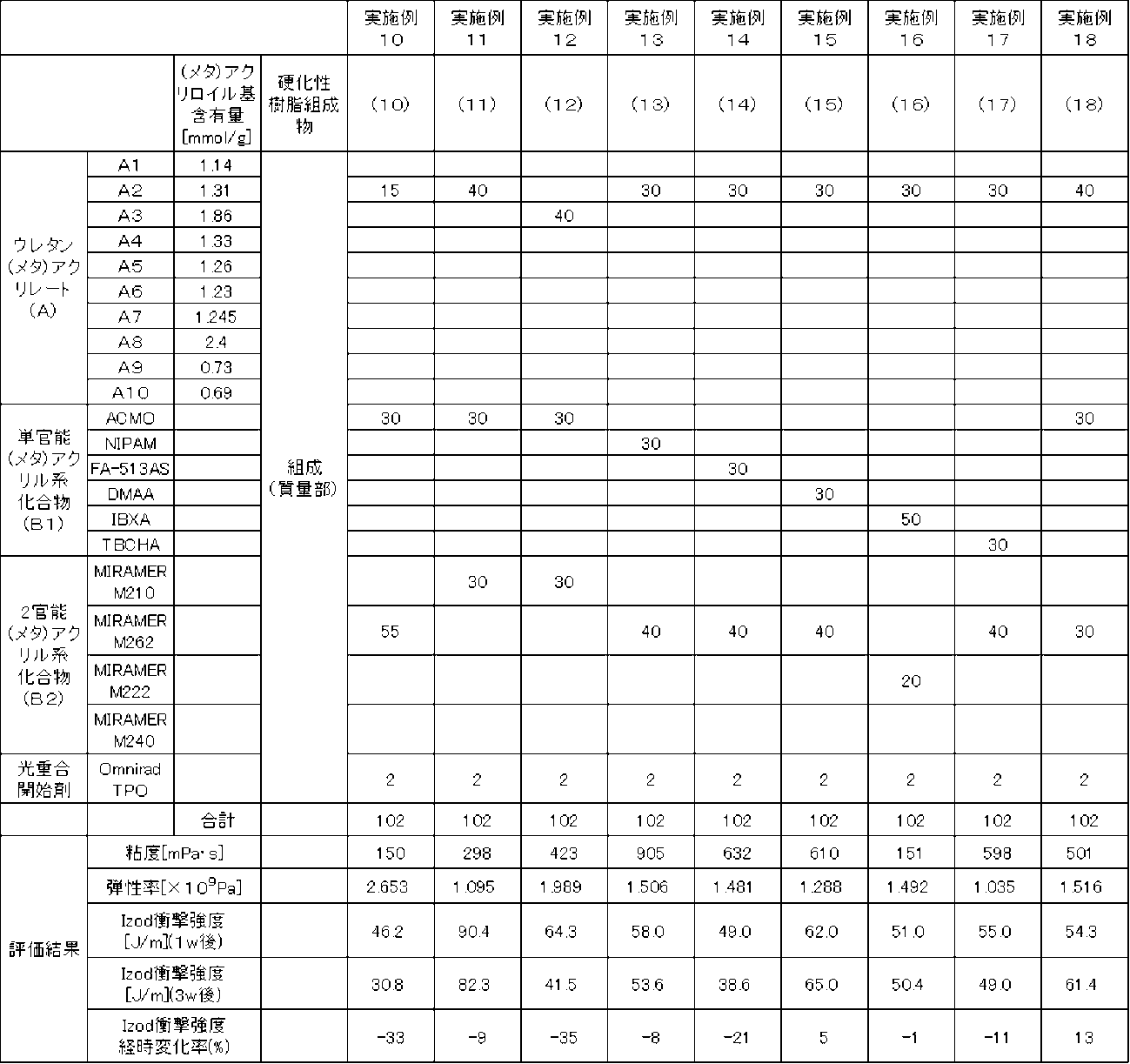
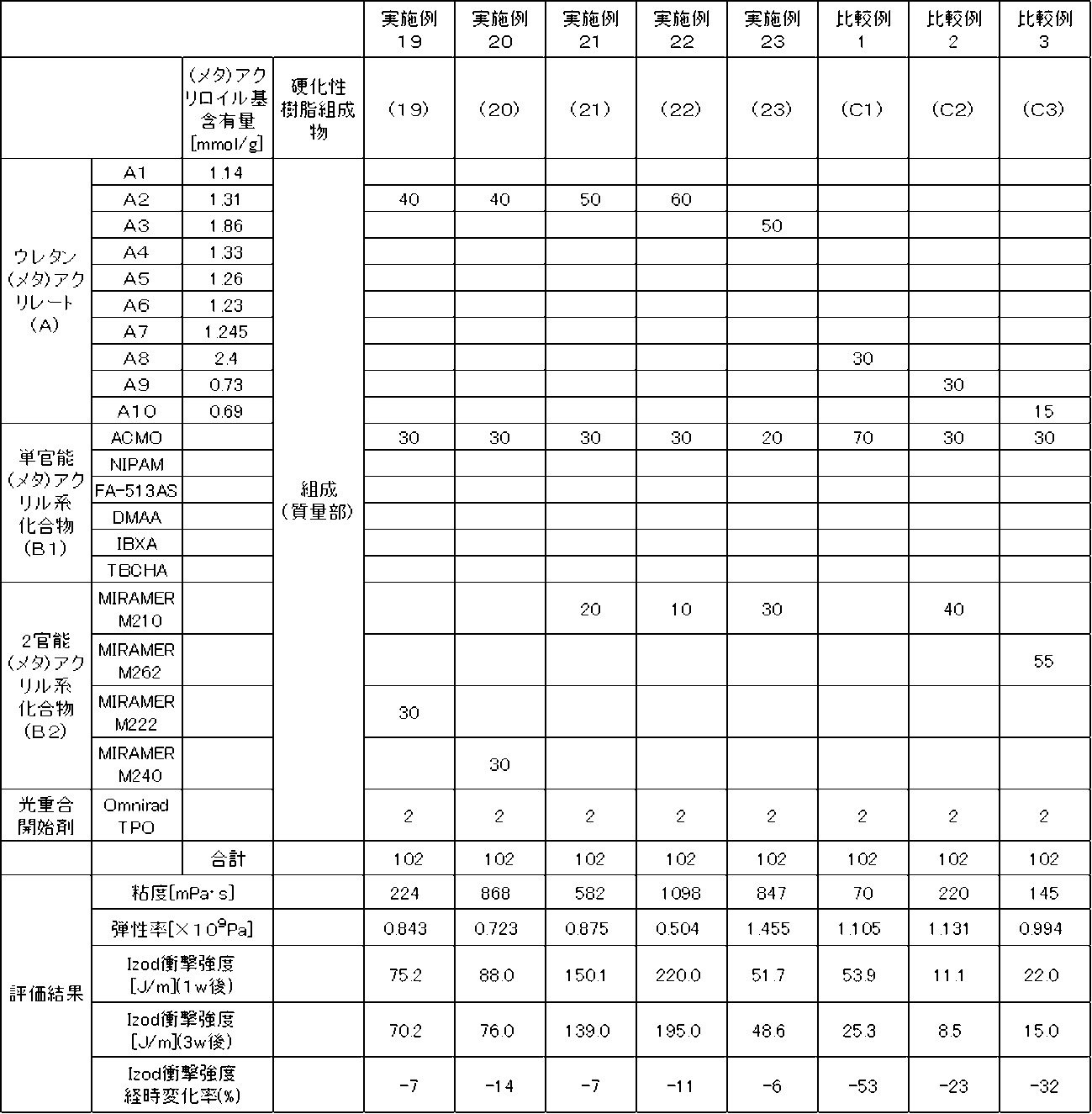
上記表の結果より、本発明の硬化性樹脂組成物は、低粘度であることが確認できた。また、本発明の硬化性樹脂組成物は、弾性率に優れた硬化物を形成できることが確認できた。さらに、本発明の硬化性樹脂組成物は、Izod(アイゾット)衝撃強度試験において、衝撃強度が大きく、経時変化が少なく、耐衝撃性に優れた硬化物を形成することができることが確認できた。本発明の硬化性樹脂組成物は、光造形用として有効に使用し得るものである。
Claims (11)
- (メタ)アクリロイル基を有するウレタン樹脂(A)と光重合開始剤とを含有する光造形用硬化性樹脂組成物であって、
前記ウレタン樹脂(A)における(メタ)アクリロイル基の含有量が0.8mmоl/g以上2.2mmоl/g以下である、光造形用硬化性樹脂組成物。 - 前記ウレタン樹脂(A)が、下記式(1)、(2)、及び(3)のいずれかで表される少なくとも一つのポリイソシアネート(a1)と、水酸基及び(メタ)アクリロイル基を有する化合物(a2)とを必須の反応原料とするものである、請求項1に記載の光造形用硬化性樹脂組成物。

- 前記式(1)、(2)、(3)中、R1、R2、R3が、それぞれ直鎖のアルキル基である、請求項2に記載の光造形用硬化性樹脂組成物。
- 前記ウレタン樹脂(A)が、前記式(1)、(2)、(3)のいずれかで表される少なくとも一つのポリイソシアネート(a1)と、下記式(4)で表される水酸基及び(メタ)アクリロイル基を有する化合物(a2)とを必須の反応原料とするものである、請求項2または3に記載の光造形用硬化性樹脂組成物。
- 前記光造形用硬化性樹脂組成物が、単官能(メタ)アクリル系化合物(B1)及び/または2官能(メタ)アクリル系化合物(B2)を含有し、
前記光造形用硬化性樹脂組成物における前記ウレタン樹脂(A)の含有量が、1質量%以上50質量%以下である、請求項1~4のいずれか1項に記載の光造形用硬化性樹脂組成物。 - 前記単官能(メタ)アクリル系化合物(B1)の重合体のガラス転移温度が、50℃以上である、請求項5に記載の光造形用硬化性樹脂組成物。
- 前記2官能(メタ)アクリル系化合物(B2)の重合体のガラス転移温度が、40℃以上である、請求項5に記載の光造形用硬化性樹脂組成物。
- 前記単官能(メタ)アクリル系化合物(B1)が、下記式(5)で表される、請求項5または6に記載の光造形用硬化性樹脂組成物。
- 請求項1~8のいずれか1項に記載の光造形用硬化性樹脂組成物の硬化反応物である硬化物。
- 活性エネルギー線の照射を硬化条件とする、請求項9に記載の硬化物。
- 請求項9または10に記載の硬化物からなる立体造形物。
Priority Applications (5)
| Application Number | Priority Date | Filing Date | Title |
|---|---|---|---|
| CN202280024467.2A CN117098792A (zh) | 2021-04-02 | 2022-03-10 | 光造形用固化性树脂组合物、固化物和立体造形物 |
| EP22779912.9A EP4317232A4 (en) | 2021-04-02 | 2022-03-10 | Curable resin composition for stereolithography, cured product and three-dimensional object |
| US18/284,985 US20240199785A1 (en) | 2021-04-02 | 2022-03-10 | Curable resin composition for stereolithography, cured product, and three-dimensional object |
| JP2022551333A JP7231119B2 (ja) | 2021-04-02 | 2022-03-10 | 光造形用硬化性樹脂組成物、硬化物及び立体造形物 |
| KR1020237032879A KR20230164045A (ko) | 2021-04-02 | 2022-03-10 | 광 조형용 경화성 수지 조성물, 경화물 및 입체 조형물 |
Applications Claiming Priority (2)
| Application Number | Priority Date | Filing Date | Title |
|---|---|---|---|
| JP2021063260 | 2021-04-02 | ||
| JP2021-063260 | 2021-04-02 |
Publications (1)
| Publication Number | Publication Date |
|---|---|
| WO2022209689A1 true WO2022209689A1 (ja) | 2022-10-06 |
Family
ID=83455917
Family Applications (1)
| Application Number | Title | Priority Date | Filing Date |
|---|---|---|---|
| PCT/JP2022/010456 Ceased WO2022209689A1 (ja) | 2021-04-02 | 2022-03-10 | 光造形用硬化性樹脂組成物、硬化物及び立体造形物 |
Country Status (7)
| Country | Link |
|---|---|
| US (1) | US20240199785A1 (ja) |
| EP (1) | EP4317232A4 (ja) |
| JP (1) | JP7231119B2 (ja) |
| KR (1) | KR20230164045A (ja) |
| CN (1) | CN117098792A (ja) |
| TW (1) | TW202248229A (ja) |
| WO (1) | WO2022209689A1 (ja) |
Cited By (2)
| Publication number | Priority date | Publication date | Assignee | Title |
|---|---|---|---|---|
| EP4403131A1 (en) * | 2022-12-27 | 2024-07-24 | Shofu Inc. | Photopolymerizable composition for 3d printer containing polymerizable monomer having allophanate bond |
| JPWO2025164319A1 (ja) * | 2024-02-01 | 2025-08-07 |
Families Citing this family (4)
| Publication number | Priority date | Publication date | Assignee | Title |
|---|---|---|---|---|
| US20250282962A1 (en) * | 2024-03-06 | 2025-09-11 | Lanxess Deutschland Gmbh | 3D-printed products |
| US20250282961A1 (en) * | 2024-03-06 | 2025-09-11 | Lanxess Deutschland Gmbh | 3D-printed products |
| WO2025192235A1 (ja) * | 2024-03-14 | 2025-09-18 | 三井化学株式会社 | (メタ)アクリレート化合物、モノマー組成物、硬化性組成物、歯科材料、及び(メタ)アクリレート化合物の製造方法 |
| WO2025192236A1 (ja) * | 2024-03-14 | 2025-09-18 | 三井化学株式会社 | (メタ)アクリレート化合物の製造方法 |
Citations (6)
| Publication number | Priority date | Publication date | Assignee | Title |
|---|---|---|---|---|
| JPH07228644A (ja) | 1994-02-21 | 1995-08-29 | Teijin Seiki Co Ltd | 光学的立体造形用樹脂組成物 |
| JPH09169827A (ja) * | 1995-10-20 | 1997-06-30 | Teijin Seiki Co Ltd | 光硬化性樹脂組成物 |
| JP2008189782A (ja) | 2007-02-02 | 2008-08-21 | Cmet Inc | 面露光による光学的立体造形用樹脂組成物 |
| JP2012111226A (ja) * | 2010-11-01 | 2012-06-14 | Keyence Corp | インクジェット光造形法における、光造形品形成用モデル材、光造形品の光造形時の形状支持用サポート材および光造形品の製造方法 |
| WO2016072356A1 (ja) * | 2014-11-04 | 2016-05-12 | アドバンスト・ソフトマテリアルズ株式会社 | 光硬化性組成物、光硬化性組成物から形成される硬化体、及び該硬化体の製造方法 |
| JP2017210539A (ja) * | 2016-05-25 | 2017-11-30 | Dic株式会社 | 光造形用硬化性組成物、光硬化物、及び成形品の製造方法 |
Family Cites Families (5)
| Publication number | Priority date | Publication date | Assignee | Title |
|---|---|---|---|---|
| JP5892799B2 (ja) * | 2012-02-03 | 2016-03-23 | 新中村化学工業株式会社 | 伸びがあり耐傷つき性に優れる硬化物を形成するウレタン(メタ)アクリレートおよびそれを含有する光硬化性樹脂組成物 |
| CN106164121B (zh) * | 2014-03-31 | 2019-12-20 | 三菱化学株式会社 | 氨基甲酸酯(甲基)丙烯酸酯系化合物、活性能量射线固化性树脂组合物及涂布剂 |
| JP6740609B2 (ja) * | 2014-12-26 | 2020-08-19 | 三菱ケミカル株式会社 | 活性エネルギー線硬化性樹脂組成物及びコーティング剤 |
| JP6891474B2 (ja) * | 2016-06-13 | 2021-06-18 | 株式会社リコー | 形状支持用液体、及び立体造形物の製造方法 |
| JP6930176B2 (ja) * | 2017-03-29 | 2021-09-01 | 株式会社リコー | 立体造形用組成物のセット、立体造形物の製造方法、及び立体造形装置 |
-
2022
- 2022-03-10 JP JP2022551333A patent/JP7231119B2/ja active Active
- 2022-03-10 WO PCT/JP2022/010456 patent/WO2022209689A1/ja not_active Ceased
- 2022-03-10 US US18/284,985 patent/US20240199785A1/en active Pending
- 2022-03-10 EP EP22779912.9A patent/EP4317232A4/en active Pending
- 2022-03-10 KR KR1020237032879A patent/KR20230164045A/ko active Pending
- 2022-03-10 CN CN202280024467.2A patent/CN117098792A/zh active Pending
- 2022-03-31 TW TW111112603A patent/TW202248229A/zh unknown
Patent Citations (6)
| Publication number | Priority date | Publication date | Assignee | Title |
|---|---|---|---|---|
| JPH07228644A (ja) | 1994-02-21 | 1995-08-29 | Teijin Seiki Co Ltd | 光学的立体造形用樹脂組成物 |
| JPH09169827A (ja) * | 1995-10-20 | 1997-06-30 | Teijin Seiki Co Ltd | 光硬化性樹脂組成物 |
| JP2008189782A (ja) | 2007-02-02 | 2008-08-21 | Cmet Inc | 面露光による光学的立体造形用樹脂組成物 |
| JP2012111226A (ja) * | 2010-11-01 | 2012-06-14 | Keyence Corp | インクジェット光造形法における、光造形品形成用モデル材、光造形品の光造形時の形状支持用サポート材および光造形品の製造方法 |
| WO2016072356A1 (ja) * | 2014-11-04 | 2016-05-12 | アドバンスト・ソフトマテリアルズ株式会社 | 光硬化性組成物、光硬化性組成物から形成される硬化体、及び該硬化体の製造方法 |
| JP2017210539A (ja) * | 2016-05-25 | 2017-11-30 | Dic株式会社 | 光造形用硬化性組成物、光硬化物、及び成形品の製造方法 |
Non-Patent Citations (1)
| Title |
|---|
| See also references of EP4317232A4 |
Cited By (3)
| Publication number | Priority date | Publication date | Assignee | Title |
|---|---|---|---|---|
| EP4403131A1 (en) * | 2022-12-27 | 2024-07-24 | Shofu Inc. | Photopolymerizable composition for 3d printer containing polymerizable monomer having allophanate bond |
| JPWO2025164319A1 (ja) * | 2024-02-01 | 2025-08-07 | ||
| WO2025164319A1 (ja) * | 2024-02-01 | 2025-08-07 | Dic株式会社 | 光造形用硬化性樹脂組成物、硬化物及び立体造形物 |
Also Published As
| Publication number | Publication date |
|---|---|
| KR20230164045A (ko) | 2023-12-01 |
| JP7231119B2 (ja) | 2023-03-01 |
| CN117098792A (zh) | 2023-11-21 |
| JPWO2022209689A1 (ja) | 2022-10-06 |
| EP4317232A1 (en) | 2024-02-07 |
| US20240199785A1 (en) | 2024-06-20 |
| TW202248229A (zh) | 2022-12-16 |
| EP4317232A4 (en) | 2025-03-19 |
Similar Documents
| Publication | Publication Date | Title |
|---|---|---|
| JP7231119B2 (ja) | 光造形用硬化性樹脂組成物、硬化物及び立体造形物 | |
| EP3858876B1 (en) | Curable resin composition, cured product, and three-dimensional object | |
| WO2018020732A1 (ja) | 樹脂組成物及びそれを用いた立体造形物 | |
| JP7463718B2 (ja) | 硬化性樹脂組成物、硬化物及び立体造形物 | |
| JP7473080B2 (ja) | 硬化性樹脂組成物、硬化物及び立体造形物 | |
| JP7458574B2 (ja) | 硬化性樹脂組成物、硬化物及び立体造形物 | |
| JP2022138932A (ja) | アクリル樹脂、活性エネルギー線硬化性樹脂組成物、硬化物及び物品 | |
| JP7395830B2 (ja) | 医療用立体造形物、立体造形物及び医療用立体造形物の製造方法 | |
| JP7228091B2 (ja) | 活性エネルギー線硬化性樹脂組成物、印刷インキ及び印刷物 | |
| JP7375948B2 (ja) | 不飽和アクリル樹脂、活性エネルギー線硬化性樹脂組成物、硬化物及び物品 | |
| JP7315031B2 (ja) | 三次元造形用パターン材料、硬化物、立体造形物、及び前記立体造形物を用いた鋳型の製造方法 | |
| JP2022138931A (ja) | 重合性不飽和基を有するアクリルウレタン樹脂、活性エネルギー線硬化性樹脂組成物、硬化物及び物品 | |
| JP7230395B2 (ja) | 硬化物及び立体造形物 | |
| JP7626107B2 (ja) | ウレタン(メタ)アクリレート樹脂、活性エネルギー線硬化性組成物、硬化物及び積層フィルム | |
| US20260125564A1 (en) | Curable resin composition for stereolithography, cured product, and three-dimensional shaped object | |
| CN121991295A (zh) | 光造形用固化性树脂组合物、固化物、及立体造形物 | |
| WO2025164319A1 (ja) | 光造形用硬化性樹脂組成物、硬化物及び立体造形物 | |
| CN121736222A (zh) | 氨基甲酸酯(甲基)丙烯酸酯树脂、活性能量射线固化性组合物、固化涂膜和硬涂膜 |
Legal Events
| Date | Code | Title | Description |
|---|---|---|---|
| ENP | Entry into the national phase |
Ref document number: 2022551333 Country of ref document: JP Kind code of ref document: A |
|
| 121 | Ep: the epo has been informed by wipo that ep was designated in this application |
Ref document number: 22779912 Country of ref document: EP Kind code of ref document: A1 |
|
| WWE | Wipo information: entry into national phase |
Ref document number: 202280024467.2 Country of ref document: CN |
|
| WWE | Wipo information: entry into national phase |
Ref document number: 18284985 Country of ref document: US |
|
| WWE | Wipo information: entry into national phase |
Ref document number: 2022779912 Country of ref document: EP |
|
| ENP | Entry into the national phase |
Ref document number: 2022779912 Country of ref document: EP Effective date: 20231102 |
|
| NENP | Non-entry into the national phase |
Ref country code: DE |