WO2024252442A1 - Dispositif d'estimation d'état de patient, procédé d'estimation d'état de patient et programme - Google Patents
Dispositif d'estimation d'état de patient, procédé d'estimation d'état de patient et programme Download PDFInfo
- Publication number
- WO2024252442A1 WO2024252442A1 PCT/JP2023/020751 JP2023020751W WO2024252442A1 WO 2024252442 A1 WO2024252442 A1 WO 2024252442A1 JP 2023020751 W JP2023020751 W JP 2023020751W WO 2024252442 A1 WO2024252442 A1 WO 2024252442A1
- Authority
- WO
- WIPO (PCT)
- Prior art keywords
- patient
- information
- tremor
- feature
- unit
- Prior art date
- Legal status (The legal status is an assumption and is not a legal conclusion. Google has not performed a legal analysis and makes no representation as to the accuracy of the status listed.)
- Ceased
Links
Images




Classifications
-
- A—HUMAN NECESSITIES
- A61—MEDICAL OR VETERINARY SCIENCE; HYGIENE
- A61B—DIAGNOSIS; SURGERY; IDENTIFICATION
- A61B10/00—Instruments for taking body samples for diagnostic purposes; Other methods or instruments for diagnosis, e.g. for vaccination diagnosis, sex determination or ovulation-period determination; Throat striking implements
-
- A—HUMAN NECESSITIES
- A61—MEDICAL OR VETERINARY SCIENCE; HYGIENE
- A61B—DIAGNOSIS; SURGERY; IDENTIFICATION
- A61B5/00—Measuring for diagnostic purposes; Identification of persons
Definitions
- One aspect of the present invention relates to a patient condition estimation device, a patient condition estimation method, and a program.
- Tremors occur through a variety of mechanisms. Not only do people tremble in response to cold, but they can also tremble unconsciously (involuntary movement) when they have a fever or feel fear. Tremors are also known to be one of the main symptoms of essential tremor, Parkinson's disease, dystonia, and other conditions. Tremors have various characteristics, so technology is being developed that processes images of videotaped human movements and classifies tremors into multiple categories to provide warning signs to undiagnosed patients (see, for example, non-patent document 1).
- Non-Patent Document 1 makes it possible to extract appropriate tremor features by utilizing information on the relationships between the human skeleton, making it possible to identify Parkinsonian tremor (PT, non-tremor) at low cost.
- PT Parkinsonian tremor
- FT functional tremor
- This invention was made with the above in mind, and aims to provide technology that can identify a patient's condition with high accuracy.
- a patient condition estimation device includes a memory unit that stores a program, and a processor that executes instructions of the program.
- the memory unit stores a physical behavior dictionary in which medical information features are organized into a database.
- the processor includes an upper limb behavior information extraction unit, a trembling feature extraction unit, a patient information extraction unit, a patient feature generation unit, and a patient condition estimation unit.
- the upper limb behavior information extraction unit extracts upper limb behavior information from video data of the patient.
- the trembling feature extraction unit extracts the trembling features of the patient from the upper limb behavior information.
- the patient information extraction unit extracts patient information of the patient from the video data.
- the patient feature generation unit generates patient features by reflecting the medical information features of the physical behavior dictionary in the patient information.
- the patient condition estimation unit estimates the patient condition based on the trembling features and the patient features.
- FIG. 1 is a functional block diagram showing an example of a patient condition estimating device according to an embodiment.
- FIG. 2 is a flowchart showing an example of a learning processing routine performed by the patient condition estimating device 100.
- FIG. 3 is a diagram for explaining the neural network used in the patient condition estimating apparatus 100.
- FIG. 4 is a flowchart showing an example of an estimation processing routine performed by the patient condition estimation device 100.
- FIG. 5 is a diagram for explaining the neural network used in the patient condition estimating apparatus 100.
- FIG. 6 is a diagram for explaining the relationship between the patient condition estimating device 100 of the embodiment and SPAPNet.
- FIG. 7 is a diagram showing an example of the GNN block shown in FIG.
- FIG. 8 is a diagram for explaining an example of physical behavior in the medical and nursing industry.
- FIG. 9 is a block diagram showing an example of a hardware configuration of the patient condition estimating apparatus 100.
- Fig. 1 is a functional block diagram showing an example of a patient condition estimation device according to an embodiment.
- the patient condition estimation device 100 includes an upper limb action information extraction unit 1, a tremor feature extraction unit 2, a patient information extraction unit 3, a patient feature generation unit 4, a patient condition estimation unit 5, a storage unit 6 that stores external knowledge data 6a, a storage unit 7 that stores parameters 7a, a parameter update unit 8, and an output unit 9.
- These are processing functions realized by a processor that executes instructions of a program stored in the storage unit.
- the patient condition estimation device 100 is a computer equipped with a storage unit and a processor.
- the storage unit 6 stores a program (not shown) and external knowledge data 6a.
- the external knowledge data 6a includes a physical action dictionary that is a database of medical information features. In the embodiment, for example, a physical action dictionary in the medical and nursing industry is used.
- the upper limb behavior information extraction unit 1 extracts upper limb behavior information of a patient from the video data of the patient.
- the upper limb behavior information extraction unit 1 extracts the upper limb behavior information of the patient using a first neural network that has been trained (learned) using learning video data and correct answer labels.
- the tremor feature extraction unit 2 extracts the tremor features of the patient from the upper limb action information output from the upper limb action information extraction unit 1.
- the tremor feature extraction unit 2 extracts the tremor features using a second neural network that is trained (learned) using the upper limb action information for learning and the correct answer label.
- the patient information extraction unit 3 extracts the patient information of the patient from the video data of the patient.
- the patient information extraction unit 3 extracts the patient information of the patient using a third neural network that is trained (learned) using the learning video data and the correct answer label.
- the patient feature generation unit 4 generates patient features by reflecting the medical information features of the physical behavior dictionary included in the external knowledge data 6a to the patient information from the patient information extraction unit 3.
- the patient condition estimation unit 5 estimates the patient condition based on the tremor features from the tremor feature extraction unit 2 and the patient features from the patient feature generation unit 4. In an embodiment, the patient condition estimation unit 5 estimates the patient condition using a fourth neural network that has been trained (learned) using the tremor features for learning, the patient features, and the correct answer label. In an embodiment, the patient condition estimation unit 5 identifies the type of involuntary movement of the patient as the patient's condition. The involuntary movement is, for example, tremor.
- Involuntary movement labels include no convincing tremor (non-tremor), Parkinsonian tremor (PT), essential tremor (ET), dystonic tremor (DT), and functional tremor (FT).
- Patient condition labels include severity of tremor (e.g. no tremor, mild tremor, moderate tremor, severe tremor, very severe tremor), movement (e.g. sitting, clapping, playing piano), symptoms (e.g. continuous tremor, sudden tremor, dancing movements, whole body twitching), and pathophysiology/condition (e.g. blood pressure, fever, temperature).
- severity of tremor e.g. no tremor, mild tremor, moderate tremor, severe tremor, very severe tremor
- movement e.g. sitting, clapping, playing piano
- symptoms e.g. continuous tremor, sudden tremor, dancing movements, whole body twitching
- pathophysiology/condition e.g. blood pressure, fever, temperature
- the parameters 7a are parameters (hyperparameters) of the first, second, third, and fourth neural networks.
- the parameter update unit 8 updates the parameters 7a in the process of training the first, second, third and fourth neural networks.
- the output unit 9 outputs the patient condition identified by the patient condition estimating unit 5 .
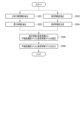
- FIG. 2 is a flowchart showing an example of a learning processing routine by the patient condition estimation device 100.
- the patient condition estimation device 100 extracts upper limb behavior information from video data of a patient (step S101), and also extracts patient information from video data of the same patient (step S103).
- the patient condition estimation device 100 extracts tremor features from the upper limb behavior information (step S102) and applies the medical information features to the patient information to generate patient features (step S104).
- the patient condition estimation device 100 estimates an involuntary movement label and a patient feature label from the tremor feature and the patient feature (step S105).
- the patient condition estimation device 100 calculates the tremor feature loss and the patient feature loss (step S106).
- the patient condition estimation device 100 updates the parameters of the second neural network of the tremor feature extraction unit 2, the parameters of the third neural network of the patient information extraction unit 3, and the parameters of the fourth neural network of the patient condition estimation unit 5 based on the tremor feature loss and the patient feature loss (step S107).
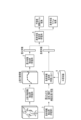
- FIG. 3 is a diagram for explaining the neural network used in the patient condition estimation device 100.
- the learning process will be explained with reference to FIG. 3.
- video image data of a patient is provided to an upper limb action information extraction unit 1 and a patient information extraction unit 3.
- the upper limb action information extraction unit 1 extracts upper limb action information using a trained model (first neural network) proposed in OpenPose, for example.
- the upper limb action information is passed to a tremor feature extraction unit 2, and tremor features are extracted by a second neural network.
- the neural network here corresponds to the first half of SPAPNet in Non-Patent Document 1.
- the patient information extraction unit 3 extracts vectors of patient condition labels (tremor severity/symptoms/movement/pathophysiology/condition, etc.) from the video data using a third neural network.
- the patient feature generation unit 4 reflects external knowledge, i.e., a physical behavior dictionary in the medical and nursing industry, in the vector of the patient condition label, and generates an external knowledge vector as a patient feature, with weighting around nodes related to the patient.
- the patient features are passed to the patient condition estimation unit 5 together with the tremor features.
- the patient condition estimation unit 5 estimates the patient condition using a fourth neural network that receives the patient features and tremor features as input, and outputs an involuntary movement label result and a patient condition label result.
- the neural network here corresponds to the latter half of SPAPNet in Non-Patent Document 1.
- the parameters of the second neural network in the tremor feature extraction unit 2 Based on the losses (tremor feature losses, patient feature losses) that occur during the learning process, the parameters of the second neural network in the tremor feature extraction unit 2, the parameters of the third neural network in the patient information extraction unit 3, and the parameters of the fourth neural network in the patient condition estimation unit 5 are updated.
- FIG. 4 is a flowchart showing an example of an estimation processing routine by the patient condition estimation device 100.
- steps S201, S202, S203, and S204 correspond to steps S101, S102, S103, and S104 in FIG. 2, respectively.
- the patient condition estimation device 100 estimates an involuntary movement label and a patient feature label from the tremor feature and the patient feature (step S205), and outputs the involuntary movement label and the patient feature label (step S206).
- Fig. 5 is a diagram for explaining the neural networks used in the patient condition estimation device 100. The estimation process will be described with reference to Fig. 5. In the estimation process, all of the neural networks have already been trained, and there is no need to update parameters due to tremor feature loss or patient feature loss.
- FIG. 6 is a diagram for explaining the relationship between the patient condition estimation device 100 of the embodiment and SPAPNet.
- a neural network is trained from upper limb skeleton information (Human Pose features) obtained from the patient's video image data, and an involuntary movement label is identified from the tremor features of the upper limbs.
- the neural network includes a Graph Neural Network (GNN) block, a Pyramidal Channel Squeezing-Fusion block, an Average Pooling Layer, a Fully-Connected Layer, and an Output Classification.
- the Pyramidal Channel Squeezing-Fusion block includes a Channel Squeezing block and a Channel Fusion block that uses the Channel Squeezing block's output as input.
- the Pyramidal Channel Squeezing-Fusion block adjusts the weights of the nodes of each skeleton like an inverted triangle, and increases the weights between nearby nodes (e.g., the left hand and left elbow).
- the output of the channel fusion block is input to the next average pooling layer.
- external knowledge data is reflected in the output of the Channel fusion block.
- an external knowledge vector with weighting around nodes related to patients is generated as patient features.
- FIG 7 is a diagram showing an example of the GNN block shown in Figure 6.
- the GNN block includes, for example, an LCN Layer, a Batch Norm Layer, a Leaky ReLu Layer, and a Dropout Layer.
- FIG. 8 is a diagram for explaining an example of physical actions in the medical and nursing industry.
- An action called “checking vital signs” includes, for example, the actions of "measuring body temperature” and “measuring blood pressure.”
- the action of "measuring body temperature” includes the actions of “holding a thermometer” and “placing the thermometer.”
- the action of "measuring blood pressure” includes the action of "holding a blood pressure monitor.”
- the physical action dictionary of the external knowledge data 6a is generated by storing these actions in a database.
- FIG 9 is a block diagram showing an example of the hardware configuration of the patient condition estimation device 100.
- the patient condition estimation device 100 includes a CPU (Central Processing Unit) 20A, a bridge circuit 102, memory 30, a GPU (Graphics Processing Unit) 20B connected to a display 104, a BIOS-ROM 107, storage 109, a USB connector 110, and an input unit 112.
- CPU Central Processing Unit
- bridge circuit 102 memory 30
- GPU Graphics Processing Unit
- the storage 109 is a non-volatile storage medium (block device), such as a hard disk drive (HDD) or a solid state drive (SSD).
- the storage 109 stores basic programs such as an operating system (OS) 35 and device drivers, as well as a program 34 for realizing the functions of the patient condition estimation device 100.
- OS operating system
- device drivers device drivers
- Memory 30 includes ROM (Read Only Memory) and RAM (Random Access Memory).
- CPU 20A and GPU 20B are arithmetic elements related to processor 20.
- CPU 20A mainly controls patient condition estimation device 100.
- GPU 20B mainly performs calculations related to image processing (such as multiply-and-accumulate operations) at high speed.
- CPU 20A executes BIOS (basic input/output system) stored in BIOS-ROM 107.
- BIOS-ROM 107 basic input/output system
- CPU 20A also loads program 34 from storage 109 into memory 30 and executes it. The same is true for GPU 20B.
- the bridge circuit 102 relays data transmission between the CPU 20A and GPU 20B and each component.
- the bridge circuit 102 is interposed between the CPU 20A and GPU 20B and hardware devices connected to a PCI (Peripheral Component Interconnect) bus or PCIe bus (not shown), relaying communication between them.
- PCI Peripheral Component Interconnect
- the USB connector 110 connects a USB device, etc.
- the program 34 may be installed in the patient condition estimation device 100 via a USB device.
- the input unit 112 connects the patient condition estimation device 100 to a communication network such as a LAN (Local Area Network) or a WAN (Wide Area Network).
- the program 34 and various data may be stored in a removable storage medium other than the storage 109, and may be read by the CPU 20A from a disk drive or the like.
- the program 34 and various data may be stored in another computer connected via a communication network, and may be read by the CPU 20A via the input unit 112.
- a physical behavior dictionary from the medical and nursing industry is used, and medical information features are input into SPAPNet to classify the patient's tremor. That is, according to the embodiment, it is possible to identify the patient's tremor by utilizing a physical behavior dictionary from the medical and nursing industry and taking into account the severity of the tremor, the patient's symptoms, movements, and pathophysiology/condition, etc. With existing technology, medical information is not referenced, so it has to be said that the accuracy is high only for certain types of tremor.
- tremor by taking into account the severity of the tremor, the person's symptoms, movements, and pathophysiology/condition, etc., it is possible to identify many types of tremor (PT, ET, DT, FT, non-tremor) with high accuracy.
Landscapes
- Health & Medical Sciences (AREA)
- Life Sciences & Earth Sciences (AREA)
- Surgery (AREA)
- Animal Behavior & Ethology (AREA)
- Biomedical Technology (AREA)
- Heart & Thoracic Surgery (AREA)
- Medical Informatics (AREA)
- Molecular Biology (AREA)
- Pathology (AREA)
- Engineering & Computer Science (AREA)
- General Health & Medical Sciences (AREA)
- Public Health (AREA)
- Veterinary Medicine (AREA)
- Physics & Mathematics (AREA)
- Biophysics (AREA)
- Measurement Of The Respiration, Hearing Ability, Form, And Blood Characteristics Of Living Organisms (AREA)
Abstract
Selon un aspect de la présente invention, un dispositif d'estimation d'état de patient est pourvu d'une unité de stockage destinée à stocker un programme, ainsi que d'un processeur destiné à exécuter des instructions de programme. L'unité de stockage stocke un dictionnaire de comportements physiques, obtenu par formation de caractéristiques d'informations médicales dans une base de données. Le processeur comprend une unité d'extraction d'informations de comportements de membre supérieur, une unité d'extraction de caractéristiques de tremblement, une unité d'extraction d'informations de patient, une unité de génération de caractéristiques de patient et une unité d'estimation d'état de patient. L'unité d'extraction d'informations de comportements de membre supérieur extrait des informations de comportements de membre supérieur à partir de données d'images animées concernant le patient. L'unité d'extraction de caractéristiques de tremblement extrait une caractéristique de tremblement du patient à partir des informations de comportements de membre supérieur. L'unité d'extraction d'informations de patient extrait des informations de patient concernant le patient à partir des données d'images animées. L'unité de génération de caractéristiques de patient génère une caractéristique de patient en reflétant une caractéristique d'informations médicales provenant du dictionnaire de comportements physiques, dans les informations de patient. L'unité d'estimation d'état de patient estime l'état du patient sur la base de la caractéristique du tremblement et de la caractéristique du patient.
Priority Applications (2)
| Application Number | Priority Date | Filing Date | Title |
|---|---|---|---|
| PCT/JP2023/020751 WO2024252442A1 (fr) | 2023-06-05 | 2023-06-05 | Dispositif d'estimation d'état de patient, procédé d'estimation d'état de patient et programme |
| JP2025525421A JPWO2024252442A1 (fr) | 2023-06-05 | 2023-06-05 |
Applications Claiming Priority (1)
| Application Number | Priority Date | Filing Date | Title |
|---|---|---|---|
| PCT/JP2023/020751 WO2024252442A1 (fr) | 2023-06-05 | 2023-06-05 | Dispositif d'estimation d'état de patient, procédé d'estimation d'état de patient et programme |
Publications (1)
| Publication Number | Publication Date |
|---|---|
| WO2024252442A1 true WO2024252442A1 (fr) | 2024-12-12 |
Family
ID=93795167
Family Applications (1)
| Application Number | Title | Priority Date | Filing Date |
|---|---|---|---|
| PCT/JP2023/020751 Ceased WO2024252442A1 (fr) | 2023-06-05 | 2023-06-05 | Dispositif d'estimation d'état de patient, procédé d'estimation d'état de patient et programme |
Country Status (2)
| Country | Link |
|---|---|
| JP (1) | JPWO2024252442A1 (fr) |
| WO (1) | WO2024252442A1 (fr) |
Citations (6)
| Publication number | Priority date | Publication date | Assignee | Title |
|---|---|---|---|---|
| WO2016147678A1 (fr) * | 2015-03-13 | 2016-09-22 | ノーリツプレシジョン株式会社 | Appareil de mesure des signes vitaux, procédé de mesure des signes vitaux, et programme de mesure des signes vitaux |
| JP2017533790A (ja) * | 2014-09-09 | 2017-11-16 | ノバルティス アーゲー | 運動タスク解析のシステムおよび方法 |
| JP2020512224A (ja) * | 2017-02-10 | 2020-04-23 | コーニンクレッカ フィリップス エヌ ヴェKoninklijke Philips N.V. | 車両運転中の低血糖事象の始まりを警告するシステム |
| US20220280098A1 (en) * | 2021-03-02 | 2022-09-08 | International Business Machines Corporation | Assessing parkinson's disease symptoms |
| JP7223103B1 (ja) * | 2021-11-09 | 2023-02-15 | 株式会社電通国際情報サービス | 錐体外路症状診断装置及び錐体外路症状診断プログラム |
| JP2023513424A (ja) * | 2020-01-22 | 2023-03-31 | コーニンクレッカ フィリップス エヌ ヴェ | 患者が自分で抜管する尤度を決定すること |
-
2023
- 2023-06-05 JP JP2025525421A patent/JPWO2024252442A1/ja active Pending
- 2023-06-05 WO PCT/JP2023/020751 patent/WO2024252442A1/fr not_active Ceased
Patent Citations (6)
| Publication number | Priority date | Publication date | Assignee | Title |
|---|---|---|---|---|
| JP2017533790A (ja) * | 2014-09-09 | 2017-11-16 | ノバルティス アーゲー | 運動タスク解析のシステムおよび方法 |
| WO2016147678A1 (fr) * | 2015-03-13 | 2016-09-22 | ノーリツプレシジョン株式会社 | Appareil de mesure des signes vitaux, procédé de mesure des signes vitaux, et programme de mesure des signes vitaux |
| JP2020512224A (ja) * | 2017-02-10 | 2020-04-23 | コーニンクレッカ フィリップス エヌ ヴェKoninklijke Philips N.V. | 車両運転中の低血糖事象の始まりを警告するシステム |
| JP2023513424A (ja) * | 2020-01-22 | 2023-03-31 | コーニンクレッカ フィリップス エヌ ヴェ | 患者が自分で抜管する尤度を決定すること |
| US20220280098A1 (en) * | 2021-03-02 | 2022-09-08 | International Business Machines Corporation | Assessing parkinson's disease symptoms |
| JP7223103B1 (ja) * | 2021-11-09 | 2023-02-15 | 株式会社電通国際情報サービス | 錐体外路症状診断装置及び錐体外路症状診断プログラム |
Also Published As
| Publication number | Publication date |
|---|---|
| JPWO2024252442A1 (fr) | 2024-12-12 |
Similar Documents
| Publication | Publication Date | Title |
|---|---|---|
| US12182699B2 (en) | Training device and training method that perform inference processing using a fusion DNN model | |
| Wang et al. | Rvseg-net: An efficient feature pyramid cascade network for retinal vessel segmentation | |
| JP7384201B2 (ja) | デジタルツイン演算装置、デジタルツイン演算方法及びプログラム | |
| US20210249138A1 (en) | Disease risk prediction device, disease risk prediction method, and disease risk prediction program | |
| US20200097814A1 (en) | Method and system for enabling interactive dialogue session between user and virtual medical assistant | |
| JP2021523468A (ja) | ニューラルネットワークの勾配型敵対的訓練 | |
| KR102239163B1 (ko) | 인공 신경망을 이용하여 질병 유무를 예측하는 방법 및 장치 | |
| WO2024255641A1 (fr) | Procédé d'apprentissage de modèle, procédé d'acquisition de données d'apprentissage et dispositif associé | |
| CN117610608A (zh) | 基于多阶段特征融合的知识蒸馏方法、设备及介质 | |
| US12605109B2 (en) | Apparatus and method for determining brain language area invasion based on speech data | |
| JP7544338B2 (ja) | 情報処理装置、情報処理システム、情報処理方法及びプログラム | |
| WO2024252442A1 (fr) | Dispositif d'estimation d'état de patient, procédé d'estimation d'état de patient et programme | |
| KR102417448B1 (ko) | 머신 러닝 기반 잠복기별 치매 예측 방법, 그리고 이를 구현하기 위한 장치 | |
| CN118201554A (zh) | 认知功能评估系统和训练方法 | |
| Kumari et al. | Automated diabetic retinopathy grading based on the modified capsule network architecture | |
| WO2022249407A1 (fr) | Système d'aide à l'évaluation, procédé d'aide à l'évaluation et support d'enregistrement | |
| CN115830716B (zh) | 一种基于衍生数据蒸馏的骨架人体行为识别方法、装置及设备 | |
| JP7852772B2 (ja) | 情報処理装置、情報処理サーバ、情報処理方法、およびコンピュータにより読み取り可能な非一時的な記憶媒体 | |
| CN114449701B (zh) | 基于病历信息的灯光类型调控方法、装置及电子设备 | |
| CN114999001B (zh) | 用于预测冻结步态的方法、设备和计算机可读存储介质 | |
| KR102828269B1 (ko) | 이미지 변환 모델 제공 방법, 서버 및 컴퓨터 프로그램 | |
| KR102807689B1 (ko) | 시공간 특징 퓨전 모델을 통해 수술 중 출혈을 검출하는 방법 및 장치 | |
| KR102917763B1 (ko) | 치매 홈 케어 장치 및 방법과, 그를 수행하도록 컴퓨터 판독 가능한 기록 매체에 저장된 프로그램 | |
| US20250166827A1 (en) | Multimodal foundation model for patient risk stratification | |
| JP7839122B2 (ja) | 情報処理装置、情報処理方法、及び情報処理プログラム |
Legal Events
| Date | Code | Title | Description |
|---|---|---|---|
| 121 | Ep: the epo has been informed by wipo that ep was designated in this application |
Ref document number: 23940550 Country of ref document: EP Kind code of ref document: A1 |
|
| ENP | Entry into the national phase |
Ref document number: 2025525421 Country of ref document: JP Kind code of ref document: A |
|
| NENP | Non-entry into the national phase |
Ref country code: DE |