WO2024252565A1 - Procédé de fermentation de méthane et procédé de production d'accélérateur de fermentation de méthane - Google Patents
Procédé de fermentation de méthane et procédé de production d'accélérateur de fermentation de méthane Download PDFInfo
- Publication number
- WO2024252565A1 WO2024252565A1 PCT/JP2023/021180 JP2023021180W WO2024252565A1 WO 2024252565 A1 WO2024252565 A1 WO 2024252565A1 JP 2023021180 W JP2023021180 W JP 2023021180W WO 2024252565 A1 WO2024252565 A1 WO 2024252565A1
- Authority
- WO
- WIPO (PCT)
- Prior art keywords
- methane fermentation
- glycerin
- waste
- methane
- promoter
- Prior art date
- Legal status (The legal status is an assumption and is not a legal conclusion. Google has not performed a legal analysis and makes no representation as to the accuracy of the status listed.)
- Ceased
Links
Images

Classifications
-
- B—PERFORMING OPERATIONS; TRANSPORTING
- B09—DISPOSAL OF SOLID WASTE; RECLAMATION OF CONTAMINATED SOIL
- B09B—DISPOSAL OF SOLID WASTE NOT OTHERWISE PROVIDED FOR
- B09B3/00—Destroying solid waste or transforming solid waste into something useful or harmless
- B09B3/60—Biochemical treatment, e.g. by using enzymes
- B09B3/65—Anaerobic treatment
-
- C—CHEMISTRY; METALLURGY
- C02—TREATMENT OF WATER, WASTE WATER, SEWAGE, OR SLUDGE
- C02F—TREATMENT OF WATER, WASTE WATER, SEWAGE, OR SLUDGE
- C02F11/00—Treatment of sludge; Devices therefor
- C02F11/02—Biological treatment
- C02F11/04—Anaerobic treatment; Production of methane by such processes
-
- C—CHEMISTRY; METALLURGY
- C02—TREATMENT OF WATER, WASTE WATER, SEWAGE, OR SLUDGE
- C02F—TREATMENT OF WATER, WASTE WATER, SEWAGE, OR SLUDGE
- C02F11/00—Treatment of sludge; Devices therefor
- C02F11/12—Treatment of sludge; Devices therefor by de-watering, drying or thickening
- C02F11/14—Treatment of sludge; Devices therefor by de-watering, drying or thickening with addition of chemical agents
- C02F11/147—Treatment of sludge; Devices therefor by de-watering, drying or thickening with addition of chemical agents using organic substances
-
- C—CHEMISTRY; METALLURGY
- C12—BIOCHEMISTRY; BEER; SPIRITS; WINE; VINEGAR; MICROBIOLOGY; ENZYMOLOGY; MUTATION OR GENETIC ENGINEERING
- C12P—FERMENTATION OR ENZYME-USING PROCESSES TO SYNTHESISE A DESIRED CHEMICAL COMPOUND OR COMPOSITION OR TO SEPARATE OPTICAL ISOMERS FROM A RACEMIC MIXTURE
- C12P5/00—Preparation of hydrocarbons or halogenated hydrocarbons
- C12P5/02—Preparation of hydrocarbons or halogenated hydrocarbons acyclic
- C12P5/023—Methane
-
- C—CHEMISTRY; METALLURGY
- C02—TREATMENT OF WATER, WASTE WATER, SEWAGE, OR SLUDGE
- C02F—TREATMENT OF WATER, WASTE WATER, SEWAGE, OR SLUDGE
- C02F2103/00—Nature of the water, waste water, sewage or sludge to be treated
- C02F2103/20—Nature of the water, waste water, sewage or sludge to be treated from animal husbandry
-
- C—CHEMISTRY; METALLURGY
- C02—TREATMENT OF WATER, WASTE WATER, SEWAGE, OR SLUDGE
- C02F—TREATMENT OF WATER, WASTE WATER, SEWAGE, OR SLUDGE
- C02F2305/00—Use of specific compounds during water treatment
- C02F2305/06—Nutrients for stimulating the growth of microorganisms
-
- Y—GENERAL TAGGING OF NEW TECHNOLOGICAL DEVELOPMENTS; GENERAL TAGGING OF CROSS-SECTIONAL TECHNOLOGIES SPANNING OVER SEVERAL SECTIONS OF THE IPC; TECHNICAL SUBJECTS COVERED BY FORMER USPC CROSS-REFERENCE ART COLLECTIONS [XRACs] AND DIGESTS
- Y02—TECHNOLOGIES OR APPLICATIONS FOR MITIGATION OR ADAPTATION AGAINST CLIMATE CHANGE
- Y02E—REDUCTION OF GREENHOUSE GAS [GHG] EMISSIONS, RELATED TO ENERGY GENERATION, TRANSMISSION OR DISTRIBUTION
- Y02E50/00—Technologies for the production of fuel of non-fossil origin
- Y02E50/30—Fuel from waste, e.g. synthetic alcohol or diesel
Definitions
- the present invention relates to a methane fermentation method in which organic waste is introduced into a methane fermentation system to produce biogas containing methane, and in particular to a method in which a specific methane fermentation promoter is used in combination with the organic waste.
- the present invention also relates to a method for producing the methane fermentation promoter used in the above methane fermentation method.
- organic waste such as food waste, sludge from sewage treatment plants, and livestock manure have been considered biomass resources, and energy has been recovered from them.
- Methane fermentation is one of the most effective means of recovering energy from such organic waste.
- biodiesel fuel which is made from vegetable oils and waste cooking oils.
- the mainstream method of synthesizing biodiesel fuel is to use fats and oils from animals and plants, waste cooking oil, and other fats and oils, and monohydric alcohol as raw materials, and synthesize the fuel through an ester exchange reaction using an alkaline substance as a catalyst (for example, Non-Patent Document 1).
- This synthesis reaction also produces a by-product containing glycerin (waste glycerin).
- methods for industrially producing free fatty acids from fats and oils include high-temperature, high-pressure decomposition and enzymatic decomposition, but all of these involve hydrolyzing fats and oils derived from animals and plants to liberate fatty acids. This type of hydrolysis also produces by-products containing glycerin.
- Waste containing glycerin contains a large amount of impurities such as catalysts and unreacted oils and fats. Therefore, although glycerin itself can be used as a raw material for pharmaceuticals and cosmetics, the above-mentioned glycerin-containing waste must be purified at great cost in order to be used as a raw material for pharmaceuticals and cosmetics, which is not practical. For this reason, glycerin-containing waste has often been disposed of as industrial waste.
- glycerin-containing waste is known to have an inhibitory effect on methane fermentation, and therefore it cannot be said that it is useful as a raw material for methane fermentation.
- only very small amounts can be added as a raw material for methane fermentation, which cannot be said to be sufficient from the perspective of effective utilization of glycerin-containing waste.
- the present invention was made in consideration of the above problems, and aims to provide a methane fermentation method that can efficiently produce methane-containing biogas from organic waste while utilizing glycerin, and a methane fermentation promoter that can promote methane fermentation.
- the present inventors have discovered that a specific composition containing glycerin can promote methane fermentation using organic waste as a raw material, rather than inhibiting it, and have thus completed the present invention.
- the present invention is as follows.
- a methane fermentation method for producing biogas containing methane by feeding organic waste into a methane fermentation system A methane fermentation promoter is used in combination with the organic waste, The methane fermentation method is characterized in that the methane fermentation promoter contains glycerin and has an n-hexane extractable substance content of 10,000 mg/kg or less.
- a method for producing a methane fermentation promoter to be added to a methane fermentation system in combination with organic waste comprising: a first separation step of mixing a raw material containing at least one of glycerin and a fatty acid glycerin ester with an inorganic acid and separating a first oil component and a first glycerin-containing liquid; a neutralization step of neutralizing the first glycerin-containing liquid with an alkaline substance; a second separation step of separating a second oil component and precipitated inorganic salts from the neutralized first glycerin-containing liquid; Equipped with A method for producing a methane fermentation promoter, characterized in that the obtained methane fermentation promoter contains glycerin.
- [5] The method for producing a methane fermentation promoter according to [4], further comprising an alcohol removal step of removing monohydric alcohol after the second separation step.
- [6] The method for producing a methane fermentation promoter according to [4] or [5], wherein in the first separation step, the mixed liquid of the raw material and the inorganic acid has a pH of 3 or less.
- [7] The method for producing a methane fermentation promoter according to any one of [4] to [6], wherein in the neutralization step, the first glycerin-containing liquid is neutralized to have a pH of 4 to 8.
- the methane fermentation method of the present invention makes it possible to efficiently produce biogas containing methane in methane fermentation using organic waste as a raw material.
- the methane fermentation promoter obtained by the present invention can promote methane fermentation using organic waste as a raw material.
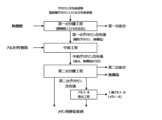
- FIG. 1 is a diagram showing a flow of a method for producing a methane fermentation promoter according to one embodiment of the present invention.
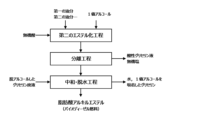
- FIG. 2 is a diagram showing the flow of an esterification step (second esterification step) provided in a preferred embodiment of the present invention.
- FIG. 2 is a schematic diagram showing an experimental apparatus used in the examples.
- a methane fermentation method according to one embodiment of the present invention is a methane fermentation method in which organic waste is introduced into a methane fermentation system to produce biogas containing methane, and a methane fermentation promoter containing glycerin is used in combination with the organic waste.
- methane fermentation system refers to an organic mixture in which various anaerobic microorganisms, mainly methanogens (hydrolytic bacteria, acidogens, methanogens, etc.), are established, and which is capable of decomposing organic matter and carrying out methane fermentation.
- the methane fermentation system may be obtained by subjecting organic waste such as sewage sludge or animal manure to anaerobically treatment to allow the above-mentioned anaerobic microorganisms to settle, or a part of the methane fermentation system may be collected and used from another methane fermentation tank that is stably operating.
- Such a methane fermentation system contains a certain amount of essential elements for methane fermentation and can cause a methane fermentation reaction by itself, but in a normal methane fermentation method, organic waste described below is further added as a raw material.
- organic waste refers to waste containing organic matter such as organic sludge, livestock manure, food waste, food waste, rice straw, grass clippings, etc., which is discarded from sewage treatment facilities, sludge recycling centers, sewage treatment facilities, food factory facilities, etc., and which has traditionally been used as a raw material in methane fermentation.
- the properties of the organic waste used in this embodiment are not particularly limited, but for example, the COD Cr may be 10,000 mg/kg or more, or even 100,000 mg/kg or more.
- COD chemical oxygen demand
- COD index is an index that expresses the amount of organic matter in a composition as "oxygen consumption when decomposed by an oxidizing agent", and there are several types depending on the type of oxidizing agent used and the reaction conditions.
- COD Cr which uses potassium dichromate as the oxidizing agent, is used as the COD index.
- COD Cr can be measured, for example, in accordance with JIS K0102.
- the organic waste used in this embodiment can be suitably used even if it has a low COD Cr decomposition rate when used alone in methane fermentation.
- the COD Cr decomposition rate is a value calculated by dividing the decomposed COD Cr by the COD Cr of the input raw material.
- the COD Cr decomposition rate can be said to be an index that indicates the utilization efficiency of the carbon source in methane fermentation.
- Organic waste with a low COD Cr decomposition rate when used alone has low value as a raw material for methane fermentation.
- the residue after the methane fermentation reaction is called digestive liquid and requires wastewater treatment.
- using a raw material with a low COD Cr decomposition rate increases the burden on wastewater treatment, resulting in high costs.
- the COD Cr decomposition rate can be improved.
- even organic waste, which has traditionally been considered to have low utility value can be suitably used for methane fermentation.
- wastewater treatment of the digestive liquid becomes easier.
- the organic waste used in this embodiment may have a glycerin content of 100,000 mg/kg or less, or may even have a glycerin content of 10,000 mg/kg or less, or may contain no glycerin at all. This is because organic waste containing a relatively high concentration of glycerin often also contains a high concentration of oil, which may reduce the efficiency of methane fermentation, and because the efficiency of methane fermentation is improved by producing a methane fermentation promoter by the method described below and using it in combination with other organic waste, rather than using it as is as a carbon source for methane fermentation.
- Methane fermentation promoter used in this embodiment contains glycerin.
- the methane fermentation promoter containing glycerin can promote the methane fermentation reaction by being used in combination with the organic waste described above in methane fermentation.
- Glycerin is a trihydric alcohol with three carbon atoms, and is converted to acetic acid, propionic acid, etc. by anaerobic microorganisms (e.g., acid-producing bacteria, etc.) that are established in the methane fermentation system, and these become the raw materials for the methane fermentation reaction by methanogens, etc.
- glycerin can be said to be useful as a methane fermentation raw material by itself.
- the methane fermentation reaction is promoted not only when the organic waste is used as the raw material alone, but also when the methane fermentation promoter is used as the raw material alone.
- glycerin is a carbon source that is easily utilized not only by methanogens but also by other anaerobic microorganisms (e.g., hydrolytic bacteria, acid-producing bacteria, etc.) that are established in the methane fermentation system, it is presumed that not only methanogens but also other anaerobic microorganisms are activated, and the overall balance of the methane fermentation system is optimized.
- anaerobic microorganisms e.g., hydrolytic bacteria, acid-producing bacteria, etc.
- the methane fermentation promotion effect of this embodiment is not limited to the promotion effect based on this mechanism of action.
- the glycerin content in the methane fermentation promoter is preferably 600,000 mg/kg or more, more preferably 700,000 mg/kg or more, and particularly preferably 900,000 mg/kg or more.
- There is no particular upper limit to the glycerin content in the methane fermentation promoter and it may be, for example, 100% (1,000,000 mg/kg), but such a high purity is not particularly required.
- the methane fermentation promoter used in this embodiment preferably has an n-hexane extractable substance (n-Hex) of 10,000 mg/kg or less, more preferably 5,000 mg/kg or less, and particularly preferably 2,000 mg/kg or less.
- n-Hex is a general term for non-volatile substances extracted by the organic solvent n-hexane, and is used as an indicator of the amount of "oil, etc.” in water.
- n-Hex can be measured by the extraction and weight method in Appendix 4 of Notification No. 64 of the Ministry of the Environment in 1974.
- the methane fermentation promoter of this embodiment has a small n-Hex value, in other words, oil has been removed, which can improve the efficiency of methane fermentation.
- the methane fermentation promoter used in this embodiment may have the following properties.
- the COD Cr of the methane fermentation promoter is preferably 730,000 mg/kg or more, more preferably 850,000 mg/kg or more, and particularly preferably 1,100,000 mg/kg or more.
- the upper limit of the COD Cr of the methane fermentation promoter is not particularly limited, and may be, for example, the COD Cr (1,220,000 mg/kg) when glycerin is 100%, but such a high COD Cr is not particularly required.
- the methane fermentation promoter is used in combination with the above-mentioned organic waste.
- the above-mentioned “use in combination” includes an embodiment in which the methane fermentation promoter and organic waste are mixed and then fed into the methane fermentation system, as well as an embodiment in which the methane fermentation promoter and organic waste are not mixed and are fed into the methane fermentation system separately.
- the usage ratio of the methane fermentation promoter and organic waste in combination can be appropriately adjusted from the viewpoint of obtaining a methane fermentation promotion effect, but for example, it is preferable to use the methane fermentation promoter so that the ratio of the COD Cr of the methane fermentation promoter to the COD Cr of the organic waste (methane fermentation promoter:organic waste) is 10: 1 to 1: 10.
- the usage ratio of the methane fermentation promoter to the organic waste is within the above range, the methane fermentation promotion effect is more effectively exhibited.
- auxiliary raw materials in addition to the above-mentioned organic waste and methane fermentation promoter, chemical substances containing phosphorus or nitrogen, such as phosphoric acid, phosphates, ammonia, and ammonium salts, specifically, ammonium phosphate, ammonium chloride, ammonium sulfate, phosphoric acid, potassium phosphate, magnesium phosphate, etc., may be used as auxiliary raw materials. These auxiliary raw materials are input into the methane fermentation system together with the above-mentioned organic waste and methane fermentation promoter.
- phosphorus or nitrogen such as phosphoric acid, phosphates, ammonia, and ammonium salts, specifically, ammonium phosphate, ammonium chloride, ammonium sulfate, phosphoric acid, potassium phosphate, magnesium phosphate, etc.
- Methane fermentation reaction In a methane fermentation reaction, a methane fermentation system in which various anaerobic microorganisms, mainly methanogens, are established is usually placed in a methane fermentation tank, which is a reaction tank, and the reaction conditions are kept anaerobic. In addition to organic waste as a raw material, auxiliary raw materials, other organic matter and essential elements that promote methane fermentation, etc. are added to the methane fermentation system, which are mixed together. It is preferable that a stirrer is installed in the methane fermentation tank so that the methane fermentation system, raw materials, methane-producing bacteria, etc. are uniformly dispersed and the methane fermentation reaction proceeds.
- the methane fermentation method of the present embodiment is characterized in that it uses the above-mentioned methane fermentation promoter in combination with organic waste that has conventionally been used as a raw material for methane fermentation.
- the method can be carried out in the same manner as conventional methane fermentation, and therefore existing methane fermentation equipment, etc. can be used as is.
- the mixture described above is decomposed by anaerobic microorganisms, and as the methane fermentation reaction proceeds, biogas containing methane and digestive liquid are produced.
- biogas mainly composed of methane gas produced by methane fermentation is retained in the hollow portion at the top of the fermentation tank, and digestive liquid is stored in the lower portion.
- mesophilic fermentation in which the temperature inside the fermentation tank is kept at around 37°C
- high-temperature fermentation in which the temperature inside the fermentation tank is kept at around 55°C, may be used, and it is preferable to carry out methane fermentation while stirring the contents in an anaerobic atmosphere.
- the methane fermentation reaction performed in this embodiment may be a batch type in which all raw materials are charged into a methane fermentation tank before starting the reaction and the generated biogas is appropriately collected, or a continuous type in which raw materials are continuously charged into a methane fermentation tank and the generated biogas is continuously collected.
- the generated biogas is easily separated from the digestive liquid and can also be easily collected continuously, so the continuous type can also be preferably used.
- the COD Cr load in the methane fermentation tank is 5 to 10 kg/ m3 ⁇ day. If the COD Cr load is too high, methane fermentation does not proceed smoothly. By adjusting the inside of the fermentation tank to the above-mentioned range of COD Cr load, it becomes easy to maintain the rate of methane fermentation.
- the COD Cr load can be adjusted by the input amounts, dilution amount, flow rate, etc. of methane fermentation raw materials such as organic waste and methane fermentation promoter.
- the total nitrogen (T-N) concentration in the methane fermentation tank is preferable to 100 to 10,000 mg/L, and more preferably to 500 to 5,000 mg/L.
- the nitrogen components contained in the methane fermentation raw material are used for the synthesis of the bacteria, while ammonia, which is a decomposition product, may be an inhibitor of methane fermentation, so it is preferable to adjust the mixing ratio or dilution.
- the T-N in the methane fermentation tank can be adjusted by the input amount of organic waste, which is the main raw material, and auxiliary raw materials.
- Total nitrogen (TN) indicates the total amount of nitrogen compounds contained in a composition and can be measured in accordance with the "Kjeldahl nitrogen method" in Section 18-1, Chapter 1, Part 5 of the Sewage Testing Methods.
- total phosphorus (TP) in the methane fermentation tank can be adjusted to 100 mg/L or more.
- total phosphorus (TP) is the total amount of phosphorus compounds contained in the composition, and can be measured in accordance with JIS K0102-46.3.2 "Nitric acid-perchloric acid decomposition method.”
- the methane-containing biogas produced in the methane fermentation tank is collected as appropriate and used as fuel for power generation, etc., and after purification, it can be used for various purposes as high-purity methane gas.
- the methane fermentation promoter according to the above embodiment can be used without any particular limitation as long as it satisfies the above requirements.
- the production method described below is particularly suitable because it allows the methane fermentation promoter that satisfies the above requirements to be produced inexpensively from industrial waste and the like.
- a method for producing a methane fermentation promoter includes: a first separation step of mixing a raw material containing at least one of glycerin and a fatty acid glycerin ester with an inorganic acid and separating a first oil component and a first glycerin-containing liquid; a neutralization step of neutralizing the first glycerin-containing liquid with an alkaline substance; and a second separation step of separating a second oil component and precipitated inorganic salts from the neutralized first glycerin-containing liquid.
- FIG. 1 is a diagram showing a flow chart of a particularly preferred embodiment of the method for producing a methane fermentation promoter according to this embodiment.
- a method for obtaining a methane fermentation promoter is illustrated, which includes a first separation step in which an inorganic acid is mixed with a raw material containing a glycerin-containing waste or a fatty acid glycerin ester-containing waste to separate and remove a first oil component, a subsequent neutralization step of the first glycerin-containing liquid, a second separation step in which a second oil component and an inorganic salt are separated and removed from the neutralized glycerin-containing liquid, and a subsequent alcohol removal step in which a monohydric alcohol is separated and removed from the second glycerin-containing liquid.
- the alcohol removal step is an optional step, and the second glycerin-containing liquid may be used as a methane fermentation promoter without going through the alcohol removal step.
- Raw materials for the methane fermentation promoter used in this embodiment are not particularly limited as long as they contain at least one of glycerin and fatty acid glycerin esters.
- An example of a raw material containing glycerin is waste material containing glycerin.
- raw materials containing fatty acid glycerin esters can also be suitably used since glycerin is produced by an acid-catalyzed transesterification reaction or the like in the first separation step described below.
- fatty acid glycerol ester refers to an ester of fatty acid and glycerol, and includes triglycerides, diglycerides, and monoglycerides.
- the glycerin-containing waste and the fatty acid glycerin ester-containing waste will be described in some detail below.
- Glycerin-Containing Waste examples include waste glycerin produced as a by-product in the process of producing biodiesel fuel, glycerin waste liquid produced as a by-product in the process of producing free fatty acids, sweet water, and wastewater from washing fatty acid alkyl esters.
- the glycerin waste liquid by-produced in the production process of free fatty acids refers to waste by-produced when producing free fatty acids by hydrolyzing fats and oils of animals and plants.
- Methods for producing free fatty acids by hydrolysis include high-temperature, high-pressure decomposition and enzymatic decomposition.
- the glycerin waste liquid by-produced in such a production process contains, in addition to glycerin, unreacted fats and oils, partially hydrolyzed fats and oils, etc.
- Sweet water is a by-product produced when fats and oils are saponified (alkaline hydrolysis) to produce fatty acid salts (for example, in the process of producing soap), and contains glycerin, water, alkali, etc.
- the wastewater from washing fatty acid alkyl esters is wastewater generated when reactants are washed in the process of producing fatty acid alkyl esters, including biodiesel fuel, and contains, in addition to water, glycerin, which is a by-product in the production reaction of fatty acid alkyl esters, as well as unreacted free fatty acids and their salts, monohydric alcohols, etc.
- Fatty acid alkyl esters that can be used as biodiesel fuels can be obtained by adding a monohydric alcohol such as methanol and an alkali catalyst such as potassium hydroxide to a raw material oil such as vegetable oil, and carrying out an ester exchange reaction.
- a monohydric alcohol such as methanol
- an alkali catalyst such as potassium hydroxide
- raw oils and fats for biodiesel fuel examples include vegetable oils such as rapeseed oil, palm oil, olive oil, sunflower oil, soybean oil, rice oil, and hemp oil; animal fats such as fish oil, lard, and beef and pork fats; and waste cooking oils such as tempura oil.
- vegetable oils such as rapeseed oil, palm oil, olive oil, sunflower oil, soybean oil, rice oil, and hemp oil
- animal fats such as fish oil, lard, and beef and pork fats
- waste cooking oils such as tempura oil.
- methanol, ethanol, 1-propanol, ethylhexanol, etc. can be used, with methanol and ethanol being preferred, and methanol being particularly preferred.
- potassium hydroxide, sodium hydroxide, calcium oxide, etc. can be used, but potassium hydroxide is preferred from the viewpoints of the precipitability and ease of reuse of the salt separated and recovered in this embodiment.
- the fatty acid glycerin ester contained in the raw oil reacts with a monohydric alcohol to produce fatty acid alkyl esters and glycerin.
- the resulting reaction liquid is separated into a fatty acid alkyl ester phase and a waste glycerin phase, and in the production of biodiesel fuel, the resulting fatty acid alkyl ester phase is recovered and washed to produce biodiesel fuel.
- the waste glycerin phase contains not only a high concentration of glycerin, but also unreacted monohydric alcohol (particularly methanol), unreacted fats and oils (fatty acid glycerin esters), fatty acids and their salts, an alkali catalyst, and impurities derived from the raw fats and oils, etc.
- the waste glycerin may be liquid waste glycerin or solid waste glycerin, but from the viewpoints of workability, handling, etc., liquid waste glycerin is preferable.
- the contents of glycerin, monohydric alcohol, fats and oils, fatty acids and salts thereof in the waste glycerin are not particularly limited, but typically, based on the total amount of the waste glycerin, the amount of glycerin is often 25% by mass or more and 65% by mass or less, the amount of monohydric alcohol is 2% by mass or more and 20% by mass or less, and the total amount of fats and oils, fatty acids and salts thereof is 30% by mass or more and 50% by mass or less.
- the pH is often 9 or higher, and in this embodiment, the pH may be 9 to 13.
- the water content in the waste glycerin is preferably 5% by mass or less, and particularly preferably 3% by mass or less.
- the water content in the waste glycerin can be appropriately adjusted by heating, reducing pressure, using a drying agent or the like, permeating the waste glycerin through purified glycerin, or the like.
- waste glycerin can be used as a raw material for pharmaceuticals, cosmetics, etc., but in order to use the glycerin contained in the waste glycerin for such purposes, it is necessary to purify it to a high purity, which requires a great deal of cost and energy. Therefore, the value of waste glycerin as glycerin is quite low, and it has been difficult to process in the past.
- waste glycerin can be used as the main raw material for the methane fermentation promoter, and the environmental impact can be reduced from the viewpoint of effectively utilizing waste glycerin, which is an industrial waste.
- the methane fermentation promoter produced from the waste glycerin is made from carbon-neutral natural fats and oils, the energy produced by methane fermentation, such as biogas, electricity, and heat, can be considered as renewable energy.
- the waste glycerin produced as a by-product in the biodiesel fuel production process and the glycerin waste liquid produced as a by-product in the free fatty acid production process among the glycerin-containing waste materials described above, and it is particularly preferable to use the waste glycerin produced as a by-product in the biodiesel fuel production process.
- waste containing fatty acid glycerin ester can also be used as a raw material for the methane fermentation promoter.
- the first separation step, neutralization step, and second separation step using an inorganic acid are performed, so that the yield of glycerin can be increased by using a raw material containing fatty acid glycerin ester and the acid-catalyzed esterification reaction in the first separation step.
- waste materials containing fatty acid glycerin esters include waste cooking oil, expired oil-containing foods (tempura oil, mayonnaise, dressing, butter, cream, cheese, etc.), animal and vegetable oils, and oils with high acid value (grease trap oil, sewage oil, gutter oil, reclaimed oil from waste liquid treatment, etc.) whose main component is fatty acid glycerin esters; oil cakes, soap, and other compositions whose main component is fatty acid salts.
- main component means that the component having the largest content in the composition (however, when the component having the largest content is water, the component having the second largest content), and the content is preferably 40 mass% or more, and more preferably 50 mass% or more.
- the high acid value oil refers to fats and oils with an acid value of 10 mgKOH/g or more, and includes fatty acid glycerol esters, which are the main components of fats and oils, as well as free fatty acids.
- the acid value may be 20 mgKOH/g or more, or even 50 mgKOH/g or more.
- the upper limit of the acid value is usually 200 mgKOH/g or less.
- Sodash is a by-product separated from fats and oils (crude oil) in the deacidification process in the refining of vegetable fats and oils, and contains fatty acid salts, fatty acid glycerin esters, alkali, water, etc.
- compositions other than those exemplified above can also be used as long as they contain fatty acid glycerin esters.
- waste glycerin produced as a by-product in the production process of biodiesel fuel which is exemplified as an example of glycerin-containing waste, contains unreacted fats and oils (i.e., fatty acid glycerin esters), and therefore can also be used as fatty acid glycerin ester-containing waste.
- the first separation step is a step of mixing a raw material containing at least one of glycerin and a fatty acid glycerin ester with an inorganic acid, and subjecting the mixture to phase separation into a first oil component and a first glycerin-containing liquid.
- the oil fraction separated in this step includes fatty acid alkyl esters, fatty acid glycerol esters, and free fatty acids.
- the salts of fatty acids contained in the waste glycerin are converted to free fatty acids by inorganic acids.
- fatty acids and their salts are esterified with unreacted monohydric alcohol contained in the waste glycerin using inorganic acids as an acid catalyst to produce fatty acid alkyl esters.
- fatty acid alkyl ester and glycerin are produced by transesterification with a monohydric alcohol.
- the monohydric alcohol can be added separately, for example, the monohydric alcohol recovered in the alcohol separation step described below can be used.
- the unreacted monohydric alcohol contained in the waste glycerin can be utilized by treating the waste material containing fatty acid glycerin ester simultaneously.
- this step can also be referred to as an acid-catalyzed esterification step.
- the first separation step may be referred to as a "first esterification step" in comparison with the second esterification reaction described later.
- the fatty acid glycerin ester generates free fatty acids and glycerin in the presence of an acid in the first separation step.
- the fatty acid salt is converted to a free fatty acid by the acid, which makes it easier to separate from the glycerin. Therefore, even if the raw material does not contain a monohydric alcohol, this embodiment can be suitably applied.
- the first separation step is performed in the presence of an inorganic acid, various raw materials can be simultaneously treated.
- waste materials containing glycerin and fatty acid glycerin esters such as waste glycerin, waste edible oil, and high acid value oil
- high acid value oils have a high acid value of 10 mgKOH/g or more, and therefore are difficult to use as a raw material for the above-mentioned alkali-catalyzed transesterification reaction.
- high acid value oils can also be suitably used as a raw material.
- the fatty acid alkyl esters and free fatty acids generated in the first separation step are transferred to an oil phase consisting of the first oil component, and can be separated from the first glycerin-containing liquid.
- the obtained first oil component fatty acid alkyl esters, free fatty acids, etc.
- the first glycerin-containing liquid is acidified by adding an inorganic acid.
- the first glycerin-containing liquid may contain an inorganic salt generated from the inorganic acid and the alkali contained in the glycerin-containing waste. Note that a part of the inorganic salt may be precipitated, that is, the first glycerin-containing liquid may contain an acidic glycerin phase and precipitated inorganic salt.
- the raw material that can be used in the first separation step preferably has a moisture content of 10% by mass or less, and more preferably 5% by mass or less.
- a raw material with a low moisture content e.g., waste glycerin with a low moisture content
- the moisture content of the raw material can be appropriately adjusted by heating, reducing pressure, using a drying agent, passing the raw material through purified glycerin, etc.
- the inorganic acid used in the first separation step includes concentrated sulfuric acid, phosphoric acid, concentrated nitric acid, hydrogen chloride, etc., but concentrated sulfuric acid and phosphoric acid, which have a low water content, are preferred, and concentrated sulfuric acid is particularly preferred.
- the pH of the mixture (reaction liquid) of the raw material and the inorganic acid is preferably adjusted to 3 or less, and particularly preferably to 1 or less.
- the pH of the reaction liquid can be adjusted by the amount of the inorganic acid added.
- the water content of the reaction liquid is preferably 10% by mass or less, and particularly preferably 0.5% by mass or less.
- the water content of the reaction liquid can be appropriately adjusted by adjusting the water content and input amount of each raw material, using a desiccant in the reaction liquid, etc.
- the efficiency of the acid-catalyzed esterification reaction can be increased, and the first oil component and the first glycerin-containing liquid (containing an acidic glycerin phase and inorganic salts) can be effectively separated.
- the temperature of the reaction liquid in the first separation step can be 30 to 64°C, or can be 50 to 60°C.
- the reaction time can be 0.5 hours or more, or can be 4 hours or more, or can be 8 hours or more. It is preferable to stir the reaction liquid during this period.
- the upper limit of the reaction time is not particularly limited, but can be, for example, within 20 hours, or can be within 12 hours.
- the mixture is allowed to stand for 0.2 to 12 hours, whereby a first oil fraction containing fatty acid alkyl esters, unreacted fats and oils, etc., is separated from a first glycerin-containing liquid containing an acidic glycerin phase and inorganic salts.
- the first oil fraction can be used to produce fatty acid alkyl esters by subjecting it to a further acid-catalyzed esterification reaction. Meanwhile, the first glycerin-containing liquid is subjected to the subsequent neutralization step.
- the neutralization step is a step of neutralizing the first glycerin-containing liquid obtained in the first separation step with an alkaline substance.
- an alkaline substance hydroxides such as potassium hydroxide and sodium hydroxide can be used.
- a substance containing glycerin can be used as the alkaline substance.
- glycerin-containing alkaline substances include the above waste glycerin and other by-products of alkali-catalyzed transesterification of fats and oils. These substances can not only neutralize acidic glycerin but also increase the yield of glycerin, so that the use of glycerin-containing alkaline substances is preferable from this viewpoint as well.
- Such glycerin-containing alkaline substances may contain fatty acid salts or fatty acid glycerin esters.
- the glycerin-containing alkaline substance preferably has a glycerin content of 25% by mass or more, particularly preferably 50% by mass or more.
- the upper limit is not particularly limited, but may be, for example, 99% by mass or less, or 90% by mass or less.
- the glycerin-containing alkaline substance preferably has a pH of 9 or higher, and more preferably 9 to 13.
- composition mainly composed of a fatty acid salt may be used as the alkaline substance.
- alkaline substances mainly composed of a fatty acid salt include oil cake and alkaline soap.
- the neutralization step it is preferable to neutralize the glycerin-containing liquid so that its pH is 4 to 8, preferably 4.5 to 7.5, and especially 5 to 7.5. Neutralizing the glycerin-containing liquid so that its pH is within this range makes it easier to separate the oil and precipitate inorganic salts in the subsequent second separation step.
- the pH of the glycerin-containing liquid can be adjusted as appropriate by controlling the amount of alkaline substance added.
- the neutralization step it is preferable to add the alkaline substance while stirring the acidic glycerin-containing liquid so that the liquid changes from acidic to near neutral.
- a substance containing a fatty acid salt may be used as the alkaline substance used for neutralization, and by using the above-mentioned addition order, the fatty acid salt is converted to free fatty acid by the acid.
- the free fatty acid moves to the oil phase that is phase-separated from the glycerin-containing liquid, and is less likely to be redissolved in the glycerin-containing liquid even if the pH of the glycerin-containing liquid increases. This makes separation in the subsequent second separation step even easier.
- fatty acid salts are included not only in substances whose main component is the above-mentioned fatty acid salt, but also in by-products of alkali-catalyzed transesterification and alkali hydrolysis of fats and oils.
- the first glycerin-containing liquid obtained in the first separation step is neutralized by the alkaline substance.
- the neutralized glycerin-containing liquid is then subjected to the second separation step.
- the second separation step is a step of separating a second oil component and precipitated inorganic salts from the neutralized glycerin-containing liquid obtained in the neutralization step to obtain a second glycerin-containing liquid.
- the second oil component to be separated here includes fats and oils and fatty acids that were not separated in the first separation step and remained in the first glycerin-containing liquid, as well as fats and oils and free fatty acids derived from the alkaline substance added in the neutralization step.
- the inorganic salt separated in the second separation step is a salt of an inorganic acid (concentrated sulfuric acid, etc.) added in the first separation step and an alkali (potassium, sodium, etc.), preferably potassium sulfate.
- the alkali is contained in the raw material (waste glycerin, etc.) added in the first separation step and the alkaline substance added in the neutralization step, and the inorganic salt is precipitated in the first separation step and the neutralization step.
- the glycerin-containing liquid contains, in addition to glycerin, monohydric alcohol derived from waste glycerin, water, etc.
- oils and inorganic salts have low solubility, so they are separated from the glycerin-containing liquid.
- the neutralized raw material is left to stand for about 3 to 12 hours, and then the upper liquid (oil) and lower liquid (glycerin-containing liquid) are collected separately to obtain the lower liquid, which is a glycerin-containing liquid.
- the separation speed it is preferable to increase the separation speed by centrifugation or the like.
- a three-phase separation type centrifuge capable of separating the upper liquid (i.e., oil), lower liquid (i.e., glycerin-containing liquid) and solids (i.e., inorganic salts) can be suitably used.
- inorganic salts precipitates, it is preferable to first separate a certain amount of inorganic salts using a centrifuge capable of solid-liquid separation, such as a decanter type, and then further separate the liquid phase portion using a three-phase separation type centrifuge.
- a centrifuge capable of solid-liquid separation such as a decanter type
- the second oil fraction obtained in the second separation step can be used to produce fatty acid alkyl esters, for example, by combining with the first oil fraction separated in the first separation step and subjecting it to a further acid-catalyzed esterification reaction (an esterification step described below).
- the second oil fraction obtained in the second separation step can be used as a raw material for producing fatty acid methyl esters (FAMEs) that are used as biodiesel fuel. That is, methanol and a catalyst are added to this oil fraction to cause a methyl esterification reaction.
- the inorganic salts can be used as raw materials for inorganic fertilizers, for example, after undergoing a washing process or the like.
- the second glycerin-containing liquid obtained as described above can be used as a methane fermentation promoter as it is, but in the case of removing monohydric alcohol derived from raw materials, etc., it may be further subjected to an alcohol removal step. Further, subjecting the second glycerin-containing liquid to an alcohol removal step may be preferable from the viewpoints of improving the efficiency of methane fermentation, workability, and avoiding the need to handle the liquid as a hazardous material.
- the second glycerin-containing liquid may be used as it is as a methane fermentation promoter without being subjected to the alcohol removal step.
- the alcohol removal step is a step of removing monohydric alcohol (e.g., methanol) from the second glycerin-containing liquid obtained in the second separation step, and is an optional step that is performed as necessary.
- the second glycerin-containing liquid may contain a monohydric alcohol that is derived from waste glycerin and remains in the first separation step (acid-catalyzed esterification reaction).
- the monohydric alcohol can be used as a methane fermentation promoter even if it remains, removing the monohydric alcohol can improve the efficiency of promoting methane fermentation.
- a reduced pressure distillation method In the step of separating and removing the monohydric alcohol, a reduced pressure distillation method, a gas-liquid contact method, a membrane separation method, or the like can be used.
- the reduced pressure distillation method is a method in which a glycerin-containing liquid is heated (for example, to about 60° C.) to evaporate a monohydric alcohol such as methanol, and then the pressure is reduced to separate the monohydric alcohol, etc.
- the separated monohydric alcohol, etc. can be recovered by cooling.
- the gas-liquid contact method is a method in which a glycerin-containing liquid is brought into contact with a gas phase in the form of fine droplets, and a monohydric alcohol having a low boiling point is transferred to the gas phase and separated.
- Membrane separation is a method that uses a membrane that preferentially allows the monohydric alcohol to permeate.
- the monohydric alcohol such as methanol recovered by distilling the second glycerin-containing liquid can be actively used in the production of biodiesel fuel.
- the second glycerin-containing liquid may further contain water.
- water does not impede the methane fermentation promoting effect and may remain in the methane fermentation promoter, but in a reduced pressure distillation method or a gas-liquid contact method, for example, the water can be removed because it is transferred to the gas phase together with the monohydric alcohol.
- a further purification treatment may be carried out using an ion exchange method or activated clay, diatomaceous earth, carbon, zeolite, or the like.
- the monohydric alcohol separated in this step can be reused as a raw material for alkali-catalyzed ester exchange reactions or acid-catalyzed esterification reactions, either as is or after purification by redistillation or other methods as necessary. It may also be used as a washing liquid for inorganic salts, etc., separated in the second separation step.
- the glycerin produced by the method according to this embodiment has a high purity and can be suitably used as a methane fermentation promoter according to the above-mentioned embodiment. According to this production method, by going through the above-mentioned first separation step, neutralization step, and second separation step, it is possible to obtain purified glycerin that can be used as a methane fermentation promoter, even though industrial waste such as waste glycerin can be used as a raw material, and the method is relatively simple.
- the second glycerin-containing liquid obtained by the above method can be used as a methane fermentation promoter, as described below, as a stripper for asphalt-containing compositions or cement-containing compositions; as a denitrifier used as an organic carbon source in biological nitrification denitrification treatment; as an industrial raw material (e.g., a raw material for fatty acid glycerin esters); and for a variety of other applications.
- an industrial raw material e.g., a raw material for fatty acid glycerin esters
- it can also be used in applications requiring even higher purity (e.g., cosmetics, food and beverages, pharmaceuticals, etc.).
- the first and second oil fractions are respectively recovered from the separated oil phase. These may be recycled and supplied as raw materials in the production of fatty acid alkyl esters by an alkali catalyst method, but since their purity is not necessarily high, it may be difficult to efficiently produce fatty acid alkyl esters if they are used as raw materials as they are.
- the first and/or second oil fractions contain oils and fats with high acid values such as free fatty acids, and the first oil fraction in particular is an acidic oil fraction because it was separated in the first separation step (first esterification step), which can be said to be an esterification reaction using an acid catalyst. Therefore, it is even more difficult to use the first and second oil fractions as raw materials for the production of fatty acid alkyl esters using an alkali catalyst.
- this step in comparison with the above-mentioned first separation step (first esterification step), this step may be referred to as a "second esterification step.”
- the first oil fraction separated in the first separation step and/or the second oil fraction separated in the second separation step as a raw material.
- the same raw materials (high acid value oil, etc.) as those in the above-mentioned acid reaction step (first esterification step) can be used.
- the monohydric alcohol separated in the alcohol separation step it is preferable to use the monohydric alcohol separated in the alcohol separation step as a raw material. This makes it possible to recycle industrial waste more efficiently in the production of the above-mentioned methane fermentation promoter.
- Methods that can be used in the second esterification step are methods other than the alkali catalyst method, and more specifically, examples include the acid catalyst method, acid-alkali catalyst method, biocatalyst method, ion exchange resin method, supercritical method, subcritical method, and solid catalyst method.
- examples include the acid catalyst method, acid-alkali catalyst method, biocatalyst method, ion exchange resin method, supercritical method, subcritical method, and solid catalyst method.
- glycerin is by-produced together with the oil containing the fatty acid alkyl ester.
- the oil obtained in the second esterification step and the glycerin-containing liquid can be phase-separated by standing, centrifugation, etc.
- the fatty acid alkyl esters can be recovered from the separated oil and used as biodiesel fuel, etc.
- the by-produced glycerin can be supplied to the neutralization step together with the first glycerin-containing liquid obtained in the first separation step (first esterification step), for example.
- the glycerin by-produced in the second esterification step can also be made into part of the methane fermentation promoter through the neutralization step, second separation step, etc., and can be recycled more efficiently.
- the second esterification step it is particularly preferable to employ an acid catalyst method among the methods other than the above-mentioned alkali catalyst method.
- an acid catalyst method is adopted for the second esterification step
- the first oil and/or the second oil are used as the raw material.
- the monohydric alcohol recovered in the alcohol removal step can be used, and further, the same raw material (high acid value oil, etc.) as that in the first separation step (first esterification step) can be used.
- the reaction liquid obtained in the second esterification step is separated into an oil fraction containing fatty acid alkyl esters and a glycerin-containing liquid containing by-produced glycerin, an acid catalyst and its salts, etc.
- the obtained oil fraction and glycerin-containing liquid are both acidic, and the acidic glycerin-containing liquid can be supplied to the neutralization step or the like.
- a preferred example of a method for neutralization and dehydration is a method using waste glycerin produced as a by-product in the manufacturing process of biodiesel fuel. Specifically, waste glycerin produced as a by-product in the manufacturing process of biodiesel fuel is dealcoholized and stored in a tank, etc., and the oil to be neutralized is introduced from the bottom of the tank to contact the waste glycerin. As a result, the acidic oil is neutralized by the alkali of the waste glycerin, and the water and monohydric alcohol contained in the oil are absorbed into the waste glycerin liquid.
- the oil introduced from the bottom overflows from the top due to the difference in specific gravity, so it can be easily recovered. In this way, neutralization, dehydration, and dealcoholization can be performed simultaneously, and high-quality oil can be easily obtained.
- the waste glycerin liquid that has absorbed the water and monohydric alcohol can be supplied to the neutralization process described above, and can be made into a part of the methane fermentation promoter through a second separation process, etc.
- preferred examples of methods other than the acid catalyst method include a biocatalyst method, a supercritical method, and a subcritical method.
- the biocatalytic method is a method that promotes transesterification using lipases or phospholipases that have catalytic activity for ester conversion reactions.
- the biocatalytic method has the characteristics that, although the reaction conditions are mild, it can promote transesterification even in oils and fats with high acid values, and produces few by-products.
- the supercritical and subcritical methods are methods in which the raw materials are converted into a supercritical or subcritical state by adjusting the temperature and pressure, thereby changing the phase state of the substance from a gas-liquid two-phase to a liquid-liquid two-phase, and then to a single phase by lowering the dielectric constant, thereby changing a reaction system that originally required the use of a catalyst into a catalyst-free system and promoting hydrolysis.
- the obtained fatty acid alkyl ester can be shipped as biodiesel fuel, bioheavy oil, etc., and can also be used for power generation to recover energy.
- the method may further include a power generation step in which power is generated using the fatty acid alkyl ester obtained in the second esterification step.
- waste material waste glycerin Zeolite was added to this waste glycerin in an amount of 20 g per kg of waste glycerin to remove moisture.
- the waste glycerin to which zeolite had been added was passed through a 250 mesh filter to remove the zeolite and solid impurities.
- the composition and physical properties of the waste glycerin thus obtained as a raw material (hereinafter referred to as "raw material waste glycerin”) are shown in Table 1.
- the mixture was left to stand for 10 hours, separated into an oil phase (first oil) and an acidic glycerin phase (first glycerin-containing liquid), and the first glycerin-containing liquid (acidic glycerin phase, including precipitated potassium sulfate) was collected.
- first oil an oil phase
- acidic glycerin phase first glycerin-containing liquid
- first glycerin-containing liquid acidic glycerin phase, including precipitated potassium sulfate
- the neutralized glycerin was treated at 5,500 rpm for 180 minutes in a decanter centrifuge (product name: Z18H-V, manufactured by Tanabe Wiltec Co., Ltd.), and the precipitated potassium sulfate was separated and collected.
- the liquid phase was further treated at 8,000 rpm for 180 minutes in a three-phase separation centrifuge (manufactured by Alfa Laval Co., Ltd.), and the second oil, the second glycerin-containing liquid, and the potassium sulfate were each separated and collected.
- the second glycerin-containing liquid obtained in the second separation step was distilled in a batch manner at a distillation temperature of 110° C. for 10 minutes using a vacuum distillation apparatus to separate and remove methanol and water.
- the obtained glycerin-containing liquid contained 870,000 mg/kg of glycerin and was used as a methane fermentation promoter.
- Methane fermentation test Using the methane fermentation promoter obtained in the production example and organic waste, a methane fermentation test was carried out as follows. As the organic waste, dehydrated sludge of swine manure obtained from a pig farm and excess dehydrated sludge obtained from a human waste treatment facility were used, and mixed in the ratio shown in Table 1 to prepare the test material for methane fermentation. The mixing ratio and the properties of the test material are shown in Table 2.
- COD Chemical Oxygen Demand
- TN TN
- TP n-Hex extracts
- glycerin concentration concentration of the methane fermentation promoter and organic waste were measured. For mixed test materials, the values were calculated from the mixing ratio.
- COD Chemical Oxygen Demand
- TN TN
- TP n-Hex extracts
- glycerin concentration concentration of the methane fermentation promoter and organic waste were measured. For mixed test materials, the values were calculated from the mixing ratio.
- COD Chemical Oxygen Demand
- COD Cr which uses potassium dichromate as the oxidizing agent, can be suitably used as the COD index.
- COD Mn which uses potassium permanganate as the oxidizing agent, has a low capture rate with respect to the actual amount of organic matter.
- COD Cr was measured in accordance with JIS K0102-20.2 "Absorption Spectrophotometric Method.”
- T-N total nitrogen indicates the total amount of nitrogen compounds contained in the composition, and was measured in accordance with the "Kjeldahl nitrogen method" in Section 18, Chapter 1, Part 5 of the Sewage Testing Methods.
- T-P total phosphorus indicates the total amount of phosphorus compounds contained in the composition, and was measured in accordance with JIS K0102-46.3.2 "Nitric acid-perchloric acid decomposition method.”
- n-Hex n-hexane extractable substances
- n-Hex is a general term for non-volatile substances extracted by the organic solvent n-hexane, and is used as an index to indicate the amount of "oil, etc.” in a composition.
- oil, etc. includes animal and vegetable oils and fats, fatty acids, fatty acid esters, fatty acid derivatives such as phospholipids, wax, grease, petroleum hydrocarbons, etc.
- the glycerin concentration was measured by liquid chromatography.
- the methane fermentation apparatus 1 has a fermentation tank 2, a stirrer 4, a heating (and stirrer rotating) device 6, a thermometer 8, a raw material inlet 10, a drain 12, and a gas outlet 14.
- the fermentation tank 2 is a sealed cylindrical tank made of SUS with a capacity of 3.5 L.
- a gas tube 16 is attached to the gas outlet 14 of the fermentation tank 2, and the gas tube 16 is connected to a gas flowmeter 18 (volumetric flowmeter).
- the flowmeter 18 has a built-in data logging device, which makes it possible to monitor and record the amount of biogas generated continuously for 24 hours.
- an aluminum gas bag 22 for collecting the generated biogas is connected to the flowmeter 18 via another gas tube 20.
- sludge acclimatized with food waste containing nitrogen and phosphorus was charged as seed sludge into the fermentation tank 2.
- the properties of the seed sludge were TS: 3.5%, COD Cr : 34,000 mg/L, TN: 5,100 mg/L, TP: 510 mg/L.
- the amount of the test material shown in Table 3 was charged into the fermentation tank 2.
- the atmosphere inside the fermentation tank 2 was purged with nitrogen, and the inside temperature was kept at 37° C. ⁇ 0.5° C. while the stirrer 4 was constantly operated to continue stirring inside the fermentation tank 2.
- the amount of gas generated was measured using a flow meter 18, and the total amount of gas was collected by a gas pack 22 connected to the flow meter. Here, the amount of gas generated was continuously recorded by a data logger attached to the flow meter 18. In addition, the methane concentration of the biogas stored in the gas bag 22 was measured by gas chromatography.
- the methane generation amount (unit: n-mL) in Table 3 is the value obtained by multiplying the volume of generated biogas by the methane concentration to obtain the methane gas amount, and converting it to the standard condition (0°C, 1 atm, humidity 0%). Note that the amount of biogas generated was converted to the amount of methane generated based on the value obtained by subtracting the amount of biogas generated (5,500 n-mL) measured in the blank (only seed sludge), and is shown in Table 3.
- the methane generation rate (n-m 3 /t) is calculated by converting the volume of methane generated (unit: m 3 ) to the standard state (0°C, 1 atm, humidity 0%) to obtain the methane generation rate (unit: nm 3 ) and dividing this by the mass of raw material (unit: t).
- the COD Cr decomposition rate was calculated by dividing the decomposition COD Cr by the COD Cr (g) of the input raw material.
- sample 2 which was a mixture of dewatered swine manure sludge and a methane fermentation promoter, had a methane generation unit of 268 n- m3 /t, which was higher than the predicted methane generation of 217 n- m3 /t calculated from the mixing ratio, indicating that methane fermentation had been significantly promoted. Furthermore, sample 2 had a significantly higher COD Cr decomposition rate than organic waste alone and the methane fermentation promoter alone. Since the COD Cr decomposition rate exceeded 100%, it is believed that methane fermentation was carried out using the carbon source in the seed sludge in addition to the input raw materials.
- sample 3 which was a mixture of swine manure dewatered sludge and excess dewatered sludge with a methane fermentation promoter, had a methane generation rate of 198 n- m3 /t, which was greater than the predicted methane generation rate of 173 n- m3 /t calculated from the mixing ratio, confirming that methane fermentation was also significantly promoted in this methane fermentation raw material. Furthermore, sample 3 also had a higher COD Cr decomposition rate than organic waste alone and the methane fermentation promoter alone.
Landscapes
- Chemical & Material Sciences (AREA)
- Engineering & Computer Science (AREA)
- Life Sciences & Earth Sciences (AREA)
- Organic Chemistry (AREA)
- Chemical Kinetics & Catalysis (AREA)
- General Chemical & Material Sciences (AREA)
- Environmental & Geological Engineering (AREA)
- Zoology (AREA)
- Wood Science & Technology (AREA)
- Biochemistry (AREA)
- Health & Medical Sciences (AREA)
- Water Supply & Treatment (AREA)
- Hydrology & Water Resources (AREA)
- Biotechnology (AREA)
- Microbiology (AREA)
- Oil, Petroleum & Natural Gas (AREA)
- Molecular Biology (AREA)
- Bioinformatics & Cheminformatics (AREA)
- General Engineering & Computer Science (AREA)
- General Health & Medical Sciences (AREA)
- Genetics & Genomics (AREA)
- Liquid Carbonaceous Fuels (AREA)
- Preparation Of Compounds By Using Micro-Organisms (AREA)
Abstract
Priority Applications (5)
| Application Number | Priority Date | Filing Date | Title |
|---|---|---|---|
| KR1020267000382A KR20260018159A (ko) | 2023-06-07 | 2023-06-07 | 메탄 발효 방법, 메탄 발효 촉진제의 제조 방법 |
| EP23940667.1A EP4725918A1 (fr) | 2023-06-07 | 2023-06-07 | Procédé de fermentation de méthane et procédé de production d'accélérateur de fermentation de méthane |
| AU2023451874A AU2023451874A1 (en) | 2023-06-07 | 2023-06-07 | Methane fermentation method and method for producing methane fermentation accelerator |
| PCT/JP2023/021180 WO2024252565A1 (fr) | 2023-06-07 | 2023-06-07 | Procédé de fermentation de méthane et procédé de production d'accélérateur de fermentation de méthane |
| CN202380100660.4A CN121548556A (zh) | 2023-06-07 | 2023-06-07 | 甲烷发酵方法、甲烷发酵促进剂的制备方法 |
Applications Claiming Priority (1)
| Application Number | Priority Date | Filing Date | Title |
|---|---|---|---|
| PCT/JP2023/021180 WO2024252565A1 (fr) | 2023-06-07 | 2023-06-07 | Procédé de fermentation de méthane et procédé de production d'accélérateur de fermentation de méthane |
Publications (1)
| Publication Number | Publication Date |
|---|---|
| WO2024252565A1 true WO2024252565A1 (fr) | 2024-12-12 |
Family
ID=93795530
Family Applications (1)
| Application Number | Title | Priority Date | Filing Date |
|---|---|---|---|
| PCT/JP2023/021180 Ceased WO2024252565A1 (fr) | 2023-06-07 | 2023-06-07 | Procédé de fermentation de méthane et procédé de production d'accélérateur de fermentation de méthane |
Country Status (5)
| Country | Link |
|---|---|
| EP (1) | EP4725918A1 (fr) |
| KR (1) | KR20260018159A (fr) |
| CN (1) | CN121548556A (fr) |
| AU (1) | AU2023451874A1 (fr) |
| WO (1) | WO2024252565A1 (fr) |
Citations (5)
| Publication number | Priority date | Publication date | Assignee | Title |
|---|---|---|---|---|
| JP2005279411A (ja) | 2004-03-29 | 2005-10-13 | Kurita Water Ind Ltd | グリセリンの高速メタン発酵方法 |
| JP2006348191A (ja) | 2005-06-16 | 2006-12-28 | Chugoku Electric Power Co Inc:The | バイオマス循環システム |
| JP2015229136A (ja) * | 2014-06-04 | 2015-12-21 | 三井造船株式会社 | 失活したメタン発酵槽の回復方法、メタン発酵方法、およびメタン発酵システム |
| WO2020213701A1 (fr) * | 2019-04-16 | 2020-10-22 | バイオ燃料技研工業株式会社 | Procédé et système de fermentation de méthane, procédé et système de recyclage de déchets |
| WO2021193887A1 (fr) * | 2020-03-25 | 2021-09-30 | バイオ燃料技研工業株式会社 | Procédé de production d'un carburant biodiesel |
-
2023
- 2023-06-07 WO PCT/JP2023/021180 patent/WO2024252565A1/fr not_active Ceased
- 2023-06-07 CN CN202380100660.4A patent/CN121548556A/zh active Pending
- 2023-06-07 KR KR1020267000382A patent/KR20260018159A/ko active Pending
- 2023-06-07 AU AU2023451874A patent/AU2023451874A1/en active Pending
- 2023-06-07 EP EP23940667.1A patent/EP4725918A1/fr active Pending
Patent Citations (5)
| Publication number | Priority date | Publication date | Assignee | Title |
|---|---|---|---|---|
| JP2005279411A (ja) | 2004-03-29 | 2005-10-13 | Kurita Water Ind Ltd | グリセリンの高速メタン発酵方法 |
| JP2006348191A (ja) | 2005-06-16 | 2006-12-28 | Chugoku Electric Power Co Inc:The | バイオマス循環システム |
| JP2015229136A (ja) * | 2014-06-04 | 2015-12-21 | 三井造船株式会社 | 失活したメタン発酵槽の回復方法、メタン発酵方法、およびメタン発酵システム |
| WO2020213701A1 (fr) * | 2019-04-16 | 2020-10-22 | バイオ燃料技研工業株式会社 | Procédé et système de fermentation de méthane, procédé et système de recyclage de déchets |
| WO2021193887A1 (fr) * | 2020-03-25 | 2021-09-30 | バイオ燃料技研工業株式会社 | Procédé de production d'un carburant biodiesel |
Non-Patent Citations (3)
| Title |
|---|
| "Kjeldahl Nitrogen Method", SEWAGE TESTING METHODS, vol. 5 |
| "Kjeldahl nitrogen method", SEWAGE TESTING METHODS., vol. 5 |
| JOURNAL OF THE JAPAN INSTITUTE OF MARINE ENGINEERING, vol. 47, no. 1, 2012, pages 45 - 50 |
Also Published As
| Publication number | Publication date |
|---|---|
| KR20260018159A (ko) | 2026-02-06 |
| AU2023451874A1 (en) | 2026-01-22 |
| EP4725918A1 (fr) | 2026-04-15 |
| CN121548556A (zh) | 2026-02-17 |
Similar Documents
| Publication | Publication Date | Title |
|---|---|---|
| US7806945B2 (en) | Production of biodiesel and glycerin from high free fatty acid feedstocks | |
| EP1889899B1 (fr) | Production de biodiesel et de glycérine à partir de produits de départ ayant une grande quantité d'acides gras libres | |
| US7998225B2 (en) | Methods of purifying biodiesel fuels | |
| JP2008231345A (ja) | バイオディーゼル燃料の製造方法 | |
| KR102327852B1 (ko) | 지방을 이용한 지방산알킬에스테르의 제조방법 | |
| JP6979656B2 (ja) | メタン発酵方法、メタン発酵システム、廃棄物再利用方法および廃棄物再利用システム | |
| AU2014287307B2 (en) | Production of products from feedstocks containing free fatty acids | |
| JP4078383B1 (ja) | バイオディーゼル燃料の製造方法 | |
| US20100058652A1 (en) | Method for Obtaining Fuels from Vegetal and Animal Fat Waste and Installation for Carrying out Said Method | |
| JP7814694B2 (ja) | メタン発酵方法、メタン発酵促進剤およびその製造方法 | |
| US20240158334A1 (en) | Apparatus and systems for improved alkyl ester production from feedstocks containing organic acids using low pressure alkylation | |
| JP7252588B2 (ja) | バイオディーゼル燃料の製造方法 | |
| KR20260018159A (ko) | 메탄 발효 방법, 메탄 발효 촉진제의 제조 방법 | |
| JP7527657B2 (ja) | 水処理方法、脱窒剤または硝化促進剤の製造方法および製造システム | |
| Jumah et al. | Recent trends on sewage sludge transesterification | |
| JP2009161776A (ja) | バイオディーゼル燃料の製造方法及び製造装置 | |
| JP7417270B2 (ja) | 硫酸カリウムの製造方法および製造システム | |
| US20150197469A1 (en) | Process of Crude Glycerin Purification Originated From Transesterifications With Alkaline Catalysis Without Using Acidification and Distillation Producing Purified Glycerin 96% and 99% Purity | |
| JP7417271B2 (ja) | ポリ乳酸の製造方法 | |
| HK1120544A (en) | Production of biodiesel and glycerin from high free fatty acid feedstocks |
Legal Events
| Date | Code | Title | Description |
|---|---|---|---|
| 121 | Ep: the epo has been informed by wipo that ep was designated in this application |
Ref document number: 23940667 Country of ref document: EP Kind code of ref document: A1 |
|
| DPE1 | Request for preliminary examination filed after expiration of 19th month from priority date (pct application filed from 20040101) | ||
| REG | Reference to national code |
Ref country code: BR Ref legal event code: B01A Ref document number: 112025027014 Country of ref document: BR |
|
| WWE | Wipo information: entry into national phase |
Ref document number: 202517134539 Country of ref document: IN |
|
| WWE | Wipo information: entry into national phase |
Ref document number: AU2023451874 Country of ref document: AU |
|
| ENP | Entry into the national phase |
Ref document number: 1020267000382 Country of ref document: KR Free format text: ST27 STATUS EVENT CODE: A-0-1-A10-A15-NAP-PA0105 (AS PROVIDED BY THE NATIONAL OFFICE) |
|
| WWE | Wipo information: entry into national phase |
Ref document number: 1020267000382 Country of ref document: KR |
|
| WWE | Wipo information: entry into national phase |
Ref document number: 2023940667 Country of ref document: EP |
|
| NENP | Non-entry into the national phase |
Ref country code: DE |
|
| WWP | Wipo information: published in national office |
Ref document number: 202517134539 Country of ref document: IN |
|
| ENP | Entry into the national phase |
Ref document number: 2023940667 Country of ref document: EP Effective date: 20260107 |
|
| ENP | Entry into the national phase |
Ref document number: 2023451874 Country of ref document: AU Date of ref document: 20230607 Kind code of ref document: A |
|
| ENP | Entry into the national phase |
Ref document number: 2023940667 Country of ref document: EP Effective date: 20260107 |
|
| ENP | Entry into the national phase |
Ref document number: 2023940667 Country of ref document: EP Effective date: 20260107 |
|
| WWP | Wipo information: published in national office |
Ref document number: 1020267000382 Country of ref document: KR |
|
| ENP | Entry into the national phase |
Ref document number: 2023940667 Country of ref document: EP Effective date: 20260107 |
|
| WWE | Wipo information: entry into national phase |
Ref document number: 11202508270R Country of ref document: SG |
|
| WWP | Wipo information: published in national office |
Ref document number: 11202508270R Country of ref document: SG |
|
| WWP | Wipo information: published in national office |
Ref document number: 2023940667 Country of ref document: EP |