WO2024252589A1 - Slice requirement division system, slice requirement division method, and program - Google Patents
Slice requirement division system, slice requirement division method, and program Download PDFInfo
- Publication number
- WO2024252589A1 WO2024252589A1 PCT/JP2023/021237 JP2023021237W WO2024252589A1 WO 2024252589 A1 WO2024252589 A1 WO 2024252589A1 JP 2023021237 W JP2023021237 W JP 2023021237W WO 2024252589 A1 WO2024252589 A1 WO 2024252589A1
- Authority
- WO
- WIPO (PCT)
- Prior art keywords
- division
- requirements
- slice
- requirement
- management
- Prior art date
- Legal status (The legal status is an assumption and is not a legal conclusion. Google has not performed a legal analysis and makes no representation as to the accuracy of the status listed.)
- Ceased
Links
Images




Classifications
-
- H—ELECTRICITY
- H04—ELECTRIC COMMUNICATION TECHNIQUE
- H04L—TRANSMISSION OF DIGITAL INFORMATION, e.g. TELEGRAPHIC COMMUNICATION
- H04L45/00—Routing or path finding of packets in data switching networks
- H04L45/64—Routing or path finding of packets in data switching networks using an overlay routing layer
Definitions
- the present invention relates to a network operation system in the field of communications.
- an operating system (OpS: Operation System) is provided for each management domain (MD: Management Domain) according to the type of resources, such as the core network (CN: Core Network), transport network (TN: Transport Network), and access network (AN: Access Network), and each OpS is operated by a different maintainer.
- CN Core Network
- TN Transport Network
- AN Access Network
- an end-to-end (E2E) network slice for the service is constructed across multiple MDs.
- E2E end-to-end
- Non-Patent Document 1 discloses the control architecture being studied in ETSI ZSM.
- the Management Functions (MnF) of the E2E Service MD and the MnF of each resource MD are connected by a cross domain integration fabric.
- the MnF of each resource MD manages the resource MD and provides functions such as data collection and slice construction to enable the E2E Service MD to perform integrated control of the E2E domain.
- ETSI GS ZSM 003 V1.1.1 (2021-06), Zero-touch network and Service Management (ZSM); End-to-end management and orches tration of network slicing, https://www.etsi.org/deliver/etsi_gs/ZSM/001_099/003/01.01.01_60/gs_ZSM003v010101p.pdf
- Patent No. 6586228 Route calculation control device and route calculation control method Patent No. 6586237, Resource allocation device and resource allocation method
- E2E requirements of the slice are divided into requirements for each resource MD (called MD requirements) in the E2E Service MD, and the MnF of each resource MD determines whether it can secure resources that satisfy the divided MD requirements.
- MD requirements requirements for each resource MD
- MnF of each resource MD determines whether it can secure resources that satisfy the divided MD requirements.
- the above determination is assumed to be made centrally in the E2E Service MD.
- the present invention has been made in consideration of the above points, and aims to provide a technology for dividing the E2E requirements of slices constructed across multiple management domains, which results in requirements division that allows efficient resource allocation.
- a slice requirement division system for dividing end-to-end requirements of a slice constructed across multiple management domains in a communication network, comprising: an input unit for inputting the end-to-end requirements;
- a slice requirement division system is provided, comprising: a division processing unit that divides the end-to-end requirement into requirements for each management domain, and outputs each requirement to a management unit of a corresponding management domain.
- the disclosed technology provides a technique for dividing E2E requirements for slices that are constructed across multiple management domains, and for obtaining requirements division results that allow efficient resource allocation.
- FIG. 1 is a diagram illustrating an example of a configuration of a distributed cooperative control system according to an embodiment of the present invention.
- 2 is a diagram showing an example of a format of data exchanged between functional units in the configuration shown in FIG. 1 .
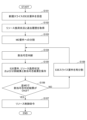
- 1 is a flowchart illustrating the operation of the slice requirement division system 100.
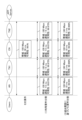
- FIG. 13 illustrates an example of slice E2E requirement division.
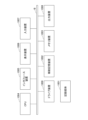
- FIG. 13 illustrates an example of slice E2E requirement subdivision.
- FIG. 2 is a diagram illustrating a configuration example of a slice requirement division unit 120 (or a slice requirement division system 100).
- FIG. 1 is a diagram illustrating an example of a hardware configuration of a slice requirement division system 100.
- the Management Functions (MnF) of the E2E Service MD and the MnF of each resource MD are connected by a cross domain integration fabric.
- the MnF of each resource MD manages the resource MD and provides functions such as data collection and slice construction for the integrated control of the E2E domain in the E2E Service MD.
- E2E requirements of the slice are divided into requirements for each resource MD (called MD requirements) at the E2E Service MD, and the MnF of each resource MD determines whether it can secure resources that satisfy the divided MD requirements.
- Slice requirements take into account parameters such as bandwidth requirements, latency requirements, and availability requirements. In conventional technology, the above determination is assumed to be made centrally at the E2E Service MD.
- the standardization is aimed at distributed cooperative control in which the E2E Service MD and each resource MD work together, rather than centralized control in which the E2E Service MD calculates the resource allocation of all MDs.
- the way in which the slice's E2E requirements are divided into MD requirements in the E2E Service MD is important. This is because if the slice E2E requirements are poorly divided, resources may not be secured in each resource MD, and resources may not be allocated optimally overall.
- a technique for appropriately dividing the E2E requirements of a slice in the E2E Service MD into the requirements of each resource MD in a distributed cooperative control system in which the management units of the E2E Service MD and each resource MD cooperate to perform slice control across resource MDs, as in the architecture considered in the ETSI ZSM, will be described.
- a slice requirement division system 100 executes a process for appropriately dividing the E2E requirements into the requirements of each resource MD.
- the requirements of the resource MD may be referred to as MD requirements.
- the present invention is described by taking as an example a case where the present invention is applied to a distributed cooperative control system based on the architecture considered in ETSI ZSM, but the application of the present invention is not limited to this distributed cooperative control system.
- the present invention can be applied to various communication systems. The configuration and operation of the system in this embodiment will be described in detail below.
- FIG. 1 An example of the configuration of a distributed cooperative control system according to the present embodiment is shown in Fig. 1.
- the distributed cooperative control system shown in Fig. 1 includes a slice requirement division system 100.
- the slice requirement division system 100 belongs to the E2E Service MD and includes a slice requirement division unit 120 and a slice requirement division history storage DB 110.
- the slice requirement division system 100 operates in cooperation with the control unit 200 of the E2E Service MD and the management unit 300 of each resource MD.
- the slice requirement division system 100 operates in cooperation with each of the management unit 300 of the AN MD, the management unit 300 of the CN MD, and the management unit 300 of the TN MD.
- the slice requirement division unit 120 in the slice requirement division system 100 receives the E2E requirements of a slice, for example, from an operator's terminal, and divides the E2E requirements into multiple MD requirements.
- the slice requirement division history storage DB 110 stores past division history.
- the control unit 200 sends control commands to the management unit 300 for each resource MD based on the MD requirements divided by the slice requirement division unit 120.
- the management unit 300 in each resource MD is a management function in the MD, and performs tasks such as reporting the resource load status of the MD, determining whether or not resources can be allocated based on the division requirements, and controlling the MD resources based on control commands.
- FIG. 2 shows an example of the format of data exchanged between the functional units shown in FIG.
- the slice E2E requirements input to the slice requirement division unit 120 are slice requirements in E2E, and are composed of parameters such as bandwidth, delay, and availability, as shown in Figure 2A.
- the slice MD requirements input from the slice requirement division unit 120 to the resource MD management unit 300 are the result of dividing the slice's E2E requirements into MD requirements, and as shown in FIG. 2B, in addition to the E2E requirement parameters, an MD identifier is assigned so that it is clear which MD the requirement is for. For example, an MD requirement with CN1 assigned as the MD identifier is sent to the MD management unit 300 of CN1.
- the resource load status input from the management unit 300 to the slice requirement division unit 120 is the resource usage status for each resource MD, and is composed of a link identifier, a physical resource upper limit, and a resource usage amount, as shown in Figure 2C.
- the allocation feasibility result input from the management unit 300 to the slice requirement division unit 120 indicates whether the MD resource can be allocated based on the divided MD requirements, and takes the value OK or NG, as shown in D of Figure 2.
- the past history stored in the slice requirement division history storage unit 110 is the conditions of past requirement division and the allocation feasibility results, and includes slice E2E requirements, resource load status, slice MD requirements, allocation feasibility results, etc.
- Example of system operation is a flowchart showing the operation of the slice requirement division system 100. An example of the operation of the slice requirement division system 100 will be described with reference to FIG.
- the slice requirement division unit 120 receives E2E requirements for a slice to be newly deployed, which starts the subsequent processing.
- the slice requirement division unit 120 acquires the resource load status from the management unit 300 of each of the multiple resources MD as information required for division, and acquires past division history from the slice requirement division history storage DB 110.
- the slice requirement division unit 120 divides the E2E requirement of the slice into multiple MD requirements based on the information acquired in S102.
- the slice requirement division unit 120 transmits each MD requirement obtained by division to the corresponding resource MD management unit 300.
- the management unit 300 that receives the MD requirement determines whether or not it is possible to allocate resources to satisfy the MD requirement.
- the management unit 300 of each resource MD responds to the slice requirement division unit 120 with the result of the determination on whether or not the resource can be allocated.
- the slice requirement division unit 120 stores the allocation feasibility result, the E2E requirement, the MD requirement, and the resource load status in the slice requirement division history storage DB 110. More specifically, the slice requirement division unit 120 stores in the slice requirement division history storage DB 110 the E2E requirement, the division result in S103 (MD requirement for each resource MD), the allocation feasibility result for each resource MD, and the resource load status for each resource MD.
- the slice requirement division unit 120 judges whether the allocation result is OK for all MDs. If Yes, proceed to S107, and if No, proceed to S108.
- the slice requirement division unit 120 instructs the control unit 200 to issue a resource control command to the management unit 300 of each resource MD based on the MD requirements of each resource MD obtained by division.
- the control unit 200 It issues resource control commands to the management unit 300 of each resource MD.
- the requirements splitting process is broadly divided into “slice E2E requirements splitting” and “slice E2E requirements re-splitting” in the case where the allocation result in the resource MD is NG, so each will be explained below.
- ⁇ Slice E2E requirements division> An example of "slice E2E requirement division" is shown in Fig. 4.
- a slice spanning AN to TN2 is the slice to be constructed, and its E2E requirements are "bandwidth: 100 Mbps, delay: 30 ms, availability: 99.9%”.
- the slice requirement division unit 120 divides the E2E requirements into "requirements to be satisfied in AN, requirements to be satisfied in TN1, requirements to be satisfied in CN, and requirements to be satisfied in TN2".
- Equal Requirement Division the slice requirement division unit 120 divides the E2E requirement equally according to the number of resource MDs. However, instead of dividing all parameters, a common value is used for the bandwidth requirement because it is necessary to secure the bandwidth specified in all resource MDs.
- the E2E requirements are divided so that the values are similar for each resource MD. That is, in the example of Figure 4, the E2E requirement delay of 30 ms is divided into four to calculate a delay of 7.5 ms for each resource MD. Furthermore, for availability, the availability for each resource MD is set to 99.975%, which is 4 times the fourth power, or 99.9%.
- the results of the equal requirement division may be adjusted depending on the resource load status obtained from the management unit 300 of each resource MD. For example, in the example of equal requirement division in FIG. 4 (1), when the load on the AN is high (when resources are tight) and the load on the CN is low (when resources are surplus), the delay requirement on the AN may be relaxed (e.g., 8 ms) and the delay requirement on the CN may be tightened (e.g., 7 ms).
- the slice requirements division unit 120 divides requirements based on the trends of division results under similar past division conditions (slice E2E requirements, resource load status).
- the slice requirement division unit 120 analyzes the trends of past history where the allocation result in the resource MD was OK, and reflects this in the requirement division of the new slice.
- the slice requirement division unit 120 extracts from the slice requirement division history storage DB 110 those division results (division results) that were OK under similar past division conditions (slice E2E requirements, resource load status), calculates the average or median of parameters for each extracted MD requirement, and sets the result as the E2E division value for the new slice.
- Fig. 5 shows an example of repartitioning E2E requirements when the resource allocation feasibility judgment is NG.
- the example in Fig. 5 assumes that the resource allocation feasibility judgment for the result of "(2) Requirements division based on past history" in Fig. 4 is NG.
- the slice requirement division unit 120 relaxes the MD requirements of domains with a resource determination result of NG (longer delay, lower availability), and adjusts the MD requirements of domains with a resource allocation result of OK (smaller delay, higher availability).
- the decision as to which domains' MD requirements should be tightened may be based on past history or on the current resource load situation.
- the slice requirement division history storage DB 110 may be provided outside the slice requirement division system 100 .
- the slice requirement division unit 120 may also be considered to be the slice requirement division system 100.
- the slice requirement division system 100 may also be called a slice requirement division device.
- the input unit 410 inputs the E2E requirements of the slice.
- the division processing unit 420 can perform all the processing described so far as the processing of the slice requirement division unit 120. That is, for example, the division processing unit 420 divides the E2E requirements of the slice into requirements for each management domain, and outputs each requirement to the management unit of the corresponding management domain.
- the slice requirement division system 100 described in this embodiment can be realized, for example, by causing a computer to execute a program.
- This computer may be a physical computer or a virtual machine on a cloud.
- the slice requirement division system 100 can be realized by executing a program corresponding to the processing performed by the slice requirement division system 100 using hardware resources such as a CPU and memory built into a computer.
- the above program can be recorded on a computer-readable recording medium (such as a portable memory) and stored or distributed.
- the above program can also be provided via a network such as the Internet or email.
- FIG. 7 is a diagram showing an example of the hardware configuration of the computer.
- the computer in FIG. 7 has a drive device 1000, an auxiliary storage device 1002, a memory device 1003, a CPU 1004, an interface device 1005, a display device 1006, an input device 1007, an output device 1008, etc., all of which are interconnected by a bus BS.
- the computer may further include a GPU.
- a slice requirement division system for dividing end-to-end requirements of a slice constructed across multiple management domains in a communication network comprising: Memory, at least one processor coupled to the memory; Including, The processor, inputting said end-to-end requirements; The slice requirement division system divides the end-to-end requirement into requirements for each management domain, and outputs each requirement to a management unit of a corresponding management domain.
Landscapes
- Engineering & Computer Science (AREA)
- Computer Networks & Wireless Communication (AREA)
- Signal Processing (AREA)
- Data Exchanges In Wide-Area Networks (AREA)
Abstract
Description
本発明は、通信分野におけるネットワークオペレーションシステムに関するものである。 The present invention relates to a network operation system in the field of communications.
現在の通信ネットワークでは、コアネットワーク(CN:Core Network)、トランスポートネットワーク(TN:Transport Network)、アクセスネットワーク(AN:Access Network)などのリソースの種類に応じた管理ドメイン(MD:Management Domain)ごとにオペレーティングシステム(OpS:Operation System)が用意されており、それぞれのOpS毎に異なる保守者が運用している。 In today's telecommunications networks, an operating system (OpS: Operation System) is provided for each management domain (MD: Management Domain) according to the type of resources, such as the core network (CN: Core Network), transport network (TN: Transport Network), and access network (AN: Access Network), and each OpS is operated by a different maintainer.
通信ネットワーク上でサービスを提供する際には、複数のMDにまたがって、サービス用のEnd-to-End(E2E)のネットワークスライスを構築する。今後5G/6Gが導入されると、MD数やネットワークスライス数はさらに増加することが想定されるため、ネットワークオペレーション業務の自動化が急務である。 When providing a service over a communications network, an end-to-end (E2E) network slice for the service is constructed across multiple MDs. With the introduction of 5G/6G in the future, the number of MDs and network slices is expected to increase further, making it urgent to automate network operation tasks.
ETSI ISG ZSMなどの標準化機関では、複数のリソースMDが存在するネットワークにおいて、リソースMD横断でネットワークスライスを制御する方式が検討されている。非特許文献1のFigure 5.1-1には、ETSI ZSMで検討されている制御アーキテクチャが開示されている。 Standardization organizations such as ETSI ISG ZSM are studying a method of controlling network slices across resource MDs in networks where multiple resource MDs exist. Figure 5.1-1 in Non-Patent Document 1 discloses the control architecture being studied in ETSI ZSM.
ETSIのアーキテクチャでは、E2E Service MDの管理機能部(MnF:Management Functions)と、各リソースMDのMnFがCross domain integration fabricにより結合される。各リソースMDのMnFは、当該リソースMDの管理を行い、E2E Service MDにてE2Eのドメインの統合制御を行うためのデータ収集やスライス構築などの機能を提供する。 In the ETSI architecture, the Management Functions (MnF) of the E2E Service MD and the MnF of each resource MD are connected by a cross domain integration fabric. The MnF of each resource MD manages the resource MD and provides functions such as data collection and slice construction to enable the E2E Service MD to perform integrated control of the E2E domain.
E2Eネットワークスライスを構築する際には、スライスのE2E要件を、E2E Service MDにて各リソースMDの要件(MD要件と呼ぶ)に分割し、各リソースMDのMnFにて、分割されたMD要件を満たすようなリソースを確保できるかを判断することが考えられる。従来技術では、上記の判断は、E2E Service MDにおいて、中央集権的に行われることが想定される。 When constructing an E2E network slice, it is conceivable that the E2E requirements of the slice are divided into requirements for each resource MD (called MD requirements) in the E2E Service MD, and the MnF of each resource MD determines whether it can secure resources that satisfy the divided MD requirements. In conventional technology, the above determination is assumed to be made centrally in the E2E Service MD.
しかし、従来技術では、効率的にリソース割当可能な要件分割結果を得ることができないという課題があった。 However, conventional technology has the problem that it is not possible to obtain requirements decomposition results that allow efficient resource allocation.
本発明は上記の点に鑑みてなされたものであり、複数の管理ドメインにまたがって構築されるスライスのE2E要件を分割する技術において、効率的にリソース割当可能な要件分割結果を得るための技術を提供することを目的とする。 The present invention has been made in consideration of the above points, and aims to provide a technology for dividing the E2E requirements of slices constructed across multiple management domains, which results in requirements division that allows efficient resource allocation.
開示の技術によれば、通信ネットワークにおいて、複数の管理ドメインにまたがって構築されるスライスのエンドツーエンド要件を分割するスライス要件分割システムであって、
前記エンドツーエンド要件を入力する入力部と、
前記エンドツーエンド要件を、管理ドメイン毎の要件に分割し、各要件を、対応する管理ドメインの管理部へ出力する分割処理部と
を備えるスライス要件分割システムが提供される。
According to the disclosed technology, there is provided a slice requirement division system for dividing end-to-end requirements of a slice constructed across multiple management domains in a communication network, comprising:
an input unit for inputting the end-to-end requirements;
A slice requirement division system is provided, comprising: a division processing unit that divides the end-to-end requirement into requirements for each management domain, and outputs each requirement to a management unit of a corresponding management domain.
開示の技術によれば、複数の管理ドメインにまたがって構築されるスライスのE2E要件を分割する技術において、効率的にリソース割当可能な要件分割結果を得るための技術が提供される。 The disclosed technology provides a technique for dividing E2E requirements for slices that are constructed across multiple management domains, and for obtaining requirements division results that allow efficient resource allocation.
以下、図面を参照して本発明の実施の形態(本実施の形態)を説明する。以下で説明する実施の形態は一例に過ぎず、本発明が適用される実施の形態は、以下の実施の形態に限られるわけではない。 Below, an embodiment of the present invention (present embodiment) will be described with reference to the drawings. The embodiment described below is merely an example, and the embodiment to which the present invention is applicable is not limited to the embodiment described below.
以下ではまず、従来技術とその課題についてより詳細に説明し、その後に、本実施の形態に係る技術について詳細に説明する。なお、従来技術について、非特許文献及び特許文献に開示されている技術自体は公知であるが、下記における従来技術の解説、及び課題の説明は公知ではない。 Below, we will first provide a more detailed explanation of the conventional technology and its problems, and then provide a detailed explanation of the technology related to this embodiment. Note that while the conventional technology disclosed in non-patent documents and patent documents is itself publicly known, the explanation of the conventional technology and the problems described below are not publicly known.
(従来技術と課題について)
前述したとおり、ETSIのアーキテクチャでは、E2E Service MDの管理機能部(MnF:Management Functions)と、各リソースMDのMnFがCross domain integration fabricにより結合される。各リソースMDのMnFは、当該リソースMDの管理を行い、E2E Service MDにてE2Eのドメインの統合制御を行うためのデータ収集やスライス構築などの機能を提供する。
(Regarding conventional technology and issues)
As mentioned above, in the ETSI architecture, the Management Functions (MnF) of the E2E Service MD and the MnF of each resource MD are connected by a cross domain integration fabric. The MnF of each resource MD manages the resource MD and provides functions such as data collection and slice construction for the integrated control of the E2E domain in the E2E Service MD.
E2Eネットワークスライスを構築する際には、スライスのE2E要件を、E2E Service MDにて各リソースMDの要件(MD要件と呼ぶ)に分割し、各リソースMDのMnFにて、分割されたMD要件を満たすようなリソースを確保できるかを判断することが考えられる。スライスの要件としては、帯域要件、遅延要件、可用性要件などのパラメータが考慮される。従来技術では、上記の判断は、E2E Service MDにおいて、中央集権的に行われることが想定される。 When constructing an E2E network slice, it is conceivable that the E2E requirements of the slice are divided into requirements for each resource MD (called MD requirements) at the E2E Service MD, and the MnF of each resource MD determines whether it can secure resources that satisfy the divided MD requirements. Slice requirements take into account parameters such as bandwidth requirements, latency requirements, and availability requirements. In conventional technology, the above determination is assumed to be made centrally at the E2E Service MD.
標準化においては、E2E Service MDで全てのMDのリソース割当を計算する中央集権的な制御ではなく、E2E Service MDと各リソースMDが連携して動作するような分散協調的な制御が志向されている。 The standardization is aimed at distributed cooperative control in which the E2E Service MD and each resource MD work together, rather than centralized control in which the E2E Service MD calculates the resource allocation of all MDs.
上記のような分散協調制御の仕組みを考える場合、E2E Service MDにおいて、スライスのE2E要件をMD要件に分割する仕方が重要である。なぜならば、スライスE2E要件の分割の仕方が悪いと、各リソースMDにおけるリソース確保に失敗したり、全体として最適なリソース割り当てにならなかったりしてしまうからである。 When considering a distributed cooperative control mechanism like the one described above, the way in which the slice's E2E requirements are divided into MD requirements in the E2E Service MD is important. This is because if the slice E2E requirements are poorly divided, resources may not be secured in each resource MD, and resources may not be allocated optimally overall.
例として、スライスの要件として遅延要件を取り上げる。E2Eの遅延要件があたえられた場合、各リソースMDの遅延要件に分割する必要あるが、あるMDに割当られた遅延要件の値が小さすぎると、当該MDでリソースを最短で割り当てても要件が達成できない場合は、リソース割り当てに失敗し、再度要件分割をする必要がある。従来技術としては、中央集権的な制御を想定したリソース割当が想定されており、効率的にリソース割当可能な要件分割結果を得ることが難しい。 As an example, let us take up delay requirements as slice requirements. When an E2E delay requirement is given, it is necessary to divide it into delay requirements for each resource MD. However, if the delay requirement value assigned to a certain MD is too small, and the requirement cannot be achieved even if resources are allocated in the shortest possible time in that MD, resource allocation will fail and the requirement must be divided again. Conventional technology assumes resource allocation under centralized control, making it difficult to obtain a requirement division result that allows efficient resource allocation.
以下、上記の課題を解決するための技術を説明する。 The following describes the technology that can solve the above problems.
(実施の形態の概要)
本実施の形態では、ETSI ZSMで検討されているアーキテクチャのように、E2E Service MDと各リソースMDの管理部が連携して、リソースMD横断のスライス制御を実施する分散協調制御システムにおいて、E2E Service MDにおいてスライスのE2E要件を各リソースMDの要件に適切に分割する技術について説明する。本実施の形態では、スライス要件分割システム100が、E2E要件を各リソースMDの要件に適切に分割するための処理を実行する。なお、以下では、リソースMDの要件を、MD要件と記載する場合がある。
(Overview of the embodiment)
In this embodiment, a technique for appropriately dividing the E2E requirements of a slice in the E2E Service MD into the requirements of each resource MD in a distributed cooperative control system in which the management units of the E2E Service MD and each resource MD cooperate to perform slice control across resource MDs, as in the architecture considered in the ETSI ZSM, will be described. In this embodiment, a slice
なお、本実施の形態では、本発明を、ETSI ZSMで検討されているアーキテクチャに基づく分散協調制御システムに適用する場合を例にとって説明しているが、本発明の適用先は、当該分散協調制御システムに限定されない。本発明は、様々な通信システムに適用可能である。以下、本実施の形態におけるシステムの構成と動作を詳細に説明する。 In this embodiment, the present invention is described by taking as an example a case where the present invention is applied to a distributed cooperative control system based on the architecture considered in ETSI ZSM, but the application of the present invention is not limited to this distributed cooperative control system. The present invention can be applied to various communication systems. The configuration and operation of the system in this embodiment will be described in detail below.
(システム構成例、動作概要)
図1に、本実施の形態における分散協調制御システムの構成例を示す。図1に示す分散協調制御システムには、スライス要件分割システム100が含まれる。
(System configuration example, operation overview)
An example of the configuration of a distributed cooperative control system according to the present embodiment is shown in Fig. 1. The distributed cooperative control system shown in Fig. 1 includes a slice
スライス要件分割システム100は、E2E Service MDに属し、スライス要件分割部120およびスライス要件分割履歴保存DB110を備える。
The slice
スライス要件分割システム100は、E2E Service MDの制御部200と各リソースMDの管理部300と連携して動作する。例えば、AN MDとCN MDとTN MDがある場合において、スライス要件分割システム100は、AN MDの管理部300、CN MDの管理部300、及びTN MD の管理部300のそれぞれと連携して動作する。
The slice
スライス要件分割システム100におけるスライス要件分割部120は、スライスのE2E要件を、例えば、事業者の端末から受信し、当該E2E要件を複数のMD要件に分割する。スライス要件分割履歴保存DB110は、過去の分割履歴を保存する。
The slice
制御部200は、スライス要件分割部120により分割されたMD要件に基づき、各リソースMDの管理部300に制御命令を送付する。
The
各リソースMDにおける管理部300は、MDにおける管理機能であり、MDのリソース負荷状況のレポート、分割要件でのリソース割当可否の判断、制御命令に基づくMDのリソース制御などを行う。
The
(データ形式の例)
図1に示した機能部間でやりとりするデータの形式の例を図2に示す。
(Example of data format)
FIG. 2 shows an example of the format of data exchanged between the functional units shown in FIG.
スライス要件分割部120に入力されるスライスE2E要件は、E2Eでのスライス要件であり、図2のAに示すとおり、帯域、遅延、可用性などのパラメータで構成される。
The slice E2E requirements input to the slice
スライス要件分割部120から該当リソースMDの管理部300に入力されるスライスMD要件は、スライスのE2E要件をMD要件に分割した結果であり、図2のBに示すとおり、E2E要件のパラメータに加え、どのMDの要件かがわかるように、MDの識別子が付与されている。例えば、MD識別子としてCN1が付されているMD要件は、CN1のMDの管理部300に送信される。
The slice MD requirements input from the slice
管理部300からスライス要件分割部120に入力されるリソース負荷状況は、各リソースMDにおけるリソースの利用状況であり、図2のCに示すとおり、リンク識別子、物理的なリソース上限量、利用リソース量から構成される。
The resource load status input from the
管理部300からスライス要件分割部120に入力される割当可否結果は、分割されたMD要件で当該MDのリソースを割り当て可能か否か示すものであり、図2のDに示すように、OKもしくはNGの値をとる。
The allocation feasibility result input from the
スライス要件分割履歴保存部110に保存される過去履歴は、過去の要件分割の条件と割当可否結果であり、スライスE2E要件、リソース負荷状況、スライスMD要件、割当可否結果等を含む。
The past history stored in the slice requirement division
(システムの動作例)
図3は、スライス要件分割システム100の動作を示すフローチャートである。図3を参照して、スライス要件分割システム100の動作例を説明する。
(Example of system operation)
3 is a flowchart showing the operation of the slice
<S101>
S101において、スライス要件分割部120は、新規にデプロイするスライスのE2E要件を受信する。これにより、以降の処理が開始される。
<S101>
In S101, the slice
<S102>
S102において、スライス要件分割部120は、分割に必要な情報として、複数のリソースMDのそれぞれの管理部300からリソース負荷状況を取得し、スライス要件分割履歴保存DB110から過去分割履歴を取得する。
<S102>
In S102, the slice
<S103>
S103において、スライス要件分割部120は、S102で取得した情報に基づいて、スライスのE2E要件を、複数のMD要件に分割する。
<S103>
In S103, the slice
<S104>
S104において、スライス要件分割部120は、分割により得られた各MD要件を、該当するリソースMDの管理部300に送信する。MD要件を受信した管理部300は、当該MD要件を満たすようにリソースを割り当てることが可能かどうかを判断する。各リソースMDの管理部300は、割当可否の判断結果をスライス要件分割部120へ回答する。
<S104>
In S104, the slice
<S105>
S105において、スライス要件分割部120は、割当可否結果、E2E要件、MD要件、及びリソース負荷状況をスライス要件分割履歴保存DB110へ保存する。より具体的には、スライス要件分割部120からスライス要件分割履歴保存DB110に対して、E2E要件、S103における分割結果(リソースMD毎のMD要件)、リソースMD毎の割当可否結果、及びリソースMD毎のリソース負荷状況が保存される。
<S105>
In S105, the slice
<S106>
S106において、スライス要件分割部120は、全MDで割当結果がOKであるか否かを判断する。YesであればS107に進み、NoであればS108へ進む。
<S106>
In S106, the slice
<S107>
全MDで割当結果がOKであるS107において、スライス要件分割部120は、分割により得られた各リソースMDのMD要件に基づいて、制御部200に対して、各リソースMDの管理部300へリソース制御命令を出すよう指示し、制御部200は、
各リソースMDの管理部300へリソース制御命令を出す。
<S107>
In S107 where the allocation results are OK for all MDs, the slice
It issues resource control commands to the
<S108>
割当結果がNGであるMDがあった場合であるS108において、現段階の分割結果では、E2Eでリソースを確保できないため、スライス要件分割部120は、スライスのE2E要件を再分割し、S105に戻る。S105では、前述のとおり、各リソースMDの管理部300において割当可否判断がなされる。S106での判断がYesになるまで、S105->S106―>S108の処理が繰り返し行われる。
<S108>
In S108, when there is an MD whose allocation result is NG, the current division result does not allow resources to be secured in E2E, so the slice
(実施例)
次に、スライス要件分割部120における、スライスのE2E要件の分割処理の実施例(具体的な例)を説明する。
(Example)
Next, an embodiment (specific example) of the division process of the E2E requirements of a slice in the slice
図3のフローで説明したとおり、要件分割処理は、「スライスE2E要件分割」と、リソースMDにおける割当結果がNGであった場合の「スライスE2E要件再分割」に大別されるので、それぞれについて説明する。 As explained in the flow in Figure 3, the requirements splitting process is broadly divided into "slice E2E requirements splitting" and "slice E2E requirements re-splitting" in the case where the allocation result in the resource MD is NG, so each will be explained below.
<スライスE2E要件分割>
図4に「スライスE2E要件分割」の実施例を示す。図4の例において、AN~TN2をまたがるスライスが構築対象のスライスであり、そのE2E要件は、「帯域:100Mbps、遅延:30ms、可用性:99.9%」である。スライス要件分割部120は、当該E2E要件を、「ANにおいて満たすべき要件、TN1において満たすべき要件、CNにおいて満たすべき要件、TN2において満たすべき要件」に分割する。
<Slice E2E requirements division>
An example of "slice E2E requirement division" is shown in Fig. 4. In the example of Fig. 4, a slice spanning AN to TN2 is the slice to be constructed, and its E2E requirements are "bandwidth: 100 Mbps, delay: 30 ms, availability: 99.9%". The slice
分割方法については、どのような方法を用いてもよいが、ここでは、例として、「(1)均等要件分割」と「(2)過去履歴に基づいた要件分割」の2つの方法を説明する。 Any method can be used for the division method, but here we will explain two methods as examples: "(1) Equal requirement division" and "(2) Requirements division based on past history."
(1)均等要件分割
均等要件分割において、スライス要件分割部120は、E2E要件をリソースMD数にあわせて均等に分割する。ただし、全パラメータを分割するのではなく、帯域要件については、全リソースMDで指定された帯域を確保する必要があるため共通の値を利用している。
(1) Equal Requirement Division In equal requirement division, the slice
一方でリソースMD毎に要件を分割して設定する必要がある遅延及び可用性については、リソースMD毎で同程度の値になるようにE2E要件を分割している。すなわち、図4の例において、E2E要件の遅延30msを4等分することで、各リソースMDでの遅延7.5msを算出する。また、可用性については、4乗して99.9%となる99.975%を各リソースMDでの可用性としている。 On the other hand, for delay and availability, which require dividing the requirements and setting them for each resource MD, the E2E requirements are divided so that the values are similar for each resource MD. That is, in the example of Figure 4, the E2E requirement delay of 30 ms is divided into four to calculate a delay of 7.5 ms for each resource MD. Furthermore, for availability, the availability for each resource MD is set to 99.975%, which is 4 times the fourth power, or 99.9%.
なお、各リソースMDの管理部300から取得したリソース負荷状況に応じて、均等要件分割した結果を調整してもよい。例えば、図4の(1)均等要件分割の例において、ANの負荷が高く(リソースが逼迫している場合)、CNの負荷が低い場合(リソースに余裕がある場合)において、ANの遅延要件を緩和(例:8ms)して、CNの遅延要件を厳しく(例:7ms)してもよい。
The results of the equal requirement division may be adjusted depending on the resource load status obtained from the
(2)過去履歴に基づいた要件分割
過去履歴に基づいた要件分割において、スライス要件分割部120は、過去の類似した分割条件(スライスE2E要件、リソース負荷状況)における分割結果の傾向に基づき、要件を分割する。
(2) Requirements division based on past history In requirements division based on past history, the slice
例えば、スライス要件分割部120は、過去履歴のうち、リソースMDにおける割当可否結果がOKであったものの傾向を分析し、それを新規スライスの要件分割に反映させる。
For example, the slice
図4に示す実施例のケースでは、過去の要件分割の結果、TN1およびTN2のドメインの分割要件を厳しく(遅延を小さく、可用性を高く)してもリソース割当が可能という傾向が得られたので、TN1およびTN2の要件を厳しくし、その分CNおよびANの要件を緩和(遅延を長く、可用性を低く)している。 In the example shown in Figure 4, past requirements division results showed that resource allocation was possible even if the domain division requirements for TN1 and TN2 were strict (low delay, high availability), so the requirements for TN1 and TN2 were made stricter and the requirements for CN and AN were relaxed accordingly (longer delay, lower availability).
具体的には、スライス要件分割部120は、過去の類似した分割条件(スライスE2E要件、リソース負荷状況)における分割結果がOKであったもの(分割結果)をスライス要件分割履歴保存DB110から抽出し、抽出した各MD要件におけるパラメータの平均値あるいは中央値などを計算し、その結果を新規スライスのE2E分割の値として設定する。
Specifically, the slice
<スライスE2E要件再分割>
図5に、リソース割当可否判定がNGであった場合のE2E要件の再分割の実施例を示す。図5の例は、図4における「(2)過去履歴に基づいた要件分割」の結果に対するリソース割当可否判定がNGになったことを想定した例である。
<Slice E2E requirement re-division>
Fig. 5 shows an example of repartitioning E2E requirements when the resource allocation feasibility judgment is NG. The example in Fig. 5 assumes that the resource allocation feasibility judgment for the result of "(2) Requirements division based on past history" in Fig. 4 is NG.
E2E要件の再分割の方法については、どのような方法を用いてもよいが、ここでは、「リソース割当可否結果に基づいた再分割」の方法を説明する。図5に示す通り、スライス要件分割部120は、リソース判定結果NGのドメインのMD要件を緩和(遅延を長く、可用性を低く)し、リソース割当結果OKのドメインのMD要件を厳しく(遅延を小さく、可用性を高く)なるように調整している。
Any method can be used to repartition the E2E requirements, but here we will explain the method of "repartition based on the resource allocation feasibility result." As shown in Figure 5, the slice
リソース割当結果OKのドメインのMD要件を厳しくする際に、どのドメインのMD要件を厳しくするかについては、過去履歴に基づき決定してもよいし、現在のリソース負荷状況に基づき決定してもよい。 When tightening the MD requirements for domains with OK resource allocation results, the decision as to which domains' MD requirements should be tightened may be based on past history or on the current resource load situation.
(その他の構成例)
本実施の形態におけるスライス要件分割システム100において、スライス要件分割履歴保存DB110は、スライス要件分割システム100の外部に備えられてもよい。
(Other configuration examples)
In the slice
また、スライス要件分割部120を、スライス要件分割システム100であると見なしてもよい。また、スライス要件分割システム100をスライス要件分割装置と呼んでもよい。
The slice
スライス要件分割部120の構成例を図6に示す。図6に示す構成は、スライス要件分割システム100の構成であると考えてもよい。
FIG. 6 shows an example of the configuration of the slice
図6に示すように、スライス要件分割部120(スライス要件分割システム100)は、入力部410、及び分割処理部420を備える。
As shown in FIG. 6, the slice requirement division unit 120 (slice requirement division system 100) includes an
入力部410は、スライスのE2E要件を入力する。分割処理部420は、これまでにスライス要件分割部120の処理として説明した全ての処理を行うことができる。つまり、例えば、分割処理部420は、スライスのE2E要件を、管理ドメイン毎の要件に分割し、各要件を、対応する管理ドメインの管理部へ出力する。
The
(ハードウェア構成例)
本実施の形態で説明したスライス要件分割システム100は、例えば、コンピュータにプログラムを実行させることにより実現できる。このコンピュータは、物理的なコンピュータであってもよいし、クラウド上の仮想マシンであってもよい。
(Hardware configuration example)
The slice
すなわち、スライス要件分割システム100は、コンピュータに内蔵されるCPUやメモリ等のハードウェア資源を用いて、スライス要件分割システム100で実施される処理に対応するプログラムを実行することによって実現することが可能である。上記プログラムは、コンピュータが読み取り可能な記録媒体(可搬メモリ等)に記録して、保存したり、配布したりすることが可能である。また、上記プログラムをインターネットや電子メール等、ネットワークを通して提供することも可能である。
In other words, the slice
図7は、上記コンピュータのハードウェア構成例を示す図である。図7のコンピュータは、それぞれバスBSで相互に接続されているドライブ装置1000、補助記憶装置1002、メモリ装置1003、CPU1004、インタフェース装置1005、表示装置1006、入力装置1007、出力装置1008等を有する。なお、当該コンピュータは、更にGPUを備えてもよい。
FIG. 7 is a diagram showing an example of the hardware configuration of the computer. The computer in FIG. 7 has a
当該コンピュータでの処理を実現するプログラムは、例えば、CD-ROM又はメモリカード等の記録媒体1001によって提供される。プログラムを記憶した記録媒体1001がドライブ装置1000にセットされると、プログラムが記録媒体1001からドライブ装置1000を介して補助記憶装置1002にインストールされる。但し、プログラムのインストールは必ずしも記録媒体1001より行う必要はなく、ネットワークを介して他のコンピュータよりダウンロードするようにしてもよい。補助記憶装置1002は、インストールされたプログラムを格納すると共に、必要なファイルやデータ等を格納する。
The program that realizes the processing on the computer is provided by a
メモリ装置1003は、プログラムの起動指示があった場合に、補助記憶装置1002からプログラムを読み出して格納する。CPU1004は、メモリ装置1003に格納されたプログラムに従って、スライス要件分割システム100に係る機能を実現する。インタフェース装置1005は、ネットワーク等に接続するためのインタフェースとして用いられる。表示装置1006はプログラムによるGUI(Graphical User Interface)等を表示する。入力装置1007はキーボード及びマウス、ボタン、又はタッチパネル等で構成され、様々な操作指示を入力させるために用いられる。出力装置1008は演算結果を出力する。
When an instruction to start a program is received, the
(実施の形態のまとめ、効果等)
以上説明したとおり、スライスのE2E要件をMD要件へ分割するスライス要件分割システム100を導入することで、効率的にリソース割当可能な要件分割結果を得ることが可能となる
(Summary of the embodiment, effects, etc.)
As described above, by introducing the slice
以上の実施形態に関し、更に以下の付記を開示する。 The following notes are further provided with respect to the above embodiment.
<付記>
(付記項1)
通信ネットワークにおいて、複数の管理ドメインにまたがって構築されるスライスのエンドツーエンド要件を分割するスライス要件分割システムであって、
メモリと、
前記メモリに接続された少なくとも1つのプロセッサと、
を含み、
前記プロセッサは、
前記エンドツーエンド要件を入力し、
前記エンドツーエンド要件を、管理ドメイン毎の要件に分割し、各要件を、対応する管理ドメインの管理部へ出力する
スライス要件分割システム。
(付記項2)
前記プロセッサは、各管理ドメインの管理部から、分割により得られた要件に対するリソース割当可否の判断結果を受信する
付記項1に記載のスライス要件分割システム。
(付記項3)
前記複数の管理ドメインのうちの少なくとも1つの管理ドメインにおいてリソース割当が不可である場合、前記プロセッサは、前記エンドツーエンド要件の再分割を実行し、再分割後の各要件を、対応する管理ドメインの管理部へ出力する
付記項2に記載のスライス要件分割システム。
(付記項4)
前記プロセッサは、
前記エンドツーエンド要件を、前記複数の管理ドメインの間で均等に分割する、又は、
前記エンドツーエンド要件を、過去の分割の履歴に基づいて分割する
付記項1ないし3のうちいずれか1項に記載のスライス要件分割システム。
(付記項5)
前記プロセッサは、前記エンドツーエンド要件、分割により得られた各要件、各管理ドメインの管理部から受信したリソース割当可否の判断結果、及び、各管理ドメインの管理部から受信したリソース負荷状況をデータベースへ出力する
付記項1ないし4のうちいずれか1項に記載のスライス要件分割システム。
(付記項6)
通信ネットワークにおいて、複数の管理ドメインにまたがって構築されるスライスのエンドツーエンド要件を分割するスライス要件分割システムが実行するスライス要件分割方法であって、
前記エンドツーエンド要件を入力する入力ステップと、
前記エンドツーエンド要件を、管理ドメイン毎の要件に分割し、各要件を、対応する管理ドメインの管理部へ出力する分割処理ステップと
を備えるスライス要件分割方法。
(付記項7)
コンピュータを、付記項1ないし5のうちいずれか1項に記載のスライス要件分割システムにおける前記入力部及び前記分割処理部として機能させるためのプログラムを記憶した非一時的記憶媒体。
<Additional Notes>
(Additional Note 1)
A slice requirement division system for dividing end-to-end requirements of a slice constructed across multiple management domains in a communication network, comprising:
Memory,
at least one processor coupled to the memory;
Including,
The processor,
inputting said end-to-end requirements;
The slice requirement division system divides the end-to-end requirement into requirements for each management domain, and outputs each requirement to a management unit of a corresponding management domain.
(Additional Note 2)
The slice requirement division system according to claim 1, wherein the processor receives a decision result on whether or not resources can be allocated to the requirements obtained by division from the management unit of each management domain.
(Additional Note 3)
The slice requirement division system described in Appendix 2, wherein if resource allocation is not possible in at least one management domain among the multiple management domains, the processor performs a re-division of the end-to-end requirements and outputs each requirement after the re-division to a management unit of the corresponding management domain.
(Additional Note 4)
The processor,
splitting the end-to-end requirements evenly between the multiple administrative domains; or
The slice requirement division system according to any one of claims 1 to 3, further comprising dividing the end-to-end requirement based on a history of past divisions.
(Additional Note 5)
The processor outputs to a database the end-to-end requirements, each requirement obtained by division, the decision on whether or not to allocate resources received from the management unit of each management domain, and the resource load status received from the management unit of each management domain.A slice requirement division system described in any one of appendix 1 to 4.
(Additional Note 6)
A slice requirement division method executed by a slice requirement division system for dividing end-to-end requirements of a slice constructed across multiple management domains in a communication network, comprising:
an input step of inputting the end-to-end requirements;
a division processing step of dividing the end-to-end requirements into requirements for each management domain, and outputting each requirement to a management unit of a corresponding management domain.
(Additional Note 7)
A non-transitory storage medium storing a program for causing a computer to function as the input section and the division processing section in the slice requirement division system described in any one of appendix 1 to 5.
以上、本実施の形態について説明したが、本発明はかかる特定の実施形態に限定されるものではなく、特許請求の範囲に記載された本発明の要旨の範囲内において、種々の変形・変更が可能である。 The present embodiment has been described above, but the present invention is not limited to this specific embodiment, and various modifications and variations are possible within the scope of the gist of the present invention as described in the claims.
100 スライス要件分割システム
110 スライス要件分割履歴保存DB
120 スライス要件分割部
200 制御部
300 管理部
410 入力部
420 分割処理部
1000 ドライブ装置
1001 記録媒体
1002 補助記憶装置
1003 メモリ装置
1004 CPU
1005 インタフェース装置
1006 表示装置
1007 入力装置
1008 出力装置
100 Slice
120 slice
1005
Claims (7)
前記エンドツーエンド要件を入力する入力部と、
前記エンドツーエンド要件を、管理ドメイン毎の要件に分割し、各要件を、対応する管理ドメインの管理部へ出力する分割処理部と
を備えるスライス要件分割システム。 A slice requirement division system for dividing end-to-end requirements of a slice constructed across multiple management domains in a communication network, comprising:
an input unit for inputting the end-to-end requirements;
a division processing unit that divides the end-to-end requirements into requirements for each management domain and outputs each requirement to a management unit of a corresponding management domain.
請求項1に記載のスライス要件分割システム。 The slice requirement division system according to claim 1 , wherein the division processing unit receives a decision result on whether or not resources can be allocated to the requirement obtained by division from a management unit of each management domain.
請求項2に記載のスライス要件分割システム。 The slice requirement division system of claim 2, wherein when resource allocation is not possible in at least one of the multiple management domains, the division processing unit performs a re-division of the end-to-end requirements and outputs each requirement after the re-division to a management unit of a corresponding management domain.
前記エンドツーエンド要件を、前記複数の管理ドメインの間で均等に分割する、又は、
前記エンドツーエンド要件を、過去の分割の履歴に基づいて分割する
請求項1に記載のスライス要件分割システム。 The division processing unit includes:
splitting the end-to-end requirements evenly between the multiple administrative domains; or
The system of claim 1 , further comprising: partitioning the end-to-end requirements based on a history of past partitions.
請求項1に記載のスライス要件分割システム。 The slice requirement division system of claim 1, wherein the division processing unit outputs to a database the end-to-end requirements, each requirement obtained by division, the judgment result of whether or not resource allocation is possible received from the management unit of each management domain, and the resource load status received from the management unit of each management domain.
前記エンドツーエンド要件を入力する入力ステップと、
前記エンドツーエンド要件を、管理ドメイン毎の要件に分割し、各要件を、対応する管理ドメインの管理部へ出力する分割処理ステップと
を備えるスライス要件分割方法。 A slice requirement division method executed by a slice requirement division system for dividing end-to-end requirements of a slice constructed across multiple management domains in a communication network, comprising:
an input step of inputting the end-to-end requirements;
a division processing step of dividing the end-to-end requirements into requirements for each management domain, and outputting each requirement to a management unit of a corresponding management domain.
Priority Applications (2)
| Application Number | Priority Date | Filing Date | Title |
|---|---|---|---|
| JP2025525552A JPWO2024252589A1 (en) | 2023-06-07 | 2023-06-07 | |
| PCT/JP2023/021237 WO2024252589A1 (en) | 2023-06-07 | 2023-06-07 | Slice requirement division system, slice requirement division method, and program |
Applications Claiming Priority (1)
| Application Number | Priority Date | Filing Date | Title |
|---|---|---|---|
| PCT/JP2023/021237 WO2024252589A1 (en) | 2023-06-07 | 2023-06-07 | Slice requirement division system, slice requirement division method, and program |
Publications (1)
| Publication Number | Publication Date |
|---|---|
| WO2024252589A1 true WO2024252589A1 (en) | 2024-12-12 |
Family
ID=93795761
Family Applications (1)
| Application Number | Title | Priority Date | Filing Date |
|---|---|---|---|
| PCT/JP2023/021237 Ceased WO2024252589A1 (en) | 2023-06-07 | 2023-06-07 | Slice requirement division system, slice requirement division method, and program |
Country Status (2)
| Country | Link |
|---|---|
| JP (1) | JPWO2024252589A1 (en) |
| WO (1) | WO2024252589A1 (en) |
Citations (3)
| Publication number | Priority date | Publication date | Assignee | Title |
|---|---|---|---|---|
| JP2019021953A (en) * | 2017-07-11 | 2019-02-07 | 株式会社Nttドコモ | Resource management apparatus in RAN slice and resource management method in RAN slice |
| JP2019534643A (en) * | 2016-10-31 | 2019-11-28 | 華為技術有限公司Huawei Technologies Co.,Ltd. | Network slice management method, management unit, and system |
| JP2020510384A (en) * | 2017-03-19 | 2020-04-02 | 華為技術有限公司Huawei Technologies Co.,Ltd. | Network slice management method, unit, and system |
-
2023
- 2023-06-07 WO PCT/JP2023/021237 patent/WO2024252589A1/en not_active Ceased
- 2023-06-07 JP JP2025525552A patent/JPWO2024252589A1/ja active Pending
Patent Citations (3)
| Publication number | Priority date | Publication date | Assignee | Title |
|---|---|---|---|---|
| JP2019534643A (en) * | 2016-10-31 | 2019-11-28 | 華為技術有限公司Huawei Technologies Co.,Ltd. | Network slice management method, management unit, and system |
| JP2020510384A (en) * | 2017-03-19 | 2020-04-02 | 華為技術有限公司Huawei Technologies Co.,Ltd. | Network slice management method, unit, and system |
| JP2019021953A (en) * | 2017-07-11 | 2019-02-07 | 株式会社Nttドコモ | Resource management apparatus in RAN slice and resource management method in RAN slice |
Also Published As
| Publication number | Publication date |
|---|---|
| JPWO2024252589A1 (en) | 2024-12-12 |
Similar Documents
| Publication | Publication Date | Title |
|---|---|---|
| Cheng et al. | Network function virtualization in dynamic networks: A stochastic perspective | |
| US11360822B2 (en) | Intelligent resource allocation agent for cluster computing | |
| CN109361750B (en) | Resource allocation method, device, electronic equipment and storage medium | |
| CN111385127B (en) | An intelligent processing system and method | |
| KR101171543B1 (en) | Batch Processing Multiplexing Method | |
| CN104981782A (en) | Resource control system, control pattern generation device, control device, resource control method and program | |
| CN104504143A (en) | A flow graph optimization method and device thereof | |
| WO2014140790A1 (en) | Apparatus and method to maintain consistent operational states in cloud-based infrastructures | |
| US20160380822A1 (en) | Expandable distributed core architectures having reserved interconnect bandwidths | |
| CN118819903B (en) | Data analysis method and system based on visual modeling and job scheduling | |
| US20060031444A1 (en) | Method for assigning network resources to applications for optimizing performance goals | |
| US11809895B2 (en) | Control device, control method, and program | |
| CN112000457B (en) | Method, apparatus and computer program product for managing tasks in a processing system | |
| Xue et al. | EdgeLD: Locally distributed deep learning inference on edge device clusters | |
| US10574743B1 (en) | Resource allocation | |
| US20190199649A1 (en) | Resource allocation device and resource allocation method | |
| Ku et al. | Access control to two multiserver loss queues in series | |
| WO2024252589A1 (en) | Slice requirement division system, slice requirement division method, and program | |
| Kukliński et al. | Design principles of generalized network orchestrators | |
| US20250181412A1 (en) | Resource determination device, method, and program | |
| CN114416349A (en) | Resource allocation method, device, equipment, storage medium and program product | |
| US10868764B2 (en) | Route calculation control device and route calculation control method | |
| JP6183101B2 (en) | Information processing system, control program, and control method | |
| US20170093957A1 (en) | Transmission apparatus and transmission method | |
| CN116028159B (en) | A method and system for automated resource allocation of virtual network functions |
Legal Events
| Date | Code | Title | Description |
|---|---|---|---|
| 121 | Ep: the epo has been informed by wipo that ep was designated in this application |
Ref document number: 23940690 Country of ref document: EP Kind code of ref document: A1 |
|
| ENP | Entry into the national phase |
Ref document number: 2025525552 Country of ref document: JP Kind code of ref document: A |
|
| WWE | Wipo information: entry into national phase |
Ref document number: 2025525552 Country of ref document: JP |
|
| NENP | Non-entry into the national phase |
Ref country code: DE |