WO2024252589A1 - Système de division d'exigence de tranche, procédé de division d'exigence de tranche et programme - Google Patents
Système de division d'exigence de tranche, procédé de division d'exigence de tranche et programme Download PDFInfo
- Publication number
- WO2024252589A1 WO2024252589A1 PCT/JP2023/021237 JP2023021237W WO2024252589A1 WO 2024252589 A1 WO2024252589 A1 WO 2024252589A1 JP 2023021237 W JP2023021237 W JP 2023021237W WO 2024252589 A1 WO2024252589 A1 WO 2024252589A1
- Authority
- WO
- WIPO (PCT)
- Prior art keywords
- division
- requirements
- slice
- requirement
- management
- Prior art date
- Legal status (The legal status is an assumption and is not a legal conclusion. Google has not performed a legal analysis and makes no representation as to the accuracy of the status listed.)
- Ceased
Links
Images




Classifications
-
- H—ELECTRICITY
- H04—ELECTRIC COMMUNICATION TECHNIQUE
- H04L—TRANSMISSION OF DIGITAL INFORMATION, e.g. TELEGRAPHIC COMMUNICATION
- H04L45/00—Routing or path finding of packets in data switching networks
- H04L45/64—Routing or path finding of packets in data switching networks using an overlay routing layer
Definitions
- the present invention relates to a network operation system in the field of communications.
- an operating system (OpS: Operation System) is provided for each management domain (MD: Management Domain) according to the type of resources, such as the core network (CN: Core Network), transport network (TN: Transport Network), and access network (AN: Access Network), and each OpS is operated by a different maintainer.
- CN Core Network
- TN Transport Network
- AN Access Network
- an end-to-end (E2E) network slice for the service is constructed across multiple MDs.
- E2E end-to-end
- Non-Patent Document 1 discloses the control architecture being studied in ETSI ZSM.
- the Management Functions (MnF) of the E2E Service MD and the MnF of each resource MD are connected by a cross domain integration fabric.
- the MnF of each resource MD manages the resource MD and provides functions such as data collection and slice construction to enable the E2E Service MD to perform integrated control of the E2E domain.
- ETSI GS ZSM 003 V1.1.1 (2021-06), Zero-touch network and Service Management (ZSM); End-to-end management and orches tration of network slicing, https://www.etsi.org/deliver/etsi_gs/ZSM/001_099/003/01.01.01_60/gs_ZSM003v010101p.pdf
- Patent No. 6586228 Route calculation control device and route calculation control method Patent No. 6586237, Resource allocation device and resource allocation method
- E2E requirements of the slice are divided into requirements for each resource MD (called MD requirements) in the E2E Service MD, and the MnF of each resource MD determines whether it can secure resources that satisfy the divided MD requirements.
- MD requirements requirements for each resource MD
- MnF of each resource MD determines whether it can secure resources that satisfy the divided MD requirements.
- the above determination is assumed to be made centrally in the E2E Service MD.
- the present invention has been made in consideration of the above points, and aims to provide a technology for dividing the E2E requirements of slices constructed across multiple management domains, which results in requirements division that allows efficient resource allocation.
- a slice requirement division system for dividing end-to-end requirements of a slice constructed across multiple management domains in a communication network, comprising: an input unit for inputting the end-to-end requirements;
- a slice requirement division system is provided, comprising: a division processing unit that divides the end-to-end requirement into requirements for each management domain, and outputs each requirement to a management unit of a corresponding management domain.
- the disclosed technology provides a technique for dividing E2E requirements for slices that are constructed across multiple management domains, and for obtaining requirements division results that allow efficient resource allocation.
- FIG. 1 is a diagram illustrating an example of a configuration of a distributed cooperative control system according to an embodiment of the present invention.
- 2 is a diagram showing an example of a format of data exchanged between functional units in the configuration shown in FIG. 1 .
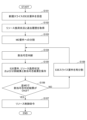
- 1 is a flowchart illustrating the operation of the slice requirement division system 100.
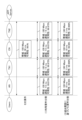
- FIG. 13 illustrates an example of slice E2E requirement division.
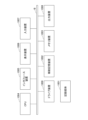
- FIG. 13 illustrates an example of slice E2E requirement subdivision.
- FIG. 2 is a diagram illustrating a configuration example of a slice requirement division unit 120 (or a slice requirement division system 100).
- FIG. 1 is a diagram illustrating an example of a hardware configuration of a slice requirement division system 100.
- the Management Functions (MnF) of the E2E Service MD and the MnF of each resource MD are connected by a cross domain integration fabric.
- the MnF of each resource MD manages the resource MD and provides functions such as data collection and slice construction for the integrated control of the E2E domain in the E2E Service MD.
- E2E requirements of the slice are divided into requirements for each resource MD (called MD requirements) at the E2E Service MD, and the MnF of each resource MD determines whether it can secure resources that satisfy the divided MD requirements.
- Slice requirements take into account parameters such as bandwidth requirements, latency requirements, and availability requirements. In conventional technology, the above determination is assumed to be made centrally at the E2E Service MD.
- the standardization is aimed at distributed cooperative control in which the E2E Service MD and each resource MD work together, rather than centralized control in which the E2E Service MD calculates the resource allocation of all MDs.
- the way in which the slice's E2E requirements are divided into MD requirements in the E2E Service MD is important. This is because if the slice E2E requirements are poorly divided, resources may not be secured in each resource MD, and resources may not be allocated optimally overall.
- a technique for appropriately dividing the E2E requirements of a slice in the E2E Service MD into the requirements of each resource MD in a distributed cooperative control system in which the management units of the E2E Service MD and each resource MD cooperate to perform slice control across resource MDs, as in the architecture considered in the ETSI ZSM, will be described.
- a slice requirement division system 100 executes a process for appropriately dividing the E2E requirements into the requirements of each resource MD.
- the requirements of the resource MD may be referred to as MD requirements.
- the present invention is described by taking as an example a case where the present invention is applied to a distributed cooperative control system based on the architecture considered in ETSI ZSM, but the application of the present invention is not limited to this distributed cooperative control system.
- the present invention can be applied to various communication systems. The configuration and operation of the system in this embodiment will be described in detail below.
- FIG. 1 An example of the configuration of a distributed cooperative control system according to the present embodiment is shown in Fig. 1.
- the distributed cooperative control system shown in Fig. 1 includes a slice requirement division system 100.
- the slice requirement division system 100 belongs to the E2E Service MD and includes a slice requirement division unit 120 and a slice requirement division history storage DB 110.
- the slice requirement division system 100 operates in cooperation with the control unit 200 of the E2E Service MD and the management unit 300 of each resource MD.
- the slice requirement division system 100 operates in cooperation with each of the management unit 300 of the AN MD, the management unit 300 of the CN MD, and the management unit 300 of the TN MD.
- the slice requirement division unit 120 in the slice requirement division system 100 receives the E2E requirements of a slice, for example, from an operator's terminal, and divides the E2E requirements into multiple MD requirements.
- the slice requirement division history storage DB 110 stores past division history.
- the control unit 200 sends control commands to the management unit 300 for each resource MD based on the MD requirements divided by the slice requirement division unit 120.
- the management unit 300 in each resource MD is a management function in the MD, and performs tasks such as reporting the resource load status of the MD, determining whether or not resources can be allocated based on the division requirements, and controlling the MD resources based on control commands.
- FIG. 2 shows an example of the format of data exchanged between the functional units shown in FIG.
- the slice E2E requirements input to the slice requirement division unit 120 are slice requirements in E2E, and are composed of parameters such as bandwidth, delay, and availability, as shown in Figure 2A.
- the slice MD requirements input from the slice requirement division unit 120 to the resource MD management unit 300 are the result of dividing the slice's E2E requirements into MD requirements, and as shown in FIG. 2B, in addition to the E2E requirement parameters, an MD identifier is assigned so that it is clear which MD the requirement is for. For example, an MD requirement with CN1 assigned as the MD identifier is sent to the MD management unit 300 of CN1.
- the resource load status input from the management unit 300 to the slice requirement division unit 120 is the resource usage status for each resource MD, and is composed of a link identifier, a physical resource upper limit, and a resource usage amount, as shown in Figure 2C.
- the allocation feasibility result input from the management unit 300 to the slice requirement division unit 120 indicates whether the MD resource can be allocated based on the divided MD requirements, and takes the value OK or NG, as shown in D of Figure 2.
- the past history stored in the slice requirement division history storage unit 110 is the conditions of past requirement division and the allocation feasibility results, and includes slice E2E requirements, resource load status, slice MD requirements, allocation feasibility results, etc.
- Example of system operation is a flowchart showing the operation of the slice requirement division system 100. An example of the operation of the slice requirement division system 100 will be described with reference to FIG.
- the slice requirement division unit 120 receives E2E requirements for a slice to be newly deployed, which starts the subsequent processing.
- the slice requirement division unit 120 acquires the resource load status from the management unit 300 of each of the multiple resources MD as information required for division, and acquires past division history from the slice requirement division history storage DB 110.
- the slice requirement division unit 120 divides the E2E requirement of the slice into multiple MD requirements based on the information acquired in S102.
- the slice requirement division unit 120 transmits each MD requirement obtained by division to the corresponding resource MD management unit 300.
- the management unit 300 that receives the MD requirement determines whether or not it is possible to allocate resources to satisfy the MD requirement.
- the management unit 300 of each resource MD responds to the slice requirement division unit 120 with the result of the determination on whether or not the resource can be allocated.
- the slice requirement division unit 120 stores the allocation feasibility result, the E2E requirement, the MD requirement, and the resource load status in the slice requirement division history storage DB 110. More specifically, the slice requirement division unit 120 stores in the slice requirement division history storage DB 110 the E2E requirement, the division result in S103 (MD requirement for each resource MD), the allocation feasibility result for each resource MD, and the resource load status for each resource MD.
- the slice requirement division unit 120 judges whether the allocation result is OK for all MDs. If Yes, proceed to S107, and if No, proceed to S108.
- the slice requirement division unit 120 instructs the control unit 200 to issue a resource control command to the management unit 300 of each resource MD based on the MD requirements of each resource MD obtained by division.
- the control unit 200 It issues resource control commands to the management unit 300 of each resource MD.
- the requirements splitting process is broadly divided into “slice E2E requirements splitting” and “slice E2E requirements re-splitting” in the case where the allocation result in the resource MD is NG, so each will be explained below.
- ⁇ Slice E2E requirements division> An example of "slice E2E requirement division" is shown in Fig. 4.
- a slice spanning AN to TN2 is the slice to be constructed, and its E2E requirements are "bandwidth: 100 Mbps, delay: 30 ms, availability: 99.9%”.
- the slice requirement division unit 120 divides the E2E requirements into "requirements to be satisfied in AN, requirements to be satisfied in TN1, requirements to be satisfied in CN, and requirements to be satisfied in TN2".
- Equal Requirement Division the slice requirement division unit 120 divides the E2E requirement equally according to the number of resource MDs. However, instead of dividing all parameters, a common value is used for the bandwidth requirement because it is necessary to secure the bandwidth specified in all resource MDs.
- the E2E requirements are divided so that the values are similar for each resource MD. That is, in the example of Figure 4, the E2E requirement delay of 30 ms is divided into four to calculate a delay of 7.5 ms for each resource MD. Furthermore, for availability, the availability for each resource MD is set to 99.975%, which is 4 times the fourth power, or 99.9%.
- the results of the equal requirement division may be adjusted depending on the resource load status obtained from the management unit 300 of each resource MD. For example, in the example of equal requirement division in FIG. 4 (1), when the load on the AN is high (when resources are tight) and the load on the CN is low (when resources are surplus), the delay requirement on the AN may be relaxed (e.g., 8 ms) and the delay requirement on the CN may be tightened (e.g., 7 ms).
- the slice requirements division unit 120 divides requirements based on the trends of division results under similar past division conditions (slice E2E requirements, resource load status).
- the slice requirement division unit 120 analyzes the trends of past history where the allocation result in the resource MD was OK, and reflects this in the requirement division of the new slice.
- the slice requirement division unit 120 extracts from the slice requirement division history storage DB 110 those division results (division results) that were OK under similar past division conditions (slice E2E requirements, resource load status), calculates the average or median of parameters for each extracted MD requirement, and sets the result as the E2E division value for the new slice.
- Fig. 5 shows an example of repartitioning E2E requirements when the resource allocation feasibility judgment is NG.
- the example in Fig. 5 assumes that the resource allocation feasibility judgment for the result of "(2) Requirements division based on past history" in Fig. 4 is NG.
- the slice requirement division unit 120 relaxes the MD requirements of domains with a resource determination result of NG (longer delay, lower availability), and adjusts the MD requirements of domains with a resource allocation result of OK (smaller delay, higher availability).
- the decision as to which domains' MD requirements should be tightened may be based on past history or on the current resource load situation.
- the slice requirement division history storage DB 110 may be provided outside the slice requirement division system 100 .
- the slice requirement division unit 120 may also be considered to be the slice requirement division system 100.
- the slice requirement division system 100 may also be called a slice requirement division device.
- the input unit 410 inputs the E2E requirements of the slice.
- the division processing unit 420 can perform all the processing described so far as the processing of the slice requirement division unit 120. That is, for example, the division processing unit 420 divides the E2E requirements of the slice into requirements for each management domain, and outputs each requirement to the management unit of the corresponding management domain.
- the slice requirement division system 100 described in this embodiment can be realized, for example, by causing a computer to execute a program.
- This computer may be a physical computer or a virtual machine on a cloud.
- the slice requirement division system 100 can be realized by executing a program corresponding to the processing performed by the slice requirement division system 100 using hardware resources such as a CPU and memory built into a computer.
- the above program can be recorded on a computer-readable recording medium (such as a portable memory) and stored or distributed.
- the above program can also be provided via a network such as the Internet or email.
- FIG. 7 is a diagram showing an example of the hardware configuration of the computer.
- the computer in FIG. 7 has a drive device 1000, an auxiliary storage device 1002, a memory device 1003, a CPU 1004, an interface device 1005, a display device 1006, an input device 1007, an output device 1008, etc., all of which are interconnected by a bus BS.
- the computer may further include a GPU.
- a slice requirement division system for dividing end-to-end requirements of a slice constructed across multiple management domains in a communication network comprising: Memory, at least one processor coupled to the memory; Including, The processor, inputting said end-to-end requirements; The slice requirement division system divides the end-to-end requirement into requirements for each management domain, and outputs each requirement to a management unit of a corresponding management domain.
Landscapes
- Engineering & Computer Science (AREA)
- Computer Networks & Wireless Communication (AREA)
- Signal Processing (AREA)
- Data Exchanges In Wide-Area Networks (AREA)
Abstract
L'invention concerne un système de division d'exigence de tranche qui divise une exigence de bout en bout pour une tranche construite à travers une pluralité de domaines de gestion dans un réseau de communication qui comprend : une unité d'entrée à travers laquelle l'exigence de bout en bout est entrée ; et une unité de traitement de division qui divise l'exigence de bout en bout en exigences pour les domaines de gestion respectifs et délivre les exigences à des unités de gestion des domaines de gestion respectivement correspondants.
Priority Applications (2)
| Application Number | Priority Date | Filing Date | Title |
|---|---|---|---|
| JP2025525552A JPWO2024252589A1 (fr) | 2023-06-07 | 2023-06-07 | |
| PCT/JP2023/021237 WO2024252589A1 (fr) | 2023-06-07 | 2023-06-07 | Système de division d'exigence de tranche, procédé de division d'exigence de tranche et programme |
Applications Claiming Priority (1)
| Application Number | Priority Date | Filing Date | Title |
|---|---|---|---|
| PCT/JP2023/021237 WO2024252589A1 (fr) | 2023-06-07 | 2023-06-07 | Système de division d'exigence de tranche, procédé de division d'exigence de tranche et programme |
Publications (1)
| Publication Number | Publication Date |
|---|---|
| WO2024252589A1 true WO2024252589A1 (fr) | 2024-12-12 |
Family
ID=93795761
Family Applications (1)
| Application Number | Title | Priority Date | Filing Date |
|---|---|---|---|
| PCT/JP2023/021237 Ceased WO2024252589A1 (fr) | 2023-06-07 | 2023-06-07 | Système de division d'exigence de tranche, procédé de division d'exigence de tranche et programme |
Country Status (2)
| Country | Link |
|---|---|
| JP (1) | JPWO2024252589A1 (fr) |
| WO (1) | WO2024252589A1 (fr) |
Citations (3)
| Publication number | Priority date | Publication date | Assignee | Title |
|---|---|---|---|---|
| JP2019021953A (ja) * | 2017-07-11 | 2019-02-07 | 株式会社Nttドコモ | Ranスライスにおけるリソース管理装置及びranスライスにおけるリソース管理方法 |
| JP2019534643A (ja) * | 2016-10-31 | 2019-11-28 | 華為技術有限公司Huawei Technologies Co.,Ltd. | ネットワーク・スライス管理方法、管理ユニット、及びシステム |
| JP2020510384A (ja) * | 2017-03-19 | 2020-04-02 | 華為技術有限公司Huawei Technologies Co.,Ltd. | ネットワークスライス管理方法、ユニット、及びシステム |
-
2023
- 2023-06-07 WO PCT/JP2023/021237 patent/WO2024252589A1/fr not_active Ceased
- 2023-06-07 JP JP2025525552A patent/JPWO2024252589A1/ja active Pending
Patent Citations (3)
| Publication number | Priority date | Publication date | Assignee | Title |
|---|---|---|---|---|
| JP2019534643A (ja) * | 2016-10-31 | 2019-11-28 | 華為技術有限公司Huawei Technologies Co.,Ltd. | ネットワーク・スライス管理方法、管理ユニット、及びシステム |
| JP2020510384A (ja) * | 2017-03-19 | 2020-04-02 | 華為技術有限公司Huawei Technologies Co.,Ltd. | ネットワークスライス管理方法、ユニット、及びシステム |
| JP2019021953A (ja) * | 2017-07-11 | 2019-02-07 | 株式会社Nttドコモ | Ranスライスにおけるリソース管理装置及びranスライスにおけるリソース管理方法 |
Also Published As
| Publication number | Publication date |
|---|---|
| JPWO2024252589A1 (fr) | 2024-12-12 |
Similar Documents
| Publication | Publication Date | Title |
|---|---|---|
| Cheng et al. | Network function virtualization in dynamic networks: A stochastic perspective | |
| US11360822B2 (en) | Intelligent resource allocation agent for cluster computing | |
| CN109361750B (zh) | 资源分配方法、装置、电子设备、存储介质 | |
| CN111385127B (zh) | 一种智能化处理系统及方法 | |
| KR101171543B1 (ko) | 배치 처리 다중화 방법 | |
| CN104981782A (zh) | 用于控制资源的系统、控制模式生成装置、控制装置、用于控制资源的方法和程序 | |
| CN104504143A (zh) | 一种流图优化方法及其装置 | |
| WO2014140790A1 (fr) | Appareil et procédé pour maintenir des états opérationnels cohérents dans des infrastructures en nuage | |
| US20160380822A1 (en) | Expandable distributed core architectures having reserved interconnect bandwidths | |
| CN118819903B (zh) | 基于可视化建模与作业编排调度的数据分析方法及系统 | |
| US20060031444A1 (en) | Method for assigning network resources to applications for optimizing performance goals | |
| US11809895B2 (en) | Control device, control method, and program | |
| CN112000457B (zh) | 管理处理系统中的任务的方法、设备和计算机程序产品 | |
| Xue et al. | EdgeLD: Locally distributed deep learning inference on edge device clusters | |
| US10574743B1 (en) | Resource allocation | |
| US20190199649A1 (en) | Resource allocation device and resource allocation method | |
| Ku et al. | Access control to two multiserver loss queues in series | |
| WO2024252589A1 (fr) | Système de division d'exigence de tranche, procédé de division d'exigence de tranche et programme | |
| Kukliński et al. | Design principles of generalized network orchestrators | |
| US20250181412A1 (en) | Resource determination device, method, and program | |
| CN114416349A (zh) | 资源分配方法、装置、设备、存储介质以及程序产品 | |
| US10868764B2 (en) | Route calculation control device and route calculation control method | |
| JP6183101B2 (ja) | 情報処理システム、制御プログラム及び制御方法 | |
| US20170093957A1 (en) | Transmission apparatus and transmission method | |
| CN116028159B (zh) | 一种虚拟网络功能自动化资源分配方法及系统 |
Legal Events
| Date | Code | Title | Description |
|---|---|---|---|
| 121 | Ep: the epo has been informed by wipo that ep was designated in this application |
Ref document number: 23940690 Country of ref document: EP Kind code of ref document: A1 |
|
| ENP | Entry into the national phase |
Ref document number: 2025525552 Country of ref document: JP Kind code of ref document: A |
|
| WWE | Wipo information: entry into national phase |
Ref document number: 2025525552 Country of ref document: JP |
|
| NENP | Non-entry into the national phase |
Ref country code: DE |