WO2024252640A1 - Station de base sans fil, système de communication sans fil, et procédé de communication sans fil - Google Patents
Station de base sans fil, système de communication sans fil, et procédé de communication sans fil Download PDFInfo
- Publication number
- WO2024252640A1 WO2024252640A1 PCT/JP2023/021428 JP2023021428W WO2024252640A1 WO 2024252640 A1 WO2024252640 A1 WO 2024252640A1 JP 2023021428 W JP2023021428 W JP 2023021428W WO 2024252640 A1 WO2024252640 A1 WO 2024252640A1
- Authority
- WO
- WIPO (PCT)
- Prior art keywords
- wireless
- wireless terminals
- terminals
- base station
- transmission power
- Prior art date
- Legal status (The legal status is an assumption and is not a legal conclusion. Google has not performed a legal analysis and makes no representation as to the accuracy of the status listed.)
- Ceased
Links
Images


Classifications
-
- H—ELECTRICITY
- H04—ELECTRIC COMMUNICATION TECHNIQUE
- H04W—WIRELESS COMMUNICATION NETWORKS
- H04W16/00—Network planning, e.g. coverage or traffic planning tools; Network deployment, e.g. resource partitioning or cells structures
- H04W16/02—Resource partitioning among network components, e.g. reuse partitioning
- H04W16/04—Traffic adaptive resource partitioning
-
- H—ELECTRICITY
- H04—ELECTRIC COMMUNICATION TECHNIQUE
- H04W—WIRELESS COMMUNICATION NETWORKS
- H04W52/00—Power management, e.g. Transmission Power Control [TPC] or power classes
- H04W52/04—Transmission power control [TPC]
- H04W52/18—TPC being performed according to specific parameters
- H04W52/24—TPC being performed according to specific parameters using SIR [Signal to Interference Ratio] or other wireless path parameters
Definitions
- Non-Patent Document 1 A technology is known that increases capacity while suppressing adjacent cell interference by transmitting at different transmission powers depending on the position of the wireless terminal (distance from the wireless base station) (see, for example, Non-Patent Document 1).
- the embodiment of the present invention has been made in consideration of the above problems, and provides a wireless communication system that reduces the transmission power of wireless terminals while suppressing the disparity in communication quality between wireless terminals.
- a wireless base station has an acquisition unit that acquires information about a plurality of wireless terminals that perform wireless communication with the wireless base station, including the transmission power of the plurality of wireless terminals, the SINR of the received signal from the plurality of wireless terminals, and the required throughput of the plurality of wireless terminals; a calculation unit that calculates an index indicating the margin of wireless resources based on the information about the plurality of wireless terminals; and a control unit that controls the transmission power of the plurality of wireless terminals so as to suppress the difference between the SINR of the received signal from the plurality of wireless terminals and to bring the index within a predetermined range.
- FIG. 1 is a diagram illustrating an example of a system configuration of a wireless communication system according to an embodiment of the present invention.
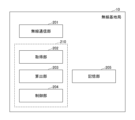
- FIG. 2 is a diagram illustrating an example of a functional configuration of a radio base station according to the present embodiment.
- 5 is a flowchart illustrating an example of a control process of transmission power according to the embodiment.
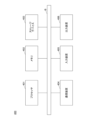
- FIG. 2 is a diagram illustrating an example of a hardware configuration of a computer according to the present embodiment.
- This method is not linked to radio resource control.
- this method has problems such as the possibility of a decrease in communication quality for wireless terminals near cell edges that are far from the wireless base station, and the possibility of the wireless terminal transmission power becoming significantly high depending on the wireless terminal's conditions.
- the radio base station 10 sets the transmission power of the multiple radio terminals 20 so as to suppress the difference in the signal-to-noise ratio (SINR) of the received signals from the multiple radio terminals 20 connected to the radio base station 10 (for example, so as to make them the same value).
- the radio base station 10 also allocates radio resources so as to satisfy the required throughput of all the radio terminals 20. For example, when the radio base station 10 has surplus radio resources, it reduces the transmission power of all the radio terminals 20, and when it has insufficient radio resources, it sets the transmission power of all the radio terminals 20 high.
- the wireless communication system 1 can reduce the transmission power of the wireless terminals while suppressing the disparity in communication quality between the wireless terminals by linking the allocation of wireless resources to the wireless terminals 20 with the control of the transmission power.
- FIG. 2 is a diagram illustrating an example of a functional configuration of a radio base station according to the present embodiment.
- the wireless base station 10 for example, has a computer configuration, and by executing a predetermined program on the computer, realizes a wireless communication unit 201, an acquisition unit 202, a calculation unit 203, a control unit 204, a storage unit 205, etc. Note that at least a part of each of the above functional configurations may be realized by hardware.
- the wireless communication unit 201 executes wireless communication processing to perform predetermined wireless communication with a wireless terminal 20 located within the communication area 11 of the wireless base station 10 using a communication device provided in the wireless base station 10.
- the acquisition unit 202 executes an acquisition process to acquire information on a plurality of wireless terminals 20 (e.g., wireless terminals 20a, 20b, 20c, ... in FIG. 1) that perform wireless communication with the wireless base station 10.
- the information on the plurality of wireless terminals 20 includes, for example, the transmission power of each wireless terminal 20, the SINR (Signal-to-Noise Ratio) of the received signal received by the wireless communication unit 201 from each wireless terminal 20, and the required throughput of each wireless terminal 20.
- the transmission power of each wireless terminal 20 is, for example, the transmission power set by the control unit 204 for the multiple wireless terminals 20.
- the SINR of the received signal is a value that represents the ratio of the power of the desired signal to the power of non-desired signals (interference waves and thermal noise) in the received signal, and is calculated, for example, by the wireless communication unit 201. Note that the SINR is sometimes called the SIR.
- the requested throughput is the throughput (effective data transfer rate at which data is transmitted without errors per unit time) that the wireless terminal 20 requests of the wireless base station 10.
- the calculation unit 203 executes a calculation process to calculate an index indicating the margin of wireless resources based on the information of the multiple wireless terminals 20 acquired by the acquisition unit 202.
- the wireless resources include, for example, a frequency band, a transmission power, or a transmission method.
- the calculation unit 203 obtains the link rate of the wireless terminal 20 from the minimum SINR_m of the SINRs of the signals received from the multiple wireless terminals 20 by using a conversion table stored in advance in the storage unit 205 or the like.
- the calculation unit 203 may input SINR_m into a prediction model or the like that has been machine-learned in advance to predict the link rate of the wireless terminal 20 using the SINR of the wireless terminal 20 as input data, and calculate the link rate of the wireless terminal 20.
- the link rate is the communication speed (maximum throughput) at the current SINR.
- SINR_m is an example of a representative value of the SINRs of the received signals from the multiple wireless terminals 20.
- the representative value of the SINRs of the received signals from the multiple wireless terminals 20 may be, for example, a maximum value, an average value, a median value, or the like.
- the control unit 204 controls the transmission power of the multiple wireless terminals 20 so as to suppress the difference in SINR of the received signals from the multiple wireless terminals 20 and to bring the index calculated by the calculation unit 203 into a predetermined range.
- the control unit 204 uses the difference between the SINR_m of the received signals from the multiple wireless terminals 20 and the SINR of the received signals from each wireless terminal 20 to update the transmission power of each wireless terminal 20 so that the SINR of the received signals from the multiple wireless terminals 20 has the same value.
- the "same value” includes not only the case where all SINR values are completely the same, but also the case where the difference between all SINR values is equal to or less than a predetermined value.
- control unit 204 increases the transmission power of the multiple wireless terminals 20 if the index calculated by the calculation unit 203 exceeds the predetermined range, and decreases the transmission power of the multiple wireless terminals 20 if the index falls below the predetermined range.
- the acquisition unit 202, calculation unit 203, control unit 204, etc. are included in a communication control unit 210 that controls wireless communication by the wireless communication unit 201, for example.
- the storage unit 205 stores various information, data, and programs, including the above-mentioned correspondence table or the learned prediction model, for example, in a storage device provided in the wireless base station 10.
- the wireless communication system 1 may have a base station control device or a relay station that controls multiple wireless base stations 10, and the acquisition unit 202, the calculation unit 203, and some or all of the control unit 204 may be included in the base station control device or the relay station. In short, it is sufficient that the acquisition unit 202, the calculation unit 203, and the control unit 204 described in FIG. 2 are included in the wireless communication system 1.
- This process shows an example of a process executed by the wireless base station 10 (or the wireless communication system 1) including the wireless communication unit 201, the acquisition unit 202, the calculation unit 203, and the control unit 204, etc., as described in FIG.
- step S301 the wireless communication unit 201 receives uplink signals (wireless signals transmitted from multiple wireless terminals 20 to the wireless base station 10).
- the requested throughput is the throughput requested by each wireless terminal 20.
- the acquisition unit 202 acquires the requested throughput value acquired from the wireless terminal 20 from the storage unit 205, the wireless communication unit 201, etc.
- step S305 the calculation unit 203 calculates the total S of the necessary resource ratios R i calculated for each wireless terminal 20.
- step S307 the control unit 204 judges whether "S>1". If “S>1”, the control unit 204 shifts the process to step S307. On the other hand, if "S>1" is not true, the control unit 204 shifts the process to step S308. Note that this process is an example of a process for judging whether the total S of the required resource ratios R i exceeds a predetermined range. Also, “1" is an example of the upper limit of the predetermined range, and other values may be used.
- the control unit 204 increases the transmission power of all wireless terminals 20 by ⁇ dBm.
- ⁇ dbm is a predetermined step size. Through this process, the control unit 204 can increase the transmission power of all wireless terminals 20 when wireless resources are insufficient.
- step S306 the control unit 204 judges whether "S ⁇ 0.97". If “S ⁇ 0.97”, the control unit 204 shifts the process to step S309. On the other hand, if "S ⁇ 0.97” is not true, the control unit 204 shifts the process to step S311.
- this process is an example of a process for determining whether the total S of the required resource ratios R i is below a predetermined range. Also, "0.97" is an example of the lower limit of the predetermined range, and other values may be used.
- step S309 the control unit 204 reduces the transmission power of all wireless terminals 20 by ⁇ dBm. This process allows the control unit 204 to reduce the transmission power of all wireless terminals 20 when there are surplus wireless resources.
- the wireless communication system 1 sets the transmission power of each wireless terminal 20 so as to suppress disparities in communication quality between the wireless terminals 20. Furthermore, after setting the transmission power of each wireless terminal 20, if there are excess wireless resources, the wireless communication system 1 lowers the transmission power of all wireless terminals 20, and if there are insufficient wireless resources, the wireless communication system 1 raises the transmission power of all wireless terminals 20.
- the wireless communication system 1 can reduce the transmission power of the wireless terminals 20 while minimizing the disparity in communication quality between the wireless terminals 20.
- step S307 the process of increasing the transmission power of all wireless terminals 20 may set an upper limit on the transmission power.
- step S309 the process of decreasing the transmission power of all wireless terminals 20 may set a lower limit on the transmission power.
- the computer 400 has a processor 401, a memory 402, a storage device 403, a communication device 404, an input device 405, an output device 406, and a bus B, etc.
- the processor 401 is, for example, an arithmetic device such as a CPU (Central Processing Unit) that realizes various functions by executing a specific program.
- the memory 402 is a storage medium readable by the computer 400, and includes, for example, a RAM (Random Access Memory) and a ROM (Read Only Memory).
- the storage device 403 is a computer-readable storage medium, and may include, for example, a HDD (Hard Disk Drive), an SSD (Solid State Drive), various optical disks, and magneto-optical disks.
- the communication device 404 includes one or more pieces of hardware (transmitting/receiving devices) for communicating with other devices via a wireless or wired network.
- the communication device 404 may include, for example, an antenna, a radio circuit, and a processor for communication that executes baseband processing and communication control processing.
- the bus B is commonly connected to each of the above components and transmits, for example, address signals, data signals, and various control signals.
- the processor 401 is not limited to a CPU, and may be, for example, a DSP (Digital Signal Processor), a PLD (Programmable Logic Device), or an FPGA (Field Programmable Gate Array).
- the wireless base station 10 and the wireless terminal 20 in this embodiment are not limited to being realized by dedicated devices, but may be realized by a general-purpose computer.
- a program for realizing this function may be recorded on a computer-readable recording medium, and the program recorded on the recording medium may be read into a computer system and executed to realize the function.
- the "computer system” here includes hardware such as an OS and peripheral devices.
- “computer-readable recording media” includes various storage devices such as portable media such as flexible disks, optical magnetic disks, ROMs, and CD-ROMs, as well as hard disks built into computer systems. Furthermore, “computer-readable recording media” may also include devices that dynamically hold a program for a short period of time, such as a communication line when transmitting a program via a network such as the Internet or a communication line such as a telephone line, and devices that hold a program for a certain period of time, such as volatile memory inside a computer system that serves as a server or client in such cases.
- the above program may be for realizing some of the functions described above, or may be capable of realizing the functions described above in combination with a program already recorded in the computer system, or may be realized using hardware such as a PLD (Programmable Logic Device) or FPGA (Field Programmable Gate Array).
- PLD Programmable Logic Device
- FPGA Field Programmable Gate Array
- the wireless communication system 1 sets the transmission power of the multiple wireless terminals 20 so as to suppress the difference in SINR of the received signals from the multiple wireless terminals 20 that communicate wirelessly with the wireless base station 10 (so that the SINR is uniform).
- the wireless communication system 1 eliminates (or reduces) the difference in SINR between the wireless terminals 20, and can prevent degradation of communication quality due to retransmission, or increase in delay time, from becoming significant for a specific wireless terminal 20.
- the wireless communication system 1 can avoid excess radio resources and efficiently control the transmission power of the wireless terminal 20 in response to communication requests.
- This specification discloses at least the following wireless base station, wireless communication system, and wireless communication method.
- (Section 1) an acquisition unit that acquires information on a plurality of wireless terminals that perform wireless communication with a wireless base station, the information including transmission powers of the plurality of wireless terminals, SINRs of signals received from the plurality of wireless terminals, and required throughputs of the plurality of wireless terminals; a calculation unit that calculates an index indicating a margin of radio resources based on information of the plurality of radio terminals; a control unit that controls transmission power of the plurality of wireless terminals so as to suppress a difference between SINRs of received signals from the plurality of wireless terminals and to make the index fall within a predetermined range;
- a wireless base station having the above configuration.
- the calculation unit calculates a ratio of radio resources required for each of the wireless terminals based on SINRs of received signals from the wireless terminals and required throughputs of the wireless terminals; a sum of the ratios of the radio resources required for each of the radio terminals to calculate the index;
- the radio base station according to claim 1. the calculation unit calculates a link rate of the wireless terminal from a representative value of SINRs of received signals from the plurality of wireless terminals; 3.
- the radio base station according to claim 2 wherein a ratio of a required throughput of each radio terminal to the link rate is set as a ratio of radio resources required for each radio terminal.
- the control unit is using a difference between a representative value of the SINRs of the received signals from the plurality of wireless terminals and the SINRs of the received signals from each of the wireless terminals, so that the SINRs of the received signals from the plurality of wireless terminals are the same value, and then setting the transmission power of each of the wireless terminals; If the indicator exceeds the predetermined range, increasing the transmission power of the plurality of wireless terminals by a predetermined value; If the indicator falls below the predetermined range, reducing the transmission power of the plurality of wireless terminals by a predetermined value. 4.
- the wireless base station according to claim 1.
- a wireless communication system including a wireless base station, an acquisition unit that acquires information on a plurality of wireless terminals that wirelessly communicate with the wireless base station, the information including transmission powers of the plurality of wireless terminals, SINRs of received signals from the plurality of wireless terminals, and required throughputs of the plurality of wireless terminals; a calculation unit that calculates an index indicating a margin of radio resources based on information of the plurality of radio terminals; a control unit that controls transmission power of the plurality of wireless terminals so as to suppress a difference between SINRs of received signals from the plurality of wireless terminals and to make the index fall within a predetermined range;
- a wireless communication system comprising: (Section 6) In a wireless communication system including a wireless base station, The computer A process of acquiring information on a plurality of wireless terminals that perform wireless communication with the wireless base station, the information including transmission powers of the plurality of wireless terminals, SINRs of received signals from the plurality of wireless terminals, and required throughputs of
Landscapes
- Engineering & Computer Science (AREA)
- Computer Networks & Wireless Communication (AREA)
- Signal Processing (AREA)
- Mobile Radio Communication Systems (AREA)
Abstract
Afin de réduire la puissance de transmission d'un terminal sans fil tout en supprimant des différences de qualité de communication entre des terminaux sans fil, la présente station de base sans fil comprend : une unité d'acquisition qui acquiert des informations concernant une pluralité de terminaux sans fil comprenant la puissance de transmission de la pluralité de terminaux sans fil qui mettent en œuvre une communication sans fil avec la station de base sans fil, le SINR de signaux de réception provenant de la pluralité de terminaux sans fil, et le débit requis de la pluralité de terminaux sans fil ; une unité de calcul qui calcule, sur la base des informations de la pluralité de terminaux sans fil, un indice indiquant la marge d'une ressource sans fil ; et une unité de commande qui commande la puissance de transmission de la pluralité de terminaux sans fil de sorte que la variation du SINR entre les signaux de réception provenant de la pluralité de terminaux sans fil soit supprimée, et l'indice se situe dans une plage prescrite.
Priority Applications (2)
| Application Number | Priority Date | Filing Date | Title |
|---|---|---|---|
| PCT/JP2023/021428 WO2024252640A1 (fr) | 2023-06-08 | 2023-06-08 | Station de base sans fil, système de communication sans fil, et procédé de communication sans fil |
| JP2025525885A JPWO2024252640A1 (fr) | 2023-06-08 | 2023-06-08 |
Applications Claiming Priority (1)
| Application Number | Priority Date | Filing Date | Title |
|---|---|---|---|
| PCT/JP2023/021428 WO2024252640A1 (fr) | 2023-06-08 | 2023-06-08 | Station de base sans fil, système de communication sans fil, et procédé de communication sans fil |
Publications (1)
| Publication Number | Publication Date |
|---|---|
| WO2024252640A1 true WO2024252640A1 (fr) | 2024-12-12 |
Family
ID=93795700
Family Applications (1)
| Application Number | Title | Priority Date | Filing Date |
|---|---|---|---|
| PCT/JP2023/021428 Ceased WO2024252640A1 (fr) | 2023-06-08 | 2023-06-08 | Station de base sans fil, système de communication sans fil, et procédé de communication sans fil |
Country Status (2)
| Country | Link |
|---|---|
| JP (1) | JPWO2024252640A1 (fr) |
| WO (1) | WO2024252640A1 (fr) |
Citations (2)
| Publication number | Priority date | Publication date | Assignee | Title |
|---|---|---|---|---|
| JPH10108249A (ja) * | 1996-09-26 | 1998-04-24 | Nippon Telegr & Teleph Corp <Ntt> | 送信電力制御方式及び送信電力制御方法 |
| WO2012005154A1 (fr) * | 2010-07-07 | 2012-01-12 | 株式会社 エヌ・ティ・ティ・ドコモ | Appareil et procédé de station de base |
-
2023
- 2023-06-08 WO PCT/JP2023/021428 patent/WO2024252640A1/fr not_active Ceased
- 2023-06-08 JP JP2025525885A patent/JPWO2024252640A1/ja active Pending
Patent Citations (2)
| Publication number | Priority date | Publication date | Assignee | Title |
|---|---|---|---|---|
| JPH10108249A (ja) * | 1996-09-26 | 1998-04-24 | Nippon Telegr & Teleph Corp <Ntt> | 送信電力制御方式及び送信電力制御方法 |
| WO2012005154A1 (fr) * | 2010-07-07 | 2012-01-12 | 株式会社 エヌ・ティ・ティ・ドコモ | Appareil et procédé de station de base |
Also Published As
| Publication number | Publication date |
|---|---|
| JPWO2024252640A1 (fr) | 2024-12-12 |
Similar Documents
| Publication | Publication Date | Title |
|---|---|---|
| EP3920434B1 (fr) | Procédé et dispositif de communication | |
| EP2508020B1 (fr) | Systeme de communications a cellules hierarchiques utilisant un programme de retroaction asymetrique fonde sur une classe de reseau d'acces | |
| US11290239B2 (en) | Communication control apparatus and communication control method | |
| CN111226351A (zh) | 一种广播波束域调整方法及装置 | |
| EP3691326A1 (fr) | Procédé et dispositif d'optimisation de réseau | |
| US12010633B2 (en) | SPR as a criterion to determine the frequencies that would be allocated for inter-band carrier aggregation, intra-band carrier aggregation, or dynamic spectrum sharing | |
| WO2015128020A1 (fr) | Détermination de la zone de suivi réelle lorsque des techniques de zone de suivi (ta) dynamique sont appliquées | |
| CN103597881A (zh) | 用于将用户终端附接到网络的基站的方法 | |
| US20240323756A1 (en) | User equipment, electronic device, wireless communication method and storage medium | |
| EP4169174B1 (fr) | Gestion de faisceau pour équipement d'utilisateur dans un réseau | |
| WO2023025398A1 (fr) | Apprentissage sélectif pour des valeurs rapportées d'équipement utilisateur (ue) | |
| KR101801487B1 (ko) | Pslte시스템에서 공공 안전 사용자 우선순위 기반 자원 할당 및 로드 밸런싱을 위한 사용자 선택 방법 및 시스템 | |
| WO2024252640A1 (fr) | Station de base sans fil, système de communication sans fil, et procédé de communication sans fil | |
| CN113938902B (zh) | 小区选择方法和装置 | |
| CN115884418A (zh) | 一种通信资源分配方法及装置 | |
| US20200015141A1 (en) | Beam avoidance method and base station | |
| WO2024252639A1 (fr) | Station de base sans fil, système de communication sans fil et procédé de communication sans fil | |
| CN114375589B (zh) | 一种网络参数调整方法及网络管理设备 | |
| KR20180060079A (ko) | 무선 통신 시스템에서 스케줄링을 위한 방법 및 장치 | |
| US20240056989A1 (en) | Precoding and power allocation for access points in a cell-free communication system | |
| CN115396973B (zh) | 上行干扰抑制方法、装置及存储介质 | |
| US20240056861A1 (en) | Method performed by base station, base station and computer readable storage medium | |
| EP4472092A1 (fr) | Configuration mimo de liaison montante dynamique d'un dispositif terminal | |
| CN121842006A (zh) | 一种强化学习算法的选择方法及相关装置 | |
| CN121463022A (zh) | 数据通信方法和装置、计算机程序产品、电子设备 |
Legal Events
| Date | Code | Title | Description |
|---|---|---|---|
| 121 | Ep: the epo has been informed by wipo that ep was designated in this application |
Ref document number: 23940738 Country of ref document: EP Kind code of ref document: A1 |
|
| ENP | Entry into the national phase |
Ref document number: 2025525885 Country of ref document: JP Kind code of ref document: A |
|
| WWE | Wipo information: entry into national phase |
Ref document number: 2025525885 Country of ref document: JP |
|
| NENP | Non-entry into the national phase |
Ref country code: DE |