WO2024252717A1 - Dispositif et procédé de commande de véhicule - Google Patents
Dispositif et procédé de commande de véhicule Download PDFInfo
- Publication number
- WO2024252717A1 WO2024252717A1 PCT/JP2024/001239 JP2024001239W WO2024252717A1 WO 2024252717 A1 WO2024252717 A1 WO 2024252717A1 JP 2024001239 W JP2024001239 W JP 2024001239W WO 2024252717 A1 WO2024252717 A1 WO 2024252717A1
- Authority
- WO
- WIPO (PCT)
- Prior art keywords
- vehicle
- target
- angular velocity
- control device
- vehicle body
- Prior art date
- Legal status (The legal status is an assumption and is not a legal conclusion. Google has not performed a legal analysis and makes no representation as to the accuracy of the status listed.)
- Ceased
Links
Images




Classifications
-
- B—PERFORMING OPERATIONS; TRANSPORTING
- B62—LAND VEHICLES FOR TRAVELLING OTHERWISE THAN ON RAILS
- B62D—MOTOR VEHICLES; TRAILERS
- B62D6/00—Arrangements for automatically controlling steering depending on driving conditions sensed and responded to, e.g. control circuits
- B62D6/002—Arrangements for automatically controlling steering depending on driving conditions sensed and responded to, e.g. control circuits computing target steering angles for front or rear wheels
- B62D6/003—Arrangements for automatically controlling steering depending on driving conditions sensed and responded to, e.g. control circuits computing target steering angles for front or rear wheels in order to control vehicle yaw movement, i.e. around a vertical axis
-
- B—PERFORMING OPERATIONS; TRANSPORTING
- B60—VEHICLES IN GENERAL
- B60W—CONJOINT CONTROL OF VEHICLE SUB-UNITS OF DIFFERENT TYPE OR DIFFERENT FUNCTION; CONTROL SYSTEMS SPECIALLY ADAPTED FOR HYBRID VEHICLES; ROAD VEHICLE DRIVE CONTROL SYSTEMS FOR PURPOSES NOT RELATED TO THE CONTROL OF A PARTICULAR SUB-UNIT
- B60W10/00—Conjoint control of vehicle sub-units of different type or different function
- B60W10/04—Conjoint control of vehicle sub-units of different type or different function including control of propulsion units
-
- B—PERFORMING OPERATIONS; TRANSPORTING
- B60—VEHICLES IN GENERAL
- B60W—CONJOINT CONTROL OF VEHICLE SUB-UNITS OF DIFFERENT TYPE OR DIFFERENT FUNCTION; CONTROL SYSTEMS SPECIALLY ADAPTED FOR HYBRID VEHICLES; ROAD VEHICLE DRIVE CONTROL SYSTEMS FOR PURPOSES NOT RELATED TO THE CONTROL OF A PARTICULAR SUB-UNIT
- B60W10/00—Conjoint control of vehicle sub-units of different type or different function
- B60W10/18—Conjoint control of vehicle sub-units of different type or different function including control of braking systems
-
- B—PERFORMING OPERATIONS; TRANSPORTING
- B60—VEHICLES IN GENERAL
- B60W—CONJOINT CONTROL OF VEHICLE SUB-UNITS OF DIFFERENT TYPE OR DIFFERENT FUNCTION; CONTROL SYSTEMS SPECIALLY ADAPTED FOR HYBRID VEHICLES; ROAD VEHICLE DRIVE CONTROL SYSTEMS FOR PURPOSES NOT RELATED TO THE CONTROL OF A PARTICULAR SUB-UNIT
- B60W10/00—Conjoint control of vehicle sub-units of different type or different function
- B60W10/20—Conjoint control of vehicle sub-units of different type or different function including control of steering systems
-
- B—PERFORMING OPERATIONS; TRANSPORTING
- B60—VEHICLES IN GENERAL
- B60W—CONJOINT CONTROL OF VEHICLE SUB-UNITS OF DIFFERENT TYPE OR DIFFERENT FUNCTION; CONTROL SYSTEMS SPECIALLY ADAPTED FOR HYBRID VEHICLES; ROAD VEHICLE DRIVE CONTROL SYSTEMS FOR PURPOSES NOT RELATED TO THE CONTROL OF A PARTICULAR SUB-UNIT
- B60W30/00—Purposes of road vehicle drive control systems not related to the control of a particular sub-unit, e.g. of systems using conjoint control of vehicle sub-units
- B60W30/02—Control of vehicle driving stability
- B60W30/045—Improving turning performance
-
- B—PERFORMING OPERATIONS; TRANSPORTING
- B62—LAND VEHICLES FOR TRAVELLING OTHERWISE THAN ON RAILS
- B62D—MOTOR VEHICLES; TRAILERS
- B62D6/00—Arrangements for automatically controlling steering depending on driving conditions sensed and responded to, e.g. control circuits
-
- B—PERFORMING OPERATIONS; TRANSPORTING
- B62—LAND VEHICLES FOR TRAVELLING OTHERWISE THAN ON RAILS
- B62D—MOTOR VEHICLES; TRAILERS
- B62D6/00—Arrangements for automatically controlling steering depending on driving conditions sensed and responded to, e.g. control circuits
- B62D6/002—Arrangements for automatically controlling steering depending on driving conditions sensed and responded to, e.g. control circuits computing target steering angles for front or rear wheels
-
- B—PERFORMING OPERATIONS; TRANSPORTING
- B62—LAND VEHICLES FOR TRAVELLING OTHERWISE THAN ON RAILS
- B62D—MOTOR VEHICLES; TRAILERS
- B62D6/00—Arrangements for automatically controlling steering depending on driving conditions sensed and responded to, e.g. control circuits
- B62D6/04—Arrangements for automatically controlling steering depending on driving conditions sensed and responded to, e.g. control circuits responsive only to forces disturbing the intended course of the vehicle, e.g. forces acting transversely to the direction of vehicle travel
-
- B—PERFORMING OPERATIONS; TRANSPORTING
- B62—LAND VEHICLES FOR TRAVELLING OTHERWISE THAN ON RAILS
- B62D—MOTOR VEHICLES; TRAILERS
- B62D7/00—Steering linkage; Stub axles or their mountings
- B62D7/06—Steering linkage; Stub axles or their mountings for individually-pivoted wheels, e.g. on king-pins
- B62D7/14—Steering linkage; Stub axles or their mountings for individually-pivoted wheels, e.g. on king-pins the pivotal axes being situated in more than one plane transverse to the longitudinal centre line of the vehicle, e.g. all-wheel steering
- B62D7/15—Steering linkage; Stub axles or their mountings for individually-pivoted wheels, e.g. on king-pins the pivotal axes being situated in more than one plane transverse to the longitudinal centre line of the vehicle, e.g. all-wheel steering characterised by means varying the ratio between the steering angles of the steered wheels
- B62D7/159—Steering linkage; Stub axles or their mountings for individually-pivoted wheels, e.g. on king-pins the pivotal axes being situated in more than one plane transverse to the longitudinal centre line of the vehicle, e.g. all-wheel steering characterised by means varying the ratio between the steering angles of the steered wheels characterised by computing methods or stabilisation processes or systems, e.g. responding to yaw rate, lateral wind, load, road condition
Definitions
- the present invention relates to a vehicle control device and a vehicle control method.
- the vehicle steering device of Patent Document 1 has a main steering mechanism that steers the front wheels with a steering wheel, and an auxiliary steering mechanism that steers the front wheel angle or the rear wheels with an actuator such as an electric motor depending on the vehicle's running state. It also has a vehicle body sideslip angular velocity calculation unit that detects or estimates the vehicle body sideslip angular velocity at a point forward of the rear axle, and a control means that controls the actuator to reduce the absolute value of the vehicle body sideslip angular velocity.
- the steering mechanism is controlled to reduce the absolute value of the detected or estimated vehicle body sideslip angular velocity
- the vehicle's future driving state is not taken into consideration. For example, in a transitional state where the vehicle is driving through a transition section where the road curvature gradually changes, fluctuations in vehicle behavior may occur, resulting in a decrease in the vehicle's sense of contact with the ground and stability.
- the present invention was made in consideration of the current situation, and its purpose is to provide a vehicle control device and a vehicle control method that can improve the vehicle's sense of contact with the ground and stability during transient states of vehicle driving.
- At least one of a target steering angular velocity or a target acceleration/deceleration of the vehicle is controlled so that a target vehicle body sideslip angular velocity in a transient state when the vehicle's traveling transitions from a transient state to a steady state becomes a predetermined time change rate.
- a target steering angular velocity and a target acceleration/deceleration of the vehicle are controlled to be constant during a period from when the vehicle starts turning until the vehicle reaches a steady turn.
- the present invention can improve the vehicle's sense of contact with the ground and stability during transient vehicle driving conditions.
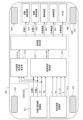
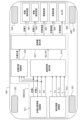
- FIG. 2 is a block diagram showing a vehicle control system.
- FIG. 2 is a diagram illustrating a transient state of vehicle travel.
- FIG. 2 is a two-wheel model diagram for explaining the correlation between the steering angular velocity, acceleration/deceleration, and the vehicle body skid angular velocity ⁇ .
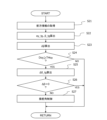
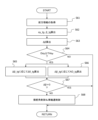
- 4 is a flowchart showing a first embodiment of a control process for a vehicle body side-slip angular velocity ⁇ .
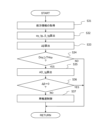
- 10 is a flowchart showing a second embodiment of a control process for a vehicle body side-slip angular velocity ⁇ .
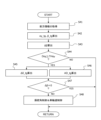
- 10 is a flowchart showing a third embodiment of a control process for a vehicle body side-slip angular velocity ⁇ .
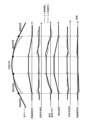
- FIG. 13 is a time chart showing changes in steering angle, longitudinal acceleration, etc., when a third embodiment of a control process for a vehicle body sideslip angular velocity ⁇ is implemented;
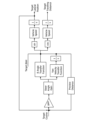
- FIG. 2 is a block diagram showing a vehicle control device that generates a target trajectory as control of a vehicle body sideslip angular velocity ⁇ .
- 4 is a block diagram showing a configuration of a target position conversion unit;
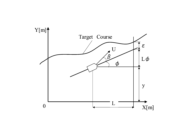
- FIG. 13 is a diagram showing a lateral deviation amount ⁇ at a forward gaze position in a world coordinate system.
- 13 is a flowchart showing a fourth embodiment of a control process for a vehicle body slip angular velocity ⁇ .
- 13 is a time chart showing changes in the steering angles of the front and rear wheels, the longitudinal acceleration, etc., when a fifth embodiment of a control process for a vehicle body sideslip angular velocity ⁇ is carried out.
- 13 is a flowchart showing a fifth embodiment of a control process for a vehicle body side-slip angular velocity ⁇ .
- FIG. 1 is a block diagram showing an embodiment of a vehicle control system 200 mounted on a vehicle 100. As shown in FIG. 1
- the vehicle 100 is a four-wheeled automobile equipped with a pair of left and right front wheels 101, 102 and a pair of left and right rear wheels 103, 104.
- the vehicle control system 200 is an automatic driving system or a driving assistance system having a function of controlling the movement of the vehicle 100 , and includes a vehicle control device 500 and an actuator unit 600 controlled by the vehicle control device 500 .
- the vehicle control device 500 is an electronic control device that includes a microcomputer 510 as a control unit that performs calculations based on input information and outputs the results of the calculations.
- the microcomputer 510 includes a microprocessor unit (MPU), a read only memory (ROM), a random access memory (RAM), and the like, all of which are not shown.
- the microcomputer 510 can be referred to as an MCU (Micro Controller Unit), a processor, a processing device, an arithmetic device, or the like.
- the actuator section 600 is a device that actively changes the behavior of the vehicle 100 .
- the actuator section 600 includes a front wheel steering device 601 that steers the front wheels 101, 102 using a steer-by-wire system, a rear wheel steering device 602 that steers the rear wheels 103, 104, a drive device 603 such as an internal combustion engine or a motor that generates the driving force for the vehicle 100, a braking device 604 that applies braking force to each of the wheels 101-104 of the vehicle 100, and an electronically controlled LSD (Limited-Slip-Differential gear) 605.
- LSD Lited-Slip-Differential gear
- the steer-by-wire system of the front wheel steering device 601 is a steering system in which the steering wheel operated by the driver and the front wheels 101, 102, which are steered wheels, are mechanically separated, and the steering angle of the front wheels 101, 102 is controlled by an electrical signal.
- the front wheel steering device 601, the rear wheel steering device 602, the drive device 603, the brake device 604, and the electronically controlled LSD 605 are all equipped with actuators that can electronically control control variables such as steering angle, drive force, braking force, and differential limiting force by electric signals.
- the main steering mechanism that operates the front wheels 101, 102 is a steering wheel, but this is not limited to this and may be an operation device whose size, shape, etc. are set arbitrarily.
- the vehicle 100 includes a motor as the drive device 603, the motor can be used as a braking device by generating a regenerative braking force.
- the microcomputer 510 of the vehicle control device 500 includes the functional units of a target position information recognition unit 511, a vehicle information recognition unit 512, a ⁇ angular velocity requirement value calculation unit 513, a transition region detection unit 514, and a control amount calculation unit 515 as application programs.
- the target position information recognition unit 511 outputs information regarding the target position ahead of the vehicle 100 (in other words, the forward gaze position), more specifically, information such as the target vehicle speed, which is the target speed of the vehicle 100 at the target position, the target curvature at the target position, the arrival time to the target position (in other words, the forward gaze position time PT), and the distance to the target position (in other words, the forward gaze position distance PD).
- the forward gaze position is set at a position a predetermined distance ahead of the vehicle 100 along the traveling direction of the vehicle 100, and the predetermined distance is a constant value or a distance that increases as the vehicle speed V increases.
- the target position information recognition unit 511 acquires signals from, for example, a GPS (Global Positioning System) receiver that measures the latitude and longitude of the vehicle 100, a database of map information, a wireless communication device that performs road-to-vehicle communication and/or vehicle-to-vehicle communication, a camera that acquires image information about the surroundings of the vehicle 100, a radar or LiDAR (Light Detection and Ranging, Laser Imaging Detection and Ranging) that detects objects around the vehicle 100, and the like, and recognizes information about the target position based on the acquired signals.
- a GPS Global Positioning System
- LiDAR Light Detection and Ranging, Laser Imaging Detection and Ranging
- the vehicle information recognition unit 512 acquires signals from sensors that detect the vehicle state, such as a yaw rate sensor that detects the yaw rate of the vehicle 100, a lateral acceleration sensor that detects the lateral acceleration of the vehicle 100, a steering angle sensor that detects the steering angles of the front and rear wheels (in other words, tire angles), and a wheel speed sensor that detects the rotational speed of each of the wheels 101-104 of the vehicle 100. Based on the outputs of these sensors, the vehicle information recognition unit 512 recognizes information relating to the motion state of the vehicle 100, such as the yaw rate, lateral acceleration, steering angles of the front and rear wheels, and vehicle speed (in other words, vehicle body speed), and outputs a signal of the recognized vehicle information.
- sensors that detect the vehicle state such as a yaw rate sensor that detects the yaw rate of the vehicle 100, a lateral acceleration sensor that detects the lateral acceleration of the vehicle 100, a steering angle sensor that detects the steering angles of the front and rear wheels
- the ⁇ angular velocity required value calculation unit 513, the transition region detection unit 514, and the control amount calculation unit 515 are functional units for executing control of the vehicle body skid angular velocity ⁇ .
- the control of the vehicle body slip angular velocity ⁇ involves controlling at least one of the target steering angular velocity or the target acceleration/deceleration of the vehicle 100 so that the target vehicle body slip angular velocity ⁇ _tg in the transient state when the vehicle 100 is transitioning from a transient state to a steady state has a predetermined time change rate.
- the control of the vehicle body sideslip angular velocity ⁇ involves planning in advance the steering angular velocity or acceleration/deceleration related to the vehicle body sideslip angular velocity ⁇ in a transient state so that the future vehicle body sideslip angular velocity ⁇ has a predetermined time change rate, and changing the steering angle or vehicle speed in accordance with the plan, thereby controlling the time change rate of the vehicle body sideslip angular velocity ⁇ in a transient state.
- the vehicle control device 500 controls the time rate of change of the vehicle body sideslip angular velocity ⁇ in a transient state of vehicle traveling, thereby suppressing fluctuations in vehicle behavior and improving the sense of contact and stability of the vehicle 100.
- the transient state in which control of the vehicle body slip angle velocity ⁇ is performed is a state in which the vehicle body slip angle ⁇ changes, and includes a turning transient state in which the vehicle 100 is traveling through a transitional section of the road, and a state in which the vehicle 100 changes course to change lanes, etc.
- the vehicle body sideslip angle ⁇ [rad] is the angle between the direction of travel of the vehicle 100 and the left-right central axis of the vehicle body
- the vehicle body sideslip angular velocity ⁇ [rad/s] is the time differential value of the vehicle body sideslip angle ⁇ , i.e., the first-order differential value of the vehicle body sideslip angle ⁇ .
- the vehicle body sideslip angular acceleration ⁇ [rad/s 2 ] is the time differential value of the vehicle body sideslip angular velocity ⁇ , that is, the second-order differential value of the vehicle body sideslip angle ⁇ , and corresponds to the time rate of change of the vehicle body sideslip angular velocity ⁇ .
- the ⁇ angular velocity requirement value calculation unit 513 acquires signals of the target vehicle speed, the target curvature at the target position, and the arrival time to the target position (in other words, the forward gaze position time PT) from the target position information recognition unit 511 . Then, the ⁇ angular velocity requirement value calculation unit 513 determines a future target vehicle body slip angular velocity ⁇ _tg based on the acquired signal related to the target position, and outputs a signal of the target vehicle body slip angular velocity ⁇ _tg.
- the target vehicle body slip angular velocity ⁇ _tg can be set to a constant value up to the target position (in other words, the vehicle body slip angular acceleration ⁇ is zero), and such a constant vehicle body slip angular velocity ⁇ can be realized by controlling the target steering angular velocity to a constant value or the target acceleration/deceleration to a constant value.
- the target vehicle body slip angular velocity ⁇ _tg is not limited to a value that is maintained constant up to the target position, and can be set arbitrarily within a range that can improve the sense of contact and stability of the vehicle 100 during the transient state of vehicle travel.
- the transient area detection unit 514 obtains signals of the target vehicle speed, target curvature at the target position, arrival time to the target position (in other words, forward gaze position time PT), and distance to the target position (in other words, forward gaze position distance PD) from the target position information recognition unit 511, and further obtains signals of the yaw rate, lateral acceleration, steering angles of the front and rear wheels, and vehicle speed from the vehicle information recognition unit 512.
- the transitional region detection unit 514 determines whether the traveling state of the vehicle 100 is in a transitional state in which control of the vehicle body skid angular velocity ⁇ should be executed, and outputs a signal instructing the control of the vehicle body skid angular velocity ⁇ to be turned on or off.
- the control amount calculation unit 515 obtains a signal of the target vehicle body slip angular velocity ⁇ _tg from the ⁇ angular velocity requirement value calculation unit 513, and obtains a signal instructing the control of the vehicle body slip angular velocity ⁇ to be turned on or off (in other words, a signal indicating the result of the determination as to whether or not the vehicle is in a transient state) from the transient region detection unit 514.
- the control quantity calculation unit 515 receives a signal from the transient region detection unit 514 instructing the implementation of control of the vehicle body slip angular velocity ⁇ , it outputs signals of the target steering angle and the target rotational speed (in other words, the target wheel speed) based on the target vehicle body slip angular velocity ⁇ _tg to the actuator unit 600.
- the vehicle control device 500 generates a vehicle motion plan for setting the vehicle body sideslip angular velocity ⁇ at a predetermined time rate of change based on route information ahead of the vehicle, and controls the steering angle and vehicle speed based on the generated vehicle motion plan.
- FIG. 2 is a diagram showing a curved road in which a transition section, which is a transition region in which control of the vehicle body sideslip angular velocity ⁇ is executed, is set.
- the road in FIG. 2 has a transition section (more specifically, a clothoid section) between a circular arc section (in other words, a steady turning section) and a straight section.
- the arc section is a section in which the curvature ⁇ , i.e., the turning radius R, is constant
- the transition section is a section in which the curvature ⁇ changes at a constant rate depending on the distance (in other words, the length of the curve).
- the vehicle control device 500 executes control of the vehicle body slip angular velocity ⁇ in the first transition section when transitioning from the first transition section to the arc section, or in the second transition section when transitioning from the second transition section to the straight section.
- the vehicle control device 500 can control at least one of the target steering angular velocity or the target acceleration/deceleration of the vehicle 100, for example, so that the vehicle body slip angular velocity ⁇ is maintained at a constant value, in other words, so that the target vehicle body slip angular acceleration ⁇ , which is the time derivative value of the vehicle body slip angular velocity ⁇ , is maintained at zero, during the transient state in which the vehicle 100 is traveling through the mitigation section.
- the vehicle control device 500 sets the vehicle body slip angular acceleration ⁇ in the transition zone to zero, in other words, when the vehicle body slip angular velocity ⁇ is a constant value, the vehicle control device 500 sets the target steering angular velocity or the target acceleration/deceleration in the transition zone to a constant value.
- the vehicle control device 500 plans in advance the steering angular velocity and acceleration/deceleration from the beginning of the transient state to the transition to the steady state so that the vehicle slip angle ⁇ changes at a constant angular velocity during the process from the initial vehicle slip angle ⁇ _in (current value) in the first driving state at the beginning of the transient state to the target vehicle slip angle ⁇ _tg (predicted value) in the second driving state where the transition from the transient state to the steady state takes place.
- the vehicle control device 500 determines the target vehicle body slip angular velocity ⁇ _tg at which the vehicle body slip angle ⁇ changes at a constant angular velocity and the vehicle body slip angular acceleration ⁇ becomes zero based on the initial vehicle body slip angle ⁇ _in and the target vehicle body slip angle ⁇ _tg, and sets the target steering angular velocity or target acceleration/deceleration so that the vehicle body slip angle ⁇ changes at this target vehicle body slip angular velocity ⁇ _tg. This suppresses fluctuations in the vehicle body skid angular velocity ⁇ during a transient state while the vehicle 100 is traveling, improving the vehicle's feeling of contact with the ground and stability.
- the first driving state at the beginning of the transient state is, for example, when the vehicle 100 starts turning, and in the case of the road in Figure 2, it is when the vehicle 100 enters a transition section from a straight section and the steering angle starts to be increased.
- the second driving state in which the vehicle transitions from a transient state to a steady state is, for example, when the vehicle 100 starts turning and then turns steadily, which, in the case of the road in Figure 2, is the time of maximum curvature when the vehicle 100 enters the arc section from the transition section.
- the first driving state at the beginning of the transient state is, for example, when the vehicle 100 starts increasing or decreasing the steering angle or accelerating or decelerating after completing a steady turn, and in the case of the road in Figure 2, it is when the vehicle 100 enters the transition section from the arc section and starts turning back the steering angle.
- the second driving state in which the vehicle 100 transitions from a transient state to a steady state is, for example, a state in which the vehicle 100 travels straight after completing a steady turn; in the case of the road in FIG. 2, this is when the vehicle 100 leaves the transition section and enters a straight section, and the vehicle body sideslip angle ⁇ returns to zero.
- the transient region detection unit 514 obtains information regarding the motion state of the vehicle 100, such as yaw rate, lateral acceleration, steering angles of the front and rear wheels, and wheel speed, from the vehicle information recognition unit 512, and further obtains information regarding the forward gaze position, such as the target vehicle speed, target curvature, time to the forward gaze position, and distance to the forward gaze position, from the target position information recognition unit 511.
- the transition region detection unit 514 calculates the current vehicle body skid angular velocity ⁇ based on the various acquired information, and further calculates the target lateral acceleration ⁇ y_tg at the forward gaze position.
- the transient region detection unit 514 determines that the vehicle 100 is in a transient state and outputs a signal to the control amount calculation unit 515 to command the implementation of control of the vehicle body skid angular velocity ⁇ .
- the lateral acceleration ⁇ y_tg, yaw rate ⁇ _tg, and vehicle body sideslip angle ⁇ _tg in a steady circle without centrifugal force can be calculated as shown in Equation 1.
- the information on the curvature at the forward gaze position is information on the maximum curvature if it is a transition section just before a circular arc section.
- the transient region detection unit 514 can detect a situation in which the curvature ⁇ will increase in the future and the vehicle slip angle ⁇ will increase, or a situation in which the curvature ⁇ will decrease in the future and the vehicle slip angle ⁇ will decrease. Furthermore, if the current vehicle body slip angle velocity ⁇ is not zero, the transient region detection unit 514 can detect that the vehicle 100 is in a transient state, and issues a command to control the vehicle body slip angle velocity ⁇ in order to deal with future changes in the vehicle body slip angle ⁇ .
- a ⁇ angular velocity requirement calculation unit 513 calculates, based on the initial vehicle body slip angle ⁇ _in, the target vehicle body slip angle ⁇ _tg, and the predicted arrival time to the position of the target vehicle body slip angle ⁇ _tg, as a target vehicle body slip angular velocity ⁇ _tg, and outputs a signal of the target vehicle body slip angular velocity ⁇ _tg to a control variable calculation unit 515.
- the target vehicle body sideslip angular velocity ⁇ _tg being a constant value corresponds to the target vehicle body sideslip angular acceleration ⁇ _tg being zero.
- the control amount calculation unit 515 outputs a control target for changing the vehicle body slip angle ⁇ at the target vehicle body slip angle velocity ⁇ _tg to the actuator unit 600.
- the control amount calculation unit 515 calculates a target steering angle in accordance with a target steering angular velocity for changing the vehicle body slip angle ⁇ at the target vehicle body slip angle velocity ⁇ _tg, and a target rotational angular velocity (in other words, a target wheel speed) in accordance with a target acceleration/deceleration for changing the vehicle body slip angle ⁇ at the target vehicle body slip angular velocity ⁇ _tg, and outputs a signal of the target steering angle and a signal of the target rotational angular velocity to the actuator unit 600.
- the target vehicle body skid angular velocity ⁇ _tg is a constant value
- the target steering angle and the target acceleration/deceleration are constant.
- ⁇ is the yaw rate
- ⁇ f is the front wheel slip angle
- ⁇ r is the rear wheel slip angle
- L is the wheelbase
- Lf is the distance from the center of gravity to the front axle
- Lr is the distance from the center of gravity to the rear axle
- m is the vehicle weight
- Yf is the front wheel lateral force
- Yr is the rear wheel lateral force.
- the lateral acceleration ⁇ y is calculated based on the vehicle body sideslip angular velocity ⁇ , the yaw rate ⁇ , and the vehicle speed V according to Equation 2.
- the front wheel slip angle ⁇ f and the rear wheel slip angle ⁇ r are obtained according to Equation 3.
- the yaw rate ⁇ is expressed using the front wheel sideslip angle ⁇ f and the rear wheel sideslip angle ⁇ r as in Equation 4
- the vehicle body sideslip angle ⁇ is expressed using the front wheel sideslip angle ⁇ f and the rear wheel sideslip angle ⁇ r as in Equation 5.
- Equation 4 and Equation 5 are differentiated, Equation 6 and Equation 7 are obtained.
- Equation 9 The equation of motion expressing the two-degree-of-freedom motion with the front wheel sideslip angle ⁇ f and the rear wheel sideslip angle ⁇ r is given by Equation 9, where the front wheel steering angle is ⁇ , the rear wheel steering angle is ⁇ r, and the cornering coefficients of the front and rear wheels are Cf and Cr.
- the vehicle body slip angular velocity ⁇ changes according to the front wheel slip angular velocity ⁇ f and the rear wheel slip angular velocity ⁇ r.
- the front wheel slip angular velocity ⁇ f and the rear wheel slip angular velocity ⁇ r vary depending on the front wheel steering angle ⁇ , the rear wheel steering angle ⁇ r, and the vehicle speed V.
- the vehicle control device 500 can control the vehicle body slip angular velocity ⁇ in a transient state, and further, by controlling the target steering angular velocity and the target acceleration/deceleration, can control the target vehicle body slip angular velocity ⁇ _tg to a predetermined time change rate when the vehicle body slip angle ⁇ changes toward the target vehicle body slip angle ⁇ _tg. Furthermore, the vehicle control device 500 controls the target vehicle body slip angular velocity ⁇ _tg during the transient state of the vehicle 100's driving to a predetermined time change rate, thereby preventing fluctuations in vehicle behavior during the transient state, and improving the sense of contact and stability of the vehicle 100.
- FIG. 4 is a flowchart showing a control process when the vehicle control device 500 controls the target steering angular velocities of the front and rear wheels so that the target vehicle body skid angular velocity ⁇ _tg becomes constant in a transient state.
- step S21 the vehicle control device 500 acquires information on the target vehicle speed at the forward gaze position, the road curvature, the distance to the forward gaze position, and the time from the route information of the vehicle 100.
- step S22 the vehicle control device 500 calculates the lateral acceleration ⁇ y at the forward gaze position of the vehicle 100, i.e., the position of maximum curvature, from the target vehicle speed, curvature, and time to the forward gaze position as the target lateral acceleration ⁇ y_tg.
- step S22 the vehicle control device 500 calculates a target vehicle body slip angle ⁇ _tg, which is the vehicle body slip angle ⁇ at the forward gaze position, based on the target lateral acceleration ⁇ y_tg and the target vehicle speed.
- the vehicle control device 500 When the vehicle control device 500 is able to acquire information on the road shape ahead of the vehicle 100, it identifies the position of maximum curvature of the curve ahead, and determines the target lateral acceleration ⁇ y_tg and the target vehicle body sideslip angle ⁇ _tg from the information on the maximum curvature.
- the maximum curvature position is the end point of the transition section, and the maximum curvature is the curvature of the circular arc section.
- the vehicle control device 500 sets the target vehicle body slip angle ⁇ _tg and the target lateral acceleration ⁇ y_tg to zero.
- step S23 the vehicle control device 500 calculates the current vehicle body skid angular velocity ⁇ based on the detected value of the vehicle speed V and the detected value of the lateral acceleration ⁇ y (in other words, the current lateral acceleration ⁇ y_ac). Then, in step S24, the vehicle control device 500 determines, as the first condition for determining whether the vehicle 100 is in a transient state, whether the absolute value of the difference D ⁇ y between the target lateral acceleration ⁇ y_tg and the current lateral acceleration ⁇ y_ac is greater than or equal to a predetermined value TH ⁇ y (TH ⁇ y > 0).
- the vehicle control device 500 proceeds to step S25 and subsequent steps.
- the vehicle control device 500 ends this routine without controlling the vehicle body skid angle velocity ⁇ .
- step S25 the vehicle control device 500 calculates a target steering angular velocity ⁇ _tg for changing the vehicle body slip angle ⁇ from the current vehicle body slip angle ⁇ (in other words, the initial vehicle body slip angle ⁇ _in) to the target vehicle body slip angle ⁇ _tg at the target vehicle body slip angle velocity ⁇ _tg.
- the vehicle control device 500 calculates the target steering angular velocity ⁇ _tg that changes the steering angle from the current steering angle to the target steering angle at the target vehicle body slip angle ⁇ _tg at a constant angular velocity.
- the vehicle control device 500 sets the target steering angular velocity ⁇ _tg in a transient state to a constant value, thereby making the target vehicle body skid angular velocity ⁇ _tg in a transient state a constant value.
- step S26 the vehicle control device 500 determines, as a second condition for determining whether the vehicle 100 is in a transient state, whether the current vehicle body skid angular velocity ⁇ is less than or equal to a predetermined value, for example, whether the current vehicle body skid angular velocity ⁇ is zero. That is, in step S26, the vehicle control device 500 determines whether the vehicle body sideslip angle ⁇ is changing or whether the vehicle body sideslip angle ⁇ is maintaining a constant value.
- the vehicle control device 500 proceeds to step S27 and executes control to change the steering angle in accordance with the target steering angular velocity ⁇ _tg calculated in step S25.
- step S27 the vehicle control device 500 determines a steering angular velocity gain based on the target steering angular velocity ⁇ _tg, and outputs a steering control current based on the steering angular velocity gain to each of the front wheel steering device 601 and the rear wheel steering device 602.
- the vehicle control device 500 can control only the front wheel steering device 601 out of the front wheel steering device 601 and the rear wheel steering device 602.
- the vehicle control device 500 determines the vehicle body slip angular velocity ⁇ in step S26, in other words, determines whether to start control of the vehicle body slip angular velocity ⁇ .
- the calculation process of the target steering angular velocity ⁇ _tg is repeated in preparation for the start of control, thereby preventing a delay in the calculation cycle of the control amount when it is determined that control should be started.
- the vehicle control device 500 ends this routine without controlling the vehicle body skid angular velocity ⁇ .
- the vehicle control device 500 waits by repeating the calculation process of the target steering angular velocity ⁇ _tg until the vehicle enters a transitional state.
- the vehicle control device 500 carries out the process shown in the flowchart of FIG. 4 to change the steering angle along a constant target steering angular velocity ⁇ _tg in a transient state, such as when driving in a transition section, thereby suppressing fluctuations in the vehicle body slip angular velocity ⁇ in the transient state.
- FIG. 5 is a flowchart showing a control process when the vehicle control device 500 controls the target acceleration/deceleration of the vehicle 100 so that the vehicle body sideslip angular velocity ⁇ becomes constant in a transient state.
- steps S31 to S34 in the flowchart of FIG. 5 the same processes as in steps S21 to S24 in the flowchart of FIG. 4 are carried out, and therefore detailed description thereof will be omitted here.
- step S34 the vehicle control device 500 determines in step S34 that the difference D ⁇ y is equal to or greater than the predetermined value TH ⁇ y.
- the process proceeds to step S35.
- step S35 the vehicle control device 500 calculates a target acceleration/deceleration AD_tg for changing the vehicle body slip angle ⁇ from the current vehicle body slip angle ⁇ (in other words, the initial vehicle body slip angle ⁇ _in) to the target vehicle body slip angle ⁇ _tg at the target vehicle body slip angle velocity ⁇ _tg.
- the vehicle control device 500 calculates a target acceleration/deceleration AD_tg that changes the vehicle speed from the current time to the target vehicle speed at the target vehicle body slip angle ⁇ _tg at a constant acceleration/deceleration.
- the vehicle control device 500 sets the target acceleration/deceleration AD_tg in a transient state to a constant value, thereby keeping the target vehicle body slip angular velocity ⁇ _tg in a transient state at a constant value.
- step S36 the vehicle control device 500 determines whether the current vehicle body skid angular velocity ⁇ is zero, similarly to step S26. Then, when the vehicle control device 500 determines in step S36 that the current vehicle body skid angular velocity ⁇ is not zero, the process proceeds to step S37.
- step S37 the vehicle control device 500 executes control to change the vehicle speed in accordance with the target acceleration/deceleration AD_tg calculated in step S35. Specifically, in step S37, the vehicle control device 500 determines the rotation speed gain based on the target acceleration/deceleration AD_tg. During acceleration, the vehicle control device 500 outputs a drive control current based on the rotation speed gain to the drive device 603, and during deceleration, outputs a brake control current based on the rotation speed gain to the brake device 604. As described above, the vehicle control device 500 carries out the process shown in the flowchart of FIG.
- FIG. 6 is a flowchart showing a control process when the vehicle control device 500 controls both the target steering angular velocity and the target acceleration/deceleration so that the vehicle body sideslip angular velocity ⁇ becomes constant in a transient state.
- steps S41 to S44 in the flowchart of FIG. 6 the same processes as those in steps S21 to S24 in the flowchart of FIG. 4 are carried out, and therefore detailed description thereof will be omitted here.
- step S44 When the vehicle control device 500 determines in step S44 that the difference D ⁇ y is equal to or greater than the predetermined value TH ⁇ y, it performs the process of step S45 and the process of step S46 in parallel.
- step S45 the vehicle control device 500 determines the target steering angular velocity ⁇ _tg in the same manner as in step S25, and in step S46, determines the target acceleration/deceleration AD_tg in the same manner as in step S35.
- step S47 the vehicle control device 500 determines whether the current vehicle body skid angular velocity ⁇ is zero, similarly to step S26. If the vehicle control device 500 determines in step S47 that the current vehicle body skid angular velocity ⁇ is not zero, the process proceeds to step S48.
- step S48 similar to step S27, the vehicle control device 500 determines a steering angular velocity gain based on the target steering angular velocity ⁇ _tg, and outputs steering control currents based on the steering angular velocity gains to the front wheel steering device 601 and the rear wheel steering device 602, respectively. Furthermore, in step S48, as in step S37, the vehicle control device 500 determines a rotational speed gain based on the target acceleration/deceleration AD_tg, and if accelerating, outputs a drive control current based on the rotational speed gain to the drive device 603, and if decelerating, outputs a braking control current based on the rotational speed gain to the braking device 604.
- the vehicle control device 500 carries out the process shown in the flowchart of FIG. 6 to change the steering angle based on a constant target steering angular velocity ⁇ _tg and to change the vehicle speed (wheel speed) in accordance with a constant target acceleration/deceleration AD_tg in a transient state, such as when driving in a transition section, thereby suppressing fluctuations in vehicle body skid angular velocity ⁇ in the transient state.
- the time chart in Figure 7 illustrates changes in front wheel steering angle, wheel rotational speed, vehicle body sideslip angle ⁇ , lateral acceleration, and longitudinal acceleration when vehicle 100 travels along a curved road that goes from a straight section ⁇ transition section ⁇ arc section ⁇ transition section ⁇ straight section.
- the solid line in Figure 7 indicates a state in which the vehicle control device 500 performs control of the vehicle body skid angular velocity ⁇ (more specifically, control that keeps the target steering angular velocity and the target acceleration/deceleration constant), and the dotted line in Figure 7 indicates a state in which control of the vehicle body skid angular velocity ⁇ is not performed.
- the vehicle body slip angle ⁇ will move unstably in accordance with changes in the steering angular velocity and acceleration/deceleration during the transitional state in which the vehicle 100 is traveling through the transition section, reducing the sense of contact with the ground and stability of the vehicle 100.
- the target steering angular velocity and target acceleration/deceleration are controlled to be constant in the transient state, so that the vehicle body slip angle ⁇ changes at a constant angular velocity ⁇ , improving the sense of contact and stability of the vehicle 100 in the transient state.
- the vehicle control device 500 can generate a target trajectory of the vehicle 100 based on a target position of the vehicle 100 such that the target vehicle body skid angular velocity ⁇ _tg has a predetermined time change rate.
- the vehicle control device 500 can generate a target trajectory incorporating a target steering angular velocity ⁇ _tg or a target acceleration/deceleration AD_tg such that the target vehicle body slip angular velocity ⁇ _tg has a predetermined time change rate, and control the actuator unit 600 to trace such a target trajectory.
- FIG. 8 is a block diagram showing a vehicle control device 500 that generates a target trajectory as control of the vehicle body sideslip angular velocity ⁇ .
- the vehicle control device 500 shown in FIG. 8 has a target position conversion unit 516 instead of the ⁇ angular velocity required value calculation unit 513 included in the vehicle control device 500 shown in FIG.
- the target position conversion unit 516 is a functional unit that determines a target vehicle position incorporating the vehicle body skid angular velocity ⁇ _tg.
- FIG. 9 is a block diagram showing in detail the signal transmission path in the target position conversion unit 516.
- FIG. 10 is a diagram showing, in the world coordinate system, the lateral deviation ⁇ of the vehicle 100 from the target trajectory when the vehicle 100 is in the forward gaze position.
- a target position conversion unit 516 converts the lateral deviation ⁇ into a steering angle ⁇ , and obtains the vehicle body lateral slip angle ⁇ and yaw rate ⁇ according to Equations 10 and 11.
- the target position conversion unit 516 obtains the forward vehicle speed and the lateral vehicle speed from the vehicle body sideslip angle ⁇ and yaw rate ⁇ according to Equations 12 and 13.
- the target position conversion unit 516 adds the target vehicle body slip angular velocity ⁇ _tg to determine the forward vehicle position x and lateral vehicle position y that represent the target vehicle position according to Formula 14 and Formula 15, and outputs information on this target vehicle position (more specifically, the forward vehicle position x and lateral vehicle position y) to the control amount calculation unit 515 as information on the target trajectory.
- the control amount calculation unit 515 controls the actuator unit 600 so that the vehicle passes through the acquired target vehicle position.
- FIG. 11 is a flowchart showing a control process when a target trajectory is planned taking into account the target vehicle body slip angular velocity ⁇ _tg.
- steps S51 to S54 in the flowchart of FIG. 11 the same processes as in steps S21 to S24 in the flowchart of FIG. 4 are carried out, and therefore detailed description thereof will be omitted here.
- step S54 the vehicle control device 500 calculates the target vehicle position incorporating the target vehicle body skid angular velocity ⁇ _tg. As described above, the target vehicle position is calculated by the target position conversion unit 516 shown in FIG.
- step S56 the vehicle control device 500 calculates control amounts that are target values for each device for making the vehicle 100 follow the target vehicle position incorporating the target vehicle body skid angular velocity ⁇ _tg. Then, in step S57, the vehicle control device 500 determines whether the vehicle body skid angular velocity ⁇ at the current time is zero, thereby determining whether the vehicle 100 is in a transient state.
- the vehicle control device 500 proceeds to step S58, and controls the braking/driving force based on the control amount calculated in step S56, and also controls the steering angles of the front and rear wheels, thereby causing the vehicle 100 to follow the target vehicle position incorporating the target vehicle body skid angular velocity ⁇ _tg.
- the vehicle control device 500 can realize, for example, transient driving in which the target vehicle body slip angular velocity ⁇ _tg is constant, and the sense of contact and stability of the vehicle 100 in a transient state of vehicle driving can be improved.
- the target vehicle body sideslip angular velocity ⁇ _tg is set to a constant value
- the target trajectory incorporating the target vehicle body sideslip angular velocity ⁇ _tg becomes a target trajectory in which the target steering angular velocity and the target acceleration/deceleration are constant in the transition region.
- control of the vehicle body slip angular velocity ⁇ performed by the vehicle control device 500 is not limited to control in which the target vehicle body slip angular velocity ⁇ _tg in a transient state is set to a constant value, that is, control in which the target vehicle body slip angular acceleration ⁇ _tg in a transient state is set to zero.
- FIG. 12 is a time chart showing an example of target vehicle body slip angular velocity ⁇ _tg that is not a constant value in a transient state.
- the target vehicle body slip angle velocity ⁇ _tg is set so that at the beginning of the transition region, specifically, when the vehicle 100 first enters the transition section from the straight section and when the vehicle 100 first enters the transition section from the arc section, the vehicle body slip angle ⁇ changes at a constant angular velocity in the direction toward the outward side of the turn. Thereafter, the target vehicle body slip angle velocity ⁇ _tg is set so that the direction of change of the vehicle body slip angle ⁇ reverses at a certain angle and returns to zero, and the target vehicle body slip angle ⁇ changes at a constant angular velocity toward the vehicle body slip angle ⁇ at maximum curvature on the side where the vehicle body faces inward during turning.
- the target vehicle body slip angle velocity ⁇ _tg is set in the opposite direction to the vehicle body slip angle ⁇ at the forward gaze position at the beginning of the transition region, and then reverses to the direction toward the vehicle body slip angle ⁇ at the forward gaze position.
- the sense of contact of vehicle 100 with the ground can be improved by first changing vehicle body slip angle ⁇ to the side where the vehicle turns outward and then changing it toward vehicle body slip angle ⁇ at the forward gaze position, rather than changing vehicle body slip angle ⁇ toward vehicle body slip angle ⁇ at the forward gaze position from the point where vehicle 100 enters the transition region.
- the target vehicle body slip angle velocity ⁇ _tg when the vehicle 100 initially enters the transition section from the straight section is set so that the magnitude of the vehicle body slip angle ⁇ on the side where the vehicle body turns outward is not larger than when control of the vehicle body slip angle velocity ⁇ is not implemented, and further, after the vehicle body slip angle ⁇ returns to zero, it is set so that it is changed at a constant angle toward the vehicle body slip angle ⁇ at maximum curvature.
- the vehicle control device 500 can variably set the target vehicle body slip angle velocity ⁇ _tg and the target period when changing the vehicle body slip angle ⁇ in the reverse direction at the beginning of the transition period depending on the rate of change of the curvature, the vehicle speed, etc. Furthermore, the target vehicle body slip angle velocity ⁇ _tg when the vehicle body slip angle ⁇ is changed from zero toward the vehicle body slip angle ⁇ at the maximum curvature is not limited to a constant value, and changes in the angular velocity within a predetermined range are permitted.
- the vehicle control device 500 can control the change in the vehicle body slip angle ⁇ on the side where the vehicle body will turn outward by implementing control to reduce the longitudinal acceleration and control to steer the rear wheels 103, 104 in opposite phases.
- the microcomputer 510 controls the difference in braking/driving force between the left and right wheels, thereby controlling the turning moment generated in the vehicle 100 and controlling the change in the vehicle body sideslip angle ⁇ on the side where the vehicle body faces outward during a turn.
- FIG. 13 is a flowchart showing a control process when the vehicle control device 500 controls the target steering angular velocities and the target acceleration/deceleration of the front and rear wheels so that the target vehicle body skid angular velocity ⁇ _tg in a transient state has a predetermined time rate of change such as that shown in FIG.
- steps S61 to S64 in the flowchart of FIG. 13 the same processes as in steps S21 to S24 in the flowchart of FIG. 4 are carried out, and therefore detailed description thereof will be omitted here.
- step S64 When the vehicle control device 500 determines in step S64 that the transient judgment condition is satisfied, that is, that the difference between the target lateral acceleration ⁇ y_tg and the current lateral acceleration ⁇ y_ac is greater than or equal to a predetermined value, it executes the processing in step S65 and the processing in step S66 in parallel.
- step S65 the vehicle control device 500 calculates a target steering angular velocity ⁇ _tg toward the forward gaze position in a time series manner so that the target vehicle body skid angular velocity ⁇ _tg has a predetermined time change rate, for example, as shown in FIG.
- a target steering angular velocity ⁇ _tg is calculated that makes the steering angles of the rear wheels 103, 104 in opposite phases at the beginning of the transition period.
- step S66 the vehicle control device 500 calculates the target acceleration/deceleration AD_tg toward the forward gaze position in a time series manner so that the target vehicle body skid angular velocity ⁇ _tg has a predetermined time change rate, for example, as shown in FIG.
- the vehicle control device 500 can generate a turning moment by controlling the difference in braking/driving force between the left and right wheels and by controlling the electronically controlled LSD in order to change the vehicle body sideslip angle ⁇ so that the vehicle body turns outward at the beginning of the transition.
- step S67 After calculating the target steering angular velocity ⁇ _tg and the target acceleration/deceleration AD_tg, the vehicle control device 500 proceeds to step S67, where it is determined whether the current vehicle body sideslip angular velocity ⁇ is zero.
- the vehicle control device 500 proceeds to step S68 and executes control of the vehicle body skid angular velocity ⁇ .
- step S68 the vehicle control device 500 determines a wheel rotational speed gain based on the target acceleration/deceleration AD_tg at that time, and outputs a braking/driving control current to each of the drive device 603 and the braking device 604, and also determines a steering angular velocity gain based on the target steering angular velocity ⁇ _tg at that time, and outputs a steering control current to each of the front wheel steering device 601 and the rear wheel steering device 602.
- the vehicle control device 500 ends this routine without performing control of the vehicle body skid angular velocity ⁇ .
- the vehicle control device 500 controls the target steering angular velocity and the target acceleration/deceleration so that the target vehicle body skid angular velocity ⁇ _tg has a predetermined time rate of change that is not a constant value, thereby making it possible to further improve the vehicle's sense of contact with the ground and stability compared to when the values are constant.
- the above condition for vehicle speed V is intended to perform control of vehicle body skid angular velocity ⁇ at medium to high vehicle speeds that can contribute to improving the feeling of contact with the ground and stability. Adding the condition for vehicle speed V makes it possible to prevent ineffective control from being unnecessarily performed at low vehicle speeds.
- the vehicle control device 500 can control the throttle opening degree in accordance with the target acceleration/deceleration. Furthermore, the vehicle 100 can implement control of the vehicle body skid angular velocity ⁇ either when the vehicle 100 enters the transition section from a straight section or when the vehicle 100 enters the transition section from a circular arc section.
Landscapes
- Engineering & Computer Science (AREA)
- Chemical & Material Sciences (AREA)
- Combustion & Propulsion (AREA)
- Transportation (AREA)
- Mechanical Engineering (AREA)
- Physics & Mathematics (AREA)
- Mathematical Physics (AREA)
- Automation & Control Theory (AREA)
- Theoretical Computer Science (AREA)
- Steering Control In Accordance With Driving Conditions (AREA)
- Control Of Driving Devices And Active Controlling Of Vehicle (AREA)
Abstract
Priority Applications (3)
| Application Number | Priority Date | Filing Date | Title |
|---|---|---|---|
| JP2025525942A JPWO2024252717A1 (fr) | 2023-06-08 | 2024-01-18 | |
| DE112024002462.9T DE112024002462T5 (de) | 2023-06-08 | 2024-01-18 | Fahrzeugsteuerungsvorrichtung und fahrzeugsteuerungsverfahren |
| CN202480018772.XA CN120826342A (zh) | 2023-06-08 | 2024-01-18 | 车辆控制装置以及车辆控制方法 |
Applications Claiming Priority (2)
| Application Number | Priority Date | Filing Date | Title |
|---|---|---|---|
| JP2023-094586 | 2023-06-08 | ||
| JP2023094586 | 2023-06-08 |
Publications (1)
| Publication Number | Publication Date |
|---|---|
| WO2024252717A1 true WO2024252717A1 (fr) | 2024-12-12 |
Family
ID=93795818
Family Applications (1)
| Application Number | Title | Priority Date | Filing Date |
|---|---|---|---|
| PCT/JP2024/001239 Ceased WO2024252717A1 (fr) | 2023-06-08 | 2024-01-18 | Dispositif et procédé de commande de véhicule |
Country Status (4)
| Country | Link |
|---|---|
| JP (1) | JPWO2024252717A1 (fr) |
| CN (1) | CN120826342A (fr) |
| DE (1) | DE112024002462T5 (fr) |
| WO (1) | WO2024252717A1 (fr) |
Citations (3)
| Publication number | Priority date | Publication date | Assignee | Title |
|---|---|---|---|---|
| JP2007001365A (ja) * | 2005-06-22 | 2007-01-11 | Toyota Motor Corp | 車両の操舵制御装置 |
| WO2017183486A1 (fr) * | 2016-04-18 | 2017-10-26 | 日立オートモティブシステムズ株式会社 | Dispositif de commande de déplacement |
| JP2020125057A (ja) * | 2019-02-06 | 2020-08-20 | 日産自動車株式会社 | 車両の輪荷重制御方法及び輪荷重制御装置 |
Family Cites Families (1)
| Publication number | Priority date | Publication date | Assignee | Title |
|---|---|---|---|---|
| JP4468509B2 (ja) | 1999-04-06 | 2010-05-26 | 本田技研工業株式会社 | 車両用操舵装置 |
-
2024
- 2024-01-18 WO PCT/JP2024/001239 patent/WO2024252717A1/fr not_active Ceased
- 2024-01-18 CN CN202480018772.XA patent/CN120826342A/zh active Pending
- 2024-01-18 JP JP2025525942A patent/JPWO2024252717A1/ja active Pending
- 2024-01-18 DE DE112024002462.9T patent/DE112024002462T5/de active Pending
Patent Citations (3)
| Publication number | Priority date | Publication date | Assignee | Title |
|---|---|---|---|---|
| JP2007001365A (ja) * | 2005-06-22 | 2007-01-11 | Toyota Motor Corp | 車両の操舵制御装置 |
| WO2017183486A1 (fr) * | 2016-04-18 | 2017-10-26 | 日立オートモティブシステムズ株式会社 | Dispositif de commande de déplacement |
| JP2020125057A (ja) * | 2019-02-06 | 2020-08-20 | 日産自動車株式会社 | 車両の輪荷重制御方法及び輪荷重制御装置 |
Also Published As
| Publication number | Publication date |
|---|---|
| JPWO2024252717A1 (fr) | 2024-12-12 |
| DE112024002462T5 (de) | 2026-03-26 |
| CN120826342A (zh) | 2025-10-21 |
Similar Documents
| Publication | Publication Date | Title |
|---|---|---|
| US7860653B2 (en) | Obstacle avoidance control apparatus | |
| JP6952014B2 (ja) | 車両制御装置、車両制御方法、及び車両制御システム | |
| JP6752875B2 (ja) | 走行制御装置 | |
| US8457868B2 (en) | Lane keeping assist device and lane keeping assist method | |
| US20150336587A1 (en) | Driving assist device | |
| EP2712780B1 (fr) | Procédé et appareil permettant de mettre en oeuvre une aide à la conduite | |
| JP4873047B2 (ja) | 走行制御装置 | |
| JP5569631B2 (ja) | 車線維持支援方法及び車線維持支援装置 | |
| US20170088174A1 (en) | Driving assistance control apparatus for vehicle | |
| JP2009061878A (ja) | 走行制御装置 | |
| JP7487994B2 (ja) | 車両の運転支援装置。 | |
| JP5227082B2 (ja) | 4輪操舵機構を搭載した車両の操舵制御装置 | |
| JP5853552B2 (ja) | 車両用走行制御装置 | |
| US9031709B2 (en) | Vehicle travel control apparatus and vehicle travel control method | |
| WO2016110729A1 (fr) | Dispositif de génération de vitesse de véhicule cible et dispositif de commande d'entraînement | |
| JP6986463B2 (ja) | 運転支援装置、運転支援方法及び運転支援システム | |
| JP7535648B2 (ja) | 車両制御装置、車両制御方法、目標軌道算出方法、及び車両 | |
| JP7521701B2 (ja) | 車両制御方法及び車両制御装置 | |
| JP2013086781A (ja) | 車両用走行支援装置 | |
| JP5045108B2 (ja) | 走行支援装置 | |
| JP6706166B2 (ja) | 車両の走行制御装置 | |
| JP4576922B2 (ja) | 車両用走行制御装置 | |
| WO2024252717A1 (fr) | Dispositif et procédé de commande de véhicule | |
| JP4970134B2 (ja) | 車両の運転支援装置 | |
| JP2023151394A (ja) | 車両制御方法及び車両制御装置 |
Legal Events
| Date | Code | Title | Description |
|---|---|---|---|
| 121 | Ep: the epo has been informed by wipo that ep was designated in this application |
Ref document number: 24818956 Country of ref document: EP Kind code of ref document: A1 |
|
| ENP | Entry into the national phase |
Ref document number: 2025525942 Country of ref document: JP Kind code of ref document: A |
|
| WWE | Wipo information: entry into national phase |
Ref document number: 2025525942 Country of ref document: JP |
|
| WWE | Wipo information: entry into national phase |
Ref document number: 202480018772.X Country of ref document: CN |
|
| WWP | Wipo information: published in national office |
Ref document number: 202480018772.X Country of ref document: CN |
|
| WWE | Wipo information: entry into national phase |
Ref document number: 112024002462 Country of ref document: DE |
|
| WWP | Wipo information: published in national office |
Ref document number: 112024002462 Country of ref document: DE |