WO2024252750A1 - Dispositif d'annulation de bruit, procédé d'annulation de bruit et programme - Google Patents
Dispositif d'annulation de bruit, procédé d'annulation de bruit et programme Download PDFInfo
- Publication number
- WO2024252750A1 WO2024252750A1 PCT/JP2024/009443 JP2024009443W WO2024252750A1 WO 2024252750 A1 WO2024252750 A1 WO 2024252750A1 JP 2024009443 W JP2024009443 W JP 2024009443W WO 2024252750 A1 WO2024252750 A1 WO 2024252750A1
- Authority
- WO
- WIPO (PCT)
- Prior art keywords
- noise
- noise cancellation
- sound
- event
- model
- Prior art date
- Legal status (The legal status is an assumption and is not a legal conclusion. Google has not performed a legal analysis and makes no representation as to the accuracy of the status listed.)
- Ceased
Links
Images







Classifications
-
- G—PHYSICS
- G10—MUSICAL INSTRUMENTS; ACOUSTICS
- G10L—SPEECH ANALYSIS TECHNIQUES OR SPEECH SYNTHESIS; SPEECH RECOGNITION; SPEECH OR VOICE PROCESSING TECHNIQUES; SPEECH OR AUDIO CODING OR DECODING
- G10L15/00—Speech recognition
- G10L15/20—Speech recognition techniques specially adapted for robustness in adverse environments, e.g. in noise, of stress induced speech
-
- G—PHYSICS
- G10—MUSICAL INSTRUMENTS; ACOUSTICS
- G10L—SPEECH ANALYSIS TECHNIQUES OR SPEECH SYNTHESIS; SPEECH RECOGNITION; SPEECH OR VOICE PROCESSING TECHNIQUES; SPEECH OR AUDIO CODING OR DECODING
- G10L21/00—Speech or voice signal processing techniques to produce another audible or non-audible signal, e.g. visual or tactile, in order to modify its quality or its intelligibility
- G10L21/02—Speech enhancement, e.g. noise reduction or echo cancellation
- G10L21/0208—Noise filtering
Definitions
- This disclosure relates to a noise cancellation device, a noise cancellation method, and a program.
- Patent Document 1 discloses a voice input/output method that improves the difficulty of a user speaking when there is a lot of surrounding noise, etc. Specifically, when audio sound, surrounding noise, and the user's voice are simultaneously present in an acoustic space, this voice input/output method extracts only the user's voice by erasing the echo component of the user's voice, the component corresponding to the audio signal, and the surrounding noise from the microphone output signal. In particular, the voice input/output method calculates a gain that takes into account the sound pressure level of surrounding noise, etc., and corrects the signal level of each frequency band of the voice using a voice correction filter before outputting it from the speaker. This allows the user to clearly hear the content of the voice they themselves have spoken.
- the difference signal between the microphone output signal and the user's voice signal is eliminated as ambient noise. Therefore, when eliminating ambient noise, sound signals other than the user's voice are suppressed. Therefore, sound signals other than the user's voice, such as sound signals that suggest a sense of realism in the acoustic space (for example, the clapping sound of a toast at an online social gathering, or ambient noise at an online exhibition), are also suppressed. In other words, the sense of realism in the acoustic space could be lost.
- a sense of realism in the acoustic space for example, the clapping sound of a toast at an online social gathering, or ambient noise at an online exhibition
- the present disclosure has been devised in consideration of the above-mentioned conventional circumstances, and aims to provide a noise cancellation device, a noise cancellation method, and a program that efficiently eliminate surrounding noise without compromising the sense of realism in the acoustic space around the user.
- the present disclosure provides a noise cancellation device including an acquisition unit that acquires data on the situation in an acoustic space in which a sound collection device is placed, a determination unit that determines the content or type of the data, a selection unit that selects a noise cancellation model for canceling noise sounds other than a desired noise sound that constitutes part of the noise sounds contained in a sound signal in the acoustic space collected by the sound collection device based on the content or type, and an output control unit that uses the selected noise cancellation model to output an output audio signal that has been subjected to noise cancellation processing that cancels noise sounds other than the desired noise sound contained in the sound signal.
- the present disclosure also provides a noise cancellation method executed by a noise cancellation device, the noise cancellation method including the steps of acquiring data on the situation in an acoustic space in which a sound collection device is placed, determining the content or type of the data, selecting a noise cancellation model for canceling noise sounds other than a desired noise sound that constitutes part of the noise sounds contained in a sound signal in the acoustic space collected by the sound collection device based on the content or type, and outputting an output audio signal that has been subjected to noise cancellation processing to cancel noise sounds other than the desired noise sound contained in the sound signal using the selected noise cancellation model.
- the present disclosure also provides a program for causing a noise cancellation device, which is a computer, to perform the following steps: acquiring data on the situation within an acoustic space in which a sound collection device is placed; determining the content or type of the data; selecting, based on the content or type, a noise cancellation model for canceling noise sounds other than a desired noise sound that constitutes part of the noise sounds contained in a sound signal in the acoustic space collected by the sound collection device; and outputting, using the selected noise cancellation model, an output audio signal that has been subjected to noise cancellation processing that cancels noise sounds other than the desired noise sound contained in the sound signal.
- ambient noise can be efficiently eliminated without compromising the sense of realism in the acoustic space around the user.
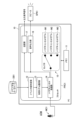
- FIG. 1 is a diagram showing an example of a system configuration of an online processing system according to a first embodiment
- FIG. 2 is a block diagram showing an example of the hardware configuration of the PC shown in FIG.
- FIG. 1 is a diagram showing an example of the contents of a model selection table according to the first embodiment
- FIG. 1 is a diagram showing an example of a time chart for model selection according to the first embodiment
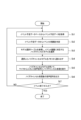
- 1 is a flowchart showing an example of an operation procedure of a PC according to a first embodiment in a chronological order
- FIG. 11 is a block diagram showing an example of a hardware configuration of a PC according to a second embodiment.
- FIG. 13 is a diagram showing an example of the contents of a model selection table according to the second embodiment.
- FIG. 1 is a diagram showing an example of a system configuration of an online processing system according to a first embodiment
- FIG. 2 is a block diagram showing an example of the hardware configuration of the PC shown in FIG.
- FIG. 1 is a diagram showing an example of the
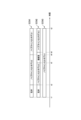
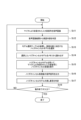
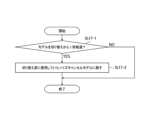
- FIG. 13 is a time chart showing an example of model selection according to the second embodiment; 11 is a flowchart showing an example of an operation procedure of a PC according to a second embodiment in a chronological order. A flowchart showing a detailed example of the operation procedure of step St13 in FIG. A flowchart showing a detailed example of the operation procedure of step St17 in FIG.
- FIG. 13 is a block diagram showing an example of a hardware configuration of a PC according to a third embodiment.
- FIG. 13 is a diagram showing an example of the contents of a model selection table according to the third embodiment.
- 11 is a flowchart showing an example of an operation procedure of a PC according to a third embodiment in a chronological order.
- an online processing system is exemplified in which an event such as an online meeting is held by a plurality of people using personal computers (PCs) connected to each other via a network so as to be able to communicate data with each other, and microphones connected to the PCs (see FIG. 1 ).
- PCs personal computers
- FIG. 1 is a diagram showing an example of the system configuration of the online processing system 100 according to the first embodiment.
- the online processing system 100 includes at least an event schedule database DB1 and n (n: an integer of 2 or more) PCs 10, 20, ..., N0 connected to each other so as to be able to perform data communication via a network NW1.
- Microphones MC1, MC2, ..., MCn are connected to each of the PCs 10, 20, ..., N0, respectively, for picking up sounds such as the speech of users SP1, SP2, ..., SPn who are the users of the respective PCs.
- the network NW1 may be a wired network, a wireless network, or a combination of a wired network and a wireless network.
- the wired network may be, for example, a wired Local Area Network (LAN) or a wired Wide Area Network (WAN).
- the wireless network may be, for example, a wireless LAN, a wireless WAN, or a cellular wireless communication.
- the explanation will be centered on user SP1, who is the organizer of the event, and will mainly explain the configuration and operation of PC 10, which cancels (eliminates) noise sounds around user SP1 contained in the sound signal picked up by microphone MC1 used by user SP1.
- user SP1 is the organizer of the event
- the other users SP2, ..., SPn are each participants of the event.
- the roles of users SP1, SP, ..., SPn may be appropriately determined depending on the content of the event executed using online processing system 100, and are not limited to user SP1 being the organizer, and another user may be the organizer.
- the event schedule database DB1 stores and manages data (event schedule data IVL1) indicating the contents of each event executed using the online processing system 100.
- the event schedule data IVL1 is composed of records that each have actual data consisting of the following items for each event: an event ID, which is identification information for the event, the event contents or event type, the start time of the event, and the end time of the event.
- an event with an event ID of "0001” has an event content of "online meeting” (not shown in FIG. 1), a start time of "10:00", and an end time of "11:00”.
- an event with an event ID of "0002” has an event content of "online drinking party” (not shown in FIG. 1), a start time of "19:00", and an end time of "21:00”.
- PC10 is an example of a noise cancellation device according to the present disclosure, and selects a noise cancellation model (see below) for canceling noise around user SP1 contained in a sound signal picked up by microphone MC1 based on event schedule data IVL1 in event schedule database DB1.
- PC10 uses the selected noise cancellation model to perform noise cancellation processing for canceling noise contained in the sound signal picked up by microphone MC1, and outputs a sound signal after noise cancellation processing (output audio signal).
- the output audio signal may be output from speaker SPK1 (see FIG. 2), or may be transmitted to other PCs 20, ..., N0, or a combination of these.
- the description of the configuration and operation of PC10 may be similarly applied to some or all of the other PCs 20, ..., N0.
- the microphone MC1 may have the same configuration as a known microphone, and picks up sounds in the acoustic space where the user SP1 is (e.g., the speech of the user SP1, noise around the user SP1), and sends the picked-up sound as an electrical signal (sound signal) to the PC 10.
- the sound signal picked up by the microphone MC1 is input to the PC 10 (see Figure 2).
- the microphone MC1 also picks up the sound signals sent from each of the other PCs 20, ..., N0 during the event, which are output from the speaker SPK1 of the PC 10 (see Figure 2).
- This picked-up sound signal may include not only the speech of each of the other users SP2, ..., SPn, but also sounds that suggest a sense of realism in the acoustic space where each user is (e.g., applause, surrounding noise).
- Speaker SPK1 may have the same configuration as a well-known speaker, and outputs an output audio signal that has been subjected to noise cancellation processing by PC10. Speaker SPK1 also outputs audio signals sent from each of the other PCs 20, ..., N0 and received by PC10.
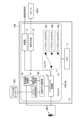
- FIG. 2 is a block diagram showing an example of the hardware configuration of the PC 10 in FIG. 1.
- the PC 10 is connected to allow input of data signals from a microphone MC1 and an event schedule database DB1, and is further connected to allow output of data signals to a speaker SPK1.
- the PC 10 is a general-purpose computer device, and may be configured as a smartphone or tablet terminal other than a personal computer as one aspect of the noise cancellation device according to the present disclosure.
- the PC 10 includes at least a processor PRC1 and a memory 11 as hardware components.
- the PC 10 may further include an input device such as a mouse that accepts operations from the user SP1.
- the processor PRC1 functions as a controller that manages the overall operation of the PC 10, and performs control processing for managing the operation of each part of the PC 10, input/output processing of data signals/control signals between each part of the PC 10, calculation processing of data signals/control signals, and storage processing of data signals/control signals.
- the processor PRC1 may be configured, for example, as a Central Processing Unit (CPU), a Digital Signal Processor (DSP), a Field Programmable Gate Array (FPGA), or a Graphical Processing Unit (GPU).
- CPU Central Processing Unit
- DSP Digital Signal Processor
- FPGA Field Programmable Gate Array
- GPU Graphical Processing Unit
- the processor PRC1 inputs a sound signal (hereinafter, for convenience, may be referred to as an "input sound signal") picked up by the microphone MC1 in cooperation with the memory 11, and performs various signal processing (for example, noise cancellation processing) on the input sound signal.
- a sound signal hereinafter, for convenience, may be referred to as an "input sound signal” picked up by the microphone MC1 in cooperation with the memory 11, and performs various signal processing (for example, noise cancellation processing) on the input sound signal.
- the memory 11 includes at least a Read Only Memory (ROM) and a Random Access Memory (RAM).
- the ROM stores programs that define various processes executed by the processor PRC1 and data required for the execution of the programs in association with each other.
- the RAM temporarily stores data or information acquired or generated by the processor PRC1.
- the memory 11 is referred to as appropriate during the execution of processes by the processor PRC1.
- the memory 11 also stores multiple noise cancellation models. In the illustrated example of FIG. 2, each of the three noise cancellation models M1, M2, and M3 is read from the memory 11 and loaded into the processor PRC1, but the number is not limited to three.
- Each of the noise cancellation models M1 to M3 is equipped with AI (artificial intelligence) and is data or a parameter set of a model that has been previously learned by machine learning or the like.
- Each of the noise cancellation models M1 to M3 cancels (eliminates) noise contained in the input sound signal other than the "noise sound not to be eliminated" (an example of a desired noise sound) corresponding to each model.
- the memory 11 also stores the model selection table TBL1 shown in FIG. 3. The noise cancellation models and the model selection table TBL1 will be described later with reference to FIG. 3.
- the processor PRC1 functionally comprises an event content determination unit 12, a usage model selection unit 13, a noise cancellation processing unit 14, a selector 15, an audio output unit 16, and a transmission unit 17. Note that all or at least one of the event content determination unit 12, the usage model selection unit 13, the noise cancellation processing unit 14, and the selector 15 may be incorporated and operated as a function that can be realized by applications that communicate data with each other via the network NW1.
- the event content determination unit 12 is an example of an acquisition unit and a determination unit, and has a function as an interface with the event schedule database DB1.
- the event content determination unit 12 determines the content of the event schedule data IVL1 read from the event schedule database DB1, and sends the determination result to the usage model selection unit 13. For example, when the event content determination unit 12 reads the event schedule data IVL1 of event ID "0001", it determines that the event content is "online meeting” (not shown), the start time is "10:00", and the end time is "11:00”. When the event content determination unit 12 reads the event schedule data IVL1 of event ID "0002”, it determines that the event content is "online drinking party” (not shown), the start time is "19:00", and the end time is "21:00".
- the event schedule data IVL1 may be event schedule data that the user SP1, who is the event organizer, inputs directly without going through the event schedule database DB1, instead of the event schedule data read out from the event schedule database DB1.
- a screen for inputting the event content (type) is displayed via a display device connected to the PC 10 used by the user SP1, and the user SP1 inputs the event content (type) into the PC 10 via the input device.
- the usage model selection unit 13 is an example of a selection unit, and inputs the judgment result from the event content judgment unit 12, and further reads out a model selection table (see FIG. 3) from the memory 11. Based on the input judgment result and the model selection table (see FIG. 3), the usage model selection unit 13 selects a noise cancellation model for canceling noise sounds other than the desired noise sound that constitutes part of the noise sound contained in the input sound signal from the microphone MC1 (i.e., the data signal of the sound picked up by the microphone MC1 in the acoustic space where the user SP is located). The usage model selection unit 13 sends result data indicating the selected noise cancellation model to the noise cancellation processing unit 14.
- event schedule data directly input by the user SP1 who is the event organizer
- the noise cancellation model selected based on the input judgment result can be switched to a new noise cancellation model during the event period.
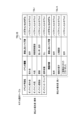
- FIG. 3 is a diagram showing an example of the contents of the model selection table TBL1 according to the first embodiment.
- Figure 4 is a diagram showing an example of a time chart for model selection according to the first embodiment.
- the model selection table TBL1 is composed of a multi-line record that associates, for each scheduled event name, a "scheduled event name", an "event type”, a "noise sound that is not to be cancelled", and a "noise cancellation model”.
- Event Plan Name is the name of an event to be executed using the online processing system 100 in FIG. 1.
- “Online Drinking Party”, “Online Preview”, “Online Lecture”, and “Online Meeting” are shown, but the name is not limited to these.
- Event type is the type of event indicated by “Event plan name.”
- the type of “online drinking party” is “drinking party”
- the type of “online preview” is “preview”
- the type of “online lecture” is “lecture”
- the type of “online meeting” is “regular meeting.”
- Noise cancellation model 2 is an example of a desired noise sound, and indicates a type of noise sound that is not eliminated by the “noise cancellation model” so as not to spoil the atmosphere (sense of realism) during the event.
- the "noise cancellation model” is a model formed in advance by machine learning or the like so as not to eliminate the "noise sound not to be eliminated” and to eliminate noise sounds other than the "noise sound not to be eliminated”.
- the "noise cancellation model 2" does not eliminate the noise sound of "applause", and eliminates noise sounds other than "applause”.
- the noise cancellation model 2 may be any one of the noise cancellation models M1 to M3 in FIG. 1.
- Noise cancellation model 3 does not eliminate the noise sound of "ambient environment noise", and eliminates noise sounds other than “ambient environment noise”.
- the noise cancellation model 3 may be any one of the noise cancellation models M1 to M3 in FIG. 1.
- the “noise cancellation model 4" does not eliminate the noise sound of "laughter, applause", and eliminates noise sounds other than "laughter, applause”.
- Noise cancellation model 4 may be any one of noise cancellation models M1 to M3 in FIG. 1. In the case of a "normal meeting" type, all noise sounds are eliminated by "noise cancellation model 1.”
- Noise cancellation model 1 may be any one of noise cancellation models M1 to M3 in FIG. 1.
- the horizontal axis in Figure 4 indicates time.
- the usage model selection unit 13 selects "noise cancellation model 2" corresponding to the record of "online drinking party” or “drinking party” in the model selection table TBL1 as the noise cancellation model to be used by the noise cancellation processing unit 14 during the period of the event IV1 (for example, the period from time t1 to time t2).
- the usage model selection unit 13 selects "noise cancellation model 1" corresponding to the record of "online meeting” or "regular meeting” in the model selection table TBL1 as the noise cancellation model to be used by the noise cancellation processing unit 14 during the period of the event IV2 (for example, the period from time t1 to time t2).
- the noise cancellation processing unit 14 is an example of an output control unit, and in accordance with the result data from the usage model selection unit 13, the noise cancellation processing unit 14 has the selector 15 select and acquire data or a parameter set of a noise cancellation model corresponding to the result data. Using the noise cancellation model acquired via the selector 15, the noise cancellation processing unit 14 performs noise cancellation processing to cancel noise sounds contained in the input sound signal from the microphone MC1 other than noise sounds that are not eliminated by the noise cancellation model. The noise cancellation processing unit 14 sends an output audio signal, which is the sound signal after the noise cancellation processing, to each of the audio output unit 16 and the transmission unit 17.
- the audio output unit 16 outputs the output audio signal from the noise cancellation processing unit 14 from the speaker SPK1.
- the transmitting unit 17 transmits the output audio signal from the noise cancellation processing unit 14 to each of the other PCs 20, ..., N0 via the network NW1. Note that although the transmitting unit 17 is illustrated as constituting part of the processor PRC1, it may be provided separately from the processor PRC1.
- FIG. 5 is a flowchart showing an example of the operation procedure of the PC 10 according to the first embodiment in chronological order.
- Each process shown in FIG. 5 is mainly executed by the processor PRC1 (see FIG. 2).
- the process shown in FIG. 5 is executed, for example, for each event, and is executed when the event starts or immediately before the start of the event.
- the processor PRC1 acquires and reads out at least one event schedule data IVL1 from the event schedule database DB1 connected to the PC10 (step St1). Based on the event schedule data IVL1 read out in step St1, the processor PRC1 determines the event type (content) of the event identified by the event schedule data IVL1 (step St2). For example, when the processor PRC1 reads out the event schedule data IVL1 for event ID "0001", it determines that the event type (content) is "online meeting". At this time, the event schedule data IVL1 may be event schedule data that the user SP1, who is the event organizer, inputs directly without going through the event schedule database DB1, instead of the event schedule data read out from the event schedule database DB1.
- the processor PRC1 selects a noise cancellation model corresponding to the event type based on the event type (contents) determined in step St2 and the model selection table TBL1 read from the memory 11 (step St3). In other words, the processor PRC1 selects a noise cancellation model for canceling only noise sounds other than "noise sounds not to be cancelled" corresponding to the event type (contents) determined in step St2 so as not to impair the sense of realism of the event during the event period.
- the processor PRC1 reads and acquires the noise cancellation model selected in step St3 from the memory 11 (step St4).
- the processor PRC1 uses the noise cancellation model acquired in step St4 to perform noise cancellation processing to eliminate noise sounds included in the input sound signal from the microphone MC1 other than the "noise sounds not to be eliminated” corresponding to the noise cancellation model (step St5).
- the processor PRC1 outputs the output sound signal after the noise cancellation processing performed in step St5 (step St6).
- the output form of this output sound signal may be output from the speaker SPK1 (see FIG. 2), or may be transmitted to other PCs 20, ..., N0, or a combination of these. If the processor PRC1 detects an input indicating the end of the event (step St7, YES), the processing of the processor PRC1 shown in FIG. 5 ends.
- step St7 if no input has been made to end the event (step St7, NO), the process of the processor PRC1 returns to step St1.
- the processor PRC1 repeatedly executes the series of processes from step St1 to step St7 during the period from when the event starts to when it ends.
- the PC 10 as an example of a noise cancellation device acquires data (for example, event schedule data IVL1) related to the situation in the acoustic space in which the sound collection device (microphone MC1) is placed, and determines the content or type of the data. Based on the determined content or type, the PC 10 selects a noise cancellation model for canceling noise sounds other than "noise sounds not to be eliminated" corresponding to the noise cancellation model, which are included in the sound signal (input sound signal) in the acoustic space collected by the sound collection device.
- data for example, event schedule data IVL1
- the PC 10 selects a noise cancellation model for canceling noise sounds other than "noise sounds not to be eliminated" corresponding to the noise cancellation model, which are included in the sound signal (input sound signal) in the acoustic space collected by the sound collection device.
- the PC 10 uses the selected noise cancellation model to output an output audio signal that has been subjected to noise cancellation processing for canceling noise sounds other than "noise sounds not to be eliminated” corresponding to the noise cancellation model included in the input sound signal.
- This allows the PC 10 to efficiently cancel (erase) unnecessary surrounding noise sounds that are unrelated to the realism of the event, without impairing the realism of the event taking place in the acoustic space around the user SP1. Therefore, the user can comfortably participate in the event without impairing the realism of the event and without worrying about the surrounding noise sounds.
- the configuration example of the online processing system according to the second embodiment may be the same as the configuration example of the online processing system 100 according to the first embodiment, or may be different. To simplify the following explanation, the configuration example of the online processing system according to the second embodiment will be explained as being the same as the configuration example of the online processing system 100 according to the first embodiment. However, in the second embodiment, the PC 10 does not necessarily need to read and acquire the event schedule data IVL1 from the event schedule database DB1.
- FIG. 6 is a block diagram showing an example of the hardware configuration of a PC 10A according to the second embodiment.
- the PC 10A is connected to allow input of a data signal from a microphone MC1, and is further connected to allow output of a data signal to a speaker SPK1.
- the PC 10A is a general-purpose computer device, and may be configured as a smartphone or tablet terminal other than a personal computer as one aspect of the noise cancellation device according to the present disclosure.
- the PC 10A includes at least a processor PRC1A and a memory 11 as hardware components.
- the PC 10A may further include an input device such as a mouse that accepts operations from a user SP1.
- PC 10A components that have the same configuration and operation as PC 10 in FIG. 2 are given the same reference numerals, and explanations are simplified or omitted, and differences are explained.
- the memory 11 stores the model selection table TBL1A shown in FIG. 7.
- the model selection table TBL1A will be described later with reference to FIG. 7.
- the processor PRC1A functionally comprises a voice recognition processing unit 18, an utterance content determination unit 19, a usage model selection unit 13A, a noise cancellation processing unit 14, a selector 15, an audio output unit 16, a transmission unit 17, and a receiving unit RC1.
- the receiving unit RC1 receives a received voice signal transmitted via the network NW1.
- This received voice signal may be, for example, a sound signal of a person, machine, etc. picked up by the microphone MC2 on the PC20 side, or a sound signal of a person, machine, etc. picked up by the microphone MCn on the PCN0 side, or a combination of these.
- the received voice signal received by the receiving unit RC1 is input to the voice recognition processing unit 18 in the same way as the sound signal picked up by the microphone MC1.
- the voice recognition processing unit 18 is an example of an acquisition unit, and receives as input sound signals the sound signal of the sound picked up by the microphone MC1 and the received voice signal from the receiving unit RC1, and executes voice recognition processing using the input sound signal as input.
- the voice recognition processing unit 18 sends the result data of the voice recognition processing to the speech content determination unit 19.
- the method of the voice recognition processing performed by the voice recognition processing unit 18 here may be a publicly known technology, and the method is not particularly important in embodiment 2.
- the speech content determination unit 19 is an example of a determination unit, and determines the speech content indicated by the result data based on the result data of the voice recognition processing from the voice recognition processing unit 18.
- the speech content determination unit 19 sends the determination result data of the speech content to the usage model selection unit 13A.
- the method by which the speech content determination unit 19 determines the speech content may be a publicly known technology, and the method is not particularly important in embodiment 2. Note that although the voice recognition processing unit 18 and the speech content determination unit 19 are provided as separate components in FIG. 6, they may also be configured as a single unit functionally.
- the usage model selection unit 13A is an example of a selection unit, and inputs the judgment result from the speech content judgment unit 19, and further reads out a model selection table (see FIG. 7) from the memory 11. Based on the input judgment result and the model selection table (see FIG. 7), the usage model selection unit 13A selects a noise cancellation model for canceling noise sounds other than the desired noise sound that constitutes part of the noise sound contained in the input sound signal from the microphone MC1 (i.e., the data signal of the sound picked up by the microphone MC1 in the acoustic space where the user SP is located). The usage model selection unit 13A sends result data indicating the selected noise cancellation model to the noise cancellation processing unit 14.
- Fig. 7 is a diagram showing an example of the contents of the model selection table TBL1A according to the second embodiment.
- Fig. 8 is a diagram showing an example of a time chart of model selection according to the second embodiment.
- the model selection table TBL1A is composed of a multi-row record that associates "utterance content", "noise sound not to be cancelled", and "noise cancellation model" for each utterance content.
- the "speech content” is the speech content obtained based on a voice recognition process and a speech content determination process that use as input the sound picked up by the microphone MC1 (e.g., the voice spoken by the user SP1, or sounds coming from surrounding objects other than the user SP).
- the sound picked up by the microphone MC1 e.g., the voice spoken by the user SP1, or sounds coming from surrounding objects other than the user SP.
- “Cheers,” “How's the machine working,” and “Thank you for listening” are shown, but the content need not be limited to these.
- Noise sound not to be eliminated is an example of a desired noise sound, and indicates a type of noise sound that is not eliminated by the “noise cancellation model” so as not to impair the atmosphere (sense of realism) in the acoustic space where the user SP1 is located.
- the "noise cancellation model” is a model formed in advance by machine learning or the like so as not to eliminate “noise sound not to be eliminated” and to eliminate noise sounds other than "noise sound not to be eliminated”. In the case of the speech content "Cheers”, the "noise cancellation model 2" does not eliminate the noise sound of "applause", and eliminates noise sounds other than "applause”.
- the noise cancellation model 2 may be any one of the noise cancellation models M1 to M3 in FIG. 1.
- the “noise cancellation model 3” does not eliminate the noise sound of "factory noise”, and eliminates noise sounds other than "factory noise”.
- the noise cancellation model 3 may be any one of the noise cancellation models M1 to M3 in FIG. 1.
- "Noise Cancellation Model 2” does not eliminate the "applause” noise, but eliminates all other noise sounds besides "applause.”
- PC 10A uses the sound signals picked up by microphones MC1, MC2, and MC3 as input sound signals, and is able to select noise cancellation model 3 for not canceling factory noise contained in the speech content (e.g., "machine condition") corresponding to the input sound signal.
- This allows PC 10A to cancel other unnecessary noise sounds without canceling mechanical sounds generated in the factory to an extent that does not impair the sense of realism during a remote call or online meeting held in the factory where microphones MC1, MC2, and MC3 are located.
- the horizontal axis in Figure 8 indicates time.
- scenario SCN1 in Figure 8 when the judgment result from the utterance content judgment unit 19 is "Cheers", the usage model selection unit 13A selects "Noise cancellation model 2" corresponding to the record for "Cheers” in the model selection table TBL1A as the noise cancellation model to be used by the noise cancellation processing unit 14 for a certain period of time (the period from time t3 to time t4) after the utterance of "Cheers" starts at time t1 and ends at time t3.
- the usage model selection unit 13A selects "Noise cancellation model 2" corresponding to the record of "Cheers” in the model selection table TBL1A as the noise cancellation model to be used by the noise cancellation processing unit 14 during the period from when the utterance of "Cheers” is started at time t1 to when the judgment result from the utterance content judgment unit 19 becomes "Machine condition" at time t5 (the period from time t3 to time t5).
- the usage model selection unit 13A selects "noise cancellation model 3" corresponding to the record for "machine condition” in the model selection table TBL1A as the noise cancellation model to be used by the noise cancellation processing unit 14 for a certain period of time (the period from time t6 to time t2) after the recording of the sound of "machine condition” starts at time t5 and ends at time t6.
- the usage model selection unit 13A selects "noise cancellation model 1" for canceling all noise sounds as the noise cancellation model to be used by the noise cancellation processing unit 14 during the period from time t1 to time t2 during which no speech content is input from the speech content judgment unit 19, regardless of the model selection table TBL1A.
- Fig. 9 is a flowchart showing an example of the operation procedure of the PC 10A according to the second embodiment in chronological order.
- Fig. 10 is a flowchart showing a detailed example of the operation procedure of step St13 in Fig. 9.
- Fig. 11 is a flowchart showing a detailed example of the operation procedure of step St17 in Fig. 9.
- Each process shown in Figs. 9 to 11 is mainly executed by the processor PRC1A (see Fig. 6).
- the process shown in Fig. 9 is executed, for example, every time sound is picked up by the microphone MC1.
- the processor PRC1A executes a voice recognition process on an input sound signal picked up by a microphone MC1 placed in the acoustic space where the user SP1 is located (step St11). Based on the result data of the voice recognition process in step St11, the processor PRC1A determines the spoken content indicated by the voice recognition process (step St12). For example, when the result data of the voice recognition process of the input sound signal is "So, let's have a toast to celebrate Mr. AA's new beginning!, the processor PRC1 determines that the spoken content is "Cheers.”
- the processor PRC1A selects a noise cancellation model corresponding to the speech content based on the speech content determined in step St12 and the model selection table TBL1A read from the memory 11 (step St13). In other words, the processor PRC1A selects a noise cancellation model for canceling only noise sounds other than the "noise sounds not to be cancelled" corresponding to the speech content determined in step St12 so as not to impair the sense of realism of the atmosphere during the period in which the speech content determined in step St12 is picked up. Details of the processing of this step St13 will be described later with reference to FIG. 10. The processor PRC1A reads and acquires the noise cancellation model selected in step St13 from the memory 11 (step St14).
- the processor PRC1A uses the noise cancellation model acquired in step St14 to perform noise cancellation processing to eliminate noise sounds other than the "noise sounds not to be eliminated” corresponding to the noise cancellation model, which are included in the input sound signal from the microphone MC1 (step St15).
- the processor PRC1A outputs the output sound signal after the noise cancellation processing performed in step St15 (step St16).
- the output form of this output sound signal may be output from the speaker SPK1 (see FIG. 2), may be transmitted to other PCs 20, ..., N0, or may be a combination of these.
- the processor PRC1A determines whether or not it is necessary to return the noise cancellation model (step St17). Details of the processing of step St17 will be described later with reference to FIG. 11.
- step St18 If the processor PRC1A detects an input to end the operation of the PC10A (step St18, YES), the processing of the processor PRC1A shown in FIG. 9 ends.
- processor PRC1A determines whether input has been made to end the operation of PC10A (step St18, NO). If no input has been made to end the operation of PC10A (step St18, NO), the process of processor PRC1A returns to step St11. In other words, processor PRC1A repeatedly executes the series of processes from step St11 to step St18 until the operation ends.
- step St13 in FIG. 9 will be described.
- the processor PRC1A determines whether or not an utterance for switching the currently used noise cancellation model to a new one has been detected based on the utterance content determined in step St12 (step St13-1). If it is determined that an utterance for switching the noise cancellation model to a new one has not been detected (step St13-1, NO), the processing of the processor PRC1A ends.
- the processor PRC1A determines whether or not an utterance for switching the currently used noise cancellation model has been detected (step St13-2, YES), it selects a noise cancellation model corresponding to the utterance content based on the utterance content determined in step St12 and the model selection table TBL1A read from the memory 11 (step St13-2). After step St13-2, the processing of the processor PRC1A ends.
- step St17 in FIG. 9 the detailed operation procedure of step St17 in FIG. 9 will be described.
- the processor PRC1A determines whether a certain time (t: default value) has elapsed since the noise cancellation model was switched to be used in step St14 (step St17-1). If it is determined that the certain time (t: default value) has not elapsed since the noise cancellation model was switched (step St17-1, NO), the processing of the processor PRC1A ends. In this case, the processor PRC1A continues to use the noise cancellation model currently in use.
- step St17-2 YES
- step St17-2 YES
- the PC 10A as an example of a noise cancellation device acquires data on the situation in the acoustic space in which the sound collection device (microphone MC1) is placed (for example, data indicating the contents of the speech indicated by the voice recognition result of the input sound signal collected by the microphone MC1) and determines the contents or type of the data. Based on the determined contents or type, the PC 10A selects a noise cancellation model for canceling noise sounds other than the "noise sounds not to be eliminated" corresponding to the noise cancellation model, which are included in the sound signal (input sound signal) in the acoustic space collected by the sound collection device.
- the PC 10A uses the selected noise cancellation model to output an output audio signal that has been subjected to noise cancellation processing for canceling noise sounds other than the "noise sounds not to be eliminated” corresponding to the noise cancellation model included in the input sound signal.
- This allows the PC 10A to efficiently cancel (erase) unnecessary surrounding noise sounds that are unrelated to the realism of the atmosphere, without impairing the atmosphere (realism) of the speech taking place in the acoustic space around the user SP1. Therefore, user SP1 can perform the process comfortably without losing the sense of realism of the surrounding atmosphere and without being bothered by surrounding noise.
- ⁇ Third embodiment> In the third embodiment, which is a combination of the first and second embodiments, an example is described in which a noise cancellation model is selected according to the event schedule data (see the first embodiment) during an event, and a noise cancellation model is selected in an interrupt manner according to the content spoken during the event.
- the configuration example of the online processing system according to the third embodiment may be the same as the configuration example of the online processing system 100 according to the first and second embodiments, or may be different. To simplify the following explanation, the configuration example of the online processing system according to the third embodiment will be explained as being the same as the configuration example of the online processing system 100 according to the first embodiment.
- FIG. 12 is a block diagram showing an example of the hardware configuration of the PC 10B according to the third embodiment.
- the PC 10B is connected to the microphone MC1 and the event schedule database DB1 so that data signals can be input, and is further connected to the speaker SPK1 so that data signals can be output.
- the PC 10B is a general-purpose computer device, and may be configured as a smartphone or a tablet terminal other than a personal computer as one aspect of the noise cancellation device according to the present disclosure.
- the PC 10B includes at least a processor PRC1B and a memory 11 as hardware components.
- the PC 10B may further include an input device such as a mouse that accepts operations by the user SP1.
- the PC 10A may further include a receiving unit RC1 that receives a received voice signal sent from an external PC and sends it to the voice recognition processing unit 18 as shown in FIG. 6.
- PC 10B components that have the same configuration and operation as PC 10 in FIG. 2 or PC 10A in FIG. 6 are given the same reference numerals, and explanations are simplified or omitted, and differences are explained.
- the memory 11 stores the model selection table TBL1B shown in FIG. 13.
- the model selection table TBL1B will be described later with reference to FIG. 13.
- the processor PRC1B functionally comprises an event content determination unit 12, a voice recognition processing unit 18, an utterance content determination unit 19, a usage model selection unit 13B, a noise cancellation processing unit 14, a selector 15, an audio output unit 16, and a transmission unit 17.
- the usage model selection unit 13B is an example of a selection unit, and inputs the determination result from the event content determination unit 12, and further reads out a model selection table (see FIG. 13) from the memory 11. Based on the input determination result and the model selection table (see FIG. 13), the usage model selection unit 13B selects a noise cancellation model for canceling noise sounds other than the desired noise sound that constitutes part of the noise sound contained in the input sound signal from the microphone MC1 (i.e., the data signal of the sound picked up by the microphone MC1 in the acoustic space where the user SP is located). The usage model selection unit 13B sends result data indicating the selected noise cancellation model to the noise cancellation processing unit 14.
- the usage model selection unit 13B may also input the judgment result from the speech content judgment unit 19 during the event period. In this case, the usage model selection unit 13B reads out a model selection table (see FIG. 13) from the memory 11. Based on the judgment result from the speech content judgment unit 19 and the model selection table (see FIG. 13), the usage model selection unit 13B interruptively selects a noise cancellation model for canceling noise sounds other than the desired noise sounds that constitute part of the noise sounds contained in the input sound signal from the microphone MC1 (i.e., the data signal of the sound picked up by the microphone MC1 in the acoustic space where the user SP is).
- a noise cancellation model for canceling noise sounds other than the desired noise sounds that constitute part of the noise sounds contained in the input sound signal from the microphone MC1 (i.e., the data signal of the sound picked up by the microphone MC1 in the acoustic space where the user SP is).
- a noise cancellation model different from the noise cancellation model to be used during the event period (in other words, the noise cancellation model selected according to the event schedule data) may be selected.
- the usage model selection unit 13B sends result data indicating the selected noise cancellation model to the noise cancellation processing unit 14.
- model selection table TBL1B will be described with reference to FIG. 13.
- FIG. 13 is a diagram showing an example of the contents of model selection table TBL1B according to embodiment 3.
- Model selection table TBL1B is a table that combines model selection table TBL1 in FIG. 3 and model selection table TBL1A in FIG. 7.
- model selection table TBL1B gives priority to selecting the contents of model selection table TBL1A over the contents of model selection table TBL1.
- noise cancellation model 1 is selected when an online meeting event starts and the utterance "cheers" is detected and determined during the event
- the usage model selection unit 13B will interrupt the use of noise cancellation model 1 and select and switch to noise cancellation model 2, which corresponds to the utterance of "cheers,” during the use of noise cancellation model 1.
- noise cancellation model 3 is selected at the start of an online lecture event and the utterance "cheers" is detected and determined during the event, the usage model selection unit 13B will interrupt the use of noise cancellation model 3 and select and switch to noise cancellation model 2, which corresponds to the utterance of "cheers.”
- FIG. 14 is a flowchart showing an example of the operation procedure of the PC 10B according to the third embodiment in chronological order.
- Each process shown in FIG. 14 is mainly executed by the processor PRC1B (see FIG. 12).
- the process shown in FIG. 14 is executed, for example, for each event, when the event starts or immediately before the start of the event.
- the same process as that in FIG. 5 or FIG. 9 will be assigned the same step number, and the description will be simplified or omitted, and differences will be described.
- step St2 the result of the determination in step St2 is input to the processor PRC1B.
- the speech content shown in FIG. 13 is not detected and determined in the input sound signal picked up by the microphone MC1 in steps St11 and St12, the processing result of step St12 is not input to the processor PRC1B.
- step St2 If only the determination result in step St2 is input, the processor PRC1B selects a noise cancellation model corresponding to the event type based on the event type (contents) determined in step St2 and the model selection table TBL1 read from the memory 11 (step St31).
- step St31 when the processor PRC1B receives both the judgment results from steps St2 and St12, it selects a noise cancellation model corresponding to the speech content judged in step St12 in an interrupt manner based on the model selection table TBL1B in FIG. 13 (step St31).
- the process from step St31 onwards is similar to the process from step St14 onwards shown in FIG. 9, so a detailed description will be omitted.
- PC 10B as an example of a noise cancellation device acquires data relating to the situation in the acoustic space in which the sound collection device (microphone MC1) is placed (for example, event schedule data IVL1, or data indicating the speech content indicated by the event schedule data IVL1 and the voice recognition result of the input sound signal collected by the microphone MC1), and determines the content or type of the data. Based on the determined content or type, PC 10B selects a noise cancellation model for canceling noise sounds other than "noise sounds that are not to be cancelled" according to the noise cancellation model, which are included in the sound signal (input sound signal) in the acoustic space collected by the sound collection device.
- data relating to the situation in the acoustic space in which the sound collection device (microphone MC1) is placed for example, event schedule data IVL1, or data indicating the speech content indicated by the event schedule data IVL1 and the voice recognition result of the input sound signal collected by the microphone MC1
- PC 10B selects a noise cancellation model for
- PC 10B uses the selected noise cancellation model to output an output audio signal that has been subjected to noise cancellation processing that cancels noise sounds other than "noise sounds that are not to be cancelled” according to the noise cancellation model, which are included in the input sound signal. This allows PC 10B to efficiently cancel (erase) unnecessary surrounding noise that is unrelated to the realism of the atmosphere during an event taking place in the acoustic space around user SP1, or the atmosphere (realism) of speech that occurs during the event. Therefore, user SP1 can comfortably carry out processing without compromising the realism of the surrounding atmosphere and without being concerned about surrounding noise.
- An acquisition unit an event content determination unit 12 and a voice recognition processing unit 18 that acquires data related to the situation in an acoustic space in which a sound collection device (a microphone MC1) is placed;
- a determination unit an event content determination unit 12, an utterance content determination unit 19) for determining the content or type of the data;
- a selection unit utilization model selection unit 13 that selects a noise cancellation model for canceling noise sounds other than a desired noise sound that constitutes a part of the noise sound included in the sound signal in the acoustic space collected by the sound collection device based on the content or type;
- an output control unit a noise cancellation processing unit 14, an audio output unit 16 that outputs an output audio signal that has been subjected to a noise cancellation process that cancels noise sounds other than the desired noise sound included in the sound signal using the selected noise cancellation model;
- Noise cancellation device This allows the noise cancellation device to efficiently cancel (erase) unnecessary surrounding noise sounds that are unrelated to the realism of the event, without impairing the noise cancellation model
- the data is schedule data including a type of event to be held in the acoustic space;
- the selection unit selects the noise cancellation model based on a type of the event.
- the noise cancellation device according to technology 1. This allows the noise cancellation device to appropriately select a noise cancellation model depending on the type of event taking place in the acoustic space.
- the schedule data includes information on start and end times of the event
- the selection unit selects the noise cancellation model to be continuously used during the event.
- the noise cancellation device according to the first or second aspect of the present invention. This allows the noise cancellation device to continue using the same noise cancellation model throughout the duration of the event, taking into account the start and end times of the event.
- the acquisition unit acquires, as the data, data resulting from speech recognition of the sound signal collected by the sound collection device;
- the determination unit determines the content of the user's utterance indicated by the result data of the voice recognition,
- the selection unit selects the noise cancellation model based on a result of the determination of the speech content.
- the noise cancellation device according to any one of the first to third aspects. As a result, when the voice recognition result of the voice, etc., contained in the input sound signal picked up by the microphone MC1 indicates the content of the user's speech, the noise cancellation device can select and use an appropriate noise cancellation model so as not to impair the realism of the atmosphere at the time of the speech.
- the selection unit switches to another noise cancellation model that was used before the selection.
- the noise cancellation device according to any one of the first to fourth aspects. This allows the noise cancellation device to assume that usage of the selected noise cancellation model will settle down over a certain period of time, and appropriate noise cancellation processing can be performed by returning to the original noise cancellation model before selection.
- the selection unit selects the selected noise cancellation model so as to continue to use the selected noise cancellation model until a certain time has elapsed since the selection of the noise cancellation model.
- the noise cancellation device according to any one of claims 4 to 5. This allows the noise cancellation device to assume that the period suitable for using the switched noise cancellation model is a certain period of time, and until the certain period of time has elapsed, the noise cancellation process can be appropriately performed so as not to impair the realism of the atmosphere that triggered the switch.
- the data includes schedule data including a type of an event to be held in the acoustic space, and voice recognition result data of the sound signal collected by the sound collection device,
- the selection unit selects to use a first noise cancellation model (e.g., noise cancellation model 1) based on a type of the event during the period of the event, and selects to interrupt and use a second noise cancellation model (e.g., noise cancellation model 2) based on the speech content when the speech content indicated by the voice recognition result data is detected during the period of the event.
- a first noise cancellation model e.g., noise cancellation model 1
- a second noise cancellation model e.g., noise cancellation model 2
- the noise cancellation device can select a noise cancellation model according to the speech and perform appropriate noise cancellation processing according to the atmosphere so that the sense of realism at the time of speech is not lost due to the noise cancellation model selected in response to the event due to the speech.
- a noise cancellation method performed by a noise cancellation device comprising: Obtaining data about a situation in an acoustic space in which a sound pickup device is located; determining the content or type of the data; A step of selecting a noise cancellation model for canceling noise sounds other than a desired noise sound that constitutes a part of the noise sounds included in the sound signal in the acoustic space collected by the sound collection device based on the content or type; and outputting an output audio signal that has been subjected to a noise cancellation process using the selected noise cancellation model to cancel noise sounds other than the desired noise sound that are included in the sound signal.
- Noise cancellation method can efficiently cancel (erase) unnecessary surrounding noise sounds that are unrelated to the realism of the event, without impairing the realism of the event taking place in the acoustic space around the user SP1.
- the noise cancellation device is a computer. Obtaining data about a situation in an acoustic space in which a sound pickup device is located; determining the content or type of the data; A step of selecting a noise cancellation model for canceling noise sounds other than a desired noise sound that constitutes a part of the noise sounds included in the sound signal in the acoustic space collected by the sound collection device based on the content or type; outputting an output audio signal subjected to noise cancellation processing for canceling noise sounds other than the desired noise sound contained in the sound signal using the selected noise cancellation model; program.
- the noise canceling device in which the program is installed can efficiently cancel (erase) unnecessary surrounding noise sounds that are unrelated to the realism of the event, without impairing the realism of the event taking place in the acoustic space around the user SP1.
- the present disclosure is useful as a noise cancellation device, a noise cancellation method, and a program that efficiently eliminates ambient noise without compromising the sense of realism in the acoustic space around the user.
Landscapes
- Engineering & Computer Science (AREA)
- Computational Linguistics (AREA)
- Health & Medical Sciences (AREA)
- Audiology, Speech & Language Pathology (AREA)
- Human Computer Interaction (AREA)
- Physics & Mathematics (AREA)
- Acoustics & Sound (AREA)
- Multimedia (AREA)
- Quality & Reliability (AREA)
- Signal Processing (AREA)
- Soundproofing, Sound Blocking, And Sound Damping (AREA)
Abstract
Dispositif d'annulation de bruit qui, selon la présente invention, est pourvu : d'une unité d'acquisition qui acquiert des données concernant une situation dans un espace acoustique dans lequel est disposé un dispositif de collecte de son ; d'une unité de détermination qui détermine le contenu ou le type des données ; d'une unité de sélection qui, sur la base du contenu ou du type, sélectionne un modèle d'annulation de bruit pour annuler un son de bruit inclus dans un signal sonore dans l'espace acoustique, collecté par le dispositif de collecte de son ; et d'une unité de commande de sortie qui utilise le modèle d'annulation de bruit sélectionné pour délivrer en sortie un signal audio de sortie soumis à un traitement d'annulation de bruit pour annuler le son de bruit inclus dans le signal sonore.
Priority Applications (1)
| Application Number | Priority Date | Filing Date | Title |
|---|---|---|---|
| JP2025525953A JPWO2024252750A1 (fr) | 2023-06-05 | 2024-03-11 |
Applications Claiming Priority (2)
| Application Number | Priority Date | Filing Date | Title |
|---|---|---|---|
| JP2023-092729 | 2023-06-05 | ||
| JP2023092729 | 2023-06-05 |
Publications (1)
| Publication Number | Publication Date |
|---|---|
| WO2024252750A1 true WO2024252750A1 (fr) | 2024-12-12 |
Family
ID=93795831
Family Applications (1)
| Application Number | Title | Priority Date | Filing Date |
|---|---|---|---|
| PCT/JP2024/009443 Ceased WO2024252750A1 (fr) | 2023-06-05 | 2024-03-11 | Dispositif d'annulation de bruit, procédé d'annulation de bruit et programme |
Country Status (2)
| Country | Link |
|---|---|
| JP (1) | JPWO2024252750A1 (fr) |
| WO (1) | WO2024252750A1 (fr) |
Citations (6)
| Publication number | Priority date | Publication date | Assignee | Title |
|---|---|---|---|---|
| JPH1185185A (ja) * | 1997-09-05 | 1999-03-30 | Oki Electric Ind Co Ltd | 音声認識システムおよび音声認識制御プログラムを記録した記録媒体 |
| JP2003241788A (ja) * | 2002-02-20 | 2003-08-29 | Ntt Docomo Inc | 音声認識装置及び音声認識システム |
| JP2005122042A (ja) * | 2003-10-20 | 2005-05-12 | Toyota Motor Corp | 音声認識装置、音声認識方法、音声合成装置、音声合成方法、音声認識システム、音声合成システム、音声認識合成装置、およびナビゲーションシステム、ならびに移動体 |
| JP2015069063A (ja) * | 2013-09-30 | 2015-04-13 | 日本電気通信システム株式会社 | 音声認識システム、音声認識方法、及び音声認識プログラム |
| US20200013395A1 (en) * | 2019-08-20 | 2020-01-09 | Lg Electronics Inc. | Intelligent voice recognizing method, apparatus, and intelligent computing device |
| US20220238091A1 (en) * | 2021-01-27 | 2022-07-28 | Dell Products L.P. | Selective noise cancellation |
-
2024
- 2024-03-11 WO PCT/JP2024/009443 patent/WO2024252750A1/fr not_active Ceased
- 2024-03-11 JP JP2025525953A patent/JPWO2024252750A1/ja active Pending
Patent Citations (6)
| Publication number | Priority date | Publication date | Assignee | Title |
|---|---|---|---|---|
| JPH1185185A (ja) * | 1997-09-05 | 1999-03-30 | Oki Electric Ind Co Ltd | 音声認識システムおよび音声認識制御プログラムを記録した記録媒体 |
| JP2003241788A (ja) * | 2002-02-20 | 2003-08-29 | Ntt Docomo Inc | 音声認識装置及び音声認識システム |
| JP2005122042A (ja) * | 2003-10-20 | 2005-05-12 | Toyota Motor Corp | 音声認識装置、音声認識方法、音声合成装置、音声合成方法、音声認識システム、音声合成システム、音声認識合成装置、およびナビゲーションシステム、ならびに移動体 |
| JP2015069063A (ja) * | 2013-09-30 | 2015-04-13 | 日本電気通信システム株式会社 | 音声認識システム、音声認識方法、及び音声認識プログラム |
| US20200013395A1 (en) * | 2019-08-20 | 2020-01-09 | Lg Electronics Inc. | Intelligent voice recognizing method, apparatus, and intelligent computing device |
| US20220238091A1 (en) * | 2021-01-27 | 2022-07-28 | Dell Products L.P. | Selective noise cancellation |
Also Published As
| Publication number | Publication date |
|---|---|
| JPWO2024252750A1 (fr) | 2024-12-12 |
Similar Documents
| Publication | Publication Date | Title |
|---|---|---|
| US9344815B2 (en) | Method for augmenting hearing | |
| CN112735462B (zh) | 分布式麦克风阵列的降噪方法和语音交互方法 | |
| US9613028B2 (en) | Remotely updating a hearing and profile | |
| CN114255776B (zh) | 使用互连电子设备进行音频修改 | |
| CN110677717B (zh) | 一种音频补偿方法、智能电视及存储介质 | |
| AU2016201028A1 (en) | Signal enhancement using wireless streaming | |
| CN104036771A (zh) | 信号处理装置、信号处理方法和存储介质 | |
| CN115250397A (zh) | Tws耳机和tws耳机的播放方法及装置 | |
| US20190221226A1 (en) | Electronic apparatus and echo cancellation method applied to electronic apparatus | |
| JP2007096389A (ja) | 回帰音除去装置 | |
| CN115209302A (zh) | 音频降噪处理方法、装置、设备、介质及程序产品 | |
| CN116112839B (zh) | 无线耳机的切换控制方法、系统及无线耳机 | |
| US12499901B2 (en) | Noise reduction using synthetic audio | |
| JP2026026128A (ja) | 音声送受信システム | |
| CN114141261B (zh) | 回声消除方法、装置、计算机设备和存储介质 | |
| WO2024252750A1 (fr) | Dispositif d'annulation de bruit, procédé d'annulation de bruit et programme | |
| WO2021144964A1 (fr) | Appareil auditif et procédé de réglage d'appareil auditif | |
| US20210183363A1 (en) | Method for operating a hearing system and hearing system | |
| US12413928B2 (en) | Voice processing system, voice processing method, and recording medium having voice processing program recorded thereon | |
| JP2019537071A (ja) | 分散したマイクロホンからの音声の処理 | |
| US10979803B2 (en) | Communication apparatus, communication method, program, and telepresence system | |
| JP7375817B2 (ja) | 音声処理装置、通話デバイス、音声処理方法、およびプログラム | |
| CN114550744A (zh) | 一种多设备交互音频降噪方法、系统、设备、存储介质 | |
| CN115767358A (zh) | 听力保护方法、系统、tws耳机和智能终端设备 | |
| JP2020127071A (ja) | 電子機器及びその制御方法 |
Legal Events
| Date | Code | Title | Description |
|---|---|---|---|
| 121 | Ep: the epo has been informed by wipo that ep was designated in this application |
Ref document number: 24818989 Country of ref document: EP Kind code of ref document: A1 |
|
| ENP | Entry into the national phase |
Ref document number: 2025525953 Country of ref document: JP Kind code of ref document: A |
|
| WWE | Wipo information: entry into national phase |
Ref document number: 2025525953 Country of ref document: JP |
|
| NENP | Non-entry into the national phase |
Ref country code: DE |