WO2024252753A1 - Dispositif de décongélation de cellules congelées - Google Patents
Dispositif de décongélation de cellules congelées Download PDFInfo
- Publication number
- WO2024252753A1 WO2024252753A1 PCT/JP2024/010319 JP2024010319W WO2024252753A1 WO 2024252753 A1 WO2024252753 A1 WO 2024252753A1 JP 2024010319 W JP2024010319 W JP 2024010319W WO 2024252753 A1 WO2024252753 A1 WO 2024252753A1
- Authority
- WO
- WIPO (PCT)
- Prior art keywords
- cells
- frozen
- culture medium
- container
- frozen cells
- Prior art date
- Legal status (The legal status is an assumption and is not a legal conclusion. Google has not performed a legal analysis and makes no representation as to the accuracy of the status listed.)
- Ceased
Links
Images

Classifications
-
- C—CHEMISTRY; METALLURGY
- C12—BIOCHEMISTRY; BEER; SPIRITS; WINE; VINEGAR; MICROBIOLOGY; ENZYMOLOGY; MUTATION OR GENETIC ENGINEERING
- C12M—APPARATUS FOR ENZYMOLOGY OR MICROBIOLOGY; APPARATUS FOR CULTURING MICROORGANISMS FOR PRODUCING BIOMASS, FOR GROWING CELLS OR FOR OBTAINING FERMENTATION OR METABOLIC PRODUCTS, i.e. BIOREACTORS OR FERMENTERS
- C12M1/00—Apparatus for enzymology or microbiology
Definitions
- the present invention relates to a frozen cell thawing device that thaws frozen cells and recovers the cells.
- Patent Document 1 discloses a device for thawing frozen cells that includes a heater for heating a vial. A suspension containing cells is frozen inside the vial. The heat of thawing the frozen cells is transferred from the heater to the vial. The frozen cells gradually thaw from the periphery toward the center.
- cryoprotectants When freezing cells, a cryoprotectant is mixed into the suspension.
- Cryoprotectants generally contain dimethyl sulfoxide (DMSO). Since dimethyl sulfoxide damages cells after thawing, it is desirable to complete thawing as quickly as possible. However, if cells are exposed to temperatures above 42°C, they will die. On the other hand, if the contact time between cells and dimethyl sulfoxide is extended due to low-temperature thawing, the cells will die. Therefore, complex and advanced temperature control is required when heating the vials.
- DMSO dimethyl sulfoxide
- the present invention aims to provide a device for thawing frozen cells that can avoid the effects of cryoprotectants as much as possible when thawing frozen cells.
- the frozen cell thawing device of the present invention comprises an inlet pipe for introducing a liquid culture medium, a melting unit that holds a container that contains frozen cells containing a freezing treatment liquid including a cryoprotectant and introduces the culture medium from the inlet pipe while storing the frozen cells, applies thawing heat to the frozen cells from the culture medium that contacts the frozen cells, a liquid flow unit that generates relative movement of the culture medium with respect to the frozen cells, and a discharge pipe that is connected to the container and guides the discharge of the culture medium containing the thawed cells, and when the thawed cells are dispersed in the culture medium, the concentration of the cryoprotectant in the culture medium is maintained at 3 vol% or less.
- the disclosed frozen cell thawing device can avoid the effects of the cryoprotectant as much as possible when thawing frozen cells.
- FIG. 1 is an overall view showing, in outline, the configuration of a frozen cell thawing device according to one embodiment of the present invention
- FIG. 2 is a schematic diagram illustrating the sensible heat change of a frozen cell.
- FIG. 2 is a schematic diagram illustrating the change in latent heat of a frozen cell.
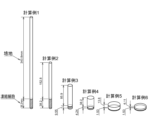
- FIG. 1 is a diagram illustrating a container containing frozen cells used in a simulation of the time required for thawing in a frozen cell thawing device.
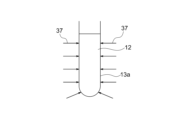
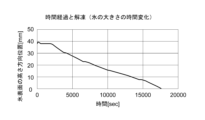
- FIG. 1 is a diagram showing an example of the time course and thawing state during thawing in a frozen cell thawing device.
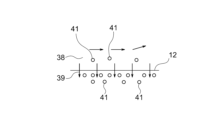
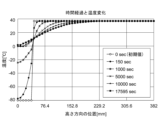
- FIG. 1 is a diagram showing an example of time course and temperature change during thawing in a frozen cell thawing device.
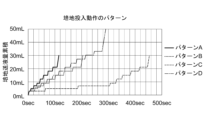
- FIG. 13 is a diagram showing a pattern of a culture medium introduction operation in the frozen cell thawing device of the embodiment.
- FIG. 1 shows a schematic configuration of a frozen cell thawing device according to one embodiment of the present invention.
- the frozen cell thawing device 11 includes a first container 13 that contains frozen cells 12, and a melting unit 15 that applies melting heat from a culture medium 14 in the first container 13 to the frozen cells 12 contained in the first container 13.
- the first container 13 can be composed of, for example, a glass vial 13a and a cap 13b that closes the opening of the vial 13a.
- the frozen cells 12 are contained in the vial 13a.
- a suspension is contained in the vial 13a.
- the suspension is frozen together with the vial 13a.
- the frozen cells 12 can be cooled with liquid nitrogen, for example. At this time, the temperature of the frozen cells 12 drops to around minus 196°C.
- An inlet port 16 and an outlet port 17 are formed in the cap 13b.
- the suspension is composed of a freezing solution and cells dispersed in the freezing solution.
- the freezing solution contains a culture medium, a cell freezing solution, and human serum albumin.
- the cell freezing solution contains, for example, dimethyl sulfoxide (DMSO) as a cryoprotectant.
- DMSO dimethyl sulfoxide
- the concentration of dimethyl sulfoxide is, for example, 5 vol% to 10 vol% of the freezing solution, specifically set to 5 vol%.
- Dimethyl sulfoxide can prevent the expansion of water that solidifies within the cells when the cells are frozen.
- Dimethyl sulfoxide can effectively prevent the death of cells.
- other cryoprotectants include glycerol, ethylene glycol, and propylene glycol.
- the above cryoprotectants are cell membrane permeable and have the effect of penetrating into cells and suppressing ice crystal formation, but they are known to be transformed into harmful substances through metabolism within the cells and to exhibit biological toxicity.
- the first container 13 is connected to a sensible heat change unit 23 that heats the vial 13a from the outside.
- the sensible heat change unit 23 includes a heater 24 that heats the vial 13a to a temperature lower than the melting temperature of the frozen cells 12.
- the heater 24 can have a shape that receives the vial 13a and supports it, for example. Since the temperature of the heater 24 is limited to a temperature lower than the melting temperature of the frozen cells 12, melting of the frozen cells 12 can be avoided by heat transfer from the vial 13a. On the other hand, the temperature of the frozen cells 12 can be brought as close as possible to the melting temperature by sensible heat change.
- the temperature of the heater 24 is set to, for example, -1°C.
- the temperature of the heater 24 may be set to a high temperature within a range that does not kill the cells, for example, 37°C to 42°C, specifically 42°C, in order to hasten the sensible heat change.
- the sensible heat change unit 23 heats the temperature of the frozen cells 12 to as high a temperature as possible through sensible heat change prior to thawing, so that the thermal energy of the culture medium can be efficiently utilized for latent heat change, and thawing of the frozen cells 12 based on the culture medium can be promoted. If the temperature of the frozen cells 12 is lower than the melting temperature of the culture medium, the culture medium in contact with the frozen cells 12 will freeze, hindering thawing of the frozen cells 12; however, if the temperature of the frozen cells 12 is increased, the freezing of the culture medium can be avoided even if the culture medium comes into contact with the frozen cells 12, and the culture medium can efficiently thaw the frozen cells 12.
- a tilt unit 21 is connected to the first container 13 to rotate the first container 13 around the horizontal axis 18.
- the tilt unit 21 includes a motor 22, for example, connected to a heater 24, to drive the heater 24 around the horizontal axis 18.
- the motor 22 includes, for example, a drive shaft that rotates around its axis in response to the supply of power. The rotational force of the drive shaft can be transmitted to the heater 24 via a gear mechanism.
- the tilt unit 21 allows the attitude of the first container 13 to change around the horizontal axis 18.
- the first container 13 can be held in a first position where the central axis of the vial (cylinder) 13a coincides with the vertical direction, and in a second position where the cap 13b is located below the bottom of the vial 13a. In the second position, the discharge port 17 is located below the introduction port 16.
- the inlet pipe 25 can be composed of a tube made of soft resin, for example.
- a second container 27 that holds a liquid culture medium 26 is connected to the other end of the inlet pipe 25.
- a culture medium suitable for the cells contained in the frozen cells 12 is used as the culture medium 26.
- the culture medium 26 can provide a survival environment for the cells at room temperature, for example.
- the liquid culture medium 26 is introduced from the inlet pipe 25 to the first container 13. The introduced culture medium comes into contact with the frozen cells 12. In this way, the heat of fusion is transferred from the culture medium 26 to the frozen cells 12.
- a heating unit 31 is connected to the second container 27 for heating the culture medium 26 contained in the second container 27.
- the heating unit 31 can heat the culture medium 26 in the second container 27 to above room temperature. Thermal energy is supplied to the culture medium 26.
- the culture medium 26 is heated prior to introduction into the first container 13. However, the temperature of the culture medium 26 is maintained below the cell death temperature. Here, the temperature of the culture medium 26 is limited to 37°C or below.
- One end of a discharge pipe 32 that defines one flow path is connected to the discharge port 17 of the cap 13b.
- the other end of the discharge pipe 32 is connected to a third container 33 that collects the thawed cells.
- the discharge pipe 32 guides the discharge of the culture medium containing the thawed cells from the first container 13 to the third container 33.
- the suspension that has been thawed and diluted with the culture medium flows into the third container 33.
- a pump 34 is connected to the inlet pipe 25 to move the culture medium from the second container 27 toward the first container 13.
- the pump 34 can function as a liquid flow unit that generates a relative movement of the culture medium with respect to the frozen cells 12 in the first container 13.
- a tube pump can be used for the pump 34. Since the first container 13 is sealed, the pressure of the pump 34 can promote the discharge of the diluted suspension from the first container 13.
- the flow rate of the culture medium can be adjusted according to the operation of the pump 34. By adjusting the flow rate in this way, the concentration of dimethyl sulfoxide in the culture medium can be maintained at 3 vol% or less when the thawed cells in the first container 13 are dispersed in the culture medium.
- the thawed cells come into contact with the culture medium containing dimethyl sulfoxide at a concentration of 3 vol% or less, the death of the cells due to dimethyl sulfoxide can be reduced regardless of the contact time with the culture medium.
- the cells can be thawed well.
- the concentration of dimethyl sulfoxide in the medium is preferably maintained at 1 vol% or less when the thawed cells are dispersed in the medium. This further reduces cell death, allowing the cells to be thawed well.
- a control unit 35 is connected to the motor 22, the heater 24, the heating unit 31, and the pump 34.
- the control unit 35 supplies control signals to the motor 22, the heater 24, the heating unit 31, and the pump 34, respectively.
- the motor 22 drives the first container 13 around the horizontal axis 18 between the first position and the second position in response to the supply of the control signal.
- the heater 24 contacts the first container 13 at a temperature specified by the control signal in response to the supply of the control signal.
- the control signal can be generated, for example, based on the output of a temperature sensor attached to the vial 13a.
- the heating unit 31 contacts the second container 27 at a temperature specified by the control signal in response to the supply of the control signal.
- the control signal can be generated, for example, based on the output of a temperature sensor incorporated in the second container 27 to detect the temperature of the culture medium 26.
- the control unit 35 can be composed of, for example, a microprocessor unit (MPU). In this case, the operation of the control unit 35 can be realized based on software stored in the memory in the control unit 35.
- MPU microprocessor unit
- Frozen cells 12 are prepared.
- the frozen cells 12 correspond to a coagulated body of the suspension.
- the suspension is contained in a first container 13 and frozen together with the first container 13.
- the freezing treatment liquid is formed, for example, of 50 vol. % culture medium, 34 vol. % cell freezing preservation liquid, and 16 vol. % human serum albumin.
- the freezing treatment liquid contains dimethyl sulfoxide at a concentration of 5 vol. %. Dimethyl sulfoxide can effectively prevent the death of cells when they are frozen.
- the first container 13 containing the frozen cells 12 is cooled, for example, with liquid nitrogen.
- the first container 13 of frozen cells 12 is set in the melting unit 15.
- the first container 13 is attached to and supported by, for example, a heater 24.
- An inlet pipe 25 is connected to the inlet port 16 of the cap 13b.
- the inlet pipe 25 connects the first container 13 to a second container 27.
- An outlet pipe 32 is connected to the outlet port 17 of the cap 13b.
- the outlet pipe 32 connects the first container 13 to a third container 33.
- a control unit 35 controls the tilt unit 21.
- the first container 13 is positioned at a first position about the horizontal axis 18.
- the second container 27 holds the liquid culture medium 26.
- the control unit 35 controls the heating unit 31.
- a control signal is supplied from the control unit 35 to the heating unit 31.
- the heating unit 31 heats the culture medium 26 in the second container 27.
- the culture medium 26 can be heated to a temperature higher than room temperature.
- the heating unit 31 is maintained at, for example, 37°C.
- the control unit 35 controls the sensible heat change unit 23.
- a control signal is supplied from the control unit 35 to the heater 24.
- the heater 24 heats the frozen cells 12 in the vial 13a. As shown in FIG. 2, thermal energy is transferred from the vial 13a to the frozen cells 12. A sensible heat change is realized in the frozen cells 12. The temperature of the frozen cells 12 rises. The frozen cells 12 are warmed to below the melting temperature. The temperature of the frozen cells 12 is maintained below the melting temperature.
- the control unit 35 controls the pump 34.
- the liquid culture medium 26 flows from the second container 27 into the first container 13.
- the culture medium 38 comes into contact with the surface of the frozen cells 12 in the first container 13.
- Thermal energy (heat of fusion) 39 is transferred from the culture medium 38 to the surface of the frozen cells 12.
- the frozen cells 12 melt.
- the thawed suspension can be dispersed in the culture medium 38 immediately.
- the thawed suspension is diluted with the culture medium 38.
- the cells 41 are dispersed in the culture medium 38. Since the suspension is pushed away from the surface of the frozen cells 12 by the flow of the culture medium 38, the concentration of the cryoprotectant can be regulated within a good range.
- the effect of the cryoprotectant on the cells 41 can be avoided as much as possible. Regardless of the duration of thawing, the death of the cells 41 due to the cryoprotectant can be reduced.
- the cells 41 can be thawed well. Prior to the introduction of the culture medium 38, the culture medium 38 can be warmed to a temperature higher than room temperature. The thawing of frozen cells 12 can be accelerated.
- control unit 35 controls the operation of the pump 34 according to the temperature of the frozen cells 12.
- a control signal is supplied from the control unit 35 to the pump 34.
- the control signal specifies the amount of operation of the pump 34 based on the volume of the suspension melted by convective heat transfer in the medium 38.
- the amount of operation of the pump 34 determines the flow rate of the medium 38. Based on the determined flow rate, the concentration of dimethyl sulfoxide in the medium 38 is maintained at 1 vol% or less when the thawed cells 41 are dispersed in the medium 38.
- the thawed cells 41 come into contact with the medium 38 containing dimethyl sulfoxide at a concentration of 3 vol% or less, preferably 1 vol% or less, death of the cells 41 due to the cryoprotectant can be reduced regardless of the contact time with the medium 38.
- the cells 41 can be thawed well.
- the culture medium 38 containing the thawed cells 41 flows from the first container 13 into the third container 33.
- the cells 41 are thus collected in the third container 33.
- the cells 41 can be separated from the culture medium 38, for example, by the action of a centrifuge.
- the control unit 35 may control the tilting unit 21 during thawing of the frozen cells 12.
- the first container 13 can be positioned at a second position around the horizontal axis 18. In the second position, the discharge port 17 of the cap 13b is positioned below the frozen cells 12, so that discharge of the thawed cells 41 can be facilitated.
- the heater 24 of the sensible heat change unit 23 heats the vial 13a below the melting temperature of the frozen cells 12. Melting of the frozen cells 12 due to heat transfer from the heater 24 can be avoided. Melting of the frozen cells 12 separated from dilution can be prevented. In this way, the cells 41 can be well protected from a high concentration of cryoprotectant. Cell death due to the cryoprotectant can be reduced.
- the thermal energy 39 of the medium 38 can be efficiently used for latent heat change. Thawing of the frozen cells 12 based on the medium 38 can be promoted.
- the temperature of the frozen cells 12 is raised as high as possible, freezing of the medium 38 can be avoided even if the medium 38 comes into contact with the frozen cells 12.
- the medium 38 can efficiently thaw the frozen cells 12. If the temperature of the frozen cells 12 is lower than the melting temperature of the medium 38, the medium 38 in contact with the frozen cells 12 will freeze. This will cause problems with thawing frozen cells 12.
- the "temperature having a sufficient amount of heat to thaw the cells” is expressed by the following formula, where M i is the mass [kg] of the frozen cells 12, ⁇ i is the initial temperature [°C] of the frozen cells, C i is the specific heat [J/(kg ⁇ K)] of the frozen cells, L is the latent heat [J/kg] of the frozen cells, M w is the mass [kg] of the medium, ⁇ w is the initial temperature [°C] of the medium, and C w is the specific heat [J/(kg ⁇ K)] of the medium.
- the frozen cells and culture medium were placed in a cylindrical container.
- the container was assumed to be insulated in the calculations. Convective heat transfer was not taken into account. Only temperature changes (sensible heat changes) and phase changes (latent heat changes) due to thermal conduction were considered.
- the calculations were performed centrally, assuming that there was no temperature gradient in the radial direction of the cylinder. As shown in Figure 5, in Example 1, it was calculated that the amount of melting per unit time was maintained roughly constant. As shown in Figure 6, it was calculated that the temperature was maintained roughly constant on the surface of the frozen cells regardless of the passage of time.
- the heat of thawing is transferred to the frozen cells 12 from the culture medium in contact with the frozen cells 12.
- the thawed suspension can be dispersed in the culture medium immediately.
- the thawed suspension can be diluted with the culture medium. Since the suspension is pushed away from the frozen cells 12 by the flow of the culture medium, the concentration of dimethyl sulfoxide contained in the cell cryopreservation solution can be regulated within a good range. In this way, the influence of the cryoprotectant can be avoided as much as possible when thawing the frozen cells. Regardless of the duration of thawing, cell death due to dimethyl sulfoxide contained in the cryoprotectant is reduced, and the cells can be thawed well.
- Example 2 The inventor prepared a suspension of iris pigmented epithelial cells.
- the cell concentration was set to 1.0-2.0x10 6 [live cells/mL] in the freezing solution.
- the freezing solution was formed of 50 vol% medium, 34 vol% cell cryopreservation solution, and 16 vol% human serum albumin.
- the freezing solution contained dimethyl sulfoxide at a concentration of 5 vol%.
- the suspension was sealed in a 5 [mL] storage container.
- the storage container was slowly cooled in a freezer at minus 80°C.
- the cells were frozen in the storage container.
- the total amount of frozen cells and medium was adjusted to 30 [mL].
- the medium was introduced into the storage container in several patterns. In Example 7, two storage containers were directly connected. In this verification, a heating unit was used instead of the sensible heat change unit 23.
- Table 3 The experimental conditions and results are shown in Table 3.
- cell viability refers to the total number of viable cells, including the remaining frozen cells
- cell yield refers to the number of cells contained in the medium discharged from the discharge pipe 32.
- Frozen cell thawing device 12 Frozen cells 13 Container (first container) 15 Melting unit 23 Sensible heat change unit 25 Inlet pipe 26 Culture medium (in the second container) 31 Heating unit 32 Discharge pipe 34 Liquid flow unit (pump) 38 Culture medium (in the first container)
Landscapes
- Life Sciences & Earth Sciences (AREA)
- Chemical & Material Sciences (AREA)
- Engineering & Computer Science (AREA)
- Bioinformatics & Cheminformatics (AREA)
- Health & Medical Sciences (AREA)
- Wood Science & Technology (AREA)
- Biotechnology (AREA)
- Organic Chemistry (AREA)
- Zoology (AREA)
- Microbiology (AREA)
- Sustainable Development (AREA)
- Biomedical Technology (AREA)
- Biochemistry (AREA)
- General Engineering & Computer Science (AREA)
- General Health & Medical Sciences (AREA)
- Genetics & Genomics (AREA)
- Medicinal Chemistry (AREA)
- Apparatus Associated With Microorganisms And Enzymes (AREA)
- Micro-Organisms Or Cultivation Processes Thereof (AREA)
Abstract
La présente invention concerne un dispositif de décongélation de cellules congelées permettant d'éviter au maximum les effets des cryoprotecteurs lors de la décongélation des cellules congelées. Le dispositif de décongélation de cellules congelées (11) contient : un tuyau d'introduction (25) pour guider un milieu de culture liquide 26 ; une unité de fusion (15) pour maintenir un récipient (13) pour introduire le milieu de culture (26) à partir du tuyau d'introduction (25) tout en abritant des cellules congelées (12) contenant un liquide de traitement par congélation qui contient un cryoprotecteur, et pour appliquer une chaleur de fusion aux cellules congelées (12) à partir du milieu de culture en contact avec les cellules congelées (12) ; une unité d'écoulement de liquide (34) pour générer un mouvement relatif du milieu de culture par rapport aux cellules congelées (12) ; et un tuyau d'évacuation (32) qui est relié au récipient (13) et qui guide l'évacuation du milieu de culture contenant les cellules décongelées. La concentration du cryoprotecteur dans le milieu de culture lorsque les cellules décongelées sont dispersées dans le milieu de culture est maintenue à 3 % vol ou moins, de préférence à 1 % vol ou moins.
Applications Claiming Priority (2)
| Application Number | Priority Date | Filing Date | Title |
|---|---|---|---|
| JP2023094537A JP2024176189A (ja) | 2023-06-08 | 2023-06-08 | 凍結細胞解凍装置 |
| JP2023-094537 | 2023-06-08 |
Publications (1)
| Publication Number | Publication Date |
|---|---|
| WO2024252753A1 true WO2024252753A1 (fr) | 2024-12-12 |
Family
ID=93795832
Family Applications (1)
| Application Number | Title | Priority Date | Filing Date |
|---|---|---|---|
| PCT/JP2024/010319 Ceased WO2024252753A1 (fr) | 2023-06-08 | 2024-03-15 | Dispositif de décongélation de cellules congelées |
Country Status (3)
| Country | Link |
|---|---|
| JP (1) | JP2024176189A (fr) |
| TW (1) | TW202449136A (fr) |
| WO (1) | WO2024252753A1 (fr) |
Citations (4)
| Publication number | Priority date | Publication date | Assignee | Title |
|---|---|---|---|---|
| JP2009189362A (ja) * | 2008-01-15 | 2009-08-27 | Panasonic Corp | 細胞培養装置 |
| WO2015159950A1 (fr) * | 2014-04-17 | 2015-10-22 | 東京エレクトロン株式会社 | Procédé de production d'agrégats cellulaires de cellules souches pluripotentes et système de production d'agrégats cellulaires |
| JP2019006695A (ja) * | 2017-06-22 | 2019-01-17 | 学校法人明治大学 | 生体試料保存容器 |
| JP2019154761A (ja) * | 2018-03-13 | 2019-09-19 | テルモ株式会社 | 融解装置及び融解方法 |
-
2023
- 2023-06-08 JP JP2023094537A patent/JP2024176189A/ja active Pending
-
2024
- 2024-03-15 WO PCT/JP2024/010319 patent/WO2024252753A1/fr not_active Ceased
- 2024-04-01 TW TW113112317A patent/TW202449136A/zh unknown
Patent Citations (4)
| Publication number | Priority date | Publication date | Assignee | Title |
|---|---|---|---|---|
| JP2009189362A (ja) * | 2008-01-15 | 2009-08-27 | Panasonic Corp | 細胞培養装置 |
| WO2015159950A1 (fr) * | 2014-04-17 | 2015-10-22 | 東京エレクトロン株式会社 | Procédé de production d'agrégats cellulaires de cellules souches pluripotentes et système de production d'agrégats cellulaires |
| JP2019006695A (ja) * | 2017-06-22 | 2019-01-17 | 学校法人明治大学 | 生体試料保存容器 |
| JP2019154761A (ja) * | 2018-03-13 | 2019-09-19 | テルモ株式会社 | 融解装置及び融解方法 |
Also Published As
| Publication number | Publication date |
|---|---|
| JP2024176189A (ja) | 2024-12-19 |
| TW202449136A (zh) | 2024-12-16 |
Similar Documents
| Publication | Publication Date | Title |
|---|---|---|
| JP4022878B2 (ja) | 樹枝状凍結境界面速度が制御される冷凍保存システム | |
| JP7237406B2 (ja) | 凍結保存方法及び装置 | |
| JP4693834B2 (ja) | 低温保存システムのためのアイスシーディング装置 | |
| US8037696B2 (en) | Method and apparatus for freezing or thawing of a biological material | |
| US11441979B2 (en) | Thawing methods and apparatus | |
| US20090255276A1 (en) | Enhanced integrated operation blender based sterile medical ice slurry production device | |
| JP2001514877A (ja) | 凍結保存を容易にするためのカセット型デバイスおよびシステム | |
| Gavish et al. | Cryopreservation of whole murine and porcine livers | |
| US10046325B2 (en) | Self-heating device for warming of biological samples | |
| WO2007093978A1 (fr) | Organes solides viables congelés et procédé de congélation de ceux-ci | |
| WO2024252753A1 (fr) | Dispositif de décongélation de cellules congelées | |
| JP2001514866A (ja) | 凍結保護剤除去方法および装置 | |
| CN111479465A (zh) | 涉及冷冻生物样品的至少部分的设备和方法 | |
| JPH0160441B2 (fr) | ||
| Nannou et al. | Cryopreservation: Methods, equipment and critical concerns | |
| US20250234858A1 (en) | Systems and methods for cryopreservation of biological material | |
| Deeb et al. | ADVANCEMENTS IN CRYOGENIC COOLING ANDWARMING INSTRUMENTATION FOR CRYOPRESERVATION IN MILLILITER AND SUB-MILLILITER SCALE | |
| CN118202995A (zh) | 一种用于大体积生物样本的新型等容玻璃化装置及方法 | |
| Sareen et al. | Overview of Cryobiology in ART | |
| Bischof | 11. Thermodynamics and beyond: connecting modeling with outcome in cryobiology | |
| JPH0534953B2 (fr) | ||
| Gavish et al. | Cryopreservation of a whole liver | |
| Beckmann et al. | The freezing behavior of human lymphocytes in a process of directional solidification characterized by thermal gradient and ice front velocity | |
| Talwar | Overview of Cryobiology in Assisted Reproductive Technology |
Legal Events
| Date | Code | Title | Description |
|---|---|---|---|
| 121 | Ep: the epo has been informed by wipo that ep was designated in this application |
Ref document number: 24818992 Country of ref document: EP Kind code of ref document: A1 |
|
| NENP | Non-entry into the national phase |
Ref country code: DE |