WO2024254474A2 - Block copolymers with polyester moieties and applications thereof - Google Patents
Block copolymers with polyester moieties and applications thereof Download PDFInfo
- Publication number
- WO2024254474A2 WO2024254474A2 PCT/US2024/033044 US2024033044W WO2024254474A2 WO 2024254474 A2 WO2024254474 A2 WO 2024254474A2 US 2024033044 W US2024033044 W US 2024033044W WO 2024254474 A2 WO2024254474 A2 WO 2024254474A2
- Authority
- WO
- WIPO (PCT)
- Prior art keywords
- independently
- functionalized
- unfunctionalized
- moiety
- composition
- Prior art date
- Legal status (The legal status is an assumption and is not a legal conclusion. Google has not performed a legal analysis and makes no representation as to the accuracy of the status listed.)
- Ceased
Links
Classifications
-
- C—CHEMISTRY; METALLURGY
- C08—ORGANIC MACROMOLECULAR COMPOUNDS; THEIR PREPARATION OR CHEMICAL WORKING-UP; COMPOSITIONS BASED THEREON
- C08G—MACROMOLECULAR COMPOUNDS OBTAINED OTHERWISE THAN BY REACTIONS ONLY INVOLVING UNSATURATED CARBON-TO-CARBON BONDS
- C08G63/00—Macromolecular compounds obtained by reactions forming a carboxylic ester link in the main chain of the macromolecule
- C08G63/68—Polyesters containing atoms other than carbon, hydrogen and oxygen
- C08G63/688—Polyesters containing atoms other than carbon, hydrogen and oxygen containing sulfur
- C08G63/6882—Polyesters containing atoms other than carbon, hydrogen and oxygen containing sulfur derived from hydroxy carboxylic acids
-
- C—CHEMISTRY; METALLURGY
- C08—ORGANIC MACROMOLECULAR COMPOUNDS; THEIR PREPARATION OR CHEMICAL WORKING-UP; COMPOSITIONS BASED THEREON
- C08F—MACROMOLECULAR COMPOUNDS OBTAINED BY REACTIONS ONLY INVOLVING CARBON-TO-CARBON UNSATURATED BONDS
- C08F293/00—Macromolecular compounds obtained by polymerisation on to a macromolecule having groups capable of inducing the formation of new polymer chains bound exclusively at one or both ends of the starting macromolecule
- C08F293/005—Macromolecular compounds obtained by polymerisation on to a macromolecule having groups capable of inducing the formation of new polymer chains bound exclusively at one or both ends of the starting macromolecule using free radical "living" or "controlled" polymerisation, e.g. using a complexing agent
-
- C—CHEMISTRY; METALLURGY
- C08—ORGANIC MACROMOLECULAR COMPOUNDS; THEIR PREPARATION OR CHEMICAL WORKING-UP; COMPOSITIONS BASED THEREON
- C08G—MACROMOLECULAR COMPOUNDS OBTAINED OTHERWISE THAN BY REACTIONS ONLY INVOLVING UNSATURATED CARBON-TO-CARBON BONDS
- C08G63/00—Macromolecular compounds obtained by reactions forming a carboxylic ester link in the main chain of the macromolecule
- C08G63/66—Polyesters containing oxygen in the form of ether groups
- C08G63/664—Polyesters containing oxygen in the form of ether groups derived from hydroxy carboxylic acids
-
- C—CHEMISTRY; METALLURGY
- C08—ORGANIC MACROMOLECULAR COMPOUNDS; THEIR PREPARATION OR CHEMICAL WORKING-UP; COMPOSITIONS BASED THEREON
- C08G—MACROMOLECULAR COMPOUNDS OBTAINED OTHERWISE THAN BY REACTIONS ONLY INVOLVING UNSATURATED CARBON-TO-CARBON BONDS
- C08G63/00—Macromolecular compounds obtained by reactions forming a carboxylic ester link in the main chain of the macromolecule
- C08G63/68—Polyesters containing atoms other than carbon, hydrogen and oxygen
- C08G63/685—Polyesters containing atoms other than carbon, hydrogen and oxygen containing nitrogen
- C08G63/6852—Polyesters containing atoms other than carbon, hydrogen and oxygen containing nitrogen derived from hydroxy carboxylic acids
-
- C—CHEMISTRY; METALLURGY
- C08—ORGANIC MACROMOLECULAR COMPOUNDS; THEIR PREPARATION OR CHEMICAL WORKING-UP; COMPOSITIONS BASED THEREON
- C08F—MACROMOLECULAR COMPOUNDS OBTAINED BY REACTIONS ONLY INVOLVING CARBON-TO-CARBON UNSATURATED BONDS
- C08F2438/00—Living radical polymerisation
- C08F2438/03—Use of a di- or tri-thiocarbonylthio compound, e.g. di- or tri-thioester, di- or tri-thiocarbamate, or a xanthate as chain transfer agent, e.g . Reversible Addition Fragmentation chain Transfer [RAFT] or Macromolecular Design via Interchange of Xanthates [MADIX]
Definitions
- RAFT reversible addition–fragmentation chain transfer
- PCT published application 2020/117170 discloses a biosensor comprising a polyphosphonoundecyl acrylate-co-polyvinylimidazole-co-polyvinylferrocene-co-polyglycidyl methacrylate tetra block copolymer as an electron transmitter between the glucose oxidase and redox centre of the electrode for measuring glucose from sweat.
- U.S. U.S.
- U.S. patent 10,905,636 discloses block copolymers comprising repeating units derived from monomers comprising lactam and acryloyl moieties and hydrophobic monomers, compositions, and applications thereof.
- U.S. published application 2020/0407470 discloses methods of synthesis of homopolymers and non-homopolymers comprising repeating units derived from monomers comprising lactam and acryloyl moieties in an aqueous medium.
- U.S. published application 2019/0382519 discloses cross-linked block copolymers comprising repeating units derived from monomers comprising lactam and acryloyl moieties, compositions, and applications thereof.
- U.S. published application 2019/0382519 discloses cross-linked block copolymers comprising repeating units derived from monomers comprising lactam and acryloyl moieties, compositions, and applications thereof.
- Non-limiting examples of alkalizing agent can be chosen from ammonia, alkali carbonates, alkanolamines, like mono-, di- and triethanolamines, as well as their derivatives, sodium or potassium hydroxides and compounds of the following formula: wherein R 1 may be a propylene residue that may be optionally substituted with an hydroxyl group or a C 1 -C 4 alkyl radical; R 2 , R 3 , R 4 and R 5 are identical or different and represent a hydrogen atom, a C1-C4 alkyl radical or C1-C4 hydroxyalkyl radical.
- the personal care compositions may additionally comprise one or more buffers.
- Suitable buffering agents include, but are not limited to alkali or alkali earth carbonates, phosphates, bicarbonates, citrates, borates, acetates, acid anhydrides, succinates and the like, such as sodium phosphate, citrate, borate, acetate, bicarbonate, and carbonate.
- the personal care compositions may be formulated in any of the product forms known to a person of ordinary skill in the art. Non-limiting product forms are described below.
- Non-limiting sun care product forms include: solutions, liquids, creams, powders, lotions, gels, pastes, waxes, aerosols, sprays, mists, roll-ons, sticks, milks, emulsions, and wipes.
- Non-limiting body care product forms include: foams, peels, masks, gels, sticks, aerosols, lotions, salts, oils, balls, liquids, powders, peels, pearls, bar soaps, liquid soaps, body washes, cleansers, scrubs, creams, flakes, other bath and shower products, shaving products, waxing products, and sanitizers.
- (6) Foot care Non-limiting foot care product forms include: mousses, creams, lotions, powders, liquids, sprays, aerosols, gels, flakes, and scrubs.
- Non-limiting oral care product forms include: toothpastes, adhesives, gums, gels, powders, creams, solutions, lotions, liquids, dispersions, suspensions, emulsions, tablets, capsules, rinses, flosses, aerosols, strips, films, pads, bandages, microencapsulated products, syrups, and lozenges.
- personal care compositions comprising polymer(s) described herein complexed with iodine. These compositions may be used in treating skin conditions, non- limiting examples of which include dermatitis, wounds, bacterial infections, burns, rashes, and herpes.
- the personal care compositions may be used in products for male and/or female personal grooming and/or toiletry such as: sanitary napkins, baby diapers, adult diapers, feminine products, products for incontinence, and other related products.
- products for male and/or female personal grooming and/or toiletry such as: sanitary napkins, baby diapers, adult diapers, feminine products, products for incontinence, and other related products.
- An array of additional personal care compositions, methods, and uses are contemplated.
- compositions may be found in the following brochures by Ashland Specialty Ingredients (Bridgewater, NJ), each of which is herein incorporated in its entirety by reference: Plasdone TM K-29/32, Advanced non-oxidative, non-abrasive teeth whitening in toothpastes, mouthwashes, and oral rinses (2010), Polymers for oral care, product and applications guide (2002), A composition guide for excellent hair styling gels and lotions (4/2003), PVP (polyvinylpyrrolidone) (no date provided), and Textile chemicals, solutions for the most challenging product environment (no date provided).
- PVP polyvinylpyrrolidone
- compositions described in the publications listed below, each of which is herein incorporated in its entirety by reference: (1) Prototype Compositions - Personal Care Products (2009) from Xiameter, Dow Corning. (2) Sun care compositions under the category “Refreshing Sun”, “Younger Sun”, “Sun for Men”, and “Sunny Glow” from Dow Corning. (3) Cosmetic Nanotechnology, Polymers and Colloids in Cosmetics, 2007, ACS Symposium Series. (4) Review Paper: Lipid nanoparticles (SLN, NLC) in cosmetic and pharmaceutical dermal products, International Journal of Pharmaceutics, Volume 366, 2009. Optional: Additional composition ingredients [00134] It is also contemplated that the personal care compositions optionally may contain one or more additional ingredients.
- Conditioning agents may be chosen from synthetic oils, mineral oils, vegetable oils, fluorinated or perfluorinated oils, natural or synthetic waxes, silicones, cationic polymers, proteins and hydrolyzed proteins, cationic surfactants, ceramide type compounds, fatty amines, fatty acids and their derivatives, as well as mixtures of these different types of compounds.
- suitable synthetic oils include: polyolefins, e.g., poly- ⁇ - olefins, such as polybutenes, polyisobutenes, polydecenes, and blends thereof. The polyolefins may be hydrogenated.
- the conditioning agent may be a fluorinated or a perfluorinated oil.
- the fluoridated oils may also be fluorocarbons such as fluoramines, e.g., perfluorotributylamine, fluoridated hydrocarbons such as perfluorodecahydronaphthalene, fluoroesters, fluoroethers, and blends thereof.
- Non-limiting examples of suitable silicones include: polyalkyl siloxanes, polyaryl siloxanes, polyalkyl aryl siloxanes, silicone gums and resins, polyorgano siloxanes modified by organofunctional groups, and blends thereof.
- Suitable polyalkyl siloxanes include polydimethyl siloxanes with terminal trimethyl silyl groups or terminal dimethyl silanol groups (dimethiconol) and polyalkyl (C1-C20) siloxanes.
- Suitable polyalkyl aryl siloxanes include polydimethyl methyl phenyl siloxanes and polydimethyl diphenyl siloxanes.
- Suitable silicone gums include polydiorganosiloxanes, such as those having a number- average molecular weight between 200,000 Da and 1,000,000 Da used alone or mixed with a solvent.
- suitable silicone gums include: polymethyl siloxane, polydimethyl siloxane/methyl vinyl siloxane gums, polydimethyl siloxane/diphenyl siloxane, polydimethyl siloxane/phenyl methyl siloxane, polydimethyl siloxane/diphenyl siloxane/methyl vinyl siloxane, and blends thereof.
- Non-limiting examples of suitable silicone resins include silicones with a dimethyl/trimethyl siloxane structure and resins of the trimethyl siloxysilicate type.
- the organo-modified silicones suitable for use include silicones such as those previously defined and containing one or more organofunctional groups attached by means of a hydrocarbon radical, and grafted silicone polymers.
- the organo-modified silicones may be one from the amino functional silicone family.
- the silicones may be used in the form of emulsions, nano-emulsions, or micro- emulsions.
- the cationic polymers that may be used as conditioning agents generally have a molecular weight (average number) from about 500 Da to about 5,000,000 Da.
- the copolymers may contain one or more units derived from acrylamides, methacrylamides, diacetone acrylamides, acrylic or methacrylic acids or their esters, vinyl lactams such as vinyl pyrrolidone or vinyl caprolactam, and vinyl esters.
- polymers composed of piperazinyl units and alkylene or hydroxy alkylene divalent radicals with straight or branched chains, possibly interrupted by atoms of oxygen, sulfur, nitrogen, or by aromatic or heterocyclic cycles, as well as the products of the oxidation and/or quaternization of such polymers.
- water-soluble polyamino amides prepared by polycondensation of an acid compound with a polyamine. These polyamino amides may be reticulated.
- a polyalkylene polyamine containing two primary amine groups and at least one secondary amine group with a dioxycarboxylic acid chosen from among diglycolic acid and saturated dicarboxylic aliphatic acids having 3 to 8 atoms of carbon.
- Such polymers include those described in U.S. patents 3,227,615 and 2,961,347.
- (9) cyclopolymers of alkyl diallyl amine or dialkyl diallyl ammonium such as the homopolymer of dimethyl diallyl ammonium chloride and copolymers of diallyl dimethyl ammonium chloride and acrylamide.
- Non-limiting examples of suitable compounds include: hydrolyzed collagens having triethyl ammonium groups, hydrolyzed collagens having trimethyl ammonium and trimethyl stearyl ammonium chloride groups, hydrolyzed animal proteins having trimethyl benzyl ammonium groups (benzyltrimonium hydrolyzed animal protein), hydrolyzed proteins having groups of quaternary ammonium on the polypeptide chain, including at least one C1-C18 alkyl, and blends thereof.
- the conditioning agent may also comprise a cationic surfactant such as a salt of a primary, secondary, or tertiary fatty amine, optionally polyoxyalkylenated, a quaternary ammonium salt, a derivative of imadazoline, or an amine oxide.
- Conditioning agents may also be selected from the group consisting of: mono-, di-, and tri- alkyl amines, and quaternary ammonium compounds with a counterion such as a chloride, a methosulfate, a tosylate, etc.
- Non-limiting examples of suitable amines include: cetrimonium chloride, dicetyldimonium chloride, behentrimonium methosulfate, and blends thereof.
- the conditioning agent may comprise a fatty amine.
- suitable fatty amines include dodecyl amines, cetyl amines, stearyl amines such as stearamidopropyl dimethylamine, and blends thereof.
- the conditioning agent may comprise a fatty acid or derivative(s) thereof.
- Non-limiting examples of suitable fatty acids include: myristic acid, palmitic acid, stearic acid, behenic acid, oleic acid, linoleic acid, isostearic acid, and blends thereof.
- the derivatives of fatty acids include carboxylic ester acids including mono-, di-, tri- and tetra- carboxylic acids esters, amides, anhydrides, esteramides, imides, and mixtures of these functional groups.
- compositions may also be in the form of aqueous or hydro-alcoholic solutions.
- the physiological and cosmetically acceptable medium may consist exclusively of water, a cosmetically acceptable solvent, or a blend of water and a cosmetically acceptable solvent, such as a lower alcohol composed of C1 to C4, such as ethanol, isopropanol, t-butanol, n-butanol, alkylene glycols such as propylene glycol, and glycol ethers.
- personal care compositions may comprise vitamin(s), provitamin(s), and/or mineral(s).
- Non-limiting examples of suitable vitamins include ascorbic acid (vitamin C), vitamin E, vitamin E acetate, vitamin E phosphate, B vitamins such as B3 and B5, niacin, vitamin A, derivatives thereof, and blends thereof.
- suitable provitamins include: panthenol, retinol, and blends thereof.
- suitable minerals include: talc, clay, calcium carbonate, silica, kaolin, mica, and blends thereof. Further examples of minerals that may be used in the personal care compositions may be found in a brochure titled Minerals for personal care from Imerys Performance Minerals, the disclosure of which is herein incorporated in its entirety by reference.
- Non-limiting examples of suitable cationic surfactants include: derivatives of aliphatic quaternary ammonium compounds having at least one long alkyl chain containing from about 8 to about 18 carbon atoms, such as, lauryl trimethylammonium chloride, cetyl pyridinium chloride, cetyl trimethylammonium bromide, di-isobutylphenoxyethyl-dimethylbenzylammonium chloride, coconut alkyltrimethylammonium nitrite, cetyl pyridinium fluoride, and blends thereof.
- quaternary ammonium fluorides having detergent properties such as compounds described in U.S. Patent 3,535,421.
- Nonionic surfactants may act as germicides in the compositions disclosed herein.
- Nonionic surfactants useful herein include compounds produced by the condensation of alkylene oxide groups (hydrophilic in nature) with an organic hydrophobic compound which may be aliphatic or alkylaromatic in nature.
- Non-limiting examples of suitable zwitterionic surfactants include betaines and derivatives of aliphatic quaternary ammonium compounds in which the aliphatic radicals can be straight chain or branched, and which contain an anionic water-solubilizing group, e.g., carboxy, sulfonate, sulfate, phosphate, or phosphonate.
- Stepan ® Pearl 2 Stepan ® Pearl 4, Stepan ® Pearl Series, Neobee ® M-20, Stepan ® PTC, Amphosol ® 2CSF, Steol ® , Stepan-Mild ® GCC, Stepan ® SLL-FB, Stepanol ® AM, Stepanol ® PB, Alpha-Step ® BSS-45, Bio-Terge ® 804, Stepan-Mild ® L3, Stepan ® SLL-FB, Stepan ® SSL-CG, and Stepanol ® CFAS-70 from Stepan Company.
- compositions that may comprise the polymers described herein. Disclosures on such compositions may be found in the publications listed below, each of which is herein incorporated in its entirety by reference: (1) Prototype Compositions - Personal Care Products (2009) from Xiameter, Dow Corning. (2) Sun care compositions under the category “Refreshing Sun”, “Younger Sun”, “Sun for Men”, and “Sunny Glow” from Dow Corning. (3) Cosmetic Nanotechnology, Polymers and Colloids in Cosmetics, 2007, ACS Symposium Series.
- Non-limiting examples of properties that may be beneficially modified by the block copolymers and compositions disclosed herein are solution viscosity, rheology, thickening, film formation, lubricity, gloss, adhesion, impact resistance, fluid snap, film brittleness, film toughness, coating hardness, water resistance, tack, surface gloss and shine, surface tension, wetting, foaming and foam stabilization, tensile strength, solvency, solubilization speed, compatibility, bio- adhesion, particulate suspension, particulate dispersive properties, dispersive properties, delivery of hydrophobic compositions, formulation stabilization, suspension stability, dispersion stability, flexibility, chemical resistance, abrasion resistance, penetration, hydrolytic degradability, biodegradability, biocompatibility, and combinations thereof.
- This vial was placed in an ice bath and deoxygenated with a stream of dry N 2 gas for 30 min. The vial was then allowed to warm to room temperature for 10 min before being immersed in an oil bath set at 80 °C. The reaction mixture was stirred magnetically and monitored by visual inspection. As soon as the reaction mixture became much more viscous after 7.5 min, deoxygenated deionized water (7.07 mL, preheated to 80 °C, targeting 10% w/w solids) was added using a degassed syringe/needle. At this point, the reaction vial was removed from the oil bath and subjected to vortex mixing for 2 min to ensure a homogeneous solution, then re-immersed in the oil bath.
- the vial was then allowed to warm to room temperature for 10 min before being immersed in an oil bath set at 80 °C.
- the reaction mixture was stirred magnetically and monitored by visual inspection. As soon as the reaction mixture became much more viscous after 14 min, deoxygenated deionized water (2.98 mL, preheated to 80 °C, targeting 10% w/w solids) was added using a degassed syringe/needle. At this point, the reaction vial was removed from the oil bath and subjected to vortex mixing for 2 min to ensure a homogeneous solution, then re-immersed in the oil bath.
- This vial was placed in an ice bath and deoxygenated with a stream of dry N 2 gas for 30 min. The vial was then allowed to warm to room temperature for 10 min before being immersed in an oil bath set at 80 °C. The reaction mixture was stirred magnetically and monitored by visual inspection. As soon as the reaction mixture became much more viscous after 10min, deoxygenated deionized water (6.87 mL, preheated to 80 °C, targeting 10% w/w solids) was added using a degassed syringe/needle. At this point, the reaction vial was removed from the oil bath and subjected to vortex mixing for 2 min to ensure a homogeneous solution, then reimmersed in the oil bath.
- Potassium dihydrogen phosphate (10.0 g, 0.073 mol) was dissolved in deionized water (80 mL). Then the solution pH was adjusted with 0.1 M HCl and made up to 100 mL using further deionized water to provide a final solution pH of 2.9. Ammonium chloride (6.80 g, 0.13 mol) was dissolved in 28% aqueous ammonia solution (100 mL) to afford a final solution pH of 10.8. A single Oxoid PBS tablet was dissolved in deionized water (100 mL) and 0.1 M HCl was used to adjust the solution pH to pH 7.4.
- a 10% w/w aqueous dispersion of PDMAC50-PCL16-PDMAC50 nanoparticles was diluted to 1.0% w/w using each of the above aqueous solutions in turn.
- the resulting three aqueous dispersions were stirred at 37 °C for four weeks and sampled periodically for GPC and DLS analysis.
- the same protocol was employed to study the hydrolytic degradation of aqueous dispersions of PCL21-PDMAC70 and PCL42-PDMAC120 nanoparticles.
- Table 1 Summary of reagent quantities used for the ring-opening polymerization of CL in dry toluene at 20 ° C. Each reaction was quenched after the stated reaction time using benzoic acid.
- Table 2 Summary of reagent quantities used for the DCC/DMAP catalyzed esterification of PCL precursors using the CEPA RAFT agent. Esterification was performed under nitrogen in refluxing dry CH 2 Cl 2 .
- Azoxystrobin 2.00 g
- PDMAC x -PCL 16 -PDMAC x nanoparticles (0.25 g, 10% w/w)
- SAG1572 antifoam (0.10 g, 1.0% w/w)
- deionized water 7.65 g
- This aqueous suspension was then ball-milled using an IKA Ultra-Turrax Tube Drive at 6000 rpm for 30 min. The beads were removed by filtration to afford a 20% w/w aqueous suspension of azoxystrobin microparticles.
- This suspension was purified by centrifugation for 10 min at 13 000 rpm using a Thermo Heraeus Biofuge Pico centrifuge. The aqueous supernatant was decanted and the sedimented azoxystrobin microparticles were redispersed in deionized water. Two further centrifugation- redispersion cycles were performed to remove any excess non-adsorbed triblock copolymer nanoparticles prior to characterization by optical microscopy, laser diffraction and TEM. Characterization Techniques 1 H NMR Spectroscopy [00251] Spectra were obtained using a 400 MHz Bruker Avance-400 spectrometer operating at 298 K with 16 scans being averaged per spectrum.
- the mean z-average particle diameter (D z ) and polydispersity index (PDI) were averaged over three consecutive runs consisting of ten measurements each.
- D z The mean z-average particle diameter
- PDI polydispersity index
- D n The mean number-average particle diameter
- D n The mean number-average particle diameter
- count rate were averaged over three consecutive runs consisting of ten measurements each.
- Copper/palladium grids (Agar Scientific, UK) were coated in-house with a thin film of amorphous carbon and then treated with a plasma glow discharge for 30 seconds to generate a hydrophilic surface.
- a 10 ⁇ L droplet of freshly diluted 1.0% w/w aqueous copolymer dispersion was placed on a hydrophilic grid for 1 min, then blotted to remove excess sample.
- Each grid was negatively stained for a further 25 seconds using a 10 ⁇ L droplet of 0.75% w/v aqueous uranyl formate solution, which was then carefully blotted to remove excess stain.
- Each grid was dried with the aid of a vacuum hose. Imaging was performed using a FEI Tecnai Spirit 2 microscope equipped with an Orius SC1000B camera operating at 80 kV.
- Aqueous Electrophoresis A Malvern Instruments Zetasizer Nano ZS instrument was used to characterize copolymer dispersions diluted to 0.1% w/w using 1 mM KCl as background electrolyte. Mobilities were determined at 20 °C and the solution pH was adjusted using either 0.1 M NaOH or 0.1 M HCl as required. Zeta potentials were calculated from the Henry equation using the Smoluchowski approximation.
- Differential Scanning Calorimetry Measurements were performed using a TA DSC25 Discovery series instrument operating from -90 to 100 °C at a rate of 10 °C min –1 using aluminum T zero pans and standard lids. Instrument calibration was performed using an indium standard.
- Shear-induced Polarized Light Imaging Shear alignment experiments were conducted using a mechano-optical rheometer (Anton Paar Physica MCR301 with SIPLI attachment). Measurements were performed using a plate ⁇ plate geometry composed of a 25 mm polished steel plate and a fused quartz plate connected to a variable temperature Peltier system. The gap between plates was set at 0.50 mm for all experiments. An additional Peltier hood was used to ensure good control of the sample temperature. Sample illumination was achieved using an Edmund Optics 150 W MI-150 high-intensity fiber- optic white light source. The polarizer and analyzer axes were crossed at 90° to obtain polarized light images, which were recorded using a color CCD camera (Lumenera Lu165c)
Landscapes
- Chemical & Material Sciences (AREA)
- Health & Medical Sciences (AREA)
- Chemical Kinetics & Catalysis (AREA)
- Medicinal Chemistry (AREA)
- Polymers & Plastics (AREA)
- Organic Chemistry (AREA)
- Graft Or Block Polymers (AREA)
- Compositions Of Macromolecular Compounds (AREA)
Abstract
The invention provides block copolymers comprising polyester linkages. These copolymers are obtained by the reaction of polyester forming precursors, RAFT agents, and radically polymerizable monomers. The invention further provides compositions comprising the block copolymers and applications thereof in various industrial areas. The invention furthermore provides a method for reducing the particle size of an active ingredient by obtaining a composition that comprises colloidal particles of the block copolymers and the active ingredient and subjecting the composition to a suitable size reduction operation. Each a, b, and R11 is described herein.
Description
BLOCK COPOLYMERS WITH POLYESTER MOIETIES AND APPLICATIONS THEREOF BACKGROUND Field of the Invention [0001] The disclosed and/or claimed inventive concept(s) provides block copolymers having polyester moieties, compositions comprising these polymers, and industrial applications of these compositions. Description of Related Art [0002] It is well-known that block copolymers undergo self-assembly both in the solid state and in solution. In the latter case, a diverse range of copolymer morphologies has been reported, including spheres, worms, or vesicles. Typically, the copolymer chains are first prepared in a non- selective solvent and then subjected to either a gradual change in solvency or a pH switch in a separate step, which is typically undertaken in dilute solution. [0003] In recent years, polymerization-induced self-assembly (PISA) of block copolymers in a solvent that is selective for the growing second block has become increasingly popular. PISA offers two decisive advantages over traditional processing methods: (i) syntheses can be conducted at up to 50% w/w solids and (ii) diblock copolymer nanoparticles are obtained directly, without requiring any post-polymerization processing steps. When combined with PISA, controlled radical polymerization techniques such as atom transfer radical polymerization (ATRP) or reversible addition–fragmentation chain transfer (RAFT) polymerization has enabled the preparation of a wide range of well-defined nanoparticles. RAFT dispersion polymerization is known to allow the efficient synthesis of spherical, worm-like or vesicular morphologies in aqueous, alcoholic, or non- polar media as well as ionic liquids. [0004] U.S. published application 2022/0298284 discloses a core-satellite micelle including a core, a shell surrounding the core, and a plurality of satellite domains positioned inside the shell. The core-satellite micelle includes a tetrablock copolymer represented by Structural Formula A1- B1-A2-B2 wherein A1 is a first-monomer first block, Bl is a second-monomer first block, A2 is a first-monomer second block, and B2 is a second-monomer second block. The first-monomer first
block Al and the first-monomer second block A2 may be each independently include any one segment selected from the segment group consisting of a polyvinylpyrrolidone segment, a polylactic acid segment, a polyvinylpyridine segment, a polystyrene segment, a polytrimethylsilylstyrene segment, a C1-C9 polyalkylene oxide segment, a polybutadiene segment, a polyisoprene segment, a polyolefin segment, and a C1-C5 polyalkyl(meth)acrylate segment. [0005] PCT published application 2020/117170 discloses a biosensor comprising a polyphosphonoundecyl acrylate-co-polyvinylimidazole-co-polyvinylferrocene-co-polyglycidyl methacrylate tetra block copolymer as an electron transmitter between the glucose oxidase and redox centre of the electrode for measuring glucose from sweat. [0006] U.S. published application 2005/0256265 discloses an article comprising S1-B1-S2-B2 tetrablock copolymer and at least one other component selected from the group consisting of olefin polymers, styrene polymers, tackifying resins, polymer extending oils and engineering thermoplastic resins, wherein S1, B1, S2, and B2 are polymer blocks, and B1 is a block of polymerized conjugated diene comprising at least 50 mole percent isoprene having an apparent molecular weight of from about 150,000 to about 400,000; S1 and S2 are blocks of polymerized monovinyl aromatic hydrocarbon having a weight average molecular weight of about 12,000 to about 40,000; and B2 is a block of polymerized conjugated diene comprising at least 50 mole percent isoprene having an apparent molecular weight of from about 15,000 to about 60,000. [0007] U.S. patent 10,905,636 discloses block copolymers comprising repeating units derived from monomers comprising lactam and acryloyl moieties and hydrophobic monomers, compositions, and applications thereof. [0008] U.S. published application 2020/0407470 discloses methods of synthesis of homopolymers and non-homopolymers comprising repeating units derived from monomers comprising lactam and acryloyl moieties in an aqueous medium. [0009] U.S. published application 2019/0382519 discloses cross-linked block copolymers comprising repeating units derived from monomers comprising lactam and acryloyl moieties, compositions, and applications thereof.
[0010] U.S. published application 2019/0375875 discloses high molecular weight block copolymers comprising repeating units derived from monomers comprising lactam and acryloyl moieties and hydrophilic monomers, compositions, and applications thereof. [0011] Yu in University of Warwick Ph.D. thesis (2019) describes the crystallization driven self- assembly of polyester based triblock copolymers. [0012] Bromley in University of Surrey Ph.D. thesis (2020) describes the synthesis of triblock copolymers from N-2-hydroxypropyl methacrylamide and homotelechelic caprolactone with terminal RAFT functionalities as therapeutic polymer nanocarriers for drug delivery applications. [0013] Kim, Mays et al. in Polymer (2018), 158: 198-203 describe porous poly(ε-caprolactone) microspheres via UV photodegradation of block copolymers prepared by RAFT polymerization. [0014] Bian, Xiao et al. in Journal of Polymer Science Part A Polymer Chemistry (2011), 50: 571-580 describe a RAFT approach for polymerization of N-isopropylacrylamide with a star poly(ε-caprolactone) core. [0015] Jeong et al. in ACS Sustainable Chemistry and Engineering (2023), 11 (12), 4871–4884 describe the preparation and pressure-sensitive adhesive and elastomer properties of renewable and degradable triblock copolymers with an ABA-type triblock structure derived from renewable resources. [0016] Ning et al. in Polymers (2018), 10(2), 214 describe the synthesis of well-defined novel, linear, biodegradable, amphiphilic thermo-responsive ABA-type triblock copolymers via a combination of ring-opening polymerization of ε-caprolactone and RAFT polymerization of a combination of methacrylate monomers. [0017] It has been found that block copolymers comprising polyester linkages and compositions thereof have unique physicochemical properties such as degradability due to which these copolymers have several applications in the agrochemical, pesticide, pharmaceutical, and biotechnological fields among others. SUMMARY
[0018] In a first aspect, the disclosed and/or claimed inventive concept(s) provides a polymer having the structure
 wherein R4 is a C1-C40 functionalized or unfunctionalized hydrocarbyl moiety or
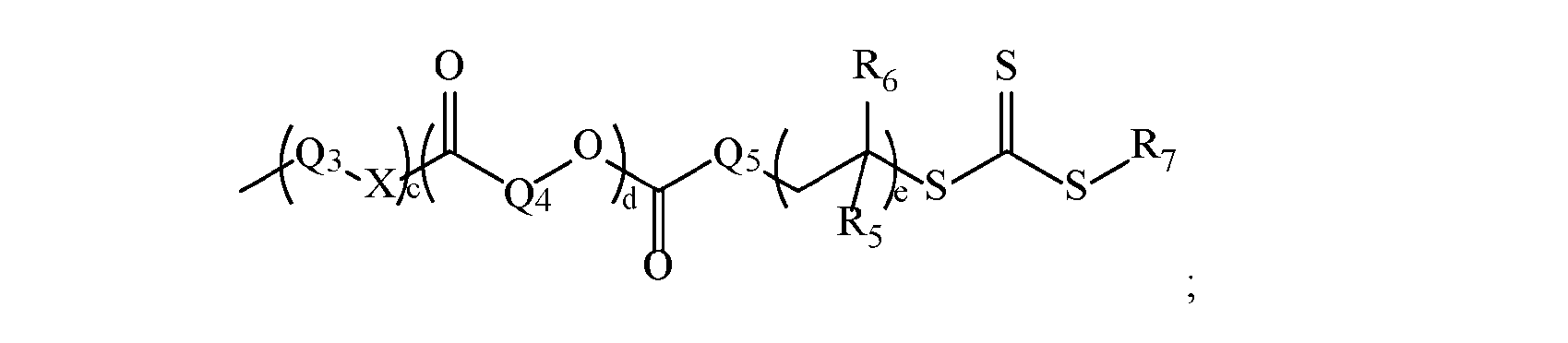 each R1 and R7 is independently a C1-C11 functionalized or unfunctionalized hydrocarbyl moiety; each R2 and R5 is independently hydrogen or methyl; each R3 and R6 is independently a C1-C40 functionalized or unfunctionalized hydrocarbyl moiety; each X is independently oxygen or NR8; each R8 is independently hydrogen or C1-C5 alkyl; each Q1 and Q5 is independently a C1-C10 functionalized or unfunctionalized hydrocarbylene moiety; each Q2 and Q4 is independently a C3- C8 functionalized or unfunctionalized alkylene moiety; each Q3 is independently a functionalized or unfunctionalized hydrocarbylene moiety; and each a, b, d, and e independently ranges from about 5 to about 200, and c ranges from 1 to about 100. [0019] In a second aspect, the disclosed and/or claimed inventive concept(s) provides a composition comprising a polymer having the structure
 wherein R4 is a C1-C40 functionalized or unfunctionalized hydrocarbyl moiety or
 each R1 and R7 is independently a C1-C11 functionalized or unfunctionalized hydrocarbyl moiety; each R2 and R5 is independently hydrogen or methyl; each R3 and R6 is independently a C1-C40 functionalized or unfunctionalized hydrocarbyl moiety; each X is independently oxygen or NR8; each R8 is independently hydrogen or C1-C5 alkyl; each Q1 and Q5 is independently a C1-C10 functionalized or unfunctionalized hydrocarbylene moiety; each Q2 and Q4 is independently a C3- C8 functionalized or unfunctionalized alkylene moiety; each Q3 is independently a functionalized or unfunctionalized hydrocarbylene moiety; and each a, b, d, and e independently ranges from about 5 to about 200, and c ranges from 1 to about 100. [0020] In a third aspect, the disclosed and/or claimed inventive concept(s) provides a method for reducing particle size of at least one active ingredient comprising: (a) contacting to form a mixture, the active ingredient in a solid form and a colloidal composition comprising a polymer having the structure
 wherein R4 is a C1-C40 functionalized or unfunctionalized hydrocarbyl moiety or
 each R1 and R7 is independently a C1-C11 functionalized or unfunctionalized hydrocarbyl moiety; each R2 and R5 is independently hydrogen or methyl; each R3 and R6 is independently a C1-C40 functionalized or unfunctionalized hydrocarbyl moiety; each X is independently oxygen or NR8; each R8 is independently hydrogen or C1-C5 alkyl; each Q1 and Q5 is independently a C1-C10
functionalized or unfunctionalized hydrocarbylene moiety; each Q2 and Q4 is independently a C3- C8 functionalized or unfunctionalized alkylene moiety; each Q3 is independently a functionalized or unfunctionalized hydrocarbylene moiety; and each a, b, d, and e independently ranges from about 5 to about 200, and c ranges from 1 to about 100; and (b) subjecting the mixture to at least one particle size reduction operation. DETAILED DESCRIPTION [0021] Before explaining at least one aspect of the disclosed and/or claimed inventive concept(s) in detail, it is to be understood that the disclosed and/or claimed inventive concept(s) is not limited in its application to the details of construction and the arrangement of the components or steps or methodologies set forth in the following description or illustrated in the drawings. The disclosed and/or claimed inventive concept(s) is capable of other aspects or of being practiced or carried out in various ways. Also, it is to be understood that the phraseology and terminology employed herein is for the purpose of description and should not be regarded as limiting. [0022] Unless otherwise defined herein, technical terms used in connection with the disclosed and/or claimed inventive concept(s) shall have the meanings that are commonly understood by those of ordinary skill in the art. Further, unless otherwise required by context, singular terms shall include pluralities and plural terms shall include the singular. [0023] All patents, published patent applications, and non-patent publications referenced in any portion of this application are herein expressly incorporated by reference in their entirety to the same extent as if each individual patent or publication was specifically and individually indicated to be incorporated by reference. [0024] All articles and/or methods disclosed herein can be made and executed without undue experimentation based on the present disclosure. While the articles and methods of the disclosed and/or claimed inventive concept(s) have been described in terms of aspects, it will be apparent to those of ordinary skill in the art that variations may be applied to the articles and/or methods and in the steps or in the sequence of steps of the method described herein without departing from the concept, spirit and scope of the disclosed and/or claimed inventive concept(s). All such similar substitutes and modifications apparent to those skilled in the art are deemed to be within the spirit, scope, and concept of the disclosed and/or claimed inventive concept(s).
[0025] As utilized in accordance with the disclosure, the following terms, unless otherwise indicated, shall be understood to have the following meanings. [0026] The use of the word “a” or “an” when used in conjunction with the term “comprising” may mean “one,” but it is also consistent with the meaning of “one or more,” “at least one,” and “one or more than one.” The use of the term “or” is used to mean “and/or” unless explicitly indicated to refer to alternatives only if the alternatives are mutually exclusive, although the disclosure supports a definition that refers to only alternatives and “and/or.” [0027] Throughout this application, the term “about” is used to indicate that a value includes the inherent variation of error for the quantifying device, the method being employed to determine the value, or the variation that exists among the study subjects. For example, but not by way of limitation, when the term “about” is utilized, the designated value may vary by plus or minus twelve percent, or eleven percent, or ten percent, or nine percent, or eight percent, or seven percent, or six percent, or five percent, or four percent, or three percent, or two percent, or one percent. [0028] The use of the term “at least one” will be understood to include one as well as any quantity more than one, including but not limited to, 1, 2, 3, 4, 5, 10, 15, 20, 30, 40, 50, 100, etc. The term “at least one” may extend up to 100 or 1000 or more depending on the term to which it is attached. In addition, the quantities of 100/1000 are not to be considered limiting as lower or higher limits may also produce satisfactory results. In addition, the use of the term “at least one of X, Y, and Z” will be understood to include X alone, Y alone, and Z alone, as well as any combination of X, Y, and Z. The use of ordinal number terminology (i.e., “first”, “second”, “third”, “fourth”, etc.) is solely for the purpose of differentiating between two or more items and, unless otherwise stated, is not meant to imply any sequence or order or importance to one item over another or any order of addition. [0029] As used herein, the words “comprising” (and any form of comprising, such as “comprise” and “comprises”), “having” (and any form of having, such as “have” and “has”), “including” (and any form of including, such as “includes” and “include”) or “containing” (and any form of containing, such as “contains” and “contain”) are inclusive or open-ended and do not exclude additional, unrecited elements or method steps. The term “or combinations thereof” as used herein refers to all permutations and combinations of the listed items preceding the term. For example,
“A, BXn, BXn+1, or combinations thereof” is intended to include at least one of: A, BXn, BXn+1, ABXn, A BXn+1, BXnBXn+1, or ABXnBXn+1 and, if order is important in a particular context, also BXnA, BXn+1A, BXn+1BXn, BXn+1BXnA, BXnBXn+1A, ABXn+1BXn, BXnABXn+1, or BXn+1ABXn. Continuing with this example, expressly included are combinations that contain repeats of one or more item or term, such as BXnBXn, AAA, MBXn, BXnBXnBXn+1, AAABXnBXn+1BXn+1BXn+1BXn+1, BXn+1BXnBXnAAA, BXn+1A BXnABXnBXn, and so forth. The skilled artisan will understand that typically there is no limit on the number of items or terms in any combination, unless otherwise apparent from the context. [0030] The term “each independently selected from the group consisting of” means when a group appears more than once in a structure, that group may be selected independently each time it appears. [0031] The term “hydrocarbyl” includes straight-chain and branched-chain alkyl, alkenyl, alkynyl, cycloalkyl, cycloalkenyl, aryl groups, and combinations thereof with optional heteroatom(s). A hydrocarbyl group may be mono-, di- or polyvalent. [0032] The term “alkyl” refers to a functionalized or unfunctionalized, monovalent, straight- chain, branched-chain, or cyclic hydrocarbyl group optionally having one or more heteroatoms. Non-limiting examples of alkyl include methyl, ethyl, n-propyl, isopropyl, n-butyl, isobutyl, tert- butyl, n-pentyl, isopentyl, n-hexyl, n-heptyl, n-octyl, 2-ethylhexyl, tert-octyl, iso-norbornyl, n- dodecyl, tert-dodecyl, n-tetradecyl, n-hexadecyl, n-octadecyl, n-eicosyl, cyclobutyl, cyclopentyl, cyclohexyl, and the like. The definition of “alkyl” also includes groups obtained by combinations of straight-chain, branched-chain and/or cyclic structures. [0033] The term “aryl” refers to a functionalized or unfunctionalized, monovalent, aromatic hydrocarbyl group optionally having one or more heteroatoms. The definition of aryl includes carbocyclic and heterocyclic aromatic groups. Non-limiting examples of aryl groups include phenyl, naphthyl, indenyl, indanyl, azulenyl, fluorenyl, anthracenyl, furyl, thienyl, pyridyl, pyrrolyl, oxazolyl, thiazolyl, imidazolyl, pyrazolyl, 2-pyrazolinyl, pyrazolidinyl, isoxazolyl, isothiazolyl, 1,2,3-oxadiazolyl, 1,2,3-triazolyl, 1,3,4-thiadiazolyl, pyridazinyl, pyrimidinyl, pyrazinyl, 1,3,5-triazinyl, 1,3,5-trithianyl, indolizinyl, indolyl, isoindolyl, 3H-indolyl, indolinyl, benzo[b]furanyl, 2,3-dihydrobenzofuranyl, benzo[b]thiophenyl, 1H-indazolyl, benzimidazolyl,
benzthiazolyl, purinyl, 4H-quinolizinyl, isoquinolinyl, cinnolinyl, phthalazinyl, quinazolinyl, quinoxalinyl, 1,8-naphthridinyl, pteridinyl, carbazolyl, acridinyl, phenazinyl, phenothiazinyl, phenoxyazinyl, pyrazolo[1,5-c]triazinyl, and the like. [0034] The term “aralkyl” refers to an alkyl group comprising one or more aryl substituent(s) wherein "aryl" and "alkyl" are as defined above. Non-limiting examples of aralkyl groups include benzyl, 2-phenyl-ethyl, 3-phenyl-propyl, 4-phenyl-butyl, 5-phenyl-pentyl, 4-phenylcyclohexyl, 4- benzylcyclohexyl, 4-phenylcyclohexylmethyl, 4-benzylcyclohexylmethyl, and the like. [0035] The term “alkylene” refers to a functionalized or unfunctionalized, divalent, straight- chain, branched-chain, or cyclic hydrocarbyl group optionally having one or more heteroatoms. Non-limiting examples of alkylene groups include:
each R1 and R7 is independently a C1-C11 functionalized or unfunctionalized hydrocarbyl moiety; each R2 and R5 is independently hydrogen or methyl; each R3 and R6 is independently a C1-C40 functionalized or unfunctionalized hydrocarbyl moiety; each X is independently oxygen or NR8; each R8 is independently hydrogen or C1-C5 alkyl; each Q1 and Q5 is independently a C1-C10
functionalized or unfunctionalized hydrocarbylene moiety; each Q2 and Q4 is independently a C3- C8 functionalized or unfunctionalized alkylene moiety; each Q3 is independently a functionalized or unfunctionalized hydrocarbylene moiety; and each a, b, d, and e independently ranges from about 5 to about 200, and c ranges from 1 to about 100; and (b) subjecting the mixture to at least one particle size reduction operation. DETAILED DESCRIPTION [0021] Before explaining at least one aspect of the disclosed and/or claimed inventive concept(s) in detail, it is to be understood that the disclosed and/or claimed inventive concept(s) is not limited in its application to the details of construction and the arrangement of the components or steps or methodologies set forth in the following description or illustrated in the drawings. The disclosed and/or claimed inventive concept(s) is capable of other aspects or of being practiced or carried out in various ways. Also, it is to be understood that the phraseology and terminology employed herein is for the purpose of description and should not be regarded as limiting. [0022] Unless otherwise defined herein, technical terms used in connection with the disclosed and/or claimed inventive concept(s) shall have the meanings that are commonly understood by those of ordinary skill in the art. Further, unless otherwise required by context, singular terms shall include pluralities and plural terms shall include the singular. [0023] All patents, published patent applications, and non-patent publications referenced in any portion of this application are herein expressly incorporated by reference in their entirety to the same extent as if each individual patent or publication was specifically and individually indicated to be incorporated by reference. [0024] All articles and/or methods disclosed herein can be made and executed without undue experimentation based on the present disclosure. While the articles and methods of the disclosed and/or claimed inventive concept(s) have been described in terms of aspects, it will be apparent to those of ordinary skill in the art that variations may be applied to the articles and/or methods and in the steps or in the sequence of steps of the method described herein without departing from the concept, spirit and scope of the disclosed and/or claimed inventive concept(s). All such similar substitutes and modifications apparent to those skilled in the art are deemed to be within the spirit, scope, and concept of the disclosed and/or claimed inventive concept(s).
[0025] As utilized in accordance with the disclosure, the following terms, unless otherwise indicated, shall be understood to have the following meanings. [0026] The use of the word “a” or “an” when used in conjunction with the term “comprising” may mean “one,” but it is also consistent with the meaning of “one or more,” “at least one,” and “one or more than one.” The use of the term “or” is used to mean “and/or” unless explicitly indicated to refer to alternatives only if the alternatives are mutually exclusive, although the disclosure supports a definition that refers to only alternatives and “and/or.” [0027] Throughout this application, the term “about” is used to indicate that a value includes the inherent variation of error for the quantifying device, the method being employed to determine the value, or the variation that exists among the study subjects. For example, but not by way of limitation, when the term “about” is utilized, the designated value may vary by plus or minus twelve percent, or eleven percent, or ten percent, or nine percent, or eight percent, or seven percent, or six percent, or five percent, or four percent, or three percent, or two percent, or one percent. [0028] The use of the term “at least one” will be understood to include one as well as any quantity more than one, including but not limited to, 1, 2, 3, 4, 5, 10, 15, 20, 30, 40, 50, 100, etc. The term “at least one” may extend up to 100 or 1000 or more depending on the term to which it is attached. In addition, the quantities of 100/1000 are not to be considered limiting as lower or higher limits may also produce satisfactory results. In addition, the use of the term “at least one of X, Y, and Z” will be understood to include X alone, Y alone, and Z alone, as well as any combination of X, Y, and Z. The use of ordinal number terminology (i.e., “first”, “second”, “third”, “fourth”, etc.) is solely for the purpose of differentiating between two or more items and, unless otherwise stated, is not meant to imply any sequence or order or importance to one item over another or any order of addition. [0029] As used herein, the words “comprising” (and any form of comprising, such as “comprise” and “comprises”), “having” (and any form of having, such as “have” and “has”), “including” (and any form of including, such as “includes” and “include”) or “containing” (and any form of containing, such as “contains” and “contain”) are inclusive or open-ended and do not exclude additional, unrecited elements or method steps. The term “or combinations thereof” as used herein refers to all permutations and combinations of the listed items preceding the term. For example,
“A, BXn, BXn+1, or combinations thereof” is intended to include at least one of: A, BXn, BXn+1, ABXn, A BXn+1, BXnBXn+1, or ABXnBXn+1 and, if order is important in a particular context, also BXnA, BXn+1A, BXn+1BXn, BXn+1BXnA, BXnBXn+1A, ABXn+1BXn, BXnABXn+1, or BXn+1ABXn. Continuing with this example, expressly included are combinations that contain repeats of one or more item or term, such as BXnBXn, AAA, MBXn, BXnBXnBXn+1, AAABXnBXn+1BXn+1BXn+1BXn+1, BXn+1BXnBXnAAA, BXn+1A BXnABXnBXn, and so forth. The skilled artisan will understand that typically there is no limit on the number of items or terms in any combination, unless otherwise apparent from the context. [0030] The term “each independently selected from the group consisting of” means when a group appears more than once in a structure, that group may be selected independently each time it appears. [0031] The term “hydrocarbyl” includes straight-chain and branched-chain alkyl, alkenyl, alkynyl, cycloalkyl, cycloalkenyl, aryl groups, and combinations thereof with optional heteroatom(s). A hydrocarbyl group may be mono-, di- or polyvalent. [0032] The term “alkyl” refers to a functionalized or unfunctionalized, monovalent, straight- chain, branched-chain, or cyclic hydrocarbyl group optionally having one or more heteroatoms. Non-limiting examples of alkyl include methyl, ethyl, n-propyl, isopropyl, n-butyl, isobutyl, tert- butyl, n-pentyl, isopentyl, n-hexyl, n-heptyl, n-octyl, 2-ethylhexyl, tert-octyl, iso-norbornyl, n- dodecyl, tert-dodecyl, n-tetradecyl, n-hexadecyl, n-octadecyl, n-eicosyl, cyclobutyl, cyclopentyl, cyclohexyl, and the like. The definition of “alkyl” also includes groups obtained by combinations of straight-chain, branched-chain and/or cyclic structures. [0033] The term “aryl” refers to a functionalized or unfunctionalized, monovalent, aromatic hydrocarbyl group optionally having one or more heteroatoms. The definition of aryl includes carbocyclic and heterocyclic aromatic groups. Non-limiting examples of aryl groups include phenyl, naphthyl, indenyl, indanyl, azulenyl, fluorenyl, anthracenyl, furyl, thienyl, pyridyl, pyrrolyl, oxazolyl, thiazolyl, imidazolyl, pyrazolyl, 2-pyrazolinyl, pyrazolidinyl, isoxazolyl, isothiazolyl, 1,2,3-oxadiazolyl, 1,2,3-triazolyl, 1,3,4-thiadiazolyl, pyridazinyl, pyrimidinyl, pyrazinyl, 1,3,5-triazinyl, 1,3,5-trithianyl, indolizinyl, indolyl, isoindolyl, 3H-indolyl, indolinyl, benzo[b]furanyl, 2,3-dihydrobenzofuranyl, benzo[b]thiophenyl, 1H-indazolyl, benzimidazolyl,
benzthiazolyl, purinyl, 4H-quinolizinyl, isoquinolinyl, cinnolinyl, phthalazinyl, quinazolinyl, quinoxalinyl, 1,8-naphthridinyl, pteridinyl, carbazolyl, acridinyl, phenazinyl, phenothiazinyl, phenoxyazinyl, pyrazolo[1,5-c]triazinyl, and the like. [0034] The term “aralkyl” refers to an alkyl group comprising one or more aryl substituent(s) wherein "aryl" and "alkyl" are as defined above. Non-limiting examples of aralkyl groups include benzyl, 2-phenyl-ethyl, 3-phenyl-propyl, 4-phenyl-butyl, 5-phenyl-pentyl, 4-phenylcyclohexyl, 4- benzylcyclohexyl, 4-phenylcyclohexylmethyl, 4-benzylcyclohexylmethyl, and the like. [0035] The term “alkylene” refers to a functionalized or unfunctionalized, divalent, straight- chain, branched-chain, or cyclic hydrocarbyl group optionally having one or more heteroatoms. Non-limiting examples of alkylene groups include:
 [0036] The term “arylene” refers to a functionalized or unfunctionalized, divalent, aromatic hydrocarbyl group optionally having one or more heteroatoms. The definition of arylene includes
carbocyclic and heterocyclic groups. Non-limiting examples of arylene groups include phenylene, naphthylene, pyridinylene, and the like. [0037] The term “heteroatom” refers to oxygen, nitrogen, sulfur, silicon, phosphorous, or halogen. The heteroatom(s) may be present as a part of one or more heteroatom-containing functional groups. Non-limiting examples of heteroatom-containing functional groups include ether, hydroxy, epoxy, carbonyl, carboxamide, carboxylic ester, carboxylic acid, imine, imide, amine, sulfonic, sulfonamide, phosphonic, and silane groups. The heteroatom(s) may also be present as a part of a ring such as in heteroaryl and heteroarylene groups. [0038] The term “halogen” or “halo” refers to Cl, Br, I, or F. [0039] The term “ammonium” includes protonated NH3 and protonated primary, secondary, and tertiary organic amines. [0040] The term “functionalized” with reference to any moiety refers to the presence of one or more functional groups in the moiety. Various functional groups may be introduced in a moiety by way of one or more functionalization reactions known to a person having ordinary skill in the art. Non-limiting examples of functionalization reactions include alkylation, epoxidation, sulfonation, hydrolysis, amidation, esterification, hydroxylation, dihydroxylation, amination, ammonolysis, acylation, nitration, oxidation, dehydration, elimination, hydration, dehydrogenation, hydrogenation, acetalization, halogenation, dehydrohalogenation, Michael addition, aldol condensation, Canizzaro reaction, Mannich reaction, Clasien condensation, Suzuki coupling, and the like. In one non-limiting embodiment, the term “functionalized” with reference to any moiety refers to the presence of one more functional groups selected from the group consisting of alkyl, alkenyl, hydroxyl, carboxyl, halogen, alkoxy, amino, imino, and combinations thereof, in the moiety. [0041] The term “monomer” refers to a small molecule that chemically bonds during polymerization to one or more monomers of the same or different kind to form a polymer. [0042] The term “polymer” refers to a large molecule comprising one or more types of monomer residues (repeating units) connected by covalent chemical bonds. By this definition, polymer encompasses compounds wherein the number of monomer units may range from very few, which
more commonly may be called as oligomers, to very many. Non-limiting examples of polymers include homopolymers, and non-homopolymers such as copolymers, terpolymers, tetrapolymers and the higher analogues. The polymer may have a random, block, and/or alternating architecture. [0043] The term “homopolymer” refers to a polymer that consists essentially of a single monomer type. [0044] The term “non-homopolymer” refers to a polymer that comprises more than one monomer types. [0045] The term “copolymer” refers to a non-homopolymer that comprises two different monomer types. [0046] The term “terpolymer” refers to a non-homopolymer that comprises three different monomer types. [0047] The term “branched” refers to any non-linear molecular structure. The term includes both branched and hyper-branched structures. [0048] The term “block copolymer” refers to a polymer comprising at least two blocks of polymerized monomers. Any block may be derived from either a single monomer resulting in a homopolymeric subunit, or two or more monomers resulting in a copolymeric (or non- homopolymeric) subunit in the block copolymer. The block copolymers may be diblock copolymers (i.e., polymers comprising two blocks of monomers), triblock copolymers (i.e., polymers comprising three blocks of monomers), tetrablock copolymers (i.e., polymers comprising four blocks of monomers), or multiblock copolymers (i.e., polymers comprising more than four blocks of monomers), and combinations thereof. The block copolymers may be linear, branched, star or comb like, and have structures such as [A][B], [A][B][A], [A][B][C], [A][B][A][B], [A][B][C][B], etc. An exemplary representation of block copolymer is [A]x[B]y or [A]x[B]y[C]z, wherein x, y and z are the degrees of polymerization (DP) of the corresponding blocks [A], [B], and [C]. Additional insight into the chemistry, characterization and applications of block copolymers may be found in the book ‘Block Copolymers: Synthetic Strategies, Physical Properties, and Applications’, by Nikos Hadjichristidis, Stergios Pispas, and George Floudas, John Wiley and Sons (2003), the contents of which are herein incorporated in its entirety by reference.
[0049] The term “controlled radical polymerization” refers to a specific radical polymerization process, also denoted by the term of “living radical polymerization”, in which use is made of control agents, such that the block copolymer chains being formed are functionalized by end groups capable of being reactivated in the form of free radicals by virtue of reversible transfer or reversible termination reactions. [0050] The term “addition-fragmentation” refers to a two-step chain transfer mechanism during polymerization leading to homopolymers and block copolymers wherein a radical addition is followed by fragmentation to generate a new radical species. [0051] The term RAFT refers to reversible addition–fragmentation chain transfer. [0052] The term “free radical addition polymerization initiator” refers to a compound used in a catalytic amount to initiate a free radical addition polymerization. The choice of initiator depends mainly upon its solubility and its decomposition temperature. [0053] The term "alkyl acrylate" refers to an alkyl ester of acrylic acid. [0054] The term "alkyl acrylamide" refers to an alkyl amide of acrylic acid. [0055] The term "alkyl methacrylate" refers to an alkyl ester of methacrylic acid. [0056] The term "alkyl methacrylamide" refers to an alkyl amide of methacrylic acid. [0057] The term “moiety” refers to a part or a functional group of a molecule. [0058] In the block copolymer structures, the notation –b– on the polymer backbone denotes block configuration of repeating units. An exemplary block copolymer structure is shown below:
[0036] The term “arylene” refers to a functionalized or unfunctionalized, divalent, aromatic hydrocarbyl group optionally having one or more heteroatoms. The definition of arylene includes
carbocyclic and heterocyclic groups. Non-limiting examples of arylene groups include phenylene, naphthylene, pyridinylene, and the like. [0037] The term “heteroatom” refers to oxygen, nitrogen, sulfur, silicon, phosphorous, or halogen. The heteroatom(s) may be present as a part of one or more heteroatom-containing functional groups. Non-limiting examples of heteroatom-containing functional groups include ether, hydroxy, epoxy, carbonyl, carboxamide, carboxylic ester, carboxylic acid, imine, imide, amine, sulfonic, sulfonamide, phosphonic, and silane groups. The heteroatom(s) may also be present as a part of a ring such as in heteroaryl and heteroarylene groups. [0038] The term “halogen” or “halo” refers to Cl, Br, I, or F. [0039] The term “ammonium” includes protonated NH3 and protonated primary, secondary, and tertiary organic amines. [0040] The term “functionalized” with reference to any moiety refers to the presence of one or more functional groups in the moiety. Various functional groups may be introduced in a moiety by way of one or more functionalization reactions known to a person having ordinary skill in the art. Non-limiting examples of functionalization reactions include alkylation, epoxidation, sulfonation, hydrolysis, amidation, esterification, hydroxylation, dihydroxylation, amination, ammonolysis, acylation, nitration, oxidation, dehydration, elimination, hydration, dehydrogenation, hydrogenation, acetalization, halogenation, dehydrohalogenation, Michael addition, aldol condensation, Canizzaro reaction, Mannich reaction, Clasien condensation, Suzuki coupling, and the like. In one non-limiting embodiment, the term “functionalized” with reference to any moiety refers to the presence of one more functional groups selected from the group consisting of alkyl, alkenyl, hydroxyl, carboxyl, halogen, alkoxy, amino, imino, and combinations thereof, in the moiety. [0041] The term “monomer” refers to a small molecule that chemically bonds during polymerization to one or more monomers of the same or different kind to form a polymer. [0042] The term “polymer” refers to a large molecule comprising one or more types of monomer residues (repeating units) connected by covalent chemical bonds. By this definition, polymer encompasses compounds wherein the number of monomer units may range from very few, which
more commonly may be called as oligomers, to very many. Non-limiting examples of polymers include homopolymers, and non-homopolymers such as copolymers, terpolymers, tetrapolymers and the higher analogues. The polymer may have a random, block, and/or alternating architecture. [0043] The term “homopolymer” refers to a polymer that consists essentially of a single monomer type. [0044] The term “non-homopolymer” refers to a polymer that comprises more than one monomer types. [0045] The term “copolymer” refers to a non-homopolymer that comprises two different monomer types. [0046] The term “terpolymer” refers to a non-homopolymer that comprises three different monomer types. [0047] The term “branched” refers to any non-linear molecular structure. The term includes both branched and hyper-branched structures. [0048] The term “block copolymer” refers to a polymer comprising at least two blocks of polymerized monomers. Any block may be derived from either a single monomer resulting in a homopolymeric subunit, or two or more monomers resulting in a copolymeric (or non- homopolymeric) subunit in the block copolymer. The block copolymers may be diblock copolymers (i.e., polymers comprising two blocks of monomers), triblock copolymers (i.e., polymers comprising three blocks of monomers), tetrablock copolymers (i.e., polymers comprising four blocks of monomers), or multiblock copolymers (i.e., polymers comprising more than four blocks of monomers), and combinations thereof. The block copolymers may be linear, branched, star or comb like, and have structures such as [A][B], [A][B][A], [A][B][C], [A][B][A][B], [A][B][C][B], etc. An exemplary representation of block copolymer is [A]x[B]y or [A]x[B]y[C]z, wherein x, y and z are the degrees of polymerization (DP) of the corresponding blocks [A], [B], and [C]. Additional insight into the chemistry, characterization and applications of block copolymers may be found in the book ‘Block Copolymers: Synthetic Strategies, Physical Properties, and Applications’, by Nikos Hadjichristidis, Stergios Pispas, and George Floudas, John Wiley and Sons (2003), the contents of which are herein incorporated in its entirety by reference.
[0049] The term “controlled radical polymerization” refers to a specific radical polymerization process, also denoted by the term of “living radical polymerization”, in which use is made of control agents, such that the block copolymer chains being formed are functionalized by end groups capable of being reactivated in the form of free radicals by virtue of reversible transfer or reversible termination reactions. [0050] The term “addition-fragmentation” refers to a two-step chain transfer mechanism during polymerization leading to homopolymers and block copolymers wherein a radical addition is followed by fragmentation to generate a new radical species. [0051] The term RAFT refers to reversible addition–fragmentation chain transfer. [0052] The term “free radical addition polymerization initiator” refers to a compound used in a catalytic amount to initiate a free radical addition polymerization. The choice of initiator depends mainly upon its solubility and its decomposition temperature. [0053] The term "alkyl acrylate" refers to an alkyl ester of acrylic acid. [0054] The term "alkyl acrylamide" refers to an alkyl amide of acrylic acid. [0055] The term "alkyl methacrylate" refers to an alkyl ester of methacrylic acid. [0056] The term "alkyl methacrylamide" refers to an alkyl amide of methacrylic acid. [0057] The term “moiety” refers to a part or a functional group of a molecule. [0058] In the block copolymer structures, the notation –b– on the polymer backbone denotes block configuration of repeating units. An exemplary block copolymer structure is shown below:
 [0059] The terms “personal care composition” and “cosmetics” refer to compositions intended for use on or in the human body, such as skin, sun, hair, oral, cosmetic, and preservative compositions, including those to alter the color and appearance of skin and hair. [0060] The term “pharmaceutical composition” refers to any composition comprising at least one pharmaceutically active ingredient, as well as any product which results, directly or indirectly, from combination, complexation, or aggregation of any two or more of the ingredients, from dissociation of one or more of the ingredients, or from other types of reactions or interactions of one or more of the ingredients. [0061] The term “agrochemical composition” refers to any composition comprising at least one agrochemically active ingredient, as well as any product which results, directly or indirectly, from combination, complexation, or aggregation of any two or more of the ingredients, from dissociation of one or more of the ingredients, or from other types of reactions or interactions of one or more of the ingredients. [0062] The term “pesticidal composition” refers to any composition comprising at least one pesticidally active ingredient, as well as any product which results, directly or indirectly, from combination, complexation, or aggregation of any two or more of the ingredients, from dissociation of one or more of the ingredients, or from other types of reactions or interactions of one or more of the ingredients. [0063] The term “medical composition” refers to any composition comprising at least one medically active ingredient, as well as any product which results, directly or indirectly, from combination, complexation, or aggregation of any two or more of the ingredients, from dissociation of one or more of the ingredients, or from other types of reactions or interactions of one or more of the ingredients. [0064] The term “biotechnological composition” refers to any composition comprising at least one biotechnologically active ingredient, as well as any product which results, directly or indirectly, from combination, complexation, or aggregation of any two or more of the ingredients, from dissociation of one or more of the ingredients, or from other types of reactions or interactions of one or more of the ingredients.
[0065] The term “coating composition” refers to an aqueous-based or solvent-based liquid composition that may be applied to a substrate and thereafter solidified (for example, by radiation, air curing, post-crosslinking or ambient temperature drying) to form a hardened coating on the substrate. [0066] The term “oilfield composition” refers to a composition that may be used in the exploration, extraction, recovery, and/or completion of any hydrocarbon. Non-limiting examples of oilfield compositions include drilling fluids, cementing fluids, anti-agglomerants, kinetic hydrate inhibitors, shale swelling inhibitors, drilling muds, servicing fluids, gravel packing muds, friction reducers, fracturing fluids, completion fluids, and work over fluids. [0067] The term “colloidal” refers to the state of matter having nanometer dimensions. [0068] All percentages, ratio, and proportions used herein are based on a weight basis unless specified otherwise. [0069] In a first aspect, the disclosed and/or claimed inventive concept(s) provides a polymer having the structure
[0059] The terms “personal care composition” and “cosmetics” refer to compositions intended for use on or in the human body, such as skin, sun, hair, oral, cosmetic, and preservative compositions, including those to alter the color and appearance of skin and hair. [0060] The term “pharmaceutical composition” refers to any composition comprising at least one pharmaceutically active ingredient, as well as any product which results, directly or indirectly, from combination, complexation, or aggregation of any two or more of the ingredients, from dissociation of one or more of the ingredients, or from other types of reactions or interactions of one or more of the ingredients. [0061] The term “agrochemical composition” refers to any composition comprising at least one agrochemically active ingredient, as well as any product which results, directly or indirectly, from combination, complexation, or aggregation of any two or more of the ingredients, from dissociation of one or more of the ingredients, or from other types of reactions or interactions of one or more of the ingredients. [0062] The term “pesticidal composition” refers to any composition comprising at least one pesticidally active ingredient, as well as any product which results, directly or indirectly, from combination, complexation, or aggregation of any two or more of the ingredients, from dissociation of one or more of the ingredients, or from other types of reactions or interactions of one or more of the ingredients. [0063] The term “medical composition” refers to any composition comprising at least one medically active ingredient, as well as any product which results, directly or indirectly, from combination, complexation, or aggregation of any two or more of the ingredients, from dissociation of one or more of the ingredients, or from other types of reactions or interactions of one or more of the ingredients. [0064] The term “biotechnological composition” refers to any composition comprising at least one biotechnologically active ingredient, as well as any product which results, directly or indirectly, from combination, complexation, or aggregation of any two or more of the ingredients, from dissociation of one or more of the ingredients, or from other types of reactions or interactions of one or more of the ingredients.
[0065] The term “coating composition” refers to an aqueous-based or solvent-based liquid composition that may be applied to a substrate and thereafter solidified (for example, by radiation, air curing, post-crosslinking or ambient temperature drying) to form a hardened coating on the substrate. [0066] The term “oilfield composition” refers to a composition that may be used in the exploration, extraction, recovery, and/or completion of any hydrocarbon. Non-limiting examples of oilfield compositions include drilling fluids, cementing fluids, anti-agglomerants, kinetic hydrate inhibitors, shale swelling inhibitors, drilling muds, servicing fluids, gravel packing muds, friction reducers, fracturing fluids, completion fluids, and work over fluids. [0067] The term “colloidal” refers to the state of matter having nanometer dimensions. [0068] All percentages, ratio, and proportions used herein are based on a weight basis unless specified otherwise. [0069] In a first aspect, the disclosed and/or claimed inventive concept(s) provides a polymer having the structure
 wherein R4 is a C1-C40 functionalized or unfunctionalized hydrocarbyl moiety or
 each R1 and R7 is independently a C1-C11 functionalized or unfunctionalized hydrocarbyl moiety; each R2 and R5 is independently hydrogen or methyl; each R3 and R6 is independently a C1-C40 functionalized or unfunctionalized hydrocarbyl moiety; each X is independently oxygen or NR8; each R8 is independently hydrogen or C1-C5 alkyl; each Q1 and Q5 is independently a C1-C10 functionalized or unfunctionalized hydrocarbylene moiety; each Q2 and Q4 is independently a C3-
C8 functionalized or unfunctionalized alkylene moiety; each Q3 is independently a functionalized or unfunctionalized hydrocarbylene moiety; and each a, b, d, and e independently ranges from about 5 to about 200, and c ranges from 1 to about 100. [0070] In a second aspect, the disclosed and/or claimed inventive concept(s) provides a composition comprising a polymer having the structure
each R1 and R7 is independently a C1-C11 functionalized or unfunctionalized hydrocarbyl moiety; each R2 and R5 is independently hydrogen or methyl; each R3 and R6 is independently a C1-C40 functionalized or unfunctionalized hydrocarbyl moiety; each X is independently oxygen or NR8; each R8 is independently hydrogen or C1-C5 alkyl; each Q1 and Q5 is independently a C1-C10 functionalized or unfunctionalized hydrocarbylene moiety; each Q2 and Q4 is independently a C3-
C8 functionalized or unfunctionalized alkylene moiety; each Q3 is independently a functionalized or unfunctionalized hydrocarbylene moiety; and each a, b, d, and e independently ranges from about 5 to about 200, and c ranges from 1 to about 100. [0070] In a second aspect, the disclosed and/or claimed inventive concept(s) provides a composition comprising a polymer having the structure
 wherein R4 is a C1-C40 functionalized or unfunctionalized hydrocarbyl moiety or
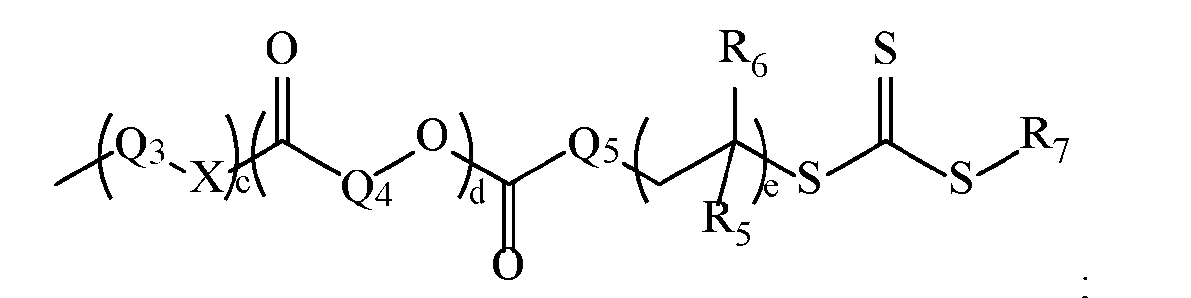 ; each R1 and R7 is independently a C1-C11 functionalized or unfunctionalized hydrocarbyl moiety; each R2 and R5 is independently hydrogen or methyl; each R3 and R6 is independently a C1-C40 functionalized or unfunctionalized hydrocarbyl moiety; each X is independently oxygen or NR8; each R8 is independently hydrogen or C1-C5 alkyl; each Q1 and Q5 is independently a C1-C10 functionalized or unfunctionalized hydrocarbylene moiety; each Q2 and Q4 is independently a C3- C8 functionalized or unfunctionalized alkylene moiety; each Q3 is independently a functionalized or unfunctionalized hydrocarbylene moiety; and each a, b, d, and e independently ranges from about 5 to about 200, and c ranges from 1 to about 100. [0071] In a third aspect, the disclosed and/or claimed inventive concept(s) provides a method for reducing particle size of at least one active ingredient comprising: (a) contacting to form a mixture, the active ingredient in a solid form and a colloidal composition comprising a polymer having the structure
 wherein R4 is a C1-C40 functionalized or unfunctionalized hydrocarbyl moiety or
 ; each R1 and R7 is independently a C1-C11 functionalized or unfunctionalized hydrocarbyl moiety; each R2 and R5 is independently hydrogen or methyl; each R3 and R6 is independently a C1-C40 functionalized or unfunctionalized hydrocarbyl moiety; each X is independently oxygen or NR8; each R8 is independently hydrogen or C1-C5 alkyl; each Q1 and Q5 is independently a C1-C10 functionalized or unfunctionalized hydrocarbylene moiety; each Q2 and Q4 is independently a C3- C8 functionalized or unfunctionalized alkylene moiety; each Q3 is independently a functionalized or unfunctionalized hydrocarbylene moiety; and each a, b, d, and e independently ranges from about 5 to about 200, and c ranges from 1 to about 100; and (b) subjecting the mixture to at least one particle size reduction operation. [0072] In one non-limiting embodiment, the polymer according to the disclosed and/or claimed inventive concept(s) has a structure
 wherein R1 is a C1-C11 functionalized or unfunctionalized hydrocarbyl moiety; each R2 is independently hydrogen or methyl; each R3 is independently a C1-C40 functionalized or unfunctionalized hydrocarbyl moiety; R4 is a C1-C40 functionalized or unfunctionalized hydrocarbyl moiety; Q1 is a C1-C10 functionalized or unfunctionalized hydrocarbylene moiety;
each Q2 is independently a C3-C8 functionalized or unfunctionalized alkylene moiety; and each a and b ranges from about 5 to about 200. [0073] In another non-limiting embodiment, the polymer according to the disclosed and/or claimed inventive concept(s) has a structure
wherein R1 is a C1-C11 functionalized or unfunctionalized hydrocarbyl moiety; each R2 is independently hydrogen or methyl; each R3 is independently a C1-C40 functionalized or unfunctionalized hydrocarbyl moiety; R4 is a C1-C40 functionalized or unfunctionalized hydrocarbyl moiety; Q1 is a C1-C10 functionalized or unfunctionalized hydrocarbylene moiety;
each Q2 is independently a C3-C8 functionalized or unfunctionalized alkylene moiety; and each a and b ranges from about 5 to about 200. [0073] In another non-limiting embodiment, the polymer according to the disclosed and/or claimed inventive concept(s) has a structure
 wherein each R1 and R7 is independently a C1-C11 functionalized or unfunctionalized hydrocarbyl moiety; each R2 and R5 is independently hydrogen or methyl; each R3 and R6 is independently a C1-C40 functionalized or unfunctionalized hydrocarbyl moiety, each X is independently oxygen or NR8; each R8 is independently hydrogen or C1-C5 alkyl; each Q1 and Q5 is independently a C1-C10 functionalized or unfunctionalized hydrocarbylene moiety; each Q2 and Q4 is independently a C3- C8 functionalized or unfunctionalized alkylene moiety; each Q3 is independently a functionalized or unfunctionalized hydrocarbylene moiety; and each a, b, d, and e independently ranges from about 5 to about 200, and c ranges from 1 to about 100. [0074] In one non-limiting embodiment, Q2 is a propylene, butylene, pentamethylene, or hexamethylene moiety. In another non-limiting embodiment, each Q2 and Q4 is a propylene, butylene, pentamethylene, or hexamethylene moiety. [0075] In one non-limiting embodiment, Q3 is ethylene, propylene, or butylene moiety and X is oxygen. [0076] In one non-limiting embodiment, a ranges from about 10 to about 150 and said b ranges from about 10 to 50. In another non-limiting embodiment, each a and e ranges from about 10 to about 150 and each b and d ranges from about 10 to 50. [0077] In one non-limiting embodiment, a and e are identical and b and d are identical. [0078] In one non-limiting embodiment, each R1 and R7 is a C1-C5 alkyl. In another non-limiting embodiment, R1 and R7 are identical.
[0079] In one non-limiting embodiment, Q1 is a C1-C5 functionalized or unfunctionalized hydrocarbylene moiety. In another non-limiting embodiment, each Q1 and Q5 is a C1-C5 functionalized or unfunctionalized hydrocarbylene moiety. [0080] In one non-limiting embodiment, c ranges from 1 to about 10. [0081] In one non-limiting embodiment, each R8 is independently a functionalized or unfunctionalized C1-C10 hydrocarbyl moiety. [0082] In one non-limiting embodiment, each R3 is independently selected from the group consisting of
wherein each R1 and R7 is independently a C1-C11 functionalized or unfunctionalized hydrocarbyl moiety; each R2 and R5 is independently hydrogen or methyl; each R3 and R6 is independently a C1-C40 functionalized or unfunctionalized hydrocarbyl moiety, each X is independently oxygen or NR8; each R8 is independently hydrogen or C1-C5 alkyl; each Q1 and Q5 is independently a C1-C10 functionalized or unfunctionalized hydrocarbylene moiety; each Q2 and Q4 is independently a C3- C8 functionalized or unfunctionalized alkylene moiety; each Q3 is independently a functionalized or unfunctionalized hydrocarbylene moiety; and each a, b, d, and e independently ranges from about 5 to about 200, and c ranges from 1 to about 100. [0074] In one non-limiting embodiment, Q2 is a propylene, butylene, pentamethylene, or hexamethylene moiety. In another non-limiting embodiment, each Q2 and Q4 is a propylene, butylene, pentamethylene, or hexamethylene moiety. [0075] In one non-limiting embodiment, Q3 is ethylene, propylene, or butylene moiety and X is oxygen. [0076] In one non-limiting embodiment, a ranges from about 10 to about 150 and said b ranges from about 10 to 50. In another non-limiting embodiment, each a and e ranges from about 10 to about 150 and each b and d ranges from about 10 to 50. [0077] In one non-limiting embodiment, a and e are identical and b and d are identical. [0078] In one non-limiting embodiment, each R1 and R7 is a C1-C5 alkyl. In another non-limiting embodiment, R1 and R7 are identical.
[0079] In one non-limiting embodiment, Q1 is a C1-C5 functionalized or unfunctionalized hydrocarbylene moiety. In another non-limiting embodiment, each Q1 and Q5 is a C1-C5 functionalized or unfunctionalized hydrocarbylene moiety. [0080] In one non-limiting embodiment, c ranges from 1 to about 10. [0081] In one non-limiting embodiment, each R8 is independently a functionalized or unfunctionalized C1-C10 hydrocarbyl moiety. [0082] In one non-limiting embodiment, each R3 is independently selected from the group consisting of
 , , R9, and combinations thereof, wherein each R9 is independently a functionalized or unfunctionalized C1-C40 hydrocarbyl moiety, each Y is independently oxygen, sulfur, or NR10, and each R10 is independently hydrogen or C1-C5 alkyl. [0083] In one non-limiting embodiment, each R3 and R6 is independently selected from the group consisting of
 , R9, and combinations thereof, wherein each R9 is independently a functionalized or unfunctionalized C1-C40 hydrocarbyl moiety, each Y is independently oxygen, sulfur, or NR10, and each R10 is independently hydrogen or C1-C5 alkyl. [0084] In one non-limiting embodiment, each R9 is independently selected from the group consisting of methyl, ethyl, isopropyl, n-butyl, isobutyl, sec-butyl, n-pentyl, 2-hydroxyethyl, 2- pyrrolidonylethyl, cyclohexyl, and combinations thereof. [0085] In one non-limiting embodiment, each R4 is a C1-C10 functionalized or unfunctionalized hydrocarbyl moiety. [0086] In one non-limiting embodiment, the polymer according to the disclosed and/or claimed inventive concept(s) has a structure selected from the group consisting of


Table 3. Summary of reagent quantities used for the initial bulk polymerization of DMAC using either a TTC-PCL16- TTC or a PCLy-TTC precursor, with subsequent dilution via addition of deoxygenated deionized water.
 Table 4. Summary of reagent quantities used for the initial bulk polymerization of DMAC using a TTC-PCL16-TTC precursor, with subsequent dilution to the stated final nanoparticle concentration via addition of deoxygenated deionized water.
 Table 5. Summary of reagent quantities used for the polymerization of DMAC using either a TTC-PCL16-TTC or a PCLy-TTC precursor, with subsequent dilution via addition of deoxygenated deionized water.

Preparation of Azoxystrobin Suspension Concentrates by Ball Milling [00250] Azoxystrobin (2.00 g), PDMACx-PCL16-PDMACx nanoparticles (0.25 g, 10% w/w), SAG1572 antifoam (0.10 g, 1.0% w/w) and deionized water (7.65 g) were added to a 30 mL sample tube containing 1.0 mm ceramic beads (10.0 g). This aqueous suspension was then ball-milled using an IKA Ultra-Turrax Tube Drive at 6000 rpm for 30 min. The beads were removed by filtration to afford a 20% w/w aqueous suspension of azoxystrobin microparticles. This suspension was purified by centrifugation for 10 min at 13 000 rpm using a Thermo Heraeus Biofuge Pico centrifuge. The aqueous supernatant was decanted and the sedimented azoxystrobin microparticles were redispersed in deionized water. Two further centrifugation- redispersion cycles were performed to remove any excess non-adsorbed triblock copolymer nanoparticles prior to characterization by optical microscopy, laser diffraction and TEM. Characterization Techniques 1H NMR Spectroscopy [00251] Spectra were obtained using a 400 MHz Bruker Avance-400 spectrometer operating at 298 K with 16 scans being averaged per spectrum. Samples were dissolved in CD2Cl2 and aqueous dispersions of the copolymer were dried with anhydrous magnesium sulfate before passing through a 0.20 µm filter. DMAC conversions were calculated by comparing the integrated vinyl proton signals at 6.63, 6.23 and 5.66 ppm against the PCL signal at 4.1 ppm. GPC [00252] The number-average molecular weight (Mn), weight-average molecular weight (Mw) and dispersity (Mw/Mn) was determined for each (co)polymer using an Agilent 1260 Infinity GPC system equipped with a differential refractive index detector and a UV detector set at 305 nm. Two Agilent PL-gel 5 μm Mixed-C columns and a guard column were connected in series to this GPC system. Unless otherwise stated, the GPC eluent was high-performance liquid chromatography (HPLC) grade DMF containing 10 mM LiBr. GPC analysis was performed at 60 °C using a constant flow rate of 1.0 mL min−1. A series of twelve near-monodisperse poly(methyl methacrylate) calibration standards with Mp values ranging from 800 g mol-1 to 2200000 g mol-1 was used to calculate molecular weights and dispersities. All (co)polymer samples were diluted to 1.0% w/w using the GPC eluent and chromatograms were analyzed using Agilent GPC/SEC software. DLS
[00253] Unless stated otherwise, experiments were conducted at 20 °C using a Malvern Instruments Zetasizer Nano ZS instrument equipped with a 4 mW He−Ne laser (λ = 633 nm) and an avalanche photodiode detector. Scattered light was detected at 173 °. Aqueous block copolymer dispersions were diluted to 1.0% w/w with deionized water prior to analysis. Five minutes was allowed for thermal equilibration at the beginning of each measurement. The mean z-average particle diameter (Dz) and polydispersity index (PDI) were averaged over three consecutive runs consisting of ten measurements each. [00254] For analysis of the degradation of PCL-based nanoparticles, DLS measurements were performed directly on the 1% w/w degradation solution. The mean number-average particle diameter (Dn) and count rate were averaged over three consecutive runs consisting of ten measurements each. TEM [00255] Copper/palladium grids (Agar Scientific, UK) were coated in-house with a thin film of amorphous carbon and then treated with a plasma glow discharge for 30 seconds to generate a hydrophilic surface. A 10 μL droplet of freshly diluted 1.0% w/w aqueous copolymer dispersion was placed on a hydrophilic grid for 1 min, then blotted to remove excess sample. Each grid was negatively stained for a further 25 seconds using a 10 μL droplet of 0.75% w/v aqueous uranyl formate solution, which was then carefully blotted to remove excess stain. Each grid was dried with the aid of a vacuum hose. Imaging was performed using a FEI Tecnai Spirit 2 microscope equipped with an Orius SC1000B camera operating at 80 kV. Laser Diffraction [00256] The initial azoxystrobin crystals and the ball-milled azoxystrobin microparticles were analyzed by laser diffraction using a Malvern Mastersizer 3000 instrument equipped with a Hydro EV wet dispersion unit set at 1500 rpm. Samples were allowed to equilibrate for ten minutes before measurements. The volume-average particle diameter, d(0.5), was calculated by averaging over three measurements with an assumed absorption index of 0.10. Optical Microscopy [00257] A PC-controlled Cole-Palmer optical microscope equipped with a Moticam camera was used for imaging both the original coarse azoxystrobin crystals and the azoxystrobin microparticles obtained after wet ball-milling.
Aqueous Electrophoresis [00258] A Malvern Instruments Zetasizer Nano ZS instrument was used to characterize copolymer dispersions diluted to 0.1% w/w using 1 mM KCl as background electrolyte. Mobilities were determined at 20 °C and the solution pH was adjusted using either 0.1 M NaOH or 0.1 M HCl as required. Zeta potentials were calculated from the Henry equation using the Smoluchowski approximation. Differential Scanning Calorimetry [00259] Measurements were performed using a TA DSC25 Discovery series instrument operating from -90 to 100 °C at a rate of 10 °C min–1 using aluminum Tzero pans and standard lids. Instrument calibration was performed using an indium standard. All DSC analyses involved three heating/cooling cycles. Shear-induced Polarized Light Imaging [00260] Shear alignment experiments were conducted using a mechano-optical rheometer (Anton Paar Physica MCR301 with SIPLI attachment). Measurements were performed using a plate−plate geometry composed of a 25 mm polished steel plate and a fused quartz plate connected to a variable temperature Peltier system. The gap between plates was set at 0.50 mm for all experiments. An additional Peltier hood was used to ensure good control of the sample temperature. Sample illumination was achieved using an Edmund Optics 150 W MI-150 high-intensity fiber- optic white light source. The polarizer and analyzer axes were crossed at 90° to obtain polarized light images, which were recorded using a color CCD camera (Lumenera Lu165c)
Claims
What we claim is: 1. A polymer having the structure
 wherein R4 is a C1-C40 functionalized or unfunctionalized hydrocarbyl moiety or
 each R1 and R7 is independently a C1-C11 functionalized or unfunctionalized hydrocarbyl moiety; each R2 and R5 is independently hydrogen or methyl; each R3 and R6 is independently a C1-C40 functionalized or unfunctionalized hydrocarbyl moiety; each X is independently oxygen or NR8; each R8 is independently hydrogen or C1-C5 alkyl; each Q1 and Q5 is independently a C1-C10 functionalized or unfunctionalized hydrocarbylene moiety; each Q2 and Q4 is independently a C3-C8 functionalized or unfunctionalized alkylene moiety; each Q3 is independently a functionalized or unfunctionalized hydrocarbylene moiety; and each a, b, d, and e independently ranges from about 5 to about 200, and c ranges from 1 to about 100.
2. The polymer according to claim 1 having the structure
 wherein R1 is a C1-C11 functionalized or unfunctionalized hydrocarbyl moiety; each R2 is independently hydrogen or methyl; each R3 is independently a C1-C40 functionalized or unfunctionalized hydrocarbyl moiety; R4 is a C1-C40 functionalized or unfunctionalized hydrocarbyl moiety; Q1 is a C1-C10 functionalized or unfunctionalized hydrocarbylene
moiety; each Q2 is independently a C3-C8 functionalized or unfunctionalized alkylene moiety; and each a and b ranges from about 5 to about 200.
wherein R1 is a C1-C11 functionalized or unfunctionalized hydrocarbyl moiety; each R2 is independently hydrogen or methyl; each R3 is independently a C1-C40 functionalized or unfunctionalized hydrocarbyl moiety; R4 is a C1-C40 functionalized or unfunctionalized hydrocarbyl moiety; Q1 is a C1-C10 functionalized or unfunctionalized hydrocarbylene
moiety; each Q2 is independently a C3-C8 functionalized or unfunctionalized alkylene moiety; and each a and b ranges from about 5 to about 200.
3. The polymer according to claim 1 having the structure
 wherein each R1 and R7 is independently a C1-C11 functionalized or unfunctionalized hydrocarbyl moiety; each R2 and R5 is independently hydrogen or methyl; each R3 and R6 is independently a C1-C40 functionalized or unfunctionalized hydrocarbyl moiety, each X is independently oxygen or NR8; each R8 is independently hydrogen or C1-C5 alkyl; each Q1 and Q5 is independently a C1-C10 functionalized or unfunctionalized hydrocarbylene moiety; each Q2 and Q4 is independently a C3-C8 functionalized or unfunctionalized alkylene moiety; each Q3 is independently a functionalized or unfunctionalized hydrocarbylene moiety; and each a, b, d, and e independently ranges from about 5 to about 200, and c ranges from 1 to about 100.
4. The polymer according to claim 2 wherein said Q2 is a propylene, butylene, pentamethylene, or hexamethylene moiety.
5. The polymer according to claim 3 wherein each said Q2 and Q4 is a propylene, butylene, pentamethylene, or hexamethylene moiety.
6. The polymer according to claim 3 wherein said Q3 is ethylene, propylene, or butylene moiety and said X is oxygen.
7. The polymer according to claim 2 wherein said a ranges from about 10 to about 150 and said b ranges from about 10 to 50.
8. The polymer according to claim 3 wherein each said a and e ranges from about 10 to about 150 and each said b and d ranges from about 10 to 50.
9. The polymer according to claim 8 wherein said a and e are identical and said b and d are identical.
10. The polymer according to claim 3 wherein each said R1 and R7 is a C1-C5 alkyl.
11. The polymer according to claim 10 wherein said R1 and R7 are identical.
12. The polymer according to claim 2 wherein said Q1 is a C1-C5 functionalized or unfunctionalized hydrocarbylene moiety.
13. The polymer according to claim 3 wherein each said Q1 and Q5 is a C1-C5 functionalized or unfunctionalized hydrocarbylene moiety.
14. The polymer according to claim 3 wherein said c ranges from 1 to about 10.
15. The polymer according to claim 2 or 3 wherein each said R8 is independently a functionalized or unfunctionalized C1-C10 hydrocarbyl moiety.
16. The polymer according to claim 2 wherein each said R3 is independently selected from the group consisting of , R9
 , and combinations thereof, wherein each R9 is independently a functionalized or unfunctionalized C1-C40 hydrocarbyl moiety, each Y is independently oxygen, sulfur, or NR10, and each R10 is independently hydrogen or C1-C5 alkyl.
17. The polymer according to claim 3 wherein each said R3 and R6 is independently selected from the group consisting of
 R9, and combinations thereof, wherein each R9 is independently a functionalized or unfunctionalized C1-C40 hydrocarbyl moiety, each Y is independently oxygen, sulfur, or NR10, and each R10 is independently hydrogen or C1-C5 alkyl.
18. The polymer according to claim 16 or 17 wherein each said R9 is independently selected from the group consisting of methyl, ethyl, isopropyl, n-butyl, isobutyl, sec-butyl, n-pentyl, 2-hydroxyethyl, 2-pyrrolidonylethyl, cyclohexyl, and combinations thereof.
19. The polymer according to claim 2 wherein said R4 is a C1-C10 functionalized or unfunctionalized hydrocarbyl moiety.
20. The polymer according to claim 2 having a structure selected from the group consisting of


21. The polymer according to claim 3 having a structure selected from the group consisting of
 wherein each R12 and R13 is independently selected from the group consisting of


 wherein a ranges from about 10 to about 150, b ranges from about 10 to 50, and each R11 is independently selected from the group consisting of hydrogen, methyl, and combinations thereof.
22. The polymer according to claim 21 wherein said R12 and R13 are identical.
23. A composition comprising a polymer having the structure
 wherein R4 is a C1-C40 functionalized or unfunctionalized hydrocarbyl moiety or
 each R1 and R7 is independently a C1-C11 functionalized or unfunctionalized hydrocarbyl moiety; each R2 and R5 is independently hydrogen or methyl; each R3 and R6 is independently a C1-C40 functionalized or unfunctionalized hydrocarbyl moiety; each X is independently oxygen or NR8; each R8 is independently hydrogen or C1-C5 alkyl; each Q1 and Q5 is independently a C1-C10 functionalized or unfunctionalized hydrocarbylene moiety; each Q2 and Q4 is independently a C3-C8 functionalized or unfunctionalized alkylene moiety; each Q3 is independently a functionalized or unfunctionalized hydrocarbylene moiety; and each a, b, d, and e independently ranges from about 5 to about 200, and c ranges from 1 to about 100.
24. The composition according to claim 23 wherein said polymer has the structure
 wherein R1 is a C1-C11 functionalized or unfunctionalized hydrocarbyl moiety; each R2 is independently hydrogen or methyl; each R3 is independently a C1-C40 functionalized or unfunctionalized hydrocarbyl moiety; R4 is a C1-C40 functionalized or unfunctionalized hydrocarbyl moiety; Q1 is a C1-C10 functionalized or unfunctionalized hydrocarbylene moiety; each Q2 is independently a C3-C8 functionalized or unfunctionalized alkylene moiety; and each a and b ranges from about 5 to about 200.
25. The composition according to claim 23 wherein said polymer has the structure
 wherein each R1 and R7 is independently a C1-C11 functionalized or unfunctionalized hydrocarbyl moiety; each R2 and R5 is independently hydrogen or methyl; each R3 and R6 is independently a C1-C40 functionalized or unfunctionalized hydrocarbyl moiety, each X is independently oxygen or NR8; each R8 is independently hydrogen or C1-C5 alkyl; each Q1 and Q5 is independently a C1-C10 functionalized or unfunctionalized hydrocarbylene moiety; each Q2 and Q4 is independently a C3-C8 functionalized or unfunctionalized alkylene moiety; each Q3 is independently a functionalized or unfunctionalized hydrocarbylene moiety; and each a, b, d, and e independently ranges from about 5 to about 200, and c ranges from 1 to about 100.
26. The composition according to claim 24 wherein said Q2 is a propylene, butylene, pentamethylene, or hexamethylene moiety.
27. The composition according to claim 25 wherein each said Q2 and Q4 is a propylene, butylene, pentamethylene, or hexamethylene moiety.
28. The polymer according to claim 25 wherein said Q3 is ethylene, propylene, or butylene moiety and said X is oxygen.
29. The composition according to claim 25 wherein each said R1 and R7 is a C1-C5 alkyl.
30. The composition according to claim 24 wherein each said R3 is independently selected from the group consisting of
 , R9, and combinations thereof, wherein each R9 is independently a functionalized or unfunctionalized C1-C40 hydrocarbyl moiety, each Y is independently oxygen, sulfur, or NR10, and each R10 is independently hydrogen or C1-C5 alkyl.
31. The composition according to claim 25 wherein each said R3 and R6 is independently selected from the group consisting of
 R9, and combinations thereof, wherein each R9 is independently a functionalized or unfunctionalized C1-C40 hydrocarbyl moiety, each Y is independently oxygen, sulfur, or NR10, and each R10 is independently hydrogen or C1-C5 alkyl.
32. The composition according to claim 30 or 31 wherein each said R9 is independently selected from the group consisting of methyl, ethyl, isopropyl, n-butyl, isobutyl, sec-butyl, n-pentyl, 2-hydroxyethyl, 2-pyrrolidonylethyl, cyclohexyl, and combinations thereof.
33. The composition according to claim 24 wherein said polymer has a structure selected from the group consisting of


 wherein a ranges from about 10 to about 150, b ranges from about 10 to 50, and each R11 is independently selected from the group consisting of hydrogen, methyl, and combinations thereof.
34. The composition according to claim 25 wherein said polymer has a structure selected from the group consisting of
 wherein each R12 and R13 is independently selected from the group consisting of


35. The composition according to claim 23, 24, or 25 that is in the form of colloidal particles.
36. The composition according to claim 35 wherein said particles are spherical in shape.
37. The composition according to claim 36 wherein said particles have an average diameter ranging from about 1 to about 1000 nanometer.
38. The composition according to claim 37 wherein said particles have an average diameter ranging from about 5 to about 100 nanometer.
39. The composition according to claim 23, 24, or 25 that is an agrochemical composition, pharmaceutical composition, medical composition, biotechnological composition, pesticide composition, personal care composition, coating composition, construction composition, nutritional composition, adhesive composition, oilfield composition, household, industrial and institutional composition, thermoplastic composition, cementing fluid, servicing fluid, gravel packing mud, fracturing fluid, completion fluid, work-over
fluid, spacer fluid, drilling mud, biocide, ink, paper, polish, membrane, metal working fluid, plastic, textile, printing composition, lubricant, detergent, battery composition, glass coating composition, or preservative composition.
40. The composition according to claim 39 further comprising at least one additive selected from the group consisting of solubilizers, binders, lubricants, surfactants, oils, waxes, solvents, emulsifiers, preservatives, antioxidants, antiradical protecting agents, vitamins, perfumes, insect repellants, dyes, pigments, humectants, fillers, thickeners, film formers, stabilizers, buffers, spreading agents, electrolytes, acids, bases, structuring agents, abrasives, and combinations thereof.
41. A method for reducing particle size of at least one active ingredient comprising: (a) contacting to form a mixture, said active ingredient in a solid form and a colloidal composition comprising a polymer having the structure
 wherein R4 is a C1-C40 functionalized or unfunctionalized hydrocarbyl moiety or
 each R1 and R7 is independently a C1-C11 functionalized or unfunctionalized hydrocarbyl moiety; each R2 and R5 is independently hydrogen or methyl; each R3 and R6 is independently a C1-C40 functionalized or unfunctionalized hydrocarbyl moiety; each X is independently oxygen or NR8; each R8 is independently hydrogen or C1-C5 alkyl; each Q1 and Q5 is independently a C1-C10 functionalized or unfunctionalized hydrocarbylene moiety; each Q2 and Q4 is independently a C3-C8 functionalized or unfunctionalized alkylene moiety; each Q3 is independently a functionalized or unfunctionalized hydrocarbylene moiety; and each a, b, d, and e independently ranges from about 5 to about
200, and c ranges from 1 to about 100; and (b) subjecting said mixture to at least one particle size reduction operation.
each R1 and R7 is independently a C1-C11 functionalized or unfunctionalized hydrocarbyl moiety; each R2 and R5 is independently hydrogen or methyl; each R3 and R6 is independently a C1-C40 functionalized or unfunctionalized hydrocarbyl moiety; each X is independently oxygen or NR8; each R8 is independently hydrogen or C1-C5 alkyl; each Q1 and Q5 is independently a C1-C10 functionalized or unfunctionalized hydrocarbylene moiety; each Q2 and Q4 is independently a C3-C8 functionalized or unfunctionalized alkylene moiety; each Q3 is independently a functionalized or unfunctionalized hydrocarbylene moiety; and each a, b, d, and e independently ranges from about 5 to about
200, and c ranges from 1 to about 100; and (b) subjecting said mixture to at least one particle size reduction operation.
42. The method for reducing particle size of at least one active ingredient according to claim 41 wherein said active ingredient is selected from the group consisting of an agrochemical active ingredient, a pesticidal active ingredient, a pharmaceutical active ingredient, a medical active ingredient, a biotechnological active ingredient, or combinations thereof.
43. The method for reducing particle size of at least one active ingredient according to claim 41 wherein said colloidal composition comprises spherical colloidal particles of said polymer.
44. The method for reducing particle size of at least one active ingredient according to claim 43 wherein said spherical colloidal particles have an average diameter ranging from about 1 to about 1000 nanometer.
45. The method for reducing particle size of at least one active ingredient according to claim 44 wherein said spherical colloidal particles have an average diameter ranging from about 5 to about 100 nanometer.
46. The method for reducing particle size of at least one active ingredient according to claim 41 wherein said solid form is selected from the group consisting of crystalline form, semicrystalline form, polymorphous form, amorphous form, cocrystal form, and combinations thereof.
47. The method for reducing particle size of at least one active ingredient according to claim 41 wherein said particle size reduction operation is ball milling.
Applications Claiming Priority (4)
| Application Number | Priority Date | Filing Date | Title |
|---|---|---|---|
| US202363507007P | 2023-06-08 | 2023-06-08 | |
| US63/507,007 | 2023-06-08 | ||
| US202363583897P | 2023-09-20 | 2023-09-20 | |
| US63/583,897 | 2023-09-20 |
Publications (2)
| Publication Number | Publication Date |
|---|---|
| WO2024254474A2 true WO2024254474A2 (en) | 2024-12-12 |
| WO2024254474A3 WO2024254474A3 (en) | 2025-04-17 |
Family
ID=93794618
Family Applications (1)
| Application Number | Title | Priority Date | Filing Date |
|---|---|---|---|
| PCT/US2024/033044 Ceased WO2024254474A2 (en) | 2023-06-08 | 2024-06-07 | Block copolymers with polyester moieties and applications thereof |
Country Status (1)
| Country | Link |
|---|---|
| WO (1) | WO2024254474A2 (en) |
Family Cites Families (4)
| Publication number | Priority date | Publication date | Assignee | Title |
|---|---|---|---|---|
| AU2014296278C1 (en) * | 2013-07-30 | 2023-02-02 | Genevant Sciences Gmbh | Block copolymers and their conjugates or complexes with oligonucleotides |
| WO2016201310A1 (en) * | 2015-06-12 | 2016-12-15 | Rhodia Operations | Hybrid nanoparticles containing dendrons, methods of producing such hybrid nanoparticles, and uses thereof |
| EP3898717B1 (en) * | 2018-12-20 | 2023-09-06 | Solvay Specialty Polymers Italy S.p.A. | Vinylidene fluoride polymer dispersion |
| EP4339218A1 (en) * | 2022-09-15 | 2024-03-20 | Seoul National University R & DB Foundation | Polymer, method of preparing same, and polyurethane prepared by using same |
-
2024
- 2024-06-07 WO PCT/US2024/033044 patent/WO2024254474A2/en not_active Ceased
Also Published As
| Publication number | Publication date |
|---|---|
| WO2024254474A3 (en) | 2025-04-17 |
Similar Documents
| Publication | Publication Date | Title |
|---|---|---|
| US10905636B2 (en) | Block copolymers comprising repeating units derived from monomers comprising lactam and acryloyl moieties and hydrophobic monomers, compositions, and applications thereof | |
| US20190382519A1 (en) | Cross-linked block copolymers comprising repeating units derived from monomers comprising lactam and acryloyl moieties, compositions, and applications thereof | |
| US10494466B2 (en) | Polymers polymerized from at least four monomers, and compositions and uses thereof | |
| US12497478B2 (en) | High molecular weight block copolymers comprising repeating units derived from monomers comprising lactam and acryloyl moieties and hydrophilic monomers, compositions, and applications thereof | |
| US9914795B2 (en) | Polymers polymerized from at least four monomers, and compositions and uses thereof | |
| US20110293540A1 (en) | Branched polymers, compositions, and uses thereof | |
| US10233276B2 (en) | Vinyl lactam-derived polymers, compositions thereof having enhanced water-resistance, and methods of use thereof | |
| US20150344767A1 (en) | Shale swelling inhibitors | |
| US10087273B2 (en) | Multifunctional polymers | |
| US20170114173A1 (en) | Uv-absorbing polymers and formulations thereof | |
| US20170247317A1 (en) | Compounds, monomers, and polymers containing a carbonate linkage | |
| US20250032398A1 (en) | High molecular weight block copolymers comprising repeating units derived from monomers comprising lactam and acryloyl moieties and hydrophilic monomers, compositions, and applications thereof | |
| US20170121466A1 (en) | Multi-functional grafted polymers | |
| US10927197B2 (en) | Polymers derived from amino-functional vinyl alcohol ethers and applications thereof | |
| US11103437B2 (en) | Personal care compositions comprising polymers derived from vinyl alcohol ethers and applications thereof | |
| WO2025064359A1 (en) | Block copolymers with polyether moieties and applications thereof | |
| WO2025024325A2 (en) | All-acrylic triblock and tetrablock copolymers having a lactam moiety and applications thereof | |
| US9334351B2 (en) | 4- and 5-substituted 1,2,3-triazole, and regioisomer mixtures thereof, modified polymers | |
| US9868798B2 (en) | Amic acids and imides derived from terpolymers | |
| Musa et al. | Branched polymers, compositions, and uses thereof | |
| WO2025147584A1 (en) | Block copolymers comprising polyetheramine and polyacrylate or polyacrylamide moieties and applications thereof | |
| WO2025147580A1 (en) | Block copolymers comprising repeating units obtained by polymerizing cyclic diester and acrylic monomers and applications thereof |
Legal Events
| Date | Code | Title | Description |
|---|---|---|---|
| NENP | Non-entry into the national phase |
Ref country code: DE |
|
| 122 | Ep: pct application non-entry in european phase |
Ref document number: 24820145 Country of ref document: EP Kind code of ref document: A2 |