WO2024257525A1 - Dispositif de gestion de transport, procédé de gestion de transport et système de gestion de transport - Google Patents
Dispositif de gestion de transport, procédé de gestion de transport et système de gestion de transport Download PDFInfo
- Publication number
- WO2024257525A1 WO2024257525A1 PCT/JP2024/017691 JP2024017691W WO2024257525A1 WO 2024257525 A1 WO2024257525 A1 WO 2024257525A1 JP 2024017691 W JP2024017691 W JP 2024017691W WO 2024257525 A1 WO2024257525 A1 WO 2024257525A1
- Authority
- WO
- WIPO (PCT)
- Prior art keywords
- loading
- machine
- point
- transport
- transportation
- Prior art date
- Legal status (The legal status is an assumption and is not a legal conclusion. Google has not performed a legal analysis and makes no representation as to the accuracy of the status listed.)
- Ceased
Links
Images


Classifications
-
- B—PERFORMING OPERATIONS; TRANSPORTING
- B65—CONVEYING; PACKING; STORING; HANDLING THIN OR FILAMENTARY MATERIAL
- B65G—TRANSPORT OR STORAGE DEVICES, e.g. CONVEYORS FOR LOADING OR TIPPING, SHOP CONVEYOR SYSTEMS OR PNEUMATIC TUBE CONVEYORS
- B65G61/00—Use of pick-up or transfer devices or of manipulators for stacking or de-stacking articles not otherwise provided for
-
- G—PHYSICS
- G06—COMPUTING OR CALCULATING; COUNTING
- G06Q—INFORMATION AND COMMUNICATION TECHNOLOGY [ICT] SPECIALLY ADAPTED FOR ADMINISTRATIVE, COMMERCIAL, FINANCIAL, MANAGERIAL OR SUPERVISORY PURPOSES; SYSTEMS OR METHODS SPECIALLY ADAPTED FOR ADMINISTRATIVE, COMMERCIAL, FINANCIAL, MANAGERIAL OR SUPERVISORY PURPOSES, NOT OTHERWISE PROVIDED FOR
- G06Q10/00—Administration; Management
- G06Q10/04—Forecasting or optimisation specially adapted for administrative or management purposes, e.g. linear programming or "cutting stock problem"
- G06Q10/047—Optimisation of routes or paths, e.g. travelling salesman problem
-
- G—PHYSICS
- G06—COMPUTING OR CALCULATING; COUNTING
- G06Q—INFORMATION AND COMMUNICATION TECHNOLOGY [ICT] SPECIALLY ADAPTED FOR ADMINISTRATIVE, COMMERCIAL, FINANCIAL, MANAGERIAL OR SUPERVISORY PURPOSES; SYSTEMS OR METHODS SPECIALLY ADAPTED FOR ADMINISTRATIVE, COMMERCIAL, FINANCIAL, MANAGERIAL OR SUPERVISORY PURPOSES, NOT OTHERWISE PROVIDED FOR
- G06Q10/00—Administration; Management
- G06Q10/08—Logistics, e.g. warehousing, loading or distribution; Inventory or stock management
- G06Q10/083—Shipping
Definitions
- the present invention relates to a transportation management device, a transportation management method, and a transportation management system.
- Transportation systems using unmanned transport vehicles such as drones have been proposed with the aim of reducing the cost of transport operations and shortening transport times.
- This type of system is proposed to combine multiple transport vehicles, such as drones and trucks, rather than a single transport vehicle, from the perspective of improving convenience and resolving the issue of the difficulty of delivering to homes, etc. using drones alone due to landing site restrictions.
- Patent Document 1 discloses a system that guides an unmanned aerial vehicle loaded with luggage onto a vehicle driven by a recipient, lands the vehicle, and delivers the luggage by linking the unmanned aerial vehicle with the vehicle.
- Patent document 2 also discloses that in a system consisting of an unmanned aerial vehicle and a vehicle responsible for deliveries in a specific area, when an unmanned aerial vehicle carrying luggage approaches a delivery area for the luggage, it will pull back based on the position of the vehicle responsible for deliveries in that area and indicate the handover point.
- the present invention has been made in consideration of the above, and aims to provide a transportation management device, a transportation management method, and a transportation management system that can improve the overall operating efficiency of a transportation system that includes an unmanned transport vehicle.
- the present invention provides a transport management device that has a computer that creates a movement plan for multiple transport machines, including at least one unmanned transport machine, and manages the transport of transported goods
- the computer can access a storage device that stores the positions of multiple loading and unloading points where the transport machines load and unload the transported goods, and based on the input shipment point, shipment time, and destination of the cargo, selects a responsible machine, which is at least one transport machine that will be in charge of transporting the cargo, according to the current positions of the multiple transport machines, selects a loading point where the responsible machine will load and unload the cargo, and creates the movement plan by calculating the loading point and the time when the responsible machine will depart and arrive at the loading point.
- the present invention can improve the overall operating efficiency of a transportation system that includes an unmanned transportation vehicle.
- FIG. 1 is a diagram illustrating a schematic configuration of a transportation management device according to an embodiment of the present invention.
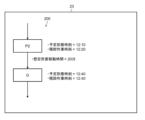
- 1 is an image diagram of a movement plan transmitted to a manned transport machine in a transport management device according to an embodiment of the present invention.
- FIG. 4 is a flowchart showing a procedure for creating and outputting a movement plan by a transportation management device according to an embodiment of the present invention.
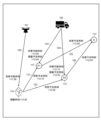
- FIG. 13 is an image diagram of movement plan creation.
- FIG. 1 is a schematic diagram showing the general configuration of a transport management device according to one embodiment of the present invention.
- the transport management device 1 shown in FIG. 1 has a computer that creates a movement plan, which is control information for a group of transport machines 2, and is a device that manages the transport of transported goods.
- the group of transport machines 2 is a collective term for a plurality of transport machines constituting a transport system to be controlled by the transport management device 1.
- the group of transport machines 2 includes at least one unmanned transport machine 21, such as a drone, that operates without human operation (operation by boarding or remote operation).
- the unmanned transport machine 21 is not limited to an air vehicle such as a drone, but may also include other transport machines that do not require a driver (a person on board or a remote operator), such as an unmanned vehicle equipped with an automatic driving function.
- the group of transport machines 2 may also include one or more manned transport machines 22 operated by a driver (a person on board or a remote operator).
- the manned transport machine 22 may include vehicles such as trucks, motorcycles, and bicycles, as well as aircraft such as airplanes and helicopters, and ships.
- manned transport machines 22 e.g., trucks
- a monitor 23 in the driver's cab.
- a mobile terminal 24 carried by the driver of the manned transport machine 22 can be used as the monitor.
- the mobile terminal 24 is typically a smartphone, but may also include tablet PCs, notebook PCs, mobile phones, PDAs, etc.
- the mobile terminal 24 may be carried not only by the driver of the manned transport machine 22, but also by personnel involved in the operation of the transport machine group 2, such as personnel who load and unload cargo onto the unmanned transport machine 21 or the manned transport machine 22, and personnel who replace or charge batteries, refuel, or perform other maintenance on the unmanned transport machine 21 or the manned transport machine 22.
- the unmanned transport machine 21, the manned transport machine 22, and the mobile terminal 24 are each equipped with a GNSS mobile station, and the current positions of the unmanned transport machine 21, the manned transport machine 22, and the mobile terminal 24 are acquired by the GNSS system.
- the unmanned transport machine 21 and the manned transport machine 22 that is powered are each equipped with a computer. These computers are capable of communicating with the transport management device 1, and transmit information such as remaining battery charge and fuel level, and the current position of the vehicle to the transport management device 1, and receive movement plans from the transport management device 1.
- the computer controls the vehicle to move autonomously according to the received movement plan.
- the computer displays and outputs the received movement plan on the monitor 23.
- the mobile terminal 24 also displays and outputs the received movement plan.
- the transportation management device 1 shown in FIG. 1 includes a storage device 11, a computer 12, and a communication device 13.
- the storage device 11 is configured using, for example, a HDD, and stores a number of loading and unloading points and their respective positions for the unmanned transport machine 21 and the manned transport machine 22 to load and unload transported items (luggage).
- information (data) such as the ID and type of each of the unmanned transport machines 21 and the manned transport machines 22 belonging to the transport system may also be stored in the storage device 11.
- information (data) such as the current position and current cruising distance of each transport machine calculated by the transport management device 1 based on the current position, remaining battery charge, and remaining fuel charge received from the unmanned transport machine 21 and the manned transport machine 22 may be stored in the storage device 11.
- information (data) such as the current position and current cruising distance of each transport machine calculated by the transport management device 1 based on the current position, remaining battery charge, and remaining fuel charge received from the unmanned transport machine 21 and the manned transport machine 22 may be stored in the storage device 11.
- a single storage device 11 is illustrated in FIG. 1, multiple storage devices 11 may be present.
- the storage device 11 also preferably stores equipment information (type, quantity, etc. of loading and unloading equipment) related to the loading and unloading equipment for cargo installed at the loading and unloading point.
- Loading and unloading equipment is equipment for unloading and loading cargo onto transport machinery.
- This loading and unloading equipment includes, for example, a device consisting of one or more devices that automatically and unmannedly loads and unloads cargo onto unmanned transport machinery 21, such as a robot arm or conveyor, as well as cargo handling machinery that is driven or operated by a worker, such as a forklift or a crane.
- the storage device 11 preferably stores information regarding the storage status of luggage for each loading and unloading point.
- the storage status of luggage includes, for example, information such as the ratio of the currently stored luggage volume to the storage capacity of the loading and unloading point, the current amount of luggage that can be accepted, etc.
- the storage device 11 may be incorporated inside the housing of the computer 12, or may be connected to a terminal of the computer 12.
- the storage device 11 may also be configured to be connected to the computer 12 via a wired or wireless network.
- the computer 12 has a processor such as a CPU, a ROM for storing various programs, a RAM for temporarily storing data in the calculation process, etc., and executes software that realizes the functions related to the creation of the movement plan.
- the computer 12 can access the storage device 11. Based on the shipment point, shipment time, and destination of the luggage inputted from an input device such as a keyboard or mouse or from another terminal and inputted via the network, the computer 12 selects a responsible machine, which is at least one transport machine responsible for transporting the luggage, according to each transport machine and their current position, and selects a loading point where the responsible machine will load and unload the luggage.
- the computer 12 also calculates the loading point and the time when the responsible machine will depart and arrive at the loading point, and creates a movement plan for the responsible machine.
- the luggage information inputted by the input device can also include the quantity, weight, size, and type of contents (fragile items, clothing, food, etc.) of the luggage.
- the computer 12 can write and store the created movement plan in the storage device 11 or other storage medium 14.
- the storage medium 14 can be any type of storage device, such as a semiconductor memory, an external HDD, a network memory, or a CD-ROM, that is connected to the computer 12 by wire or wirelessly.
- the communication device 13 is a wired or wireless communication device that can be connected to, for example, the Internet or an intranet.
- the computer 12 transmits the movement plan created for each transport machine via the communication device 13 to the corresponding unmanned transport machine, manned transport machine 22, or mobile terminal 24, and controls the transport machine selected as the responsible machine.
- the movement plan transmitted to the unmanned transport machine 21 becomes an operation command for the unmanned transport machine 21, and the unmanned transport machine 21 operates based on the movement plan.
- the movement plan transmitted to the manned transport machine 22 becomes a display command for the monitor 23 of the manned transport machine 22 or the mobile terminal 24.
- the computer 12 can receive weather information 15 and traffic information 16 from the network.
- the movement plan created by the computer 12 is a type of control information for the group of transport machines 2, and is created sequentially for each unmanned transport machine 21 and manned transport machine 22 according to the situation.
- the movement plan includes, for each transport machine, a loading and unloading point (e.g., ID, name, location information, etc. of the loading and unloading point) where the cargo is loaded and unloaded, and the scheduled time of departure and arrival at the loading and unloading point.
- the loading and unloading point is a storage location for cargo that is set in advance within the delivery area of the cargo by the transport system, and is, for example, an office or warehouse of the operator of the transport system.
- the movement plan for each transport machine may include the transport machine (e.g., ID, type, scheduled time of departure and arrival, etc. of the transport machine) that is the counterpart of the cargo delivery.
- FIG. 2 is an image diagram of a movement plan transmitted to the manned transport machine 22.
- information such as the loading point P2 where the manned transport machine 22 loads the cargo, the destination point G, the scheduled time of arrival at the loading point P2, the loading and unloading operation time for loading the cargo, the estimated travel time from the loading point P2 to the destination point, the scheduled time of arrival at the destination point G, and the loading and unloading operation time for unloading the cargo are displayed on the monitor 23 as a movement plan 200.
- the computer 12 receives at least one of weather information 15 and traffic information 16 from the network via the communication device 13, judges whether the transport machine selected as the responsible machine can reach the loading point, or the delay time, and reflects the result in the movement plan. For example, if bad weather such as strong winds or heavy rain interferes with the navigation of the drone, the drone is removed from the candidates for the responsible machine, and a vehicle such as a truck is selected as the responsible machine. In this way, the weather information 15 can be reflected in the creation of the movement plan. In addition, for example, if multiple candidates for the transport route from the dispatch point to the destination are listed according to the dispatch point and destination of the luggage, it is possible to check whether congestion is occurring on the land route included in any of the candidate transport routes.
- the expected delay time due to congestion is calculated, and the planned required time for transporting the luggage is corrected for each candidate transport route, and the most rational transport route (for example, the one with the shortest transport time or the lowest transport cost) is selected.
- the traffic information 16 can be reflected in the creation of the movement plan.
- the computer 12 can determine whether or not loading and unloading equipment can be used to load and unload cargo onto the responsible machine at the loading and unloading point. In this case, the computer 12 can determine whether the loading and unloading equipment can be used to load and unload cargo onto the responsible machine in a short time and at low cost, or whether the loading and unloading equipment is not available and multiple personnel are required to load and unload the cargo. In this way, the computer 12 can reflect the equipment information in the movement plan by, for example, comparing the time and cost required to load and unload cargo for each loading and unloading point.
- the computer 12 can calculate the number of people required to load and unload the cargo at a selected loading point based on, for example, the quantity and weight of the cargo, as basic information for creating a movement plan. In this case, if the number of people required to load and unload the cargo to be loaded is not met even when the number of personnel at the loading point and the passengers of the manned transport machine 22 heading to the loading point are added, the computer 12 can exclude that loading point from the selection candidates.
- the number of people required can be calculated, for example, by determining in advance the loadable weight per person, dividing the weight of the cargo to be loaded by this loadable weight, and rounding up the decimal point.
- the computer 12 creates a movement plan taking into account the required number of people, and transmits and displays the created movement plan to the monitor 23 of the manned transport machine 22 selected as the responsible machine, or to the mobile terminal 24 carried by the worker belonging to the loading and unloading point, thereby encouraging the guidance of personnel, including the occupants of the manned transport machine 22 and the workers at the loading and unloading point, so that the required number of people required to load and unload the cargo will gather at the loading and unloading point at the time of unloading.
- FIG. 3 is a flowchart showing the procedure for creating and outputting a movement plan by the transportation management device 1
- FIG. 4 is an image diagram of the creation of the movement plan.
- Process 51 the computer 12 selects a transport machine capable of receiving the package at the dispatch point 110. For example, based on the current position of each transport machine, candidates for transport machines capable of arriving at the dispatch point 110 before the dispatch time are extracted. At this time, even if a transport machine is capable of arriving at the dispatch point 110 before the dispatch time based on the relationship between the dispatch point 110 and the current position, a transport machine for which a movement plan has already been created and for which the existing movement plan must be changed is excluded from the candidates, and a transport machine for which no movement plan has been created or a transport machine that has a movement plan but can arrive at the dispatch point 110 before the dispatch time without changing the existing movement plan is preferentially extracted.
- drone 101 which is the unmanned transport machine 21 is selected as the machine in charge in process 51 because it can reach dispatch point 110 (possible arrival time is 11:58) before the loading time (12:10) calculated backwards from the dispatch time.
- process 52 the computer 12 obtains location information of the loading and unloading point from the storage device 11, and extracts at least one candidate loading and unloading point as necessary based on information such as the positional relationship between the shipping point 110 and the destination point 113 and the range of the drone 101.
- the computer 12 determines whether unloading is possible at the loading and unloading points 111 and 112 based on the current cargo capacity and facility information at the loading and unloading points 111 and 112, and if possible, calculates the scheduled arrival time of the drone 101 at the loading and unloading points 111 and 112, and determines the scheduled unloading time at the loading and unloading points 111 and 112 based on the calculated scheduled arrival time.
- the drone 101 is capable of unloading at the loading point 111 and the loading point 112 in process 52, and the scheduled unloading times at the loading point 111 and the loading point 112 are calculated to be 12:10 and 12:20, respectively.
- process 53 the computer 12 records and registers the route by which the machine in charge arrives at the destination point 113 as a transportation route in the storage device 11 or another storage device.
- the loading and unloading point 111 or loading and unloading point 112 selected in process 52 is the destination point 113. If the loading and unloading point 111 or loading and unloading point 112 is the destination point 113, that is, if the drone 101 can transport the cargo to the destination point 103, then that route (the drone 101 unloads the cargo at the destination point 113) is registered in the memory device 11 or another memory device as a transport route.
- the loading and unloading points 111 and 112 are not destination points 113, and the drone 101 cannot unload the cargo at the destination point 113, so at the current time (when determining the arrival point of the drone 101), no corresponding transport route exists and no registration is performed.
- process 54 the computer 12 judges whether to end the search for the transport route, and if the search is to be continued, the procedure proceeds to process 55, and if the search is to be ended, the procedure proceeds to process 56.
- process 54 it is possible to end the search for the transport route when the number of transport routes reaches a specified value, or when the elapsed time from the start of the flow of FIG. 3 in process 50 reaches a specified time. In FIG. 4, since there is no corresponding transport route at the present time (when the determination regarding the arrival destination of the drone 101 is made), the judgment of process 54 is not established, a "NO" judgment is made, and the procedure proceeds to process 55.
- Process 55 If it is determined in process 54 that the search for the movement plan candidates is to be continued, the computer 12 then proceeds to process 55, where a transport machine capable of loading the cargo at the loading point 111 and the loading point 112 after the scheduled unloading time calculated in process 52 (i.e., another responsible machine that takes over the cargo from the responsible machine that unloaded the cargo at the loading point 111 and the loading point 112) is selected at the loading point 111 and the loading point 112, and the process returns to process 52.
- a transport machine capable of loading the cargo at the loading point 111 and the loading point 112 after the scheduled unloading time calculated in process 52 i.e., another responsible machine that takes over the cargo from the responsible machine that unloaded the cargo at the loading point 111 and the loading point 112
- process 54 for example, a case where the transport machine arrives at the loading point 111 and the loading point 112 before the scheduled unloading time and waits at the loading point 111 and the loading point 112 until the scheduled unloading time to load the cargo, or a case where the transport machine arrives at the loading point 111 and the loading point 112 after the scheduled unloading time and promptly loads the cargo is assumed, and a transport machine that can respond without changing the existing movement plan is selected as the responsible machine to take over, as in the case of selecting the drone 101 in process 51.
- process 55 it is calculated that the truck 102, which is the manned transport machine 22, can arrive at the loading point 111 and loading point 112 after/before the scheduled unloading time of the drone 101 and load the cargo, and further in processes 52 and 53 it is calculated that the truck 102 can arrive at the destination point 113 at 12:50 and 12:40, respectively, and these two transport routes are registered.
- the computer 12 makes a "YES" judgment and moves the procedure to process 56.
- Process 56 When it is determined in process 54 that the search for transport routes is to be terminated, the computer 12 then evaluates each transport route in process 56, and determines a movement plan based on the evaluation results.
- a transport cost based on the binding time and travel distance of each transport machine, and an efficiency cost calculated from the time required to transport the cargo are calculated as evaluation items, and the transport route with the smallest sum of the transport cost and the efficiency cost is identified as the basis for the movement plan.
- a first transportation route via routes 120, 121, and 125 and a second transportation route via routes 120, 122, and 126 are registered.
- the first transportation route is slower to arrive at the destination point 113 than the second transportation route, but has the characteristic that there is no waiting time for the truck 102 (passengers) at the loading and unloading point 111.
- the second transportation route is faster to arrive at the destination point 113 than the first transportation route, but has the characteristic that there is a waiting time at the loading and unloading point 112.
- a method of defining functions based on the time and cost required for transportation as described above and selecting a transportation route that is the optimal solution can be considered as a selection method for these.
- process 57 the computer 12 transmits, as a movement plan, the dispatch point 110, the loading point 112, the destination point 113 through which each responsible machine, i.e., the drone 101 and the truck 102, must pass, as well as the departure and arrival times and loading and unloading times at each of these points, via the communication device 13 to each transport machine (drone 101, truck 102) and, if necessary, to the mobile terminal 24 carried by the passenger of the truck 102 or the personnel at the loading point 112, etc., for the selected second transport route, and ends the flow of FIG. 3 for the luggage accepted in process 50.
- the computer 12 outputs and saves the movement plan in the storage device 11, the storage medium 14, etc. Saving the movement plan in the storage medium 14 can also be performed in response to a request operation on the computer 12.
- the movement plan may also reflect weather information 15 and traffic information 16. Furthermore, if personnel are needed to load and unload cargo onto the drone 101 or truck 102 at the dispatch point 110, the loading and unloading points 111 and 112, and the destination point 113, the movement plan may be displayed on the monitor 23, mobile terminal 24, etc., as mentioned above, and the necessary personnel may be secured.
- the movement plan is transmitted to the transport machine in the form of commands normally required to operate the unmanned transport machine.
- the movement plan may be transmitted as an image to a monitor 23 or mobile terminal 24 that is visually viewed by the passenger operating the manned transport machine.
- weather information 15 and traffic information 16 for the area surrounding the loading and unloading point can be appropriately reflected in the movement plan.
- the estimated arrival time can be calculated by delaying it by the amount of the delay, or if strong winds make it difficult for the drone to arrive at the loading and unloading point, ground transport can be prioritized, thereby reducing the risk of the movement plan not being realized due to unexpected delays or non-delivery.
- ground transport can be prioritized, thereby reducing the risk of the movement plan not being realized due to unexpected delays or non-delivery.
- the availability of loading and unloading equipment for loading and unloading the cargo onto the responsible machine can be determined based on the equipment information of the loading and unloading point, and this can be reflected in the movement plan.
- a movement plan can be created taking into account the constraints of such loading and unloading equipment. This can also contribute to the flexible creation of appropriate movement plans.
- the computer 12 can also calculate the number of people required for the responsible machine to load and unload the cargo at each loading point. In this case, if the number of people required to load and unload the cargo to be loaded is not met even when the number of personnel at the loading point and the occupants of the manned transport machine 22 heading to the loading point are added, the computer 12 can exclude the loading point from the selection candidates.
- the movement plan created taking the required number of people into consideration is displayed on the monitor 23 of the manned transport machine 22 selected as the responsible machine and on the mobile terminal 24 carried by the personnel at the loading point included in the transportation route, and it is possible to encourage the guidance of personnel so that the required number of people to load and unload the cargo, including the occupants of the manned transport machine 22 and the workers at the loading point, gather at the loading point at the time of unloading.
- the loading/unloading point can be included in the transport route options if it is expected that the required number of personnel can be secured, thereby reducing the cost of capital investment at the loading/unloading point.
- the history can be used for subsequent confirmation of the movement plan or for machine learning, etc.
- 1...Transportation management device 11...Storage device, 12...Computer, 14...Storage medium, 15...Weather information, 16...Traffic information, 21...Unmanned transport vehicle, 22...Manned transport vehicle, 23...Monitor, 24...Mobile terminal, 110...Shipping point, 111, 112...Loading and unloading point, 113...Destination point, 200...Movement plan
Landscapes
- Business, Economics & Management (AREA)
- Human Resources & Organizations (AREA)
- Engineering & Computer Science (AREA)
- Strategic Management (AREA)
- Economics (AREA)
- Marketing (AREA)
- Game Theory and Decision Science (AREA)
- Entrepreneurship & Innovation (AREA)
- Development Economics (AREA)
- Operations Research (AREA)
- Quality & Reliability (AREA)
- Tourism & Hospitality (AREA)
- Physics & Mathematics (AREA)
- General Business, Economics & Management (AREA)
- General Physics & Mathematics (AREA)
- Theoretical Computer Science (AREA)
- Management, Administration, Business Operations System, And Electronic Commerce (AREA)
Abstract
L'invention propose un dispositif de gestion de transport qui gère le transport d'objets de transport, et qui possède un ordinateur qui crée un plan de déplacement pour une pluralité de machines de transport comprenant au moins une machine de transport sans pilote. L'ordinateur peut accéder à un dispositif de stockage qui stocke les positions d'une pluralité de points de manipulation de cargaison pour les machines de transport pour charger et décharger les objets de transport. Sur la base d'un point d'expédition entré, d'un temps d'expédition entré et d'une destination de bagages entrée, l'ordinateur sélectionne une machine en charge qui est au moins une machine de transport en charge du transport des bagages en fonction des positions actuelles de la pluralité de machines de transport, sélectionne un point de manipulation de cargaison auquel la machine en charge effectue le chargement et le déchargement des bagages, calcule le temps auquel la machine en charge arrive au point de manipulation de cargaison et quitte le point de manipulation de cargaison, crée le plan de mouvement et commande la machine en charge sur la base du plan de mouvement.
Applications Claiming Priority (2)
| Application Number | Priority Date | Filing Date | Title |
|---|---|---|---|
| JP2023097956A JP7560614B1 (ja) | 2023-06-14 | 2023-06-14 | 輸送管理装置、輸送管理方法及び輸送管理システム |
| JP2023-097956 | 2023-06-14 |
Publications (1)
| Publication Number | Publication Date |
|---|---|
| WO2024257525A1 true WO2024257525A1 (fr) | 2024-12-19 |
Family
ID=92900447
Family Applications (1)
| Application Number | Title | Priority Date | Filing Date |
|---|---|---|---|
| PCT/JP2024/017691 Ceased WO2024257525A1 (fr) | 2023-06-14 | 2024-05-13 | Dispositif de gestion de transport, procédé de gestion de transport et système de gestion de transport |
Country Status (2)
| Country | Link |
|---|---|
| JP (1) | JP7560614B1 (fr) |
| WO (1) | WO2024257525A1 (fr) |
Citations (4)
| Publication number | Priority date | Publication date | Assignee | Title |
|---|---|---|---|---|
| US20190347614A1 (en) * | 2016-03-11 | 2019-11-14 | Route4Me, Inc. | Autonomous supply and distribution chain |
| JP2021060850A (ja) * | 2019-10-08 | 2021-04-15 | 日興運送株式会社 | 車両運行計画作成装置 |
| JP2022013938A (ja) * | 2020-07-03 | 2022-01-18 | クーパン コーポレイション | 電子装置およびその動作方法 |
| JP2022066043A (ja) * | 2020-10-16 | 2022-04-28 | トヨタ自動車株式会社 | 情報処理装置、情報処理システム、プログラム、及び車両 |
-
2023
- 2023-06-14 JP JP2023097956A patent/JP7560614B1/ja active Active
-
2024
- 2024-05-13 WO PCT/JP2024/017691 patent/WO2024257525A1/fr not_active Ceased
Patent Citations (4)
| Publication number | Priority date | Publication date | Assignee | Title |
|---|---|---|---|---|
| US20190347614A1 (en) * | 2016-03-11 | 2019-11-14 | Route4Me, Inc. | Autonomous supply and distribution chain |
| JP2021060850A (ja) * | 2019-10-08 | 2021-04-15 | 日興運送株式会社 | 車両運行計画作成装置 |
| JP2022013938A (ja) * | 2020-07-03 | 2022-01-18 | クーパン コーポレイション | 電子装置およびその動作方法 |
| JP2022066043A (ja) * | 2020-10-16 | 2022-04-28 | トヨタ自動車株式会社 | 情報処理装置、情報処理システム、プログラム、及び車両 |
Also Published As
| Publication number | Publication date |
|---|---|
| JP7560614B1 (ja) | 2024-10-02 |
| JP2024179249A (ja) | 2024-12-26 |
Similar Documents
| Publication | Publication Date | Title |
|---|---|---|
| US11565420B2 (en) | Teleoperation in a smart container yard | |
| US20230206165A1 (en) | Systems for autonomous item delivery | |
| US20220253804A1 (en) | Cross-dock management system, method and apparatus | |
| US11981508B2 (en) | Container method and system for automated end-to-end package delivery | |
| US11111076B1 (en) | Optimized shipment transfer | |
| US20220261709A1 (en) | System and method for automated cross-dock operations | |
| US20120232942A1 (en) | Control and tracking system for material movement system and method of use | |
| US20250229986A1 (en) | Automated systems and devices for loading and unloading | |
| US12008507B2 (en) | Systems and methods for handling packages transported in a delivery vehicle | |
| KR20170081672A (ko) | 물체의 전달 서비스를 제공하기 위한 컴퓨터 시스템 및 방법 | |
| JP6818326B2 (ja) | 人工知能を活用した荷役機械の分散配置システム | |
| JP2020135028A (ja) | 情報処理装置 | |
| Willems | Understanding the impacts of autonomous vehicles in logistics | |
| JP6556532B2 (ja) | 通信装置、搬送補助具、および搬送システム | |
| JP7560614B1 (ja) | 輸送管理装置、輸送管理方法及び輸送管理システム | |
| WO2022182644A9 (fr) | Procédé de micro-exécution mobile et ou stationnaire de livraison automatisée de paquets par des êtres humains et ou par des véhicules autonomes, par des véhicules terrestres ou par des drones aériens | |
| JP2025184310A (ja) | 情報処理システム、情報処理装置、情報処理方法、およびプログラム | |
| JP7756878B2 (ja) | 情報処理システム、情報処理装置、情報処理方法及びプログラム | |
| JP7844231B2 (ja) | 配車管理装置、配車管理システム及び配車管理方法 | |
| KR20240137412A (ko) | 이종의 무인이동체들을 이용한 협업 배송 시스템 및 방법, 이종의 무인이동체들 간의 협업 배송을 지원하는 장치 | |
| US20230242275A1 (en) | A system and a method of transporting luggage | |
| WO2025254203A1 (fr) | Système de traitement d'informations, dispositif de traitement d'informations, procédé de traitement d'informations et programme | |
| WO2024202052A1 (fr) | Procédé de planification de travail, système de planification de travail et programme | |
| JP2025184304A (ja) | 情報処理システム、情報処理装置、情報処理方法及びプログラム | |
| WO2025254204A1 (fr) | Système de traitement d'informations, dispositif de traitement d'informations, programme et procédé de traitement d'informations |
Legal Events
| Date | Code | Title | Description |
|---|---|---|---|
| 121 | Ep: the epo has been informed by wipo that ep was designated in this application |
Ref document number: 24823147 Country of ref document: EP Kind code of ref document: A1 |
|
| NENP | Non-entry into the national phase |
Ref country code: DE |
|
| 122 | Ep: pct application non-entry in european phase |
Ref document number: 24823147 Country of ref document: EP Kind code of ref document: A1 |