WO2024257580A1 - 炭化珪素エピタキシャル基板、炭化珪素半導体装置の製造方法および炭化珪素エピタキシャル基板の製造方法 - Google Patents
炭化珪素エピタキシャル基板、炭化珪素半導体装置の製造方法および炭化珪素エピタキシャル基板の製造方法 Download PDFInfo
- Publication number
- WO2024257580A1 WO2024257580A1 PCT/JP2024/019082 JP2024019082W WO2024257580A1 WO 2024257580 A1 WO2024257580 A1 WO 2024257580A1 JP 2024019082 W JP2024019082 W JP 2024019082W WO 2024257580 A1 WO2024257580 A1 WO 2024257580A1
- Authority
- WO
- WIPO (PCT)
- Prior art keywords
- silicon carbide
- carbide epitaxial
- substrate
- epitaxial layer
- main surface
- Prior art date
- Legal status (The legal status is an assumption and is not a legal conclusion. Google has not performed a legal analysis and makes no representation as to the accuracy of the status listed.)
- Ceased
Links
Images






Classifications
-
- C—CHEMISTRY; METALLURGY
- C23—COATING METALLIC MATERIAL; COATING MATERIAL WITH METALLIC MATERIAL; CHEMICAL SURFACE TREATMENT; DIFFUSION TREATMENT OF METALLIC MATERIAL; COATING BY VACUUM EVAPORATION, BY SPUTTERING, BY ION IMPLANTATION OR BY CHEMICAL VAPOUR DEPOSITION, IN GENERAL; INHIBITING CORROSION OF METALLIC MATERIAL OR INCRUSTATION IN GENERAL
- C23C—COATING METALLIC MATERIAL; COATING MATERIAL WITH METALLIC MATERIAL; SURFACE TREATMENT OF METALLIC MATERIAL BY DIFFUSION INTO THE SURFACE, BY CHEMICAL CONVERSION OR SUBSTITUTION; COATING BY VACUUM EVAPORATION, BY SPUTTERING, BY ION IMPLANTATION OR BY CHEMICAL VAPOUR DEPOSITION, IN GENERAL
- C23C16/00—Chemical coating by decomposition of gaseous compounds, without leaving reaction products of surface material in the coating, i.e. chemical vapour deposition [CVD] processes
- C23C16/22—Chemical coating by decomposition of gaseous compounds, without leaving reaction products of surface material in the coating, i.e. chemical vapour deposition [CVD] processes characterised by the deposition of inorganic material, other than metallic material
- C23C16/30—Deposition of compounds, mixtures or solid solutions, e.g. borides, carbides, nitrides
- C23C16/42—Silicides
-
- C—CHEMISTRY; METALLURGY
- C23—COATING METALLIC MATERIAL; COATING MATERIAL WITH METALLIC MATERIAL; CHEMICAL SURFACE TREATMENT; DIFFUSION TREATMENT OF METALLIC MATERIAL; COATING BY VACUUM EVAPORATION, BY SPUTTERING, BY ION IMPLANTATION OR BY CHEMICAL VAPOUR DEPOSITION, IN GENERAL; INHIBITING CORROSION OF METALLIC MATERIAL OR INCRUSTATION IN GENERAL
- C23C—COATING METALLIC MATERIAL; COATING MATERIAL WITH METALLIC MATERIAL; SURFACE TREATMENT OF METALLIC MATERIAL BY DIFFUSION INTO THE SURFACE, BY CHEMICAL CONVERSION OR SUBSTITUTION; COATING BY VACUUM EVAPORATION, BY SPUTTERING, BY ION IMPLANTATION OR BY CHEMICAL VAPOUR DEPOSITION, IN GENERAL
- C23C16/00—Chemical coating by decomposition of gaseous compounds, without leaving reaction products of surface material in the coating, i.e. chemical vapour deposition [CVD] processes
- C23C16/44—Chemical coating by decomposition of gaseous compounds, without leaving reaction products of surface material in the coating, i.e. chemical vapour deposition [CVD] processes characterised by the method of coating
- C23C16/458—Chemical coating by decomposition of gaseous compounds, without leaving reaction products of surface material in the coating, i.e. chemical vapour deposition [CVD] processes characterised by the method of coating characterised by the method used for supporting substrates in the reaction chamber
-
- C—CHEMISTRY; METALLURGY
- C30—CRYSTAL GROWTH
- C30B—SINGLE-CRYSTAL GROWTH; UNIDIRECTIONAL SOLIDIFICATION OF EUTECTIC MATERIAL OR UNIDIRECTIONAL DEMIXING OF EUTECTOID MATERIAL; REFINING BY ZONE-MELTING OF MATERIAL; PRODUCTION OF A HOMOGENEOUS POLYCRYSTALLINE MATERIAL WITH DEFINED STRUCTURE; SINGLE CRYSTALS OR HOMOGENEOUS POLYCRYSTALLINE MATERIAL WITH DEFINED STRUCTURE; AFTER-TREATMENT OF SINGLE CRYSTALS OR A HOMOGENEOUS POLYCRYSTALLINE MATERIAL WITH DEFINED STRUCTURE; APPARATUS THEREFOR
- C30B25/00—Single-crystal growth by chemical reaction of reactive gases, e.g. chemical vapour-deposition growth
- C30B25/02—Epitaxial-layer growth
- C30B25/12—Substrate holders or susceptors
-
- C—CHEMISTRY; METALLURGY
- C30—CRYSTAL GROWTH
- C30B—SINGLE-CRYSTAL GROWTH; UNIDIRECTIONAL SOLIDIFICATION OF EUTECTIC MATERIAL OR UNIDIRECTIONAL DEMIXING OF EUTECTOID MATERIAL; REFINING BY ZONE-MELTING OF MATERIAL; PRODUCTION OF A HOMOGENEOUS POLYCRYSTALLINE MATERIAL WITH DEFINED STRUCTURE; SINGLE CRYSTALS OR HOMOGENEOUS POLYCRYSTALLINE MATERIAL WITH DEFINED STRUCTURE; AFTER-TREATMENT OF SINGLE CRYSTALS OR A HOMOGENEOUS POLYCRYSTALLINE MATERIAL WITH DEFINED STRUCTURE; APPARATUS THEREFOR
- C30B29/00—Single crystals or homogeneous polycrystalline material with defined structure characterised by the material or by their shape
- C30B29/10—Inorganic compounds or compositions
- C30B29/36—Carbides
-
- H—ELECTRICITY
- H10—SEMICONDUCTOR DEVICES; ELECTRIC SOLID-STATE DEVICES NOT OTHERWISE PROVIDED FOR
- H10P—GENERIC PROCESSES OR APPARATUS FOR THE MANUFACTURE OR TREATMENT OF DEVICES COVERED BY CLASS H10
- H10P14/00—Formation of materials, e.g. in the shape of layers or pillars
- H10P14/20—Formation of materials, e.g. in the shape of layers or pillars of semiconductor materials
- H10P14/29—Formation of materials, e.g. in the shape of layers or pillars of semiconductor materials characterised by the substrates
Definitions
- This disclosure relates to a silicon carbide epitaxial substrate, a method for manufacturing a silicon carbide semiconductor device, and a method for manufacturing a silicon carbide epitaxial substrate.
- Patent Document 1 JP 2016-149496 A discloses a susceptor on which a coating layer made of diamond is formed.
- a silicon carbide epitaxial substrate includes a silicon carbide substrate, a first silicon carbide epitaxial layer, and a second silicon carbide epitaxial layer.
- the silicon carbide substrate has a first main surface and a second main surface opposite to the first main surface.
- the first silicon carbide epitaxial layer contacts the silicon carbide substrate at the first main surface.
- the second silicon carbide epitaxial layer contacts the silicon carbide substrate at the second main surface.
- the thickness of the first silicon carbide epitaxial layer is greater than the thickness of the second silicon carbide epitaxial layer.
- the areal density of recesses in a central square region of the second silicon carbide epitaxial layer is 5 mm -2 or less.
- the length of one side of the central square region is 5 mm.
- the maximum width of the recesses is 10 ⁇ m or more and 100 ⁇ m or less.
- FIG. 1 is a schematic plan view showing the configuration of a surface of a silicon carbide epitaxial substrate according to this embodiment.
- FIG. 2 is a schematic cross-sectional view taken along line II-II in FIG.
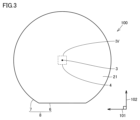
- FIG. 3 is a plan view illustrating the configuration of the back surface of the silicon carbide epitaxial substrate according to this embodiment.
- FIG. 4 is an enlarged view of region IV of FIG.
- FIG. 5 is a schematic cross-sectional view taken along line VV in FIG.
- FIG. 6 is a partial schematic cross-sectional view showing the configuration of an apparatus for manufacturing a silicon carbide epitaxial substrate.
- FIG. 7 is a flow chart that outlines the method for manufacturing a silicon carbide epitaxial substrate according to this embodiment.
- FIG. 8 is a schematic cross-sectional view showing the configuration of a susceptor.
- FIG. 9 is a schematic cross-sectional view showing a step of forming a silicon carbide coating layer on a susceptor.
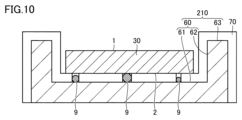
- FIG. 10 is a schematic cross-sectional view showing a step of placing the silicon carbide substrate on a susceptor.
- FIG. 11 is a schematic cross-sectional view showing a step of forming a silicon carbide epitaxial layer on a silicon carbide substrate.
- FIG. 12 is a flowchart that roughly illustrates the method for manufacturing a silicon carbide semiconductor device according to this embodiment.
- FIG. 13 is a schematic cross-sectional view showing a step of preparing a silicon carbide epitaxial substrate.
- FIG. 14 is a schematic cross-sectional view showing a step of forming a body region.
- FIG. 15 is a schematic cross-sectional view showing a step of forming a source region.
- FIG. 16 is a schematic cross-sectional view showing a step of forming a trench in the third main surface of the first silicon carbide epitaxial layer.
- FIG. 17 is a schematic cross-sectional view showing a step of forming a gate insulating film.
- FIG. 18 is a schematic cross-sectional view showing a step of forming a gate electrode and an interlayer insulating film.
- FIG. 19 is a schematic cross-sectional view showing the configuration of a silicon carbide semiconductor device according to this embodiment.
- An object of the present disclosure is to provide a silicon carbide epitaxial substrate capable of improving the yield of silicon carbide semiconductor devices, a method for manufacturing a silicon carbide semiconductor device, and a method for manufacturing a silicon carbide epitaxial substrate.
- An object of the present disclosure is to provide a silicon carbide epitaxial substrate capable of improving the yield of silicon carbide semiconductor devices, a method for manufacturing a silicon carbide semiconductor device, and a method for manufacturing a silicon carbide epitaxial substrate.
- a silicon carbide epitaxial substrate 100 includes a silicon carbide substrate 30, a first silicon carbide epitaxial layer 10, and a second silicon carbide epitaxial layer 20.
- the silicon carbide substrate 30 has a first main surface 1 and a second main surface 2 opposite to the first main surface 1.
- the first silicon carbide epitaxial layer 10 contacts the silicon carbide substrate 30 at the first main surface 1.
- the second silicon carbide epitaxial layer 20 contacts the silicon carbide substrate 30 at the second main surface 2.
- the thickness of the first silicon carbide epitaxial layer 10 is greater than the thickness of the second silicon carbide epitaxial layer 20.
- the areal density of the recesses 5 in a central square region 4 of the second silicon carbide epitaxial layer 20 is 5 mm -2 or less.
- the length of one side of the central square region 4 is 5 mm.
- the maximum width of the recess 5 is 10 ⁇ m or more and 100 ⁇ m or less.
- the outer shape of the recess 5 may have an arc-shaped portion in a plan view.
- the areal density of recesses 5 in the central square region may be equal to or less than 4 mm ⁇ 2 .
- the thickness of the second silicon carbide epitaxial layer 20 may be 0.1 ⁇ m or more and 5 ⁇ m or less.
- the method for manufacturing a silicon carbide semiconductor device includes the following steps: A silicon carbide epitaxial substrate 100 described in any one of (1) to (4) above is prepared. An electrode is formed on the first silicon carbide epitaxial layer 10.
- the method for manufacturing a silicon carbide epitaxial substrate 100 includes the following steps: A silicon carbide coating layer 70 is formed on the susceptor 210 without the silicon carbide substrate 30 being placed. The silicon carbide substrate 30 is placed on the susceptor 210 so that the silicon carbide substrate 30 is in contact with the silicon carbide coating layer 70. A silicon carbide epitaxial layer 40 is formed on the silicon carbide substrate 30.
- silicon carbide particles 9 may be present on the susceptor 210.
- the thickness of the silicon carbide coating layer 70 may be greater than the height of the silicon carbide particles 9.
- FIG. 1 is a plan view schematic diagram showing the configuration of the surface of the silicon carbide epitaxial substrate according to this embodiment.
- FIG. 2 is a cross-sectional schematic diagram along the II-II line in FIG. 1.
- the silicon carbide epitaxial substrate 100 according to this embodiment has a silicon carbide substrate 30, a first silicon carbide epitaxial layer 10, and a second silicon carbide epitaxial layer 20.
- the silicon carbide substrate 30 has a first main surface 1 and a second main surface 2.
- the second main surface 2 is opposite to the first main surface 1.
- the first silicon carbide epitaxial layer 10 contacts the silicon carbide substrate 30 at the first main surface 1.
- the second silicon carbide epitaxial layer 20 contacts the silicon carbide substrate 30 at the second main surface 2.
- the first silicon carbide epitaxial layer 10 has a third main surface 11 and a fourth main surface 12.
- the third main surface 11 constitutes the surface of the silicon carbide epitaxial substrate 100.
- the fourth main surface 12 is opposite the third main surface 11.
- the fourth main surface 12 is in contact with the first main surface 1.
- the second silicon carbide epitaxial layer 20 has a fifth main surface 21 and a sixth main surface 22.
- the sixth main surface 22 is opposite the fifth main surface 21.
- the sixth main surface 22 is in contact with the second main surface 2.
- the fifth main surface 21 constitutes the back surface of the silicon carbide epitaxial substrate 100.
- the silicon carbide epitaxial substrate 100 has an outer peripheral edge 8.
- the outer peripheral edge 8 has, for example, an orientation flat 6 and an arc-shaped portion 7.
- the orientation flat 6 is linear. Note that a plan view is a field of view seen along a direction from the first main surface 1 toward the second main surface 2.
- the orientation flat 6 extends along the first direction 101.
- the arc-shaped portion 7 is continuous with the orientation flat 6. In a plan view, the arc-shaped portion 7 is arc-shaped.
- the third main surface 11 extends along each of the first direction 101 and the second direction 102.
- the second direction 102 is a direction perpendicular to the first direction 101.
- the third direction 103 is a direction along the thickness of the silicon carbide epitaxial substrate 100.
- the third direction 103 is perpendicular to each of the first direction 101 and the second direction 102.
- the first direction 101 is, for example, the ⁇ 11-20> direction.
- the first direction 101 may be, for example, the [11-20] direction.
- the first direction 101 may be, for example, the direction obtained by projecting the ⁇ 11-20> direction onto the third principal surface 11. From another perspective, the first direction 101 may be, for example, a direction that includes a ⁇ 11-20> directional component.
- the second direction 102 is, for example, the ⁇ 1-100> direction.
- the second direction 102 may be, for example, the [1-100] direction.
- the second direction 102 may be, for example, a direction obtained by projecting the ⁇ 1-100> direction onto the third principal surface 11. From another perspective, the second direction 102 may be, for example, a direction that includes a ⁇ 1-100> directional component.
- the third major surface 11 may be a ⁇ 0001 ⁇ plane, or may be a plane inclined with respect to the ⁇ 0001 ⁇ plane.
- the inclination angle (off angle) with respect to the ⁇ 0001 ⁇ plane is, for example, greater than 0° and equal to or less than 8°.
- the inclination direction (off direction) of the third major surface 11 is, for example, the ⁇ 11-20> direction.
- the off angle may be 2° or more and 6° or less.
- the maximum diameter W1 of the third main surface 11 is not particularly limited, but is, for example, 100 mm (4 inches) or more.
- the maximum diameter W1 may be 125 mm (5 inches) or more, 150 mm (6 inches) or more, or 200 mm (8 inches) or more.
- the maximum diameter W1 may be, for example, 400 mm (16 inches) or less.
- the maximum diameter W1 is the longest straight-line distance between two different points on the outer circumferential edge 8.
- 4 inches means 100 mm or 101.6 mm (4 inches x 25.4 mm/inch). 6 inches means 150 mm or 152.4 mm (6 inches x 25.4 mm/inch). 8 inches means 200 mm or 203.2 mm (8 inches x 25.4 mm/inch). 16 inches means 400 mm or 406.4 mm (16 inches x 25.4 mm/inch).
- the thickness of the first silicon carbide epitaxial layer 10 is a first thickness H1.
- the thickness of the second silicon carbide epitaxial layer 20 is a second thickness H2.
- the first thickness H1 is greater than the second thickness H2.
- the thickness of the first silicon carbide epitaxial layer 10 is not particularly limited, but may be, for example, 5 ⁇ m or more, or 10 ⁇ m or more.
- the thickness of the first silicon carbide epitaxial layer 10 is not particularly limited, but may be, for example, 100 ⁇ m or less, 50 ⁇ m or more, or 30 ⁇ m or less.
- the thickness of the second silicon carbide epitaxial layer 20 may be, for example, 0.1 ⁇ m or more and 5 ⁇ m or less.
- the thickness of the second silicon carbide epitaxial layer 20 is not particularly limited, but may be, for example, 0.5 ⁇ m or more, or 1 ⁇ m or more.
- the thickness of the second silicon carbide epitaxial layer 20 is not particularly limited, but may be, for example, 4 ⁇ m or less, or 3 ⁇ m or less.
- the thickness of the silicon carbide substrate 30 is the third thickness H3.
- the third thickness H3 may be greater than each of the first thickness H1 and the second thickness H2.
- the third thickness H3 is, for example, 200 ⁇ m or more and 600 ⁇ m or less.
- the third thickness H3 is not particularly limited, but may be, for example, 250 ⁇ m or more, or 300 ⁇ m or more.
- the third thickness H3 is not particularly limited, but may be, for example, 500 ⁇ m or less, or 350 ⁇ m or less.
- the silicon carbide substrate 30 contains an n-type impurity such as nitrogen.
- the conductivity type of the silicon carbide substrate 30 is, for example, n-type.
- the first silicon carbide epitaxial layer 10 and the second silicon carbide epitaxial layer 20 each contain an n-type impurity such as nitrogen (N).
- the conductivity type of the first silicon carbide epitaxial layer 10 and the second silicon carbide epitaxial layer 20 each is, for example, n-type.
- the concentration of n-type impurities in the silicon carbide substrate 30 may be higher than the concentration of n-type impurities in each of the first silicon carbide epitaxial layer 10 and the second silicon carbide epitaxial layer 20.
- the polytype of the silicon carbide constituting the silicon carbide substrate 30 is, for example, 4H.
- the polytype of the silicon carbide constituting each of the first silicon carbide epitaxial layer 10 and the second silicon carbide epitaxial layer 20 is, for example, 4H.
- FIG. 3 is a schematic plan view showing the configuration of the back surface of the silicon carbide epitaxial substrate 100 according to this embodiment.
- the second silicon carbide epitaxial layer 20 has a central square region 4.
- the central square region 4 is a square region centered on the center 3 of the fifth main surface 21.
- the length of one side of the central square region 4 is 5 mm.
- the central square region 4 has a first side and a second side. In a plan view, the first side is parallel to the first direction 101. In a plan view, the second side is parallel to the second direction 102.
- FIG. 4 is an enlarged view of region IV in FIG. 3. As shown in FIG. 4, one or more recesses 5 are formed in the central square region 4 of the second silicon carbide epitaxial layer 20.
- the maximum width W2 of the recess 5 is 10 ⁇ m or more and 100 ⁇ m or less.
- the maximum width W2 of the recess 5 is not particularly limited, but may be, for example, 20 ⁇ m or more or 30 ⁇ m or less.
- the maximum width W2 of the recess 5 is not particularly limited, but may be, for example, 90 ⁇ m or less or 80 ⁇ m or less.
- the outer shape of the recess 5 is, for example, a circle.
- the outer shape of the recess 5 may be, for example, a perfect circle, an ellipse, or a shape other than a circle.
- the outer shape of the recess 5 has an arc-shaped portion.
- the outer shape of the recess 5 may have a first outer shape portion 51 and a second outer shape portion 52.
- the first outer shape portion 51 is arc-shaped.
- the second outer shape portion 52 is, for example, V-shaped.
- the central angle of the arc-shaped first outer shape portion 51 may be, for example, 90° or more, 135° or more, or 180° or more.
- the second outer shape portion 52 may be connected to both ends of the arc-shaped first outer shape portion 51.
- FIG. 5 is a schematic cross-sectional view taken along line V-V in FIG. 4.
- silicon carbide particles 9 may be present on the second main surface 2 of the silicon carbide substrate 30.
- the recesses 5 are formed due to the silicon carbide particles 9.
- the second silicon carbide epitaxial layer 20 is formed on the second main surface 2, the second silicon carbide epitaxial layer 20 is not formed on the silicon carbide particles 9. Therefore, the recesses 5 of the second silicon carbide epitaxial layer 20 are formed on the silicon carbide particles 9.
- the bottom surface of the recess 5 may be formed of silicon carbide particles 9.
- the bottom surface of the recess 5 may be curved outward so that the center protrudes.
- the inner wall surface of the recess 5 may be formed of the second silicon carbide epitaxial layer 20.
- the silicon carbide particles 9 are approximately spherical.
- the height T (see FIG. 5) of the silicon carbide particles 9 in a direction perpendicular to the second main surface 2 is the diameter of the silicon carbide particles 9.
- the diameter of the silicon carbide particles 9 is substantially the same as the height of the silicon carbide particles 9.
- the height T of the silicon carbide particles 9 may be smaller than the second thickness H2 or may be the same as the second thickness H2.
- the surface density of the recesses 5 in the central square region 4 is 5 mm ⁇ 2 or less.
- the surface density of the recesses 5 in the central square region 4 is not particularly limited, but may be, for example, 4 mm ⁇ 2 or less, or 3 mm ⁇ 2 or less.
- the surface density of the recesses 5 in the central square region 4 is not particularly limited, but may be, for example, 1 mm ⁇ 2 or more, or 2 mm ⁇ 2 or more.
- the surface density of the recesses 5 can be obtained using a WASAVI series "SICA 6X” confocal differential interference microscope manufactured by Lasertec Corporation.
- the fifth main surface 21 of the silicon carbide epitaxial substrate 100 is irradiated with light having a wavelength of 546 nm from a mercury xenon lamp light source, and the reflected light of the light is observed by a light receiving element. In this way, an image of the fifth main surface 21 of the second silicon carbide epitaxial layer 20 is obtained.
- the magnification of the objective lens is set to 10 times.
- the threshold value which is an index of the measurement sensitivity of SICA, is set to ThreshS40.
- the number of recesses 5 in the central square region 4 of the fifth main surface 21 is measured.
- the surface density of the recesses 5 is obtained by dividing the number of recesses 5 in the central square region 4 by the area of the central square region 4.
- FIG. 6 is a partial cross-sectional schematic diagram showing the configuration of the manufacturing apparatus for silicon carbide epitaxial substrate 100.
- the manufacturing apparatus 200 for silicon carbide epitaxial substrate is, for example, a hot-wall type horizontal CVD (Chemical Vapor Deposition) apparatus.
- the manufacturing apparatus 200 for silicon carbide epitaxial substrate 100 mainly includes a reaction chamber 201, a gas supply unit 235, a control unit 245, a heating element 203, a quartz tube 204, a heat insulating material (not shown), and an induction heating coil (not shown).
- the heating element 203 has, for example, a cylindrical shape, and forms a reaction chamber 201 inside.
- the heating element 203 is made of, for example, graphite.
- the heating element 203 is provided inside a quartz tube 204.
- a heat insulating material surrounds the outer periphery of the heating element 203.
- the induction heating coil is wound, for example, along the outer periphery of the quartz tube 204.
- the induction heating coil is configured so that an alternating current can be supplied to it by an external power source (not shown). This causes the heating element 203 to be induction heated. As a result, the reaction chamber 201 is heated by the heating element 203.
- the reaction chamber 201 is a space surrounded by the inner wall surface 205 of the heating element 203.
- a susceptor 210 that holds a silicon carbide substrate 30 is provided in the reaction chamber 201.
- the susceptor 210 is made of silicon carbide.
- the silicon carbide substrate 30 is placed on the susceptor 210.
- the susceptor 210 is placed on a stage 202.
- the stage 202 is supported by a rotating shaft 209 so that it can rotate on its own axis. The rotation of the stage 202 causes the susceptor 210 to rotate.
- the manufacturing apparatus 200 for the silicon carbide epitaxial substrate 100 further has a gas inlet 207 and a gas exhaust port 208.
- the gas exhaust port 208 is connected to an exhaust pump (not shown).
- the white arrows in FIG. 6 indicate the flow of gas.
- Gas is introduced into the reaction chamber 201 from the gas inlet 207 and exhausted from the gas exhaust port 208.
- the pressure inside the reaction chamber 201 is adjusted by balancing the amount of gas supplied and the amount of gas exhausted.
- the gas supply unit 235 is configured to be able to supply a mixed gas containing a raw material gas, a dopant gas, and a carrier gas to the reaction chamber 201.
- the gas supply unit 235 includes, for example, a first gas supply unit 231, a second gas supply unit 232, a third gas supply unit 233, and a fourth gas supply unit 234.
- the first gas supply unit 231 is configured to be able to supply a first gas containing, for example, carbon (C) atoms.
- the first gas supply unit 231 is, for example, a gas cylinder filled with the first gas.
- the first gas is, for example , propane ( C3H8 ) gas.
- the first gas may be, for example, methane ( CH4 ) gas , ethane ( C2H6 ) gas, acetylene ( C2H2 ) gas, or the like.
- the second gas supply unit 232 is configured to be able to supply a second gas including, for example, silane (SiH 4 ) gas.
- the second gas supply unit 232 is, for example, a gas cylinder filled with the second gas.
- the second gas is, for example, silane gas.
- the second gas may be a mixed gas of silane gas and a gas other than silane.
- the third gas supply unit 233 is configured to be able to supply a third gas containing, for example, nitrogen atoms.
- the third gas supply unit 233 is, for example, a gas cylinder filled with the third gas.
- the third gas is a doping gas.
- the third gas is, for example, ammonia gas. Ammonia gas is more susceptible to thermal decomposition than nitrogen gas, which has a triple bond.
- the fourth gas supply unit 234 is configured to be capable of supplying a fourth gas (carrier gas) such as hydrogen.
- the fourth gas supply unit 234 is, for example, a gas cylinder filled with hydrogen.
- the control unit 245 is configured to be able to control the flow rate of the mixed gas supplied from the gas supply unit 235 to the reaction chamber 201.
- the control unit 245 may include a first gas flow rate control unit 241, a second gas flow rate control unit 242, a third gas flow rate control unit 243, and a fourth gas flow rate control unit 244.
- Each control unit may be, for example, an MFC (Mass Flow Controller).
- the control unit 245 is disposed between the gas supply unit 235 and the gas inlet 207.
- Fig. 7 is a flow chart that outlines the method for manufacturing the silicon carbide epitaxial substrate 100 according to this embodiment.
- the method for manufacturing the silicon carbide epitaxial substrate 100 according to this embodiment mainly includes a step (S10) of forming a silicon carbide coating layer 70 on the susceptor 210, a step (S20) of placing the silicon carbide substrate 30 on the susceptor 210, and a step (S30) of forming a silicon carbide epitaxial layer on the silicon carbide substrate 30.
- FIG. 8 is a schematic cross-sectional view showing the configuration of a susceptor.
- a substrate placement pocket 60 is formed on an upper surface 63 of the susceptor 210.
- the substrate placement pocket 60 has a pocket bottom surface 61 and a pocket inner peripheral surface 62.
- the pocket inner peripheral surface 62 is continuous with the pocket bottom surface 61.
- the substrate placement pocket 60 is defined by the pocket bottom surface 61 and the pocket inner peripheral surface 62.
- the susceptor 210 is made of silicon carbide.
- Silicon carbide particles 9 may be present on the susceptor 210. Larger diameter silicon carbide particles 9 are removed by air blowing, but smaller diameter silicon carbide particles 9 may adhere to the pocket bottom surface 61.
- the diameter of the silicon carbide particles 9 adhering to the pocket bottom surface 61 is, for example, 1 ⁇ m or more and 10 ⁇ m or less.
- the diameter of the silicon carbide particles 9 is not particularly limited, but may be, for example, 2 ⁇ m or more, or 3 ⁇ m or more.
- the diameter of the silicon carbide particles 9 is not particularly limited, but may be, for example, 8 ⁇ m or less, or 5 ⁇ m or less.
- FIG. 9 is a schematic cross-sectional view showing the step of forming a silicon carbide coating layer 70 on the susceptor 210.
- a silicon carbide coating layer 70 is formed on the susceptor 210 without a silicon carbide substrate 30 being placed in the substrate placement pocket 60 of the susceptor 210.
- the pressure in the reaction chamber 201 is reduced from atmospheric pressure to, for example, about 1 ⁇ 10 ⁇ 6 Pa.
- heating of the reaction chamber is started.
- hydrogen (H 2 ) gas which is a carrier gas, is introduced into the reaction chamber 201 from the fourth gas supply unit 234.
- a mixed gas containing , for example, silane ( SiH4 ), propane ( C3H8 ), ammonia ( NH3 ), and hydrogen is introduced into the reaction chamber 201.
- the mixed gas may contain argon (Ar).
- the flow rate of the first gas (propane) is, for example, 29 sccm.
- the flow rate of the second gas (silane) is, for example, 46 sccm.
- the flow rate of the third gas (ammonia) is, for example, 1.5 sccm.
- the flow rate of the fourth gas (hydrogen gas) is, for example, 100 slm.
- the pressure in the reaction chamber 201 is maintained at, for example, 2 kPa or more and 6 kPa or less.
- the temperature in the reaction chamber 201 is controlled to, for example, 1500°C or more and 1700°C or less.
- the silicon carbide coating layer 70 is formed to cover the surface of the substrate placement pocket 60. Specifically, the silicon carbide coating layer 70 is formed to contact each of the pocket bottom surface 61 and the pocket inner peripheral surface 62. The silicon carbide coating layer 70 may be formed to contact the upper surface 63 of the susceptor 210, or may be formed to contact the outer peripheral surface 64 of the susceptor 210.
- the thickness of the silicon carbide coating layer 70 is a fourth thickness H4.
- the fourth thickness H4 may be greater than the height of the silicon carbide particles 9.
- the height of the silicon carbide particles 9 is substantially the same as the diameter of the silicon carbide particles 9.
- the fourth thickness H4 may be greater than the height of the largest silicon carbide particle 9 or may be greater than the height of the smallest silicon carbide particle 9.
- the thickness of the silicon carbide coating layer 70 and the height of the silicon carbide particles 9 are each measured in a direction perpendicular to the planar pocket bottom surface 61.
- FIG. 10 is a schematic cross-sectional view showing the step of placing the silicon carbide substrate 30 on the susceptor 210.
- the silicon carbide substrate 30 is placed in a substrate placement pocket 60 formed in the susceptor 210.
- the silicon carbide substrate 30 is placed on the silicon carbide coating layer 70.
- the second main surface 2 of the silicon carbide substrate 30 contacts the silicon carbide coating layer 70.
- the first main surface 1 of the silicon carbide substrate 30 is spaced apart from the silicon carbide coating layer 70.
- the silicon carbide substrate 30 is placed in the substrate placement pocket 60 so that the second main surface 2 covers each of the multiple silicon carbide particles 9.
- some of the multiple silicon carbide particles 9 may adhere to the second main surface 2 of the silicon carbide substrate 30.
- the silicon carbide substrate 30 is placed on the susceptor 210 so that the silicon carbide substrate 30 is in contact with the silicon carbide coating layer 70.
- a portion of the second main surface 2 of the silicon carbide substrate 30 may be in contact with the silicon carbide coating layer 70, and other regions of the second main surface 2 may be spaced apart from the silicon carbide coating layer 70.
- FIG. 11 is a schematic cross-sectional view showing the step of forming a silicon carbide epitaxial layer on the silicon carbide substrate 30.
- silicon carbide epitaxial layer 40 is formed on silicon carbide substrate 30.
- Silicon carbide epitaxial layer 40 is formed by a step-flow growth method. Specifically, the pressure in reaction chamber 201 is reduced from atmospheric pressure to, for example, about 1 ⁇ 10 ⁇ 6 Pa. Next, heating of the reaction chamber is started. During the heating, hydrogen gas, which is a carrier gas, is introduced into reaction chamber 201 from fourth gas supply unit 234.
- a mixed gas containing, for example, silane, propane, ammonia, and hydrogen is introduced into the reaction chamber 201.
- the mixed gas may contain argon.
- the flow rate of the first gas (propane) is, for example, 29 sccm.
- the flow rate of the second gas (silane) is, for example, 46 sccm.
- the flow rate of the third gas (ammonia) is, for example, 1.5 sccm.
- the flow rate of the fourth gas (hydrogen gas) is, for example, 100 slm.
- the pressure in the reaction chamber 201 is maintained at, for example, 2 kPa or more and 6 kPa or less.
- the temperature in the reaction chamber 201 is controlled to, for example, 1500°C or more and 1700°C or less.
- each of the silane, propane, and ammonia is thermally decomposed in the reaction chamber 201, and a silicon carbide epitaxial layer 40 is formed on the silicon carbide substrate 30.
- the growth conditions for the silicon carbide epitaxial layer 40 are substantially the same as the growth conditions for the silicon carbide coating layer 70.
- a first silicon carbide epitaxial layer 10 is formed on a first main surface 1 of a silicon carbide substrate 30, and a second silicon carbide epitaxial layer 20 is formed on a second main surface 2 of the silicon carbide substrate 30.
- the thickness of the first silicon carbide epitaxial layer 10 is greater than the thickness of the second silicon carbide epitaxial layer 20.
- a silicon carbide epitaxial layer 40 is formed on the silicon carbide substrate 30, and a silicon carbide layer 71 may be formed on the silicon carbide coating layer 70. In this manner, a silicon carbide epitaxial substrate 100 according to this embodiment is obtained.
- Fig. 12 is a flow chart that outlines the method for manufacturing the silicon carbide semiconductor device 400 according to this embodiment.
- the method for manufacturing the silicon carbide semiconductor device 400 according to this embodiment mainly includes a step (S1) of preparing a silicon carbide epitaxial substrate 100 and a step (S2) of forming an electrode on the silicon carbide epitaxial substrate 100.
- FIG. 13 is a schematic cross-sectional view showing the step of preparing a silicon carbide epitaxial substrate 100.
- a silicon carbide epitaxial substrate 100 according to this embodiment is prepared (see FIGS. 1 and 2).
- the first silicon carbide epitaxial layer 10 may have a buffer layer 41 and a drift layer 42.
- the buffer layer 41 is in contact with the silicon carbide substrate 30.
- the drift layer 42 is provided on the buffer layer 41.
- the drift layer 42 constitutes the third main surface 11 of the first silicon carbide epitaxial layer 10.
- the second silicon carbide epitaxial layer 20 is removed, for example, by a polishing process.
- FIG. 14 is a schematic cross-sectional view showing the process of forming a body region.
- p-type impurities such as aluminum are ion-implanted into the third main surface 11 of the first silicon carbide epitaxial layer 10.
- This forms a body region 113 having p-type conductivity.
- the portion where the body region 113 is not formed becomes the drift layer 42 and the buffer layer 41.
- the thickness of the body region 113 is, for example, 0.9 ⁇ m.
- the first silicon carbide epitaxial layer 10 includes the buffer layer 41, the drift layer 42, and the body region 113.
- FIG. 15 is a schematic cross-sectional view showing the step of forming a source region.
- n-type impurities such as phosphorus are ion-implanted into the body region 113.
- This forms a source region 114 having an n-type conductivity type.
- the thickness of the source region 114 is, for example, 0.4 ⁇ m.
- the concentration of the n-type impurities in the source region 114 is higher than the concentration of the p-type impurities in the body region 113.
- a p-type impurity such as aluminum is ion-implanted into the source region 114 to form a contact region 118.
- the contact region 118 is formed so as to penetrate the source region 114 and the body region 113 and contact the drift layer 42.
- the concentration of the p-type impurity in the contact region 118 is higher than the concentration of the n-type impurity in the source region 114.
- activation annealing is performed to activate the ion-implanted impurities.
- the temperature of the activation annealing is, for example, 1500°C or higher and 1900°C or lower.
- the activation annealing time is, for example, about 30 minutes.
- the atmosphere of the activation annealing is, for example, an argon atmosphere.
- FIG. 16 is a cross-sectional schematic diagram showing a step of forming a trench in the third main surface 11 of the first silicon carbide epitaxial layer 10.
- a mask 117 having an opening is formed on the third main surface 11 including the source region 114 and the contact region 118. Using the mask 117, the source region 114, the body region 113, and a part of the drift layer 42 are removed by etching.
- etching method for example, inductively coupled plasma reactive ion etching can be used. Specifically, for example, inductively coupled plasma reactive ion etching using SF 6 or a mixed gas of SF 6 and O 2 as a reactive gas is used.
- a recess is formed in the third main surface 11 by etching.
- thermal etching is performed in the recess.
- the thermal etching can be performed, for example, by heating in an atmosphere containing a reactive gas having at least one or more types of halogen atoms, with the mask 117 formed on the third main surface 11.
- the at least one or more types of halogen atoms include at least one of chlorine (Cl) atoms and fluorine (F) atoms.
- the atmosphere includes, for example, Cl 2 , BCl 3 , SF 6 or CF 4.
- a mixed gas of chlorine gas and oxygen gas is used as the reactive gas, and the thermal etching is performed at a heat treatment temperature of, for example, 700° C. or more and 1000° C. or less.
- the reactive gas may include a carrier gas in addition to the above-mentioned chlorine gas and oxygen gas.
- nitrogen gas, argon gas, or helium gas can be used as the carrier gas.
- a trench 56 is formed in the third main surface 11 by thermal etching.
- the trench 56 is defined by a sidewall surface 53 and a bottom wall surface 54.
- the sidewall surface 53 is formed by the source region 114, the body region 113, and the drift layer 42.
- the bottom wall surface 54 is formed by the drift layer 42.
- the mask 117 is removed from the third main surface 11.
- FIG. 17 is a schematic cross-sectional view showing the step of forming a gate insulating film.
- silicon carbide epitaxial substrate 100 having trenches 56 formed in third main surface 11 is heated in an oxygen-containing atmosphere at a temperature of, for example, 1300° C. or higher and 1400° C. or lower.
- This forms gate insulating film 115 that contacts drift layer 42 at bottom wall surface 54, contacts drift layer 42, body region 113, and source region 114 at side wall surface 53, and contacts source region 114 and contact region 118 at third main surface 11.
- FIG. 18 is a schematic cross-sectional view showing the step of forming a gate electrode and an interlayer insulating film.
- Gate electrode 127 is formed inside trench 56 so as to contact gate insulating film 115.
- Gate electrode 127 is disposed inside trench 56 and formed on gate insulating film 115 so as to face each of sidewall surface 53 and bottom wall surface 54 of trench 56.
- Gate electrode 127 is formed, for example, by LPCVD (Low Pressure Chemical Vapor Deposition).
- the interlayer insulating film 126 is formed.
- the interlayer insulating film 126 is formed so as to cover the gate electrode 127 and to be in contact with the gate insulating film 115.
- the interlayer insulating film 126 is formed, for example, by chemical vapor deposition.
- the interlayer insulating film 126 is composed of a material containing, for example, silicon dioxide.
- a portion of the interlayer insulating film 126 and the gate insulating film 115 are etched so as to form openings over the source region 114 and the contact region 118. As a result, the contact region 118 and the source region 114 are exposed from the gate insulating film 115.
- the source electrode 116 is formed so as to contact each of the source region 114 and the contact region 118.
- the source electrode 116 is formed, for example, by a sputtering method.
- the source electrode 116 is made of a material containing, for example, Ti (titanium), Al (aluminum), and Si (silicon).
- alloying annealing is performed. Specifically, the source electrode 116 in contact with each of the source region 114 and the contact region 118 is held at a temperature of, for example, 900°C or higher and 1100°C or lower for about 5 minutes. As a result, at least a portion of the source electrode 116 is silicided. As a result, the source electrode 116 that forms an ohmic junction with the source region 114 is formed. The source electrode 116 may also form an ohmic junction with the contact region 118.
- the source wiring 119 is formed.
- the source wiring 119 is electrically connected to the source electrode 116.
- the source wiring 119 is formed so as to cover the source electrode 116 and the interlayer insulating film 126.
- a process for forming a drain electrode is carried out.
- the silicon carbide substrate 30 is polished at the second main surface 2. This reduces the thickness of the silicon carbide substrate 30.
- the drain electrode 123 is formed. The drain electrode 123 is formed so as to be in contact with the second main surface 2. In this manner, the silicon carbide semiconductor device 400 according to this embodiment is manufactured.
- FIG. 19 is a schematic cross-sectional view showing the configuration of a silicon carbide semiconductor device 400 according to this embodiment.
- the silicon carbide semiconductor device 400 is, for example, a MOSFET (Metal Oxide Semiconductor Field Effect Transistor).
- the silicon carbide semiconductor device 400 mainly includes a silicon carbide epitaxial substrate 100, a gate electrode 127, a gate insulating film 115, a source electrode 116, a drain electrode 123, a source wiring 119, and an interlayer insulating film 126.
- the silicon carbide epitaxial substrate 100 includes a buffer layer 41, a drift layer 42, a body region 113, a source region 114, and a contact region 118.
- the silicon carbide semiconductor device 400 may be, for example, an IGBT (Insulated Gate Bipolar Transistor).
- the silicon carbide particles 9 adhering to the substrate placement pocket 60 may adhere to the back surface of the silicon carbide substrate 30.
- a silicon carbide epitaxial layer is formed on the silicon carbide substrate 30
- the silicon carbide from the susceptor 210 sublimes to form a silicon carbide epitaxial layer on the back surface of the silicon carbide substrate 30. If the silicon carbide particles 9 are attached to the back surface of the silicon carbide substrate 30, a silicon carbide epitaxial layer is not formed on the silicon carbide particles 9. As a result, a localized depression 5 is formed in the silicon carbide epitaxial layer formed on the back surface of the silicon carbide substrate 30.
- the silicon carbide coating layer 70 is formed on the susceptor 210 without the silicon carbide substrate 30 being disposed thereon.
- the silicon carbide substrate 30 is disposed on the susceptor 210 so that the silicon carbide substrate 30 is in contact with the silicon carbide coating layer 70. This prevents the silicon carbide substrate 30 from directly contacting the susceptor 210. This makes it possible to reduce the number of silicon carbide particles 9 adhering to the silicon carbide substrate 30 even when silicon carbide particles 9 are present on the susceptor 210. As a result, the surface density of the recesses 5 can be reduced.
- a silicon carbide coating layer 70 is formed on the susceptor 210. Therefore, compared to the case where a coating layer is formed from a material other than silicon carbide, it is possible to suppress the generation of gases other than silicon carbide. As a result, it is possible to suppress the deterioration of the quality of the silicon carbide epitaxial substrate 100 due to the generation of gases other than silicon carbide.
- the thickness of the silicon carbide coating layer 70 may be greater than the height of the silicon carbide particles 9. This allows the number of silicon carbide particles 9 adhering to the silicon carbide substrate 30 to be further reduced. As a result, the surface density of the recesses 5 can be further reduced.
- the first silicon carbide epitaxial layer 10 contacts the silicon carbide substrate 30 at the first main surface 1.
- the second silicon carbide epitaxial layer 20 contacts the silicon carbide substrate 30 at the second main surface 2.
- the thickness of the first silicon carbide epitaxial layer 10 is greater than the thickness of the second silicon carbide epitaxial layer 20.
- the surface density of the recesses 5 in the central square region 4 of the second silicon carbide epitaxial layer 20 is 5 mm ⁇ 2 or less. This makes it possible to reduce the surface density of the recesses 5 having a specific size. Therefore, in a process such as photolithography, it is possible to suppress deterioration of the adsorption of the silicon carbide epitaxial substrate 100. As a result, it is possible to improve the yield of the silicon carbide semiconductor device 400 manufactured using the silicon carbide epitaxial substrate 100.
- silicon carbide epitaxial substrates 100 according to Samples 1 to 8 were prepared. Silicon carbide epitaxial substrates 100 according to Samples 1 to 4 are comparative examples. Silicon carbide epitaxial substrates 100 according to Samples 5 to 8 are examples. The silicon carbide epitaxial substrates 100 according to Samples 1 to 8 had a diameter of 150 mm.
- a silicon carbide coating layer 70 was formed in the substrate placement pocket 60 of the susceptor 210.
- the silicon carbide epitaxial substrates 100 according to Samples 5 to 8 were fabricated using the method for manufacturing the silicon carbide epitaxial substrate 100 described in Figures 7 to 11.
- the silicon carbide coating layer 70 was not formed in the substrate placement pocket 60 of the susceptor 210. Specifically, a silicon carbide epitaxial layer was formed on the silicon carbide substrate 30 with the silicon carbide substrate 30 placed directly in the substrate placement pocket 60 of the susceptor 210. When the silicon carbide substrate 30 was placed directly in the substrate placement pocket 60 of the susceptor 210, a large number of silicon carbide particles 9 adhered to the back surface of the silicon carbide substrate 30.
- the objective lens had a magnification of 10x.
- Light with a wavelength of 546 nm was irradiated onto the fifth main surface 21 of the silicon carbide epitaxial substrate 100 from a mercury xenon lamp light source, and the reflected light of the light was observed by a light receiving element.
- the threshold value which is an index of the measurement sensitivity of SICA, was set to ThreshS40.
- Table 1 shows the number of recesses 5 in the central square region 4 of the second silicon carbide epitaxial layer 20 in the silicon carbide epitaxial substrate 100 for Samples 1 to 4, and the areal density of the recesses 5.
- the number of recesses 5 in central square region 4 of second silicon carbide epitaxial layer 20 was not less than 163 and not more than 195.
- the areal density of recesses 5 in central square region 4 of second silicon carbide epitaxial layer 20 was not less than 6.52 mm -2 and not more than 7.8 mm -2 .
- Table 2 shows the number of recesses 5 and the areal density of the recesses 5 in the central square region 4 of the second silicon carbide epitaxial layer 20 in the silicon carbide epitaxial substrates 100 relating to samples 5 to 8.
- the number of recesses 5 in central square region 4 of second silicon carbide epitaxial layer 20 was not less than 53 and not more than 80.
- the areal density of recesses 5 in central square region 4 of second silicon carbide epitaxial layer 20 was not less than 2.12 mm -2 and not more than 3.2 mm -2 .
Landscapes
- Chemical & Material Sciences (AREA)
- Engineering & Computer Science (AREA)
- Materials Engineering (AREA)
- Metallurgy (AREA)
- Organic Chemistry (AREA)
- General Chemical & Material Sciences (AREA)
- Chemical Kinetics & Catalysis (AREA)
- Inorganic Chemistry (AREA)
- Mechanical Engineering (AREA)
- Crystallography & Structural Chemistry (AREA)
- Crystals, And After-Treatments Of Crystals (AREA)
Abstract
炭化珪素エピタキシャル基板は、炭化珪素基板と、第1炭化珪素エピタキシャル層と、第2炭化珪素エピタキシャル層と、を有している。第1炭化珪素エピタキシャル層は、第1主面において炭化珪素基板に接する。第2炭化珪素エピタキシャル層は、第2主面において炭化珪素基板に接する。第1炭化珪素エピタキシャル層の厚みは、第2炭化珪素エピタキシャル層の厚みよりも大きい。平面視において、第2炭化珪素エピタキシャル層の中心正方領域における凹みの面密度は、5mm-2以下である。中心正方領域の一辺の長さは、5mmである。平面視において、凹みの最大幅は10μm以上100μm以下である。
Description
本開示は、炭化珪素エピタキシャル基板、炭化珪素半導体装置の製造方法および炭化珪素エピタキシャル基板の製造方法に関する。本出願は、2023年6月16日に出願した日本特許出願である特願2023-099394号に基づく優先権を主張する。当該日本特許出願に記載された全ての記載内容は、参照によって本明細書に援用される。
特開2016-149496号公報(特許文献1)には、ダイヤモンドからなるコーティング層が形成されたサセプタが開示されている。
本開示に係る炭化珪素エピタキシャル基板は、炭化珪素基板と、第1炭化珪素エピタキシャル層と、第2炭化珪素エピタキシャル層と、を備えている。炭化珪素基板は、第1主面と、第1主面の反対にある第2主面とを有する。第1炭化珪素エピタキシャル層は、第1主面において炭化珪素基板に接する。第2炭化珪素エピタキシャル層は、第2主面において炭化珪素基板に接する。第1炭化珪素エピタキシャル層の厚みは、第2炭化珪素エピタキシャル層の厚みよりも大きい。平面視において、第2炭化珪素エピタキシャル層の中心正方領域における凹みの面密度は、5mm-2以下である。中心正方領域の一辺の長さは、5mmである。平面視において、凹みの最大幅は10μm以上100μm以下である。
[本開示が解決しようとする課題]
本開示の目的は、炭化珪素半導体装置の歩留まりを向上可能な炭化珪素エピタキシャル基板、炭化珪素半導体装置の製造方法および炭化珪素エピタキシャル基板の製造方法を提供することである。
[本開示の効果]
本開示によれば、炭化珪素半導体装置の歩留まりを向上可能な炭化珪素エピタキシャル基板、炭化珪素半導体装置の製造方法および炭化珪素エピタキシャル基板の製造方法を提供することができる。
本開示の目的は、炭化珪素半導体装置の歩留まりを向上可能な炭化珪素エピタキシャル基板、炭化珪素半導体装置の製造方法および炭化珪素エピタキシャル基板の製造方法を提供することである。
[本開示の効果]
本開示によれば、炭化珪素半導体装置の歩留まりを向上可能な炭化珪素エピタキシャル基板、炭化珪素半導体装置の製造方法および炭化珪素エピタキシャル基板の製造方法を提供することができる。
[本開示の実施形態の説明]
最初に本開示の実施態様を列記して説明する。
最初に本開示の実施態様を列記して説明する。
(1)本開示に係る炭化珪素エピタキシャル基板100は、炭化珪素基板30と、第1炭化珪素エピタキシャル層10と、第2炭化珪素エピタキシャル層20と、を備えている。炭化珪素基板30は、第1主面1と、第1主面1の反対にある第2主面2とを有する。第1炭化珪素エピタキシャル層10は、第1主面1において炭化珪素基板30に接する。第2炭化珪素エピタキシャル層20は、第2主面2において炭化珪素基板30に接する。第1炭化珪素エピタキシャル層10の厚みは、第2炭化珪素エピタキシャル層20の厚みよりも大きい。平面視において、第2炭化珪素エピタキシャル層20の中心正方領域4における凹み5の面密度は、5mm-2以下である。中心正方領域4の一辺の長さは、5mmである。平面視において、凹み5の最大幅は10μm以上100μm以下である。
(2)上記(1)に係る炭化珪素エピタキシャル基板100によれば、平面視において、凹み5の外形は、円弧状の部分を有してもよい。
(3)上記(1)または(2)に係る炭化珪素エピタキシャル基板100によれば、中心正方領域における凹み5の面密度は、4mm-2以下であってもよい。
(4)上記(1)から(3)のいずれかに係る炭化珪素エピタキシャル基板100によれば、第2炭化珪素エピタキシャル層20の厚みは、0.1μm以上5μm以下であってもよい。
(5)本開示に係る炭化珪素半導体装置の製造方法は、以下の工程を備えている。上記(1)から(4)のいずれかに記載の炭化珪素エピタキシャル基板100が準備される。第1炭化珪素エピタキシャル層10上に電極が形成される。
(6)本開示に係る炭化珪素エピタキシャル基板100の製造方法は、以下の工程を備えている。炭化珪素基板30が配置されていない状態で、サセプタ210上に炭化珪素コーティング層70が形成される。炭化珪素基板30が炭化珪素コーティング層70と接するように炭化珪素基板30がサセプタ210に配置される。炭化珪素基板30上に炭化珪素エピタキシャル層40が形成される。
(7)上記(6)に係る炭化珪素エピタキシャル基板100の製造方法によれば、サセプタ210上に炭化珪素粒子9が存在してもよい。炭化珪素コーティング層70の厚みは、炭化珪素粒子9の高さよりも大きくてもよい。
[本開示の実施形態の詳細]
以下、図面に基づいて本開示の実施形態を説明する。なお、以下の図面において同一または相当する部分には同一の参照番号を付し、その説明は繰返さない。本明細書中の結晶学的記載においては、個別方位を[]、集合方位を<>、個別面を()、集合面を{}でそれぞれ示している。また、負の指数については、結晶学上、”-”(バー)を数字の上に付けることになっているが、本明細書中では、数字の前に負の符号を付けている。
以下、図面に基づいて本開示の実施形態を説明する。なお、以下の図面において同一または相当する部分には同一の参照番号を付し、その説明は繰返さない。本明細書中の結晶学的記載においては、個別方位を[]、集合方位を<>、個別面を()、集合面を{}でそれぞれ示している。また、負の指数については、結晶学上、”-”(バー)を数字の上に付けることになっているが、本明細書中では、数字の前に負の符号を付けている。
(炭化珪素エピタキシャル基板)
図1は、本実施形態に係る炭化珪素エピタキシャル基板の表面の構成を示す平面模式図である。図2は、図1のII-II線に沿った断面模式図である。図1および図2に示されるように、本実施形態に係る炭化珪素エピタキシャル基板100は、炭化珪素基板30と、第1炭化珪素エピタキシャル層10と、第2炭化珪素エピタキシャル層20とを有している。炭化珪素基板30は、第1主面1と、第2主面2とを有する。第2主面2は、第1主面1の反対にある。第1炭化珪素エピタキシャル層10は、第1主面1において炭化珪素基板30に接する。第2炭化珪素エピタキシャル層20は、第2主面2において炭化珪素基板30に接する。
図1は、本実施形態に係る炭化珪素エピタキシャル基板の表面の構成を示す平面模式図である。図2は、図1のII-II線に沿った断面模式図である。図1および図2に示されるように、本実施形態に係る炭化珪素エピタキシャル基板100は、炭化珪素基板30と、第1炭化珪素エピタキシャル層10と、第2炭化珪素エピタキシャル層20とを有している。炭化珪素基板30は、第1主面1と、第2主面2とを有する。第2主面2は、第1主面1の反対にある。第1炭化珪素エピタキシャル層10は、第1主面1において炭化珪素基板30に接する。第2炭化珪素エピタキシャル層20は、第2主面2において炭化珪素基板30に接する。
図2に示されるように、第1炭化珪素エピタキシャル層10は、第3主面11と、第4主面12とを有している。第3主面11は、炭化珪素エピタキシャル基板100の表面を構成している。第4主面12は、第3主面11の反対にある。第4主面12は、第1主面1に接している。第2炭化珪素エピタキシャル層20は、第5主面21と、第6主面22とを有している。第6主面22は、第5主面21の反対にある。第6主面22は、第2主面2に接している。第5主面21は、炭化珪素エピタキシャル基板100の裏面を構成している。
図1に示されるように、炭化珪素エピタキシャル基板100は、外周縁8を有している。外周縁8は、たとえばオリエンテーションフラット6と、円弧状部7とを有している。図1に示されるように、平面視において、オリエンテーションフラット6は、直線状である。なお、平面視とは、第1主面1から第2主面2に向かう方向に沿って見た視野である。オリエンテーションフラット6は、第1方向101に沿って延在している。円弧状部7は、オリエンテーションフラット6に連なっている。平面視において、円弧状部7は、円弧状である。
図1に示されるように、平面視において、第3主面11は、第1方向101および第2方向102の各々に沿って拡がっている。平面視において、第2方向102は、第1方向101に対して垂直な方向である。第3方向103は、炭化珪素エピタキシャル基板100の厚みに沿った方向である。第3方向103は、第1方向101および第2方向102の各々に対して垂直である。
第1方向101は、たとえば<11-20>方向である。第1方向101は、たとえば[11-20]方向であってもよい。第1方向101は、たとえば<11-20>方向を第3主面11に射影した方向であってもよい。別の観点から言えば、第1方向101は、たとえば<11-20>方向成分を含む方向であってもよい。
第2方向102は、たとえば<1-100>方向である。第2方向102は、たとえば[1-100]方向であってもよい。第2方向102は、たとえば<1-100>方向を第3主面11に射影した方向であってもよい。別の観点から言えば、第2方向102は、たとえば<1-100>方向成分を含む方向であってもよい。
第3主面11は、{0001}面であってもよいし、{0001}面に対して傾斜した面であってもよい。第3主面11が{0001}面に対して傾斜している場合、{0001}面に対する傾斜角(オフ角)は、たとえば0°よりも大きく8°以下である。第3主面11が{0001}面に対して傾斜している場合、第3主面11の傾斜方向(オフ方向)は、たとえば<11-20>方向である。オフ角は、2°以上6°以下であってもよい。
図1に示されるように、第3主面11の最大径W1(直径)は、特に限定されないが、たとえば100mm(4インチ)以上である。最大径W1は、125mm(5インチ)以上であってもよいし、150mm(6インチ)以上であってもよいし、200mm(8インチ)以上であってもよい。最大径W1は、たとえば400mm(16インチ)以下であってもよい。平面視において、最大径W1は、外周縁8上の異なる2点間の最長直線距離である。
本明細書において、4インチは、100mm又は101.6mm(4インチ×25.4mm/インチ)のことである。6インチは、150mm又は152.4mm(6インチ×25.4mm/インチ)のことである。8インチは、200mm又は203.2mm(8インチ×25.4mm/インチ)のことである。16インチは、400mm又は406.4mm(16インチ×25.4mm/インチ)のことである。
図2に示されるように、第1炭化珪素エピタキシャル層10の厚みは、第1厚みH1とする。第2炭化珪素エピタキシャル層20の厚みは、第2厚みH2とする。第1厚みH1は、第2厚みH2よりも大きい。
第1炭化珪素エピタキシャル層10の厚みは、特に限定されないが、たとえば5μm以上であってもよいし、10μm以上であってもよい。第1炭化珪素エピタキシャル層10の厚みは、特に限定されないが、たとえば100μm以下であってもよいし、50μm以上であってもよいし、30μm以下であってもよい。
第2炭化珪素エピタキシャル層20の厚みは、たとえば0.1μm以上5μm以下であってもよい。第2炭化珪素エピタキシャル層20の厚みは、特に限定されないが、たとえば0.5μm以上であってもよいし、1μm以上であってもよい。第2炭化珪素エピタキシャル層20の厚みは、特に限定されないが、たとえば4μm以下であってもよいし、3μm以下であってもよい。
炭化珪素基板30の厚みは、第3厚みH3とする。第3厚みH3は、第1厚みH1および第2厚みH2の各々よりも大きくてもよい。第3厚みH3は、たとえば200μm以上600μm以下である。第3厚みH3は、特に限定されないが、たとえば250μm以上であってもよいし、300μm以上であってもよい。第3厚みH3は、特に限定されないが、たとえば500μm以下であってもよいし、350μm以下であってもよい。
炭化珪素基板30は、たとえば窒素などのn型不純物を含んでいる。炭化珪素基板30の導電型は、たとえばn型である。同様に、第1炭化珪素エピタキシャル層10および第2炭化珪素エピタキシャル層20の各々は、たとえば窒素(N)などのn型不純物を含んでいる。第1炭化珪素エピタキシャル層10および第2炭化珪素エピタキシャル層20の各々の導電型は、たとえばn型である。
炭化珪素基板30におけるn型不純物の濃度は、第1炭化珪素エピタキシャル層10および第2炭化珪素エピタキシャル層20の各々におけるn型不純物の濃度よりも高くてもよい。炭化珪素基板30を構成する炭化珪素のポリタイプは、たとえば4Hである。同様に、第1炭化珪素エピタキシャル層10および第2炭化珪素エピタキシャル層20の各々を構成する炭化珪素のポリタイプは、たとえば4Hである。
図3は、本実施形態に係る炭化珪素エピタキシャル基板100の裏面の構成を示す平面模式図である。第2炭化珪素エピタキシャル層20は、中心正方領域4を有している。中心正方領域4は、第5主面21の中心3を中心とした正方形の領域である。中心正方領域4の一辺の長さは、5mmである。中心正方領域4は、第1辺と、第2辺とを有している。平面視において、第1辺は、第1方向101と平行である。平面視において、第2辺は、第2方向102と平行である。
図4は、図3の領域IVの拡大図である。図4に示されるように、第2炭化珪素エピタキシャル層20の中心正方領域4には、1以上の凹み5が形成されている。平面視において、凹み5の最大幅W2は10μm以上100μm以下である。凹み5の最大幅W2は、特に限定されないが、たとえば20μm以上であってもよいし、30μm以下であってもよい。凹み5の最大幅W2は、特に限定されないが、90μm以下であってもよいし、80μm以下であってもよい。
平面視において、凹み5の外形は、たとえば円形である。平面視において、凹み5の外形は、たとえば真円であってもよいし、楕円であってもよいし、円以外の形状であってもよい。平面視において、凹み5の外形は、円弧状の部分を有している。具体的には、凹み5の外形は、第1外形部分51と、第2外形部分52とを有していてもよい。第1外形部分51は、円弧状である。第2外形部分52は、たとえばV字状である。円弧状の第1外形部分51の中心角は、たとえば90°以上であってもよいし、135°以上であってもよいし、180°以上であってもよい。第2外形部分52は、円弧状の第1外形部分51の両端に連なっていてもよい。
図5は、図4のV-V線に沿った断面模式図である。図5に示されるように、炭化珪素基板30の第2主面2上に炭化珪素粒子9が存在していてもよい。凹み5は、炭化珪素粒子9に起因して形成されている。第2主面2上に第2炭化珪素エピタキシャル層20を形成する際、炭化珪素粒子9上には第2炭化珪素エピタキシャル層20が形成されない。そのため、炭化珪素粒子9上において、第2炭化珪素エピタキシャル層20の凹み5が形成される。
凹み5の底面は、炭化珪素粒子9により構成されてもよい。凹み5の底面は、中心が突出するように外側に湾曲していてもよい。凹み5の内周壁面は、第2炭化珪素エピタキシャル層20により構成されてもよい。炭化珪素粒子9は、略球形である。第2主面2に垂直な方向における炭化珪素粒子9の高さT(図5参照)が、炭化珪素粒子9の直径とされる。炭化珪素粒子9の直径は、炭化珪素粒子9の高さと実質的に同じである。炭化珪素粒子9の高さTは、第2厚みH2よりも小さくてもよいし、第2厚みH2と同じであってもよい。
平面視において、中心正方領域4における凹み5の面密度は、5mm-2以下である。平面視において、中心正方領域4における凹み5の面密度は、特に限定されないが、たとえば4mm-2以下であってもよいし、3mm-2以下であってもよい。平面視において、中心正方領域4における凹み5の面密度は、特に限定されないが、たとえば1mm-2以上であってもよいし、2mm-2以上であってもよい。
次に、凹み5の面密度の測定方法について説明する。
凹み5の面密度は、レーザーテック株式会社製の共焦点微分干渉顕微鏡であるWASAVIシリーズ「SICA 6X」を使用して求めることができる。炭化珪素エピタキシャル基板100の第5主面21に対して水銀キセノンランプ光源から波長546nmの光を照射して、当該光の反射光が受光素子により観察される。これにより、第2炭化珪素エピタキシャル層20の第5主面21の画像が取得される。対物レンズの倍率は10倍とされる。SICAの測定感度の指標である閾値は、ThreshS40とされる。第5主面21の中心正方領域4における凹み5の数が測定される。中心正方領域4における凹み5の数を中心正方領域4の面積で割ることにより、凹み5の面密度が求められる。
凹み5の面密度は、レーザーテック株式会社製の共焦点微分干渉顕微鏡であるWASAVIシリーズ「SICA 6X」を使用して求めることができる。炭化珪素エピタキシャル基板100の第5主面21に対して水銀キセノンランプ光源から波長546nmの光を照射して、当該光の反射光が受光素子により観察される。これにより、第2炭化珪素エピタキシャル層20の第5主面21の画像が取得される。対物レンズの倍率は10倍とされる。SICAの測定感度の指標である閾値は、ThreshS40とされる。第5主面21の中心正方領域4における凹み5の数が測定される。中心正方領域4における凹み5の数を中心正方領域4の面積で割ることにより、凹み5の面密度が求められる。
(炭化珪素エピタキシャル基板の製造装置)
次に、炭化珪素エピタキシャル基板100の製造装置の構成について説明する。図6は、炭化珪素エピタキシャル基板100の製造装置の構成を示す一部断面模式図である。炭化珪素エピタキシャル基板の製造装置200は、たとえばホットウォール方式の横型CVD(Chemical Vapor Deposition)装置である。図6に示されるように、炭化珪素エピタキシャル基板100の製造装置200は、反応室201と、ガス供給部235と、制御部245と、発熱体203と、石英管204と、断熱材(図示せず)と、誘導加熱コイル(図示せず)とを主に有している。
次に、炭化珪素エピタキシャル基板100の製造装置の構成について説明する。図6は、炭化珪素エピタキシャル基板100の製造装置の構成を示す一部断面模式図である。炭化珪素エピタキシャル基板の製造装置200は、たとえばホットウォール方式の横型CVD(Chemical Vapor Deposition)装置である。図6に示されるように、炭化珪素エピタキシャル基板100の製造装置200は、反応室201と、ガス供給部235と、制御部245と、発熱体203と、石英管204と、断熱材(図示せず)と、誘導加熱コイル(図示せず)とを主に有している。
発熱体203は、たとえば筒状の形状を有しており、内部に反応室201を形成している。発熱体203は、たとえば黒鉛製である。発熱体203は、石英管204の内部に設けられている。断熱材は、発熱体203の外周を取り囲んでいる。誘導加熱コイルは、たとえば石英管204の外周面に沿って巻回されている。誘導加熱コイルは、外部電源(図示せず)により、交流電流が供給可能に構成されている。これにより、発熱体203が誘導加熱される。結果として、反応室201が発熱体203により加熱される。
反応室201は、発熱体203の内壁面205に取り囲まれて形成された空間である。反応室201には、炭化珪素基板30を保持するサセプタ210が設けられる。サセプタ210は、炭化珪素により構成されている。炭化珪素基板30は、サセプタ210に載置される。サセプタ210は、ステージ202上に配置される。ステージ202は、回転軸209によって自転可能に支持されている。ステージ202が回転することで、サセプタ210が回転する。
炭化珪素エピタキシャル基板100の製造装置200は、ガス導入口207およびガス排気口208をさらに有している。ガス排気口208は、図示しない排気ポンプに接続されている。図6中の白抜き矢印は、ガスの流れを示している。ガスは、ガス導入口207から反応室201に導入され、ガス排気口208から排気される。反応室201内の圧力は、ガスの供給量と、ガスの排気量とのバランスによって調整される。
ガス供給部235は、反応室201に、原料ガスとドーパントガスとキャリアガスとを含む混合ガスを供給可能に構成されている。具体的には、ガス供給部235は、たとえば第1ガス供給部231と、第2ガス供給部232と、第3ガス供給部233と、第4ガス供給部234とを含んでいる。
第1ガス供給部231は、たとえば炭素(C)原子を含む第1ガスを供給可能に構成されている。第1ガス供給部231は、たとえば第1ガスが充填されたガスボンベである。第1ガスは、たとえばプロパン(C3H8)ガスである。第1ガスは、たとえばメタン(CH4)ガス、エタン(C2H6)ガス、アセチレン(C2H2)ガス等であってもよい。
第2ガス供給部232は、たとえばシラン(SiH4)ガスを含む第2ガスを供給可能に構成されている。第2ガス供給部232は、たとえば第2ガスが充填されたガスボンベである。第2ガスは、たとえばシランガスである。第2ガスは、シランガスと、シラン以外の他のガスとの混合ガスでもよい。
第3ガス供給部233は、たとえば窒素原子を含む第3ガスを供給可能に構成されている。第3ガス供給部233は、たとえば第3ガスが充填されたガスボンベである。第3ガスは、ドーピングガスである。第3ガスは、たとえばアンモニアガスである。アンモニアガスは、三重結合を有する窒素ガスに比べて熱分解されやすい。
第4ガス供給部234は、たとえば水素などの第4ガス(キャリアガス)を供給可能に構成されている。第4ガス供給部234は、たとえば水素が充填されたガスボンベである。
制御部245は、ガス供給部235から反応室201に供給される混合ガスの流量を制御可能に構成されている。具体的には、制御部245は、第1ガス流量制御部241と、第2ガス流量制御部242と、第3ガス流量制御部243と、第4ガス流量制御部244とを含んでいてもよい。各制御部は、たとえばMFC(Mass Flow Controller)であってもよい。制御部245は、ガス供給部235とガス導入口207との間に配置されている。
(炭化珪素エピタキシャル基板の製造方法)
次に、本実施形態に係る炭化珪素エピタキシャル基板100の製造方法について説明する。図7は、本実施形態に係る炭化珪素エピタキシャル基板100の製造方法を概略的に示すフローチャートである。図7に示されるように、本実施形態に係る炭化珪素エピタキシャル基板100の製造方法は、サセプタ210上に炭化珪素コーティング層70を形成する工程(S10)と、炭化珪素基板30をサセプタ210に配置する工程(S20)と、炭化珪素基板30上に炭化珪素エピタキシャル層を形成する工程(S30)とを主に有している。
次に、本実施形態に係る炭化珪素エピタキシャル基板100の製造方法について説明する。図7は、本実施形態に係る炭化珪素エピタキシャル基板100の製造方法を概略的に示すフローチャートである。図7に示されるように、本実施形態に係る炭化珪素エピタキシャル基板100の製造方法は、サセプタ210上に炭化珪素コーティング層70を形成する工程(S10)と、炭化珪素基板30をサセプタ210に配置する工程(S20)と、炭化珪素基板30上に炭化珪素エピタキシャル層を形成する工程(S30)とを主に有している。
図8は、サセプタの構成を示す断面模式図である。図8に示されるように、サセプタ210の上面63には、基板配置ポケット60が形成されている。基板配置ポケット60は、ポケット底面61と、ポケット内周面62とを有している。ポケット内周面62は、ポケット底面61に連なっている。基板配置ポケット60は、ポケット底面61とポケット内周面62とにより規定される。サセプタ210は、炭化珪素により構成されている。
サセプタ210上には、炭化珪素粒子9が存在している場合がある。大きな直径の炭化珪素粒子9はエアブローで除去されるが、小さな直径の炭化珪素粒子9はポケット底面61に付着している場合がある。ポケット底面61に付着している炭化珪素粒子9の直径は、たとえば1μm以上10μm以下である。炭化珪素粒子9の直径は、特に限定されないが、たとえば2μm以上であってもよいし、3μm以上であってもよい。炭化珪素粒子9の直径は、特に限定されないが、たとえば8μm以下であってもよいし、5μm以下であってもよい。
次に、サセプタ210上に炭化珪素コーティング層70を形成する工程(S10)が実施される。図9は、サセプタ210上に炭化珪素コーティング層70を形成する工程を示す断面模式図である。
図9に示されるように、サセプタ210の基板配置ポケット60に炭化珪素基板30が配置されていない状態で、サセプタ210上に炭化珪素コーティング層70が形成される。具体的には、反応室201の圧力が大気圧からたとえば1×10⁻⁶Pa程度に低減される。次に、反応室の昇温が開始される。昇温の途中において、第4ガス供給部234からキャリアガスである水素(H2)ガスが反応室201に導入される。
次に、たとえばシラン(SiH4)とプロパン(C3H8)とアンモニア(NH3)と水素とを含む混合ガスが、反応室201に導入される。混合ガスは、アルゴン(Ar)を含んでいてもよい。第1ガス(プロパン)の流量は、たとえば29sccmである。第2ガス(シラン)の流量は、たとえば46sccmである。第3ガス(アンモニア)の流量は、たとえば1.5sccmである。第4ガス(水素ガス)の流量は、たとえば100slmである。
反応室201内の圧力は、たとえば2kPa以上6kPa以下に維持される。反応室201内の温度は、たとえば1500℃以上1700℃以下となるように制御される。以上により、シラン、プロパンおよびアンモニアの各々が反応室201内において熱分解され、サセプタ210上に炭化珪素コーティング層70が形成される。
炭化珪素コーティング層70は、基板配置ポケット60の表面を覆うように形成される。具体的には、炭化珪素コーティング層70は、ポケット底面61およびポケット内周面62の各々に接するように形成される。炭化珪素コーティング層70は、サセプタ210の上面63に接するように形成されてもよいし、サセプタ210の外周面64に接するように形成されてもよい。
炭化珪素コーティング層70の厚みは、第4厚みH4とする。第4厚みH4は、炭化珪素粒子9の高さよりも大きくてもよい。炭化珪素粒子9の高さは、炭化珪素粒子9の直径と実質的に同じである。炭化珪素粒子9が複数ある場合、第4厚みH4は、最も高さが大きい炭化珪素粒子9の高さよりも大きくてもよいし、最も高さが小さい炭化珪素粒子9の高さよりも大きくてもよい。なお、平面状のポケット底面61に対して垂直な方向において、炭化珪素コーティング層70の厚みおよび炭化珪素粒子9の高さの各々が測定される。
次に、炭化珪素基板30をサセプタ210に配置する工程(S20)が実施される。図10は、炭化珪素基板30をサセプタ210に配置する工程を示す断面模式図である。
図10に示されるように、炭化珪素基板30は、サセプタ210に形成された基板配置ポケット60に配置される。炭化珪素基板30は、炭化珪素コーティング層70上に配置される。炭化珪素基板30の第2主面2は、炭化珪素コーティング層70に接する。炭化珪素基板30の第1主面1は、炭化珪素コーティング層70から離間している。
炭化珪素基板30は、第2主面2が複数の炭化珪素粒子9の各々を覆うように、基板配置ポケット60に配置される。炭化珪素基板30が基板配置ポケット60に配置された際、複数の炭化珪素粒子9の一部が炭化珪素基板30の第2主面2に付着してもよい。以上のように、炭化珪素基板30が炭化珪素コーティング層70と接するように炭化珪素基板30がサセプタ210に配置される。炭化珪素基板30の第2主面2の一部の領域が、炭化珪素コーティング層70に接し、第2主面2の他の領域は、炭化珪素コーティング層70から離間していてもよい。
次に、炭化珪素基板30上に炭化珪素エピタキシャル層を形成する工程(S30)が実施される。図11は、炭化珪素基板30上に炭化珪素エピタキシャル層を形成する工程を示す断面模式図である。
図11に示されるように、炭化珪素基板30上に炭化珪素エピタキシャル層40が形成される。炭化珪素エピタキシャル層40は、ステッフロー成長法により形成される。具体的には、反応室201の圧力が大気圧からたとえば1×10⁻⁶Pa程度に低減される。次に、反応室の昇温が開始される。昇温の途中において、第4ガス供給部234からキャリアガスである水素ガスが反応室201に導入される。
次に、たとえばシランとプロパンとアンモニアと水素とを含む混合ガスが、反応室201に導入される。混合ガスは、アルゴンを含んでいてもよい。第1ガス(プロパン)の流量は、たとえば29sccmである。第2ガス(シラン)の流量は、たとえば46sccmである。第3ガス(アンモニア)の流量は、たとえば1.5sccmである。第4ガス(水素ガス)の流量は、たとえば100slmである。
反応室201内の圧力は、たとえば2kPa以上6kPa以下に維持される。反応室201内の温度は、たとえば1500℃以上1700℃以下となるように制御される。以上により、シラン、プロパンおよびアンモニアの各々が反応室201内において熱分解され、炭化珪素基板30上に炭化珪素エピタキシャル層40が形成される。なお、炭化珪素エピタキシャル層40の成長条件は、炭化珪素コーティング層70の成長条件と実質的に同じである。
図11に示されるように、第1炭化珪素エピタキシャル層10が炭化珪素基板30の第1主面1上に形成され、かつ、第2炭化珪素エピタキシャル層20が炭化珪素基板30の第2主面2上に形成される。第1炭化珪素エピタキシャル層10の厚みは、第2炭化珪素エピタキシャル層20の厚みよりも大きい。炭化珪素基板30上に炭化珪素エピタキシャル層40が形成されるとともに、炭化珪素層71が、炭化珪素コーティング層70上に形成されてもよい。以上により、本実施形態に係る炭化珪素エピタキシャル基板100が得られる。
(炭化珪素半導体装置の製造方法)
次に、本実施形態に係る炭化珪素半導体装置400の製造方法について説明する。図12は、本実施形態に係る炭化珪素半導体装置400の製造方法を概略的に示すフローチャートである。図12に示されるように、本実施形態に係る炭化珪素半導体装置400の製造方法は、炭化珪素エピタキシャル基板100を準備する工程(S1)と、炭化珪素エピタキシャル基板100上に電極を形成する工程(S2)とを主に有している。
次に、本実施形態に係る炭化珪素半導体装置400の製造方法について説明する。図12は、本実施形態に係る炭化珪素半導体装置400の製造方法を概略的に示すフローチャートである。図12に示されるように、本実施形態に係る炭化珪素半導体装置400の製造方法は、炭化珪素エピタキシャル基板100を準備する工程(S1)と、炭化珪素エピタキシャル基板100上に電極を形成する工程(S2)とを主に有している。
まず、炭化珪素エピタキシャル基板100を準備する工程(S1)が実施される。図13は、炭化珪素エピタキシャル基板100を準備する工程を示す断面模式図である。まず、炭化珪素エピタキシャル基板100を準備する工程(S1)においては、本実施形態に係る炭化珪素エピタキシャル基板100が準備される(図1および図2参照)。図13に示されるように、第1炭化珪素エピタキシャル層10は、バッファ層41と、ドリフト層42とを有していてもよい。バッファ層41は、炭化珪素基板30に接している。ドリフト層42は、バッファ層41上に設けられている。ドリフト層42は、第1炭化珪素エピタキシャル層10の第3主面11を構成する。第2炭化珪素エピタキシャル層20は、たとえば研磨工程により除去されている。
次に、炭化珪素エピタキシャル基板100に対してイオン注入が行われる。図14は、ボディ領域を形成する工程を示す断面模式図である。ボディ領域を形成する工程において、第1炭化珪素エピタキシャル層10の第3主面11に対して、たとえばアルミニウムなどのp型不純物がイオン注入される。これにより、p型の導電型を有するボディ領域113が形成される。ボディ領域113が形成されなかった部分は、ドリフト層42およびバッファ層41となる。ボディ領域113の厚みは、たとえば0.9μmである。第1炭化珪素エピタキシャル層10は、バッファ層41と、ドリフト層42と、ボディ領域113とを含む。
次に、ソース領域を形成する工程が実施される。図15は、ソース領域を形成する工程を示す断面模式図である。具体的には、ボディ領域113に対して、たとえばリンなどのn型不純物がイオン注入される。これにより、n型の導電型を有するソース領域114が形成される。ソース領域114の厚みは、たとえば0.4μmである。ソース領域114におけるn型不純物の濃度は、ボディ領域113におけるp型不純物の濃度よりも高い。
次に、ソース領域114に対して、たとえばアルミニウムなどのp型不純物がイオン注入されることにより、コンタクト領域118が形成される。コンタクト領域118は、ソース領域114およびボディ領域113を貫通し、ドリフト層42に接するように形成される。コンタクト領域118におけるp型不純物の濃度は、ソース領域114におけるn型不純物の濃度よりも高い。
次に、イオン注入された不純物を活性化するため活性化アニールが実施される。活性化アニールの温度は、たとえば1500℃以上1900℃以下である。活性化アニールの時間は、たとえば30分程度である。活性化アニールの雰囲気は、たとえばアルゴン雰囲気である。
次に、第1炭化珪素エピタキシャル層10の第3主面11にトレンチを形成する工程が実施される。図16は、第1炭化珪素エピタキシャル層10の第3主面11にトレンチを形成する工程を示す断面模式図である。ソース領域114およびコンタクト領域118から構成される第3主面11上に、開口を有するマスク117が形成される。マスク117を用いて、ソース領域114と、ボディ領域113と、ドリフト層42の一部とがエッチングにより除去される。エッチングの方法としては、たとえば誘導結合プラズマ反応性イオンエッチングを用いることができる。具体的には、たとえば反応ガスとしてSF6またはSF6とO2との混合ガスを用いた誘導結合プラズマ反応性イオンエッチングが用いられる。エッチングにより、第3主面11に凹部が形成される。
次に、凹部において熱エッチングが行われる。熱エッチングは、第3主面11上にマスク117が形成された状態で、たとえば、少なくとも1種類以上のハロゲン原子を有する反応性ガスを含む雰囲気中での加熱によって行い得る。少なくとも1種類以上のハロゲン原子は、塩素(Cl)原子およびフッ素(F)原子の少なくともいずれかを含む。当該雰囲気は、たとえば、Cl2、BCl3、SF6またはCF4を含む。たとえば、塩素ガスと酸素ガスとの混合ガスを反応ガスとして用い、熱処理温度を、たとえば700℃以上1000℃以下として、熱エッチングが行われる。なお、反応ガスは、上述した塩素ガスと酸素ガスとに加えて、キャリアガスを含んでいてもよい。キャリアガスとしては、たとえば窒素ガス、アルゴンガスまたはヘリウムガスなどを用いることができる。
図16に示されるように、熱エッチングにより、第3主面11にトレンチ56が形成される。トレンチ56は、側壁面53と、底壁面54とにより規定される。側壁面53は、ソース領域114と、ボディ領域113と、ドリフト層42とにより構成される。底壁面54は、ドリフト層42により構成される。次に、マスク117が第3主面11から除去される。
次に、ゲート絶縁膜を形成する工程が実施される。図17は、ゲート絶縁膜を形成する工程を示す断面模式図である。具体的には、第3主面11にトレンチ56が形成された炭化珪素エピタキシャル基板100が、酸素を含む雰囲気中において、たとえば1300℃以上1400℃以下の温度で加熱される。これにより、底壁面54においてドリフト層42と接し、側壁面53においてドリフト層42、ボディ領域113およびソース領域114の各々に接し、かつ第3主面11においてソース領域114およびコンタクト領域118の各々と接するゲート絶縁膜115が形成される。
次に、ゲート電極を形成する工程が実施される。図18は、ゲート電極および層間絶縁膜を形成する工程を示す断面模式図である。ゲート電極127は、トレンチ56の内部においてゲート絶縁膜115に接するように形成される。ゲート電極127は、トレンチ56の内部に配置され、ゲート絶縁膜115上においてトレンチ56の側壁面53および底壁面54の各々と対面するように形成される。ゲート電極127は、たとえばLPCVD(Low Pressure Chemical Vapor Deposition)法により形成される。
次に、層間絶縁膜126が形成される。層間絶縁膜126は、ゲート電極127を覆い、かつゲート絶縁膜115と接するように形成される。層間絶縁膜126は、たとえば化学気相成長法により形成される。層間絶縁膜126は、たとえば二酸化珪素を含む材料により構成される。次に、ソース領域114およびコンタクト領域118上に開口部が形成されるように、層間絶縁膜126およびゲート絶縁膜115の一部がエッチングされる。これにより、コンタクト領域118およびソース領域114がゲート絶縁膜115から露出する。
次に、ソース電極を形成する工程が実施される。ソース電極116は、ソース領域114およびコンタクト領域118の各々に接するように形成される。ソース電極116は、たとえばスパッタリング法により形成される。ソース電極116は、たとえばTi(チタン)、Al(アルミニウム)およびSi(珪素)を含む材料から構成されている。
次に、合金化アニールが実施される。具体的には、ソース領域114およびコンタクト領域118の各々と接するソース電極116が、たとえば900℃以上1100℃以下の温度で5分程度保持される。これにより、ソース電極116の少なくとも一部がシリサイド化する。これにより、ソース領域114とオーミック接合するソース電極116が形成される。ソース電極116は、コンタクト領域118とオーミック接合してもよい。
次に、ソース配線119が形成される。ソース配線119は、ソース電極116と電気的に接続される。ソース配線119は、ソース電極116および層間絶縁膜126を覆うように形成される。
次に、ドレイン電極を形成する工程が実施される。まず、第2主面2において、炭化珪素基板30が研磨される。これにより、炭化珪素基板30の厚みが薄くなる。次に、ドレイン電極123が形成される。ドレイン電極123は、第2主面2と接するように形成される。以上により、本実施形態に係る炭化珪素半導体装置400が製造される。
図19は、本実施形態に係る炭化珪素半導体装置400の構成を示す断面模式図である。炭化珪素半導体装置400は、たとえばMOSFET(Metal Oxide Semiconductor Field Effect Transistor)である。炭化珪素半導体装置400は、炭化珪素エピタキシャル基板100と、ゲート電極127と、ゲート絶縁膜115と、ソース電極116と、ドレイン電極123と、ソース配線119と、層間絶縁膜126とを主に有している。炭化珪素エピタキシャル基板100は、バッファ層41と、ドリフト層42と、ボディ領域113と、ソース領域114と、コンタクト領域118とを有している。炭化珪素半導体装置400は、たとえばIGBT(Insulated Gate Bipolar Transistor)等であってもよい。
次に、本実施形態に係る炭化珪素エピタキシャル基板100、炭化珪素半導体装置400の製造方法および炭化珪素エピタキシャル基板100の製造方法の作用効果について説明する。
炭化珪素基板30をサセプタ210の基板配置ポケット60に配置する際、基板配置ポケット60に付着している炭化珪素粒子9が炭化珪素基板30の裏面に付着する場合がある。炭化珪素基板30上に炭化珪素エピタキシャル層を形成する際、サセプタ210からの炭化珪素が昇華することによって炭化珪素基板30の裏面に炭化珪素エピタキシャ層が形成される。炭化珪素基板30の裏面に炭化珪素粒子9が付着していると、炭化珪素粒子9上には炭化珪素エピタキシャル層が形成されない。そのため、炭化珪素基板30の裏面に形成された炭化珪素エピタシャル層において局所的な凹み5が形成される。
本実施形態に係る炭化珪素エピタキシャル基板100の製造方法においては、炭化珪素基板30が配置されていない状態で、サセプタ210上に炭化珪素コーティング層70が形成される。炭化珪素基板30が炭化珪素コーティング層70と接するように炭化珪素基板30がサセプタ210に配置される。そのため、炭化珪素基板30が直接サセプタ210に接触することが抑制される。これにより、サセプタ210上に炭化珪素粒子9が存在する場合であっても、炭化珪素基板30に付着する炭化珪素粒子9の数を低減することができる。結果として、凹み5の面密度を低減することができる。
また本実施形態に係る炭化珪素エピタキシャル基板100の製造方法によれば、サセプタ210上に炭化珪素コーティング層70が形成される。そのため、炭化珪素以外の材料によりコーティング層が形成される場合と比較して、炭化珪素以外のガスが発生することを抑制することができる。結果として、炭化珪素以外のガスの発生により、炭化珪素エピタキシャル基板100の品質が低下することを抑制することができる。
炭化珪素エピタキシャル基板100の製造方法によれば、炭化珪素コーティング層70の厚みは、炭化珪素粒子9の高さよりも大きくてもよい。これにより、炭化珪素基板30に付着する炭化珪素粒子9の数をさらに低減することができる。結果として、凹み5の面密度をさらに低減することができる。
本実施形態に係る炭化珪素エピタキシャル基板100によれば、第1炭化珪素エピタキシャル層10は、第1主面1において炭化珪素基板30に接する。第2炭化珪素エピタキシャル層20は、第2主面2において炭化珪素基板30に接する。第1炭化珪素エピタキシャル層10の厚みは、第2炭化珪素エピタキシャル層20の厚みよりも大きい。平面視において、第2炭化珪素エピタキシャル層20の中心正方領域4における凹み5の面密度は、5mm-2以下である。これにより、特定の大きさを有する凹み5の面密度を低減することができる。そのため、フォトリソグラフィーなどのプロセスにおいて、炭化珪素エピタキシャル基板100の吸着が悪化することを抑制することができる。結果として、炭化珪素エピタキシャル基板100を用いて製造される炭化珪素半導体装置400の歩留まりを向上することができる。
(サンプル準備)
まず、サンプル1からサンプル8に係る炭化珪素エピタキシャル基板100を準備した。サンプル1からサンプル4に係る炭化珪素エピタキシャル基板100は、比較例である。サンプル5からサンプル8に係る炭化珪素エピタキシャル基板100は、実施例である。サンプル1からサンプル8に係る炭化珪素エピタキシャル基板100の直径は、150mmとした。
まず、サンプル1からサンプル8に係る炭化珪素エピタキシャル基板100を準備した。サンプル1からサンプル4に係る炭化珪素エピタキシャル基板100は、比較例である。サンプル5からサンプル8に係る炭化珪素エピタキシャル基板100は、実施例である。サンプル1からサンプル8に係る炭化珪素エピタキシャル基板100の直径は、150mmとした。
サンプル5からサンプル8に係る炭化珪素エピタキシャル基板100の製造方法においては、サセプタ210の基板配置ポケット60に炭化珪素コーティング層70が形成された。具体的には、サンプル5からサンプル8に係る炭化珪素エピタキシャル基板100は、図7から図11に記載の炭化珪素エピタキシャル基板100の製造方法を用いて作製された。
一方、サンプル1からサンプル4に係る炭化珪素エピタキシャル基板100の製造方法においては、サセプタ210の基板配置ポケット60に炭化珪素コーティング層70が形成されなかった。具体的には、炭化珪素基板30をサセプタ210の基板配置ポケット60に直接配置した状態で、炭化珪素基板30上に炭化珪素エピタキシャル層が形成された。炭化珪素基板30をサセプタ210の基板配置ポケット60に直接配置する際、炭化珪素基板30の裏面には多数の炭化珪素粒子9が付着した。
(評価方法)
レーザーテック株式会社製の共焦点微分干渉顕微鏡であるWASAVIシリーズ「SICA 6X」を使用して、サンプル1からサンプル8に係る炭化珪素エピタキシャル基板100の第2炭化珪素エピタキシャル層20の第5主面21の撮像を行った。第5主面21の中心正方領域4における凹み5の数を測定した。凹み5の最大幅は10μm以上100μm以下とした。中心正方領域4における凹み5の数を中心正方領域4の面積で割ることにより、凹み5の面密度を求めた。中心正方領域4の一辺の長さは5mmとした。
レーザーテック株式会社製の共焦点微分干渉顕微鏡であるWASAVIシリーズ「SICA 6X」を使用して、サンプル1からサンプル8に係る炭化珪素エピタキシャル基板100の第2炭化珪素エピタキシャル層20の第5主面21の撮像を行った。第5主面21の中心正方領域4における凹み5の数を測定した。凹み5の最大幅は10μm以上100μm以下とした。中心正方領域4における凹み5の数を中心正方領域4の面積で割ることにより、凹み5の面密度を求めた。中心正方領域4の一辺の長さは5mmとした。
対物レンズの倍率は10倍とした。炭化珪素エピタキシャル基板100の第5主面21に対して水銀キセノンランプ光源から波長546nmの光を照射して、当該光の反射光を受光素子により観察した。SICAの測定感度の指標である閾値は、ThreshS40とした。
(評価結果)

表1は、サンプル1からサンプル4に係る炭化珪素エピタキシャル基板100における第2炭化珪素エピタキシャル層20の中心正方領域4における凹み5の数と凹み5の面密度とを示している。
表1に示されるように、サンプル1からサンプル4に係る炭化珪素エピタキシャル基板100において、第2炭化珪素エピタキシャル層20の中心正方領域4における凹み5の数は、163個以上195個以下であった。サンプル1からサンプル4に係る炭化珪素エピタキシャル基板100において、第2炭化珪素エピタキシャル層20の中心正方領域4における凹み5の面密度は、6.52mm-2以上7.8mm-2以下であった。
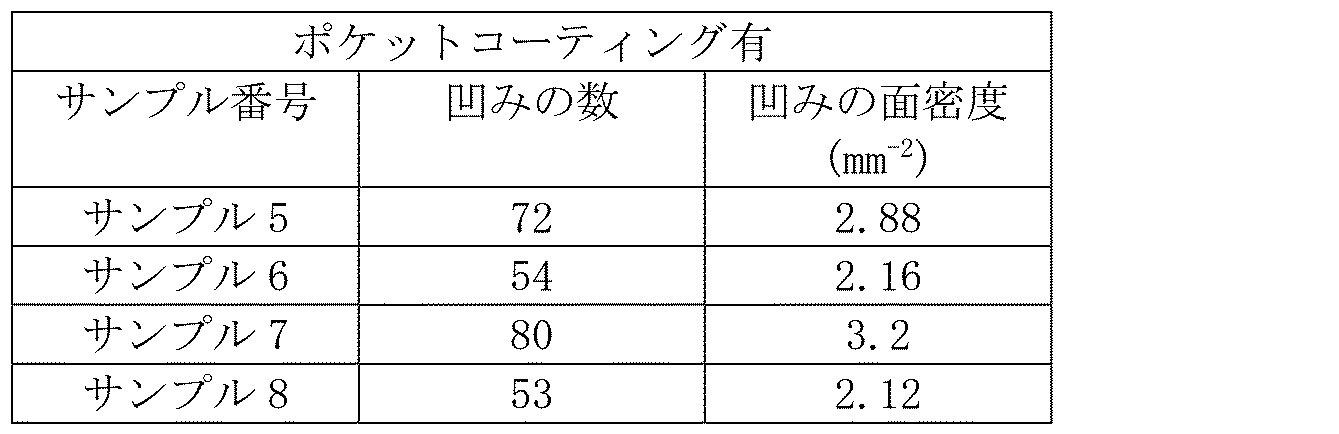
表2は、サンプル5からサンプル8に係る炭化珪素エピタキシャル基板100における第2炭化珪素エピタキシャル層20の中心正方領域4における凹み5の数と凹み5の面密度とを示している。
表2に示されるように、サンプル5からサンプル8に係る炭化珪素エピタキシャル基板100において、第2炭化珪素エピタキシャル層20の中心正方領域4における凹み5の数は、53個以上80個以下であった。サンプル5からサンプル8に係る炭化珪素エピタキシャル基板100において、第2炭化珪素エピタキシャル層20の中心正方領域4における凹み5の面密度は、2.12mm-2以上3.2mm-2以下であった。
以上の結果より、本実施形態に係る炭化珪素エピタキシャル基板100の製造方法を用いることにより、第2炭化珪素エピタキシャル層20の中心正方領域4における凹み5の数および凹み5の面密度が低減可能であることが検証された。
今回開示された実施形態および実施例はすべての点で例示であって、制限的なものではないと考えられるべきである。本発明の範囲は上記した実施形態ではなく請求の範囲によって示され、請求の範囲と均等の意味、および範囲内でのすべての変更が含まれることが意図される。
1 第1主面、2 第2主面、3 中心、4 中心正方領域、5 凹み、6 オリエンテーションフラット、7 円弧状部、8 外周縁、9 炭化珪素粒子、10 第1炭化珪素エピタキシャル層、11 第3主面、12 第4主面、20 第2炭化珪素エピタキシャル層、21 第5主面、22 第6主面、30 炭化珪素基板、40 炭化珪素エピタキシャル層、41 バッファ層、42 ドリフト層、51 第1外形部分、52 第2外形部分、53 側壁面、54 底壁面、56 トレンチ、60 基板配置ポケット、61 ポケット底面、62 ポケット内周面、63 上面、64 外周面、70 炭化珪素コーティング層、71 炭化珪素層、100 炭化珪素エピタキシャル基板、101 第1方向、102 第2方向、103 第3方向、113 ボディ領域、114 ソース領域、115 ゲート絶縁膜、116 ソース電極、117 マスク、118 コンタクト領域、119 ソース配線、123 ドレイン電極、126 層間絶縁膜、127 ゲート電極、200 製造装置、201 反応室、202 ステージ、203 発熱体、204 石英管、205 内壁面、207 ガス導入口、208 ガス排気口、209 回転軸、210 サセプタ、231 第1ガス供給部、232 第2ガス供給部、233 第3ガス供給部、234 第4ガス供給部、235 ガス供給部、241 第1ガス流量制御部、242 第2ガス流量制御部、243 第3ガス流量制御部、244 第4ガス流量制御部、245 制御部、400 炭化珪素半導体装置、H1 第1厚み、H2 第2厚み、H3 第3厚み、H4 第4厚み、T 高さ、W1 最大径、W2 最大幅。
Claims (7)
- 第1主面と、前記第1主面の反対にある第2主面とを有する炭化珪素基板と、
前記第1主面において前記炭化珪素基板に接する第1炭化珪素エピタキシャル層と、
前記第2主面において前記炭化珪素基板に接する第2炭化珪素エピタキシャル層と、を備え、
前記第1炭化珪素エピタキシャル層の厚みは、前記第2炭化珪素エピタキシャル層の厚みよりも大きく、
平面視において、前記第2炭化珪素エピタキシャル層の中心正方領域における凹みの面密度は、5mm-2以下であり、
前記中心正方領域の一辺の長さは、5mmであり、
平面視において、前記凹みの最大幅は10μm以上100μm以下である、炭化珪素エピタキシャル基板。 - 平面視において、前記凹みの外形は、円弧状の部分を有する、請求項1に記載の炭化珪素エピタキシャル基板。
- 前記中心正方領域における前記凹みの面密度は、4mm-2以下である、請求項1または請求項2に記載の炭化珪素エピタキシャル基板。
- 前記第2炭化珪素エピタキシャル層の厚みは、0.1μm以上5μm以下である、請求項1から請求項3のいずれか1項に記載の炭化珪素エピタキシャル基板。
- 請求項1から請求項4のいずれか1項に記載の炭化珪素エピタキシャル基板を準備する工程と、
前記第1炭化珪素エピタキシャル層上に電極を形成する工程と、を備えた、炭化珪素半導体装置の製造方法。 - 炭化珪素基板が配置されていない状態で、サセプタ上に炭化珪素コーティング層を形成する工程と、
前記炭化珪素基板が前記炭化珪素コーティング層と接するように前記炭化珪素基板を前記サセプタに配置する工程と、
前記炭化珪素基板上に炭化珪素エピタキシャル層を形成する工程と、を備えた、炭化珪素エピタキシャル基板の製造方法。 - 前記サセプタ上に炭化珪素粒子が存在し、
前記炭化珪素コーティング層の厚みは、前記炭化珪素粒子の高さよりも大きい、請求項6に記載の炭化珪素エピタキシャル基板の製造方法。
Priority Applications (1)
| Application Number | Priority Date | Filing Date | Title |
|---|---|---|---|
| JP2025527614A JPWO2024257580A1 (ja) | 2023-06-16 | 2024-05-23 |
Applications Claiming Priority (2)
| Application Number | Priority Date | Filing Date | Title |
|---|---|---|---|
| JP2023-099394 | 2023-06-16 | ||
| JP2023099394 | 2023-06-16 |
Publications (1)
| Publication Number | Publication Date |
|---|---|
| WO2024257580A1 true WO2024257580A1 (ja) | 2024-12-19 |
Family
ID=93851781
Family Applications (1)
| Application Number | Title | Priority Date | Filing Date |
|---|---|---|---|
| PCT/JP2024/019082 Ceased WO2024257580A1 (ja) | 2023-06-16 | 2024-05-23 | 炭化珪素エピタキシャル基板、炭化珪素半導体装置の製造方法および炭化珪素エピタキシャル基板の製造方法 |
Country Status (2)
| Country | Link |
|---|---|
| JP (1) | JPWO2024257580A1 (ja) |
| WO (1) | WO2024257580A1 (ja) |
Citations (6)
| Publication number | Priority date | Publication date | Assignee | Title |
|---|---|---|---|---|
| JPS61186288A (ja) * | 1985-02-14 | 1986-08-19 | Nec Corp | 炭化珪素化合物半導体の気相エピタキシヤル成長装置 |
| JP2017076650A (ja) * | 2015-10-13 | 2017-04-20 | 住友電気工業株式会社 | 炭化珪素エピタキシャル基板および炭化珪素半導体装置の製造方法 |
| JP2018190813A (ja) * | 2017-05-01 | 2018-11-29 | 三菱電機株式会社 | 炭化珪素エピタキシャル成長装置、炭化珪素エピタキシャルウエハの製造方法及び炭化珪素半導体装置の製造方法 |
| WO2020105211A1 (ja) * | 2018-11-20 | 2020-05-28 | 住友電気工業株式会社 | 炭化珪素エピタキシャル基板の製造装置 |
| JP2022102018A (ja) * | 2020-12-25 | 2022-07-07 | 住友電気工業株式会社 | サセプタ、炭化珪素エピタキシャル層の成長方法および炭化珪素エピタキシャル基板の製造方法 |
| WO2022172787A1 (ja) * | 2021-02-15 | 2022-08-18 | 住友電気工業株式会社 | 炭化珪素エピタキシャル基板 |
-
2024
- 2024-05-23 JP JP2025527614A patent/JPWO2024257580A1/ja active Pending
- 2024-05-23 WO PCT/JP2024/019082 patent/WO2024257580A1/ja not_active Ceased
Patent Citations (6)
| Publication number | Priority date | Publication date | Assignee | Title |
|---|---|---|---|---|
| JPS61186288A (ja) * | 1985-02-14 | 1986-08-19 | Nec Corp | 炭化珪素化合物半導体の気相エピタキシヤル成長装置 |
| JP2017076650A (ja) * | 2015-10-13 | 2017-04-20 | 住友電気工業株式会社 | 炭化珪素エピタキシャル基板および炭化珪素半導体装置の製造方法 |
| JP2018190813A (ja) * | 2017-05-01 | 2018-11-29 | 三菱電機株式会社 | 炭化珪素エピタキシャル成長装置、炭化珪素エピタキシャルウエハの製造方法及び炭化珪素半導体装置の製造方法 |
| WO2020105211A1 (ja) * | 2018-11-20 | 2020-05-28 | 住友電気工業株式会社 | 炭化珪素エピタキシャル基板の製造装置 |
| JP2022102018A (ja) * | 2020-12-25 | 2022-07-07 | 住友電気工業株式会社 | サセプタ、炭化珪素エピタキシャル層の成長方法および炭化珪素エピタキシャル基板の製造方法 |
| WO2022172787A1 (ja) * | 2021-02-15 | 2022-08-18 | 住友電気工業株式会社 | 炭化珪素エピタキシャル基板 |
Also Published As
| Publication number | Publication date |
|---|---|
| JPWO2024257580A1 (ja) | 2024-12-19 |
Similar Documents
| Publication | Publication Date | Title |
|---|---|---|
| US20170175262A1 (en) | Epitaxial growth apparatus, epitaxial growth method, and manufacturing method of semiconductor element | |
| WO2023282001A1 (ja) | 炭化珪素エピタキシャル基板、炭化珪素エピタキシャル基板の製造方法および炭化珪素半導体装置の製造方法 | |
| JP7779142B2 (ja) | キャリア濃度の測定方法、炭化珪素エピタキシャル基板の製造方法および炭化珪素半導体装置の製造方法 | |
| JP7831290B2 (ja) | 炭化珪素エピタキシャル基板および炭化珪素エピタキシャル基板の製造方法 | |
| JP7310822B2 (ja) | 炭化珪素エピタキシャル基板の製造方法および炭化珪素半導体装置の製造方法 | |
| US20260082649A1 (en) | Silicon carbide epitaxial substrate, method of manufacturing epitaxial substrate, and method of manufacturing silicon carbide semiconductor device | |
| JP7371632B2 (ja) | 炭化珪素エピタキシャル基板の製造方法および炭化珪素半導体装置の製造方法 | |
| WO2024257580A1 (ja) | 炭化珪素エピタキシャル基板、炭化珪素半導体装置の製造方法および炭化珪素エピタキシャル基板の製造方法 | |
| JP7772061B2 (ja) | 炭化珪素エピタキシャル基板および炭化珪素半導体装置の製造方法 | |
| JP7711396B2 (ja) | 炭化珪素エピタキシャル基板および炭化珪素半導体装置 | |
| WO2024084910A1 (ja) | 炭化珪素基板、炭化珪素エピタキシャル基板の製造方法および炭化珪素半導体装置の製造方法 | |
| WO2022249915A1 (ja) | 炭化珪素エピタキシャル基板および炭化珪素半導体装置の製造方法 | |
| JP7661771B2 (ja) | 炭化珪素エピタキシャル基板の製造方法および炭化珪素半導体装置の製造方法 | |
| JP7505391B2 (ja) | 炭化珪素エピタキシャル基板の評価方法および炭化珪素半導体装置の製造方法 | |
| JP7651075B1 (ja) | 炭化珪素エピタキシャル基板の製造装置、炭化珪素エピタキシャル基板の製造方法、および炭化珪素半導体装置の製造方法 | |
| WO2025062939A1 (ja) | 炭化珪素エピタキシャル基板、炭化珪素半導体装置および炭化珪素半導体装置の製造方法 | |
| WO2024018924A1 (ja) | 炭化珪素エピタキシャル基板および炭化珪素半導体装置の製造方法 | |
| JP7131146B2 (ja) | 炭化珪素エピタキシャル基板の製造方法および炭化珪素半導体装置の製造方法 | |
| WO2025004787A1 (ja) | 炭化珪素エピタキシャル基板、炭化珪素エピタキシャル基板の製造方法および炭化珪素半導体装置の製造方法 | |
| JP7115084B2 (ja) | 炭化珪素エピタキシャル基板の製造方法および炭化珪素半導体装置の製造方法 | |
| WO2024127944A1 (ja) | 炭化珪素エピタキシャル基板、炭化珪素半導体装置の製造方法および炭化珪素エピタキシャル基板の製造方法 | |
| JP7739727B2 (ja) | 炭化珪素エピタキシャル基板 | |
| JP2025136294A (ja) | 炭化珪素基板、炭化珪素エピタキシャル基板、炭化珪素半導体装置の製造方法、および炭化珪素結晶の製造方法 | |
| JP2025066386A (ja) | 炭化珪素基板の製造方法、炭化珪素エピタキシャル基板の製造方法、炭化珪素半導体装置の製造方法、および炭化珪素基板 | |
| WO2024232252A1 (ja) | 炭化珪素エピタキシャル基板および炭化珪素半導体装置の製造方法 |
Legal Events
| Date | Code | Title | Description |
|---|---|---|---|
| 121 | Ep: the epo has been informed by wipo that ep was designated in this application |
Ref document number: 24823202 Country of ref document: EP Kind code of ref document: A1 |
|
| ENP | Entry into the national phase |
Ref document number: 2025527614 Country of ref document: JP Kind code of ref document: A |
|
| NENP | Non-entry into the national phase |
Ref country code: DE |