WO2024257763A1 - 携帯端末 - Google Patents
携帯端末 Download PDFInfo
- Publication number
- WO2024257763A1 WO2024257763A1 PCT/JP2024/021194 JP2024021194W WO2024257763A1 WO 2024257763 A1 WO2024257763 A1 WO 2024257763A1 JP 2024021194 W JP2024021194 W JP 2024021194W WO 2024257763 A1 WO2024257763 A1 WO 2024257763A1
- Authority
- WO
- WIPO (PCT)
- Prior art keywords
- mobile terminal
- posture
- user
- notification
- acquisition unit
- Prior art date
- Legal status (The legal status is an assumption and is not a legal conclusion. Google has not performed a legal analysis and makes no representation as to the accuracy of the status listed.)
- Ceased
Links
Images




Classifications
-
- G—PHYSICS
- G06—COMPUTING OR CALCULATING; COUNTING
- G06F—ELECTRIC DIGITAL DATA PROCESSING
- G06F3/00—Input arrangements for transferring data to be processed into a form capable of being handled by the computer; Output arrangements for transferring data from processing unit to output unit, e.g. interface arrangements
- G06F3/14—Digital output to display device ; Cooperation and interconnection of the display device with other functional units
-
- H—ELECTRICITY
- H04—ELECTRIC COMMUNICATION TECHNIQUE
- H04M—TELEPHONIC COMMUNICATION
- H04M1/00—Substation equipment, e.g. for use by subscribers
- H04M1/72—Mobile telephones; Cordless telephones, i.e. devices for establishing wireless links to base stations without route selection
- H04M1/724—User interfaces specially adapted for cordless or mobile telephones
Definitions
- Patent Document 1 discloses an invention in which a mobile device such as a smartphone issues a warning to a user when it is determined that the user is using the mobile device in an incorrect posture from the perspective of the user's health, such as with their head down.
- a mobile terminal is a mobile terminal and includes a first acquisition unit, a determination unit, and a notification unit as described below.
- the first acquisition unit acquires tilt data indicating the tilt of the mobile terminal.
- the determination unit determines whether or not the same posture of a user using the mobile terminal continues for a predetermined time based on the tilt data acquired by the first acquisition unit.
- the notification unit prompts the user to change the posture when the determination unit determines that the same posture has continued for the predetermined time.
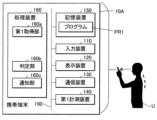
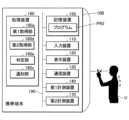
- FIG. 1 is a diagram illustrating a configuration example of a mobile terminal 10A according to a first embodiment of the present disclosure.
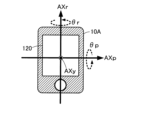
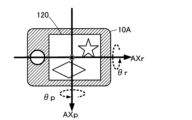
- 4A and 4B are diagrams for explaining a pitch angle ⁇ p and a roll angle ⁇ r that represent the inclination of the mobile terminal 10A.
- 1 is a diagram showing an example of a user U holding a mobile terminal 10A in his/her hand and an example of the operation of a notification unit 160c.
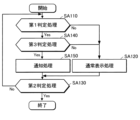
- 11 is a flowchart showing the flow of a notification control process executed by a processor 160 of the mobile terminal 10A according to a program PR1.
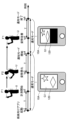
- 10A and 10B are diagrams for explaining an example of the operation of the mobile terminal 10A.
- FIG. 11 is a diagram illustrating an example of a configuration of a mobile terminal 10B according to a second embodiment of the present disclosure.
- 13 is a flowchart showing the flow of a notification control process executed by a processor 160 of a mobile terminal 10B according to a program PR2.
- 10A to 10C are diagrams for explaining an example of the operation of the mobile terminal 10B.
- FIG. 13 is a diagram for explaining a modified example (1).
- FIG. 13 is a diagram for explaining a modified example (2).
- FIG. 13 is a diagram for explaining modified example (3).
- FIG. 1 is a diagram illustrating a configuration example of a mobile terminal 10A according to an embodiment of the present disclosure.
- the mobile terminal 10A is, for example, a smartphone. As illustrated in FIG. 1, the mobile terminal 10A is used while being held in the hand of a user U.
- the mobile terminal 10A has a program execution function, and executes an entertainment application program and a business application program used by the user U when performing business, according to an instruction from the user U, by using this program execution function.
- Examples of the entertainment application program include a video game program or a video viewing program.
- Examples of the business application program include a word processing program.
- the mobile terminal 10A includes an input device 110, a display device 120, a communication device 130, a first measuring device 140, a storage device 150, a processing device 160, and a bus 190.
- the input device 110, the display device 120, the communication device 130, the first measuring device 140, and the storage device 150 are each connected to the processing device 160 by the bus 190 for communicating information.
- the bus 190 may be configured using a single bus, or may be configured using different buses between each device.
- the input device 110 includes a touch panel. In addition to the touch panel, the input device 110 may include a plurality of operation keys. The input device 110 accepts operations by the user U on the mobile terminal 10A.
- the display device 120 is, for example, a liquid crystal display. Although detailed illustration is omitted in FIG. 1, the display device 120 has a rectangular display surface.
- the touch panel of the input device 110 is layered on the display surface of the display device 120.
- the display device 120 displays various information on the display surface under the control of the processing device 160.
- the communication device 130 is hardware (transmitting/receiving device) for communicating with other devices via a communication line, either wired or wirelessly. In FIG. 1, the communication line and other devices are omitted from the illustration.
- the communication device 130 is also called, for example, a network device, a network controller, a network card, or a communication module.
- An example of another device that communicates with the communication device 130 via a communication line is a server device that distributes application programs.
- the communication device 130 transmits data provided by the processing device 160 to the communication line.
- the communication device 130 also supplies data received via the communication line to the processing device 160.
- the roll angle ⁇ r is the rotation angle of the mobile terminal 10A with the axis AXr as the rotation axis.
- the axis AXr is an axis that extends in a direction perpendicular to both the axis AXy and the axis AXp.
- the axis AXr is an axis that is perpendicular to the axis AXy and extends in the longitudinal direction of the display surface of the display device 120.
- the state in which the axis AXy is aligned with the vertical axis is the reference state, and in this reference state, the pitch angle ⁇ p is 0° and the roll angle ⁇ r is also 0°.
- the storage device 150 is a recording medium that can be read by the processing device 160.
- the storage device 150 includes, for example, a non-volatile memory and a volatile memory.
- the non-volatile memory is, for example, a ROM (Read Only Memory), an EPROM (Erasable Programmable Read Only Memory), or an EEPROM (Electrically Erasable Programmable Read Only Memory).
- the volatile memory is, for example, a RAM (Random Access Memory). Although detailed illustration is omitted in FIG. 1, the non-volatile memory of the storage device 150 stores the above-mentioned entertainment application program and business application program.
- the non-volatile memory of the storage device 150 stores a program PR1 that is associated with the entertainment application program and causes the processing device 160 to execute a notification control process, which is a process of notifying the user from the mobile terminal 10A by a notification method specific to the present disclosure.
- the volatile memory of storage device 150 is used as a work area when executing various application programs and program PR1.
- the processing device 160 includes one or more central processing units (CPUs).
- the one or more CPUs are an example of one or more processors.
- Each of the processors and CPUs is an example of a computer.
- the processing device 160 When the processing device 160 is instructed to execute an entertainment application program or a business application program by an operation on the input device 110, the processing device 160 reads the application program that has been instructed to be executed from the non-volatile memory to the volatile memory. The processing device 160 then executes the application program that has been read into the volatile memory.
- the processing device 160 operating in accordance with the application program, displays an image on the display surface of the display device 120, including an app image that allows the user U to use an application realized by the application program.
- the app image is an example of a display image in the present disclosure.
- the user U uses the application by making various inputs while looking at the app image.
- the processing device 160 reads the program PR1 associated with the entertainment application program from the non-volatile memory to the volatile memory, and executes the program PR1 in parallel with the execution of the entertainment application program.
- the processing device 160 operating according to the program PR1 functions as the first acquisition unit 160a, the determination unit 160b, and the notification unit 160c shown in FIG. 1.
- the first acquisition unit 160a, the determination unit 160b, and the notification unit 160c in FIG. 1 are software modules realized by operating the processing device 160 according to software.
- the functions of the first acquisition unit 160a, the determination unit 160b, and the notification unit 160c are as follows:
- the first acquisition unit 160a acquires tilt data representing the tilt of the mobile terminal 10A from the first measuring device 140. Details will be described later, but in this embodiment, the first acquisition unit 160a starts supplying operating power to the first measuring device 140 when a predetermined time T has elapsed since the start of execution of the entertainment application program (in other words, the start of execution of program PR1), and thereafter acquires tilt data output from the first measuring device 140.
- the posture of the user U holding the mobile terminal 10A in his/her hand there is a certain relationship between the posture of the user U holding the mobile terminal 10A in his/her hand and the inclination of the mobile terminal 10A.
- the pitch angle ⁇ p is approximately 60° to 90°.
- the pitch angle ⁇ p is approximately 0° to 60°.
- the determination unit 160b determines that the posture of the user U is correct.
- the determination unit 160b determines that the posture of the user U is incorrect. Then, when a state where 0° ⁇ pitch angle ⁇ p ⁇ 60° and the roll angle ⁇ r is in the range of -15° to 15° continues for a predetermined time T, the determination unit 160b determines that the incorrect posture of the user U has continued for the predetermined time T. Furthermore, when it is determined that the incorrect posture of the user U has continued for the predetermined time T, the determination unit 160b determines that the correct posture has been restored when a state where 60° ⁇ pitch angle ⁇ p ⁇ 90° continues for the predetermined time T.
- the notification unit 160c notifies the user U to change his/her posture when the determination unit 160b determines that an incorrect posture (as described above, in this embodiment, a bowed posture) has continued for a predetermined time T.
- the notification unit 160c notifies the user U to change his/her posture by controlling the area and position of the app image G1 on the display surface of the display device 120 according to the pitch angle ⁇ p, as shown in FIG. 3.
- the ratio R calculated according to formula 1 does not fall below 0.1, and even when the pitch angle ⁇ p is 0°, the app image G1 is not completely erased. Even when the pitch angle ⁇ p is 0°, the app image G1 is not completely erased, so that even when the user U's posture is the posture F3 in FIG. 3, the entertainment application corresponding to the app image G1 is not completely unavailable.
- Equation 1 and FIG. 3 the worse the degree to which the user U is bowed (i.e., the closer the pitch angle ⁇ p is to 0°), the more the app image G1 is displayed on the display surface of the display device 120 in a state in which it is narrowed from the bottom.
- the user U unconsciously moves his/her arm to stand up the mobile terminal 10A (i.e., the closer the pitch angle ⁇ p is to 90°), and in conjunction with this arm movement, the user U often straightens his/her back.
- the user U's posture returns to the correct posture such as posture F1 in FIG. 3.
- the notification unit 160c narrows the app image G1 from the bottom of the display surface of the display device 120 according to the pitch angle ⁇ p in order to prompt the user U to unconsciously change his/her posture.
- FIG. 4 is a flowchart showing the flow of the notification control process.
- the notification control process includes a first determination process SA110, a normal display process SA120, a second determination process SA130, a third determination process SA140, and a notification process SA150.
- the processing contents of each process of the first determination process SA110, the normal display process SA120, the second determination process SA130, the third determination process SA140, and the notification process SA150 are as follows:
- the processing device 160 determines whether a predetermined time T has elapsed since the start of execution of the entertainment application program. Until the predetermined time T has elapsed since the start of execution of the entertainment application program, the determination result of the first determination process SA110 is "No". In contrast, after the predetermined time T has elapsed since the start of execution of the entertainment application program, the determination result of the first determination process SA110 is "Yes”. As shown in FIG. 4, if the determination result of the first determination process SA110 is "No", the processing device 160 executes the normal display process SA120. In contrast, if the determination result of the first determination process SA110 is "Yes", the processing device 160 executes the third determination process SA140.
- the processing device 160 arranges the application image G1, which is displayed according to the entertainment application program, on the entire display surface of the display device 120.
- the operation mode in which the application image G1 is arranged on the entire display surface of the display device 120 is referred to as the normal mode.
- the processing device 160 determines whether or not an instruction to end the execution of the entertainment application program has been issued by an operation on the input device 110. If an instruction to end the execution of the entertainment application program has been issued, the determination result of the second determination process SA130 is "Yes".
- the processing device 160 ends the execution of the entertainment application program, ends the execution of the program PR1, and ends the notification control process. If an instruction to end the execution of the entertainment application program has not been issued, the determination result of the second determination process SA130 is "No". If the result of the second determination process SA130 is "No,” the processing device 160 executes the first determination process SA110 described above again.
- the processing device 160 functions as the first acquisition unit 160a and the determination unit 160b. More specifically, in the third determination process SA140, the processing device 160 operates the first measuring device 140 and acquires tilt data from the first measuring device 140. Then, based on the acquired tilt data, the processing device 160 judges whether or not an incorrect posture has continued for a predetermined time T for the user U using the mobile terminal 10A. More specifically, when a state in which 0° ⁇ pitch angle ⁇ p ⁇ 60° and the roll angle ⁇ r is in the range of -15° to 15° has continued for the predetermined time T, the processing device 160 judges that an incorrect posture has continued for the predetermined time T for the user U.
- the result of the third judgment process SA140 is "Yes”. If the state where 0° ⁇ pitch angle ⁇ p ⁇ 60° and the roll angle ⁇ r is in the range of -15° to 15° continues for less than the predetermined time T, or if 60° ⁇ pitch angle ⁇ p ⁇ 90°, the result of the third judgment process SA140 will be "No” in principle. However, if the previous result of the third judgment process SA140 was “Yes”, if the state where 60° ⁇ pitch angle ⁇ p ⁇ 90° continues for the predetermined time T, the result of the third judgment process SA140 will be "No".
- the processing device 160 executes the normal display process SA120 described above. On the other hand, if the determination result of the third determination process SA140 is "Yes”, the processing device 160 executes the notification process SA150 and then executes the second determination process SA130. In the notification process SA150, the processing device 160 functions as a notification unit 160c. In the notification process SA150, the processing device 160 notifies the user that the attitude will be changed by controlling the area and position occupied by the app image G1 on the display surface of the display device 120 according to the pitch angle ⁇ p.
- the notification mode in which the area and position occupied by the app image G1 on the display surface of the display device 120 according to the pitch angle ⁇ p is referred to as the notification mode.
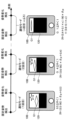
- FIG. 5 is a diagram showing an example of the operation of the mobile terminal 10A.
- the user U starts using an entertainment application program, and uses the mobile terminal 10A in the correct posture F1 until time tb3.
- the judgment result of the first judgment process SA110 is "No"
- the normal display process SA120 is executed.
- the judgment result of the first judgment process SA110 is "Yes”.
- the judgment result of the third judgment process SA140 is "No" until a predetermined time T has elapsed since the user U's posture deteriorated from the correct posture F1 to the downward posture F2 at time ta3 (i.e., until time ta4 is reached), and the normal display process SA120 is executed. Therefore, in the example shown in FIG. 5, the mobile terminal 10A operates in normal mode from time ta1 to time ta4.
- the mobile terminal 10A operates in the notification mode from time ta4 to time ta6, and operates in the normal mode from time ta6 onwards.
- a notification is sent to user U urging him/her to change his/her posture. This means that such notifications are not sent frequently, reducing annoyance, compared to a mode in which a notification is sent to urge user U to change his/her posture every time user U's posture becomes incorrect.
- the processing device 160 activates the first measuring device 140 when a predetermined time T has elapsed since the execution of the entertainment application program was started, so battery consumption in the mobile terminal 10A can be reduced compared to a configuration in which the first measuring device 140 is constantly activated. Note that in this embodiment, the posture of the user U while using the entertainment application program is monitored, because entertainment application programs are expected to be used for long periods of time in incorrect postures compared to business application programs.
- the notification unit 160c narrows the app image G1 from the bottom of the display surface of the display device 120 according to the pitch angle ⁇ p, thereby encouraging the user U to unconsciously change his/her posture to the correct posture F1.
- the posture of the user U using a business application program is not monitored, so the mobile terminal 10A does not operate in notification mode while the business application program is being executed, and there is no disruption to the user U's use of the business application program.
- Fig. 6 is a diagram showing a configuration example of a mobile terminal 10B according to a second embodiment of the present disclosure.
- the same components as those in Fig. 1 are given the same reference numerals.
- the configuration of the mobile terminal 10B differs from the configuration of the mobile terminal 10A in the following two points.
- the first difference is that the mobile terminal 10B has a second measuring device 170.
- the second difference is that a program PR2 is stored in the storage device 150 provided in the mobile terminal 10B instead of the program PR1.
- the second measuring device 170 is, for example, a three-axis acceleration sensor.
- the second measuring device 170 measures the acceleration of the mobile terminal 10B in the vertical axis direction and in two axial directions that are perpendicular to the vertical axis and perpendicular to each other.
- the second measuring device 170 may measure the acceleration of the mobile terminal 10B in each axial direction in a three-axial Cartesian coordinate system fixed to the second measuring device 170.
- the second measuring device 170 is not constantly supplied with operating power from a battery (not shown in FIG. 6).
- the supply of operating power to the second measuring device 170 i.e., the start of operation of the second measuring device 170, is controlled by the processing device 160. Under the control of the processing device 160, the second measuring device 170 outputs acceleration data representing the acceleration in each axial direction that it has measured.
- the program PR2 is stored in the storage device 150 in association with the entertainment application program, similar to the program PR1 in the first embodiment.
- the processing device 160 of the mobile terminal 10B starts executing the program PR2 when the entertainment application program starts to be executed, similar to the first embodiment.
- the processing device 160 operating according to the program PR2 functions as the first acquisition unit 160a, the second acquisition unit 160d, the determination unit 160e, and the notification unit 160c shown in FIG. 6.
- the second acquisition unit 160d and the determination unit 160e which are different from the first embodiment, are software modules, similar to the first acquisition unit 160a and the notification unit 160c.
- the functions of the second acquisition unit 160d and the determination unit 160e are as follows:
- the second acquisition unit 160d acquires acceleration data representing the acceleration of the mobile terminal 10B in the vertical axis direction and in each of two axial directions that are perpendicular to the vertical axis and perpendicular to each other, from the second measurement device 170.
- the second acquisition unit 160d activates the second measurement device 170 and starts acquiring acceleration data when a predetermined time T has elapsed since the start of execution of the entertainment application program.
- the determination unit 160e determines whether or not the same posture has continued for a predetermined time T for the user U using the entertainment application program using the mobile terminal 10B, regardless of whether the posture is correct or not, based on the tilt data acquired by the first acquisition unit 160a and the acceleration data acquired by the second acquisition unit 160d.
- the determination unit 160e determines that the same posture has continued for a predetermined time T when the fluctuations of the pitch angle ⁇ p and the roll angle ⁇ r represented by the tilt data are within a predetermined range (for example, a range of -5° to 5°), and the fluctuations of the acceleration of the acceleration data in the vertical axis direction and in each of the two axial directions perpendicular to the vertical axis and perpendicular to each other are within a predetermined range (for example, a range of -0,1 ⁇ g to 0,1 ⁇ g, where g is the gravitational acceleration) continue for the predetermined time T.
- a predetermined range for example, a range of -5° to 5°
- the notification unit 160c issues a notification.
- a gyro sensor may be adopted as the first measuring device 140.
- the determination unit 160e may determine whether or not the same attitude has continued for a predetermined time T based on the output from the gyro sensor.
- the mobile terminal 10B may be configured without including the second measuring device 170.
- a three-axis acceleration sensor may be adopted as the first measuring device 140.
- the determination unit 160e may determine whether or not the same attitude has continued for a predetermined time T based on the output from the three-axis acceleration sensor.
- the mobile terminal 10B may be configured without including the second measuring device 170.
- the judgment unit 160e may determine whether or not an incorrect posture has continued for a predetermined time T for a user U who is using an entertainment application program using the mobile terminal 10B, based on the tilt data acquired by the first acquisition unit 160a and the acceleration data acquired by the second acquisition unit 160d.
- FIG. 7 is a flowchart showing the flow of the notification control process according to the second embodiment, which is executed by the processing device 160 of the mobile terminal 10B in accordance with the program PR2.
- the same processes as those in FIG. 4 are given the same reference numerals.
- the difference between the notification control process in this embodiment and the notification control process in the first embodiment is that a third determination process SB140 is provided instead of the third determination process SA140.
- the processing device 160 functions as a first acquisition unit 160a, a second acquisition unit 160d, and a determination unit 160e.
- the processing device 160 operates the first measuring device 140 to acquire tilt data from the first measuring device 140, and operates the second measuring device 170 to acquire acceleration data from the second measuring device 170. Then, based on the acquired tilt data and acceleration data, the processing device 160 determines whether the same posture has continued for a predetermined time T for the user U who is using an entertainment application program with the mobile terminal 10B.
- the judgment result of the third judgment process SB140 is "Yes”. If at least one of the pitch angle ⁇ p and roll angle ⁇ r has fluctuated beyond the predetermined range, or if at least one of the accelerations in each axial direction has fluctuated beyond the predetermined range, the judgment result of the third judgment process SB140 is "No".
- the processing device 160 executes the normal display process SA120. If the judgment result of the third judgment process SB140 is "Yes”, the processing device 160 executes the notification process SA150 and then executes the second judgment process SA130.
- FIG. 8 is a diagram for explaining an example of the operation of the mobile terminal 10B.
- the user U starts using an entertainment application program at time tb1, and the user U changes his/her posture from time to time tb3.
- the judgment result of the first judgment process SA110 is "No"
- the normal display process SA120 is executed.
- the judgment result of the first judgment process SA110 is "Yes"
- the judgment result of the third judgment process SB140 is "No”
- the normal display process SA120 is executed.
- the mobile terminal 10B operates in normal mode from time tb1 to time tb4.
- the processing device 160 activates the first measuring device 140 and the second measuring device 170 when a predetermined time T has elapsed since the execution of the entertainment application program was started, so that the battery consumption in the mobile terminal 10B can be reduced compared to a mode in which the first measuring device 140 and the second measuring device 170 are constantly activated.
- the posture of the user U while using the entertainment application program is also monitored, because entertainment application programs are expected to be used for longer periods of time than business application programs.
- the posture of the user U while using the business application program is not monitored, so the mobile terminal 10B does not operate in notification mode while the business application program is being executed, and there is no disruption to the use of the business application program.
- C Deformation
- the present disclosure is not limited to the first and second embodiments exemplified above. Specific modified aspects are as follows. Two or more aspects selected from the following examples may be combined.
- the mobile terminal 10A is held by the user U so that the axis AXr is an axis in the vertical direction.
- the mobile terminal 10A is held so that the axis AXp is an axis in the vertical direction, as shown in FIG.
- the determination unit 160b may determine whether the posture of the user U is good or bad based on the roll angle ⁇ r. Specifically, the determination unit 160b may determine that the posture of the user U is correct if 60° ⁇ roll angle ⁇ r, and determine that the posture of the user U is incorrect if 0° ⁇ roll angle ⁇ r ⁇ 60° and the pitch angle ⁇ p is an angle in the range of ⁇ 15° to 15°.
- the notification unit 160c narrows the area allocated to the app image on the display surface of the display device 120 from the bottom, thereby urging the user U to change his/her posture.
- the notification unit 160c may narrow the area allocated to the app image on the display surface of the display device 120 from either the top, right, or left, thereby urging the user U to change his/her posture, or may narrow the area from a plurality of directions among the top, bottom, left, and right.
- notification unit 160c may prompt the user to change the posture by controlling the area allocated to the app image without changing the position allocated to the app image on the display surface of display device 120.
- controlling the area allocated to the app image without changing the position allocated to the app image means, for example, "reducing the app image around the central position of the app image on the display surface without changing the central position of the app image.”
- notification unit 160c may prompt the user to change the posture by controlling the position allocated to the app image without changing the area allocated to the app image on the display surface of display device 120.
- controlling the area allocated to the app image without changing the area allocated to the app image means, for example, “sliding the position of the app image without changing the area of the app image on the display surface.”
- the notification unit 160c may prompt the user U to change his/her posture by controlling at least one of the luminosity (brightness) and saturation (color vividness) when displaying an app image on the display surface of the display device 120 in accordance with the pitch angle ⁇ p.
- the notification to encourage a posture change is not limited to a notification by controlling the display mode of the app image on the display surface of the display device 120, but may be a notification by displaying a message such as "Please stand up straight" or by outputting a voice representing the message.
- the notification unit 160c may control the display area of the application image by weighting according to the number of transitions from the normal mode to the notification mode.
- the minimum value of the ratio R is 0.4 (i.e., 40%), and even if the pitch angle ⁇ p is 0 degrees, the display area of the application image to the entire display surface of the display device 120 will not be less than 40%.
- the minimum value of the ratio R is 0.1 (i.e., 10%), and even if the pitch angle ⁇ p is 0 degrees, the display area of the application image to the entire display surface of the display device 120 will not be less than 10%.
- the minimum values of the ratio R in FIG. 11, 0.5, 0.4, and 0.1, are examples of predetermined threshold values in the present disclosure.
- the ratio R will not fall below 0.5 when transitioning to notification mode for the first time, and the app image will remain easily viewable. However, if the fixed posture continues to occur thereafter, the ratio R will gradually decrease, making it possible for the user U to be aware of posture changes while using the application program.
- the program PR1 is stored in the storage device 150 of the mobile terminal 10A, but the program PR1 may be manufactured or sold separately.
- the program PR1 may be provided to the purchaser by writing the program PR1 to a computer-readable recording medium such as a flash ROM and distributing the program PR1 thereto, or by downloading the program PR1 via a telecommunications line.
- the program PR2 may be manufactured or sold separately.
- the first acquisition unit 160a, the determination unit 160b, and the notification unit 160c in the above embodiment are software modules.
- any one, any two, or all of the first acquisition unit 160a, the determination unit 160b, and the notification unit 160c may be hardware modules.
- Specific examples of hardware modules include DSP (Digital Signal Processor), ASIC (Application Specific Integrated Circuit), PLD (Programmable Logic Device), and FPGA (Field Programmable Gate Array). Even if any one, any two, or all of the first acquisition unit 160a, the determination unit 160b, and the notification unit 160c are hardware modules, the same effect as the first embodiment is achieved.
- any one or all of the second acquisition unit 160d and the determination unit 160e may be hardware modules. Even if any one or all of the second acquisition unit 160d and the determination unit 160e are hardware modules, the same effect as the second embodiment is achieved.
- storage device 150 may also be a flexible disk, a magneto-optical disk (e.g., a compact disk, a digital versatile disk, a Blu-ray (registered trademark) disk), a smart card, a flash memory device (e.g., a card, a stick, a key drive), a CD-ROM (Compact Disc-ROM), a register, a removable disk, a hard disk, a floppy (registered trademark) disk, a magnetic strip, a database, a server, or other suitable storage medium.
- a magneto-optical disk e.g., a compact disk, a digital versatile disk, a Blu-ray (registered trademark) disk
- a smart card e.g., a flash memory device (e.g., a card, a stick, a key drive), a CD-ROM (Compact Disc-ROM), a register, a removable disk, a hard disk, a floppy (registered trademark) disk,
- the input and output information, etc. may be stored in a specific location (e.g., memory) or may be managed using a management table.
- the input and output information, etc. may be overwritten, updated, or added to.
- the output information, etc. may be deleted.
- the input information, etc. may be transmitted to another device.
- the determination may be made based on a value represented by one bit (0 or 1), a Boolean value (true or false), or a comparison of numerical values (e.g., a comparison with a predetermined value).
- each function illustrated in FIG. 1 or FIG. 6 is realized by any combination of at least one of hardware and software. Furthermore, there are no particular limitations on the method of realizing each functional block. That is, each functional block may be realized using one device that is physically or logically coupled, or may be realized using two or more devices that are physically or logically separated and connected directly or indirectly (e.g., using wires, wirelessly, etc.). A functional block may be realized by combining software with the one device or the multiple devices.
- software, instructions, information, etc. may be transmitted and received via a transmission medium.
- a transmission medium For example, if the software is transmitted from a website, server, or other remote source using at least one of wired technologies (such as coaxial cable, fiber optic cable, twisted pair, Digital Subscriber Line (DSL)), and/or wireless technologies (such as infrared, microwave, etc.), then at least one of these wired and wireless technologies is included within the definition of a transmission medium.
- wired technologies such as coaxial cable, fiber optic cable, twisted pair, Digital Subscriber Line (DSL)
- wireless technologies such as infrared, microwave, etc.
- the information, parameters, etc. described in this disclosure may be expressed using absolute values, may be expressed using relative values from a predetermined value, or may be expressed using other corresponding information.
- the mobile terminal may be a mobile station (MS).
- a mobile station may also be referred to by those skilled in the art as a subscriber station, mobile unit, subscriber unit, wireless unit, remote unit, mobile device, wireless device, wireless communication device, remote device, mobile subscriber station, access terminal, mobile terminal, wireless terminal, remote terminal, handset, user agent, mobile client, client, or some other suitable term.
- terms such as “mobile station,” “user terminal,” “user equipment (UE),” and “terminal” may be used interchangeably.
- connection refers to any direct or indirect connection or coupling between two or more elements, and may include the presence of one or more intermediate elements between two elements that are “connected” or “coupled” to each other.
- the coupling or connection between elements may be physical, logical, or a combination thereof.
- “connected” may be read as "access”.
- two elements may be considered to be “connected” or “coupled” to each other using at least one of one or more wires, cables, and printed electrical connections, as well as electromagnetic energy having wavelengths in the radio frequency range, microwave range, and light (both visible and invisible) range, as some non-limiting and non-exhaustive examples.
- determining and “determining” as used in this disclosure may encompass a wide variety of actions. “Determining” and “determining” may include, for example, judging, calculating, computing, processing, deriving, investigating, looking up, search, inquiry (e.g., searching in a table, database, or other data structure), ascertaining something as “judging” or “determining”, etc. Also, “determining” and “determining” may include receiving (e.g., receiving information), transmitting (e.g., sending information), input, output, accessing (e.g., accessing data in memory), etc.
- judgment and “decision” can include considering resolving, selecting, choosing, establishing, comparing, etc., to have been “judged” or “decided.” In other words, “judgment” and “decision” can include considering some action to have been “judged” or “decided.” Additionally, “judgment (decision)” can be interpreted as “assuming,” “expecting,” “considering,” etc.
- a mobile terminal is a mobile terminal and includes a first acquisition unit, a determination unit, and a notification unit as described below.
- the first acquisition unit acquires tilt data indicating the tilt of the mobile terminal.
- the determination unit determines whether or not the same posture has continued for a predetermined time for a user using the mobile terminal based on the tilt data acquired by the first acquisition unit.
- the notification unit prompts the user to change their posture when the determination unit determines that the same posture has continued for the predetermined time. According to this aspect, when the same posture has continued for a predetermined time for a user using a mobile terminal, the user can be prompted to change their posture.
- the notification unit in the mobile terminal according to the third aspect of the present disclosure may prompt the user to change his/her posture by controlling at least one of the area and position of a display image displayed according to an application program on the display surface of the display device.
- the user can be visually prompted to change his/her posture by controlling at least one of the area and position of the display image on the display surface of the display device.
- the notification unit in the mobile terminal according to the fourth aspect of the present disclosure may assign the display image to the upper side of the display surface. According to this aspect, it is possible to encourage the user to unconsciously make posture changes that improve posture.
- the notification unit in a mobile terminal may control the area occupied by the display image within a range in which the proportion of the area of the display surface occupied by the display image is equal to or greater than a predetermined threshold. According to this aspect, it is possible to prevent the display image from being completely hidden.
Landscapes
- Engineering & Computer Science (AREA)
- Human Computer Interaction (AREA)
- Theoretical Computer Science (AREA)
- Physics & Mathematics (AREA)
- General Engineering & Computer Science (AREA)
- General Physics & Mathematics (AREA)
- Computer Networks & Wireless Communication (AREA)
- Signal Processing (AREA)
- Telephone Function (AREA)
Abstract
携帯端末10Aは、第1取得部160a、判定部160b、及び通知部160cを備える。第1取得部160aは、携帯端末10Aの傾きを表すピッチ角θ及びロール角θrを示す傾きデータを取得する。判定部160bは、携帯端末10Aを利用中のユーザについて、俯いた姿勢が所定時間継続しているか否かを、第1取得部160aにより取得された傾きデータに基づいて判定する。通知部160cは、俯いた姿勢が所定時間継続していると判定部160bにより判定された場合に、表示装置120の表示面において表示画像が占める面積及び位置を携帯端末10Aの傾きに応じて制御することにより、姿勢を変更することをユーザに促す。
Description
本発明は、携帯端末に関する。
特許文献1には、スマートフォン等の携帯端末のユーザが、俯いた姿勢等、ユーザの健康の観点から正しくない姿勢で携帯端末を利用していると判断される場合に、携帯端末がユーザに対して警告を発する発明が開示されている。
正しい姿勢であるか否かを問わずに、ユーザが同一の姿勢で長時間に亙って携帯端末を利用し続けることは、ユーザの筋緊張及び血流悪化の観点から好ましくない。例えば、俯いた姿勢での携帯端末の長時間利用は、ストレートネック(いわゆるスマフォ首)を引き起こし、ユーザの首又は肩の不調に繋がる。本開示において同一の姿勢が長時間に亙って継続することには、姿勢が長時間に亙って不変である場合は勿論、筋緊張又は血流悪化が緩和されない程度に姿勢が変化した場合も含まれる。特許文献1に開示の技術では、ユーザが正しくない姿勢で携帯端末を利用していると判断される毎にユーザへの警告が発せられるので、ユーザへの警告が頻発し、煩わしいという問題がある。
本開示の好適な態様に係る携帯端末は、携帯端末であって、以下の第1取得部と、判定部と、通知部と、を備える。第1取得部は、前記携帯端末の傾きを示す傾きデータを取得する。判定部は、前記携帯端末を利用中のユーザについて、同一の姿勢が所定時間継続しているか否かを、前記第1取得部により取得された前記傾きデータに基づいて判定する。通知部は、同一の姿勢が所定時間継続していると前記判定部により判定された場合に、姿勢を変更することを前記ユーザに促す。
本開示によれば、画像を表示する表示装置を備える携帯端末のユーザが、同一の姿勢で長時間に亙って携帯端末を利用し続けたときに、ユーザに姿勢変更を促すことができる。
(A.第1実施形態)
図1は、本開示の一実施形態による携帯端末10Aの構成例を示す図である。携帯端末10Aは、例えばスマートフォンである。図1に示されるように、携帯端末10Aは、ユーザUの手に把持された状態で使用される。携帯端末10Aはプログラム実行機能を有し、このプログラム実行機能によって娯楽向けアプリケーションプログラム、及びユーザUが業務遂行時に利用する業務向けアプリケーションプログラムを、ユーザUの指示に応じて実行する。娯楽向けアプリケーションプログラムの一例として、ビデオゲームプログラム又は動画視聴用プログラムが挙げられる。業務向けアプリケーションプログラムの一例としては、文書作成プログラムが挙げられる。
図1は、本開示の一実施形態による携帯端末10Aの構成例を示す図である。携帯端末10Aは、例えばスマートフォンである。図1に示されるように、携帯端末10Aは、ユーザUの手に把持された状態で使用される。携帯端末10Aはプログラム実行機能を有し、このプログラム実行機能によって娯楽向けアプリケーションプログラム、及びユーザUが業務遂行時に利用する業務向けアプリケーションプログラムを、ユーザUの指示に応じて実行する。娯楽向けアプリケーションプログラムの一例として、ビデオゲームプログラム又は動画視聴用プログラムが挙げられる。業務向けアプリケーションプログラムの一例としては、文書作成プログラムが挙げられる。
図1に示されるように、携帯端末10Aは、入力装置110と、表示装置120と、通信装置130と、第1計測装置140と、記憶装置150と、処理装置160と、バス190と、を含む。入力装置110、表示装置120、通信装置130、第1計測装置140、及び記憶装置150の各々と、処理装置160とは、情報を通信するためのバス190によって相互に接続される。バス190は、単一のバスを用いて構成されてもよいし、装置間ごとに異なるバスを用いて構成されてもよい。
入力装置110は、タッチパネルを含む。入力装置110は、タッチパネルに加えて、複数の操作キーを含んでもよい。入力装置110は、携帯端末10Aに対するユーザUの操作を受け付ける。表示装置120は、例えば液晶ディスプレイである。図1では詳細な図示を省略したが、表示装置120は長方形状の表示面を有する。表示装置120の表示面には、入力装置110のタッチパネルが積層されている。表示装置120は、処理装置160による制御の下、種々の情報を表示面に表示する。
通信装置130は、通信回線を介して他の装置と有線又は無線により通信するためのハードウェア(送受信デバイス)である。図1では、通信回線及び他の装置の図示は省略されている。通信装置130は、例えば、ネットワークデバイス、ネットワークコントローラ、ネットワークカード、又は通信モジュール等とも呼ばれる。通信回線を介して通信装置130と通信する他の装置の一例としては、アプリケーションプログラムを配布するサーバ装置が挙げられる。通信装置130は、処理装置160から与えられたデータを通信回線へ送信する。また、通信装置130は、通信回線を介して受信したデータを処理装置160へ供給する。
第1計測装置140は、例えばジャイロセンサである。但し、第1計測装置140は、例えば3軸加速度センサであってもよい。第1計測装置140は、携帯端末10Aの傾きを計測する。図2は、携帯端末10Aの傾きを表すピッチ角θp及びロール角θrを説明するための図である。ピッチ角θpは、軸AXpを回転軸とする携帯端末10Aの回転角度である。ここで、軸AXpは、表示装置120の表示面の法線方向に沿った軸AXyに直交し、且つ、表示装置120における表示面の短手方向に延在する軸である。ロール角θrは、軸AXrを回転軸とする携帯端末10Aの回転角度である。ここで、軸AXrは、軸AXy及び軸AXpの両方に直交する方向に延在する軸である。つまり、軸AXrは、軸AXyに直交し、且つ、表示装置120における表示面の長手方向に延在する軸である。本実施形態では、軸AXyが鉛直軸に沿った状態が基準状態であり、この基準状態ではピッチ角θpは0°となり、ロール角θrも0°となる。また、本実施形態では、図2において点線矢印で示した回転方向が正の回転方向である。例えば、図1に示されるように、軸AXrが略鉛直軸方向となるように携帯端末10Aを立てた状態では、ピッチ角θpは略90°となる。本実施形態では、第1計測装置140には、バッテリ(図1では図示略)から動作電力が常時供給されている訳ではなく、第1計測装置140への動作電力の供給、即ち第1計測装置140の作動開始は処理装置160によって制御される。第1計測装置140は、処理装置160による制御の下、ピッチ角θp及びロール角θrの各々を表す傾きデータを処理装置160へ出力する。
記憶装置150は、処理装置160が読み取り可能な記録媒体である。記憶装置150は、例えば、不揮発性メモリと揮発性メモリとを含む。不揮発性メモリは、例えば、ROM(Read Only Memory)、EPROM(Erasable Programmable Read Only Memory)又はEEPROM(Electrically Erasable Programmable Read Only Memory)である。揮発性メモリは、例えば、RAM(Random Access Memory)である。図1では詳細な図示を省略したが、記憶装置150の不揮発性メモリには、前述の娯楽向けアプリケーションプログラム及び業務向けアプリケーションプログラムが記憶されている。また、記憶装置150の不揮発性メモリには、娯楽向けアプリケーションプログラムに対応付けて、本開示に特有の通知方法により、携帯端末10Aからユーザに対する通知を行う処理である通知制御処理を処理装置160に実行させるためのプログラムPR1が記憶されている。記憶装置150の揮発性メモリは、各種アプリケーションプログラム及びプログラムPR1を実行する際のワークエリアとして使用される。
処理装置160は、1又は複数のCPU(Central Processing Unit)を含む。1又は複数のCPUは、1又は複数のプロセッサの一例である。プロセッサ及びCPUの各々は、コンピュータの一例である。処理装置160は、入力装置110に対する操作により、娯楽向けアプリケーションプログラム又は業務向けアプリケーションプログラムの実行を指示されると、実行を指示されたアプリケーションプログラムを不揮発性メモリから揮発性メモリ読み出す。そして、処理装置160は、揮発性メモリへ読み出したアプリケーションプログラムを実行する。アプリケーションプログラムに従って作動している処理装置160は、当該アプリケーションプログラムにより実現されるアプリケーションをユーザUに利用させるためのアプリ画像を含む画像を表示装置120の表示面に表示する。アプリ画像は本開示における表示画像の一例である。ユーザUは、このアプリ画像を見ながら各種入力を行うことにより、当該アプリケーションを利用する。
また、処理装置160は、入力装置110に対する操作により実行を指示されたアプリケーションプログラムが娯楽向けアプリケーションプログラムである場合、娯楽向けアプリケーションプログラムに対応付けられたプログラムPR1を不揮発性メモリから揮発性メモリへ読み出し、娯楽向けアプリケーションプログラムの実行と並列にプログラムPR1を実行する。プログラムPR1に従って作動している処理装置160は、図1に示される第1取得部160a、判定部160b、及び通知部160cとして機能する。つまり、図1における第1取得部160a、判定部160b、及び通知部160cは処理装置160をソフトウェアに従って作動させることにより実現されるソフトウェアモジュールである。第1取得部160a、判定部160b、及び通知部160cの各々の機能は次の通りである。
第1取得部160aは、携帯端末10Aの傾きを表す傾きデータを第1計測装置140から取得する。詳細については後述するが、本実施形態では、第1取得部160aは、娯楽向けアプリケーションプログラムの実行開始(換言すれば、プログラムPR1の実行開始)から所定時間Tが経過したことを契機として、第1計測装置140への動作電力の供給を開始し、以降、第1計測装置140から出力される傾きデータを取得する。
判定部160bは、携帯端末10Aを利用中のユーザUについて、正しくない姿勢が所定時間Tに亙って継続しているか否かを、第1取得部160aにより取得された傾きデータに基づいて判定する。図3は、携帯端末10Aを利用中のユーザUの姿勢の一例を示す図である。本実施形態において、正しくない姿勢とは、図3における姿勢F2又は姿勢F3のように俯いた姿勢であり、正しい姿勢とは図3における姿勢F1のように背筋が伸びた姿勢である。
携帯端末10Aを手に持って利用中のユーザUの姿勢と、携帯端末10Aの傾きとの間には一定の関係がある。例えば、図3における姿勢F1のように背筋が伸びた姿勢で携帯端末10AをユーザUが利用している場合、携帯端末10Aを立てて利用していることが多く、ピッチ角θpは概ね60°~90°となる。一方、図3における姿勢F2又は姿勢F3のように俯いた姿勢でユーザUが携帯端末10Aを利用している場合、ピッチ角θpは概ね0°~60°となる。本実施形態では、判定部160bは、60°≦ピッチ角θp≦90°であれば、ユーザUの姿勢を正しい姿勢と判定する。これに対して、0°≦ピッチ角θp<60°であり、且つロール角θrが-15°~15°の範囲の値である場合には、判定部160bは、ユーザUの姿勢を正しくない姿勢と判定する。そして、判定部160bは、0°≦ピッチ角θp<60°であり、且つロール角θrが-15°~15°の範囲の値である状態が所定時間Tに亙って継続した場合に、ユーザUについて正しくない姿勢が所定時間Tに亙って継続していると判定する。また、ユーザUについて正しくない姿勢が所定時間Tに亙って継続していると判定した場合、判定部160bは、60°≦ピッチ角θp≦90°である状態が所定時間Tに亙って継続した場合に、正しい姿勢に戻ったと判定する。
通知部160cは、正しくない姿勢(前述したように、本実施形態では俯いた姿勢)が所定時間Tに亙って継続していると判定部160bにより判定された場合に、姿勢を変更することをユーザUに通知する。本実施形態では、通知部160cは、図3に示されるように、表示装置120における表示面においてアプリ画像G1が占める面積及び位置を、ピッチ角θpに応じて制御することにより、姿勢を変更することをユーザUに通知する。
より詳細に説明すると、通知部160cは、表示装置120における表示面全体に対してアプリ画像G1が占める面積の比Rを、以下の数1に従ってピッチ角θpに応じて制御するとともに、表示装置120における表示面の上端に沿ってアプリ画像G1を配置し、当該表示面の下側の余白をブラックアウトさせる。なお、R=1は、表示装置120における表示面の全体(即ち、100%)をアプリ画像G1が占める状態を意味し、R=0.55は表示面の55%をアプリ画像G1が占める状態を意味し、R=0.1は表示面の10%をアプリ画像G1が占める状態を意味する。なお、本実施形態では、数1に従って算出される比Rが0.1を下回ることはなく、ピッチ角θpが0°の場合においても、アプリ画像G1が完全に消去されることはない。ピッチ角θpが0°の場合においても、アプリ画像G1が完全に消去されることはないので、ユーザUの姿勢が図3における姿勢F3の状態であっても、アプリ画像G1に対応する娯楽向けアプリケーションを全く利用できなくなる訳ではない。

数1及び図3から明らかなように、ユーザUの俯きの程度が悪化する程(すなわち、ピッチ角θpが0°に近づく程)、アプリ画像G1は下側から狭められた状態で表示装置120の表示面に表示される。アプリ画像G1が下側から狭められると、ユーザUは、無意識のうちに携帯端末10Aを立てるように(即ち、ピッチ角θpが90°に近づくように)腕を動かし、この腕の動きに連動して背筋が伸びることが多い。この結果、ユーザUの姿勢は図3における姿勢F1のような正しい姿勢に戻る。本実施形態において、正しくない姿勢での携帯端末10Aの利用が所定時間Tに亙って継続していると判定部160bにより判定された場合に、通知部160cが、表示装置120の表示面における下側からピッチ角θpに応じてアプリ画像G1を狭めるのは、上記無意識な姿勢変更をユーザUに促すためである。
また、プログラムPR1に従って作動している処理装置160は、本開示に特有の通知方法による通知を行うための通知制御処理を実行する。図4は、通知制御処理の流れを示すフローチャートである。図4に示されるように、通知制御処理は、第1判定処理SA110、通常表示処理SA120、第2判定処理SA130、第3判定処理SA140、及び通知処理SA150を含む。第1判定処理SA110、通常表示処理SA120、第2判定処理SA130、第3判定処理SA140、及び通知処理SA150の各処理の処理内容は次の通りである。
第1判定処理SA110では、処理装置160は、娯楽向けアプリケーションプログラムの実行開始から所定時間Tが経過したか否かを判定する。娯楽向けアプリケーションプログラムの実行開始から所定時間Tが経過するまでは、第1判定処理SA110の判定結果は“No”となる。これに対して、娯楽向けアプリケーションプログラムの実行開始から所定時間Tが経過以降は第1判定処理SA110の判定結果は“Yes”となる。図4に示されるように、第1判定処理SA110の判定結果が“No”である場合、処理装置160は通常表示処理SA120を実行する。これに対して、第1判定処理SA110の判定結果が“Yes”である場合、処理装置160は第3判定処理SA140を実行する。
第1判定処理SA110の判定結果が“No”である場合に実行される通常表示処理SA120では、処理装置160は、娯楽向けアプリケーションプログラムに従って表示されるアプリ画像G1を表示装置120の表示面の全面に配置する。以下、アプリ画像G1を表示装置120の表示面の全面に配置する動作モードは、通常モードと称される。通常表示処理SA120に後続する第2判定処理SA130では、処理装置160は、入力装置110に対する操作により、娯楽向けアプリケーションプログラムの実行終了を指示されたか否かを判定する。娯楽向けアプリケーションプログラムの実行終了を指示された場合、第2判定処理SA130の判定結果は“Yes”となる。第2判定処理SA130の判定結果が“Yes”である場合、処理装置160は、娯楽向けアプリケーションプログラムの実行を終了するとともに、プログラムPR1の実行を終了し、通知制御処理を終了する。娯楽向けアプリケーションプログラムの実行終了を指示されていない場合、第2判定処理SA130の判定結果は“No”となる。第2判定処理SA130の判定結果が“No”である場合、処理装置160は、前述の第1判定処理SA110を再度実行する。
第1判定処理SA110の判定結果が“Yes”である場合に実行される第3判定処理SA140では、処理装置160は、第1取得部160a及び判定部160bとして機能する。より詳細に説明すると、第3判定処理SA140では、処理装置160は、第1計測装置140を作動させ、第1計測装置140から傾きデータを取得する。そして、処理装置160は、取得した傾きデータに基づいて、携帯端末10Aを利用中のユーザUについて、正しくない姿勢が所定時間Tに亙って継続しているか否かを判定する。より詳細には、処理装置160は、0°≦ピッチ角θp<60°であり、且つロール角θrが-15°~15°の範囲の値である状態が所定時間Tに亙って継続した場合に、ユーザUについて正しくない姿勢が所定時間Tに亙って継続していると判定する。つまり、0°≦ピッチ角θp<60°であり、且つロール角θrが-15°~15°の範囲の値である状態が所定時間Tに亙って継続した場合に、第3判定処理SA140の判定結果は“Yes”となる。0°≦ピッチ角θp<60°であり、且つロール角θrが-15°~15°の範囲の値である状態の継続時間が所定時間T未満である場合、又は60°≦ピッチ角θp≦90°である場合は、原則、第3判定処理SA140の判定結果は“No”となる。但し、前回の第3判定処理SA140の判定結果が“Yes”であった場合には、60°≦ピッチ角θp≦90°である状態が所定時間Tに亙って継続した場合に、第3判定処理SA140の判定結果は“No”となる。
第3判定処理SA140の判定結果が“No”である場合、処理装置160は、前述の通常表示処理SA120を実行する。これに対して、第3判定処理SA140の判定結果が“Yes”である場合、処理装置160は、通知処理SA150を実行し、その後、第2判定処理SA130を実行する。通知処理SA150では、処理装置160は、通知部160cとして機能する。通知処理SA150では、処理装置160は、表示装置120における表示面においてアプリ画像G1が占める面積及び位置を、ピッチ角θpに応じて制御することにより、姿勢を変更することをユーザに通知する。以下、表示装置120における表示面においてアプリ画像G1が占める面積及び位置をピッチ角θpに応じて制御する動作モードは通知モードと称される。
図5は、携帯端末10Aの動作例を示す図である。図5に示されるように、時刻ta1においてユーザUが娯楽向けアプリケーションプログラムの利用を開始し、時刻tb3までは正しい姿勢F1で携帯端末10Aを利用していたとする。時刻ta1から所定時間Tが経過した時刻ta2に達するまでは、第1判定処理SA110の判定結果は“No”となり、通常表示処理SA120が実行される。時刻ta2以降は、第1判定処理SA110の判定結果は“Yes”となる。時刻ta2以降も、時刻ta3においてユーザUの姿勢が正しい姿勢F1から俯いた姿勢F2へに悪化してから所定時間Tが経過するまでは(即ち時刻ta4に達するまでは)、俯いた姿勢F2が継続しても第3判定処理SA140の判定結果は“No”となるため、通常表示処理SA120が実行される。従って、図5に示す例では、時刻ta1から時刻ta4までは携帯端末10Aは通常モードで動作する。
時刻ta3において悪化したユーザUの姿勢が、時刻ta3から所定時間Tが経過した時刻ta4まで継続すると、第3判定処理SA140の判定結果は“Yes”となり、通知処理SA150が実行される。以降、時刻ta5においてユーザUが正しい姿勢F1に姿勢を変更したとしても、正しい姿勢F1が所定時間Tに亙って継続するまで第3判定処理SA140の判定結果は“Yes”となり、通知処理SA150が実行される。ユーザUが、時刻ta5から所定時間Tが経過した時刻ta6まで正しい姿勢F1が継続させると、時刻ta6以降は第3判定処理SA140の判定結果は“No”となり、通常表示処理SA120が実行される。従って、図5に示す例では、時刻ta4から時刻ta6までは携帯端末10Aは通知モードで動作し、時刻ta6以降は通常モードで動作する。
以上説明したように、本実施形態によれば、ユーザUが、正しくない姿勢で所定時間Tに亙って娯楽向けアプリケーションプログラムを利用し続けている場合、ユーザUに対して姿勢変更を促す通知が為されるので、ユーザUの姿勢が正しくない姿勢になる都度姿勢変更を促す通知を行う態様と比較して、当該通知が頻発することはなく、煩わしさが軽減される。
また、本実施形態において、処理装置160は、娯楽向けアプリケーションプログラムの実行が開始された時点から所定時間Tが経過したことを契機として第1計測装置140を作動させるので、第1計測装置140を常時作動させておく態様と比較して、携帯端末10Aにおけるバッテリの消費量を抑えることができる。なお、本実施形態では、娯楽向けアプリケーションプログラムを利用中のユーザUの姿勢が監視対象とされたが、この理由は、娯楽向けアプリケーションプログラムについては業務向けアプリケーションプログラムに比較して、正しくない姿勢での長時間利用が想定されるからである。
また、本実施形態によれば、ユーザUが正しくない姿勢で所定時間Tに亙って娯楽向けアプリケーションプログラムを利用し続けている場合、通知部160cが、表示装置120の表示面における下側からピッチ角θpに応じてアプリ画像G1を狭めることにより、正しい姿勢F1への無意識な姿勢変更をユーザUに促すことができる。なお、本実施形態では、業務向けアプリケーションプログラムを利用中のユーザUの姿勢は監視対象とされていないため、業務向けアプリケーションプログラムの実行中に携帯端末10Aが通知モードで動作することはなく、ユーザUによる業務向けアプリケーションプログラムの利用に支障が生じることはない。
(B:第2実施形態)
図6は、本開示の第2実施形態による携帯端末10Bの構成例を示す図である。図6では図1におけるものと同一の構成要素には同一の符号が付されている。図6と図1とを対比すれば明らかなように、携帯端末10Bの構成は以下の2つの点において携帯端末10Aの構成と異なる。第1の相違点は、携帯端末10Bが第2計測装置170を有する点である。第2の相違点は、プログラムPR1に代えてプログラムPR2が、携帯端末10Bに設けられた記憶装置150に記憶されている点である。
図6は、本開示の第2実施形態による携帯端末10Bの構成例を示す図である。図6では図1におけるものと同一の構成要素には同一の符号が付されている。図6と図1とを対比すれば明らかなように、携帯端末10Bの構成は以下の2つの点において携帯端末10Aの構成と異なる。第1の相違点は、携帯端末10Bが第2計測装置170を有する点である。第2の相違点は、プログラムPR1に代えてプログラムPR2が、携帯端末10Bに設けられた記憶装置150に記憶されている点である。
第2計測装置170は、例えば3軸加速度センサである。第2計測装置170は、鉛直軸方向、及び鉛直軸に直交し、且つ互いに直交する2つの軸方向の各々の携帯端末10Bの加速度を計測する。なお、第2計測装置170は、第2計測装置170に固定された3軸の直交座標系における各軸方向の携帯端末10Bの加速度を計測してもよい。第2計測装置170についても、第1計測装置140と同様に、バッテリ(図6では図示略)から動作電力が常時供給されている訳ではない。第2計測装置170への動作電力の供給、即ち第2計測装置170の作動開始は処理装置160によって制御される。第2計測装置170は、処理装置160による制御の下、計測した各軸方向の加速度を表す加速度データへ出力する。
プログラムPR2は、第1実施形態におけるプログラムPR1と同様に、娯楽向けアプリケーションプログラムに対応付けて記憶装置150に記憶されている。携帯端末10Bの処理装置160は、第1実施形態における場合と同様に、娯楽向けアプリケーションプログラムの実行開始を契機としてプログラムPR2の実行を開始する。プログラムPR2に従って作動している処理装置160は、図6に示される第1取得部160a、第2取得部160d、判定部160e、及び通知部160cとして機能する。第1実施形態との相違点である第2取得部160d及び判定部160eは、第1取得部160a及び通知部160cと同様にソフトウェアモジュールである。第2取得部160d及び判定部160eの各々の機能は次の通りである。
第2取得部160dは、鉛直軸方向、及び鉛直軸に直交し、且つ互いに直交する2つの軸方向の各軸方向の携帯端末10Bの加速度を表す加速度データを第2計測装置170から取得する。第2取得部160dは、娯楽向けアプリケーションプログラムの実行開始から所定時間Tが経過したことを契機として、第2計測装置170を作動させ、加速度データの取得を開始する。
判定部160eは、第1取得部160aにより取得した傾きデータ及び第2取得部160dにより取得した加速度データに基づいて、携帯端末10Bを用いて娯楽向けアプリケーションプログラムを利用中のユーザUについて、正しい姿勢であるか否かを問わずに同一の姿勢が所定時間Tに亙って継続したか否かを判定する。本実施形態では、判定部160eは、傾きデータの表すピッチ角θp及びロール角θrの各々の変動が所定の範囲(例えば、-5°~5°の範囲)内であり、且つ鉛直軸方向、及び鉛直軸に直交し、且つ互いに直交する2つの軸方向の各軸方向について加速度データの加速度の変動が所定の範囲(例えば、-0,1×g~0,1×gの範囲、gは重力加速度)内である状態が所定時間Tに亙って継続した場合に、同一の姿勢が所定時間Tに亙って継続したと判定する。本実施形態では、同一の姿勢が所定時間Tに亙って継続していると判定部160eにより判定された場合に、通知部160cによる通知が為される。本実施形態において正しい姿勢であるか否かを問わずに同一の姿勢が所定時間Tに亙って継続したか否かを判定するのは、正しい姿勢であるか否かを問わずに同一の姿勢を取り続けることは、筋緊張及び血流悪化の観点から好ましくないからである。
なお、本実施形態において、第1計測装置140としてジャイロセンサを採用してもよい。この場合、判定部160eは、ジャイロセンサからの出力に基づいて、同一の姿勢が所定時間Tに亙って継続したか否かを判定してもよい。そして、この場合、携帯端末10Bは第2計測装置170を有さずに構成されてもよい。
また、本実施形態において、第1計測装置140として3軸加速度センサを採用してもよい。この場合、判定部160eは、3軸加速度センサからの出力に基づいて、同一の姿勢が所定時間Tに亙って継続したか否かを判定してもよい。そして、この場合、携帯端末10Bは第2計測装置170を有さずに構成されてもよい。
また、本実施形態において、判定部160eは、第1取得部160aにより取得した傾きデータ及び第2取得部160dにより取得した加速度データに基づいて、携帯端末10Bを用いて娯楽向けアプリケーションプログラムを利用中のユーザUについて、正しくない姿勢が所定時間Tに亙って継続したか否かを判定してもよい。
なお、本実施形態において、第1計測装置140としてジャイロセンサを採用してもよい。この場合、判定部160eは、ジャイロセンサからの出力に基づいて、同一の姿勢が所定時間Tに亙って継続したか否かを判定してもよい。そして、この場合、携帯端末10Bは第2計測装置170を有さずに構成されてもよい。
また、本実施形態において、第1計測装置140として3軸加速度センサを採用してもよい。この場合、判定部160eは、3軸加速度センサからの出力に基づいて、同一の姿勢が所定時間Tに亙って継続したか否かを判定してもよい。そして、この場合、携帯端末10Bは第2計測装置170を有さずに構成されてもよい。
また、本実施形態において、判定部160eは、第1取得部160aにより取得した傾きデータ及び第2取得部160dにより取得した加速度データに基づいて、携帯端末10Bを用いて娯楽向けアプリケーションプログラムを利用中のユーザUについて、正しくない姿勢が所定時間Tに亙って継続したか否かを判定してもよい。
図7は、携帯端末10Bの処理装置160がプログラムPR2に従って実行する第2実施形態に係る通知制御処理の流れを示すフローチャートである。図7では、図4におけるものと同一の処理には同一の符号が付されている。本実施形態における通知制御処理と第1実施形態における通知制御処理との相違点は、第3判定処理SA140に代えて第3判定処理SB140が設けられた点である。
第3判定処理SB140では、処理装置160は、第1取得部160a、第2取得部160d、及び判定部160eとして機能する。第3判定処理SB140では、処理装置160は、第1計測装置140を作動させ、第1計測装置140から傾きデータを取得するとともに、第2計測装置170を作動させ、第2計測装置170から加速度データを取得する。そして、処理装置160は、取得した傾きデータ及び加速度データに基づいて、携帯端末10Bを用いて娯楽向けアプリケーションプログラムを利用中のユーザUについて、同一の姿勢が所定時間Tに亙って継続しているか否かを判定する。
具体的には、傾きデータの表すピッチ角θp及びロール角θrの各々の変動が所定の範囲内であり、鉛直軸方向、及び鉛直軸に直交し且つ互いに直交する2つの軸方向の各軸方向について加速度データの表す加速度の変動が所定の範囲内である状態が所定時間Tに亙って継続した場合に、第3判定処理SB140の判定結果は“Yes”となる。ピッチ角θpとロール角θrの少なくとも一方が所定の範囲を超えて変動していた場合、又は各軸方向の加速度の少なくとも一つが所定の範囲を超えて変動していた場合、第3判定処理SB140の判定結果は“No”となる。第3判定処理SB140の判定結果が“No”である場合、処理装置160は、通常表示処理SA120を実行する。第3判定処理SB140の判定結果が“Yes”である場合、処理装置160は、通知処理SA150を実行し、その後、第2判定処理SA130を実行する。
図8は、携帯端末10Bの動作例を説明するための図である。図8に示す例では、時刻tb1においてユーザUが娯楽向けアプリケーションプログラムの利用を開始し、時刻tb3まではユーザUが随時姿勢を変えていたとする。時刻tb1から所定時間Tが経過した時刻tb2に達するまでは、第1判定処理SA110の判定結果は“No”となり、通常表示処理SA120が実行される。時刻tb2以降は、第1判定処理SA110の判定結果は“Yes”となるが、時刻tb2から時刻tb3まではユーザUは随時姿勢を変えているため、第3判定処理SB140の判定結果は“No”となり、通常表示処理SA120が実行される。ここで、時刻tb3から時刻tb4まで、ユーザUの姿勢が俯いた姿勢F2のまま固定されたとする。この場合、時刻tb4までは、第3判定処理SB140の判定結果は“No”となり、通常表示処理SA120が実行される。従って、図8に示す例では、時刻tb1から時刻tb4までは携帯端末10Bは通常モードで動作する。
時刻tb4では、第3判定処理SB140の判定結果は“Yes”となり、通知処理SA150が実行される。以降、時刻ta5においてユーザUが姿勢を変更するまで、第3判定処理SB140の判定結果は“Yes”となり、通知処理SA150が実行される。時刻ta5においてユーザUの姿勢が変更されると、第3判定処理SB140の判定結果は“No”となり、通常表示処理SA120が実行される。従って、図8に示す例では、時刻tb4から時刻tb5までは携帯端末10Bは通知モードで動作する。
以上説明したように、本実施形態によれば、ユーザUが同一の姿勢で所定時間Tに亙って娯楽向けアプリケーションプログラムを利用し続けている場合に、ユーザUに対して姿勢変更を促すことができる。
また、本実施形態においても、処理装置160は、娯楽向けアプリケーションプログラムの実行が開始された時点から所定時間Tが経過したことを契機として第1計測装置140及び第2計測装置170を作動させるので、第1計測装置140及び第2計測装置170を常時作動させておく態様と比較して、携帯端末10Bにおけるバッテリの消費量を抑えることができる。本実施形態においても、娯楽向けアプリケーションプログラムを利用中のユーザUの姿勢が監視対象とされたが、この理由は、娯楽向けアプリケーションプログラムについては業務向けアプリケーションプログラムと比較して長時間利用が想定されるからである。また、本実施形態においても、業務向けアプリケーションプログラムを利用中のユーザUの姿勢は監視対象とされていないため、業務向けアプリケーションプログラムの実行中に携帯端末10Bが通知モードで動作することはなく、業務向けアプリケーションプログラムの利用に支障が生じることはない。
(C:変形)
本開示は、以上に例示した第1実施形態及び第2実施形態に限定されない。具体的な変形の態様は以下の通りである。以下の例示から任意に選択された2以上の態様が併合されてもよい。
(C-1:変形例1)
上記第1実施形態では、携帯端末10Aは、軸AXrが上下方向の軸となるように、ユーザUによって把持された。しかし、携帯端末10Aにおいて実行されるアプリケーションプログラムの種類によっては、図9に示されるように、軸AXpが上下方向の軸となるように把持されることが好ましい場合がある。図9に示されるように、軸AXpが上下方向の軸となるように携帯端末10Aが把持される場合、判定部160bは、ロール角θrに基づいてユーザUの姿勢の良否を判定してもよい。具体的には、判定部160bは、60°≦ロール角θrであれば、ユーザUの姿勢を正しい姿勢と判定し、0°≦ロール角θr<60°であり、且つピッチ角θpが-15°~15°の範囲の角度である場合に、ユーザUの姿勢を正しくない姿勢と判定する態様が考えられる。
本開示は、以上に例示した第1実施形態及び第2実施形態に限定されない。具体的な変形の態様は以下の通りである。以下の例示から任意に選択された2以上の態様が併合されてもよい。
(C-1:変形例1)
上記第1実施形態では、携帯端末10Aは、軸AXrが上下方向の軸となるように、ユーザUによって把持された。しかし、携帯端末10Aにおいて実行されるアプリケーションプログラムの種類によっては、図9に示されるように、軸AXpが上下方向の軸となるように把持されることが好ましい場合がある。図9に示されるように、軸AXpが上下方向の軸となるように携帯端末10Aが把持される場合、判定部160bは、ロール角θrに基づいてユーザUの姿勢の良否を判定してもよい。具体的には、判定部160bは、60°≦ロール角θrであれば、ユーザUの姿勢を正しい姿勢と判定し、0°≦ロール角θr<60°であり、且つピッチ角θpが-15°~15°の範囲の角度である場合に、ユーザUの姿勢を正しくない姿勢と判定する態様が考えられる。
(C-2:変形例2)
上記第1実施形態及び第2実施形態では、通知部160cは、表示装置120の表示面においてアプリ画像に割り当てる領域を下側から狭めることで、姿勢変更をユーザUに促した。しかし、通知部160cは、表示装置120の表示面においてアプリ画像に割り当てる領域を上側、右側又は左側のいずれかから狭めることで、姿勢変更をユーザUに促してもよく、また、上下左右のうちの複数の方向から狭めることで、姿勢変更をユーザUに促してもよい。要は、通知部160cは、表示装置120における表示面においてアプリ画像に割り当てる面積及び位置の少なくとも一方を制御することにより、姿勢を変更することをユーザに促すことができればよい。
また、通知部160cは、表示装置120における表示面において、アプリ画像に割り当てる位置を変更することなく、アプリ画像に割り当てる面積を制御することにより、姿勢を変更することをユーザに促してもよい。ここで、「アプリ画像に割り当てる位置を変更することなく、アプリ画像に割り当てる面積を制御する」とは、例えば、表示面におけるアプリ画像の中心位置を変更することなく、当該中心位置を中心としてアプリ画像を縮小する」ことである。
また、通知部160cは、表示装置120における表示面において、アプリ画像に割り当てる面積を変更することなく、アプリ画像に割り当てる位置を制御することにより、姿勢を変更することをユーザに促してもよい。ここで、「アプリ画像に割り当てる面積を変更することなく、アプリ画像に割り当てる面積を制御する」とは、例えば、表示面におけるアプリ画像の面積を変更することなく、アプリ画像の配置位置をスライドさせる」ことである。
また、通知部160cは、表示装置120の表示面においてアプリ画像を表示する際の明度(明るさ)と彩度(色の鮮やかさ)のうちの少なくとも一方を、ピッチ角θpに応じて制御することで、姿勢変更をユーザUに促してもよい。
上記第1実施形態及び第2実施形態では、通知部160cは、表示装置120の表示面においてアプリ画像に割り当てる領域を下側から狭めることで、姿勢変更をユーザUに促した。しかし、通知部160cは、表示装置120の表示面においてアプリ画像に割り当てる領域を上側、右側又は左側のいずれかから狭めることで、姿勢変更をユーザUに促してもよく、また、上下左右のうちの複数の方向から狭めることで、姿勢変更をユーザUに促してもよい。要は、通知部160cは、表示装置120における表示面においてアプリ画像に割り当てる面積及び位置の少なくとも一方を制御することにより、姿勢を変更することをユーザに促すことができればよい。
また、通知部160cは、表示装置120における表示面において、アプリ画像に割り当てる位置を変更することなく、アプリ画像に割り当てる面積を制御することにより、姿勢を変更することをユーザに促してもよい。ここで、「アプリ画像に割り当てる位置を変更することなく、アプリ画像に割り当てる面積を制御する」とは、例えば、表示面におけるアプリ画像の中心位置を変更することなく、当該中心位置を中心としてアプリ画像を縮小する」ことである。
また、通知部160cは、表示装置120における表示面において、アプリ画像に割り当てる面積を変更することなく、アプリ画像に割り当てる位置を制御することにより、姿勢を変更することをユーザに促してもよい。ここで、「アプリ画像に割り当てる面積を変更することなく、アプリ画像に割り当てる面積を制御する」とは、例えば、表示面におけるアプリ画像の面積を変更することなく、アプリ画像の配置位置をスライドさせる」ことである。
また、通知部160cは、表示装置120の表示面においてアプリ画像を表示する際の明度(明るさ)と彩度(色の鮮やかさ)のうちの少なくとも一方を、ピッチ角θpに応じて制御することで、姿勢変更をユーザUに促してもよい。
具体的には、図10に示されるように、ピッチ角θpが90°のときのアプリ画像G1の明度を基準値V0とし、ピッチ角θpが45°の場合の明度を当該基準値よりも低い第1の値V1とするとともに、ピッチ角θpが0°の場合の明度を当該第1の値V1よりも低い第2の値V2とする態様が考えられる。図10における縦線のハッチングは、ピッチ角θpが45°のときのアプリ画像G1の明度が、ピッチ角θpが90°のときのアプリ画像G1の明度よりも低いことを表す。同様に、図10における横線のハッチングは、ピッチ角θpが0°のときのアプリ画像G1の明度が、ピッチ角θpが45°のときのアプリ画像G1の明度よりも低いことを表す。また、姿勢変更を促す通知は、表示装置120の表示面におけるアプリ画像の表示態様の制御による通知には限定されず、「背筋を伸ばして下さい」などのメッセージの表示又は当該メッセージを表す音声の出力による通知であってもよい。
(C-3:変形例3)
第2実施形態では、固定姿勢が検出された場合に、通知モードに移行し、ピッチ角θpに応じたアプリ画像の表示面積の制御が行われた。しかし、アプリ画像の表示面積が、何らの前触れもなく、大幅に小さくなると、アプリケーションプログラムの利用に支障が生じる場合がある。前述したように、携帯端末10BのユーザUは、自身の姿勢を一時的に変えることで、通知モードを解除し、通常モードに復帰させることができる。しかし、ユーザUの健康維持の観点からは、アプリケーションプログラムの利用中は適宜姿勢を変更すること、及び正しい姿勢で利用することを習慣化させることが重要である。そこで、アプリケーションプログラムを起動してから当該アプリケーションプログラムの利用を終了するまでの間に通常モードから通知モードへの移行、及び通知モードから通常モードへの移行が複数回発生し得ることを想定し、通知部160cは、通常モードから通知モードへの移行回数に応じた重み付けを行ってアプリ画像の表示面積を制御してもよい。
第2実施形態では、固定姿勢が検出された場合に、通知モードに移行し、ピッチ角θpに応じたアプリ画像の表示面積の制御が行われた。しかし、アプリ画像の表示面積が、何らの前触れもなく、大幅に小さくなると、アプリケーションプログラムの利用に支障が生じる場合がある。前述したように、携帯端末10BのユーザUは、自身の姿勢を一時的に変えることで、通知モードを解除し、通常モードに復帰させることができる。しかし、ユーザUの健康維持の観点からは、アプリケーションプログラムの利用中は適宜姿勢を変更すること、及び正しい姿勢で利用することを習慣化させることが重要である。そこで、アプリケーションプログラムを起動してから当該アプリケーションプログラムの利用を終了するまでの間に通常モードから通知モードへの移行、及び通知モードから通常モードへの移行が複数回発生し得ることを想定し、通知部160cは、通常モードから通知モードへの移行回数に応じた重み付けを行ってアプリ画像の表示面積を制御してもよい。
例えば、図11は、n(nは5以下の正の整数)回目の通知モードへの移行までは、通知部160cは、表示装置120の表示面全体に占めるアプリ画像の表示面積の比Rを以下の数2に従って算出する。

図11に示す例では、1回目の通知モードへの移行時については、表示装置120の表示面全体に占めるアプリ画像の表示面積の比Rの最小値は0.5(すなわち、50%)であり、ピッチ角θpが0度であっても、表示装置120の表示面全体に占めるアプリ画像の表示面積が50%未満になることはない。同様に、図11に示す例では、2回目の通知モードへの移行時については、比Rの最小値は0.4(すなわち、40%)であり、ピッチ角θpが0度であっても、表示装置120の表示面全体に占めるアプリ画像の表示面積が40%未満になることはない。そして、5回目の通知モードへの移行時については、比Rの最小値は0.1(すなわち、10%)であり、ピッチ角θpが0°であっても、表示装置120の表示面全体に占めるアプリ画像の表示面積が10%未満になることはない。図11において比Rの最小値となる0.5、0.4及び0.1は本開示における所定の閾値の一例である。なお、6回目以降の通知モードへの移行の際には、通知部160cは、前述の数1に従って比Rを算出する。
本変形例では、通知モードへの移行回数に応じた重み付けを行ってアプリ画像の表示面積を制御することにより、1回目の通知モードへの移行時には、比Rが0.5を下回ることはなく、アプリ画像を見やすい状態が維持される一方、固定姿勢がその後も継続して発生する場合には徐々に比Rが小さくなり、アプリケーションプログラムの利用中の姿勢変更をユーザUに意識させることができる。
(C-4:変形例4)
上記実施形態では、携帯端末10Aの記憶装置150にプログラムPR1が記憶されていたが、プログラムPR1が単体で製造又は販売されてもよい。プログラムPR1を販売する際の購入先へのプログラムPR1の提供態様としては、フラッシュROM等のコンピュータ読み取り可能な記録媒体にプログラムPR1を書き込んで配布する態様、又は電気通信回線経由のダウンロードにより配布する態様が挙げられる。プログラムPR2についても同様に、プログラムPR2が単体で製造又は販売されてもよい。
上記実施形態では、携帯端末10Aの記憶装置150にプログラムPR1が記憶されていたが、プログラムPR1が単体で製造又は販売されてもよい。プログラムPR1を販売する際の購入先へのプログラムPR1の提供態様としては、フラッシュROM等のコンピュータ読み取り可能な記録媒体にプログラムPR1を書き込んで配布する態様、又は電気通信回線経由のダウンロードにより配布する態様が挙げられる。プログラムPR2についても同様に、プログラムPR2が単体で製造又は販売されてもよい。
(C-5:変形例5)
上記実施形態における第1取得部160a、判定部160b、及び通知部160cはソフトウェアモジュールであった。しかし、第1取得部160a、判定部160b、及び通知部160cのうちのいずれか一つ、いずれか二つ、又は全部がハードウェアモジュールであってもよい。ハードウェアモジュールの具体例としては、DSP(Digital Signal Processor)、ASIC(Application Specific Integrated Circuit)、PLD(Programmable Logic Device)、及びFPGA(Field Programmable Gate Array)等が挙げられる。第1取得部160a、判定部160b、及び通知部160cのうちのいずれか一つ、いずれか二つ、又は全部がハードウェアモジュールであっても、第1実施形態と同一の効果が奏される。同様に、第2取得部160d、及び判定部160eのうちのいずれか一つ、又は全部がハードウェアモジュールであってもよい。第2取得部160d、及び判定部160eのうちのいずれか一つ、又は全部がハードウェアモジュールであっても、第2実施形態と同一の効果が奏される。
上記実施形態における第1取得部160a、判定部160b、及び通知部160cはソフトウェアモジュールであった。しかし、第1取得部160a、判定部160b、及び通知部160cのうちのいずれか一つ、いずれか二つ、又は全部がハードウェアモジュールであってもよい。ハードウェアモジュールの具体例としては、DSP(Digital Signal Processor)、ASIC(Application Specific Integrated Circuit)、PLD(Programmable Logic Device)、及びFPGA(Field Programmable Gate Array)等が挙げられる。第1取得部160a、判定部160b、及び通知部160cのうちのいずれか一つ、いずれか二つ、又は全部がハードウェアモジュールであっても、第1実施形態と同一の効果が奏される。同様に、第2取得部160d、及び判定部160eのうちのいずれか一つ、又は全部がハードウェアモジュールであってもよい。第2取得部160d、及び判定部160eのうちのいずれか一つ、又は全部がハードウェアモジュールであっても、第2実施形態と同一の効果が奏される。
(D:その他)
(1)上述した各実施形態では、記憶装置150としてROM及びRAM等が例示されたが、記憶装置150は、フレキシブルディスク、光磁気ディスク(例えば、コンパクトディスク、デジタル多用途ディスク、Blu-ray(登録商標)ディスク)、スマートカード、フラッシュメモリデバイス(例えば、カード、スティック、キードライブ)、CD-ROM(Compact Disc-ROM)、レジスタ、リムーバブルディスク、ハードディスク、フロッピー(登録商標)ディスク、磁気ストリップ、データベース、サーバその他の適切な記憶媒体であってもよい。
(1)上述した各実施形態では、記憶装置150としてROM及びRAM等が例示されたが、記憶装置150は、フレキシブルディスク、光磁気ディスク(例えば、コンパクトディスク、デジタル多用途ディスク、Blu-ray(登録商標)ディスク)、スマートカード、フラッシュメモリデバイス(例えば、カード、スティック、キードライブ)、CD-ROM(Compact Disc-ROM)、レジスタ、リムーバブルディスク、ハードディスク、フロッピー(登録商標)ディスク、磁気ストリップ、データベース、サーバその他の適切な記憶媒体であってもよい。
(2)上述した各実施形態において、説明した情報、信号等は、様々な異なる技術のいずれかを使用して表されてもよい。例えば、上記の説明全体に渡って言及され得るデータ、命令、コマンド、情報、信号、ビット、シンボル、チップ等は、電圧、電流、電磁波、磁界若しくは磁性粒子、光場若しくは光子、又はこれらの任意の組み合わせによって表されてもよい。
(3)上述した各実施形態において、入出力された情報等は特定の場所(例えば、メモリ)に保存されてもよいし、管理テーブルを用いて管理してもよい。入出力される情報等は、上書き、更新、又は追記され得る。出力された情報等は削除されてもよい。入力された情報等は他の装置へ送信されてもよい。
(4)上述した各実施形態において、判定は、1ビットで表される値(0か1か)によって行われてもよいし、真偽値(Boolean:true又はfalse)によって行われてもよいし、数値の比較(例えば、所定の値との比較)によって行われてもよい。
(5)上述した各実施形態において例示した処理手順、シーケンス、フローチャート等は、矛盾の無い限り、順序が入れ替えられてもよい。例えば、本開示において説明した方法については、例示的な順序を用いて様々なステップの要素が提示されており、提示された特定の順序に限定されない。
(6)図1又は図6に例示された各機能は、ハードウェア及びソフトウェアの少なくとも一方の任意の組み合わせによって実現される。また、各機能ブロックの実現方法は特に限定されない。すなわち、各機能ブロックは、物理的又は論理的に結合した1つの装置を用いて実現されてもよいし、物理的又は論理的に分離した2つ以上の装置を直接的又は間接的に(例えば、有線、無線等を用いて)接続し、これら複数の装置を用いて実現されてもよい。機能ブロックは、上記1つの装置又は上記複数の装置にソフトウェアを組み合わせて実現されてもよい。
(7)上述した各実施形態で例示したプログラムは、ソフトウェアは、ソフトウェア、ファームウェア、ミドルウェア、マイクロコード、ハードウェア記述言語と呼ばれるか、他の名称で呼ばれるかを問わず、命令、命令セット、コード、コードセグメント、プログラムコード、プログラム、サブプログラム、ソフトウェアモジュール、アプリケーション、ソフトウェアアプリケーション、ソフトウェアパッケージ、ルーチン、サブルーチン、オブジェクト、実行可能ファイル、実行スレッド、手順、機能等を意味するよう広く解釈されるべきである。
また、ソフトウェア、命令、情報等は、伝送媒体を介して送受信されてもよい。例えば、ソフトウェアが、有線技術(同軸ケーブル、光ファイバケーブル、ツイストペア、デジタル加入者回線(DSL:Digital Subscriber Line)等)及び無線技術(赤外線、マイクロ波等)の少なくとも一方を使用してウェブサイト、サーバ、又は他のリモートソースから送信される場合、これらの有線技術及び無線技術の少なくとも一方は、伝送媒体の定義内に含まれる。
(8)前述の各実施形態において、「システム」及び「ネットワーク」という用語は、互換的に使用される。
(9)本開示において説明した情報、パラメータ等は、絶対値を用いて表されてもよいし、所定の値からの相対値を用いて表されてもよいし、対応する別の情報を用いて表されてもよい。
(10)上述した各実施形態において、携帯端末には、移動局(MS:Mobile Station)である場合が含まれる。移動局は、当業者によって、加入者局、モバイルユニット、加入者ユニット、ワイヤレスユニット、リモートユニット、モバイルデバイス、ワイヤレスデバイス、ワイヤレス通信デバイス、リモートデバイス、モバイル加入者局、アクセス端末、モバイル端末、ワイヤレス端末、リモート端末、ハンドセット、ユーザエージェント、モバイルクライアント、クライアント、又はいくつかの他の適切な用語で呼ばれる場合もある。また、本開示においては、「移動局」、「ユーザ端末(user terminal)」、「ユーザ装置(UE:User Equipment)」、「端末」等の用語は、互換的に使用され得る。
(11)上述した各実施形態において、「接続された(connected)」、「結合された(coupled)」という用語、又はこれらのあらゆる変形は、2又はそれ以上の要素間の直接的又は間接的なあらゆる接続又は結合を意味し、互いに「接続」又は「結合」された2つの要素間に1又はそれ以上の中間要素が存在することを含むことができる。要素間の結合又は接続は、物理的なものであっても、論理的なものであっても、或いはこれらの組み合わせであってもよい。例えば、「接続」は、「アクセス」で読み替えられてもよい。本開示で使用する場合、2つの要素は、1又はそれ以上の電線、ケーブル及びプリント電気接続の少なくとも一つを用いて、並びにいくつかの非限定的且つ非包括的な例として、無線周波数領域、マイクロ波領域及び光(可視及び不可視の両方)領域の波長を有する電磁エネルギー等を用いて、互いに「接続」又は「結合」されると考えることができる。
(12)上述した各実施形態において、「に基づいて」という記載は、別段に明記されていない限り、「のみに基づいて」を意味しない。言い換えれば、「に基づいて」という記載は、「のみに基づいて」と「に少なくとも基づいて」の両方を意味する。
(13)本開示で使用する「判断(determining)」、「決定(determining)」という用語は、多種多様な動作を包含する場合がある。「判断」、「決定」は、例えば、判定(judging)、計算(calculating)、算出(computing)、処理(processing)、導出(deriving)、調査(investigating)、探索(looking up、search、inquiry)(例えば、テーブル、データベース又は別のデータ構造での探索)、確認(ascertaining)した事を「判断」「決定」したとみなす事等を含み得る。また、「判断」、「決定」は、受信(receiving)(例えば、情報を受信すること)、送信(transmitting)(例えば、情報を送信すること)、入力(input)、出力(output)、アクセス(accessing)(例えば、メモリ中のデータにアクセスすること)した事を「判断」「決定」したとみなす事等を含み得る。また、「判断」、「決定」は、解決(resolving)、選択(selecting)、選定(choosing)、確立(establishing)、比較(comparing)等した事を「判断」「決定」したとみなす事を含み得る。つまり、「判断」「決定」は、何らかの動作を「判断」「決定」したとみなす事を含み得る。また、「判断(決定)」は、「想定する(assuming)」、「期待する(expecting)」、「みなす(considering)」等で読み替えられてもよい。
(14)上述した各実施形態において、「含む(include)」、「含んでいる(including)」及びそれらの変形が使用されている場合、これらの用語は、用語「備える(comprising)」と同様に、包括的であることが意図される。更に、本開示において使用されている用語「又は(or)」は、排他的論理和ではないことが意図される。
(15)本開示において、例えば、英語でのa, an及びtheのように、翻訳により冠詞が追加された場合、本開示は、これらの冠詞の後に続く名詞が複数形であることを含んでもよい。
(16)本開示において、「AとBが異なる」という用語は、「AとBが互いに異なる」ことを意味してもよい。なお、当該用語は、「AとBがそれぞれCと異なる」ことを意味してもよい。「離れる」、「結合される」等の用語も、「異なる」と同様に解釈されてもよい。
(17)本開示において説明した各態様/実施形態は単独で用いてもよいし、組み合わせて用いてもよいし、実行に伴って切り替えて用いてもよい。また、所定の情報の通知(例えば、「Xであること」の通知)は、明示的に行うものに限られず、暗黙的(例えば、当該所定の情報の通知を行わない)ことによって行われてもよい。
(E:上述の実施形態又は変形例から把握される態様)
以上、本開示について詳細に説明したが、当業者にとっては、本開示が本開示中に説明した実施形態に限定されるものではないということは明らかである。本開示は、請求の範囲の記載により定まる本開示の趣旨及び範囲を逸脱することなく修正及び変更態様として実施することができる。従って、本開示の記載は、例示説明を目的とするものであり、本開示に対して何ら制限的な意味を有するものではない。上述の実施形態又は変形例の少なくとも1つから以下の態様が把握される。
以上、本開示について詳細に説明したが、当業者にとっては、本開示が本開示中に説明した実施形態に限定されるものではないということは明らかである。本開示は、請求の範囲の記載により定まる本開示の趣旨及び範囲を逸脱することなく修正及び変更態様として実施することができる。従って、本開示の記載は、例示説明を目的とするものであり、本開示に対して何ら制限的な意味を有するものではない。上述の実施形態又は変形例の少なくとも1つから以下の態様が把握される。
本開示の第1の態様による携帯端末は、携帯端末であって、以下の第1取得部と、判定部と、通知部と、を備える。第1取得部は、前記携帯端末の傾きを示す傾きデータを取得する。判定部は、前記携帯端末を利用中のユーザについて、同一の姿勢が所定時間継続しているか否かを、前記第1取得部により取得された前記傾きデータに基づいて判定する。通知部は、同一の姿勢が所定時間継続していると前記判定部により判定された場合に、姿勢を変更することを前記ユーザに促す。本態様によれば、携帯端末を利用中のユーザについて同一の姿勢が所定時間継続している場合に、姿勢を変更することを当該ユーザに促すことができる。
本開示の第2の態様(第1の態様の例)による携帯端末は、前記携帯端末の加速度を示す加速度データを取得する第2取得部を更に備えてもよい。この第2の態様による携帯端末における前記判定部は、前記携帯端末を利用中のユーザについて、同一の姿勢が所定時間継続しているか否かを、前記第1取得部により取得された前記傾きデータと前記第2取得部により取得された前記加速度データとに基づいて判定してもよい。本態様によれば、携帯端末を利用中のユーザについて同一の姿勢が所定時間継続しているか否かを、当該携帯端末の傾き及び加速度に基づいて判定することができる。
本開示の第3の態様(第1の態様の例)による携帯端末における前記通知部は、前記表示装置における表示面において、アプリケーションプログラムに従って表示される表示画像が占める面積及び位置の少なくとも一方を制御することにより、姿勢を変更することを前記ユーザに促してもよい。本態様によれば、前記表示装置における表示面において前記表示画像が占める面積及び位置の少なくとも一方の制御により、視覚を通じて、姿勢を変更することをユーザに促すことができる。
本開示の第4の態様(第3の態様の例)による携帯端末における前記通知部は、前記表示面における上側に前記表示画像を割り当ててもよい。本態様によれば、姿勢を良くする姿勢変更を無意識のうちに行うことをユーザに促すことができる。
本開示の第5の態様(第3の態様の例)による携帯端末における前記通知部は、前記表示面において前記表示画像が占める面積の割合が所定の閾値以上となる範囲で前記表示画像が占める面積を制御してもよい。本態様によれば、表示画像が完全に表示されなくなることが回避される。
10A、10B…携帯端末、110…入力装置、120…表示装置、130…通信装置、140…第1計測装置、170…第2計測装置、150…記憶装置、160…処理装置、160a…第1取得部、160b,160e…判定部、160c…通知部、160d…第2取得部、190…バス、PR1、PR2…プログラム。
Claims (5)
- 携帯端末であって、
前記携帯端末の傾きを示す傾きデータを取得する第1取得部と、
前記携帯端末を利用中のユーザについて、同一の姿勢が所定時間継続しているか否かを、前記第1取得部により取得された前記傾きデータに基づいて判定する判定部と、
同一の姿勢が前記所定時間継続していると前記判定部により判定された場合に、姿勢を変更することを前記ユーザに促す通知部と、
を有する携帯端末。 - 前記携帯端末の加速度を示す加速度データを取得する第2取得部を更に備え、
前記判定部は、前記携帯端末を利用中のユーザについて、同一の姿勢が所定時間継続しているか否かを、前記第1取得部により取得された前記傾きデータと前記第2取得部により取得された前記加速度データとに基づいて判定する、
請求項1に記載の携帯端末。 - 前記通知部は、前記表示装置における表示面において、アプリケーションプログラムに従って表示される表示画像に割り当てられる面積及び位置の少なくとも一方を制御することにより、姿勢を変更することを前記ユーザに促す、
請求項1に記載の携帯端末。 - 前記通知部は、前記表示面における上側に前記表示画像を割り当てる、
請求項3に記載の携帯端末。 - 前記通知部は、前記表示面において前記表示画像が占める面積の割合が所定の閾値以上となる範囲で前記携帯端末の傾きに応じて前記表示画像が占める面積を制御する、
請求項3に記載の携帯端末。
Priority Applications (1)
| Application Number | Priority Date | Filing Date | Title |
|---|---|---|---|
| JP2025527940A JPWO2024257763A1 (ja) | 2023-06-15 | 2024-06-11 |
Applications Claiming Priority (2)
| Application Number | Priority Date | Filing Date | Title |
|---|---|---|---|
| JP2023098315 | 2023-06-15 | ||
| JP2023-098315 | 2023-06-15 |
Publications (1)
| Publication Number | Publication Date |
|---|---|
| WO2024257763A1 true WO2024257763A1 (ja) | 2024-12-19 |
Family
ID=93851982
Family Applications (1)
| Application Number | Title | Priority Date | Filing Date |
|---|---|---|---|
| PCT/JP2024/021194 Ceased WO2024257763A1 (ja) | 2023-06-15 | 2024-06-11 | 携帯端末 |
Country Status (2)
| Country | Link |
|---|---|
| JP (1) | JPWO2024257763A1 (ja) |
| WO (1) | WO2024257763A1 (ja) |
Citations (3)
| Publication number | Priority date | Publication date | Assignee | Title |
|---|---|---|---|---|
| KR20130113687A (ko) * | 2012-04-06 | 2013-10-16 | 주식회사 네오위즈인터넷 | 휴대용 단말의 자세교정 기능 제공 방법 및 장치 |
| WO2019021356A1 (ja) * | 2017-07-25 | 2019-01-31 | 株式会社E3 | 凝り誘発姿勢検出装置 |
| WO2022270646A1 (ko) * | 2021-06-22 | 2022-12-29 | 주식회사 다노 | 사용자 경추 관리 방법 및 서버 |
-
2024
- 2024-06-11 WO PCT/JP2024/021194 patent/WO2024257763A1/ja not_active Ceased
- 2024-06-11 JP JP2025527940A patent/JPWO2024257763A1/ja active Pending
Patent Citations (3)
| Publication number | Priority date | Publication date | Assignee | Title |
|---|---|---|---|---|
| KR20130113687A (ko) * | 2012-04-06 | 2013-10-16 | 주식회사 네오위즈인터넷 | 휴대용 단말의 자세교정 기능 제공 방법 및 장치 |
| WO2019021356A1 (ja) * | 2017-07-25 | 2019-01-31 | 株式会社E3 | 凝り誘発姿勢検出装置 |
| WO2022270646A1 (ko) * | 2021-06-22 | 2022-12-29 | 주식회사 다노 | 사용자 경추 관리 방법 및 서버 |
Also Published As
| Publication number | Publication date |
|---|---|
| JPWO2024257763A1 (ja) | 2024-12-19 |
Similar Documents
| Publication | Publication Date | Title |
|---|---|---|
| CN105912091B (zh) | 电子装置以及减少其电力消耗的方法 | |
| US10579236B2 (en) | Responding to user input including providing user feedback | |
| US9626741B2 (en) | Systems and methods for configuring the display magnification of an electronic device based on distance and user presbyopia | |
| CN111937063B (zh) | 用于控制信号的输出定时的电子设备和方法 | |
| JP5419153B2 (ja) | タッチ検出装置、電子機器、および、プログラム | |
| CN106716225B (zh) | 电子设备、用于控制该电子设备的方法、和记录介质 | |
| US9842571B2 (en) | Context awareness-based screen scroll method, machine-readable storage medium and terminal therefor | |
| US20030234799A1 (en) | Method of adjusting an image size of a display apparatus in a computer system, system for the same, and medium for recording a computer program therefor | |
| US11004369B2 (en) | Screen flickering processing method and device, storage medium and electronic | |
| US20120001943A1 (en) | Electronic device, computer-readable medium storing control program, and control method | |
| KR20170077434A (ko) | 플렉서블 디스플레이를 포함하는 전자 장치 및 그 동작 방법 | |
| JPWO2017208552A1 (ja) | 携帯端末 | |
| WO2018227824A1 (zh) | 一种显示方法及设备 | |
| US20040125099A1 (en) | Method, apparatus and article for display unit power management | |
| CN107111982A (zh) | 图像显示方法及装置 | |
| WO2024257763A1 (ja) | 携帯端末 | |
| US6965369B2 (en) | Method and apparatus for smoothing cursor movement in relation to a refresh rate of a display | |
| CN107273017A (zh) | 一种显示控制方法及移动终端 | |
| US20210342062A1 (en) | Information processing apparatus and information processing method | |
| JP7346977B2 (ja) | 制御装置、電子機器、制御システム、制御方法、およびプログラム | |
| AU2012345046B2 (en) | Display control apparatus, display control system, display control method, and computer program product | |
| US20070057973A1 (en) | Information processing apparatus and display control method | |
| EP4202902A1 (en) | Display apparatus and method for preventing image burn-in thereof | |
| US10466799B2 (en) | Information processing apparatus, information processing method, and program | |
| US20080030426A1 (en) | Information processing apparatus and display control method |
Legal Events
| Date | Code | Title | Description |
|---|---|---|---|
| 121 | Ep: the epo has been informed by wipo that ep was designated in this application |
Ref document number: 24823378 Country of ref document: EP Kind code of ref document: A1 |
|
| ENP | Entry into the national phase |
Ref document number: 2025527940 Country of ref document: JP Kind code of ref document: A |
|
| WWE | Wipo information: entry into national phase |
Ref document number: 2025527940 Country of ref document: JP |
|
| NENP | Non-entry into the national phase |
Ref country code: DE |