WO2025018368A1 - Composition adhésive, film adhésif pour connexion de circuit, structure connectée et procédé de production de structure connectée - Google Patents
Composition adhésive, film adhésif pour connexion de circuit, structure connectée et procédé de production de structure connectée Download PDFInfo
- Publication number
- WO2025018368A1 WO2025018368A1 PCT/JP2024/025682 JP2024025682W WO2025018368A1 WO 2025018368 A1 WO2025018368 A1 WO 2025018368A1 JP 2024025682 W JP2024025682 W JP 2024025682W WO 2025018368 A1 WO2025018368 A1 WO 2025018368A1
- Authority
- WO
- WIPO (PCT)
- Prior art keywords
- mass
- parts
- less
- adhesive composition
- adhesive
- Prior art date
- Legal status (The legal status is an assumption and is not a legal conclusion. Google has not performed a legal analysis and makes no representation as to the accuracy of the status listed.)
- Pending
Links
Images


Classifications
-
- C—CHEMISTRY; METALLURGY
- C07—ORGANIC CHEMISTRY
- C07F—ACYCLIC, CARBOCYCLIC OR HETEROCYCLIC COMPOUNDS CONTAINING ELEMENTS OTHER THAN CARBON, HYDROGEN, HALOGEN, OXYGEN, NITROGEN, SULFUR, SELENIUM OR TELLURIUM
- C07F5/00—Compounds containing elements of Groups 3 or 13 of the Periodic Table
-
- C—CHEMISTRY; METALLURGY
- C08—ORGANIC MACROMOLECULAR COMPOUNDS; THEIR PREPARATION OR CHEMICAL WORKING-UP; COMPOSITIONS BASED THEREON
- C08G—MACROMOLECULAR COMPOUNDS OBTAINED OTHERWISE THAN BY REACTIONS ONLY INVOLVING UNSATURATED CARBON-TO-CARBON BONDS
- C08G59/00—Polycondensates containing more than one epoxy group per molecule; Macromolecules obtained by polymerising compounds containing more than one epoxy group per molecule using curing agents or catalysts which react with the epoxy groups
- C08G59/18—Macromolecules obtained by polymerising compounds containing more than one epoxy group per molecule using curing agents or catalysts which react with the epoxy groups ; e.g. general methods of curing
- C08G59/68—Macromolecules obtained by polymerising compounds containing more than one epoxy group per molecule using curing agents or catalysts which react with the epoxy groups ; e.g. general methods of curing characterised by the catalysts used
-
- C—CHEMISTRY; METALLURGY
- C09—DYES; PAINTS; POLISHES; NATURAL RESINS; ADHESIVES; COMPOSITIONS NOT OTHERWISE PROVIDED FOR; APPLICATIONS OF MATERIALS NOT OTHERWISE PROVIDED FOR
- C09J—ADHESIVES; NON-MECHANICAL ASPECTS OF ADHESIVE PROCESSES IN GENERAL; ADHESIVE PROCESSES NOT PROVIDED FOR ELSEWHERE; USE OF MATERIALS AS ADHESIVES
- C09J11/00—Features of adhesives not provided for in group C09J9/00, e.g. additives
- C09J11/02—Non-macromolecular additives
- C09J11/06—Non-macromolecular additives organic
-
- C—CHEMISTRY; METALLURGY
- C09—DYES; PAINTS; POLISHES; NATURAL RESINS; ADHESIVES; COMPOSITIONS NOT OTHERWISE PROVIDED FOR; APPLICATIONS OF MATERIALS NOT OTHERWISE PROVIDED FOR
- C09J—ADHESIVES; NON-MECHANICAL ASPECTS OF ADHESIVE PROCESSES IN GENERAL; ADHESIVE PROCESSES NOT PROVIDED FOR ELSEWHERE; USE OF MATERIALS AS ADHESIVES
- C09J201/00—Adhesives based on unspecified macromolecular compounds
- C09J201/02—Adhesives based on unspecified macromolecular compounds characterised by the presence of specified groups, e.g. terminal or pendant functional groups
-
- C—CHEMISTRY; METALLURGY
- C09—DYES; PAINTS; POLISHES; NATURAL RESINS; ADHESIVES; COMPOSITIONS NOT OTHERWISE PROVIDED FOR; APPLICATIONS OF MATERIALS NOT OTHERWISE PROVIDED FOR
- C09J—ADHESIVES; NON-MECHANICAL ASPECTS OF ADHESIVE PROCESSES IN GENERAL; ADHESIVE PROCESSES NOT PROVIDED FOR ELSEWHERE; USE OF MATERIALS AS ADHESIVES
- C09J7/00—Adhesives in the form of films or foils
- C09J7/30—Adhesives in the form of films or foils characterised by the adhesive composition
- C09J7/35—Heat-activated
-
- C—CHEMISTRY; METALLURGY
- C09—DYES; PAINTS; POLISHES; NATURAL RESINS; ADHESIVES; COMPOSITIONS NOT OTHERWISE PROVIDED FOR; APPLICATIONS OF MATERIALS NOT OTHERWISE PROVIDED FOR
- C09J—ADHESIVES; NON-MECHANICAL ASPECTS OF ADHESIVE PROCESSES IN GENERAL; ADHESIVE PROCESSES NOT PROVIDED FOR ELSEWHERE; USE OF MATERIALS AS ADHESIVES
- C09J9/00—Adhesives characterised by their physical nature or the effects produced, e.g. glue sticks
- C09J9/02—Electrically-conducting adhesives
Definitions
- the present disclosure relates to an adhesive composition, an adhesive film for circuit connection (anisotropic conductive adhesive film or conductive adhesive film), a connection structure, and a method for producing a connection structure.
- adhesive films have been used that heat and pressurize opposing circuit components to electrically connect electrodes in the direction of pressure.
- Known examples of adhesive films for circuit connection applications include circuit connection adhesive films in which conductive particles are dispersed in the adhesive (see, for example, Patent Documents 1 to 4 below).
- the present disclosure aims to provide an adhesive composition that can provide an adhesive film for circuit connection with better properties than conventional adhesive compositions.
- the present disclosure also aims to provide an adhesive film for circuit connection, a connection structure, and a method for producing a connection structure that uses the adhesive composition.
- a composition comprising a cationic polymerizable compound and a curing agent,
- the adhesive composition wherein the curing agent is a salt of a nitrogen-containing cation and an anion represented by the following general formula (1):
- R 1 represents a fluoroalkyl group, a fluoroaryl group, or a fluoroalkyl-substituted aryl group
- m represents 0 or 1
- n represents an integer of 1 to 4.
- the adhesive composition according to [1] wherein the nitrogen-containing cation is an ammonium cation, an anilinium cation, or a pyridinium cation.
- An adhesive film for circuit connection comprising an adhesive layer formed from the adhesive composition according to any one of [1] to [11].
- An adhesive film for circuit connection comprising an adhesive layer formed from the adhesive composition according to [4] or [5], wherein the conductive particles are arranged in a predetermined pattern when viewed in plan of the adhesive film for circuit connection.
- An adhesive film for circuit connection comprising a first adhesive layer and a second adhesive layer laminated on the first adhesive layer, wherein at least one of the first adhesive layer and the second adhesive layer is a layer formed from the adhesive composition according to any one of [1] to [11].
- connection structure comprising: a first circuit member having a first electrode; a second circuit member having a second electrode; and a connection portion disposed between the first circuit member and the second circuit member and electrically connecting the first electrode and the second electrode to each other, wherein the connection portion comprises a cured product of the adhesive film for circuit connection according to any one of [12] to [14].
- a method for producing a connection structure comprising the steps of: interposing an adhesive film for circuit connection according to any one of [12] to [14] between a first circuit member having a first electrode and a second circuit member having a second electrode; and thermocompression bonding the first circuit member and the second circuit member to electrically connect the first electrode and the second electrode to each other.
- an adhesive composition that can provide an adhesive film for circuit connection having superior properties to conventional adhesive compositions.
- an adhesive film for circuit connection it is possible to provide an adhesive film for circuit connection, a connection structure, and a method for manufacturing a connection structure that use the adhesive composition.
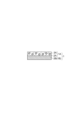
- FIG. 1 is a schematic cross-sectional view showing one embodiment of an adhesive film for circuit connection.
- FIG. 1 is a schematic cross-sectional view showing one embodiment of an adhesive film for circuit connection.
- FIG. 1 is a schematic cross-sectional view showing one embodiment of a connection structure.
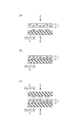
- 4A to 4C are schematic cross-sectional views showing a method for manufacturing the connection structure of FIG. 3.
- the upper or lower limit of the numerical range may be replaced with the values shown in the examples.
- the lower and upper limits of the numerical ranges may be arbitrarily combined with the lower or upper limit of other numerical ranges.
- the numerical values A and B at both ends are included as the lower and upper limits of the numerical range, respectively.
- the description "10 or more” means 10 and a numerical value exceeding 10, and this also applies when the numerical values are different.
- the description "10 or less” means a numerical value less than 10 and a numerical value less than 10, and this also applies when the numerical values are different.
- each component and material exemplified in this specification may be used alone or in combination of two or more types, unless otherwise specified.
- the content of each component in the composition means the total amount of the multiple substances present in the composition, unless otherwise specified, when multiple substances corresponding to each component are present in the composition.
- (meth)acrylate means at least one of an acrylate and the corresponding methacrylate.
- One embodiment of the present disclosure is an adhesive composition containing a cationically polymerizable compound and a curing agent, the curing agent being a salt of a nitrogen-containing cation and an anion represented by the following general formula (1).
- the curing agent that is a salt of a nitrogen-containing cation and an anion represented by the following general formula (1) is referred to as curing agent A.
- curing agent A the curing agent that is a salt of a nitrogen-containing cation and an anion represented by the following general formula (1).
- R 1 represents a fluoroalkyl group, a fluoroaryl group, or a fluoroalkyl-substituted aryl group
- m represents 0 or 1
- n represents an integer of 1 to 4
- the cationic polymerizable compound may be, for example, a compound that reacts with the curing agent A by heating to crosslink.
- Examples of the cationic polymerizable compound include an epoxy compound, a vinyl ether compound, and an oxetane compound.
- the cationic polymerizable compound may include an epoxy compound.
- the cationic polymerizable compound may be used alone or in combination of two or more kinds.
- the cationic polymerizable compound may not include a vinyl ether compound.
- the cationic polymerizable compound may not include an oxetane compound.
- epoxy compounds include bisphenol A type epoxy resins, bisphenol S type epoxy resins, bisphenol F type epoxy resins, phenol novolac type epoxy resins, cresol novolac type epoxy resins, bisphenol A novolac type epoxy resins, bisphenol F novolac type epoxy resins, tetramethyl bisphenol A type epoxy resins, 3',4'-epoxycyclohexylmethyl-3,4-epoxycyclohexanecarboxylate (bi-7-oxabicyclo[4,1,0]heptane), 3,4-epoxycyclohexylmethyl (meth)acrylate, (3,3',4,4'-diepoxy)bicyclohexyl, dicyclopentadiene dimethanol diglycidyl ether, xylene novolac type glycidyl ether, biphenyl type epoxy resins, etc.
- the epoxy compound may contain at least one selected from the group consisting of bisphenol A type epoxy resin, tetramethyl bisphenol A type epoxy resin, dicyclopentadiene dimethanol diglycidyl ether, xylene-novolac type glycidyl ether, and alicyclic epoxy resin.
- the epoxy compound may contain a glycidyl ether compound. From the viewpoint of realizing better low-temperature curing properties, storage stability, and connection resistance, the epoxy compound may contain an alicyclic epoxy resin. The epoxy compound does not have to contain an alicyclic epoxy resin.
- the epoxy compound may be a multifunctional epoxy resin from the viewpoint of realizing better low-temperature curing properties, storage stability, and connection resistance.
- the number of epoxy groups in the epoxy compound may be 1 or more, 2 or more, or 3 or more, and may be 15 or less, 12 or less, or 10 or less.
- the epoxy equivalent of the epoxy compound may be 100 to 300 g/eq, or 150 to 250 g/eq, from the viewpoint of achieving better low-temperature curing properties, storage stability, and connection resistance.
- the epoxy equivalent refers to a value measured in accordance with JIS K7236.
- the cationic polymerizable compound may contain an oxetane compound from the viewpoint of realizing better low-temperature curing properties, storage stability, and connection resistance.
- the cationic polymerizable compound may contain only one of an epoxy compound and an oxetane compound from the viewpoint of realizing better low-temperature curing properties, storage stability, and connection resistance.
- the content of the cationic polymerizable compound may be 10 mass% or more, 30 mass% or more, 40 mass% or more, or 50 mass% or more, based on the total mass of the adhesive composition, from the viewpoint of ensuring the curability of the adhesive composition.
- the content of the cationic polymerizable compound may be 70 mass% or less, 65 mass% or less, or 50 mass% or less, based on the total mass of the adhesive composition, from the viewpoint of ensuring the formability of the adhesive composition. From these viewpoints, the content of the cationic polymerizable compound may be 10 to 70 mass%, based on the total mass of the adhesive composition.
- the content of the oxetane compound in the cationic polymerizable compound may be 5% by mass or more, 10% by mass or more, 20% by mass or more, 30% by mass or more, 40% by mass or more, or 50% by mass or more, and may be 100% by mass or less, 95% by mass or less, 80% by mass or less, 70% by mass or less, 60% by mass or less, or 50% by mass or less.
- Curing agent A is a salt of a nitrogen-containing cation and an anion represented by the following general formula (1):
- R 1 represents a fluoroalkyl group, a fluoroaryl group, or a fluoroalkyl-substituted aryl group
- m represents 0 or 1
- n represents an integer of 1 to 4.
- the fluoroalkyl group may be a perfluoroalkyl group from the viewpoint of realizing better low-temperature curing properties, storage stability, corrosion resistance, heat resistance, and connection resistance.
- the number of carbon atoms in the fluoroalkyl group may be 5 or less, 4 or less, 3 or less, or 2 or less from the viewpoint of realizing better low-temperature curing properties, storage stability, corrosion resistance, heat resistance, and connection resistance, and from the same viewpoint, may be 1 or more, or 2 or more.
- examples of the aryl group of the fluoroaryl group include a phenyl group and a naphthyl group.
- the fluoroaryl group may be a perfluoroaryl group from the viewpoint of realizing better low-temperature curing properties, storage stability, corrosion resistance, heat resistance, and connection resistance.
- the fluoroalkyl-substituted aryl group is an aryl group having a fluoroalkyl group. From the viewpoint of achieving better low-temperature curing properties, storage stability, corrosion resistance, heat resistance, and connection resistance, the fluoroalkyl-substituted aryl group may be a perfluoroalkyl-substituted aryl group.
- the number of carbon atoms in the alkyl group in the fluoroalkyl-substituted aryl group may be 5 or less, 4 or less, or 3 or less, or 1 or more, or 2 or more.
- the aryl group in the fluoroalkyl-substituted aryl group may be a phenyl group or a naphthyl group.
- the number of fluoroalkyl groups in the fluoroalkyl-substituted aryl group may be 5 or less, 4 or less, 3 or less, or 2 or more, or 1 or more, or 2 or more, from the viewpoint of realizing better low-temperature curing properties, storage stability, corrosion resistance, heat resistance, and connection resistance.
- n may be 2 to 4, 3 to 4, or 4, from the viewpoint of achieving better low-temperature curing properties, storage stability, corrosion resistance, heat resistance, and connection resistance.
- the anions represented by formula (1) include tetrakis[fluorophenyl]gallate anion such as tetrafluorogallate anion, tetrakis(pentafluorophenyl)gallate anion; tetrakis[difluorophenyl]gallate anion such as tetrakis(3,5-difluorophenyl)gallate anion; tris(pentafluorophenyl)fluorogallate anion, bis(pentafluorophenyl)difluorogallate anion, (pentafluorophenyl)trifluorogallate anion; tetrakis(fluoroalkylphenyl)gallate anion such as tetrakis[4-(trifluoromethyl)phenyl]gallate anion; tetrakis[bis(fluoroalkyl)phenyl]gallate anion such as tetrakis[3,5
- the nitrogen-containing cation may be, for example, an ammonium cation, an anilinium cation, or a pyridinium cation, from the viewpoint of realizing better low-temperature curing properties, storage stability, corrosion resistance, heat resistance, and connection resistance.
- the nitrogen-containing cation may be, for example, an anilinium cation, from the viewpoint of realizing better low-temperature curing properties, storage stability, corrosion resistance, heat resistance, and connection resistance.
- the nitrogen-containing cation may be, for example, a cation represented by the following general formula (2).
- R 21 , R 22 , and R 23 each independently represent a hydrogen atom, a substituted or unsubstituted alkyl group, a substituted or unsubstituted aryl group, a substituted or unsubstituted alkenyl group, a substituted or unsubstituted alkoxyl group, a substituted or unsubstituted aryloxy group, or a substituted or unsubstituted heterocyclic group.
- examples of the alkyl group include a methyl group, an ethyl group, a propyl group, an isopropyl group, a butyl group, an isobutyl group, an n-pentyl group, an n-hexyl group, an n-heptyl group, and an aralkyl group.
- examples of the aralkyl group include a phenylmethyl group, a phenylethyl group, a naphthylmethyl group, and a cinnamyl group. These alkyl groups may have a substituent.
- examples of the aryl group include a phenyl group, a naphthyl group, and a biphenyl group. These aryl groups may have a substituent.
- examples of the alkoxyl group include a methoxy group, an ethoxy group, a propoxy group, and a butoxy group. These alkoxyl groups may have a substituent.
- examples of the heterocyclic group include a pyridinyl group and a 4-cyclohexaneoxide group. These heterocyclic groups may have a substituent.
- Substituents in the alkyl group etc. of formula (2) include alkyl groups such as methyl, ethyl, propyl, isopropyl, butyl, isobutyl, t-butyl, pentyl, hexyl, etc.; aryl groups such as phenyl and naphthyl; alkoxy groups such as methoxy, ethoxy, propoxy, butoxy, etc.; alkoxycarbonyl groups such as acetoxy, propionyloxy, decylcarbonyloxy, and dodecylcarbonyloxy; ester groups such as methoxycarbonyl, ethoxycarbonyl, and benzoyloxy; phenylthio groups; halogen atoms such as fluorine, chlorine, bromine, and iodine; cyano groups; nitro groups; and hydroxy groups.
- alkyl groups such as methyl, ethyl, propyl, isopropyl
- the benzene ring bonded to the nitrogen atom may have a substituent, or may not have a substituent, from the viewpoint of achieving better low-temperature curing properties, storage stability, corrosion resistance, heat resistance, and connection resistance.
- R 21 , R 22 , and R 23 may each independently be a substituted or unsubstituted alkyl group, and at least one of R 21 , R 22 , and R 23 may be an aralkyl group. From the viewpoint of realizing better low-temperature curing properties, storage stability, corrosion resistance, heat resistance, and connection resistance, at least one of R 21 , R 22 , and R 23 may be a benzyl group.
- the nitrogen-containing cation is a cation containing at least a nitrogen atom.
- the nitrogen-containing cation may be a cation represented by the following general formula (3): [In formula (3), R 31 and R 33 each independently represent a substituted or unsubstituted alkyl group, R 32 represents a substituted or unsubstituted alkylene group, and R 34 represents an electron-donating group.]
- R 31 and R 33 may each be an unsubstituted alkyl group from the viewpoint of realizing better low-temperature curing properties, storage stability, corrosion resistance, heat resistance, and connection resistance.
- R 31 and R 33 may each be a methyl group, an ethyl group, a propyl group, an isopropyl group, a butyl group, an isobutyl group, an n-pentyl group, an n-hexyl group, an n-heptyl group, or an aralkyl group, and may each be a methyl group from the viewpoint of realizing better low-temperature curing properties, storage stability, corrosion resistance, heat resistance, and connection resistance.
- R 32 may be an unsubstituted alkylene group from the viewpoint of realizing better low-temperature curing properties, storage stability, corrosion resistance, heat resistance, and connection resistance.
- R 32 may be a methylene group, an ethylene group, a propylene group, an isopropylene group, a butylene group, or an isobutylene group, and may be a methylene group from the viewpoint of realizing better low-temperature curing properties, storage stability, corrosion resistance, heat resistance, and connection resistance.
- Examples of the electron donating group (R 34 ) include an alkyl group, an alkoxy group, a hydroxyl group, an amino group, and an alkylamino group.
- Examples of the alkyl group include a methyl group, an ethyl group, a normal propyl group, and an isopropyl group.
- Examples of the alkoxy group include a methoxy group and an ethoxy group.
- the electron withdrawing group (R 34 ) may be an alkyl group or an alkoxy group, or a methyl group or a methoxy group, from the viewpoint of realizing better low-temperature curing properties, storage stability, corrosion resistance, heat resistance, and connection resistance.
- the benzene ring to which R 34 is bonded may contain a plurality of electron donating groups.
- the number of electron donating groups possessed by the benzyl group to which R 34 is bonded may be 3 or less, 2 or less, or 1, from the viewpoint of realizing better low-temperature curing properties, storage stability, corrosion resistance, heat resistance, and connection resistance.
- the benzyl group to which R 34 is bonded may have at least one electron-donating group at the 4-position (the 4-position when the bonding position of the benzyl group to which R 34 is bonded and R 32 is regarded as the 1-position; the para-position to the bonding position of the benzyl group to which R 34 is bonded and R 32 ) from the viewpoint of realizing better low-temperature curing properties, storage stability, corrosion resistance, heat resistance, and connection resistance.
- the benzene ring bonded to the nitrogen atom may have a substituent, or may not have a substituent, from the viewpoint of achieving better low-temperature curing properties, storage stability, corrosion resistance, heat resistance, and connection resistance.
- Examples of the cation represented by formula (3) include (4-methylbenzyl)dimethylanilinium cation, (4-methoxybenzyl)dimethylanilinium cation, (4-hydroxybenzyl)dimethylanilinium cation, (4-aminobenzyl)dimethylanilinium cation, (4-ethylbenzyl)dimethylanilinium cation, (4-ethoxybenzyl)dimethylanilinium cation, (4-methylbenzyl)methylethylanilinium cation, (4-methoxybenzyl)methylethylanilinium cation, (4-hydroxybenzyl)methylethylanilinium cation, (4-aminobenzyl)methylethylanilinium cation, (4-methylbenzyl)diethylanilinium cation, (4-methoxybenzyl)diethylanilinium cation, (4-hydroxybenzyl)diethylanilinium
- the content of the curing agent A in the adhesive composition may be 1% by mass or more, 2% by mass or more, or 3% by mass or more based on the total mass of the adhesive composition from the viewpoint of sufficiently promoting the curing reaction.
- the content of the curing agent A in the adhesive composition may be 20% by mass or less, 17% by mass or less, or 15% by mass or less based on the total mass of the adhesive composition from the viewpoint of improving the physical properties of the cured product. From these viewpoints, the content of the curing agent A in the adhesive composition may be 1 to 20% by mass, 3 to 17% by mass, or 5 to 15% by mass based on the total mass of the adhesive composition.
- the content of the curing agent A in the adhesive composition may be 4% by mass or more, 4.5% by mass or more, or 5% by mass or more, based on the total mass of the adhesive composition, and may be 13% by mass or less, 11% by mass or less, 9% by mass or less, 7% by mass or less, or 5% by mass or less.
- the content of the curing agent A in the adhesive composition may be 1% by mass or more, 3% by mass or more, or 5% by mass or more based on the total mass of the adhesive composition excluding the conductive particles, from the viewpoint of sufficiently promoting the curing reaction.
- the content of the curing agent A in the adhesive composition may be 20% by mass or less, 17% by mass or less, or 15% by mass or less based on the total mass of the adhesive composition excluding the conductive particles, from the viewpoint of improving the physical properties of the cured product. From these viewpoints, the content of the curing agent A in the adhesive composition may be 1 to 20% by mass, 3 to 17% by mass, or 5 to 15% by mass, based on the total mass of the adhesive composition excluding the conductive particles.
- the content of the curing agent A in the adhesive composition may be 4% by mass or more, 4.5% by mass or more, or 5% by mass or more, based on the total mass of the adhesive composition excluding the conductive particles, and may be 13% by mass or less, 11% by mass or less, 9% by mass or less, 7% by mass or less, or 5% by mass or less.
- the content of curing agent A in the adhesive composition may be 1 mass% or more, 3 mass% or more, or 5 mass% or more, based on the total mass of the adhesive composition excluding the conductive particles and filler, from the viewpoint of sufficiently promoting the curing reaction.
- the content of curing agent A in the adhesive composition may be 30 mass% or less, 27 mass% or less, 25 mass% or less, 22 mass% or less, or 20 mass% or less, based on the total mass of the adhesive composition excluding the conductive particles and filler, from the viewpoint of improving the physical properties of the cured product.
- the content of curing agent A in the adhesive composition may be 1 to 30 mass%, 3 to 27 mass%, or 5 to 20 mass%, based on the total mass of the adhesive composition excluding the conductive particles and filler.
- the content of curing agent A in the adhesive composition may be 6% by mass or more, 7% by mass or more, or 7.5% by mass or more, based on the total mass of the adhesive composition excluding the conductive particles and the filler, and may be 18% by mass or less, 16% by mass or less, 14% by mass or less, 12% by mass or less, 10% by mass or less, or 8% by mass or less.
- the content of the curing agent A in the adhesive composition may be 3 parts by mass or more, 5 parts by mass or more, 7 parts by mass or more, or 10 parts by mass or more based on 100 parts by mass of the cationic polymerizable compound, from the viewpoint of sufficiently promoting the curing reaction.
- the content of the curing agent A in the adhesive composition may be 40 parts by mass or less, 37 parts by mass or less, 34 parts by mass or less, 31 parts by mass or less, 28 parts by mass or less, 25 parts by mass or less, 22 parts by mass or less, or 20 parts by mass or less based on 100 parts by mass of the cationic polymerizable compound, from the viewpoint of improving the physical properties of the cured product.
- the content of the curing agent A in the adhesive composition may be 3 to 40 parts by mass, more than 3 parts by mass and less than 40 parts by mass, more than 5 parts by mass and less than 40 parts by mass, 5 to 37 parts by mass, or 10 to 20 parts by mass, based on 100 parts by mass of the cationic polymerizable compound.
- the content of the curing agent A in the adhesive composition may be 11 parts by mass or more, 12 parts by mass or more, 13 parts by mass or more, or 14 parts by mass or more, or 18 parts by mass or less, 17 parts by mass or less, 16 parts by mass or less, or 15 parts by mass or less, based on 100 parts by mass of the cationic polymerizable compound.
- the content of the curing agent A in the adhesive composition may be 3 parts by mass or more, 5 parts by mass or more, 7 parts by mass or more, or 10 parts by mass or more based on 100 parts by mass of the epoxy compound, from the viewpoint of sufficiently promoting the curing reaction.
- the content of the curing agent A in the adhesive composition may be 40 parts by mass or less, 37 parts by mass or less, 34 parts by mass or less, 31 parts by mass or less, 28 parts by mass or less, 25 parts by mass or less, 22 parts by mass or less, or 20 parts by mass or less based on 100 parts by mass of the epoxy compound, from the viewpoint of improving the physical properties of the cured product.
- the content of the curing agent A in the adhesive composition may be 3 to 40 parts by mass, 5 to 37 parts by mass, or 10 to 20 parts by mass based on 100 parts by mass of the epoxy compound.
- the content of the curing agent A in the adhesive composition may be 11 parts by mass or more, 12 parts by mass or more, 13 parts by mass or more, or 14 parts by mass or more, and may be 18 parts by mass or less, 17 parts by mass or less, 16 parts by mass or less, or 15 parts by mass or less, based on 100 parts by mass of the epoxy compound.
- the content of the curing agent A in the adhesive composition may be 3 parts by mass or more, 5 parts by mass or more, 7 parts by mass or more, or 10 parts by mass or more based on 100 parts by mass of the oxetane compound, from the viewpoint of sufficiently promoting the curing reaction.
- the content of the curing agent A in the adhesive composition may be 40 parts by mass or less, 37 parts by mass or less, 34 parts by mass or less, 31 parts by mass or less, 28 parts by mass or less, 25% by mass or less, 22% by mass or less, or 20 parts by mass or less based on 100 parts by mass of the oxetane compound, from the viewpoint of improving the physical properties of the cured product.
- the content of the curing agent A in the adhesive composition may be 3 to 40 parts by mass, 5 to 37 parts by mass, or 10 to 20 parts by mass based on 100 parts by mass of the oxetane compound.
- the content of the curing agent A in the adhesive composition may be 11 parts by mass or more, 12 parts by mass or more, 13 parts by mass or more, or 14 parts by mass or more, and may be 18 parts by mass or less, 17 parts by mass or less, 16 parts by mass or less, or 15 parts by mass or less, based on 100 parts by mass of the oxetane compound.
- the adhesive composition may further contain conductive particles.
- the conductive particles are not particularly limited as long as they are conductive particles, and examples thereof include metal particles made of metals such as gold, silver, palladium, nickel, copper, and solder; conductive carbon particles made of conductive carbon; and coated conductive particles having a core containing non-conductive glass, ceramic, plastic (polystyrene, etc.), and a coating layer containing the above metal or conductive carbon and coating the core.
- the conductive particles may be coated conductive particles from the viewpoint of being easily deformed by heating and/or pressure, and of being able to increase the contact area between the electrodes and the conductive particles when electrically connecting the electrodes, thereby further improving the conductivity between the electrodes.
- the conductive particles may be solder particles from the viewpoint of making the connection between the electrodes stronger.
- the solder particles may contain at least one selected from the group consisting of tin, tin alloy, indium, and indium alloy, from the viewpoint of achieving both connection strength and a low melting point. Furthermore, the solder particles may contain at least one selected from the group consisting of In-Bi alloy, In-Sn alloy, In-Sn-Ag alloy, Sn-Au alloy, Sn-Bi alloy, Sn-Bi-Ag alloy, Sn-Ag-Cu alloy, and Sn-Cu alloy, from the viewpoint of obtaining higher reliability during high temperature and high humidity testing and thermal shock testing.
- the average particle diameter of the conductive particles may be 1 ⁇ m or more, 2 ⁇ m or more, or 2.5 ⁇ m or more, from the viewpoint of excellent dispersibility and conductivity.
- the average particle diameter of the conductive particles may be 20 ⁇ m or less, 15 ⁇ m or less, 10 ⁇ m or less, 8 ⁇ m or less, 6 ⁇ m or less, 5.5 ⁇ m or less, or 5 ⁇ m or less, from the viewpoint of ensuring insulation between adjacent electrodes. From these viewpoints, the average particle diameter of the conductive particles may be 1 to 20 ⁇ m, 1 to 15 ⁇ m, 1 to 10 ⁇ m, 1 to 8 ⁇ m, or 1 to 6 ⁇ m.
- the average particle diameter of the conductive particles is determined by observing 300 conductive particles contained in the adhesive composition using a scanning electron microscope (SEM) to measure the particle diameter of each conductive particle, and averaging the particle diameters of the 300 conductive particles. Note that if the conductive particles are not spherical, the particle diameter of the conductive particles is the diameter of a circle circumscribing the conductive particles in the image observed using the SEM.
- SEM scanning electron microscope
- the particle density of the conductive particles in the adhesive composition may be 100 particles/mm 2 or more, 1000 particles/mm 2 or more, or 3000 particles/mm 2 or more, from the viewpoint of obtaining a stable connection resistance.
- the particle density of the conductive particles in the adhesive composition may be 100,000 particles/mm 2 or less, 50,000 particles/mm 2 or less, or 30,000 particles/mm 2 or less, from the viewpoint of ensuring insulation between adjacent electrodes. From these viewpoints, the particle density of the conductive particles in the adhesive composition may be 100 to 100,000 particles/mm 2 , 1000 to 50,000 particles/mm 2 , or 3000 to 30,000 particles/mm 2 .
- the conductive particle content may be 10% by mass or more, 20% by mass or more, or 25% by mass or more, based on the total mass of the adhesive composition.
- the conductive particle content may be 50% by mass or less, 40% by mass or less, or 30% by mass or less, based on the total mass of the adhesive composition.
- the content of the conductive particles may be 10 parts by mass or more, 30 parts by mass or more, 50 parts by mass or more, 70 parts by mass or more, or 90 parts by mass or more based on 100 parts by mass of the cationic polymerizable compound.
- the content of the conductive particles may be 200 parts by mass or less, 150 parts by mass or less, 120 parts by mass or less, or 100 parts by mass or less based on 100 parts by mass of the cationic polymerizable compound.
- the content of the curing agent A in the adhesive composition may be 3 parts by mass or more, 5 parts by mass or more, 7 parts by mass or more, 10 parts by mass or more, 11 parts by mass or more, 12 parts by mass or more, 13 parts by mass or more, or 14 parts by mass or more based on 100 parts by mass of the conductive particles.
- the content of the curing agent A in the adhesive composition may be 40 parts by mass or less, 35 parts by mass or less, 30 parts by mass or less, 27 parts by mass or less, 25 parts by mass or less, 22 parts by mass or less, 20 parts by mass or less, 18 parts by mass or less, 17 parts by mass or less, 16 parts by mass or less, or 15 parts by mass or less based on 100 parts by mass of the conductive particles.
- the content of the curing agent A in the adhesive composition may be 3 to 40 parts by mass, 10 to 40 parts by mass, 3 to 30 parts by mass, or 5 to 30 parts by mass based on 100 parts by mass of the conductive particles.
- the adhesive composition may further contain a thermoplastic resin.
- a thermoplastic resin By containing the thermoplastic resin, the adhesive composition is easily formed into a film.
- the thermoplastic resin include phenoxy resin, polyester resin, polyamide resin, polyurethane resin, polyester urethane resin, acrylic rubber, etc. These may be used alone or in combination of two or more.
- the weight average molecular weight (Mw) of the thermoplastic resin may be, for example, 5,000 or more, 10,000 or more, 20,000 or more, or 40,000 or more, and may be 200,000 or less, 100,000 or less, 80,000 or less, or 60,000 or less.
- the weight average molecular weight of the thermoplastic resin is measured by gel permeation chromatography (GPC) and converted using a calibration curve based on standard polystyrene.
- the content of the thermoplastic resin may be 5% by mass or more, 15% by mass or more, 20% by mass or more, or 25% by mass or more, based on the total mass of the adhesive composition.
- the content of the thermoplastic resin may be 40% by mass or less, 30% by mass or less, 20% by mass or less, or 10% by mass or less, based on the total mass of the adhesive composition.
- the content of the thermoplastic resin may be 10 parts by mass or more, 30 parts by mass or more, 50 parts by mass or more, or 60 parts by mass or more based on 100 parts by mass of the cationic polymerizable compound.
- the content of the thermoplastic resin may be 100 parts by mass or less, 80 parts by mass or less, 60 parts by mass or less, 40 parts by mass or less, or 20 parts by mass or less based on 100 parts by mass of the cationic polymerizable compound.
- the content of curing agent A in the adhesive composition may be 3 parts by mass or more, 5 parts by mass or more, 7 parts by mass or more, 10 parts by mass or more, 12 parts by mass or more, 14 parts by mass or more, 16 parts by mass or more, 18 parts by mass or more, or 20 parts by mass or more based on 100 parts by mass of the thermoplastic resin.
- the content of curing agent A in the adhesive composition may be 150 parts by mass or less, 130 parts by mass or less, 100 parts by mass or less, 80 parts by mass or less, 60 parts by mass or less, 50 parts by mass or less, 40 parts by mass or less, or 30 parts by mass or less based on 100 parts by mass of the thermoplastic resin.
- the adhesive composition may further contain a coupling agent.
- the coupling agent may be a silane coupling agent, and examples thereof include vinyl trimethoxysilane, vinyl triethoxysilane, 3-glycidoxypropyl trimethoxysilane, 3-glycidoxypropyl methyl diethoxysilane, 3-(meth)acryloxypropyl methyl dimethoxysilane, 3-(meth)acryloxypropyl trimethoxysilane, 3-(meth)acryloxypropyl methyl diethoxysilane, 3-(meth)acryloxypropyl triethoxysilane, N-2-(aminoethyl)-3-aminopropyl methyl dimethoxysilane, N-phenyl-3-aminopropyl trimethoxysilane, 3-ureidopropyl triethoxysilane, 3-mercaptopropyl trim
- the content of the coupling agent may be 0.5% by mass or more, 1% by mass or more, or 2% by mass or more, based on the total mass of the adhesive composition.
- the content of the coupling agent may be 15% by mass or less, 10% by mass or less, or 5% by mass or less, based on the total mass of the adhesive composition.
- the content of the coupling agent may be 1 part by mass or more, 4 parts by mass or more, or 6 parts by mass or more based on 100 parts by mass of the cationic polymerizable compound.
- the content of the coupling agent may be 30 parts by mass or less, 20 parts by mass or less, 10 parts by mass or less, or 6 parts by mass or less based on 100 parts by mass of the cationic polymerizable compound.
- the content of curing agent A in the adhesive composition may be 25 parts by mass or more, 30 parts by mass or more, 40 parts by mass or more, 60 parts by mass or more, 80 parts by mass or more, 100 parts by mass or more, 120 parts by mass or more, 140 parts by mass or more, 160 parts by mass or more, 180 parts by mass or more, or 200 parts by mass or more, based on 100 parts by mass of the coupling agent.
- the content of curing agent A in the adhesive composition may be 300 parts by mass or less, 270 parts by mass or less, 250 parts by mass or less, or 200 parts by mass or less, based on 100 parts by mass of the coupling agent.
- the adhesive composition may further contain a filler.
- the adhesive composition can further improve the connection reliability.
- the filler may be a non-conductive filler (e.g., non-conductive particles).
- the filler may be either an inorganic filler or an organic filler.
- inorganic fillers include metal oxide particles such as silica particles, alumina particles, silica-alumina particles, titania particles, and zirconia particles; metal nitride particles, etc. These may be used alone or in combination of two or more types.
- organic fillers examples include silicone particles, methacrylate-butadiene-styrene particles, acrylic-silicone particles, polyamide particles, polyimide particles, etc. These may be used alone or in combination of two or more.
- the filler may be an inorganic filler or silica particles from the viewpoint of improving the film formability and the reliability of the connection structure.
- the silica particles may be crystalline silica particles or non-crystalline silica particles, and these silica particles may be synthetic products.
- the silica may be synthesized by a dry method or a wet method.
- the silica particles may include at least one type selected from the group consisting of fumed silica particles and sol-gel silica particles.
- the silica particles may be surface-treated silica particles from the viewpoint of excellent dispersibility in the adhesive component.
- the surface-treated silica particles are, for example, silica particles whose surface hydroxyl groups have been hydrophobized with a silane compound or a silane coupling agent.
- the surface-treated silica particles may be, for example, silica particles surface-treated with a silane compound such as an alkoxysilane compound, a disilazane compound, or a siloxane compound, or may be silica particles surface-treated with a silane coupling agent.
- Alkoxysilane compounds include methyltrimethoxysilane, dimethyldimethoxysilane, phenyltrimethoxysilane, dimethoxydiphenylsilane, tetraethoxysilane, methyltriethoxysilane, dimethyldiethoxysilane, phenyltriethoxysilane, n-propyltrimethoxysilane, n-propyltriethoxysilane, hexyltrimethoxysilane, hexyltriethoxysilane, octyltriethoxysilane, decyltrimethoxysilane, 1,6-bis(trimethoxysilyl)hexane, 3,3,3-trifluoropropyltrimethoxysilane, etc.
- disilazane compounds examples include 1,1,1,3,3,3-hexamethyldisilazane, 1,3-diphenyltetramethyldisilazane, 1,3-bis(3,3,3-trifluoropropyl)-1,1,3,3-tetramethyldisilazane, and 1,3-divinyl-1,1,3,3-tetramethyldisilazane.
- Siloxane compounds include tetradecamethylcycloheptasiloxane, decamethylcyclopentasiloxane, hexaphenylcyclosiloxane, octadecamethylcyclononasiloxane, hexadecamethylcyclooctasiloxane, dodecamethylcyclohexasiloxane, octaphenylcyclotetrasiloxane, hexamethylcyclotrisiloxane, heptaphenyldisiloxane, tetradecamethylhexasiloxane, dodecamethylpentasiloxane, hexamethylcyclohex ...
- Silane coupling agents include vinyltrimethoxysilane, vinyltriethoxysilane, 2-(3,4-epoxycyclohexyl)ethyltrimethoxysilane, 3-glycidoxypropylmethyldimethoxysilane, 3-glycidoxypropyltrimethoxysilane, 3-glycidoxypropylmethyldiethoxysilane, 3-glycidoxypropyltriethoxysilane, p-styryltrimethoxysilane, 3-methacryloxypropylmethyldimethoxysilane, 3-methacryloxypropyltrimethoxysilane, 3-methacryloxypropylmethyldiethoxysilane, 3-methacryloxypropyltriethoxysilane, 3-acryloxypropyltrimethoxysilane, N-2-(amino Noethyl)-3-aminopropylmethyldimethoxysilane, N-2-(aminoethyl)-3-
- Silica particles that have been surface-treated with a silane compound or a silane coupling agent may be surface-treated with a silane compound such as 3-methacryloxypropyltrimethoxysilane, vinyltrimethoxysilane, or trimethoxyphenylsilane to further hydrophobize the hydroxyl group residues on the surface of the silica particles.
- a silane compound such as 3-methacryloxypropyltrimethoxysilane, vinyltrimethoxysilane, or trimethoxyphenylsilane to further hydrophobize the hydroxyl group residues on the surface of the silica particles.
- the surface-treated silica particles may contain at least one selected from the group consisting of a reaction product (hydrolysis product) of silica and trimethoxyoctylsilane, a reaction product of silica and dimethylsiloxane, a reaction product of silicon dioxide or silica and dichloro(dimethyl)silane, a reaction product (hydrolysis product) of silica and bis(trimethylsilyl)amine, and a reaction product of silica and hexamethyldisilazane, or may contain at least one selected from the group consisting of a reaction product of silica and trimethoxyoctylsilane, and a reaction product of silica and bis(trimethylsilyl)amine, from the viewpoint of easily controlling the fluidity when the adhesive film for circuit connection is compressed when the adhesive composition is used as an adhesive film for circuit connection, and from the viewpoint of improving the mechanical properties and water resistance of the connection structure after compression.
- the filler content may be 5% by mass or more, 10% by mass or more, or 15% by mass or more, based on the total mass of the adhesive composition.
- the filler content may be 50% by mass or less, 30% by mass or less, or 20% by mass or less, based on the total mass of the adhesive composition.
- the amount of the filler may be 10 parts by mass or more, 25 parts by mass or more, or 40 parts by mass or more based on 100 parts by mass of the cationic polymerizable compound.
- the amount of the filler may be 100 parts by mass or less, 60 parts by mass or less, or 40 parts by mass or less based on 100 parts by mass of the cationic polymerizable compound.
- the content of curing agent A in the adhesive composition may be 5 parts by mass or more, 8 parts by mass or more, 10 parts by mass or more, 12 parts by mass or more, 14 parts by mass or more, 16 parts by mass or more, 18 parts by mass or more, or 20 parts by mass or more based on 100 parts by mass of the filler.
- the content of curing agent A in the adhesive composition may be 120 parts by mass or less, 100 parts by mass or less, 70 parts by mass or less, 60 parts by mass or less, 50 parts by mass or less, 40 parts by mass or less, or 30 parts by mass or less based on 100 parts by mass of the filler.
- the adhesive composition may further contain a curing inhibitor.
- the curing inhibitor include amides having a lactam ring.
- the amide having a lactam ring may have 3 to 12 carbon atoms constituting the lactam ring. From the viewpoint of ensuring connection reliability even when the connection structure is exposed to a high-temperature, high-humidity environment (e.g., 85°C, 85% RH) for a long period of time, the number of carbon atoms constituting the lactam ring may be 3 to 10, 3 to 8, 3 to 7, or 3 to 6.
- Amides having a lactam ring may have a functional group bonded to the lactam ring.
- the functional group include a carboxy group, a carboxylate group, a hydroxy group, an alkoxy group, an alkyl group, an ester group, a sulfo group, a sulfonate group, a carbonyl group, an amino group, an amide group, a carboxamide group, a nitro group, a cyano group, and a halogen atom.
- the amide having a lactam ring may contain at least one member selected from the group consisting of 2-azetidinone, 2-pyrrolidinone (2-pyrrolidone), 2-piperidinone, ⁇ -caprolactam, caprylolactam, and laurolactam ( ⁇ -laurinlactam), and may contain ⁇ -caprolactam, from the viewpoint of easily maintaining excellent adhesive properties even when the adhesive composition is stored in contact with air, and of easily ensuring connection reliability even when the connection structure is exposed to a high-temperature, high-humidity environment (e.g., 85°C, 85% RH) for a long period of time.
- a high-temperature, high-humidity environment e.g. 85°C, 85% RH
- the content of the amide having a lactam ring may be 0.001% by mass or more, 0.003% by mass or more, or 0.005% by mass or more, and may be 2% by mass or less, 1% by mass or less, or 0.8% by mass or less, based on the total mass of the adhesive composition, from the viewpoint of easily maintaining excellent adhesiveness even when the adhesive composition is stored in contact with air, and from the viewpoint of easily ensuring connection reliability even when the connection structure is exposed to a high-temperature, high-humidity environment (e.g., 85°C, 85% RH) for a long period of time. From these viewpoints, the content of the amide having a lactam ring may be 0.001 to 2% by mass, 0.003 to 1% by mass, or 0.005 to 0.8% by mass, based on the total mass of the adhesive composition.
- a high-temperature, high-humidity environment e.g. 85°C, 85% RH
- the content of the amide having a lactam ring may be 0.001 parts by mass or more, 0.005 parts by mass or more, or 0.01 parts by mass or more based on 100 parts by mass of the cationic polymerizable compound.
- the content of the amide having a lactam ring may be 1 part by mass or less, 0.5 parts by mass or less, or 0.1 parts by mass or less based on 100 parts by mass of the cationic polymerizable compound.
- the content of curing agent A in the adhesive composition may be 1 part by mass or more, 2 parts by mass or more, or 3 parts by mass or more based on 0.01 parts by mass of the amide having a lactam ring.
- the content of curing agent A in the adhesive composition may be 20 parts by mass or less, 10 parts by mass or less, 5 parts by mass or less, or 4 parts by mass or less based on 0.01 parts by mass of the amide having a lactam ring.
- the content of curing agent A in the adhesive composition may be 1 to 20 parts by mass, 2 to 10 parts by mass, or 3 to 5 parts by mass based on 0.01 parts by mass of the amide having a lactam ring.
- the adhesive composition may further contain other components in addition to the above components.
- the other components may include a stabilizer, a colorant, an antioxidant, a solvent, a curing agent other than the curing agent A, etc.
- the adhesive composition may further contain a radical polymerizable compound and a radical polymerization initiator.
- Radically polymerizable compounds include acrylic compounds.
- acrylic compounds include (meth)acrylic acid compounds, (meth)acrylate compounds, and imide compounds thereof. These may be used in either a monomer or oligomer state, or a combination of a monomer and an oligomer.
- One type of radically polymerizable compound may be used alone, or two or more types may be used in combination.
- acrylic compounds include alkyl (meth)acrylate compounds such as methyl acrylate, ethyl acrylate, isopropyl acrylate, and isobutyl acrylate; polyol poly(meth)acrylate compounds such as ethylene glycol diacrylate, diethylene glycol diacrylate, trimethylolpropane triacrylate, and tetramethylolmethane tetraacrylate; aryloxy-hydroxyalkyl (meth)acrylate compounds such as 2-hydroxy-1,3-diacryloxypropane, 2,2-bis[4-(acryloxymethoxy)phenyl]propane, and 2,2-bis[4-(acryloxypolyethoxy)phenyl]propane; dicyclopentenyl acrylate, tricyclodecanyl acrylate, and tris(acryloyloxyethyl)isocyanurate.
- alkyl (meth)acrylate compounds such as methyl acrylate, ethyl acrylate,
- the radical polymerization initiator may be one that generates free radicals by light or heat.
- examples of the radical polymerization initiator include organic peroxides and azo compounds.
- examples of the organic peroxides include peroxy esters, dialkyl peroxides, diacyl peroxides, peroxydicarbonates, peroxyketals, hydroperoxides, and silyl peroxides.
- the radical polymerization initiator may be used alone or in combination of two or more types.
- Peroxy esters include cumyl peroxy neodecanoate, 1,1,3,3-tetramethylbutyl peroxy neodecanoate, 1-cyclohexyl-1-methylethyl peroxy neodecanoate, t-hexyl peroxy neodecanoate, t-butyl peroxy pivalate, 1,1,3,3-tetramethylbutyl peroxy 2-ethylhexanoate, 2,5-dimethyl-2,5-di(2-ethylhexanoylperoxy)hexane, 1-cyclohexyl-1-methylethyl peroxy 2-ethylhexanoate, L-hexyl peroxy 2-ethylhexanoate, L -butylperoxy-2-ethylhexanoate, t-butylperoxyisobutyrate, 1,1-bis(t-butylperoxy)cyclohexane,
- dialkyl peroxides examples include ⁇ , ⁇ '-bis(t-butylperoxy)diisopropylbenzene, dicumyl peroxide, 2,5-dimethyl-2,5-di(t-butylperoxy)hexane, t-butylcumyl peroxide, etc.
- hydroperoxides examples include diisopropylbenzene hydroperoxide, cumene hydroperoxide, etc.
- Diacyl peroxides include isobutyl peroxide, 2,4-dichlorobenzoyl peroxide, 3,5,5-trimethylhexanoyl peroxide, octanoyl peroxide, lauroyl peroxide, stearoyl peroxide, succinic peroxide, benzoylperoxytoluene, and benzoyl peroxide.
- peroxydicarbonates examples include di-n-propyl peroxydicarbonate, diisopropyl peroxydicarbonate, bis(4-t-butylcyclohexyl) peroxydicarbonate, di-2-ethoxymethoxy peroxydicarbonate, di(2-ethylhexylperoxy)dicarbonate, dimethoxybutyl peroxydicarbonate, and di(3-methyl-3-methoxybutylperoxy)dicarbonate.
- peroxyketals include 1,1-bis(t-hexylperoxy)-3,3,5-trimethylcyclohexane, 1,1-bis(t-hexylperoxy)cyclohexane, 1,1-bis(t-butylperoxy)-3,3,5-trimethylcyclohexane, 1,1-(t-butylperoxy)cyclododecane, and 2,2-bis(t-butylperoxy)decane.
- silyl peroxides include t-butyltrimethylsilyl peroxide, bis(t-butyl)dimethylsilyl peroxide, t-butyltrivinylsilyl peroxide, bis(t-butyl)divinylsilyl peroxide, tris(t-butyl)vinylsilyl peroxide, t-butyltriallylsilyl peroxide, bis(t-butyl)diallylsilyl peroxide, and tris(t-butyl)allylsilyl peroxide.
- the adhesive composition When differential scanning calorimetry (DSC) is performed on the adhesive composition under conditions of a nitrogen atmosphere, a heating rate of 10°C/min, and a measurement temperature range of 40 to 300°C, multiple endothermic peaks may occur, or one endothermic peak may occur.
- the area ratio (first peak/second peak) of the first endothermic peak to the second endothermic peak to occur (first peak) may be 2 or more, 3 or more, or 5 or more, and may be 20 or less, 17 or less, or 15 or less.
- the heat generation amount calculated from the area of the first endothermic peak (first peak) may be 50 J/g or more, 80 J/g or more, or 100 J/g or more, and may be 400 J/g or less, 350 J/g or less, or 300 J/g or less.
- the reaction rate may be 10% or less when the adhesive composition is heat-treated for 15 hours at 40° C.
- the reaction rate was calculated using differential scanning calorimetry (DSC) from the endothermic peak (first peak) that occurs first, according to the following formula.
- Reaction rate (%) 100 x (1 - b / a)
- a and b are as follows: a: total heat generation amount of unreacted substances (unit: J / g) b: Total heat generated by the reaction after heat treatment (unit: J/g)
- the elastic modulus of the reaction product obtained by heating the adhesive composition at 180°C for 1 hour at a measurement temperature of 300°C may be 0.01 GPa or more, 0.05 GPa or more, or 0.1 GPa or more, or 5 GPa or less, 3 GPa or less, or 1 GPa or less.
- the elastic modulus at a measurement temperature of 300°C refers to the storage elastic modulus at 300°C when the adhesive composition is laminated to a thickness of 100 to 200 ⁇ m, heated in a thermostatic bath at 180°C for 1 hour to prepare a cured film for evaluation, and the cured film is subjected to DMA measurement at 40 to 350°C at a heating rate of 10°C/min using a dynamic viscoelasticity measuring device (e.g., E4000 manufactured by UBM Corporation).
- a dynamic viscoelasticity measuring device e.g., E4000 manufactured by UBM Corporation.
- the adhesive composition may be in the form of a film. That is, another embodiment of the present disclosure is an adhesive film for circuit connection, which contains a cationic polymerizable compound and a curing agent A.
- the adhesive film for circuit connection may contain conductive particles.
- the content of the cationic polymerizable compound in the circuit connection adhesive film may be 10% by mass or more, 20% by mass or more, 25% by mass or more, or 30% by mass or more, based on the total mass of the circuit connection adhesive film, from the viewpoint of ensuring the curability of the circuit connection adhesive film.
- the content of the cationic polymerizable compound in the circuit connection adhesive film may be 70% by mass or less, 50% by mass or less, 40% by mass or less, or 35% by mass or less, based on the total mass of the circuit connection adhesive film, from the viewpoint of ensuring the formability of the circuit connection adhesive film. From these viewpoints, the content of the cationic polymerizable compound in the circuit connection adhesive film may be 10 to 70% by mass, based on the total mass of the circuit connection adhesive film.
- the content of the curing agent A in the circuit connection adhesive film may be 1% by mass or more, 2% by mass or more, or 3% by mass or more based on the total mass of the circuit connection adhesive film, from the viewpoint of sufficiently promoting the curing reaction.
- the content of the curing agent A in the circuit connection adhesive film may be 20% by mass or less, 17% by mass or less, or 15% by mass or less based on the total mass of the circuit connection adhesive film, from the viewpoint of improving the physical properties of the cured product. From these viewpoints, the content of the curing agent A in the circuit connection adhesive film may be 1 to 20% by mass, 2 to 17% by mass, or 3 to 15% by mass, based on the total mass of the circuit connection adhesive film.
- the content of the curing agent A in the circuit connection adhesive film may be 4% by mass or more, 4.5% by mass or more, or 5% by mass or more, based on the total mass of the circuit connection adhesive film, and may be 13% by mass or less, 11% by mass or less, 9% by mass or less, 7% by mass or less, or 5% by mass or less.
- the content of the curing agent A in the circuit connection adhesive film may be 1% by mass or more, 3% by mass or more, or 5% by mass or more based on the total mass of the circuit connection adhesive film excluding the conductive particles, from the viewpoint of sufficiently promoting the curing reaction.
- the content of the curing agent A in the circuit connection adhesive film may be 20% by mass or less, 17% by mass or less, or 15% by mass or less based on the total mass of the circuit connection adhesive film excluding the conductive particles, from the viewpoint of improving the physical properties of the cured product.
- the content of the curing agent A in the circuit connection adhesive film may be 1 to 20% by mass, 3 to 17% by mass, or 5 to 15% by mass, based on the total mass of the circuit connection adhesive film excluding the conductive particles.
- the content of the curing agent A in the circuit connection adhesive film may be 4% by mass or more, 4.5% by mass or more, or 5% by mass or more based on the total mass of the circuit connection adhesive film excluding the conductive particles, and may be 13% by mass or less, 11% by mass or less, 9% by mass or less, 7% by mass or less, or 5% by mass or less.
- the content of the curing agent A in the circuit connection adhesive film may be 1 mass% or more, 3 mass% or more, or 5 mass% or more, based on the total mass of the circuit connection adhesive film excluding the conductive particles and filler, from the viewpoint of sufficiently promoting the curing reaction.
- the content of the curing agent A in the circuit connection adhesive film may be 30 mass% or less, 27 mass% or less, 25 mass% or less, 22 mass% or less, or 20 mass% or less, based on the total mass of the circuit connection adhesive film excluding the conductive particles and filler, from the viewpoint of improving the physical properties of the cured product.
- the content of the curing agent A in the circuit connection adhesive film may be 1 to 30 mass%, 3 to 27 mass%, or 5 to 20 mass%, based on the total mass of the circuit connection adhesive film excluding the conductive particles and filler.
- the content of curing agent A in the circuit connection adhesive film may be 6% by mass or more, 7% by mass or more, or 7.5% by mass or more, based on the total mass of the circuit connection adhesive film excluding the conductive particles and filler, and may be 18% by mass or less, 16% by mass or less, 14% by mass or less, 12% by mass or less, 10% by mass or less, or 8% by mass or less.
- the conductive particles may be arranged in a predetermined pattern in a plan view of the circuit connection adhesive film.
- the conductive particles may be arranged regularly in a plan view of the circuit connection adhesive film, or may be arranged regularly and at approximately equal intervals in a plan view of the circuit connection adhesive film.
- the position and number of conductive particles can be set, for example, according to the shape, size, pattern, etc. of the electrodes to be connected.
- the fact that at least a portion of the multiple conductive particles are arranged in a predetermined pattern can be confirmed, for example, by observing the main surface of the circuit connection adhesive film from above using an electron microscope.
- a method for regularly arranging the conductive particles in a plan view of the circuit connection adhesive film for example, a substrate having multiple recesses on its surface, the recesses being regularly arranged in a predetermined pattern (for example, a pattern corresponding to the electrode pattern of the circuit component), the conductive particles being arranged in the recesses, and then the conductive particles being transferred to the adhesive film.
- a predetermined pattern for example, a pattern corresponding to the electrode pattern of the circuit component
- the particle density of the conductive particles in the adhesive film for circuit connection may be 100 particles/mm2 or more , 1000 particles/mm2 or more , or 3000 particles/mm2 or more , from the viewpoint of obtaining a stable connection resistance.
- the particle density of the conductive particles in the adhesive film for circuit connection may be 100,000 particles/mm2 or less , 50,000 particles/mm2 or less, or 30,000 particles/mm2 or less , from the viewpoint of ensuring insulation between adjacent electrodes. From these viewpoints, the particle density of the conductive particles in the adhesive film for circuit connection may be 100 to 100,000 particles/ mm2 , 1000 to 50,000 particles/ mm2 , or 3000 to 30,000 particles/ mm2 .
- the conductive particle content may be 10% by mass or more, 20% by mass or more, or 25% by mass or more, based on the total mass of the circuit connection adhesive film.
- the conductive particle content may be 50% by mass or less, 40% by mass or less, or 30% by mass or less, based on the total mass of the circuit connection adhesive film.
- the content of the thermoplastic resin in the circuit connection adhesive film may be 5 mass% or more, 10 mass% or more, or 15 mass% or more, based on the total mass of the circuit connection adhesive film.
- the content of the thermoplastic resin in the circuit connection adhesive film may be 40 mass% or less, 30 mass% or less, or 20 mass% or less, based on the total mass of the circuit connection adhesive film.
- the content of the coupling agent in the circuit connection adhesive film may be 0.5% by mass or more, 1% by mass or more, or 1.5% by mass or more, based on the total mass of the circuit connection adhesive film.
- the content of the coupling agent in the circuit connection adhesive film may be 10% by mass or less, 5% by mass or less, or 2% by mass or less, based on the total mass of the circuit connection adhesive film.
- the filler content in the circuit connection adhesive film may be 5 mass% or more, 10 mass% or more, or 12 mass% or more, based on the total mass of the circuit connection adhesive film.
- the filler content in the circuit connection adhesive film may be 30 mass% or less, 20 mass% or less, or 15 mass% or less, based on the total mass of the circuit connection adhesive film.
- the content of each component in the circuit connection adhesive film based on 100 parts by mass of the cationic polymerizable compound may be within the same range as the content of each component in the above adhesive composition based on 100 parts by mass of the cationic polymerizable compound.
- the circuit connection adhesive film may be a single layer, or may have a multilayer structure in which multiple layers are laminated.
- the circuit connection adhesive film may have, for example, a first adhesive layer containing a cationic polymerizable compound and a curing agent A, and a second adhesive layer other than the first adhesive layer. That is, the circuit connection adhesive film may have a first adhesive layer and a second adhesive layer laminated on the first adhesive layer. At least one of the first adhesive layer and the second adhesive layer may contain a cationic polymerizable compound, a curing agent A, and conductive particles.
- the content of each of the above components in each layer may be within the above content range based on the total mass of each layer, or may be within the above content range based on the total mass of each layer.
- the circuit connection adhesive film may have multiple regions with different types and contents of components.
- the circuit connection adhesive film may have, for example, a first region and a second region disposed on the first region, and the first region may be a region containing a cationic polymerizable compound and a curing agent A. That is, the circuit connection adhesive film may have a first region formed from a first adhesive composition containing a cationic polymerizable compound and a curing agent A, and a second region formed from a second adhesive composition disposed on the first region.
- the content of each of the above components in each region may be within the above content range based on the total mass of each region, or may be within the above content range based on the total mass of each region.
- the circuit connection adhesive film may be provided on a substrate (e.g., a PET film) or the like.
- the circuit connection adhesive film with a substrate can be produced, for example, by applying an adhesive composition containing conductive particles onto the substrate using a knife coater, roll coater, applicator, comma coater, die coater, or the like.
- FIG. 1 is a schematic cross-sectional view showing an adhesive film for circuit connection according to one embodiment.
- the adhesive film for circuit connection 1 is composed of a single layer consisting of an adhesive component 2 and conductive particles 3 dispersed in the adhesive component 2.
- the adhesive component 2 contains at least a cationic polymerizable compound and a curing agent A.
- the adhesive film for circuit connection 1 may be in an uncured state or in a partially cured state.
- the thickness of the circuit connection adhesive film 1 may be, for example, 3 ⁇ m or more or 10 ⁇ m or more, and 30 ⁇ m or less or 20 ⁇ m or less.
- the circuit connection adhesive film may have a multilayer structure having two or more layers.
- the circuit connection adhesive film 1 may have a two-layer structure including a layer 1A containing conductive particles 3A (a first adhesive layer consisting of adhesive component 2A and conductive particles 3A dispersed in adhesive component 2A) and a layer 1B not containing conductive particles (a second adhesive layer consisting of adhesive component 2B).
- the first adhesive layer 1A may be a layer consisting of an adhesive composition (first adhesive composition) containing a cationic polymerizable compound, a curing agent A, and conductive particles.
- the second adhesive layer 1B may be a layer consisting of an adhesive composition (second adhesive composition) containing a cationic polymerizable compound and a curing agent A.
- the type, content, etc. of each component contained in the second adhesive layer 1B may be the same as or different from that of the first adhesive layer 1A.
- the first adhesive layer 1A and the second adhesive layer 1B of the circuit connection adhesive film 1 may each be in an uncured state or in a partially cured state.
- the thickness of the first adhesive layer 1A may be, for example, 3 ⁇ m or more or 5 ⁇ m or more, and 15 ⁇ m or less or 10 ⁇ m or less.
- the thickness of the second adhesive layer 1B may be, for example, 3 ⁇ m or more or 10 ⁇ m or more, and 20 ⁇ m or less or 15 ⁇ m or less.
- the thickness of the first adhesive layer 1A may be the same as or different from the thickness of the second adhesive layer 1B.
- the ratio of the thickness of the first adhesive layer 1A to the thickness of the second adhesive layer 1B may be 0.1 or more or 0.3 or more, and 1.5 or less or 0.5 or less.
- the above-mentioned circuit connection adhesive film may be an anisotropic conductive adhesive film (anisotropic conductive film), or it may be a conductive adhesive film that does not have anisotropic conductivity.
- connection structure comprising a first circuit member having a first electrode, a second circuit member having a second electrode, and a connection portion disposed between the first circuit member and the second circuit member and electrically connecting the first electrode and the second electrode to each other, wherein the connection portion comprises a cured product of the above-mentioned adhesive film for circuit connection.
- Figure 3 is a schematic cross-sectional view showing one embodiment of a connection structure.
- the structure 10 includes a first circuit member 4 and a second circuit member 5 that face each other, and a connection portion 6 that connects the first circuit member 4 and the second circuit member 5 between the first circuit member 4 and the second circuit member 5.
- the first circuit member 4 includes a first circuit board 41 and a first electrode 42 formed on the main surface 41a of the first circuit board 41.
- the second circuit member 5 includes a second circuit board 51 and a second electrode 52 formed on the main surface 51a of the second circuit board 51.
- the first circuit member 4 and the second circuit member 5 are not particularly limited as long as they are members on which electrodes that require electrical connection are formed.
- members on which electrodes are formed include inorganic substrates such as semiconductors, glass, and ceramics; polyimide substrates such as TCP, FPC, and COF; substrates on which electrodes are formed on films such as polycarbonate, polyester, and polyethersulfone; printed wiring boards, and the like; and a combination of two or more of these may be used.
- the connection portion 6 includes a cured product of the circuit connection adhesive film 1, and contains an insulating material 7, which is a cured product of the adhesive component 2, and conductive particles 3.
- the conductive particles 3 may be disposed not only between the opposing first electrode 42 and second electrode 52, but also between the main surface 41a of the first circuit board 41 and the main surface 51a of the second circuit board 51.
- the first electrode 42 and the second electrode 52 are electrically connected via the conductive particles 3. That is, the conductive particles 3 are in contact with both the first electrode 42 and the second electrode 52.
- the opposing first electrode 42 and second electrode 52 are electrically connected via the conductive particles 3. This sufficiently reduces the connection resistance between the first electrode 42 and the second electrode 52. This allows the current to flow smoothly between the first electrode 42 and the second electrode 52, allowing the functions of the first circuit member 4 and the second circuit member 5 to be fully exerted.
- Another embodiment of the present disclosure is a method for producing a connection structure, comprising the steps of interposing the above-mentioned adhesive film for circuit connection between a first circuit member having a first electrode and a second circuit member having a second electrode, and thermocompressing the first circuit member and the second circuit member to electrically connect the first electrode and the second electrode to each other.
- FIG. 4 is a schematic cross-sectional view showing one embodiment of a method for manufacturing a connection structure.
- a first circuit member 4 and a circuit connection adhesive film 1 are prepared.
- the circuit connection adhesive film 1 is placed on the main surface 41a of the first circuit member 4.
- the circuit connection adhesive film 1 is laminated on a substrate (not shown)
- the laminate is placed on the first circuit member 4 so that the circuit connection adhesive film 1 side of the substrate faces the first circuit member 4.
- the circuit connection adhesive film 1 has a first adhesive layer 1A and a second adhesive layer 1B as shown in FIG. 2, it is preferable to place the adhesive layer containing conductive particles (first adhesive layer 1A) in contact with the main surface 41a of the first circuit member 4 from the viewpoint of increasing the number of conductive particles captured between the opposing electrodes.
- the circuit connection adhesive film 1 is pressed in the directions of the arrows A and B in FIG. 4(a) to temporarily connect the circuit connection adhesive film 1 to the first circuit member 4 (see FIG. 4(b)). At this time, heating may be performed in addition to the pressing.
- the second circuit member 5 is further placed on the circuit connection adhesive film 1 placed on the first circuit member 4 with the second electrode 52 facing the first circuit member 4 (i.e., the first electrode 42 and the second electrode 52 are placed opposite each other, and the circuit connection adhesive film 1 is interposed between the first circuit member 4 and the second circuit member 5). If the circuit connection adhesive film 1 is laminated on a substrate (not shown), the substrate is peeled off and then the second circuit member 5 is placed on the circuit connection adhesive film 1.
- circuit connection adhesive film 1 is thermocompressed in the directions of arrows A and B in FIG. 4(c). This hardens the circuit connection adhesive film 1, and completes the electrical connection between the first electrode 42 and the second electrode 52. As a result, a structure 10 as shown in FIG. 3 is obtained.
- the adhesive component 2 hardens and becomes an insulating material 7 while the distance between the first electrode 42 and the second electrode 52 is kept sufficiently small, and the first circuit member 4 and the second circuit member 5 are firmly connected via the connection portion 6. Furthermore, in the structure 10, the adhesive strength remains sufficiently high for a long period of time. Therefore, in the structure 10, the change over time in the distance between the first electrode 42 and the second electrode 52 is sufficiently suppressed, and the long-term reliability of the electrical properties between the first electrode 42 and the second electrode 52 is excellent.
- a first adhesive composition for forming a first adhesive layer and a second adhesive composition for forming a second adhesive layer were prepared by mixing the components in the amounts (unit: parts by mass) shown in Table 1.
- the details of each component in Table 1 are as follows, and the amount of each component in the table represents the amount of non-volatile content.
- Cationic polymerizable compound A1 alicyclic epoxy resin (product name: CEL8010, manufactured by Daicel Corporation)
- A2 Oxetane compound (product name: OXBP, manufactured by Ube Industries, Ltd.)
- A3 Epoxy resin (product name: JER1007, manufactured by Mitsubishi Chemical Corporation)
- Curing agent B1 Curing agent synthesized in Synthesis Example 1 described later
- B2 Curing agent synthesized in Synthesis Example 2 described later
- Thermoplastic resin C Phenoxy resin a synthesized in Synthesis Example 3 described later
- Coupling agent D Silane coupling agent (3-glycidoxypropyltrimethoxysilane, manufactured by Shin-Etsu Chemical Co., Ltd., product name: KBM-403)
- Filler E1 Surface-treated silica particles (hydrolysis product of trimethoxyoctylsilane and silica, manufactured by Evonik Industries AG, trade name: Aerosil R805, diluted with an organic solvent to
- Step 2 A 200 mL Erlenmeyer flask with a magnetic stirrer and a stirrer tip was prepared, and 100 mL of hexane (manufactured by FUJIFILM Wako Pure Chemical Industries, Ltd.) and 4.61 g of 4-methoxybenzyl iodide (19 mmol, manufactured by FUJIFILM Wako Pure Chemical Industries, Ltd.) were mixed. 2.30 g of N,N-dimethylaniline (19 mmol, manufactured by FUJIFILM Wako Pure Chemical Industries, Ltd.) mixed with 5 mL of hexane was dropped into the Erlenmeyer flask and stirred at room temperature for 30 minutes.
- Step 3A A 200 mL Erlenmeyer flask with a stirrer tip placed on a magnetic stirrer was prepared, and 50 mL of ethyl acetate and 1.85 g (5.0 mmol) of N,N-dimethyl,N-(4-methoxybenzyl)anilinium iodide were mixed. 38.61 g of a 10% aqueous solution of sodium tetrakis(pentafluorophenyl)borate (5.0 mmol, manufactured by Nippon Shokubai Co., Ltd., TE-PB-NA-10-W) were dropped into the Erlenmeyer flask, and the mixture was stirred at room temperature for 30 minutes.
- sodium tetrakis(pentafluorophenyl)borate 5.0 mmol, manufactured by Nippon Shokubai Co., Ltd., TE-PB-NA-10-W
- a high performance liquid chromatograph GP8020 manufactured by Tosoh Corporation, column: Gelpack GL-A150S and GLA160S manufactured by Showa Denko Materials K.K., eluent: tetrahydrofuran, flow rate: 1.0 mL/min
- a layer of nickel was formed on the surface of the crosslinked polystyrene particles to a thickness of 0.15 ⁇ m, to obtain conductive particles having an average particle size of 3.0 ⁇ m.
- the second adhesive composition was applied onto the substrate (PET film) to form a second adhesive layer on the substrate. Furthermore, the first adhesive composition was applied onto the second adhesive layer to form a first adhesive layer, producing an adhesive film for circuit connection in which the first adhesive layer, the second adhesive layer, and the substrate were laminated in this order.
- the thickness of the first adhesive layer of each of the adhesive films for circuit connection in Example 1 and Comparative Example 1 was 7 ⁇ m, and the thickness of the second adhesive layer was 7 ⁇ m.
- an alkali-free glass substrate (OA-11, manufactured by Nippon Electric Glass Co., Ltd., outer dimensions: 38 mm x 28 mm, thickness: 0.3 mm) was prepared on the surface of which was formed a wiring pattern of AlNd (100 nm)/Mo (50 nm)/ITO (100 nm) (pattern width: 19 ⁇ m, space between electrodes: 5 ⁇ m).
- an IC chip (outer dimensions: 0.9 mm x 20.3 mm, thickness: 0.3 mm, bump electrode size: 70 ⁇ m x 12 ⁇ m, space between bump electrodes: 12 ⁇ m, bump electrode thickness: 8 ⁇ m) was prepared in which bump electrodes were arranged in two rows in a staggered pattern.
- a connection structure was produced using the circuit connection adhesive film obtained in the examples and comparative examples.
- the first adhesive layer of the circuit connection adhesive film was placed on the first circuit member.
- a thermocompression bonding device manufactured by Ohashi Manufacturing Co., Ltd.
- the circuit connection adhesive film was attached to the first circuit member by heating and pressing for 1 second under conditions of 60 ° C. and 0.98 MPa (10 kgf / cm 2 ).
- the substrate on the opposite side of the circuit connection adhesive film from the first circuit member was peeled off, and the bump electrodes of the first circuit member and the circuit electrodes of the second circuit member were aligned.
- the second adhesive layer of the circuit connection adhesive film was attached to the second circuit member by heating and pressing at 145 ° C. for 5 seconds at 60 MPa on a pedestal heated to 60 ° C. via a PTFE sheet with a thickness of 50 ⁇ m as a buffer material, to produce a connection structure.
- the temperature was the highest temperature actually measured of the adhesive film for circuit connection, and the pressure was a value calculated with respect to the total area of the surface of the bump electrodes of the second circuit member facing the first circuit member.
- DSC differential scanning calorimetry
- a cured film for evaluation was produced by laminating the adhesive compositions obtained in each of the Examples and Comparative Examples to a total thickness of 100 to 200 ⁇ m, with the layer formed by the first adhesive composition and the layer formed by the second adhesive composition being the same thickness, and heating for 1 hour in an oven at 180° C. Thereafter, the cured film was subjected to DMA measurement from 40 to 350° C. at a heating rate of 10° C./min using a dynamic viscoelasticity device (product name: E-4000) manufactured by UBM Corporation, and the storage modulus at 300° C. was calculated.
- E-4000 dynamic viscoelasticity device
- connection resistance at 14 points was measured by a four-terminal measurement method, and the maximum value of the connection resistance value (maximum resistance value) after the high temperature and high humidity test was evaluated.
- the high temperature and high humidity test was performed by storing the connection structure for 250 hours in a constant temperature and humidity chamber set at a temperature of 110° C. and a humidity of 85% RH, a temperature of 85° C. and a humidity of 85% RH, and a temperature of 65° C. and a humidity of 95% RH.
- a multimeter (MLR21, manufactured by ETAC) was used to measure the connection resistance.
- the connection resistance was evaluated as follows: less than 1 ⁇ was evaluated as A, 1 ⁇ or more and less than 2 ⁇ was evaluated as B, and 2 ⁇ or more was evaluated as C. The evaluation results are shown in Table 2.
- connection structure soaked in artificial sweat in a thermo-hygrostat at a temperature of 55°C and a humidity of 93% RH was stored for 72 hours, and then the wiring portion of the connection structure was observed under a microscope to confirm the presence or absence of corrosion. If corrosion was confirmed to be 5% or more of the total area of the wiring portion, it was determined that corrosion had occurred.
- seven wiring portions of each of the five connection structures were observed under a microscope, and the incidence of corrosion at a total of 35 locations was calculated. The calculation results are shown in Table 2.
- 1...adhesive film for circuit connection 1A...first adhesive layer, 1B...second adhesive layer, 2, 2A, 2B...adhesive components, 3, 3A...conductive particles, 4...first circuit member, 5...second circuit member, 6...connection portion, 7...insulating material, 10...structure, 41...first circuit board, 42...first electrode, 51...second circuit board, 52...second electrode.
Landscapes
- Chemical & Material Sciences (AREA)
- Organic Chemistry (AREA)
- Health & Medical Sciences (AREA)
- Chemical Kinetics & Catalysis (AREA)
- Medicinal Chemistry (AREA)
- Polymers & Plastics (AREA)
- Adhesives Or Adhesive Processes (AREA)
Abstract
L'invention concerne une composition adhésive comprenant un composé polymérisable par voie cationique et un agent de durcissement, l'agent de durcissement étant un sel d'un cation contenant de l'azote avec un anion représenté par la formule générale (1). [Dans la formule (1), R1 représente un groupe fluoroalkyle, un groupe fluoroaryle ou un groupe aryle substitué par fluoroalkyle, m est 0 ou 1, et n est un nombre entier de 1 à 4.]
Applications Claiming Priority (2)
| Application Number | Priority Date | Filing Date | Title |
|---|---|---|---|
| JP2023-116768 | 2023-07-18 | ||
| JP2023116768 | 2023-07-18 |
Publications (1)
| Publication Number | Publication Date |
|---|---|
| WO2025018368A1 true WO2025018368A1 (fr) | 2025-01-23 |
Family
ID=94281474
Family Applications (1)
| Application Number | Title | Priority Date | Filing Date |
|---|---|---|---|
| PCT/JP2024/025682 Pending WO2025018368A1 (fr) | 2023-07-18 | 2024-07-17 | Composition adhésive, film adhésif pour connexion de circuit, structure connectée et procédé de production de structure connectée |
Country Status (1)
| Country | Link |
|---|---|
| WO (1) | WO2025018368A1 (fr) |
Citations (3)
| Publication number | Priority date | Publication date | Assignee | Title |
|---|---|---|---|---|
| JPS50119898A (fr) * | 1974-03-01 | 1975-09-19 | ||
| JP7133746B1 (ja) * | 2021-04-16 | 2022-09-08 | 昭和電工マテリアルズ株式会社 | 硬化剤、接着剤組成物、回路接続用接着剤フィルム、接続構造体及び接続構造体の製造方法 |
| JP2023052255A (ja) * | 2022-08-23 | 2023-04-11 | サンアプロ株式会社 | 酸発生剤、前記酸発生剤を含む硬化性組成物、及びその硬化物 |
-
2024
- 2024-07-17 WO PCT/JP2024/025682 patent/WO2025018368A1/fr active Pending
Patent Citations (3)
| Publication number | Priority date | Publication date | Assignee | Title |
|---|---|---|---|---|
| JPS50119898A (fr) * | 1974-03-01 | 1975-09-19 | ||
| JP7133746B1 (ja) * | 2021-04-16 | 2022-09-08 | 昭和電工マテリアルズ株式会社 | 硬化剤、接着剤組成物、回路接続用接着剤フィルム、接続構造体及び接続構造体の製造方法 |
| JP2023052255A (ja) * | 2022-08-23 | 2023-04-11 | サンアプロ株式会社 | 酸発生剤、前記酸発生剤を含む硬化性組成物、及びその硬化物 |
Similar Documents
| Publication | Publication Date | Title |
|---|---|---|
| JP7214912B2 (ja) | 接着剤組成物、回路接続用接着剤フィルム、接続構造体及び接続構造体の製造方法 | |
| WO2024150765A1 (fr) | Composition d'adhésif, film d'adhésif pour connexion de circuit, et structure de connexion ainsi que procédé de fabrication de celle-ci | |
| WO2023136274A1 (fr) | Composition d'agent adhésif, film d'agent adhésif pour connexion de circuit, et procédé de fabrication de structure de connexion | |
| WO2025018368A1 (fr) | Composition adhésive, film adhésif pour connexion de circuit, structure connectée et procédé de production de structure connectée | |
| WO2022220285A1 (fr) | Durcisseur, composition adhésive, film adhésif pour connexion de circuit, structure connectée, et procédé de production de structure connectée | |
| JP7608801B2 (ja) | 回路接続用接着剤、接続構造体及び接続構造体の製造方法 | |
| WO2024150767A1 (fr) | Composition adhésive, film adhésif pour connexion de circuit, structure de connexion et procédé de production de structure de connexion | |
| JP2024099224A (ja) | 接着剤組成物、回路接続用接着剤フィルム、接続構造体及び接続構造体の製造方法 | |
| WO2024150766A1 (fr) | Composition d'adhésif, film d'adhésif pour connexion de circuit, et structure de connexion ainsi que procédé de fabrication de celle-ci | |
| JP7729201B2 (ja) | 接着剤組成物、回路接続用接着剤フィルム、接続構造体及び接続構造体の製造方法 | |
| JP2024099219A (ja) | 接着剤組成物、回路接続用接着剤フィルム、接続構造体及び接続構造体の製造方法 | |
| WO2024150762A1 (fr) | Composition adhésive, film adhésif pour connexion de circuit, structure de connexion et procédé de production de structure de connexion | |
| JP7740254B2 (ja) | 回路接続用接着剤フィルム、接続構造体、及び接続構造体の製造方法 | |
| TWI921517B (zh) | 固化劑、接著劑組成物、電路連接用接著劑膜、連接結構體及連接結構體之製造方法 | |
| JP7608800B2 (ja) | 回路接続用接着剤、接続構造体及び接続構造体の製造方法 | |
| CN117500896A (zh) | 固化剂、黏合剂组合物、电路连接用黏合剂膜、连接结构体及连接结构体的制造方法 | |
| JP2026013412A (ja) | 接着剤組成物、接着剤フィルム、接続構造体及びその製造方法 | |
| WO2026023496A1 (fr) | Composition adhésive, film adhésif pour connexion de circuit, structure de connexion et procédé de fabrication associé | |
| JP2026017128A (ja) | 接着剤組成物、回路接続用接着剤フィルム、接続構造体及びその製造方法 |
Legal Events
| Date | Code | Title | Description |
|---|---|---|---|
| 121 | Ep: the epo has been informed by wipo that ep was designated in this application |
Ref document number: 24843157 Country of ref document: EP Kind code of ref document: A1 |
|
| NENP | Non-entry into the national phase |
Ref country code: DE |