EP0001104A2 - Erythrocytes intacts modifiés, sang ou conserves de sang les contenant et procédé pour leur préparation - Google Patents
Erythrocytes intacts modifiés, sang ou conserves de sang les contenant et procédé pour leur préparation Download PDFInfo
- Publication number
- EP0001104A2 EP0001104A2 EP78100816A EP78100816A EP0001104A2 EP 0001104 A2 EP0001104 A2 EP 0001104A2 EP 78100816 A EP78100816 A EP 78100816A EP 78100816 A EP78100816 A EP 78100816A EP 0001104 A2 EP0001104 A2 EP 0001104A2
- Authority
- EP
- European Patent Office
- Prior art keywords
- erythrocytes
- blood
- ihp
- oxygen
- vesicles
- Prior art date
- Legal status (The legal status is an assumption and is not a legal conclusion. Google has not performed a legal analysis and makes no representation as to the accuracy of the status listed.)
- Granted
Links
Images



Classifications
-
- A—HUMAN NECESSITIES
- A61—MEDICAL OR VETERINARY SCIENCE; HYGIENE
- A61K—PREPARATIONS FOR MEDICAL, DENTAL OR TOILETRY PURPOSES
- A61K9/00—Medicinal preparations characterised by special physical form
- A61K9/48—Preparations in capsules, e.g. of gelatin, of chocolate
- A61K9/50—Microcapsules having a gas, liquid or semi-solid filling; Solid microparticles or pellets surrounded by a distinct coating layer, e.g. coated microspheres, coated drug crystals
- A61K9/5005—Wall or coating material
- A61K9/5063—Compounds of unknown constitution, e.g. material from plants or animals
- A61K9/5068—Cell membranes or bacterial membranes enclosing drugs
-
- A—HUMAN NECESSITIES
- A61—MEDICAL OR VETERINARY SCIENCE; HYGIENE
- A61K—PREPARATIONS FOR MEDICAL, DENTAL OR TOILETRY PURPOSES
- A61K35/00—Medicinal preparations containing materials or reaction products thereof with undetermined constitution
- A61K35/12—Materials from mammals; Compositions comprising non-specified tissues or cells; Compositions comprising non-embryonic stem cells; Genetically modified cells
- A61K35/14—Blood; Artificial blood
- A61K35/18—Erythrocytes
-
- A—HUMAN NECESSITIES
- A61—MEDICAL OR VETERINARY SCIENCE; HYGIENE
- A61K—PREPARATIONS FOR MEDICAL, DENTAL OR TOILETRY PURPOSES
- A61K9/00—Medicinal preparations characterised by special physical form
- A61K9/10—Dispersions; Emulsions
- A61K9/127—Synthetic bilayered vehicles, e.g. liposomes or liposomes with cholesterol as the only non-phosphatidyl surfactant
-
- A—HUMAN NECESSITIES
- A61—MEDICAL OR VETERINARY SCIENCE; HYGIENE
- A61P—SPECIFIC THERAPEUTIC ACTIVITY OF CHEMICAL COMPOUNDS OR MEDICINAL PREPARATIONS
- A61P7/00—Drugs for disorders of the blood or the extracellular fluid
- A61P7/08—Plasma substitutes; Perfusion solutions; Dialytics or haemodialytics; Drugs for electrolytic or acid-base disorders, e.g. hypovolemic shock
Definitions
- Hb hemoglobin
- the partial pressure of oxygen in the lungs is approximately 100 torr and in the capillary system approximately 70 torr, against which O 2 must be dissociated from the oxygen-loaded hemoglobin.
- Hb-O 2 adduct is therefore not used for the 0 2 transport.
- the allosteric properties of hemoglobin are responsible for the sigmoid form of the oxygen binding curve.
- His semi-saturation cuckoo P O 2nd (1 ⁇ 2)
- An increase in the Hill coefficient, ie a steeper slope of the sigmoid-shaped binding curve or a ver Shifting the entire binding curve to a higher O 2 partial pressure (so-called "right shift") would lead to easier O 2 release in the capillary system and to an improved oxygen supply to the surrounding tissues.
- a "right shift" is actually achieved in vivo by increasing the 2,3-bisphosphoglycarate concentration in the erythrocytes and its binding to hemoglobin.
- 2,3-bisphosphoglycerate By binding 2,3-bisphosphoglycerate to Hb, the O 2 affinity is reduced and the O 2 semisaturation pressure is increased.
- 2,3-bisphosphoglycerate which is formed in glycolytic bypass in bryrocytes, causes slow adaptation to O 2 deficiency.
- Lipid vesicles reflect certain properties of cell membranes. They are able to enter the cells either by fusion with the cell plasma membrane or by endocytosis (D. Papahadjopoulos and co-workers, Nature 232 (1976) 163-165). The Fusion plays an important role in numerous membrane processes, for example in synaptic transmission, in secretion, in the formation of the plasma membrane (assembly) and in infection with membrane viruses. The fusion of the cells with lipid vesicles was observed both in cell cultures and in erythrocyte "ghosts" (erythrocyte membranes without cell content).
- the cells were protected against subsequent infection with this virus by treating ML cells (cell stem lymphoma of the mouse) with vesicles containing IgG with a high neutralization titer against Coxsackie virus A-2L.
- ML cells cell stem lymphoma of the mouse
- vesicles containing IgG with a high neutralization titer against Coxsackie virus A-2L.
- Gregoriadis and Buckland (Nature 235 (1973) 252-253) used lipid vesicles to incorporate invertase into mouse macrophages that had an invertase defect.
- in vivo experiments did not lead to any clear results, since the lipid vesicles were incorporated indiscriminately into all cells or rapidly broken down in the liver.
- lipid vesicles for the incorporation of allosteric effectors or other substances in erythrocytes has not previously been described.
- the reduction in the 0 2 affinity ie the increase in the O 2 saturation pressure of hemoglobin in erythrocytes, increases the ability of the erythrocytes to dissociate the bound O 2 even against higher O 2 partial pressures and thus improves the oxygen supply to the tissues.
- the allosteric effectors for the transport into the erythrocytes are predominantly those which have a higher affinity for hemoglobin than the physiological effectors 2,3-bisphosphoglycerate and adenosine triphosphate.
- Inositol hexaphosphate is particularly preferred as the allosteric effector.
- sugar phosphates such as inositol pentaphosphate, inosite tetraphosphate, inositol triphosphate, inositol diphosphate and diphosphatidylinositol diphosphate are also suitable as allosteric effectors.
- allosteric effectors are other polyphosphates such as nucleotide triphosphates, nucleotide diphosphates, nucleotide monophosphates and alcohol phosphate esters.
- organic anions such as polycarboxylic acids can be used as allosteric effectors.
- the allosteric effectors are inorganic anions such as hexacyanoferrate, phosphate and chloride.
- lipid vesicles Mixtures of phosphatidylcholine / phosphatidylserine / cholesterol in a molar ratio of 10 to 5: 4 to 1: 10 to 3 are used as lipid vesicles. Very particularly preferred becomes a molar ratio of 8: 2: 7. But a molar ratio of 9: 1: 8 and 8: 4: 7 is also favorable.
- Suitable fluid carrier liquids are the customary carrier liquids, in particular buffered physiological carrier liquids, which are readily known to the person skilled in the art or are available, e.g. isotonic bis-tris buffers.
- the lipid vesicles must be able to fuse with the erythrocyte membrane.
- the incorporation of the allosteric effectors into intact erythrocytes has made it possible for the hemoglobin in the erythrocytes to change into an allosteric conformation that releases oxygen much more easily.
- the present invention makes it possible to provide modified erythrocytes which ensure improved oxygen utilization of the blood.
- modified erythrocytes are obtained by irreversibly incorporating allosteric effectors into them with the help of lipid vesicles, the lipid vesicles fusing with the erythrocyte cell membranes and the allosteric effectors being bound to the hemoglobin in the erythrocytes.
- lipid vesicles are first loaded with the IHP and then fused with the erythrocytes, the IHP being bound to the hemoglobin, which changes the allosteric conformation of the hemoglobin and thus its affinity for oxygen.
- the combination of allosteric effectors and lipid vesicles is incorporated into the erythrocytes extracorporeally. Accordingly, the invention also includes medicinal products or the use of the modified erythrocytes. to combat a wide variety of diseases, as mentioned above.
- the bryrocytes separated from the removed blood are modified by incorporating the combination of lipid vesicles with allosteric effectors and the modified erythrocytes are returned to the blood plasma.
- the modified erythrocytes can also be supplied intravenously to the blood circulation of a warm-blooded animal in a physiologically suitable carrier liquid.
- RBC denoting red blood cells.
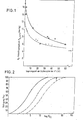
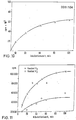
- FIG. 1 is a graphical representation showing the increase in the O 2 affinity of hemoglobin in the erythrocytes with the storage time at 4 ° C. light.
- the O 2 half-saturation pressure (P O 2 (1 ⁇ 2) was measured at 25 ° C in the absence of CO 2 .
- Fig. 2 illustrates the "left shift" of the O 2 binding curves of hemoglobin in erythrocytes as a function of the storage time at 4 ° C.
- RBC was in isotonic 0.10-molar bis-tris buffer of pH 7.4, the 0.154 mol / 1 NacL contains, stored at 4 ° C.
- the binding isotherms were measured at 25 ° C in the absence of CO 2 .
- the arrow indicates the discharge of the hemoglobin under the O 2 partial pressure of 30 torr.
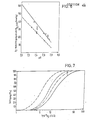
- FIG. 3 illustrates the pH dependence of the O 2 binding curves at 25 ° C. in the absence of CO 2 .
- RBC was stored for 17 days at 4 ° C in isotonic 0.10 molar bis-tris pH 7.4 buffer containing 0.154 mol / l NaCl: -----, pH 7.72; pH 7.42; -.-.-.-: pH 7.08,
- the arrow indicates the reduced saturation of the hemoglobin under a 0 2 partial pressure of 30 Torr.
- Figure 4 illustrates the Bohr effect of hemoglobin in erythrocytes at 25 ° C in the absence of CO 2 .
- RBC was stored for 17 days at 4 ° C in isotonic 0.10 molar bis-tris pH 7.4 buffer containing 0.154 mol / 1 NaCl.
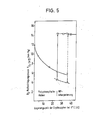
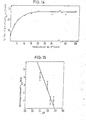
- Figure 5 illustrates the irreversible incorporation of IHP into red blood cells.
- the O 2 semisaturation pressure of the erythrocytes was measured at 25 ° C in the absence of CO 2 measured before and after the incorporation of IHP mediated with V2 at pH 7.6.
- the RBC was stored at 4 ° C. in isotonic 0.10 molar bis-Tris buffer of pH 7.4, which contains 0.154 mol / 1 NaCl. : RBC polyphosphate depletion curve; : Loading with IHP at pH 7.6 and storage of the RBC loaded with IHP at 4 ° C; ⁇ : Loading with IHP at pH 7.6 and storage of the RBC loaded with IHP at 37 ° C.
- the incorporation of IHP was carried out under standard conditions.
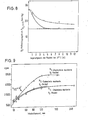
- Fig. 6 illustrates the drilling effect of the IHP-loaded erythrocytes at 25 ° C in the absence of CO 2 .
- the RBC was stored at 4 ° C in isotonic pH 7.4, 0.10 molar bis-Tris buffer containing 0.154 mol / l NaCl. IHP was loaded under standard conditions.
- Fig. 7 illustrates the influence of the composition.
- the IHP was loaded at pH 7.6 under standard conditions.
- the cells were in isotonic buffer of pH 7 , 6. Suspended. -.-.-.-.-. RBC was stored for 19 days in isotonic 0.10 molar bis-Tris buffer of pH 7.4 containing 0.154 mol / l NaCl; ---- -: RBC after loading with IHP mediated by V1; -..-..-: fresh RBC; -: RBC after loading with IHP mediated with V2.
- the arrow indicates the reduced saturation of the hemoglobin under the O 2 partial pressure from 30 torr.
- V 2 vesicle V 3 vesicle.
- Vesicle-mediated uptake of IHP by RBC was carried out at pH 7.4 under standard conditions.
- a young healthy volunteer was drawn 100 ml of blood, which was collected in a 250 ml bio-flask (Biotest Serum Institute, Frankfurt am Main) containing 50 ml ACD as a stabilizer. This sample was stored at 4 ° C.
- the red cells kept in isotonic 0.1 molar buffer of pH 7.4 or in ACD were centrifuged at 8000xg for 2 min at room temperature (Eppendorf centrifuge, type 3200, 12000 rpm).
- the erythrocyte suspension was replaced by repeatedly changing the buffer medium ; desired pH value.
- the cells were suspended in the desired buffer and centrifuged again. This measure must be repeated until a constant pH value is reached.
- IHR was dissolved in isotonic bis-Tris buffer (0.10 M bis-Tris, 0.154 M NaCl) from pH 7.4 to saturation (0.19 M) between room temperature and 50 ° C.
- a lipid mixture consisting of phosphatidylcholine (PC), phosphatidylserine (PS) and cholesterol (Ch) in a molar ratio of 8: 2: 7 (see Table 1) was suspended in this solution and sonicated at about 50 ° C. for 45 minutes under nitrogen.
- the temperature range for the production of the vesicles is only limited by the freezing point of the buffer and the thermal stability of the polyphosphate.
- the sonication was performed with an ultrasonic disintegrator (Schöller, type 125, Frankfurt a.Main) with a titanium. Immersion probe (10 kHz) made.
- the sonication can be effective with energies preferably above 100 W / cm 2 .
- the vesicle suspension was centrifuged for 1 hour at 100,000 ⁇ g at 25 ° C. in an ultracentrifuge (ßeckmann, type L5-65, rotor 60).
- the supernatant contained the small lipid vesicles with a diameter of ⁇ 500 ⁇ . When the vesicles are formed, they include the solution in which the lipids are suspended.
- Phosphatidylserine was made from bovine brain (Koch-Light, England) and phosphatidylcholine from egg yolk (Lipid Specialties, Boston, USA). Cholesterol and the sodium salt of inositol hexaphosphate were obtained from Merck (Darmstadt) and Sigma (Munich). All lipids were purified by column chromatography. Their purity was checked by thin layer chromatography.
- 1n mol / 1 lipid results in 2 x 10 11 lipid vesicles, which are provided with double-layer lipid membranes (small vesicles with a diameter of 500 ⁇ and less). 2 x 10 11 lipid vesicles were incubated with 10 erythrocytes, but other ratios mentioned below were used.
- erythrocyte suspension was centrifuged at 8000 xg (Eppendorf centrifuge, type 3200, 12000 rpm) at room temperature for 2 minutes. If necessary, the sedimented ones. Wash cells in the manner described above and adjust to the desired pH and then again in 200 ⁇ l isotonic 0.1 molar buffer of the desired suspended pH. An equal volume of the lipid vesicle suspension of the desired pH was added to the suspension. The erythrocytes were incubated for 1 hour at 37 ° C. The erythrocytes were then washed several times with 0.1 molar isotonic buffer until a constant pH was reached.
- the O 2 binding curves were determined at 25 ° C. using the rapid diffusion method (H.Sick and K.Gersonde, Analyt. Biochem. 32 (1969) 362-376 and H.Sick and K.Gersonde, 47 (1972) 46- 56) added.
- the incubation of erythrocytes with vesicles with different lipid compositions (V1 and V3) also has no influence on the O 2 binding parameters of the hemoglobin within the erythrocytes.
- IHP the strongest allosteric effector of hemoglobin known to date, reduces the affinity of hemoglobin for oxygen, recognizable by a "right shift" of the O 2 binding curve.
- Human erythrocytes that are unable to synthesize IHP can use this polyphosphate during fusion with lipid vesicles. containing the effector are loaded.
- Such allosteric effectors are e.g. Sugar phosphates such as inositol pentaphosphate, inosite tetraphosphate, inositol triphosphate, inositol diphosphate and diphosphatidylinositol diphosphate.
- Sugar phosphates such as inositol pentaphosphate, inosite tetraphosphate, inositol triphosphate, inositol diphosphate and diphosphatidylinositol diphosphate.
- polyphosphates such as nucleotide triphosphates, nucleotide diphosphates, nucleotide monophosphates and alcohol phosphate esters can be mentioned.
- Inorganic anions such as hexacyanoferrate, phosphate and chloride can also be used.
- organic anions such as polycarboxylic acids can also be used as allosteric effectors.
- organic anions such as polycarboxylic acids
- Zürich-liämoglobin and maleic acid as an example of a polycarboxylic acid may be mentioned.
- erythrocytes loaded with IHP do not appear to hydrolyze the IHP for at least 9 days, recognizable by a constant P O 2 (1/2) Value (see Fig. 5). With the erythrocytes treated in this way, considerably longer preservation times can be achieved.
- red blood cells loaded with IHP show a stronger drilling effect than the untreated cells (see Fig. 6).
- the "right shift" of the O 2 binding curve is a measure of the IHP level recorded by human hrythrocytes.
- the O 2 -saturation pressure measured under standard conditions is therefore an expression of the efficiency of the installation of IHP. This efficiency of IHP uptake largely depends on the lipid composition of the vesicles.
- FIG. 7 shows the "right shift" of the O 2 binding curve for the V1 and V2 vesicles after incubation at pH 7.6.
- the V2 vesicles show the strongest "right shift” with a discharge of 14% at 30 Torr.
- 19-day-old erythrocytes show no discharge at this O 2 pressure, while fresh red blood cells discharge up to 5%.
- IHP's incorporation of V2 vesicles improves the oxygen release of normal red blood cells at 30 mm Hg by a factor of about 3 V2 and V3 vesicles effect the same IHP uptake by erythrocytes and therefore equal "right shifts" in the O 2 binding curves.
- V1, V2 and V3 vesicles which have taken up IHP do not differ in terms of their half-life of the uptake; ⁇ 1/2 is 30 minutes.
- the V1 and V3 vesicles show less than half of the IHP effect, measured for dialyzed, IHP-loaded V2 vesicles.
- the difference in stability between V2 and V3 vesicles is illustrated in FIG.
- the half-life of stability is approximately 3 days for the V2 vesicles and approximately 1.5 days for the V3 vesicles.
- Fig. 9 shows the data for vesicles V1, V2 and V3 with intact erythrocytes.
- the incubation mediom contained 10 ml RBC (red blood cells) and 10 ml IHP-loaded vesicles in isotonic 0.1 molar bis-Tris buffer of pH 7.4. Aliquots were taken after 10, 20, 40, 60, 90, 120, 180 and 240 minutes and counted. The half-life of incorporation is 45 minutes for the V2 vesicles (which also show the highest radioactivity in the RBC) and 35 minutes for the V1 and V3 vesicles.
- the radioactivity found in the RBC is not the ingestion of vesicles necessarily means that it is well known (B.Bloj and D.Zilversmit, Biochemistry 16 (1977) 3943-3948) that cholesterol is exchanged between vesicles and erythrocytes.
- a ⁇ 1/2 value of 30 minutes was found in the R BC lipid extracts (see FIG. 10) when using V2 vesicles.
- V2 and V3 vesicles are incorporated into Hela cells, the same picture emerges (see Fig. 11). The incubation of the Hela cells with the Ve. Sikel was carried out under the conditions described above.
- Thin layer chromatograms of the lipid extract of the erythrocytes showed the accumulation of the RBC membrane lipids; with the lipids of the vesicles.
- the uptake of IHP by washed erythrocytes depends on the pH of the incubation medium.
- the graphical representation of p O 2 (1/2) by IHP-laden Erythrocytes as a function of the pH of the incubation medium show a clear pH optimum for IHP uptake in the range from pH 7.4 to 7.5.
- the decrease in P O 2 (1/2) above pH 7.5 corresponds to the curve of the drilling and effect shown in FIG. 6 and is interrelated to the reduction in the affinity of IHP to hemoglobin.
- Below pH 7.4, the drastic drop in P O 2 (1/2) recognize a limited IHP recording, so that the theoretically expected p O 2 (1/2) is not observed for fully converted hemoglobin by bound IHP.
- the kinetics of incorporation of IHP is greatly affected by the presence of free IHP in the external medium.
- the removal of free IHP by dialysis or gel filtration of the vesicle suspension leads to an extension of the half-life of the IHP intake to 30 minutes at pH 7.4 (see Fig. 16).
- adenosine triphosphate The erythrocyte content of adenosine triphosphate (ATP) is of great interest from the standpoint of the preservation of red blood cells and the maintenance of the proper function.
- the ATP concentration was measured in red blood cells into which empty V2 vesicles and IHP-loaded V2 vesicles had been inserted under the conditions described. All measurements were carried out in isotonic 0.1 molar bis-Tris buffer of pH 7.4. The ATP concentration was measured with the luciferin-luciferase system:
- the reaction is so effective that a proton is formed for each ATP molecule used.
- the incorporation of the empty vesicles or the IHP-loaded vesicles has no significant influence on the ATP concentration in the erythrocytes.
- Erythrocytes 0.92 ⁇ 10% Erythrozyten -V2 0.84 Erythrozyten-V2-IHP 0.93 These values apply to RBCs with an age of 1 week. The absence of a change in the ATP concentration in the RBC after the uptake of IHP indicates unchanged cell viability, functionality and plasticity of the RBC. 0 2 pricing by fusion of IHP-loaded vesicles with erythrocytes
- the "right shift" of the O 2 binding curves after the IHP has been recorded is shown in FIG. 17.
- the O 2 -saturation pressure rises from 7 to 28 Torr.
- the normal but aged erythrocytes at 25 ° C. are up to 95% loaded with O 2 under a 0 2 partial pressure of 30 Torr, while the IHP-loaded erythrocytes are only 53% loaded with O 2 under the same conditions contain loaded hemoglobin.
- Approximately 60% of the hemoglobin in the erythrocytes has bound IHP after the fusion of the IHP-loaded vesicles with the erythrocytes.
- an O 2 -tial saturation pressure of 60 torr is calculated for IHP-loaded erythrocytes at pH 7.4.
- a critical 0 2 partial pressure of 30 Torr in the brain 80% of the hemoglobin from vesicle-treated erythrocytes would release the bound oxygen during normal, untreated erythrocytes would only give off 20 to 25% of the oxygen under these conditions.
- the effective affinity of the erythrocytes can be varied between these two limits either by changing the IHP concentration in the lipid vesicles or the ratio of treated to untreated erythrocytes in the blood.
Landscapes
- Health & Medical Sciences (AREA)
- Life Sciences & Earth Sciences (AREA)
- Chemical & Material Sciences (AREA)
- Pharmacology & Pharmacy (AREA)
- Veterinary Medicine (AREA)
- Engineering & Computer Science (AREA)
- Medicinal Chemistry (AREA)
- Public Health (AREA)
- Animal Behavior & Ethology (AREA)
- General Health & Medical Sciences (AREA)
- Bioinformatics & Cheminformatics (AREA)
- Epidemiology (AREA)
- Hematology (AREA)
- Cell Biology (AREA)
- Virology (AREA)
- Zoology (AREA)
- Botany (AREA)
- Chemical Kinetics & Catalysis (AREA)
- Dispersion Chemistry (AREA)
- Biophysics (AREA)
- Biomedical Technology (AREA)
- Biotechnology (AREA)
- Developmental Biology & Embryology (AREA)
- Immunology (AREA)
- Diabetes (AREA)
- Molecular Biology (AREA)
- General Chemical & Material Sciences (AREA)
- Nuclear Medicine, Radiotherapy & Molecular Imaging (AREA)
- Organic Chemistry (AREA)
- Medicinal Preparation (AREA)
- Medicines Containing Material From Animals Or Micro-Organisms (AREA)
- Medicines That Contain Protein Lipid Enzymes And Other Medicines (AREA)
- Pharmaceuticals Containing Other Organic And Inorganic Compounds (AREA)
Applications Claiming Priority (4)
| Application Number | Priority Date | Filing Date | Title |
|---|---|---|---|
| DE19772740053 DE2740053A1 (de) | 1977-09-06 | 1977-09-06 | Verwendung von allosterischen effektoren mit hilfe von lipidvesikeln ueber eine irreversible inkorporierung zwecks verbesserter o tief 2 -entladung des haemoglobins in erythrozyten |
| DE2740053 | 1977-09-06 | ||
| DE2820603 | 1978-05-11 | ||
| DE19782820603 DE2820603A1 (de) | 1978-05-11 | 1978-05-11 | Modifizierte intakte erythrozyten und sie enthaltendes blut bzw. blutkonserven |
Publications (3)
| Publication Number | Publication Date |
|---|---|
| EP0001104A2 true EP0001104A2 (fr) | 1979-03-21 |
| EP0001104A3 EP0001104A3 (en) | 1979-04-04 |
| EP0001104B1 EP0001104B1 (fr) | 1981-05-20 |
Family
ID=25772674
Family Applications (1)
| Application Number | Title | Priority Date | Filing Date |
|---|---|---|---|
| EP78100816A Expired EP0001104B1 (fr) | 1977-09-06 | 1978-09-04 | Erythrocytes intacts modifiés, sang ou conserves de sang les contenant et procédé pour leur préparation |
Country Status (12)
| Country | Link |
|---|---|
| EP (1) | EP0001104B1 (fr) |
| JP (1) | JPS6022683B2 (fr) |
| AT (1) | AT364086B (fr) |
| AU (1) | AU524587B2 (fr) |
| CA (1) | CA1130724A (fr) |
| DE (1) | DE2860719D1 (fr) |
| DK (1) | DK393878A (fr) |
| ES (1) | ES473087A1 (fr) |
| IE (1) | IE47329B1 (fr) |
| IN (1) | IN149223B (fr) |
| IT (1) | IT1111675B (fr) |
| YU (1) | YU208078A (fr) |
Cited By (4)
| Publication number | Priority date | Publication date | Assignee | Title |
|---|---|---|---|---|
| EP0185404A1 (fr) * | 1984-11-09 | 1986-06-25 | Euro-Trol B.V. | Solution d'hémoglobine exempte de Stroma, son procédé de préparation et son utilisation |
| US4752586A (en) * | 1982-07-05 | 1988-06-21 | Centre National De La Recherche Scientifique | Apparatus for encapsulating biological active substances into erythrocytes |
| EP0352746A3 (fr) * | 1988-07-25 | 1991-07-31 | Rhone-Poulenc Rorer International (Holdings) Inc. | Composition pour augmenter la disponibilité d'oxygène ou pour soulager l'hypoxie chez les mammifères |
| WO1994013270A1 (fr) | 1992-12-08 | 1994-06-23 | Kappa Pharmaceuticals Limited | Procede d'augmentation de l'efficacite de principes actifs |
Families Citing this family (5)
| Publication number | Priority date | Publication date | Assignee | Title |
|---|---|---|---|---|
| DE3144705C2 (de) * | 1981-11-11 | 1983-12-08 | Biotest-Serum-Institut Gmbh, 6000 Frankfurt | Verfahren zur Herstellung eines lagerstabilen, vernetzten Hämoglobinpräparates mit hoher Sauerstoff-Transportkapazität, sowie das nach diesem Verfahren hergestellte Hämoglobinpräparat |
| JPS6461426A (en) * | 1987-08-31 | 1989-03-08 | Terumo Corp | Artificial erythrocyte |
| JPH01305033A (ja) * | 1988-06-01 | 1989-12-08 | Sanwa Kagaku Kenkyusho Co Ltd | 循環改善剤及び循環改善機能性食品並びにし好品 |
| JPH01305032A (ja) * | 1988-06-01 | 1989-12-08 | Sanwa Kagaku Kenkyusho Co Ltd | 機能後退性消耗疾患治療予防剤及び飲食、し好物 |
| CA2821167C (fr) * | 2004-05-03 | 2016-06-28 | Merrimack Pharmaceuticals, Inc. | Liposomes pour l'administration de drogues contenant des polyols anioniques ou des sucres anioniques |
Family Cites Families (1)
| Publication number | Priority date | Publication date | Assignee | Title |
|---|---|---|---|---|
| DE2249552A1 (de) * | 1971-10-12 | 1973-05-30 | Inchema S A | Verfahren zur inkapsulation von insbesondere wasserloeslichen verbindungen |
-
1978
- 1978-05-09 ES ES473087A patent/ES473087A1/es not_active Expired
- 1978-08-30 IN IN641/DEL/78A patent/IN149223B/en unknown
- 1978-09-04 YU YU02080/78A patent/YU208078A/xx unknown
- 1978-09-04 EP EP78100816A patent/EP0001104B1/fr not_active Expired
- 1978-09-04 DE DE7878100816T patent/DE2860719D1/de not_active Expired
- 1978-09-05 AT AT0642478A patent/AT364086B/de not_active IP Right Cessation
- 1978-09-05 AU AU39551/78A patent/AU524587B2/en not_active Expired
- 1978-09-05 CA CA310,662A patent/CA1130724A/fr not_active Expired
- 1978-09-05 JP JP53109520A patent/JPS6022683B2/ja not_active Expired
- 1978-09-06 IT IT27388/78A patent/IT1111675B/it active
- 1978-09-06 IE IE1800/78A patent/IE47329B1/en unknown
- 1978-09-06 DK DK393878A patent/DK393878A/da not_active Application Discontinuation
Cited By (4)
| Publication number | Priority date | Publication date | Assignee | Title |
|---|---|---|---|---|
| US4752586A (en) * | 1982-07-05 | 1988-06-21 | Centre National De La Recherche Scientifique | Apparatus for encapsulating biological active substances into erythrocytes |
| EP0185404A1 (fr) * | 1984-11-09 | 1986-06-25 | Euro-Trol B.V. | Solution d'hémoglobine exempte de Stroma, son procédé de préparation et son utilisation |
| EP0352746A3 (fr) * | 1988-07-25 | 1991-07-31 | Rhone-Poulenc Rorer International (Holdings) Inc. | Composition pour augmenter la disponibilité d'oxygène ou pour soulager l'hypoxie chez les mammifères |
| WO1994013270A1 (fr) | 1992-12-08 | 1994-06-23 | Kappa Pharmaceuticals Limited | Procede d'augmentation de l'efficacite de principes actifs |
Also Published As
| Publication number | Publication date |
|---|---|
| IT1111675B (it) | 1986-01-13 |
| JPS6022683B2 (ja) | 1985-06-03 |
| CA1130724A (fr) | 1982-08-31 |
| AU524587B2 (en) | 1982-09-23 |
| JPS5449314A (en) | 1979-04-18 |
| IE47329B1 (en) | 1984-02-22 |
| ATA642478A (de) | 1981-02-15 |
| ES473087A1 (es) | 1979-04-16 |
| DE2860719D1 (en) | 1981-08-27 |
| AT364086B (de) | 1981-09-25 |
| IT7827388A0 (it) | 1978-09-06 |
| EP0001104A3 (en) | 1979-04-04 |
| IN149223B (fr) | 1981-10-10 |
| AU3955178A (en) | 1980-03-13 |
| IE781800L (en) | 1979-03-06 |
| DK393878A (da) | 1979-03-07 |
| EP0001104B1 (fr) | 1981-05-20 |
| YU208078A (en) | 1984-02-29 |
Similar Documents
| Publication | Publication Date | Title |
|---|---|---|
| DE69230381T2 (de) | Rekonstituierte thrombozytenmembranvesikel | |
| DE2740053A1 (de) | Verwendung von allosterischen effektoren mit hilfe von lipidvesikeln ueber eine irreversible inkorporierung zwecks verbesserter o tief 2 -entladung des haemoglobins in erythrozyten | |
| DE3886006T2 (de) | Synthetisches, plasmafreies, übertragbares Konservierungsmittel für rote Blutkörperchen. | |
| DE69433933T2 (de) | Verfahren und vorrichtung zur einkapselung biologisch aktiver substanzen in zellen | |
| EP0100419B1 (fr) | Solution aqueuse pour la mise en suspension et le stockage de cellules, en particulier d'érythrocytes | |
| DE3130770C2 (de) | Verfahren zur Gewinnung von hepatitissicheren, sterilen, pyrogenfreien und stromafreien Hämoglobinlösungen | |
| DE68921945T2 (de) | Verfahren zur Lyophilisierung von Zellen Lyophilisierungsmedien und Verfahren zur Wiederherstellung von lyophilisierten Zellen. | |
| EP0100910B1 (fr) | Agent surfactif pour les poumons | |
| EP0065292A2 (fr) | Procédé de stockage de vésicules phospholipidiques unilamellaires | |
| EP0826375B1 (fr) | Utilisation de lipides complexes comme additifs stabilisants de préparations pharmaceutiques de mélanges d'enzymes digestifs | |
| US4192869A (en) | Controlled improvement of the O2 release by intact erythrocytes with lipid vesicles | |
| CH644520A5 (de) | Verfahren zur herstellung eines die proliferation und differenzierung menschlicher granulopoetischer stammzellen stimulierenden faktors. | |
| DE2655801A1 (de) | Verfahren zur herstellung einer masse von in einer physiologischen loesung suspendierten beladenen zellen | |
| DE3326901A1 (de) | Kuenstliches blut auf der grundlage einer perfluorchemikalienemulsion | |
| DE68902526T2 (de) | Verwendung von inositoltriphosphat zur herstellung eines arzneimittels gegen stoerungen bei transplantationen. | |
| DE2248475C3 (de) | Verfahren zur Gewinnung von hepatitissicheren, lagerungsstabilen und infundierbaren Hämoglobinlösungen | |
| EP0001104B1 (fr) | Erythrocytes intacts modifiés, sang ou conserves de sang les contenant et procédé pour leur préparation | |
| DE69826453T2 (de) | Mit eisen angereicherte sauermilchprodukte und verfahren zu ihrer herstellung | |
| DE3612137A1 (de) | Steriles plasmaaustauschmittel | |
| DE69420876T2 (de) | Liposom mit eingekapseltem Hämoglobin sowie Verfahren zu dessen Herstellung | |
| DE3643182A1 (de) | Arzneimittel enthaltend das gewebeprotein pp4, verfahren zur herstellung von pp4 und zu seiner pasteurisierung sowie die verwendung von pp4 | |
| EP0145005B1 (fr) | Tensio-actif pulmonaire, procédé de préparation et utilisation pharmaceutique | |
| DE69519332T2 (de) | Liposomen mit eingekapseltem Hämoglobin | |
| DE3925680C2 (fr) | ||
| EP0406732B1 (fr) | Suspension tensioactive de haute concentration et de faible viscosité |
Legal Events
| Date | Code | Title | Description |
|---|---|---|---|
| PUAI | Public reference made under article 153(3) epc to a published international application that has entered the european phase |
Free format text: ORIGINAL CODE: 0009012 |
|
| PUAL | Search report despatched |
Free format text: ORIGINAL CODE: 0009013 |
|
| AK | Designated contracting states |
Designated state(s): BE CH DE FR GB LU NL SE |
|
| AK | Designated contracting states |
Designated state(s): BE CH DE FR GB LU NL SE |
|
| 17P | Request for examination filed | ||
| GRAA | (expected) grant |
Free format text: ORIGINAL CODE: 0009210 |
|
| AK | Designated contracting states |
Designated state(s): BE CH DE FR GB LU NL SE |
|
| REF | Corresponds to: |
Ref document number: 2860719 Country of ref document: DE Date of ref document: 19810827 |
|
| PG25 | Lapsed in a contracting state [announced via postgrant information from national office to epo] |
Ref country code: LU Free format text: LAPSE BECAUSE OF NON-PAYMENT OF DUE FEES Effective date: 19810930 |
|
| PGFP | Annual fee paid to national office [announced via postgrant information from national office to epo] |
Ref country code: LU Payment date: 19830804 Year of fee payment: 6 |
|
| PGFP | Annual fee paid to national office [announced via postgrant information from national office to epo] |
Ref country code: DE Payment date: 19830906 Year of fee payment: 6 |
|
| PGFP | Annual fee paid to national office [announced via postgrant information from national office to epo] |
Ref country code: FR Payment date: 19840824 Year of fee payment: 7 |
|
| PGFP | Annual fee paid to national office [announced via postgrant information from national office to epo] |
Ref country code: CH Payment date: 19840919 Year of fee payment: 7 |
|
| PGFP | Annual fee paid to national office [announced via postgrant information from national office to epo] |
Ref country code: SE Payment date: 19840930 Year of fee payment: 7 Ref country code: NL Payment date: 19840930 Year of fee payment: 7 Ref country code: BE Payment date: 19840930 Year of fee payment: 7 |
|
| PG25 | Lapsed in a contracting state [announced via postgrant information from national office to epo] |
Ref country code: SE Effective date: 19850905 |
|
| PG25 | Lapsed in a contracting state [announced via postgrant information from national office to epo] |
Ref country code: BE Effective date: 19850930 |
|
| BERE | Be: lapsed |
Owner name: GERSONDE KLAUS Effective date: 19850904 Owner name: STUDIEN G- KOHLE M.B.H. Effective date: 19850904 |
|
| PG25 | Lapsed in a contracting state [announced via postgrant information from national office to epo] |
Ref country code: NL Effective date: 19860401 |
|
| NLV4 | Nl: lapsed or anulled due to non-payment of the annual fee | ||
| PG25 | Lapsed in a contracting state [announced via postgrant information from national office to epo] |
Ref country code: GB Effective date: 19880904 |
|
| PG25 | Lapsed in a contracting state [announced via postgrant information from national office to epo] |
Ref country code: CH Effective date: 19880930 |
|
| PG25 | Lapsed in a contracting state [announced via postgrant information from national office to epo] |
Ref country code: FR Free format text: LAPSE BECAUSE OF NON-PAYMENT OF DUE FEES Effective date: 19890531 |
|
| REG | Reference to a national code |
Ref country code: CH Ref legal event code: PL |
|
| GBPC | Gb: european patent ceased through non-payment of renewal fee | ||
| PG25 | Lapsed in a contracting state [announced via postgrant information from national office to epo] |
Ref country code: DE Effective date: 19890601 |
|
| REG | Reference to a national code |
Ref country code: FR Ref legal event code: ST |
|
| EUG | Se: european patent has lapsed |
Ref document number: 78100816.4 Effective date: 19860729 |
|
| PLBE | No opposition filed within time limit |
Free format text: ORIGINAL CODE: 0009261 |
|
| STAA | Information on the status of an ep patent application or granted ep patent |
Free format text: STATUS: NO OPPOSITION FILED WITHIN TIME LIMIT |