EP0022005A1 - Verfahren zum Trennen einer eiweissartigen Substanz mittels Affinitätsfiltrierung einer diese Substanz enthaltenden Lösung und Verwendung dieses Verfahrens für enzymatische Bestimmungen - Google Patents
Verfahren zum Trennen einer eiweissartigen Substanz mittels Affinitätsfiltrierung einer diese Substanz enthaltenden Lösung und Verwendung dieses Verfahrens für enzymatische Bestimmungen Download PDFInfo
- Publication number
- EP0022005A1 EP0022005A1 EP80400913A EP80400913A EP0022005A1 EP 0022005 A1 EP0022005 A1 EP 0022005A1 EP 80400913 A EP80400913 A EP 80400913A EP 80400913 A EP80400913 A EP 80400913A EP 0022005 A1 EP0022005 A1 EP 0022005A1
- Authority
- EP
- European Patent Office
- Prior art keywords
- enzyme
- gel
- substance
- ligand
- antigen
- Prior art date
- Legal status (The legal status is an assumption and is not a legal conclusion. Google has not performed a legal analysis and makes no representation as to the accuracy of the status listed.)
- Granted
Links
Images


Classifications
-
- G—PHYSICS
- G01—MEASURING; TESTING
- G01N—INVESTIGATING OR ANALYSING MATERIALS BY DETERMINING THEIR CHEMICAL OR PHYSICAL PROPERTIES
- G01N33/00—Investigating or analysing materials by specific methods not covered by groups G01N1/00 - G01N31/00
- G01N33/48—Biological material, e.g. blood, urine; Haemocytometers
- G01N33/50—Chemical analysis of biological material, e.g. blood, urine; Testing involving biospecific ligand binding methods; Immunological testing
- G01N33/53—Immunoassay; Biospecific binding assay; Materials therefor
- G01N33/536—Immunoassay; Biospecific binding assay; Materials therefor with immune complex formed in liquid phase
- G01N33/537—Immunoassay; Biospecific binding assay; Materials therefor with immune complex formed in liquid phase with separation of immune complex from unbound antigen or antibody
- G01N33/538—Immunoassay; Biospecific binding assay; Materials therefor with immune complex formed in liquid phase with separation of immune complex from unbound antigen or antibody by sorbent column, particles or resin strip, i.e. sorbent materials
-
- G—PHYSICS
- G01—MEASURING; TESTING
- G01N—INVESTIGATING OR ANALYSING MATERIALS BY DETERMINING THEIR CHEMICAL OR PHYSICAL PROPERTIES
- G01N33/00—Investigating or analysing materials by specific methods not covered by groups G01N1/00 - G01N31/00
- G01N33/48—Biological material, e.g. blood, urine; Haemocytometers
- G01N33/50—Chemical analysis of biological material, e.g. blood, urine; Testing involving biospecific ligand binding methods; Immunological testing
- G01N33/74—Chemical analysis of biological material, e.g. blood, urine; Testing involving biospecific ligand binding methods; Immunological testing involving hormones or other non-cytokine intercellular protein regulatory factors such as growth factors, including receptors to hormones and growth factors
-
- Y—GENERAL TAGGING OF NEW TECHNOLOGICAL DEVELOPMENTS; GENERAL TAGGING OF CROSS-SECTIONAL TECHNOLOGIES SPANNING OVER SEVERAL SECTIONS OF THE IPC; TECHNICAL SUBJECTS COVERED BY FORMER USPC CROSS-REFERENCE ART COLLECTIONS [XRACs] AND DIGESTS
- Y10—TECHNICAL SUBJECTS COVERED BY FORMER USPC
- Y10S—TECHNICAL SUBJECTS COVERED BY FORMER USPC CROSS-REFERENCE ART COLLECTIONS [XRACs] AND DIGESTS
- Y10S435/00—Chemistry: molecular biology and microbiology
- Y10S435/962—Prevention or removal of interfering materials or reactants or other treatment to enhance results, e.g. determining or preventing nonspecific binding
Definitions
- the present invention relates to the selective separation of protein substances from a solution containing them by affinity filtration; it also relates to the application of said method to enzymatic assays involving a binding agent and a substance marked by an enzyme, such as immunoenzymatic assays.
- the present invention relates to the selective separation of a given protein substance from other substances of high molecular weight, greater than that of said given protein substance, said substances being in solution, for example in a biological liquid.
- Another method for separating protein substances is gel chromatography. This process often requires the use of columns of gels of considerable length and relatively long elution times, which prevents obtaining a rapid separation often necessary in the biological field, for example in immunoassays. .
- Affinity chromatography often used for the purification of enzymes or the preparation of antigen-enzyme conjugates (Exley D. and Abukneska, 1977, FEBS letters 79 p. 301-304 and Lanner et al. (1977) Proceedings of en International Symposium, Vienna) does not however allow to separate two substances having the same affinity for the gel, but whose molecular weights are different.
- the method of the invention therefore makes it possible to selectively separate at least one given protein substance, having an affinity for a ligand, from substances among which some have the same affinity for the ligand but a high molecular weight, higher than that of said substance. protéini q ue.
- substances with a high molecular weight, greater than that of said protein substance will be excluded, whether or not they have an affinity for the ligand.
- the other substances possibly present in the solution and likely to penetrate into the internal network of the gel due to their molecular weight will not be selectively retained by the latter, insofar as they have no affinity for the ligand.
- the recovery of the protein substance given after affinity filtration can be carried out by washing the gel, by elution according to suitable means known to those skilled in the art, for example with a change in pH or by competition with an excess of ligand in solution.
- the gel used in the process according to the present invention must be a crosslinked gel, so that it excludes substances of high molecular weight, greater than that of the substance protein that lbn wants to separate.
- the gel used in the process of the invention must have a pore size such that the gel can exclude substances of high molecular weight, greater than that of said proteinaceous substance considered.
- gels which are suitable for the purposes of the invention include polyacrylamide, agarose, polyacrylamide-agarose, dextran, polysaccharide gels, in particular gels known under the trade names ULTROGEL , SEPHADEX, BIORAD, SEPHAROSE etc.
- the gel used according to the method of the invention is coupled with a ligand for which the protein substance to be separated has an affinity.
- the gel-ligand coupling is carried out according to known methods, for example by activation of the gel using glutaraldehyde, cyanogen bromide, bis-epoxides and coupling with the ligand according to methods within the reach of the fall of art. To this end, reference may be made to Methods in Enzymology - vol. 34. pages 13 to 102.
- the amount of ligand coupled with the gel depends on the affinity of the protein substance considered for the ligand. It has been found that an amount of about 25 to 200 times, for example 50 times, the association constant of the protein substance for the ligand, is suitable for the purposes of the invention.
- protein substance denotes both the proteins themselves such as enzymes, antibodies, antigens and the like, as protein conjugates, such as for example the substances marked with an enzyme used in enzymatic assays.
- the method according to the present invention finds a particularly advantageous application in the field of enzymatic assays involving a binding agent and a substance marked with an enzyme.
- enzymatic assays By way of example of such enzymatic assays, mention will in particular be made of immunoenzymatic assays.
- the enzymatic assays such as the enzyme immunoassays
- An example of these means consists in the use of one of the assay reagents in an insolubilized form.
- a particular immunochemical compound which is suitable as an immunoadsorbent is described in patent application DE-OS 2,719,772.
- the methods requiring the use of an immunoadsorbent are said to be "heterogeneous". These methods involve on the one hand the preparation of such an immunoadsorbent, which can only be used once, and on the other hand a certain number of washes and centrifugations to separate the immunoadsorbent from the reaction medium. Indeed, it is preferable to determine the enzymatic activity of the fraction linked to the immunoadsorbent in order to have a more precise dosage. It is therefore difficult to automate these enzymatic assay methods.
- antibody (antigen) -enzyme conjugate will be used to designate the antibody or antigen labeled with an enzyme
- antibody (antigen) -free enzyme conjugate will be used to denote the antibody (antigen) -enzyme conjugate. have not reacted during the enzyme immunoassay.
- the separation method according to the present invention can be advantageously applied to enzymatic assay methods involving a binding agent and an enzyme-labeled substance for the separation of the unreacted enzyme-labeled substance from the complexes formed during dosage.
- the expression "complexes formed during the assay” denotes the reaction product (s) of at least one binding agent with an enzyme-labeled substance, which form during the enzymatic assay according to the type of assay chosen. , e.g. direct assay, competition assay, sandwich assay, double antibody assay etc.
- the separation process according to the invention avoids the use of immunoadsorbent and therefore the washing and centrifugation steps mentioned above.
- enzyme assays such as enzyme immunoassays, are performed more quickly and can, which is of considerable practical interest, be automated.
- the present invention therefore relates to a method of enzymatic assay, direct or by competition, of the reaction products of at least one binding agent with an enzyme-labeled substance, said binding agent having a visually with respect to said enzyme-labeled substance, consisting in reacting said binding agent to be assayed with said enzyme-marked substance when it is a dosage of rect, or said binding agent with said substance marked by an enzyme and said substance to be determined when it is a competition assay, characterized in that it consists in separating said substance marked by an enzyme having no unreacted said reaction product (s), by affinity filtration, of the solution obtained after reaction, on a gel coupled with a ligand for which the enzyme has an affinity, said gel having pores of a size sufficient to exclude the said product or products of the reaction of high molecular weight and greater than that of the substance labeled with an enzyme and to measure, in known manner, the enzymatic activity of the solution thus filtered.
- Polyfunctional or high molecular weight antigens may also be considered as binding agents; in this case, the antigen ligand will be the specific antibody.
- antigens include polypeptides, polysaccharides, polynucleotides and the like.
- the enzyme-labeled substance is any substance with affinity for the binding agent, that is to say which can be considered as the ligand for the binding agent.
- the binding agent constitutes either the assay reagent when it is a competition assay, or the substance to be assayed when it is a direct assay.
- the gel used in the enzymatic assay method according to the invention is as defined above and can be chosen from polyacrylamide, agarose, polyacrylamide-agarose, polysaccharide, dextran etc gels, provided that it has pores of sufficient size to exclude the said product or products from the reaction of high molecular weight and greater than that of the substance marked with an enzyme.
- the gel must be coupled with a ligand towards which the enzyme has an affinity.
- These ligands are chosen from enzyme inhibitors, co-enzymes and enzyme substrates. It will be easy for those skilled in the art to determine the ligand to be used as a function of the enzyme used and to choose the appropriate coupling mode as a function of the ligand and of the gel chosen. However, reference may usefully be made to the article "Methods in Enzymology" vol. 34, p. 13-102, in which the main coupling modes are described.
- the enzyme is a dehydrogenase with NAD (P) (that is to say an enzyme with pyridine nucleotide NAD or NADP), it will be possible to use as ligand NAD (nicc-tinanide -adenine-dinucleotide) of NADP (nicotinamide-adenine-dinucleotide-phosphate), AMP (adenosine monophosphoric acid) or ADP (adenosine diphosphoric acid), which are co-enzymes of dehydrogenases.
- NAD NAD
- NADP nicotinamide-adenine-dinucleotide-phosphate
- AMP adenosine monophosphoric acid
- ADP adenosine diphosphoric acid
- dehydrogenases which can be used in the process of the invention are dehydregenases of high specific activity, such as for example glutathione reductase, glucose 6 phosphate dehydrogenase, malate-dehydrogenase, alcohol dehydrogenase.
- estradiol derivative may be used as ligand, estradiol being an inhibitor of this enzyme, such as for example estradiol-coupled in 17 ⁇ to glutathione .
- the gel-ligand coupling can be carried out by activating the gel with cyanogen bromide, glutaraldehyde or any other coupling agent well known to those skilled in the art.
- the gel used according to the invention constitutes a suitable separation means for the enzymatic assays, which makes it possible, by simple affinity filtration, to retain only the substance marked with an unreacted enzyme and to obtaining a filtrate which contains the reaction product or products, the enzymatic activity of which is known in a known manner.
- the enzymatic assay methods according to the invention can therefore be easily automated, either on devices with continuous flow, or with centrifugal devices. This automation can be achieved thanks to the speed of bonding between the gel coupled with a ligand and the substance marked by an unreacted enzyme and the possibility of repeated use since it suffices to wash the gel to remove the substance marked by an enzyme linked by affinity to said gel.
- the enzymatic assay method according to the invention is particularly suitable for the assays of antigens and antibodies.
- the assay for an antigen can easily be carried out according to the invention, the substance marked with an enzyme being an antibody-enzyme conjugate, the antibody being specific for the antigen; biological fluid containing the antigen is obtained after incubation dosing with the antibody-enzyme conjugate a solution containing, on the one hand, the antibody-free enzyme conjugate and, on the other hand, the antigen / antibody-enzyme complex.
- the gel used according to the invention must be such that it excludes the antigen / antibody-enzyme complex and not the antibody-enzyme conjugate, and comprise a ligand for which the enzyme has an affinity; the antibody-free enzyme conjugate will then be the only one retained by the gel.
- the method of the invention can be applied to assays of antigens by competition. It is therefore necessary to use an antigen-enzyme conjugate as a substance marked with an enzyme and an antibody specific for the antigen to be assayed, this specific antibody constituting the binding agent. Incubation of the biological fluid containing the antigen to be assayed with the antigen-enzyme conjugate and the specific antibody leads to the formation of a solution containing the antigen-free enzyme conjugate, an antibody / antigen assay complex and an antibody complex. / antigen-enzyme.
- the gel used in this process for separating the antigen-free enzyme conjugate from the complexes must have a pore size such that it excludes the complexes which have a relatively high molecular weight compared to the antigen-free enzyme conjugate and so retains selective said conjugate thanks to the presence of a ligand for which the enzyme has an affinity.
- Labeling of the substance with an enzyme is carried out according to methods well known to those skilled in the art. For this purpose, reference may be made to the article "Methods in Enzymology" vol. 25 part B pages 623 to 651.
- the immunoenzymatic assay method according to the invention may advantageously be used for the assay of antigens consisting either of substances of peptide nature such as proteins, for example, alpha f oe toprotein, peptide hormones, for example the human placental lactogenic hormone HLP, or substances of a steroid nature, such as steroid hormones, for example progesterone.
- substances of peptide nature such as proteins, for example, alpha f oe toprotein, peptide hormones, for example the human placental lactogenic hormone HLP, or substances of a steroid nature, such as steroid hormones, for example progesterone.
- a preferred variant of the method of the invention consists of an immunoenzymatic assay method of antigens of peptide or steroidal nature contained in a biological fluid, consisting in incubating said antigens to be assayed with an antigen conjugate -A 5.3 keto -steroid isomerase and antibodies specific for said antigens, using as assay reagent the progesterone conjugate - ⁇ 5,3-keto-steroid isomerase or the placental lactogenic hormone conjugate - ⁇ 5,3-keto-steroid isomerase.
- the antigen - ⁇ 5,3-keto-steroid isomerase conjugate when the antigen is of peptide nature, is produced by coupling by disulfide bridge while causing the substance of peptide nature and 4 to react on the one hand -mer- methyl capto-butyrimidate, and on the other hand the ⁇ 5.3 ketosteroid isomerase and S-acetylmercaptosuccinic anhydride, and by coupling the respective reaction products, which leads to a conjugate in which one mole of enzyme is coupled to one mole of peptide substance and which retains at least 50% of its enzymatic activity after purification, the latter being carried out in a known manner by affinity chromatography.
- the antigen - ⁇ 5,3-keto-steroid isomerase conjugate is obtained by coupling via a thiol residue by reacting on the one hand the substance of steroid nature with bromoacetic acid of formula Br-CH 2 -COOH, in the presence of carbodimide, and on the other hand ⁇ 5,3-keto-steroid isomerase with S-acetyl-mercaptosuccinic anhydride and by coupling the respective reaction products .
- gels can be used which exclude substances having a molecular weight greater than 100,000.
- suitable gels include polyacrylamide-agarose gels known under the trade name "ULTROGEL” such as ULTROGEL AcA 34 and AcA 44, marketed by IBF (French Biological Industry).
- the method of the invention is also suitable for the direct determination of antigens, such as alphafoetoprotein.
- antibody-enzyme conjugates should be formed by suitable means, for example by coupling by disulfide bridges.
- suitable means for example by coupling by disulfide bridges.
- S-acetylmercaptosuccinic anhydride S-acetylmercaptosuccinic anhydride and couple the respective reaction products.
- an antibody to the binding agent can also be used to increase the molecular weight of this binding agent and thus allow a greater difference in molecular weight between the substance labeled with unreacted enzyme and reaction products formed during the assay.
- the invention will now be illustrated by examples of immunoenzymatic assays using oeuvre 5.3 keto-steroid isomerase as an enzyme for the assay by competition on the one hand of progesterone and on the other hand of human placental lactogenic hormone HLP, and for direct determination of alphafoetoprotein. It should however be noted that these examples are not limiting and that the immunoenzymatic assay method of the invention can be used for any assay requiring the separation of the protein substance / free enzyme conjugate from the complexes formed during the assay.
- the ⁇ 5.3 keto-steroid isomerase was thiolated with S-acetyl mercaptosuccinic anhydride, at pH 7, after dialysis and hydrolysis of the S-acetyl group by 0.1M hydroxylamine at pH 8; the enzyme was then dialyzed.
- the HLP derivative prepared above was then reacted with the thiolated enzyme, activated by dithio nitrobenzoate; after 16 hours of reaction, the excess HLP was removed by affinity chromatography.
- Anti-alphafoetoprotein (IgG) antibodies were reacted with S-acetylmere-captosuccinic anhydride using the procedure described previously for ⁇ 5,3-keto-steroid isomerase.
- the S-acetyl groups were hydrolyzed with 0.1 M hydroxylamine at pH 8.
- the IgGs thus enriched in thiol groups were incubated overnight with ⁇ 5,3-keto-steroid isomerase, thiolated according to the procedure described above and activated by dithio-nitrobenzoate. The excess IgG was removed by chromatography on Sepharose 4B-glutathione-estradiol.
- estradiol 17/3 bromoacetate was prepared by esterification of estradiol (300 mg) using bromoacetic acid (500 mg) in the presence of 700 mg of dicyclohexylcarbodiimide, the reaction medium consisting of 2 ml of dimethylformamide or tetrahydrofuran. After 16 hours of reaction, the products were separated on a silica gel column.
- estradiol -17 ⁇ bromoacetate dissolved in 1 ml of dimethylformamide were incubated with 300 mg of reduced glutathione in 5 ml of 0.1 M tris buffer, pH 8.5 containing 50% ethanol or 50% dimethylformamide. After 16 hours of reaction, 20 ml of water were added and the aqueous phase was extracted twice with 50 ml of ether. The aqueous phase was then deposited on a column of "Dowex" 1 x 2 (1.5 x 7 cm) equilibrated to pH 7.
- a polyacrylamide-agarose gel (ULTROGEL Ac34 or ULTROGEL Ac44) was used as gel and this gel was coupled by reacting 100 ml of gel with 30 mg of the estradiol derivative prepared above according to the following procedure: 100 ml of gel were activated with 10 g of cyanogen bromide at pH 11; after 5 minutes of reaction, the gel was washed with 1 liter of water and 200 ml of sodium bicarbonate buffer 0.1 pH 9. The gel was added to the glutathione estradiol derivative dissolved in 50 ml of sodium bicarbonate buffer 0.1 M pH 9 containing 50% ethanol. After 16 hours of reaction the gel was washed with this same buffer and then with 1 liter of water. The concentration of estradiol in the gel phase was determined after hydrolysis with hydroxylamine M at pH 9 and enzymatic assay of the released estradiol. The estradiol concentration of the gel was 7.5 10-5 M.
- the assay was carried out by competition using antibodies specific for progesterone or for HLP and anti- ⁇ -globulin antibodies, the latter making it possible to increase the molecular weight of the specific antibody.
- the competition reaction was carried out in polypropylene tubes.
- 100 ⁇ l of the antigen solution to be assayed were incubated with 100 ⁇ l of specific antibodies, 100 ⁇ l of anti- ⁇ globulin antibody, 100 ⁇ l of the antigen-enzyme solution (0.05IU). After 1 hour of reaction, 500 ml of buffer were added and the content of each tube was filtered through microcolumns of 100 ⁇ l of ULTROGEL oestradiol gel prepared according to the above procedure. The number of microcolumns was equal to the number of tubes required for the assays. Lake The enzymatic activity of the filtrate was determined by spectrophotometry at 248 nr. The gel was then regenerated by washing with water.
- This assay method gives results similar to other assay methods (radioimmunoassays or immunoenzymatic assays using an immunoadsorbent). These methods are faster, since they require only filtration, and the enzyme can be determined directly on aliquots of 200 ⁇ l.
- the amount of enzyme of 0.1 IU (international units) corresponds to 50 fentomoles of the antigen; in general, 30 to 40% of the antigen-enzyme conjugate is bound by specific antibodies in the absence of the free antigen (i.e., the antigen to be assayed).
- This enzymatic activity determined on aliquots of 200 ⁇ l, varies from 200 to 40 milliunits of adsorbance per minute.
- IgG - ⁇ 5,3-keto-steroid isomerase conjugate 3 IU prepared as above were incubated with increasing amounts of alpha fetoprotein (0.1 to 10 ng in 50 ⁇ l). After 2 hours of incubation at room temperature, these solutions were added with 500 ⁇ l of 0.1 M phosphate buffer, and filtered through 100 ⁇ l of gel (Ultrogel ACA-34-glutathione-estradiol). The excess isomerase-IgG conjugate was retained on the column (98%) while the high molecular weight alpha foeto protein-IgG-isomerase complex was excluded from the gel.
- the enzymatic activity of the filtrate was proportional to the amount of antigen present in; the incubation medium.
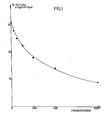
- the results obtained are shown in FIG. 3, on which the enzymatic activity (IU) of the filtrate has been plotted on the ordinate, and the amount of alphafoetoprotein (ng / ml) in the sample to be measured on the abscissa.
- the enzymatic activity measured is a function of the alpha-fetoprotein concentration in the sample to be assayed.
Landscapes
- Health & Medical Sciences (AREA)
- Life Sciences & Earth Sciences (AREA)
- Immunology (AREA)
- Engineering & Computer Science (AREA)
- Molecular Biology (AREA)
- Chemical & Material Sciences (AREA)
- Biomedical Technology (AREA)
- Urology & Nephrology (AREA)
- Hematology (AREA)
- Biotechnology (AREA)
- General Health & Medical Sciences (AREA)
- Cell Biology (AREA)
- Pathology (AREA)
- Food Science & Technology (AREA)
- Medicinal Chemistry (AREA)
- Physics & Mathematics (AREA)
- Analytical Chemistry (AREA)
- Biochemistry (AREA)
- Microbiology (AREA)
- General Physics & Mathematics (AREA)
- Endocrinology (AREA)
- Peptides Or Proteins (AREA)
- Measuring Or Testing Involving Enzymes Or Micro-Organisms (AREA)
- Preparation Of Compounds By Using Micro-Organisms (AREA)
- Treatment Of Liquids With Adsorbents In General (AREA)
- Medicines Containing Antibodies Or Antigens For Use As Internal Diagnostic Agents (AREA)
- Investigating Or Analysing Biological Materials (AREA)
Priority Applications (1)
| Application Number | Priority Date | Filing Date | Title |
|---|---|---|---|
| AT80400913T ATE12838T1 (de) | 1979-06-21 | 1980-06-19 | Verfahren zum trennen einer eiweissartigen substanz mittels affinitaetsfiltrierung einer diese substanz enthaltenden loesung und verwendung dieses verfahrens fuer enzymatische bestimmungen. |
Applications Claiming Priority (2)
| Application Number | Priority Date | Filing Date | Title |
|---|---|---|---|
| FR7915992A FR2459479B1 (fr) | 1979-06-21 | 1979-06-21 | Procede de separation d'une substance proteinique a partir d'une solution la contenant par filtration d'affinite et application dudit procede aux dosages enzymatiques |
| FR7915992 | 1979-06-21 |
Publications (2)
| Publication Number | Publication Date |
|---|---|
| EP0022005A1 true EP0022005A1 (de) | 1981-01-07 |
| EP0022005B1 EP0022005B1 (de) | 1985-04-17 |
Family
ID=9226940
Family Applications (1)
| Application Number | Title | Priority Date | Filing Date |
|---|---|---|---|
| EP80400913A Expired EP0022005B1 (de) | 1979-06-21 | 1980-06-19 | Verfahren zum Trennen einer eiweissartigen Substanz mittels Affinitätsfiltrierung einer diese Substanz enthaltenden Lösung und Verwendung dieses Verfahrens für enzymatische Bestimmungen |
Country Status (6)
| Country | Link |
|---|---|
| US (1) | US4350760A (de) |
| EP (1) | EP0022005B1 (de) |
| JP (1) | JPS5637009A (de) |
| AT (1) | ATE12838T1 (de) |
| DE (1) | DE3070502D1 (de) |
| FR (1) | FR2459479B1 (de) |
Cited By (5)
| Publication number | Priority date | Publication date | Assignee | Title |
|---|---|---|---|---|
| EP0073593A1 (de) * | 1981-09-01 | 1983-03-09 | E.I. Du Pont De Nemours And Company | Grössendiskriminierende heterogene Immunzusammensetzung |
| US4906734A (en) * | 1985-12-10 | 1990-03-06 | Novo Industri A/S | Human conglutinin |
| EP0411944A3 (en) * | 1989-08-04 | 1991-10-30 | Syntex (U.S.A.) Inc. | Heterogeneous binding assays |
| WO1995023972A1 (de) * | 1994-03-04 | 1995-09-08 | Dr. Karl Thomae Gmbh | Heterogener immunassay und dessen verwendung zur bestimmung von proteinen |
| NL1006680C2 (nl) * | 1997-03-04 | 1998-09-07 | Alexander Adrianus Moen | Werkwijze voor het detecteren van de aanwezigheid van een immunologisch reactief molecuul in een monster. |
Families Citing this family (15)
| Publication number | Priority date | Publication date | Assignee | Title |
|---|---|---|---|---|
| US4476093A (en) * | 1980-09-30 | 1984-10-09 | The Green Cross Corporation | Kit for preparing sample for use in endotoxin test |
| US4414336A (en) * | 1981-01-28 | 1983-11-08 | The Green Cross Corporation | Method for preparing sample for use in endotoxin test |
| US4485017A (en) * | 1982-12-22 | 1984-11-27 | Cetus Corporation | Isolation of human interferon by immunosorbent and high performance liquid chromatography |
| US4675113A (en) * | 1984-11-28 | 1987-06-23 | University Patents, Inc. | Affinity chromatography using dried calcium alginate-magnetite separation media in a magnetically stabilized fluidized bed |
| US4721572A (en) * | 1985-07-12 | 1988-01-26 | Miles Laboratories, Inc. | Purfication of blood clotting factors and other blood proteins on non-carbohydrate sulfated matrices |
| US4847194A (en) * | 1987-03-13 | 1989-07-11 | Becton, Dickinson And Company | Colorimetric detection of delta-5-3-ketosteroid isomerase and immunoassay based thereon |
| US5003054A (en) * | 1987-04-07 | 1991-03-26 | Abbott Laboratories | Ouabain triacetate derivative compounds |
| US4788136A (en) * | 1987-04-07 | 1988-11-29 | Abbott Laboratories | Diagnostic immunoassay by solid phase separation for digoxin |
| US4973554A (en) * | 1987-05-29 | 1990-11-27 | National Research Council Of Canada | Affinity process for trypsin purification and stabilization |
| IL93205A0 (en) * | 1989-01-30 | 1990-11-05 | Us Agriculture | Column for the separation of macromolecules |
| US5085779A (en) * | 1989-06-07 | 1992-02-04 | J. T. Baker, Inc. | Polyethyleneimine matrixes for affinity chromatography |
| US5092992A (en) * | 1989-06-07 | 1992-03-03 | J. T. Baker Inc. | Polyethyleneimine matrixes for affinity chromatography |
| US5252492A (en) * | 1991-03-12 | 1993-10-12 | University Of Utah Research Foundation | Fluorescence assay for ligand or receptor utilizing size exclusion |
| DE9216110U1 (de) * | 1992-11-26 | 1993-01-28 | Biolab GmbH, 80995 München | Progesteron-Schnelltest für Mensch und Haustiere |
| WO1994029722A1 (en) * | 1993-06-08 | 1994-12-22 | Chronomed, Inc. | Two-phase optical assay method and apparatus |
Citations (5)
| Publication number | Priority date | Publication date | Assignee | Title |
|---|---|---|---|---|
| US3502545A (en) * | 1968-09-27 | 1970-03-24 | Monsanto Co | Process for the separation of water-soluble polymeric materials from unbound protein or peptide using semiporous gel |
| FR2074027A5 (de) * | 1969-12-18 | 1971-10-01 | Exploaterings Ab Tbf | |
| FR2184054A1 (de) * | 1972-05-10 | 1973-12-21 | Ceskoslovenska Akademie Ved | |
| DE2719772A1 (de) * | 1976-05-03 | 1977-11-24 | Beckman Instruments Inc | Immunochemisches composit-material und dessen verwendung in einem immunoassay-verfahren |
| FR2379552A1 (fr) * | 1977-02-08 | 1978-09-01 | New Zealand Dev Finance | Matrice activee et methode d'activation pour chromatographie par affinite |
Family Cites Families (8)
| Publication number | Priority date | Publication date | Assignee | Title |
|---|---|---|---|---|
| NL171930C (nl) * | 1972-05-11 | 1983-06-01 | Akzo Nv | Werkwijze voor het aantonen en bepalen van haptenen, alsmede testverpakkingen. |
| DE2319495C2 (de) * | 1973-04-17 | 1985-01-10 | Yeda Research And Development Co., Ltd., Rehovot | Verfahren zum selektiven, reversiblen Binden von Biomolekülen an ein Adsorbens in einer chromatographischen Säule |
| US4138474A (en) * | 1973-05-01 | 1979-02-06 | Wisconsin Alumni Research Foundation | Method and device for immunoassay |
| DE2418978A1 (de) * | 1974-04-19 | 1975-10-30 | Boehringer Mannheim Gmbh | Steroid-delta-isomerase |
| US4125492A (en) * | 1974-05-31 | 1978-11-14 | Pedro Cuatrecasas | Affinity chromatography of vibrio cholerae enterotoxin-ganglioside polysaccharide and the biological effects of ganglioside-containing soluble polymers |
| US4235960A (en) * | 1977-07-29 | 1980-11-25 | The Medical College Of Wisconsin, Inc. | Competitive enzyme-linked immunoassay |
| DE2758507C3 (de) * | 1977-12-28 | 1981-05-27 | Byk-Mallinckrodt Chemische Produkte Gmbh, 6057 Dietzenbach | Stabilisierte biochemische Präparate, Verfahren zu ihrer Herstellung und ihre Verwendung |
| US4205130A (en) * | 1979-03-12 | 1980-05-27 | Pirkko Vihko | Method of purification of human prostatic acid phosphatase |
-
1979
- 1979-06-21 FR FR7915992A patent/FR2459479B1/fr not_active Expired
-
1980
- 1980-06-17 US US06/160,271 patent/US4350760A/en not_active Expired - Lifetime
- 1980-06-19 DE DE8080400913T patent/DE3070502D1/de not_active Expired
- 1980-06-19 AT AT80400913T patent/ATE12838T1/de not_active IP Right Cessation
- 1980-06-19 EP EP80400913A patent/EP0022005B1/de not_active Expired
- 1980-06-20 JP JP8300780A patent/JPS5637009A/ja active Pending
Patent Citations (5)
| Publication number | Priority date | Publication date | Assignee | Title |
|---|---|---|---|---|
| US3502545A (en) * | 1968-09-27 | 1970-03-24 | Monsanto Co | Process for the separation of water-soluble polymeric materials from unbound protein or peptide using semiporous gel |
| FR2074027A5 (de) * | 1969-12-18 | 1971-10-01 | Exploaterings Ab Tbf | |
| FR2184054A1 (de) * | 1972-05-10 | 1973-12-21 | Ceskoslovenska Akademie Ved | |
| DE2719772A1 (de) * | 1976-05-03 | 1977-11-24 | Beckman Instruments Inc | Immunochemisches composit-material und dessen verwendung in einem immunoassay-verfahren |
| FR2379552A1 (fr) * | 1977-02-08 | 1978-09-01 | New Zealand Dev Finance | Matrice activee et methode d'activation pour chromatographie par affinite |
Non-Patent Citations (1)
| Title |
|---|
| JOURNAL OF CHROMOTOGRAPHY, Vol. 171, 1 Avril 1979 Amsterdam NL A. CHAABOUNI et al.: "Affinity Partition of Proteins in aqueous two-phase systems containing polyoxyethylene glycol-bound ligand and charged dextrans", pages 135-143 * En entier * * |
Cited By (7)
| Publication number | Priority date | Publication date | Assignee | Title |
|---|---|---|---|---|
| EP0073593A1 (de) * | 1981-09-01 | 1983-03-09 | E.I. Du Pont De Nemours And Company | Grössendiskriminierende heterogene Immunzusammensetzung |
| US4906734A (en) * | 1985-12-10 | 1990-03-06 | Novo Industri A/S | Human conglutinin |
| US5132287A (en) * | 1985-12-10 | 1992-07-21 | Novo Industri A/S | Methods of treating disorders which cause conglutinin deficiency |
| EP0411944A3 (en) * | 1989-08-04 | 1991-10-30 | Syntex (U.S.A.) Inc. | Heterogeneous binding assays |
| WO1995023972A1 (de) * | 1994-03-04 | 1995-09-08 | Dr. Karl Thomae Gmbh | Heterogener immunassay und dessen verwendung zur bestimmung von proteinen |
| NL1006680C2 (nl) * | 1997-03-04 | 1998-09-07 | Alexander Adrianus Moen | Werkwijze voor het detecteren van de aanwezigheid van een immunologisch reactief molecuul in een monster. |
| WO1998039656A1 (en) * | 1997-03-04 | 1998-09-11 | Alexander Adrianus Moen | Method for detecting the presence of an immunologically reactive molecule in a sample |
Also Published As
| Publication number | Publication date |
|---|---|
| JPS5637009A (en) | 1981-04-10 |
| FR2459479B1 (fr) | 1983-07-08 |
| FR2459479A1 (fr) | 1981-01-09 |
| US4350760A (en) | 1982-09-21 |
| ATE12838T1 (de) | 1985-05-15 |
| EP0022005B1 (de) | 1985-04-17 |
| DE3070502D1 (en) | 1985-05-23 |
Similar Documents
| Publication | Publication Date | Title |
|---|---|---|
| EP0022005B1 (de) | Verfahren zum Trennen einer eiweissartigen Substanz mittels Affinitätsfiltrierung einer diese Substanz enthaltenden Lösung und Verwendung dieses Verfahrens für enzymatische Bestimmungen | |
| US4470925A (en) | Immunoglobulin half-molecules and process for producing hybrid antibodies | |
| US4479895A (en) | Immunoglobulin half-molecules and process for producing hybrid antibodies | |
| WO1980002460A1 (fr) | Procede et dispositif pour le dosage des lipoproteines seriques | |
| EP0041426B1 (de) | Kupplungsprodukt zwischen einem Lectin und einem spezifischen Liganden, Herstellung und Anwendung auf biologischem Gebiet | |
| FR2490826A1 (fr) | Procede pour la mesure de la thyroxine libre ou de la 3,5,3'-triiodothyronine libre dans un echantillon liquide | |
| CH645728A5 (fr) | Procede de determination de la teneur en substances contenant des liaisons glucosidiques associees aux tumeurs, application de ce procede et necessaire pour sa mise en oeuvre. | |
| EP0006822B1 (de) | Verfahren zur Bestimmung des Cholesteringehaltes im Serum und Reagens zur Durchführung des Verfahrens | |
| FR2664386A1 (fr) | Trousse pour le dosage specifique de l'angiotensine ii. | |
| EP0311492A2 (de) | Immuntestsatz und -verfahren für ganze Zellen | |
| CH628739A5 (en) | Process of immunological assay using a bound enzyme, and means for implementing the process | |
| EP0096463B1 (de) | Immunoglobulin-Halbmoleküle und Verfahren zur Herstellung von hybriden Antikörpern | |
| FR2486657A1 (fr) | Procede de detection et de dosage d'une substance biologique par erythroadsorption | |
| CH644455A5 (fr) | Procede d'analyse quantitative des nucleotides cycliques et ensemble de reactifs pour la mise en oeuvre de ce procede. | |
| EP0007879B1 (de) | Delta 5,3-ketosteroid Isomerase und seine Verwendung in immunoenzymatischen Dosierungen | |
| CA2148268A1 (fr) | Methode d'immunodosage specifique de la glutathion peroxydase plasmatique humaine | |
| FR2523311A1 (fr) | Produit de couplage entre une albumine et un ligand specifique, obtention et applications dans le domaine biologique | |
| EP1247096B1 (de) | Verfahren zur immobilisierung von affinen reagentien an hydrophoben festphasen | |
| FR2519764A1 (fr) | Procede d'immunodetermination d'enzymes en phase solide par application de chromatographie a une seule colonne | |
| EP0192565B1 (de) | Verfahren zur immunologischen Bestimmung von Aminen, monoklonale Antikörper und Testsatz zur Durchführung des Verfahrens | |
| EP0122833B1 (de) | Heterogenes Testverfahren für antigenische biologische Substanzen mittels Antikörper-Hybridkonjugaten und Reagens dafür | |
| WO1987000927A1 (fr) | Procede homogene de detection et/ou de determination par luminescence d'un analyte dans un milieu susceptible de le contenir | |
| EP0365449B1 (de) | Immunoadsorbens mit geringer Freisetzungsrate und Verfahren zu seiner Herstellung | |
| FR2695406A1 (fr) | Procédé de préparation de conjugués facteur intrinsèque-peroxydase de raifort, conjugués ainsi obtenus et kits les contenant. | |
| EP0214053A1 (de) | Zur kovalenten oder reversiblen Immobilisierung von Antikörpern oder immunologisch aktiven Substanzen geeignete Träger aus modifizierten Proteinen und ihre Anwendung bei der Bestimmung und Reinigung von Antigenen oder ähnlichem |
Legal Events
| Date | Code | Title | Description |
|---|---|---|---|
| PUAI | Public reference made under article 153(3) epc to a published international application that has entered the european phase |
Free format text: ORIGINAL CODE: 0009012 |
|
| AK | Designated contracting states |
Designated state(s): AT BE CH DE FR GB IT LU NL SE |
|
| ITCL | It: translation for ep claims filed |
Representative=s name: ING. C. GREGORJ S.P.A. |
|
| TCAT | At: translation of patent claims filed | ||
| DET | De: translation of patent claims | ||
| 17P | Request for examination filed |
Effective date: 19810623 |
|
| GRAA | (expected) grant |
Free format text: ORIGINAL CODE: 0009210 |
|
| AK | Designated contracting states |
Designated state(s): AT BE CH DE FR GB IT LI LU NL SE |
|
| PG25 | Lapsed in a contracting state [announced via postgrant information from national office to epo] |
Ref country code: NL Effective date: 19850417 Ref country code: IT Free format text: LAPSE BECAUSE OF FAILURE TO SUBMIT A TRANSLATION OF THE DESCRIPTION OR TO PAY THE FEE WITHIN THE PRESCRIBED TIME-LIMIT;WARNING: LAPSES OF ITALIAN PATENTS WITH EFFECTIVE DATE BEFORE 2007 MAY HAVE OCCURRED AT ANY TIME BEFORE 2007. THE CORRECT EFFECTIVE DATE MAY BE DIFFERENT FROM THE ONE RECORDED. Effective date: 19850417 Ref country code: AT Effective date: 19850417 |
|
| REF | Corresponds to: |
Ref document number: 12838 Country of ref document: AT Date of ref document: 19850515 Kind code of ref document: T |
|
| PG25 | Lapsed in a contracting state [announced via postgrant information from national office to epo] |
Ref country code: SE Effective date: 19850430 |
|
| REF | Corresponds to: |
Ref document number: 3070502 Country of ref document: DE Date of ref document: 19850523 |
|
| PG25 | Lapsed in a contracting state [announced via postgrant information from national office to epo] |
Ref country code: LU Free format text: LAPSE BECAUSE OF NON-PAYMENT OF DUE FEES Effective date: 19850630 |
|
| NLV1 | Nl: lapsed or annulled due to failure to fulfill the requirements of art. 29p and 29m of the patents act | ||
| PG25 | Lapsed in a contracting state [announced via postgrant information from national office to epo] |
Ref country code: DE Effective date: 19860303 |
|
| PLBE | No opposition filed within time limit |
Free format text: ORIGINAL CODE: 0009261 |
|
| STAA | Information on the status of an ep patent application or granted ep patent |
Free format text: STATUS: NO OPPOSITION FILED WITHIN TIME LIMIT |
|
| 26N | No opposition filed | ||
| PG25 | Lapsed in a contracting state [announced via postgrant information from national office to epo] |
Ref country code: LI Effective date: 19860630 Ref country code: CH Effective date: 19860630 Ref country code: BE Effective date: 19860630 |
|
| BERE | Be: lapsed |
Owner name: INSTITUT NATIONAL DE LA SANTE ET DE LA RECHERCHE M Effective date: 19860630 |
|
| REG | Reference to a national code |
Ref country code: CH Ref legal event code: PL |
|
| GBPC | Gb: european patent ceased through non-payment of renewal fee | ||
| PG25 | Lapsed in a contracting state [announced via postgrant information from national office to epo] |
Ref country code: FR Free format text: LAPSE BECAUSE OF NON-PAYMENT OF DUE FEES Effective date: 19880226 |
|
| REG | Reference to a national code |
Ref country code: FR Ref legal event code: ST |
|
| PG25 | Lapsed in a contracting state [announced via postgrant information from national office to epo] |
Ref country code: GB Effective date: 19881118 |