EP0048989A2 - Verfahren zum Bestimmen von Enzym-Inhibitor-Komplexen - Google Patents
Verfahren zum Bestimmen von Enzym-Inhibitor-Komplexen Download PDFInfo
- Publication number
- EP0048989A2 EP0048989A2 EP81107730A EP81107730A EP0048989A2 EP 0048989 A2 EP0048989 A2 EP 0048989A2 EP 81107730 A EP81107730 A EP 81107730A EP 81107730 A EP81107730 A EP 81107730A EP 0048989 A2 EP0048989 A2 EP 0048989A2
- Authority
- EP
- European Patent Office
- Prior art keywords
- enzyme
- inhibitor
- antibody
- trypsin
- complex
- Prior art date
- Legal status (The legal status is an assumption and is not a legal conclusion. Google has not performed a legal analysis and makes no representation as to the accuracy of the status listed.)
- Granted
Links
Images


Classifications
-
- G—PHYSICS
- G01—MEASURING; TESTING
- G01N—INVESTIGATING OR ANALYSING MATERIALS BY DETERMINING THEIR CHEMICAL OR PHYSICAL PROPERTIES
- G01N33/00—Investigating or analysing materials by specific methods not covered by groups G01N1/00 - G01N31/00
- G01N33/48—Biological material, e.g. blood, urine; Haemocytometers
- G01N33/50—Chemical analysis of biological material, e.g. blood, urine; Testing involving biospecific ligand binding methods; Immunological testing
- G01N33/53—Immunoassay; Biospecific binding assay; Materials therefor
- G01N33/531—Production of immunochemical test materials
- G01N33/532—Production of labelled immunochemicals
- G01N33/535—Production of labelled immunochemicals with enzyme label or co-enzymes, co-factors, enzyme inhibitors or enzyme substrates
-
- C—CHEMISTRY; METALLURGY
- C12—BIOCHEMISTRY; BEER; SPIRITS; WINE; VINEGAR; MICROBIOLOGY; ENZYMOLOGY; MUTATION OR GENETIC ENGINEERING
- C12Q—MEASURING OR TESTING PROCESSES INVOLVING ENZYMES, NUCLEIC ACIDS OR MICROORGANISMS; COMPOSITIONS OR TEST PAPERS THEREFOR; PROCESSES OF PREPARING SUCH COMPOSITIONS; CONDITION-RESPONSIVE CONTROL IN MICROBIOLOGICAL OR ENZYMOLOGICAL PROCESSES
- C12Q1/00—Measuring or testing processes involving enzymes, nucleic acids or microorganisms; Compositions therefor; Processes of preparing such compositions
- C12Q1/34—Measuring or testing processes involving enzymes, nucleic acids or microorganisms; Compositions therefor; Processes of preparing such compositions involving hydrolase
- C12Q1/37—Measuring or testing processes involving enzymes, nucleic acids or microorganisms; Compositions therefor; Processes of preparing such compositions involving hydrolase involving peptidase or proteinase
-
- C—CHEMISTRY; METALLURGY
- C12—BIOCHEMISTRY; BEER; SPIRITS; WINE; VINEGAR; MICROBIOLOGY; ENZYMOLOGY; MUTATION OR GENETIC ENGINEERING
- C12Q—MEASURING OR TESTING PROCESSES INVOLVING ENZYMES, NUCLEIC ACIDS OR MICROORGANISMS; COMPOSITIONS OR TEST PAPERS THEREFOR; PROCESSES OF PREPARING SUCH COMPOSITIONS; CONDITION-RESPONSIVE CONTROL IN MICROBIOLOGICAL OR ENZYMOLOGICAL PROCESSES
- C12Q1/00—Measuring or testing processes involving enzymes, nucleic acids or microorganisms; Compositions therefor; Processes of preparing such compositions
- C12Q1/56—Measuring or testing processes involving enzymes, nucleic acids or microorganisms; Compositions therefor; Processes of preparing such compositions involving blood clotting factors, e.g. involving thrombin, thromboplastin, fibrinogen
-
- G—PHYSICS
- G01—MEASURING; TESTING
- G01N—INVESTIGATING OR ANALYSING MATERIALS BY DETERMINING THEIR CHEMICAL OR PHYSICAL PROPERTIES
- G01N33/00—Investigating or analysing materials by specific methods not covered by groups G01N1/00 - G01N31/00
- G01N33/48—Biological material, e.g. blood, urine; Haemocytometers
- G01N33/50—Chemical analysis of biological material, e.g. blood, urine; Testing involving biospecific ligand binding methods; Immunological testing
- G01N33/53—Immunoassay; Biospecific binding assay; Materials therefor
- G01N33/573—Immunoassay; Biospecific binding assay; Materials therefor for enzymes or isoenzymes
-
- G—PHYSICS
- G01—MEASURING; TESTING
- G01N—INVESTIGATING OR ANALYSING MATERIALS BY DETERMINING THEIR CHEMICAL OR PHYSICAL PROPERTIES
- G01N33/00—Investigating or analysing materials by specific methods not covered by groups G01N1/00 - G01N31/00
- G01N33/48—Biological material, e.g. blood, urine; Haemocytometers
- G01N33/50—Chemical analysis of biological material, e.g. blood, urine; Testing involving biospecific ligand binding methods; Immunological testing
- G01N33/86—Chemical analysis of biological material, e.g. blood, urine; Testing involving biospecific ligand binding methods; Immunological testing involving blood coagulating time or factors, or their receptors
-
- G—PHYSICS
- G01—MEASURING; TESTING
- G01N—INVESTIGATING OR ANALYSING MATERIALS BY DETERMINING THEIR CHEMICAL OR PHYSICAL PROPERTIES
- G01N2333/00—Assays involving biological materials from specific organisms or of a specific nature
- G01N2333/81—Protease inhibitors
-
- G—PHYSICS
- G01—MEASURING; TESTING
- G01N—INVESTIGATING OR ANALYSING MATERIALS BY DETERMINING THEIR CHEMICAL OR PHYSICAL PROPERTIES
- G01N2333/00—Assays involving biological materials from specific organisms or of a specific nature
- G01N2333/81—Protease inhibitors
- G01N2333/8107—Endopeptidase (E.C. 3.4.21-99) inhibitors
- G01N2333/811—Serine protease (E.C. 3.4.21) inhibitors
Definitions
- At least eight distinct blood proteins have been characterized as inhibitors of protein cleaving enzymes. These inhibitors are also found in a variety of body fluids. The most important of these inhibitors appear to be alpha 2-plasmin inhibitor, alpha 2-macroglobulin, alpha 1-antitrypsin, Cl inhibitor and antithrombin-heparin cofactor. These inhibitors have a broad specificity in that each of these inhibitor proteins can form a complex with a variety of proteolytic enzymes. The ability to measure these enzyme-inhibitor complexes in fluids would aid in the diagnosis and therapy of diseases involving enzyme activation. Methods to identify.and to quantitate the enzyme in complex with its inhibitor have not been satisfactory developed.
- alpha 2-macroglobulin proteinase complexes are a particularly useful group of complexes within the scope of this invention.
- the ⁇ 2 M is a plasma protein with a wide spectrum of proteinase inhibiting activity /Harpel et al., Progress in hemostasis and Thrombosis, T.H.Spaet, Ed., Grune & Stratton, Inc., New York, (1976) 3: 145 - 1897. It has been shown by a variety of investigators, as reviewed by Harpel, supra and Starkey et al., Proteinases in Mammalian Cells and Tissues, A.J.Barrett, ed., Elsevier, Amsterdam, (1977) pp.
- This invention relates to methods for detecting, identifying and quantifying enzymes, for example, proteolytic enzymes.
- the method broadly comprises forming an insoluble complex (E-I-anti I) comprising enzyme (E), enzyme inhibitor (I), and then detecting and identifying and preferably quantitating.one or more enzymes bound to the complex.
- a matrix e.g. solid or semisolid surface or permeable matrix has affixed thereto an enzyme inhibitor-antibody or enzyme inhibitor-antibody immunologically active (inhibitor- binding) fragment of such an antibody (anti I).
- This insoluble matrix is then contacted with biological fluid, e.g. body fluid, to bind one or more predetermined or suspected enzyme inhibitor-enzyme complexes (I-E) in the biological fluid.
- the bound enzyme is then detected, identified and preferably quantified.
- Enzyme inhibitor (I) as defined for the purpose of this invention and useful in this invention includes not only materials which complex with the enzyme to essentially inhibit the primary functioning of the enzyme in a biological system, but also includes inhibitors such as ⁇ 2 M which form enzyme complexes wherein the enzymatic activity of the enzyme is restricted, but not completely prevented.
- ⁇ 2 M proteinase complexes have been shown to retain hydrolytic activity against low molecular weight substrates, but are almost totally enzymatically nonreactive to large substrates such as proteins.
- the first method comprises a reaction with a detection facilitating material which reacts with a site specific to the bound enzyme or enzymes or the bound E-I complex sought and which either has a detectable group or atom measurable by an analytical technique such as a radioactive tag atom, a I.R. or U.V. light absorbing group, or which causes a visible color change; or which generates a detectable cleavage product, a leaving compound or ion, which in turn is measurable by an analytical technique.
- a detection facilitating material which reacts with a site specific to the bound enzyme or enzymes or the bound E-I complex sought and which either has a detectable group or atom measurable by an analytical technique such as a radioactive tag atom, a I.R. or U.V. light absorbing group, or which causes a visible color change; or which generates a detectable cleavage product, a leaving compound or ion, which in turn is measurable by an analytical technique.
- the class of reaction is not dependent on the enzymatic action of the enzyme which may by biologically inactive in the E-I complex.
- the second method comprises an enzymatic reaction of the bound enzyme in cases such as ⁇ 2 M where the bound enzyme retains activity against selected substrates.
- the immobilized E-I-anti I complex is contacted with a substrate reactive with the bound enzyme, which substrate upon reaction, by color change or the generation of a readily measurable system-unique clevage product susceptable to analytic detection, allows analytical determination.
- an anti I in the preparation of an anti I, as in the case in the Example where the IgG fraction of rabbit antihuman ⁇ 2 M antiserum displayed activity toward an enzyme detecting substrate, it may be necessary to react, as in the example or to further purify, as through the use of chromatographic technique, the anti I to prevent interference with subsequent analysis. Alternatively, at least in some instances, this spurios activity can be measured and compensated for in the analytical determination.
- inhibitors are capable of binding more than one particular enzyme. Since the immobilized E-I-anti I complexes are stable, it is possible to employ seriatim several techniques which are capable of distinguishing between individual bound enzymes in the immobilized E-I-anti I complex. This is -especially true where the detection mechanism generates a measurable leaving product rather than binding or blocking reactive sites. Again this is especially applicable to the second of the above described detecting reactions, since the substrate choosen seriatim may be substrates which have reactivity to only one or more specific group of enzymes potentially present in the enzymatically active E-I-anti I complex.
- At least one such method comprises quantitating I bound to the E-I-anti I complex so that final quantitation can be expressed as a function of bound inhibitor (I). This can be accomplished by adding a small amount of labeled inhibitor to the biological fluid. The amount of label in the E-I-anti I complex is then measured. This is proportional to the binding of native inhibitor.
- the identification and quantification of the enzyme complexed in the immobilized inhibitor, enzyme complex is carried out in one of two ways.
- the complex is enzymatically active, as eG2M
- reaction with substrates is employed.
- enzyme complexes which are not enzymatically active antibodies are prepared against the specific enzyme of interest.
- antibodies may be prepared in rabbits or goats against the human blood proteinases plasmin, thrombin, kallikrein, Cl (the first component of complement), factor Xa, Hage- man factor; or against human pancreatic enzymes trypsin, elastase or chymotrypsin; against human polymorphonuclear leukocyte (.white blood cell) neutral proteinases such as elastase, collagenase and cathepsin G; or against proteinases released from damaged tissues such as cathepsin B.
- Such antibodies have been produced in a number of laboratories.
- the immunoglobulin fraction of the antisera or the specific antibody molecules are then labeled with alkaline phosphatase or other detecting enzyme by methods detailed by Engvall et al., Immunochemistry, 8: 871 (1971) and others, or alternatively by use of a radioactive tag- g ing material such as NaI 125 .
- the insoluble immunocaptured enzyme, inhibitor complex is then incubated with a specific antienzyme antibody such as above, and after a suitable time the unbound antibody is removed by washing.
- the anti-enzyme antibody remains bound to the enzyme in the immobilized inhibitor complex.
- the anti-enzyme antibody is then measured for example by determining the activity of the alkaline phosphatase or radioactivity linked to the detecting anti-enzyme antibody.
- the amount of enzyme bound is quantitated, for example, using standardized curves consisting of purified inhibitor, enzyme complexes.
- the use of a detecting antibody per se is a known technique which functions well in the context of the immunocapture technique of the invention.
- the biological fluids being surveyed are dynamic systems in which the enzyme balance or content may change due to influences present after the state sought to be measured. For example, if the study of enzymes in a human blood sample is undertaken, it is noted the clotting grossly changes the enzymatic or E-I complex content of the blood. Thus, care must be taken in that case to prevent clotting. Likewise, to the extent possible, all enzyme or E-I complex altering factors should be avoided by the appropriate selection of reactants and equipment materials. Alternatively where possible the extraneous enzymatic changes caused during handling and processing can be accounted for and the analytical results appropriately considered or corrected.
- the immobilized or insoluble complex of the invention comprises (E-I-anti I) i.e. enzyme, enzyme inhibitor and inhibitor antibody or active fragment thereof.
- the complex is affixed to a solid or semi-solid matrix.
- E-I-anti I i.e. enzyme, enzyme inhibitor and inhibitor antibody or active fragment thereof.
- the complex is affixed to a solid or semi-solid matrix.
- the only essential requirement is that the ultimate E-I-anti I complex be immobilized. This may first result only upon the ultimate combination of E or E-I complex with the anti I to form for example a precipitate. But preferably an immobilized matrix-anti I entity is performed and then contacted with biological fluid containing E-I complex.
- Another possible mode is the addition of anti-I to E-I complex containing biological fluid with the subsequent immobilization, e.g. affixation to a matrix, of the preformed mobile E-I-anti I entity.
- the precise nature of the matrix is not critical beyond the fact that there can be affixed thereto anti I in a manner such that the anti I moiety can be affixed thereto by some means, for example, chemical e.g. covalent bonding or absorption, adsorption, or the like, in a manner so that the anti I remains reactive with E-I complex.
- the matrix may be solid or permeable and may in particulate form, for example, or may comprise, for example, for at least a portion of the structure of a container or be in a unit removably associated with a container.
- the biological fluid surveyed can be virtually any human, animal, microbiological, or vegetable fluid containing enzymes or E-I complexes.
- Body fluids such as blood, urine, or pleural, joint and peritoneal fluids can be analyzed by this technique.
- ⁇ 2 -Macroglobulin was isolated from fresh human plasma in-the presence of soybean trypsin inhibitor as previously described; Harpel, Methods Enzymol; 45: 639 - 652, (1976).
- ⁇ 2 M was labeled with 125 I by the method of McFar- lane, Biochem.J. (London); 62: 135 - 143 (1956).
- 0.5 mCi of carrier-free sodium 125 I iodide was added to 1.7 mg ⁇ 2 M in 1.0 ml borate buffer (0.2 M).pH 8.0, containing NaCl (0.16 M).
- Iodine monochloride (0.05 ml containing 0.007 micromoles IC1) was.added with mixing. After a 10-min incubation at room temperature, the unbound iodide was removed by Sephadex G-25 (Pharmacia) gel filtration chromatography. The specific activity of the radiolabeled ⁇ 2 M was 0.2 ⁇ Ci/g.
- ⁇ -Trypsin was prepared from crystallized, dialyzed salt-free lyophilized bovine trypsin (Worthington) as described by Yung and Trowbridge; Biochem.Biohphys.Res.Com- mun., 65: 927 - 930 (1975).
- the specific activity of the final product was 94 % as determined by active site titration with p-nitrophenyl-p'-guanidinobenzoate HC1; Chase et al., Methods Enzymol., 19: 20 - 27 (1970).
- This preparation following reduction, consisted of a single protein band as identified by dodecyl-sulfate gel (9 %- acrylamide) electrophoresis / W eber et al., Methods Enzymol., 26: 3 - 27 (1972) 7 indicating that the single chain ⁇ -form had been isolated from the original mixture of ⁇ -and ⁇ -trypsin and inactive material.
- the trypsin was stored at -70°C in HC1 (1 mM) containing CaCl 2 (10 mM) and NaCl (0.1 M).
- ⁇ -Trypsin was labeled with 131 I by the method of McFar- lane, supra.
- ⁇ -Trypsin was dialyzed against borate buffer (0.2 M), pH 8.0 containing benzamidine (0.01 M, Aldrich Chemical Co.), and NaCl (0.16 M).
- 0.5 mCi of carrier-free 131 I-sodium iodide was added to 1.5 mg ⁇ -trypsin in a total volume of 1.0 ml borate-benzamidine buffer.
- Iodine monochloride 0.05 ml containing 0.1 micromole ICI
- New Zealand white rabbits were immunized by intradermal injection of ⁇ 2 M mixed with Freund's adjuvant.
- the antisera produced one immunoprecipitation arc on double diffusion analysis against human plasma and demonstrated a reaction of identity with the starting antigen.
- the IgG fraction of the antisera was prepared by chromatography on DEAE-cellulose.
- This IgG fraction was found to hydrolyze N-benzoyl-L-phenylalanyl-L-valyl-L-arginine-p-nitroanilide HC1 (BZPhe-Val-Arg-NHNp; S-2160), however the activity was inhibited by treatment of the IgG material with ⁇ -N-p-tosyl-L-lysine chloromethyl ketone HCl (TLCK) (0.01 M) for 3 days at 4 0 C followed by extensive dialysis.
- TLCK ⁇ -N-p-tosyl-L-lysine chloromethyl ketone HCl
- the TLCK treated IgG was coupled to Bio-Gel A-5m (Bio-Rad Laboratories) by the cyanogen-bromide method as detailed by March et al., Anal.Biochem., 60: 149 - 152 (1974). Coupling to the activated gel was carried out in citrate buffer (0.2 M), pH 6.5, using 6.0 mg IgG per ml activated gel. Coupling efficiency was greater than 90 %. After the coupling procedure, the gel was incubated 1 h in 1.0 M ethanolamine pH 8.0 to neutralize any remaining protein binding groups. The IgG fractions of normal rabbit serum, and rabbit antisera directed against human albumin or human haptoglobin were also prepared and coupled to Bio-Gel A-5m as detailed above.
- the gel containing the bound ⁇ 2 M antibody was diluted twofold (V/V) with phosphate buffer (0.05 M), pH 7.2, containing NaCl (0.1 M) (PBS).
- This coupled antibody was incubated with 125 I- ⁇ 2 M, 125 I- ⁇ 2 M- ⁇ -trypsin complexes, or with plasma containing a trace quantity of 125 I- ⁇ 2 M and varying concentrations of 131 I- ⁇ -trypsin as indicated in the figure legends. All incubations were at room temperature, in volumes of 1.0 ml or less, with constant mixing by end over end inversion using a Labquake R mixer (Labindustries, Berkeley, CA).
- the incubation was terminated by centrifugation and the pelleted insoluble ⁇ 2 M antibody gel washed repeatedly with 1.0 ml portions of PBS. The pellets were counted for associated 125 1 or 131 I radioactivity in a Searle 1185 dual channel counter.
- Soluble trypsin or ⁇ 2 M-trypsin complexes were assayed by methods similar to those previously detailed; Svend- sen et al, Thromb.Res., 1: 267 - 278 (1972).
- B-Trypsin, or ⁇ 2 M-trypsin complexes were made to a volume of 0.4 ml with Tris-HCl (0.1 M), pH 8.3, containing CaCl 2 (1.25 mM). Substrate (0.2 ml) was added and the mixtures were incubated at room temperature. The reaction was terminated at varying intervals by the addition of 30 % acetic acid (0.2 ml) followed by the addition of 0.6 ml of the Tris-CaC12 buffer to achieve a final volume of 1.4 ml. The absorbance at 405 nm was measured with a Gilford 240 spectrophotometer. The concentration of p-nitroanalide released was determined using a molar ab- sorbancy of 10,500; Aurell et al., Thromb.Res., 11: 595 - 609 (1977).
- Tris-CaCl 2 buffer (0.4 ml) and BzPhe-Val-Arg-NHNp (0.2 ml) were added to the immobilized antibody gels that had been incubated with ⁇ 2 M-trypsin complexes. After incubation for varying time periods at room temperature, the antibody containing gel was removed by centrifugation. 30 % acetic acid (0.2 ml) was added to the supernatant, followed by the addition of 0.6 ml Tris-CaCl 2 buffer.
- the absorbance at 405 nm was measured, and the results expressed (following correction for the substrate bland) either as ⁇ moles p-nitroanilide released/liter/min, or when the amount of ⁇ 2 M bound was determined, as ⁇ moles/liter/min/ mg ⁇ 2 M.
- B-trypsin (0.25 ⁇ g/ml), ⁇ 2 M (50 ⁇ g/ml), and a trace quantity of 125 I- ⁇ 2 M were incubated at 0°C in PBS.
- Assay of this incubation mixture for free B-trypsin using the high molecular weight particulate substrate Remazol- brilliant blue hide / H ayes et al., The Physiological Inhibitors of Blood Coagulation and Fibrinolysis, Collen et al., eds., Elsevier, Amsterdam, 1979, pp.
- Portions of the original solubleo ⁇ 2 M- ⁇ -trypsin mixtures, containing an amount of radioactivity equivalent to that bound to the antibody gels described above were assayed in duplicate at varying substrate concentrations.
- production of p-nitroanilide was followed continuously at 405 nm in.a Gilford 240 recording spectrophotometer equipped with a Honeywell 1800 recorder.
- Km and Vmax for the soluble and immobilized ⁇ 2 M- ⁇ -trypsin complexes were obtained from Lineweaver-Burk linear transformations of the initial reaction velocities and substrate concentrations.
- the concentration of native ⁇ 2 M in plasma, or in plasma supernatants following incubation with immobilized oL2M antibody was determined by the electroimmunoassay, rocket technique described by Laurell: Scand.J.Clin.Lab. Invest., 29 (Suppl. 124): 21 - 37 (1972).
- the hydrolytic activity of oL 2 M-trypsin complexes were assessed using the chromogenic substrate BzPh-Val-Arg-NHNp.
- B-Trypsin was incubated with a mixture of unlabeled and 125 I-labeled ⁇ 2 M at trypsin: ⁇ 2 M molar ratios of 0.6, 0.3, and 0.15, well below the 2 moles of ⁇ -trypsin per mole oC 2 M binding capacity of ⁇ 2 M established in a previous study.
- the amidolytic activity of these mixtures was found to be linear with time and proportional to the concentration of B-trypsin in the system.
- the ⁇ -trypsin- ⁇ 2 M mixtures were also incubated with the IgG fraction of rabbit anti-human ⁇ 2 M antiserum coupled to Bio-Gel A-5m. After extensive washing the gel pellets were counted in a counter for 1251 and were found to have bound 88 % of the 125 I- ⁇ 2 M radioactivity of the original incubation mixture indicating that the majority of the 125 I- ⁇ 2 M in the incubation mixture has been bound to the immobilized antibody.
- the solid-phase antibody in the absence of ⁇ 2 M-trypsin mixture did not hydrolyze BzPhe-Val-Arg-NHNp, but the solid-phase ⁇ 2 M antibody which was incubated with trypsin- ⁇ 2 M complexes had gained amidolytic activity that was proportional to the amount of trypsin in the original fluid-phase incubation mixture.
- Incubation of the solid phase antibody with B-trypsin in the absence of ⁇ 2 M did not confer amidolytic activity upon the gel nor did the immobilized IgG fraction derived from normal rabbit serum bind either ⁇ 2 M or ⁇ 2 M-trypsin complexes.
- the activity gained when immobilized anti- human ⁇ 2 M antibody was incubated with the ⁇ 2 M-trypsin mixtures was a reflection of the specific binding of the ⁇ 2 M-trypsin complexes.
- Both soluble a 2 M-trypsin complexes and solid-phase antibody-bound ⁇ 2 M-trypsin complexes demonstrated a similar peak of amidolytic activity between pH 8.0 and 9.0. At higher pH's, there was a significant decrease in substrate hydrolysis.
- the effect of variations in sodium chloride concentration (0 to 0.5 M) on the catalytic activity of the immobilized c( 2 M-trypsin complex was studied. A broad unchanging peak of activity from 0.05 to 0.3 M NaCl was observed with a decrease in amidolytic activity at both 0 and 0.5 M NaCl. Both soluble and immobilized ⁇ 2 M-trypsin complexes behaved in a similar manner.
- Fig. 3 The effect of time of incubation of plasma with solid-phase ⁇ 2 M antibody on the binding of ⁇ 2 M to the gel was investigated.
- the antibody gel was incubated for varying time periods with three different dilutions of plasma which contained 12, 60 and 192 / ug ⁇ 2 M respectively. There was a progressive increase in binding throughout the six hour incubation period at all concentrations of ⁇ 2 M. At the lowest concentration of ⁇ 2 M (12 ⁇ g system), 91.7 % of the ⁇ 2 M was bound after 6 hours. At the highest concentration of ⁇ 2 M, 49 % or 84/ug of ⁇ 2 M was bound. This indicates that 1.0 ml of the ⁇ 2 M antibody gel has the capacity to bind at least 9.4 mg ⁇ 2 M.
- ⁇ 2 M in plasma could be quantitatively removed by immobilized ⁇ 2 M antibody made it possible to study the binding of exogenous 131 I- ⁇ -trypsin to ⁇ 2 M in a plasma system.
- 131 I- ⁇ -trypsin was added to plasma containing 1.5 mg/ml ⁇ 2 M to give trypsin concentrations of 0.10 to 1.65 / ug/ml plasma. This represents a trypsin/ ⁇ 2 M molar ratio of 0.002 to 0.035.
- the plasma also contained a trace amount of 125 I- ⁇ 2 M. Portions of plasma were incubated with solid-phase ⁇ 2 M antibody for two hours.
- the pellets were washed, counted for both 125 I and 131 I radioactivity and the amidolytic activity measured ' ig. 4). Whereas 86.7 % of the 125I- ⁇ 2 M in the incubation mixture was bound to the antibody containing gel, only 50.3 % of 131 I- ⁇ -trypsin was similarly bound suggesting that trypsin also binds to other plasma proteins. The percent binding of both ⁇ 2 M and trypsin was unaffected by the varying concentrations of trypsin added to the plasma. The 131 1 radioactivity bound to the solid-phase antibody was proportional to the amount of 131 I-trypsin in the original mixture.
- the solid-phase ⁇ 2 M antibody was incubated with a plasma 125 I - ⁇ 2 M mixture to which no 1 3 1 I- trypsin had been added.
- the resulting ⁇ 2 M antibody gel hydrolyzed 2.4/umoles sub- strate/L/min/mg ⁇ 2 M corresponding to the addition to plasma of approximately 142 ng 8-trypsin/ml.
- This background activity was subtracted from the amidolytic activity of the gels incubated with the plasma, trypsin mixtures.
- the amidolytic activity of the ⁇ 2 M antibody gels incubated with the 131 I-trypsin, plasma mixtures was proportional to the initial concentration of trypsin added, and parallel to the 131 I counts bound to the gel (Fig. 4).
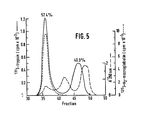
- the major 131 I-trypsin peak containing 57.4 % of the total 131 I counts, co-eluted with the 125I- ⁇ 2 M in the first, high molecular weight protein peak.
- the second 131 I-trypsin peak contained 40.3 % of the total 131 I counts and eluted earlier than the albumin peak at a position consistent with complex formation between trypsin and a plasma protein.
- the process of the invention make possible the study of enzymes and inhibitor-enzyme complexes present in biological fluid, broadly and specifically presents a new approach to the study of the physiologic function of human plasma ⁇ 2 -macroglobulin.
- the method of the invention makes it possible to further characterize inhibitor-enzyme complexes and particularly the protease binding capacity of ⁇ 2 M in both purified systems and in complex biological fluids.
- the solid-phase antibody-bound ⁇ 2 M- ⁇ -trypsin complexes retain their ability to hydrolyze the tripeptide chromogenic substrate BzPhe-Val-Arg-NHNp with Michaelis-Menton constants identical to those of the soluble complexes.
- the electroimmunoassay technique of Laurell was used to establish that the binding of 125 1- ⁇ 2 M to the solid-phase ⁇ 2 M antibody was proportional to the amount of unlabeled native ⁇ 2 M bound.
- the addition of the radiolabeled antigen to plasma made it-possible, therefore, to quantitate the binding of plasma d 2 M to the solid-phase antibody.
- the binding of plasma ⁇ 2 M to the insoluble gel containing the antibody was specific since other immobilized antibodies such as anti-albumin, anti- haptoglobin, or the IgG fraction of normal rabbit serum did not bind significant amounts of plasma ⁇ 2 M.
- a 2 M is a unique plasma protease inhibitor in that it forms a complex with an exceptionally wide variety of proteases including serine, thiol, carboxyl and metallopro- teases derived from plasma, cells, or from microorganism; [Harpel et al. (1976, supra, Starkey et al., supra7. Complexes between ⁇ 2 M and several different proteases have been identified in plasma; /Harpel et al., J.Clin.Invest. 52: 2175 - 21.84 (1973); Nilehn et al., Scand.J.Clin.Lab.
Landscapes
- Health & Medical Sciences (AREA)
- Life Sciences & Earth Sciences (AREA)
- Chemical & Material Sciences (AREA)
- Engineering & Computer Science (AREA)
- Immunology (AREA)
- Molecular Biology (AREA)
- Hematology (AREA)
- Biomedical Technology (AREA)
- Urology & Nephrology (AREA)
- Organic Chemistry (AREA)
- Physics & Mathematics (AREA)
- Microbiology (AREA)
- Biotechnology (AREA)
- Biochemistry (AREA)
- Analytical Chemistry (AREA)
- General Health & Medical Sciences (AREA)
- Wood Science & Technology (AREA)
- Zoology (AREA)
- Proteomics, Peptides & Aminoacids (AREA)
- Food Science & Technology (AREA)
- Medicinal Chemistry (AREA)
- Cell Biology (AREA)
- Pathology (AREA)
- General Physics & Mathematics (AREA)
- Bioinformatics & Cheminformatics (AREA)
- Biophysics (AREA)
- Genetics & Genomics (AREA)
- General Engineering & Computer Science (AREA)
- Neurosurgery (AREA)
- Measuring Or Testing Involving Enzymes Or Micro-Organisms (AREA)
- Medicines That Contain Protein Lipid Enzymes And Other Medicines (AREA)
- Medicines Containing Antibodies Or Antigens For Use As Internal Diagnostic Agents (AREA)
- Peptides Or Proteins (AREA)
Priority Applications (1)
| Application Number | Priority Date | Filing Date | Title |
|---|---|---|---|
| AT81107730T ATE15387T1 (de) | 1980-09-30 | 1981-09-29 | Verfahren zum bestimmen von enzym-inhibitorkomplexen. |
Applications Claiming Priority (2)
| Application Number | Priority Date | Filing Date | Title |
|---|---|---|---|
| US19216680A | 1980-09-30 | 1980-09-30 | |
| US192166 | 1980-09-30 |
Publications (3)
| Publication Number | Publication Date |
|---|---|
| EP0048989A2 true EP0048989A2 (de) | 1982-04-07 |
| EP0048989A3 EP0048989A3 (en) | 1982-05-12 |
| EP0048989B1 EP0048989B1 (de) | 1985-09-04 |
Family
ID=22708529
Family Applications (1)
| Application Number | Title | Priority Date | Filing Date |
|---|---|---|---|
| EP81107730A Expired EP0048989B1 (de) | 1980-09-30 | 1981-09-29 | Verfahren zum Bestimmen von Enzym-Inhibitor-Komplexen |
Country Status (5)
| Country | Link |
|---|---|
| EP (1) | EP0048989B1 (de) |
| JP (1) | JPS5794660A (de) |
| AT (1) | ATE15387T1 (de) |
| CA (1) | CA1176560A (de) |
| DE (1) | DE3172143D1 (de) |
Cited By (9)
| Publication number | Priority date | Publication date | Assignee | Title |
|---|---|---|---|---|
| EP0080279A1 (de) * | 1981-11-02 | 1983-06-01 | James Walter Ryan | Verfahren zur Untersuchung von Protease mit markierten proteinartigen Hemmstoffen |
| WO1984002778A1 (en) * | 1982-12-30 | 1984-07-19 | Marius Constantin Teodorescu | Test for autoimmune rheumatoid arthritis |
| EP0216179A1 (de) * | 1985-09-06 | 1987-04-01 | BEHRINGWERKE Aktiengesellschaft | Verfahren zur Bestimmung von Proteaseinhibitoren |
| WO1993005397A1 (en) * | 1991-09-07 | 1993-03-18 | Biosyn Ltd | Immunoassay for proteases |
| WO1995000847A1 (en) * | 1993-06-18 | 1995-01-05 | Hafslund Nycomed A.S | Immunoassay |
| NL9301134A (nl) * | 1993-06-29 | 1995-01-16 | Inst Voor Agrotech Onderzoek | Werkwijze voor het detekteren en eventueel kwantificeren van aktiviteit van ten minste één protease-inhibitor in een te analyseren mengsel, alsmede toepassing van de werkwijze voor het bepalen van de (rest)aktiviteit van één (of meer) afzonderlijke (iso)type(s) protease-inhibitor(en) en toepassing van de werkwijze voor het bepalen van de totale (rest)aktiviteit van een mengsel eventueel na een verwerkingsproces zoals een proces ter verwijdering of inaktivatie van protease-inhibitor(en). |
| WO1996007104A1 (en) * | 1994-08-26 | 1996-03-07 | Stenman Ulf Haakan | Assay of free and complexed trypsinogen-2 |
| EP0759556A3 (de) * | 1995-07-24 | 1998-05-20 | BEHRINGWERKE Aktiengesellschaft | Verfahren zur Quantifizierung aktivierter Faktoren |
| WO2005017138A3 (en) * | 2003-08-19 | 2005-05-06 | Novozymes As | Active-site titration of glycosyl hydrolases |
Families Citing this family (4)
| Publication number | Priority date | Publication date | Assignee | Title |
|---|---|---|---|---|
| JPS6134465A (ja) * | 1984-07-26 | 1986-02-18 | Teijin Ltd | ヒトα↓2−プラスミンインヒビタ−に対するモノクロ−ナル抗体を用いた免疫学的測定試薬及びキツト |
| JPS6488368A (en) * | 1987-09-30 | 1989-04-03 | Shigeru Hayashi | Method for measuring complex of urokinase and urokinase inhibitor |
| EP2946206B1 (de) | 2013-01-20 | 2019-01-09 | Dyax Corp. | Auswertung, assays und behandlung von pkal-vermittelten erkrankungen |
| CN114402200B (zh) | 2019-04-16 | 2025-04-22 | 武田药品工业株式会社 | 功能性c1酯酶抑制剂(fc1-inh)的定量方法 |
Family Cites Families (5)
| Publication number | Priority date | Publication date | Assignee | Title |
|---|---|---|---|---|
| NL7602422A (nl) * | 1976-03-08 | 1977-09-12 | Leuven Res & Dev Vzw | Trombosetest. |
| DE2836046A1 (de) * | 1978-08-17 | 1980-02-28 | Behringwerke Ag | Immunologisches bestimmungsverfahren |
| JPS5646465A (en) * | 1979-09-25 | 1981-04-27 | Seikagaku Kogyo Co Ltd | Measuring method for man pancreas secretory inhibiter in humor |
| JPS56118671A (en) * | 1980-02-22 | 1981-09-17 | Amano Pharmaceut Co Ltd | Measuring method of specific enzyme immunity of hybrid type protein |
| DE3016575A1 (de) * | 1980-04-30 | 1981-11-05 | Merck Patent Gmbh, 6100 Darmstadt | Verfahren zur immunologischen bestimmung von enzymen, mittel zur durchfuehrung des verfahrens und seine verwandung |
-
1981
- 1981-09-29 DE DE8181107730T patent/DE3172143D1/de not_active Expired
- 1981-09-29 EP EP81107730A patent/EP0048989B1/de not_active Expired
- 1981-09-29 CA CA000386866A patent/CA1176560A/en not_active Expired
- 1981-09-29 AT AT81107730T patent/ATE15387T1/de not_active IP Right Cessation
- 1981-09-30 JP JP56154047A patent/JPS5794660A/ja active Granted
Cited By (12)
| Publication number | Priority date | Publication date | Assignee | Title |
|---|---|---|---|---|
| EP0080279A1 (de) * | 1981-11-02 | 1983-06-01 | James Walter Ryan | Verfahren zur Untersuchung von Protease mit markierten proteinartigen Hemmstoffen |
| WO1984002778A1 (en) * | 1982-12-30 | 1984-07-19 | Marius Constantin Teodorescu | Test for autoimmune rheumatoid arthritis |
| GB2142723A (en) * | 1982-12-30 | 1985-01-23 | Marius Constantin Teodorescu | Test for autoimmune rheumatoid arthritis |
| US4499186A (en) * | 1982-12-30 | 1985-02-12 | University Of Illinois, Board Of Trustees | Diagnosing autoimmune rheumatoid arthritis by measuring proteolytic activity of α2 -macroglobulin |
| EP0216179A1 (de) * | 1985-09-06 | 1987-04-01 | BEHRINGWERKE Aktiengesellschaft | Verfahren zur Bestimmung von Proteaseinhibitoren |
| WO1993005397A1 (en) * | 1991-09-07 | 1993-03-18 | Biosyn Ltd | Immunoassay for proteases |
| WO1995000847A1 (en) * | 1993-06-18 | 1995-01-05 | Hafslund Nycomed A.S | Immunoassay |
| NL9301134A (nl) * | 1993-06-29 | 1995-01-16 | Inst Voor Agrotech Onderzoek | Werkwijze voor het detekteren en eventueel kwantificeren van aktiviteit van ten minste één protease-inhibitor in een te analyseren mengsel, alsmede toepassing van de werkwijze voor het bepalen van de (rest)aktiviteit van één (of meer) afzonderlijke (iso)type(s) protease-inhibitor(en) en toepassing van de werkwijze voor het bepalen van de totale (rest)aktiviteit van een mengsel eventueel na een verwerkingsproces zoals een proces ter verwijdering of inaktivatie van protease-inhibitor(en). |
| WO1996007104A1 (en) * | 1994-08-26 | 1996-03-07 | Stenman Ulf Haakan | Assay of free and complexed trypsinogen-2 |
| US5976809A (en) * | 1994-08-26 | 1999-11-02 | Ulf-Hakan Stenman | Assay of free and complexed trypsinogen-2 |
| EP0759556A3 (de) * | 1995-07-24 | 1998-05-20 | BEHRINGWERKE Aktiengesellschaft | Verfahren zur Quantifizierung aktivierter Faktoren |
| WO2005017138A3 (en) * | 2003-08-19 | 2005-05-06 | Novozymes As | Active-site titration of glycosyl hydrolases |
Also Published As
| Publication number | Publication date |
|---|---|
| EP0048989B1 (de) | 1985-09-04 |
| CA1176560A (en) | 1984-10-23 |
| JPH041304B2 (de) | 1992-01-10 |
| ATE15387T1 (de) | 1985-09-15 |
| EP0048989A3 (en) | 1982-05-12 |
| DE3172143D1 (en) | 1985-10-10 |
| JPS5794660A (en) | 1982-06-12 |
Similar Documents
| Publication | Publication Date | Title |
|---|---|---|
| US6017723A (en) | Method for isolating inhibitors of protease activity | |
| EP0048989B1 (de) | Verfahren zum Bestimmen von Enzym-Inhibitor-Komplexen | |
| Mahmoud et al. | Bioimmunoassay (BIA) of tissue plasminogen activator (t-PA) and its specific inhibitor (t-PA/INH) | |
| Scott et al. | Amidolytic assay of human factor XI in plasma: Comparison with a coagulant assay and a new rapid radioimmunoassay | |
| Nuijens et al. | Detection of activation of the contact system of coagulation in vitro and in vivo: quantitation of activated Hageman factor-C1-Inhibitor and kallikrein-C1-Inhibitor complexes by specific radioimmunoassays | |
| US4629694A (en) | Detecting and distinguishing between plasminogen activators | |
| CA2255255A1 (en) | Improved thrombin-based assay for antithrombin-iii | |
| US4849353A (en) | Immunocapture of enzyme inhibitor, enzyme complexes and uses thereof | |
| US6242173B1 (en) | Immunoassays for catalytically-active, serine proteases | |
| EP0080279B1 (de) | Verfahren zur Untersuchung von Protease mit markierten proteinartigen Hemmstoffen | |
| McDuffie et al. | Prothrombin, thrombin and prothrombin fragments in plasma of normal individuals and of patients with laboratory evidence of disseminated intravascular coagulation | |
| US4753875A (en) | Method for assaying proteases with tagged proteinaceous inhibitors | |
| Holvoet et al. | Measurement of free, one-chain tissue-type plasminogen activator in human plasma with an enzyme-linked immunosorbent assay based on an active site-specific murine monoclonal antibody | |
| JPH0767396B2 (ja) | 線溶系測定法 | |
| Harpel et al. | Immunoimmobilization of α2-macroglobulin-β-trypsin complexes: A novel approach for the biochemical characterization of modulator-protease interactions | |
| US4882272A (en) | High molecular weight kininogen assay | |
| EP0123265A1 (de) | Zymogenaktivierung, Immunoassay mit Kaskadenverstärkung | |
| Alving et al. | Plasma prekallikrein: quantitative determination by direct activation with Hageman factor fragment (β-XIIa) | |
| Nishikawa et al. | Effect of neurotropin® on the activation of the plasma kallikrein-kinin system | |
| EP1317671A2 (de) | Methode zur messung der antithrombin aktivität | |
| US20030186345A1 (en) | Macromolecular enzyme substrates | |
| EP0396692A1 (de) | Testverfahren für enzyme und ausrüstung und substanzen dafür | |
| Jesty et al. | Measurement of human activated factor X-antithrombin complex by an enzyme-linked differential-antibody immunosorbent assay | |
| EP0248144B1 (de) | Selektiver Immunoassay für Pro-Urokinase und Urokinase | |
| McDuffie et al. | Antigenic changes produced by complex formation between thrombin and antithrombin-III. |
Legal Events
| Date | Code | Title | Description |
|---|---|---|---|
| PUAI | Public reference made under article 153(3) epc to a published international application that has entered the european phase |
Free format text: ORIGINAL CODE: 0009012 |
|
| PUAL | Search report despatched |
Free format text: ORIGINAL CODE: 0009013 |
|
| AK | Designated contracting states |
Designated state(s): AT BE CH DE FR GB IT LI LU NL SE |
|
| RHK1 | Main classification (correction) |
Ipc: C12Q 1/38 |
|
| AK | Designated contracting states |
Designated state(s): AT BE CH DE FR GB IT LI LU NL SE |
|
| 17P | Request for examination filed |
Effective date: 19821015 |
|
| RAP1 | Party data changed (applicant data changed or rights of an application transferred) |
Owner name: CORNELL RESEARCH FOUNDATION, INC. |
|
| ITF | It: translation for a ep patent filed | ||
| GRAA | (expected) grant |
Free format text: ORIGINAL CODE: 0009210 |
|
| AK | Designated contracting states |
Designated state(s): AT BE CH DE FR GB IT LI LU NL SE |
|
| REF | Corresponds to: |
Ref document number: 15387 Country of ref document: AT Date of ref document: 19850915 Kind code of ref document: T |
|
| PG25 | Lapsed in a contracting state [announced via postgrant information from national office to epo] |
Ref country code: LU Free format text: LAPSE BECAUSE OF NON-PAYMENT OF DUE FEES Effective date: 19850930 |
|
| REF | Corresponds to: |
Ref document number: 3172143 Country of ref document: DE Date of ref document: 19851010 |
|
| ET | Fr: translation filed | ||
| PLBE | No opposition filed within time limit |
Free format text: ORIGINAL CODE: 0009261 |
|
| STAA | Information on the status of an ep patent application or granted ep patent |
Free format text: STATUS: NO OPPOSITION FILED WITHIN TIME LIMIT |
|
| 26N | No opposition filed | ||
| PGFP | Annual fee paid to national office [announced via postgrant information from national office to epo] |
Ref country code: LU Payment date: 19890705 Year of fee payment: 9 |
|
| PGFP | Annual fee paid to national office [announced via postgrant information from national office to epo] |
Ref country code: AT Payment date: 19890830 Year of fee payment: 9 |
|
| PGFP | Annual fee paid to national office [announced via postgrant information from national office to epo] |
Ref country code: SE Payment date: 19890906 Year of fee payment: 9 |
|
| ITTA | It: last paid annual fee | ||
| PGFP | Annual fee paid to national office [announced via postgrant information from national office to epo] |
Ref country code: NL Payment date: 19890930 Year of fee payment: 9 |
|
| PGFP | Annual fee paid to national office [announced via postgrant information from national office to epo] |
Ref country code: BE Payment date: 19891219 Year of fee payment: 9 |
|
| PG25 | Lapsed in a contracting state [announced via postgrant information from national office to epo] |
Ref country code: AT Effective date: 19900929 |
|
| PG25 | Lapsed in a contracting state [announced via postgrant information from national office to epo] |
Ref country code: SE Effective date: 19900930 Ref country code: BE Effective date: 19900930 |
|
| BERE | Be: lapsed |
Owner name: CORNELL RESEARCH FOUNDATION INC. Effective date: 19900930 |
|
| PG25 | Lapsed in a contracting state [announced via postgrant information from national office to epo] |
Ref country code: NL Effective date: 19910401 |
|
| NLV4 | Nl: lapsed or anulled due to non-payment of the annual fee | ||
| PGFP | Annual fee paid to national office [announced via postgrant information from national office to epo] |
Ref country code: GB Payment date: 19910802 Year of fee payment: 11 |
|
| PGFP | Annual fee paid to national office [announced via postgrant information from national office to epo] |
Ref country code: FR Payment date: 19910918 Year of fee payment: 11 |
|
| PGFP | Annual fee paid to national office [announced via postgrant information from national office to epo] |
Ref country code: CH Payment date: 19910923 Year of fee payment: 11 |
|
| PG25 | Lapsed in a contracting state [announced via postgrant information from national office to epo] |
Ref country code: GB Effective date: 19920929 |
|
| PG25 | Lapsed in a contracting state [announced via postgrant information from national office to epo] |
Ref country code: LI Effective date: 19920930 Ref country code: CH Effective date: 19920930 |
|
| GBPC | Gb: european patent ceased through non-payment of renewal fee |
Effective date: 19920929 |
|
| PG25 | Lapsed in a contracting state [announced via postgrant information from national office to epo] |
Ref country code: FR Effective date: 19930528 |
|
| REG | Reference to a national code |
Ref country code: CH Ref legal event code: PL |
|
| REG | Reference to a national code |
Ref country code: FR Ref legal event code: ST |
|
| PGFP | Annual fee paid to national office [announced via postgrant information from national office to epo] |
Ref country code: DE Payment date: 19930928 Year of fee payment: 13 |
|
| EUG | Se: european patent has lapsed |
Ref document number: 81107730.4 Effective date: 19910527 |
|
| PG25 | Lapsed in a contracting state [announced via postgrant information from national office to epo] |
Ref country code: DE Effective date: 19950601 |