EP0051204A1 - Décapeptide, procédé pour sa préparation, et son utilisation - Google Patents
Décapeptide, procédé pour sa préparation, et son utilisation Download PDFInfo
- Publication number
- EP0051204A1 EP0051204A1 EP81108535A EP81108535A EP0051204A1 EP 0051204 A1 EP0051204 A1 EP 0051204A1 EP 81108535 A EP81108535 A EP 81108535A EP 81108535 A EP81108535 A EP 81108535A EP 0051204 A1 EP0051204 A1 EP 0051204A1
- Authority
- EP
- European Patent Office
- Prior art keywords
- decapeptide
- ser
- leu
- hydrazide
- protected
- Prior art date
- Legal status (The legal status is an assumption and is not a legal conclusion. Google has not performed a legal analysis and makes no representation as to the accuracy of the status listed.)
- Withdrawn
Links
Images




Classifications
-
- C—CHEMISTRY; METALLURGY
- C07—ORGANIC CHEMISTRY
- C07K—PEPTIDES
- C07K16/00—Immunoglobulins [IG], e.g. monoclonal or polyclonal antibodies
- C07K16/18—Immunoglobulins [IG], e.g. monoclonal or polyclonal antibodies against material from animals or humans
- C07K16/24—Immunoglobulins [IG], e.g. monoclonal or polyclonal antibodies against material from animals or humans against cytokines, lymphokines or interferons
- C07K16/249—Interferons
-
- C—CHEMISTRY; METALLURGY
- C07—ORGANIC CHEMISTRY
- C07K—PEPTIDES
- C07K14/00—Peptides having more than 20 amino acids; Gastrins; Somatostatins; Melanotropins; Derivatives thereof
- C07K14/435—Peptides having more than 20 amino acids; Gastrins; Somatostatins; Melanotropins; Derivatives thereof from animals; from humans
- C07K14/52—Cytokines; Lymphokines; Interferons
- C07K14/555—Interferons [IFN]
-
- G—PHYSICS
- G01—MEASURING; TESTING
- G01N—INVESTIGATING OR ANALYSING MATERIALS BY DETERMINING THEIR CHEMICAL OR PHYSICAL PROPERTIES
- G01N33/00—Investigating or analysing materials by specific methods not covered by groups G01N1/00 - G01N31/00
- G01N33/48—Biological material, e.g. blood, urine; Haemocytometers
- G01N33/50—Chemical analysis of biological material, e.g. blood, urine; Testing involving biospecific ligand binding methods; Immunological testing
- G01N33/53—Immunoassay; Biospecific binding assay; Materials therefor
- G01N33/531—Production of immunochemical test materials
-
- G—PHYSICS
- G01—MEASURING; TESTING
- G01N—INVESTIGATING OR ANALYSING MATERIALS BY DETERMINING THEIR CHEMICAL OR PHYSICAL PROPERTIES
- G01N33/00—Investigating or analysing materials by specific methods not covered by groups G01N1/00 - G01N31/00
- G01N33/48—Biological material, e.g. blood, urine; Haemocytometers
- G01N33/50—Chemical analysis of biological material, e.g. blood, urine; Testing involving biospecific ligand binding methods; Immunological testing
- G01N33/58—Chemical analysis of biological material, e.g. blood, urine; Testing involving biospecific ligand binding methods; Immunological testing involving labelled substances
-
- Y—GENERAL TAGGING OF NEW TECHNOLOGICAL DEVELOPMENTS; GENERAL TAGGING OF CROSS-SECTIONAL TECHNOLOGIES SPANNING OVER SEVERAL SECTIONS OF THE IPC; TECHNICAL SUBJECTS COVERED BY FORMER USPC CROSS-REFERENCE ART COLLECTIONS [XRACs] AND DIGESTS
- Y10—TECHNICAL SUBJECTS COVERED BY FORMER USPC
- Y10S—TECHNICAL SUBJECTS COVERED BY FORMER USPC CROSS-REFERENCE ART COLLECTIONS [XRACs] AND DIGESTS
- Y10S530/00—Chemistry: natural resins or derivatives; peptides or proteins; lignins or reaction products thereof
- Y10S530/806—Antigenic peptides or proteins
-
- Y—GENERAL TAGGING OF NEW TECHNOLOGICAL DEVELOPMENTS; GENERAL TAGGING OF CROSS-SECTIONAL TECHNOLOGIES SPANNING OVER SEVERAL SECTIONS OF THE IPC; TECHNICAL SUBJECTS COVERED BY FORMER USPC CROSS-REFERENCE ART COLLECTIONS [XRACs] AND DIGESTS
- Y10—TECHNICAL SUBJECTS COVERED BY FORMER USPC
- Y10S—TECHNICAL SUBJECTS COVERED BY FORMER USPC CROSS-REFERENCE ART COLLECTIONS [XRACs] AND DIGESTS
- Y10S930/00—Peptide or protein sequence
- Y10S930/01—Peptide or protein sequence
- Y10S930/14—Lymphokine; related peptides
- Y10S930/142—Interferon
Definitions
- the present invention relates to a new decapeptide, namely H-Ser-Asp-Leu-Pro-Gln-Thr-His-Ser-Leu-Gly-OH, a process for its preparation after solid-phase synthesis and its use, for example as a hapten for coupling with an immunogen.
- the new decapeptide is prepared after solid phase synthesis (see RB Merrifield in J. Amer. Chem. Soc. 2149-2154 (1963)).
- the C-terminal amino acid of a peptide is linked via its carboxyl group to a polymer as an insoluble carrier. This is done either preferably via an alkali or alkaline earth metal salt of the corresponding N-protected amino acid if a chloromethyl resin is used, or by activating the carboxyl function of the corresponding N-protected amino acid, for example with N, N'-dicyclohexylcarbodiimide, if a hydroxymethyl Resin is used.
- the peptide is then built up step by step by gradually adding the individual amino acids to the N-'end of the peptide fragment (see FIG. 1) and then splitting off the amino protective residue used.
- the connection of the next N-protected amino acid to the now free and reactive terminal amino group of the peptide fragment is done by activating their carboxyl function or via a reactive ester.
- the peptide is split off from the resin.
- the presence of the amino acids aspartic acid, serine, threonine and histidine requires additional protection of the side functions, for example by converting them into the corresponding O-benzylthreonine, O-benzylserine, N-im-2,4-dinitrophenyl-histidine and aspartic acid. ⁇ -tert-butyl ester derivatives.
- a swellable polymer e.g. chloromethylated polystyrene, which is preferably crosslinked with 1% divinylbenzene, is used (PS-1% DVB).
- the process is particularly advantageously carried out in such a way that glycine is the first amino acid in its protected form, such as, for example with the aid of its cesium salt, which is expediently obtained by reacting the protected amino acid mentioned above with cesium carbonate or cesium hydroxide, on chloromethylated polystyrene in a solvent, preferably in an aprotic solvent such as dimethylformamide.
- the amino protecting group used is then split off, for example the N-tert-butoxycarbonyl group with an acid, for example with 50% strength trifluoroacetic acid in dichloromethane, preferably after prewashing with dichloromethane and the Fmoc group with diethylamine in dimethylformamide.
- Each subsequent synthesis cycle is coupled with an excess of the corresponding Boc or Fmoc amino acid or its activated ester, for example with 3 to 6 times the amount, optionally in the presence of a coupling reagent such as N, N'-dicyclohexyl-carbodiimide, this process being repeated several times, for example 2 to 5 times, without prior checking for any free spaces that may still be present Amino groups are repeated with a further comparable excess of the corresponding Boc or Fmoc amino acid and coupling reagent or their activated ester (post-coupling). After prewashing, the Boc or Fmoc protective residue is split off as described above.
- a coupling reagent such as N, N'-dicyclohexyl-carbodiimide
- the amino acid derivative Boc-Gln is preferably made using one of its reactive esters, e.g. via its p-nitrophenyl ester, coupled. Furthermore, 1-hydroxy-benzotriazole can be added as a catalyst in the couplings and post-couplings.
- acetylation is carried out with acetic anhydride / N-methylmorpholine in order to block an amino group of the peptide fragment which may not have reacted during the coupling for the next coupling.
- the Fmoc protective residue is treated with a base, e.g. with diethylamine, split off.
- the partially protected decapeptide hydrazide is obtained after the synthesis has been carried out by adding hydrazine to the fully protected Pepti4 resin suspended in dimethylformamide. This is overturned for further cleaning, e.g. from DMF / ether, the yellow Dnp products being largely removed, via a gel column, e.g. Sephadex LH20, chromatographed with methanol, reversed-phase chromatography on silica gel, e.g. Silica gel RP-8, subjected to methanol / water (90/10) and reprecipitated from methanol / ether.
- a gel column e.g. Sephadex LH20
- silica gel e.g. Silica gel RP-8
- the protective group-free decapeptide is obtained by adding hydrogen bromide / glacial acetic acid to the suspension of the peptide resin in trifluoroacetic acid with the addition of resorcinol and thioanisole. Boc, Bzl and O-Bu t residues are removed at the same time.
- the free decapeptide is obtained.
- step -2 After deprotection and neutralization analogous to step -2, 5.9 g (20 mmol) of BOC-Ser (Bzl) -OH are dissolved in 60 ml of dichloromethane and added to the dipeptide resin. Then 20 ml (20 mmol) of a 1 molar solution of DCC in dichloromethane are added. After 45 minutes, 5.9 g (20 mmol) of Boc-Ser (Bzl) -OH in 60 ml of dichloromethane and 20 ml of DCC solution (1 molar in dichloromethane) are added to the first coupling.
- the mixture is then reacted for 15 minutes with 6 ml of acetic anhydride in 40 ml of DMF and 3.3 ml of N-methylmorpholine in 40 ml of DMF, then 3 times with DMF, 3 times with methanol / dichloromethane 1: 4, 3 times with ethanol and 3 times washed with dichloromethane.
- decapeptide hydrazide derivative appears in the elution volume 590-723 ml (fraction volume 19 ml). After combining the fractions and evaporating off the methanol, 2.24 g of partially protected decapeptide hydrazide are obtained, which still shows a yellow color. The highly hydrophilic impurities are removed by this Sephadex-LH 20 chromatography.
- the amino acid analysis is carried out in a LC 6000 E biotronic amino acid analyzer, the hydrolysis is carried out with 6N HCL at 110 ° C for 24 hours. Without correcting the hydrolysis losses, the following distribution of amino acids is found:
- the 13 C-NMR spectra are measured in the NMR spectrometer WH-90 from Bruker-Physik, Düsseldorf, the decapeptide hydrazide derivative was dissolved in methanol.
- the pale yellow precipitate of the peptide is washed twice with ether and then dissolved in 10 ml of water.
- the clear peptide solution (pH 1) is adjusted to pH 8.0 with sodium carbonate solution and then mixed with 2 ml of mercaptoethanol.
- the precipitate which then precipitated is dissolved again with 7 ml of DMF.
- After adding a further 2 ml of mercaptoethanol the mixture is stirred at pH 8.75 for one hour. Then it is extracted with 4 x 80 ml ether.
- the aqueous phase is acidified to pH 4.8 with acetic acid and extracted again with 4 ⁇ 50 ml of ether.
- the brown-yellow peptide solution obtained above is chromatographed on Sephadex G-15 with 0.1 molar acetic acid (column: 2.5 ⁇ 95 cm, elution rate 1 ml / min).
- the fractions (10 ml) detected after 185-300 ml appearing peptide-containing, thin layer chromatography with the system 1-butanol / glacial acetic acid / water ⁇ (3: 1: 1) are combined, lyophilized and chromatographed a second time.
- the Peptide solution contained in the fractions 201-275 ml is evaporated. Yield: 2.24 g
- the amino acid analysis is carried out in a biotronic amino acid analyzer Q r LC 600 E.
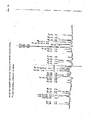
- the hydrolysis is carried out with 6 N hydrochloric acid at 110 ° C. and for 18 to 72 hours. Without correcting the hydrolysis losses, the following amino acid composition is determined: Gas chromatographic analysis of the N-pentafluoropropiomylamino acid n-propyl ester of the total hydrolyzate of the decapeptide on the chiral phase Chirasil-Val (J. Chromatogr. 146, 197 (1978)) showed a very high enantiomeric purity of the amino acid residues of the decapeptide (see Fig. 2) .
- the new decapeptide and its hydrazide can be used as haptens that are linked to a natural protein, e.g. Human serum albumin, bovine serum albumin, egg albumin or with a synthetic polypeptide such as e.g. poly-L-lysine, poly-L-alanyl-L-lysine or other carriers such as e.g. modified dextrans can be coupled according to known methods.
- the peptide can also be obtained via other polyamines, e.g. Link 1,6-diaminohexane.
- An immunogen produced in this way, or the decapeptide itself, can be used in known methods for generating antisera or antibodies against human lymphoblast interferon.
- the new decapeptide can be used in place of human lymphoblast interferon in a suitable preparation for therapy.
- the new decapeptide is suitable as a tracer for the immunological determination of human lymphoblast interferon.
- it can be done directly using known methods, e.g. with radioactive iodine or other suitable markers, e.g. with enzymes such as peroxidases or with fluorescent compounds.
- it can also be marked in the form of the coupling products mentioned above using the same or similar methods and used as a tracer.
- the new decapeptide is also suitable in the form of a coupling product with an immobile carrier, e.g. Dextrans, sepharose or polystyrene, or modified inorganic carriers such as e.g. Biogel or CPG-10, for the isolation and purification of antibodies against human lymphoblast interferons.
- an immobile carrier e.g. Dextrans, sepharose or polystyrene, or modified inorganic carriers such as e.g. Biogel or CPG-10
- Antibodies obtained in this way allow the purification and isolation of human lymphoblast interferon in a known manner.
- the fully protected decapeptide on the support can also be cleaved off from the support by saponification or transesterification.
- the partially or fully protected decapeptide derivatives that are split off also represent valuable intermediates for the synthesis of higher peptides of the lymphoblast interferon or the lymphobiasten interferon itself.
- the conjugate dried over phosphorus pentoxide are mixed with 2 ml of trifluoroacetic acid. After 10 minutes, 8 ml of 40% hydrogen bromide in glacial acetic acid (mixed with about 30 mg resorcinol and thioanisole each) are added to this suspension and stirred for 30 minutes in the dark at room temperature. After concentration in vacuo, the conjugate is precipitated by stirring the glacial acetic acid solution in absolute ether (approx. 100 ml). After washing twice with 100 ml of ether in a centrifuge glass, the precipitate (180 mg) is dissolved in water and against 1 N acetic acid for 24 hours and then against dist. Water dialysed for 24 hours (exclusion limit 8,000).
- the reaction is stopped after one hour by adding 90 ⁇ l of 0.3 M glycine in 0.1 M sodium borate, pH 9.0. After a further 10 minutes, the entire volume is now placed on a chromatography column (7 ml bed volume, Sephadex G 25 medium (Pharmacia, Uppsala), which had been equilibrated with 50 mM sodium phosphate pH 7.5 and 0.25% gelatin and in this buffer The high molecular weight labeled substance is separated from low molecular weight radioactive reaction products and appears in the first fractions of the void volume.
- a better yield - compared to these original BOLTON and HUNTER instructions - is achieved if the solution is brought to an acidic pH after the end of the reaction.
- the pH is adjusted from 9 to 4 by a further addition of 100 ul 20 mM sodium acetate pH 4.0.
- the chromatography column is pretreated accordingly with 20 mM sodium acetate pH 4.0 and 0.25% gelatin and is developed in this buffer.
- 35 mg (25 pmol) of partially protected decapeptide hydrazide are dissolved in 2 ml of trifluoroacetic acid and 4 ml of 33% hydrobromic acid / glacial acetic acid are added. After one hour, the mixture is concentrated on a rotary evaporator, the residue is taken up in 2 ml of glacial acetic acid and the solution is added dropwise to 50 ml of anhydrous ether with stirring. The precipitate is centrifuged off and dried in vacuo over solid potassium hydroxide.
- the unprotected decapeptide hydrazide dihydrobromide obtained is converted into the azide analogously to Example A (b) and coupled to the amino groups of 300 mg AH-Sepharose 4B in DMF / water. After a reaction time of 24 hours, the AH-Sepharose 4B decapeptide is washed with DMF, dioxane and water until no low-molecular components can be detected in the thin-layer chromatogram.
- 35 mg of partially protected decapeptide hydrazide are, as described under Example C, treated with hydrogen bromide / trifluoroacetic acid and converted into the azide, which is coupled to 300 mg of lysine-Sepharose 4B (Pharmacia).
- Controlled-Pore Glass CPG 10 (pore sizes 75 and 120, coated with aminopropyl groups) are coupled with the azide obtained from 70 mg of partially protected decapeptide hydrazide analogously to Example C.
- Example A 70 mg (50 ⁇ mol) of partially protected decapeptide hydrazide are converted into the azide as described in Example A (b). 2.9 mg (25 ⁇ mol) 1,6-diaminohexane in 200 ⁇ l DMF are added to the azide at -10 ° C. After adjusting to about pH 8.5 with triethylamine, the mixture is stirred at -10 ° C. for 2 hours, left to stand at 4 ° C. for 24 hours and stirred again at room temperature for 8 hours. The reaction solution is then added dropwise to anhydrous ether with stirring. The precipitate is washed twice with ether and dried over diphosphorus pentoxide / potassium hydroxide.
Landscapes
- Health & Medical Sciences (AREA)
- Life Sciences & Earth Sciences (AREA)
- Chemical & Material Sciences (AREA)
- Immunology (AREA)
- Molecular Biology (AREA)
- Engineering & Computer Science (AREA)
- Organic Chemistry (AREA)
- General Health & Medical Sciences (AREA)
- Hematology (AREA)
- Biochemistry (AREA)
- Medicinal Chemistry (AREA)
- Urology & Nephrology (AREA)
- Biomedical Technology (AREA)
- Physics & Mathematics (AREA)
- Biophysics (AREA)
- Analytical Chemistry (AREA)
- Microbiology (AREA)
- Cell Biology (AREA)
- General Physics & Mathematics (AREA)
- Pathology (AREA)
- Food Science & Technology (AREA)
- Genetics & Genomics (AREA)
- Proteomics, Peptides & Aminoacids (AREA)
- Biotechnology (AREA)
- Toxicology (AREA)
- Zoology (AREA)
- Gastroenterology & Hepatology (AREA)
- Peptides Or Proteins (AREA)
- Medicines That Contain Protein Lipid Enzymes And Other Medicines (AREA)
Applications Claiming Priority (2)
| Application Number | Priority Date | Filing Date | Title |
|---|---|---|---|
| DE19803040824 DE3040824A1 (de) | 1980-10-30 | 1980-10-30 | Neues dekapeptid, verfahren zu seiner herstellung und verwendung |
| DE3040824 | 1980-10-30 |
Publications (1)
| Publication Number | Publication Date |
|---|---|
| EP0051204A1 true EP0051204A1 (fr) | 1982-05-12 |
Family
ID=6115503
Family Applications (1)
| Application Number | Title | Priority Date | Filing Date |
|---|---|---|---|
| EP81108535A Withdrawn EP0051204A1 (fr) | 1980-10-30 | 1981-10-20 | Décapeptide, procédé pour sa préparation, et son utilisation |
Country Status (5)
| Country | Link |
|---|---|
| US (1) | US4370312A (fr) |
| EP (1) | EP0051204A1 (fr) |
| JP (1) | JPS57163350A (fr) |
| DE (1) | DE3040824A1 (fr) |
| IL (1) | IL64156A (fr) |
Families Citing this family (3)
| Publication number | Priority date | Publication date | Assignee | Title |
|---|---|---|---|---|
| DE3211263A1 (de) * | 1981-03-31 | 1983-01-27 | Otsuka Pharmaceutical Co. Ltd., Tokyo | Human-interferon verwandte peptide, antigene und antikoerper, sowie verfahren zu deren herstellung |
| CA2026377A1 (fr) * | 1989-10-03 | 1991-04-04 | John L. Krstenansky | Peptides anticoagulants avec marqueur radioactif |
| US7229835B2 (en) * | 2001-10-25 | 2007-06-12 | The University Of Maryland, Baltimore County | Amine detection method and materials |
-
1980
- 1980-10-30 DE DE19803040824 patent/DE3040824A1/de not_active Withdrawn
-
1981
- 1981-10-20 EP EP81108535A patent/EP0051204A1/fr not_active Withdrawn
- 1981-10-26 US US06/315,213 patent/US4370312A/en not_active Expired - Fee Related
- 1981-10-29 JP JP56176281A patent/JPS57163350A/ja active Pending
- 1981-10-29 IL IL64156A patent/IL64156A/xx unknown
Non-Patent Citations (2)
| Title |
|---|
| CHEMICAL ABSTRACTS Band 92, Nr. 11 17. Marz 1980 Columbus, Ohio, USA ZOON et al. "Amino Terminal Sequence of the Major Component of Human Lymphoblastoid Interferon" seite 443, spalte 2, Abstract Nr. 92554j & Science (Washington, D.C.), Band 207 Nr. 4430, 1980, seiten 527 bis 528 * |
| CHEMICAL ABSTRACTS Band 94, Nr. 21 25. Mai 1981 Columbus, Ohio, USA JUNG et al. "Synthesis and Carbon-13 NMR Spectra of the N-Terminal Decapeptide of the Sequence of Human Lymphoblast Interferon" seite 531, spalte 2, Abstract Nr. 172633r & Hoppe-Seyler's Z. Physiol. Chem. Band 362, Nr. 3, 1981, seiten 291 bis 304 * |
Also Published As
| Publication number | Publication date |
|---|---|
| DE3040824A1 (de) | 1982-08-19 |
| JPS57163350A (en) | 1982-10-07 |
| US4370312A (en) | 1983-01-25 |
| IL64156A0 (en) | 1982-01-31 |
| IL64156A (en) | 1984-10-31 |
Similar Documents
| Publication | Publication Date | Title |
|---|---|---|
| DE3211263C2 (fr) | ||
| Kangawa et al. | Purification and complete amino acid sequence of α-human atrial natriuretic polypeptide (α-hANP) | |
| US4033940A (en) | Cyclization of peptides | |
| US3926938A (en) | Synthesis of salmon calcitonin | |
| JPS60136596A (ja) | ペプチド及びこれを有効成分とする利尿剤 | |
| JPS6118799A (ja) | 効力のあるサイモペンチン類似体 | |
| GB2116564A (en) | Calcitonin derivatives | |
| US4217268A (en) | Synthesis of peptides | |
| WO1988006596A1 (fr) | Nouveau fragment de cardiodilatine, son procede de preparation et son emploi | |
| EP0051205B1 (fr) | Tridécapeptide, procédé pour sa préparation et son utilisation | |
| US4606856A (en) | [Des-1-amino, 8-glycine]calcitonin | |
| US4537716A (en) | Des-serine2 or des-glycine2 -leucine22 calcitonin | |
| US4397780A (en) | Leucine22 -calcitonin | |
| DE3151738C2 (fr) | ||
| Albericio et al. | Solid phase synthesis and HPLC purification of the protected 1-12 sequence of apamin for rapid synthesis of apamin analogues differing in the C-terminal region | |
| EP0075776A1 (fr) | Dérivés de bis-thymosine alpha 1 | |
| FI79117B (fi) | Foerfarande foer framstaellning av bovine-, svin- eller humaninsulin. | |
| US4764589A (en) | [N-alpha-acyl,8-glycine, des-19-leucine]-calcitonin | |
| DE60226324T2 (de) | Glykopeptide, deren herstellung und verwendung in der diagnose oder behandlung von multipler sklerose | |
| US4212795A (en) | Cyclization of peptides | |
| US3988309A (en) | EEL calcitonin | |
| US4304692A (en) | Synthesis of biologically active peptides | |
| DE3040824A1 (de) | Neues dekapeptid, verfahren zu seiner herstellung und verwendung | |
| US4239680A (en) | Synthesis of biologically active peptides | |
| US4058512A (en) | Synthetic peptides having growth promoting activity |
Legal Events
| Date | Code | Title | Description |
|---|---|---|---|
| PUAI | Public reference made under article 153(3) epc to a published international application that has entered the european phase |
Free format text: ORIGINAL CODE: 0009012 |
|
| 17P | Request for examination filed |
Effective date: 19811020 |
|
| AK | Designated contracting states |
Designated state(s): AT BE CH DE FR GB IT LU NL SE |
|
| STAA | Information on the status of an ep patent application or granted ep patent |
Free format text: STATUS: THE APPLICATION IS DEEMED TO BE WITHDRAWN |
|
| 18D | Application deemed to be withdrawn |
Effective date: 19860117 |
|
| RIN1 | Information on inventor provided before grant (corrected) |
Inventor name: SWETLY, PETER, DR. Inventor name: JUNG, GUENTHER, DIPL.-CHEM. PROF. DR. Inventor name: BOZLER, GERHARD, DIPL.-CHEM. DR. Inventor name: BRUECKNER, HANS, DIPL.-CHEM. DR. |