EP0072293B1 - Procédé de préparation de l'acide ursodésoxycholique à partir de l'acide 3 alpha, 7 beta, 12 alpha-trihydroxycholanique et produits intermédiaires utilisés - Google Patents
Procédé de préparation de l'acide ursodésoxycholique à partir de l'acide 3 alpha, 7 beta, 12 alpha-trihydroxycholanique et produits intermédiaires utilisés Download PDFInfo
- Publication number
- EP0072293B1 EP0072293B1 EP82401408A EP82401408A EP0072293B1 EP 0072293 B1 EP0072293 B1 EP 0072293B1 EP 82401408 A EP82401408 A EP 82401408A EP 82401408 A EP82401408 A EP 82401408A EP 0072293 B1 EP0072293 B1 EP 0072293B1
- Authority
- EP
- European Patent Office
- Prior art keywords
- product
- formula
- radical
- acid
- carbon atoms
- Prior art date
- Legal status (The legal status is an assumption and is not a legal conclusion. Google has not performed a legal analysis and makes no representation as to the accuracy of the status listed.)
- Expired
Links
- 0 CC(CCC(O)=O)C(CCC12)C1(C)*(O)=CC1=C2C2(CC2)CC(C2)C1(C)CCC2O* Chemical compound CC(CCC(O)=O)C(CCC12)C1(C)*(O)=CC1=C2C2(CC2)CC(C2)C1(C)CCC2O* 0.000 description 3
- KMCLAKSQBPFFIG-SMGGOSTISA-N CC(CCC(O)=O)C(C12C)=CCC1=C1C3(CC3)CC(CC(CC3)[O](C(C)=O)=O)C3(C)C1C[C@H]2O Chemical compound CC(CCC(O)=O)C(C12C)=CCC1=C1C3(CC3)CC(CC(CC3)[O](C(C)=O)=O)C3(C)C1C[C@H]2O KMCLAKSQBPFFIG-SMGGOSTISA-N 0.000 description 1
- POYXJMPKPXCBNW-BECZGLHLSA-N CC(CCC(O)=O)C(CC1)C(C)(C2OC2C2)C1C1C2C(C)(CCC(C[O](C(C)=O)=O)C2)C2C[C@@H]1O Chemical compound CC(CCC(O)=O)C(CC1)C(C)(C2OC2C2)C1C1C2C(C)(CCC(C[O](C(C)=O)=O)C2)C2C[C@@H]1O POYXJMPKPXCBNW-BECZGLHLSA-N 0.000 description 1
- SAGCRLMWULYPIQ-CVMULWKQSA-N CC(CCC(O)=O)C(CCC1C(C(C2)C(C)(CC[C@H](C)C3)C3C3)[C@H]3O)C1(C)C2=O Chemical compound CC(CCC(O)=O)C(CCC1C(C(C2)C(C)(CC[C@H](C)C3)C3C3)[C@H]3O)C1(C)C2=O SAGCRLMWULYPIQ-CVMULWKQSA-N 0.000 description 1
- LDDWAHHCTIWEOK-UHFFFAOYSA-N CC(CCC(O)=O)C1C(C)(C(CC(C2C3(CC3)C3)C(C)(CC4)C3CCC4[O](C(C)=O)=O)O)C2=CC1 Chemical compound CC(CCC(O)=O)C1C(C)(C(CC(C2C3(CC3)C3)C(C)(CC4)C3CCC4[O](C(C)=O)=O)O)C2=CC1 LDDWAHHCTIWEOK-UHFFFAOYSA-N 0.000 description 1
- GCGXPOWCJXRYEM-UHFFFAOYSA-N CC(CCC(O)=O)C1C=CC(C2C3(CC3)CC(CC(CC3)[O](C(C)=O)=O)C3(C)C2C2)C1(C)C2=O Chemical compound CC(CCC(O)=O)C1C=CC(C2C3(CC3)CC(CC(CC3)[O](C(C)=O)=O)C3(C)C2C2)C1(C)C2=O GCGXPOWCJXRYEM-UHFFFAOYSA-N 0.000 description 1
- GDILSKQTCZNOJU-UHFFFAOYSA-N CC(CCO)C1C=CC(C(CC2)C(C3)C(C)(CCC(C4)[IH][Os])C4CCC2OC=C)C1(C)C3=[O](C)=C Chemical compound CC(CCO)C1C=CC(C(CC2)C(C3)C(C)(CCC(C4)[IH][Os])C4CCC2OC=C)C1(C)C3=[O](C)=C GDILSKQTCZNOJU-UHFFFAOYSA-N 0.000 description 1
- RULJUYSLSZSQSA-UHFFFAOYSA-N CCCCC(CC(C1)CC2(CC2)C(C(C2(C)C(C3)C(C)CCO)C3=[O]=[O]=C)C1CC2[O]=C)[O](=C)=O Chemical compound CCCCC(CC(C1)CC2(CC2)C(C(C2(C)C(C3)C(C)CCO)C3=[O]=[O]=C)C1CC2[O]=C)[O](=C)=O RULJUYSLSZSQSA-UHFFFAOYSA-N 0.000 description 1
Classifications
-
- C—CHEMISTRY; METALLURGY
- C07—ORGANIC CHEMISTRY
- C07J—STEROIDS
- C07J9/00—Normal steroids containing carbon, hydrogen, halogen or oxygen substituted in position 17 beta by a chain of more than two carbon atoms, e.g. cholane, cholestane, coprostane
- C07J9/005—Normal steroids containing carbon, hydrogen, halogen or oxygen substituted in position 17 beta by a chain of more than two carbon atoms, e.g. cholane, cholestane, coprostane containing a carboxylic function directly attached or attached by a chain containing only carbon atoms to the cyclopenta[a]hydrophenanthrene skeleton
Definitions
- the present application relates to a new process for the preparation of ursodeoxycholic acid or 3a, 7 ⁇ -dihydroxycholanic acid.
- the present application describes a synthesis in four stages from 3a, 7 ⁇ , 12 ⁇ -trihydroxycholanic acid.
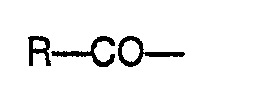
- the present synthesis is characterized in that the 3a, 7/3, 12a-trihydroxycholanic acid of formula II is treated: by a reaction derivative of an organic radical of formula: in which R represents a hydrogen atom or an alkyl or alkoxy radical having from 1 to 5 carbon atoms or alkenyloxy having from 2 to 5 carbon atoms, a cycloalkyloxy radical having from 3 to 7 carbon atoms or aralkyloxy having from 7 with 12 carbon atoms, an aryl or aralkyl radical, having from 6 to 12 carbon atoms, each of these radicals optionally carrying one or more substituents, to obtain a product of formula III: product of formula III which is treated with an oxidizing agent to obtain a product of formula IV: product of formula IV which is saponified to obtain a product of formula V: where a salt of this product, product of formula V or salt which is treated with a reducing agent to obtain the ursodeoxycholic acid sought.
- R represents a hydrogen atom
- reaction derivative of an organic radical which can be used to treat 3a, 7p, 12a-trihydroxycholanic acid can be chosen from formic acid and derivatives of acetic, propionic, butanoic, pentanoic, hexanoic or phthalic acid .
- R represents an alkoxy radical having from 1 to 5 carbon atoms
- alkenyloxy having from 2 to 5 carbon atoms, cycloalkyloxy having from 3 to 7 carbon atoms or aralkyloxy having from 7 to 12 carbon atoms are used.
- reaction derivative of an acid R-C0 2 H is used in which R represents an alkyl radical having from 2 to 5 carbon atoms or a phenyl radical.
- the radical R is substituted by a carboxyl radical.
- the reaction derivative which is made to act on the acid 3a, 7 (3, 12a-trihydroxycholanic is then a derivative of malonic, succinic, glutaric, adipic or phthalic acids, in particular succinic acid.
- radical R can also be substituted by one or more other substituents chosen, for example, from halogen atoms such as fluorine, chlorine, bromine, iodine. Mention may also be made, for example, of a reaction derivative of trifluoroacetic acid.
- the reaction derivative that is used can be one of the conventional derivatives such as an acid halide (preferably chloride), an activated ester or an acid amide.
- a symmetrical, mixed or cyclic anhydride more preferably cyclic, such as succinic or phthalic anhydride, is used.
- a preferred object of the present invention is therefore the process as described above, characterized in that the reaction derivative of an acyl radical of formula: which is used is chosen from phthalic, propionic and succinic anhydrides.
- the oxidizing agent which is used to transform the products of formula III into products of formula IV is preferably chosen from chlorine and bromine in basic medium, sodium and potassium dichromates in water, l chromic anhydride in sulfuric acid or acetic acid, dimethyl and diethyl sulfoxides in the presence of dicychlohexylcarbodiimide and an acid such as phosphoric acid, trifluoroacetic acid, hydrochloric acid or sulfuric acid.
- the saponification of the product of formula IV is carried out under the usual conditions.
- This saponification is optionally followed by acidification with hydrochloric acid.
- the product of formula V can be isolated in the form of the salt obtained during saponification, preferably the sodium or potassium salt but also the ammonium salt.
- the product of formula V can, if desired, be purified in the form of a salt before acidification.
- the reduction of the product of formula V to ursodeoxycholic acid is very preferably carried out by the so-called WOLFF-KISHNER reaction, that is to say using hydrazine in the presence of diethylene glycol and of a base, preferably , potash.
- the WOLFF-KISHNER reaction can also be carried out at low temperature in dimethylsulfoxide in the presence of potassium tert-butoxide.
- the reduction can also be carried out by the so-called Clemmensen method in the presence of zinc amalgam. Similarly, the reduction could be carried out by the hydrogenolysis of a thioketal prepared from the ketone.
- succinic anhydride on the product of formula II, so that the substituent R in the products of formulas CO-, III and IV, represents a radical HO 2 CO ⁇ CH 2 ⁇ CH 2 and that the oxidizing agent which is made to act on the product of formula III is bromine in the presence of sodium hydrogen carbonate.
- the invention therefore more particularly relates to a process for the preparation of ursodeoxycholic acid, characterized in that the 3a, 7 (3, 12 ⁇ -trihydroxycholanic acid is treated with succinic anhydride, treats the product obtained by bromine in the presence of sodium hydrogen carbonate, then treats the resulting product with soda then with hydrochloric acid and finally treats the product obtained with hydrazine in the presence of diethylene glycol and potassium hydroxide.
- the expected product that is to say ursodeoxycholic acid
- the subject of the present invention is also, as new industrial products and in particular as new industrial products necessary for the preparation of ursodeoxycholic acid, the products of formula A: in which either R 1 represents a hydrogen atom and R 2 represents a hydroxyl radical, or R 1 and R 2 together form a keto radical, R 3 represents a hydrogen atom or a radical R having the meaning indicated above, it being understood that RR 3 cannot represent a hydrogen atom when R represents a hydrogen atom and R 2 a hydroxyl radical, as well as the alkali or ammonium salts of the products of formula A, these products and their salts being in anhydrous or hydrated form.
- the preferred alkali salts are the sodium and potassium salts.
- the subject of the invention is more particularly, as new industrial products and in particular as new industrial products necessary for the preparation of ursodeoxycholic acid, the products of formula: in which R 1 and R 2 have the meaning indicated above, as well as the product of formula: as well as its sodium and ammonium salts, the product and its salts being in anhydrous or hydrated form.
- Stage A 3a, 7 ⁇ , bis (3-carboxypropanoyloxy) 12a-hydroxycholanic acid.
- a mixture of 400 g of 3a, 7 ⁇ , 12p-trihydroxycholanic acid in 1000 cm 3 of methylethylpyridine is stirred under a nitrogen atmosphere, then the medium is brought to 90 ° C. in 30 minutes. 200 cm 3 of hydrated methylethylpyridine are then distilled under vacuum. Cool to 50 ° C, introduce nitrogen and add under these conditions 245 g of succinic anhydride.
- Stage B Acid 3a, 7 ⁇ -bis- (3-carboxypropanoyloxy) 12-ketocholanic.
- Stage C Acid 3a, 7 ⁇ -dihydroxy 12-keto cholanic.
- 1,200 cm 3 of demineralized water are added under a nitrogen atmosphere, over approximately 30 minutes, then 700 cm 3 of 30.5% sodium hydroxide solution, in the reaction medium obtained in stage B.
- the sodium salt of 3a, 7p-dihydroxy 12-keto cholanic acid is purified as follows: The mixture is stirred under a nitrogen atmosphere and the mixture obtained is refluxed in 30 minutes by adding to 700 g of crude product prepared above above, 1,440 cm 3 of demineralized water and 160 cm 3 of 30.5% sodium hydroxide solution.
- a second identical purification is carried out and approximately 500 g of sodium salt of the sought product is obtained. These 500 g of sodium salt of the desired product are added with stirring to 2000 cm 3 of demineralized water.
- the reaction medium is then heated with stirring and under nitrogen over 2 hours until a temperature of 196 ° C. is obtained in the medium. (During the rise in temperature, the dehydration water and the excess hydrazine are distilled. About 215 cm 3 of a water-hydrazine mixture are recovered).
- the medium is kept under stirring and under nitrogen for 4 h 30 at a temperature between 195 and 197 ° C.
- the reaction medium is cooled to 50 ° C. with stirring and flushing with nitrogen and a potassium solution of ursodeoxycholic acid (approximately 800 cm 3 ) is obtained.
- the product obtained is dried in an oven at 60 ° C.
Landscapes
- Chemical & Material Sciences (AREA)
- Organic Chemistry (AREA)
- Health & Medical Sciences (AREA)
- General Health & Medical Sciences (AREA)
- Steroid Compounds (AREA)
- Pharmaceuticals Containing Other Organic And Inorganic Compounds (AREA)
- Heterocyclic Carbon Compounds Containing A Hetero Ring Having Oxygen Or Sulfur (AREA)
Description
- La présente demande concerne un nouveau procédé de préparation de l'acide ursodésoxycholique ou acide 3a, 7β-dihydroxycholanique.
- De nombreuses synthèses de cet acide ont été décrites qui consistent à réduire sélectivement l'acide 3α-hydroxy 7-céto cholanique. On peut citer, par exemple, les synthèses décrites par KANAZAWA et al. CA, 51 (1957) 17965, dans les demandes de brevets japonais n° 154865/1975 et 82722/1975 ainsi que dans le brevet français 2.444.048.
- La présente demande décrit une synthèse en quatre stades à partir de l'acide 3a, 7β, 12α-trihydroxycholanique.
- Ce produit est décrit, par exemple, dans la publication Acta Technica Scandinavica 14, 1960, pages 17-20.
- La présente synthèse est caractérisée en ce que l'on traite l'acide 3a, 7/3, 12a-trihydroxycholanique de formule Il :


- Le dérivé réactionnel d'un radical organique que l'on peut utiliser pour traiter l'acide 3a, 7p, 12a-trihydroxycholanique peut être choisi parmi l'acide formique et les dérivés des acides acétique, propionique, butanoïque, pentanoïque, hexanoïque ou phtalique.
- Pour préparer les produits dans lesquels R représente un radical alkoxy ayant de 1 à 5 atomes de carbone, alkényloxy ayant de 2 à 5 atomes de carbone, cycloalkyloxy ayant de 3 à 7 atomes de carbone ou aralkyloxy ayant de 7 à 12 atomes de carbone, on utilise des chloroformiates correspondants.
- On utilise de préférence un dérivé réactionnel d'un acide R-C02H dans lequel R représente un radical alkyle ayant de 2 à 5 atomes de carbone ou un radical phényle.
- Préférentiellement, le radical R est substitué par un radical carboxyle. Le dérivé réactionnel que l'on fait agir sur l'acide 3a, 7(3, 12a-trihydroxycholanique est alors un dérivé des acides malonique, succinique, glutarique, adipique ou phtalique, en particulier l'acide succinique.
- Bien entendu, le radical R peut être également substitué par un ou plusieurs autres substituants choisis par exemple parmi les atomes d'halogènes tels que fluor, chlore, brome, iode. On peut également citer par exemple un dérivé réactionnel de l'acide trifluoroacétique.
- Le dérivé réactionnel que l'on utilise peut être l'un des dérivés classiques tels qu'un halogénure d'acide (chlorure de préférence), un ester activé ou un amide d'acide.
- Parmi les chloroformiates que l'on peut utiliser, on peut citer les chloroformiates d'éthyle, d'isobutyle, d'allyle, de cyclohexyle, de benzyle.
- On utilise de préférence un anhydride symétrique, mixte ou cyclique, plus préférentiellement cyclique tel que l'anhydride succinique ou phtalique.
- La présente invention a donc pour objet préféré le procédé tel que décrit ci-dessus, caractérisé en ce que le dérivé réactionnel d'un radical acyle de formule :

- L'agent d'oxydation que l'on utilise pour transformer les produits de formule III en produits de formule IV est de préférence choisi parmi le chlore et le brome en milieu basique, les bichromates de sodium et de potassium dans l'eau, l'anhydride chromique dans l'acide sulfurique ou l'acide acétique, les diméthyl et diéthyl sulfoxydes en présence de dicychlohexylcarbodiimide et d'un acide tel que l'acide phosphorique, l'acide trifluoroacétique, l'acide chlorhydrique ou l'acide sulfurique.
- La saponification du produit de formule IV est effectuée dans les conditions habituelles. On peut par exemple utiliser la soude, la potasse ou l'hydroxyde d'ammonium. Cette saponification est suivie éventuellement d'une acidification par l'acide chlorhydrique.
- Bien entendu, le produit de formule V peut être isolé sous forme du sel obtenu lors de la saponification, préférentiellement le sel de sodium ou de potassium mais également le sel d'ammonium.
- Le produit de formule V peut, si désiré, être purifié sous la forme de sel avant l'acidification. La réduction du produit de formule V en acide ursodésoxycholique est très préférentiellement réalisée par la réaction dite de WOLFF-KISHNER, c'est-à-dire à l'aide d'hydrazine en présence de diéthylène glycol et d'une base, de préférence, la potasse.
- On peut également effectuer la réaction de WOLFF-KISHNER à basse température dans le diméthylsulfoxyde en présence de tertbutylate de potassium.
- La réduction peut également être effectuée par la méthode dite de Clemmensen en présence d'amalgame de zinc. De même, la réduction pourrait être effectuée par l'hydrogénolyse d'un thiocétal préparé à partir de la cétone.
- Parmi les conditions énoncées ci-dessus, on préfère agir l'anhydride succinique sur le produit de formule Il, de sorte que le substituant R dans les produits de formules R CO-, III et IV, représente un radical HO2CO―CH2―CH2 et que l'agent d'oxydation que l'on fait agir sur le produit de formule III soit le brome en présence de carbonate acide de sodium.
- Bien entendu, l'exemple fourni ci-après représente une exécution préférentielle du procédé qui toutefois ne limite pas la portée de la présente invention.
- L'invention a donc plus particulièrement pour objet un procédé de préparation de l'acide ursodésoxycholique, caractérisé en ce que l'on traite l'acide 3a, 7(3, 12α-trihydroxycholanique par l'anhydride succinique, traite le produit obtenu par le brome en présence de carbonate acide de sodium, traite ensuite le produit résultant par la soude puis par l'acide chlorhydrique et traite enfin le produit obtenu par l'hydrazine en présence de diéthylène glycol et de potasse.
- Bien entendu, le produit attendu, c'est-à-dire l'acide ursodésoxycholique, peut être purifié, si désiré, par les méthodes connues dans la littérature. On peut citer, par exemple, des procédés décrits dans les Brevets Japonais 154.864/1975, 154. 866/1975 et 153.954/1977.
- La présente invention a également pour objet, à titre de produits industriels nouveaux et notamment à titre de produits industriels nouveaux nécessaires pour la préparation de l'acide ursodésoxycholique, les produits de formule A :


- Les sels alcalins préférés sont les sels de sodium et de potassium. L'invention a plus particulièrement pour objet, à titre de produits industriels nouveaux et notamment à titre de produits industriels nouveaux nécessaires pour la préparation de l'acide ursodésoxycholique, les produits de formule :


- L'exemple suivant illustre l'invention sans toutefois la limiter.
- Stade A: Acide 3a, 7β, bis (3-carboxypropanoyloxy)12a-hydroxycholanique.
- On agite sous atmosphère d'azote un mélange de 400 g d'acide 3a, 7β, 12p-trihydroxycholanique dans 1 000 cm3 de méthyléthylpyridine puis porte le milieu à 90 °C en 30 minutes. On distille ensuite 200 cm3 de méthyléthylpyridine hydratée sous vide. On refroidit à 50 °C, introduit de l'azote et ajoute dans ces conditions 245 g d'anhydride succinique.
- On chauffe ensuite en 50 minutes à 98 °C puis maintient à cette température pendant 3 heures en agitant et sous azote. On refroidit ensuite sous azote à 20 °C.
- Stade B : Acide 3a, 7β-bis-(3-carboxypropanoyloxy) 12-cétocholanique.
- On ajoute ensuite, sous agitation et atmosphère d'azote, 600 cm3 d'eau déminéralisée et 800 cm3 de tert-butanol maintenu à 25-30 °C au milieu obtenu au stade A.
- On ajoute ensuite très progressivement 276 g de carbonate acide de sodium. On réchauffe ensuite à 35 °C, et introduit, en maintenant la température à 35 °C, 276 g de brome. On poursuit ensuite l'agitation 16 heures à la température de 35 °C.
- On introduit ensuite une solution préparée extemporanément de 50 g de métabisulfite de sodium dans 100 cm3 d'eau déminéralisée. On maintient 30 minutes sous agitation.
- Stade C : Acide 3a, 7β-dihydroxy 12-céto cholanique.
- On ajoute, sous atmosphère d'azote, en 30 minutes environ, 1 200 cm3 d'eau déminéralisée puis 700 cm3 de lessive de soude à 30,5 %, au milieu réactionnel obtenu au stade B.
- On chauffe alors sous agitation et atmosphère d'azote puis distille à pression ordinaire jusqu'à obtention de vapeurs à + 96 °C.
- On recueille environ 1 200 cm3 d'un mélange tert-butanol-eau-méthyléthylpyridine. On poursuit la distillation tout en maintenant le volume réactionnel constant par ajout d'eau déminéralisée, jusqu'à absence de méthyléthylpyridine dans le distillat (on ajoute environ 3 000 cm3 d'eau).
- On refroidit régulièrement en 3 heures jusqu'à 20 °C, puis maintient à cette température sous azote pendant 16 heures. On essore le sel de sodium cristallisé et le lave par un mélange de 720 cm3 d'eau déminéralisée et 80 cm3 de lessive de soude à 30,5 %. On obtient environ 700 g de sel de sodium humide du produit recherché.
- Le sel de sodium de l'acide 3a,7p-dihydroxy 12-céto cholanique est purifié comme suit : On agite sous atmosphère d'azote et porte au reflux en 30 minutes un mélange obtenu en ajoutant à 700 g de produit brut préparé ci-dessus, 1 440 cm3 d'eau déminéralisée et 160 cm3 de lessive de soude à 30,5 %.
- On maintient au reflux 30 minutes, refroidit ensuite jusqu'à 20 °C en 2 heures, agite 2 heures à 20 °C sous azote, puis essore et lave avec un mélange de 720 cm3 d'eau déminéralisée et 80 cm3 de lessive de soude à 30,5 %.
- On effectue une seconde purification identique et obtient environ 500 g de sel de sodium du produit recherché. Ces 500 g de sel de sodium du produit recherché sont ajoutés sous agitation à 2000 cm3 d'eau déminéralisée.
- On ajoute ensuite en 30 minutes environ tout en maintenant la température entre 20 et 25 °C, une quantité suffisante d'acide chlorhydrique pour obtenir un pH inférieur ou égal à 2 (soit environ 100 cm3). On agite 2 heures à 20 °C puis essore et lave jusqu'à absence de chlorures dans les eaux de lavages soit avec au total 2000 cm3 d'eau déminéralisée. On sèche en étuve à 60 °C jusqu'à une teneur en eau de 4,5 % environ et obtient ainsi 246,4 g de produit recherché, soit 235,3 g de produit sec. [α]D = + 120.5 ± 2,5° (c = 1 % dans l'éthanol).
- Stade D : Acide ursodésoxycholique.
- On agite et chauffe à 120 °C sous azote un mélange obtenu en ajoutant à 400 g d'acide 3α,7β-dihydroxy 12-céto cholanique 640 cm3 de diéthylèneglycol (le produit se dissout après 110 °C).
- On introduit ensuite, en 15 minutes et en maintenant la température à 120 °C, 160 cm3 de lessive de potasse à 50° Bé. On introduit ensuite sous agitation et balayage d'azote et en maintenant la température à 120 °C, 100 cm3 d'hydrazine hydratée pure. On maintient ensuite le milieu réactionnel sous agitation et sous azote à 120 °C pendant 2 heures.
- On chauffe ensuite le milieu réactionnel sous agitation et sous azote en 2 heures jusqu'à obtention d'une température, de 196 °C dans le milieu. (Au cours de la montée en température, on distille l'eau de déshydratation et l'hydrazine en excès. On récupère environ 215 cm3 d'un mélange eau-hydrazine).
- On maintient le milieu sous agitation et sous azote pendant 4 h 30 à une température comprise entre 195 et 197 °C. On refroidit le milieu réactionnel à 50 °C sous agitation et balayage d'azote et obtient une solution potassique d'acide ursodésoxycholique (environ 800 cm3).
- A un mélange de 800 cm3 d'eau déminéralisée et 300 cm3 d'acide chlorhydrique, on introduit la solution potassique d'acide ursodésoxycholique précédente, sous agitation et balayage d'azote en 30 minutes et en maintenant la température à 50 °C. On refroidit sous azote à 27 °C, ajuste le pH à 1 par addition d'acide chlorhydrique. On maintient la suspension pendant 3 heures à 27 °C, essore et lave à l'eau jusqu'à absence de chlorures dans les eaux de lavage (soit avec 4 000 cm3 d'eau déminéralisée en tout).
- On sèche le produit obtenu en étuve à 60 °C.
- On obtient 378,5 g d'acide ursodésoxycholique.
Claims (11)




Priority Applications (1)
| Application Number | Priority Date | Filing Date | Title |
|---|---|---|---|
| AT82401408T ATE16012T1 (de) | 1981-08-07 | 1982-07-28 | Verfahren zur herstellung von ursodeoxy-cholsaeure ausgehend von 3-alpha, 7-beta, 12-alpha- trihydroxy-cholsaeure und verwendete zwischenprodukte. |
Applications Claiming Priority (2)
| Application Number | Priority Date | Filing Date | Title |
|---|---|---|---|
| FR8115347 | 1981-08-07 | ||
| FR8115347A FR2511007A1 (fr) | 1981-08-07 | 1981-08-07 | Procede de preparation de l'acide ursodesoxycholique a partir de l'acide 3a, 7b, 12a-trihydroxycholanique et produit intermediaire utilises |
Publications (3)
| Publication Number | Publication Date |
|---|---|
| EP0072293A2 EP0072293A2 (fr) | 1983-02-16 |
| EP0072293A3 EP0072293A3 (en) | 1983-05-04 |
| EP0072293B1 true EP0072293B1 (fr) | 1985-10-09 |
Family
ID=9261281
Family Applications (1)
| Application Number | Title | Priority Date | Filing Date |
|---|---|---|---|
| EP82401408A Expired EP0072293B1 (fr) | 1981-08-07 | 1982-07-28 | Procédé de préparation de l'acide ursodésoxycholique à partir de l'acide 3 alpha, 7 beta, 12 alpha-trihydroxycholanique et produits intermédiaires utilisés |
Country Status (12)
| Country | Link |
|---|---|
| EP (1) | EP0072293B1 (fr) |
| JP (1) | JPS5829799A (fr) |
| AT (1) | ATE16012T1 (fr) |
| AU (1) | AU554245B2 (fr) |
| CA (1) | CA1177063A (fr) |
| DE (1) | DE3266833D1 (fr) |
| ES (1) | ES8305785A1 (fr) |
| FI (1) | FI81808C (fr) |
| FR (1) | FR2511007A1 (fr) |
| HU (1) | HU186102B (fr) |
| PT (1) | PT75387B (fr) |
| ZA (1) | ZA825417B (fr) |
Families Citing this family (6)
| Publication number | Priority date | Publication date | Assignee | Title |
|---|---|---|---|---|
| DE3930696A1 (de) * | 1989-09-14 | 1991-03-28 | Hoechst Ag | Gallensaeurederivate, verfahren zu ihrer herstellung, verwendung als arzneimittel |
| FR2653127B1 (fr) * | 1989-10-17 | 1994-12-09 | Sanofi Sa | Procede pour la preparation de 12-oxocholanates. |
| DE69025449T2 (de) * | 1989-10-17 | 1996-07-11 | Sanofi Sa | Verfahren zur Herstellung von Chenodesoxycholsäuren |
| FR2653128B1 (fr) * | 1989-10-17 | 1995-03-17 | Sanofi Sa | Procede pour la preparation de l'acide chenodesoxycholique. |
| JP2007210888A (ja) | 2006-01-12 | 2007-08-23 | Mitsubishi Chemicals Corp | ステロイド化合物の製造方法 |
| ITMI20120918A1 (it) | 2012-05-28 | 2013-11-29 | Prodotti Chimici Alimentari | Processo per la riduzione selettiva di acidi biliari, loro sali o derivati, in sistema bifasico |
Family Cites Families (4)
| Publication number | Priority date | Publication date | Assignee | Title |
|---|---|---|---|---|
| JPS5233638B2 (fr) * | 1972-09-28 | 1977-08-30 | ||
| JPS5536680B2 (fr) * | 1972-12-28 | 1980-09-22 | ||
| JPS5479261A (en) * | 1977-12-02 | 1979-06-25 | Hamari Yakuhin Kogyo Kk | Manufacture of 33alpha*77alphaadiacetoxyy 122ketoomethyl cholanate |
| IT1137459B (it) * | 1981-04-14 | 1986-09-10 | Erregierre Spa | Prodesso per la preparazione di acido ursodeossicolico ad alta purezza |
-
1981
- 1981-08-07 FR FR8115347A patent/FR2511007A1/fr active Granted
-
1982
- 1982-07-28 DE DE8282401408T patent/DE3266833D1/de not_active Expired
- 1982-07-28 AT AT82401408T patent/ATE16012T1/de not_active IP Right Cessation
- 1982-07-28 EP EP82401408A patent/EP0072293B1/fr not_active Expired
- 1982-07-28 ZA ZA825417A patent/ZA825417B/xx unknown
- 1982-08-04 JP JP57135268A patent/JPS5829799A/ja active Granted
- 1982-08-06 CA CA000408952A patent/CA1177063A/fr not_active Expired
- 1982-08-06 FI FI822755A patent/FI81808C/fi not_active IP Right Cessation
- 1982-08-06 PT PT75387A patent/PT75387B/fr unknown
- 1982-08-06 ES ES514824A patent/ES8305785A1/es not_active Expired
- 1982-08-06 AU AU86941/82A patent/AU554245B2/en not_active Ceased
- 1982-08-06 HU HU822544A patent/HU186102B/hu unknown
Also Published As
| Publication number | Publication date |
|---|---|
| FI81808B (fi) | 1990-08-31 |
| FI822755L (fi) | 1983-02-08 |
| JPS5829799A (ja) | 1983-02-22 |
| PT75387B (fr) | 1985-11-15 |
| ZA825417B (en) | 1983-06-29 |
| DE3266833D1 (en) | 1985-11-14 |
| ES514824A0 (es) | 1983-04-16 |
| EP0072293A3 (en) | 1983-05-04 |
| AU8694182A (en) | 1983-02-10 |
| PT75387A (fr) | 1982-09-01 |
| EP0072293A2 (fr) | 1983-02-16 |
| JPH035399B2 (fr) | 1991-01-25 |
| AU554245B2 (en) | 1986-08-14 |
| FR2511007B1 (fr) | 1983-12-16 |
| ES8305785A1 (es) | 1983-04-16 |
| FI81808C (fi) | 1990-12-10 |
| HU186102B (en) | 1985-06-28 |
| FR2511007A1 (fr) | 1983-02-11 |
| FI822755A0 (fi) | 1982-08-06 |
| CA1177063A (fr) | 1984-10-30 |
| ATE16012T1 (de) | 1985-10-15 |
Similar Documents
| Publication | Publication Date | Title |
|---|---|---|
| EP0072293A2 (fr) | Procédé de préparation de l'acide ursodésoxycholique à partir de l'acide 3 alpha, 7 beta, 12 alpha-trihydroxycholanique et produits intermédiaires utilisés | |
| JPH0132238B2 (fr) | ||
| EP0275728B1 (fr) | Nouveaux produits stéroîdes comportant, en position 23, un radical sulfinyle, leur procédé de préparation, leur application à la préparation de produits de la série des 20-cétoprégnanes et des intermédiaires de cette application | |
| EP0965588A1 (fr) | Procédé de préparation de dérivés de la 4-phényl-1,2,3,6-tétrahydropyridine et les produits intermédiaires mis en oeuvre | |
| CH648329A5 (fr) | Procede de preparation de steroides. | |
| EP0899257A1 (fr) | Synthèse d'acides carboxyalkylthiosucciniques | |
| CA1146531A (fr) | Procede de preparation de nouveaux derives 2,2- dimethyl 19-nor steroides | |
| EP0097578B1 (fr) | Procédé de préparation de l'acide 3-méthyl 3-hydroxy glutarique et produit intermédiaire nécessaire à cette préparation | |
| EP0184572B1 (fr) | Procédé de préparation d'acides alpha-hydroxy-alcanoiques | |
| CA1087614A (fr) | Procede de preparation de la prostaglandine a.sub.2 et de certains de ses derives | |
| EP0007882A1 (fr) | Procédé de préparation d'alcools allyliques à partir d'halogénures d'allyle | |
| EP0627403B1 (fr) | Procédé de préparation d'acides hydroxyphénylacétiques | |
| CH659817A5 (fr) | Derives de l'acide 2-thiophene acetique et leur preparation. | |
| FR2719042A1 (fr) | Procédé de préparation d'un acide alpha-(hydroxyphénoxy)- alcanecarboxylique optiquement actif. | |
| CH627193A5 (fr) | ||
| CH666257A5 (fr) | Procede de preparation de 2-halogeno-resorcinols. | |
| EP0005653B1 (fr) | Procédé de préparation de dihydroxy-24,25-cholestérol à partir du desmostérol | |
| CA1305131C (fr) | Produits utiles pour la preparation de produits de la serie des 20-ceto p regnane | |
| FR2573754A1 (fr) | Procede de preparation d'acides a-hydroxyphenylalcanoiques et composes obtenus par ce procede | |
| FR2650272A1 (fr) | Procede de dedoublement d'intermediaires interessants dans la preparation de diltiazem | |
| FR2578253A1 (fr) | Nouveaux produits derives de l'acide thienyl 2-malonique, leur procede de preparation et leur application | |
| CH639085A5 (en) | Process for the preparation of xanthone derivatives | |
| EP0050074A2 (fr) | Nouveaux esters méthyliques dérivés de l'acide 2,2-diméthyl cyclopropane 1,3-dicarboxylique, leur préparation et les intermédiaires nouveaux obtenus | |
| BE512734A (fr) | ||
| FR2572397A1 (fr) | Procede de preparation de l'acide 3-hydroxy-3-methyl-glutarique |
Legal Events
| Date | Code | Title | Description |
|---|---|---|---|
| PUAI | Public reference made under article 153(3) epc to a published international application that has entered the european phase |
Free format text: ORIGINAL CODE: 0009012 |
|
| AK | Designated contracting states |
Designated state(s): AT BE CH DE GB IT LI NL |
|
| PUAL | Search report despatched |
Free format text: ORIGINAL CODE: 0009013 |
|
| AK | Designated contracting states |
Designated state(s): AT BE CH DE GB IT LI NL |
|
| 17P | Request for examination filed |
Effective date: 19831024 |
|
| GRAA | (expected) grant |
Free format text: ORIGINAL CODE: 0009210 |
|
| AK | Designated contracting states |
Designated state(s): AT BE CH DE GB IT LI NL |
|
| REF | Corresponds to: |
Ref document number: 16012 Country of ref document: AT Date of ref document: 19851015 Kind code of ref document: T |
|
| REF | Corresponds to: |
Ref document number: 3266833 Country of ref document: DE Date of ref document: 19851114 |
|
| ITF | It: translation for a ep patent filed | ||
| PLBE | No opposition filed within time limit |
Free format text: ORIGINAL CODE: 0009261 |
|
| STAA | Information on the status of an ep patent application or granted ep patent |
Free format text: STATUS: NO OPPOSITION FILED WITHIN TIME LIMIT |
|
| 26N | No opposition filed | ||
| ITTA | It: last paid annual fee | ||
| PGFP | Annual fee paid to national office [announced via postgrant information from national office to epo] |
Ref country code: BE Payment date: 20010713 Year of fee payment: 20 |
|
| PGFP | Annual fee paid to national office [announced via postgrant information from national office to epo] |
Ref country code: CH Payment date: 20010718 Year of fee payment: 20 |
|
| PGFP | Annual fee paid to national office [announced via postgrant information from national office to epo] |
Ref country code: GB Payment date: 20010719 Year of fee payment: 20 |
|
| PGFP | Annual fee paid to national office [announced via postgrant information from national office to epo] |
Ref country code: AT Payment date: 20010730 Year of fee payment: 20 |
|
| PGFP | Annual fee paid to national office [announced via postgrant information from national office to epo] |
Ref country code: NL Payment date: 20010731 Year of fee payment: 20 |
|
| PGFP | Annual fee paid to national office [announced via postgrant information from national office to epo] |
Ref country code: DE Payment date: 20010907 Year of fee payment: 20 |
|
| BE20 | Be: patent expired |
Free format text: 20020728 *ROUSSEL UCLAF |
|
| REG | Reference to a national code |
Ref country code: GB Ref legal event code: IF02 |
|
| PG25 | Lapsed in a contracting state [announced via postgrant information from national office to epo] |
Ref country code: LI Free format text: LAPSE BECAUSE OF EXPIRATION OF PROTECTION Effective date: 20020727 Ref country code: GB Free format text: LAPSE BECAUSE OF EXPIRATION OF PROTECTION Effective date: 20020727 Ref country code: CH Free format text: LAPSE BECAUSE OF EXPIRATION OF PROTECTION Effective date: 20020727 |
|
| PG25 | Lapsed in a contracting state [announced via postgrant information from national office to epo] |
Ref country code: NL Free format text: LAPSE BECAUSE OF EXPIRATION OF PROTECTION Effective date: 20020728 Ref country code: AT Free format text: LAPSE BECAUSE OF EXPIRATION OF PROTECTION Effective date: 20020728 |
|
| REG | Reference to a national code |
Ref country code: GB Ref legal event code: PE20 Effective date: 20020727 |
|
| REG | Reference to a national code |
Ref country code: CH Ref legal event code: PL |
|
| NLV7 | Nl: ceased due to reaching the maximum lifetime of a patent |
Effective date: 20020728 |