EP0081455A2 - 9-Brom-prostaglandinderivate, Verfahren zu ihrer Herstellung und ihre Verwendung als Arzneimittel - Google Patents
9-Brom-prostaglandinderivate, Verfahren zu ihrer Herstellung und ihre Verwendung als Arzneimittel Download PDFInfo
- Publication number
- EP0081455A2 EP0081455A2 EP82730142A EP82730142A EP0081455A2 EP 0081455 A2 EP0081455 A2 EP 0081455A2 EP 82730142 A EP82730142 A EP 82730142A EP 82730142 A EP82730142 A EP 82730142A EP 0081455 A2 EP0081455 A2 EP 0081455A2
- Authority
- EP
- European Patent Office
- Prior art keywords
- bromo
- dihydroxy
- acid
- group
- tetranor
- Prior art date
- Legal status (The legal status is an assumption and is not a legal conclusion. Google has not performed a legal analysis and makes no representation as to the accuracy of the status listed.)
- Granted
Links
- 238000002360 preparation method Methods 0.000 title claims abstract description 10
- 150000001875 compounds Chemical class 0.000 claims abstract description 53
- 239000002253 acid Substances 0.000 claims abstract description 52
- -1 hydroxymethylene group Chemical class 0.000 claims abstract description 47
- 125000002887 hydroxy group Chemical group [H]O* 0.000 claims abstract description 29
- 125000000217 alkyl group Chemical group 0.000 claims abstract description 20
- 125000004432 carbon atom Chemical group C* 0.000 claims abstract description 20
- 125000004435 hydrogen atom Chemical group [H]* 0.000 claims abstract description 13
- 125000003118 aryl group Chemical group 0.000 claims abstract description 8
- 229910052801 chlorine Inorganic materials 0.000 claims abstract description 8
- 125000000623 heterocyclic group Chemical group 0.000 claims abstract description 8
- 150000003839 salts Chemical class 0.000 claims abstract description 8
- 125000000753 cycloalkyl group Chemical group 0.000 claims abstract description 7
- 229910052760 oxygen Inorganic materials 0.000 claims abstract description 5
- 239000001301 oxygen Substances 0.000 claims abstract description 5
- 229910052717 sulfur Inorganic materials 0.000 claims abstract description 5
- 125000002947 alkylene group Chemical group 0.000 claims abstract description 4
- 125000001153 fluoro group Chemical group F* 0.000 claims abstract description 4
- 239000001257 hydrogen Substances 0.000 claims abstract description 4
- 229910052739 hydrogen Inorganic materials 0.000 claims abstract description 4
- 125000004178 (C1-C4) alkyl group Chemical group 0.000 claims abstract description 3
- MYMOFIZGZYHOMD-UHFFFAOYSA-N Dioxygen Chemical compound O=O MYMOFIZGZYHOMD-UHFFFAOYSA-N 0.000 claims abstract description 3
- 125000001309 chloro group Chemical group Cl* 0.000 claims abstract description 3
- 125000004434 sulfur atom Chemical group 0.000 claims abstract description 3
- 150000004702 methyl esters Chemical class 0.000 claims description 36
- 238000000034 method Methods 0.000 claims description 11
- HJUGFYREWKUQJT-UHFFFAOYSA-N tetrabromomethane Chemical compound BrC(Br)(Br)Br HJUGFYREWKUQJT-UHFFFAOYSA-N 0.000 claims description 10
- RIOQSEWOXXDEQQ-UHFFFAOYSA-N triphenylphosphine Chemical compound C1=CC=CC=C1P(C=1C=CC=CC=1)C1=CC=CC=C1 RIOQSEWOXXDEQQ-UHFFFAOYSA-N 0.000 claims description 10
- 125000003178 carboxy group Chemical group [H]OC(*)=O 0.000 claims description 8
- 239000003814 drug Substances 0.000 claims description 5
- 230000008569 process Effects 0.000 claims description 5
- LENZDBCJOHFCAS-UHFFFAOYSA-N tris Chemical class OCC(N)(CO)CO LENZDBCJOHFCAS-UHFFFAOYSA-N 0.000 claims description 4
- AXNYPDNHJBZEKA-ABZYKWASSA-N (2r,3s)-1-bromo-2-heptyl-3-octylcyclopentane Chemical class CCCCCCCC[C@H]1CCC(Br)[C@@H]1CCCCCCC AXNYPDNHJBZEKA-ABZYKWASSA-N 0.000 claims description 3
- UFHFLCQGNIYNRP-UHFFFAOYSA-N Hydrogen Chemical compound [H][H] UFHFLCQGNIYNRP-UHFFFAOYSA-N 0.000 claims description 3
- 125000003342 alkenyl group Chemical group 0.000 claims description 3
- 150000001408 amides Chemical class 0.000 claims description 3
- 239000003153 chemical reaction reagent Substances 0.000 claims description 3
- HNQIVZYLYMDVSB-UHFFFAOYSA-N methanesulfonimidic acid Chemical compound CS(N)(=O)=O HNQIVZYLYMDVSB-UHFFFAOYSA-N 0.000 claims description 3
- UKVVPDHLUHAJNZ-PMACEKPBSA-N prostane Chemical class CCCCCCCC[C@H]1CCC[C@@H]1CCCCCCC UKVVPDHLUHAJNZ-PMACEKPBSA-N 0.000 claims description 3
- 239000000969 carrier Substances 0.000 claims 1
- POCFBDFTJMJWLG-UHFFFAOYSA-N dihydrosinapic acid methyl ester Natural products COC(=O)CCC1=CC(OC)=C(O)C(OC)=C1 POCFBDFTJMJWLG-UHFFFAOYSA-N 0.000 claims 1
- 125000000547 substituted alkyl group Chemical group 0.000 claims 1
- 125000004426 substituted alkynyl group Chemical group 0.000 claims 1
- 125000003107 substituted aryl group Chemical group 0.000 abstract description 3
- 239000013543 active substance Substances 0.000 abstract 1
- RTZKZFJDLAIYFH-UHFFFAOYSA-N Diethyl ether Chemical compound CCOCC RTZKZFJDLAIYFH-UHFFFAOYSA-N 0.000 description 29
- 239000012230 colorless oil Substances 0.000 description 26
- YMWUJEATGCHHMB-UHFFFAOYSA-N Dichloromethane Chemical compound ClCCl YMWUJEATGCHHMB-UHFFFAOYSA-N 0.000 description 24
- LFQSCWFLJHTTHZ-UHFFFAOYSA-N Ethanol Chemical compound CCO LFQSCWFLJHTTHZ-UHFFFAOYSA-N 0.000 description 20
- WYURNTSHIVDZCO-UHFFFAOYSA-N Tetrahydrofuran Chemical compound C1CCOC1 WYURNTSHIVDZCO-UHFFFAOYSA-N 0.000 description 20
- WEVYAHXRMPXWCK-UHFFFAOYSA-N Acetonitrile Chemical compound CC#N WEVYAHXRMPXWCK-UHFFFAOYSA-N 0.000 description 18
- XEKOWRVHYACXOJ-UHFFFAOYSA-N Ethyl acetate Chemical compound CCOC(C)=O XEKOWRVHYACXOJ-UHFFFAOYSA-N 0.000 description 18
- ZMANZCXQSJIPKH-UHFFFAOYSA-N Triethylamine Chemical compound CCN(CC)CC ZMANZCXQSJIPKH-UHFFFAOYSA-N 0.000 description 18
- VLKZOEOYAKHREP-UHFFFAOYSA-N n-Hexane Chemical compound CCCCCC VLKZOEOYAKHREP-UHFFFAOYSA-N 0.000 description 18
- QTBSBXVTEAMEQO-UHFFFAOYSA-N Acetic acid Chemical compound CC(O)=O QTBSBXVTEAMEQO-UHFFFAOYSA-N 0.000 description 15
- 150000003180 prostaglandins Chemical class 0.000 description 15
- 239000000243 solution Substances 0.000 description 15
- XLYOFNOQVPJJNP-UHFFFAOYSA-N water Substances O XLYOFNOQVPJJNP-UHFFFAOYSA-N 0.000 description 14
- CSNNHWWHGAXBCP-UHFFFAOYSA-L Magnesium sulfate Chemical compound [Mg+2].[O-][S+2]([O-])([O-])[O-] CSNNHWWHGAXBCP-UHFFFAOYSA-L 0.000 description 12
- 125000006239 protecting group Chemical group 0.000 description 12
- 229940094443 oxytocics prostaglandins Drugs 0.000 description 10
- 239000002904 solvent Substances 0.000 description 10
- YLQBMQCUIZJEEH-UHFFFAOYSA-N tetrahydrofuran Natural products C=1C=COC=1 YLQBMQCUIZJEEH-UHFFFAOYSA-N 0.000 description 10
- CSCPPACGZOOCGX-UHFFFAOYSA-N Acetone Chemical compound CC(C)=O CSCPPACGZOOCGX-UHFFFAOYSA-N 0.000 description 9
- OKKJLVBELUTLKV-UHFFFAOYSA-N Methanol Chemical compound OC OKKJLVBELUTLKV-UHFFFAOYSA-N 0.000 description 9
- ZMXDDKWLCZADIW-UHFFFAOYSA-N N,N-Dimethylformamide Chemical compound CN(C)C=O ZMXDDKWLCZADIW-UHFFFAOYSA-N 0.000 description 9
- KWYUFKZDYYNOTN-UHFFFAOYSA-M Potassium hydroxide Chemical compound [OH-].[K+] KWYUFKZDYYNOTN-UHFFFAOYSA-M 0.000 description 9
- YXFVVABEGXRONW-UHFFFAOYSA-N Toluene Chemical compound CC1=CC=CC=C1 YXFVVABEGXRONW-UHFFFAOYSA-N 0.000 description 9
- 238000006243 chemical reaction Methods 0.000 description 9
- JUJWROOIHBZHMG-UHFFFAOYSA-N Pyridine Chemical compound C1=CC=NC=C1 JUJWROOIHBZHMG-UHFFFAOYSA-N 0.000 description 8
- VYPSYNLAJGMNEJ-UHFFFAOYSA-N Silicium dioxide Chemical compound O=[Si]=O VYPSYNLAJGMNEJ-UHFFFAOYSA-N 0.000 description 8
- 239000000203 mixture Substances 0.000 description 8
- 125000001997 phenyl group Chemical group [H]C1=C([H])C([H])=C(*)C([H])=C1[H] 0.000 description 8
- 239000000741 silica gel Substances 0.000 description 8
- 229910002027 silica gel Inorganic materials 0.000 description 8
- 125000003545 alkoxy group Chemical group 0.000 description 7
- 238000004587 chromatography analysis Methods 0.000 description 7
- 230000000694 effects Effects 0.000 description 6
- 239000012442 inert solvent Substances 0.000 description 6
- 229910052943 magnesium sulfate Inorganic materials 0.000 description 6
- 235000019341 magnesium sulphate Nutrition 0.000 description 6
- QGZKDVFQNNGYKY-UHFFFAOYSA-N Ammonia Chemical compound N QGZKDVFQNNGYKY-UHFFFAOYSA-N 0.000 description 5
- ZAMOUSCENKQFHK-UHFFFAOYSA-N Chlorine atom Chemical compound [Cl] ZAMOUSCENKQFHK-UHFFFAOYSA-N 0.000 description 5
- PXGOKWXKJXAPGV-UHFFFAOYSA-N Fluorine Chemical compound FF PXGOKWXKJXAPGV-UHFFFAOYSA-N 0.000 description 5
- 150000001735 carboxylic acids Chemical class 0.000 description 5
- 239000000460 chlorine Substances 0.000 description 5
- 239000000284 extract Substances 0.000 description 5
- 229910052731 fluorine Inorganic materials 0.000 description 5
- 239000011737 fluorine Substances 0.000 description 5
- 125000005843 halogen group Chemical group 0.000 description 5
- 125000002496 methyl group Chemical group [H]C([H])([H])* 0.000 description 5
- IJGRMHOSHXDMSA-UHFFFAOYSA-N Atomic nitrogen Chemical compound N#N IJGRMHOSHXDMSA-UHFFFAOYSA-N 0.000 description 4
- WKBOTKDWSSQWDR-UHFFFAOYSA-N Bromine atom Chemical compound [Br] WKBOTKDWSSQWDR-UHFFFAOYSA-N 0.000 description 4
- HEDRZPFGACZZDS-UHFFFAOYSA-N Chloroform Chemical compound ClC(Cl)Cl HEDRZPFGACZZDS-UHFFFAOYSA-N 0.000 description 4
- 239000002585 base Substances 0.000 description 4
- 238000001704 evaporation Methods 0.000 description 4
- 229910052757 nitrogen Inorganic materials 0.000 description 4
- 239000003921 oil Substances 0.000 description 4
- 239000000047 product Substances 0.000 description 4
- UMJSCPRVCHMLSP-UHFFFAOYSA-N pyridine Natural products COC1=CC=CN=C1 UMJSCPRVCHMLSP-UHFFFAOYSA-N 0.000 description 4
- 239000000126 substance Substances 0.000 description 4
- 125000001424 substituent group Chemical group 0.000 description 4
- 125000002023 trifluoromethyl group Chemical group FC(F)(F)* 0.000 description 4
- YOETUEMZNOLGDB-UHFFFAOYSA-N 2-methylpropyl carbonochloridate Chemical compound CC(C)COC(Cl)=O YOETUEMZNOLGDB-UHFFFAOYSA-N 0.000 description 3
- UHOVQNZJYSORNB-UHFFFAOYSA-N Benzene Chemical compound C1=CC=CC=C1 UHOVQNZJYSORNB-UHFFFAOYSA-N 0.000 description 3
- XTHFKEDIFFGKHM-UHFFFAOYSA-N Dimethoxyethane Chemical compound COCCOC XTHFKEDIFFGKHM-UHFFFAOYSA-N 0.000 description 3
- MUBZPKHOEPUJKR-UHFFFAOYSA-N Oxalic acid Chemical compound OC(=O)C(O)=O MUBZPKHOEPUJKR-UHFFFAOYSA-N 0.000 description 3
- XBDQKXXYIPTUBI-UHFFFAOYSA-N Propionic acid Chemical compound CCC(O)=O XBDQKXXYIPTUBI-UHFFFAOYSA-N 0.000 description 3
- 241000700159 Rattus Species 0.000 description 3
- 150000007513 acids Chemical class 0.000 description 3
- 230000009471 action Effects 0.000 description 3
- 150000001412 amines Chemical class 0.000 description 3
- 239000007864 aqueous solution Substances 0.000 description 3
- 230000015572 biosynthetic process Effects 0.000 description 3
- GDTBXPJZTBHREO-UHFFFAOYSA-N bromine Substances BrBr GDTBXPJZTBHREO-UHFFFAOYSA-N 0.000 description 3
- 229910052794 bromium Inorganic materials 0.000 description 3
- 150000004649 carbonic acid derivatives Chemical class 0.000 description 3
- KRKNYBCHXYNGOX-UHFFFAOYSA-N citric acid Chemical compound OC(=O)CC(O)(C(O)=O)CC(O)=O KRKNYBCHXYNGOX-UHFFFAOYSA-N 0.000 description 3
- 125000001495 ethyl group Chemical group [H]C([H])([H])C([H])([H])* 0.000 description 3
- 230000008020 evaporation Effects 0.000 description 3
- 229930195733 hydrocarbon Natural products 0.000 description 3
- 150000004679 hydroxides Chemical class 0.000 description 3
- 125000000959 isobutyl group Chemical group [H]C([H])([H])C([H])(C([H])([H])[H])C([H])([H])* 0.000 description 3
- 125000001436 propyl group Chemical group [H]C([*])([H])C([H])([H])C([H])([H])[H] 0.000 description 3
- 230000009467 reduction Effects 0.000 description 3
- 229920006395 saturated elastomer Polymers 0.000 description 3
- 125000001637 1-naphthyl group Chemical group [H]C1=C([H])C([H])=C2C(*)=C([H])C([H])=C([H])C2=C1[H] 0.000 description 2
- HUHXLHLWASNVDB-UHFFFAOYSA-N 2-(oxan-2-yloxy)oxane Chemical compound O1CCCCC1OC1OCCCC1 HUHXLHLWASNVDB-UHFFFAOYSA-N 0.000 description 2
- HZAXFHJVJLSVMW-UHFFFAOYSA-N 2-Aminoethan-1-ol Chemical compound NCCO HZAXFHJVJLSVMW-UHFFFAOYSA-N 0.000 description 2
- SMNDYUVBFMFKNZ-UHFFFAOYSA-N 2-furoic acid Chemical compound OC(=O)C1=CC=CO1 SMNDYUVBFMFKNZ-UHFFFAOYSA-N 0.000 description 2
- 125000002941 2-furyl group Chemical group O1C([*])=C([H])C([H])=C1[H] 0.000 description 2
- 125000001622 2-naphthyl group Chemical group [H]C1=C([H])C([H])=C2C([H])=C(*)C([H])=C([H])C2=C1[H] 0.000 description 2
- 125000004105 2-pyridyl group Chemical group N1=C([*])C([H])=C([H])C([H])=C1[H] 0.000 description 2
- 125000000175 2-thienyl group Chemical group S1C([*])=C([H])C([H])=C1[H] 0.000 description 2
- 125000003682 3-furyl group Chemical group O1C([H])=C([*])C([H])=C1[H] 0.000 description 2
- 125000003349 3-pyridyl group Chemical group N1=C([H])C([*])=C([H])C([H])=C1[H] 0.000 description 2
- 125000001541 3-thienyl group Chemical group S1C([H])=C([*])C([H])=C1[H] 0.000 description 2
- 125000000339 4-pyridyl group Chemical group N1=C([H])C([H])=C([*])C([H])=C1[H] 0.000 description 2
- FERIUCNNQQJTOY-UHFFFAOYSA-N Butyric acid Chemical compound CCCC(O)=O FERIUCNNQQJTOY-UHFFFAOYSA-N 0.000 description 2
- VTYYLEPIZMXCLO-UHFFFAOYSA-L Calcium carbonate Chemical compound [Ca+2].[O-]C([O-])=O VTYYLEPIZMXCLO-UHFFFAOYSA-L 0.000 description 2
- YZGQDNOIGFBYKF-UHFFFAOYSA-N Ethoxyacetic acid Chemical compound CCOCC(O)=O YZGQDNOIGFBYKF-UHFFFAOYSA-N 0.000 description 2
- DHMQDGOQFOQNFH-UHFFFAOYSA-N Glycine Chemical compound NCC(O)=O DHMQDGOQFOQNFH-UHFFFAOYSA-N 0.000 description 2
- VEXZGXHMUGYJMC-UHFFFAOYSA-N Hydrochloric acid Chemical compound Cl VEXZGXHMUGYJMC-UHFFFAOYSA-N 0.000 description 2
- KFZMGEQAYNKOFK-UHFFFAOYSA-N Isopropanol Chemical compound CC(C)O KFZMGEQAYNKOFK-UHFFFAOYSA-N 0.000 description 2
- 241000124008 Mammalia Species 0.000 description 2
- AFVFQIVMOAPDHO-UHFFFAOYSA-N Methanesulfonic acid Chemical compound CS(O)(=O)=O AFVFQIVMOAPDHO-UHFFFAOYSA-N 0.000 description 2
- YNAVUWVOSKDBBP-UHFFFAOYSA-N Morpholine Chemical compound C1COCCN1 YNAVUWVOSKDBBP-UHFFFAOYSA-N 0.000 description 2
- FXHOOIRPVKKKFG-UHFFFAOYSA-N N,N-Dimethylacetamide Chemical compound CN(C)C(C)=O FXHOOIRPVKKKFG-UHFFFAOYSA-N 0.000 description 2
- LRHPLDYGYMQRHN-UHFFFAOYSA-N N-Butanol Chemical compound CCCCO LRHPLDYGYMQRHN-UHFFFAOYSA-N 0.000 description 2
- 241000283973 Oryctolagus cuniculus Species 0.000 description 2
- KDLHZDBZIXYQEI-UHFFFAOYSA-N Palladium Chemical compound [Pd] KDLHZDBZIXYQEI-UHFFFAOYSA-N 0.000 description 2
- WQDUMFSSJAZKTM-UHFFFAOYSA-N Sodium methoxide Chemical compound [Na+].[O-]C WQDUMFSSJAZKTM-UHFFFAOYSA-N 0.000 description 2
- NINIDFKCEFEMDL-UHFFFAOYSA-N Sulfur Chemical compound [S] NINIDFKCEFEMDL-UHFFFAOYSA-N 0.000 description 2
- 206010000210 abortion Diseases 0.000 description 2
- 231100000176 abortion Toxicity 0.000 description 2
- 125000002252 acyl group Chemical group 0.000 description 2
- 125000005073 adamantyl group Chemical group C12(CC3CC(CC(C1)C3)C2)* 0.000 description 2
- WNLRTRBMVRJNCN-UHFFFAOYSA-N adipic acid Chemical compound OC(=O)CCCCC(O)=O WNLRTRBMVRJNCN-UHFFFAOYSA-N 0.000 description 2
- 150000001298 alcohols Chemical class 0.000 description 2
- 239000003513 alkali Substances 0.000 description 2
- 125000003368 amide group Chemical group 0.000 description 2
- 229910021529 ammonia Inorganic materials 0.000 description 2
- 150000008064 anhydrides Chemical class 0.000 description 2
- QVGXLLKOCUKJST-UHFFFAOYSA-N atomic oxygen Chemical compound [O] QVGXLLKOCUKJST-UHFFFAOYSA-N 0.000 description 2
- AYJRCSIUFZENHW-UHFFFAOYSA-L barium carbonate Chemical compound [Ba+2].[O-]C([O-])=O AYJRCSIUFZENHW-UHFFFAOYSA-L 0.000 description 2
- WPYMKLBDIGXBTP-UHFFFAOYSA-N benzoic acid Chemical compound OC(=O)C1=CC=CC=C1 WPYMKLBDIGXBTP-UHFFFAOYSA-N 0.000 description 2
- 239000012267 brine Substances 0.000 description 2
- 125000000484 butyl group Chemical group [H]C([*])([H])C([H])([H])C([H])([H])C([H])([H])[H] 0.000 description 2
- AXCZMVOFGPJBDE-UHFFFAOYSA-L calcium dihydroxide Chemical compound [OH-].[OH-].[Ca+2] AXCZMVOFGPJBDE-UHFFFAOYSA-L 0.000 description 2
- 239000000920 calcium hydroxide Substances 0.000 description 2
- 229910001861 calcium hydroxide Inorganic materials 0.000 description 2
- 239000003054 catalyst Substances 0.000 description 2
- 125000004218 chloromethyl group Chemical group [H]C([H])(Cl)* 0.000 description 2
- 125000000113 cyclohexyl group Chemical group [H]C1([H])C([H])([H])C([H])([H])C([H])(*)C([H])([H])C1([H])[H] 0.000 description 2
- LJOODBDWMQKMFB-UHFFFAOYSA-N cyclohexylacetic acid Chemical compound OC(=O)CC1CCCCC1 LJOODBDWMQKMFB-UHFFFAOYSA-N 0.000 description 2
- 125000001511 cyclopentyl group Chemical group [H]C1([H])C([H])([H])C([H])([H])C([H])(*)C1([H])[H] 0.000 description 2
- 230000001120 cytoprotective effect Effects 0.000 description 2
- GHVNFZFCNZKVNT-UHFFFAOYSA-N decanoic acid Chemical compound CCCCCCCCCC(O)=O GHVNFZFCNZKVNT-UHFFFAOYSA-N 0.000 description 2
- POULHZVOKOAJMA-UHFFFAOYSA-N dodecanoic acid Chemical compound CCCCCCCCCCCC(O)=O POULHZVOKOAJMA-UHFFFAOYSA-N 0.000 description 2
- 125000004185 ester group Chemical group 0.000 description 2
- 230000032050 esterification Effects 0.000 description 2
- 238000005886 esterification reaction Methods 0.000 description 2
- 150000002148 esters Chemical class 0.000 description 2
- 125000004216 fluoromethyl group Chemical group [H]C([H])(F)* 0.000 description 2
- 229910052736 halogen Inorganic materials 0.000 description 2
- 150000002367 halogens Chemical class 0.000 description 2
- MNWFXJYAOYHMED-UHFFFAOYSA-N heptanoic acid Chemical compound CCCCCCC(O)=O MNWFXJYAOYHMED-UHFFFAOYSA-N 0.000 description 2
- 125000003187 heptyl group Chemical group [H]C([*])([H])C([H])([H])C([H])([H])C([H])([H])C([H])([H])C([H])([H])C([H])([H])[H] 0.000 description 2
- 125000005842 heteroatom Chemical group 0.000 description 2
- GNOIPBMMFNIUFM-UHFFFAOYSA-N hexamethylphosphoric triamide Chemical compound CN(C)P(=O)(N(C)C)N(C)C GNOIPBMMFNIUFM-UHFFFAOYSA-N 0.000 description 2
- FUZZWVXGSFPDMH-UHFFFAOYSA-N hexanoic acid Chemical compound CCCCCC(O)=O FUZZWVXGSFPDMH-UHFFFAOYSA-N 0.000 description 2
- 125000004051 hexyl group Chemical group [H]C([H])([H])C([H])([H])C([H])([H])C([H])([H])C([H])([H])C([H])([H])* 0.000 description 2
- 238000005984 hydrogenation reaction Methods 0.000 description 2
- CGIGDMFJXJATDK-UHFFFAOYSA-N indomethacin Chemical compound CC1=C(CC(O)=O)C2=CC(OC)=CC=C2N1C(=O)C1=CC=C(Cl)C=C1 CGIGDMFJXJATDK-UHFFFAOYSA-N 0.000 description 2
- 150000007529 inorganic bases Chemical class 0.000 description 2
- KQNPFQTWMSNSAP-UHFFFAOYSA-N isobutyric acid Chemical compound CC(C)C(O)=O KQNPFQTWMSNSAP-UHFFFAOYSA-N 0.000 description 2
- TWBYWOBDOCUKOW-UHFFFAOYSA-N isonicotinic acid Chemical compound OC(=O)C1=CC=NC=C1 TWBYWOBDOCUKOW-UHFFFAOYSA-N 0.000 description 2
- JVTAAEKCZFNVCJ-UHFFFAOYSA-N lactic acid Chemical compound CC(O)C(O)=O JVTAAEKCZFNVCJ-UHFFFAOYSA-N 0.000 description 2
- 239000012280 lithium aluminium hydride Substances 0.000 description 2
- BDAGIHXWWSANSR-UHFFFAOYSA-N methanoic acid Natural products OC=O BDAGIHXWWSANSR-UHFFFAOYSA-N 0.000 description 2
- FBUKVWPVBMHYJY-UHFFFAOYSA-N nonanoic acid Chemical compound CCCCCCCCC(O)=O FBUKVWPVBMHYJY-UHFFFAOYSA-N 0.000 description 2
- WWZKQHOCKIZLMA-UHFFFAOYSA-N octanoic acid Chemical compound CCCCCCCC(O)=O WWZKQHOCKIZLMA-UHFFFAOYSA-N 0.000 description 2
- 125000002971 oxazolyl group Chemical group 0.000 description 2
- WQEPLUUGTLDZJY-UHFFFAOYSA-N pentadecanoic acid Chemical compound CCCCCCCCCCCCCCC(O)=O WQEPLUUGTLDZJY-UHFFFAOYSA-N 0.000 description 2
- 125000001147 pentyl group Chemical group C(CCCC)* 0.000 description 2
- LCPDWSOZIOUXRV-UHFFFAOYSA-N phenoxyacetic acid Chemical compound OC(=O)COC1=CC=CC=C1 LCPDWSOZIOUXRV-UHFFFAOYSA-N 0.000 description 2
- 125000003373 pyrazinyl group Chemical group 0.000 description 2
- 125000002098 pyridazinyl group Chemical group 0.000 description 2
- 125000000714 pyrimidinyl group Chemical group 0.000 description 2
- HEMHJVSKTPXQMS-UHFFFAOYSA-M sodium hydroxide Inorganic materials [OH-].[Na+] HEMHJVSKTPXQMS-UHFFFAOYSA-M 0.000 description 2
- 159000000000 sodium salts Chemical class 0.000 description 2
- HPALAKNZSZLMCH-UHFFFAOYSA-M sodium;chloride;hydrate Chemical compound O.[Na+].[Cl-] HPALAKNZSZLMCH-UHFFFAOYSA-M 0.000 description 2
- 239000007787 solid Substances 0.000 description 2
- 238000003756 stirring Methods 0.000 description 2
- 238000006467 substitution reaction Methods 0.000 description 2
- 150000003460 sulfonic acids Chemical class 0.000 description 2
- 239000011593 sulfur Substances 0.000 description 2
- 125000000999 tert-butyl group Chemical group [H]C([H])([H])C(*)(C([H])([H])[H])C([H])([H])[H] 0.000 description 2
- 150000003512 tertiary amines Chemical class 0.000 description 2
- 230000001225 therapeutic effect Effects 0.000 description 2
- 125000000335 thiazolyl group Chemical group 0.000 description 2
- JOXIMZWYDAKGHI-UHFFFAOYSA-N toluene-4-sulfonic acid Chemical compound CC1=CC=C(S(O)(=O)=O)C=C1 JOXIMZWYDAKGHI-UHFFFAOYSA-N 0.000 description 2
- SZHOJFHSIKHZHA-UHFFFAOYSA-N tridecanoic acid Chemical compound CCCCCCCCCCCCC(O)=O SZHOJFHSIKHZHA-UHFFFAOYSA-N 0.000 description 2
- ZDPHROOEEOARMN-UHFFFAOYSA-N undecanoic acid Chemical compound CCCCCCCCCCC(O)=O ZDPHROOEEOARMN-UHFFFAOYSA-N 0.000 description 2
- NQPDZGIKBAWPEJ-UHFFFAOYSA-N valeric acid Chemical compound CCCCC(O)=O NQPDZGIKBAWPEJ-UHFFFAOYSA-N 0.000 description 2
- WSLDOOZREJYCGB-UHFFFAOYSA-N 1,2-Dichloroethane Chemical compound ClCCCl WSLDOOZREJYCGB-UHFFFAOYSA-N 0.000 description 1
- RYHBNJHYFVUHQT-UHFFFAOYSA-N 1,4-Dioxane Chemical compound C1COCCO1 RYHBNJHYFVUHQT-UHFFFAOYSA-N 0.000 description 1
- XYHKNCXZYYTLRG-UHFFFAOYSA-N 1h-imidazole-2-carbaldehyde Chemical compound O=CC1=NC=CN1 XYHKNCXZYYTLRG-UHFFFAOYSA-N 0.000 description 1
- FXKMTSIKHBYZSZ-UHFFFAOYSA-N 2-chloroethanesulfonic acid Chemical compound OS(=O)(=O)CCCl FXKMTSIKHBYZSZ-UHFFFAOYSA-N 0.000 description 1
- KVVDRQDTODKIJD-UHFFFAOYSA-N 2-cyclopropylacetic acid Chemical compound OC(=O)CC1CC1 KVVDRQDTODKIJD-UHFFFAOYSA-N 0.000 description 1
- WLJVXDMOQOGPHL-PPJXEINESA-N 2-phenylacetic acid Chemical compound O[14C](=O)CC1=CC=CC=C1 WLJVXDMOQOGPHL-PPJXEINESA-N 0.000 description 1
- VRDBIJCCXDEZJN-UHFFFAOYSA-N 2-piperidin-1-ylacetic acid Chemical compound OC(=O)CN1CCCCC1 VRDBIJCCXDEZJN-UHFFFAOYSA-N 0.000 description 1
- MLMQPDHYNJCQAO-UHFFFAOYSA-N 3,3-dimethylbutyric acid Chemical compound CC(C)(C)CC(O)=O MLMQPDHYNJCQAO-UHFFFAOYSA-N 0.000 description 1
- GWYFCOCPABKNJV-UHFFFAOYSA-M 3-Methylbutanoic acid Natural products CC(C)CC([O-])=O GWYFCOCPABKNJV-UHFFFAOYSA-M 0.000 description 1
- ZRPLANDPDWYOMZ-UHFFFAOYSA-N 3-cyclopentylpropionic acid Chemical compound OC(=O)CCC1CCCC1 ZRPLANDPDWYOMZ-UHFFFAOYSA-N 0.000 description 1
- OSWFIVFLDKOXQC-UHFFFAOYSA-N 4-(3-methoxyphenyl)aniline Chemical compound COC1=CC=CC(C=2C=CC(N)=CC=2)=C1 OSWFIVFLDKOXQC-UHFFFAOYSA-N 0.000 description 1
- RJWBTWIBUIGANW-UHFFFAOYSA-N 4-chlorobenzenesulfonic acid Chemical compound OS(=O)(=O)C1=CC=C(Cl)C=C1 RJWBTWIBUIGANW-UHFFFAOYSA-N 0.000 description 1
- XVMSFILGAMDHEY-UHFFFAOYSA-N 6-(4-aminophenyl)sulfonylpyridin-3-amine Chemical compound C1=CC(N)=CC=C1S(=O)(=O)C1=CC=C(N)C=N1 XVMSFILGAMDHEY-UHFFFAOYSA-N 0.000 description 1
- 239000005711 Benzoic acid Substances 0.000 description 1
- 241000283690 Bos taurus Species 0.000 description 1
- 239000005632 Capric acid (CAS 334-48-5) Substances 0.000 description 1
- 239000005635 Caprylic acid (CAS 124-07-2) Substances 0.000 description 1
- 239000004215 Carbon black (E152) Substances 0.000 description 1
- 241000700199 Cavia porcellus Species 0.000 description 1
- QOSSAOTZNIDXMA-UHFFFAOYSA-N Dicylcohexylcarbodiimide Chemical compound C1CCCCC1N=C=NC1CCCCC1 QOSSAOTZNIDXMA-UHFFFAOYSA-N 0.000 description 1
- 241000283086 Equidae Species 0.000 description 1
- 239000005977 Ethylene Substances 0.000 description 1
- 206010020772 Hypertension Diseases 0.000 description 1
- DGAQECJNVWCQMB-PUAWFVPOSA-M Ilexoside XXIX Chemical compound C[C@@H]1CC[C@@]2(CC[C@@]3(C(=CC[C@H]4[C@]3(CC[C@@H]5[C@@]4(CC[C@@H](C5(C)C)OS(=O)(=O)[O-])C)C)[C@@H]2[C@]1(C)O)C)C(=O)O[C@H]6[C@@H]([C@H]([C@@H]([C@H](O6)CO)O)O)O.[Na+] DGAQECJNVWCQMB-PUAWFVPOSA-M 0.000 description 1
- 239000005639 Lauric acid Substances 0.000 description 1
- SGXDXUYKISDCAZ-UHFFFAOYSA-N N,N-diethylglycine Chemical compound CCN(CC)CC(O)=O SGXDXUYKISDCAZ-UHFFFAOYSA-N 0.000 description 1
- VIWZVFVJPXTXPA-UHFFFAOYSA-N N-(2-Carboxymethyl)-morpholine Chemical compound OC(=O)CN1CCOCC1 VIWZVFVJPXTXPA-UHFFFAOYSA-N 0.000 description 1
- MBBZMMPHUWSWHV-BDVNFPICSA-N N-methylglucamine Chemical compound CNC[C@H](O)[C@@H](O)[C@H](O)[C@H](O)CO MBBZMMPHUWSWHV-BDVNFPICSA-N 0.000 description 1
- CTQNGGLPUBDAKN-UHFFFAOYSA-N O-Xylene Chemical compound CC1=CC=CC=C1C CTQNGGLPUBDAKN-UHFFFAOYSA-N 0.000 description 1
- 239000005643 Pelargonic acid Substances 0.000 description 1
- ZLMJMSJWJFRBEC-UHFFFAOYSA-N Potassium Chemical compound [K] ZLMJMSJWJFRBEC-UHFFFAOYSA-N 0.000 description 1
- KDYFGRWQOYBRFD-UHFFFAOYSA-N Succinic acid Natural products OC(=O)CCC(O)=O KDYFGRWQOYBRFD-UHFFFAOYSA-N 0.000 description 1
- 241000282887 Suidae Species 0.000 description 1
- GSEJCLTVZPLZKY-UHFFFAOYSA-N Triethanolamine Chemical compound OCCN(CCO)CCO GSEJCLTVZPLZKY-UHFFFAOYSA-N 0.000 description 1
- 208000025865 Ulcer Diseases 0.000 description 1
- 125000002777 acetyl group Chemical group [H]C([H])([H])C(*)=O 0.000 description 1
- 239000001361 adipic acid Substances 0.000 description 1
- 235000011037 adipic acid Nutrition 0.000 description 1
- 238000005273 aeration Methods 0.000 description 1
- 125000001931 aliphatic group Chemical group 0.000 description 1
- 150000008044 alkali metal hydroxides Chemical class 0.000 description 1
- 150000001447 alkali salts Chemical class 0.000 description 1
- 229910001860 alkaline earth metal hydroxide Inorganic materials 0.000 description 1
- 125000000304 alkynyl group Chemical group 0.000 description 1
- HSFWRNGVRCDJHI-UHFFFAOYSA-N alpha-acetylene Natural products C#C HSFWRNGVRCDJHI-UHFFFAOYSA-N 0.000 description 1
- 125000003277 amino group Chemical group 0.000 description 1
- 210000000436 anus Anatomy 0.000 description 1
- 125000003435 aroyl group Chemical group 0.000 description 1
- 206010003119 arrhythmia Diseases 0.000 description 1
- 239000012752 auxiliary agent Substances 0.000 description 1
- SRSXLGNVWSONIS-UHFFFAOYSA-N benzenesulfonic acid Chemical compound OS(=O)(=O)C1=CC=CC=C1 SRSXLGNVWSONIS-UHFFFAOYSA-N 0.000 description 1
- 229940092714 benzenesulfonic acid Drugs 0.000 description 1
- 235000010233 benzoic acid Nutrition 0.000 description 1
- 125000003236 benzoyl group Chemical group [H]C1=C([H])C([H])=C(C([H])=C1[H])C(*)=O 0.000 description 1
- 125000001797 benzyl group Chemical group [H]C1=C([H])C([H])=C(C([H])=C1[H])C([H])([H])* 0.000 description 1
- 239000002876 beta blocker Substances 0.000 description 1
- 229940097320 beta blocking agent Drugs 0.000 description 1
- GWYFCOCPABKNJV-UHFFFAOYSA-N beta-methyl-butyric acid Natural products CC(C)CC(O)=O GWYFCOCPABKNJV-UHFFFAOYSA-N 0.000 description 1
- SIPUZPBQZHNSDW-UHFFFAOYSA-N bis(2-methylpropyl)aluminum Chemical compound CC(C)C[Al]CC(C)C SIPUZPBQZHNSDW-UHFFFAOYSA-N 0.000 description 1
- ZVKZVKWNVILEOS-UHFFFAOYSA-N bis(2-methylpropyl)sulfamic acid Chemical compound CC(C)CN(S(O)(=O)=O)CC(C)C ZVKZVKWNVILEOS-UHFFFAOYSA-N 0.000 description 1
- 238000009835 boiling Methods 0.000 description 1
- 230000000572 bronchospasmolytic effect Effects 0.000 description 1
- QDHFHIQKOVNCNC-UHFFFAOYSA-N butane-1-sulfonic acid Chemical compound CCCCS(O)(=O)=O QDHFHIQKOVNCNC-UHFFFAOYSA-N 0.000 description 1
- KDYFGRWQOYBRFD-NUQCWPJISA-N butanedioic acid Chemical compound O[14C](=O)CC[14C](O)=O KDYFGRWQOYBRFD-NUQCWPJISA-N 0.000 description 1
- 125000004369 butenyl group Chemical group C(=CCC)* 0.000 description 1
- 125000004063 butyryl group Chemical group O=C([*])C([H])([H])C([H])([H])C([H])([H])[H] 0.000 description 1
- 229910000019 calcium carbonate Inorganic materials 0.000 description 1
- 239000002775 capsule Substances 0.000 description 1
- 239000007795 chemical reaction product Substances 0.000 description 1
- 239000003638 chemical reducing agent Substances 0.000 description 1
- 239000003795 chemical substances by application Substances 0.000 description 1
- 230000035606 childbirth Effects 0.000 description 1
- 239000007979 citrate buffer Substances 0.000 description 1
- 238000003776 cleavage reaction Methods 0.000 description 1
- 230000008602 contraction Effects 0.000 description 1
- 125000004367 cycloalkylaryl group Chemical group 0.000 description 1
- 125000001995 cyclobutyl group Chemical group [H]C1([H])C([H])([H])C([H])(*)C1([H])[H] 0.000 description 1
- ZHGASCUQXLPSDT-UHFFFAOYSA-N cyclohexanesulfonic acid Chemical compound OS(=O)(=O)C1CCCCC1 ZHGASCUQXLPSDT-UHFFFAOYSA-N 0.000 description 1
- YAIKGZQRXQYYJZ-UHFFFAOYSA-N cyclopentanesulfonic acid Chemical compound OS(=O)(=O)C1CCCC1 YAIKGZQRXQYYJZ-UHFFFAOYSA-N 0.000 description 1
- YMGUBTXCNDTFJI-UHFFFAOYSA-N cyclopropanecarboxylic acid Chemical compound OC(=O)C1CC1 YMGUBTXCNDTFJI-UHFFFAOYSA-N 0.000 description 1
- OOXWYYGXTJLWHA-UHFFFAOYSA-N cyclopropene Chemical group C1C=C1 OOXWYYGXTJLWHA-UHFFFAOYSA-N 0.000 description 1
- 125000001559 cyclopropyl group Chemical group [H]C1([H])C([H])([H])C1([H])* 0.000 description 1
- 125000002704 decyl group Chemical group [H]C([H])([H])C([H])([H])C([H])([H])C([H])([H])C([H])([H])C([H])([H])C([H])([H])C([H])([H])C([H])([H])C([H])([H])* 0.000 description 1
- 125000004663 dialkyl amino group Chemical group 0.000 description 1
- BAQKWXACUNEBOT-UHFFFAOYSA-N dibutylsulfamic acid Chemical compound CCCCN(S(O)(=O)=O)CCCC BAQKWXACUNEBOT-UHFFFAOYSA-N 0.000 description 1
- ZBCBWPMODOFKDW-UHFFFAOYSA-N diethanolamine Chemical compound OCCNCCO ZBCBWPMODOFKDW-UHFFFAOYSA-N 0.000 description 1
- NXFNZLHFBJYCPG-UHFFFAOYSA-N diethylsulfamic acid Chemical compound CCN(CC)S(O)(=O)=O NXFNZLHFBJYCPG-UHFFFAOYSA-N 0.000 description 1
- XEYBRNLFEZDVAW-ARSRFYASSA-N dinoprostone Chemical compound CCCCC[C@H](O)\C=C\[C@H]1[C@H](O)CC(=O)[C@@H]1C\C=C/CCCC(O)=O XEYBRNLFEZDVAW-ARSRFYASSA-N 0.000 description 1
- 239000002934 diuretic Substances 0.000 description 1
- 229940030606 diuretics Drugs 0.000 description 1
- 230000008030 elimination Effects 0.000 description 1
- 238000003379 elimination reaction Methods 0.000 description 1
- 239000003480 eluent Substances 0.000 description 1
- 230000002255 enzymatic effect Effects 0.000 description 1
- CCIVGXIOQKPBKL-UHFFFAOYSA-M ethanesulfonate Chemical compound CCS([O-])(=O)=O CCIVGXIOQKPBKL-UHFFFAOYSA-M 0.000 description 1
- 238000006266 etherification reaction Methods 0.000 description 1
- 150000002170 ethers Chemical class 0.000 description 1
- FPIQZBQZKBKLEI-UHFFFAOYSA-N ethyl 1-[[2-chloroethyl(nitroso)carbamoyl]amino]cyclohexane-1-carboxylate Chemical compound ClCCN(N=O)C(=O)NC1(C(=O)OCC)CCCCC1 FPIQZBQZKBKLEI-UHFFFAOYSA-N 0.000 description 1
- 125000002534 ethynyl group Chemical group [H]C#C* 0.000 description 1
- 235000019253 formic acid Nutrition 0.000 description 1
- 230000027119 gastric acid secretion Effects 0.000 description 1
- 210000001156 gastric mucosa Anatomy 0.000 description 1
- 229960002449 glycine Drugs 0.000 description 1
- 235000013905 glycine and its sodium salt Nutrition 0.000 description 1
- 230000035876 healing Effects 0.000 description 1
- 125000006038 hexenyl group Chemical group 0.000 description 1
- 125000004356 hydroxy functional group Chemical group O* 0.000 description 1
- 230000001077 hypotensive effect Effects 0.000 description 1
- 210000003405 ileum Anatomy 0.000 description 1
- 229960000905 indomethacin Drugs 0.000 description 1
- 230000006698 induction Effects 0.000 description 1
- 230000001939 inductive effect Effects 0.000 description 1
- 239000003112 inhibitor Substances 0.000 description 1
- 229910017053 inorganic salt Inorganic materials 0.000 description 1
- 239000000543 intermediate Substances 0.000 description 1
- 239000012948 isocyanate Substances 0.000 description 1
- 150000002513 isocyanates Chemical class 0.000 description 1
- 150000002576 ketones Chemical class 0.000 description 1
- 239000004310 lactic acid Substances 0.000 description 1
- 235000014655 lactic acid Nutrition 0.000 description 1
- 235000021190 leftovers Nutrition 0.000 description 1
- HTBVGZAVHBZXMS-UHFFFAOYSA-N lithium;tris[(2-methylpropan-2-yl)oxy]alumane Chemical compound [Li].[Al+3].CC(C)(C)[O-].CC(C)(C)[O-].CC(C)(C)[O-] HTBVGZAVHBZXMS-UHFFFAOYSA-N 0.000 description 1
- 210000004185 liver Anatomy 0.000 description 1
- 230000029860 luteolysis Effects 0.000 description 1
- 230000003529 luteolytic effect Effects 0.000 description 1
- 230000005906 menstruation Effects 0.000 description 1
- 229940098779 methanesulfonic acid Drugs 0.000 description 1
- RMIODHQZRUFFFF-UHFFFAOYSA-N methoxyacetic acid Chemical compound COCC(O)=O RMIODHQZRUFFFF-UHFFFAOYSA-N 0.000 description 1
- PLFOOXZXWNPXOP-HHLXFHKQSA-N methyl 7-[(1S,2S)-2-octa-1,6-dienylcyclopentyl]-2-(oxan-2-yloxy)heptanoate Chemical compound COC(C(CCCCC[C@H]1CCC[C@@H]1C=CCCCC=CC)OC1OCCCC1)=O PLFOOXZXWNPXOP-HHLXFHKQSA-N 0.000 description 1
- 150000007522 mineralic acids Chemical class 0.000 description 1
- 238000002156 mixing Methods 0.000 description 1
- GLGNSAPAWZUDRT-UHFFFAOYSA-N morpholine-4-sulfonic acid Chemical compound OS(=O)(=O)N1CCOCC1 GLGNSAPAWZUDRT-UHFFFAOYSA-N 0.000 description 1
- 230000003387 muscular Effects 0.000 description 1
- PSHKMPUSSFXUIA-UHFFFAOYSA-N n,n-dimethylpyridin-2-amine Chemical compound CN(C)C1=CC=CC=N1 PSHKMPUSSFXUIA-UHFFFAOYSA-N 0.000 description 1
- 210000002850 nasal mucosa Anatomy 0.000 description 1
- 125000001971 neopentyl group Chemical group [H]C([*])([H])C(C([H])([H])[H])(C([H])([H])[H])C([H])([H])[H] 0.000 description 1
- 238000006386 neutralization reaction Methods 0.000 description 1
- 229960003512 nicotinic acid Drugs 0.000 description 1
- PVNIIMVLHYAWGP-UHFFFAOYSA-N nicotinic acid Natural products OC(=O)C1=CC=CN=C1 PVNIIMVLHYAWGP-UHFFFAOYSA-N 0.000 description 1
- 235000001968 nicotinic acid Nutrition 0.000 description 1
- 239000011664 nicotinic acid Substances 0.000 description 1
- 229910000510 noble metal Inorganic materials 0.000 description 1
- 229940021182 non-steroidal anti-inflammatory drug Drugs 0.000 description 1
- 230000001473 noxious effect Effects 0.000 description 1
- 229960002446 octanoic acid Drugs 0.000 description 1
- 125000002347 octyl group Chemical group [H]C([*])([H])C([H])([H])C([H])([H])C([H])([H])C([H])([H])C([H])([H])C([H])([H])C([H])([H])[H] 0.000 description 1
- 210000000056 organ Anatomy 0.000 description 1
- 150000007524 organic acids Chemical class 0.000 description 1
- 150000007530 organic bases Chemical class 0.000 description 1
- 239000003960 organic solvent Substances 0.000 description 1
- 235000006408 oxalic acid Nutrition 0.000 description 1
- 125000004043 oxo group Chemical group O=* 0.000 description 1
- 210000000496 pancreas Anatomy 0.000 description 1
- 238000007911 parenteral administration Methods 0.000 description 1
- 125000002255 pentenyl group Chemical group C(=CCCC)* 0.000 description 1
- 239000000546 pharmaceutical excipient Substances 0.000 description 1
- 230000000144 pharmacologic effect Effects 0.000 description 1
- IUGYQRQAERSCNH-UHFFFAOYSA-N pivalic acid Chemical compound CC(C)(C)C(O)=O IUGYQRQAERSCNH-UHFFFAOYSA-N 0.000 description 1
- 229910052700 potassium Inorganic materials 0.000 description 1
- 239000011591 potassium Substances 0.000 description 1
- 159000000001 potassium salts Chemical class 0.000 description 1
- 230000035935 pregnancy Effects 0.000 description 1
- HNDXKIMMSFCCFW-UHFFFAOYSA-N propane-2-sulphonic acid Chemical compound CC(C)S(O)(=O)=O HNDXKIMMSFCCFW-UHFFFAOYSA-N 0.000 description 1
- 125000004368 propenyl group Chemical group C(=CC)* 0.000 description 1
- 235000019260 propionic acid Nutrition 0.000 description 1
- 125000001501 propionyl group Chemical group O=C([*])C([H])([H])C([H])([H])[H] 0.000 description 1
- 238000000746 purification Methods 0.000 description 1
- IUVKMZGDUIUOCP-BTNSXGMBSA-N quinbolone Chemical compound O([C@H]1CC[C@H]2[C@H]3[C@@H]([C@]4(C=CC(=O)C=C4CC3)C)CC[C@@]21C)C1=CCCC1 IUVKMZGDUIUOCP-BTNSXGMBSA-N 0.000 description 1
- 230000007017 scission Effects 0.000 description 1
- 230000001568 sexual effect Effects 0.000 description 1
- 239000012279 sodium borohydride Substances 0.000 description 1
- 229910000033 sodium borohydride Inorganic materials 0.000 description 1
- 239000011877 solvent mixture Substances 0.000 description 1
- 238000001228 spectrum Methods 0.000 description 1
- 208000010110 spontaneous platelet aggregation Diseases 0.000 description 1
- 239000007858 starting material Substances 0.000 description 1
- 230000000638 stimulation Effects 0.000 description 1
- 229940124530 sulfonamide Drugs 0.000 description 1
- 239000000829 suppository Substances 0.000 description 1
- 238000003786 synthesis reaction Methods 0.000 description 1
- TUNFSRHWOTWDNC-HKGQFRNVSA-N tetradecanoic acid Chemical compound CCCCCCCCCCCCC[14C](O)=O TUNFSRHWOTWDNC-HKGQFRNVSA-N 0.000 description 1
- 125000003718 tetrahydrofuranyl group Chemical group 0.000 description 1
- 125000001412 tetrahydropyranyl group Chemical group 0.000 description 1
- 210000001519 tissue Anatomy 0.000 description 1
- 210000003437 trachea Anatomy 0.000 description 1
- 125000005208 trialkylammonium group Chemical group 0.000 description 1
- YNJBWRMUSHSURL-UHFFFAOYSA-N trichloroacetic acid Chemical compound OC(=O)C(Cl)(Cl)Cl YNJBWRMUSHSURL-UHFFFAOYSA-N 0.000 description 1
- 125000000026 trimethylsilyl group Chemical group [H]C([H])([H])[Si]([*])(C([H])([H])[H])C([H])([H])[H] 0.000 description 1
- 231100000397 ulcer Toxicity 0.000 description 1
- 230000001562 ulcerogenic effect Effects 0.000 description 1
- 210000004291 uterus Anatomy 0.000 description 1
- 229940005605 valeric acid Drugs 0.000 description 1
- 239000008096 xylene Substances 0.000 description 1
Classifications
-
- C—CHEMISTRY; METALLURGY
- C07—ORGANIC CHEMISTRY
- C07C—ACYCLIC OR CARBOCYCLIC COMPOUNDS
- C07C405/00—Compounds containing a five-membered ring having two side-chains in ortho position to each other, and having oxygen atoms directly attached to the ring in ortho position to one of the side-chains, one side-chain containing, not directly attached to the ring, a carbon atom having three bonds to hetero atoms with at the most one bond to halogen, and the other side-chain having oxygen atoms attached in gamma-position to the ring, e.g. prostaglandins ; Analogues or derivatives thereof
-
- A—HUMAN NECESSITIES
- A61—MEDICAL OR VETERINARY SCIENCE; HYGIENE
- A61P—SPECIFIC THERAPEUTIC ACTIVITY OF CHEMICAL COMPOUNDS OR MEDICINAL PREPARATIONS
- A61P43/00—Drugs for specific purposes, not provided for in groups A61P1/00-A61P41/00
-
- C—CHEMISTRY; METALLURGY
- C07—ORGANIC CHEMISTRY
- C07C—ACYCLIC OR CARBOCYCLIC COMPOUNDS
- C07C405/00—Compounds containing a five-membered ring having two side-chains in ortho position to each other, and having oxygen atoms directly attached to the ring in ortho position to one of the side-chains, one side-chain containing, not directly attached to the ring, a carbon atom having three bonds to hetero atoms with at the most one bond to halogen, and the other side-chain having oxygen atoms attached in gamma-position to the ring, e.g. prostaglandins ; Analogues or derivatives thereof
- C07C405/0008—Analogues having the carboxyl group in the side-chains replaced by other functional groups
- C07C405/0016—Analogues having the carboxyl group in the side-chains replaced by other functional groups containing only hydroxy, etherified or esterified hydroxy groups
-
- C—CHEMISTRY; METALLURGY
- C07—ORGANIC CHEMISTRY
- C07C—ACYCLIC OR CARBOCYCLIC COMPOUNDS
- C07C405/00—Compounds containing a five-membered ring having two side-chains in ortho position to each other, and having oxygen atoms directly attached to the ring in ortho position to one of the side-chains, one side-chain containing, not directly attached to the ring, a carbon atom having three bonds to hetero atoms with at the most one bond to halogen, and the other side-chain having oxygen atoms attached in gamma-position to the ring, e.g. prostaglandins ; Analogues or derivatives thereof
- C07C405/0008—Analogues having the carboxyl group in the side-chains replaced by other functional groups
- C07C405/0041—Analogues having the carboxyl group in the side-chains replaced by other functional groups containing nitrogen
Definitions
- the present invention relates to new 9-bromo prostaglandin derivatives, processes for their preparation and their use as medicaments.
- prostaglandins and their analogues From the very extensive state of the art of prostaglandins and their analogues, it is known that this class of substances is suitable for the treatment of mammals, including humans, because of its biological and pharmacological properties. However, their use as a medicine often encounters difficulties. Most natural prostaglandins have a short duration of action for therapeutic purposes, since they are metabolized too quickly by various enzymatic processes. All structural changes have the goal of increasing the duration of action and the selectivity of effectiveness.
- the new 9-bromo prostaglandin derivatives have an excellent activity specificity, better activity, longer duration of action than natural prostaglandins and are particularly suitable for oral administration.
- the invention relates to 9-bromo-prostane derivatives of the general formula I.
- the 9-bromine atom can be a- or ß-permanent
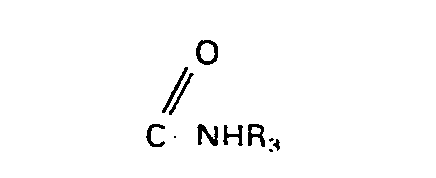
- R is CH 2 OH or with R 2 in the meaning of a hydrogen atom, an alkyl, cycloalkyl-aryl or heterocyclic radical or R 1 the rest with R 3 meaning an acid residue or the residue R 2 and
- a a -CH 2 -CH 2 - or cis-CH CH group
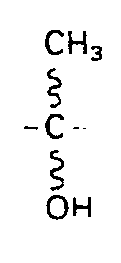
- W is a free or functionally modified hydroxymethylene group or a free or functionally modified Group
- the OH group can be a- or ß-permanent
- D and E together a direct bond or D a straight-chain, branched-chain or ring-shaped alkylene group with 1-10 C atoms, which is optionally substituted by fluorine atom
- Represents oxygen or sulfur atom, a direct bond, a -C ⁇ C bond or a -CR 6 CR 7 group, where R 6 and R 7 differ and represent a hydrogen atom, a chlorine atom or a C 1 -C 4 - alkyl group, R 4, and if R 2 is a free or functionally modified hydroxy group, R5 is a hydrogen atom, an alkyl, a halogen-substituted alkyl, a cycloalkyl, an optionally substituted aryl or a heterocyclic group, the meaning of a hydrogen atom, whose salts mean with physiologically compatible bases.
- Alkyl groups R 2 are straight or branched alkyl groups with 1-10 C atoms, such as methyl, ethyl, propyl, butyl, isobutyl, tert-butyl, pentyl, neopentyl, hexyl, heptyl, decyl.
- the alkyl groups R 2 can optionally be mono- to polysubstituted by halogen atoms, alkoxy groups, optionally substituted aryl or aroyl groups, dialkylamino and trialkylammonium, the simple substitution being preferred.
- substituents are fluorine, chlorine or bromine, phenyl, dimethylamino, diethylamino, methoxy, ethoxy.
- Preferred alkyl groups R 2 are those with 1-4 C atoms, such as methyl, ethyl, propyl, dimethylaminopropyl, isobutyl, butyl.
- Suitable aryl groups R 2 are both substituted and unsubstituted aryl groups, such as phenyl, 1-naphthyl and 2-naphthyl, which can each be substituted by 1-3 halogen atoms, one phenyl group, 1-3 alkyl groups, each with 1-4 C. -Atoms, a chloromethyl, fluoromethyl, trifluoromethyl, carboxyl, hydroxy or alkoxy group with 1-4 carbon atoms.
- the substituents in the 3- and 4-position on the phenyl ring are preferred, for example by fluorine, chlorine, alkoxy or trifluoromethyl or in the 4-position by hydroxy.
- the cycloalkyl group R 2 can contain 3-10, preferably 5 and 6 carbon atoms in the ring.
- the rings can be substituted by alkyl groups with 1-4 carbon atoms. Examples include cyclopentyl, cyclohexyl, methylcyclohexyl and adamantyl.
- Suitable heterocyclic groups R 2 are 5- and 6-membered heterocycles which contain at least 1 heteroatom, preferably nitrogen, oxygen or sulfur. Examples include 2-furyl, 2-thienyl, 2-pyridyl, 3-pyridyl, 4-pyridyl, oxazolyl, thiazolyl, pyrimidinyl, pyridazinyl, pyrazinyl, 3-furyl, 3-thienyl, 2-tetrazolyl and others
- Physiologically acceptable acid residues are suitable as acid residue R 3 .
- Preferred acids are organic carboxylic acids and sulfonic acids with 1-15 carbon atoms, which belong to the aliphatic, cycloaliphatic, aromatic, aromatic-aliphatic and heterocyclic series. These acids can be saturated, unsaturated and / or polybasic and / or substituted in the usual way. Examples of the substituents are alkyl, hydroxyl, alkoxy, oxo or amino groups or halogen atoms.
- Examples include the following carboxylic acids: formic acid, acetic acid, propi oic acid, butyric acid, isobutyric acid, valeric acid, isovaleric acid, caproic acid, enanthic acid, caprylic acid, pelargonic acid, capric acid, undecylic acid, lauric acid, tridecylic acid, myristic acid, pentadecylic acid, trimethylacetic acid, Diäthylessigkla, tert-butylacetic acid, cyclopropylacetic acid, Cyclopentylessigaäure, cyclohexylacetic acid, cyclopropanecarboxylic acid, cyclohexanecarboxylic acid, phenylacetic acid , Phenoxyacetic acid, methoxyacetic acid, ethoxyacetic acid, mono-, di- and trichloroacetic acid, aminoacetic acid, diethylaminoacetic acid, piperidinoacetic acid,
- sulfonic acids are alkanesulfonic acids with 1-10 C atoms, such as methanesulfonic acid, ethanesulfonic acid, isopropanesulfonic acid and butanesulfonic acid, and also ⁇ -chloroethanesulfonic acid, cyclopentanesulfonic acid, cyclohexanesulfonic acid, benzenesulfonic acid, p-toluenesulfonic acid, p-chlorobenzenesulfonic acid, N, N-n-dimethylaminosulfonic acid Diethylaminosulfonic acid, N, N-bis- (ß-chloroethyl) -aminosulfonic acid, N, N-diisobutylaminosulfonic acid, N, N-dibutylaminosulfonic acid, pyrrolidin
- the hydroxyl groups in W and R 4 can be functionally modified, for example by etherification or esterification, it also being possible for the modified hydroxyl group in W to be ⁇ or ⁇ , with free hydroxyl groups being preferred.
- ether and acyl radicals are suitable as ether and acyl radicals.
- ether radicals such as, for example, the tetrahydropyranyl, tetrahydrofuranyl, ⁇ -ethoxyethyl, trimethylsilyl, dimethyl-tert-butyl-silyl and tribenzyl-silyl radical, are preferred.
- Possible acyl radicals are the same as those mentioned for R 3 under organic carboxylic acids, for example acetyl, propionyl, butyryl and benzoyl.
- Suitable alkyl groups R 5 are straight-chain and branched-chain alkyl having 1-10 and alkenyl residues having 2-10, in particular 1-6 or 2-6, carbon atoms, which are optionally substituted by optionally substituted phenyl, alkyl having 1- 4 C atoms or halogen can be substituted, and in the event that D and E together represent a direct connection, optionally substituted in the 1-position by fluorine or C 1 -C 4 alkyl, alkynyl having 2-6 C atoms.
- Examples include methyl, ethyl, propyl, isobutyl, tert-butyl, pentyl, hexyl, heptyl, octyl, butenyl, isobutenyl, propenyl, pentenyl, hexenyl and benzyl.
- Possible alkynyl radicals are: ethynyl, propynyl-yl, propin-2-yl, 1-methylpropin-2-yl, 1-fluoropropyn-2-yl, 1-ethylpropin-2-yl, 1-fluorobutin-2-yl, Butin-2-yl, butin-3-yl, 1-methyl-butin-3-yl, 1-methylpentin-3-yl, 1-fluoropentin-3-yl, l-methylpentin-2-yl, 1-fluorpentin-2-yl, 1-methylpentin-4-yl, l-fluoropentin-4-yl, hexin-1-yl, 1-methylhexin-2-yl, 1-fluoro-hexin-2-yl, 1- Methylhexin-3-yl, 1-methylhexin-4-yl, hexin-3-yl, 1,1-dimethylpropin-2-yl, 1,1-dimethylbutin
- the cycloalkyl group R 5 can contain 3-10, preferably 3-6 carbon atoms in the ring.
- the rings can be substituted by alkyl groups with 1-4 carbon atoms.
- Examples include cyclopropyl, cyclobutyl, cyclopentyl, cyclohexyl, methylcyclohexyl and adamantyl.
- Suitable substituted or unsubstituted aryl groups R 5 are: phenyl, 1-naphthyl and 2-naphthyl, which can each be substituted by 1-3 halogen atoms, one phenyl group, 1-3 alkyl groups each having 1-4 C atoms, a chloromethyl, fluoromethyl, trifluoromethyl, carboxyl, alkoxy or hydroxy group.
- the substitution in the 3- and 4-position on the phenyl ring is preferred, for example by flucr, chlorine, alkoxy or trifluoromethyl or in the 4-position by hydroxy.
- Suitable heterocyclic groups R 5 are 5- and 6-membered heterocycles which contain at least 1 heteroatom, preferably nitrogen, oxygen and sulfur. Examples include 2-furyl, 2-thienyl, 2-pyridyl, 3-pyridyl, 4-pyridyl, oxazolyl, thiazolyl, pyrimidinyl, pyridazinyl, pyrazinyl, 3-furyl, 3-thienyl, among others
- Suitable alkylene groups D - are straight-chain or branched-chain, ring-shaped, saturated and unsaturated alkylene radicals, preferably saturated with 1-10, in particular 1-5, carbon atoms, which can optionally be substituted by fluorine atoms.
- Examples include: methylene, fluoromethylene, difluoromethylene, ethylene, 1,2-propylene, ethylethylene, trimethylene, tetramethylene, pentamethylene, 1,1-difluoroethylene, 1-fluoroethylene, 1-methyltetramethylene, 1-methyl-tri-methylene, 1-methylene ethylene, 1-methylene-tetramethylene, 2-methyl-trimethylene, 2-methyltetramethylene, 1,1-trimethylene-ethylene, 1,2-methylene-ethylene. If a double bond is present, it is in the 2-, 3- or 4-position in the alkylene radicals.
- Suitable alkyl groups R 6 and R 7 include groups with 1-4 C atoms, as have already been mentioned for R 2 .
- Inorganic and organic bases are suitable for salt formation, as are known to the person skilled in the art for the formation of physiologically tolerable salts.
- Examples include alkali metal hydroxides such as sodium and potassium hydroxide, alkaline earth metal hydroxides such as calcium hydroxide, ammonia, amines such as ethanolamine, diethanolamine, triethanolamine, N-methylglucamine, morpholine, tris (hydroxymethyl) methylamine, etc.
- the invention also relates to a process for the preparation of the 9-bromo-prostane derivatives of the general formula I according to the invention, characterized in that a compound of the general formula II, wherein the CH group can be ⁇ or ⁇ -permanent.
- reaction of the compounds of general formula II to the compounds of general formula I with tetrabromomethane and triphenylphosphine is carried out in an inert solvent such as dimethylformamide, dimethylacetamide, acetonitrile, methylene chloride at temperatures between 0 ° C and 80 ° C, preferably 2C ° C to 45 ° C in the presence of a base such as pyridine, triethylamine, etc.
- an inert solvent such as dimethylformamide, dimethylacetamide, acetonitrile, methylene chloride at temperatures between 0 ° C and 80 ° C, preferably 2C ° C to 45 ° C in the presence of a base such as pyridine, triethylamine, etc.
- the reduction to the compounds of general formula I with R 1 in the meaning of a CH 2 OH group is carried out with a reducing agent suitable for the reduction of esters or carboxylic acids, such as, for example, lithium aluminum hydride, diisobutyl aluminum hydride, etc. Diethyl ether, tetrahydrofuran, dimethoxyethane, toluene, etc. are suitable as solvents.
- a reducing agent suitable for the reduction of esters or carboxylic acids such as, for example, lithium aluminum hydride, diisobutyl aluminum hydride, etc.
- Diethyl ether, tetrahydrofuran, dimethoxyethane, toluene, etc. are suitable as solvents.
- the reduction is carried out at temperatures from -30 ° C. to the boiling point of the solvent used, preferably 0 ° C. to 30 ° C.
- the functionally modified hydroxy groups are released by known methods. For example, the elimination of hydroxyl protective groups, such as the tetrahydropyranyl radical, in an aqueous solution of an organic acid, such as oxalic acid, acetic acid. Propionic acid, among others, or in an aqueous solution of an inorganic acid, such as hydrochloric acid.
- an inert organic miscible with water is expediently Solvent added.
- Suitable organic solvents are, for example, alcohols, such as methanol and ethanol, and ethers, such as dimethoxyethane, dioxane and tetrahydrofuran. Tetrahydrofuran is preferred.
- the cleavage is preferably carried out at temperatures between 20 ° C and 8 0 ° C.
- the acyl groups are saponified, for example, with alkali or alkaline earth carbonates or hydroxides in an alcohol or in the aqueous solution of an alcohol.
- Aliphatic alcohols are suitable as alcohols, e.g. Methanol, ethanol, butanol, etc., preferably methanol.
- Potassium and sodium salts may be mentioned as alkali carbonates and hydroxides. The potassium salts are preferred.
- Suitable alkaline earth carbonates and hydroxides are, for example, calcium carbonate, calcium hydroxide and barium carbonate.
- the reaction takes place at -10 ° C to + 70 C, preferably at + 25 ° C.
- the introduction of the ester group for R 19 in which R 2 represents an alkyl group with 1-10 C atoms, is carried out according to the methods known to the person skilled in the art.
- the 1-carboxy compounds are reacted, for example, with diazo hydrocarbons in a manner known per se.
- the esterification with diazo hydrocarbons takes place, for example, by mixing a solution of the diazo hydrocarbon in an inert solvent, preferably in diethyl ether, with the 1-carboxy compound in the same or in another inert solvent, such as methylene chloride. When the reaction has ended in 1 to 30 minutes, the solvent is removed and the ester is purified in the customary manner.
- Diazoalkanes are either known or can be prepared by known methods [Org.Reactions Vol. 8, pages 389-394 (1954)].
- ester group for R 1 in which R 2 represents a substituted or unsubstituted aryl group, is carried out according to the methods known to the person skilled in the art.
- the 1-carboxy compounds are reacted with the corresponding arylhydroxy compounds with dicyclohexylcarbodiimide in the presence of an xylene base, for example pyridine, dimethylaminopyridine, triethylamine, in inert solvents.
- Suitable solvents are methylene chloride, ethylene chloride, chloroform, ethyl acetate, tetrahydrofuran, preferably chloroform.
- the reaction is carried out at temperatures between -30 ° C and + 50 ° C, preferably at 10 ° C.
- the hydrogenation of the 5,6-double bond is carried out in a manner known per se at low temperatures, preferably at about -20 ° C., in a hydrogen atmosphere in the presence of a noble metal catalyst.
- a noble metal catalyst for example, 10% palladium on carbon is suitable as a catalyst.
- the process is preferably carried out at a higher temperature at about 20 ° C.
- the prostaglandin derivatives of the general formula I with R 2 meaning hydrogen atom can be converted into a salt with suitable amounts of the corresponding inorganic bases with neutralization.
- the solid inorganic salt is obtained in water containing the stoichiometric amount of the base, after evaporating off the water or after adding a water-miscible solvent, for example alcohol or acetone.
- the PG acid is e.g. dissolved in a suitable solvent, for example ethanol, acetone, diethyl ether, acetonitrile or benzene, and at least the stoichiometric amount of the amine is added to this solution.
- a suitable solvent for example ethanol, acetone, diethyl ether, acetonitrile or benzene
- the salt is usually obtained in solid form or is isolated in a conventional manner after evaporation of the solvent.
- the introduction of the amide group for R 1 takes place according to the methods known to the person skilled in the art.
- a tertiary amine such as, for example, triethylamine
- a tertiary amine such as triethylamine or pyridine.
- the reaction can be carried out without a solvent or in an inert solvent, preferably acetonitrile, tetrahydrofuran, acetone, dimethylacetamide, methylene chloride, diethyl ether, toluene, at temperatures between -80 ° C to 100 ° C, preferably at 0 to 30 ° C.
- the starting product contains OH groups in the prostane residue, these OH groups are also reacted. If end products are ultimately desired which contain free hydroxyl groups in the prostane residue, one expediently starts from starting products in which these are temporarily protected by ether or acyl residues, which are preferably easily removable.
- the compounds of general formula II which serve as starting material can be prepared, for example, by using a ketone of general formula IV in a manner known per se.
- R 1 is the radicals means and A, B, D, E and R 5 have the meanings given above and free OH groups in R 4 and W are protected, reduced with sodium borohydride, lithium tris (tert-butoxy) aluminum hydride etc. and, if appropriate, then the epimers Separates 9a and 9ß-hydroxy compounds of the general formula II.
- the new 9-bromo-prostaglandins are characterized by greater stability.
- the new 9-bromo-prostate derivatives of the general formula I are valuable pharmaceuticals because, with a similar spectrum of activity, they have a significantly improved (higher specificity) and, above all, a much longer effect than the corresponding natural prostaglandins.
- the new prostaglandin analogs have a strong luteolytic effect, i.e. To trigger luteolysis, much lower dosages are required than with the corresponding natural prostaglandins.
- the new prostaglandin derivatives are suitable for inducing menstruation or for interrupting pregnancy after a single enteral or parenteral application. They are also suitable for synchronizing the sexual cycle in female mammals such as rabbits, cattle, horses, pigs, etc. Also suitable
- prostaglandin derivatives according to the invention for cervical dilatation as preparation for diagnostic or therapeutic interventions.
- the good tissue specificity of the antifertile substances according to the invention is evident when examined on other smooth muscular organs, such as on the guinea pig ileum or on the isolated rabbit trachea, where a significantly lower stimulation can be observed than by natural prostaglandins.
- the substances according to the invention also have a bronchospasmolytic effect. They also cause the nasal mucosa to swell.
- the active compounds according to the invention inhibit gastric acid secretion, show a cytoprotective and ulcer healing effect and thus counteract the undesirable consequences of nonsteroidal anti-inflammatory drugs (prostaglandin synthesis inhibitors). They also have a cytoprotective effect on the liver and also on the pancreas.
- the new prostaglandins can also be used in combination e.g. can be used with ß-blockers and diuretics.
- the abortive The activity of the compounds is relatively low and corresponds approximately to that of prostaglandin E 2 .
- the dose of the compounds is 1-1500 ⁇ g / kg / day when administered to the human patient.
- the active compounds can be converted for medical use in egg n e for inhalation, for oral, parenteral or local (eg, vaginal) administration.
- Aeration solutions are expediently prepared for inhalation.
- Tablets, coated tablets or capsules, for example, are suitable for oral administration.
- Sterile, injectable, aqueous or oily solutions are used for parenteral administration.
- the invention thus also relates to medicaments based on the compounds of the general formula I and the customary auxiliaries and excipients.
- the active compounds according to the invention are to be used in conjunction with the auxiliary agents known and customary in galenics, e.g. for the preparation of preparations for triggering an abortion, for cycle control, for the induction of childbirth or for the treatment of hypertension.
- the preparations can contain 0.01-100 mg of the active compound.
- IR 2940, 2857, 1730, 1600, 1588, 1494, 970 / cm.
- IR 3590, 3420 (wide), 2930, 2860, 1730, 1600, 1589, 1495, 971 / cm.
- IR 3610, 3410 (broad), 2931, 2858, 1731, 1599, 1588, 971 / cm.
- IR 2940, 2858, 1730, 1600, 1588, 1494, 970 / cm.
- IR 3600, 3400 (wide), 2930, 2858, 1730, 1599, 1589, 970 / cm.
- IR 3600, 3400 (wide), 2935, 1732, 973 / cm.
- IR 3610, 3410 (wide), 2935, 1733, 973 / cm.
- IR 3600, 3420 (wide), 2936, 2860, 1731, 971 / cm.
- IR 3620, 3420 (wide), 2938, 1730, 974 / cm.
- IR 3610, 3410 (broad), 2933, 2856, 1731, 972 / cm.
- IR 3600, 3400 (wide), 2935 , 2855, 1 73 0 , 970 / cm.
- IR 3600, 3400 (wide), 2942, 2850, 1732, 970 / cm.
- IR 3600, 3410 (broad), 2941, 2853, 1733, 972 / cm.
- 225 mg of the methyl ester prepared according to Example 1 are stirred for 1 hour with 12 ml of a solution of potassium hydroxide in ethanol and water (preparation: 2 g of potassium hydroxide are dissolved in 75 ml of ethanol and 25 ml of water).
- IR 3600, 3430 (wide), 2925, 2855, 1710, 1599, 1587, 1493.970 cm.
- Example 14 115 mg of the title compound is obtained as a waxy mass from 0.14 g of the methyl ester prepared according to Example 2.
- IR 3590, 3400 (wide), 2930, 2853, 1710, 1599, 1588, 1492, 969 / cm.
- Example 14 Analogously to Example 14, 0.14 g of the title compound is obtained as a colorless oil from 0.19 g of the methyl ester prepared according to Example 3.
- IR 3600, 3400 (wide), 2932, 2853, 1709, 1599, 1588, 1492, 970 / cm.
- Example 14 Analogously to Example 14, 0.24 g of the title compound is obtained as a colorless oil from 0.3 g of the methyl ester prepared according to Example 4.
- IR 3610, 3420 (broad), 2933 , 2852 , 1710, 1 599, 1588, 1493, 971 / cm.
- IR 3600, 3410 (wide), 2935, 1709, 973 / cm.
- Example 14 Analogously to Example 14, 0.14 g of the methyl ester prepared according to Example 6 gives 0.10 g of the title compound as a colorless oil.
- IR 3600, 3410 (wide), 2938, 1710, 974 / cm.
- Example 14 Analogously to Example 14, 0.14 g of the methyl ester prepared according to Example 7 gives 0.11 g of the title compound as a colorless oil.
- IR 3600, 3405 (wide), 2940, 1710, 978 / cm.
- Example 14 Analogously to Example 14, 0.16 g of the title compound is obtained as a colorless oil from 0.2 g of the methyl ester prepared according to Example 8.
- IR 3600, 3405 (wide), 2938, 1710, 976 / cm.
- Example 14 Analogously to Example 14, 0.25 g of the methyl ester prepared according to Example 9 gives 0.20 g of the title compound as a colorless oil.
- IR 3600, 3410 (wide), 2945, 2860, 1712, 978 / cm.
- Example 14 Analogously to Example 14, 0.25 g of the methyl ester prepared according to Example 10 gives 0.20 g of the title compound as a colorless oil.
- IR 3600, 3410 (wide), 2940, 2855, 1710, 1605, 976 / cm.
- Example 14 Analogously to Example 14, 0.19 g of the title compound is obtained as a colorless oil from 0.23 g of the methyl ester prepared according to Example 11.
- IR 3600, 3410 (wide), 2938, 2854, 1710, 1605, 976 / cm.
- Example 14 Analogously to Example 14, 0.17 g of the title compound is obtained as a colorless oil from 0.2 g of the methyl ester prepared according to Example 12.
- IR 3600, 3410 (wide), 2945, 2852, 1708, 1603, 976 / cm.
- Example 14 Analogously to Example 14, 0.17 g of the title compound is obtained as a colorless oil from 0.2 g of the methyl ester prepared according to Example 13.
- IR 3610, 3410 (wide), 2948, 2850, 1710, 1604, 976 / cm.
- IR 3600, 3425 (wide), 2950, 2858, 1600, 1588, 1485, 978 / cm.
- IR 3600, 3420 (wide), 2948, 2858, 1600, 1588, 1480, 976 / cm.
- IR 3600, 3410, 2954, 2860, 1718, 1600, 1588, 976 / cm.
- IR 3600, 3405, 2956, 2860, 1718, 1601, 1588, 976 / cm.
- IR 3600, 3450, 2958, 2840, 1668, 1608, 1590, 976 / cm.
Landscapes
- Organic Chemistry (AREA)
- Chemical & Material Sciences (AREA)
- Health & Medical Sciences (AREA)
- Life Sciences & Earth Sciences (AREA)
- General Health & Medical Sciences (AREA)
- Chemical Kinetics & Catalysis (AREA)
- General Chemical & Material Sciences (AREA)
- Medicinal Chemistry (AREA)
- Nuclear Medicine, Radiotherapy & Molecular Imaging (AREA)
- Pharmacology & Pharmacy (AREA)
- Engineering & Computer Science (AREA)
- Animal Behavior & Ethology (AREA)
- Bioinformatics & Cheminformatics (AREA)
- Public Health (AREA)
- Veterinary Medicine (AREA)
- Organic Low-Molecular-Weight Compounds And Preparation Thereof (AREA)
- Pharmaceuticals Containing Other Organic And Inorganic Compounds (AREA)
- Acyclic And Carbocyclic Compounds In Medicinal Compositions (AREA)
- Hydrogenated Pyridines (AREA)
- Saccharide Compounds (AREA)
- Pyrane Compounds (AREA)
Abstract


Description
- Die vorliegende Erfindung betrifft neue 9-Brom-prostaglandinderivate, Verfahren zu ihrer Herstellung sowie ihre Verwendung als Arzneimittel.
- Aus dem sehr umfangreichen Stand der Technik der Prostaglandine und ihrer Analoga weiß man, daß diese Stoffklasse aufgrund ihrer biologischen und pharmakologischen Eigenschaften zur Behandlung von Säugetieren, einschließlich des Menschen, geeignet ist. Ihre Verwendung als Arzneimittel stößt jedoch häufig auf Schwierigkeiten. Die meisten natürlichen Prostaglandine besitzen eine für therapeutische Zwecke zu kurze Wirkungsdauer, da sie zu rasch durch verschiedene enzymatische Prozesse metabolisch abgebaut werden. Alle Strukturveränderungen haben das Ziel, die Wirkungsdauer sowie die Selektivität der Wirksamkeit zu steigern.
- Es wurde nun gefunden, daß die neuen 9-Brom-prostaglandinderivate eine hervorragende Wirkungsspezifität, bessere Wirksamkeit, längere Wirkungsdauer als natürliche Prostaglandine besitzen und besonders für die orale Applikation geeignet sind.
- Die Erfindung betrifft 9-Brom-prostanderivate der allgemeinen Formel I


- Als Alkylgruppen R2 sind gerade oder verzweigte Alkylgruppen mit 1-10 C-Atomen zu betrachten, wie beispielsweise Methyl, Äthyl, Propyl, Butyl, Isobutyl, tert.-Butyl, Pentyl, Neopentyl, Hexyl, Heptyl, Decyl. Die Alkylgruppen R2 können gegebenenfalls ein- bis mehrfach substituiert sein durch Halogenatome, Alkoxygruppen, gegebenenfalls substituierte Aryl- bzw. Aroylgruppen, Dialkylamino und Trialkylammonium, wobei die einfache Substitution bevorzugt sein soll. Als Substituenten seien beispielsweise genannt Fluor, Chlor oder Brom, Phenyl, Dimethylamino, Diäthylamino, Methoxy, Äthoxy. Als bevorzugte Alkylgruppen R2 sind solche mit 1-4 C-Atomen, wie z.B. Methyl, Äthyl, Propyl, Dimethylaminopropyl, Isobutyl, Butyl zu nennen.
- Als Arylgruppen R2 kommen sowohl substituierte wie auch unsubstituierte Arylgruppen in Betracht, wie beispielsweise Phenyl, 1-Naphthyl und 2-Naphthyl, die jeweils substituiert sein können durch 1-3 Halogenatome, eine Phenylgruppe, 1-3 Alkylgruppen mit jeweils 1-4 C-Atomen, eine Chlormethyl-, Fluormethyl-, Trifluormethyl-, Carboxyl-, Hydroxy- oder Alkoxygruppe mit 1-4 C-Atomen. Bevorzugt sind die Substituenten in 3- und 4-Stellung am Phenylring, zum Beispiel durch Fluor, Chlor, Alkoxy oder Trifluormethyl oder in 4-Stellung durch Hydroxy.
- Die Cycloalkylgruppe R2 kann im Ring 3-10, vorzugsweise 5 und 6 Kohlenstoffatome enthalten. Die Ringe können durch Alkylgruppen mit 1-4 Kohlenstoffatomen substituiert sein. Beispielsweise seien genannt Cyclopentyl-, Cyclohexyl, Methylcyclohexyl und Adamantyl.
- Als heterocyclische Gruppen R2 kommen 5- und 6-gliedrige Heterocyclen in Frage, die wenigstens 1 Heteroatom, vorzugsweise Stickstoff, Sauerstoff oder Schwefel enthalten. Beispielsweise seien genannt 2-Furyl, 2-Thienyl, 2-Pyridyl, 3-Pyridyl, 4-Pyridyl, Oxazolyl, Thiazolyl, Pyrimidinyl, Pyridazinyl, Pyrazinyl, 3-Furyl, 3-Thienyl, 2-Tetrazolyl u.a.
- Als Säurerest R3 kommen physiologisch verträgliche Säurereste in Frage. Bevorzugte Säuren sind organische Carbonsäuren und Sulfonsäuren mit 1-15 Kohlenstoffatomen, die der aliphatischen, cycloaliphatischen, aromatischen, aromatisch-aliphatischen und heterocyclischen Reihe angehören. Diese Säuren können gesättigte, ungesättigte und/oder mehrbasisch und/oder in üblicher Weise substituiert sein. Als Beispiele für die Substituenten seien Alkyl-, Hydroxy-, Alkoxy-, Oxo- oder Aminogruppen oder Halogenatome erwähnt. Beispielsweise seien folgende Carbonsäuren genannt: Ameisensäure, Essigsäure, Propionsäure, Buttersäure, Isobuttersäure, Valeriansäure, Isovaleriansäure, Capronsäure, Önanthsäure, Caprylsäure, Pelargonsäure, Caprinsäure, Undecylsäure, Laurinsäure, Tridecylsäure, Myristinsäure, Pentadecylsäure, Trimethylessigsäure, Diäthylessigsäure, tert.-Butylessigsäure, Cyclopropylessigsäure, Cyclopentylessigaäure, Cyclohexylessigsäure, Cyclopropancarbonsäure, Cyclohexancarbonsäure, Phenylessigsäure, Phenoxyessigsäure, Methoxyessigsäure, Äthoxyessigsäure, Mono-, Di- und Trichloressigsäure, Aminoessigsäure, Diäthylaminoessigsäure, Piperidinoessigsäure, Morpholinoessigsäure, Milchsäure, Bernsteinsäure, Adipinsäure, Benzoesäure, mit Halogen-, Trifluormethyl-, Hydroxy-, Alkoxy- oder Carboxy-Gruppen substituierte Benzoesäuren, Nikotinsäure, Isonikotinsäure, Furan-2-carbonsäure, Cyclopentylpropionsäure. Als besonders bevorzugte Acylreste werden solche mit bis zu 10 Kohlenstoffatomen betrachtet. Als Sulfonsäuren kommen beispielsweise Alkansulfonsäuren mit 1-10 C-Atomen wie z.B. Methansulfonsäure, Äthansulfonsäure, Isopropansulfonsäure und Butansulfonsäure sowie ß-Chloräthansulfonsäure, Cyclopentansulfonsäure, Cyclohexansulfonsäure, Benzolsulfonsäure, p-Toluolsulfonsäure, p-Chlorbenzolsulfonsäure, N,N-Dimethylaminosulfonsäure, N,N-Diäthylaminosulfonsäu- re, N,N-Bis-(ß-chloräthyl)-aminosulfonsäure, N,N-Diisobutylaminosulfonsäure, N,N-Dibutylaminosulfonsäure, Pyrrolidino-, Piperidino-, Piperazino-, N-Methylpiperazino- und Morpholinosulfonsäure in Frage.
- Die Hydroxygruppen in W und R4 können funktionell abgewandelt sein, beispielsweise durch Verätherung oder Veresterung, wobei auch die abgewandelte Hydroxygruppe in W α- oder ß-ständig sein kann, wobei freie Hydroxygruppen bevorzugt sind.
- Als Äther- und Acylreste kommen die dem Fachmann bekannten Reste in Betracht. Bevorzugt sind leicht abspaltbare Ätherreste, wie beispielsweise der Tetrahydropyranyl-, Tetrahydrofuranyl-, α-Äthoxyäthyl-, Trimethylsilyl-, Dimethyl-tert.-butyl-silyl- und Tribenzyl-silylrest. Als Acylreste kommen die gleichen wie für R3 unter organischen Carbonsäuren genannt in Frage, namentlich genannt seien beispielsweise Acetyl, Propionyl, Butyryl und Benzoyl. Als Alkylgruppen R5 kommen gerad- und verzweigtkettige Alkyl- mit 1-10- und Alkenylreste mit 2-10, insbesondere 1-6 bzw. 2-6 C-Atomen, in Frage, die gegebenenfalls durch gegebenenfalls substituiertes Phenyl, Alkyl mit 1-4 C-Atomen oder Halogen substituiert sein können, und für den Fall, daß D und E gemeinsam eine Direktverbindung bedeuten, gegebenenfalls in 1-Stellung durch Fluor oder C1-C4-Alkyl substituiertes Alkinyl mit 2-6 C-Atomen. Beispielsweise genannt seien Methyl, Äthyl, Propyl, Isobutyl, tert.-Butyl, Pentyl, Hexyl, Heptyl, Octyl, Butenyl, Isobutenyl, Propenyl, Pentenyl, Hexenyl und Benzyl.
- Als Alkinylreste kommen in Betracht: Äthinyl, Propinl-yl, Propin-2-yl, 1-Methylpropin-2-yl, 1-Fluorpropin-2-yl, 1- Äthylpropin-2-yl, 1-Fluorbutin-2-yl, Butin-2-yl, Butin-3-yl, 1-Methyl-butin-3-yl, 1-Methylpentin-3-yl, 1-Fluor-pentin-3-yl, l-Methyl-pentin-2-yl, 1-Fluorpentin-2-yl, 1-Methylpentin-4-yl, l-Fluorpentin-4-yl, Hexin-1-yl, 1-Methylhexin-2-yl, 1-Fluor- hexin-2-yl, 1-Methylhexin-3-yl, 1-Methylhexin-4-yl, Hexin-3-yl, 1,1-Dimethylpropin-2-yl, 1,1-Dimethylbutin-3-yl, 1,1-Dimethyl- pentin-3-yl, 1,1-Dimethylpentin-4-yl, 1,1-Dimethylhexin-3-yl, 1,1-Dimethylhexin-4-yl usw.. Für Halogen als Substituent der Alkyl- und Alkenylgruppen R5 kommen Brom, Chlor und Fluor in Betracht. Bevorzugt sind Chlor und Fluor.
- Die Cycloalkylgruppe R5 kann im Ring 3-10, vorzugsweise 3-6 Kohlenstoffatome enthalten. Die Ringe können durch Alkylgruppen mit 1-4 Kohlenstoffatomen substituiert sein.
- Beispielsweise genannt seien Cyclopropyl, Cyclobutyl, Cyclopentyl, Cyclohexyl, Methyl-cyclohexyl und Adamantyl.
- Als substituierte bzw. unsubstituierte Arylgruppen R5 kommen beispielsweise in Betracht: Phenyl, 1-Naphthyl und 2-Naphthyl, die jeweils substituiert sein können durch 1-3 Halogenatome, eine Phenylgruppe, 1-3 Alkylgruppen mit jeweils 1-4 C-Atomen, eine Chlormethyl-, Fluormethyl-, Trifluormethyl-, Carboxyl-, Alkoxy- oder Hydroxygruppe. Bevorzugt ist die Substitution in 3- und 4-Stellung am Phenylring zum Beispiel durch Flucr, Chlor, Alkoxy oder Trifluormethyl oder in 4-Stellung durch Hydroxy.
- Als heterocyclische Gruppen R5 kommen 5- und 6-gliedrige Heterocyclen in Frage, die wenigstens 1 Heteroatom, vorzugsweise Stickstoff, Sauerstoff uder Schwefel enthalten. Beispielsweise seien genannt 2-Furyl, 2-Thienyl, 2-Pyridyl, 3-Pyridyl, 4-Pyridyl, Oxazolyl, Thiazolyl, Pyrimidinyl, Pyridazinyl, Pyrazinyl, 3-Furyl, 3-Thienyl, u.a.
- Als Alkylengruppe D-kommen geradkettige oder verzweigt- kettige, ringförmige, gesattigte und ungesättigte Alkylenreste, vorzugsweise gesättigte mit 1-10, insbesondere 1-5 C-Atomen, in Frage, die gegebenenfalls durch Fluoratome substituiert sein können. Beispielsweise seien genannt: Methylen,Fluormethylen,Difluormethylen, Äthylen, 1,2-Propylen, Äthyläthylen, Trimethylen, Tetramethylen, Pentamethylen, 1.1-Difluoräthylen, 1-Fluoräthylen, 1-Methyltetramethylen, 1-Methyl-tri-methylen, 1-Methylen-äthylen, 1-Methylen-tetramethylen, 2-Methyl-trimethylen, 2-Methyltetramethylen, 1,1-Trimethylen-äthylen, 1,2-Methylenäthylen. Wenn eine Doppelbindung vorliegt, befindet sie sich in den Alkylenresten in 2-, 3- oder 4-Stellung.
- Geeignete Alkylgruppen R6 und R7 schließen Gruppen mit 1-4 C-Atomen ein, wie sie für R2 bereits erwähnt wurden.
- Zur Salzbildung sind anorganische und organische Basen geeignet, wie sie dem Fachmann zur Bildung physiologisch verträglicher Salze bekannt sind. Beispielsweise seien genannt Alkalihydroxide, wie Natrium- und Kaliumhydroxid, Erdalkalihydroxide, wie Calciumhydroxid, Ammoniak, Amine, wie Äthanolamin, Diäthanolamin, Triäthanolamin, N-Methylglucamin, Morpholin, Tris-(hydroxymethyl)-methylamin usw.
- Die Erfindung betrifft ausserdem ein Verfahren zur Herstellung der erfindungsgemässen 9-Brom-prostanderivate der allgemeinen Formel I, dadurch gekennzeichnet, dass man in an sich bekannter Weise eine Verbindung der allgemeinen Formel II,


- Die Umsetzung der Verbindungen der allgemeinen Formel II zu den Verbindungen der allgemeinen Formel I mit Tetrabrommethan und Triphenylphosphin erfolgt in einem inerten Lösungsmittel wie beispielsweise Dimethylformamid, Dimethylacetamid, Acetonitril, Methylenchlorid bei Temperaturen zwischen 0°C und 80°C, vorzugsweise 2C°C bis 45°C in Gegenwart einer Base wie beispielsweise Pyridin, Triäthylamin usw.
- Setzt man einen Alkohol der allgemeinen Formel II mit einer ß-ständigen 9-Hydroxygruppe ein, so erhält man Verbindungen der allgemeinen Formel I mit 9-α-ständigem Bromatom, setzt man einen Alkohol mit einer α-ständigen Hydroxygruppe ein, so erhält man Verbindungen mit 9-ß-ständigem Bromatom.
- Die Reduktion zu den Verbindungen der allgemeinen Formel I mit R1 in der Bedeutung einer CH2OH-Gruppe wird mit einem für die Reduktion von Estern oder Carbonsäuren geeigneten Reduktionsmittel wie beispielsweise Lithiumaluminiumhydrid, Diisobutylaluminiumhydrid usw. durchgeführt. Als Lösungsmittel kommen Diäthyläther, Tetrahydrofuran, Dimethoxyäthan, Toluol usw. in Frage.
- Die Reduktion wird bei Temperaturen von -30°C bis zur Siedetemperatur des verwendeten Lösungsmittels, vorzugsweise 0°C bis 30°C vorgenommen.
- Die Freisetzung der funktionell abgewandelten Hydroxygruppen erfolgt nach bekannten Methoden. Beispielsweise wird die Abspaltung von Hydroxyschutzgruppen, wie beispielsweise des Tetrahydropyranylrestes, in einer wässrigen Lösung einer organischen Säure, wie z.B. Oxalsäure, Essigsäure. Propionsäure u.a., oder in einer wässrigen Lösung einer anorganischen Säure, wie z.B. Salzsäure, durchgeführt. Zur Verbesserung der Löslichkeit wird zweckmässigerweise ein mit Wasser mischbares inertes organisches Lösungsmittel zugesetzt. Geeignete organische Lösungsmittel sind z.B. Alkohole, wie Methanol und Äthanol, und Äther, wie Dimethoxyäthan, Dioxan und Tetrahydrofuran. Tetrahydrofuran wird bevorzugt angewendet. Die Abspaltung wird vorzugsweise bei Temperaturen zwischen 20°C und 80°C durchgeführt.
- Die Verseifung der Acylgruppen erfolgt beispielsweise mit Alkali- oder Erdalkali-carbonaten oder -hydroxyden in einem Alkohol oder in der wässrigen Lösung eines Alkohols. Als Alkohole kommen aliphatische Alkohole in Betracht, wie z.B. Methanol, Äthanol,Butanol usw., vorzugsweise Methanol. Als Alkalicarbonate und -hydroxyde seien Kalium- und Natriumsalze genannt. Bevorzugt sind die Kaliumsalze.
- Als Erdalkalicarbonate und -hydroxyde sind beispielsweise geeignet Calciumcarbonat, Calciumhydroxyd und Bariumcarbonat. Die Umsetzung erfolgt bei -10°C bis + 70 C, vorzugsweise bei + 25°C. Die Einführung der Estergruppe

- Die Einführung der Estergruppe

- Sollen im Primärprodukt enthaltene C=C-Doppelbindungen reduziert werden, erfolgt die Hydrierung nach an sich bekannten Methoden.
- Die Hydrierung der 5,6-Doppelbindung wird in an sich bekannter Weise bei tiefen Temperaturen, vorzugsweise bei etwa -20°C, in einer Wasserstoffatmosphäre in Gegenwart eines Edelmetallkatalysators durchgeführt. Als Katalysator ist zum Beispiel 10% Palladium auf Kohle geeignet.
- Werden sowohl die 5,6- als auch die 13,14-Doppelbindung hydriert, so arbeitet man bei höherer Temperatur vorzugsweise bei etwa 20°C.
- Die Prostaglandinderivate der allgemeinen Formel I mit R2 in der Bedeutung eines Wasserstoffatoms können mit geeigneten Mengen der entsprechenden anorganischen Basen unter Neutralisierung in ein Salz überführt werden. Bei- espelsweise erhalt man heim losen der entsprechenden PG- Sauren in Wasser, das die stöchiometrische Menge der Base enthält, nach Abdampfen des Wassers oder nach Zugabe eines mit Wasser mischbaren Lösungsmittels, z.B. Alkohol oder Aceton, das feste anorganische Salz.
- Zur Herstellung eines Aminsalzes, die in üblicher Weise erfolgt, wird die PG-Säure z.B. in einem geeigneten Lösungsmittel, beispielsweise Äthanol, Aceton, Diäthyläther, Acetonitril oder Benzol gelöst und mindestens die stöchiometrische Menge des Amins dieser Lösung zugesetzt. Dabei fällt das Salz gewöhnlich in fester Form an oder wird nach Verdampfen des Lösungsmittels in üblicher Weise isoliert.
- Die Einführung der Amidgruppe

- Eine weitere Möglichkeit für die Einführung der Amidgruppe


- Die Umsetzung der Verbindung der allgemeinen Formel I (R2=H) mit einem Isocyanat der allgemeinen Formel III erfolgt gegebenenfalls unter Zusatz eines tertiären Amins, wie z.B. Triäthylamin oder Pyridin. Die Umsetzung kann ohne Lösungsmittel oder in einem inerten Lösungsmittel, vorzugsweise Acetonitril, Tetrahydrofuran, Aceton, Dimethylacetamid, Methylenchlorid, Diäthyläther, Toluol, bei Temperaturen zwischen -80°C bis 100°C, vorzugsweise bei 0 bis 30 C,vorgenommen werden.
- Enthält das Ausgangsprodukt OH-Gruppen im Prostanrest, so werden diese OH-Gruppen auch zur Reaktion gebracht. Werden letztlich Endprodukte gewünscht, die freie Hydroxylgruppen im Prostanrest enthalten, geht man zweckmässigerweise von Ausgangsprodukten aus, in denen diese durch vorzugsweise leicht abspaltbare Äther- oder Acylreste intermediär geschützt sind.
- Die als Ausgangsmaterial dienenden Verbindungen der allgemeinen Formel II können beispielsweise hergestellt werden, in dem man in an sich bekannter Weise ein Keton der allgemeinen Formel IV -


- Im Vergleich zu PGE-Derivaten zeichnen sich die neuen 9-Brom -prostaglandine durch grössere Stabilität aus.
- Die neuen 9-Brom -prostanderivate der allgemeinen Formel I sind wertvolle Pharmaka, da sie bei ähnlichem Wirkungssprektrum eine wesentlich verbesserte (höhere Spezifität) und vor allem wesentlich längere Wirkung aufweisen als die entsprechenden natürlichen Prostaglandine.
- Die neuen Prostaglandin-Analoga wirken stark luteolytisch, d.h. zur Auslösung einer Luteolyse benötigt man wesentlich geringere Dosierungen als bei den entsprechenden natürlichen Prostaglandinen.
- Auch zur Auslösung von Aborten, insbesondere nach oraler oder intravaginaler Applikation, sind wesentlich geringere Mengen der neuen Prostaglandinanaloga im Vergleich zu den natürlichen Prostaglandinen erforderlich.
- Bei der Registrierung der isotonischen Unteruskontraktion an der narkotisierten Ratte und am isolierten Rattenuterus zeigt sich, dass die erfindungsgemässen Substanzen wesentlich wirksamer sind und ihre Wirkungen länger anhalten als bei den natürlichen Prostaglandinen.
- Die neuen Prostaglandinderivate sind geeignet, nach einmaliger enteraler oder parenteraler Applikation eine Menstruation zu induzieren oder eine Schwangerschaft zu unterbrechen. Sie eignen sich ferner zur Synchronisation des Sexualzyklus bei weiblichen Säugetieren wie Kaninchen, Rindern, Pferden, Schweinen usw. Ferner eignen sich
- die erfindungsgemässen Prostaglandin-Derivate zur Cervixdilatation als Vorbereitung für diagnostische oder therapeutische Eingriffe.
- Die gute Gewebsspezifität der erfindungsgemässen antifertil wirksamen Substanzen zeigt sich bei der Untersuchung an anderen glattmuskulären Organen, wie beispielsweise am Meerschweinchen-Ileum oder an der isolierten Kaninchen-Trachea, wo eine wesentlich geringere Stimulierung zu beobachten ist als durch die natürlichen Prostaglandine. Die erfindungsgemässen Substanzen wirken auch bronchospasmolytisch. Ausserdem bewirken sie eine Abschwellung der Nasenschleimhaut.
- Die erfindungsgemässen Wirkstoffe hemmen die Magensäuresekretion, zeigen einen zytoprotektiven und ulcusheilenden Effekt und wirken damit den unerwünschten Folgen nichtsteroidaler Entzündungshemmstoffe (Prostaglandinsynthese - Inhibitoren) entgegen. Sie wirken ausserdem an der Leber und auch an der Bauchspeicheldrüse zytoprotektiv.
- Einige der Verbindungen wirken blutdrucksenkend, regulierend bei Herzrhythmusstörungen und hemmend auf die Plättchenaggregation mit den sich daraus ergebenden Einsatzmöglichkeiten. Die neuen Prostaglandine können auch in Kombination z.B. mit ß-Blockern und Diuretika verwendet werden.
- Die erfindungsgemäßen 9-Bromprostaglandine schützen die Magenschleimhaut von Ratten bei oraler Gabe noch bei einer Dosis von ED50= 0,01-0,1 Mikrogramm pro Kilogramm vor der ulcerogenen Wirkung von Indomethacin und von anderen Noxen. Die abortive Wirkung der Verbindungen ist relativ gering und entspricht etwa der von Prostaglandin E2.
- Die Dosis der Verbindungen ist 1-1500 µg/kg/Tag, wenn sie am menschlichen Patienten verabreicht werden.
- Für die medizinische Anwendung können die Wirkstoffe in ei- ne für die Inhalation, für orale, parenterale oder lokale (z.B. vaginale) Applikation geeignete Form überführt werden.
- Zur Inhalation werden zweckmässigerweise Ärosollösungen hergestellt.
- Für die orale Applikation sind beispielsweise Tabletten, Dragees oder Kapseln geeignet.
- Für die parenterale Verabreichung werden sterile, injizierbare, wässrige oder ölige Lösungen benutzt.
- Für die vaginale Applikation sind z.B. Zäpfchen geeignet und üblich.
- Die Erfindung betrifft damit auch Arzneimittel auf Basis der Verbindungen der allgemeinen Formel I und der üblichen Hilfs- und Trägerstoffe.
- Die erfindungsgemässen Wirkstoffe sollen in Verbindung mit den in der Galenik bekannten und üblichen Hilfsatoffen, z.B. zur Herstellung von Präparaten zur Auslösung eines Abortes, zur Zyklussteuerung, zur Einleitung einer Geburt oder zur Behandlung der Hypertonie dienen. Für diesen Zweck aber auch für die übrigen Anwendungen können die Präparate 0,01 - 100 mg der aktiven Verbindung enthalten.
- Die folgenden Beispiele sollen die Erfindung näher erläutern, ohne dass damit eine Begrenzung vorgenommen wird.
- Eine Lösung aus 1,15 g (5Z,13E)-(9S,11R,15R)-9-Hydroxy-11,15-bis-(tetrahydropyran-2-yloxy)-16-phenoxy-17,18,19,20-tetranor-5,13-prostadiensäuremethylester, 772 mg Triphenylphosphin, 0,3 g Pyridin und 1,25 g Tetrabrommethan in 18 ml Acetonitril rührt man 27 Stunden bie 22 °C. Anschließend verdünnt man mit 50 ml Wasser, extrahiert dreimal mit einer Mischung aus Äther/Hexan (1+1), wäscht den organischen Extrakt mit Wasser, trocknet über Magnesiumsulfat und dampft im Vakuum ein. Nach Chromatographie des Eindampfrückstands an Kieselgel erhält man mit Hexan/Äther (4+1) 690 mg (5Z,13E)-(9R,11R,15R)-9-Brom-11,15-bis-(tetrahydropyran-2-yloxy)-16-phenoxy-17,18,19,20-tetranor-5,13-prostadiensäure-methylester.
- IR (CHCl3): 2940, 2856, 1731, 1600, 1588, 1495, 972/cm.
- Zur Tetrahydropyranyläther-Abspaltung rührt man 690 mg des vorstehend erhaltenen Produktes 16 Stunden bei 22 °C mit 30 ml einer Mischung aus Essigsäure/Wasser/Tetrahydrofuran (65+35+10) und dampft anschließend im Vakuum ein. Den Rückstand reinigt man durch Chromatographie an Kieselgel. Mit Toluol/Isopropanol (98+2) erhält man 225 mg der Titelverbindung als farbloses Öl. IR: 3600, 3420 (breit), 2930, 2857, 1730, 1599, 1494, 970/cm.
- Zu einer Lösung aus 574 mg (5Z,13E)-(9R,11R,15R)-9-Hydroxy-11,15-bis-(tetrahydropyran-2-yloxy)-16-phenoxy-17,18,19,20-tetranor-5,-13-prostadien-säuremethylester, 0,52 g Tetrabrommethan und 0,125 g Pyridin in 7,5 ml Acetonitril fügt man 386 mg Triphenylphosphin und rührt 24 Stunden bei 22 °C. Anschließend verdünnt man mit Wasser, extrahiert dreimal mit einer Mischung aus Äther/Hexan (1+1), wäscht den organischen Extrakt mit Wasser, trocknet über Magnesiumsulfat und dampft im Vakuum ein. Nach Chromatographie des Eindampfrückstands an Kieselgel erhält man mit Hexan/Äther (7+3) 380 mg (5Z,13E)-(9S,11R,15R)-9-Brom-11,15-bis-(tetrahydropyran-2-yloxy)-16-phenoxy-17,18,19,20-tetranor-5,13-prostadiensäure-methylester.
- IR: 2940, 2857, 1730, 1600, 1588, 1494, 970/cm.
- Zur Tetrahydropyranyläther-Abspaltung rührt man 380 mg der vorstehend erhaltenen 9a-Bromverbindung 16 Stunden bei 22 °C mit 18 ml einer Lösung aus Essigsäure/Wasser/-Tetrahydrofuran (65+35+10) und dampft anschließend im Vakuum ein. Den Rückstand reinigt man durch Chromatographie an Kieselgel. Mit Essigester/Hexan (7+3) erhält man 220 mg der Titelverbindung als Öl.
- IR: 3590, 3420 (breit), 2930, 2860, 1730, 1600, 1589, 1495, 971/cm.
- In Analogie zu Beispiel 1 erhält man aus 0,65 g (13E)-(9S,11R,15R)-9-Hydroxy-11,15-bis-(tetrahydropyran-2-yloxy)-16-phenoxy-17,18,19,20-tetranor-13-prosten- säuremethylester 310 mg (13E)-(9R,11R,15R)-9-Brom-11,15-bis-(tetrahydropyran-2-yl-oxy)-16-phenoxy-17,18,-19,20-tetranor-13-prostensäuremethylester.
- IR: 2942, 2857, 1731, 1600, 1588, 971/cm.
- Nach Abspaltung der Schutzgruppen gemäß Beispiel 1 erhält man 98 mg der Titelverbindung als farbloses Öl.
- IR: 3610, 3410 (breit), 2931, 2858, 1731, 1599, 1588, 971/cm.
- In Analogie zu Beispiel 2 erhält man aus 300 mg (13E)-(9R,11R,15R)-9-Hydroxy-11,15-bis-(tetrahydropyran-2-yloxy)-16-phenoxy-17,18,19,20-tetranor- 13-prosten- sauremethylester 195 mg (13E)-(9S,llR,15R)-9-Brom-11,15-bis-(tetrahydropyran-2-yloxy)-16-phenoxy-17,18,19,20-tetranor-13-prostensäuremethylester.
- IR: 2940, 2858, 1730, 1600, 1588, 1494, 970/cm.
- Nach Abspaltung der Schutzgruppen gemäß Beispiel 2 erhalt man 110 mg der Titelverbindung als farbloses Öl.
- IR: 3600, 3400 (breit), 2930, 2858, 1730, 1599, 1589, 970/cm.
- In Analogie zu Beispiel 1 erhält man aus 0,7 g (5Z,13E)-(9S,11R,15R)-16,16-Dimethyl-9-hydroxy-ll,15-bis-(tetrahydropyran-2-yloxy)-5,13-prostadiensäuremethylester 0,38 g (5Z,13E)-(9R,11R,15R)-9-Brom-11,15-bis-(tetrahydropyran-2-yloxy)-16,16-dimethyl-5,13-prostadiensäuremethylester.
- IR: 2942 , 2858, 1732, 972/cm.
- Nach Abspaltung der Schutzgruppen gemäß Beispiel 1 erhält man 120 mg der Titelverbindung als farbloses Ö1.
- IR: 3600, 3400 (breit), 2935, 1732, 973/cm.
- In Analogie zu Beispiel 2 erhält man aus 190 mg (5Z,13E)-(9R,11R,15R)-16,16-Dimethyl-9-hydroxy-11,15-bis-(tetrahydropyran-2-yloxy)-5,13,prostadiensäuremethylester 108 mg (5Z,13E)-(9S,11R,15R)-9-Brom-16,16-dimethyl- ll,15-bis-(tetrahydropyran-2-yloxy)-5,13-prostadiensäuremethylester.
- IR: 2943, 2860, 1733, 973/cm.
- Nach Abspaltung der Schutzgruppen gemäß Beispiel 2 erhalt man 65 mg der Titelverbindung als farbloses Ö1.
- IR: 3610, 3410 (breit), 2935, 1733, 973/cm.
- In Analogie zu Beispiel 1 erhält man aus 0,9 g (5Z,13E)-(9S,11R,15S,16RS)-9-Hydroxy-16-methyl-11,15-bis-(tetrahydropyran-2-yloxy)-5,13-prostadiensäuremethylester 0,43 g (5Z,13E)-(9R,11R,15S,16RS)-9-Brom-16-methyl-11,15-bis-(tetrahydropyran-2-yloxy)-5,13-prostadiensäuremethylester.
- IR: 2940, 2858, 1731, 971/cm.
- Nach Abspaltung der Schutzgruppen gemäß Beispiel 1 erhält man 138 mg der Titelverbindung als farbloses Ö1.
- IR: 3600, 3420 (breit), 2936, 2860, 1731, 971/cm.
- In Analogie zu Beispiel 2 erhält man aus 280 mg (5Z, 13E)-(9R,11R,15S,16RS)-9-Hydroxy-16-methyl-11,15-bis-(tetrahydropyran-2-yloxy)-5,13-prostadiensäuremethylester 165 mg (5Z,13E)-(9S,11R,15S,16RS)-9-Brom-16-methyl-11,15-bis-(tetrahydropyran-2-yloxy)-5,13- prostadiensäuremethylester.
- IR: 2940, 2860, 1732, 972/cm.
- Nach Abspaltung der Schutzgruppen gemäß Beispiel 2 erhält man 90 mg der Titelverbindung als farbloses Öl. IR: 3620, 3400 (breit), 2935, 2862, 1732, 972/cm.
- In Analogie zu Beispiel 1 erhält man aus 1,2 g (5Z,13E)-(9S,11R,15RS)-9-Hydroxy-15-methyl-11,15- bis-(tetrahydropyran-2-yloxy)-5,13-prostadiensäure- methylester 680 mg (5Z,13E)-(9R,11R,15RS)-9-Brom-15-methyl-11,15-bis-(tetrahydropyran-2-yloxy)-5,13- prostadiensäuremethylester.
- IR: 1730, 974/cm.
- Nach Abspaltung der Schutzgruppen gemäß Beispiel 1 erhält man 260 mg der Titelverbindung als farbloses Ö1.
- IR: 3620, 3420 (breit), 2938, 1730, 974/cm.
- In Analogie zu Beispiel 1 erhält man aus 0,8 g (13E)-(9S,11R,15S,16RS)-16,19-dimethyl-9-hydroxy-11,15-bis-(tetrahydropyran-2-yloxy)-13,18-prostadiensäuremethylester 480 mg (13E)-(9R,11R,15S,16RS)-9-Brom-16,19-dimethyl-11,15-bis-(tetrahydropyran-2-yloxy)-13,18- prostadiensäuremethylester.
- IR: 2962, 1731, 972/cm.
- Nach Abspaltung der Schutzgruppen gemäß Beispiel 1 erhält man 220 mg der Titelverbindung als farbloses Öl.
- IR: 3610, 3410 (breit), 2933, 2856, 1731, 972/cm.
- In Analogie zu Beispiel 2 erhält man aus 0,38 g (13E)-(9R,11R,15S,16RS)-16,19-dimethyl-9-hydroxy-11,15- bis-(tetrahydropyran-2-yloxy)-13,18-prostadiensäure- methylester 240 mg (13E)-(9S,11R,15S,16RS)-9-Brom-16,19-dimethyl-11,15-bis-(tetrahydropyran-2-yloxy)-13,18-prostadiensäuremethylester.
- IR: 2960, 1730, 970/cm.
- Nach Abspaltung der Schutzgruppen gemäß Beispiel 2 erhält man 160 mg der Titelverbindung als farbloses Öl.
- IR: 3600, 3400 (breit), 2935 , 2855, 1730, 970/cm.
- In Analogie zu Beispiel 1 erhält man aus 0,65 g (5Z, 13E)-(9S,11R,15R)-9-Hydroxy-11,15-bis-(tetrahydropyran-2-yloxy)-16,16,19-trimethyl-5,1),18-prostatriensäuremethylester 0,38 g (5Z,13E)-(9R,11R,15R)-9-Brom-11,15- bis-(tetrahydropyran-2-yloxy)-16,16,19-trimethyl-5,13,18-prostatriensäuremethylester.
- IR: 2962, 1732, 970/cm.
- Nach Abspaltung der Schutzgruppen gemäß Beispiel 1 erhält man 0,18 g der Titelverbindung als farbloses Öl.
- IR: 3600, 3400 (breit), 2942, 2850, 1732, 970/cm.
- In Analogie zu Beispiel 2 erhält man aus 0,7 g (5Z, 13E)-(9R,11R,15R)-9-Hydroxy-11,15-bis-(tetrahydropyran-2-yloxy)-16,16,19-trimethyl-5,13,18-prostatriensäuremethylester 0,48 g (5Z,13E)-(9S,llR,15R)-9-Brom-11,15-bis-(tetrahydropyran-2-yloxy)-16,16,19-trimethyl-5,13,18-prostatriensäuremethylester.
- IR: 2960, 1733, 972/cm.
- Nach Abspaltung der Schutzgruppen gemäß Beispiel 2 erhält man 0,36 g der Titelverbindung als farbloses Öl.
- IR: 3600, 3410 (breit), 2941, 2853, 1733, 972/cm.
- 225 mg des nach Beispiel 1 hergestellten Methylesters rührt man 1 Stunde mit 12 ml einer Lösung aus Kaliumhydroxid in Äthanol und Wasser (Herstellung: Man löst 2 g Kaliumhydroxid in 75 ml Äthanol und 25 ml Wasser).
- Anschließend sauert man mit 10 %iger Zitronensäurelösung auf pH 4 an, extrahiert dreimal mit Methylenchlorid, wascht den organischen Extrakt einmal mit Sole, trocknet uber Magnesiumsulfat und dampft im Vakuum ein. Nach Chromatographie des Ruckstands an Kieselgel mit Essigester, Essigsaure (99,5 0,5) als Elutionsmittel erhält man 168 mg der Titelverbindung als farbloses Ö1.
- IR: 3600, 3430 (breit), 2925, 2855, 1710, 1599, 1587, 1493. 970 cm.
- In Analogie zu Beispiel 14 erhält man aus 0,14 g des nach Beispiel 2 hergestellten Methylesters 115 mg der Titelverbindung als wachsartige Masse.
- IR: 3590, 3400 (breit), 2930, 2853, 1710, 1599, 1588, 1492, 969/cm.
- In Analogie zu Beispiel 14 erhält man aus 0,19 g des nach Beispiel 3 hergestellten Methylesters 0,14 g der Titelverbindung als farbloses Öl.
- IR: 3600, 3400 (breit), 2932, 2853, 1709, 1599, 1588, 1492, 970/cm.
- In Analogie zu Beispiel 14 erhält man aus 0,3 g des nach Beispiel 4 hergestellten Methylesters 0,24 g der Titelverbindung als farbloses 01.
- IR: 3610, 3420 (breit), 2933 , 2852 , 1710, 1599, 1588, 1493, 971/cm.
- In Analogie zu Beispiel 14 erhält man aus 0,24 g des nach Beispiel 5 hergestellten Methylesters 0,18 g der Titelverbindung als farbloses Öl.
- IR: 3600, 3410 (breit), 2935, 1709, 973/cm.
- In Analogie zu Beispiel 14 erhält man aus 0,14 g des nach Beispiel 6 hergestellten Methylesters 0,10 g der Titelverbindung als farbloses Öl.
- IR: 3600, 3410 (breit), 2938, 1710, 974/cm.
- In Analogie zu Beispiel 14 erhält man aus 0,14 g des nach Beispiel 7 hergestellten Methylesters 0,11 g der Titelverbindung als farbloses Öl.
- IR: 3600, 3405 (breit), 2940, 1710, 978/cm.
- In Analogie zu Beispiel 14 erhält man aus 0,2 g des nach Beispiel 8 hergestellten Methylesters 0,16 g der Titelverbindung als farbloses Öl.
- IR: 3600, 3405 (breit), 2938, 1710, 976/cm.
- In Analogie zu Beispiel 14 erhält man aus 0,25 g des nach Beispiel 9 hergestellten Methylesters 0,20 g der Titelverbindung als farbloses Öl.
- IR: 3600, 3410 (breit), 2945, 2860, 1712, 978/cm.
- In Analogie zu Beispiel 14 erhält man aus 0,25 g des nach Beispiel 10 hergestellten Methylesters 0,20 g der Titelverbindung als farbloses Öl.
- IR: 3600, 3410 (breit), 2940, 2855, 1710, 1605, 976/cm.
- In Analogie zu Beispiel 14 erhält man aus 0,23 g des nach Beispiel 11 hergestellten Methylesters 0,19 g der Titelverbindung als farbloses Öl.
- IR: 3600, 3410 (breit), 2938, 2854, 1710, 1605, 976/cm.
- In Analogie zu Beispiel 14 erhält man aus 0,2 g des nach Beispiel 12 hergestellten Methylesters 0,17 g der Titelverbindung als farbloses 01.
- IR: 3600, 3410 (breit), 2945, 2852, 1708, 1603, 976/cm.
- In Analogie zu Beispiel 14 erhält man aus 0,2 g des nach Beispiel 13 hergestellten Methylesters 0,17 g der Titelverbindung als farbloses Öl.
- IR: 3610, 3410 (breit), 2948, 2850, 1710, 1604, 976/cm.
- Zu einer/Lösung von 250 mg (13E)-(9R,11R,15R)-9-Brom-11,15-dihydroxy-16-phenoxy-17,18,19,20-tetranor-13- prostensäure-methylester (hergestellt nach Beispiel 3) in 10 ml Tetrahydrofuran fügt man bei 0 °C unter Rühren portionsweise 300 mg Lithiumaluminiumhydrid und rührt anschließend 30 Minuten bei 0 °C. Man zerstört den Reagenzüberschuß bei 0 °C durch tropfenweise Zugabe von Essigester, fügt 1 ml Wasser und 50 ml Ather zu und rührt intensiv 3 Stunden bei 25°. Man filtriert, wäscht den Rückstand mit Äther, trocknet die ätherische Lösung über Magnesiumsulfat und dampft im Vakuum ein. Nach Chromatographie des Rückstands an Kieselgel mit Essigester/Hexan (4:1) erhält man 205 mg der Titelverbindung als farbloses Ö1.
- IR: 3600, 3425 (breit), 2950, 2858, 1600, 1588, 1485, 978/cm.
- In Analogie zu Beispiel 27 erhält man aus 200 mg (13E)-(9S,11R,15R)-9-Brom-11,15-dihydroxy-16-phenoxy-17,18, 19,20-tetranor-13-prostensäuremethylester (hergestellt nach Beispiel 4) 150 mg der Titelverbindung als farbloses 01.
- IR: 3600, 3420 (breit), 2948, 2858, 1600, 1588, 1480, 976/cm.
- Zu einer Lösung von 200 mg (13E)-(9R,llR,15R)-9-Brom-11,15-dihydroxy-16-phenoxy-17,18,19,20-tetranor-13- prostensäure (hergestellt nach Beispiel 16) in 5 ml Dimethylformamid gibt man bei -10 °C 85 mg Chlorameisensäureisobutylester und 66 mg Triäthylamin.
- Nach 60 Minuten gibt man 280 mg des Natriumsalzes von Methylsulfonamid (hergestellt aus Methylsulfonamid und Natriummethylat) und 2 mlHexamethylphosphorsäuretriamid zu und rührt 5 Stunden bei +10 C. Anschließend verdünnt man mit Citratpuffer (pH 4), extrahiert mit Essigester, wäscht den Extrakt mit Salz, trocknet über Magnesiumsulfat und dampft im Vakuum ein. Nach Chromatographie des Rückstands an Kieselgel mit Methylenchlorid erhält man 130 mg der Titelverbindung als Öl.
- IR: 3600, 3410, 2954, 2860, 1718, 1600, 1588, 976/cm.
- In Analogie zu Beispiel 29 erhält man aus 100 mg (13E)-(9S,11R,15R)-9-Brom-11,15-dihydroxy-16-phenoxy-17,18, 19,20-tetranor-13-prostensäure (hergestellt nach Beispiel 17) 60 mg der Titelverbindung als farbloses Öl.
- IR: 3600, 3405, 2956, 2860, 1718, 1601, 1588, 976/cm.
- Zu einer Lösung von 200 mg (13E)-(9R,llR,15R)-9-Brom-11,15-dihydroxy-16-phenoxy-17,18,19,20-tetranor-13- prostensäure in 5 ml Tetrahydrofuran gibt man bei -10°C 85 mg Chlorameisensäureisobutylester und 66 mg Triäthylamin. Nach 1 Stunde leitet man bei -10°C 15 Minuten lang Ammoniakgas ein und läßt 2 Stunden bei -5 C stehen. Anschließend verdünnt man mit Wasser, extrahiert mehrmals mit Methylenchlorid, wäscht die vereinigten Extrakte mit Sole, trocknet über Magnesiumsulfat und dampft im Vakuum ein. Zur Reinigung wird an Kieselgel mit Methylenchlorid chromatographiert. Man erhält 140 mg der Titelverbindung als Öl.
- IR: 3600, 3450, 2958, 2840, 1668, 1608, 1590, 976/cm.
- Zu einer Lösung von 200 mg (13E)-(9R,11R,15R)-9-Brom-11,15-dihydroxy-16-phenoxy-17,18,19,20-tetranor-prostensäure (hergestellt nach Beispiel 16) in 35 ml Acetonitril gibt man bei 65 °C eine Lösung von 55 mg Tris-(hydroxymethyl)-aminomethan in 0,18 ml Wasser. Unter Rühren läßt man auf 20 °C abkühlen, dekantiert vom Lösungsmittel und trocknet den Rückstand im Vakuum.
- Man erhält 175 mg der Titelverbindung als zähes Öl.
Claims (29)


Priority Applications (1)
| Application Number | Priority Date | Filing Date | Title |
|---|---|---|---|
| AT82730142T ATE19064T1 (de) | 1981-12-04 | 1982-12-03 | 9-brom-prostaglandinderivate, verfahren zu ihrer herstellung und ihre verwendung als arzneimittel. |
Applications Claiming Priority (2)
| Application Number | Priority Date | Filing Date | Title |
|---|---|---|---|
| DE3148743 | 1981-12-04 | ||
| DE19813148743 DE3148743A1 (de) | 1981-12-04 | 1981-12-04 | 9-brom-prostaglandinderivate, verfahren zu ihrer herstellung und ihre verwendung als arzneimittel |
Publications (3)
| Publication Number | Publication Date |
|---|---|
| EP0081455A2 true EP0081455A2 (de) | 1983-06-15 |
| EP0081455A3 EP0081455A3 (en) | 1983-08-03 |
| EP0081455B1 EP0081455B1 (de) | 1986-04-09 |
Family
ID=6148278
Family Applications (1)
| Application Number | Title | Priority Date | Filing Date |
|---|---|---|---|
| EP82730142A Expired EP0081455B1 (de) | 1981-12-04 | 1982-12-03 | 9-Brom-prostaglandinderivate, Verfahren zu ihrer Herstellung und ihre Verwendung als Arzneimittel |
Country Status (14)
| Country | Link |
|---|---|
| US (1) | US4487953A (de) |
| EP (1) | EP0081455B1 (de) |
| JP (1) | JPS58121268A (de) |
| AT (1) | ATE19064T1 (de) |
| AU (1) | AU561813B2 (de) |
| CA (1) | CA1223871A (de) |
| DE (2) | DE3148743A1 (de) |
| DK (1) | DK153785C (de) |
| ES (1) | ES517915A0 (de) |
| GR (1) | GR77770B (de) |
| HU (1) | HU190823B (de) |
| IE (1) | IE54349B1 (de) |
| IL (1) | IL67402A (de) |
| SU (1) | SU1225486A3 (de) |
Family Cites Families (3)
| Publication number | Priority date | Publication date | Assignee | Title |
|---|---|---|---|---|
| US3997587A (en) * | 1975-06-26 | 1976-12-14 | Syntex (U.S.A.) Inc. | D1- and 8R-9-fluoro-prostadienoic acid derivatives |
| US4156087A (en) * | 1977-04-11 | 1979-05-22 | The Upjohn Company | 9-Deoxy-16,16-dimethyl-PGF2 compounds |
| DE2950027A1 (de) * | 1979-12-10 | 1981-06-11 | Schering Ag Berlin Und Bergkamen, 1000 Berlin | 9-chlor-prostaglandinderivate, verfahren zur herstellung und verwendung als arzneimittel |
-
1981
- 1981-12-04 DE DE19813148743 patent/DE3148743A1/de not_active Withdrawn
-
1982
- 1982-11-18 AU AU90705/82A patent/AU561813B2/en not_active Ceased
- 1982-11-30 SU SU823515436A patent/SU1225486A3/ru active
- 1982-12-02 GR GR69969A patent/GR77770B/el unknown
- 1982-12-02 DK DK535982A patent/DK153785C/da active
- 1982-12-03 CA CA000416964A patent/CA1223871A/en not_active Expired
- 1982-12-03 IL IL67402A patent/IL67402A/xx not_active IP Right Cessation
- 1982-12-03 ES ES517915A patent/ES517915A0/es active Granted
- 1982-12-03 EP EP82730142A patent/EP0081455B1/de not_active Expired
- 1982-12-03 HU HU823889A patent/HU190823B/hu unknown
- 1982-12-03 DE DE8282730142T patent/DE3270496D1/de not_active Expired
- 1982-12-03 JP JP57212615A patent/JPS58121268A/ja active Pending
- 1982-12-03 AT AT82730142T patent/ATE19064T1/de not_active IP Right Cessation
- 1982-12-06 IE IE2881/82A patent/IE54349B1/en not_active IP Right Cessation
- 1982-12-06 US US06/446,888 patent/US4487953A/en not_active Expired - Fee Related
Also Published As
| Publication number | Publication date |
|---|---|
| DK535982A (da) | 1983-06-05 |
| DE3148743A1 (de) | 1983-06-09 |
| AU561813B2 (en) | 1987-05-21 |
| DE3270496D1 (en) | 1986-05-15 |
| GR77770B (de) | 1984-09-25 |
| HU190823B (en) | 1986-11-28 |
| DK153785C (da) | 1989-06-12 |
| SU1225486A3 (ru) | 1986-04-15 |
| DK153785B (da) | 1988-09-05 |
| US4487953A (en) | 1984-12-11 |
| CA1223871A (en) | 1987-07-07 |
| EP0081455A3 (en) | 1983-08-03 |
| IE54349B1 (en) | 1989-08-30 |
| ES8307740A1 (es) | 1983-08-16 |
| IE822881L (en) | 1983-06-04 |
| JPS58121268A (ja) | 1983-07-19 |
| ATE19064T1 (de) | 1986-04-15 |
| ES517915A0 (es) | 1983-08-16 |
| AU9070582A (en) | 1983-06-09 |
| EP0081455B1 (de) | 1986-04-09 |
| IL67402A (en) | 1986-04-29 |
Similar Documents
| Publication | Publication Date | Title |
|---|---|---|
| EP0299914B1 (de) | 9-Halogen-(Z)-prostaglandinderivate, Verfahren zu ihrer Herstellung und ihre Verwendung als Arzneimittel | |
| EP0030377B1 (de) | 9-Chlor-prostaglandinderivate, Verfahren zur Herstellung und Verwendung als Arzneimittel | |
| EP0069696B1 (de) | 9-Fluor-prostaglandinderivate, Verfahren zur Herstellung und Verwendung als Arzneimittel | |
| EP0198829B1 (de) | 9-halogen-prostaglandinderivate, verfahren zu ihrer herstellung und ihre verwendung als arzneimittel | |
| DE2734791A1 (de) | Neue prostaglandin-i tief 2 -derivate und verfahren zu ihrer herstellung | |
| DE2753244A1 (de) | Neue prostacyclinderivate und verfahren zu ihrer herstellung | |
| CH623036A5 (de) | ||
| EP0147461A1 (de) | 11-halogen-prostanderivate, verfahren zu ihrer herstellung und ihre anwendung als arzneimittel. | |
| EP0069049B1 (de) | Delta 8,9-Prostaglandinderivate, Verfahren zu ihrer Herstellung und ihre Verwendung als Arzneimittel | |
| DE2729960A1 (de) | Neue acetylenprostaglandine und verfahren zu ihrer herstellung | |
| EP0510154B1 (de) | 9-HALOGEN-11(Beta)-HYDROXY-PROSTAGLANDINDERIVATE, VERFAHREN ZU IHRER HERSTELLUNG UND IHRE VERWENDUNG ALS ARZNEIMITTEL | |
| EP0081455B1 (de) | 9-Brom-prostaglandinderivate, Verfahren zu ihrer Herstellung und ihre Verwendung als Arzneimittel | |
| EP0213129B1 (de) | Neue 9-halogen-prostaglandine | |
| CH624100A5 (de) | ||
| CH632743A5 (de) | Verfahren zur herstellung neuer prostaglandin-analoga mit einer 4,5-doppelbindung. | |
| DE3724190A1 (de) | 9-halogen-3-oxa-(z)-(delta)(pfeil hoch)5(pfeil hoch)-prostaglandinderivate, verfahren zu ihrer herstellung und ihre verwendung als arzneimittel | |
| CH630897A5 (en) | Process for preparing novel prostaglandin analogues having a triple bond between C-13 and C-14. | |
| DE3724189A1 (de) | 9-halogen-(z)-(delta)(pfeil hoch)4(pfeil hoch)-prostaglandinderivate, verfahren zu ihrer herstellung und ihrer verwendung als arzneimittel | |
| DE2640692A1 (de) | 5-(2-carboxythiophen-5-yl)-16- aryloxy-alpha-tetranor-omega-tetranor- prostaglandine | |
| CH641447A5 (en) | Process for preparing prostanoic acid derivatives |
Legal Events
| Date | Code | Title | Description |
|---|---|---|---|
| PUAI | Public reference made under article 153(3) epc to a published international application that has entered the european phase |
Free format text: ORIGINAL CODE: 0009012 |
|
| PUAL | Search report despatched |
Free format text: ORIGINAL CODE: 0009013 |
|
| 17P | Request for examination filed |
Effective date: 19821222 |
|
| AK | Designated contracting states |
Designated state(s): AT BE CH DE FR GB IT LI LU NL SE |
|
| AK | Designated contracting states |
Designated state(s): AT BE CH DE FR GB IT LI LU NL SE |
|
| ITF | It: translation for a ep patent filed | ||
| GRAA | (expected) grant |
Free format text: ORIGINAL CODE: 0009210 |
|
| AK | Designated contracting states |
Kind code of ref document: B1 Designated state(s): AT BE CH DE FR GB IT LI LU NL SE |
|
| REF | Corresponds to: |
Ref document number: 19064 Country of ref document: AT Date of ref document: 19860415 Kind code of ref document: T |
|
| REF | Corresponds to: |
Ref document number: 3270496 Country of ref document: DE Date of ref document: 19860515 |
|
| ET | Fr: translation filed | ||
| PLBE | No opposition filed within time limit |
Free format text: ORIGINAL CODE: 0009261 |
|
| STAA | Information on the status of an ep patent application or granted ep patent |
Free format text: STATUS: NO OPPOSITION FILED WITHIN TIME LIMIT |
|
| 26N | No opposition filed | ||
| PGFP | Annual fee paid to national office [announced via postgrant information from national office to epo] |
Ref country code: FR Payment date: 19921111 Year of fee payment: 11 |
|
| PGFP | Annual fee paid to national office [announced via postgrant information from national office to epo] |
Ref country code: AT Payment date: 19921112 Year of fee payment: 11 |
|
| PGFP | Annual fee paid to national office [announced via postgrant information from national office to epo] |
Ref country code: CH Payment date: 19921116 Year of fee payment: 11 |
|
| PGFP | Annual fee paid to national office [announced via postgrant information from national office to epo] |
Ref country code: SE Payment date: 19921118 Year of fee payment: 11 |
|
| PGFP | Annual fee paid to national office [announced via postgrant information from national office to epo] |
Ref country code: GB Payment date: 19921119 Year of fee payment: 11 |
|
| PGFP | Annual fee paid to national office [announced via postgrant information from national office to epo] |
Ref country code: DE Payment date: 19921125 Year of fee payment: 11 |
|
| PGFP | Annual fee paid to national office [announced via postgrant information from national office to epo] |
Ref country code: BE Payment date: 19921126 Year of fee payment: 11 |
|
| PGFP | Annual fee paid to national office [announced via postgrant information from national office to epo] |
Ref country code: LU Payment date: 19921204 Year of fee payment: 11 |
|
| ITTA | It: last paid annual fee | ||
| PGFP | Annual fee paid to national office [announced via postgrant information from national office to epo] |
Ref country code: NL Payment date: 19921231 Year of fee payment: 11 |
|
| EPTA | Lu: last paid annual fee | ||
| PG25 | Lapsed in a contracting state [announced via postgrant information from national office to epo] |
Ref country code: LU Free format text: LAPSE BECAUSE OF NON-PAYMENT OF DUE FEES Effective date: 19931203 Ref country code: GB Effective date: 19931203 Ref country code: AT Effective date: 19931203 |
|
| PG25 | Lapsed in a contracting state [announced via postgrant information from national office to epo] |
Ref country code: SE Effective date: 19931204 |
|
| PG25 | Lapsed in a contracting state [announced via postgrant information from national office to epo] |
Ref country code: LI Effective date: 19931231 Ref country code: CH Effective date: 19931231 Ref country code: BE Effective date: 19931231 |
|
| BERE | Be: lapsed |
Owner name: SCHERING A.G. BERLIN UND BERGKAMEN Effective date: 19931231 |
|
| PG25 | Lapsed in a contracting state [announced via postgrant information from national office to epo] |
Ref country code: NL Effective date: 19940701 |
|
| GBPC | Gb: european patent ceased through non-payment of renewal fee |
Effective date: 19931203 |
|
| NLV4 | Nl: lapsed or anulled due to non-payment of the annual fee | ||
| PG25 | Lapsed in a contracting state [announced via postgrant information from national office to epo] |
Ref country code: FR Effective date: 19940831 |
|
| REG | Reference to a national code |
Ref country code: CH Ref legal event code: PL |
|
| PG25 | Lapsed in a contracting state [announced via postgrant information from national office to epo] |
Ref country code: DE Effective date: 19940901 |
|
| REG | Reference to a national code |
Ref country code: FR Ref legal event code: ST |
|
| EUG | Se: european patent has lapsed |
Ref document number: 82730142.5 Effective date: 19940710 |