EP0083375A1 - Substance accroissant l'effet antibacterien et son procede de preparation - Google Patents
Substance accroissant l'effet antibacterien et son procede de preparation Download PDFInfo
- Publication number
- EP0083375A1 EP0083375A1 EP82902088A EP82902088A EP0083375A1 EP 0083375 A1 EP0083375 A1 EP 0083375A1 EP 82902088 A EP82902088 A EP 82902088A EP 82902088 A EP82902088 A EP 82902088A EP 0083375 A1 EP0083375 A1 EP 0083375A1
- Authority
- EP
- European Patent Office
- Prior art keywords
- substance
- antibiotics
- activity
- potentiates
- water
- Prior art date
- Legal status (The legal status is an assumption and is not a legal conclusion. Google has not performed a legal analysis and makes no representation as to the accuracy of the status listed.)
- Granted
Links
Images


Classifications
-
- A—HUMAN NECESSITIES
- A61—MEDICAL OR VETERINARY SCIENCE; HYGIENE
- A61K—PREPARATIONS FOR MEDICAL, DENTAL OR TOILETRY PURPOSES
- A61K35/00—Medicinal preparations containing materials or reaction products thereof with undetermined constitution
- A61K35/66—Microorganisms or materials therefrom
- A61K35/74—Bacteria
-
- A—HUMAN NECESSITIES
- A61—MEDICAL OR VETERINARY SCIENCE; HYGIENE
- A61P—SPECIFIC THERAPEUTIC ACTIVITY OF CHEMICAL COMPOUNDS OR MEDICINAL PREPARATIONS
- A61P31/00—Antiinfectives, i.e. antibiotics, antiseptics, chemotherapeutics
- A61P31/04—Antibacterial agents
-
- A—HUMAN NECESSITIES
- A61—MEDICAL OR VETERINARY SCIENCE; HYGIENE
- A61P—SPECIFIC THERAPEUTIC ACTIVITY OF CHEMICAL COMPOUNDS OR MEDICINAL PREPARATIONS
- A61P43/00—Drugs for specific purposes, not provided for in groups A61P1/00-A61P41/00
-
- C—CHEMISTRY; METALLURGY
- C12—BIOCHEMISTRY; BEER; SPIRITS; WINE; VINEGAR; MICROBIOLOGY; ENZYMOLOGY; MUTATION OR GENETIC ENGINEERING
- C12N—MICROORGANISMS OR ENZYMES; COMPOSITIONS THEREOF; PROPAGATING, PRESERVING, OR MAINTAINING MICROORGANISMS; MUTATION OR GENETIC ENGINEERING; CULTURE MEDIA
- C12N1/00—Microorganisms; Compositions thereof; Processes of propagating, maintaining or preserving microorganisms or compositions thereof; Processes of preparing or isolating a composition containing a microorganism; Culture media therefor
- C12N1/20—Bacteria; Culture media therefor
- C12N1/205—Bacterial isolates
-
- C—CHEMISTRY; METALLURGY
- C12—BIOCHEMISTRY; BEER; SPIRITS; WINE; VINEGAR; MICROBIOLOGY; ENZYMOLOGY; MUTATION OR GENETIC ENGINEERING
- C12P—FERMENTATION OR ENZYME-USING PROCESSES TO SYNTHESISE A DESIRED CHEMICAL COMPOUND OR COMPOSITION OR TO SEPARATE OPTICAL ISOMERS FROM A RACEMIC MIXTURE
- C12P1/00—Preparation of compounds or compositions, not provided for in groups C12P3/00 - C12P39/00, by using microorganisms or enzymes
- C12P1/04—Preparation of compounds or compositions, not provided for in groups C12P3/00 - C12P39/00, by using microorganisms or enzymes by using bacteria
-
- C—CHEMISTRY; METALLURGY
- C12—BIOCHEMISTRY; BEER; SPIRITS; WINE; VINEGAR; MICROBIOLOGY; ENZYMOLOGY; MUTATION OR GENETIC ENGINEERING
- C12R—INDEXING SCHEME ASSOCIATED WITH SUBCLASSES C12C - C12Q, RELATING TO MICROORGANISMS
- C12R2001/00—Microorganisms ; Processes using microorganisms
- C12R2001/01—Bacteria or Actinomycetales ; using bacteria or Actinomycetales
- C12R2001/38—Pseudomonas
Definitions
- This invention relates to a novel substance F2 which potentiates the activity of antibiotics, salts thereof, and methods of producing F2 and said salts.
- clavulanic acid is konwn as a substance which prevents inactivation of ⁇ -lactam antibiotics by ⁇ -lactamases and synergistically potentiates its activity against ⁇ -lactamase producing bacteria [D. A. Leigh et al., Journal of Antimicrobial Chemotherapy, (1981)7, 229-236]..
- This invention relates to a substance F2 which potentiates the activity of antibiotics, salts thereof, and a method of producing them.
- this invention relates, in one aspect, to (1) a substance F2 which potentiates the activity of antibiotics and salts thereof, and, in another aspect, to (2) a method of producing a substance F2 which potentiates the activity of antibiotics, characterized by cultivating a strain which belongs to the genus Pseudomonas and is capable of producing a substance F2 which potentiates the activity of antibiotics, in a culture medium and harvesting from the resulting culture broth the substance F2 thus produced as a metabolite.
- the present inventors isolated from soil samples a large number of microorganisms for the purpose of developing new antibiotic substances and searched for antibiotics in the metabolites elaborated by these microorganisms. This exploration led them to the finding that certain strains among these isolates would produce a novel substance which potentiates antibacterial activity, that the strains belong to the genus Pseudomonas, and that a substance capable of potentiating the antibacterial activity of S-lactam antibiotics against gram-negative bacteria can be caused to accumulate in a culture medium by growing such a strain of microorganism therein.
- the F2-producing strain may be any species of microorganism which belongs to the genus Pseudomonas and is capable of elaborating F2.
- Pseudomonas acidophila G-6302 and Pseudomonas mesoacidophila SB-72310 may be mentioned.
- the strain G-6302 and the strain SB-72310 have been deposited at the Fermentation Research Institute, the Agency of Industrial Science and Technology (FRI, 1-3, Yatabecho higashi 1-chome, Tsukuba-gun, Ibaraki, Japan), Institute for Fermentation, Osaka (IFO, 17-85, Jusohonmachi 2-chome, Yodogawa-ku, Osaka, Japan) and The American Type Culture Collection (ATCC, 12301 Parklawn Drive, Rockville, Maryland 20852 U.S.A.), respectively, as follows:
- the strain belonging to the genus Pseudomonas which are employed in accordance with this invention are generally liable to vary their characteristics and behavious and tend to undergo mutation when exposed to ultraviolet light, X-rays, chemical mutagens and other artificial agents. However, even such mutants or variants can be employed only if they are able to elaborate F2 which is the contemplated substance of this invention.
- similable carbon sources as glucose, sucrose, maltose, spent molasses, glycerol, oils (e.g. soybean oil, olive oil, etc.), organic acids (e.g. citric acid, succinic acid, gluconic acid, etc.).
- oils e.g. soybean oil, olive oil, etc.
- organic acids e.g. citric acid, succinic acid, gluconic acid, etc.
- the nitrogen sources that may be employed include various organic and inorganic nitrogen compounds such as soybean meal, cottonseed meal, corn steep liquor, dried yeast, yeast extract, meat extract, peptone, urea, ammonium sulfate, ammonium nitrate, ammonium chloride, ammonium phosphate, etc.
- inorganic salts as are commonly used in: the cultivation of bacteria, such as sodium chloride, calcium chloride, calcium carbonate, magnesium sulfate, monopotassium phosphate, disodium phosphate, etc.
- sulfur compounds which the strains can utilize i.e. inorganic sulfur compounds such as sodium sulfate, sodium thiosulfate, etc. and organic sulfur compounds such as cystine, cysteine, methionine, etc. would lead to an increased yield of F2.
- cysteine and sodium thiosulfate particularly preferred are cysteine and sodium thiosulfate.
- the concentration of such sulfur compounds is 0.01 to 1.0 w/v % and preferably 0.02 to 0.5 w/v %..
- the addition of a sulfur compound to the medium results in an increased yield of F2 and is therefore very advantageous in commercial-scale production.
- medium heavy metal compounds such-as ferrous sulfate, tin sulfate, etc. and vitamins such as vitamin B 1 , biotin, etc.
- an antifoam or/and a surfactant such as silicone oil, polyalkylene glycol ether, etc.
- organic or/and inorganic materials that will promote production of F2 may also be incorporated . in suitable amounts.
- the cultivation can be carried out either in solid medium or in liquid medium by a conventional antibiotics production method. While the cultivation in liquid medium may be conducted under standing still or with stirring, shaking or aeration, spinner culture under aeration is especially preferred.
- the cultivation is performed preferably at a temperature within the range of about 15°C-35°C, at a pH of the medium within the range of about 4-8, generally for about 8-168 hours, preferably for 24-144 hours.
- the thus-produced substance F2 which is present for the most part in the culture broth filtrate, is advantageously isolated and purified from the supernatant follwoing separation of the culture broth into a supernatant and bacterial cells by centrifugation or filtration. It is also possible to isolate and purify substance F2 directly from the culture broth.
- the potency of substance F2 can be determined, for instance, by the cup method of paper disc method using bouillon agar containing 0.05 pg/ml of cefmenoxime with Escherichia coli IFO 12734 as the test organism.
- the substance F2 which potentiates the activity of antibiotics can be harvested by any means commonly used for harvesting metabolites produced by microorganisms.
- bacterial cells are removed by centrifugation and the filtrate is subjected to a common process known for isolation and purification of effective substances.
- solubility and solubility difference in an adequate solvent difference in manner and rate of precipitation from a solution, difference in affinity with a variety of adsorbents, ion exchange chromatography with an ion exchanger, concentration under reduced pressure, lyophilization, crystallization, recrystallization, drying and other means, either alone or in combination in an optional order, either singly or repeatedly.
- the culture broth after completion of the cultivation is filtered, the filtrate is passed through an activated carbon column, and the thus-adsorbed substance F2 is eluted with a hydrophilic organic solvent system.
- the hydrophilic organic solvent system is, for example, a mixed solution composed of water and one or more of lower ketones, such as acetone, methyl ethyl ketone and methyl isobutyl ketone, and lower alcohols, such as methanol, ethanol, isopropanol, propanol and butanol.
- the ion exchange resin is advantageously a Cl-type one, such as an anion exchange resin (Amberlite IRA-400, 402, Rohm & Haas, USA; Dowex-l, Dow Chemical, USA; Diaion SA-21A, Mitsubishi Chemical, Japan).
- the thus-adsorbed active substance, F2 is eluted with an aqueous solution of sodium chloride, for instance.
- the eluate is again subjected to activated carbon column chromatography.
- the eluate containing the active substance is concentrated, then acetone or the like is added, and the precipitate is collected by filtration, washed with acetone, ether or the like and dried to give a pale brown powder.
- Table 1 Cefmenoxime- and mecillinam-potentiating activity data for the F2 sample obtained in Example 1 (test organism: Escherichia coli IFO 12734)
- Table 2 Cefmenoxime- and mecillinam-potentiating activity data for the F2 sample obtained in Example 3 (test organism: Escherichia coli IFO 12734)
- Table 3 Cefmenoxime- and mecillinam-potentiating activity data for the F2 sample obtained in Example 1 (test organism: Proteus mirabilis ATCC 21100) *
- Table 4 Cefmenoxime- and mecillinam-potentiating activity data for the F2 sample obtained in Example 3 (test organism: Proteus mirabilis ATCC 21100) *
- F2 strongly inhibits the growth of Escherichia coli in synergy with cephalexin or cefmenoxime.
- Table 5 and Table 6 there are shown degrees of growth of Escherichia coli under the influence of F2 in the copresence of 5 ⁇ g/ml of cephalexin or 1 ⁇ g/ml of cefmenoxime.
- Table 5 Inhibition of growth of Escherichia coli IFO 12734 in the copresence of F2 (obtained in Example 1) and cephalexin or cefmenoxime.
- YAB medium 1.75% Difco antibiotic medium No. 3, 0.5% Difco yeast extract
- sucrose 12% (w/v) of sucrose
- 1 ml of water 50 pg/ml cephalexin solution or 10 ⁇ g/ml cefmenoxime solution
- the medium was inoculated with 1 ml of a preculture in YAB medium at an early logarithmic growth phase and incubated with shaking at 37°C for 2 hours. Thereafter, the absorbance of the culture broth was measured at 600 nm using a Shimadzu-Bausch & Lomb Spectronic 20 colorimeter.
- F2 inhibits the growth of Escherichia coli in the presence of cephalexin. or cefmenoxime, as evidenced by the decrease in absorbance.
- Observation of the culture broths under a phase contrast microscope revealed that, when F2 was not added, cells were in the much elongated form under the influence of cephalexin or cefmenoxime but that, when F2 was added, the elongation was inhibited in dependence on the addition level and at the same time partial swelling occurred and bacteriolysis proceeded.
- the substance F2 which potentiates the activity of antibiotics obtainable by the method of the present invention showed a marked antibacterial activity in synergy with cefmenoxime or cephalexin in Escherichia coli- or Proteus mirabilis-infected mice. Therefore, F2 can be used in combination with such antibiotics in the treatment of infectious diseases caused by the above bacteria in mammals (e.g. mouse, rat, dog, human) and in domestic fowls (e.g. chicken, duck).
- mammals e.g. mouse, rat, dog, human
- domestic fowls e.g. chicken, duck
- a solution of 0.5-2.0 g of, for example, cefmenoxime and 0.5-10 g of F2 in 10-100 ml of physiological saline is administered to human adults two to three times a day in admixture with an injectable solution for intravenous drip infusion.
- F2 is also a very promising intermediate for the synthesis of novel drugs.
- the LD 50 was more than 1 g/kg.
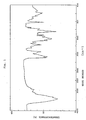
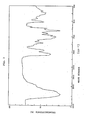
- Fig. 1, Fig. 2, Fig. 3 and Fig. 4 show infrared absorption spectra of the monosodium salt of F2 as obtained in Example 1, the disodium salt of F2 as obtained in Example 2, the monosodium salt of F2 as obtained in Example 3 and the disodium salt of F2 as obtained in Example 4, respectively.
- Two 2-liter Sakaguchi flasks each containing 500 ml of a medium containing 1% glucose, 0.5% polypepton (Daigo Nutritive Chemicals, Ltd.), 0.5% meat extract and 0.5% sodium chloride (pH 7.0) were inoculated with cells of Pseudomonas acidophila G-6302 strain (FERM-P No. 4344; IFO 13774; ATCC 31363) grown on a slant nutrient agar and incubated at 28°C with reciprocal shaking for 48 hours to give a seed culture.
- Pseudomonas acidophila G-6302 strain (FERM-P No. 4344; IFO 13774; ATCC 31363) grown on a slant nutrient agar and incubated at 28°C with reciprocal shaking for 48 hours to give a seed culture.
- a 200-liter stainless steel fermenter was charged with 120 liters of a medium containing 3% glycerol, 0.1% glucose, 0.5% Polypepton, 0.5% meat extract, 0.5% NaCl and 0.1% cysteine, and the medium was adjusted to pH 7.0 with 30% sodium hydroxide solution, then steam-sterilized at 120°C for 20 minutes, and inoculated with the above seed culture. Incubation was carried out at a temperature of 28°C, a rate of aeration of 120 liters/minute and a rate of stirring of 180 rpm for 78 hours. The culture broth was centrifuged on a Sharples centrifuge for separation of bacterial cells.
- the column was washed with 200 ml of water and then with 100 ml of 50 v/v % methanol-water. Elution was carried out with 80 v/v % isobutanol-water.
- the active eluate fractions were pooled and, after adjustment to pH 5.5, concentrated under reduced pressure.
- the concentrate was dissolved by addition of 50 ml of methanol, and the solution was filtered and allowed to stand in a cool place.
- the resulting crystalline precipitate was filtered off, washed with ether and dried over phosphorus pentoxide at 40°C under reduced pressure for 6 hours. There was thus obtained 2.8 g of the monosodium salt of F2 as crystals. Its infrared absorption spectrum is shown in Fig. 1.
- a 200-liter stainless steel fermenter was charged with 120 liters of a medium containing 3% glycerol, 0.1% glucose, 0.5% Polypepton, 0.5% meat extract, 0.5% NaCl and 0.1% cysteine, and the medium was adjusted to pH 7.0 with 30% sodium hydroxide solution, then steam-sterilized at 120°C for 20 minutes and inoculated with the above seed culture. Incubation was then carried out at a temperature of 28°C, a rate of aeration of 120 liters per minute and a rate of stirring of 180 rpm for 78 hours. The culture broth was centrifuged on a Sharples centrifuge for separation of bacterial cells.
- the column was washed with 200 ml of water and elution was carried out with 8 v/v % isobutanol-water.
- the active fractions were pooled, adjusted to pH 5.5 and concentrated under reduced pressure.
- the concentrate was dissolved by addition of 50 ml of methanol and the solution was allowed to stand in a cool place.
- the resulting crystalline precipitates were collected by filtration, washed with ether and dried over phosphorus pentoxide at 40°C under reduced pressure for 6 hours. There was obtained 1.5 g of the monosodium salt of F2 as crystals. Its infrared absorption spectrum is shown in Fig. 3. Elemental analysis: C, 32.59; H, 5.22; N, 6.93; S, 10.14; Na, 3.7%.
- a substance F2 which potentiates the activity of antibiotics potentiates the antibacterial activity of S-lactam antibiotics, and can be used in combination with such antibiotics in the treatment of infections diseases caused by bacteria in mammals such as mouse, rat, dog, human and in domestic fowls such as chicken and duck.
Landscapes
- Health & Medical Sciences (AREA)
- Life Sciences & Earth Sciences (AREA)
- Chemical & Material Sciences (AREA)
- Organic Chemistry (AREA)
- Engineering & Computer Science (AREA)
- General Health & Medical Sciences (AREA)
- Bioinformatics & Cheminformatics (AREA)
- Wood Science & Technology (AREA)
- Medicinal Chemistry (AREA)
- Zoology (AREA)
- Veterinary Medicine (AREA)
- Microbiology (AREA)
- Chemical Kinetics & Catalysis (AREA)
- Public Health (AREA)
- Genetics & Genomics (AREA)
- Animal Behavior & Ethology (AREA)
- Pharmacology & Pharmacy (AREA)
- General Chemical & Material Sciences (AREA)
- Biotechnology (AREA)
- General Engineering & Computer Science (AREA)
- Nuclear Medicine, Radiotherapy & Molecular Imaging (AREA)
- Mycology (AREA)
- Biochemistry (AREA)
- Epidemiology (AREA)
- Oncology (AREA)
- Molecular Biology (AREA)
- Communicable Diseases (AREA)
- Tropical Medicine & Parasitology (AREA)
- Virology (AREA)
- Biomedical Technology (AREA)
- Preparation Of Compounds By Using Micro-Organisms (AREA)
- Pharmaceuticals Containing Other Organic And Inorganic Compounds (AREA)
- Compounds Of Unknown Constitution (AREA)
- Saccharide Compounds (AREA)
- Medicines Containing Material From Animals Or Micro-Organisms (AREA)
Abstract
Applications Claiming Priority (2)
| Application Number | Priority Date | Filing Date | Title |
|---|---|---|---|
| JP106554/81 | 1981-07-07 | ||
| JP56106554A JPS588089A (ja) | 1981-07-07 | 1981-07-07 | 抗菌性増強物質f2およびその製造法 |
Publications (3)
| Publication Number | Publication Date |
|---|---|
| EP0083375A1 true EP0083375A1 (fr) | 1983-07-13 |
| EP0083375A4 EP0083375A4 (fr) | 1984-05-29 |
| EP0083375B1 EP0083375B1 (fr) | 1987-05-20 |
Family
ID=14436549
Family Applications (1)
| Application Number | Title | Priority Date | Filing Date |
|---|---|---|---|
| EP82902088A Expired EP0083375B1 (fr) | 1981-07-07 | 1982-07-07 | Substance accroissant l'effet antibacterien et son procede de preparation |
Country Status (4)
| Country | Link |
|---|---|
| EP (1) | EP0083375B1 (fr) |
| JP (1) | JPS588089A (fr) |
| DE (1) | DE3276367D1 (fr) |
| WO (1) | WO1983000148A1 (fr) |
Families Citing this family (1)
| Publication number | Priority date | Publication date | Assignee | Title |
|---|---|---|---|---|
| JPS61104692A (ja) * | 1984-10-26 | 1986-05-22 | 株式会社 エス・エム・シ− | 配線基板のスル−ホ−ル形成方法 |
Family Cites Families (3)
| Publication number | Priority date | Publication date | Assignee | Title |
|---|---|---|---|---|
| JPS6046955B2 (ja) * | 1977-12-30 | 1985-10-18 | 武田薬品工業株式会社 | 抗生物質g−6302 |
| JPS5549394A (en) * | 1978-10-03 | 1980-04-09 | Takeda Chem Ind Ltd | Antibiotic substance sb-72310 |
| JPS58141786A (ja) * | 1982-02-15 | 1983-08-23 | Takeda Chem Ind Ltd | 抗菌性増強物質f3およびその製造法 |
-
1981
- 1981-07-07 JP JP56106554A patent/JPS588089A/ja active Granted
-
1982
- 1982-07-07 EP EP82902088A patent/EP0083375B1/fr not_active Expired
- 1982-07-07 DE DE8282902088T patent/DE3276367D1/de not_active Expired
- 1982-07-07 WO PCT/JP1982/000255 patent/WO1983000148A1/fr not_active Ceased
Also Published As
| Publication number | Publication date |
|---|---|
| JPS588089A (ja) | 1983-01-18 |
| WO1983000148A1 (fr) | 1983-01-30 |
| EP0083375B1 (fr) | 1987-05-20 |
| JPH0154358B2 (fr) | 1989-11-17 |
| EP0083375A4 (fr) | 1984-05-29 |
| DE3276367D1 (en) | 1987-06-25 |
Similar Documents
| Publication | Publication Date | Title |
|---|---|---|
| Aoki et al. | Nocardicin A, a new monocyclic β-lactam antibiotic I. Discovery, isolation and characterization | |
| US4110165A (en) | Process for the production of clavulanic acid | |
| US4460765A (en) | Enzyme inhibitor produced by cultivation of streptomyces microorganisms | |
| US4529720A (en) | Antibiotic from Streptomyces clavulicerus | |
| US6051703A (en) | Purified clavulanic acid and salts thereof | |
| US4225586A (en) | Antibiotic SB-72310 | |
| US4229436A (en) | Antibiotic G-6302 | |
| HU179463B (en) | Process for preparing deoxy-narasin antibiotic complex | |
| JPS61216692A (ja) | Cl‐1577‐b↓4化合物およびその製法 | |
| US4518529A (en) | Antibiotics C-19393S2 | |
| US4545991A (en) | Difficidin and derivative antibacterials | |
| EP0083375B1 (fr) | Substance accroissant l'effet antibacterien et son procede de preparation | |
| US4623733A (en) | Antimicrobial peptide | |
| EP0086610A1 (fr) | Une substance renforçant l'activité des antibiotiques et sa production | |
| US4504655A (en) | Substances potentiating the activity of antibiotics and their production | |
| US3927211A (en) | Antibiotic MYC 8003 and process for producing same | |
| US4036696A (en) | Preparation of antibiotics by fermentation | |
| CA1205405A (fr) | Substances de potentialisation de l'activite des antibiotiques et methode de production | |
| US4681846A (en) | Process for the preparation of difficidin and derivative antibacterials | |
| US4427655A (en) | Antibiotics-875A and production thereof | |
| US3923981A (en) | Antibiotic MYC 8003 | |
| US4194064A (en) | Production of nanaomycin B | |
| JPH0613499B2 (ja) | パチュロリドおよびその製造法 | |
| US4264736A (en) | Antibiotic 890A10 | |
| DE68903507T2 (de) | Antitumor-antibiotika. |
Legal Events
| Date | Code | Title | Description |
|---|---|---|---|
| PUAI | Public reference made under article 153(3) epc to a published international application that has entered the european phase |
Free format text: ORIGINAL CODE: 0009012 |
|
| AK | Designated contracting states |
Designated state(s): BE CH DE FR GB LI NL SE |
|
| 17P | Request for examination filed |
Effective date: 19830602 |
|
| GRAA | (expected) grant |
Free format text: ORIGINAL CODE: 0009210 |
|
| AK | Designated contracting states |
Kind code of ref document: B1 Designated state(s): BE CH DE FR GB LI NL SE |
|
| PG25 | Lapsed in a contracting state [announced via postgrant information from national office to epo] |
Ref country code: NL Effective date: 19870520 |
|
| PG25 | Lapsed in a contracting state [announced via postgrant information from national office to epo] |
Ref country code: SE Effective date: 19870531 |
|
| REF | Corresponds to: |
Ref document number: 3276367 Country of ref document: DE Date of ref document: 19870625 |
|
| ET | Fr: translation filed | ||
| NLV1 | Nl: lapsed or annulled due to failure to fulfill the requirements of art. 29p and 29m of the patents act | ||
| PLBE | No opposition filed within time limit |
Free format text: ORIGINAL CODE: 0009261 |
|
| STAA | Information on the status of an ep patent application or granted ep patent |
Free format text: STATUS: NO OPPOSITION FILED WITHIN TIME LIMIT |
|
| 26N | No opposition filed | ||
| REG | Reference to a national code |
Ref country code: CH Ref legal event code: PFA Free format text: TAKEDA CHEMICAL INDUSTRIES, LTD |
|
| PGFP | Annual fee paid to national office [announced via postgrant information from national office to epo] |
Ref country code: GB Payment date: 19980629 Year of fee payment: 17 |
|
| PGFP | Annual fee paid to national office [announced via postgrant information from national office to epo] |
Ref country code: FR Payment date: 19980709 Year of fee payment: 17 |
|
| PGFP | Annual fee paid to national office [announced via postgrant information from national office to epo] |
Ref country code: DE Payment date: 19980713 Year of fee payment: 17 |
|
| PGFP | Annual fee paid to national office [announced via postgrant information from national office to epo] |
Ref country code: CH Payment date: 19980722 Year of fee payment: 17 |
|
| PGFP | Annual fee paid to national office [announced via postgrant information from national office to epo] |
Ref country code: BE Payment date: 19980914 Year of fee payment: 17 |
|
| PG25 | Lapsed in a contracting state [announced via postgrant information from national office to epo] |
Ref country code: GB Free format text: LAPSE BECAUSE OF NON-PAYMENT OF DUE FEES Effective date: 19990707 |
|
| PG25 | Lapsed in a contracting state [announced via postgrant information from national office to epo] |
Ref country code: LI Free format text: LAPSE BECAUSE OF NON-PAYMENT OF DUE FEES Effective date: 19990731 Ref country code: FR Free format text: THE PATENT HAS BEEN ANNULLED BY A DECISION OF A NATIONAL AUTHORITY Effective date: 19990731 Ref country code: CH Free format text: LAPSE BECAUSE OF NON-PAYMENT OF DUE FEES Effective date: 19990731 Ref country code: BE Free format text: LAPSE BECAUSE OF NON-PAYMENT OF DUE FEES Effective date: 19990731 |
|
| BERE | Be: lapsed |
Owner name: TAKEDA CHEMICAL INDUSTRIES LTD Effective date: 19990731 |
|
| GBPC | Gb: european patent ceased through non-payment of renewal fee |
Effective date: 19990707 |
|
| REG | Reference to a national code |
Ref country code: CH Ref legal event code: PL |
|
| PG25 | Lapsed in a contracting state [announced via postgrant information from national office to epo] |
Ref country code: DE Free format text: LAPSE BECAUSE OF NON-PAYMENT OF DUE FEES Effective date: 20000503 |
|
| REG | Reference to a national code |
Ref country code: FR Ref legal event code: ST |