EP0083988B1 - Dispositif d'affichage électrochromique - Google Patents
Dispositif d'affichage électrochromique Download PDFInfo
- Publication number
- EP0083988B1 EP0083988B1 EP83300116A EP83300116A EP0083988B1 EP 0083988 B1 EP0083988 B1 EP 0083988B1 EP 83300116 A EP83300116 A EP 83300116A EP 83300116 A EP83300116 A EP 83300116A EP 0083988 B1 EP0083988 B1 EP 0083988B1
- Authority
- EP
- European Patent Office
- Prior art keywords
- electrolyte
- display device
- polymer
- cross
- electrochromic
- Prior art date
- Legal status (The legal status is an assumption and is not a legal conclusion. Google has not performed a legal analysis and makes no representation as to the accuracy of the status listed.)
- Expired
Links
- 239000003792 electrolyte Substances 0.000 claims description 69
- 239000008151 electrolyte solution Substances 0.000 claims description 60
- 229920000642 polymer Polymers 0.000 claims description 55
- 239000003431 cross linking reagent Substances 0.000 claims description 39
- WEVYAHXRMPXWCK-UHFFFAOYSA-N acetonitrile Substances CC#N WEVYAHXRMPXWCK-UHFFFAOYSA-N 0.000 claims description 29
- 239000000243 solution Substances 0.000 claims description 23
- BAPJBEWLBFYGME-UHFFFAOYSA-N Methyl acrylate Chemical compound COC(=O)C=C BAPJBEWLBFYGME-UHFFFAOYSA-N 0.000 claims description 18
- 238000004132 cross linking Methods 0.000 claims description 17
- RUOJZAUFBMNUDX-UHFFFAOYSA-N propylene carbonate Chemical compound CC1COC(=O)O1 RUOJZAUFBMNUDX-UHFFFAOYSA-N 0.000 claims description 16
- 229920001577 copolymer Polymers 0.000 claims description 14
- 239000000463 material Substances 0.000 claims description 13
- XLYOFNOQVPJJNP-UHFFFAOYSA-N water Substances O XLYOFNOQVPJJNP-UHFFFAOYSA-N 0.000 claims description 13
- 239000004372 Polyvinyl alcohol Substances 0.000 claims description 12
- XTXRWKRVRITETP-UHFFFAOYSA-N Vinyl acetate Chemical compound CC(=O)OC=C XTXRWKRVRITETP-UHFFFAOYSA-N 0.000 claims description 12
- 229920002451 polyvinyl alcohol Polymers 0.000 claims description 12
- 235000019422 polyvinyl alcohol Nutrition 0.000 claims description 12
- 239000002904 solvent Substances 0.000 claims description 12
- 229940117958 vinyl acetate Drugs 0.000 claims description 12
- OFOBLEOULBTSOW-UHFFFAOYSA-N Malonic acid Chemical compound OC(=O)CC(O)=O OFOBLEOULBTSOW-UHFFFAOYSA-N 0.000 claims description 11
- VLDPXPPHXDGHEW-UHFFFAOYSA-N 1-chloro-2-dichlorophosphoryloxybenzene Chemical compound ClC1=CC=CC=C1OP(Cl)(Cl)=O VLDPXPPHXDGHEW-UHFFFAOYSA-N 0.000 claims description 9
- -1 ethylene, propylene Chemical group 0.000 claims description 9
- VZCYOOQTPOCHFL-UPHRSURJSA-N maleic acid Chemical compound OC(=O)\C=C/C(O)=O VZCYOOQTPOCHFL-UPHRSURJSA-N 0.000 claims description 7
- 239000011976 maleic acid Substances 0.000 claims description 7
- VZCYOOQTPOCHFL-UHFFFAOYSA-N trans-butenedioic acid Natural products OC(=O)C=CC(O)=O VZCYOOQTPOCHFL-UHFFFAOYSA-N 0.000 claims description 7
- PPBRXRYQALVLMV-UHFFFAOYSA-N Styrene Chemical compound C=CC1=CC=CC=C1 PPBRXRYQALVLMV-UHFFFAOYSA-N 0.000 claims description 6
- WNLRTRBMVRJNCN-UHFFFAOYSA-N adipic acid Chemical compound OC(=O)CCCCC(O)=O WNLRTRBMVRJNCN-UHFFFAOYSA-N 0.000 claims description 6
- 150000008064 anhydrides Chemical class 0.000 claims description 5
- VGGSQFUCUMXWEO-UHFFFAOYSA-N Ethene Chemical compound C=C VGGSQFUCUMXWEO-UHFFFAOYSA-N 0.000 claims description 3
- 239000005977 Ethylene Substances 0.000 claims description 3
- 239000001361 adipic acid Substances 0.000 claims description 3
- 235000011037 adipic acid Nutrition 0.000 claims description 3
- FPYJFEHAWHCUMM-UHFFFAOYSA-N maleic anhydride Chemical compound O=C1OC(=O)C=C1 FPYJFEHAWHCUMM-UHFFFAOYSA-N 0.000 claims description 3
- 229920002554 vinyl polymer Polymers 0.000 claims description 3
- KGIGUEBEKRSTEW-UHFFFAOYSA-N 2-vinylpyridine Chemical compound C=CC1=CC=CC=N1 KGIGUEBEKRSTEW-UHFFFAOYSA-N 0.000 claims description 2
- VVQNEPGJFQJSBK-UHFFFAOYSA-N Methyl methacrylate Chemical compound COC(=O)C(C)=C VVQNEPGJFQJSBK-UHFFFAOYSA-N 0.000 claims description 2
- WHNWPMSKXPGLAX-UHFFFAOYSA-N N-Vinyl-2-pyrrolidone Chemical compound C=CN1CCCC1=O WHNWPMSKXPGLAX-UHFFFAOYSA-N 0.000 claims description 2
- BZHJMEDXRYGGRV-UHFFFAOYSA-N Vinyl chloride Chemical compound ClC=C BZHJMEDXRYGGRV-UHFFFAOYSA-N 0.000 claims description 2
- KKFHAJHLJHVUDM-UHFFFAOYSA-N n-vinylcarbazole Chemical compound C1=CC=C2N(C=C)C3=CC=CC=C3C2=C1 KKFHAJHLJHVUDM-UHFFFAOYSA-N 0.000 claims description 2
- 125000006160 pyromellitic dianhydride group Chemical group 0.000 claims description 2
- 239000010408 film Substances 0.000 description 41
- 239000007784 solid electrolyte Substances 0.000 description 27
- 239000000178 monomer Substances 0.000 description 23
- 230000004044 response Effects 0.000 description 23
- MYRTYDVEIRVNKP-UHFFFAOYSA-N 1,2-Divinylbenzene Chemical compound C=CC1=CC=CC=C1C=C MYRTYDVEIRVNKP-UHFFFAOYSA-N 0.000 description 20
- QGLKJKCYBOYXKC-UHFFFAOYSA-N nonaoxidotritungsten Chemical compound O=[W]1(=O)O[W](=O)(=O)O[W](=O)(=O)O1 QGLKJKCYBOYXKC-UHFFFAOYSA-N 0.000 description 10
- 229910001930 tungsten oxide Inorganic materials 0.000 description 10
- 230000035484 reaction time Effects 0.000 description 9
- 238000001879 gelation Methods 0.000 description 8
- 239000011521 glass Substances 0.000 description 8
- DCYOBGZUOMKFPA-UHFFFAOYSA-N iron(2+);iron(3+);octadecacyanide Chemical compound [Fe+2].[Fe+2].[Fe+2].[Fe+3].[Fe+3].[Fe+3].[Fe+3].N#[C-].N#[C-].N#[C-].N#[C-].N#[C-].N#[C-].N#[C-].N#[C-].N#[C-].N#[C-].N#[C-].N#[C-].N#[C-].N#[C-].N#[C-].N#[C-].N#[C-].N#[C-] DCYOBGZUOMKFPA-UHFFFAOYSA-N 0.000 description 6
- 229960003351 prussian blue Drugs 0.000 description 6
- 239000013225 prussian blue Substances 0.000 description 6
- OZAIFHULBGXAKX-UHFFFAOYSA-N 2-(2-cyanopropan-2-yldiazenyl)-2-methylpropanenitrile Chemical compound N#CC(C)(C)N=NC(C)(C)C#N OZAIFHULBGXAKX-UHFFFAOYSA-N 0.000 description 5
- MHCFAGZWMAWTNR-UHFFFAOYSA-M lithium perchlorate Chemical compound [Li+].[O-]Cl(=O)(=O)=O MHCFAGZWMAWTNR-UHFFFAOYSA-M 0.000 description 5
- 229910001486 lithium perchlorate Inorganic materials 0.000 description 5
- 238000000034 method Methods 0.000 description 5
- 239000000758 substrate Substances 0.000 description 5
- 230000008961 swelling Effects 0.000 description 5
- GWEVSGVZZGPLCZ-UHFFFAOYSA-N Titan oxide Chemical compound O=[Ti]=O GWEVSGVZZGPLCZ-UHFFFAOYSA-N 0.000 description 4
- DQXBYHZEEUGOBF-UHFFFAOYSA-N but-3-enoic acid;ethene Chemical group C=C.OC(=O)CC=C DQXBYHZEEUGOBF-UHFFFAOYSA-N 0.000 description 4
- 238000004040 coloring Methods 0.000 description 4
- 229920006037 cross link polymer Polymers 0.000 description 4
- 229920001038 ethylene copolymer Polymers 0.000 description 4
- 238000001704 evaporation Methods 0.000 description 4
- 239000003999 initiator Substances 0.000 description 4
- 239000007788 liquid Substances 0.000 description 4
- OGIDPMRJRNCKJF-UHFFFAOYSA-N titanium oxide Inorganic materials [Ti]=O OGIDPMRJRNCKJF-UHFFFAOYSA-N 0.000 description 4
- 229920002319 Poly(methyl acrylate) Polymers 0.000 description 3
- 239000004698 Polyethylene Substances 0.000 description 3
- 239000000853 adhesive Substances 0.000 description 3
- 230000001070 adhesive effect Effects 0.000 description 3
- 239000007864 aqueous solution Substances 0.000 description 3
- 230000015572 biosynthetic process Effects 0.000 description 3
- 238000004061 bleaching Methods 0.000 description 3
- PCHJSUWPFVWCPO-UHFFFAOYSA-N gold Chemical compound [Au] PCHJSUWPFVWCPO-UHFFFAOYSA-N 0.000 description 3
- 239000010931 gold Substances 0.000 description 3
- 229910052737 gold Inorganic materials 0.000 description 3
- 229920000573 polyethylene Polymers 0.000 description 3
- 229920002689 polyvinyl acetate Polymers 0.000 description 3
- 239000011118 polyvinyl acetate Substances 0.000 description 3
- 239000007787 solid Substances 0.000 description 3
- HRPVXLWXLXDGHG-UHFFFAOYSA-N Acrylamide Chemical compound NC(=O)C=C HRPVXLWXLXDGHG-UHFFFAOYSA-N 0.000 description 2
- OKTJSMMVPCPJKN-UHFFFAOYSA-N Carbon Chemical compound [C] OKTJSMMVPCPJKN-UHFFFAOYSA-N 0.000 description 2
- 229910021578 Iron(III) chloride Inorganic materials 0.000 description 2
- 239000004743 Polypropylene Substances 0.000 description 2
- 239000004793 Polystyrene Substances 0.000 description 2
- VYPSYNLAJGMNEJ-UHFFFAOYSA-N Silicium dioxide Chemical compound O=[Si]=O VYPSYNLAJGMNEJ-UHFFFAOYSA-N 0.000 description 2
- QAOWNCQODCNURD-UHFFFAOYSA-N Sulfuric acid Chemical compound OS(O)(=O)=O QAOWNCQODCNURD-UHFFFAOYSA-N 0.000 description 2
- 239000006230 acetylene black Substances 0.000 description 2
- 239000002253 acid Substances 0.000 description 2
- JZQAAQZDDMEFGZ-UHFFFAOYSA-N bis(ethenyl) hexanedioate Chemical compound C=COC(=O)CCCCC(=O)OC=C JZQAAQZDDMEFGZ-UHFFFAOYSA-N 0.000 description 2
- 230000006378 damage Effects 0.000 description 2
- 230000000694 effects Effects 0.000 description 2
- RBTARNINKXHZNM-UHFFFAOYSA-K iron trichloride Chemical compound Cl[Fe](Cl)Cl RBTARNINKXHZNM-UHFFFAOYSA-K 0.000 description 2
- 238000004519 manufacturing process Methods 0.000 description 2
- ZIUHHBKFKCYYJD-UHFFFAOYSA-N n,n'-methylenebisacrylamide Chemical compound C=CC(=O)NCNC(=O)C=C ZIUHHBKFKCYYJD-UHFFFAOYSA-N 0.000 description 2
- 238000000059 patterning Methods 0.000 description 2
- 229920003229 poly(methyl methacrylate) Polymers 0.000 description 2
- 229920006254 polymer film Polymers 0.000 description 2
- 239000004926 polymethyl methacrylate Substances 0.000 description 2
- 229920001155 polypropylene Polymers 0.000 description 2
- 229920002223 polystyrene Polymers 0.000 description 2
- 229920000915 polyvinyl chloride Polymers 0.000 description 2
- 239000004800 polyvinyl chloride Substances 0.000 description 2
- 230000009257 reactivity Effects 0.000 description 2
- 230000009467 reduction Effects 0.000 description 2
- 150000003839 salts Chemical class 0.000 description 2
- 239000001117 sulphuric acid Substances 0.000 description 2
- 235000011149 sulphuric acid Nutrition 0.000 description 2
- WGHUNMFFLAMBJD-UHFFFAOYSA-M tetraethylazanium;perchlorate Chemical compound [O-]Cl(=O)(=O)=O.CC[N+](CC)(CC)CC WGHUNMFFLAMBJD-UHFFFAOYSA-M 0.000 description 2
- RCEXNLZAGWUAMA-UHFFFAOYSA-N 1,2-bis(ethenyl)benzene;ethenyl acetate Chemical compound CC(=O)OC=C.C=CC1=CC=CC=C1C=C RCEXNLZAGWUAMA-UHFFFAOYSA-N 0.000 description 1
- VYZAMTAEIAYCRO-UHFFFAOYSA-N Chromium Chemical compound [Cr] VYZAMTAEIAYCRO-UHFFFAOYSA-N 0.000 description 1
- 239000004593 Epoxy Substances 0.000 description 1
- 239000001828 Gelatine Substances 0.000 description 1
- 229910013462 LiC104 Inorganic materials 0.000 description 1
- 239000004159 Potassium persulphate Substances 0.000 description 1
- 238000010521 absorption reaction Methods 0.000 description 1
- 150000007513 acids Chemical class 0.000 description 1
- 125000002843 carboxylic acid group Chemical group 0.000 description 1
- 230000008859 change Effects 0.000 description 1
- 239000003795 chemical substances by application Substances 0.000 description 1
- 229910052804 chromium Inorganic materials 0.000 description 1
- 239000011651 chromium Substances 0.000 description 1
- 239000004020 conductor Substances 0.000 description 1
- 238000007334 copolymerization reaction Methods 0.000 description 1
- 230000001419 dependent effect Effects 0.000 description 1
- 230000032050 esterification Effects 0.000 description 1
- 238000005886 esterification reaction Methods 0.000 description 1
- 229940093470 ethylene Drugs 0.000 description 1
- 230000008020 evaporation Effects 0.000 description 1
- YAGKRVSRTSUGEY-UHFFFAOYSA-N ferricyanide Chemical compound [Fe+3].N#[C-].N#[C-].N#[C-].N#[C-].N#[C-].N#[C-] YAGKRVSRTSUGEY-UHFFFAOYSA-N 0.000 description 1
- ANSXAPJVJOKRDJ-UHFFFAOYSA-N furo[3,4-f][2]benzofuran-1,3,5,7-tetrone Chemical compound C1=C2C(=O)OC(=O)C2=CC2=C1C(=O)OC2=O ANSXAPJVJOKRDJ-UHFFFAOYSA-N 0.000 description 1
- 229920000159 gelatin Polymers 0.000 description 1
- 235000019322 gelatine Nutrition 0.000 description 1
- 125000002887 hydroxy group Chemical group [H]O* 0.000 description 1
- AMGQUBHHOARCQH-UHFFFAOYSA-N indium;oxotin Chemical compound [In].[Sn]=O AMGQUBHHOARCQH-UHFFFAOYSA-N 0.000 description 1
- 238000011835 investigation Methods 0.000 description 1
- 150000002500 ions Chemical group 0.000 description 1
- 239000010410 layer Substances 0.000 description 1
- 239000011244 liquid electrolyte Substances 0.000 description 1
- 239000007791 liquid phase Substances 0.000 description 1
- 229910052751 metal Inorganic materials 0.000 description 1
- 239000002184 metal Substances 0.000 description 1
- 229910044991 metal oxide Inorganic materials 0.000 description 1
- 150000004706 metal oxides Chemical class 0.000 description 1
- 239000000203 mixture Substances 0.000 description 1
- 229910000476 molybdenum oxide Inorganic materials 0.000 description 1
- PQQKPALAQIIWST-UHFFFAOYSA-N oxomolybdenum Chemical compound [Mo]=O PQQKPALAQIIWST-UHFFFAOYSA-N 0.000 description 1
- BPUBBGLMJRNUCC-UHFFFAOYSA-N oxygen(2-);tantalum(5+) Chemical compound [O-2].[O-2].[O-2].[O-2].[O-2].[Ta+5].[Ta+5] BPUBBGLMJRNUCC-UHFFFAOYSA-N 0.000 description 1
- 238000000206 photolithography Methods 0.000 description 1
- 229920003227 poly(N-vinyl carbazole) Polymers 0.000 description 1
- 238000006116 polymerization reaction Methods 0.000 description 1
- 229920002717 polyvinylpyridine Polymers 0.000 description 1
- 229920000036 polyvinylpyrrolidone Polymers 0.000 description 1
- 239000001267 polyvinylpyrrolidone Substances 0.000 description 1
- 235000013855 polyvinylpyrrolidone Nutrition 0.000 description 1
- USHAGKDGDHPEEY-UHFFFAOYSA-L potassium persulfate Chemical compound [K+].[K+].[O-]S(=O)(=O)OOS([O-])(=O)=O USHAGKDGDHPEEY-UHFFFAOYSA-L 0.000 description 1
- 235000019394 potassium persulphate Nutrition 0.000 description 1
- 239000000843 powder Substances 0.000 description 1
- 230000008569 process Effects 0.000 description 1
- 239000011241 protective layer Substances 0.000 description 1
- 238000001953 recrystallisation Methods 0.000 description 1
- 239000000377 silicon dioxide Substances 0.000 description 1
- 235000012239 silicon dioxide Nutrition 0.000 description 1
- 125000006850 spacer group Chemical group 0.000 description 1
- 229910001936 tantalum oxide Inorganic materials 0.000 description 1
- 239000010409 thin film Substances 0.000 description 1
- XOLBLPGZBRYERU-UHFFFAOYSA-N tin dioxide Chemical compound O=[Sn]=O XOLBLPGZBRYERU-UHFFFAOYSA-N 0.000 description 1
- 229910001887 tin oxide Inorganic materials 0.000 description 1
- 125000000391 vinyl group Chemical group [H]C([*])=C([H])[H] 0.000 description 1
- KAKZBPTYRLMSJV-UHFFFAOYSA-N vinyl-ethylene Natural products C=CC=C KAKZBPTYRLMSJV-UHFFFAOYSA-N 0.000 description 1
- NLVXSWCKKBEXTG-UHFFFAOYSA-N vinylsulfonic acid Chemical compound OS(=O)(=O)C=C NLVXSWCKKBEXTG-UHFFFAOYSA-N 0.000 description 1
- 229920003169 water-soluble polymer Polymers 0.000 description 1
Images

Classifications
-
- G—PHYSICS
- G02—OPTICS
- G02F—OPTICAL DEVICES OR ARRANGEMENTS FOR THE CONTROL OF LIGHT BY MODIFICATION OF THE OPTICAL PROPERTIES OF THE MEDIA OF THE ELEMENTS INVOLVED THEREIN; NON-LINEAR OPTICS; FREQUENCY-CHANGING OF LIGHT; OPTICAL LOGIC ELEMENTS; OPTICAL ANALOGUE/DIGITAL CONVERTERS
- G02F1/00—Devices or arrangements for the control of the intensity, colour, phase, polarisation or direction of light arriving from an independent light source, e.g. switching, gating or modulating; Non-linear optics
- G02F1/01—Devices or arrangements for the control of the intensity, colour, phase, polarisation or direction of light arriving from an independent light source, e.g. switching, gating or modulating; Non-linear optics for the control of the intensity, phase, polarisation or colour
- G02F1/15—Devices or arrangements for the control of the intensity, colour, phase, polarisation or direction of light arriving from an independent light source, e.g. switching, gating or modulating; Non-linear optics for the control of the intensity, phase, polarisation or colour based on an electrochromic effect
- G02F1/1514—Devices or arrangements for the control of the intensity, colour, phase, polarisation or direction of light arriving from an independent light source, e.g. switching, gating or modulating; Non-linear optics for the control of the intensity, phase, polarisation or colour based on an electrochromic effect characterised by the electrochromic material, e.g. by the electrodeposited material
- G02F1/1523—Devices or arrangements for the control of the intensity, colour, phase, polarisation or direction of light arriving from an independent light source, e.g. switching, gating or modulating; Non-linear optics for the control of the intensity, phase, polarisation or colour based on an electrochromic effect characterised by the electrochromic material, e.g. by the electrodeposited material comprising inorganic material
- G02F1/1525—Devices or arrangements for the control of the intensity, colour, phase, polarisation or direction of light arriving from an independent light source, e.g. switching, gating or modulating; Non-linear optics for the control of the intensity, phase, polarisation or colour based on an electrochromic effect characterised by the electrochromic material, e.g. by the electrodeposited material comprising inorganic material characterised by a particular ion transporting layer, e.g. electrolyte
Definitions
- This invention relates to electrochromic display devices.
- electrochromic display devices usually an electrolyte in the form of an electrolytic solution is used.
- an electrolytic solution when used there are problems due to air bubbles or damage as a result of the differential rate of expansion between the electrochromic display device and the electrolytic solution. Consequently, solid electrolytes have been given consideration, especially for the proton conductor. Examples of solid electrolytes are metal oxide thin films such as silicon dioxide or tantalum oxide.
- these electrolytes have a large electrical resistance so that electrochromic display devices with such solid electrolytes have a slow response time and need a relatively large driving voltage.
- the electrical contact between electrodes and electrolyte has been considered as unreliable.
- a gelated electrolyte has been tried in electrochromic display devices but trials have merely used existing gelating agents in known electrolytic solutions. This has meant that the applied field is limited and the technique is not applicable to any electrolytic solution. Moreover, patterning of the surface of gelled electrolyte has proved to be difficult.
- US-A-4116545 discloses an electrochromic display device having two electrodes, one of which is made of electrochromic material, and an electrolyte.
- the electrolyte is an electrolytic solution gelated by a polymer, the polymer being a copolymer of ethylene sulphonic acid which is soluble in sulphuric acid and, for example, styrene which is insoluble in sulphuric acid.
- GB-A-2014326 discloses an electrochromic display device in which the electrolyte is a copolymer of a vinyl monomer and an acid group containing monomer.
- the present invention seeks to provide an electrochromic display device with a gelated electrolyte which gives a response time that is not inferior to that of electrolytic solutions and which has adhesion properties that make it easy to handle.
- an electrochromic display device having at least two electrodes at least one of which is made of electrochromic material and an electrolyte which is an electrolytic solution gelated by a polymer, characterised in that the solvent of the solution is propylene carbonate, and said polymer is a copolymer of any one of vinylacetate, methylmethacrylate, methylacrylate, vinylpyridine and vinylpyrrolidone and any one of styrene, vinylchloride, ethylene, propylene and vinyl carbazole
- the polymer is made from vinylacetate and ethylene, vinylacetate being present in a molar ratio of 70%-80%.
- an electrochromic display device having at least two electrodes at least one of which is made of electrochromic material and an electrolyte which is an electrolytic solution gelated by a polymer, said polymer being cross-linked by a cross-linking agent, characterised in that the triple "polymer-cross-linking agent-solvent" is one of the following: polyvinyl alcohol-dicarboxylic acid or anhydride-water, polyacrylamide-methylenebisacrylamide - water, polymethylacrylate - divinylbenzene - propylene carbonate, polyvinylacetate-divinylbenzene-propylene carbonate, polyvinylacetate-divinyladipate-acetonitrile.
- the dicarboxylic acid is maleic acid or adipic acid and the dicarboxylic anhydride is pyromellitic dianhydride or maleic anhydride.
- the pyromellitic dianhydride/polyvinylalcohol weight ratio may be more than 0.02.
- the basic principle of the present invention is to gelate an electrolytic solution by adding a polymer so that the resulting electrolyte contains as much liquid as possible. If enough liquid is held in the polymer one can expect the electrolyte to have an electrical conductivity comparable to that of the electrolytic solution alone and the electrode/electrolyte contact in an electrochromic display device to be as reliable as that with the electrolytic solution alone.
- the problem which the present invention seeks to solve is how to obtain a polymer which swells to a specific degree for specified solvents.
- One method of obtaining such a polymer is to increase the molecular weight by cross-linking and another method is to change the copolymerisation ratio between a soluble polymer and an insoluble polymer.
- Propylene carbonate is widely used as a solvent in the electrolyte of electrochromic display devices which use tungsten oxide as the electrochromic material. It was, therefore, decided to find a polymer which, in propylene carbonate, would cause it to gel and swell. Whether cross-linking a soluble polymer or copolymerising a soluble polymer and an insoluble polymer, as previously mentioned, it is first necessary to find those polymers which are soluble in propylene carbonate. Solubility tests show that polyvinylacetate, polymethylmethacrylate, polymethylacrylate, polyvinylpyrrolidone and polyvinylpyridine are soluble in propylene carbonate. It was also found that polystyrene, polyvinylchloride, polyethylene, polypropylene and polyvinylcarbazole are insoluble in propylene carbonate.
- the vinylacetate-ethylene copolymer and a vinylacetate-divinylbenzene copolymer (containing divinylbenzene at 0.1% by weight) were used in an electrochromic display device.
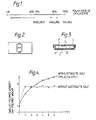
- the electrochromic display device had a film of tungsten oxide as the electrochromic material vacuum evaporated at 1.3x-10- 5 mbar (1) ⁇ 10-5 torr) in the display pattern shown in Figure 2 and the film was then heated by a resistive heater. The thickness of the film was 500 nm and it was evaporated on an indium tin oxide (ITO) transparent film.
- ITO indium tin oxide
- a sectional view of the electrochromic display device is shown in Figure 3.
- a glass plate 1 had an ITO transparent film 2 thereon.
- Electrochromic electrodes 3 of tungsten oxide were formed on the ITO transparent film.
- An electrolyte 4 consisting of a copolymer swelled by propylene carbonate and lithium perchlorate is in contact with the electrochromic electrodes 3 and a gold film 5 was evaporated on a glass plate 6.
- This electrochromic display device was coloured and bleached by the application of a voltage of +1.5V.
- the response time was comparable to that of an electrochromic display device using an electrolytic solution of propylene carbonate and lithium perchlorate alone, namely 0.5 sec.
- the same results were obtained whether using vinylacetate-ethylene copolymer or vinylacetate-divinylbenzene as the copolymer.
- Figure 4 indicates the time variation of the degree of swelling measured by the weight increase with and without the lithium perchlorate which is the electrolytic salt in the electrolyte. As will be seen from Figure 4 the polymer weight increases by about six times on swelling. This is an indication of the amount of electrolytic solution absorbed.
- a swelled copolymer was obtained by copolymerization of the corresponding soluble monomers and divinylbenzene. Further a swelled vinylacetate-ethylene copolymer was obtained. This copolymer was made to absorb 0.1M tetraethylammoniumperchlorate/acetonitrile electrolytic solution to form an electrolyte which was used in the electrochromic display device described in Example 1. It was found that the response time of this electrochromic display device was comparable to that of a similar electrochromic display device where the electrolyte was an electrolytic solution of 0.1 M tetraethylammoniumperchlorate/acetonitrile alone. Whilst with an electrolytic solution the high vapour pressure could bring about destruction of the electrochromic display device at high temperature, it was found that the electrolyte which had been gelated by a polymer did not suffer from this problem.
- Example 1 Following Example 1 it was found that using polybdenum oxide as the electrochromic material, the same effect was achieved using the same copolymers and electrolytic solutions as in Example 1.
- the cross-linking agent was either dicarboxylic acid or the anhydride of dicarboxylic acid.
- a cross-linked polymer is insoluble in any solvent due to its extremely high molecular weight so it is difficult to form such polymers as an electrolytic cell on an ITO film.
- To avoid this difficulty it was found that it is possible to form an electrolytic film using the polymer solution and subsequently effecting cross-linking.
- One method of achieving this was to mix the polymer and cross-linking agent in water and then using the solution to form a film on a glass substrate, the film then being dried. Finally the film was cross-linked.
- Pyromellitic dianhydride was examined as a cross-linking agent. Polyvinylalcohol was dissolved in water in the ratio of 10% by weight and then pyromellitic dianhydride was added to produce solutions with 0.02, 0.04, 0.06, 0.08, 0.1 cross-linking agent/polymer weight ratio. Pyromellitic dianhydride dissolved at around 80°C. The above solutions were used to form transparent films on glass plates which were then dried on a hot plate at around 80°C. It was found that the transparent films were formed without the recrystallisation of pyromellitic dianhydride.
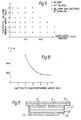
- the transparent films were then cross-linked in a furnace at 120°C. Reaction time was set at 1 hour, 2 hours, 3 hours, 4 hours, 5 hours. The results are indicated graphically in Figure 6. From Figure 6 it can be seen that at least 2% by weight of cross-linking agent is necessary to form the transparent film and the largest amount of water was absorbed by the transparent film with 0.04 cross-linking agent/polymer weight ratio and 4 hours reaction time. The weight of this transparent film increased 3.5 times after having absorbed water. In other words the transparent film absorbed 2.5 times its own weight of water.
- a solid electrolyte for an electrochromic display device was prepared by causing a transparent film with 0.04 cross-linking agent/polymer weight ratio and 4 hours reaction time to absorb 1M KCI as the electrolytic solution.
- This solid electrolyte was used in an electrochromic display device according to the present invention and illustrated in Figure 7.
- This electrochromic display device had a glass substrate 7 on which was formed a transparent conductive film 8 made of tin oxide. On the transparent conductive film 8 were electrochromic electrodes 9 made of Prussian blue.
- the electrochromic electrodes. were formed by the electrolytic reduction of a solution of potassium ferricyanide and ferric chloride in admixture.
- the substrates 7, 13 were maintained spaced apart by a spacer 11.
- the display pattern of the electrochromic display device of Figure 7 is illustrated in Figure 8. The display was changed by varying the applied voltage.
- the display produced by this electrochromic display device appeared blue but could be bleached and become colourless by connecting the electrochromic electrodes to the counter electrode.
- the electrochromic electrodes were each 4 mm 2 in area and the electric charge density needed to produce a visible display was 6 mC/cm 2. Thus the requisite charge was 240 ⁇ C.
- bleaching was performed by the application of a constant current of 10 pA for 24 sec.
- the application of a voltage of 0.7 V between the two with the coloured electrochromic electrode at the lower potential caused the coloured electrochromic electrode to be bleached and the bleached electrochromic electrode to be coloured.
- the response time was 5 sec. With an electrolytic solution used in place of the solid electrolyte 10 the response time was 2 sec. Thus the solid electrolyte has an inferior response time to the electrolytic solution.
- Example 5 was repeated under the same conditions using pyromellitic dianhydride as the cross-linking agent.
- a solid electrolyte was made by dissolving 10% by weight of polyvinylalcohol in 1 M KCI solution and adding pyromellitic dianhydride in a weight ratio of 0.04 cross-linking agent/polymer.
- Cross-linking was effected at 120°C for 4 hours and the cross-linked film so produced was made to absorb water to produce the solid electrolyte.
- This solid electrolyte was used in the electrochromic display device of Figure 7 and evaluated. The response time was found to be 4 sec. which is slightly faster than the response time of the electrochromic display device of Example 5.
- the faster response time is believed to be the result of the shorter distance between the electrochromic electrode and the counter electrode.
- current flowed between the two electrochromic electrodes but in this example current flowed between the electrochromic electrodes and the counter electrode.
- the thinner the electrochromic display device the lower the electrical resistance of the electrolyte and thus the faster the response time.
- conductivity of an electrolyte including cross-linked polyvinylalcohol is lowerthan that of an electrolytic solution.
- the thickness of the electrochromic display device is reduced sufficiently, the response times using a solid electrolyte become comparable.
- maleic acid was used as the cross-linking agent.
- a polyvinylalcohol solution was prepared.
- Maleic acid was added to give a weight ratio of cross-linking agent/polymer of 0.1.
- Cross-linking was effected at 130°C the reaction time being 1 hour.
- the resulting polymer film was made to absorb an electrolytic solution to form an electrolyte.
- the polymer did not conserve its film shape but become like a fine slice of gelatine. In other words, whilst gelation occurred the polymer film lost its shape when absorbing the electrolytic solution.
- the electrolyte could still be used in an electrochromic display device and problems due to air bubbles were avoided.
- An electrochromic display device constructed as shown in Figure 7 and driven in the same manner as in Example 5 was found to have a response time of 2 seconds.
- maleic acid was used as the cross-linking agent but the cross-linking was effected at 130°C with a reaction time of 4 hours.
- the maleic acid was added to the polyvinylalcohol solution to give a weight ratio of cross-linking agent/polymer of 0.04.
- the result was a half-gelated polymer as in Example 8.
- An electrolyte including this polymer had the same properties as the electrolyte of Example 8. From Examples 8 and 9 it will be appreciated that when maleic acid is used as the cross-linking agent it is impossible to form a solid film of electrolyte. This is thought to be due to the difference in reactivity between anhydrides and acids, since anhydrides react in more mild conditions.
- cross-linking was performed in the same manner as in Example 5, but the cross-linking agent was adipic acid.
- the cross-linking agent was used in a weight ratio of 0.04 cross-linking agent/polymer and cross-linking effected at 130°C forthe reaction time of 4 hours. Again it was found that it was not possible to form a film of electrolyte but nonetheless electrolyte formed did not suffer from problems due to air bubbles.
- maleic anhydride was used as the cross-linking agent using the same cross-linking conditions as in Example 6. It was found that a film of solid electrolyte could be formed. This electrolyte was used in the electrochromic display device illustrated in Figure 7 and driven as in Example 6. The response time was found to be 4 seconds.
- Example 5 The same cross-linking agent as in Example 5 was used, but in this example polyvinylalcohol was not dissolved in 1M KCI solution but rather in 1 M KC10 4 solution.
- the polyvinylalcohol was cross-linked under the same cross-linking conditions as in Example 6 and a solid electrolyte formed.
- This solid electrolyte was used in the electrochromic display device illustrated in Figure 7 but using tungsten oxide for the electrochromic electrodes which were made by evaporating tungsten oxide film onto the transparent conductive film 8. This produced a clear film of tungsten oxide.
- the electrochromic electrodes were coloured by a colouring charge of 240 pC which was injected from the counter electrode using a constant current. The colouring charge could be moved between the two electrochromic electrodes by the application of a voltage of 1.5V.
- the response time was 2 seconds.
- the response time of a similar electrochromic display device using an electrolytic solution was 0.5 seconds.
- Example 7 titanium oxide was included in the electrolyte of Example 12.
- the electrolyte was used in the electrochromic display device of Figure 7 driving being between the electrochromic electrodes and the counter electrode.
- the counter electrode was a gold film and the applied voltage was +1.2 V.
- the response time was 0.5 seconds which is the same as that when an electrolytic solution was used in place of the solid electrolyte.
- electrolytes described in the foregoing examples can be used in electrochromic display devices in place of conventional electrolytic solutions.
- the response times achieved could be made of the same order as those achieved with electrolytic solutions by making the electrochromic display device thinner.
- the problems due to air bubbles experienced with electrolytic solutions was also overcome.
- the electrolytes so far described in the Examples have used a cross-linked polymer which absorbs the electrolyte solution.
- intimate contact between the electrolyte and the electrodes of an electrochromic display device may not be achieved due to the swelling of the polymer as it absorbs the electrolytic solution.
- the use of solid electrolytes in electrochromic display devices may become difficult.
- the electrolytic solution, a monomer and a cross-linking agent may be polymerised to form a gel. This will be explained in greater detail with reference to the following Examples.
- Propylene carbonate is widely used as a solvent in electrochromic display devices which use tungsten oxide as the electrochromic material. Generally this solvent is used with a 1M LiC10 4 electrolytic solution. Methylacrylate is a monomer which is soluble in propylene carbonate, the formula of methylacrylate being:
- divinyl compound was found to be needed as a cross-linking agent.
- divinylbenzene was used as the cross-linking agent, the initiator being azobisisobutyronitrile.
- the electrical resistance of the resultant electrolyte which contained five times as much electrolytic solution as monomer was found to be 244 Qcm.
- the electrical resistance of the electrolytic solution alone was around 300 Qcm.
- the resistance of the electrolyte was, therefore, a little lower than that of the electrolytic solution.
- the surface was found to be so adhesive that it could adhere to, for example, glass or a human finger.
- This characteristic is very advantageous in the manufacture of electrochromic display devices. For example, it is possible to fabricate a completely solid electrolytic display device in layers step by step, for example, by laying the solid electrolyte on the electrochromic electrodes and then the counter electrode on the solid electrolyte.
- the electrolyte is adhesive as referred to above, the electrolyte will adhere to the electrochromic display electrodes and the counter electrode and its position will be fixed. However, if the electrolyte is wet, the electrolyte cannot adhere to the electrochromic electrodes and the counter electrode and so its position cannot be fixed. This is very inconvenient. Even more important from the point of view of manufacture is the fact that the polymer can be stuck to a resist film and so it can be patterned by ordinary photolithography. However, if the polymer is wet it cannot be laminated with a resist film.
- FIG 11 shows an electrochromic display device using the solid electrolyte of this Example.
- a glass plate 14 which had a transparent conductive film on its surface was made, the transparent conductive film being patterned.
- an insulating film 15 was patterned.
- a film 16 of tungsten oxide as the electrochromic material was formed by evaporating and patterning using a metal mask, this producing electrochromic electrodes.
- a solid electrolyte film 17 as described above was adhered.
- This electrolyte film was formed by polymerising a mixture of monomer and electrolytic solution in a mould at 50°C the reaction time being 1 hour. The electrolytic solution/monomer weight ratio was 4.
- a counter electrode 18 was formed on the electrolyte film by evaporating a polymer solution in which acetylene black had been dispersed. To be sure of intimate contact between the electrolyte and the counter electrode the same polymer and the same solution were used for the formation of the counter electrode as was used for the electrolyte. In this instance acetylene black was dispersed in propylene carbonate containing methylacrylate polymer. On the counter electrode a protective layer 19 of an epoxy polymer was formed leaving an exposed domain 20 to form an electrical contact with the counter electrode.
- the display pattern of this electrochromic display device was as shown in Figure 8. Colouring and bleaching was performed by an applied voltage of +1V and the response time was found to be 0.5 seconds, the same as that obtained when using the liquid electrolyte alone.
- Example 14 methylacrylate was used to gel propylene carbonate. Vinylacetate which has a similar structure to methylacrylate has the formula: was also tried. Divinylbenzene was used as the cross-linking agent but it was found to be impossible to cause gelation. When the divinylbenzene/vinylacetate ratio was varied, when this ratio was extremely small ( ⁇ 0.02 weight ratio), polymerisation did not produce a gelation but only a viscous solution and where this ratio was large (>0.1 weight ratio) only divinylbenzene was polymerised, and the polymer was separated from the liquid phase. In between these limits polymerisation was difficult. At higher temperatures with more initiator, viscous solutions only were produced. This makes it clear that the reactivity of the cross-linking agent and the monomer must be matched properly in order to cause gelation.
- acetonitrile which is widely used as a solvent of electrolytic solutions of electrochromic display devices was gelated.
- the monomer was vinylacetate and the cross-linking agent was divinyladipate whose formula is:
- the electrical conductivity was measured on the electrolyte of Table 1. Electrical conductivity was found to be in the range of 200-400 Qcm. The electrical conductivity of 0.1M LiCI0 4 /acetonitrile solution was around 150 ⁇ cm so the electrical resistance of the electrolyte was slightly higher but not unacceptably so.
- the electrolyte in Table 1 whose electrolytic solution/monomer ratio was 3 and whose cross-linking agent/monomer ratio was 0.05 was used in the electrochromic display device of Figure 11.
- the electrochromic material was tungsten oxide.
- a solid electrochromic display device was obtained with a response time of 0.5 seconds.
- the requisite quantity of cross-linking agent was small compared with the previous Examples.
- the electrolyte with the electrolytic splution/monomer weight ratio of 5 and the cross-linking/monomer weight ratio of 0.0005 was used in the electrochromic display device of Figure 1.
- the electrochromic material in this instance was not tungsten oxide but Prussian blue.
- Prussian blue electrochromic electrodes were formed by the electrochemical reduction of an aqueous solution containing ferricyanide and ferric chloride.
- the colouring and bleaching of the electrochromic electrodes was performed by an applied voltage of +1V. Response time was 1 second. This was the same value as for the electrolytic solution alone, no delay due to the use of a solid electrolyte being observed.
- the electrolyte was adhesive and once adhered to the electrochromic electrodes it could not be detached without force being used. This property was also observed in Example 16.
Landscapes
- Physics & Mathematics (AREA)
- Chemical & Material Sciences (AREA)
- Nonlinear Science (AREA)
- Chemical Kinetics & Catalysis (AREA)
- Electrochemistry (AREA)
- Inorganic Chemistry (AREA)
- General Physics & Mathematics (AREA)
- Optics & Photonics (AREA)
- Electrochromic Elements, Electrophoresis, Or Variable Reflection Or Absorption Elements (AREA)
Claims (5)
Applications Claiming Priority (4)
| Application Number | Priority Date | Filing Date | Title |
|---|---|---|---|
| JP57002622A JPS58120221A (ja) | 1982-01-11 | 1982-01-11 | エレクトロクロミツク表示素子 |
| JP2622/82 | 1982-01-11 | ||
| JP156065/82 | 1982-09-07 | ||
| JP15606582A JPS5945430A (ja) | 1982-09-07 | 1982-09-07 | エレクトロクロミツク表示素子 |
Publications (3)
| Publication Number | Publication Date |
|---|---|
| EP0083988A2 EP0083988A2 (fr) | 1983-07-20 |
| EP0083988A3 EP0083988A3 (en) | 1984-08-22 |
| EP0083988B1 true EP0083988B1 (fr) | 1987-11-11 |
Family
ID=26336052
Family Applications (1)
| Application Number | Title | Priority Date | Filing Date |
|---|---|---|---|
| EP83300116A Expired EP0083988B1 (fr) | 1982-01-11 | 1983-01-10 | Dispositif d'affichage électrochromique |
Country Status (3)
| Country | Link |
|---|---|
| US (2) | US4519930A (fr) |
| EP (1) | EP0083988B1 (fr) |
| DE (1) | DE3374447D1 (fr) |
Cited By (4)
| Publication number | Priority date | Publication date | Assignee | Title |
|---|---|---|---|---|
| EP0169442A3 (en) * | 1984-07-24 | 1987-02-04 | Asahi Glass Company Ltd. | Electro-optic device |
| US5327281A (en) * | 1992-04-23 | 1994-07-05 | Eic Laboratories | Solid polymeric electrolytes for electrochromic devices having reduced acidity and high anodic stability |
| EP0683215A1 (fr) | 1994-05-17 | 1995-11-22 | Flachglas Aktiengesellschaft | Mélange de résine de coulée pour le collage d'éléments ayants la forme substantielle d'une feuille |
| DE4417220A1 (de) * | 1994-05-17 | 1995-11-23 | Flachglas Ag | Elektrochrome Scheibenanordnung |
Families Citing this family (28)
| Publication number | Priority date | Publication date | Assignee | Title |
|---|---|---|---|---|
| GB2170017B (en) * | 1984-12-24 | 1988-09-14 | Canon Kk | Optical device |
| US4801195A (en) * | 1985-01-29 | 1989-01-31 | Nissan Motor Co., Ltd. | Variable light transmittance glass board functional as electrochromic cell |
| US4810067A (en) * | 1987-12-24 | 1989-03-07 | Ford Motor Company | Electrochromic device and method of making an electrochromic layer therefor |
| SE8801637D0 (sv) * | 1988-04-29 | 1988-04-29 | Jim Stevens | Electrochromic device and a method to manufacture the same |
| US5016991A (en) * | 1989-03-27 | 1991-05-21 | Ford Motor Company | Flexible, solid electrolyte useful in electrochromic devices |
| US4993810A (en) * | 1989-04-14 | 1991-02-19 | Ford Motor Company | Electrochromic devices comprising metal salts in an ion conductive material |
| US5437804A (en) * | 1989-09-22 | 1995-08-01 | Yuasa Corporation | Solid polymer electrolyte |
| US5145609A (en) * | 1990-11-07 | 1992-09-08 | Donnelly Corporation | Linear polyether-containing electrochemichromic solutions and related devices |
| FR2684458B1 (fr) * | 1991-11-29 | 1994-10-21 | Corning Inc | Materiau electrolytique sous forme de gel solide pour la modulation de la lumiere et dispositifs electro-optiques utilisant ce materiau. |
| US5910854A (en) | 1993-02-26 | 1999-06-08 | Donnelly Corporation | Electrochromic polymeric solid films, manufacturing electrochromic devices using such solid films, and processes for making such solid films and devices |
| DE69426040T2 (de) * | 1993-02-26 | 2001-05-17 | Donnelly Corp., Holland | Elektrochrome polymerische Festfilme, Herstellung elektrochromer Vorrichtungen mit solchen Filmen, und Verfahren zur Herstellung solcher Festfilme und Vorrichtungen |
| US5668663A (en) | 1994-05-05 | 1997-09-16 | Donnelly Corporation | Electrochromic mirrors and devices |
| US5679283A (en) * | 1994-07-22 | 1997-10-21 | Gentex Corporation | Electrochromic layer and devices comprising same |
| US5928572A (en) * | 1996-03-15 | 1999-07-27 | Gentex Corporation | Electrochromic layer and devices comprising same |
| US7167796B2 (en) | 2000-03-09 | 2007-01-23 | Donnelly Corporation | Vehicle navigation system for use with a telematics system |
| US7370983B2 (en) | 2000-03-02 | 2008-05-13 | Donnelly Corporation | Interior mirror assembly with display |
| US7446924B2 (en) | 2003-10-02 | 2008-11-04 | Donnelly Corporation | Mirror reflective element assembly including electronic component |
| JP2006073991A (ja) * | 2004-08-02 | 2006-03-16 | Sony Corp | 電磁波抑制材料、電磁波抑制デバイス、並びに電子機器 |
| US20060083705A1 (en) * | 2004-10-19 | 2006-04-20 | Isp Investments Inc. | Vinyl lactam/vinyl carbazole copolymers |
| EP1815293A1 (fr) * | 2004-11-24 | 2007-08-08 | Siemens Aktiengesellschaft | Composant electrochrome comportant un hydrogel rempli d'electrolyte |
| WO2009002556A1 (fr) * | 2007-06-27 | 2008-12-31 | Gentex Corporation | Dispositif électrochromique comportant un connecteur de port de charge amélioré |
| US8345345B2 (en) | 2007-06-27 | 2013-01-01 | Gentex Corporation | Electrochromic device having an improved fill port plug |
| US9057925B2 (en) | 2013-03-15 | 2015-06-16 | Gentex Corporation | Fill port plugs for electrochromic devices |
| US9454054B2 (en) | 2013-11-18 | 2016-09-27 | Magna Mirrors Of America, Inc. | Electro-optic mirror element and process of making same |
| ES2632783T3 (es) | 2014-12-19 | 2017-09-15 | Evonik Degussa Gmbh | Sistemas de redes de cubierta para láminas de encapsulación que comprenden compuestos de bis-(alquenilamidas) |
| EP3034528B1 (fr) | 2014-12-19 | 2017-06-21 | Evonik Degussa GmbH | Systèmes de co-réticulation pour feuilles d'encapsulage comprenant des combinaisons d'urée |
| EP3034531A1 (fr) * | 2014-12-19 | 2016-06-22 | Evonik Degussa GmbH | Dispersion pour l'insertion simple dans la production de feuilles d'encapsulage |
| CN108034073B (zh) * | 2017-12-06 | 2021-04-06 | 北京服装学院 | 一种智能变化的颗粒及其制备方法 |
Family Cites Families (11)
| Publication number | Priority date | Publication date | Assignee | Title |
|---|---|---|---|---|
| BR7102593D0 (pt) * | 1970-05-25 | 1973-06-14 | American Cyanamid Co | Dispositivo aperfeicoado de transmissao variavel de luz |
| FR2093643A5 (en) * | 1971-05-24 | 1972-01-28 | American Cyanamid Co | Device with variable transparency or colouration - - under the action of electric |
| US3840287A (en) * | 1973-07-30 | 1974-10-08 | Optel Corp | Symmetrical electrochromic cell |
| US4116545A (en) * | 1976-10-27 | 1978-09-26 | American Cyanamid Company | Polymeric electrolyte for electrochromic display devices |
| JPS5499787A (en) * | 1978-01-25 | 1979-08-06 | Toshiba Corp | Electrically coloring display element |
| US4174152A (en) * | 1978-02-13 | 1979-11-13 | American Cyanamid Company | Electrochromic devices with polymeric electrolytes |
| CH637978A5 (fr) * | 1979-05-03 | 1983-08-31 | Ebauches Sa | Electrolyte polymerique pour dispositif electro-optique. |
| GB2051393A (en) * | 1979-05-23 | 1981-01-14 | Ibm | Electrochromic electrolyte |
| US4335938A (en) * | 1979-08-30 | 1982-06-22 | American Cyanamid Company | Electrochromic cells with improved electrolyte system |
| US4354741A (en) * | 1979-10-12 | 1982-10-19 | Sumitomo Electric Industries, Ltd. | Electrochromic display device |
| US4361385A (en) * | 1980-10-23 | 1982-11-30 | American Cyanamid Company | Electrochromic device containing acid copolymer electrolyte |
-
1983
- 1983-01-10 EP EP83300116A patent/EP0083988B1/fr not_active Expired
- 1983-01-10 DE DE8383300116T patent/DE3374447D1/de not_active Expired
- 1983-01-10 US US06/456,787 patent/US4519930A/en not_active Ceased
-
1987
- 1987-05-28 US US07/055,186 patent/USRE33040E/en not_active Expired - Fee Related
Cited By (4)
| Publication number | Priority date | Publication date | Assignee | Title |
|---|---|---|---|---|
| EP0169442A3 (en) * | 1984-07-24 | 1987-02-04 | Asahi Glass Company Ltd. | Electro-optic device |
| US5327281A (en) * | 1992-04-23 | 1994-07-05 | Eic Laboratories | Solid polymeric electrolytes for electrochromic devices having reduced acidity and high anodic stability |
| EP0683215A1 (fr) | 1994-05-17 | 1995-11-22 | Flachglas Aktiengesellschaft | Mélange de résine de coulée pour le collage d'éléments ayants la forme substantielle d'une feuille |
| DE4417220A1 (de) * | 1994-05-17 | 1995-11-23 | Flachglas Ag | Elektrochrome Scheibenanordnung |
Also Published As
| Publication number | Publication date |
|---|---|
| EP0083988A2 (fr) | 1983-07-20 |
| DE3374447D1 (en) | 1987-12-17 |
| US4519930A (en) | 1985-05-28 |
| USRE33040E (en) | 1989-08-29 |
| EP0083988A3 (en) | 1984-08-22 |
Similar Documents
| Publication | Publication Date | Title |
|---|---|---|
| EP0083988B1 (fr) | Dispositif d'affichage électrochromique | |
| EP0024544B1 (fr) | Cellule électrochrome avec système d'électrolyte | |
| US4174152A (en) | Electrochromic devices with polymeric electrolytes | |
| KR900003155B1 (ko) | 패턴상 도전성을 갖는 고분자 필름과 그 제조방법 | |
| US4116545A (en) | Polymeric electrolyte for electrochromic display devices | |
| CA2363223C (fr) | Materiau d'immobilisation pour solution d'electrolyte de cellule et cellule comportant ce materiau | |
| JPS61500618A (ja) | ポリマ−状物質 | |
| US3674711A (en) | Electrically conductive transparent plastic material | |
| JP2679861B2 (ja) | 電気導電性高分子及び電気導電性高分子を用いた液晶スイッチ及びディスプレー素子における配向層 | |
| US6080282A (en) | Electrolytic solution for use as gel electrolyte and process for making the same | |
| Inaba et al. | Electrochromic display device of tungsten trioxide and prussian blue films using polymer gel electrolyte of methacrylate | |
| JP2000011757A (ja) | イオン伝導性ゲルおよびその製造方法 | |
| US5378381A (en) | Polymer solid electrolyte composition | |
| JP3143273B2 (ja) | 電解質シート | |
| US4296016A (en) | Method of preparing a polymeric electrolyte particularly for an electro-optical device | |
| US5561206A (en) | Electrochromic copolymers including vinyl alcohol or vinyl acetate units | |
| JP3843505B2 (ja) | 高分子電解質及び電池 | |
| JPH10130346A (ja) | 重合体イオン伝導膜及びその製造方法 | |
| US4881798A (en) | Thermal optical modulation method and device using alternating current | |
| US5510457A (en) | Method for preparing processable polyisothianaphthene | |
| JPH03210351A (ja) | イオン伝導性フレキシブル固体状電解質 | |
| US5696206A (en) | Method for preparing processable polyisothianaphthene | |
| JPH03123322A (ja) | エレクトロクロミックディスプレイ素子 | |
| JPH07191305A (ja) | 液晶素子 | |
| JPS61143727A (ja) | エレクトロクロミツクデイスプレイ素子 |
Legal Events
| Date | Code | Title | Description |
|---|---|---|---|
| PUAI | Public reference made under article 153(3) epc to a published international application that has entered the european phase |
Free format text: ORIGINAL CODE: 0009012 |
|
| AK | Designated contracting states |
Designated state(s): CH DE FR GB LI |
|
| PUAL | Search report despatched |
Free format text: ORIGINAL CODE: 0009013 |
|
| AK | Designated contracting states |
Designated state(s): CH DE FR GB LI |
|
| 17P | Request for examination filed |
Effective date: 19841218 |
|
| 17Q | First examination report despatched |
Effective date: 19860225 |
|
| R17C | First examination report despatched (corrected) |
Effective date: 19860730 |
|
| RAP1 | Party data changed (applicant data changed or rights of an application transferred) |
Owner name: SEIKO INSTRUMENTS INC. |
|
| GRAA | (expected) grant |
Free format text: ORIGINAL CODE: 0009210 |
|
| AK | Designated contracting states |
Kind code of ref document: B1 Designated state(s): CH DE FR GB LI |
|
| REF | Corresponds to: |
Ref document number: 3374447 Country of ref document: DE Date of ref document: 19871217 |
|
| ET | Fr: translation filed | ||
| PLBE | No opposition filed within time limit |
Free format text: ORIGINAL CODE: 0009261 |
|
| STAA | Information on the status of an ep patent application or granted ep patent |
Free format text: STATUS: NO OPPOSITION FILED WITHIN TIME LIMIT |
|
| 26N | No opposition filed | ||
| PGFP | Annual fee paid to national office [announced via postgrant information from national office to epo] |
Ref country code: GB Payment date: 19910103 Year of fee payment: 9 |
|
| PGFP | Annual fee paid to national office [announced via postgrant information from national office to epo] |
Ref country code: FR Payment date: 19910121 Year of fee payment: 9 |
|
| PGFP | Annual fee paid to national office [announced via postgrant information from national office to epo] |
Ref country code: DE Payment date: 19910124 Year of fee payment: 9 |
|
| PGFP | Annual fee paid to national office [announced via postgrant information from national office to epo] |
Ref country code: CH Payment date: 19910128 Year of fee payment: 9 |
|
| PG25 | Lapsed in a contracting state [announced via postgrant information from national office to epo] |
Ref country code: GB Effective date: 19920110 |
|
| PG25 | Lapsed in a contracting state [announced via postgrant information from national office to epo] |
Ref country code: LI Effective date: 19920131 Ref country code: CH Effective date: 19920131 |
|
| GBPC | Gb: european patent ceased through non-payment of renewal fee | ||
| PG25 | Lapsed in a contracting state [announced via postgrant information from national office to epo] |
Ref country code: FR Effective date: 19920930 |
|
| REG | Reference to a national code |
Ref country code: CH Ref legal event code: PL |
|
| PG25 | Lapsed in a contracting state [announced via postgrant information from national office to epo] |
Ref country code: DE Effective date: 19921001 |
|
| REG | Reference to a national code |
Ref country code: FR Ref legal event code: ST |