EP0084975A2 - Verfahren zur Herstellung einer physiologisch aktiven Substanz mittels eines Multienzym-Verfahrens und Apparat dafür - Google Patents
Verfahren zur Herstellung einer physiologisch aktiven Substanz mittels eines Multienzym-Verfahrens und Apparat dafür Download PDFInfo
- Publication number
- EP0084975A2 EP0084975A2 EP83300361A EP83300361A EP0084975A2 EP 0084975 A2 EP0084975 A2 EP 0084975A2 EP 83300361 A EP83300361 A EP 83300361A EP 83300361 A EP83300361 A EP 83300361A EP 0084975 A2 EP0084975 A2 EP 0084975A2
- Authority
- EP
- European Patent Office
- Prior art keywords
- atp
- enzyme
- adp
- reaction
- reactor
- Prior art date
- Legal status (The legal status is an assumption and is not a legal conclusion. Google has not performed a legal analysis and makes no representation as to the accuracy of the status listed.)
- Granted
Links
Images
Classifications
-
- C—CHEMISTRY; METALLURGY
- C12—BIOCHEMISTRY; BEER; SPIRITS; WINE; VINEGAR; MICROBIOLOGY; ENZYMOLOGY; MUTATION OR GENETIC ENGINEERING
- C12P—FERMENTATION OR ENZYME-USING PROCESSES TO SYNTHESISE A DESIRED CHEMICAL COMPOUND OR COMPOSITION OR TO SEPARATE OPTICAL ISOMERS FROM A RACEMIC MIXTURE
- C12P13/00—Preparation of nitrogen-containing organic compounds
- C12P13/04—Alpha- or beta- amino acids
- C12P13/20—Aspartic acid; Asparagine
-
- C—CHEMISTRY; METALLURGY
- C12—BIOCHEMISTRY; BEER; SPIRITS; WINE; VINEGAR; MICROBIOLOGY; ENZYMOLOGY; MUTATION OR GENETIC ENGINEERING
- C12M—APPARATUS FOR ENZYMOLOGY OR MICROBIOLOGY; APPARATUS FOR CULTURING MICROORGANISMS FOR PRODUCING BIOMASS, FOR GROWING CELLS OR FOR OBTAINING FERMENTATION OR METABOLIC PRODUCTS, i.e. BIOREACTORS OR FERMENTERS
- C12M21/00—Bioreactors or fermenters specially adapted for specific uses
- C12M21/14—Bioreactors or fermenters specially adapted for specific uses for producing enzymes
-
- C—CHEMISTRY; METALLURGY
- C12—BIOCHEMISTRY; BEER; SPIRITS; WINE; VINEGAR; MICROBIOLOGY; ENZYMOLOGY; MUTATION OR GENETIC ENGINEERING
- C12M—APPARATUS FOR ENZYMOLOGY OR MICROBIOLOGY; APPARATUS FOR CULTURING MICROORGANISMS FOR PRODUCING BIOMASS, FOR GROWING CELLS OR FOR OBTAINING FERMENTATION OR METABOLIC PRODUCTS, i.e. BIOREACTORS OR FERMENTERS
- C12M21/00—Bioreactors or fermenters specially adapted for specific uses
- C12M21/18—Apparatus specially designed for the use of free, immobilized or carrier-bound enzymes
-
- C—CHEMISTRY; METALLURGY
- C12—BIOCHEMISTRY; BEER; SPIRITS; WINE; VINEGAR; MICROBIOLOGY; ENZYMOLOGY; MUTATION OR GENETIC ENGINEERING
- C12M—APPARATUS FOR ENZYMOLOGY OR MICROBIOLOGY; APPARATUS FOR CULTURING MICROORGANISMS FOR PRODUCING BIOMASS, FOR GROWING CELLS OR FOR OBTAINING FERMENTATION OR METABOLIC PRODUCTS, i.e. BIOREACTORS OR FERMENTERS
- C12M25/00—Means for supporting, enclosing or fixing the microorganisms, e.g. immunocoatings
- C12M25/16—Particles; Beads; Granular material; Encapsulation
- C12M25/18—Fixed or packed bed
-
- C—CHEMISTRY; METALLURGY
- C12—BIOCHEMISTRY; BEER; SPIRITS; WINE; VINEGAR; MICROBIOLOGY; ENZYMOLOGY; MUTATION OR GENETIC ENGINEERING
- C12M—APPARATUS FOR ENZYMOLOGY OR MICROBIOLOGY; APPARATUS FOR CULTURING MICROORGANISMS FOR PRODUCING BIOMASS, FOR GROWING CELLS OR FOR OBTAINING FERMENTATION OR METABOLIC PRODUCTS, i.e. BIOREACTORS OR FERMENTERS
- C12M47/00—Means for after-treatment of the produced biomass or of the fermentation or metabolic products, e.g. storage of biomass
- C12M47/12—Purification
-
- C—CHEMISTRY; METALLURGY
- C12—BIOCHEMISTRY; BEER; SPIRITS; WINE; VINEGAR; MICROBIOLOGY; ENZYMOLOGY; MUTATION OR GENETIC ENGINEERING
- C12P—FERMENTATION OR ENZYME-USING PROCESSES TO SYNTHESISE A DESIRED CHEMICAL COMPOUND OR COMPOSITION OR TO SEPARATE OPTICAL ISOMERS FROM A RACEMIC MIXTURE
- C12P1/00—Preparation of compounds or compositions, not provided for in groups C12P3/00 - C12P39/00, by using microorganisms or enzymes
-
- C—CHEMISTRY; METALLURGY
- C12—BIOCHEMISTRY; BEER; SPIRITS; WINE; VINEGAR; MICROBIOLOGY; ENZYMOLOGY; MUTATION OR GENETIC ENGINEERING
- C12P—FERMENTATION OR ENZYME-USING PROCESSES TO SYNTHESISE A DESIRED CHEMICAL COMPOUND OR COMPOSITION OR TO SEPARATE OPTICAL ISOMERS FROM A RACEMIC MIXTURE
- C12P19/00—Preparation of compounds containing saccharide radicals
- C12P19/26—Preparation of nitrogen-containing carbohydrates
- C12P19/28—N-glycosides
- C12P19/30—Nucleotides
- C12P19/32—Nucleotides having a condensed ring system containing a six-membered ring having two N-atoms in the same ring, e.g. purine nucleotides, nicotineamide-adenine dinucleotide
-
- C—CHEMISTRY; METALLURGY
- C12—BIOCHEMISTRY; BEER; SPIRITS; WINE; VINEGAR; MICROBIOLOGY; ENZYMOLOGY; MUTATION OR GENETIC ENGINEERING
- C12P—FERMENTATION OR ENZYME-USING PROCESSES TO SYNTHESISE A DESIRED CHEMICAL COMPOUND OR COMPOSITION OR TO SEPARATE OPTICAL ISOMERS FROM A RACEMIC MIXTURE
- C12P21/00—Preparation of peptides or proteins
- C12P21/02—Preparation of peptides or proteins having a known sequence of two or more amino acids, e.g. glutathione
Definitions
- the present invention relates to a process for converting adenosine-5'-monophosphate (hereinafter referred to as AMP) into adenosine-5'-triphosphate (hereinafter referred to as ATP) and an apparatus for the same and a process for producing a physiologically active substance by an enzymic reaction using ATP as an auxiliary factor.
- AMP adenosine-5'-monophosphate
- ATP adenosine-5'-triphosphate
- ATP is required as an energy source or an auxiliary factor.
- ATP is consumed by decomposing into adenosine-5'-diphosphate (hereinafter referred to as ADP) or AMP after it serves as an energy source or an auxiliary factor.
- ADP adenosine-5'-diphosphate
- AMP adenosine-5'-diphosphate
- it is necessary to supply ATP at a moderate price.
- ATP is a very expensive substance. Accordingly, it is important to convert ADP and AMP which are in a state after consumption and, particularly, AMP which is in a consumed state of the lowest energy level, into ATP.
- a bioreactor for synthesizing a useful substance by continuously consuming ATP into AMP has been considered, and it has been highly desired to complete such a system as described in G.M. Whitesides, A. Chmurny, P. Garrett, L. Lamotte and C.K. Colton, Enzyme Eng., 2, 217 (1974).
- An object of the present invention is to provide a process for converting AMP (which is a product obtained by decomposing ATP to the lowest energy level) into ATP in a high yield and an apparatus for the same.
- Another object of the present invention is to provide a process for producing a physiologically active substance by a multienzyme process which comprises using AMP which is a product obtained by decomposing to the lowest energy level as a raw material.
- AMP can be converted into ATP in a high yield in a short period of time, when conversion enzymes produced from microorganisms having an optimum growth temperature of 50°C to 85°C are used.
- a physiologically active substance can be synthesized from AMP which is a product obtained by decomposing to the lowest energy level as a raw material, by combining (a) a reaction system of converting AMP into ATP with (b) a reaction system of synthesizing a physiologically active substance from ATP.
- the present invention relates to a process for converting AMP into ATP which comprises using, as conversion enzymes, an enzyme which converts AMP into ADP, the enzyme having been produced from microorganisms having an optimum growth temperature of 50°C to 85°C, and an enzyme which converts ADP into ATP, the enzyme having been produced from microorganisms having an optimum growth temperature of 50°C to 85°C.
- the present invention relates to an apparatus for converting into ATP which comprises (a) an enzyme reactor including an enzyme which converts AMP into ADP and has been produced from microorganisms having an optimum growth temperature of 50°C to 85°C and an enzyme which converts ADP into ATP and has been produced from microorganisms having an optimum growth temperature of 50°C to 85°C (an enzyme reactor), (b) a source of AMP, (c) a source of phosphoric acid donator supply for converting AMP into ADP and a source of phosphoric acid donator supply for converting ADP into ATP (a source of phosphoric acid donator), (d) variable fluid sending apparatus which are arranged and connected so that AMP and each of the above-described phosphoric acid donator are fed from each of said sources of supply (b) and (c) to an end of said enzyme reactor at controlled amounts of flow.
- an enzyme reactor including an enzyme which converts AMP into ADP and has been produced from microorganisms having an optimum growth temperature of 50
- an automatic sampling apparatus and (f) an analyzing apparatus for the reaction solution within the enzyme reactor which are arranged and connected so as to automatically analyze ATP, ADP and AMP in the reacting solution from said enzyme reactor, (g) an arithmetical control apparatus which is arranged and connected so as to control the amount of flow in at least one of said variable fluid sending apparatus, by which arithmetical operation is carried out on the basis of data signals received from said analyzing apparatus and signals of the prescribed values previously fed so as to keep the ATP conversion in said enzyme reactor or the ATP concentration in the outlet of said reactor at a previously prescribed value, and (h) a recovery apparatus for recovering the reacting solution flowing from said enzyme reactor.
- the invention relates to a process for producing a physiologically active substance by a multienzyme process which comprises (a) forming ATP from AMP using a combination of an enzyme which converts AMP into ADP and has been produced from microorganisms having an optimum growth temperature of 50°C to 85°C and an enzyme which converts ADP into ATP and has been produced from microorganisms having an optimum growth temperature of 50°C to 85°C, (b) synthesizing a physiologically active substance with the resulting ATP, converting AMP resulting from the reaction in the step (b) into ATP by the reaction in the step (a), and repeatedly utilizing the converted ATP for synthesis of the physiologically active substance in step (b).
- the present invention it becomes possible to stably carry out conversion of AMP into ATP efficiently over a long period of time. Further, it is possible to continuously and economically carry out an enzymic reaction using ATP as an auxiliary factor with very good efficiency, whereby it becomes possible to realize operation of the so-called bioreactor wherein synthetic reactions in the living body are carried out as industrial chemical reactions outside the living body.
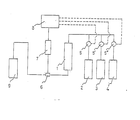
- the drawing is a schematic illustration
- the present invention comprises conversion of AMP into ADP and conversion of the resulting ADP into ATP.
- adenylate kinase is used as an enzyme for converting AMP into ADP
- adn ATP is used as a phosphoric acid donator in this case.
- enzymes for converting ADP into ATP include acetate kinase, carbamate kinase, creatine kinase, 3-phospho- glycerate kinase, pyrubate kinase and polyphosphate kinase.
- Acetate kinase is preferably used considering the price of phosphoric acid donator, activity for converting into ATP and availability.of enzymes, etc.
- acetylphosphate is used as a phosphoric acid donator.
- ATP and acetyl phosphate are used as phosphoric acid donators when using adenylate kinase and acetate kinase, it is sufficient to supply only acetyl phosphate as the phosphoric acid donator, because ATP as the final conversion product can be used as the phosphoric acid donator. From the application of the above-described advantages which are obtained when using the acetate kinase alone and when using the combination of acetate kinase and adenylate kinase, it becomes possible to plan the system in which the ATP is effectively reproduced from the AMP.
- microorganisms of the genus Bacillus such as Bacillus stearothermophillus, Bacillus brevis, Bacillus coagulans, Bacillus thermoproteolyticus or Bacillus acidocaldarius, etc.
- microorganisms of the genus Clostridium microorganisms of the genus Thermoactinomyces, microorganisms of the genus Achromobacter, microorganisms of the genus Streptomyces, microorganisms of the genus Micropolyspora, microorganisms of the genus Thermus such as Thermus aquaticus, Thermus thermophilus or Thermus flavus, etc., microorganisms of the genus Thermus
- microorganisms growing at a normal temperature into which genes of the above-described microorganisms are introduced.
- Bacillus stearothermophillus is particularly suitable for producing both enzymes of adenylate kinase and acetate kinase. Both enzymes obtained from this microorganism can be easily purified and have a high specific activity.
- the enzymes are bonded to, included in or absorbed in suitable carriers.
- Such carriers include polysaccharide derivatives such as cellulose, dextran or agarose, etc., vinyl polymer derivatives such as polystyrene, ethylene-maleic acid copolymer or cross-linked polyacrylamide, etc., polyamino acids and polyamide derivatives such as L-alanine-L-glutamic acid copolymer or polyaspartic acid, etc., and inorganic derivatives such as glass, alumina or hydroxyapatite, etc., preferably polysaccharide derivatives, inorganic derivatives such as glass and vinyl polymer derivatives such as polystyrene, which are used by packing a reactor such as a column therewith.
- the preferred amount of the above carriers used per the enzyme is 1 ug/enzyme unit to 100 g/enzyme unit (indicated by enzyme activity unit), more preferably 10 pg/enzyme unit to 10 g/enzyme unit.
- an apparatus used for converting AMP into ATP in the present invention there is, for example, an apparatus having a basic constitution shown in the drawing.
- This apparatus is composed of an enzyme reactor 1 including an enzyme for converting AMP into ADP and an enzyme for converting ADP into ATP, a source 2 of AMP, a source 3 of phosphoric acid donator for converting AMP into ADP, a source 4 of phosphoric acid donator for converting ADP into ATP, variable fluid sending apparatus 5, 5' and 5" which are arranged and connected so that AMP and the above-described phosphoric acid donators are fed from each source 2, 3 and 4
- an automatic sampling apparatus 6 and an analyzing apparatus 7 for the reacting solution which are arranged and connected so as to automatically analyze ATP, ADP and AMP in the reacting solution from the enzyme reactor 1
- an arithmetical control apparatus 8 which is arranged and connected so as to control the amount of flow in at least one of the above-described variable fluid sending apparatus 5, 5' and 5" by which arithmetical operation is carried out on the basis of data signals received from the above-described analyzing apparatus 7 and signals of the prescribed values previously fed so as to keep the ATP conversion in the above-described enzyme reactor 1 or the ATP concentration in the outlet of said reactor at a previously prescribed value
- a recovery apparatus 9 for recovering the reacting solution flowing from the enzyme reactor 1.
- AMP ⁇ ADP ⁇ ATP
- a packed bed reactor by feeding 0.1 ⁇ M to 4 M, preferably 1 ⁇ M to 2 M and, more preferably 10 ⁇ M to 500 mM of AMP (source of AMP supply 2), 0.1 ⁇ M to 500 mM, preferably 1 ⁇ M to 400 mM and, more preferably 10 ⁇ M to 300 mM of acetyl phosphate (source 4 of phosphoric acid donator supply for converting ADP into ATP) and ATP (source 3 of phosphoric acid donator supply for converting AMP into ADP) to an end of the reactor 1.
- ATP represents the concentration of AMP (mM)
- ATP represents the concentration of ATP (mM)
- r represents a ratio of immobilized enzyme activity of the enzyme which converts ADP into ATP to immobilized enzyme activity of the enzyme which converts AMP into ADP, which is a positive integer of 1 or more).
- the reacting solution luted from the reactor in this case can be analyzed by the analyzing apparatus 7 to determine concentrations of AMP, ADP and ATP and a conversion to ATP.
- the flow rate varies according to the size of the reactor.
- a suitable flow rate can be selected from the linear velocitv range of 1 x 10 -4 cm/hr to 1 x 10 6 m/hr.
- the apparatus for supplying AMP, ATP and acetyl phosphate to the reactor are not particularly restricted, if they are capable of varying the amount of sending flow by external control signals.
- variable fluid sending apparatus 5, 5' and 5" such as metering pumps driven by a pulse motor can be used.
- the flow rates and the concentrations of solutions of each substrate can be varied by providing automatical controlling valves (not shown in the drawing) between vessels 2, 3 and 4 containing the solutions of each substrate and variable fluid sending apparatus 5, 5' and 5", and controlling opening and closing of the automatic controlling valves by external signals.
- the automatic controlling valves may be electromagnetic valves.
- the reactor may be used, of course, at an ambient temperature. However, it is preferable to add a means for maintaining temperature.
- the automatic sampling apparatus 6 and the analyzing apparatus 7 for the reacting solution from the reactora r e not particularly restricted, if AMP, ADP and ATP are detected.
- An example of a preferred . system is a high performance liquid chromatographic apparatus.
- the concentration of ATP so as to satisfy the formula (a)
- the following method can be used.
- control may be carried out by a method which comprises previously feeding the formula (a) and data necessary for operation to arithmetical control apparatus 8, carrying out operation of conversion of AMP into ATP from the above-described formula and data and analyzed data from the analyzing system, and sending signals from the arithmetical control apparatus 8 to at least one of the above-described variable fluid sending apparatus 5, 5' and 5" and the automatic controlling valves to vary the flow rate or the concentration so as to satisfy the formula (a).
- data necessary for carrying out operation means the concentrations of the AMP and ATP as raw materials and the ratio of the immobilized enzyme activity of the enzyme for converting ADP into ATP to the immobilized enzyme activity of the enzyme for converting AMP into ADP
- analyzed data means the concentrations of AMP, ADP and ATP in the reacting solution from the reactor.
- the arithmetical control apparatus 8 refers to an apparatus having an arithmetical function and a function of sending control signals to an external apparatus.
- a microcomputer can be used.
- the immobilized enzyme activity means activity of the immobilized enzyme. For example, in case of adenylate kinase, activity in the direction of AMP + ATP + 2 ADP is shown.
- a desired amount of the immobilized enzyme for example, 5 to 10 ⁇ l according to degree of activity, is added to a solution for measuring activity, and activity is measured by pursuing it as a change in absorbance by means of a spectrophotometer by the same manner as in case of free enzyme.
- 1 unit of enzyme activity means the amount of producing 1 micromole of ADP per minute at 30°C in case of adenylate kinase and the amount of producing 1 micromole of ATP per minute in case of acetate kinase.
- the ATP used in the present invention may be the ATP which is the final conversion product of the above-described reaction which is utilized by means of circulation. In this case, it is sufficient to supply only acetyl phosphate as the phosphoric acid donator.
- the enzymic reactions for synthesizing physiologically active substances by source using ATP as an energy/(hereinafter referred to as reaction system for physiologically active substance) may use one or more of the above-described synthetic reactions as the main reactions.
- synthetic reactions include a reaction for synthesizing peptide and peptide derivatives from amino acids by means of aminoacyl t-RNA synthetase, a reaction for synthesizing acetyl CoA or acyl CoA from acetic acid or aliphatic acid and CoA by means of acetyl CoA synthetase or acyl CoA synthetase, a reaction for synthesizing L-pantothenic acid from pantoic acid and 8-alanine by means of pantothenic acid synthetase, a reaction for synthesizing guanylic acid from xanthylic acid and ammonia or glutamine by means of guanylic acid synthetase, a reaction
- ATP is consumed in the above-described reaction system for making a physio- in logically active substance resulting/the formation of AMP.
- This resulting AMP is converted into ATP using a combination of an enzyme which converts into ADP and an enzyme which converts into ATP, as described above (hereinafter referred to as the reaction system for reproduction of ATP).
- a reactor is first prepared.
- the reactor may be a membrane type reactor or a column type reactor.
- the membrane type reactor is particularly effective to use when the physiologically active substance is a low molecular material.
- each enzyme can be used by staying the enzyme in the reactor.
- the resulting AMP is eluted from the reactor because it is a low molecular material. After it is separated from the physiologically active substance by a simple operation such as ion-exchange chromatography, etc., it is sent back to the reactor, by which it is possible to reproduce ATP.
- water-soluble high molecular ATP which is obtained by previously introducing a suitable spacer into ATP and bonding to a water-soluble high molecular substance
- the above-described operation for separation is not required.
- Various materials having a molecular weight of 1,000 to 500,000 may be used as the water-soluble high molecular substances.
- polysaccharides such as a soluble dextran, vinyl polymer derivatives such as polyacrylamide derivatives or polyacrylic acid derivatives, and polyether derivatives such as polyethylene glycol derivatives, etc.
- the column type reactor can be used without regard to the kind of physiologically active substance.
- each enzyme is packed in the column in a form of the so-called immobilized enzyme which is prepared by bonding to, including in or absorbing in a suitable carrier as described above.
- the resulting AMP flows out of the reactor whether it is a high polymer or not, but it can be sent back to the reactor after being separated from the physiologically active substance in the same manner as described above.
- water-soluble high molecular ATP the operation for separation can be easily carried out, because it can be separated by membrane separation.
- the reaction system for physiologically active substance and the reaction system for reproduction of ATP may be operated by combining them using different reactors, respectively. Further, the reaction system for physiologically active substance and the reaction system for reproduction of ATP may be operated in the same reactor. However, in order to synthesize the physiologically active substance efficiently, it is desirable to supply AMP produced in the reaction system for physiologically active substance to the reaction system for reproduction of ATP together with ATP, in both cases. In such cases, it is preferred that the ratio of AMP to ATP is in the range shown by the above-described formula (a).
- 0.1 ⁇ M to 4 M preferably 1 ⁇ M to 2 M and, more preferably 10 ⁇ M to 500 mM of AMP, 0.1 uM to 500 mM, preferably 1 VM to 400 mM and, more preferably 10 ⁇ M to 300 mM of acetyl phosphate and ATP in an amount of, preferably, 4% or more based on AMP as shown in the formula (a), though it varies according to the ratio in the reaction system for reproduction of ATP, are fed to an end of the reactor together with AMP to carry out conversion of AMP ⁇ ADP ⁇ ATP in the reactor.
- the reacting solution eluted from the reactor is analyzed by a suitable analyzing system, by which concentrations of AMP, ADP and ATP and conversion to ATP can be determined.
- the flow rate varies according to the size of the reactor, and, for example, a suitable flow rate can be selected from the linear velocity range of 1 x 10 -4 cm/hr to 1 x 10 6 m/hr.
- a part of the reacting solution (the concentration of ATP is desired to be 4% or more based on the concentration of AMP) is circulated to send back to the inlet of the reactor and feeding of the ATP solution fed in the initial stage is stopped.
- the larger part of the reacting solution is fed immediately to the reactor of the reaction system for the physiologically active substance while controlling the concentration thereof together with substrates for the reaction system for the physiologically active substance in case that substances excepting ATP in the reacting solution, for example, acetic acid, do not inhibit the reaction system for the physiologically active substance, or it may be fed to an end of the reactor of the reaction system for the physiologically active substance together with a solution obtained by dissolving the substrates for the reaction system for the physiologically active substance after inhibiting substances are removed by a suitable separation means such as ion-exchange resin, etc., in case that they inhibit.
- a suitable separation means such as ion-exchange resin, etc.
- the flow rate varies according to the size of the reactor, and a suitable flow rate may be selected, for example, from the linear velocity range of 1 x 10⁻⁴ cm/hr to 1 x 10 m/hr.
- Concentrations of the substrates vary according to the physiologically active substance. When the solubility of the substrate is lower than the concentration of ATP fed from the reaction system for reproduction of ATP, the solubility of the substrate is the upper limit of concentration. Further, when the solubility of the substrate is higher than the concentration of ATP fed, the concentration similar to the concentration of ATP is the highest concentration of the substrate. Further, in the latter case, if the ATP fed is concentrated, the synthetic reaction can be carried out at a higher concentration.
- reaction product physiologically active substance
- AMP is separated from the eluted solution in the reactor by a suitable separation means such as ion-exchange resin, and AMP is sent back to an end of the reactor of the reaction system for reproduction of ATP, by which ATP is reproduced again.
- the operation can be carried out in only when substrates in both enzymic systems do not inhibit the enzymic reaction systems of each other.
- Concentrations of substrates in both enzymic reaction systems are desired to be selected according to a relation between the concentration of ATP produced in the reaction system for reproduction of ATP and the solubility of the substrate in the reaction system for physiologically active substance. For example, when the solubility of the substrate in the reaction system for physiologically active substance is lower than the concentration of ATP, concentrations of AMP, ATP and acetyl phosphate may be selected such that the concentration of ATP produced in the reaction system for reproduction of ATP agrees with the concentration of the substrate.
- the solubility of the substrate in the reaction system for physiologically active substance is higher than the concentration of ATP, it is desired that the concentration of the substrate is allowed to agree with the concentration of ATP produced in the reaction system for reproduction of ATP. It is preferred that the amount of ATP fed to the reaction system for reproduction of ATP together with AMP is more than 2 times, preferably more than 4 times and, more preferably, more than 5 times of the above-described case of using different reactors respectively.
- the flow rate varies according to the size of the reactor as well as the type of reactor, and a suitable flow rate can be selected from the linear velocity range, for example, 1 x 10⁻⁴ cm/hr to 1 x 10 6 m/hr.
- AMP and the physiologically active substance are separated from the reacting solution eluted from the reactor by means of a suitable separation means such as ion-exchange resin, etc., as described above, and AMP can be used again by sending back as a substrate to the inlet of the reactor.
- the pH during the reaction varies according to enzyme used in case of the reaction system for physiologically active substance, but a pH in a nearly neutral range, namely, 6 to 11 and, preferably, 6.5 to 9.0 is generally used.
- a pH in the range of 6.5 to 11, preferably 6.5 to 9.0 and, more preferably 7 to 8 is used.
- As a buffer solution it is possible to use conventional solutions fit for these pH ranges.
- phosphates, imidazole salts, tris-hydrochloride, collidine salts and barbital hydrochloride, etc. can be used near pH 7.
- the temperature for treatment can be selected from the range of room temperature to 50°C.
- reaction for reproduction of ATP may be carried out at a higher temperature, it is preferred to set at 5°C or less which is the maximum growth temperature of enzyme producing microorganisms.
- various divalent metal ions can be used. As the divalent metal ions, magnesium ion and manganese ion are particularly recommended.
- AMP change in conversion shown in the prior conversion of AMP into ATP
- AMP can be converted effectively, continuously and economically into ATP at a conversion of substantial 100% over a long period of time.
- ATP conversion can be kept stably for a long period of time because of having good operation properties.
- pure AMP is not required, and mixtures of AMP with ADP and ATP may be used if they are controlled so as to satisfy the formula (a). Accordingly, the process is very advantageous for industrial use.
- the reaction system for reproduction of ATP can be advantageously applied to reproduction and utilization of ATP, and, from a different point of view, it can be thought of as a process for production of ATP using AMP as a raw material.
- ATP is an important material as a medicine and has been produced industrially.
- the fermentation process in the prior art has problems that by-products are easily formed and productivity is inferior. Consequently, the price of ATP has been high.
- problems can be eliminated and ATP having high purity can be supplied with good productivity.
- the enzymic reaction using ATP as an auxiliary factor can be carried out continuously, effectively and economically by using the above-described reactors. Accordingly, it becomes possible to realize the operation of the so-called bioreactor wherein coupling reactions carried out in the living body are carried out as industrial chemical reactions outside the living body. Particularly, it is of great industrial value that protein synthesis reactions and peptide synthesis reactions by means of amino acid activating enzymes which are the most important reactions in the living body can be utilized for practical application.
- a glass column having an inside diameter of 1.6 cm and a length of 10 cm was packed with both of these immobilized enzymes, and each substrate dissolved in a 25 mM imidazole hydrochloride buffer solution containing 10 mM magnesium chloride having a pH of 7.5 was fed to the column at a flow rate of 150 m t/ hour.
- a variable fluid sending apparatus, an electromagnetic valve and a microcomputer were equipped on this column.
- the temperature in the column was kept at 30°C.
- Concentrations of AMP, ADP and ATP in the reacting solution eluted from the column were measured by a high performance liquid chromatographic apparatus.
- the concentration of AMP was fixed at 1.5 mM and the concentration of acetyl phosphate was fixed at 5 mM.
- Conversion to ATP was then determined with varying the condition so as to satisfy the formula (a) by the microcomputer such that it was 0.063 mM ATP (ratio by concentration of ATP to AMP was 0.042; Example 1), 0.07 mM ATP (ratio by concentration of ATP to AMP was 0.047; Example 2), 0.13 mM ATP (ratio by concentration of ATP to AMP was 0.087; Example 3) and 0.19 mM ATP (ratio by concentration of ATP to AMP was 0.127; Example 4).
- Example 5 As a result, 95% of ATP, 3% of ADP and 2% of AMP were detected in Example 5, 89% of ATP, 8% of ADP and 3% of AMP were detected in Example 6, and 72% of ATP, 20% of ADP and 8% of AMP were detected in Example 7.
- ATP was kept in the range of 98% to 98.5% over 5 hours after 20 minutes after the eluent from the reactor was used instead of ATP.
- a glass column having an inside diameter of 2.0 cm and a length of 12 cm was packed with 2,000 units of immobilized acetate kinase and 200 units of immobilized adenylate kinase obtained by the same method as in Example 1, and 3.0 mM of AMP, 0.13 mM of ATP (ratio by concentration of ATP to AMP was 0.043) and 10 mM of acetyl phosphate which were dissolved in a 50 mM imidazole-hydrochloride buffer solution containing 25 mM magnesium chloride and 0.04% sodium azide having a pH of 7.5 were fed to the column at a flow rate of 300 m£/hour, and flow rates and concentrations of AMP and ATP were maintained so as to satisfy the formula (a).
- the conversion to ATP was kept in the range of 98.5% to 99.0% over 10 days after initiation of the reaction.
- the conversion to ATP was kept in the range of 98.2 to 98.7% over 10 days after initiation of the reaction.
- Adenylate kinase and acetate kinase materials derived from available Bacillus stearothermophilus were obtained.
- Acetyl CoA synthetase a material derived from available yeast (produced by Boehringer Mannheim Co.) was also obtained.
- a column for reproduction of ATP (inside diameter: 1.6 cm, length: 10 cm) was packed with the immobilized acetate kinase and the immobilized adenylate kinase.
- 6 mM of AMP, 0.3 mM of ATP and 25 mM of acetyl phosphate which were dissolved in a 25 mM imidazole hydrochloride buffer solution containing 10 mM magnesium chloride having a pH of 7.5 were fed to the column at a flow rate of 25 mt/hour.
- the reaction temperature in the column was kept at 30°C.
- the resulting ATP was sent back to the inlet of the column in an amount of 5% (0.3 mM) based on the concentration of AMP.
- Another column (inside diameter: 1.0 cm, length: 9 cm) was packed with immobilized acetyl CoA synthetase.
- As a substrate 4 mM of potassium acetate, 4 mM of reduction type CoA, lithium salt and 4 mM of MgCl 2 which were dissolved in a 100 mM imidazole hydrochloride buffer solution having a pH of 7.5 were flown at a flow rate of 25 ml/hour, which was mixed with an ATP solution eluted from the reaction system for production of ATP in a ratio of 1:1.
- the mixture was fed to a column packed with the immobilized acetyl CoA synthetase (flow rate: 50 mt/hour, reaction temperature: 37°C). Further, AMP was taken out from an elute from the column by means of Dowex 1-X8 (produced by The Dow Chemical Co.). After the pH and the concentration were controlled to desired values, it was fed to the column for reproduction of ATP by means of a pump.
- the amount of the resulting acetyl CoA was measured by a method which comprises sampling 0.05 ml of the elute from the column, adding 3 ml of 1 mM 5,5'-dithiobis(2-nitrobenzoic acid) (DTNB) (pH 6.65, phosphoric acid buffer solution), determining the amount of unreacting SH group by change in absorbance in 412 nm at room temperature after the passage of 20 minutes, and calculating therefrom.
- DTNB 5,5'-dithiobis(2-nitrobenzoic acid)
- a column (inside diameter: 1.8 cm, length: 12 cm) was packed with 2,000 units of immobilized acetate kinase, 200 units of immobilized adenylate kinase and 10 units of immobilized acetyl CoA synthetase which were obtained by the same methods as in Example 11, and 4 mM of AMP, 1.0 mM of ATP (25% based on the concentration of AMP), 25 mM of acetyl phosphate, 2.5 mM of potassium acetate and 2.5 mM of reduction type CoA lithium salt which were dissolved in a 100 mM imidazole hydrochloride buffer solution containing 10 mM magnesium chloride were fed thereto at a flow rate of 50 mk/hour.
- the reaction temperature in the column was kept at 37°C.
- AMP was separated from the solution eluted from the column by the same method as in Example 1 and it was sent back to the inlet for substrates. After 40 minutes from the initiation of the reaction, the formed acetyl CoA became 1.6 mM, and thereafter a stabilized state was kept over 15 hours.
- Example 11 To the same column for reproduction of ATP as in Example 11, 6 mM of AMP, 0.05 mM of ATP and 25 mM of acetyl phosphate which were dissolved in a 25 mM imidazole hydrochloride buffer soltuion containing 10 mM of magnesium chloride having a pH of 7.5 were fed at a flow rate of 25 ml/hour. A part of the solution eluted from the column was sent back to the inlet of the column for reproduction of ATP by the same method as in Example 11 in an amount of 0.05 mM as a concentration of ATP. Then, synthesis of acetyl CoA was carried out by the same column packed with immobilized acetyl CoA synthesis enzyme as in Example 11.
- Asparagine synthetase was produced from Lactobacillus arabinosus ATCC 8014 by carrying out ammonium sulfate fractionation, calcium phosphate gel treatment and gel filtration.
- a 100 mM tris-hydrochloride buffer solution containing 4 mM manganses chloride in which 4 mM of ammonium chloride and 4 mM of L-aspartic acid were dissolved was mixed with an ATP solution obtained from the reaction system for reproduction of ATP in a ratio of 1:1 (by volume), and the resulting mixture was fed to the above-described reactor at a flow rate of 25 mQ/hour.
- the reaction temperature in this case was kept at 37°C.
- AMP was separated from the elute by the same method as in Example 1, which was sent back to the reaction system for reproduction of ATP.
- the amount of the formed L-asparagine was determined by applying the elute to a high performance liquid chromatographic apparatus.
- Tyrosyl t-RNA synthetase was produced from Bacillus-stearothermophilus: Deposition No. 5141 in Fermentation Research Institute by purifying through chromatography of DEAE-cellulose (produced by Whatman Ltd.), hydroxyapatite (sold by Seikagaku Kogyo Co.) and DEAE-Sephadex (produced by Pharmacia Fine Chemicals), ammonium sulfate fractionation and chromatography of hydroxyapatite, DEAE-Sephadex and Sephadex G-150 (produced by Pharmacia Fine Chemicals).
- ATP purity: 98%) was reproduced from AMP, a catalytic amount (5% based on the concentration of AMP) of ATP and acetyl phosphate by the same method as in Example 1, and it was used for the following reaction.
- tyrosyl t-RNA synthetase 150 mg of the above-described purified tyrosyl t-RNA synthetase, 200 mg of magnesium chloride, 51 mg of ATP (purity: 98%), 0.5 mg of L-tyrosine, 100 units of pyrophosphatase (produced by Boehringer Mannheim) and 0.005 mg of dithiothreitol were dissolved in 70 mt of a 20 mM HEPES buffer solution (pH: 8.0), and they were allowed to react at 4°C for 15 minutes to obtain a reaction mixture. To the resulting reaction mixture 2 g of L-phenylalanine methyl ester was added and well blended. The mixture was allowed to stand for 1 day with maintaining the reaction temperature at 30°C to carry out the reaction.
- Methionyl t-RNA synthetase was obtained as a crude enzyme solution (purity: 10%) from available baker's yeast (produced by Oriental Yeast Co.) by operating with cellulose phosphate column chromatography.
- ATP purity: 98%) was reproduced from AMP, a catalytic amount (5% based on the concentration of AMP) of ATP and acetyl phosphate by the smae method as in Example 1, and it was used for the following reaction.
Landscapes
- Life Sciences & Earth Sciences (AREA)
- Organic Chemistry (AREA)
- Chemical & Material Sciences (AREA)
- Engineering & Computer Science (AREA)
- Health & Medical Sciences (AREA)
- Wood Science & Technology (AREA)
- Zoology (AREA)
- Bioinformatics & Cheminformatics (AREA)
- Genetics & Genomics (AREA)
- Biotechnology (AREA)
- General Engineering & Computer Science (AREA)
- Microbiology (AREA)
- General Health & Medical Sciences (AREA)
- Biochemistry (AREA)
- Biomedical Technology (AREA)
- Molecular Biology (AREA)
- Sustainable Development (AREA)
- Chemical Kinetics & Catalysis (AREA)
- General Chemical & Material Sciences (AREA)
- Immunology (AREA)
- Proteomics, Peptides & Aminoacids (AREA)
- Mycology (AREA)
- Preparation Of Compounds By Using Micro-Organisms (AREA)
Applications Claiming Priority (6)
| Application Number | Priority Date | Filing Date | Title |
|---|---|---|---|
| JP57010338A JPS58129970A (ja) | 1982-01-26 | 1982-01-26 | アデノシン三リン酸変換用装置 |
| JP10338/82 | 1982-01-26 | ||
| JP57090424A JPS58209990A (ja) | 1982-05-27 | 1982-05-27 | アデノシン一リン酸のアデノシン三リン酸への変換方法 |
| JP90424/82 | 1982-05-27 | ||
| JP216207/82 | 1982-12-09 | ||
| JP21620782A JPS59106296A (ja) | 1982-12-09 | 1982-12-09 | 複合酵素法による生理活性物質の製造法 |
Publications (3)
| Publication Number | Publication Date |
|---|---|
| EP0084975A2 true EP0084975A2 (de) | 1983-08-03 |
| EP0084975A3 EP0084975A3 (en) | 1984-08-22 |
| EP0084975B1 EP0084975B1 (de) | 1986-12-30 |
Family
ID=27278927
Family Applications (1)
| Application Number | Title | Priority Date | Filing Date |
|---|---|---|---|
| EP19830300361 Expired EP0084975B1 (de) | 1982-01-26 | 1983-01-25 | Verfahren zur Herstellung einer physiologisch aktiven Substanz mittels eines Multienzym-Verfahrens und Apparat dafür |
Country Status (3)
| Country | Link |
|---|---|
| EP (1) | EP0084975B1 (de) |
| DE (1) | DE3368682D1 (de) |
| DK (1) | DK29683A (de) |
Cited By (4)
| Publication number | Priority date | Publication date | Assignee | Title |
|---|---|---|---|---|
| EP0146265A3 (en) * | 1983-11-15 | 1986-11-20 | Kyowa Hakko Kogyo Co., Ltd. | Process for producing a compound from its precursor using an enzymatic activity of bacterium |
| EP0202094A3 (en) * | 1985-05-13 | 1986-12-30 | Unitika Ltd. | Process for producing physiologically active substance |
| EP0247819A3 (en) * | 1986-05-28 | 1989-02-15 | Unitika Ltd. | Process for producing diadenosine tetraphosphate and derivatives thereof |
| EP2921553A1 (de) | 2014-03-19 | 2015-09-23 | Leibniz-Institut für Polymerforschung Dresden e.V. | Enzymatisches Reaktorsystem |
Family Cites Families (2)
| Publication number | Priority date | Publication date | Assignee | Title |
|---|---|---|---|---|
| US4164444A (en) * | 1976-03-15 | 1979-08-14 | Massachusetts Institute Of Technology | Method for preparing adenosine triphosphate |
| US4584272A (en) * | 1980-10-09 | 1986-04-22 | Unitika Ltd. | Adenylate kinase and process for the production thereof |
-
1983
- 1983-01-25 EP EP19830300361 patent/EP0084975B1/de not_active Expired
- 1983-01-25 DE DE8383300361T patent/DE3368682D1/de not_active Expired
- 1983-01-26 DK DK29683A patent/DK29683A/da not_active Application Discontinuation
Cited By (6)
| Publication number | Priority date | Publication date | Assignee | Title |
|---|---|---|---|---|
| EP0146265A3 (en) * | 1983-11-15 | 1986-11-20 | Kyowa Hakko Kogyo Co., Ltd. | Process for producing a compound from its precursor using an enzymatic activity of bacterium |
| EP0202094A3 (en) * | 1985-05-13 | 1986-12-30 | Unitika Ltd. | Process for producing physiologically active substance |
| US5001055A (en) * | 1985-05-13 | 1991-03-19 | Unitika Ltd. | Process for producing physiologically active substance |
| EP0247819A3 (en) * | 1986-05-28 | 1989-02-15 | Unitika Ltd. | Process for producing diadenosine tetraphosphate and derivatives thereof |
| EP2921553A1 (de) | 2014-03-19 | 2015-09-23 | Leibniz-Institut für Polymerforschung Dresden e.V. | Enzymatisches Reaktorsystem |
| WO2015139852A1 (en) | 2014-03-19 | 2015-09-24 | Leibniz-Institut Für Polymerforschung Dresden E.V. | Enzymatic reactor system |
Also Published As
| Publication number | Publication date |
|---|---|
| EP0084975B1 (de) | 1986-12-30 |
| DK29683A (da) | 1983-07-27 |
| DE3368682D1 (en) | 1987-02-05 |
| DK29683D0 (da) | 1983-01-26 |
| EP0084975A3 (en) | 1984-08-22 |
Similar Documents
| Publication | Publication Date | Title |
|---|---|---|
| US4335209A (en) | Process for preparation of L-tryptophan by enzyme | |
| US4882276A (en) | Process for producing physiologically active substance by multienzyme process | |
| CN1379111A (zh) | 制备非蛋白原l-氨基酸的方法 | |
| Berke et al. | Continuous regeneration of ATP in enzyme membrane reactor for enzymatic syntheses | |
| Wada et al. | Continuous production ofl‐isoleucine using immobilized growing Serratia marcescens cells | |
| AU616331B2 (en) | Method for cultivation of bacteria of the genus pseudomonas | |
| EP0084975B1 (de) | Verfahren zur Herstellung einer physiologisch aktiven Substanz mittels eines Multienzym-Verfahrens und Apparat dafür | |
| US4886749A (en) | Process for producing diadenosine tetraphosphate and derivatives thereof | |
| JPH0630599B2 (ja) | フルクトース―1,6―二リン酸の製造法 | |
| JPH0521553B2 (de) | ||
| US4960696A (en) | Process for producing physiololgically active substance by multienzyme process | |
| JP3098591B2 (ja) | 3’−ホスホアデノシン−5’−ホスホ硫酸の製造方法 | |
| CA1194825A (en) | Process for producing physiologically active substance by multienzyme process | |
| US4554253A (en) | Apparatus for synthesizing adenosine-5'-triphosphate | |
| Moore et al. | Enzymatic synthesis of novel glutathione analogs | |
| CA2073954A1 (en) | Process for the production of activated sialic acids | |
| JPH05236986A (ja) | 安定同位体標識蛋白質の製造法および試薬キット | |
| CN109929889B (zh) | 一种l-酪氨酸的制备方法 | |
| Takamatsu et al. | Recirculating bioreactor–separator system for simultaneous biotransformation and recovery of product: Immobilized l‐aspartate β‐decarboxylase reactor system | |
| JPS59106296A (ja) | 複合酵素法による生理活性物質の製造法 | |
| JPH01320995A (ja) | ヌクレオシド化合物の製造方法 | |
| Chibata | Production of useful chemicals using cells immobilized with polyacrylamide and carrageenan | |
| EP0323068A2 (de) | Enzymatsiche Bildung von Kohlenstoff-Kohlenstoff-Bindung | |
| JPS61260894A (ja) | 複合酵素法による生理活性物質の製造方法 | |
| JPS6112297A (ja) | L‐フエニルアラニンの製造方法 |
Legal Events
| Date | Code | Title | Description |
|---|---|---|---|
| PUAI | Public reference made under article 153(3) epc to a published international application that has entered the european phase |
Free format text: ORIGINAL CODE: 0009012 |
|
| AK | Designated contracting states |
Designated state(s): CH DE FR GB IT LI SE |
|
| PUAL | Search report despatched |
Free format text: ORIGINAL CODE: 0009013 |
|
| AK | Designated contracting states |
Designated state(s): CH DE FR GB IT LI SE |
|
| 17P | Request for examination filed |
Effective date: 19850204 |
|
| GRAA | (expected) grant |
Free format text: ORIGINAL CODE: 0009210 |
|
| AK | Designated contracting states |
Kind code of ref document: B1 Designated state(s): CH DE FR GB IT LI SE |
|
| REF | Corresponds to: |
Ref document number: 3368682 Country of ref document: DE Date of ref document: 19870205 |
|
| ET | Fr: translation filed | ||
| ITF | It: translation for a ep patent filed | ||
| PLBE | No opposition filed within time limit |
Free format text: ORIGINAL CODE: 0009261 |
|
| STAA | Information on the status of an ep patent application or granted ep patent |
Free format text: STATUS: NO OPPOSITION FILED WITHIN TIME LIMIT |
|
| 26N | No opposition filed | ||
| ITTA | It: last paid annual fee | ||
| EAL | Se: european patent in force in sweden |
Ref document number: 83300361.9 |
|
| PGFP | Annual fee paid to national office [announced via postgrant information from national office to epo] |
Ref country code: SE Payment date: 19970115 Year of fee payment: 15 |
|
| PGFP | Annual fee paid to national office [announced via postgrant information from national office to epo] |
Ref country code: FR Payment date: 19980109 Year of fee payment: 16 |
|
| PGFP | Annual fee paid to national office [announced via postgrant information from national office to epo] |
Ref country code: GB Payment date: 19980116 Year of fee payment: 16 |
|
| PG25 | Lapsed in a contracting state [announced via postgrant information from national office to epo] |
Ref country code: SE Free format text: LAPSE BECAUSE OF NON-PAYMENT OF DUE FEES Effective date: 19980126 |
|
| PGFP | Annual fee paid to national office [announced via postgrant information from national office to epo] |
Ref country code: DE Payment date: 19980202 Year of fee payment: 16 |
|
| PGFP | Annual fee paid to national office [announced via postgrant information from national office to epo] |
Ref country code: CH Payment date: 19980205 Year of fee payment: 16 |
|
| EUG | Se: european patent has lapsed |
Ref document number: 83300361.9 |
|
| PG25 | Lapsed in a contracting state [announced via postgrant information from national office to epo] |
Ref country code: GB Free format text: LAPSE BECAUSE OF NON-PAYMENT OF DUE FEES Effective date: 19990125 |
|
| PG25 | Lapsed in a contracting state [announced via postgrant information from national office to epo] |
Ref country code: LI Free format text: LAPSE BECAUSE OF NON-PAYMENT OF DUE FEES Effective date: 19990131 Ref country code: CH Free format text: LAPSE BECAUSE OF NON-PAYMENT OF DUE FEES Effective date: 19990131 |
|
| GBPC | Gb: european patent ceased through non-payment of renewal fee |
Effective date: 19990125 |
|
| REG | Reference to a national code |
Ref country code: CH Ref legal event code: PL |
|
| PG25 | Lapsed in a contracting state [announced via postgrant information from national office to epo] |
Ref country code: FR Free format text: LAPSE BECAUSE OF NON-PAYMENT OF DUE FEES Effective date: 19990930 |
|
| PG25 | Lapsed in a contracting state [announced via postgrant information from national office to epo] |
Ref country code: DE Free format text: LAPSE BECAUSE OF NON-PAYMENT OF DUE FEES Effective date: 19991103 |
|
| REG | Reference to a national code |
Ref country code: FR Ref legal event code: ST |