EP0085410A2 - Procédé pour réunir les parties métalliques intérieures et extérieures d'un profile composite - Google Patents
Procédé pour réunir les parties métalliques intérieures et extérieures d'un profile composite Download PDFInfo
- Publication number
- EP0085410A2 EP0085410A2 EP83100783A EP83100783A EP0085410A2 EP 0085410 A2 EP0085410 A2 EP 0085410A2 EP 83100783 A EP83100783 A EP 83100783A EP 83100783 A EP83100783 A EP 83100783A EP 0085410 A2 EP0085410 A2 EP 0085410A2
- Authority
- EP
- European Patent Office
- Prior art keywords
- additional material
- insulating web
- jacket
- outer parts
- composite profile
- Prior art date
- Legal status (The legal status is an assumption and is not a legal conclusion. Google has not performed a legal analysis and makes no representation as to the accuracy of the status listed.)
- Granted
Links
Images

Classifications
-
- E—FIXED CONSTRUCTIONS
- E06—DOORS, WINDOWS, SHUTTERS, OR ROLLER BLINDS IN GENERAL; LADDERS
- E06B—FIXED OR MOVABLE CLOSURES FOR OPENINGS IN BUILDINGS, VEHICLES, FENCES OR LIKE ENCLOSURES IN GENERAL, e.g. DOORS, WINDOWS, BLINDS, GATES
- E06B3/00—Window sashes, door leaves, or like elements for closing wall or like openings; Layout of fixed or moving closures, e.g. windows in wall or like openings; Features of rigidly-mounted outer frames relating to the mounting of wing frames
- E06B3/04—Wing frames not characterised by the manner of movement
- E06B3/263—Frames with special provision for insulation
- E06B3/277—Frames with special provision for insulation with prefabricated insulating elements held in position by expansion of the extremities of the insulating elements
-
- B—PERFORMING OPERATIONS; TRANSPORTING
- B29—WORKING OF PLASTICS; WORKING OF SUBSTANCES IN A PLASTIC STATE IN GENERAL
- B29C—SHAPING OR JOINING OF PLASTICS; SHAPING OF MATERIAL IN A PLASTIC STATE, NOT OTHERWISE PROVIDED FOR; AFTER-TREATMENT OF THE SHAPED PRODUCTS, e.g. REPAIRING
- B29C44/00—Shaping by internal pressure generated in the material, e.g. swelling or foaming ; Producing porous or cellular expanded plastics articles
- B29C44/02—Shaping by internal pressure generated in the material, e.g. swelling or foaming ; Producing porous or cellular expanded plastics articles for articles of definite length, i.e. discrete articles
- B29C44/12—Incorporating or moulding on preformed parts, e.g. inserts or reinforcements
- B29C44/1228—Joining preformed parts by the expanding material
-
- B—PERFORMING OPERATIONS; TRANSPORTING
- B29—WORKING OF PLASTICS; WORKING OF SUBSTANCES IN A PLASTIC STATE IN GENERAL
- B29C—SHAPING OR JOINING OF PLASTICS; SHAPING OF MATERIAL IN A PLASTIC STATE, NOT OTHERWISE PROVIDED FOR; AFTER-TREATMENT OF THE SHAPED PRODUCTS, e.g. REPAIRING
- B29C44/00—Shaping by internal pressure generated in the material, e.g. swelling or foaming ; Producing porous or cellular expanded plastics articles
- B29C44/34—Auxiliary operations
- B29C44/3484—Stopping the foaming reaction until the material is heated or re-heated
-
- B—PERFORMING OPERATIONS; TRANSPORTING
- B29—WORKING OF PLASTICS; WORKING OF SUBSTANCES IN A PLASTIC STATE IN GENERAL
- B29C—SHAPING OR JOINING OF PLASTICS; SHAPING OF MATERIAL IN A PLASTIC STATE, NOT OTHERWISE PROVIDED FOR; AFTER-TREATMENT OF THE SHAPED PRODUCTS, e.g. REPAIRING
- B29C65/00—Joining or sealing of preformed parts, e.g. welding of plastics materials; Apparatus therefor
- B29C65/02—Joining or sealing of preformed parts, e.g. welding of plastics materials; Apparatus therefor by heating, with or without pressure
- B29C65/34—Joining or sealing of preformed parts, e.g. welding of plastics materials; Apparatus therefor by heating, with or without pressure using heated elements which remain in the joint, e.g. "verlorenes Schweisselement"
- B29C65/3404—Joining or sealing of preformed parts, e.g. welding of plastics materials; Apparatus therefor by heating, with or without pressure using heated elements which remain in the joint, e.g. "verlorenes Schweisselement" characterised by the type of heated elements which remain in the joint
- B29C65/342—Joining or sealing of preformed parts, e.g. welding of plastics materials; Apparatus therefor by heating, with or without pressure using heated elements which remain in the joint, e.g. "verlorenes Schweisselement" characterised by the type of heated elements which remain in the joint comprising at least a single wire, e.g. in the form of a winding
-
- B—PERFORMING OPERATIONS; TRANSPORTING
- B29—WORKING OF PLASTICS; WORKING OF SUBSTANCES IN A PLASTIC STATE IN GENERAL
- B29C—SHAPING OR JOINING OF PLASTICS; SHAPING OF MATERIAL IN A PLASTIC STATE, NOT OTHERWISE PROVIDED FOR; AFTER-TREATMENT OF THE SHAPED PRODUCTS, e.g. REPAIRING
- B29C65/00—Joining or sealing of preformed parts, e.g. welding of plastics materials; Apparatus therefor
- B29C65/02—Joining or sealing of preformed parts, e.g. welding of plastics materials; Apparatus therefor by heating, with or without pressure
- B29C65/34—Joining or sealing of preformed parts, e.g. welding of plastics materials; Apparatus therefor by heating, with or without pressure using heated elements which remain in the joint, e.g. "verlorenes Schweisselement"
- B29C65/3472—Joining or sealing of preformed parts, e.g. welding of plastics materials; Apparatus therefor by heating, with or without pressure using heated elements which remain in the joint, e.g. "verlorenes Schweisselement" characterised by the composition of the heated elements which remain in the joint
- B29C65/3476—Joining or sealing of preformed parts, e.g. welding of plastics materials; Apparatus therefor by heating, with or without pressure using heated elements which remain in the joint, e.g. "verlorenes Schweisselement" characterised by the composition of the heated elements which remain in the joint being metallic
-
- B—PERFORMING OPERATIONS; TRANSPORTING
- B29—WORKING OF PLASTICS; WORKING OF SUBSTANCES IN A PLASTIC STATE IN GENERAL
- B29C—SHAPING OR JOINING OF PLASTICS; SHAPING OF MATERIAL IN A PLASTIC STATE, NOT OTHERWISE PROVIDED FOR; AFTER-TREATMENT OF THE SHAPED PRODUCTS, e.g. REPAIRING
- B29C65/00—Joining or sealing of preformed parts, e.g. welding of plastics materials; Apparatus therefor
- B29C65/48—Joining or sealing of preformed parts, e.g. welding of plastics materials; Apparatus therefor using adhesives, i.e. using supplementary joining material; solvent bonding
- B29C65/4805—Joining or sealing of preformed parts, e.g. welding of plastics materials; Apparatus therefor using adhesives, i.e. using supplementary joining material; solvent bonding characterised by the type of adhesives
- B29C65/481—Non-reactive adhesives, e.g. physically hardening adhesives
- B29C65/4815—Hot melt adhesives, e.g. thermoplastic adhesives
-
- B—PERFORMING OPERATIONS; TRANSPORTING
- B29—WORKING OF PLASTICS; WORKING OF SUBSTANCES IN A PLASTIC STATE IN GENERAL
- B29C—SHAPING OR JOINING OF PLASTICS; SHAPING OF MATERIAL IN A PLASTIC STATE, NOT OTHERWISE PROVIDED FOR; AFTER-TREATMENT OF THE SHAPED PRODUCTS, e.g. REPAIRING
- B29C65/00—Joining or sealing of preformed parts, e.g. welding of plastics materials; Apparatus therefor
- B29C65/48—Joining or sealing of preformed parts, e.g. welding of plastics materials; Apparatus therefor using adhesives, i.e. using supplementary joining material; solvent bonding
- B29C65/4805—Joining or sealing of preformed parts, e.g. welding of plastics materials; Apparatus therefor using adhesives, i.e. using supplementary joining material; solvent bonding characterised by the type of adhesives
- B29C65/483—Reactive adhesives, e.g. chemically curing adhesives
- B29C65/4835—Heat curing adhesives
-
- B—PERFORMING OPERATIONS; TRANSPORTING
- B29—WORKING OF PLASTICS; WORKING OF SUBSTANCES IN A PLASTIC STATE IN GENERAL
- B29C—SHAPING OR JOINING OF PLASTICS; SHAPING OF MATERIAL IN A PLASTIC STATE, NOT OTHERWISE PROVIDED FOR; AFTER-TREATMENT OF THE SHAPED PRODUCTS, e.g. REPAIRING
- B29C65/00—Joining or sealing of preformed parts, e.g. welding of plastics materials; Apparatus therefor
- B29C65/48—Joining or sealing of preformed parts, e.g. welding of plastics materials; Apparatus therefor using adhesives, i.e. using supplementary joining material; solvent bonding
- B29C65/4855—Joining or sealing of preformed parts, e.g. welding of plastics materials; Apparatus therefor using adhesives, i.e. using supplementary joining material; solvent bonding characterised by their physical properties, e.g. being electrically-conductive
-
- B—PERFORMING OPERATIONS; TRANSPORTING
- B29—WORKING OF PLASTICS; WORKING OF SUBSTANCES IN A PLASTIC STATE IN GENERAL
- B29C—SHAPING OR JOINING OF PLASTICS; SHAPING OF MATERIAL IN A PLASTIC STATE, NOT OTHERWISE PROVIDED FOR; AFTER-TREATMENT OF THE SHAPED PRODUCTS, e.g. REPAIRING
- B29C65/00—Joining or sealing of preformed parts, e.g. welding of plastics materials; Apparatus therefor
- B29C65/48—Joining or sealing of preformed parts, e.g. welding of plastics materials; Apparatus therefor using adhesives, i.e. using supplementary joining material; solvent bonding
- B29C65/4865—Joining or sealing of preformed parts, e.g. welding of plastics materials; Apparatus therefor using adhesives, i.e. using supplementary joining material; solvent bonding containing additives
- B29C65/487—Joining or sealing of preformed parts, e.g. welding of plastics materials; Apparatus therefor using adhesives, i.e. using supplementary joining material; solvent bonding containing additives characterised by their shape, e.g. being fibres or being spherical
- B29C65/4875—Joining or sealing of preformed parts, e.g. welding of plastics materials; Apparatus therefor using adhesives, i.e. using supplementary joining material; solvent bonding containing additives characterised by their shape, e.g. being fibres or being spherical being spherical, e.g. particles or powders
-
- B—PERFORMING OPERATIONS; TRANSPORTING
- B29—WORKING OF PLASTICS; WORKING OF SUBSTANCES IN A PLASTIC STATE IN GENERAL
- B29C—SHAPING OR JOINING OF PLASTICS; SHAPING OF MATERIAL IN A PLASTIC STATE, NOT OTHERWISE PROVIDED FOR; AFTER-TREATMENT OF THE SHAPED PRODUCTS, e.g. REPAIRING
- B29C65/00—Joining or sealing of preformed parts, e.g. welding of plastics materials; Apparatus therefor
- B29C65/48—Joining or sealing of preformed parts, e.g. welding of plastics materials; Apparatus therefor using adhesives, i.e. using supplementary joining material; solvent bonding
- B29C65/50—Joining or sealing of preformed parts, e.g. welding of plastics materials; Apparatus therefor using adhesives, i.e. using supplementary joining material; solvent bonding using adhesive tape, e.g. thermoplastic tape; using threads or the like
- B29C65/5007—Joining or sealing of preformed parts, e.g. welding of plastics materials; Apparatus therefor using adhesives, i.e. using supplementary joining material; solvent bonding using adhesive tape, e.g. thermoplastic tape; using threads or the like characterised by the structure of said adhesive tape, threads or the like
- B29C65/5021—Joining or sealing of preformed parts, e.g. welding of plastics materials; Apparatus therefor using adhesives, i.e. using supplementary joining material; solvent bonding using adhesive tape, e.g. thermoplastic tape; using threads or the like characterised by the structure of said adhesive tape, threads or the like being multi-layered
-
- B—PERFORMING OPERATIONS; TRANSPORTING
- B29—WORKING OF PLASTICS; WORKING OF SUBSTANCES IN A PLASTIC STATE IN GENERAL
- B29C—SHAPING OR JOINING OF PLASTICS; SHAPING OF MATERIAL IN A PLASTIC STATE, NOT OTHERWISE PROVIDED FOR; AFTER-TREATMENT OF THE SHAPED PRODUCTS, e.g. REPAIRING
- B29C65/00—Joining or sealing of preformed parts, e.g. welding of plastics materials; Apparatus therefor
- B29C65/48—Joining or sealing of preformed parts, e.g. welding of plastics materials; Apparatus therefor using adhesives, i.e. using supplementary joining material; solvent bonding
- B29C65/50—Joining or sealing of preformed parts, e.g. welding of plastics materials; Apparatus therefor using adhesives, i.e. using supplementary joining material; solvent bonding using adhesive tape, e.g. thermoplastic tape; using threads or the like
- B29C65/5007—Joining or sealing of preformed parts, e.g. welding of plastics materials; Apparatus therefor using adhesives, i.e. using supplementary joining material; solvent bonding using adhesive tape, e.g. thermoplastic tape; using threads or the like characterised by the structure of said adhesive tape, threads or the like
- B29C65/5035—Joining or sealing of preformed parts, e.g. welding of plastics materials; Apparatus therefor using adhesives, i.e. using supplementary joining material; solvent bonding using adhesive tape, e.g. thermoplastic tape; using threads or the like characterised by the structure of said adhesive tape, threads or the like being in thread form, i.e. in the form of a single filament, e.g. in the form of a single coated filament
-
- B—PERFORMING OPERATIONS; TRANSPORTING
- B29—WORKING OF PLASTICS; WORKING OF SUBSTANCES IN A PLASTIC STATE IN GENERAL
- B29C—SHAPING OR JOINING OF PLASTICS; SHAPING OF MATERIAL IN A PLASTIC STATE, NOT OTHERWISE PROVIDED FOR; AFTER-TREATMENT OF THE SHAPED PRODUCTS, e.g. REPAIRING
- B29C65/00—Joining or sealing of preformed parts, e.g. welding of plastics materials; Apparatus therefor
- B29C65/48—Joining or sealing of preformed parts, e.g. welding of plastics materials; Apparatus therefor using adhesives, i.e. using supplementary joining material; solvent bonding
- B29C65/50—Joining or sealing of preformed parts, e.g. welding of plastics materials; Apparatus therefor using adhesives, i.e. using supplementary joining material; solvent bonding using adhesive tape, e.g. thermoplastic tape; using threads or the like
- B29C65/5057—Joining or sealing of preformed parts, e.g. welding of plastics materials; Apparatus therefor using adhesives, i.e. using supplementary joining material; solvent bonding using adhesive tape, e.g. thermoplastic tape; using threads or the like positioned between the surfaces to be joined
-
- B—PERFORMING OPERATIONS; TRANSPORTING
- B29—WORKING OF PLASTICS; WORKING OF SUBSTANCES IN A PLASTIC STATE IN GENERAL
- B29C—SHAPING OR JOINING OF PLASTICS; SHAPING OF MATERIAL IN A PLASTIC STATE, NOT OTHERWISE PROVIDED FOR; AFTER-TREATMENT OF THE SHAPED PRODUCTS, e.g. REPAIRING
- B29C65/00—Joining or sealing of preformed parts, e.g. welding of plastics materials; Apparatus therefor
- B29C65/48—Joining or sealing of preformed parts, e.g. welding of plastics materials; Apparatus therefor using adhesives, i.e. using supplementary joining material; solvent bonding
- B29C65/52—Joining or sealing of preformed parts, e.g. welding of plastics materials; Apparatus therefor using adhesives, i.e. using supplementary joining material; solvent bonding characterised by the way of applying the adhesive
- B29C65/54—Joining or sealing of preformed parts, e.g. welding of plastics materials; Apparatus therefor using adhesives, i.e. using supplementary joining material; solvent bonding characterised by the way of applying the adhesive between pre-assembled parts
- B29C65/542—Joining or sealing of preformed parts, e.g. welding of plastics materials; Apparatus therefor using adhesives, i.e. using supplementary joining material; solvent bonding characterised by the way of applying the adhesive between pre-assembled parts by injection
-
- B—PERFORMING OPERATIONS; TRANSPORTING
- B29—WORKING OF PLASTICS; WORKING OF SUBSTANCES IN A PLASTIC STATE IN GENERAL
- B29C—SHAPING OR JOINING OF PLASTICS; SHAPING OF MATERIAL IN A PLASTIC STATE, NOT OTHERWISE PROVIDED FOR; AFTER-TREATMENT OF THE SHAPED PRODUCTS, e.g. REPAIRING
- B29C66/00—General aspects of processes or apparatus for joining preformed parts
- B29C66/01—General aspects dealing with the joint area or with the area to be joined
- B29C66/05—Particular design of joint configurations
- B29C66/10—Particular design of joint configurations particular design of the joint cross-sections
- B29C66/12—Joint cross-sections combining only two joint-segments; Tongue and groove joints; Tenon and mortise joints; Stepped joint cross-sections
- B29C66/124—Tongue and groove joints
- B29C66/1242—Tongue and groove joints comprising interlocking undercuts
- B29C66/12423—Dovetailed interlocking undercuts
-
- B—PERFORMING OPERATIONS; TRANSPORTING
- B29—WORKING OF PLASTICS; WORKING OF SUBSTANCES IN A PLASTIC STATE IN GENERAL
- B29C—SHAPING OR JOINING OF PLASTICS; SHAPING OF MATERIAL IN A PLASTIC STATE, NOT OTHERWISE PROVIDED FOR; AFTER-TREATMENT OF THE SHAPED PRODUCTS, e.g. REPAIRING
- B29C66/00—General aspects of processes or apparatus for joining preformed parts
- B29C66/01—General aspects dealing with the joint area or with the area to be joined
- B29C66/05—Particular design of joint configurations
- B29C66/10—Particular design of joint configurations particular design of the joint cross-sections
- B29C66/12—Joint cross-sections combining only two joint-segments; Tongue and groove joints; Tenon and mortise joints; Stepped joint cross-sections
- B29C66/124—Tongue and groove joints
- B29C66/1244—Tongue and groove joints characterised by the male part, i.e. the part comprising the tongue
- B29C66/12441—Tongue and groove joints characterised by the male part, i.e. the part comprising the tongue being a single wall
-
- B—PERFORMING OPERATIONS; TRANSPORTING
- B29—WORKING OF PLASTICS; WORKING OF SUBSTANCES IN A PLASTIC STATE IN GENERAL
- B29C—SHAPING OR JOINING OF PLASTICS; SHAPING OF MATERIAL IN A PLASTIC STATE, NOT OTHERWISE PROVIDED FOR; AFTER-TREATMENT OF THE SHAPED PRODUCTS, e.g. REPAIRING
- B29C66/00—General aspects of processes or apparatus for joining preformed parts
- B29C66/01—General aspects dealing with the joint area or with the area to be joined
- B29C66/05—Particular design of joint configurations
- B29C66/303—Particular design of joint configurations the joint involving an anchoring effect
-
- B—PERFORMING OPERATIONS; TRANSPORTING
- B29—WORKING OF PLASTICS; WORKING OF SUBSTANCES IN A PLASTIC STATE IN GENERAL
- B29C—SHAPING OR JOINING OF PLASTICS; SHAPING OF MATERIAL IN A PLASTIC STATE, NOT OTHERWISE PROVIDED FOR; AFTER-TREATMENT OF THE SHAPED PRODUCTS, e.g. REPAIRING
- B29C66/00—General aspects of processes or apparatus for joining preformed parts
- B29C66/40—General aspects of joining substantially flat articles, e.g. plates, sheets or web-like materials; Making flat seams in tubular or hollow articles; Joining single elements to substantially flat surfaces
- B29C66/41—Joining substantially flat articles ; Making flat seams in tubular or hollow articles
- B29C66/43—Joining a relatively small portion of the surface of said articles
- B29C66/434—Joining substantially flat articles for forming corner connections, fork connections or cross connections
- B29C66/4344—Joining substantially flat articles for forming fork connections, e.g. for making Y-shaped pieces
- B29C66/43441—Joining substantially flat articles for forming fork connections, e.g. for making Y-shaped pieces with two right angles, e.g. for making T-shaped pieces, H-shaped pieces
-
- B—PERFORMING OPERATIONS; TRANSPORTING
- B29—WORKING OF PLASTICS; WORKING OF SUBSTANCES IN A PLASTIC STATE IN GENERAL
- B29C—SHAPING OR JOINING OF PLASTICS; SHAPING OF MATERIAL IN A PLASTIC STATE, NOT OTHERWISE PROVIDED FOR; AFTER-TREATMENT OF THE SHAPED PRODUCTS, e.g. REPAIRING
- B29C66/00—General aspects of processes or apparatus for joining preformed parts
- B29C66/50—General aspects of joining tubular articles; General aspects of joining long products, i.e. bars or profiled elements; General aspects of joining single elements to tubular articles, hollow articles or bars; General aspects of joining several hollow-preforms to form hollow or tubular articles
- B29C66/51—Joining tubular articles, profiled elements or bars; Joining single elements to tubular articles, hollow articles or bars; Joining several hollow-preforms to form hollow or tubular articles
- B29C66/52—Joining tubular articles, bars or profiled elements
- B29C66/524—Joining profiled elements
-
- B—PERFORMING OPERATIONS; TRANSPORTING
- B29—WORKING OF PLASTICS; WORKING OF SUBSTANCES IN A PLASTIC STATE IN GENERAL
- B29C—SHAPING OR JOINING OF PLASTICS; SHAPING OF MATERIAL IN A PLASTIC STATE, NOT OTHERWISE PROVIDED FOR; AFTER-TREATMENT OF THE SHAPED PRODUCTS, e.g. REPAIRING
- B29C66/00—General aspects of processes or apparatus for joining preformed parts
- B29C66/70—General aspects of processes or apparatus for joining preformed parts characterised by the composition, physical properties or the structure of the material of the parts to be joined; Joining with non-plastics material
- B29C66/74—Joining plastics material to non-plastics material
- B29C66/742—Joining plastics material to non-plastics material to metals or their alloys
-
- B—PERFORMING OPERATIONS; TRANSPORTING
- B29—WORKING OF PLASTICS; WORKING OF SUBSTANCES IN A PLASTIC STATE IN GENERAL
- B29C—SHAPING OR JOINING OF PLASTICS; SHAPING OF MATERIAL IN A PLASTIC STATE, NOT OTHERWISE PROVIDED FOR; AFTER-TREATMENT OF THE SHAPED PRODUCTS, e.g. REPAIRING
- B29C65/00—Joining or sealing of preformed parts, e.g. welding of plastics materials; Apparatus therefor
- B29C65/02—Joining or sealing of preformed parts, e.g. welding of plastics materials; Apparatus therefor by heating, with or without pressure
- B29C65/34—Joining or sealing of preformed parts, e.g. welding of plastics materials; Apparatus therefor by heating, with or without pressure using heated elements which remain in the joint, e.g. "verlorenes Schweisselement"
- B29C65/36—Joining or sealing of preformed parts, e.g. welding of plastics materials; Apparatus therefor by heating, with or without pressure using heated elements which remain in the joint, e.g. "verlorenes Schweisselement" heated by induction
- B29C65/3604—Joining or sealing of preformed parts, e.g. welding of plastics materials; Apparatus therefor by heating, with or without pressure using heated elements which remain in the joint, e.g. "verlorenes Schweisselement" heated by induction characterised by the type of elements heated by induction which remain in the joint
- B29C65/362—Joining or sealing of preformed parts, e.g. welding of plastics materials; Apparatus therefor by heating, with or without pressure using heated elements which remain in the joint, e.g. "verlorenes Schweisselement" heated by induction characterised by the type of elements heated by induction which remain in the joint comprising at least a single wire, e.g. in the form of a winding
-
- B—PERFORMING OPERATIONS; TRANSPORTING
- B29—WORKING OF PLASTICS; WORKING OF SUBSTANCES IN A PLASTIC STATE IN GENERAL
- B29C—SHAPING OR JOINING OF PLASTICS; SHAPING OF MATERIAL IN A PLASTIC STATE, NOT OTHERWISE PROVIDED FOR; AFTER-TREATMENT OF THE SHAPED PRODUCTS, e.g. REPAIRING
- B29C65/00—Joining or sealing of preformed parts, e.g. welding of plastics materials; Apparatus therefor
- B29C65/02—Joining or sealing of preformed parts, e.g. welding of plastics materials; Apparatus therefor by heating, with or without pressure
- B29C65/34—Joining or sealing of preformed parts, e.g. welding of plastics materials; Apparatus therefor by heating, with or without pressure using heated elements which remain in the joint, e.g. "verlorenes Schweisselement"
- B29C65/36—Joining or sealing of preformed parts, e.g. welding of plastics materials; Apparatus therefor by heating, with or without pressure using heated elements which remain in the joint, e.g. "verlorenes Schweisselement" heated by induction
- B29C65/3604—Joining or sealing of preformed parts, e.g. welding of plastics materials; Apparatus therefor by heating, with or without pressure using heated elements which remain in the joint, e.g. "verlorenes Schweisselement" heated by induction characterised by the type of elements heated by induction which remain in the joint
- B29C65/3644—Joining or sealing of preformed parts, e.g. welding of plastics materials; Apparatus therefor by heating, with or without pressure using heated elements which remain in the joint, e.g. "verlorenes Schweisselement" heated by induction characterised by the type of elements heated by induction which remain in the joint being a ribbon, band or strip
-
- B—PERFORMING OPERATIONS; TRANSPORTING
- B29—WORKING OF PLASTICS; WORKING OF SUBSTANCES IN A PLASTIC STATE IN GENERAL
- B29C—SHAPING OR JOINING OF PLASTICS; SHAPING OF MATERIAL IN A PLASTIC STATE, NOT OTHERWISE PROVIDED FOR; AFTER-TREATMENT OF THE SHAPED PRODUCTS, e.g. REPAIRING
- B29C65/00—Joining or sealing of preformed parts, e.g. welding of plastics materials; Apparatus therefor
- B29C65/02—Joining or sealing of preformed parts, e.g. welding of plastics materials; Apparatus therefor by heating, with or without pressure
- B29C65/34—Joining or sealing of preformed parts, e.g. welding of plastics materials; Apparatus therefor by heating, with or without pressure using heated elements which remain in the joint, e.g. "verlorenes Schweisselement"
- B29C65/36—Joining or sealing of preformed parts, e.g. welding of plastics materials; Apparatus therefor by heating, with or without pressure using heated elements which remain in the joint, e.g. "verlorenes Schweisselement" heated by induction
- B29C65/3672—Joining or sealing of preformed parts, e.g. welding of plastics materials; Apparatus therefor by heating, with or without pressure using heated elements which remain in the joint, e.g. "verlorenes Schweisselement" heated by induction characterised by the composition of the elements heated by induction which remain in the joint
- B29C65/3676—Joining or sealing of preformed parts, e.g. welding of plastics materials; Apparatus therefor by heating, with or without pressure using heated elements which remain in the joint, e.g. "verlorenes Schweisselement" heated by induction characterised by the composition of the elements heated by induction which remain in the joint being metallic
- B29C65/368—Joining or sealing of preformed parts, e.g. welding of plastics materials; Apparatus therefor by heating, with or without pressure using heated elements which remain in the joint, e.g. "verlorenes Schweisselement" heated by induction characterised by the composition of the elements heated by induction which remain in the joint being metallic with a polymer coating
-
- B—PERFORMING OPERATIONS; TRANSPORTING
- B29—WORKING OF PLASTICS; WORKING OF SUBSTANCES IN A PLASTIC STATE IN GENERAL
- B29C—SHAPING OR JOINING OF PLASTICS; SHAPING OF MATERIAL IN A PLASTIC STATE, NOT OTHERWISE PROVIDED FOR; AFTER-TREATMENT OF THE SHAPED PRODUCTS, e.g. REPAIRING
- B29C66/00—General aspects of processes or apparatus for joining preformed parts
- B29C66/01—General aspects dealing with the joint area or with the area to be joined
- B29C66/05—Particular design of joint configurations
- B29C66/303—Particular design of joint configurations the joint involving an anchoring effect
- B29C66/3032—Particular design of joint configurations the joint involving an anchoring effect making use of protrusions or cavities belonging to at least one of the parts to be joined
- B29C66/30321—Particular design of joint configurations the joint involving an anchoring effect making use of protrusions or cavities belonging to at least one of the parts to be joined making use of protrusions belonging to at least one of the parts to be joined
-
- B—PERFORMING OPERATIONS; TRANSPORTING
- B29—WORKING OF PLASTICS; WORKING OF SUBSTANCES IN A PLASTIC STATE IN GENERAL
- B29C—SHAPING OR JOINING OF PLASTICS; SHAPING OF MATERIAL IN A PLASTIC STATE, NOT OTHERWISE PROVIDED FOR; AFTER-TREATMENT OF THE SHAPED PRODUCTS, e.g. REPAIRING
- B29C66/00—General aspects of processes or apparatus for joining preformed parts
- B29C66/70—General aspects of processes or apparatus for joining preformed parts characterised by the composition, physical properties or the structure of the material of the parts to be joined; Joining with non-plastics material
- B29C66/71—General aspects of processes or apparatus for joining preformed parts characterised by the composition, physical properties or the structure of the material of the parts to be joined; Joining with non-plastics material characterised by the composition of the plastics material of the parts to be joined
-
- B—PERFORMING OPERATIONS; TRANSPORTING
- B29—WORKING OF PLASTICS; WORKING OF SUBSTANCES IN A PLASTIC STATE IN GENERAL
- B29C—SHAPING OR JOINING OF PLASTICS; SHAPING OF MATERIAL IN A PLASTIC STATE, NOT OTHERWISE PROVIDED FOR; AFTER-TREATMENT OF THE SHAPED PRODUCTS, e.g. REPAIRING
- B29C66/00—General aspects of processes or apparatus for joining preformed parts
- B29C66/70—General aspects of processes or apparatus for joining preformed parts characterised by the composition, physical properties or the structure of the material of the parts to be joined; Joining with non-plastics material
- B29C66/72—General aspects of processes or apparatus for joining preformed parts characterised by the composition, physical properties or the structure of the material of the parts to be joined; Joining with non-plastics material characterised by the structure of the material of the parts to be joined
- B29C66/721—Fibre-reinforced materials
- B29C66/7212—Fibre-reinforced materials characterised by the composition of the fibres
-
- B—PERFORMING OPERATIONS; TRANSPORTING
- B29—WORKING OF PLASTICS; WORKING OF SUBSTANCES IN A PLASTIC STATE IN GENERAL
- B29C—SHAPING OR JOINING OF PLASTICS; SHAPING OF MATERIAL IN A PLASTIC STATE, NOT OTHERWISE PROVIDED FOR; AFTER-TREATMENT OF THE SHAPED PRODUCTS, e.g. REPAIRING
- B29C66/00—General aspects of processes or apparatus for joining preformed parts
- B29C66/70—General aspects of processes or apparatus for joining preformed parts characterised by the composition, physical properties or the structure of the material of the parts to be joined; Joining with non-plastics material
- B29C66/73—General aspects of processes or apparatus for joining preformed parts characterised by the composition, physical properties or the structure of the material of the parts to be joined; Joining with non-plastics material characterised by the intensive physical properties of the material of the parts to be joined, by the optical properties of the material of the parts to be joined, by the extensive physical properties of the parts to be joined, by the state of the material of the parts to be joined or by the material of the parts to be joined being a thermoplastic or a thermoset
- B29C66/731—General aspects of processes or apparatus for joining preformed parts characterised by the composition, physical properties or the structure of the material of the parts to be joined; Joining with non-plastics material characterised by the intensive physical properties of the material of the parts to be joined, by the optical properties of the material of the parts to be joined, by the extensive physical properties of the parts to be joined, by the state of the material of the parts to be joined or by the material of the parts to be joined being a thermoplastic or a thermoset characterised by the intensive physical properties of the material of the parts to be joined
- B29C66/7316—Surface properties
- B29C66/73161—Roughness or rugosity
-
- B—PERFORMING OPERATIONS; TRANSPORTING
- B29—WORKING OF PLASTICS; WORKING OF SUBSTANCES IN A PLASTIC STATE IN GENERAL
- B29C—SHAPING OR JOINING OF PLASTICS; SHAPING OF MATERIAL IN A PLASTIC STATE, NOT OTHERWISE PROVIDED FOR; AFTER-TREATMENT OF THE SHAPED PRODUCTS, e.g. REPAIRING
- B29C66/00—General aspects of processes or apparatus for joining preformed parts
- B29C66/70—General aspects of processes or apparatus for joining preformed parts characterised by the composition, physical properties or the structure of the material of the parts to be joined; Joining with non-plastics material
- B29C66/73—General aspects of processes or apparatus for joining preformed parts characterised by the composition, physical properties or the structure of the material of the parts to be joined; Joining with non-plastics material characterised by the intensive physical properties of the material of the parts to be joined, by the optical properties of the material of the parts to be joined, by the extensive physical properties of the parts to be joined, by the state of the material of the parts to be joined or by the material of the parts to be joined being a thermoplastic or a thermoset
- B29C66/731—General aspects of processes or apparatus for joining preformed parts characterised by the composition, physical properties or the structure of the material of the parts to be joined; Joining with non-plastics material characterised by the intensive physical properties of the material of the parts to be joined, by the optical properties of the material of the parts to be joined, by the extensive physical properties of the parts to be joined, by the state of the material of the parts to be joined or by the material of the parts to be joined being a thermoplastic or a thermoset characterised by the intensive physical properties of the material of the parts to be joined
- B29C66/7316—Surface properties
- B29C66/73161—Roughness or rugosity
- B29C66/73162—Roughness or rugosity of different roughness or rugosity, i.e. the roughness or rugosity of the surface of one of the parts to be joined being different from the roughness or rugosity of the surface of the other part
-
- B—PERFORMING OPERATIONS; TRANSPORTING
- B29—WORKING OF PLASTICS; WORKING OF SUBSTANCES IN A PLASTIC STATE IN GENERAL
- B29C—SHAPING OR JOINING OF PLASTICS; SHAPING OF MATERIAL IN A PLASTIC STATE, NOT OTHERWISE PROVIDED FOR; AFTER-TREATMENT OF THE SHAPED PRODUCTS, e.g. REPAIRING
- B29C66/00—General aspects of processes or apparatus for joining preformed parts
- B29C66/70—General aspects of processes or apparatus for joining preformed parts characterised by the composition, physical properties or the structure of the material of the parts to be joined; Joining with non-plastics material
- B29C66/73—General aspects of processes or apparatus for joining preformed parts characterised by the composition, physical properties or the structure of the material of the parts to be joined; Joining with non-plastics material characterised by the intensive physical properties of the material of the parts to be joined, by the optical properties of the material of the parts to be joined, by the extensive physical properties of the parts to be joined, by the state of the material of the parts to be joined or by the material of the parts to be joined being a thermoplastic or a thermoset
- B29C66/739—General aspects of processes or apparatus for joining preformed parts characterised by the composition, physical properties or the structure of the material of the parts to be joined; Joining with non-plastics material characterised by the intensive physical properties of the material of the parts to be joined, by the optical properties of the material of the parts to be joined, by the extensive physical properties of the parts to be joined, by the state of the material of the parts to be joined or by the material of the parts to be joined being a thermoplastic or a thermoset characterised by the material of the parts to be joined being a thermoplastic or a thermoset
- B29C66/7392—General aspects of processes or apparatus for joining preformed parts characterised by the composition, physical properties or the structure of the material of the parts to be joined; Joining with non-plastics material characterised by the intensive physical properties of the material of the parts to be joined, by the optical properties of the material of the parts to be joined, by the extensive physical properties of the parts to be joined, by the state of the material of the parts to be joined or by the material of the parts to be joined being a thermoplastic or a thermoset characterised by the material of the parts to be joined being a thermoplastic or a thermoset characterised by the material of at least one of the parts being a thermoplastic
-
- E—FIXED CONSTRUCTIONS
- E06—DOORS, WINDOWS, SHUTTERS, OR ROLLER BLINDS IN GENERAL; LADDERS
- E06B—FIXED OR MOVABLE CLOSURES FOR OPENINGS IN BUILDINGS, VEHICLES, FENCES OR LIKE ENCLOSURES IN GENERAL, e.g. DOORS, WINDOWS, BLINDS, GATES
- E06B3/00—Window sashes, door leaves, or like elements for closing wall or like openings; Layout of fixed or moving closures, e.g. windows in wall or like openings; Features of rigidly-mounted outer frames relating to the mounting of wing frames
- E06B3/04—Wing frames not characterised by the manner of movement
- E06B3/263—Frames with special provision for insulation
- E06B3/26301—Frames with special provision for insulation with prefabricated insulating strips between two metal section members
- E06B3/26305—Connection details
- E06B2003/26309—Connection details using glue
-
- E—FIXED CONSTRUCTIONS
- E06—DOORS, WINDOWS, SHUTTERS, OR ROLLER BLINDS IN GENERAL; LADDERS
- E06B—FIXED OR MOVABLE CLOSURES FOR OPENINGS IN BUILDINGS, VEHICLES, FENCES OR LIKE ENCLOSURES IN GENERAL, e.g. DOORS, WINDOWS, BLINDS, GATES
- E06B3/00—Window sashes, door leaves, or like elements for closing wall or like openings; Layout of fixed or moving closures, e.g. windows in wall or like openings; Features of rigidly-mounted outer frames relating to the mounting of wing frames
- E06B3/04—Wing frames not characterised by the manner of movement
- E06B3/263—Frames with special provision for insulation
- E06B3/26301—Frames with special provision for insulation with prefabricated insulating strips between two metal section members
- E06B3/26305—Connection details
- E06B2003/26314—Provisions for reducing the shift between the strips and the metal section members
-
- E—FIXED CONSTRUCTIONS
- E06—DOORS, WINDOWS, SHUTTERS, OR ROLLER BLINDS IN GENERAL; LADDERS
- E06B—FIXED OR MOVABLE CLOSURES FOR OPENINGS IN BUILDINGS, VEHICLES, FENCES OR LIKE ENCLOSURES IN GENERAL, e.g. DOORS, WINDOWS, BLINDS, GATES
- E06B3/00—Window sashes, door leaves, or like elements for closing wall or like openings; Layout of fixed or moving closures, e.g. windows in wall or like openings; Features of rigidly-mounted outer frames relating to the mounting of wing frames
- E06B3/04—Wing frames not characterised by the manner of movement
- E06B3/263—Frames with special provision for insulation
- E06B3/273—Frames with special provision for insulation with prefabricated insulating elements held in position by deformation of portions of the metal frame members
Definitions
- the invention relates to a method for connecting the metallic inner and outer parts of a composite profile with an insulating web which engages with its ends in grooves of the inner and outer parts.
- the positive connection is improved in that the insulating web has depressions into which the grooves delimiting webs during their deformation can penetrate.
- the object is achieved in that an additional material in the form of at least one wire, tape, strip or film is introduced into the grooves of the inner and outer parts in the region of the ends of the insulating web and it is pressure and / or heat in its own material modified in such a way, in particular deformed, that there is an improved form, force and / or material connection between the insulating web and the inner and outer parts of the composite profile.
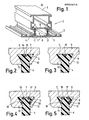
- Fig. 1 shows a z. B. for the production of windows, doors, facade elements or the like.
- Suitable metal composite profile 1 with an inner part 2 and an outer part 3, both of which are connected to one another by two longitudinal insulating webs 4, 5.
- the parts 2, 3 can for example consist of Aluminum, aluminum alloy or steel exist.
- the insulating webs 4, 5, which produce a heat-insulating bridge between the parts 2, 3, consist of high-strength plastic with poor thermal conduction properties, for example of glass fiber reinforced polyamide.
- the insulating webs 4, 5 protrude with their dovetail-shaped ends 6 into correspondingly designed, longitudinal grooves 7 of the composite profile parts 2, 3, cf. Fig. 2.
- a longitudinally continuous chamber 11 is formed in the finished composite profile between the insulating webs 4, 5 and wall sections 8, 9 of the parts 2 and 3, a longitudinally continuous chamber 11 is formed.
- the ends of the insulating webs 4, 5 are first inserted lengthwise into the grooves 7, for example drawn in. Subsequently, a drawing mandrel is pulled through the chamber 11 in the longitudinal direction of the profile, as a result of which the webs lying in this chamber and delimiting the groove 7 (denoted by 12 in FIG. 2) are pressed onto the ends 6 of the insulating webs 4, 5, so that the Insulating webs 4, 5 are finally held in a form-fitting manner between the aforementioned web 12 and an opposite grooved web (in FIG . 2_ with 13).
- FIGS. 2 to 9 and 11 to 16 each show sections in the area of the circle denoted by A in FIG. 1.
- Various embodiments of methods according to the invention are then based on this section using the mentioned figures explained. These statements also relate in the same way to the circular areas designated B, C and D in FIG. 1, where the same measures are taken in each case.
- an additional material in the form of a wire 15 is inserted and by appropriate deformation of the groove web 12 together with the end 6 in the web formed by this web and the opposite groove web 13 Groove included.
- the additional material forming the wire 15 is selected according to the invention such that its material properties can be modified, in particular deformed, by pressure and / or heat in such a way that an improved positive and / or non-positive connection between the insulating web 4 and the inner and outer parts 2 or 3 of the composite profile 1 results.
- the additional material is preferably a plastic, but can also be a low-melting metal. It is particularly advantageous to use a longitudinally stretched wire 15 made of plastic which expands in the transverse direction when heated. Suitable plastic materials are, for example, stretched (longitudinally oriented) polyamide copolymers, but also hot-melt adhesives which expand permanently by heating, in particular copolymers prepared on the basis of acrylic acid and acrylic acid esters. 3 shows the state after heating and expansion of the wire 15 in the transverse direction. Due to the transverse forces generated during this expansion, the positive and non-positive connection of the end 6 in the lateral groove 7 delimited by the webs 12, 13 is considerably increased, so that the longitudinal shear strength between the insulating web 4 and the associated composite profile part 3 is improved. The load-bearing capacity of a window, door or facade element produced in this way is thus increased, so that increased safety requirements can now also be taken into account.
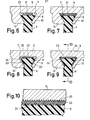
- FIGS. 4 and 5 show a modified embodiment of the method explained with reference to FIGS. 2 and 3, wherein instead of a single plastic wire 15 several such wires 16, 17, 18, 19 are used, which are distributed over all of the groove walls delimiting the groove 7 .
- FIG. 5 again shows the state after transverse expansion of the wires 16, 17, 18 and 19.
- the strength-improving additional material can also be introduced in the form of a tape, a strip, a material application, a film or a compound intruded into a space between the insulating web and the inner walls of the grooves.
- FIGS. 6 and 7 show, in the manner already explained, the use of an additional material in the form of a strip or strip 21.
- the introduction takes place in a space between the top of the insulating web 4 and the groove base 22.
- expansion is again carried out by applying pressure or heat so that the distribution shown in FIG. 7 results.
- a mass with corresponding material properties can also be intruded into this space. This does not change the desired result, namely an improvement in the shear strength between the insulating web 4 and the groove 7 encompassing it.
- the strength of the connection described can be further improved according to the invention if one introduces an additional material together with the web 4 into the groove 7, which brings about an adhesive connection between the end 6 of the insulating web and the groove 7 when heat and / or pressure is applied, and admittedly with the advantage that an additional material that melts when heated is used.
- Suitable materials for this are, for example, thermoplastic hot melt adhesives, e.g. B. a copolymer based on acrylic acid or acrylic acid ester, alone or in combination with a pressure sensitive adhesive, for. B. based on phenolic resin-nitryl rubber. Otherwise, the procedure is as explained with reference to FIGS. 2 to 7, although this is not absolutely necessary is that the additional material mediating an adhesive connection expands in the transverse direction even with appropriate heat or pressure treatment, even if this is fundamentally advantageous.
- FIGS. 8 and 9 in turn show - before or after heat or pressure treatment - the use of an additional material which improves the strength of the connection on three sides of the groove.
- the additional material is introduced here (FIG. 8) together with the web 4 in the form of strip-like foils 23 into the groove 7.
- FIG. 8 the mutually facing surfaces of the insulating web end 6 and the groove 7 are roughened by knurling 24 and 25 on the surface.
- the frictional engagement and thus the overall shear strength is further improved because the additional material of the foils 23 can penetrate into the knurls and solidify there.
- the surface roughness described with reference to FIGS. 8, 9 and 10, for example in the form of knurling, can also be used in the embodiments of the method according to the invention according to FIGS. 2 to 7 and 11 to 16.
- a further modified method according to the invention is that a material that can be hardened by heat and / or pressure is introduced as an additional material into the groove, for example again in the form of a wire, strip or tape as shown in FIG. 2 or 6. Since this material according to appropriate treatment becomes harder than the material of the insulating web 4, the overall strength is improved in the area of the force or material connection present in the groove 6. Superficial roughening of FIG. 1 0 may be helpful here again.
- the pressure required for the modification, in particular the deformation, of a pressure-sensitive additional material is preferably obtained from the pressure required to apply the grooved web 12 (through the aforementioned drawing mandrel) to the end 6 of the insulating web 4. This is a process that is carried out in any case, so that one can save the application of special pressures in a separate process step.
- thermosensitive additional material it is particularly advantageous if the heat required for modification, in particular shaping, of a thermosensitive additional material is obtained from a process step which has to be carried out in any case during the production of the composite profile shown in FIG. 1.
- a process step is, for example, a post-treatment of the parts 2, 3 and the insulating webs 4, 5 existing composite profile in the form of anodizing or stove enamelling. , Found out about the additional material in the desired manner to enable thermally to expand in particular or to melt - the necessary in these processes temperatures range, it was ge.
- a pressure required for modifying the additional material can also be applied additionally and in a special process step.
- heating the additional material can be carried out, for example, by ultrasound or high-frequency treatment.
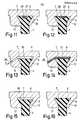
- FIGS. 11 and 12 show a particularly preferred method in which, together with a thermosensitive additional material in the form of a wire 26, a metallic heating wire 27 is additionally introduced into the groove receiving the insulating web 4.
- the heating wire 27 is then connected to an electrical voltage source.
- the heat generated causes the material of the wire 26 to melt and expand, so that it, including the heating wire 27, exerts pressure on the material of the insulating web end 6 and clamps this end more firmly in the associated groove 7.
- the metal heating wire 27 is a hard material, which opposes a harmful resilience more resistance than the softer Material of the insulating web 4 and the wire 26. An improvement in strength can also be achieved in this respect.
- the additional material is introduced into a space 29 through a channel in the groove web 13 in the direction of arrow P and modified in the manner described by heat or pressure in such a way that there is an improved shear strength between Insulating bridge and inner or outer part of the composite profile 1 results.
- the passage 29 g of the in Fi. 1 illustrates g e-faced chamber 11 leads out into the space 29th
- the additional material in question is first introduced into the chamber 11 and from there passes under appropriate pressure through channels 28 provided at appropriate intervals into the intermediate space 29. Also in the embodiment according to FIG.
- FIG. 14 shows the end result of the last-mentioned embodiment of the method according to the invention, after additional material 31 that solidifies in the intermediate space 29 has been introduced.
- a final embodiment of the method according to the invention consists in using part of the material of the insulating web 4 in the groove 7 itself as additional material and pressing this part into the recesses of the groove walls which increase the shape and / or non-positive fit by means of ultrasound treatment these recesses turn knurling 25 of FIG. 1 may be 0. (This knurling is not specifically shown in FIGS. 13 and 14.) With lower demands on the shear strength, such knurling can also be omitted.
- ultrasound generators are preferably attached to the groove web 13 where the insulating web 4 emerges from the groove 7.
- the last-described method based on the use of ultrasound is particularly suitable for insulating webs 4 which are made of polyamide.
- Thermosets, casting resins, for example polyurethane resins, are particularly suitable as curable additional materials, as mentioned above.
- Polyamide materials are particularly suitable for heating by ultrasound.
- Thermosetting materials can be heated by high-frequency treatment.
- an additional material in the form of a flexible cord or a flexible wire 15 is inserted into a longitudinal recess 14 at the dovetail-shaped end 6 of the insulating web 4 and by corresponding deformation of the groove web 12 together with the end 6 in the same Web and the opposite groove web 13 formed groove included.
- the diameter of the wire 15 is preferably selected so that it can be easily inserted, in particular inserted, into the groove 14 and remains in place.
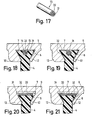
- the wire 15 consists of a continuous, central, "soul" forming body 31, which is surrounded by a jacket 32 all around.
- the material forming the body 31 is selected so that it expands (radially) by pressure and / or heat in the transverse direction and thereby presses the end 6 of the insulating web 4 into the groove 7 with the formation of an improved positive fit.
- the material forming the jacket 32 is an adhesive which begins to flow when pressure and / or heat is applied and which pours into the spaces between the end 6 of the insulating web 4 and the groove 7 when the material of the body 31 expands.
- a large-area adhesive connection between the end 6 of the insulating web 4 and the inside of the groove 7 is conveyed, as is shown schematically in FIG. 19. Overall, this measure increases the shear strength of the two parts 2, 3 forming the composite profile 1 by forming a reinforced adhesive and positive connection.
- the body 31 is preferably a monofilament made of plastic, in particular of stretched or unstretched uniform or copolyamide or ethylene copolymer or ionomeric plastic.
- Suitable materials for the jacket 32 are hot-melt adhesives in the form of copolymers based on acrylic acid and acrylic acid esters or ethylene copolymers, and ionomeric hot-melt adhesives; thermosets can also be used for the jacket 32.
- the materials used for the formation of the body 31 and / or the jacket 32 can also contain a blowing agent which expands when pressure and / or heat is applied, which increases the transverse expansion of the body 31 or the large-area distribution of the jacket material favor the groove 7.
- blowing agents that can be used are: azodicaronamides and / or sodium bicarbonate.
- FIGS. 2o and 21 The method according to the invention illustrated with reference to FIGS. 2o and 21 proceeds in exactly the same way as that based on 18 and 19 explained methods.
- the body 31 is surrounded by the jacket 32 all around
- the jacket 32 initially covers the body 31 only on its upper side, the body 31 and jacket 32 being in the form of a flexible band or strip to have.
- pressure and / or heat is applied, the body 31 expands while the jacket 32 melts and penetrates into the spaces between the end 6 of the web 4 and the groove 7.
- 2o shows the initial state
- FIG. 21 the final state.
- the bottom of the groove 7 additionally has a transverse knurling 33 into which the expanding material of the body 31 and the molten material of the jacket 32 can penetrate.
- Knurling 33 could also be provided on the inside of the webs 12, 13 facing the end 6 of the insulating web 4.
- a corresponding roughening or knurling could also have the inside of the groove 7 in the embodiment according to FIGS. 18 and 19.
- the materials of the body 31 and the casing 32 could again be provided with a blowing agent of the type described above.
- the embodiment of a cord or a wire 15 shown in FIG. 22 again consists of an inner body 31 and a sheath 32 surrounding it.
- Hard, sharp-edged particles 34 in particular metal particles, metal chips, quartz grains or the like, are embedded in the sheath 32, which increase the frictional engagement with the inside of the groove 7 when the body 31 expands and when the casing 32 melts, as a result of which the shear strength between the insulating web 4, 5 and the composite profile parts 2, 3 is further increased.
- two metal wires 35 for example made of steel, with a triangular profile and a roughened, in particular corrugated surface, are inserted into the adhesive jacket 32 and partly also into the expandable body 31, the grooved surface protruding somewhat from the peripheral surface of the jacket 32.
- the wires 35 are preferably roughened on their three sides, in particular transversely grooved. When the body 31 expands and the sheath 32 melts, the wires 35 are displaced radially outward and come into positive engagement with the ends of the groove 7 or the top of the insulating web 4. If, in particular, knurling or other surface roughness on the inside of the groove 7 is provided, there is a particularly good positive engagement. As can be seen from FIG. 23, the wires 35 extend axially parallel in the body 31 and sheath 32.
- a wire 15 again consisting of body 31 and sheath 32 is inserted in total into end 6 of insulating web 4 and enclosed on all sides by it.
- Radially extending channels 36 extend in the end 6 of the insulating web 4 and extend from the outer circumference of the wire 15 to the outer sides of the end 6.
- FIG. 25 corresponds in its mode of operation to the methods explained with reference to FIGS. 2 to 24.
- the flexible wire 15 consisting of body 31 and sheath 32 is not inserted into a groove in the end 6 of the web 4, but in a groove 37 of the composite profile part 3.
- the end 6 of the insulating web 4 is pressed firmly into the groove 7 to produce an improved form fit, while on the other hand the adhesive of the jacket 32 is evenly between the end 6 and the insides of the Groove 7 distributed.
Landscapes
- Engineering & Computer Science (AREA)
- Mechanical Engineering (AREA)
- Chemical & Material Sciences (AREA)
- Chemical Kinetics & Catalysis (AREA)
- General Chemical & Material Sciences (AREA)
- Civil Engineering (AREA)
- Structural Engineering (AREA)
- Lining Or Joining Of Plastics Or The Like (AREA)
- Wing Frames And Configurations (AREA)
Priority Applications (1)
| Application Number | Priority Date | Filing Date | Title |
|---|---|---|---|
| AT83100783T ATE26604T1 (de) | 1982-02-03 | 1983-01-27 | Verfahren zum verbinden der metallischen innenund aussenteile eines verbundprofils. |
Applications Claiming Priority (4)
| Application Number | Priority Date | Filing Date | Title |
|---|---|---|---|
| DE3203631 | 1982-02-03 | ||
| DE19823203631 DE3203631A1 (de) | 1982-02-03 | 1982-02-03 | Verfahren zum verbinden der metallischen innen- und aussenteile eines verbundprofils |
| DE19823221797 DE3221797A1 (de) | 1982-06-09 | 1982-06-09 | Verfahren zum verbinden der metallischen innen- und aussenteile eines verbundprofils |
| DE3221797 | 1982-06-09 |
Publications (4)
| Publication Number | Publication Date |
|---|---|
| EP0085410A2 true EP0085410A2 (fr) | 1983-08-10 |
| EP0085410A3 EP0085410A3 (en) | 1985-01-02 |
| EP0085410B1 EP0085410B1 (fr) | 1987-04-15 |
| EP0085410B2 EP0085410B2 (fr) | 1993-09-08 |
Family
ID=25799321
Family Applications (1)
| Application Number | Title | Priority Date | Filing Date |
|---|---|---|---|
| EP83100783A Expired - Lifetime EP0085410B2 (fr) | 1982-02-03 | 1983-01-27 | Procédé pour réunir les parties métalliques intérieures et extérieures d'un profile composite |
Country Status (2)
| Country | Link |
|---|---|
| EP (1) | EP0085410B2 (fr) |
| DE (1) | DE3370979D1 (fr) |
Cited By (17)
| Publication number | Priority date | Publication date | Assignee | Title |
|---|---|---|---|---|
| DE3505380A1 (de) * | 1985-02-16 | 1986-08-21 | SCHÜCO Heinz Schürmann GmbH & Co, 4800 Bielefeld | Verfahren zum herstellen eines waermegedaemmten verbundprofilstranges sowie verbundprofilstrang |
| DE3511673A1 (de) * | 1985-03-18 | 1986-09-18 | Josef Gartner & Co, 8883 Gundelfingen | Verbundprofil |
| DE3939968A1 (de) * | 1989-12-02 | 1991-06-06 | Schueco Int Gmbh & Co | Verbundprofil, insbesondere fuer fenster, tueren und fassaden |
| US5469683A (en) * | 1994-02-09 | 1995-11-28 | Kawneer Company, Inc. | Thermally insulating composite frame member with snap-in thermal isolator |
| EP1555376A1 (fr) | 2004-01-19 | 2005-07-20 | Technoform Caprano + Brunnhofer GmbH & Co. KG | Profilé composite |
| EP1555375A1 (fr) * | 2004-01-19 | 2005-07-20 | Technoform Caprano + Brunnhofer GmbH & Co. KG | Profilé composite |
| EP2011945A1 (fr) * | 2007-07-06 | 2009-01-07 | Reynaers Aluminium, naamloze vennootschap | Profilé composite pour porte, fenêtre ou similaire |
| EP2527581A1 (fr) * | 2011-05-27 | 2012-11-28 | Constellium Extrusions France | Procédé de fabrication de profilés composites, en particulier d'ensembles à coupure de pont thermique pour cadres de fenêtres, de portes, ou équivalents |
| GB2514257A (en) * | 2013-05-10 | 2014-11-19 | Stone Interiors Ltd | Apparatus and method of hanging securing a facade to a storage unit |
| GB2523157A (en) * | 2014-02-14 | 2015-08-19 | Hurlands Innovations Ltd | Latticed frame for a window |
| CN105178777A (zh) * | 2015-09-17 | 2015-12-23 | 天津市升发工贸有限公司 | 新型隔热铝合金窗中梃 |
| US9234380B2 (en) | 2013-03-13 | 2016-01-12 | Technoform Bautec North America, Inc. | Thermally insulating composite frame apparatus with slide-in thermal isolator and method for making same |
| WO2016202438A1 (fr) * | 2015-06-15 | 2016-12-22 | Technoform Bautec Holding Gmbh | Élément isolant |
| WO2017186722A1 (fr) | 2016-04-26 | 2017-11-02 | Technoform Bautec Holding Gmbh | Bande isolante destinée à des éléments de porte, de fenêtre ou de façade, profilé composite destiné à des éléments de porte, de fenêtre ou de façade, et procédés de finition de fabrication d'une tête d'enroulement d'une bande isolante destinés à des éléments de porte, de fenêtre ou de façade |
| CN111322293A (zh) * | 2018-12-14 | 2020-06-23 | 株式会社斯巴鲁 | 接头构造 |
| WO2020207672A1 (fr) * | 2019-04-12 | 2020-10-15 | Zf Friedrichshafen Ag | Procédé de réalisation d'une liaison entre deux composants |
| DE102023109418A1 (de) * | 2023-04-14 | 2024-10-17 | SCHÜCO International KG | Verbundprofil für Türen, Fenster oder Fassadenelemente und Verfahren zur Montage eines Verbundprofils |
Families Citing this family (2)
| Publication number | Priority date | Publication date | Assignee | Title |
|---|---|---|---|---|
| DE3801564A1 (de) * | 1988-01-20 | 1989-08-03 | Wilfried Ensinger | Isoliersteg aus kunststoff |
| DE19504601C2 (de) * | 1995-01-11 | 1998-04-09 | Wicona Bausysteme Gmbh | Wärmegedämmtes Verbundprofil |
Family Cites Families (13)
| Publication number | Priority date | Publication date | Assignee | Title |
|---|---|---|---|---|
| DE1036496B (de) * | 1955-09-12 | 1958-08-14 | Aluminium Walzwerke Singen | Rahmen aus Metall, insbesondere fuer Fenster und Tueren |
| FR1395244A (fr) * | 1964-05-11 | 1965-04-09 | Aluminium Press Walzwerk | Pont isolant réalisé en une matière non conductrice du froid et de la chaleur et qui devient plastique lorsqu'on la chauffe |
| US3411254A (en) * | 1966-05-24 | 1968-11-19 | Kessler Gerald | Plastic thermo-break for heat conductive elements |
| DE2361323A1 (de) * | 1973-12-08 | 1975-06-12 | Schuermann & Co Heinz | Isolierprofil sowie verfahren zu dessen herstellung |
| NO139976C (no) * | 1975-03-07 | 1979-06-13 | Helmar Nahr | Legeme sammensatt av minst to deler |
| DE2745166C2 (de) * | 1976-10-15 | 1986-09-11 | Otto Fuchs Kg, 5882 Meinerzhagen | Verbundprofil, insbesondere für Fenster, Türen und Fassaden |
| DE2714378B1 (de) * | 1977-03-31 | 1978-09-14 | Hartmann & Co W | Waermegedaemmter Fensterrahmen,Tuerrahmen o.dgl. |
| DE2729881C3 (de) * | 1977-07-01 | 1981-04-30 | Hasselbacher, geb. Schötz, Annemarie, 8630 Neustadt | Verbundprofil bestehend aus zwei Metallen und zwei Isolationsprofilen |
| DE2937454C2 (de) * | 1979-09-15 | 1985-08-08 | SCHÜCO Heinz Schürmann GmbH & Co, 4800 Bielefeld | Verbundprofil, insbesondere für Fenster, Türen und Fassaden sowie Verfahren zum Herstellen des Verbundprofils |
| DE3026261A1 (de) * | 1980-07-11 | 1982-02-04 | Plastic-Werk A. U. G. Scherer & Trier Ohg, 8626 Michelau | Verbundprofil, insbesondere fuer fenster, tueren o.dgl. |
| DE3033206C2 (de) * | 1980-09-03 | 1984-07-05 | Josef Gartner & Co, 8883 Gundelfingen | Verbundprofil |
| DE3116716A1 (de) * | 1981-04-28 | 1982-11-11 | Technoform, Caprano + Brunnhofer KG, 3501 Fuldabrück | Verbundprofilstab fuer fenster, tueren sowie wand- und fassadenkonstuktionen |
| DE3227509A1 (de) * | 1982-07-23 | 1984-01-26 | Wilfried Dipl.-Ing. 7031 Nufringen Ensinger | Verbundprofil, insbesondere fuer rahmen von fenstern, tueren und fassadenelementen |
-
1983
- 1983-01-27 EP EP83100783A patent/EP0085410B2/fr not_active Expired - Lifetime
- 1983-01-27 DE DE8383100783T patent/DE3370979D1/de not_active Expired
Cited By (31)
| Publication number | Priority date | Publication date | Assignee | Title |
|---|---|---|---|---|
| DE3505380A1 (de) * | 1985-02-16 | 1986-08-21 | SCHÜCO Heinz Schürmann GmbH & Co, 4800 Bielefeld | Verfahren zum herstellen eines waermegedaemmten verbundprofilstranges sowie verbundprofilstrang |
| DE3511673A1 (de) * | 1985-03-18 | 1986-09-18 | Josef Gartner & Co, 8883 Gundelfingen | Verbundprofil |
| DE3939968A1 (de) * | 1989-12-02 | 1991-06-06 | Schueco Int Gmbh & Co | Verbundprofil, insbesondere fuer fenster, tueren und fassaden |
| US5469683A (en) * | 1994-02-09 | 1995-11-28 | Kawneer Company, Inc. | Thermally insulating composite frame member with snap-in thermal isolator |
| EP1555376A1 (fr) | 2004-01-19 | 2005-07-20 | Technoform Caprano + Brunnhofer GmbH & Co. KG | Profilé composite |
| EP1555375A1 (fr) * | 2004-01-19 | 2005-07-20 | Technoform Caprano + Brunnhofer GmbH & Co. KG | Profilé composite |
| EP2011945A1 (fr) * | 2007-07-06 | 2009-01-07 | Reynaers Aluminium, naamloze vennootschap | Profilé composite pour porte, fenêtre ou similaire |
| EP2527581A1 (fr) * | 2011-05-27 | 2012-11-28 | Constellium Extrusions France | Procédé de fabrication de profilés composites, en particulier d'ensembles à coupure de pont thermique pour cadres de fenêtres, de portes, ou équivalents |
| FR2975723A1 (fr) * | 2011-05-27 | 2012-11-30 | Alcan Softal | Procede de fabrication de profiles composites, en particulier d'ensembles a coupure de pont thermique pour cadres de fenetres, de portes, ou equivalents |
| US9234380B2 (en) | 2013-03-13 | 2016-01-12 | Technoform Bautec North America, Inc. | Thermally insulating composite frame apparatus with slide-in thermal isolator and method for making same |
| GB2514257A (en) * | 2013-05-10 | 2014-11-19 | Stone Interiors Ltd | Apparatus and method of hanging securing a facade to a storage unit |
| GB2514257B (en) * | 2013-05-10 | 2016-08-31 | Stone Interiors Ltd | Apparatus and method of hanging securing a facade to a storage unit |
| GB2523157A (en) * | 2014-02-14 | 2015-08-19 | Hurlands Innovations Ltd | Latticed frame for a window |
| WO2016202438A1 (fr) * | 2015-06-15 | 2016-12-22 | Technoform Bautec Holding Gmbh | Élément isolant |
| CN105178777B (zh) * | 2015-09-17 | 2017-07-04 | 广东典工节能科技有限公司 | 隔热铝合金窗中梃 |
| CN105178777A (zh) * | 2015-09-17 | 2015-12-23 | 天津市升发工贸有限公司 | 新型隔热铝合金窗中梃 |
| WO2017186722A1 (fr) | 2016-04-26 | 2017-11-02 | Technoform Bautec Holding Gmbh | Bande isolante destinée à des éléments de porte, de fenêtre ou de façade, profilé composite destiné à des éléments de porte, de fenêtre ou de façade, et procédés de finition de fabrication d'une tête d'enroulement d'une bande isolante destinés à des éléments de porte, de fenêtre ou de façade |
| CN109312596A (zh) * | 2016-04-26 | 2019-02-05 | 泰诺风保泰控股股份有限公司 | 用于门、窗口或立面构件的绝缘片及其辊压头部的加工制造的方法,复合型材 |
| KR20190022492A (ko) * | 2016-04-26 | 2019-03-06 | 테크노폼 바우텍 홀딩 게엠베하 | 도어, 윈도우, 또는 파사드 요소용 절연 스트립, 도어, 윈도우, 또는 파사드 요소용 복합 프로필, 및 도어, 윈도우, 또는 파사드 요소용 절연 스트립의 롤인 헤드의 마무리 가공 방법 |
| JP2019516033A (ja) * | 2016-04-26 | 2019-06-13 | テクノフォルム バウテック ホールディング ゲーエムベーハー | ドア、窓又はファサード要素のための断熱ストリップ、及び、ドア、窓又はファサード要素のためのコンポジットプロファイル材、及び、ドア、窓又はファサード要素の断熱ストリップのロールインヘッドの製造を仕上げる方法 |
| AU2017257229B2 (en) * | 2016-04-26 | 2019-10-17 | Technoform Bautec Holding Gmbh | Insulating strip for door, window or facade elements, composite profile for door, window or facade elements, and method for finishing manufacturing of a roll-in head of an insulating strip for door, window or facade elements |
| US10858877B2 (en) | 2016-04-26 | 2020-12-08 | Technoform Bautec Holding Gmbh | Insulating strip for door, window or façade elements, composite profile for door, window or façade elements, and method for finishing manufacturing of a roll-in head of an insulating strip for door, window or façade elements |
| CN109312596B (zh) * | 2016-04-26 | 2021-03-26 | 泰诺风保泰控股股份有限公司 | 复合型材及辊压头部的加工制造的方法 |
| CN111322293B (zh) * | 2018-12-14 | 2023-02-28 | 株式会社斯巴鲁 | 接头构造 |
| CN111322293A (zh) * | 2018-12-14 | 2020-06-23 | 株式会社斯巴鲁 | 接头构造 |
| US11020912B2 (en) * | 2018-12-14 | 2021-06-01 | Subaru Corporation | Joint structure |
| WO2020207672A1 (fr) * | 2019-04-12 | 2020-10-15 | Zf Friedrichshafen Ag | Procédé de réalisation d'une liaison entre deux composants |
| CN113661049A (zh) * | 2019-04-12 | 2021-11-16 | 采埃孚股份公司 | 在两个构件之间建立连接的方法 |
| EP3953156B1 (fr) * | 2019-04-12 | 2023-07-26 | ZF Friedrichshafen AG | Procédé de réalisation d'une liaison entre deux composants |
| CN113661049B (zh) * | 2019-04-12 | 2023-08-18 | 采埃孚股份公司 | 在两个构件之间建立连接的方法 |
| DE102023109418A1 (de) * | 2023-04-14 | 2024-10-17 | SCHÜCO International KG | Verbundprofil für Türen, Fenster oder Fassadenelemente und Verfahren zur Montage eines Verbundprofils |
Also Published As
| Publication number | Publication date |
|---|---|
| DE3370979D1 (en) | 1987-05-21 |
| EP0085410A3 (en) | 1985-01-02 |
| EP0085410B2 (fr) | 1993-09-08 |
| EP0085410B1 (fr) | 1987-04-15 |
Similar Documents
| Publication | Publication Date | Title |
|---|---|---|
| EP0085410A2 (fr) | Procédé pour réunir les parties métalliques intérieures et extérieures d'un profile composite | |
| DE69502716T2 (de) | Oszillierendes reibungsschweissen | |
| EP0035737B1 (fr) | Manchon de câble divisé longitudinalement en matériau rétractable | |
| EP0879742A1 (fr) | Procédé de fabrication d'un tronçon decâble avec un élément de fixation pour un dispositif de retenue des occupants d'un véhicule et tronçon de câble obtenu par ce procédé | |
| DE3203631C2 (fr) | ||
| DE19630271C2 (de) | Verfahren zum Verbinden eines plastifizierbaren Werkstücks mit einem anderen Werkstück | |
| EP0158046B1 (fr) | Connextion de deux éléments, notamment de deux demi-coquilles en matière plastique | |
| DE3236357A1 (de) | Verfahren zum verbinden der metallischen innen- und aussenteile eines verbundprofils mit einem isoliersteg aus kunststoff | |
| DE3626009A1 (de) | Verfahren zum verbinden von metallischen koerpern mit anderen metallischen oder nichtmetallischen, insbesondere keramischen teilen | |
| DE4203626C2 (de) | Schweissmuffe und verfahren zu deren herstellung | |
| EP1790462B1 (fr) | Procédé pour connecter un boulon à une pièce en matière plastique | |
| DE69413979T2 (de) | Verfahren zum Herstellen von einer Kraftfahrzeugszierleiste mit einer Polymerhaut auf einem Substrat | |
| DE102016215023B4 (de) | Verfahren zur Herstellung einer längenveränderbaren Lenkwelle und längenveränderbare Lenkwelle | |
| DE3227509A1 (de) | Verbundprofil, insbesondere fuer rahmen von fenstern, tueren und fassadenelementen | |
| DE9304568U1 (de) | Extrudiertes Kunststoff-Metall-Verbundrohr für Installationen | |
| DE3116339C2 (fr) | ||
| EP0485651A1 (fr) | Outil pour soudage par polyfusion des tuyaux extrudés en matière plastique-aluminium avec des embouts ou des pièces moulées | |
| DE3608223C2 (fr) | ||
| DE2848694C2 (de) | Strangpreßprofil aus Metall, insbesondere Leichtmetall, sowie Vorrichtung und Verfahren zu dessen Herstellung | |
| DE3221797A1 (de) | Verfahren zum verbinden der metallischen innen- und aussenteile eines verbundprofils | |
| EP2470345B1 (fr) | Procédé de production d'un composant composite | |
| EP0971814B2 (fr) | Procede pour realiser un assemblage entre un element d'etancheite et un element de construction | |
| DE19504828A1 (de) | Verfahren zum Herstellen und Verbinden eines Rahmens mit einer Glasscheibe und Vorrichtung zum Durchführen des Verfahrens | |
| DE3023214A1 (de) | Verfahren zur herstellung eines verbundrohres | |
| DE68913534T2 (de) | Verfahren und vorrichtung, die leitfähige polymere zum verbinden von gegenständen verwenden. |
Legal Events
| Date | Code | Title | Description |
|---|---|---|---|
| PUAI | Public reference made under article 153(3) epc to a published international application that has entered the european phase |
Free format text: ORIGINAL CODE: 0009012 |
|
| AK | Designated contracting states |
Designated state(s): AT BE CH DE FR GB IT LI LU NL SE |
|
| PUAL | Search report despatched |
Free format text: ORIGINAL CODE: 0009013 |
|
| AK | Designated contracting states |
Designated state(s): AT BE CH DE FR GB IT LI LU NL SE |
|
| 17P | Request for examination filed |
Effective date: 19850622 |
|
| 17Q | First examination report despatched |
Effective date: 19860130 |
|
| ITF | It: translation for a ep patent filed | ||
| GRAA | (expected) grant |
Free format text: ORIGINAL CODE: 0009210 |
|
| AK | Designated contracting states |
Kind code of ref document: B1 Designated state(s): AT BE CH DE FR GB IT LI LU NL SE |
|
| REF | Corresponds to: |
Ref document number: 26604 Country of ref document: AT Date of ref document: 19870515 Kind code of ref document: T |
|
| REF | Corresponds to: |
Ref document number: 3370979 Country of ref document: DE Date of ref document: 19870521 |
|
| ET | Fr: translation filed | ||
| PLBI | Opposition filed |
Free format text: ORIGINAL CODE: 0009260 |
|
| 26 | Opposition filed |
Opponent name: TECHNOFORM CAPRANO + BRUNNHOFER KG Effective date: 19871212 |
|
| PLBI | Opposition filed |
Free format text: ORIGINAL CODE: 0009260 |
|
| 26 | Opposition filed |
Opponent name: JOSEF GARTNER & CO. Effective date: 19880111 Opponent name: TECHNOFORM CAPRANO + BRUNNHOFER KG Effective date: 19871212 |
|
| NLR1 | Nl: opposition has been filed with the epo |
Opponent name: TECHNOFORM CAPRANO Opponent name: BRUNNHOFER KG |
|
| NLR1 | Nl: opposition has been filed with the epo |
Opponent name: JOSEF GARTNER & CO. |
|
| ITTA | It: last paid annual fee | ||
| PUAH | Patent maintained in amended form |
Free format text: ORIGINAL CODE: 0009272 |
|
| STAA | Information on the status of an ep patent application or granted ep patent |
Free format text: STATUS: PATENT MAINTAINED AS AMENDED |
|
| 27A | Patent maintained in amended form |
Effective date: 19930908 |
|
| AK | Designated contracting states |
Kind code of ref document: B2 Designated state(s): AT BE CH DE FR GB IT LI LU NL SE |
|
| REG | Reference to a national code |
Ref country code: CH Ref legal event code: AEN |
|
| ITF | It: translation for a ep patent filed | ||
| NLR2 | Nl: decision of opposition | ||
| NLR3 | Nl: receipt of modified translations in the netherlands language after an opposition procedure | ||
| ET3 | Fr: translation filed ** decision concerning opposition | ||
| EPTA | Lu: last paid annual fee | ||
| EAL | Se: european patent in force in sweden |
Ref document number: 83100783.6 |
|
| PGFP | Annual fee paid to national office [announced via postgrant information from national office to epo] |
Ref country code: LU Payment date: 19951001 Year of fee payment: 14 |
|
| APAC | Appeal dossier modified |
Free format text: ORIGINAL CODE: EPIDOS NOAPO |
|
| APAC | Appeal dossier modified |
Free format text: ORIGINAL CODE: EPIDOS NOAPO |
|
| PG25 | Lapsed in a contracting state [announced via postgrant information from national office to epo] |
Ref country code: LU Free format text: LAPSE BECAUSE OF NON-PAYMENT OF DUE FEES Effective date: 19970127 |
|
| PGFP | Annual fee paid to national office [announced via postgrant information from national office to epo] |
Ref country code: SE Payment date: 19981203 Year of fee payment: 17 |
|
| PG25 | Lapsed in a contracting state [announced via postgrant information from national office to epo] |
Ref country code: SE Free format text: LAPSE BECAUSE OF NON-PAYMENT OF DUE FEES Effective date: 20000128 |
|
| EUG | Se: european patent has lapsed |
Ref document number: 83100783.6 |
|
| PGFP | Annual fee paid to national office [announced via postgrant information from national office to epo] |
Ref country code: FR Payment date: 20011220 Year of fee payment: 20 |
|
| PGFP | Annual fee paid to national office [announced via postgrant information from national office to epo] |
Ref country code: DE Payment date: 20011227 Year of fee payment: 20 |
|
| PGFP | Annual fee paid to national office [announced via postgrant information from national office to epo] |
Ref country code: AT Payment date: 20011228 Year of fee payment: 20 |
|
| REG | Reference to a national code |
Ref country code: GB Ref legal event code: IF02 |
|
| PGFP | Annual fee paid to national office [announced via postgrant information from national office to epo] |
Ref country code: BE Payment date: 20020123 Year of fee payment: 20 Ref country code: CH Payment date: 20020123 Year of fee payment: 20 |
|
| PGFP | Annual fee paid to national office [announced via postgrant information from national office to epo] |
Ref country code: GB Payment date: 20020130 Year of fee payment: 20 |
|
| PGFP | Annual fee paid to national office [announced via postgrant information from national office to epo] |
Ref country code: NL Payment date: 20020131 Year of fee payment: 20 |
|
| PG25 | Lapsed in a contracting state [announced via postgrant information from national office to epo] |
Ref country code: LI Free format text: LAPSE BECAUSE OF EXPIRATION OF PROTECTION Effective date: 20030126 Ref country code: CH Free format text: LAPSE BECAUSE OF EXPIRATION OF PROTECTION Effective date: 20030126 Ref country code: GB Free format text: LAPSE BECAUSE OF EXPIRATION OF PROTECTION Effective date: 20030126 |
|
| PG25 | Lapsed in a contracting state [announced via postgrant information from national office to epo] |
Ref country code: AT Free format text: LAPSE BECAUSE OF EXPIRATION OF PROTECTION Effective date: 20030127 Ref country code: NL Free format text: LAPSE BECAUSE OF EXPIRATION OF PROTECTION Effective date: 20030127 |
|
| BE20 | Be: patent expired |
Owner name: *ENSINGER WILFRIED Effective date: 20030127 |
|
| REG | Reference to a national code |
Ref country code: GB Ref legal event code: PE20 Effective date: 20030126 |
|
| REG | Reference to a national code |
Ref country code: CH Ref legal event code: PL |
|
| NLV7 | Nl: ceased due to reaching the maximum lifetime of a patent |
Effective date: 20030127 |
|
| APAH | Appeal reference modified |
Free format text: ORIGINAL CODE: EPIDOSCREFNO |