EP0086258A1 - Verfahren zur Trennung des Racemats (R,S)-Cystein - Google Patents
Verfahren zur Trennung des Racemats (R,S)-Cystein Download PDFInfo
- Publication number
- EP0086258A1 EP0086258A1 EP82109858A EP82109858A EP0086258A1 EP 0086258 A1 EP0086258 A1 EP 0086258A1 EP 82109858 A EP82109858 A EP 82109858A EP 82109858 A EP82109858 A EP 82109858A EP 0086258 A1 EP0086258 A1 EP 0086258A1
- Authority
- EP
- European Patent Office
- Prior art keywords
- cysteine
- water
- general formula
- mixture
- methanol
- Prior art date
- Legal status (The legal status is an assumption and is not a legal conclusion. Google has not performed a legal analysis and makes no representation as to the accuracy of the status listed.)
- Granted
Links
- XUJNEKJLAYXESH-UHFFFAOYSA-N cysteine Natural products SCC(N)C(O)=O XUJNEKJLAYXESH-UHFFFAOYSA-N 0.000 title claims abstract description 20
- 235000018417 cysteine Nutrition 0.000 title claims abstract description 20
- 238000000034 method Methods 0.000 title claims description 9
- 239000000203 mixture Substances 0.000 claims abstract description 19
- 238000003385 ring cleavage reaction Methods 0.000 claims abstract description 13
- LEVWYRKDKASIDU-QWWZWVQMSA-N D-cystine Chemical compound OC(=O)[C@H](N)CSSC[C@@H](N)C(O)=O LEVWYRKDKASIDU-QWWZWVQMSA-N 0.000 claims abstract description 10
- 125000004432 carbon atom Chemical group C* 0.000 claims abstract description 10
- 229960003067 cystine Drugs 0.000 claims abstract description 8
- 150000002772 monosaccharides Chemical class 0.000 claims abstract description 8
- 125000002915 carbonyl group Chemical group [*:2]C([*:1])=O 0.000 claims abstract description 6
- -1 2-substituted thiazolidine-4-carboxylic acid Chemical class 0.000 claims abstract description 3
- OKKJLVBELUTLKV-UHFFFAOYSA-N Methanol Chemical compound OC OKKJLVBELUTLKV-UHFFFAOYSA-N 0.000 claims description 72
- LFQSCWFLJHTTHZ-UHFFFAOYSA-N Ethanol Chemical compound CCO LFQSCWFLJHTTHZ-UHFFFAOYSA-N 0.000 claims description 42
- XLYOFNOQVPJJNP-UHFFFAOYSA-N water Substances O XLYOFNOQVPJJNP-UHFFFAOYSA-N 0.000 claims description 31
- 238000010992 reflux Methods 0.000 claims description 11
- RTZKZFJDLAIYFH-UHFFFAOYSA-N Diethyl ether Chemical compound CCOCC RTZKZFJDLAIYFH-UHFFFAOYSA-N 0.000 claims description 10
- 150000001875 compounds Chemical class 0.000 claims description 9
- 238000009833 condensation Methods 0.000 claims description 9
- 230000005494 condensation Effects 0.000 claims description 9
- 239000002904 solvent Substances 0.000 claims description 9
- 239000011541 reaction mixture Substances 0.000 claims description 5
- 229910052799 carbon Inorganic materials 0.000 claims description 2
- 238000010438 heat treatment Methods 0.000 claims 1
- 150000001323 aldoses Chemical class 0.000 abstract description 5
- 239000003153 chemical reaction reagent Substances 0.000 abstract description 3
- 239000012442 inert solvent Substances 0.000 abstract 2
- ZMANZCXQSJIPKH-UHFFFAOYSA-N Triethylamine Chemical compound CCN(CC)CC ZMANZCXQSJIPKH-UHFFFAOYSA-N 0.000 description 24
- XUJNEKJLAYXESH-REOHCLBHSA-N L-Cysteine Chemical compound SC[C@H](N)C(O)=O XUJNEKJLAYXESH-REOHCLBHSA-N 0.000 description 23
- 229960002433 cysteine Drugs 0.000 description 21
- DZLNHFMRPBPULJ-UHFFFAOYSA-N thioproline Chemical class OC(=O)C1CSCN1 DZLNHFMRPBPULJ-UHFFFAOYSA-N 0.000 description 19
- 239000000706 filtrate Substances 0.000 description 14
- 235000019441 ethanol Nutrition 0.000 description 13
- WTDHULULXKLSOZ-UHFFFAOYSA-N Hydroxylamine hydrochloride Chemical compound Cl.ON WTDHULULXKLSOZ-UHFFFAOYSA-N 0.000 description 12
- XUJNEKJLAYXESH-UWTATZPHSA-N D-Cysteine Chemical compound SC[C@@H](N)C(O)=O XUJNEKJLAYXESH-UWTATZPHSA-N 0.000 description 9
- VEXZGXHMUGYJMC-UHFFFAOYSA-N Hydrochloric acid Chemical compound Cl VEXZGXHMUGYJMC-UHFFFAOYSA-N 0.000 description 9
- 238000002844 melting Methods 0.000 description 9
- 230000008018 melting Effects 0.000 description 9
- WQZGKKKJIJFFOK-SVZMEOIVSA-N (+)-Galactose Chemical compound OC[C@H]1OC(O)[C@H](O)[C@@H](O)[C@H]1O WQZGKKKJIJFFOK-SVZMEOIVSA-N 0.000 description 8
- 239000013078 crystal Substances 0.000 description 8
- 238000001953 recrystallisation Methods 0.000 description 8
- 238000001914 filtration Methods 0.000 description 7
- MHAJPDPJQMAIIY-UHFFFAOYSA-N Hydrogen peroxide Chemical compound OO MHAJPDPJQMAIIY-UHFFFAOYSA-N 0.000 description 6
- LRHPLDYGYMQRHN-UHFFFAOYSA-N N-Butanol Chemical compound CCCCO LRHPLDYGYMQRHN-UHFFFAOYSA-N 0.000 description 6
- JUJWROOIHBZHMG-UHFFFAOYSA-N Pyridine Chemical compound C1=CC=NC=C1 JUJWROOIHBZHMG-UHFFFAOYSA-N 0.000 description 6
- 238000006243 chemical reaction Methods 0.000 description 6
- 238000001816 cooling Methods 0.000 description 5
- 238000000354 decomposition reaction Methods 0.000 description 5
- SRBFZHDQGSBBOR-UHFFFAOYSA-N beta-D-Pyranose-Lyxose Natural products OC1COC(O)C(O)C1O SRBFZHDQGSBBOR-UHFFFAOYSA-N 0.000 description 4
- 239000007859 condensation product Substances 0.000 description 4
- 238000006482 condensation reaction Methods 0.000 description 4
- 238000000921 elemental analysis Methods 0.000 description 4
- 239000012452 mother liquor Substances 0.000 description 4
- 238000000926 separation method Methods 0.000 description 4
- 125000001984 thiazolidinyl group Chemical group 0.000 description 4
- XEKOWRVHYACXOJ-UHFFFAOYSA-N Ethyl acetate Chemical compound CCOC(C)=O XEKOWRVHYACXOJ-UHFFFAOYSA-N 0.000 description 3
- GZCGUPFRVQAUEE-SLPGGIOYSA-N aldehydo-D-glucose Chemical compound OC[C@@H](O)[C@@H](O)[C@H](O)[C@@H](O)C=O GZCGUPFRVQAUEE-SLPGGIOYSA-N 0.000 description 3
- WQZGKKKJIJFFOK-PQMKYFCFSA-N alpha-D-mannose Chemical compound OC[C@H]1O[C@H](O)[C@@H](O)[C@@H](O)[C@@H]1O WQZGKKKJIJFFOK-PQMKYFCFSA-N 0.000 description 3
- 238000009835 boiling Methods 0.000 description 3
- 239000000047 product Substances 0.000 description 3
- UMJSCPRVCHMLSP-UHFFFAOYSA-N pyridine Natural products COC1=CC=CN=C1 UMJSCPRVCHMLSP-UHFFFAOYSA-N 0.000 description 3
- 238000004809 thin layer chromatography Methods 0.000 description 3
- 238000005406 washing Methods 0.000 description 3
- NWZSZGALRFJKBT-KNIFDHDWSA-N (2s)-2,6-diaminohexanoic acid;(2s)-2-hydroxybutanedioic acid Chemical compound OC(=O)[C@@H](O)CC(O)=O.NCCCC[C@H](N)C(O)=O NWZSZGALRFJKBT-KNIFDHDWSA-N 0.000 description 2
- PAYRUJLWNCNPSJ-UHFFFAOYSA-N Aniline Chemical compound NC1=CC=CC=C1 PAYRUJLWNCNPSJ-UHFFFAOYSA-N 0.000 description 2
- OAKJQQAXSVQMHS-UHFFFAOYSA-N Hydrazine Chemical compound NN OAKJQQAXSVQMHS-UHFFFAOYSA-N 0.000 description 2
- AMQJEAYHLZJPGS-UHFFFAOYSA-N N-Pentanol Chemical compound CCCCCO AMQJEAYHLZJPGS-UHFFFAOYSA-N 0.000 description 2
- VYPSYNLAJGMNEJ-UHFFFAOYSA-N Silicium dioxide Chemical compound O=[Si]=O VYPSYNLAJGMNEJ-UHFFFAOYSA-N 0.000 description 2
- WYURNTSHIVDZCO-UHFFFAOYSA-N Tetrahydrofuran Chemical compound C1CCOC1 WYURNTSHIVDZCO-UHFFFAOYSA-N 0.000 description 2
- 239000002253 acid Substances 0.000 description 2
- PYMYPHUHKUWMLA-UHFFFAOYSA-N arabinose Natural products OCC(O)C(O)C(O)C=O PYMYPHUHKUWMLA-UHFFFAOYSA-N 0.000 description 2
- BTANRVKWQNVYAZ-UHFFFAOYSA-N butan-2-ol Chemical compound CCC(C)O BTANRVKWQNVYAZ-UHFFFAOYSA-N 0.000 description 2
- 238000004587 chromatography analysis Methods 0.000 description 2
- 230000000052 comparative effect Effects 0.000 description 2
- 238000001035 drying Methods 0.000 description 2
- 238000000605 extraction Methods 0.000 description 2
- IKDUDTNKRLTJSI-UHFFFAOYSA-N hydrazine monohydrate Substances O.NN IKDUDTNKRLTJSI-UHFFFAOYSA-N 0.000 description 2
- ZXEKIIBDNHEJCQ-UHFFFAOYSA-N isobutanol Chemical compound CC(C)CO ZXEKIIBDNHEJCQ-UHFFFAOYSA-N 0.000 description 2
- 150000002923 oximes Chemical class 0.000 description 2
- BDERNNFJNOPAEC-UHFFFAOYSA-N propan-1-ol Chemical compound CCCO BDERNNFJNOPAEC-UHFFFAOYSA-N 0.000 description 2
- 239000000741 silica gel Substances 0.000 description 2
- 229910002027 silica gel Inorganic materials 0.000 description 2
- 239000011877 solvent mixture Substances 0.000 description 2
- 239000000725 suspension Substances 0.000 description 2
- QIJRTFXNRTXDIP-UHFFFAOYSA-N (1-carboxy-2-sulfanylethyl)azanium;chloride;hydrate Chemical compound O.Cl.SCC(N)C(O)=O QIJRTFXNRTXDIP-UHFFFAOYSA-N 0.000 description 1
- RYHBNJHYFVUHQT-UHFFFAOYSA-N 1,4-Dioxane Chemical compound C1COCCO1 RYHBNJHYFVUHQT-UHFFFAOYSA-N 0.000 description 1
- WQZGKKKJIJFFOK-QTVWNMPRSA-N D-mannopyranose Chemical compound OC[C@H]1OC(O)[C@@H](O)[C@@H](O)[C@@H]1O WQZGKKKJIJFFOK-QTVWNMPRSA-N 0.000 description 1
- SRBFZHDQGSBBOR-IOVATXLUSA-N D-xylopyranose Chemical compound O[C@@H]1COC(O)[C@H](O)[C@H]1O SRBFZHDQGSBBOR-IOVATXLUSA-N 0.000 description 1
- WQZGKKKJIJFFOK-GASJEMHNSA-N Glucose Natural products OC[C@H]1OC(O)[C@H](O)[C@@H](O)[C@@H]1O WQZGKKKJIJFFOK-GASJEMHNSA-N 0.000 description 1
- AVXURJPOCDRRFD-UHFFFAOYSA-N Hydroxylamine Chemical compound ON AVXURJPOCDRRFD-UHFFFAOYSA-N 0.000 description 1
- KFZMGEQAYNKOFK-UHFFFAOYSA-N Isopropanol Chemical compound CC(C)O KFZMGEQAYNKOFK-UHFFFAOYSA-N 0.000 description 1
- SRBFZHDQGSBBOR-HWQSCIPKSA-N L-arabinopyranose Chemical compound O[C@H]1COC(O)[C@H](O)[C@H]1O SRBFZHDQGSBBOR-HWQSCIPKSA-N 0.000 description 1
- LEVWYRKDKASIDU-IMJSIDKUSA-N L-cystine Chemical compound [O-]C(=O)[C@@H]([NH3+])CSSC[C@H]([NH3+])C([O-])=O LEVWYRKDKASIDU-IMJSIDKUSA-N 0.000 description 1
- WQZGKKKJIJFFOK-DHVFOXMCSA-N L-galactose Chemical compound OC[C@@H]1OC(O)[C@@H](O)[C@H](O)[C@@H]1O WQZGKKKJIJFFOK-DHVFOXMCSA-N 0.000 description 1
- WQZGKKKJIJFFOK-ZZWDRFIYSA-N L-glucose Chemical compound OC[C@@H]1OC(O)[C@@H](O)[C@H](O)[C@H]1O WQZGKKKJIJFFOK-ZZWDRFIYSA-N 0.000 description 1
- WQZGKKKJIJFFOK-JFNONXLTSA-N L-mannopyranose Chemical compound OC[C@@H]1OC(O)[C@H](O)[C@H](O)[C@H]1O WQZGKKKJIJFFOK-JFNONXLTSA-N 0.000 description 1
- SRBFZHDQGSBBOR-OWMBCFKOSA-N L-ribopyranose Chemical compound O[C@H]1COC(O)[C@@H](O)[C@H]1O SRBFZHDQGSBBOR-OWMBCFKOSA-N 0.000 description 1
- PYMYPHUHKUWMLA-WISUUJSJSA-N aldehydo-L-xylose Chemical compound OC[C@H](O)[C@@H](O)[C@H](O)C=O PYMYPHUHKUWMLA-WISUUJSJSA-N 0.000 description 1
- 229930195726 aldehydo-L-xylose Natural products 0.000 description 1
- 125000003277 amino group Chemical group 0.000 description 1
- WQZGKKKJIJFFOK-VFUOTHLCSA-N beta-D-glucose Chemical compound OC[C@H]1O[C@@H](O)[C@H](O)[C@@H](O)[C@@H]1O WQZGKKKJIJFFOK-VFUOTHLCSA-N 0.000 description 1
- SRBFZHDQGSBBOR-KLVWXMOXSA-N beta-L-arabinopyranose Chemical compound O[C@H]1CO[C@H](O)[C@H](O)[C@H]1O SRBFZHDQGSBBOR-KLVWXMOXSA-N 0.000 description 1
- 238000005119 centrifugation Methods 0.000 description 1
- 238000003776 cleavage reaction Methods 0.000 description 1
- 239000012141 concentrate Substances 0.000 description 1
- 239000002537 cosmetic Substances 0.000 description 1
- 238000002425 crystallisation Methods 0.000 description 1
- 230000008025 crystallization Effects 0.000 description 1
- 229960001305 cysteine hydrochloride Drugs 0.000 description 1
- IJKVHSBPTUYDLN-UHFFFAOYSA-N dihydroxy(oxo)silane Chemical compound O[Si](O)=O IJKVHSBPTUYDLN-UHFFFAOYSA-N 0.000 description 1
- 238000007865 diluting Methods 0.000 description 1
- 239000003814 drug Substances 0.000 description 1
- 239000003480 eluent Substances 0.000 description 1
- 238000001640 fractional crystallisation Methods 0.000 description 1
- 229960001031 glucose Drugs 0.000 description 1
- 239000008103 glucose Substances 0.000 description 1
- 239000000543 intermediate Substances 0.000 description 1
- 238000004519 manufacturing process Methods 0.000 description 1
- 239000003960 organic solvent Substances 0.000 description 1
- 239000007800 oxidant agent Substances 0.000 description 1
- HKOOXMFOFWEVGF-UHFFFAOYSA-N phenylhydrazine Chemical compound NNC1=CC=CC=C1 HKOOXMFOFWEVGF-UHFFFAOYSA-N 0.000 description 1
- 229940067157 phenylhydrazine Drugs 0.000 description 1
- 239000002244 precipitate Substances 0.000 description 1
- 108090000765 processed proteins & peptides Proteins 0.000 description 1
- 238000000746 purification Methods 0.000 description 1
- 150000003839 salts Chemical class 0.000 description 1
- 230000007017 scission Effects 0.000 description 1
- 150000003512 tertiary amines Chemical class 0.000 description 1
- YLQBMQCUIZJEEH-UHFFFAOYSA-N tetrahydrofuran Natural products C=1C=COC=1 YLQBMQCUIZJEEH-UHFFFAOYSA-N 0.000 description 1
Classifications
-
- C—CHEMISTRY; METALLURGY
- C07—ORGANIC CHEMISTRY
- C07H—SUGARS; DERIVATIVES THEREOF; NUCLEOSIDES; NUCLEOTIDES; NUCLEIC ACIDS
- C07H15/00—Compounds containing hydrocarbon or substituted hydrocarbon radicals directly attached to hetero atoms of saccharide radicals
- C07H15/02—Acyclic radicals, not substituted by cyclic structures
- C07H15/14—Acyclic radicals, not substituted by cyclic structures attached to a sulfur, selenium or tellurium atom of a saccharide radical
Definitions
- the invention relates to a process for separating the racemate (R, S) cysteine.
- aldoses such as L-arabinose, D-arabinose, L-galactose, D-galactose, L-glucose, D- are suitable as enantiomerically pure monosaccharides of the general formula (I) for the condensation with the (R, S) -cysteine.
- the condensation is carried out in water or in a water-miscible alcohol or ether with up to 5 carbon atoms, for example methanol, ethanol, propan-1-ol, propan-2-ol, butan-1-ol, butan-2-ol, isobutanol , tert. Butanol, pentan-1-ol, tetrahydrofuran or 1,4-dioxane, or in a mixture of such solvents.
- Preferred solvents are water, methanol or ethanol.
- the enantiomerically pure monosaccharide of the general formula (I) is advantageously used in an amount between 1 and 2.5 mol per mol of (R, S) -cysteine used. However, it is particularly advantageous to use the monosaccharide and the (R, S) cysteine in equimolar amounts. The order of addition is not critical.
- the condensation is advantageously carried out at a temperature between 0 ° C. and the reflux temperature of the reaction mixture, preferably at a temperature between 20 and 70 ° C.
- the corresponding 2-position-substituted thiazolidine-4-carboxylic acid of the general formula (II) is formed in the form of a mixture of two stereoisomers which are diastereomeric to one another and differ in the 4-position configuration of the thiazolidine ring.
- the two diastereomers can be prepared in a manner known per se, e.g. separated by fractional crystallization or by chromatographic methods.
- the separation gives, optionally after one or more recrystallizations from one of the solvents or solvent mixtures mentioned above for the condensation reaction, the sterically uniform compounds of the general formula (II), one of which in the 4-position R configuration and the other has a different S configuration.
- one of the two diastereomers of the general formula (II) crystallizes out in the heat after the condensation reaction has ended, but in general it is advantageous to keep the reaction mixture at a temperature between 0 and 40 ° C. for a long time and, if appropriate, provided the condensation is in Water was made to add one of the solvents mentioned above.
- the precipitated crystals are separated from the mother liquor by filtration or centrifugation. It generally consists entirely or at least predominantly of one of the two diastereomers of the general Formula (II). If necessary, it can be further purified by recrystallization.
- the mother liquor normally still contains a residual portion of the separated diastereomer, but the other diastereomer is highly enriched in it. It can be brought to crystallization by concentrating the mother liquor, allowing it to stand for a long time at a low temperature, adding an organic solvent or by combining several of these measures. It is then generally less pure than the diastereomer separated first. An additional purification by recrystallization should therefore be useful in many cases.
- the two diastereomers of the general formula (II) obtained as a mixture in the condensation reaction can be separated by customary preparative chromatographic methods. The separation is very extensive and each of the two diastereomers can be isolated in high purity.
- the isolated sterically uniform compounds of the general formula (II) are then reacted separately in one of the solvents or solvent mixtures mentioned above for the condensation reaction to cleave the thiazolidine ring with a compound which contains an amino group capable of condensation with the carbonyl group of the aldose originally used.
- Cleavage for Rin g suitable compounds are, therefore, the typical carbonyl reagents such as hydroxylamine, for example in the form of the hydrochloride, hydrazine, z. B. in the form of the hydrate, phenylhydrazine or aniline. You will be in one of the compounds of general formula (II) used for ring cleavage is used in an at least equivalent amount, but can also be used in excess.
- the ring cleavage is advantageously carried out at a temperature between 50 ° C. and the reflux temperature of the reaction mixture. It proceeds particularly quickly and completely if the reaction mixture is heated under reflux for about 0.5 to about 5 hours.
- enantiomerically pure (R) -cysteine is obtained from the diastereomer of the general formula (II) with R configuration in the 4-position of the thiazolidine ring, and enantiomerically pure (S) from the diastereomer with S configuration in the 4-position of the thiazolidine ring Cysteine.
- the condensation product is first filtered off. Then the cysteine is isolated from the filtrate by concentration and / or by adjusting the pH to a value close to the isoelectric point in crystalline form.
- condensation product of the aldose employed and the Carbonylrea- used for the ring cleavage g enz readily soluble than the cysteine, this is precipitated by adjusting the pH to a value near the isoelectric point and separated.
- cystine Because of the lower solubility of cystine compared to that of cysteine, it may be more advantageous in some cases not to isolate the enantiomerically pure (R) -cysteine or (S) -cysteine formed during the ring cleavage as such, but rather with a suitable oxidizing agent , for example hydrogen peroxide, to oxidize (R, R) cystine or (S, S) cystine and isolate it. The enantiomerically pure cystine can then be easily reduced back to the corresponding cysteine in a manner known per se.
- a suitable oxidizing agent for example hydrogen peroxide
- the rotation value of an authentic comparison sample made from enantiomerically pure (S) -cysteine and D - (+) - galactose is also + 91.3 °.
- the rotational value of an authentic comparison sample made from enantiomerically pure (R) -cysteine and D - (+) - galactose is also -78.2 °.
- the rotational value of an authentic comparative sample made from enantiomerically pure (R) -cysteine and D - (+) - mannose is also -63.8 °.
- the rotation value of an authentic comparative sample made from enantiomerically pure (R) -cysteine and D - (+) - glucose is also -89.6 °.
- the filtrate resulting from the separation of the (4R) -2- (D-gluco-1,2,3,4,5-pentahydroxypentyl) thiazolidine-4-carboxylic acid is concentrated to 90 ml under reduced pressure. After standing overnight at 15 ° C., the mixture of (4R) - and (4S) -2- (D-gluco-1,2,3,4,5-penta- hydroxypentyl) thiazolidine-4-carboxylic acid which crystallizes out sucked off. The resulting filtrate is evaporated to dryness on a rotary evaporator at 25 mbar and heated with a water bath. The residue is recrystallized from water. Pure (4S) -2- (D-gluco-1,2,3,4,5-pentahydroxy-pentyl) thiazolidine-4-carboxylic acid is obtained in the form of colorless crystals. Yield: 4.8 g (34% of theory).
- the silica gel is filtered off and the filtrate is evaporated to dryness.
- a small part of the residue is recrystallized from aqueous ethanol. Melting point: 164 ° C.
- the (4S) -2- (L-arabino-1,2,3,4-tetrahydroxy-butyl) thiazolidine-4-carboxylic acid thus obtained is mixed with 0.52 g (0.0075 mol) of hydroxylamine hydrochloride boiled for 3.5 hours from 4 ml of water and 10 ml of methanol at reflux. Allow to cool to 20 ° C., filter through two folded filters and adjust the pH of the filtrate to 6. This is done by adding triethylamine. 0.36 g, corresponding to 60% of theory (S) -cysteine, crystallize out.
Landscapes
- Chemical & Material Sciences (AREA)
- Organic Chemistry (AREA)
- Biotechnology (AREA)
- Life Sciences & Earth Sciences (AREA)
- Engineering & Computer Science (AREA)
- Biochemistry (AREA)
- Health & Medical Sciences (AREA)
- General Health & Medical Sciences (AREA)
- Genetics & Genomics (AREA)
- Molecular Biology (AREA)
- Crystallography & Structural Chemistry (AREA)
- Thiazole And Isothizaole Compounds (AREA)
- Organic Low-Molecular-Weight Compounds And Preparation Thereof (AREA)
- Saccharide Compounds (AREA)
Abstract
Description
- Die Erfindung betrifft ein Verfahren zur Trennung des Racemats (R,S)-Cystein.
- (R)-Cystein, aber auch dessen Antipode (S)-Cystein besitzen Bedeutung als Zwischenprodukte für die Herstellung von Pharmazeutika oder Kosmetika und in der Peptidchemie.
- Da seit kurzem (R,S)-Cystein in Form des Cystein-Hydrochlorid-Monohydrats leicht in technischem Maßstab zugänglich ist [vgl. Angew. Chem. 93, 680 (1981)], besteht nunmehr ein besonderes Bedürfnis für ein einfaches, kostengünstiges und leistunasfähiges Verfahren zur Trennung des Racemats (R,S)-Cystein.
- Das erfindungsgemäße Verfahren ist nun dadurch gekennzeichnet, daß man das (R,S)-Cystein in Wasser, einem mit Wasser mischbaren Alkohol oder Ether mit bis zu 5 Kohlenstoffatomen oder einem Gemisch solcher Lösungsmittel mit einem enantiomerenreinen Monosaccharid der allgemeinen Formel


- Als enantiomerenreine Monosaccharide der allgemeinen Formel (I) für die Kondensation mit dem (R,S)-Cystein eignen sich beispielsweise bekannte Aldosen, wie L-Arabinose, D-Arabinose, L-Galaktose, D-Galaktose, L-Glucose, D-Glucose, L-Mannose, D-Mannose, L-Xylose oder D-Xylose.
- Die Kondensation wird in Wasser oder in einem mit Wasser mischbaren Alkohol oder Ether mit bis zu 5 Kohlenstoffatomen, beispielsweise Methanol, Ethanol, Propan-1-ol, Propan-2-ol, Butan-1-ol, Butan-2-ol, Isobutanol, tert. Butanol, Pentan-1-ol,Tetrahydrofuran oder 1,4-Dioxan, oder in einem Gemisch solcher Lösungsmittel vorgenommen. Bevorzugte Lösungsmittel sind Wasser, Methanol oder Ethanol.
- Das enantiomerenreine Monosaccharid der allgemeinen Formel (I) wird zweckmäßigerweise in einer Menge zwischen 1 und 2,5 Mol pro Mol eingesetztem (R,S)-Cystein eingesetzt. Besonders vorteilhaft ist es jedoch, das Monosaccharid und das (R,S)-Cystein in äquimolaren Mengen einzusetzen. Die Reihenfolge der Zugabe ist unkritisch.
- Die Kondensation erfolgt zweckmäßigerweise bei einer Temperatur zwischen 0°C und der Rückflußtemperatur des Reaktionsgemisches, vorzugsweise bei einer Temperatur zwischen 20 und 70°C.
- Wird nicht das freie (R,S)-Cystein, sondern ein Säureadditionssalz desselben, z.B. das Hydrochlorid, eingesetzt, so ist es erforderlich, vor der Kondensation die enthaltene Säure durch Zugabe von 1 bis 1,5 Äquivalenten einer Base, insbesondere eines tertiären Amins, wie Triethylamin oder Pyridin, zu binden.
- Bei der Kondensation bildet sich die entsprechende in 2-Stellung substituierte Thiazolidin-4-carbonsäure der allgemeinen Formel (II) in Form eines Gemisches von zwei Stereoisomeren, die zueinander diastereomer sind und sich durch die Konfiguration in 4-Stellung des Thiazolidinringes unterscheiden. Die beiden Diastereomeren lassen sich in an sich bekannter Weise, z.B. durch fraktionierte Kristallisation oder durch chromatographische Methoden, voneinander trennen.
- Bei der Trennung-erhält man, gegebenenfalls nach ein-oder mehrfacher Umkristallisation aus einem der oben für die Kondensationsreaktion genannten Lösungsmittel oder Lösungsmittelgemische, die sterisch einheitlichen Verbindungen der allgemeinen Formel (II), von denen das eine in 4-Stellung R-Konfiguration und das andere S-Konfiguration aufweist.
- Häufig kristallisiert eines der beiden Diastereomeren der allgemeinen Formel (II) nach beendeter Kondensationsreaktion bereits in der Wärme aus, im allgemeinen ist es jedoch vorteilhaft, das Reaktionsgemisch längere Zeit auf einer Temperatur zwischen 0 und 40°C zu halten und gegebenenfalls, sofern die Kondensation in Wasser vorgenommen wurde, eines der oben genannten Lösungsmittel zuzusetzen.
- Das ausgefallene Kristallisat wird durch Filtration oder Zentrifugation von der Mutterlauge abgetrennt. Es besteht im allgemeinen vollständig oder doch weit überwiegend aus einem der beiden Diastereomeren der allgemeinen Formel (II). Erforderlichenfalls kann es durch Umkristallisation weiter gereinigt werden.
- Die Mutterlauge enthält normalerweise noch einen Restanteil des abgetrennten Diastereomeren, aber das andere Diastereomere ist in ihr stark angereichert. Es kann durch Einengen der Mutterlauge, längeres Stehenlassen bei niedriger Temperatur, Zusatz eines organischen Lösungsmittels oder durch die Kombination von mehreren dieser Maßnahmen zur Kristallisation gebracht werden. Es liegt im allgemeinen dann in geringerer Reinheit als das zuerst abgetrennte Diastereomere vor. Eine zusätzliche Reinigung durch Umkristallisation dürfte daher in vielen Fällen zweckmäßig sein.
- Alternativ können die beiden bei der Kondensationsreaktion als Gemisch erhaltenen Diastereomeren der allgemeinen Formel (II) durch übliche präparative chromatographische Methoden getrennt werden. Dabei erfolgt eine sehr weitgehende Trennung und jedes der beiden Diastereomeren kann in hoher Reinheit isoliert werden.
- Die isolierten sterisch einheitlichen Verbindungen der allgemeinen Formel (II) werden nun getrennt in einem der oben für die Kondensationsreaktion genannten Lösungsmittel oder Lösungsmittelgemische zur Spaltung des Thiazolidinringes mit einer Verbindung umgesetzt, welche eine zur Kondensation mit der Carbonylgruppe der ursprünglich eingesetzten Aldose befähigte Aminogruppe enthält.
- Für die Ringspaltung geeignete Verbindungen sind demnach die typischen Carbonylreagentien, wie Hydroxylamin, z.B. in Form des Hydrochlorids, Hydrazin, z. B. in Form des Hydrats, Phenylhydrazin oder Anilin. Sie werden in einer der zur Ringspaltung eingesetzten Verbindung der allgemeinen Formel (II) mindestens äquivalenten Menge eingesetzt, können jedoch auch im Überschuß angewandt werden.
- Die Ringspaltung erfolgt zweckmäßig bei einer Temperatur zwischen 50°C und der Rückflußtemperatur des Reaktionsgemisches. Besonders rasch und vollständig verläuft sie, wenn das Reaktionsgemisch etwa 0,5 bis etwa 5 Stunden lang unter Rückfluß erhitzt wird.
- Bei der Ringspaltung erhält man aus dem Diastereomeren der allgemeinen Formel (II) mit R-Konfiguration in 4-Stellung.des Thiazolidinringes enantiomerenreines (R)-Cystein, aus dem Diastereomeren mit S-Konfiguration in 4-Stellung des Thiazolidinringes entsprechend enantiomerenreines (S)-Cystein.
- Zur Trennung des bei der Ringspaltung gebildeten enantiomerenreinen Cysteins von dem gleichzeitig gebildeten Kondensationsprodukt aus der eingesetzten Aldose und dem zur Ringspaltung verwendeten Carbonylreagenz wird, sofern dieses Kondensationsprodukt schwerer löslich ist als das Cystein, zunächst das Kondensationsprodukt abfiltriert. Dann wird aus dem Filtrat das Cystein durch Einengen und/öder durch Einstellen des pH auf einen Wert in der Nähe des isoelektrischen Punktes in kristalliner Form isoliert.
- Ist dagegen das Kondensationsprodukt aus der eingesetzten Aldose und dem zur Ringspaltung verwendeten Carbonylrea- genz leichter löslich als das Cystein, so wird dieses durch Einstellen des pH auf einen Wert in der Nähe des isoelektrischen Punktes ausgefällt und abgetrennt.
- Wegen der im Vergleich zu der des Cysteins geringeren Löslichkeit des Cystins kann es in manchen Fällen vorteilhafter sein, das bei der Ringspaltung gebildete enantiomerenreine (R)-Cystein bzw. (S)-Cystein nicht als solches zu isolieren, sondern es mit einem geeigneten Oxidationsmittel, beispielsweise Wasserstoffperoxid, zum (R,R)-Cystin, bzw. (S,S)-Cystin zu oxydieren und dieses zu isolieren. Das enantiomerenreine Cystin läßt sich dann bei Bedarf leicht wieder in an sich bekannter Weise zum entsprechenden Cystein reduzieren.
- Ebensogut ist es aber auch möglich, nach beendeter Ringspaltung zunächst die Hauptmenge des gebildeten enantiomerenreinen Cysteins zu gewinnen und anschließend den in der Mutterlauge'verbleibenden Restanteil zum entsprechenden Cystin zu oxydieren und als solches zu isolieren.
- Die Erfindung soll durch die nachfolgenden Beispiele näher erläutert werden. Sofern nicht anders angegeben, bedeuten alle Prozentangaben Gewichtsprozente.
- 87,5 g (0,5 Mol) (R,S)-Cystein x HC1 x H20 und 90 g (o,5 Mol) D-(+)-Galaktose werden in 3,75 1 Methylalkohol, 50 ml Pyridin und 50 ml Wasser 20 Minuten unter Rückfluß gekocht. Innerhalb 2,25 Stunden wird die Reaktionslösung langsam bis auf 40°C abgekühlt und die ausgeschiedenen Kristalle werden abgesaugt. Nach Waschen mit Methylalkohol erhält man 40,5 g farblose Kristalle von (4S)-2-(D-Galakto-1,2,3,4,5-pentahydroxypentyl)-thiazolidin-4-carbonsäure, entsprechend einer Ausbeute von 57,2 % der Theorie. D = +89,30 (c = 0,5, H20).
- Durch Umkristallisieren aus wässrigem Ethanol steigt der Drehwert auf +91,3°.
- Der Drehwert einer authentischen, aus enantiomerenreinem (S)-Cystein und D-(+)-Galaktose hergestellten Vergleichsprobe beträgt ebenfalls +91,3°.
- Schmelzpunkt: 178°C unter Zersetzung.
- C9H17NO7S

- Aus dem Filtrat scheidet sich bei 3-tägigem Stehen ein voluminöser Niederschlag ab. Durch Absaugen, Waschen mit Methylalkohol und Trocknen erhält man 61,5 g farblose Kristalle, in welchen die (4R)-2-(D-Galakto-1,2,3,4,5-pentahydroxypentyl)-thiazolidin-4-carbonsäure stark angereichert ist. Durch Extraktion mit warmem Methylalkohol kann sie in reiner Form isoliert werden. [α]20 D = -71,2°(c = 0,5, Wasser). Schmelzpunkt: 147 bis 149°C.
- Durch Umkristallisation aus wässrigem Ethanol steigt der Drehwert auf -78,2°.
- Der Drehwert einer authentischen, aus enantiomerenreinem (R)-Cystein und D-(+)-Galaktose hergestellten Vergleichsprobe beträgt ebenfalls -78,2°.
- 40,5 g (0,145 Mol) (4S)-2-(D-Galakto-1,2,3,4,5-pentahy- droxypentyl)-thiazolidin-4-carbonsäure und 13,3 g (0,185 Mol) Hydroxylamin-hydrochlorid werden mit 700 ml Methylalkohol verrührt und unter Rückfluß zum Sieden erhitzt. Nach 20 Minuten entsteht eine klare Lösung. Nach 2 Stunden ist die Reaktion beendet. Die Reaktionslösung wird abgekühlt und durch Filtration von dem Oxim befreit. Mit Triethylamin wird das Filtrat auf pH 6 gestellt, wobei 12,7 g (S)-Cystein auskristallisieren (Ausbeute: 72,7 % der Theorie).

- 40,5 g (0,145 Mol) (4R)-2-(D-Galakto-1,2,3,4,5-pentahy- droxypentyl)-thiazolidin-4-carbonsäure und 13,3 g (0,185 Mol) Hydroxylamin-hydrochlorid werden mit 600 ml Methanol verrührt und unter Rückfluß zum Sieden erhitzt. Nach 20 Minuten entsteht eine klare Lösung. Nach 3 Stunden ist die Reaktion beendet. Die Reaktionslösung wird abgekühlt und durch Filtration vom Oxim befreit.
- Mit Triethylamin wird das Filtrat auf pH 5,5 gestellt, wobei 12,7 g (R)-Cystein auskristallisieren (Ausbeute: 72,7 % der Theorie).

- Alternativ werden 7,1 g (0,025 Mol) der in Beispiel 1 erhaltenen (4S)-2-(D-Galakto-1,2,3,4,5-pentahydroxypen- . tyl)-thiazolidin-4-carbonsäure mit 20 ml Wasser angeteigt und mit 5,2 g einer 24 %igen wässrigen Hydrazinhydratlösung verrührt. Die Mischung wird 10 Minuten lang auf 60°C erwärmt. Nach dem Abkühlen auf Raumtemperatur werden 1,8 g 30 %iges Wasserstoffperoxid tropfenweise zugegeben, wobei sofort (S,S)-Cystin auskristallisiert. Nach Absaugen, Waschen mit Wasser und Trocknen erhält man 2,8 g reines (S,S)-Cystin, entsprechend einer Ausbeute von 93,3 % der Theorie.

- 17,5 g (0,1 Mol) (R,S)-Cystein x HC1 x H2O und 18 g (0,1 Mol) D-(+)-Mannose werden in 300 ml Methylalkohol suspendiert und nach Zugabe von 10 ml Pyridin 1 Stunde unter Rückfluß gekocht. Während des Siedens beginnt das Produkt zu kristallisieren. Nach Abkühlen bis auf 60°C wird abgesaugt und mit Methylalkohol gewaschen. Man erhält 9,4 g (66,4 % der Theorie) (4R)-2-(D-Manno-1,2,3,4,5-pentahydroxypentyl)-thiazolidin-4-carbonsäure als farblose Kristalle.
-

- Der Drehwert einer authentischen, aus enantiomerenreinem (R)-Cystein und D-(+)-Mannose hergestellten Vergleichsprobe beträgt ebenfalls -63,8°.
- Schmelzpunkt: 177°C unter Zersetzung.
- C9N17NO7S

- Das Filtrat wird auf 20°C abgekühlt. Dabei scheidet sich ein Gemisch der beiden Diastereomeren aus, welches durch Filtration abgetrennt und verworfen wird. Zu dem nunmehr verbliebenen Filtrat wird Essigsäureethylester zugegeben, solange sich Kristalle abscheiden. Durch Umkristallisieren aus Ethylalkohol erhält man 4,7 g (33,2 % der Theorie) an (4S)-2-(D-Manno-1,2,3,4,5-pentahydroxypentyl)-thiazo- lidin-4-carbonsäure in reiner Form.
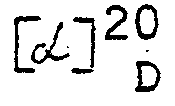
- Schmelzpunkt: 153°C unter Zersetzung.
- 9,4 g (0,033 Mol) (4R)-2-(D-Manno-1,2,3,4,5-pentahydroxy- pentyl)-thiazolidin-4-carbonsäure und 6,88 g (0,033 Mol) einer 24 %igen wässrigen Hydrazinhydratlösung werden mit 95 ml Methylalkohol 30 Minuten unter Rückfluß gekocht. Die erhaltene Suspension wird heiß filtriert und der Rückstand wird mit heißem 95 %igem Methylalkohol gewaschen. Man erhält 2,78 g (R)-Cystein (69,4 % der Theorie).

- Nach Verdünnen des Filtrats mit 70 ml Wasser und Zugabe von 1,5 ml 30 %igem Wasserstoffperoxid kristallisieren 2,2 g (R,R)-Cystin aus (26,6 % der Theorie, bezogen auf die eingesetzte (4R)-2-(D-Manno-1,2,3,4,5-pentahydroxy- pentyl)-thiazolidin-4-carbonsäure).

- C6H12O4N2S2


- 35 g (0,2 Mol) (R,S)-Cystein x HCl x H2O, 39,6 g (0,2 Mol) D-(+)-Glucose x H20 und 20,2 g (0,2 Mol) Triethylamin werden in 80 ml Wasser und 20 ml Methylalkohol bei 60°C gelöst. Die Lösung bleibt 20 Stunden bei Raumtemperatur stehen. Die gebildeten Kristalle werden abfiltriert und mit Methylalkohol gewaschen.
- Man erhält 5,1 g (36,0 % der Theorie) (4R)-2-(D-Gluco-1,2,3,4,5-pentahydroxypentyl)-thiazolidin-4-carbonsäure.

- Der Drehwert einer authentischen, aus enäntiomerenreinem (R)-Cystein und D-(+)-Glucose hergestellten Vergleichsprobe beträgt ebenfalls -89,6°.
- Schmelzpunkt: 162°C unter Zersetzung.
- Elementaranalyse:
- C9H17NO7S

- Man engt das beim Abtrennen der (4R)-2-(D-Gluco-1,2,3,4,5-pentahydroxypentyl)-thiazolidin-4-carbonsäure angefallene Filtrat unter vermindertem Druck auf 90 ml ein. Nach .Stehen über Nacht bei 15°C wird das auskristallisierende Gemisch aus (4R)- und (4S)-2-(D-Gluco-1,2,3,4,5-penta- hydroxypentyl)-thiazolidin-4-carbonsäure abgenutscht. Das dabei anfallende Filtrat wird am Rotationsverdampfer bei 25 mbar und Erwärmung mit einem Wasserbad zur Trockne eingeengt. Der Rückstand wird aus Wasser umkristallisiert. Man erhält reine (4S)-2-(D-Gluco-1,2,3,4,5-pentahydroxy- pentyl)-thiazolidin-4-carbonsäure in Form farbloser Kristalle. Ausbeute: 4,8 g (34 % der Theorie).
- Schmelzpunkt: 168°C unter Zersetzung.

- Der Drehwert einer authentischen, aus enantiomerenreinem (S)-Cystein und D-(+)-Glucose hergestellten Vergleichsprobe beträgt +85,2°.
- 5,1 g (0,018 Mol) (4R)-2-(D-Gluco-1,2,3,4,5-pentahydroxy- pentyl)-thiazolidin-4-carbonsäure und 1,87 g (0,027 Mol) Hydroxylamin-hydrochlorid werden in einer Mischung aus 10 ml Wasser und 40 ml Methylalkohol 3,5 Stunden unter Rückfluß zum Sieden erhitzt. Nach dem Erkalten wird eine leichte Trübung durch Filtration entfernt und das Filtrat wird mit Triethylamin auf pH 6 gestellt, wobei 1,62 g (R)-Cystein auskristallisieren, (entsprechend einer Ausbeute von 74,3 % der Theorie).

- 4,8 g (0,017 Mol) (4S)-2-(D-Gluco-1,2,3,4,5-pentahydroxy- pentyl)-thiazolidin-4-carbonsäure und 1,87 g (0,027 Mol) Hydroxylamin-hydrochlorid werden in einer Mischung aus 10 ml Wasser und 40 ml Methanol 4 Stunden unter Rückfluß gekocht. Nach dem Abkühlen auf 20°C wird eine Trübung durch Filtration entfernt und das Filtrat mit Triethyl- .amin auf pH 5,5 gestellt, wobei 1,6 g (79 % der Theorie) (S)-Cystein auskristallisieren.

- 1,2 g (0,01 Mol) (R,S)-Cystein und 1,5 g (0,01 Mol) L-(+)-Arabinose werden in 5 ml Wasser 30 Minuten auf 80°C erwärmt. Die erhaltene Reaktionslösung wird dunnschichtchromatographisch [Kieselgel 60 (E. Merck, Darmstadt), 2 mm Schichtdicke] getrennt, wobei als Laufmittel ein Gemisch aus 5 Volumenteilen n-Butanol, 2 Volumenteilen Ethanol und 4 Volumenteilen Wasser eingesetzt wird. Das Diastereomerenpaar wird so getrennt (Rf = 0,17 und 0,29).
- Die Zone bei Rf = 0,17 wird von der DC-Platte abgelöst und die (4R)-2-(L-Arabino-1,2,3,4-tetrahydroxybutyl)-thiazolidin-4-carbonsäure daraus durch Extraktion mit Wasser, nachfolgendes Abfiltrieren des Kieselgels und Einengen zur Trockne erhalten. Der Rückstand wird aus wässrigem Ethanol umkristallisiert und besteht aus (4R)-2-(L-Arabino-2,2,3,4-tetrahydroxybutyl)-thiazolidin-4-carbonsäure. Schmelzpunkt: 161 C.
- Das so erhaltene Produkt wird mit 0,52 g (0,0075 Mol) Hydroxylamin-hydrochlorid in einer Mischung aus 5 ml Wasser und 15 ml Methanol 3,5 Stunden unter Rückfluß zum Sieden erhitzt. Nach dem Abkühlen auf 20°C wird die Trü- bung durch Filtration entfernt und das Filtrat mit Triethylamin auf pH 6 gestellt, wobei 0,4 g (R)-Cystein auskristallisieren (67 % der Theorie). [

- Die Zone bei Rf = 0,29 wird von der DC-Platte abgelöst und mit Wasser extrahiert. Das Kieselgel wird abfiltriert, und das Filtrat zur Trockne eingeengt. Zur Bestimmung des Schmelzpunktes wird ein kleiner Teil des Rückstandes aus wässrigem Ethanol umkristallisiert. Schmelzpunkt: 164°C.
- Die so erhaltene (4S)-2-(L-Arabino-1,2,3,4-tetrahydroxy- butyl)-thiazolidin-4-carbonsäure wird mit 0,52 g (0,0075 Mol) Hydroxylamin-hydrochlorid in einer Mischung aus 4 ml Wasser und 10 ml Methanol 3,5 Stunden am Rückfluß gekocht..Man läßt auf 20°C abkühlen, filtriert durch zwei Faltenfilter und stellt den pH-Wert des Filtrats auf 6 ein. Dies geschieht durch Zugabe von Triethylamin. Es kristallisieren 0,36 g, entsprechend 60 % der Theorie (S)-Cystein aus.
-

Claims (5)


Applications Claiming Priority (2)
| Application Number | Priority Date | Filing Date | Title |
|---|---|---|---|
| DE3202295 | 1982-01-26 | ||
| DE3202295A DE3202295C1 (de) | 1982-01-26 | 1982-01-26 | Verfahren zur Trennung des Racemats(R,S)-Cystein |
Publications (2)
| Publication Number | Publication Date |
|---|---|
| EP0086258A1 true EP0086258A1 (de) | 1983-08-24 |
| EP0086258B1 EP0086258B1 (de) | 1984-09-26 |
Family
ID=6153866
Family Applications (1)
| Application Number | Title | Priority Date | Filing Date |
|---|---|---|---|
| EP82109858A Expired EP0086258B1 (de) | 1982-01-26 | 1982-10-26 | Verfahren zur Trennung des Racemats (R,S)-Cystein |
Country Status (4)
| Country | Link |
|---|---|
| US (1) | US4430509A (de) |
| EP (1) | EP0086258B1 (de) |
| JP (1) | JPS6033824B2 (de) |
| DE (2) | DE3202295C1 (de) |
Families Citing this family (4)
| Publication number | Priority date | Publication date | Assignee | Title |
|---|---|---|---|---|
| US4736060A (en) * | 1985-08-06 | 1988-04-05 | Nippon Rikagakuyakuhin Co., Ltd. | Method for optical resolution of DL-cysteine and (R,S)-1-(1-naphthyl) ethylamine |
| JP2708466B2 (ja) * | 1988-05-18 | 1998-02-04 | ダイセル化学工業 株式会社 | 光学分割方法 |
| AU2003207194A1 (en) * | 2002-02-28 | 2003-09-09 | Ajinomoto Co., Inc. | Process for producing nonvolatile thiazolidine compound |
| KR20190092951A (ko) * | 2018-01-31 | 2019-08-08 | 씨제이제일제당 (주) | 연속식 크로마토그래피 공정을 이용한 천연 l-시스테인 결정의 제조 방법 |
Citations (2)
| Publication number | Priority date | Publication date | Assignee | Title |
|---|---|---|---|---|
| CH507004A (fr) * | 1966-09-12 | 1971-05-15 | Mini Ind Chimice | Procédé de préparation d'un médicament contenant les dérivés cycliques de la cystéine destiné au traitement des processus de vieillissement prématuré et des troubles du métabolisme des substances thioliques |
| FR2105889A5 (de) * | 1970-09-17 | 1972-04-28 | Diamalt Ag |
-
1982
- 1982-01-26 DE DE3202295A patent/DE3202295C1/de not_active Expired
- 1982-10-26 EP EP82109858A patent/EP0086258B1/de not_active Expired
- 1982-10-26 DE DE8282109858T patent/DE3260844D1/de not_active Expired
-
1983
- 1983-01-25 JP JP58009473A patent/JPS6033824B2/ja not_active Expired
- 1983-01-25 US US06/460,858 patent/US4430509A/en not_active Expired - Fee Related
Patent Citations (2)
| Publication number | Priority date | Publication date | Assignee | Title |
|---|---|---|---|---|
| CH507004A (fr) * | 1966-09-12 | 1971-05-15 | Mini Ind Chimice | Procédé de préparation d'un médicament contenant les dérivés cycliques de la cystéine destiné au traitement des processus de vieillissement prématuré et des troubles du métabolisme des substances thioliques |
| FR2105889A5 (de) * | 1970-09-17 | 1972-04-28 | Diamalt Ag |
Non-Patent Citations (2)
| Title |
|---|
| ANGEWANDTE CHEMIE, Band 93, Heft 8, 1981 Verlag Chemie, Weinheim J. MARTENS et al. "Einfache Synthese von racemischem Cystein" * |
| Chemical Abstracts, Band 73, Nr. 23, 7. Dezember 1970, Columbus, Ohio, USA R. BOGNAR et al. "Heterocyclic compounds from sugars. III. Substituted thiazolidines by reaction of L-cysteine with monosaccharides" * |
Also Published As
| Publication number | Publication date |
|---|---|
| EP0086258B1 (de) | 1984-09-26 |
| JPS58128366A (ja) | 1983-07-30 |
| DE3260844D1 (en) | 1984-10-31 |
| JPS6033824B2 (ja) | 1985-08-05 |
| DE3202295C1 (de) | 1983-03-10 |
| US4430509A (en) | 1984-02-07 |
Similar Documents
| Publication | Publication Date | Title |
|---|---|---|
| DE2660848C2 (de) | Optisch aktive Anthracyclinone | |
| DE2927672C2 (de) | ||
| DE2626783C2 (de) | Verfahren zur Herstellung von Daunomycin und dessen im Ring D modifizierten Analoga | |
| EP0086258B1 (de) | Verfahren zur Trennung des Racemats (R,S)-Cystein | |
| EP0237902A2 (de) | Verfahren zur Herstellung des (-)-Antipoden des (E)-1-Cyclohexyl-4,4-dimethyl-3-hydroxy-2-(1,2,4-triazol-1-yl)-pent-1-ens | |
| DE69000329T2 (de) | Hydroxyfuranon-herstellung. | |
| EP0012298B1 (de) | Verfahren zur Reindarstellung von Kaliumribonat und Ribonolacton | |
| DE69319420T2 (de) | Verfahren zur trennung von stereoisomere von folinsäure | |
| DE2167181B1 (de) | Methyl-N-acetyl-6,7-aziridino-6-desamino-7-desoxy-2,3,4-tri-0-acetyl-alpha-thiolincosaminid und Verfahren zu dessen Herstellung | |
| EP0025140B1 (de) | Verfahren zur Herstellung bekannter und neuer 6-Amino-6-desoxy-2,3-0-isopropyliden-alpha-L-sorbofuranose-Derivate sowie neue Zwischenprodukte des Verfahrens | |
| EP0001760B1 (de) | Alpha-aminomethylen-beta-formylaminopropionitril, Verfahren zu seiner Herstellung sowie Verwendung zur Herstellung von 2-Methyl-4-amino-5-formylaminomethyl-pyrimidin | |
| EP0293814A1 (de) | Neue Mono- und Polyhydroxyacyl-Derivate polyoxygenierter Labdane, ein Verfahren zu deren Herstellung und ihre Verwendung als Medikamente | |
| DE69814462T2 (de) | 1,7-dibromodibenzosuberon und verfahren zur herstellung | |
| DE3543021C2 (de) | ||
| DE69916269T2 (de) | Neues verfahren | |
| DE3874291T2 (de) | Reines kristallines methyl-2-acryl-amino-2-methoxy-acetat und verfahren zu dessen herstellung. | |
| EP0704438B1 (de) | Verfahren zur Herstellung von 2-Cyaniminothiazolidin | |
| EP0040745B1 (de) | Verfahren zur Herstellung von v-Triazolverbindungen | |
| DE69826296T2 (de) | Monoacetale von bicyclohexyl-4,4-dionen und ihre verwendung in der herstellung von flüssigkristallen | |
| DE3219407C2 (de) | ||
| EP0150407A1 (de) | Verfahren zur Gewinnung von hochreinem 1(2-Hydroxiethyl)-2-methyl-5-nitroimidazol | |
| DE2749056C2 (de) | ||
| EP0004535A2 (de) | Verfahren zur Herstellung von 4-Methyl-5-((2-aminoäthyl)-thiomethyl)-imidazol-dihydrochlorid | |
| DE3500029A1 (de) | Anthracyclinester | |
| DE69401676T2 (de) | Verfahren zur Herstellung von ein N,N-disubstituiertes p-Phenylendiamine sulfat Derivate |
Legal Events
| Date | Code | Title | Description |
|---|---|---|---|
| PUAI | Public reference made under article 153(3) epc to a published international application that has entered the european phase |
Free format text: ORIGINAL CODE: 0009012 |
|
| PUAI | Public reference made under article 153(3) epc to a published international application that has entered the european phase |
Free format text: ORIGINAL CODE: 0009012 |
|
| 17P | Request for examination filed |
Effective date: 19821026 |
|
| AK | Designated contracting states |
Designated state(s): BE CH DE FR GB LI NL SE |
|
| GRAA | (expected) grant |
Free format text: ORIGINAL CODE: 0009210 |
|
| AK | Designated contracting states |
Designated state(s): BE CH DE FR GB LI NL SE |
|
| PGFP | Annual fee paid to national office [announced via postgrant information from national office to epo] |
Ref country code: DE Payment date: 19840928 Year of fee payment: 3 |
|
| PGFP | Annual fee paid to national office [announced via postgrant information from national office to epo] |
Ref country code: FR Payment date: 19841030 Year of fee payment: 3 |
|
| PGFP | Annual fee paid to national office [announced via postgrant information from national office to epo] |
Ref country code: CH Payment date: 19841031 Year of fee payment: 3 |
|
| REF | Corresponds to: |
Ref document number: 3260844 Country of ref document: DE Date of ref document: 19841031 |
|
| ET | Fr: translation filed | ||
| PGFP | Annual fee paid to national office [announced via postgrant information from national office to epo] |
Ref country code: SE Payment date: 19841231 Year of fee payment: 3 Ref country code: BE Payment date: 19841231 Year of fee payment: 3 |
|
| PLBE | No opposition filed within time limit |
Free format text: ORIGINAL CODE: 0009261 |
|
| STAA | Information on the status of an ep patent application or granted ep patent |
Free format text: STATUS: NO OPPOSITION FILED WITHIN TIME LIMIT |
|
| 26N | No opposition filed | ||
| PGFP | Annual fee paid to national office [announced via postgrant information from national office to epo] |
Ref country code: NL Payment date: 19871031 Year of fee payment: 6 |
|
| PG25 | Lapsed in a contracting state [announced via postgrant information from national office to epo] |
Ref country code: GB Effective date: 19881026 |
|
| PG25 | Lapsed in a contracting state [announced via postgrant information from national office to epo] |
Ref country code: SE Effective date: 19881027 |
|
| PG25 | Lapsed in a contracting state [announced via postgrant information from national office to epo] |
Ref country code: LI Effective date: 19881031 Ref country code: CH Effective date: 19881031 Ref country code: BE Effective date: 19881031 |
|
| BERE | Be: lapsed |
Owner name: DEGUSSA A.G. Effective date: 19881031 |
|
| PG25 | Lapsed in a contracting state [announced via postgrant information from national office to epo] |
Ref country code: NL Effective date: 19890501 |
|
| NLV4 | Nl: lapsed or anulled due to non-payment of the annual fee | ||
| PG25 | Lapsed in a contracting state [announced via postgrant information from national office to epo] |
Ref country code: FR Free format text: LAPSE BECAUSE OF NON-PAYMENT OF DUE FEES Effective date: 19890630 |
|
| REG | Reference to a national code |
Ref country code: CH Ref legal event code: PL |
|
| PG25 | Lapsed in a contracting state [announced via postgrant information from national office to epo] |
Ref country code: DE Effective date: 19890701 |
|
| GBPC | Gb: european patent ceased through non-payment of renewal fee | ||
| REG | Reference to a national code |
Ref country code: FR Ref legal event code: ST |
|
| EUG | Se: european patent has lapsed |
Ref document number: 82109858.9 Effective date: 19890619 |