EP0086884A2 - Préparation de carbone graphitique à basse température au moyen de bore et de silice - Google Patents
Préparation de carbone graphitique à basse température au moyen de bore et de silice Download PDFInfo
- Publication number
- EP0086884A2 EP0086884A2 EP82111275A EP82111275A EP0086884A2 EP 0086884 A2 EP0086884 A2 EP 0086884A2 EP 82111275 A EP82111275 A EP 82111275A EP 82111275 A EP82111275 A EP 82111275A EP 0086884 A2 EP0086884 A2 EP 0086884A2
- Authority
- EP
- European Patent Office
- Prior art keywords
- fuel cell
- carbon
- mixture
- silicon
- boron
- Prior art date
- Legal status (The legal status is an assumption and is not a legal conclusion. Google has not performed a legal analysis and makes no representation as to the accuracy of the status listed.)
- Withdrawn
Links
Images
Classifications
-
- C—CHEMISTRY; METALLURGY
- C04—CEMENTS; CONCRETE; ARTIFICIAL STONE; CERAMICS; REFRACTORIES
- C04B—LIME, MAGNESIA; SLAG; CEMENTS; COMPOSITIONS THEREOF, e.g. MORTARS, CONCRETE OR LIKE BUILDING MATERIALS; ARTIFICIAL STONE; CERAMICS; REFRACTORIES; TREATMENT OF NATURAL STONE
- C04B35/00—Shaped ceramic products characterised by their composition; Ceramics compositions; Processing powders of inorganic compounds preparatory to the manufacturing of ceramic products
- C04B35/515—Shaped ceramic products characterised by their composition; Ceramics compositions; Processing powders of inorganic compounds preparatory to the manufacturing of ceramic products based on non-oxide ceramics
- C04B35/52—Shaped ceramic products characterised by their composition; Ceramics compositions; Processing powders of inorganic compounds preparatory to the manufacturing of ceramic products based on non-oxide ceramics based on carbon, e.g. graphite
-
- H—ELECTRICITY
- H01—ELECTRIC ELEMENTS
- H01M—PROCESSES OR MEANS, e.g. BATTERIES, FOR THE DIRECT CONVERSION OF CHEMICAL ENERGY INTO ELECTRICAL ENERGY
- H01M4/00—Electrodes
- H01M4/86—Inert electrodes with catalytic activity, e.g. for fuel cells
- H01M4/96—Carbon-based electrodes
-
- H—ELECTRICITY
- H01—ELECTRIC ELEMENTS
- H01M—PROCESSES OR MEANS, e.g. BATTERIES, FOR THE DIRECT CONVERSION OF CHEMICAL ENERGY INTO ELECTRICAL ENERGY
- H01M8/00—Fuel cells; Manufacture thereof
- H01M8/02—Details
- H01M8/0202—Collectors; Separators, e.g. bipolar separators; Interconnectors
- H01M8/0204—Non-porous and characterised by the material
- H01M8/0213—Gas-impermeable carbon-containing materials
-
- Y—GENERAL TAGGING OF NEW TECHNOLOGICAL DEVELOPMENTS; GENERAL TAGGING OF CROSS-SECTIONAL TECHNOLOGIES SPANNING OVER SEVERAL SECTIONS OF THE IPC; TECHNICAL SUBJECTS COVERED BY FORMER USPC CROSS-REFERENCE ART COLLECTIONS [XRACs] AND DIGESTS
- Y02—TECHNOLOGIES OR APPLICATIONS FOR MITIGATION OR ADAPTATION AGAINST CLIMATE CHANGE
- Y02E—REDUCTION OF GREENHOUSE GAS [GHG] EMISSIONS, RELATED TO ENERGY GENERATION, TRANSMISSION OR DISTRIBUTION
- Y02E60/00—Enabling technologies; Technologies with a potential or indirect contribution to GHG emissions mitigation
- Y02E60/30—Hydrogen technology
- Y02E60/50—Fuel cells
-
- Y—GENERAL TAGGING OF NEW TECHNOLOGICAL DEVELOPMENTS; GENERAL TAGGING OF CROSS-SECTIONAL TECHNOLOGIES SPANNING OVER SEVERAL SECTIONS OF THE IPC; TECHNICAL SUBJECTS COVERED BY FORMER USPC CROSS-REFERENCE ART COLLECTIONS [XRACs] AND DIGESTS
- Y02—TECHNOLOGIES OR APPLICATIONS FOR MITIGATION OR ADAPTATION AGAINST CLIMATE CHANGE
- Y02P—CLIMATE CHANGE MITIGATION TECHNOLOGIES IN THE PRODUCTION OR PROCESSING OF GOODS
- Y02P70/00—Climate change mitigation technologies in the production process for final industrial or consumer products
- Y02P70/50—Manufacturing or production processes characterised by the final manufactured product
Definitions
- the present invention is directed to a method for enhancing the corrosion resistance of carbonaceous components of a fuel cell.
- the present invention is directed to a method for enhancing the corrosion resistance of carbonaceous components in a fuel cell by doping the carbon with boron or silicon and graphitizing the carbon by heating.
- a typical fuel cell is an electrochemical cell comprising a matrix for holding electrolyte and an electrode disposed on each side of the matrix and in contact therewith.
- Reactant gases such as hydrogen as fuel and oxygen as oxidant may be fed to the nonelectrolyte facing side of each electrode.
- separator plates may be disposed between adjacent cells. Due to the low solubility of reactant gases, such as hydrogen and oxygen in electrolytes, the fuel cell reactions take place at the electrode-electrolyte interface.
- the required surface area at the interface is typically obtained utilizing porous materials which fulfill the functions of providing contact between electrolyte and gas, catalyzing the reaction, maintaining the electrolyte in a very thin area on the surface of the electrode, and acting as leads for the transmission of electrons.
- aqueous electrolyte fuel cells may comprise carbonaceous material, such as the cathode, separator plates and .current collectors.
- carbonaceous material such as the cathode, separator plates and .current collectors.
- a particular problem in acid electrolyte fuel cells is that at operating temperatures, typically above 200° C , the carbonaceous components are particularly susceptible to corrosion. The frequency of replacement of such corroded carbonaceous components may be a major disadvantage of fuel cells which may make them less commercially attractive than other sources of electrical energy.
- carbonaceous components for fuel cells in particular the cathodes, may be provided which exhibit enhanced resistance to corrosion by introducing boron or silicon into the carbonaceous material utilized in the fuel cell component. Subsequent heat treatment of the carbonaceous boron-containing or silicon- containing mixture produces graphitized carbon having enhanced corrosion resistance.
- degree of lattice ordering hereinafter referred to as graphitization
- the closeness of approach for the lattice ordering (d 0 ) to 3.35A defines the degree of graphitization.
- boron may be introduced into carbonaceous material conventionally utilized in the production in components for fuel cells.
- Carbonaceous material such as carbon-black may be intimately mixed with a boric acid solution by ultrasonic agitation, forming a slurry which is then evaporated to dryness.
- concentration of the boric acid solution and the proportions of the solution mixed with carbon are not particularly critical, however, slurries formed utilizing from about 80% to about 98% carbon by weight with 20% to 2% by weight boric acid in a 0.3M solution are preferred.
- the slurry may then be dried and the resulting mixed solids heated for approximately one hour at temperatures ranging from 1000-2000 0 C in an inert atmosphere. After the heat treatment the boron doped carbon may be rinsed, for example, in boiling distilled water to remove residual boric acid.
- Heat treatment at a temperature sufficient to graphitize the carbons is necessary. Such a temperature may be as low as 1000° C. While at least 1600° C is preferred, heat treatment above 2500° C may provide improved graphitized carbon according to the present invention. However, temperatures less than about 2500° C are preferred.
- boron-doped carbon which has been heat treated as described above exhibits superior resistance to corrosion at fuel cell cathode operating conditions. Resistance to corrosion is particularly advantageous when the boron-doped carbon is heat treated from 1000° - 1600° C.
- the boron content of the heat treated graphitized carbon may vary depending on the rate of cooling. However, the degree of graphitization which occurs is not due only to heat treatment. The presence of boron is believed to be critical to achieving the degree of graphitization attainable according to the present invention.
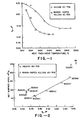
- FIG. 1 there is shown a plot of d 0 (half the carbon unit cell c dimension) versus the temperature of heat treatment for heat treated Vulcan (Cabot's Vulcan XC-72R) samples undoped or doped by boron.
- the value for d 0 for natural graphite is 3.35A, therefore, it may be seen from Figure 1 that a higher degree of graphitization may be obtained by'boron doping and heat treatment at a lower temperature rather than by heat treatment alone.
- Figure 1 shows that in heat treatments above 1400° C the boron- ° doped carbons have a d 0 less than 3.47 A.
- FIG. 2 there is shown a plot of d 0 for heat treated Vulcan XC-72R and heat treated boron doped Vulcan XC-72R versus BET (Brunauer-Emmett-Teller method) surface areas. It may be seen from Figure 2 that the least graphitic boron-doped carbon which is that carbon treated at 1600° C having the d 0 which deviates most from » the value of 3.35A has a higher BET surface area and a higher degree of graphitization than the most graphitic undoped carbon (which is the undoped carbon heat treated at approximately 3000°).
- BET Brunauer-Emmett-Teller method
- Carbonaceous components of fuel cells exhibiting enhanced resistance to corrosion may also be provided according to the present invention by doping carbon with silicon and heat treating.
- carbon black which may be used in the manufacture of components for fuel cells may be slurried with fumed silicon oxide (Cabot's Cab-0-Sil).
- the carbon black may be impregnated with silicon by mixing with an aqueous solution of sodium silicate.
- the carbon black may be slurried with fumed silicon oxide, evaporated to dryness and heat treated for approximately one hour.at approximately 800° C in an inert atmosphere.
- the silicon impregnated carbon may be heated at 2300° C for approximately one hour in an inert atmosphere. In either method, subsequent to heat treatment the carbon may be boiled in aqueous sodium hydroxide to remove unreacted silicon oxide.
- Heat treatment at a temperature sufficient to graphitize the carbon is necessary. Such temperature may be as low as 1400° C. A temperature of at least 1800° C is preferred. Heat treatment as temperatures greater than 1800° C may provide improved graphitized carbon according to the present invention, however, temperatures less than about 2500° C are preferred.
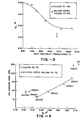
- FIG. 3 there is shown a plot of d 0 versus heat treatment temperatures for samples of turbostratic carbon black (Cabot's Vulcan XC -72R) made by slurrying with fumed silicon oxide.
- the silicon doped samples exhibit a d 0 value closer to 3.35 A than the undoped samples, thereby indicating a higher degree of graphitization for the silicon doped samples.
- FIG 4 there is shown a plot of d 0 versus d 0 for silicon doped and undoped carbon samples.
- the silicon doped samples not only are more highly graphitized, but also exhibit a higher BET surface area than even the most graphitized undoped sample.
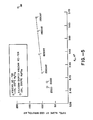
- Tafel slopes the slope of potential versus logarithm of current density
- the silicon doped carbon exhibits lower Tafel slopes than the undoped heat treated samples.
- a low value for the Tafel slope means that corrosion currents are lower at potentials of interest in fuel cells (0.65-0.8 V) than those for materials showing higher Tafel slopes.
- Table 1 Shown below in Table 1 is a summary of properties shown in Figures 3, 4 and 5 of silicon doped versus undoped carbon. Additionally, in Table 1 there is shown a comparison of corrosion resistance, as evidenced by the corrosion current at 1000 minutes. The corrosion test procedure is described by EPRI Publication No. EM-1664, p. A-1 (1981), published by the Electric Power Research Institute, Palo Alto, California 94303.
- the heat treated silicon doped samples were tested for corrosion at one volt at 200° C in concentrated phosphoric acid.
- the corrosion characteristics are shown in Table I above with the comparable corrosion characteristics for an undoped Vulcan XC-72R carbon sample which had been similarly heat treated.
- the silicon doped carbon samples show significantly lower corrosion current (i at 1000 minutes) than the comparable heat treated carbon in the absence of silicon.
- the silicon doped carbon samples exhibit a higher surface area retention (BET surface area) than the undoped carbon.
Landscapes
- Chemical & Material Sciences (AREA)
- Engineering & Computer Science (AREA)
- Electrochemistry (AREA)
- Manufacturing & Machinery (AREA)
- Ceramic Engineering (AREA)
- General Chemical & Material Sciences (AREA)
- Chemical Kinetics & Catalysis (AREA)
- Sustainable Energy (AREA)
- Life Sciences & Earth Sciences (AREA)
- Sustainable Development (AREA)
- Materials Engineering (AREA)
- Structural Engineering (AREA)
- Organic Chemistry (AREA)
- Inert Electrodes (AREA)
- Carbon And Carbon Compounds (AREA)
- Fuel Cell (AREA)
Applications Claiming Priority (2)
| Application Number | Priority Date | Filing Date | Title |
|---|---|---|---|
| US35100782A | 1982-02-22 | 1982-02-22 | |
| US351007 | 1982-02-22 |
Publications (1)
| Publication Number | Publication Date |
|---|---|
| EP0086884A2 true EP0086884A2 (fr) | 1983-08-31 |
Family
ID=23379195
Family Applications (1)
| Application Number | Title | Priority Date | Filing Date |
|---|---|---|---|
| EP82111275A Withdrawn EP0086884A2 (fr) | 1982-02-22 | 1982-12-06 | Préparation de carbone graphitique à basse température au moyen de bore et de silice |
Country Status (2)
| Country | Link |
|---|---|
| EP (1) | EP0086884A2 (fr) |
| JP (1) | JPS58145609A (fr) |
Cited By (5)
| Publication number | Priority date | Publication date | Assignee | Title |
|---|---|---|---|---|
| FR2585187A1 (fr) * | 1985-07-17 | 1987-01-23 | Int Fuel Cells Corp | Composant carbone-graphite pour pile electrochimique et procede pour sa fabrication |
| WO2001092151A1 (fr) * | 2000-05-31 | 2001-12-06 | Showa Denko K.K. | Composite a base de carbone electriquement conducteur a fines particules, catalyseur pour pile a combustible a polymere solide et batterie de piles |
| US6346225B1 (en) | 1996-12-20 | 2002-02-12 | Danionics A/S | Preparation of modified cokes and/or blacks |
| US6780388B2 (en) | 2000-05-31 | 2004-08-24 | Showa Denko K.K. | Electrically conducting fine carbon composite powder, catalyst for polymer electrolyte fuel battery and fuel battery |
| EP0903795A4 (fr) * | 1996-11-26 | 2005-03-16 | Kao Corp | Materiau d'electrode negative pour pile secondaire non aqueuse |
Families Citing this family (2)
| Publication number | Priority date | Publication date | Assignee | Title |
|---|---|---|---|---|
| JPH0711963B2 (ja) * | 1985-08-31 | 1995-02-08 | 東洋紡績株式会社 | 流通型電解槽用炭素系電極材 |
| JPH061701B2 (ja) * | 1987-11-18 | 1994-01-05 | 富士電機株式会社 | 燃料電池用電極の触媒担体 |
Family Cites Families (1)
| Publication number | Priority date | Publication date | Assignee | Title |
|---|---|---|---|---|
| JPS543682A (en) * | 1977-06-09 | 1979-01-11 | Daikin Ind Ltd | Operation control valve of agaicultural machinery |
-
1982
- 1982-12-06 EP EP82111275A patent/EP0086884A2/fr not_active Withdrawn
- 1982-12-24 JP JP57235102A patent/JPS58145609A/ja active Pending
Cited By (6)
| Publication number | Priority date | Publication date | Assignee | Title |
|---|---|---|---|---|
| FR2585187A1 (fr) * | 1985-07-17 | 1987-01-23 | Int Fuel Cells Corp | Composant carbone-graphite pour pile electrochimique et procede pour sa fabrication |
| US4938942A (en) * | 1985-07-17 | 1990-07-03 | International Fuel Cells | Carbon graphite component for an electrochemical cell and method for making the component |
| EP0903795A4 (fr) * | 1996-11-26 | 2005-03-16 | Kao Corp | Materiau d'electrode negative pour pile secondaire non aqueuse |
| US6346225B1 (en) | 1996-12-20 | 2002-02-12 | Danionics A/S | Preparation of modified cokes and/or blacks |
| WO2001092151A1 (fr) * | 2000-05-31 | 2001-12-06 | Showa Denko K.K. | Composite a base de carbone electriquement conducteur a fines particules, catalyseur pour pile a combustible a polymere solide et batterie de piles |
| US6780388B2 (en) | 2000-05-31 | 2004-08-24 | Showa Denko K.K. | Electrically conducting fine carbon composite powder, catalyst for polymer electrolyte fuel battery and fuel battery |
Also Published As
| Publication number | Publication date |
|---|---|
| JPS58145609A (ja) | 1983-08-30 |
Similar Documents
| Publication | Publication Date | Title |
|---|---|---|
| Ravikumar et al. | Effect of methanol crossover in a liquid‐feed polymer‐electrolyte direct methanol fuel cell | |
| JP4772254B2 (ja) | 導電性微細炭素複合粉、固体高分子型燃料電池用触媒及び燃料電池 | |
| US6780388B2 (en) | Electrically conducting fine carbon composite powder, catalyst for polymer electrolyte fuel battery and fuel battery | |
| JP3383953B2 (ja) | 固体高分子型燃料電池用黒鉛部材の製造方法 | |
| JPWO2001092151A1 (ja) | 導電性微細炭素複合粉、固体高分子型燃料電池用触媒及び燃料電池 | |
| Ryu et al. | Catalytic effects of B/N-co-doped porous carbon incorporated with ketjenblack nanoparticles for all-vanadium redox flow batteries | |
| KR102081006B1 (ko) | 산화환원 유동 배터리용 탄소 펠트 전극의 제조 방법 | |
| US20160013497A1 (en) | Improved electrode for flow batteries | |
| US8716167B2 (en) | Catalyst for fuel cell and polymer electrolyte fuel cell using the same | |
| KR100512221B1 (ko) | 연료 전지용 전극 촉매 및 그를 이용한 연료 전지 | |
| KR101202122B1 (ko) | 촉매 및 그 제조 방법 및 그 용도 | |
| WO2003058739A1 (fr) | Corps de carbone poreux pour pile a combustible possedant un agent hydrophile electroniquement conducteur | |
| Kosacki et al. | The effect of various graphite additives on positive active mass utilization of the lead-acid battery | |
| WO2014109957A1 (fr) | Plaque bipolaire améliorée destinée à des batteries à circulation | |
| US4938942A (en) | Carbon graphite component for an electrochemical cell and method for making the component | |
| CN114097120B (zh) | 燃料电池催化剂用组合物及包含其的燃料电池 | |
| JPS61161666A (ja) | 電気化学的電池セパレーター板、その製造方法及び燃料電池 | |
| JPS58145609A (ja) | ホウ素及びケイ素を用いる黒鉛化炭素の低温製造法 | |
| CA2434086A1 (fr) | Composition catalytique pour pile, couche de diffusion gazeuse et pile a combustible comprenant cette composition | |
| CN119430133A (zh) | 一种钠离子电池负极材料及其制备方法和钠离子电池 | |
| US20260074198A1 (en) | Monolithic wood-derived cathodes for lithium sulfur batteries | |
| JP6310413B2 (ja) | リチウム空気二次電池、その空気極用触媒の製造方法、並びにリチウム空気二次電池の製造方法 | |
| JPH11317231A (ja) | 電解槽用炭素系電極材 | |
| JP2689686B2 (ja) | リン酸型燃料電池用電極触媒層の製造方法 | |
| KR100195080B1 (ko) | 인산형 연료전지용 전해질 매트릭스 |
Legal Events
| Date | Code | Title | Description |
|---|---|---|---|
| PUAI | Public reference made under article 153(3) epc to a published international application that has entered the european phase |
Free format text: ORIGINAL CODE: 0009012 |
|
| AK | Designated contracting states |
Designated state(s): AT BE CH DE FR GB IT LI LU NL SE |
|
| 17P | Request for examination filed |
Effective date: 19831111 |
|
| STAA | Information on the status of an ep patent application or granted ep patent |
Free format text: STATUS: THE APPLICATION HAS BEEN WITHDRAWN |
|
| 18W | Application withdrawn |
Withdrawal date: 19841016 |
|
| R18W | Application withdrawn (corrected) |
Effective date: 19841016 |
|
| RIN1 | Information on inventor provided before grant (corrected) |
Inventor name: STONEHART, PAUL |