EP0093693B1 - Verfahren zur Herstellung von Polyaminotriazinen - Google Patents
Verfahren zur Herstellung von Polyaminotriazinen Download PDFInfo
- Publication number
- EP0093693B1 EP0093693B1 EP83810175A EP83810175A EP0093693B1 EP 0093693 B1 EP0093693 B1 EP 0093693B1 EP 83810175 A EP83810175 A EP 83810175A EP 83810175 A EP83810175 A EP 83810175A EP 0093693 B1 EP0093693 B1 EP 0093693B1
- Authority
- EP
- European Patent Office
- Prior art keywords
- formula
- radical
- alkyl
- process according
- pip
- Prior art date
- Legal status (The legal status is an assumption and is not a legal conclusion. Google has not performed a legal analysis and makes no representation as to the accuracy of the status listed.)
- Expired
Links
- 238000000034 method Methods 0.000 title claims description 22
- 238000002360 preparation method Methods 0.000 title claims description 6
- HEMHJVSKTPXQMS-UHFFFAOYSA-M Sodium hydroxide Chemical compound [OH-].[Na+] HEMHJVSKTPXQMS-UHFFFAOYSA-M 0.000 claims description 20
- 238000006243 chemical reaction Methods 0.000 claims description 18
- 150000004985 diamines Chemical class 0.000 claims description 14
- 239000000243 solution Substances 0.000 claims description 12
- 238000006068 polycondensation reaction Methods 0.000 claims description 11
- IHDBZCJYSHDCKF-UHFFFAOYSA-N 4,6-dichlorotriazine Chemical compound ClC1=CC(Cl)=NN=N1 IHDBZCJYSHDCKF-UHFFFAOYSA-N 0.000 claims description 9
- 125000000113 cyclohexyl group Chemical group [H]C1([H])C([H])([H])C([H])([H])C([H])(*)C([H])([H])C1([H])[H] 0.000 claims description 9
- 125000001797 benzyl group Chemical group [H]C1=C([H])C([H])=C(C([H])=C1[H])C([H])([H])* 0.000 claims description 8
- 150000001875 compounds Chemical class 0.000 claims description 7
- 229910052739 hydrogen Inorganic materials 0.000 claims description 7
- 239000001257 hydrogen Substances 0.000 claims description 7
- 239000002904 solvent Substances 0.000 claims description 7
- 150000007529 inorganic bases Chemical class 0.000 claims description 6
- 125000001997 phenyl group Chemical group [H]C1=C([H])C([H])=C(*)C([H])=C1[H] 0.000 claims description 6
- 125000003944 tolyl group Chemical group 0.000 claims description 6
- 125000003903 2-propenyl group Chemical group [H]C([*])([H])C([H])=C([H])[H] 0.000 claims description 5
- 125000002496 methyl group Chemical group [H]C([H])([H])* 0.000 claims description 5
- 239000007864 aqueous solution Substances 0.000 claims description 4
- KWYUFKZDYYNOTN-UHFFFAOYSA-M potassium hydroxide Substances [OH-].[K+] KWYUFKZDYYNOTN-UHFFFAOYSA-M 0.000 claims description 4
- JYEUMXHLPRZUAT-UHFFFAOYSA-N 1,2,3-triazine Chemical compound C1=CN=NN=C1 JYEUMXHLPRZUAT-UHFFFAOYSA-N 0.000 claims description 3
- 125000000753 cycloalkyl group Chemical group 0.000 claims description 3
- 125000004433 nitrogen atom Chemical group N* 0.000 claims description 3
- 239000003960 organic solvent Substances 0.000 claims description 3
- 125000002373 5 membered heterocyclic group Chemical group 0.000 claims description 2
- 125000004836 hexamethylene group Chemical group [H]C([H])([*:2])C([H])([H])C([H])([H])C([H])([H])C([H])([H])C([H])([H])[*:1] 0.000 claims description 2
- 239000011541 reaction mixture Substances 0.000 claims description 2
- 125000004435 hydrogen atom Chemical group [H]* 0.000 claims 3
- 125000005330 8 membered heterocyclic group Chemical group 0.000 claims 1
- -1 2,2,6,6-tetramethylpiperidin-4-yl radicals Chemical class 0.000 description 37
- 150000003254 radicals Chemical class 0.000 description 11
- 239000002585 base Substances 0.000 description 9
- YXFVVABEGXRONW-UHFFFAOYSA-N Toluene Chemical compound CC1=CC=CC=C1 YXFVVABEGXRONW-UHFFFAOYSA-N 0.000 description 7
- 239000006227 byproduct Substances 0.000 description 6
- 239000000047 product Substances 0.000 description 6
- CTQNGGLPUBDAKN-UHFFFAOYSA-N O-Xylene Chemical compound CC1=CC=CC=C1C CTQNGGLPUBDAKN-UHFFFAOYSA-N 0.000 description 5
- 125000004183 alkoxy alkyl group Chemical group 0.000 description 5
- 125000000217 alkyl group Chemical group 0.000 description 5
- 239000008096 xylene Substances 0.000 description 5
- 238000003756 stirring Methods 0.000 description 4
- XLYOFNOQVPJJNP-UHFFFAOYSA-N water Chemical compound O XLYOFNOQVPJJNP-UHFFFAOYSA-N 0.000 description 4
- UFHFLCQGNIYNRP-UHFFFAOYSA-N Hydrogen Chemical compound [H][H] UFHFLCQGNIYNRP-UHFFFAOYSA-N 0.000 description 3
- 125000003342 alkenyl group Chemical group 0.000 description 3
- 230000015572 biosynthetic process Effects 0.000 description 3
- 238000009835 boiling Methods 0.000 description 3
- 125000001589 carboacyl group Chemical group 0.000 description 3
- 125000004985 dialkyl amino alkyl group Chemical group 0.000 description 3
- 238000001914 filtration Methods 0.000 description 3
- 239000000203 mixture Substances 0.000 description 3
- 239000012071 phase Substances 0.000 description 3
- CXWXQJXEFPUFDZ-UHFFFAOYSA-N tetralin Chemical compound C1=CC=C2CCCCC2=C1 CXWXQJXEFPUFDZ-UHFFFAOYSA-N 0.000 description 3
- 125000003006 2-dimethylaminoethyl group Chemical group [H]C([H])([H])N(C([H])([H])[H])C([H])([H])C([H])([H])* 0.000 description 2
- 125000004200 2-methoxyethyl group Chemical group [H]C([H])([H])OC([H])([H])C([H])([H])* 0.000 description 2
- IJGRMHOSHXDMSA-UHFFFAOYSA-N Atomic nitrogen Chemical compound N#N IJGRMHOSHXDMSA-UHFFFAOYSA-N 0.000 description 2
- VYPSYNLAJGMNEJ-UHFFFAOYSA-N Silicium dioxide Chemical compound O=[Si]=O VYPSYNLAJGMNEJ-UHFFFAOYSA-N 0.000 description 2
- FAPWRFPIFSIZLT-UHFFFAOYSA-M Sodium chloride Chemical compound [Na+].[Cl-] FAPWRFPIFSIZLT-UHFFFAOYSA-M 0.000 description 2
- 125000002777 acetyl group Chemical group [H]C([H])([H])C(*)=O 0.000 description 2
- 125000003647 acryloyl group Chemical group O=C([*])C([H])=C([H])[H] 0.000 description 2
- 150000004996 alkyl benzenes Chemical class 0.000 description 2
- 239000008346 aqueous phase Substances 0.000 description 2
- MGNCLNQXLYJVJD-UHFFFAOYSA-N cyanuric chloride Chemical compound ClC1=NC(Cl)=NC(Cl)=N1 MGNCLNQXLYJVJD-UHFFFAOYSA-N 0.000 description 2
- NNBZCPXTIHJBJL-UHFFFAOYSA-N decalin Chemical compound C1CCCC2CCCCC21 NNBZCPXTIHJBJL-UHFFFAOYSA-N 0.000 description 2
- 125000001495 ethyl group Chemical group [H]C([H])([H])C([H])([H])* 0.000 description 2
- 238000001704 evaporation Methods 0.000 description 2
- 125000003104 hexanoyl group Chemical group O=C([*])C([H])([H])C([H])([H])C([H])([H])C([H])([H])C([H])([H])[H] 0.000 description 2
- 150000002431 hydrogen Chemical class 0.000 description 2
- 125000001972 isopentyl group Chemical group [H]C([H])([H])C([H])(C([H])([H])[H])C([H])([H])C([H])([H])* 0.000 description 2
- 125000001449 isopropyl group Chemical group [H]C([H])([H])C([H])(*)C([H])([H])[H] 0.000 description 2
- 125000005394 methallyl group Chemical group 0.000 description 2
- 125000004108 n-butyl group Chemical group [H]C([H])([H])C([H])([H])C([H])([H])C([H])([H])* 0.000 description 2
- 125000001280 n-hexyl group Chemical group C(CCCCC)* 0.000 description 2
- 125000002801 octanoyl group Chemical group C(CCCCCCC)(=O)* 0.000 description 2
- 125000003884 phenylalkyl group Chemical group 0.000 description 2
- 125000000286 phenylethyl group Chemical group [H]C1=C([H])C([H])=C(C([H])=C1[H])C([H])([H])C([H])([H])* 0.000 description 2
- 125000004344 phenylpropyl group Chemical group 0.000 description 2
- 125000001844 prenyl group Chemical group [H]C([*])([H])C([H])=C(C([H])([H])[H])C([H])([H])[H] 0.000 description 2
- 125000001501 propionyl group Chemical group O=C([*])C([H])([H])C([H])([H])[H] 0.000 description 2
- 125000001436 propyl group Chemical group [H]C([*])([H])C([H])([H])C([H])([H])[H] 0.000 description 2
- 239000007787 solid Substances 0.000 description 2
- 239000003381 stabilizer Substances 0.000 description 2
- QFLWZFQWSBQYPS-AWRAUJHKSA-N (3S)-3-[[(2S)-2-[[(2S)-2-[5-[(3aS,6aR)-2-oxo-1,3,3a,4,6,6a-hexahydrothieno[3,4-d]imidazol-4-yl]pentanoylamino]-3-methylbutanoyl]amino]-3-(4-hydroxyphenyl)propanoyl]amino]-4-[1-bis(4-chlorophenoxy)phosphorylbutylamino]-4-oxobutanoic acid Chemical compound CCCC(NC(=O)[C@H](CC(O)=O)NC(=O)[C@H](Cc1ccc(O)cc1)NC(=O)[C@@H](NC(=O)CCCCC1SC[C@@H]2NC(=O)N[C@H]12)C(C)C)P(=O)(Oc1ccc(Cl)cc1)Oc1ccc(Cl)cc1 QFLWZFQWSBQYPS-AWRAUJHKSA-N 0.000 description 1
- JIHQDMXYYFUGFV-UHFFFAOYSA-N 1,3,5-triazine Chemical class C1=NC=NC=N1 JIHQDMXYYFUGFV-UHFFFAOYSA-N 0.000 description 1
- HTSGKJQDMSTCGS-UHFFFAOYSA-N 1,4-bis(4-chlorophenyl)-2-(4-methylphenyl)sulfonylbutane-1,4-dione Chemical compound C1=CC(C)=CC=C1S(=O)(=O)C(C(=O)C=1C=CC(Cl)=CC=1)CC(=O)C1=CC=C(Cl)C=C1 HTSGKJQDMSTCGS-UHFFFAOYSA-N 0.000 description 1
- 125000004955 1,4-cyclohexylene group Chemical group [H]C1([H])C([H])([H])C([H])([*:1])C([H])([H])C([H])([H])C1([H])[*:2] 0.000 description 1
- QIJIUJYANDSEKG-UHFFFAOYSA-N 2,4,4-trimethylpentan-2-amine Chemical compound CC(C)(C)CC(C)(C)N QIJIUJYANDSEKG-UHFFFAOYSA-N 0.000 description 1
- HPFWYRKGZUGGPB-UHFFFAOYSA-N 4,6-dichloro-n-(2,4,4-trimethylpentan-2-yl)-1,3,5-triazin-2-amine Chemical compound CC(C)(C)CC(C)(C)NC1=NC(Cl)=NC(Cl)=N1 HPFWYRKGZUGGPB-UHFFFAOYSA-N 0.000 description 1
- 125000004070 6 membered heterocyclic group Chemical group 0.000 description 1
- DGAQECJNVWCQMB-PUAWFVPOSA-M Ilexoside XXIX Chemical compound C[C@@H]1CC[C@@]2(CC[C@@]3(C(=CC[C@H]4[C@]3(CC[C@@H]5[C@@]4(CC[C@@H](C5(C)C)OS(=O)(=O)[O-])C)C)[C@@H]2[C@]1(C)O)C)C(=O)O[C@H]6[C@@H]([C@H]([C@@H]([C@H](O6)CO)O)O)O.[Na+] DGAQECJNVWCQMB-PUAWFVPOSA-M 0.000 description 1
- 239000005909 Kieselgur Substances 0.000 description 1
- JWUXJYZVKZKLTJ-UHFFFAOYSA-N Triacetonamine Chemical compound CC1(C)CC(=O)CC(C)(C)N1 JWUXJYZVKZKLTJ-UHFFFAOYSA-N 0.000 description 1
- 229910000288 alkali metal carbonate Inorganic materials 0.000 description 1
- 150000008041 alkali metal carbonates Chemical class 0.000 description 1
- 150000008044 alkali metal hydroxides Chemical class 0.000 description 1
- 125000002947 alkylene group Chemical group 0.000 description 1
- 238000005576 amination reaction Methods 0.000 description 1
- 238000004458 analytical method Methods 0.000 description 1
- 125000004429 atom Chemical group 0.000 description 1
- 238000010533 azeotropic distillation Methods 0.000 description 1
- 125000000484 butyl group Chemical group [H]C([*])([H])C([H])([H])C([H])([H])C([H])([H])[H] 0.000 description 1
- 239000007795 chemical reaction product Substances 0.000 description 1
- 125000004122 cyclic group Chemical group 0.000 description 1
- KWKXNDCHNDYVRT-UHFFFAOYSA-N dodecylbenzene Chemical compound CCCCCCCCCCCCC1=CC=CC=C1 KWKXNDCHNDYVRT-UHFFFAOYSA-N 0.000 description 1
- 230000008020 evaporation Effects 0.000 description 1
- 239000000706 filtrate Substances 0.000 description 1
- 229910052736 halogen Inorganic materials 0.000 description 1
- 150000002367 halogens Chemical class 0.000 description 1
- NAQMVNRVTILPCV-UHFFFAOYSA-N hexamethylene diamine Natural products NCCCCCCN NAQMVNRVTILPCV-UHFFFAOYSA-N 0.000 description 1
- 229930195733 hydrocarbon Natural products 0.000 description 1
- 150000002430 hydrocarbons Chemical class 0.000 description 1
- 239000012442 inert solvent Substances 0.000 description 1
- 238000002955 isolation Methods 0.000 description 1
- 239000004611 light stabiliser Substances 0.000 description 1
- 239000000155 melt Substances 0.000 description 1
- AUHZEENZYGFFBQ-UHFFFAOYSA-N mesitylene Substances CC1=CC(C)=CC(C)=C1 AUHZEENZYGFFBQ-UHFFFAOYSA-N 0.000 description 1
- 125000001827 mesitylenyl group Chemical group [H]C1=C(C(*)=C(C([H])=C1C([H])([H])[H])C([H])([H])[H])C([H])([H])[H] 0.000 description 1
- UKJARPDLRWBRAX-UHFFFAOYSA-N n,n'-bis(2,2,6,6-tetramethylpiperidin-4-yl)hexane-1,6-diamine Chemical compound C1C(C)(C)NC(C)(C)CC1NCCCCCCNC1CC(C)(C)NC(C)(C)C1 UKJARPDLRWBRAX-UHFFFAOYSA-N 0.000 description 1
- 229910052757 nitrogen Inorganic materials 0.000 description 1
- LIXVMPBOGDCSRM-UHFFFAOYSA-N nonylbenzene Chemical compound CCCCCCCCCC1=CC=CC=C1 LIXVMPBOGDCSRM-UHFFFAOYSA-N 0.000 description 1
- 150000007530 organic bases Chemical class 0.000 description 1
- 239000012074 organic phase Substances 0.000 description 1
- 229920000620 organic polymer Polymers 0.000 description 1
- 229920003023 plastic Polymers 0.000 description 1
- 239000004033 plastic Substances 0.000 description 1
- 239000011148 porous material Substances 0.000 description 1
- 239000011347 resin Substances 0.000 description 1
- 229920005989 resin Polymers 0.000 description 1
- 239000011780 sodium chloride Substances 0.000 description 1
- 230000000087 stabilizing effect Effects 0.000 description 1
- 239000007858 starting material Substances 0.000 description 1
- 125000000999 tert-butyl group Chemical group [H]C([H])([H])C(*)(C([H])([H])[H])C([H])([H])[H] 0.000 description 1
- 238000000214 vapour pressure osmometry Methods 0.000 description 1
- PXXNTAGJWPJAGM-UHFFFAOYSA-N vertaline Natural products C1C2C=3C=C(OC)C(OC)=CC=3OC(C=C3)=CC=C3CCC(=O)OC1CC1N2CCCC1 PXXNTAGJWPJAGM-UHFFFAOYSA-N 0.000 description 1
Classifications
-
- C—CHEMISTRY; METALLURGY
- C07—ORGANIC CHEMISTRY
- C07D—HETEROCYCLIC COMPOUNDS
- C07D401/00—Heterocyclic compounds containing two or more hetero rings, having nitrogen atoms as the only ring hetero atoms, at least one ring being a six-membered ring with only one nitrogen atom
- C07D401/14—Heterocyclic compounds containing two or more hetero rings, having nitrogen atoms as the only ring hetero atoms, at least one ring being a six-membered ring with only one nitrogen atom containing three or more hetero rings
-
- C—CHEMISTRY; METALLURGY
- C08—ORGANIC MACROMOLECULAR COMPOUNDS; THEIR PREPARATION OR CHEMICAL WORKING-UP; COMPOSITIONS BASED THEREON
- C08G—MACROMOLECULAR COMPOUNDS OBTAINED OTHERWISE THAN BY REACTIONS ONLY INVOLVING UNSATURATED CARBON-TO-CARBON BONDS
- C08G73/00—Macromolecular compounds obtained by reactions forming a linkage containing nitrogen with or without oxygen or carbon in the main chain of the macromolecule, not provided for in groups C08G12/00 - C08G71/00
- C08G73/06—Polycondensates having nitrogen-containing heterocyclic rings in the main chain of the macromolecule
- C08G73/0622—Polycondensates containing six-membered rings, not condensed with other rings, with nitrogen atoms as the only ring hetero atoms
- C08G73/0638—Polycondensates containing six-membered rings, not condensed with other rings, with nitrogen atoms as the only ring hetero atoms with at least three nitrogen atoms in the ring
- C08G73/0644—Poly(1,3,5)triazines
-
- C—CHEMISTRY; METALLURGY
- C08—ORGANIC MACROMOLECULAR COMPOUNDS; THEIR PREPARATION OR CHEMICAL WORKING-UP; COMPOSITIONS BASED THEREON
- C08K—Use of inorganic or non-macromolecular organic substances as compounding ingredients
- C08K5/00—Use of organic ingredients
- C08K5/16—Nitrogen-containing compounds
- C08K5/34—Heterocyclic compounds having nitrogen in the ring
- C08K5/3467—Heterocyclic compounds having nitrogen in the ring having more than two nitrogen atoms in the ring
- C08K5/3477—Six-membered rings
- C08K5/3492—Triazines
- C08K5/34926—Triazines also containing heterocyclic groups other than triazine groups
Definitions
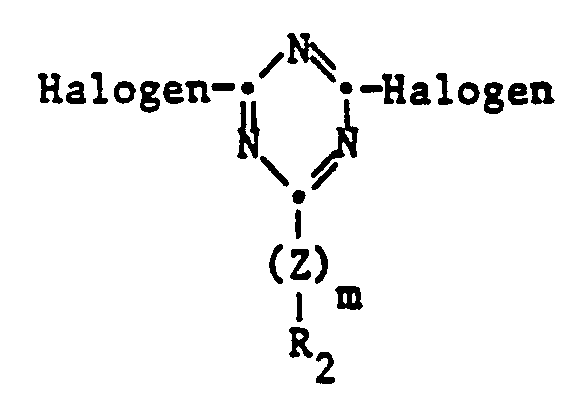
- the invention relates to an improved process for the preparation of polyaminotriazines by polycondensation of dichlorotriazines with secondary diamines which are substituted on the nitrogen by 2,2,6,6-tetramethylpiperidin-4-yl radicals.
- DE-OS-2 636 144 describes compounds of the formula described in which X, Y and Z are -0-, -NH- or -NR 3 -, R, a divalent organic radical and R 2 and R 3 are monovalent radicals and at least one of R 2 or R 3 is a polyalkylpiperidine radical, m is zero or 1, n is a number from 2 to 200 and A and B are end groups.
- Such compounds are excellent light stabilizers, especially for organic polymers, and have found industrial use for stabilizing plastics.
- these polyaminotriazines are prepared by polycondensation of a dichlorotriazine of the formula or a cyanuric acid halide in an inert solvent at a temperature from -10 ° to the boiling point of the solvent in the presence of an organic or inorganic base.
- the reaction is carried out predominantly in boiling toluene, anhydrous NaOH being used as the base.
- Working up is carried out by filtering off the NaCl formed and evaporating the solvent.
- the disadvantage of this process is that the reaction does not proceed completely.
- a second disadvantage is that poorly soluble by-products are formed, which mainly consist of cyclic products. These are not desirable as stabilizers because of their poor solubility and must be separated from the linear polycondensate by filtration. In addition to the loss of yield due to the formation of these by-products, this has the disadvantage that they are very difficult to filter off, since they are obtained in a very fine powdered form and thus Clogged filter pores.
- a third disadvantage of the process is that only products with a relatively low degree of polycondensation n ⁇ 6 are available. In general, a lower n is desirable for use as a stabilizer, but higher molecular weight products would be desirable for specific uses.
- DE-OS-2 933 078 describes very similar polyaminotriazines, which are also prepared by polycondensation in boiling toluene or xylene with the addition of anhydrous NaOH. As a result, only products of very low molecular weight are obtained there in insufficient yield.
- a small excess of diamine is advantageous.
- 0-20 mol%, preferably 2-5 mol%, excess of 111 is used.
- Polycondensation degrees n of 2-20, preferably 4-10, are thereby achieved.
- the process can be carried out with a large number of dichlorotriazines of the formula 11 and diamines of the formula 111.
- Dichlorotriazines of the formula 11, in which Q is the radical -NH-C 6 -C 12 -alkyl, and those diamines of the formula 111 in which R is hexamethylene and R 1 are hydrogen or methyl are particularly preferably used.
- the dichlorotriazines of the formula 11 can be prepared from cyanuric trichloride and a monofunctional compound QH, as described in DE-OS-2 636 144 or in DE-OS-2 933 078.
- the reaction solution obtained in this way can be used for the present process without isolation of the compound II. However, it is preferred to isolate compound 11 before further converting it.
- the diamines of formula 111 can be prepared by hydrogenating amination of triacetonamine, as described in DE-OS-2 611 208.
- hydrocarbons such as. As toluene, xylene, mesitylene, tetralin, decalin or higher alkylbenzenes such as. B. nonylbenzene or dodecylbenzene or mixtures of such alkylbenzenes.
- Suitable inorganic bases are, in particular, those which have a high solubility in water, such as.
- Sodium or potassium hydroxide is preferably used.
- the temperatures used are higher than previously described, preferably one works at 170-190 ° C. It works in a closed vessel, so that the vapor pressure of the solvent and water prevailing at the reaction temperature creates an overpressure. This is about 0.5-1 Mpa, so that no thick-walled autoclaves are necessary to carry out the reaction.
- the reaction is preferably carried out in a pressure-proof stirred kettle. The stirring should not be intensive, a turbulent mixture of the two phases should be avoided. We recommend using an anchor stirrer with a stirring speed of 40 - 45 revolutions per minute.
- the entire solution of the diamine of the formula III and the base is preferably initially introduced, the solution is heated to the desired reaction temperature and the solution of the triazine component of the formula 11 is slowly metered in with stirring. However, you can also submit all reaction components and heat the mixture to the desired reaction temperature. In this case the degree of polycondensation n becomes somewhat lower.
- the aqueous phase is separated off, the organic phase is dried, preferably by azeotropic distillation, and the solution is filtered.
- the filtration can be accelerated by adding a filter aid, e.g. B. a diatomaceous earth or a fuller earth.
- a filter aid e.g. B. a diatomaceous earth or a fuller earth.
- the polyaminotriazine remains as a solid at room temperature, which can be comminuted as required.
- reaction mixture After a holding time of a further 5 h at 185'C, the reaction mixture is cooled to 80-90 ° C and washed once with water. After the aqueous phase has been separated off, the xylene phase is dewatered and filtered after the addition of filter aid Celite 545. The clear filtrate is evaporated in a rotary evaporator at 200 ° C., the melt that remains is cooled and the solid resin obtained is comminuted.
Landscapes
- Chemical & Material Sciences (AREA)
- Organic Chemistry (AREA)
- Health & Medical Sciences (AREA)
- Chemical Kinetics & Catalysis (AREA)
- Medicinal Chemistry (AREA)
- Polymers & Plastics (AREA)
- Macromolecular Compounds Obtained By Forming Nitrogen-Containing Linkages In General (AREA)
- Compositions Of Macromolecular Compounds (AREA)
- Polymers With Sulfur, Phosphorus Or Metals In The Main Chain (AREA)
Description
- Gegenstand der Erfindung ist ein verbessertes Verfahren zur Herstellung von Polyaminotriazinen durch Polykondensation von Dichlortriazinen mit sekundären Diaminen, welche am Stickstoff durch 2,2,6,6-Tetramethylpiperidin-4-ylreste substituiert sind.
- In der DE-OS-2 636 144 werden Verbindungen der Formel

- In den Ausführungsbeispielen wird die Reaktion vorwiegend in siedendem Toluol ausgeführt, wobei als Base wasserfreies NaOH verwendet wird. Die Aufarbeitung geschieht durch Abfiltrieren des gebildeten NaCI und Verdampfen des Lösungsmittels. Dieses Verfahren hat den Nachteil, dass die Reaktion nicht vollständig abläuft. Ein zweiter Nachteil ist, dass sich schwerlösliche Nebenprodukte bilden, die vor allem aus cyclischen Produkten bestehen. Diese sind wegen ihrer Schwerlöslichkeit als Stabilisatoren nicht erwünscht und müssen vom linearen Polykondensat durch Filtration abgetrennt werden..Neben dem Ausbeuteverlust durch Bildung dieser Nebenprodukte hat dies den Nachteil, dass diese sich sehr schlecht abfiltrieren lassen, da sie in sehr feinpulvriger Form anfallen und dadurch die Filterporen verstopfen. Nach Abtrennung dieser unerwünschten Nebenprodukte beträgt daher die Ausbeute beim angegebenen Verfahren nur etwa 70 - 75 %. Ein dritter Nachteil des Verfahrens ist, dass nur Produkte mit einem relativ niedrigen Polykondensationsgrad n < 6 erhältlich sind. Im allgemeinen ist für die Verwendung als Stabilisator ein niedriges n erwünscht, für spezielle Verwendungszwecke wären aber Produkte mit höherem Molekulargewicht erwünscht.
- Will man die Ausbeute des bekannten Verfahrens durch die Verwendung eines Überschusses an NaOH verbessern, so tritt verstärkte Bildung der unlöslichen Nebenprodukte sowie eine teilweise Hydrolyse des Halogens am Triazinring ein, so dass keine wesentliche Erhöhung der Ausbeute an linearen Polyaminotriazinen erzielt wird.
- In der DE-OS-2 933 078 werden ganz ähnliche Polyaminotriazine beschrieben, die ebenfalls durch Polykondensation in siedendem Toluol oder Xylol unter Zusatz von wasserfreiem NaOH hergestellt werden. Hierdurch werden auch dort nur Produkte von sehr niedrigem Molekulargewicht in ungenügender Ausbeute erhalten.
- Es wurde nunmehr gefunden, dass man die geschilderten Nachteile weitgehend vermeiden kann, wenn man bei höheren Temperaturen arbeitet und die Reaktion zweiphasig ausführt. Hierzu verwendet man ein mit Wasser nicht mischbares Lösungsmittel, in dem die Ausgangsmaterialien und die Endprodukte löslich sind, und verwendet als Base eine konzentrierte wässrige Lösung einer anorganischen Base. Damit man bei höheren Temperaturen arbeiten kann, führt man die Reaktion unter Druck aus.
- Gegenstand der Erfindung ist somit ein Verfahren zur Herstellung von Verbindungen der Formel 1


- R C2 - C12-Alkylen, das durch -O- oder -NR2- unterbrochen sein kann, worin R2 Wasserstoff, C, - C12-Alkyl, C3 - C12-Alkoxyalkyl, Cycloalkyl oder ein Rest Pip ist, oder R einen zweiwertigen cycloaliphatischen C6-C15-Rest bedeutet,
- Q ein Rest der Formel -OR3, -NHR4 oder -NR4R5 ist, worin R3 C, - C12-Alkyl C3 - C12-Alkoxyalkyl, Cyclohexyl, Benzyl, Phenyl, Tolyl oder Pip bedeutet, R4 C, - C12-Alkyl, C3 - C12-Alkoxyalkyl, C4 - C12-Dialkylaminoalkyl, Allyl, Benzyl, Cyclohexyl, Phenyl, Tolyl oder ein Rest Pip bedeutet und R5 C, - C12 -Alkyl C3 - C12-Alkoxyalkyl oder Cyclohexyl bedeutet, oder R4 und R5 zusammen mit dem N-Atom, an das sie gebunden sind, einen 5- oder 6- gliedrigen heterocyclischen Ring bilden, durch Polykondensation von 1 Mol eines Dichlortriazins der Formel II

- Pip-NH-R-NH-Pip (111) in einem inerten organischen Lösungsmittel unter Zusatz einer Base, dadurch gekennzeichnet, dass man als Base eine wässrige Lösung einer anorganischen Base verwendet, dass man ein mit Wasser nicht mischbares Lösungsmittel verwendet, und die Umsetzung bei 140 - 220° C unter Druck ausführt.
- R kann ein unverzweigter oder verzweigter Alkylenrest sein, der durch -0- oder -NR2- unterbrochen sein kann. Beispiele hierfür sind 1,2-Ethylen, Tri-, Tetra-, Penta-, Hexa-, Octa-, Deca- oder Dodecamethylen, 2,2,4-oder 2,4,4-Trimethylhexamethylen, 4-Oxaheptylen-1,7, 4,7-Dioxadecylen-1,10, 4-(Methylaza)-heptylen-1,7, 4-(Cyclohexyl-aza)-heptylen-1,7 oder 4-(1,2,2,6.6-Pentamethyl-4-piperidyl-aza)-heptylen-1,7. R kann auch ein cycloaliphatischer Rest sein wie z. B. 1,3- oder 1,4-Cyclohexylen, Dicyclohexylmethan-4,4'-diyl oder ein Rest der Formel

- R' als Alkenyl kann z. B. Allyl, Methallyl oder Dimethylallyl sein.
- R1 als Phenylalkyl kann z. B. Benzyl, Phenylethyl oder Phenylpropyl sein.
- R1 als Alkanoyl kann z. B. Acetyl, Propionyl, Butyroyl, Hexanoyl oder Octanoyl sein. R1 als Alkenoyl kann z. B. Acryloyl, Methacryloyl oder Crotonoyl sein.
- Dieses Verfahren ermöglicht einen praktisch quantitativen Umsatz und eine hohe Ausbeute an linearen Polytriazinen der Formel 1. Dabei wird nicht nur der Umsatz erhöht sondern auch die Bildung der schwerlöslichen Nebenprodukte zurückgedrängt und diese fallen in einer leichter filtrierbaren, gröberen Form an. Dadurch wird ein schwerwiegendes technisches Problem gelöst.
- Weiterhin ist es aufgrund des hohen Umsatzes möglich, Produkte mit höherem Polykondensationsgrad n zu erhalten. Wenn man jedoch Produkte mit niedrigem n anstrebt, so kann man dies auch beim vorliegenden Verfahren in bekannter Weise durch Verwendung eines entsprechenden Überschusses des Diamines 111 erreichen.
- Ein kleiner Überschuss an Diamin ist vorteilhaft. Je nach dem gewünschten Molekulargewicht bzw. Polykondensationsgrad verwendet man 0 - 20 Mol-%, vorzugsweise 2 - 5 Mol-%, Überschuss an 111. Man erreicht dadurch Polykondensationsgrade n von 2 - 20, vorzugsweise 4 - 10.
- Überraschend ist, dass bei Verwendung einer wässrigen Base, die Bildung von schwerlöslichen Nebenprodukten zurückgedrängt und die Ausbeute erhöht wird. Es war gemäss Literatur (E. M. Smolin, L. Rapoport, s-Triazines and Derivatives, Interscience Publ., 1959 Seite 53) zu erwarten, dass unter wässrigalkalischen Bedingungen, im Temperaturbereich über 140° C, die CI-Atome verseift werden.
- Das Verfahren ist mit einer Vielzahl von Dichlortriazinen der Formel 11 und Diaminen der Formel 111 durchführbar. Bevorzugt verwendet man jedoch solche Dichlortriazine der Formel 11, worin Q ein Rest -NHR ist und solche Diamine der Formel III, worin R ein unverzweigter oder verzweigter C4 - C12-Alkylenrest ist und Rl Wasserstoff oder Methyl ist. Besonders bevorzugt verwendet man Dichlortriazine der Formel 11, worin Q der Rest -NH-C6-C12-Alkyl ist, und solche Diamine der Formel 111, worin R Hexamethylen und R1 Wasserstoff oder Methyl sind.
- Die Dichlortriazine der Formel 11 können aus Cyanursäuretrichlorid und einer monofunktionellen Verbindung QH hergestellt werden, wie dies in der DE-OS-2 636 144 oder in der DE-OS-2 933 078 beschrieben ist. Die hierbei erhaltene Reaktionslösung kann - ohne Isolierung der Verbindung II - für das vorliegende Verfahren verwendet werden. Vorzugsweise isoliert man jedoch die Verbindung 11, ehe man sie weiter umsetzt.
- Die Diamine der Formel 111 können durch hydrierende Aminierung von Triacetonamin hergestellt werden, wie dies in der DE-OS-2 611 208 beschrieben ist.
- Als organisches Lösungsmittel kommen vor allem Kohlenwasserstoffe in Frage wie z. B. Toluol, Xylol, Mesitylen, Tetralin, Dekalin oder höhere Alkylbenzole wie z. B. Nonylbenzol oder Dodecylbenzol oder Gemische solcher Alkylbenzole.
- Als anorganische Basen kommen vor allem solche in Frage, die eine hohe Löslichkeit in Wasser besitzen wie z. B. Alkalihydroxide oder Alkalicarbonate. Bevorzugt verwendet man Natrium- oder Kaliumhydroxid. Man arbeitet vorzugsweise mit 30 - 60 %-iger, insbesondere etwa 50 %-igen, Lösungen der anorganischen Base.
- Die verwendeten Temperaturen sind höher als bisher beschrieben wurde, vorzugsweise arbeitet man bei 170 - 190° C. Man arbeitet dabei in einem geschlossenen Gefäss, so dass durch den bei der Reaktionstemperatur herrschenden Dampfdruck des Lösungsmittels und des Wassers ein Überdruck entsteht. Dieser beträgt etwa 0,5 - 1 Mpa, so dass für die Durchführung der Reaktion keine dickwandigen Autoklaven nötig sind. Vorzugsweise führt man die Reaktion in einem drucksicheren Rührkessel aus. Das Rühren soll nicht intensiv sein, eine turbulente Mischung der beiden Phasen ist zu vermeiden. Zu empfehlen ist die Verwendung eines Ankerrührers mit einer Rührgeschwindigkeit von 40 - 45 Umdrehungen pro Minute.
- Vorzugsweise legt man die gesamte Lösung des Diamines der Formel 111 und der Base vor, erwärmt die Lösung auf die gewünschte Reaktionstemperatur und dosiert die Lösung der Triazinkomponente der Formel 11 langsam unter Rühren zu. Man kann jedoch auch alle Reaktionskomponenten vorlegen und das Gemisch auf die gewünschte Reaktionstemperatur heizen. In diesem Fall wird der Polykondensationsgrad n etwas niedriger.
- Am Ende der Reaktion trennt man die wässrige Phase ab, trocknet die organische Phase - vorzugsweise durch azeotrope Destillation - und filtriert die Lösung. Die Filtration kann beschleunigt werden durch Zusatz eines Filtrierhilfsmittels, z. B. eines Kieselgurs oder einer Fullererde. Nach Verdampfen des Lösungsmittels hinterbleibt das Polyaminotriazin als bei Raumtemperatur feste Masse, die je nach Bedarf zerkleinert werden kann. Die folgenden Ausführungsbeispiele illustrieren das Verfahren näher, ohne es auf die Verfahrensweise der Beispiele zu begrenzen.
-

- In einem 2,5 I-Niederdruckautoklaven werden bei 180°C 413,7 g N,N'-Bis-(2,2,6,6-tetramethyl-4-piperidyl)-hexamethylendiamin (1,05 Mol) und 175 g 50 %-ige wässrige Natronlauge vorgelegt. Dazu wird unter Rühren eine Lösung von 276,5 g tert.-Octylamino-dichlor-s-triazin (1,0 Mol) (hergestellt aus Cyanurchlorid und tert.Octylamin) in 450 g Xylol wie folgt zudosiert: 85 % der Xylollösung innerhalb 3 h, dann die restlichen 15 % in 4 h. Es stellt sich ein maximaler Druck von 0,7 Mpa ein. Nach einer Haltezeit von weiteren 5 h bei 185'C wird das Reaktionsgemisch auf 80 - 90°C gekühlt und einmal mit Wasser gewaschen. Nach Abtrennen der wässrigen Phase wird die Xylol-Phase azeotrop entwässert und nach Zugabe von Filtrierhilfsmittel Celite 545 filtriert. Das klare Filtrat wird im Rotationsverdampfer bei 200°C eingedampft, die zurückgebliebene Schmelze abgekühlt und das erhaltene Festharz zerkleinert.
- Ausbeute: 573,5 g - 93 % d. Th.
- Durch Gelpermeationsanalyse und Dampfdruckosmometrie wurde ein mittleres Molekulargewicht Mn (Zahlenmittel) von 4900 gefunden. Dies entspricht einem Polykondensationsgrad n = 7,5.
- Analog Beispiel 1 werden 403,8 g (1,025 Mol) N.N'-Bis-(2,2,6,6-tetramethyl-4-piperidyl)-hexamethylendiamin mit den in Beispiel 1 angegebenen Mengen an Dichlortriazin und Natronlauge umgesetzt. Unter denselben Bedingungen der Aufarbeitung erhält man 583 g - 96 % d. Th. Mn = 6300, entsprechend n = 9,9.
- Es wird wie im Beispiel 1 verfahren, jedoch werden 423,6 g (1,075 Mol) des Diamines verwendet.
- Ausbeute: 5914 g - 94,3 % d.Th.
M n = 3660, entsprechend n - 5,5.
Claims (8)


in einem inerten organischen Lösungsmittel unter Zusatz einer Base, dadurch gekennzeichnet, dass man als Base eine wässrige Lösung einer anorganischen Base verwendet, dass man ein mit Wasser nicht mischbares Lösungsmittel verwendet und die Umsetzung bei 140 - 220° C unter Druck ausführt.
Applications Claiming Priority (2)
| Application Number | Priority Date | Filing Date | Title |
|---|---|---|---|
| CH273282 | 1982-05-04 | ||
| CH2732/82 | 1982-05-04 |
Publications (3)
| Publication Number | Publication Date |
|---|---|
| EP0093693A2 EP0093693A2 (de) | 1983-11-09 |
| EP0093693A3 EP0093693A3 (en) | 1984-09-12 |
| EP0093693B1 true EP0093693B1 (de) | 1989-05-31 |
Family
ID=4240359
Family Applications (1)
| Application Number | Title | Priority Date | Filing Date |
|---|---|---|---|
| EP83810175A Expired EP0093693B1 (de) | 1982-05-04 | 1983-04-28 | Verfahren zur Herstellung von Polyaminotriazinen |
Country Status (5)
| Country | Link |
|---|---|
| US (1) | US4492791A (de) |
| EP (1) | EP0093693B1 (de) |
| JP (1) | JPS58201820A (de) |
| CA (1) | CA1219870A (de) |
| DE (1) | DE3379950D1 (de) |
Families Citing this family (38)
| Publication number | Priority date | Publication date | Assignee | Title |
|---|---|---|---|---|
| IT1227334B (it) * | 1988-08-04 | 1991-04-08 | Ciba Geigy Spa | Composti piperidin triazinici atti all'impiego come stabilizzanti per materiali organici. |
| CS270846B1 (en) * | 1988-08-29 | 1990-08-14 | Vass Frantisek | New polyaminotriazines and method of their preparation |
| IT1229501B (it) * | 1989-01-24 | 1991-09-03 | Himont Italia | Procedimento per la preparazione di polimeri triazinici. |
| TW302377B (de) * | 1993-12-24 | 1997-04-11 | Sumitomo Chemical Co | |
| JPH0940773A (ja) * | 1995-07-31 | 1997-02-10 | Sumitomo Chem Co Ltd | ポリアミノトリアジン組成物 |
| US5908598A (en) * | 1995-08-14 | 1999-06-01 | Minnesota Mining And Manufacturing Company | Fibrous webs having enhanced electret properties |
| EP0782994B1 (de) * | 1995-12-04 | 2003-02-05 | Ciba SC Holding AG | 2,2,6,6-Tetramethyl-4-piperidylgruppen enthaltende Blockoligomere als Stabilisatoren für organische Materialien |
| US6046304A (en) * | 1995-12-04 | 2000-04-04 | Ciba Specialty Chemicals Corporation | Block oligomers containing 2,2,6,6-tetramethyl-4-piperidyl groups as stabilizers for organic materials |
| TW438849B (en) * | 1996-04-01 | 2001-06-07 | Ciba Sc Holding Ag | Polytriazine derivatives containing polyalkyl-piperidinyloxy or polyalkylpiperidinylamino groups |
| KR980009326A (ko) * | 1996-07-09 | 1998-04-30 | 고사이 아키오 | 폴리아미노트리아진, 이의 제조방법 및 이의 용도 |
| DE69719004T2 (de) | 1996-12-24 | 2003-07-24 | Ciba Speciality Chemicals Holding Inc., Basel | Triazinverbindungen die 2,2,6,6-Tetramethyl-4-piperidingruppen enthalten als Stabilisatoren für organische Materialen |
| DE19820157B4 (de) | 1997-05-13 | 2010-04-08 | Clariant Produkte (Deutschland) Gmbh | Neue Verbindungen auf Basis von Polyalkyl-1-oxa-diazaspirodecan-Verbindungen |
| CN1094938C (zh) | 1997-05-27 | 2002-11-27 | 西巴特殊化学品控股有限公司 | 作为有机材料稳定剂的含有1-烃氧基-2,2,6,6-四甲基-4-哌啶基的嵌段低聚物 |
| TW428008B (en) | 1997-05-27 | 2001-04-01 | Ciba Sc Holding Ag | Block oligomers containing 1-hydrocarbyloxy-2,2,6,6-tetramethy1-4-piperidyl groups as stabilizers for organic materials |
| TW509683B (en) * | 1997-05-27 | 2002-11-11 | Ciba Sc Holding Ag | Triazine derivatives containing 2,2,6,6-tetramethyl-4-piperidyl groups |
| JP4332817B2 (ja) | 1997-05-27 | 2009-09-16 | チバ スペシャルティ ケミカルズ ホールディング インコーポレーテッド | 有機材料のための安定剤としての1−ヒドロカルビルオキシ−2,2,6,6−テトラメチル−4−ピペリジル基を含むブロックオリゴマー |
| TW589341B (en) | 1997-05-27 | 2004-06-01 | Ciba Sc Holding Ag | Block oligomers containing 1-hydrocarbyloxy-2,2,6,6-tetramethyl-4-piperidyl groups as stabilizers for organic materials |
| TW491872B (en) * | 1997-05-27 | 2002-06-21 | Ciba Sc Holding Ag | Block oligomers containing l-hydrocarbyloxy-2,2,6,6-tetramethyl-4- piperidyl groups as stabilizers for lower polyolefin |
| IT1292040B1 (it) * | 1997-05-30 | 1999-01-25 | Ciba Spec Chem Spa | Processo per la preparazione di prodotti politriazinici contenenti gruppi 2,2,6,6-tetrametil-4-piperidile |
| ITMI20080747A1 (it) | 2008-04-24 | 2009-10-25 | 3V Sigma Spa | Miscele di ammine stericamente impedite per la stabilizzazione di polimeri |
| EP2130854B1 (de) | 2008-05-09 | 2016-10-19 | MCA Technologies GMBH | Polytriazinylverbindungen als Flammschutzadditiv und Lichtschutzmittel |
| IT1399477B1 (it) | 2010-03-15 | 2013-04-19 | 3V Sigma Spa | Miscele di ammine stericamente impedite per la stabilizzazione di polimeri |
| KR20130130686A (ko) | 2010-07-12 | 2013-12-02 | 바스프 에스이 | 안정화 아크릴로니트릴/스티렌/부타디엔 성형 조성물 |
| US9701813B2 (en) | 2010-07-12 | 2017-07-11 | Ineos Styrolution Europe Gmbh | Weathering-stabilized acrylonitrile copolymer molding compositions |
| ITMI20110802A1 (it) | 2011-05-10 | 2012-11-11 | 3V Sigma Spa | Miscele di ammine stericamente impedite per la stabilizzazione di polimeri |
| WO2013000747A1 (de) | 2011-06-27 | 2013-01-03 | Basf Se | Witterungsbeständige polyesterformmassen mit styrolcopolymeren |
| US8889769B2 (en) | 2011-06-27 | 2014-11-18 | Basf Se | Weathering-resistant polyester molding compositions with styrene copolymers |
| WO2013045205A1 (de) | 2011-09-29 | 2013-04-04 | Styrolution GmbH | Stabilisierte formmassen aus polyamid und asa-copolymeren |
| CN103890071A (zh) | 2011-09-29 | 2014-06-25 | 苯领股份公司 | 稳定聚碳酸酯/丙烯腈/苯乙烯/丙烯酸酯成型化合物 |
| KR20140097156A (ko) | 2011-10-13 | 2014-08-06 | 스티롤루션 게엠베하 | 안정화 폴리아미드/abs 성형물 |
| IT201700073726A1 (it) | 2017-06-30 | 2018-12-30 | 3V Sigma Spa | Ammine impedite polimeriche |
| EP3649196B1 (de) | 2017-07-05 | 2021-06-09 | INEOS Styrolution Group GmbH | Thermoplastische harzzusammensetzung mit verbesserter uv-beständigkeit |
| CN111051428B (zh) | 2017-07-05 | 2023-04-07 | 英力士苯领集团股份公司 | 抗紫外线能力增强的热塑性苯乙烯共聚物树脂组合物 |
| KR102514316B1 (ko) | 2017-07-05 | 2023-03-24 | 이네오스 스티롤루션 그룹 게엠베하 | 개선된 uv 내성을 갖는 열가소성 수지 조성물 |
| IT201700078234A1 (it) | 2017-07-11 | 2019-01-11 | 3V Sigma Spa | Ammine impedite |
| CN108623566A (zh) * | 2018-04-28 | 2018-10-09 | 宿迁联盛科技有限公司 | 一种受阻胺光稳定剂944的合成工艺 |
| EP4045592B1 (de) | 2019-10-15 | 2023-07-05 | INEOS Styrolution Group GmbH | Styrolcopolymerzusammensetzung mit pmma und verbesserter witterungsbeständigkeit |
| CN111892745B (zh) * | 2020-08-07 | 2022-05-20 | 宿迁市振兴化工有限公司 | 一种光稳定剂及合成工艺 |
Family Cites Families (6)
| Publication number | Priority date | Publication date | Assignee | Title |
|---|---|---|---|---|
| IT1052501B (it) * | 1975-12-04 | 1981-07-20 | Chimosa Chimica Organica Spa | Composti politriazinici utilizzabili per la stabilizzazione di polimeri sintetici e procedimento per la loro preparazione |
| DE2933078A1 (de) * | 1979-08-16 | 1981-03-26 | Hoechst Ag, 65929 Frankfurt | Neue triazinderivate, ihre herstellung und ihre verwendung als stabilisatoren fuer synthetische polymere |
| DE3027223A1 (de) * | 1980-07-18 | 1982-02-11 | Hoechst Ag, 6000 Frankfurt | Triazinylaminotriazine, ihre herstellung und verwendung |
| DE3045839A1 (de) * | 1980-12-05 | 1982-07-08 | Hoechst Ag, 6000 Frankfurt | Poly-bis-triazinylamine, verfahren zu ihrer herstellung, ihre verwendung zum stabilisieren von synthetischen polymeren und die so stabilisierten polymeren |
| DE3117964A1 (de) * | 1981-05-07 | 1982-11-25 | Hoechst Ag, 6000 Frankfurt | Poly-bis-triazinylaminotriazinylamine, ihre herstellung, ihre verwendung als lichtschutzmittel fuer kunststoffe und mit ihnen stabilisierte kunststoffe |
| US4400505A (en) * | 1981-07-20 | 1983-08-23 | American Cyanamid Company | Triazinyl-piperidines as light stabilizers for polymers |
-
1983
- 1983-04-25 US US06/488,246 patent/US4492791A/en not_active Expired - Lifetime
- 1983-04-28 EP EP83810175A patent/EP0093693B1/de not_active Expired
- 1983-04-28 DE DE8383810175T patent/DE3379950D1/de not_active Expired
- 1983-05-02 JP JP58078104A patent/JPS58201820A/ja active Granted
- 1983-05-02 CA CA000427197A patent/CA1219870A/en not_active Expired
Non-Patent Citations (1)
| Title |
|---|
| S_Traizines and Derivatives, E.M. Smolin, L. Rapoport, Intersciences Publ., 1959, p. 53 * |
Also Published As
| Publication number | Publication date |
|---|---|
| US4492791A (en) | 1985-01-08 |
| JPS58201820A (ja) | 1983-11-24 |
| EP0093693A3 (en) | 1984-09-12 |
| EP0093693A2 (de) | 1983-11-09 |
| JPH044329B2 (de) | 1992-01-28 |
| DE3379950D1 (en) | 1989-07-06 |
| CA1219870A (en) | 1987-03-31 |
Similar Documents
| Publication | Publication Date | Title |
|---|---|---|
| EP0093693B1 (de) | Verfahren zur Herstellung von Polyaminotriazinen | |
| DE1954090C3 (de) | Verfahren zur Herstellung von 2-(β-Amino-propionamido)-alkansulfonsäuresalzen und ihre Verwendung als anionische Aufbaukomponente bei der Herstellung von Polyurethandispersionen | |
| DE2040983C3 (de) | Acrylsäurederivate des 2,2,6,6-Tetramethylpiperidins und Verfahren zu deren Herstellung | |
| EP2890702B1 (de) | Verfahren zur herstellung von phosphorhaltigen flammschutzmitteln | |
| EP0002005A1 (de) | Verfahren zur Endgruppenblockierung polymerer Polyalkylpiperidinderivate, die so erhaltenen endgruppenblockierten Produkte und ihre Verwendung als Lichtschutzmittel für Kunststoffe | |
| DE102006032167B4 (de) | Verfahren zur Herstellung von Triallylisocyanurat (TAIC) | |
| DE2708468B2 (de) | Verfahren zur Herstellung von N, N'-Alkylen-bis-tetrabromophthalimiden | |
| DE1520328C3 (de) | Verfahren zur Herstellung von Poly-p-benzamiden | |
| DE69219345T2 (de) | Verfahren zur erhöhung des molekulargewichts von polyamid mit organophosphon-säure oder -ester katalysatoren in gegenwart von tio2 das aluminiumoxid enthält | |
| DE10060776A1 (de) | Katalysatorsystem auf Basis von Silasesequioxan-Metallkomplexe aufweisenden Polymerverbindungen | |
| DE1695543B2 (de) | Verfahren zur Herstellung von Polyisocyanaten | |
| DE1143027B (de) | Verfahren zur Herstellung von polymeren Phosphor-Stickstoff-Verbindungen | |
| DE1595894A1 (de) | Neue 1,5-Diazabicyclo[3,3,0]octan-2,6-dione | |
| EP0682018B1 (de) | Verfahren zur Herstellung von 2-Amino-4,6-dichloro-pyrimidin | |
| DE69405686T2 (de) | Herstellung von Pivaloylhydrazid | |
| DE2308560C3 (de) | Verfahren zur Herstellung N-substituierter 2,4-Bis-alkenyloxy-6-amino-s-triazine | |
| DE2351122C2 (de) | Verwendung von alicyclischen Aminoverbindungen oder deren Additionssalzen mit organischen oder Mineralsäuren als kationische oberflächenaktive Mittel | |
| AT256093B (de) | Verfahren zur Herstellung von neuen Dicarbonsäurederivaten und ihren Salzen | |
| DE2327367C3 (de) | N,N'-Bis-(2,4-dialkenyloxy-s-triazin-6-yl)-diamine | |
| DE1695543C3 (de) | Verfahren zur Herstellung von Polyisocyanaten | |
| DE1493425C3 (de) | N-(23-Dihydroxypropyl)-NJ4-bis-(2-cyanäthyl)-amin und Verfahren zu seiner Herstellung | |
| DE1045653B (de) | Verfahren zur Herstellung von Kunststoffen | |
| DE1247311B (de) | Verfahren zur Herstellung von Phosphonitrilverbindungen | |
| DE1269355B (de) | Verfahren zur Herstellung von Poly-N-vinylimiden | |
| DE2328320A1 (de) | 2,4-dienoxy-6-aminoalkyl(-en)-striazine |
Legal Events
| Date | Code | Title | Description |
|---|---|---|---|
| PUAI | Public reference made under article 153(3) epc to a published international application that has entered the european phase |
Free format text: ORIGINAL CODE: 0009012 |
|
| 17P | Request for examination filed |
Effective date: 19830502 |
|
| AK | Designated contracting states |
Designated state(s): CH DE FR GB IT LI |
|
| PUAL | Search report despatched |
Free format text: ORIGINAL CODE: 0009013 |
|
| AK | Designated contracting states |
Designated state(s): CH DE FR GB IT LI |
|
| 17Q | First examination report despatched |
Effective date: 19880120 |
|
| GRAA | (expected) grant |
Free format text: ORIGINAL CODE: 0009210 |
|
| AK | Designated contracting states |
Kind code of ref document: B1 Designated state(s): CH DE FR GB IT LI |
|
| ITF | It: translation for a ep patent filed | ||
| REF | Corresponds to: |
Ref document number: 3379950 Country of ref document: DE Date of ref document: 19890706 |
|
| GBT | Gb: translation of ep patent filed (gb section 77(6)(a)/1977) | ||
| ET | Fr: translation filed | ||
| PLBE | No opposition filed within time limit |
Free format text: ORIGINAL CODE: 0009261 |
|
| STAA | Information on the status of an ep patent application or granted ep patent |
Free format text: STATUS: NO OPPOSITION FILED WITHIN TIME LIMIT |
|
| 26N | No opposition filed | ||
| ITTA | It: last paid annual fee | ||
| REG | Reference to a national code |
Ref country code: CH Ref legal event code: PUE Owner name: CIBA-GEIGY AG TRANSFER- CIBA SC HOLDING AG |
|
| REG | Reference to a national code |
Ref country code: GB Ref legal event code: 732E |
|
| REG | Reference to a national code |
Ref country code: CH Ref legal event code: PFA Free format text: CIBA SC HOLDING AG TRANSFER- CIBA SPECIALTY CHEMICALS HOLDING INC. |
|
| REG | Reference to a national code |
Ref country code: FR Ref legal event code: TP |
|
| REG | Reference to a national code |
Ref country code: GB Ref legal event code: IF02 |
|
| PGFP | Annual fee paid to national office [announced via postgrant information from national office to epo] |
Ref country code: FR Payment date: 20020320 Year of fee payment: 20 Ref country code: CH Payment date: 20020320 Year of fee payment: 20 |
|
| PGFP | Annual fee paid to national office [announced via postgrant information from national office to epo] |
Ref country code: DE Payment date: 20020325 Year of fee payment: 20 |
|
| PGFP | Annual fee paid to national office [announced via postgrant information from national office to epo] |
Ref country code: GB Payment date: 20020327 Year of fee payment: 20 |
|
| PG25 | Lapsed in a contracting state [announced via postgrant information from national office to epo] |
Ref country code: LI Free format text: LAPSE BECAUSE OF EXPIRATION OF PROTECTION Effective date: 20030427 Ref country code: GB Free format text: LAPSE BECAUSE OF EXPIRATION OF PROTECTION Effective date: 20030427 Ref country code: CH Free format text: LAPSE BECAUSE OF EXPIRATION OF PROTECTION Effective date: 20030427 |
|
| REG | Reference to a national code |
Ref country code: GB Ref legal event code: PE20 |
|
| REG | Reference to a national code |
Ref country code: CH Ref legal event code: PL |