EP0094887A2 - Expressionsvektoren für das antigene Tollwutprotein und ihre Verwendung zur Herstellung von Impfstoffen - Google Patents
Expressionsvektoren für das antigene Tollwutprotein und ihre Verwendung zur Herstellung von Impfstoffen Download PDFInfo
- Publication number
- EP0094887A2 EP0094887A2 EP83400974A EP83400974A EP0094887A2 EP 0094887 A2 EP0094887 A2 EP 0094887A2 EP 83400974 A EP83400974 A EP 83400974A EP 83400974 A EP83400974 A EP 83400974A EP 0094887 A2 EP0094887 A2 EP 0094887A2
- Authority
- EP
- European Patent Office
- Prior art keywords
- vector according
- promoter
- rabies
- dna sequence
- protein
- Prior art date
- Legal status (The legal status is an assumption and is not a legal conclusion. Google has not performed a legal analysis and makes no representation as to the accuracy of the status listed.)
- Granted
Links
- 108090000623 proteins and genes Proteins 0.000 title claims abstract description 90
- 102000004169 proteins and genes Human genes 0.000 title claims abstract description 55
- 206010037742 Rabies Diseases 0.000 title claims abstract description 39
- 230000000890 antigenic effect Effects 0.000 title claims abstract description 20
- 238000002360 preparation method Methods 0.000 title claims description 13
- 229960005486 vaccine Drugs 0.000 title claims description 9
- 239000013604 expression vector Substances 0.000 title claims 2
- 239000013598 vector Substances 0.000 claims abstract description 46
- 108091028043 Nucleic acid sequence Proteins 0.000 claims abstract description 24
- 241000894006 Bacteria Species 0.000 claims abstract description 18
- 239000013612 plasmid Substances 0.000 claims description 59
- 108020004414 DNA Proteins 0.000 claims description 28
- 241000588724 Escherichia coli Species 0.000 claims description 16
- 238000000034 method Methods 0.000 claims description 16
- 230000001580 bacterial effect Effects 0.000 claims description 13
- 238000010367 cloning Methods 0.000 claims description 13
- 241001524679 Escherichia virus M13 Species 0.000 claims description 10
- 230000014621 translational initiation Effects 0.000 claims description 10
- 241000701959 Escherichia virus Lambda Species 0.000 claims description 9
- 230000010076 replication Effects 0.000 claims description 9
- 238000013518 transcription Methods 0.000 claims description 9
- 238000011282 treatment Methods 0.000 claims description 9
- AVKUERGKIZMTKX-NJBDSQKTSA-N ampicillin Chemical compound C1([C@@H](N)C(=O)N[C@H]2[C@H]3SC([C@@H](N3C2=O)C(O)=O)(C)C)=CC=CC=C1 AVKUERGKIZMTKX-NJBDSQKTSA-N 0.000 claims description 5
- 229960000723 ampicillin Drugs 0.000 claims description 4
- 230000002265 prevention Effects 0.000 claims description 4
- 235000014469 Bacillus subtilis Nutrition 0.000 claims description 3
- 230000008569 process Effects 0.000 claims description 3
- 101150064691 Q gene Proteins 0.000 claims description 2
- 239000003242 anti bacterial agent Substances 0.000 claims description 2
- 239000007864 aqueous solution Substances 0.000 claims description 2
- 230000003115 biocidal effect Effects 0.000 claims description 2
- 230000005030 transcription termination Effects 0.000 claims description 2
- 108700026220 vif Genes Proteins 0.000 claims description 2
- 239000013599 cloning vector Substances 0.000 claims 1
- 241001515965 unidentified phage Species 0.000 claims 1
- 239000012634 fragment Substances 0.000 description 53
- 108090000288 Glycoproteins Proteins 0.000 description 25
- 102000003886 Glycoproteins Human genes 0.000 description 24
- 230000015572 biosynthetic process Effects 0.000 description 14
- 238000003780 insertion Methods 0.000 description 14
- 230000037431 insertion Effects 0.000 description 14
- 238000003786 synthesis reaction Methods 0.000 description 14
- 150000001413 amino acids Chemical class 0.000 description 13
- 108091008146 restriction endonucleases Proteins 0.000 description 11
- LFQSCWFLJHTTHZ-UHFFFAOYSA-N Ethanol Chemical compound CCO LFQSCWFLJHTTHZ-UHFFFAOYSA-N 0.000 description 10
- 102000003960 Ligases Human genes 0.000 description 9
- 108090000364 Ligases Proteins 0.000 description 9
- 210000004027 cell Anatomy 0.000 description 8
- 101150066555 lacZ gene Proteins 0.000 description 8
- 230000035897 transcription Effects 0.000 description 8
- 238000010586 diagram Methods 0.000 description 7
- 230000000694 effects Effects 0.000 description 7
- 239000000203 mixture Substances 0.000 description 7
- 102000004190 Enzymes Human genes 0.000 description 6
- 108090000790 Enzymes Proteins 0.000 description 6
- 102000005936 beta-Galactosidase Human genes 0.000 description 6
- 108010005774 beta-Galactosidase Proteins 0.000 description 6
- 229940088598 enzyme Drugs 0.000 description 6
- 230000002209 hydrophobic effect Effects 0.000 description 6
- BPHPUYQFMNQIOC-NXRLNHOXSA-N isopropyl beta-D-thiogalactopyranoside Chemical compound CC(C)S[C@@H]1O[C@H](CO)[C@H](O)[C@H](O)[C@H]1O BPHPUYQFMNQIOC-NXRLNHOXSA-N 0.000 description 6
- 238000013519 translation Methods 0.000 description 6
- 101710163270 Nuclease Proteins 0.000 description 5
- 241000700605 Viruses Species 0.000 description 5
- 238000010276 construction Methods 0.000 description 5
- 238000002474 experimental method Methods 0.000 description 5
- 239000000047 product Substances 0.000 description 5
- 238000011160 research Methods 0.000 description 5
- HEDRZPFGACZZDS-UHFFFAOYSA-N Chloroform Chemical compound ClC(Cl)Cl HEDRZPFGACZZDS-UHFFFAOYSA-N 0.000 description 4
- FFEARJCKVFRZRR-BYPYZUCNSA-N L-methionine Chemical compound CSCC[C@H](N)C(O)=O FFEARJCKVFRZRR-BYPYZUCNSA-N 0.000 description 4
- 230000009471 action Effects 0.000 description 4
- 239000000427 antigen Substances 0.000 description 4
- 102000036639 antigens Human genes 0.000 description 4
- 108091007433 antigens Proteins 0.000 description 4
- 238000010348 incorporation Methods 0.000 description 4
- 238000011534 incubation Methods 0.000 description 4
- 230000000977 initiatory effect Effects 0.000 description 4
- 239000002609 medium Substances 0.000 description 4
- 229960004452 methionine Drugs 0.000 description 4
- 238000000746 purification Methods 0.000 description 4
- PFNFFQXMRSDOHW-UHFFFAOYSA-N spermine Chemical compound NCCCNCCCCNCCCN PFNFFQXMRSDOHW-UHFFFAOYSA-N 0.000 description 4
- 238000012360 testing method Methods 0.000 description 4
- 238000011144 upstream manufacturing Methods 0.000 description 4
- 241000711798 Rabies lyssavirus Species 0.000 description 3
- 108091081024 Start codon Proteins 0.000 description 3
- 239000002253 acid Substances 0.000 description 3
- 150000007513 acids Chemical class 0.000 description 3
- 244000309466 calf Species 0.000 description 3
- 229910052799 carbon Inorganic materials 0.000 description 3
- 238000001514 detection method Methods 0.000 description 3
- 230000029087 digestion Effects 0.000 description 3
- 230000013595 glycosylation Effects 0.000 description 3
- 238000006206 glycosylation reaction Methods 0.000 description 3
- 230000006698 induction Effects 0.000 description 3
- 108090000765 processed proteins & peptides Proteins 0.000 description 3
- OKTJSMMVPCPJKN-UHFFFAOYSA-N Carbon Chemical compound [C] OKTJSMMVPCPJKN-UHFFFAOYSA-N 0.000 description 2
- 102000012410 DNA Ligases Human genes 0.000 description 2
- 108010061982 DNA Ligases Proteins 0.000 description 2
- KCXVZYZYPLLWCC-UHFFFAOYSA-N EDTA Chemical compound OC(=O)CN(CC(O)=O)CCN(CC(O)=O)CC(O)=O KCXVZYZYPLLWCC-UHFFFAOYSA-N 0.000 description 2
- FFEARJCKVFRZRR-UHFFFAOYSA-N L-Methionine Natural products CSCCC(N)C(O)=O FFEARJCKVFRZRR-UHFFFAOYSA-N 0.000 description 2
- 229930195722 L-methionine Natural products 0.000 description 2
- 241000124008 Mammalia Species 0.000 description 2
- 241001465754 Metazoa Species 0.000 description 2
- ISWSIDIOOBJBQZ-UHFFFAOYSA-N Phenol Chemical compound OC1=CC=CC=C1 ISWSIDIOOBJBQZ-UHFFFAOYSA-N 0.000 description 2
- 102000004160 Phosphoric Monoester Hydrolases Human genes 0.000 description 2
- 108090000608 Phosphoric Monoester Hydrolases Proteins 0.000 description 2
- FAPWRFPIFSIZLT-UHFFFAOYSA-M Sodium chloride Chemical compound [Na+].[Cl-] FAPWRFPIFSIZLT-UHFFFAOYSA-M 0.000 description 2
- 239000007983 Tris buffer Substances 0.000 description 2
- 238000004458 analytical method Methods 0.000 description 2
- 230000008901 benefit Effects 0.000 description 2
- 239000000872 buffer Substances 0.000 description 2
- 101150057411 cII gene Proteins 0.000 description 2
- AIYUHDOJVYHVIT-UHFFFAOYSA-M caesium chloride Chemical compound [Cl-].[Cs+] AIYUHDOJVYHVIT-UHFFFAOYSA-M 0.000 description 2
- 238000005119 centrifugation Methods 0.000 description 2
- 101150054175 cro gene Proteins 0.000 description 2
- 238000012217 deletion Methods 0.000 description 2
- 230000037430 deletion Effects 0.000 description 2
- 201000010099 disease Diseases 0.000 description 2
- 208000037265 diseases, disorders, signs and symptoms Diseases 0.000 description 2
- 238000001962 electrophoresis Methods 0.000 description 2
- 101150012763 endA gene Proteins 0.000 description 2
- 238000000855 fermentation Methods 0.000 description 2
- 230000004151 fermentation Effects 0.000 description 2
- 230000004927 fusion Effects 0.000 description 2
- 239000001963 growth medium Substances 0.000 description 2
- 230000002621 immunoprecipitating effect Effects 0.000 description 2
- 230000003308 immunostimulating effect Effects 0.000 description 2
- 230000000968 intestinal effect Effects 0.000 description 2
- 238000002955 isolation Methods 0.000 description 2
- 125000001449 isopropyl group Chemical group [H]C([H])([H])C([H])(*)C([H])([H])[H] 0.000 description 2
- 239000006166 lysate Substances 0.000 description 2
- 238000004519 manufacturing process Methods 0.000 description 2
- 229930182817 methionine Natural products 0.000 description 2
- 238000013508 migration Methods 0.000 description 2
- 230000005012 migration Effects 0.000 description 2
- 230000003287 optical effect Effects 0.000 description 2
- 238000001556 precipitation Methods 0.000 description 2
- 229960003127 rabies vaccine Drugs 0.000 description 2
- 230000002285 radioactive effect Effects 0.000 description 2
- 238000012163 sequencing technique Methods 0.000 description 2
- 229940074404 sodium succinate Drugs 0.000 description 2
- ZDQYSKICYIVCPN-UHFFFAOYSA-L sodium succinate (anhydrous) Chemical compound [Na+].[Na+].[O-]C(=O)CCC([O-])=O ZDQYSKICYIVCPN-UHFFFAOYSA-L 0.000 description 2
- ATHGHQPFGPMSJY-UHFFFAOYSA-N spermidine Chemical compound NCCCCNCCCN ATHGHQPFGPMSJY-UHFFFAOYSA-N 0.000 description 2
- 229940063675 spermine Drugs 0.000 description 2
- 101150089521 sttA gene Proteins 0.000 description 2
- 239000000758 substrate Substances 0.000 description 2
- 108091005703 transmembrane proteins Proteins 0.000 description 2
- 102000035160 transmembrane proteins Human genes 0.000 description 2
- LENZDBCJOHFCAS-UHFFFAOYSA-N tris Chemical compound OCC(N)(CO)CO LENZDBCJOHFCAS-UHFFFAOYSA-N 0.000 description 2
- 238000002255 vaccination Methods 0.000 description 2
- 108091032973 (ribonucleotides)n+m Proteins 0.000 description 1
- QKNYBSVHEMOAJP-UHFFFAOYSA-N 2-amino-2-(hydroxymethyl)propane-1,3-diol;hydron;chloride Chemical compound Cl.OCC(N)(CO)CO QKNYBSVHEMOAJP-UHFFFAOYSA-N 0.000 description 1
- FFEARJCKVFRZRR-FOEKBKJKSA-N 3654-96-4 Chemical compound C[35S]CC[C@H](N)C(O)=O FFEARJCKVFRZRR-FOEKBKJKSA-N 0.000 description 1
- 108091035699 6S / SsrS RNA Proteins 0.000 description 1
- HRPVXLWXLXDGHG-UHFFFAOYSA-N Acrylamide Chemical compound NC(=O)C=C HRPVXLWXLXDGHG-UHFFFAOYSA-N 0.000 description 1
- 229920000936 Agarose Polymers 0.000 description 1
- 102000002260 Alkaline Phosphatase Human genes 0.000 description 1
- 108020004774 Alkaline Phosphatase Proteins 0.000 description 1
- 241000271566 Aves Species 0.000 description 1
- 244000063299 Bacillus subtilis Species 0.000 description 1
- 241000283690 Bos taurus Species 0.000 description 1
- 101000583086 Bunodosoma granuliferum Delta-actitoxin-Bgr2b Proteins 0.000 description 1
- 101100148606 Caenorhabditis elegans pst-1 gene Proteins 0.000 description 1
- 241000283707 Capra Species 0.000 description 1
- 108020004705 Codon Proteins 0.000 description 1
- 108010073254 Colicins Proteins 0.000 description 1
- 102000053602 DNA Human genes 0.000 description 1
- 102000016928 DNA-directed DNA polymerase Human genes 0.000 description 1
- 108010014303 DNA-directed DNA polymerase Proteins 0.000 description 1
- 102000004163 DNA-directed RNA polymerases Human genes 0.000 description 1
- 108090000626 DNA-directed RNA polymerases Proteins 0.000 description 1
- 241001131785 Escherichia coli HB101 Species 0.000 description 1
- 241001415961 Gaviidae Species 0.000 description 1
- 241000282412 Homo Species 0.000 description 1
- 108060003951 Immunoglobulin Proteins 0.000 description 1
- 102100024319 Intestinal-type alkaline phosphatase Human genes 0.000 description 1
- 101710184243 Intestinal-type alkaline phosphatase Proteins 0.000 description 1
- GUBGYTABKSRVRQ-QKKXKWKRSA-N Lactose Natural products OC[C@H]1O[C@@H](O[C@H]2[C@H](O)[C@@H](O)C(O)O[C@@H]2CO)[C@H](O)[C@@H](O)[C@H]1O GUBGYTABKSRVRQ-QKKXKWKRSA-N 0.000 description 1
- 102000004895 Lipoproteins Human genes 0.000 description 1
- 108090001030 Lipoproteins Proteins 0.000 description 1
- 102000016943 Muramidase Human genes 0.000 description 1
- 108010014251 Muramidase Proteins 0.000 description 1
- 241000699666 Mus <mouse, genus> Species 0.000 description 1
- 241000699670 Mus sp. Species 0.000 description 1
- 108010062010 N-Acetylmuramoyl-L-alanine Amidase Proteins 0.000 description 1
- 239000000020 Nitrocellulose Substances 0.000 description 1
- 101710141454 Nucleoprotein Proteins 0.000 description 1
- 108091034117 Oligonucleotide Proteins 0.000 description 1
- 229910019142 PO4 Inorganic materials 0.000 description 1
- 241000724206 Phage M13mp7 Species 0.000 description 1
- 108010076504 Protein Sorting Signals Proteins 0.000 description 1
- 101710191674 Protein cII Proteins 0.000 description 1
- 101900083372 Rabies virus Glycoprotein Proteins 0.000 description 1
- 240000004808 Saccharomyces cerevisiae Species 0.000 description 1
- 229920005654 Sephadex Polymers 0.000 description 1
- 239000012507 Sephadex™ Substances 0.000 description 1
- 229920002684 Sepharose Polymers 0.000 description 1
- VMHLLURERBWHNL-UHFFFAOYSA-M Sodium acetate Chemical compound [Na+].CC([O-])=O VMHLLURERBWHNL-UHFFFAOYSA-M 0.000 description 1
- 239000004098 Tetracycline Substances 0.000 description 1
- 239000007984 Tris EDTA buffer Substances 0.000 description 1
- 238000001042 affinity chromatography Methods 0.000 description 1
- 238000000376 autoradiography Methods 0.000 description 1
- VEZXCJBBBCKRPI-UHFFFAOYSA-N beta-propiolactone Chemical compound O=C1CCO1 VEZXCJBBBCKRPI-UHFFFAOYSA-N 0.000 description 1
- 230000033228 biological regulation Effects 0.000 description 1
- 210000004556 brain Anatomy 0.000 description 1
- 210000004900 c-terminal fragment Anatomy 0.000 description 1
- 230000001925 catabolic effect Effects 0.000 description 1
- 238000006243 chemical reaction Methods 0.000 description 1
- 229960005091 chloramphenicol Drugs 0.000 description 1
- WIIZWVCIJKGZOK-RKDXNWHRSA-N chloramphenicol Chemical compound ClC(Cl)C(=O)N[C@H](CO)[C@H](O)C1=CC=C([N+]([O-])=O)C=C1 WIIZWVCIJKGZOK-RKDXNWHRSA-N 0.000 description 1
- 238000003776 cleavage reaction Methods 0.000 description 1
- 238000012411 cloning technique Methods 0.000 description 1
- 230000003521 colicinogenic effect Effects 0.000 description 1
- 230000000295 complement effect Effects 0.000 description 1
- 150000001875 compounds Chemical class 0.000 description 1
- 238000010924 continuous production Methods 0.000 description 1
- 238000011161 development Methods 0.000 description 1
- 210000001840 diploid cell Anatomy 0.000 description 1
- 210000002257 embryonic structure Anatomy 0.000 description 1
- 201000002491 encephalomyelitis Diseases 0.000 description 1
- 238000006911 enzymatic reaction Methods 0.000 description 1
- 238000001976 enzyme digestion Methods 0.000 description 1
- ZMMJGEGLRURXTF-UHFFFAOYSA-N ethidium bromide Chemical compound [Br-].C12=CC(N)=CC=C2C2=CC=C(N)C=C2[N+](CC)=C1C1=CC=CC=C1 ZMMJGEGLRURXTF-UHFFFAOYSA-N 0.000 description 1
- 229960005542 ethidium bromide Drugs 0.000 description 1
- 239000013613 expression plasmid Substances 0.000 description 1
- 238000011990 functional testing Methods 0.000 description 1
- 238000001502 gel electrophoresis Methods 0.000 description 1
- 230000035931 haemagglutination Effects 0.000 description 1
- 230000003067 hemagglutinative effect Effects 0.000 description 1
- 230000001900 immune effect Effects 0.000 description 1
- 102000018358 immunoglobulin Human genes 0.000 description 1
- 239000012133 immunoprecipitate Substances 0.000 description 1
- 238000001114 immunoprecipitation Methods 0.000 description 1
- 238000000338 in vitro Methods 0.000 description 1
- 229940031551 inactivated vaccine Drugs 0.000 description 1
- 230000002779 inactivation Effects 0.000 description 1
- 230000001939 inductive effect Effects 0.000 description 1
- 230000003993 interaction Effects 0.000 description 1
- 239000008101 lactose Substances 0.000 description 1
- 231100000518 lethal Toxicity 0.000 description 1
- 230000001665 lethal effect Effects 0.000 description 1
- 230000028744 lysogeny Effects 0.000 description 1
- 229960000274 lysozyme Drugs 0.000 description 1
- 239000004325 lysozyme Substances 0.000 description 1
- 235000010335 lysozyme Nutrition 0.000 description 1
- 239000003550 marker Substances 0.000 description 1
- 239000011159 matrix material Substances 0.000 description 1
- 239000012528 membrane Substances 0.000 description 1
- 108020004999 messenger RNA Proteins 0.000 description 1
- 238000012544 monitoring process Methods 0.000 description 1
- 230000035772 mutation Effects 0.000 description 1
- 210000004898 n-terminal fragment Anatomy 0.000 description 1
- 230000000926 neurological effect Effects 0.000 description 1
- 230000003472 neutralizing effect Effects 0.000 description 1
- 229920001220 nitrocellulos Polymers 0.000 description 1
- 108010083127 phage repressor proteins Proteins 0.000 description 1
- 235000021317 phosphate Nutrition 0.000 description 1
- 150000003013 phosphoric acid derivatives Chemical class 0.000 description 1
- 229920002401 polyacrylamide Polymers 0.000 description 1
- 230000001376 precipitating effect Effects 0.000 description 1
- 239000002243 precursor Substances 0.000 description 1
- 230000002028 premature Effects 0.000 description 1
- 230000003449 preventive effect Effects 0.000 description 1
- 229960000380 propiolactone Drugs 0.000 description 1
- 230000001105 regulatory effect Effects 0.000 description 1
- 230000008439 repair process Effects 0.000 description 1
- 210000003705 ribosome Anatomy 0.000 description 1
- 239000007320 rich medium Substances 0.000 description 1
- 230000007017 scission Effects 0.000 description 1
- 239000011780 sodium chloride Substances 0.000 description 1
- 229940063673 spermidine Drugs 0.000 description 1
- 239000006228 supernatant Substances 0.000 description 1
- 229960002180 tetracycline Drugs 0.000 description 1
- 229930101283 tetracycline Natural products 0.000 description 1
- 235000019364 tetracycline Nutrition 0.000 description 1
- 150000003522 tetracyclines Chemical class 0.000 description 1
- 230000001988 toxicity Effects 0.000 description 1
- 231100000419 toxicity Toxicity 0.000 description 1
- 230000009466 transformation Effects 0.000 description 1
- 230000035899 viability Effects 0.000 description 1
- 210000002845 virion Anatomy 0.000 description 1
- 238000005406 washing Methods 0.000 description 1
- 206010048282 zoonosis Diseases 0.000 description 1
- DGVVWUTYPXICAM-UHFFFAOYSA-N β‐Mercaptoethanol Chemical compound OCCS DGVVWUTYPXICAM-UHFFFAOYSA-N 0.000 description 1
Images






Classifications
-
- C—CHEMISTRY; METALLURGY
- C07—ORGANIC CHEMISTRY
- C07K—PEPTIDES
- C07K14/00—Peptides having more than 20 amino acids; Gastrins; Somatostatins; Melanotropins; Derivatives thereof
- C07K14/005—Peptides having more than 20 amino acids; Gastrins; Somatostatins; Melanotropins; Derivatives thereof from viruses
-
- C—CHEMISTRY; METALLURGY
- C12—BIOCHEMISTRY; BEER; SPIRITS; WINE; VINEGAR; MICROBIOLOGY; ENZYMOLOGY; MUTATION OR GENETIC ENGINEERING
- C12N—MICROORGANISMS OR ENZYMES; COMPOSITIONS THEREOF; PROPAGATING, PRESERVING, OR MAINTAINING MICROORGANISMS; MUTATION OR GENETIC ENGINEERING; CULTURE MEDIA
- C12N15/00—Mutation or genetic engineering; DNA or RNA concerning genetic engineering, vectors, e.g. plasmids, or their isolation, preparation or purification; Use of hosts therefor
- C12N15/09—Recombinant DNA-technology
- C12N15/63—Introduction of foreign genetic material using vectors; Vectors; Use of hosts therefor; Regulation of expression
- C12N15/70—Vectors or expression systems specially adapted for E. coli
-
- C—CHEMISTRY; METALLURGY
- C12—BIOCHEMISTRY; BEER; SPIRITS; WINE; VINEGAR; MICROBIOLOGY; ENZYMOLOGY; MUTATION OR GENETIC ENGINEERING
- C12N—MICROORGANISMS OR ENZYMES; COMPOSITIONS THEREOF; PROPAGATING, PRESERVING, OR MAINTAINING MICROORGANISMS; MUTATION OR GENETIC ENGINEERING; CULTURE MEDIA
- C12N15/00—Mutation or genetic engineering; DNA or RNA concerning genetic engineering, vectors, e.g. plasmids, or their isolation, preparation or purification; Use of hosts therefor
- C12N15/09—Recombinant DNA-technology
- C12N15/63—Introduction of foreign genetic material using vectors; Vectors; Use of hosts therefor; Regulation of expression
- C12N15/70—Vectors or expression systems specially adapted for E. coli
- C12N15/73—Expression systems using phage (lambda) regulatory sequences
-
- A—HUMAN NECESSITIES
- A61—MEDICAL OR VETERINARY SCIENCE; HYGIENE
- A61K—PREPARATIONS FOR MEDICAL, DENTAL OR TOILETRY PURPOSES
- A61K39/00—Medicinal preparations containing antigens or antibodies
-
- C—CHEMISTRY; METALLURGY
- C12—BIOCHEMISTRY; BEER; SPIRITS; WINE; VINEGAR; MICROBIOLOGY; ENZYMOLOGY; MUTATION OR GENETIC ENGINEERING
- C12N—MICROORGANISMS OR ENZYMES; COMPOSITIONS THEREOF; PROPAGATING, PRESERVING, OR MAINTAINING MICROORGANISMS; MUTATION OR GENETIC ENGINEERING; CULTURE MEDIA
- C12N2760/00—MICROORGANISMS OR ENZYMES; COMPOSITIONS THEREOF; PROPAGATING, PRESERVING, OR MAINTAINING MICROORGANISMS; MUTATION OR GENETIC ENGINEERING; CULTURE MEDIA ssRNA viruses negative-sense
- C12N2760/00011—Details
- C12N2760/20011—Rhabdoviridae
- C12N2760/20111—Lyssavirus, e.g. rabies virus
- C12N2760/20122—New viral proteins or individual genes, new structural or functional aspects of known viral proteins or genes
Definitions
- the present invention relates more particularly to the development of a rabies vaccine.
- Rabies is a disease caused by the rabies virus, which occurs as a very serious encephalomyelitis which can be fatal within a few days.
- Rabies is a zoonosis. All warm-blooded animals, whether mammals or birds, are receptive.
- the main vector is generally constituted by biting mammals, whether domestic or wild.
- the main victims of rabies are mainly humans and cattle.
- rabies is still a very important disease in some countries in S outh America, Africa and Asia.
- the essential weapon in the fight against rabies is prevention through vaccination.
- the vaccines currently used are essentially constituted by inactivated viruses.
- viruses must be cultured on media such as brains of newborn mice, on bird embryos or on animal renal cells or on human diploid cells, after which they are completely inactivated by the action of ⁇ -propiolactone for example.
- the aim of the present invention is the preparation of a vaccinating antigenic protein free from the risk of neuroparalytic accident and which, in addition, can be prepared in industrial meetings such that it ensures a very low cost of the vaccine.
- the rabies virus is a rhabdovirus.
- This rhabdovirus consists of a helical nucleocapsid containing an RNA included in a lipoprotein envelope having the shape of a shell.
- This virion comprises five proteins which are coded by the genome: G (glycoprotein), N (nucleocapsid), Ml and M2 (matrix) and L (large, transcriptase). Since the membrane covering comes from the host, the only effective antigen present on the surface is the glycoprotein. This transmembrane protein has a molecular weight of approximately 75,000 daltons and has hemagglutinating activity.
- the purified glycoprotein is approximately six times more active in hemagglutination tests than the intact virus.
- glycoprotein of the rabies virus is glycosylated, although the role of this glycosylation is unknown.
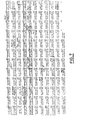
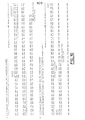
- the DNA sequence (I) is as follows
- DNA (1) is only intended to simplify the names; such a sequence is said to correspond to all or part of the efficient DNA sequence coding for the rabies antigenic protein when it is either identical to all or part of this efficient DNA sequence or when it leads when it is expressed to a protein with identical or very similar immunological properties to that of the effective antigenic protein encoded by the relevant sequence of effective DNA.
- DNA fragments of larger size may be advantageous or necessary to use efficient DNA fragments of larger size, in particular it may be advantageous to use DNA fragments of the rabies gene comprised between the HindIII restriction sites. - Hindlll, HindIII - AosII, HindIII - NruI.
- Other fragments can also be used, in particular fragments between the HindIII - PstI and Stul - Pstl sites, although in this case the corresponding DNA sequence codes in its part. terminal for the transmembrane peptide whose hydrophobic nature can constitute a drawback in obtaining a water-soluble protein.
- the vectors according to the present invention can, of course, comprise other DNA fragments intended in particular to ensure the attachment of the corresponding ribosomes or else to give a configuration to the vector facilitating the expression of the antigenic protein of rabies.
- the vectors according to the present invention can comprise all or part of the DNA of a phage, in particular of the phage M13, the promoter of the vector according to the present invention being moreover preferably the promoter of the lactose operon. .
- phage lambda it is of course possible to use another type of promoter such as for example a controlled promoter such as that of the bacteriophage lambda and also to introduce a powerful translation initiation site such as that of the cII gene. phage lambda.
- the presence of an origin of replication for a plasmid is essential to allow replication of the vector in the corresponding bacterial cells, in particular in the case of E. coli, the origin of replication of the plasmid pBR322 will preferably be used.
- the plasmid pBR322 has, in fact, the advantage of giving a large number of copies and thus of increasing the quantity of plasmids producing the desired protein,
- ⁇ P L - P L a powerful promoter responsible for the early transcription of X.
- promoters of bacteriophage ⁇ in particular the right promoter, P R , or the second right promoter, p ' R.
- the DNA cloning region (I) is located downstream of the P L promoter and of the cll translation initiation region. among the unique insertion sites which preferably appear in this zone, mention may be made of EcoRI, SaII, AccI, BamHI, HindIII, HindII and PstI corresponding to restriction enzymes commonly used. The insertion of genes coding for a particular protein into such sites placed 40-50 bp downstream of the translation initiation codon leads to the synthesis of foreign proteins fused to the N-terminus of bacterial amino acids derived from cII .
- the vector in question also comprises, preferably, a transcription termination function coded for example by the N gene of X denoted ⁇ N.
- a transcription termination function coded for example by the N gene of X denoted ⁇ N.
- the transcription from P L se continues beyond most of the stop signals. This eliminates the problems posed by a premature halt in transcription which can occur when the cloned foreign genes present such stop signals.
- expression from P L has been shown to be improved in an N + environment.
- P ' R is responsible for the transcription of late genes of bacteriophage ⁇ .
- the expression of the late gene is upregulated by the product of the Q gene which has been shown to act as an antiterminator of transcription analogous to the N protein.
- Q acts at the termination for the 6S RNA of A constitutive initiated at P ' R thus allowing the transcription of the region of the distal late supper.
- the expression of Q is itself controlled by P R which, like P L , is regulated by the repressor cI. This cascade of interactions can be reconstructed on an expression plasmid and used in the same way for P L.
- thermo-inducible, expression system In order to avoid the problems of toxicity and instability of the host-vector system in the event of continuous production of large quantities of a foreign protein, it is necessary to provide for monitoring the activity of the promoter by adding all or part of an inducible, in particular thermo-inducible, expression system.
- the temperature control of the synthesis of the foreign protein is carried out at the level of the transcription by means of a heat-sensitive repressor coded in the host bacteria, for example cI857, which represses the activity of P L at 28 °. C but which is inactivated at 42 ° C.
- the repressor acts on the operator O L which is adjacent to the promoter P L.
- the vector in question may also contain an antibiotic resistance gene, for example ampicillin in the case of pBR322, but other resistance genes may be used, resistance to tetracycline (Tet r ) or to chloramphenicol (cm r ).
- an antibiotic resistance gene for example ampicillin in the case of pBR322, but other resistance genes may be used, resistance to tetracycline (Tet r ) or to chloramphenicol (cm r ).
- the incorporation of a resistance gene makes it possible to increase the stability of the plasmid by imposing a selection pressure during fermentation, and in addition facilitates the isolation of the transformants.
- the fragment a is complemented by the expression of the C-terminal fragment w encoded in the host, this leads to ⁇ -galactosidase activity in the cells.
- This ⁇ -galactosidase activity produces blue colonies in the presence of a chromophoric substrate, 5-bromo-4-chloro-3-indolyl- ⁇ -D-galactosidase.
- the promoter P L is inactivated, the fragment a is not synthesized and the colonies remain white.
- the promoter P L is activated, the fragment a is synthesized and the colonies turn blue.
- DNA (I) into the cloning sites located in this detection system prevents the synthesis of ⁇ -galactosidase and therefore leads to white colonies both at 28 ° C and at 42 ° C.
- the present invention also relates to the bacterial strains transformed by said plasmids or transfected by said phages.
- the present invention also relates to the application of these vectors to the preparation of antigenic glycoproteins of rabies by culture on an appropriate culture medium of bacterial strains incorporating a vector according to the invention.
- the culture conditions and the media to be used do not constitute characteristics of the process according to the present invention and can be determined for each strain by a person skilled in the art.
- the present invention also relates to the proteins obtained by implementing the process according to the present invention and in particular the proteins comprising the following amino acid sequence:
- the present invention also relates to vaccines useful both for the prevention and for the treatment of rabies comprising, as active principle immunostimulating at least one protein as described above.
- the antigenic protein according to the present invention is in the form of an aqueous solution when it is to be used as a vaccine.
- amino acid sequence of this protein can be synthesized chemically using known methods.
- this sequence be incorporated into a more important protein, it is not necessarily essential that the amino acids on either side correspond to those of the complete gene of the antigenic protein of rabies, it it is possible to provide other amino acids which improve the effectiveness of the compound, in particular which modify its solubility. It is even possible to provide for certain elements different from the amino acids to be grafted onto the chain.
- the vectors according to the present invention were prepared by insertion into the appropriate sites of phages M13 of different restriction sequences obtained from the plasmid pRG described in A. Anilionis et al., Nature 294, 275-278 (1981).
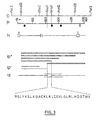
- This figure also shows the different restriction sites present on this gene as well as the amino acids encoded by this sequence.
- the framed protein sequences correspond to the hydrophobic regions of the glycoprotein, while the surrounded regions correspond to the glycosylation sites of the glycoprotein.
- this glycoprotein is translated in the form of a precursor comprising a hydrophobic signal peptide of 19 amino acids, this peptide is noted from 1 to - 19 in FIG. 1.
- the protein contains two other hydrophobic regions, the transmembrane peptide located at the end of the sequence, and a small central hydrophobic zone whose function is currently unknown.
- vectors are constructed from phage M13 in which the HindIII site is in phase 1, 2 or 3 depending on the vectors in order to be certain of the correct expression of the protein.
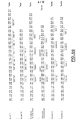
- FIG. 2 brings together the different restriction sequences which have been cloned, with at the bottom the mention of the phage M13 used as well as the corresponding restriction site of the phage.
- the E. coli JM103 strain is infected with the phages containing said insertions and cultured on appropriate media, in particular supplemented with sodium succinate as carbon source so as to limit the catabolic repression of the lac promoter.
- This promoter is induced by the addition of IPTG, the synthesis of the protein being followed by incorporation of labeled methionine.
- the bacteria are then collected and the glycoprotein is extracted therefrom and purified by incubation with an antiserum corresponding to the purified protein.
- the antigen-antibody complexes are recovered by affinity chromatography, washed and then dissociated so as to isolate the antigenic protein.
- the molecular weights of the proteins thus obtained after purification are consistent with what was expected, that is to say a hybrid protein comprising a ⁇ -galactosidase part and a part of the rabies antigenic glycoprotein corresponding to the cloned sequence.
- the diagram of the antigenic glycoprotein of rabies was then represented by P, the figures representing the number of amino acids counted from the origin of the mature glycoprotein.
- glycosylation sites have also been represented by black or white circles.
- restriction fragments denoted iP and represented in double lines correspond to restriction fragments which, after cloning, gave rise to an immunoprecipitating protein, on the other hand the restriction fragments denoted iP and represented by a single trait did not give rise to immunoprecipitation.
- the protein encoded by this covering fragment located between Stul and NruI has been represented under iZ.
- Mini-DNA preparations of plasmids 'or phage M13 are carried out as described by Ish-Horowitz (reference 1.)' with the only difference that the DNA is precipitated a second time with ethanol before d 'to be used.
- phosphates from the 5 'ends are removed using either a bacterial alkaline phosphatase or a calf intestinal phosphatase for 30 minutes at 37 ° C in the restriction enzyme buffer.
- the repair of the cohesive ends using the Klenow polymerase is carried out at 25 ° C for 15 minutes in a mixture of 50 m Mol. Tris HCl, pH 7.8, 5 mMol. MgCl 2 , 10 mMol. of ⁇ -mercaptoethanol, 0.4 mMol. of dNTPs with the enzyme and 10 to 200 ⁇ g / ml of DNA.
- the nuclease S 1 (Miles) is used at 2 u / ⁇ g of DNA at 25 ° C for 30 minutes in 0.3 Mol medium. N aCl, 0.03 Mol. NaOAc, pH 4.8, 0.003 Mol. ZnCl 2 .
- B al31 is used according to the method of Panayotatos et al .. (reference 2 ) ,. Ligations are performed at 15 ° C (except when indicated differently) for 4 to 24 hours using DNA ligase T 4 (Boehringer Mannheim) with 100 mMol. NaCl, 66 mMol. of Tris HC1, pH 7.5, 10 mMol. of MgCl 2 , 0.5 mMol. spermidine, 0.2 mMol. of EDTA, 2 mMol. of DTT, 1 mMol. ATP, 0.1 mg / ml BSA and 5 to 50 xg / ml DNA.
- ligase For ligation of cohesive ends, about 30 units / ml of ligase are used. For the ligation of blunt ends, about 100 units / ml of ligase are used.
- DNA samples are extracted with a phenol / chloroform mixture and then precipitated with ethanol.
- E. coli or yeast tRNA is used as a trainer.
- Molecular adapters Cold Research, Bethesda Research Laboratories, New En g land Biolabs
- Molecular adapters are prehybridized and used in molar excess 10 to 50 times for blunt ends of DNA using the buffer conditions described above with 100 units / ml of ligase T 4 at 4 ° C for 15 hours.
- the adapters which have not reacted are eliminated directly after ligation by precipitation with spermine tetrachlorhydrate (Hoopes et al. - (reference 3 ) ,.
- the ligation mixture is first extracted with a phenol / chloroform mixture and then precipitated with ethanol before specific cleavage with the appropriate restriction enzymes and then precipitation with spermine tetrachlorhydrate.
- the competent bacterial cells are prepared and then transformed with the plasmids or transfected with the DNA of M13 according to the methods described by Dagert and Ehrlich (reference 4).
- the phage M13mp7 is marketed by the company BRL.
- M13mp701 is obtained from M13mp7, by replacing the PstI - EcoRI fragment on the right (CTG CAG ... GAA TTC) with the sequence: CTG CAG CAA TTC.
- the construction principle is described in the following diagram
- the protocols for the use of enzymes are those indicated in the instructions from the suppliers.
- the HindIII linker is a synthetic oligonucleotide of sequence p CCAAGCTIGG 3 ' (Collaborative Research, Inc., Waltham, Mass 02154, USA).
- the sequence of the recombinant phage M13tg118 obtained was checked.
- the double stranded DNA of phages M13tg118 and mp701 was purified according to the method of Ish-Horowicz D. and Burke JF (Nucl. Acids Res. 9, - 2989 - 2998, (1981)), cut with the appropriate restriction enzymes and dephosphorylated with calf intestinal alkaline phosphatase (Sigma).
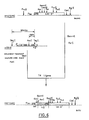
- FIG. 4 represents the various phages Mi3 in question as well as the phages mp7 and mp701 which were used to develop them.
- the plasmid pRG included in the strain of E. coli HB101, was purified according to the clear lysate method of Ish-Horowicz. 500 ⁇ g of plasma DNA was cut by the restriction enzymes HindIII and PstI. The digest was placed on a "low temperature" agarose (BRL) gel. After migration, the gel piece containing the 1.6 Kb band was cut out, dissolved at 67 ° C., phenolized and the DNA precipitated with ethanol and applied to a column of 1 ml of Sephadex G-5C (Pharmacia ) balanced with TE (Tris / HCl pH 7.5 10 mM; EDTA 1 mM). The excluded fractions were precipitated with ethanol (2 vol.) And taken up in 100 ⁇ l of TE buffer. 200 ⁇ g of purified DNA were thus obtained.
- the sub-fragments of the rabies glycoprotein gene were ligated into the vectors prepared as indicated above. Ligation was carried out mole to mole, under the conditions recommended by the supplier.
- the clarified supernatant was incubated at 4 ° C for 16 h with rabies anti-glycoprotein antibodies (supplied by the Wistar Institute, USA) then 1 h at 25 ° C with 8 mg of protein A Sepharose (Pharmacia) according to Lathe R. et al., Nature 284, 473-474 (1980). After abundant washing, this protein A was deposited on a 10% acrylamide gel + conventional SDS (Laemmli UK Nature 227, 680-685 (1970)).
- the basic plasmid used is the plasmid pBR322; however, this has the drawback of having a PstI restriction site inside the amp R gene, since a site of the same nature will be used subsequently in the cloning zone as a single restriction site.
- This restriction site PstI should therefore be removed by using a mutant of the plasmid p BR 322, the plasmid pUC8, in which the ampicillin resistance gene does not have a restriction site PstI (this site has been eliminated by mutation in vitro).
- pBR322 is marketed in particular by Bethesda Research Laboratories and pUC8 is described in the article referenced 5.
- the PvuI / PvuII fragment of 1,669 bp of pBR322 is exchanged with the analogous PvuI / PvuII fragment of the plasmid pUC8.
- the plasmids pBR322 and pUC8 are treated successively with PvuI, PvuII, then circularized by section of a ligase.
- the plasmid pTG902 is thus obtained which no longer has a PstI restriction site and which has also lost the NdeI restriction site originally present on pBR322 (not shown in FIG. 5).
- the plasmid pTG902 carries a 50 bp fragment corresponding to the laci 'sequence in which the PvuII site is found.
- the promoter P L and the gene ⁇ N are isolated from the plasmid pKC30 to be inserted into pTG902, the segment taken also contains the operator O L on which the heat-sensitive repressor cI850 will act, as will be described in the tests.
- the method makes it possible to delete the EcoRI and HindIII sites while retaining a unique BamHI site downstream of the N gene so that it can then insert ⁇ cIIrbs.
- the pKC30 plasmid is described in reference 6 .
- pTG902 is cut at its unique EcoRI restriction site and the outgoing 5 ′ ends are eliminated by treatment with nuclease S 1 . After digestion with BamHI, the most important fragment is purified on gel.
- the fragment carrying the P L promoter and the ⁇ N gene is prepared in the same way from pKC30 by successively treating the plasmid with PvuI, the nuclease S 1 and BamHI.
- the fragments, after purification on gel, are subjected to the action of ligase, which leads to EcoRI / PvuI fusion and to the reconstitution of the BamHI site.
- the ligation mixture is used to transform competent host cells, TGE900, at 30 ° C.
- This strain contains the deleted prophage, ⁇ cI857 ⁇ Bam ⁇ HI, which provides the heat-sensitive ⁇ repressor, cI857, which is necessary to block transcription from P L.
- the clones After analysis by restriction enzymes, the clones contain plasmids of correct structure and are then tested for their lack of viability at 42 ° C.
- pTG906 One of the plasmids obtained, pTG906, is treated so as to eliminate the PvuII-SalI segment so as to remove the restriction sites included in this segment and in order to also remove the two extreme restriction sites. To do this, pTG906 is successively treated with SalI, nuclease S 1 , PvuII and ligase.
- the plasmid pTG907 is thus obtained which contains all of the elements mentioned at the start of this step and, moreover, which is Pst Eco Hind Sal Ava Nde PvuII.
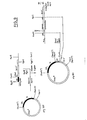
- the synthesis of this plasmid is shown in Figure 1.
- the second important phase of the synthesis consists in inserting the region ⁇ cIIrbs in the form of an AvaI / TaqI fragment in the start of the lacZ 'gene (fragment a of ⁇ -galactosidase) which has been cloned in the phage M13 named M13tg110.
- This strategy allows a simple functional test for rbs, namely the production of the protein lacZ 'and, consequently, to obtain blue plaques in the presence of IPTG and Xgal; this also allows rapid sequencing of the construction using the so-called dideoxy method.
- the cIIrbs region is isolated from a plasmid pOG11 which contains a fragment of XHaeIII / Sau3A which extends from the middle of the cro gene to the middle of the region coding for cII (cro and cII being involved in particular in the regulation of lysogeny of bacteriophage ⁇ ).
- the 186 bp AvaI / Taql fragment containing the cIIrbs region is taken from pOG11 and treated with Klenow polymerase.
- the phage M13tg110 is treated with BamHI and then with Klenow polymerase followed by treatment with intestinal phosphatase from calves.
- the fragments obtained are subjected to the action of ligase T 4 .
- the blue plates are removed and the colonies are selected by enzyme restriction analysis of the mini-preparations and it is then verified by sequencing that the construction obtained is correct.
- the third step of this synthesis consists in transferring the clIrbs / lacZ 'fragment from phage M13tg910 onto the vector plasmid pTG907 prepared previously.
- cIIrbs can be taken in the form of a BglII-BglII fragment and placed in the BamHI site downstream of the P L promoter and of the ⁇ N gene of pTG907.
- the phage M13tg910 is digested with EcoRI then treated with Ba131 and then with Klenow polymerase. The fragments obtained are then subjected to the action of ligase in the presence of non-phosphorylated BglII adapters. The ligation mixture obtained is used to transform competent JM103 cells.
- Clones such as M13tg912 are thus obtained, the structure of which is shown in FIG. 8.
- Bal31 Treatment with Bal31 produced a 101 bp deletion eliminating the EcoRI, BamHI and Downstream sites; as well as the ATG Lake and Shine / Dalgarno Lake sequences.
- the BglII site introduced is located approximately 100 bp upstream of the ATG of cII and 10 bp downstream of p lac .
- this phage is treated with BamHI, the nuclease S 1 then the product of these treatments is ligated in the presence of an EcoRI adapter GGAATTCC, the phage M13tg913 is thus obtained.
- the rest of the synthesis uses an Hgal / Sphl adapter which allows the insertion of a BgIII / HgaI fragment carrying cllrbs and lacZ 'between the BamHI and Sphl sites of pIG907.
- the Bglll / Hgal fragment of M13tg913 is introduced between the BamHI and Sphl sites of pTG907 using a Sphl-Hgal adapter, in order to generate the plasmid pTG161.
- the plasmid obtained, pTG161 can be transferred to a host strain N6437.
- This strain which has both c1857 and the ⁇ fragment of s-galactosidase complementing the fragment a which is encoded by the plasmid after transformation makes it possible to observe the passage of the white color at 28 ° C. on a box containing IPTG + Xgal. blue about 30 minutes later when transferred to 42 ° C.
- the different fragments of the rabies gene are cloned into the plasmid pTG161 in the form of an EcoRI / PstI fragment by digestion of the plasmid and of the corresponding phage M13 with these enzymes.
- the restriction fragments are linked by ligase T 4 .
- the TGE900 strains incorporating the various plasmids are cultured on a rich medium at 28.5 ° C. until an optical density of 0.1 at 660 nm, then again incubated for 5 hours at 35 ° C.
- the cells are recovered by centrifugation and subjected to gel electrophoresis in the presence of SDS.
- the proteins separated on gel are transferred by electrophoresis to nitrocellulose.
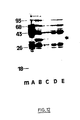
- the antigens capable of binding to the monoclonal antibodies directed against the rabies glycoproteins are detected by successive incubations with the antibodies and a goat antiserum labeled with 1125 directed against a mouse immunoglobulin, as described by Burnette (1981).
- a light band at around 38 kD may indicate a slight reaction of the antibody with the sequence of rabies glycoproteins expressed in this strain.
- the initial fixation of rabies antigens is carried out using a mixture of two monoclonal antibodies 101-1 and 509-6 neutralizing the virus which has been supplied by the Wistar Institute.
- the position of the molecular weight markers is indicated in column m, the molecular weights being indicated in kD.
- the arrow indicates the position of the rabies glycoprotein and there is a strong influence of the incubation temperature on the production of this protein, the optimum temperature being 34.5 ° C.
Landscapes
- Health & Medical Sciences (AREA)
- Genetics & Genomics (AREA)
- Life Sciences & Earth Sciences (AREA)
- Chemical & Material Sciences (AREA)
- Organic Chemistry (AREA)
- Engineering & Computer Science (AREA)
- Wood Science & Technology (AREA)
- Biomedical Technology (AREA)
- Biotechnology (AREA)
- General Engineering & Computer Science (AREA)
- Zoology (AREA)
- Bioinformatics & Cheminformatics (AREA)
- Biophysics (AREA)
- Biochemistry (AREA)
- General Health & Medical Sciences (AREA)
- Molecular Biology (AREA)
- Virology (AREA)
- Plant Pathology (AREA)
- Physics & Mathematics (AREA)
- Microbiology (AREA)
- Gastroenterology & Hepatology (AREA)
- Medicinal Chemistry (AREA)
- Proteomics, Peptides & Aminoacids (AREA)
- Medicines Containing Antibodies Or Antigens For Use As Internal Diagnostic Agents (AREA)
- Micro-Organisms Or Cultivation Processes Thereof (AREA)
- Preparation Of Compounds By Using Micro-Organisms (AREA)
- Peptides Or Proteins (AREA)
Priority Applications (1)
| Application Number | Priority Date | Filing Date | Title |
|---|---|---|---|
| AT83400974T ATE45183T1 (de) | 1982-05-13 | 1983-05-13 | Expressionsvektoren fuer das antigene tollwutprotein und ihre verwendung zur herstellung von impfstoffen. |
Applications Claiming Priority (2)
| Application Number | Priority Date | Filing Date | Title |
|---|---|---|---|
| FR8208401 | 1982-05-13 | ||
| FR8208401A FR2526661B1 (fr) | 1982-05-13 | 1982-05-13 | Nouveaux vecteurs d'expression de la proteine antigenique de la rage et leur application a la preparation de vaccins |
Publications (3)
| Publication Number | Publication Date |
|---|---|
| EP0094887A2 true EP0094887A2 (de) | 1983-11-23 |
| EP0094887A3 EP0094887A3 (en) | 1984-02-01 |
| EP0094887B1 EP0094887B1 (de) | 1989-08-02 |
Family
ID=9274023
Family Applications (1)
| Application Number | Title | Priority Date | Filing Date |
|---|---|---|---|
| EP83400974A Expired EP0094887B1 (de) | 1982-05-13 | 1983-05-13 | Expressionsvektoren für das antigene Tollwutprotein und ihre Verwendung zur Herstellung von Impfstoffen |
Country Status (7)
| Country | Link |
|---|---|
| EP (1) | EP0094887B1 (de) |
| JP (1) | JPS59501293A (de) |
| AT (1) | ATE45183T1 (de) |
| CA (1) | CA1193563A (de) |
| DE (1) | DE3380309D1 (de) |
| FR (1) | FR2526661B1 (de) |
| WO (1) | WO1983004052A1 (de) |
Cited By (7)
| Publication number | Priority date | Publication date | Assignee | Title |
|---|---|---|---|---|
| WO1984002918A1 (fr) * | 1983-01-21 | 1984-08-02 | Transgene Sa | NOUVEAUX VECTEURS D'EXPRESSION ET LEUR APPLICATION A LA PREPARATION D'UNE PROTEINE AYANT L'ACTIVITE DE L'ANTITRYPSINE-alpha1 HUMAINE |
| FR2556365A1 (fr) * | 1983-12-09 | 1985-06-14 | Transgene Sa | Vecteurs de clonage et d'expression de l'interferon-g, bacteries transformees et procede de preparation de l'interferon-g |
| WO1985004418A1 (fr) * | 1984-03-27 | 1985-10-10 | Transgene S.A. | Vecteurs d'expression de l'hirudine, cellules transformees et procede de preparation de l'hirudine |
| FR2564106A1 (fr) * | 1984-05-09 | 1985-11-15 | Transgene Sa | Vecteurs d'expression du facteur ix, cellules transformees par ces vecteurs et procede de preparation du facteur ix. |
| FR2569420A2 (fr) * | 1984-08-27 | 1986-02-28 | Transgene Sa | Vecteur d'expression de l'hirudine, procede pour sa preparation par culture de cellules transformees et hirudine obtenue |
| US5795577A (en) * | 1986-04-08 | 1998-08-18 | Transgene S.A. | Viral vector coding for a glycoprotein of the virus responsible for A.I.D.S. |
| JP2012522831A (ja) * | 2009-04-07 | 2012-09-27 | アンスティテュ・パストゥール | ニューロンの発生、再生および保護 |
Families Citing this family (4)
| Publication number | Priority date | Publication date | Assignee | Title |
|---|---|---|---|---|
| EP0162738A1 (de) * | 1984-04-09 | 1985-11-27 | MOLECULAR GENETICS RESEARCH & DEVELOPMENT LIMITED PARTNERSHIP | Herstellung von Untereinheiten von Pseudorabiesvirus-Vakzinen |
| FR2563434B1 (fr) * | 1984-04-25 | 1986-07-25 | Transgene Sa | Vaccin contre la rage et procede pour sa preparation |
| US5830477A (en) * | 1984-04-25 | 1998-11-03 | Transgene S.A. | Vaccine against rabies and process for preparation thereof |
| EP0314184B1 (de) * | 1987-10-30 | 1995-12-13 | Bristol-Myers Squibb Company | Expressionsplasmide |
Family Cites Families (2)
| Publication number | Priority date | Publication date | Assignee | Title |
|---|---|---|---|---|
| DE2712615A1 (de) * | 1977-03-18 | 1978-09-21 | Max Planck Gesellschaft | Verfahren zur herstellung von filamentoesen phagen als vektor fuer synthetische rekombinate |
| EP0041767B1 (de) * | 1980-06-06 | 1993-03-03 | Biogen, Inc. | Verbesserte Vektoren, Verfahren zur Herstellung solcher Vektoren und zur Expression von klonierten Genen |
-
1982
- 1982-05-13 FR FR8208401A patent/FR2526661B1/fr not_active Expired
-
1983
- 1983-05-13 EP EP83400974A patent/EP0094887B1/de not_active Expired
- 1983-05-13 CA CA000428097A patent/CA1193563A/fr not_active Expired
- 1983-05-13 JP JP58501561A patent/JPS59501293A/ja active Pending
- 1983-05-13 DE DE8383400974T patent/DE3380309D1/de not_active Expired
- 1983-05-13 WO PCT/FR1983/000092 patent/WO1983004052A1/fr not_active Ceased
- 1983-05-13 AT AT83400974T patent/ATE45183T1/de not_active IP Right Cessation
Cited By (16)
| Publication number | Priority date | Publication date | Assignee | Title |
|---|---|---|---|---|
| WO1984002918A1 (fr) * | 1983-01-21 | 1984-08-02 | Transgene Sa | NOUVEAUX VECTEURS D'EXPRESSION ET LEUR APPLICATION A LA PREPARATION D'UNE PROTEINE AYANT L'ACTIVITE DE L'ANTITRYPSINE-alpha1 HUMAINE |
| EP0114777A3 (en) * | 1983-01-21 | 1985-06-05 | Transgene S.A. | Expression vehicles and their use in the preparation of a protein having human alpha-antitrypsin activity |
| FR2556365A1 (fr) * | 1983-12-09 | 1985-06-14 | Transgene Sa | Vecteurs de clonage et d'expression de l'interferon-g, bacteries transformees et procede de preparation de l'interferon-g |
| WO1985002624A1 (fr) * | 1983-12-09 | 1985-06-20 | Transgene Sa. | VECTEURS DE CLONAGE ET D'EXPRESSION DE L'INTERFERON-gamma, BACTERIES TRANSFORMEES ET PROCEDE DE PREPARATION DE L'INTERFERON-gamma |
| EP0146462A3 (en) * | 1983-12-09 | 1985-08-14 | Transgene S.A. | Cloning and expression vectors for gamma interferon, transformed bacterias and process for the preparation of gamma-interferon |
| US5824505A (en) * | 1984-03-27 | 1998-10-20 | Transgene S.A. | Vectors, transformed cells and process for the preparation of hirudin |
| EP0158564A1 (de) * | 1984-03-27 | 1985-10-16 | Transgene S.A. | Expressionsvektoren für Hirudin, transformierte Zellen und Verfahren zur Herstellung von Hirudin |
| WO1985004418A1 (fr) * | 1984-03-27 | 1985-10-10 | Transgene S.A. | Vecteurs d'expression de l'hirudine, cellules transformees et procede de preparation de l'hirudine |
| FR2564106A1 (fr) * | 1984-05-09 | 1985-11-15 | Transgene Sa | Vecteurs d'expression du facteur ix, cellules transformees par ces vecteurs et procede de preparation du facteur ix. |
| WO1985005125A1 (fr) * | 1984-05-09 | 1985-11-21 | Transgene S.A. | Vecteur d'expression du facteur ix, cellules transformees par ces vecteurs et procede de preparation du facteur ix |
| EP0167420A1 (de) * | 1984-05-09 | 1986-01-08 | Transgene S.A. | Expressionsvektoren für Faktor IX, mittels dieser Vektoren transformierte Zellen und Verfahren zur Herstellung des Faktors IX |
| FR2569420A2 (fr) * | 1984-08-27 | 1986-02-28 | Transgene Sa | Vecteur d'expression de l'hirudine, procede pour sa preparation par culture de cellules transformees et hirudine obtenue |
| US5795577A (en) * | 1986-04-08 | 1998-08-18 | Transgene S.A. | Viral vector coding for a glycoprotein of the virus responsible for A.I.D.S. |
| JP2012522831A (ja) * | 2009-04-07 | 2012-09-27 | アンスティテュ・パストゥール | ニューロンの発生、再生および保護 |
| US8822665B2 (en) | 2009-04-07 | 2014-09-02 | Institut Pasteur | Neuron generation, regeneration and protection |
| US9249194B2 (en) | 2009-04-07 | 2016-02-02 | Institut Pasteur | Neuron generation, regeneration and protection |
Also Published As
| Publication number | Publication date |
|---|---|
| FR2526661B1 (fr) | 1986-02-21 |
| EP0094887A3 (en) | 1984-02-01 |
| FR2526661A1 (fr) | 1983-11-18 |
| JPS59501293A (ja) | 1984-07-26 |
| EP0094887B1 (de) | 1989-08-02 |
| DE3380309D1 (en) | 1989-09-07 |
| CA1193563A (fr) | 1985-09-17 |
| WO1983004052A1 (fr) | 1983-11-24 |
| ATE45183T1 (de) | 1989-08-15 |
Similar Documents
| Publication | Publication Date | Title |
|---|---|---|
| JP2021523739A (ja) | プログラム可能な塩基エディターシステムを用いて単一ヌクレオチド多型を編集する方法 | |
| EP0162757B1 (de) | Rabies-Vakzine und Verfahren zur Herstellung | |
| FR2514783A1 (fr) | Interferon immunitaire humain | |
| CZ283648B6 (cs) | Způsob výroby proapolipoproteinu A-I lidského původu | |
| EP0206920A1 (de) | Expressionsvektor für gamma-Interferon in Säugetierzellen, Verfahren zu seiner Verwendung, erhaltenes Produkt und gamma-Interferon enthaltende pharmazeutische Zusammensetzung | |
| EP0094887B1 (de) | Expressionsvektoren für das antigene Tollwutprotein und ihre Verwendung zur Herstellung von Impfstoffen | |
| FR2493867A1 (fr) | Interferons de leucocytes humains hybrides et procede pour leur preparation microbiologique | |
| EP0553117A1 (de) | Gentechnologisch hergestellte kokzidiose-impfstoffe | |
| EP0012078B1 (de) | Vector, der die Einfügung eines prokaryotischen oder eukaryotischen Gens und die Ausscheidung des exprimierten Proteins gestattet | |
| EP0198745B1 (de) | Verfahren zur mikrobiologischen Herstellung von menschlichem Serum-Albumin | |
| EP0186643B1 (de) | Verfahren zur Herstellung von Vektorplasmiden, fähig zur Transformation von Escherichia coli-Wirtebakterien und zur Förderung und Kontrolle der Expression eines DNA-Heterologen | |
| CA2211435A1 (fr) | Sequences amplificatrices derivees du gene de la desmine, vecteurs portant ces sequences et leurs utilisations pour la production de proteines | |
| WO1996008572A1 (fr) | Procede de production de proteines recombinantes, plasmides et cellules modifiees | |
| FR2564106A1 (fr) | Vecteurs d'expression du facteur ix, cellules transformees par ces vecteurs et procede de preparation du facteur ix. | |
| WO2006013572A2 (en) | Red microalgae expressing exogenous polypeptides and methods of generating and utilizing same | |
| JPH02500327A (ja) | マイコバクテリアに対する遺伝子操作ワクチン | |
| EP0146462B1 (de) | Klonierungs- und Expressionsvektoren für gamma-Interferon, transformierte Bakterien und Verfahren zur Herstellung von gamma-Interferon | |
| CA2329255C (en) | Method of producing thy a-strains of vibrio cholerae, such strains and their use | |
| FR2559782A1 (fr) | Vecteur d'expression dans les levures de l'interleukine-2, levures transformees et procede de preparation de l'interleukine-2 | |
| EP1315822A2 (de) | Expressionsvektoren mit mutiertem tryptophanoperon-fragment | |
| WO1985001516A1 (fr) | Vecteurs d'expression d'une proteine antigenique de la rage dans les cellules eucaryotes et leur application a la preparation d'un vaccin | |
| AU2022424960A1 (en) | Transgenic expression cassette for treating muscular dystrophy | |
| EP0377349B1 (de) | Rekombinante Polypeptide des hämorrhagischen Fisch-Sepsis-Virus | |
| FR2552776A1 (fr) | Vecteurs d'expression d'une proteine antigenique de la rage dans les cellules eucaryotes et leur application a la preparation d'un vaccin | |
| HU213418B (en) | Process for producing polypeptides using bacterial host cells containing expression plasmids with deo promoter |
Legal Events
| Date | Code | Title | Description |
|---|---|---|---|
| PUAI | Public reference made under article 153(3) epc to a published international application that has entered the european phase |
Free format text: ORIGINAL CODE: 0009012 |
|
| AK | Designated contracting states |
Designated state(s): AT BE CH DE FR GB IT LI LU NL SE |
|
| PUAL | Search report despatched |
Free format text: ORIGINAL CODE: 0009013 |
|
| AK | Designated contracting states |
Designated state(s): AT BE CH DE FR GB IT LI LU NL SE |
|
| 17P | Request for examination filed |
Effective date: 19840618 |
|
| RAP1 | Party data changed (applicant data changed or rights of an application transferred) |
Owner name: TRANSGENE S.A. |
|
| GRAA | (expected) grant |
Free format text: ORIGINAL CODE: 0009210 |
|
| AK | Designated contracting states |
Kind code of ref document: B1 Designated state(s): AT BE CH DE FR GB IT LI LU NL SE |
|
| PG25 | Lapsed in a contracting state [announced via postgrant information from national office to epo] |
Ref country code: SE Effective date: 19890802 Ref country code: NL Effective date: 19890802 Ref country code: IT Free format text: LAPSE BECAUSE OF FAILURE TO SUBMIT A TRANSLATION OF THE DESCRIPTION OR TO PAY THE FEE WITHIN THE PRESCRIBED TIME-LIMIT;WARNING: LAPSES OF ITALIAN PATENTS WITH EFFECTIVE DATE BEFORE 2007 MAY HAVE OCCURRED AT ANY TIME BEFORE 2007. THE CORRECT EFFECTIVE DATE MAY BE DIFFERENT FROM THE ONE RECORDED. Effective date: 19890802 Ref country code: AT Effective date: 19890802 |
|
| REF | Corresponds to: |
Ref document number: 45183 Country of ref document: AT Date of ref document: 19890815 Kind code of ref document: T |
|
| REF | Corresponds to: |
Ref document number: 3380309 Country of ref document: DE Date of ref document: 19890907 |
|
| GBT | Gb: translation of ep patent filed (gb section 77(6)(a)/1977) | ||
| NLV1 | Nl: lapsed or annulled due to failure to fulfill the requirements of art. 29p and 29m of the patents act | ||
| PG25 | Lapsed in a contracting state [announced via postgrant information from national office to epo] |
Ref country code: LU Free format text: LAPSE BECAUSE OF NON-PAYMENT OF DUE FEES Effective date: 19900531 |
|
| PLBE | No opposition filed within time limit |
Free format text: ORIGINAL CODE: 0009261 |
|
| STAA | Information on the status of an ep patent application or granted ep patent |
Free format text: STATUS: NO OPPOSITION FILED WITHIN TIME LIMIT |
|
| 26N | No opposition filed | ||
| PGFP | Annual fee paid to national office [announced via postgrant information from national office to epo] |
Ref country code: GB Payment date: 19940506 Year of fee payment: 12 |
|
| PGFP | Annual fee paid to national office [announced via postgrant information from national office to epo] |
Ref country code: CH Payment date: 19940516 Year of fee payment: 12 |
|
| PGFP | Annual fee paid to national office [announced via postgrant information from national office to epo] |
Ref country code: DE Payment date: 19940526 Year of fee payment: 12 |
|
| PGFP | Annual fee paid to national office [announced via postgrant information from national office to epo] |
Ref country code: FR Payment date: 19940530 Year of fee payment: 12 |
|
| PGFP | Annual fee paid to national office [announced via postgrant information from national office to epo] |
Ref country code: BE Payment date: 19940610 Year of fee payment: 12 |
|
| PG25 | Lapsed in a contracting state [announced via postgrant information from national office to epo] |
Ref country code: GB Effective date: 19950513 |
|
| PG25 | Lapsed in a contracting state [announced via postgrant information from national office to epo] |
Ref country code: LI Effective date: 19950531 Ref country code: CH Effective date: 19950531 Ref country code: BE Effective date: 19950531 |
|
| BERE | Be: lapsed |
Owner name: S.A. TRANSGENE Effective date: 19950531 |
|
| GBPC | Gb: european patent ceased through non-payment of renewal fee |
Effective date: 19950513 |
|
| REG | Reference to a national code |
Ref country code: CH Ref legal event code: PL |
|
| PG25 | Lapsed in a contracting state [announced via postgrant information from national office to epo] |
Ref country code: DE Effective date: 19960201 |
|
| PG25 | Lapsed in a contracting state [announced via postgrant information from national office to epo] |
Ref country code: FR Effective date: 19960229 |
|
| REG | Reference to a national code |
Ref country code: FR Ref legal event code: ST |
|
| REG | Reference to a national code |
Ref country code: FR Ref legal event code: ST |