EP0158564A1 - Expressionsvektoren für Hirudin, transformierte Zellen und Verfahren zur Herstellung von Hirudin - Google Patents
Expressionsvektoren für Hirudin, transformierte Zellen und Verfahren zur Herstellung von Hirudin Download PDFInfo
- Publication number
- EP0158564A1 EP0158564A1 EP19850400598 EP85400598A EP0158564A1 EP 0158564 A1 EP0158564 A1 EP 0158564A1 EP 19850400598 EP19850400598 EP 19850400598 EP 85400598 A EP85400598 A EP 85400598A EP 0158564 A1 EP0158564 A1 EP 0158564A1
- Authority
- EP
- European Patent Office
- Prior art keywords
- hirudin
- gene
- sequence
- vector according
- vector
- Prior art date
- Legal status (The legal status is an assumption and is not a legal conclusion. Google has not performed a legal analysis and makes no representation as to the accuracy of the status listed.)
- Granted
Links
- WQPDUTSPKFMPDP-OUMQNGNKSA-N hirudin Chemical compound C([C@@H](C(=O)N[C@@H](CCC(O)=O)C(=O)N[C@@H](CCC(O)=O)C(=O)N[C@@H]([C@@H](C)CC)C(=O)N1[C@@H](CCC1)C(=O)N[C@@H](CCC(O)=O)C(=O)N[C@@H](CCC(O)=O)C(=O)N[C@@H](CC=1C=CC(OS(O)(=O)=O)=CC=1)C(=O)N[C@@H](CC(C)C)C(=O)N[C@@H](CCC(N)=O)C(O)=O)NC(=O)[C@H](CC(O)=O)NC(=O)CNC(=O)[C@H](CC(O)=O)NC(=O)[C@H](CC(N)=O)NC(=O)[C@H](CC=1NC=NC=1)NC(=O)[C@H](CO)NC(=O)[C@H](CCC(N)=O)NC(=O)[C@H]1N(CCC1)C(=O)[C@H](CCCCN)NC(=O)[C@H]1N(CCC1)C(=O)[C@@H](NC(=O)CNC(=O)[C@H](CCC(O)=O)NC(=O)CNC(=O)[C@@H](NC(=O)[C@@H](NC(=O)[C@H]1NC(=O)[C@H](CCC(N)=O)NC(=O)[C@H](CC(N)=O)NC(=O)[C@H](CCCCN)NC(=O)[C@H](CCC(O)=O)NC(=O)CNC(=O)[C@H](CC(O)=O)NC(=O)[C@H](CO)NC(=O)CNC(=O)[C@H](CC(C)C)NC(=O)[C@H]([C@@H](C)CC)NC(=O)[C@@H]2CSSC[C@@H](C(=O)N[C@@H](CCC(O)=O)C(=O)NCC(=O)N[C@@H](CO)C(=O)N[C@@H](CC(N)=O)C(=O)N[C@H](C(=O)N[C@H](C(NCC(=O)N[C@@H](CCC(N)=O)C(=O)NCC(=O)N[C@@H](CC(N)=O)C(=O)N[C@@H](CCCCN)C(=O)N2)=O)CSSC1)C(C)C)NC(=O)[C@H](CC(C)C)NC(=O)[C@H]1NC(=O)[C@H](CC(C)C)NC(=O)[C@H](CC(N)=O)NC(=O)[C@H](CCC(N)=O)NC(=O)CNC(=O)[C@H](CO)NC(=O)[C@H](CCC(O)=O)NC(=O)[C@H]([C@@H](C)O)NC(=O)[C@@H](NC(=O)[C@H](CC(O)=O)NC(=O)[C@@H](NC(=O)[C@H](CC=2C=CC(O)=CC=2)NC(=O)[C@@H](NC(=O)[C@@H](N)C(C)C)C(C)C)[C@@H](C)O)CSSC1)C(C)C)[C@@H](C)O)[C@@H](C)O)C1=CC=CC=C1 WQPDUTSPKFMPDP-OUMQNGNKSA-N 0.000 title claims description 194
- 108010007267 Hirudins Proteins 0.000 title claims description 180
- 102000007625 Hirudins Human genes 0.000 title claims description 173
- 229940006607 hirudin Drugs 0.000 title claims description 170
- 238000000034 method Methods 0.000 title claims description 29
- 230000008569 process Effects 0.000 title claims description 8
- 238000002360 preparation method Methods 0.000 title description 29
- 239000013604 expression vector Substances 0.000 title description 24
- 108090000623 proteins and genes Proteins 0.000 claims abstract description 80
- 239000013598 vector Substances 0.000 claims abstract description 53
- 230000014509 gene expression Effects 0.000 claims abstract description 30
- 108020004705 Codon Proteins 0.000 claims abstract description 20
- 238000010367 cloning Methods 0.000 claims abstract description 14
- 241000588724 Escherichia coli Species 0.000 claims description 58
- 239000013612 plasmid Substances 0.000 claims description 48
- 102000004169 proteins and genes Human genes 0.000 claims description 33
- 229960004072 thrombin Drugs 0.000 claims description 25
- 108090000190 Thrombin Proteins 0.000 claims description 24
- 230000001580 bacterial effect Effects 0.000 claims description 21
- 239000006228 supernatant Substances 0.000 claims description 13
- 108090000765 processed proteins & peptides Proteins 0.000 claims description 12
- 230000015572 biosynthetic process Effects 0.000 claims description 11
- 241000894006 Bacteria Species 0.000 claims description 10
- 239000000047 product Substances 0.000 claims description 10
- 238000013519 translation Methods 0.000 claims description 10
- 241001465754 Metazoa Species 0.000 claims description 9
- 238000006243 chemical reaction Methods 0.000 claims description 9
- 230000000977 initiatory effect Effects 0.000 claims description 9
- 239000002253 acid Substances 0.000 claims description 8
- 239000008280 blood Substances 0.000 claims description 7
- 210000004369 blood Anatomy 0.000 claims description 7
- 238000010438 heat treatment Methods 0.000 claims description 7
- 230000010076 replication Effects 0.000 claims description 7
- 239000011347 resin Substances 0.000 claims description 7
- 229920005989 resin Polymers 0.000 claims description 7
- 238000004519 manufacturing process Methods 0.000 claims description 6
- 241000701959 Escherichia virus Lambda Species 0.000 claims description 5
- 239000003795 chemical substances by application Substances 0.000 claims description 5
- 238000006911 enzymatic reaction Methods 0.000 claims description 4
- 239000000126 substance Substances 0.000 claims description 4
- 230000014621 translational initiation Effects 0.000 claims description 4
- 239000004480 active ingredient Substances 0.000 claims description 3
- 230000003115 biocidal effect Effects 0.000 claims description 3
- 108010039209 Blood Coagulation Factors Proteins 0.000 claims description 2
- 102000015081 Blood Coagulation Factors Human genes 0.000 claims description 2
- 101710191674 Protein cII Proteins 0.000 claims description 2
- 241000702208 Shigella phage SfX Species 0.000 claims description 2
- 239000003242 anti bacterial agent Substances 0.000 claims description 2
- 239000003114 blood coagulation factor Substances 0.000 claims description 2
- 238000010828 elution Methods 0.000 claims description 2
- 239000008194 pharmaceutical composition Substances 0.000 claims description 2
- 238000000926 separation method Methods 0.000 claims 2
- 238000010908 decantation Methods 0.000 claims 1
- 230000013595 glycosylation Effects 0.000 claims 1
- 238000006206 glycosylation reaction Methods 0.000 claims 1
- 230000019635 sulfation Effects 0.000 claims 1
- 238000005670 sulfation reaction Methods 0.000 claims 1
- 230000000694 effects Effects 0.000 description 68
- 239000012634 fragment Substances 0.000 description 50
- 108091034117 Oligonucleotide Proteins 0.000 description 38
- 150000001413 amino acids Chemical class 0.000 description 33
- 210000004027 cell Anatomy 0.000 description 33
- 235000018102 proteins Nutrition 0.000 description 31
- 230000006698 induction Effects 0.000 description 29
- JLCPHMBAVCMARE-UHFFFAOYSA-N [3-[[3-[[3-[[3-[[3-[[3-[[3-[[3-[[3-[[3-[[3-[[5-(2-amino-6-oxo-1H-purin-9-yl)-3-[[3-[[3-[[3-[[3-[[3-[[5-(2-amino-6-oxo-1H-purin-9-yl)-3-[[5-(2-amino-6-oxo-1H-purin-9-yl)-3-hydroxyoxolan-2-yl]methoxy-hydroxyphosphoryl]oxyoxolan-2-yl]methoxy-hydroxyphosphoryl]oxy-5-(5-methyl-2,4-dioxopyrimidin-1-yl)oxolan-2-yl]methoxy-hydroxyphosphoryl]oxy-5-(6-aminopurin-9-yl)oxolan-2-yl]methoxy-hydroxyphosphoryl]oxy-5-(6-aminopurin-9-yl)oxolan-2-yl]methoxy-hydroxyphosphoryl]oxy-5-(6-aminopurin-9-yl)oxolan-2-yl]methoxy-hydroxyphosphoryl]oxy-5-(6-aminopurin-9-yl)oxolan-2-yl]methoxy-hydroxyphosphoryl]oxyoxolan-2-yl]methoxy-hydroxyphosphoryl]oxy-5-(5-methyl-2,4-dioxopyrimidin-1-yl)oxolan-2-yl]methoxy-hydroxyphosphoryl]oxy-5-(4-amino-2-oxopyrimidin-1-yl)oxolan-2-yl]methoxy-hydroxyphosphoryl]oxy-5-(5-methyl-2,4-dioxopyrimidin-1-yl)oxolan-2-yl]methoxy-hydroxyphosphoryl]oxy-5-(5-methyl-2,4-dioxopyrimidin-1-yl)oxolan-2-yl]methoxy-hydroxyphosphoryl]oxy-5-(6-aminopurin-9-yl)oxolan-2-yl]methoxy-hydroxyphosphoryl]oxy-5-(6-aminopurin-9-yl)oxolan-2-yl]methoxy-hydroxyphosphoryl]oxy-5-(4-amino-2-oxopyrimidin-1-yl)oxolan-2-yl]methoxy-hydroxyphosphoryl]oxy-5-(4-amino-2-oxopyrimidin-1-yl)oxolan-2-yl]methoxy-hydroxyphosphoryl]oxy-5-(4-amino-2-oxopyrimidin-1-yl)oxolan-2-yl]methoxy-hydroxyphosphoryl]oxy-5-(6-aminopurin-9-yl)oxolan-2-yl]methoxy-hydroxyphosphoryl]oxy-5-(4-amino-2-oxopyrimidin-1-yl)oxolan-2-yl]methyl [5-(6-aminopurin-9-yl)-2-(hydroxymethyl)oxolan-3-yl] hydrogen phosphate Polymers Cc1cn(C2CC(OP(O)(=O)OCC3OC(CC3OP(O)(=O)OCC3OC(CC3O)n3cnc4c3nc(N)[nH]c4=O)n3cnc4c3nc(N)[nH]c4=O)C(COP(O)(=O)OC3CC(OC3COP(O)(=O)OC3CC(OC3COP(O)(=O)OC3CC(OC3COP(O)(=O)OC3CC(OC3COP(O)(=O)OC3CC(OC3COP(O)(=O)OC3CC(OC3COP(O)(=O)OC3CC(OC3COP(O)(=O)OC3CC(OC3COP(O)(=O)OC3CC(OC3COP(O)(=O)OC3CC(OC3COP(O)(=O)OC3CC(OC3COP(O)(=O)OC3CC(OC3COP(O)(=O)OC3CC(OC3COP(O)(=O)OC3CC(OC3COP(O)(=O)OC3CC(OC3COP(O)(=O)OC3CC(OC3COP(O)(=O)OC3CC(OC3CO)n3cnc4c(N)ncnc34)n3ccc(N)nc3=O)n3cnc4c(N)ncnc34)n3ccc(N)nc3=O)n3ccc(N)nc3=O)n3ccc(N)nc3=O)n3cnc4c(N)ncnc34)n3cnc4c(N)ncnc34)n3cc(C)c(=O)[nH]c3=O)n3cc(C)c(=O)[nH]c3=O)n3ccc(N)nc3=O)n3cc(C)c(=O)[nH]c3=O)n3cnc4c3nc(N)[nH]c4=O)n3cnc4c(N)ncnc34)n3cnc4c(N)ncnc34)n3cnc4c(N)ncnc34)n3cnc4c(N)ncnc34)O2)c(=O)[nH]c1=O JLCPHMBAVCMARE-UHFFFAOYSA-N 0.000 description 27
- 235000001014 amino acid Nutrition 0.000 description 24
- 108020004414 DNA Proteins 0.000 description 23
- 241000545744 Hirudinea Species 0.000 description 22
- 229940024606 amino acid Drugs 0.000 description 22
- 239000000284 extract Substances 0.000 description 22
- 239000002299 complementary DNA Substances 0.000 description 21
- 239000003146 anticoagulant agent Substances 0.000 description 20
- 238000010276 construction Methods 0.000 description 19
- 229940127219 anticoagulant drug Drugs 0.000 description 18
- 239000000203 mixture Substances 0.000 description 18
- 238000004458 analytical method Methods 0.000 description 16
- 238000005119 centrifugation Methods 0.000 description 16
- 239000000499 gel Substances 0.000 description 16
- 108020004999 messenger RNA Proteins 0.000 description 14
- 239000000523 sample Substances 0.000 description 14
- 238000011282 treatment Methods 0.000 description 13
- 108091028043 Nucleic acid sequence Proteins 0.000 description 12
- 238000013518 transcription Methods 0.000 description 11
- 230000035897 transcription Effects 0.000 description 11
- 108091032973 (ribonucleotides)n+m Proteins 0.000 description 10
- KRNYOVHEKOBTEF-YUMQZZPRSA-N Val-Val Chemical group CC(C)[C@H](N)C(=O)N[C@@H](C(C)C)C(O)=O KRNYOVHEKOBTEF-YUMQZZPRSA-N 0.000 description 10
- 230000003287 optical effect Effects 0.000 description 10
- 229920002684 Sepharose Polymers 0.000 description 9
- FAPWRFPIFSIZLT-UHFFFAOYSA-M Sodium chloride Chemical compound [Na+].[Cl-] FAPWRFPIFSIZLT-UHFFFAOYSA-M 0.000 description 9
- DBMJMQXJHONAFJ-UHFFFAOYSA-M Sodium laurylsulphate Chemical compound [Na+].CCCCCCCCCCCCOS([O-])(=O)=O DBMJMQXJHONAFJ-UHFFFAOYSA-M 0.000 description 9
- 238000001962 electrophoresis Methods 0.000 description 9
- 239000000243 solution Substances 0.000 description 9
- WHUUTDBJXJRKMK-UHFFFAOYSA-N Glutamic acid Natural products OC(=O)C(N)CCC(O)=O WHUUTDBJXJRKMK-UHFFFAOYSA-N 0.000 description 8
- 108010074328 Interferon-gamma Proteins 0.000 description 8
- 239000000463 material Substances 0.000 description 8
- 238000012986 modification Methods 0.000 description 8
- 230000004048 modification Effects 0.000 description 8
- 102000004196 processed proteins & peptides Human genes 0.000 description 8
- 108010021889 valylvaline Proteins 0.000 description 8
- 102100037850 Interferon gamma Human genes 0.000 description 7
- KZSNJWFQEVHDMF-UHFFFAOYSA-N Valine Natural products CC(C)C(N)C(O)=O KZSNJWFQEVHDMF-UHFFFAOYSA-N 0.000 description 7
- 239000004019 antithrombin Substances 0.000 description 7
- 230000029087 digestion Effects 0.000 description 7
- 101150066555 lacZ gene Proteins 0.000 description 7
- 238000000746 purification Methods 0.000 description 7
- 238000012163 sequencing technique Methods 0.000 description 7
- LFQSCWFLJHTTHZ-UHFFFAOYSA-N Ethanol Chemical compound CCO LFQSCWFLJHTTHZ-UHFFFAOYSA-N 0.000 description 6
- PEDCQBHIVMGVHV-UHFFFAOYSA-N Glycerine Chemical compound OCC(O)CO PEDCQBHIVMGVHV-UHFFFAOYSA-N 0.000 description 6
- DRCKHKZYDLJYFQ-YWIQKCBGSA-N Ile-Thr Chemical compound CC[C@H](C)[C@H](N)C(=O)N[C@@H]([C@@H](C)O)C(O)=O DRCKHKZYDLJYFQ-YWIQKCBGSA-N 0.000 description 6
- WHUUTDBJXJRKMK-VKHMYHEASA-N L-glutamic acid Chemical compound OC(=O)[C@@H](N)CCC(O)=O WHUUTDBJXJRKMK-VKHMYHEASA-N 0.000 description 6
- FFEARJCKVFRZRR-BYPYZUCNSA-N L-methionine Chemical compound CSCC[C@H](N)C(O)=O FFEARJCKVFRZRR-BYPYZUCNSA-N 0.000 description 6
- 102000003960 Ligases Human genes 0.000 description 6
- 108090000364 Ligases Proteins 0.000 description 6
- 239000000020 Nitrocellulose Substances 0.000 description 6
- 239000004098 Tetracycline Substances 0.000 description 6
- 239000007983 Tris buffer Substances 0.000 description 6
- 230000009471 action Effects 0.000 description 6
- 229960000723 ampicillin Drugs 0.000 description 6
- AVKUERGKIZMTKX-NJBDSQKTSA-N ampicillin Chemical compound C1([C@@H](N)C(=O)N[C@H]2[C@H]3SC([C@@H](N3C2=O)C(O)=O)(C)C)=CC=CC=C1 AVKUERGKIZMTKX-NJBDSQKTSA-N 0.000 description 6
- 230000008901 benefit Effects 0.000 description 6
- 230000004071 biological effect Effects 0.000 description 6
- 229930182817 methionine Natural products 0.000 description 6
- 229920001220 nitrocellulos Polymers 0.000 description 6
- 239000008188 pellet Substances 0.000 description 6
- 229920002401 polyacrylamide Polymers 0.000 description 6
- 229920001184 polypeptide Polymers 0.000 description 6
- 238000010561 standard procedure Methods 0.000 description 6
- 238000012360 testing method Methods 0.000 description 6
- 229960002180 tetracycline Drugs 0.000 description 6
- 229930101283 tetracycline Natural products 0.000 description 6
- 235000019364 tetracycline Nutrition 0.000 description 6
- 150000003522 tetracyclines Chemical class 0.000 description 6
- LENZDBCJOHFCAS-UHFFFAOYSA-N tris Chemical compound OCC(N)(CO)CO LENZDBCJOHFCAS-UHFFFAOYSA-N 0.000 description 6
- QKNYBSVHEMOAJP-UHFFFAOYSA-N 2-amino-2-(hydroxymethyl)propane-1,3-diol;hydron;chloride Chemical compound Cl.OCC(N)(CO)CO QKNYBSVHEMOAJP-UHFFFAOYSA-N 0.000 description 5
- 229920001817 Agar Polymers 0.000 description 5
- 108091026890 Coding region Proteins 0.000 description 5
- CKLJMWTZIZZHCS-REOHCLBHSA-N L-aspartic acid Chemical compound OC(=O)[C@@H](N)CC(O)=O CKLJMWTZIZZHCS-REOHCLBHSA-N 0.000 description 5
- 239000008272 agar Substances 0.000 description 5
- 239000011543 agarose gel Substances 0.000 description 5
- 102000005936 beta-Galactosidase Human genes 0.000 description 5
- 108010005774 beta-Galactosidase Proteins 0.000 description 5
- 230000015271 coagulation Effects 0.000 description 5
- 238000005345 coagulation Methods 0.000 description 5
- 108010010967 hirudin HV1 Proteins 0.000 description 5
- 238000009396 hybridization Methods 0.000 description 5
- 238000011534 incubation Methods 0.000 description 5
- 239000003999 initiator Substances 0.000 description 5
- 239000011780 sodium chloride Substances 0.000 description 5
- 238000003786 synthesis reaction Methods 0.000 description 5
- 238000011144 upstream manufacturing Methods 0.000 description 5
- IJGRMHOSHXDMSA-UHFFFAOYSA-N Atomic nitrogen Chemical compound N#N IJGRMHOSHXDMSA-UHFFFAOYSA-N 0.000 description 4
- 108010050904 Interferons Proteins 0.000 description 4
- 102000014150 Interferons Human genes 0.000 description 4
- 241000234435 Lilium Species 0.000 description 4
- 241000699670 Mus sp. Species 0.000 description 4
- ISWSIDIOOBJBQZ-UHFFFAOYSA-N Phenol Chemical compound OC1=CC=CC=C1 ISWSIDIOOBJBQZ-UHFFFAOYSA-N 0.000 description 4
- 108010021757 Polynucleotide 5'-Hydroxyl-Kinase Proteins 0.000 description 4
- 102000008422 Polynucleotide 5'-hydroxyl-kinase Human genes 0.000 description 4
- 108091081024 Start codon Proteins 0.000 description 4
- 238000000376 autoradiography Methods 0.000 description 4
- 239000000872 buffer Substances 0.000 description 4
- 239000000470 constituent Substances 0.000 description 4
- 238000000855 fermentation Methods 0.000 description 4
- 230000004151 fermentation Effects 0.000 description 4
- 230000006870 function Effects 0.000 description 4
- 238000003780 insertion Methods 0.000 description 4
- 230000037431 insertion Effects 0.000 description 4
- 229940079322 interferon Drugs 0.000 description 4
- 229960000310 isoleucine Drugs 0.000 description 4
- AGPKZVBTJJNPAG-UHFFFAOYSA-N isoleucine Natural products CCC(C)C(N)C(O)=O AGPKZVBTJJNPAG-UHFFFAOYSA-N 0.000 description 4
- 238000002372 labelling Methods 0.000 description 4
- KWGKDLIKAYFUFQ-UHFFFAOYSA-M lithium chloride Chemical compound [Li+].[Cl-] KWGKDLIKAYFUFQ-UHFFFAOYSA-M 0.000 description 4
- 238000011160 research Methods 0.000 description 4
- 239000000758 substrate Substances 0.000 description 4
- 241001515965 unidentified phage Species 0.000 description 4
- MTCFGRXMJLQNBG-REOHCLBHSA-N (2S)-2-Amino-3-hydroxypropansäure Chemical compound OC[C@H](N)C(O)=O MTCFGRXMJLQNBG-REOHCLBHSA-N 0.000 description 3
- KCXVZYZYPLLWCC-UHFFFAOYSA-N EDTA Chemical compound OC(=O)CN(CC(O)=O)CCN(CC(O)=O)CC(O)=O KCXVZYZYPLLWCC-UHFFFAOYSA-N 0.000 description 3
- 102000004190 Enzymes Human genes 0.000 description 3
- 108090000790 Enzymes Proteins 0.000 description 3
- WSFSSNUMVMOOMR-UHFFFAOYSA-N Formaldehyde Chemical compound O=C WSFSSNUMVMOOMR-UHFFFAOYSA-N 0.000 description 3
- WQZGKKKJIJFFOK-GASJEMHNSA-N Glucose Natural products OC[C@H]1OC(O)[C@H](O)[C@@H](O)[C@@H]1O WQZGKKKJIJFFOK-GASJEMHNSA-N 0.000 description 3
- 241000237902 Hirudo medicinalis Species 0.000 description 3
- AGPKZVBTJJNPAG-WHFBIAKZSA-N L-isoleucine Chemical compound CC[C@H](C)[C@H](N)C(O)=O AGPKZVBTJJNPAG-WHFBIAKZSA-N 0.000 description 3
- 125000001429 N-terminal alpha-amino-acid group Chemical group 0.000 description 3
- 108020005187 Oligonucleotide Probes Proteins 0.000 description 3
- 108010094028 Prothrombin Proteins 0.000 description 3
- 102100027378 Prothrombin Human genes 0.000 description 3
- 201000004681 Psoriasis Diseases 0.000 description 3
- 241000700159 Rattus Species 0.000 description 3
- HEMHJVSKTPXQMS-UHFFFAOYSA-M Sodium hydroxide Chemical compound [OH-].[Na+] HEMHJVSKTPXQMS-UHFFFAOYSA-M 0.000 description 3
- 208000007536 Thrombosis Diseases 0.000 description 3
- 239000011324 bead Substances 0.000 description 3
- 238000003776 cleavage reaction Methods 0.000 description 3
- 235000018417 cysteine Nutrition 0.000 description 3
- XUJNEKJLAYXESH-UHFFFAOYSA-N cysteine Natural products SCC(N)C(O)=O XUJNEKJLAYXESH-UHFFFAOYSA-N 0.000 description 3
- 230000007423 decrease Effects 0.000 description 3
- 238000001514 detection method Methods 0.000 description 3
- VHJLVAABSRFDPM-QWWZWVQMSA-N dithiothreitol Chemical compound SC[C@@H](O)[C@H](O)CS VHJLVAABSRFDPM-QWWZWVQMSA-N 0.000 description 3
- 229940088598 enzyme Drugs 0.000 description 3
- 238000002474 experimental method Methods 0.000 description 3
- 239000008103 glucose Substances 0.000 description 3
- 230000003993 interaction Effects 0.000 description 3
- 208000021600 intervertebral disc degenerative disease Diseases 0.000 description 3
- 238000002955 isolation Methods 0.000 description 3
- 239000007788 liquid Substances 0.000 description 3
- 239000002609 medium Substances 0.000 description 3
- 239000002751 oligonucleotide probe Substances 0.000 description 3
- 239000012071 phase Substances 0.000 description 3
- 239000002243 precursor Substances 0.000 description 3
- 230000002265 prevention Effects 0.000 description 3
- 229940039716 prothrombin Drugs 0.000 description 3
- 108091008146 restriction endonucleases Proteins 0.000 description 3
- 210000003705 ribosome Anatomy 0.000 description 3
- 210000003079 salivary gland Anatomy 0.000 description 3
- 230000007017 scission Effects 0.000 description 3
- 238000012216 screening Methods 0.000 description 3
- 238000000527 sonication Methods 0.000 description 3
- 241000894007 species Species 0.000 description 3
- 230000009466 transformation Effects 0.000 description 3
- XLYOFNOQVPJJNP-UHFFFAOYSA-N water Chemical compound O XLYOFNOQVPJJNP-UHFFFAOYSA-N 0.000 description 3
- 229920000936 Agarose Polymers 0.000 description 2
- 241000282472 Canis lupus familiaris Species 0.000 description 2
- 108020004635 Complementary DNA Proteins 0.000 description 2
- GUBGYTABKSRVRQ-WFVLMXAXSA-N DEAE-cellulose Chemical compound OC1C(O)C(O)C(CO)O[C@H]1O[C@@H]1C(CO)OC(O)C(O)C1O GUBGYTABKSRVRQ-WFVLMXAXSA-N 0.000 description 2
- 241001524679 Escherichia virus M13 Species 0.000 description 2
- 108010049003 Fibrinogen Proteins 0.000 description 2
- 102000008946 Fibrinogen Human genes 0.000 description 2
- HTTJABKRGRZYRN-UHFFFAOYSA-N Heparin Chemical compound OC1C(NC(=O)C)C(O)OC(COS(O)(=O)=O)C1OC1C(OS(O)(=O)=O)C(O)C(OC2C(C(OS(O)(=O)=O)C(OC3C(C(O)C(O)C(O3)C(O)=O)OS(O)(=O)=O)C(CO)O2)NS(O)(=O)=O)C(C(O)=O)O1 HTTJABKRGRZYRN-UHFFFAOYSA-N 0.000 description 2
- 241000238631 Hexapoda Species 0.000 description 2
- KZSNJWFQEVHDMF-BYPYZUCNSA-N L-valine Chemical compound CC(C)[C@H](N)C(O)=O KZSNJWFQEVHDMF-BYPYZUCNSA-N 0.000 description 2
- 101710149086 Nuclease S1 Proteins 0.000 description 2
- 241000283973 Oryctolagus cuniculus Species 0.000 description 2
- 108091005804 Peptidases Proteins 0.000 description 2
- 102000035195 Peptidases Human genes 0.000 description 2
- 108020004511 Recombinant DNA Proteins 0.000 description 2
- 240000004808 Saccharomyces cerevisiae Species 0.000 description 2
- MTCFGRXMJLQNBG-UHFFFAOYSA-N Serine Natural products OCC(N)C(O)=O MTCFGRXMJLQNBG-UHFFFAOYSA-N 0.000 description 2
- VYPSYNLAJGMNEJ-UHFFFAOYSA-N Silicium dioxide Chemical compound O=[Si]=O VYPSYNLAJGMNEJ-UHFFFAOYSA-N 0.000 description 2
- 241000282887 Suidae Species 0.000 description 2
- 108020004566 Transfer RNA Proteins 0.000 description 2
- 108091023045 Untranslated Region Proteins 0.000 description 2
- 206010046996 Varicose vein Diseases 0.000 description 2
- 238000010521 absorption reaction Methods 0.000 description 2
- 125000003275 alpha amino acid group Chemical group 0.000 description 2
- 229940127090 anticoagulant agent Drugs 0.000 description 2
- 239000008346 aqueous phase Substances 0.000 description 2
- 230000008859 change Effects 0.000 description 2
- 229960005091 chloramphenicol Drugs 0.000 description 2
- WIIZWVCIJKGZOK-RKDXNWHRSA-N chloramphenicol Chemical compound ClC(Cl)C(=O)N[C@H](CO)[C@H](O)C1=CC=C([N+]([O-])=O)C=C1 WIIZWVCIJKGZOK-RKDXNWHRSA-N 0.000 description 2
- 238000005352 clarification Methods 0.000 description 2
- 238000011161 development Methods 0.000 description 2
- 238000010586 diagram Methods 0.000 description 2
- MUCZHBLJLSDCSD-UHFFFAOYSA-N diisopropyl fluorophosphate Chemical compound CC(C)OP(F)(=O)OC(C)C MUCZHBLJLSDCSD-UHFFFAOYSA-N 0.000 description 2
- 208000009190 disseminated intravascular coagulation Diseases 0.000 description 2
- 239000012153 distilled water Substances 0.000 description 2
- 101150012763 endA gene Proteins 0.000 description 2
- 229940012952 fibrinogen Drugs 0.000 description 2
- 229960005051 fluostigmine Drugs 0.000 description 2
- 230000004927 fusion Effects 0.000 description 2
- 235000013922 glutamic acid Nutrition 0.000 description 2
- 239000004220 glutamic acid Substances 0.000 description 2
- 239000001963 growth medium Substances 0.000 description 2
- 229960002897 heparin Drugs 0.000 description 2
- 229920000669 heparin Polymers 0.000 description 2
- 108010010968 hirudin HV2 Proteins 0.000 description 2
- 238000001727 in vivo Methods 0.000 description 2
- 238000010348 incorporation Methods 0.000 description 2
- 230000005764 inhibitory process Effects 0.000 description 2
- 238000007918 intramuscular administration Methods 0.000 description 2
- 238000001990 intravenous administration Methods 0.000 description 2
- BPHPUYQFMNQIOC-NXRLNHOXSA-N isopropyl beta-D-thiogalactopyranoside Chemical compound CC(C)S[C@@H]1O[C@H](CO)[C@H](O)[C@H](O)[C@H]1O BPHPUYQFMNQIOC-NXRLNHOXSA-N 0.000 description 2
- 238000009533 lab test Methods 0.000 description 2
- 239000006166 lysate Substances 0.000 description 2
- 239000003550 marker Substances 0.000 description 2
- 125000001360 methionine group Chemical group N[C@@H](CCSC)C(=O)* 0.000 description 2
- 244000005700 microbiome Species 0.000 description 2
- 238000006386 neutralization reaction Methods 0.000 description 2
- 229910052757 nitrogen Inorganic materials 0.000 description 2
- 230000020477 pH reduction Effects 0.000 description 2
- 239000000843 powder Substances 0.000 description 2
- 230000002285 radioactive effect Effects 0.000 description 2
- ATHGHQPFGPMSJY-UHFFFAOYSA-N spermidine Chemical compound NCCCCNCCCN ATHGHQPFGPMSJY-UHFFFAOYSA-N 0.000 description 2
- 101150089521 sttA gene Proteins 0.000 description 2
- -1 sulfate ester Chemical class 0.000 description 2
- 239000000725 suspension Substances 0.000 description 2
- 238000012546 transfer Methods 0.000 description 2
- 239000004474 valine Substances 0.000 description 2
- 208000027185 varicose disease Diseases 0.000 description 2
- VJZRBVVLWLEXBB-VROPFNGYSA-N (2s)-n-[(2s)-5-(diaminomethylideneamino)-1-(4-nitroanilino)-1-oxopentan-2-yl]-1-[2-[(4-methylphenyl)sulfonylamino]acetyl]pyrrolidine-2-carboxamide;hydrochloride Chemical compound Cl.C1=CC(C)=CC=C1S(=O)(=O)NCC(=O)N1[C@H](C(=O)N[C@@H](CCCN=C(N)N)C(=O)NC=2C=CC(=CC=2)[N+]([O-])=O)CCC1 VJZRBVVLWLEXBB-VROPFNGYSA-N 0.000 description 1
- QTBSBXVTEAMEQO-UHFFFAOYSA-M Acetate Chemical compound CC([O-])=O QTBSBXVTEAMEQO-UHFFFAOYSA-M 0.000 description 1
- 239000004475 Arginine Substances 0.000 description 1
- 108010077805 Bacterial Proteins Proteins 0.000 description 1
- 241000283690 Bos taurus Species 0.000 description 1
- 108091003079 Bovine Serum Albumin Proteins 0.000 description 1
- 125000001433 C-terminal amino-acid group Chemical group 0.000 description 1
- 101100006960 Caenorhabditis elegans let-2 gene Proteins 0.000 description 1
- 108020003215 DNA Probes Proteins 0.000 description 1
- 239000003298 DNA probe Substances 0.000 description 1
- 238000001712 DNA sequencing Methods 0.000 description 1
- 108010014303 DNA-directed DNA polymerase Proteins 0.000 description 1
- 102000016928 DNA-directed DNA polymerase Human genes 0.000 description 1
- 108010062466 Enzyme Precursors Proteins 0.000 description 1
- 102000010911 Enzyme Precursors Human genes 0.000 description 1
- 108090000371 Esterases Proteins 0.000 description 1
- 108010074860 Factor Xa Proteins 0.000 description 1
- 108010073385 Fibrin Proteins 0.000 description 1
- 102000009123 Fibrin Human genes 0.000 description 1
- BWGVNKXGVNDBDI-UHFFFAOYSA-N Fibrin monomer Chemical compound CNC(=O)CNC(=O)CN BWGVNKXGVNDBDI-UHFFFAOYSA-N 0.000 description 1
- 108010088842 Fibrinolysin Proteins 0.000 description 1
- 101800003778 Fibrinopeptide B Proteins 0.000 description 1
- 102400001063 Fibrinopeptide B Human genes 0.000 description 1
- 229920001917 Ficoll Polymers 0.000 description 1
- 241001415961 Gaviidae Species 0.000 description 1
- 206010018852 Haematoma Diseases 0.000 description 1
- 241000282412 Homo Species 0.000 description 1
- 101000823435 Homo sapiens Coagulation factor IX Proteins 0.000 description 1
- DGAQECJNVWCQMB-PUAWFVPOSA-M Ilexoside XXIX Chemical compound C[C@@H]1CC[C@@]2(CC[C@@]3(C(=CC[C@H]4[C@]3(CC[C@@H]5[C@@]4(CC[C@@H](C5(C)C)OS(=O)(=O)[O-])C)C)[C@@H]2[C@]1(C)O)C)C(=O)O[C@H]6[C@@H]([C@H]([C@@H]([C@H](O6)CO)O)O)O.[Na+] DGAQECJNVWCQMB-PUAWFVPOSA-M 0.000 description 1
- 102100034343 Integrase Human genes 0.000 description 1
- 102000008070 Interferon-gamma Human genes 0.000 description 1
- ODKSFYDXXFIFQN-BYPYZUCNSA-P L-argininium(2+) Chemical compound NC(=[NH2+])NCCC[C@H]([NH3+])C(O)=O ODKSFYDXXFIFQN-BYPYZUCNSA-P 0.000 description 1
- ROHFNLRQFUQHCH-YFKPBYRVSA-N L-leucine Chemical compound CC(C)C[C@H](N)C(O)=O ROHFNLRQFUQHCH-YFKPBYRVSA-N 0.000 description 1
- QIVBCDIJIAJPQS-VIFPVBQESA-N L-tryptophane Chemical compound C1=CC=C2C(C[C@H](N)C(O)=O)=CNC2=C1 QIVBCDIJIAJPQS-VIFPVBQESA-N 0.000 description 1
- 108091026898 Leader sequence (mRNA) Proteins 0.000 description 1
- ROHFNLRQFUQHCH-UHFFFAOYSA-N Leucine Natural products CC(C)CC(N)C(O)=O ROHFNLRQFUQHCH-UHFFFAOYSA-N 0.000 description 1
- 206010030113 Oedema Diseases 0.000 description 1
- 108090000526 Papain Proteins 0.000 description 1
- 102000057297 Pepsin A Human genes 0.000 description 1
- 108090000284 Pepsin A Proteins 0.000 description 1
- 241000724220 Phage M13mp8 Species 0.000 description 1
- 108090000778 Platelet factor 4 Proteins 0.000 description 1
- 102000004211 Platelet factor 4 Human genes 0.000 description 1
- 239000004365 Protease Substances 0.000 description 1
- 108010092799 RNA-directed DNA polymerase Proteins 0.000 description 1
- 229910006069 SO3H Inorganic materials 0.000 description 1
- 206010070834 Sensitisation Diseases 0.000 description 1
- 238000012300 Sequence Analysis Methods 0.000 description 1
- 108010056079 Subtilisins Proteins 0.000 description 1
- 102000005158 Subtilisins Human genes 0.000 description 1
- 229930006000 Sucrose Natural products 0.000 description 1
- CZMRCDWAGMRECN-UGDNZRGBSA-N Sucrose Chemical compound O[C@H]1[C@H](O)[C@@H](CO)O[C@@]1(CO)O[C@@H]1[C@H](O)[C@@H](O)[C@H](O)[C@@H](CO)O1 CZMRCDWAGMRECN-UGDNZRGBSA-N 0.000 description 1
- 206010042674 Swelling Diseases 0.000 description 1
- 108700005078 Synthetic Genes Proteins 0.000 description 1
- 101000712605 Theromyzon tessulatum Theromin Proteins 0.000 description 1
- 229940122388 Thrombin inhibitor Drugs 0.000 description 1
- 102000004142 Trypsin Human genes 0.000 description 1
- QIVBCDIJIAJPQS-UHFFFAOYSA-N Tryptophan Natural products C1=CC=C2C(CC(N)C(O)=O)=CNC2=C1 QIVBCDIJIAJPQS-UHFFFAOYSA-N 0.000 description 1
- 206010053648 Vascular occlusion Diseases 0.000 description 1
- 206010047249 Venous thrombosis Diseases 0.000 description 1
- 240000008042 Zea mays Species 0.000 description 1
- 230000037374 absorbed through the skin Effects 0.000 description 1
- 238000009825 accumulation Methods 0.000 description 1
- 230000021736 acetylation Effects 0.000 description 1
- 238000006640 acetylation reaction Methods 0.000 description 1
- 238000005903 acid hydrolysis reaction Methods 0.000 description 1
- 238000010306 acid treatment Methods 0.000 description 1
- 150000007513 acids Chemical class 0.000 description 1
- 230000004913 activation Effects 0.000 description 1
- 239000008186 active pharmaceutical agent Substances 0.000 description 1
- 230000006978 adaptation Effects 0.000 description 1
- 108010027597 alpha-chymotrypsin Proteins 0.000 description 1
- 125000003277 amino group Chemical group 0.000 description 1
- 238000010171 animal model Methods 0.000 description 1
- 230000002429 anti-coagulating effect Effects 0.000 description 1
- ODKSFYDXXFIFQN-UHFFFAOYSA-N arginine Natural products OC(=O)C(N)CCCNC(N)=N ODKSFYDXXFIFQN-UHFFFAOYSA-N 0.000 description 1
- 235000003704 aspartic acid Nutrition 0.000 description 1
- OQFSQFPPLPISGP-UHFFFAOYSA-N beta-carboxyaspartic acid Natural products OC(=O)C(N)C(C(O)=O)C(O)=O OQFSQFPPLPISGP-UHFFFAOYSA-N 0.000 description 1
- 239000012620 biological material Substances 0.000 description 1
- 230000023555 blood coagulation Effects 0.000 description 1
- 230000037396 body weight Effects 0.000 description 1
- 238000009835 boiling Methods 0.000 description 1
- 229940098773 bovine serum albumin Drugs 0.000 description 1
- UDSAIICHUKSCKT-UHFFFAOYSA-N bromophenol blue Chemical compound C1=C(Br)C(O)=C(Br)C=C1C1(C=2C=C(Br)C(O)=C(Br)C=2)C2=CC=CC=C2S(=O)(=O)O1 UDSAIICHUKSCKT-UHFFFAOYSA-N 0.000 description 1
- 210000004900 c-terminal fragment Anatomy 0.000 description 1
- 238000010804 cDNA synthesis Methods 0.000 description 1
- 150000001720 carbohydrates Chemical class 0.000 description 1
- 230000015556 catabolic process Effects 0.000 description 1
- 238000004113 cell culture Methods 0.000 description 1
- 239000001913 cellulose Substances 0.000 description 1
- 229920002678 cellulose Polymers 0.000 description 1
- 238000013375 chromatographic separation Methods 0.000 description 1
- 239000003593 chromogenic compound Substances 0.000 description 1
- 108010018472 chromozym TH Proteins 0.000 description 1
- 239000011248 coating agent Substances 0.000 description 1
- 238000000576 coating method Methods 0.000 description 1
- 238000007398 colorimetric assay Methods 0.000 description 1
- 230000000295 complement effect Effects 0.000 description 1
- 150000001875 compounds Chemical class 0.000 description 1
- 238000009833 condensation Methods 0.000 description 1
- 230000005494 condensation Effects 0.000 description 1
- 238000010924 continuous production Methods 0.000 description 1
- 238000001816 cooling Methods 0.000 description 1
- 125000001295 dansyl group Chemical group [H]C1=C([H])C(N(C([H])([H])[H])C([H])([H])[H])=C2C([H])=C([H])C([H])=C(C2=C1[H])S(*)(=O)=O 0.000 description 1
- 238000006731 degradation reaction Methods 0.000 description 1
- 238000012217 deletion Methods 0.000 description 1
- 230000037430 deletion Effects 0.000 description 1
- 230000001419 dependent effect Effects 0.000 description 1
- 238000013461 design Methods 0.000 description 1
- 238000000502 dialysis Methods 0.000 description 1
- 239000000539 dimer Substances 0.000 description 1
- 208000037265 diseases, disorders, signs and symptoms Diseases 0.000 description 1
- 208000035475 disorder Diseases 0.000 description 1
- 238000010494 dissociation reaction Methods 0.000 description 1
- 230000005593 dissociations Effects 0.000 description 1
- 239000003814 drug Substances 0.000 description 1
- 230000008030 elimination Effects 0.000 description 1
- 238000003379 elimination reaction Methods 0.000 description 1
- 239000002158 endotoxin Substances 0.000 description 1
- 238000005516 engineering process Methods 0.000 description 1
- 230000002255 enzymatic effect Effects 0.000 description 1
- 150000002148 esters Chemical class 0.000 description 1
- ZMMJGEGLRURXTF-UHFFFAOYSA-N ethidium bromide Chemical compound [Br-].C12=CC(N)=CC=C2C2=CC=C(N)C=C2[N+](CC)=C1C1=CC=CC=C1 ZMMJGEGLRURXTF-UHFFFAOYSA-N 0.000 description 1
- 230000001747 exhibiting effect Effects 0.000 description 1
- 239000013613 expression plasmid Substances 0.000 description 1
- 229950003499 fibrin Drugs 0.000 description 1
- 239000002350 fibrinopeptide Substances 0.000 description 1
- MYRIFIVQGRMHRF-OECXYHNASA-N fibrinopeptide b Chemical compound N([C@@H](C(C)C)C(=O)N[C@@H](CC(N)=O)C(=O)N[C@@H](CC(O)=O)C(=O)N[C@@H](CC(N)=O)C(=O)N[C@@H](CCC(O)=O)C(=O)N[C@@H](CCC(O)=O)C(=O)NCC(=O)N[C@@H](CC=1C=CC=CC=1)C(=O)N[C@@H](CC=1C=CC=CC=1)C(=O)N[C@@H](CO)C(=O)N[C@@H](C)C(=O)N[C@@H](CCCNC(N)=N)C(O)=O)C(=O)CNC(=O)[C@@H]1CCC(=O)N1 MYRIFIVQGRMHRF-OECXYHNASA-N 0.000 description 1
- 239000012467 final product Substances 0.000 description 1
- 238000011990 functional testing Methods 0.000 description 1
- ZDXPYRJPNDTMRX-UHFFFAOYSA-N glutamine Natural products OC(=O)C(N)CCC(N)=O ZDXPYRJPNDTMRX-UHFFFAOYSA-N 0.000 description 1
- 125000000404 glutamine group Chemical group N[C@@H](CCC(N)=O)C(=O)* 0.000 description 1
- 238000000227 grinding Methods 0.000 description 1
- 238000003505 heat denaturation Methods 0.000 description 1
- 208000014617 hemorrhoid Diseases 0.000 description 1
- 239000002607 heparin antagonist Substances 0.000 description 1
- 238000004128 high performance liquid chromatography Methods 0.000 description 1
- 229940052349 human coagulation factor ix Drugs 0.000 description 1
- 238000000338 in vitro Methods 0.000 description 1
- 230000002779 inactivation Effects 0.000 description 1
- 230000001939 inductive effect Effects 0.000 description 1
- 239000003112 inhibitor Substances 0.000 description 1
- 239000007924 injection Substances 0.000 description 1
- 238000002347 injection Methods 0.000 description 1
- 229910003480 inorganic solid Inorganic materials 0.000 description 1
- 229960003130 interferon gamma Drugs 0.000 description 1
- 238000007912 intraperitoneal administration Methods 0.000 description 1
- 150000002519 isoleucine derivatives Chemical class 0.000 description 1
- 210000003734 kidney Anatomy 0.000 description 1
- 210000004185 liver Anatomy 0.000 description 1
- 239000012160 loading buffer Substances 0.000 description 1
- 108010054155 lysyllysine Proteins 0.000 description 1
- 238000013507 mapping Methods 0.000 description 1
- 230000010534 mechanism of action Effects 0.000 description 1
- 238000002844 melting Methods 0.000 description 1
- 230000008018 melting Effects 0.000 description 1
- 238000002406 microsurgery Methods 0.000 description 1
- 238000002156 mixing Methods 0.000 description 1
- 238000012544 monitoring process Methods 0.000 description 1
- 230000035772 mutation Effects 0.000 description 1
- NCGWKCHAJOUDHQ-UHFFFAOYSA-N n,n-diethylethanamine;formic acid Chemical compound OC=O.OC=O.CCN(CC)CC NCGWKCHAJOUDHQ-UHFFFAOYSA-N 0.000 description 1
- 210000004898 n-terminal fragment Anatomy 0.000 description 1
- 239000005445 natural material Substances 0.000 description 1
- 229930014626 natural product Natural products 0.000 description 1
- 230000014508 negative regulation of coagulation Effects 0.000 description 1
- 230000007935 neutral effect Effects 0.000 description 1
- 108091027963 non-coding RNA Proteins 0.000 description 1
- 102000042567 non-coding RNA Human genes 0.000 description 1
- 239000002773 nucleotide Substances 0.000 description 1
- 125000003729 nucleotide group Chemical group 0.000 description 1
- 229940055729 papain Drugs 0.000 description 1
- 235000019834 papain Nutrition 0.000 description 1
- 230000037361 pathway Effects 0.000 description 1
- 229940111202 pepsin Drugs 0.000 description 1
- 239000000546 pharmaceutical excipient Substances 0.000 description 1
- 239000008363 phosphate buffer Substances 0.000 description 1
- 150000004713 phosphodiesters Chemical class 0.000 description 1
- 229940012957 plasmin Drugs 0.000 description 1
- 229940093429 polyethylene glycol 6000 Drugs 0.000 description 1
- 229920000642 polymer Polymers 0.000 description 1
- 230000002028 premature Effects 0.000 description 1
- 238000011321 prophylaxis Methods 0.000 description 1
- 230000002797 proteolythic effect Effects 0.000 description 1
- 230000006337 proteolytic cleavage Effects 0.000 description 1
- 229940024999 proteolytic enzymes for treatment of wounds and ulcers Drugs 0.000 description 1
- 108010002835 pseudohirudin Proteins 0.000 description 1
- 239000013014 purified material Substances 0.000 description 1
- 239000012264 purified product Substances 0.000 description 1
- HNJBEVLQSNELDL-UHFFFAOYSA-N pyrrolidin-2-one Chemical compound O=C1CCCN1 HNJBEVLQSNELDL-UHFFFAOYSA-N 0.000 description 1
- 239000011541 reaction mixture Substances 0.000 description 1
- 230000036632 reaction speed Effects 0.000 description 1
- 238000011084 recovery Methods 0.000 description 1
- 230000009467 reduction Effects 0.000 description 1
- 230000003362 replicative effect Effects 0.000 description 1
- 238000010839 reverse transcription Methods 0.000 description 1
- 230000002441 reversible effect Effects 0.000 description 1
- 238000007790 scraping Methods 0.000 description 1
- 230000028327 secretion Effects 0.000 description 1
- 238000004062 sedimentation Methods 0.000 description 1
- 230000008313 sensitization Effects 0.000 description 1
- 238000012882 sequential analysis Methods 0.000 description 1
- 239000000377 silicon dioxide Substances 0.000 description 1
- 208000017520 skin disease Diseases 0.000 description 1
- 239000002002 slurry Substances 0.000 description 1
- 229910052708 sodium Inorganic materials 0.000 description 1
- 239000011734 sodium Substances 0.000 description 1
- 239000001509 sodium citrate Substances 0.000 description 1
- FQENQNTWSFEDLI-UHFFFAOYSA-J sodium diphosphate Chemical compound [Na+].[Na+].[Na+].[Na+].[O-]P([O-])(=O)OP([O-])([O-])=O FQENQNTWSFEDLI-UHFFFAOYSA-J 0.000 description 1
- 229940048086 sodium pyrophosphate Drugs 0.000 description 1
- 238000001228 spectrum Methods 0.000 description 1
- 229940063673 spermidine Drugs 0.000 description 1
- 238000010186 staining Methods 0.000 description 1
- 238000003756 stirring Methods 0.000 description 1
- 238000007920 subcutaneous administration Methods 0.000 description 1
- 239000005720 sucrose Substances 0.000 description 1
- 230000008961 swelling Effects 0.000 description 1
- 235000019818 tetrasodium diphosphate Nutrition 0.000 description 1
- 239000001577 tetrasodium phosphonato phosphate Substances 0.000 description 1
- 229940124597 therapeutic agent Drugs 0.000 description 1
- 239000003868 thrombin inhibitor Substances 0.000 description 1
- 230000001732 thrombotic effect Effects 0.000 description 1
- 239000003860 topical agent Substances 0.000 description 1
- 230000000699 topical effect Effects 0.000 description 1
- 230000001988 toxicity Effects 0.000 description 1
- 231100000419 toxicity Toxicity 0.000 description 1
- 230000005030 transcription termination Effects 0.000 description 1
- 230000002103 transcriptional effect Effects 0.000 description 1
- HRXKRNGNAMMEHJ-UHFFFAOYSA-K trisodium citrate Chemical compound [Na+].[Na+].[Na+].[O-]C(=O)CC(O)(CC([O-])=O)C([O-])=O HRXKRNGNAMMEHJ-UHFFFAOYSA-K 0.000 description 1
- 229940038773 trisodium citrate Drugs 0.000 description 1
- 239000012588 trypsin Substances 0.000 description 1
- 108010080050 trypsin drug combination chymotrypsin Proteins 0.000 description 1
- 125000001493 tyrosinyl group Chemical group [H]OC1=C([H])C([H])=C(C([H])=C1[H])C([H])([H])C([H])(N([H])[H])C(*)=O 0.000 description 1
- 208000021331 vascular occlusion disease Diseases 0.000 description 1
- 229920002554 vinyl polymer Polymers 0.000 description 1
- 238000012800 visualization Methods 0.000 description 1
- 238000005406 washing Methods 0.000 description 1
- 230000003462 zymogenic effect Effects 0.000 description 1
Images









Classifications
-
- C—CHEMISTRY; METALLURGY
- C07—ORGANIC CHEMISTRY
- C07K—PEPTIDES
- C07K14/00—Peptides having more than 20 amino acids; Gastrins; Somatostatins; Melanotropins; Derivatives thereof
- C07K14/81—Protease inhibitors
- C07K14/815—Protease inhibitors from leeches, e.g. hirudin, eglin
-
- C—CHEMISTRY; METALLURGY
- C12—BIOCHEMISTRY; BEER; SPIRITS; WINE; VINEGAR; MICROBIOLOGY; ENZYMOLOGY; MUTATION OR GENETIC ENGINEERING
- C12N—MICROORGANISMS OR ENZYMES; COMPOSITIONS THEREOF; PROPAGATING, PRESERVING, OR MAINTAINING MICROORGANISMS; MUTATION OR GENETIC ENGINEERING; CULTURE MEDIA
- C12N15/00—Mutation or genetic engineering; DNA or RNA concerning genetic engineering, vectors, e.g. plasmids, or their isolation, preparation or purification; Use of hosts therefor
- C12N15/09—Recombinant DNA-technology
- C12N15/63—Introduction of foreign genetic material using vectors; Vectors; Use of hosts therefor; Regulation of expression
- C12N15/70—Vectors or expression systems specially adapted for E. coli
-
- A—HUMAN NECESSITIES
- A61—MEDICAL OR VETERINARY SCIENCE; HYGIENE
- A61K—PREPARATIONS FOR MEDICAL, DENTAL OR TOILETRY PURPOSES
- A61K38/00—Medicinal preparations containing peptides
Definitions
- the present invention relates to vectors for cloning and expressing the DNA sequence encoding a hirudin or hirudin analogs, microorganisms transformed by these vectors and methods for obtaining by fermentation a hirudin as well as 'hirudin obtained.
- This very specific and very effective thrombin inhibitor has been widely studied in recent times because it potentially represents a very interesting therapeutic agent.
- the extreme difficulty and cost of its isolation and purification prevented it from being used more widely, or even that it could be studied clinically; the cost of the material is around 1,300 to 1,600 francs (1983) for 2,000 U.
- the present invention relates to a means for the production of hirudin by the cloning of genes and their expression using the recombinant DNA technique. in a heterologous host cell to obtain a large amount of polypeptide having the biological properties of hirudin.
- the polypeptide with anti-thrombin activity obtained from the salivary glands of leeches was isolated for the first time in mid-1950 (1, 2).
- This protein called hirudin has been purified from leech heads about 650 times to obtain a specific activity of 8,500 units per milligram.
- the molecular weight of the protein was then estimated at around 16,000, this protein was stable to heat denaturation and had an isoelectric point of 4.8.
- the purified product migrates in the form of a single band and the amino acid analysis indicates that the material is very rich in acid amino acid, aspartic acid and glutamic acid .
- hirudin resists digestion with proteolytic enzymes: plasmin, chymotrypsin A and trypsin, but is sensitive to digestion by papain, pepsin and subtilo-peptidase A (3).
- hirudin fixation is thrombin, which is a proteolytic enzyme, which by activation (by activated factor X) from its zymogenic form, prothrombin, cuts fibrinogen in the circulatory flow for transform into fibrin which is necessary for the formation of the blood clot.
- Hirudin is a very specific inhibitor of thrombin and reacts faster with thrombin than fibrinogen. In addition, there is no need for other coagulation factors or other constituents of the plasma. The interaction between the two molecules is at least partly due to their ionic interaction since the acetylation of the free amino groups of thrombin produces a loss of hirudin fixation.
- hirudin binds in the same sites as those occupied by fibrinopeptide and not on the active sites of thrombin because acetylated thrombin retains its esterase activity which is not inhibited by hirudin and because thrombin treated with DFP (diisopropyl fluorophosphate) which phosphorylates the active centers of serine in thrombin continues to fix hirudin.
- DFP diisopropyl fluorophosphate
- the next development in the study of hirudin was the development of a method to extract hirudin from whole leech (16) instead of very delicate process of dissecting the head of the animal.
- the final product obtained by this process has a biological activity similar to that of hirudin obtained from the buds but has a specific activity of 6,500 anti-thrombin units per milligram.
- valine has been identified as the N-terminal amino acid instead of isoleucine that was originally found.
- the cause of this difference had apparently been explained when it was shown that the second element of the N-terminus was found to be valine, as dansyl dipeptide val-val is resistant to acid hydrolysis, it was first thought (7) that the initial N-terminal end with a val-val dipeptide had been confused with the isoleucine derivative, since these components are not well resolved by the chromatographic separation used.
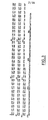
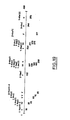
- a hirudin preparation from the whole animal was used to determine the amino acid sequence of the protein (8, 9) which is shown in Figure 1. It appears that there is no carbohydrate attached to hirudin, but at position 63 the tyrosine residue is modified by an ester O-sulfate group.
- hirudin A low activity form called pseudohirudin, which is believed to have been extracted from leech bodies, with the val-val sequence at the N-terminus; a predominant form in the heads which would be very active and which would present an isoleucine radical at its N-terminal end.
- Hirudin has been extensively studied in animals for its anti-coagulant properties.
- the most detailed study (14) describes the activity of hirudin in the prevention of venous thrombosis, vascular occlusion and disseminated intravascular coagulation (DIC) in the rat.
- Hirudin is well tolerated by rats, dogs, rabbits and mice when it is in highly purified form and injected intravenously.
- the LD 50 in mice is higher, 500,000 U / kg of body weight (i.e. 60 mg / kg).
- Another study (15) indicates that mice tolerate doses of up to 1 g per kg and that rabbits tolerate both intravenously and subcutaneously up to 10 mg / kg. In mice, repeated injections over a period of two weeks do not lead to sensitization reactions.
- hirudin prevents endotoxins induced by DIC in pigs and thus constitutes a potential solution to the very serious problems posed by endotoxinemias which lead to high mortality in pigs.
- hirudin in the experimental animal is rapidly eliminated (half-life of the order of 1 hour) still in biologically active form via the kidneys.
- hirudin may constitute an interesting clinical agent as an anti-coagulant.
- the blood coagulation pre-phase is not affected given the high specificity of the action of hirudin, the anti-thrombin activity is dependent on the dose and the effect of hirudin. is rapidly reversible due to its rapid renal elimination. It has been shown that hirudin is much superior to heparin for the treatment of IDD (14, 17) as might be expected given that IDD is accompanied by a decrease in anti-tfirombin III (a co-factor necessary for the action of heparin) and a release of platelet factor 4 which is a very effective anti-heparin agent.
- the preferred routes of administration are the intravenous, intramuscular and percutaneous routes.
- Other routes of administration have been reported for hirudin, including the oral route (BSM 3,792 M).
- This product can also, in combination with other components, be used in the treatment of Psoriasis and other skin disorders of the same type as described in DOS 2,101,393.
- Hirudin can also be used as an anti-coagulant in clinical laboratory tests and as research tools. There, the high specificity for a single step in the coagulation of blood can present a considerable advantage compared to the anticoagulants used most generally with an action which is much less specific.
- hirudin can be very useful as an anti-coagulant agent in extracorporeal circuits and in dialysis systems where it can offer considerable advantages compared to other anticoagulants, in particular if it can be immobilized under active form on the surface of these artificial circulatory systems.
- hirudin can be a simple and effective method of measuring levels of thrombin and prothrombin.
- hirudin can be used to fix thrombin in environments where it is annoying (dosage, experience or treated blood for example).
- hirudin makes it possible to limit coagulations in the extra-corporeal circuits.
- Labeled hirudin can also be used to detect clots. Indeed, the formation of clots imposes the transformation of the circulating prothrombin into thrombin on which hirudin is selectively fixed. The detection of an accumulation of marked hirudin in a point of the patient's body makes it possible to visualize the formation of a clot.
- hirudin has so far not been used widely even in clinical research. This is due to the fact that natural material is very difficult to obtain in pure form and above all that it is particularly expensive, even to start clinical trials in order to demonstrate a potential usefulness. Although adequate purification processes exist (20, 21) to obtain very pure samples, the difficulty in obtaining the basic material (leeches) in sufficient quantity remains the major obstacle.
- hirudin is commercially sold by different companies (Sigma, Plantorgan, Pentopharm), such preparations have an activity which can vary enormously and very variable purities.
- hirudin will mean any of the forms of natural or synthetic hirudin, that is to say a product having the same activity in vivo as hirudin which will be sometimes called “hirudin analogue”.
- hirudin analogues obtained from bacteria will be devoid of the 0-sulfate ester function, but on the other hand that "bacterial hirudin may contain at the N- end terminal amino acid methionine which does not appear in native hirudin, but it is understood that by “hirudin analog” is also understood to be protected from products of biological origin having been modified after their production, in particular by chemical reaction or enzymatic reaction.
- the present invention relates to new vectors for cloning and expression in a host cell of hirudin or of a hirudin analog, characterized in that they contain the gene coding for hirudin or a hirudin analog and the expression elements of this gene in said host cell.
- the expression elements can vary depending on the nature of the host cell.
- the expression elements will comprise at least one bacterial promoter and a ribosome binding site (which constitutes what will sometimes be called the coding region for the initiation of translation).
- the presence of an origin of replication for a plasmid is essential to allow replication of the vector in the corresponding bacterial cells, in particular in the case of E. coli, the origin of replication of the plasmid pBR322 will preferably be used.
- the plasmid pBR322 has, in fact, the advantage of giving a large number of copies and thus of increasing the quantity of plasmids producing the desired protein.
- P L is a powerful promoter responsible for the early transcription of ⁇ .
- promoters of bacteriophage ⁇ in particular the right promoter, P R or the second right promoter, P ' R.
- the vector in question preferably also comprises a function for transcriptional termination of coding, e.g. by the annoyance N of ⁇ denoted ⁇ N.
- a function for transcriptional termination of coding e.g. by the annoyance N of ⁇ denoted ⁇ N.
- thermoinducible, expression system In order to avoid the problems of toxicity and instability of the host-vector system in the event of continuous production of large quantities of a foreign protein, it is necessary to provide for monitoring the activity of the promoter by adding all or part of an inducible, in particular thermoinducible, expression system.
- the temperature control of the synthesis of the foreign protein is carried out at the level of the transcription by means of a heat-sensitive repressor coded in the host bacteria, for example cI857, which represses the activity of P L at 28 °. C but which is inactivated at 42 ° C.
- the repressor acts on the operator O L which is adjacent to the promoter P L.
- the vector in question can also contain a gene for resistance to an antibiotic, for example ampicillin in the case of pBR322, but other resistance genes can be used, resistance to tetracycline ( T and r ) or to chloramphenicol ( Cm r ).
- an antibiotic for example ampicillin in the case of pBR322
- other resistance genes can be used, resistance to tetracycline ( T and r ) or to chloramphenicol ( Cm r ).
- the incorporation of a resistance gene makes it possible to increase the stability of the plasmid by imposing a selection pressure during fermentation, and in addition facilitates the isolation of the transformants.
- the fragment a is complemented by the expression of the C-terminal fragment w encoded in the host, this leads to S-galactosidase activity in the cells.
- This ⁇ -galactosidase activity produces blue colonies in the presence of a chromophoric substrate, 5-bromo-4-chloro-3-indolyl - D-galactosidase.
- the promoter P L is inactivated, the fragment a is not synthesized and the colonies remain white.
- the promoter P L- is activated, the fragment a is synthesized and the colonies turn blue.
- hirudin will be used whose N-terminal structure corresponds to ile-thr; different structures of the corresponding gene will appear in the examples.
- the present invention relates to cells, in particular bacteria, in particular the E. coli strains transformed by the vectors according to the invention by known techniques and some of which will be recalled in the examples.
- the invention relates to a process for the preparation of hirudin or its analogs in which bacteria transformed as described above are cultivated on a culture medium and in which the hirudin or analog formed is then recovered.
- the culture media used are known to those skilled in the art and must be adapted to each strain cultivated.
- the culture will preferably be carried out in presence of the antibiotic against which the transformed strain has become resistant.
- Hirudin or its analogs can be purified or pre-purified from the fermentation mixture by heating at acid pH, in particular at 50-80 ° C at pH between 1 and 3, in particular at 70 ° C at pH 2, 8, and recovery of the supernatant in which the hirudin is found.
- the present invention finally relates to hirudin or its analogues obtained by implementing the method according to the invention, that is to say hirudin or its analogs of bacterial origin but also hirudins or analogs obtained from of bacterial products by chemical or enzymatic reaction, for example by chemical or enzymatic cleavage or else by chemical or enzymatic reaction intended to fix the radical -S0 3 H.
- the invention relates to peptides comprising all or part of the following formula:
- This peptide is represented with the corresponding coding sequence which is not part of the peptide.
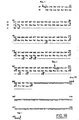
- the invention also relates to the hirudin variants HV1 and HV2.as shown in FIG. 18.
- the invention relates to pharmaceutical compositions containing hirudin or its analogs as active ingredient.
- compositions can be applicable by the intraperitoneal, intravenous, intramuscular or subcutaneous route, by oral route or by topical cutaneous route.
- compositions contain the known excipients in the matter and possibly other active ingredients.
- the present invention includes, of course, other aspects, in particular certain plasmids which will be described in the examples as well as their mutants and derivatives and in general the fermentation processes of the transformed bacteria as well as the products thus obtained.
- RNA is extracted by grinding the heads as a fine powder in liquid nitrogen. To 1 g of this powder are added 5 ml of a NETS buffer (10 mM Tris HCl, pH 7.5, 100 mM NaCl, 1 mM EDTA, O, 5% SDS) and 5 ml of redistilled phenol, both preheated to 95 ° C.
- a NETS buffer (10 mM Tris HCl, pH 7.5, 100 mM NaCl, 1 mM EDTA, O, 5% SDS
- the solution is then mixed by vortex, centrifuged at 30,000 g, the aqueous phase is reextracted with 1 ml of NETS buffer, and the combined aqueous phases are reextracted with 5 ml of fresh phenol.
- the RNA is precipitated by the addition of two volumes of ethanol and collected by centrifugation after having been left at -20 ° C. for more than 4 hours.
- the dark brown pellet is dissolved in 2.5 ml of distilled water, 2.5 ml of 5 M LiCl are added, and after mixing the solution is left overnight at 4 ° C.
- the solution is then raised with 5 ml of 3M LiCl, and centrifuged at 20,000 g for 10 minutes at 4 ° C.
- RNA pellet is taken up in 1 ml of H 2 O. It is taken up in 0.25 M NaCl and the RNA is precipitated with 2 volumes of ethanol. The final RNA pellet is recovered by centrifugation then is dissolved and stored at -80 ° C in distilled water. The concentration of RNA is measured by its absorption at 260 nm.
- Polyadenylated messenger RNA is prepared using oligo dT cellulose and a standard procedure (22). The mRNA yield represents approximately 2 to 5% of the total starting RNA.
- the process used is exactly the same as that which led to the construction of the human liver mRNA library described in reference 23.
- the mRNAs of leech heads are copied in the form of DNA using a "primer" oligo dT and the reverse transcriptase enzyme.
- a second strand of DNA is synthesized using DNA polymerase, the hairpin is opened with nuclease S1 and the double stranded cDNA is purified on a sucrose gradient.
- CDNAs of determined size are terminated at the 3 ′ end with small extensions of dC using the terminal enzyme deoxytransferase and then are combined with a vector pBR322 with a polyG end cut by Pstl.
- the plasmids obtained are used to transform strains of E.
- coli strain 1106
- resistant tetracycline transformants obtained with an efficiency of between 500 and 1000 per - ng of double-stranded cDNA
- L plates -agar containing 15 ug / ml of tetracycline.
- the cDNA clone library representing 43,000 individual transformants is established, the cells are recovered by scraping from the colonies and resuspended in an L-broth containing tetracycline.
- the suspension is carried out in 50% glycerol and stored at -20 ° C.
- the protein sequence does not have particularly pro regions parts for producing particularly short oligonucleotide probes which generally constitute the strategy implemented for the identification of the cloned DNA sequences (24). This is why it was decided to adopt the different technique of a fairly large but unique oligonucleotide probe, which made it possible in particular to isolate the cDNA clone for human coagulation factor IX (23).
- the region of amino acid sequence is selected for which the redundancy of the codons is limited to the choice of the 3rd base (that is to say that we discard arginine, leucine and serine), and we select the 3rd base.
- the parameters considered for choosing the 3rd base of this codon are known, it is a question of maximizing the possibility of G / T interaction and of removing hairpins and palindromes-in the sequence of the probe and of course to take into account the known gene sequences for leeches.
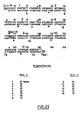
- This oligonucleotide represented in FIG. 2 has been chemically synthesized by the phosphodiester method, on an inorganic solid support (25), which has already been described for a 52 mer in reference (23).
- the cDNA library held from leech head mRNAs was spread on L agar plates containing 15 ⁇ g / ml of tetracycline with a colony density of approximately 4,000 colonies per 13 cm plate and the colonies are grown to a size of 1 to 2 mm in diameter at 37 ° C. The colonies are then removed on nitrocellulose filters. The colonies of the maintained plates are grown and then the plates are stored at 4 ° C. The filters are placed on L-agar plates containing 170 ⁇ g / ml of chloramphenicol and are incubated overnight at 37 ° C. to amplify the plasmids in the bacterial colonies.
- the filters are then treated by the standard procedure to lyse the bacterial colonies and fix the DNA on the nitrocellulose.
- the labeled probe is hybridized on the filter at a dose of 20 ml of 6 x SSC, 1 x Denhardts, 100 ⁇ g / ml of yeast tRNA, 0.05% sodium pytophosphate at 42 ° C with gentle stirring for 16 hours .
- the filters are then washed in 6 x SSC, 0.1% sodium dodecyl sulfate (SDS) at a temperature of 37 ° C, 42 ° C, 50 ° C then subjected to a final wash with 2 x SSC, 0.1% SDS at 50 ° C for 10 minutes .
- the filters are then dried and exposed on X-ray films. The colonies giving positive results are identified from the marked plates by comparing the positive spots on the X film with the master plates.
- One of these clones, the plasmid of which will be named pTG700 is confirmed as being positive by a second hybridization with the labeled probe is cultured in quantity and the plasmid DNA is purified by standard procedures.
- the pTG700 cDNA insert represents approximately 235 base pairs. This DNA fragment is isolated and transferred into the vector phage m13 mp8 and the DNA sequence of the insert is determined by chain termination (26). Part of this sequence codes for a protein sequence that is very similar to that of hirudin. This region of the sequence corresponds to the zone of the probe which is represented in FIG. 2.
- the cDNA sequence in pTG700 is incomplete, it codes for only 28 of the C-terminal amino acids of hirudin in addition to the 101 bases of the 3 'untranslated sequence preceded by a stop codon. phase.
- One of the differences from the published protein sequence for hirudin is observed in this clone because glutamic acid replaces glutamine at position 49.
- this insert is made radioactive by [ 32 P] by the known nick-translation procedure and is used for a new test of the library.
- cDNA Several other positive colonies are found and one of them contains a plasmid designated by pTG717 which contains an insert with a length of approximately 450 base pairs. Restriction analysis of this insert indicates that the presence of a Taql restriction site placed in the vicinity of the center.
- the size of the EcoRI fragments in kb is indicated on the right.
- hirudin is a protein which is secreted from the cells of the salivary glands, it can be thought that it has at its N-terminal end a "leader" sequence (necessary for secretion) and probably also a profsequence. The final active molecule would then be produced, as is the case for many zymogens and precursors, by proteolytic cleavage steps.
- the size of the hirudin mRNA was determined and confirms that the clone pTG717 is not a complete copy of it.
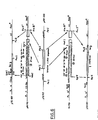
- the total RNA of the hirudin heads was passed by electrophoresis on a denatured formaldehyde agarose gel (27) transferred to nitrocellulose and hybridized with an insert of pTG717. A single hybrid RNA species of 640 base pairs is observed. Since pTG717 is believed to contain the entire 3 'mRNA sequence (a polyA portion is observed) as well as two overlapping polyA addition sites, about 20 bases from polyA, an untranslated region is seen 3 'of 160 bp ( Figure 3). This cDNA clone lacks 160 base pairs at the 5 'end.
- hirudin is cut from the C end in the form of a more important precursor, which can code for other biologically active peptides, although the maximum size of this hypothetical precursor would be at less than 110 to 120 amino acids, (i.e. about double the size of mature hirudin).
- the amino acid sequence of hirudin encoded by the clone pTG717 has been adapted to express itself in E. coli cells as will be described below.
- the expression vector pTG951 is a plasmid expression vector intended to express the discomfort of interferon y, the synthesis of which is recalled at the end of this description.
- the expression vector pTG927 is closely linked to the expression vector pTG908 described at the end of this description. It only differs in that it contains an additional SalI-PvuII fragment from the tetracycline gene of pBR322.
- the expression vector pTG927 contains the promoter P L , an intact N gene and the binding site of the ribosomes of the protein CII of ⁇ then the ATG and a sequence coding for the lacZ fragment of ⁇ -galactosidase. On the ATG of this coding sequence there is an NdeI site. This vector is digested with NdeI and PvuII and the vectear fragment is purified.
- the two expression vectors are intended to express the native hirudin molecule (with a val-val sequence at the N-terminal end immediately after the ATG initiator).
- the codon of the 3rd base is chosen to promote a high degree of translation and to avoid the formation of secondary structures in the mRNAs in this region.
- Both vectors are assembled as follows: the olligonucléotides are phosphorylated at the 5 'end pazr polynucleotide kinase and then treated in équimollaire mixture (after 10 minutes of heating at 65 ° C for 1 5 hours at 15 ° C). The vector and the hirudin fragment are added in quantity intended to give molar ratios of the vector / the hirudin fragments / adapter fragment of 1:20:50 and the mixture is linked with ADNT4 ligase. The ligation mixture is used to transform the E.
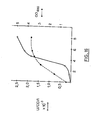
- coli TG900 strain and the transformants carrying the plasmids are selected on the agar plate containing ampicillin (100 ⁇ g / ml) and those which contain the sequence coding for hirudin are identified by colony hybridization using a labeled insert of pTG717 as a probe. From a large number of positive clones, 6 of each, together with 1 negative (parent strain) are selected and grown in a liquid medium of broth-L at 30 ° C to an optical density of 0.3 to 650 nm. Expression from the P L promoter is then induced by an increase in temperature to 37 ° C and an incubation which is maintained for 6 hours.
- the cells are then harvested by centrifugation, suspended 1/5 of the volume of TGE (25 mM Tris HCl, pH 8, 50 mM glucose, 10 mM EDTA) and then ground by sonication. After clarification of the extracts by centrifugation, an aliquot of the supernatant is tested for its antithrombinic activity. Significant levels of antithrombinic activity appear in 5 of the 6 constructs, with pTG 927 and in 4 of the over 6 constructs with pTG 951 which also indicate activity although it is lower.
- TGE 25 mM Tris HCl, pH 8, 50 mM glucose, 10 mM EDTA
- the level of activity obtained after 6 hours is approximately 5 times higher than that of the clone pTG719 and represents a total activity of 7300 ⁇ / l of culture. If this hirudin recombinant has a specific activity similar to that of the natural product val-val, the product obtained in the most active extracts would correspond to approximately 1 mg / 1 of culture.
- hirudin obtained from E. coli culture samples were directly analyzed after induction, which were heated to 70 ° C for 15 min or heated to 70 ° C after reduction of pH 2.8 with HCl. In the latter case, the pH of the extract has been brought back to neutral before being assayed. Native hirudin treated in the same way shows no loss of activity, as might be expected given the published properties of the molecule (20). In the case of the extract, no loss of activity appears after this treatment, in fact, after treatment there is an increase in activity of about 2 times.
- the hirudin obtained according to the present invention seems to bind very effectively to the thrombin-sepharose resin, which makes it possible to envisage one. possibility for the purification of this bacterial hirudin.
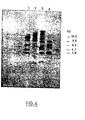
- Bacterial cultures of cells containing the expression vector pTG718 are cultured up to an optical density of 0.3 at 30 ° C. then induced at 37 ° C. and aliquots are taken every hour and labeled, on minimal medium. with 35 S methionine 100 pCi / ml. The bacteria are collected by centrifugation and all of the labeled bacterial proteins are analyzed by electrophoresis on SDS polyacrylamide gel, followed by fluorography.
- At least two polypeptides induced in significant quantity by the construction of the vector can be observed at approximately 6 to 8000 Daltons (FIG. 8 - lines 5 to 10).
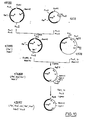
- the basic plasmid used is the plasmid pBR322 however, this has the drawback of having a PstI restriction site inside the amp R gene, since a site of the same nature will be used subsequently in the region of cloning as a single restriction site.
- This restriction site PstI should therefore be made to disappear using a mutant of the plasmid pBR322, the the plasmid p U C8, in which the ampicillin resistance gene does not present a PstI restriction site (this site has been eliminated by mutation in vitro).
- pBR322 is marketed in particular by Bethesda Research Laboratories and pUC8 is described in the article referenced 30.
- the PvuI / PvuII fragment of 1,669 bp of pBR322 is exchanged with the analogous PvuI / PvuII fragment of the plasmid pUC8.
- the plasmids pBR322 and pUC8 are treated successively with PvuI, PvuII, then circularized by the action of a ligase.
- the plasmid pTG902 which no longer has a PstI restriction site and which has also lost the NdeI restriction site originally present on pBR322 (not shown in the figure).
- the plasmid pTG902 carries a 50 kb fragment corresponding to the laci 'sequence in which the PvuII site is found.
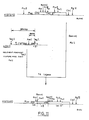
- the P L promoter and the ⁇ N gene (which comes from the phage ⁇ , the ⁇ N gene codes for a transcription termination function) are isolated from the plasmid pKC30 to be inserted into pTG902 as indicated in FIG. 10 below. appended by EcoRI, Sl, BamHI treatment for pTG902 and by PvuI, Sl, BamHI treatment for pKC30 with ligation.
- pTG906 is treated so as to eliminate the PvuII-SalI segment. To do this, pTG906 is treated successively with SalI, nuclease S1, PvuII and ligase. This gives pTG907.
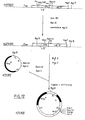
- the cIIrbs / lacZ 'fragment of phage M13tg910 is transferred to the vector plasmid pTG907 prepared previously.
- cIIrbs can be taken in the form of a BglII-BglII fragment and placed in the BamHI site downstream of the P L promoter and of the ⁇ N gene of pTG907.
- the phage M13tg910 is digested with EcoRI then treated with Ba131 and then with Klenow polymerase. The fragments obtained are then subjected to the action of ligase in the presence of non-phosphorylated BglII adapters. The ligation mixture obtained is used to transform competent JM103 cells.
- Clones such as M13tg 912 are thus obtained, the structure of which is shown.
- Treatment with Ba131 produced a deletion of 101 bp eliminating the EcoRI, BamHI and Downstream sites; as well as the ATG Lake and Shine / Dalgarno Lake sequences.
- the BglII site introduced is located approximately 100 bp upstream of the ATG of cII and 10 bp downstream of P lac .
- the BamHI / SphI fragment of pTG907, the BglII / HpaI fragment carrying cIIrbs and lacZ 'and the phosphorylated adapter were prehybridized in a molar ratio of 1: 2: 1 and then treated with ligase T 4 . Aliquots are used to transform the competent cells of the 6150 strain at 3 ° C.
- the cells of interest are identified by selecting the transformants with a cIIrbs / lacZ 'fragment labeled with P 32 and the construction obtained is confirmed by an enzyme restriction study.
- the plasmid obtained, pTG908 is transferred into a host strain N6437 which has both c1857 and the ⁇ fragment of ⁇ -galactosidase complementing fragment a which is encoded by the plasmid.
- the transformants obtained placed on a box containing IPTG + Xgal are white at 28 ° C and then turn blue about 30 minutes after when they are transferred to 42 ° C.
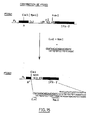
- this vector was adapted to clone human interferon y: IFN-Y, in fact for the cloning of hirudin the nature of the cloned intermediate protein does not matter , but the vectors were produced according to the diagram below.
- the IFN- ⁇ clone obtained from a library is named pTG11.
- This adapter is chemically synthesized and its constitution is shown in the figure.
- pTG11 is digested with EcoRII and Sau3A and pTG908 with NdeI and BamHI.
- the appropriate fragments are gel purified, mixed with an equimolar amount of the adapter, prehybridized and ligated.
- the mixture is used to transform competent TGE900 cells and the transformants are selected by hybridizing a PstI insert of pTG11 "nick-translated" and labeled with P 32 with the transformants.
- pTG909 contains 2 NdeI sites, one at the start codon of IFN- ⁇ and the other 22 bp eb downstream of the IFN-Y sequence.
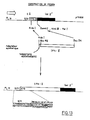
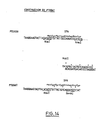
- Figure 15 shows schematically the construction of pTG951 which is derived from pTG941 in which the fragment containing the cIIrbs has been replaced by a synthetic sequence based on the sequence of the region of initiation of translation of the operon E. coli lac noted E. coli lac operon rbs.
- This synthetic oligonucleotide was inserted at the HgaI site between the unique NdeI site of the start codon of the sequence coding for IFN- ⁇ and the ClaI site which was inserted in the N gene.
- the plasmid pTG951 contains only one truncated N gene (a stop codon in phase with the translation of the N gene is placed immediately upstream of the new rbs site) and is devoid of transcription terminators tLl and tRl present in pTG909 and pTG941.
- the construction of the plasmid pTG720 expressing hirudin according to the invention is obtained according to the same process as the plasmid pTG718 described previously, starting from pTG717 and pT G 927.
- the NdeI / PvuII fragment of pTG927 is assembled with the HinfI / AhaIII fragment of pTG717 via adapter oligonucleotides, described below, in order to reconstitute at the N-terminal end of hirudin the ile-thr sequence.
- the ligation mixture is used to transform E. coli TG900 and the transformants containing plasmids are selected on an L agar plate containing 100 ⁇ g / ml of ampicillin. Constructs that contain the hirudin sequence are identified by colony hybridization using a labeled insert of pTG717 as a probe.
- the DNA sequence of the final plasmid was checked by direct sequencing of the DNA in the expression plasmid.
- E. coli TG900 cells containing the plasmid pTG720 are grown on LB medium plus 50 ⁇ g / ml of ampicillin at 30 ° C. to an optical density 600 of 0.3.
- the cell cultures are then transferred at 37 ° C to induce transcription from the promoter P L.
- the centrifugation pellet is resuspended in 200 ⁇ l of TGE (25 mM Tris HCl, pH 8.0, 50 mM glucose, 10 mM EDA) and the cells are lysed by sonication.
- TGE 25 mM Tris HCl, pH 8.0, 50 mM glucose, 10 mM EDA
- the supernatant is collected and the antithrombin activity is measured, either by the coagulation test or by colorimetric assay of the inhibition of the cleavage of the substrate, tosyl-glycil-prolyl-arginine-4 nitroanilide acetate (Chromozym TH , Boehringer Mannheim GmbH) with a standard thrombin solution.
- the reaction is carried out in a reaction volume of 1 ml using 13 ⁇ M of substrate in a buffer composed of 100 mM Tris HC1, pH 8.0, 0.15 M KC1, O, 1% of polyethylene glycol 6000.
- reaction with 0.25 U of thrombin is followed for 2 minutes using a spectrophotometer at 405 nm and the reaction speed is measured from the slope of increase in optical density.
- Standard hirudin or unknown extracts are added to this thrombin reaction mixture to determine the amount of inhibition or antithrombinic activity.
- FIG. 16 appended shows the effect of the induction of the antithrombinic activity of a culture of cells containing pTG720 expressed in antithrombin unit for an optical density of 600 per liter of culture and this over a period of 6 hours.
- the dotted line indicates the growth curve of E. coli cells measured at an optical density of 600 during the same period.
- the hirudin produced by pTG720 has the same general properties as the native molecule and that which is obtained by pTG717 and pTG718.
- polypeptides specifically induced in the culture of pTG720, after labeling with methionine 5 35 , resolution by electrophoresis on polyacrylamide gel and visualization by fluorography, are represented in FIG. 2.
- a series of polypeptides of low molecular weight (5 to 10 000 daltons) are more particularly induced.
- the synthetic strategy for the preparation of the hirudin HV1 gene includes different steps.
- the DNA sequence of the HV1 variant after amino acid 56 can be provided by the TaqI-PstI fragment of pTG717.
- This DNA was synthesized into two separate blocks.
- the first, represented in FIG. 2Q, begins with an EcoRI cohesive site which is essentially intended for cloning, immediately followed by an NdeI site which incorporates the ATG initiation codon before the sequence coding for HV1.
- the complete gene can be taken using the NdeI site at the 5 'end for insertion into an expression vector in E. coli.
- This part is followed by a DNA extension coding for amino acids 1 to 32 of HV1 and can be terminated with a BamHI cohesive end, since amino acids 31 and 32 are gly and ser and can be coded by a site.
- BamHI as shown:
- This part of synthetic DNA which has 109 bp is assembled by condensation of its constituent oligonucleotides then placed by ligation in the phage M13mp8 cut with EcoRI / BamHI so as to lead to the construction M13TG724.
- the synthetic DNA is contained in the polylinker region of phage M13, it can be immediately sequenced to verify the correct assembly of this first synthetic block.
- the second synthetic block corresponds to amino acids 33 to 56 and is limited at one end by a BamHI cohesive site and at the other end by a TaqI site (FIG. 21).
- This 69 bp synthetic block is again assembled from its oligonucleotide constituents and then incorporated with the TaqI / PstI fragment originating from pTG717 in M13 T G724 cut by BamHI / PstI as indicated in FIG. 21.
- the next step involves the transfer of the NdeI / AhaIII fragment which begins with the ATG of the hirudin sequence and ends in an untranslated region at the 3 ′ end in the plasmid pTG927 cut by NdeI / PvuII.
- This expression vector is identical to that which was used to construct the hirudin HV2 expression vector pTG720 and its structure and construction have already been described.
- the final expression vector coding for the variant HV1 is called pTG726 and is represented in FIG. 22.
- Block 1 extends from the EcoRI site to the BamHI site and is composed of 8 oligonucleotides having sizes from 22 to 32 bases.
- Block 2 extends between the BamHI site and the Taql site and is composed of 6 oligonucleotides having sizes ranging between 19 and 30 bases.
- the oligonucleotides are synthesized by a manual phosphotriester procedure on a silica support (reference 31) and are purified using HPLC techniques or elution from polyacrylamide gel.
- the oligonucleotides constituting this block, 1-8, are phosphorylated at their 5 ′ end with the polynucleotide kinase under standard conditions, except for the two oligonucleotides of extremes 1 and 8. This is intended to avoid the formation of dimers or polymer of the synthetic block in the following ligation steps.
- 500 picomoles of each of the oligonucleotides are kinated using 2 units of polynucleotide kinase in a final volume of 25 ⁇ l of 60 mM TrisHCl, pH 7.5, 10 mM MgCl 2 , 8 mM dithiothreitol, also containing 3.3 pmol of 32 P Y-ATP, whose specific activity is 5000 Ci / mmol. After incubation for 15 minutes at 37 ° C, the oligonucleotides are then completely phosphorylated by the addition of 5 mmol of cold ATP.
- the oligonucleotides are purified by electrophoresis on 20% polyacrylamide gel carried out under denaturing conditions.
- the labeled oligonucleotides are detected by autoradiography, the appropriate regions of the gel are excised and the oligonucleotides eluted with H 2 0 during an overnight incubation at 37 ° C.
- oligonucleotides are then loaded onto DEAE-cellulose columns, eluted with a 1 M triethylammonium bicarbonate buffer pH 8 and lyophilized.
- the gel purification is carried out as above, but the oligonucleotides are detected by UV absorption.
- the complementary fragments (1 + 5, 2 + 6, etc.) are mixed, using equivalent amounts, 100 picomoles of each of the oligonucleotides in a final volume of 50 ⁇ l of 66 mM Tris HC1 pH 7.5, 6 mM MgCl 2 , 100 mM NaCl, 0.5 mM Spermidine, 8 mM dithiothreitol. These mixtures are heated to 100 ° C and slowly cooled to 37 ° C for 2 hours. The solutions are mixed to give hybrids with 4 oligonucleotides in 100 ⁇ l. The mixtures are finally combined and the 8 oligonucleotides are paired overnight at 37 ° C. in a final volume of 200 ⁇ l. 0.005 picomoles of the paired oligonucleotides are ligated with 25 ng of M13mp9 digested with BamHI / EcoRI and purified on gel,
- Ligation continues at 15 ° C for 24 hours, followed again by 24 hours at 4 ° C.
- the ligation mixture is then used to transform E. coli JM103.
- 8 candidates are selected, the DNA of the single strand phages is prepared and they are subjected to direct DNA sequencing by the dideoxy chain termination method (ref. 34).
- these candidates two are found to contain the correct assembly of oligonucleotides corresponding to block 1 in Figure 23 and one of them is designated as M13TG724 and used in the next step.
- oligonucleotide components are not prepurified before the pairing step but are rather kinated (except for terminal oligonucleotides 9 and 14 - figure 23) then directly paired.
- the apartment conditions are the same as those which have been described previously with 100 picomoles of each of the oligonucleotides in a final volume of 150 ⁇ l.
- the mixture is loaded onto a 2% agarose gel (agarose at low melting temperature) then passed to electrophoresis.
- the oligonucleotides are detected by staining with ethydium bromide and the bands corresponding to the assembled block (69 bp) are cut from the gel and eluted by standard procedures.
- the second synthetic block (2 ng) is then mixed with 50 ng of phage M13TG724 cut with PstI / BamHI and purified on gel and 2 ng of a TaqI / PstI fragment of pTG717 purified on gel. All of these elements are assembled in a volume of 20 ⁇ l of 66 mM Tris HC1 pH 7.5, 6.6 mM MgCl 2 , heated at 65 ° C. for 5 minutes, and DTT is added up to 10 mM, ATP up to 0.5 mM and 5 units of T ligase 4 . Ligation is continued for 16 hours at 15 ° C., then the ligation mixture is used to transform E. coli JM103.
- the final step to create the vector plasmid capable of expressing the HV1 protein consists in transferring the 248 bp NdeI / AhaIII segment of M13TG725 into p T G927 cut by NdeI / PvuII (FIG. 22).
- the replicative form of the phage with this type of digestion leads to a second fragment of M13 having practically the same size but which clones more efficiently in the expression vector than the desired fragment, it was necessary all of First, prepare an AvaII / BglII fragment (1.71 kb) which contains the entire hirudin HV1 sequence and then digest it with NdeI / AhaIII.
- This digestion product without further purification was ligated into the expression vector pTG927 after NdeI / PvuII cleavage.
- the correct construction pTG726 was identified by the presence of a unique BamHI site deriving from the sequence of the HV1 gene and then by direct DNA sequence analysis.
- the expression vector pTG726 comprises a heat-inducible promoter, the promoter P L , major left promoter of bacteriophage X. As this promoter is blocked by a heat-sensitive repressor coded by the host, the hirudin HV1 gene is not not transcribed during growth at 30 ° C. However, when the temperature is raised above 37 ° C, transcription of this gene is induced.
- FIG. 24 shows the growth curves and the induction of the antithrombinic activity in a culture of E. coli pTG726 grown at 30 ° C. until an optical density of 0.3 at 600 nm, then with an induction at 37 ° C.
- Hirudin activity is measured by the ability of sonicated extracts from bacterial cells to inhibit bovine thrombin activity in its ability to cleave chromogenic substrates.
- This may further reflect a difference in resistance to proteolytic digestion between the two variants and may be an indication of different biological activity or of a different biological role for the two variants. Such differences in stability and other biological properties can possibly be exploited in the use of these hirudins.
- HV1 and HV2 in E. coli can also be noticed by pulse-labeling analysis of E. coli TGE900 cells transformed by two different expression vectors.
- the two hirudin variants are very rich in cysteine (approximately 10% of the molecule), and as this amino acid is quite rare in the proteins of E. coli, cysteine 35 s is very useful as a radioactive marker for. the expression of hirudin.
- the E. coli cells transformed with pTG726 are grown at 30 ° C until an optical density of 0.3 determined in LB + ampicillin (100 ⁇ g / ml) and then induced to express the HV1 variant by increasing the temperature at 37 ° C.
- S DS gel 50 mM Tris HC1, pH 6.8, 1.3% SDS, 5% glycerol, 2.5% S-mercaptoethanol, 0.004% Bromophenol Blue
- 5 ⁇ l load on a gel 15% SDS-polyacrylamide (Laemli- protocol, ref . 36 ). After electrophoresis, the gel is subjected to fluorography followed by autoradiography.
- HV2 variant prepared by E. coli One of the characteristics of natural hirudin and also of the HV2 variant prepared by E. coli is its resistance to heat treatment under fairly low pH conditions. This also applies to the HV1 variant prepared from E. coli.
- a culture induced for 3 hours of E. coli cells transformed by pTG726 is collected by centrifugation, resuspended in 1/5 of the culture volume of TGE (50 mM Tris HCl pH 8.0, 50 mM glucose, 10 mM EDTA) and cells are broken by sonication. Cell debris is removed by centrifugation and part of the supernatant is used directly for the determination of antithrombinic activity.
- the hirudin HV2 activity can also be completely removed from a bacterial extract using thrombin covalently linked to Sepharose beads.
- An extract of E. coli / pTG726 treated with acid and heat then neutralized and containing 7.7 units of antithrombinic activity in 200 ⁇ l is incubated with 50 ⁇ l of a 50% suspension of thrombin Sepharose for 15 minutes at 37 ° C. .
- the thrombin-sepharose beads are removed by centrifugation and the supernatant is tested for its antithrombinic activity. More than 95% of the original antithrombinic activity is eliminated by sepharose-thrombin treatment. Consequently, the HV1 variant produced by E. coli cells is capable of binding to thrombin fixed on sepharose beads.
Landscapes
- Health & Medical Sciences (AREA)
- Chemical & Material Sciences (AREA)
- Genetics & Genomics (AREA)
- Organic Chemistry (AREA)
- Life Sciences & Earth Sciences (AREA)
- Engineering & Computer Science (AREA)
- General Health & Medical Sciences (AREA)
- Zoology (AREA)
- Biochemistry (AREA)
- Biophysics (AREA)
- Molecular Biology (AREA)
- Wood Science & Technology (AREA)
- Bioinformatics & Cheminformatics (AREA)
- General Engineering & Computer Science (AREA)
- Biotechnology (AREA)
- Biomedical Technology (AREA)
- Tropical Medicine & Parasitology (AREA)
- Physics & Mathematics (AREA)
- Plant Pathology (AREA)
- Gastroenterology & Hepatology (AREA)
- Microbiology (AREA)
- Proteomics, Peptides & Aminoacids (AREA)
- Medicinal Chemistry (AREA)
- Peptides Or Proteins (AREA)
- Preparation Of Compounds By Using Micro-Organisms (AREA)
- Micro-Organisms Or Cultivation Processes Thereof (AREA)
- Medicines Containing Material From Animals Or Micro-Organisms (AREA)
- Medicines That Contain Protein Lipid Enzymes And Other Medicines (AREA)
Priority Applications (1)
| Application Number | Priority Date | Filing Date | Title |
|---|---|---|---|
| AT85400598T ATE78294T1 (de) | 1984-03-27 | 1985-03-27 | Expressionsvektoren fuer hirudin, transformierte zellen und verfahren zur herstellung von hirudin. |
Applications Claiming Priority (4)
| Application Number | Priority Date | Filing Date | Title |
|---|---|---|---|
| FR8404755 | 1984-03-27 | ||
| FR8404755A FR2562088B1 (fr) | 1984-03-27 | 1984-03-27 | Vecteurs d'expression de l'hirudine, cellules transformees et procede de preparation de l'hirudine |
| FR8413250 | 1984-08-27 | ||
| FR8413250A FR2569420B2 (fr) | 1984-08-27 | 1984-08-27 | Vecteur d'expression de l'hirudine, procede pour sa preparation par culture de cellules transformees et hirudine obtenue |
Publications (2)
| Publication Number | Publication Date |
|---|---|
| EP0158564A1 true EP0158564A1 (de) | 1985-10-16 |
| EP0158564B1 EP0158564B1 (de) | 1992-07-15 |
Family
ID=26223885
Family Applications (1)
| Application Number | Title | Priority Date | Filing Date |
|---|---|---|---|
| EP85400598A Expired - Lifetime EP0158564B1 (de) | 1984-03-27 | 1985-03-27 | Expressionsvektoren für Hirudin, transformierte Zellen und Verfahren zur Herstellung von Hirudin |
Country Status (7)
| Country | Link |
|---|---|
| US (1) | US5824505A (de) |
| EP (1) | EP0158564B1 (de) |
| AT (1) | ATE78294T1 (de) |
| CA (2) | CA1341417C (de) |
| DE (1) | DE3586333T2 (de) |
| DK (1) | DK175217B1 (de) |
| WO (1) | WO1985004418A1 (de) |
Cited By (15)
| Publication number | Priority date | Publication date | Assignee | Title |
|---|---|---|---|---|
| EP0168342B1 (de) * | 1984-06-14 | 1991-07-03 | Ciba-Geigy Ag | Verfahren zur Herstellung von Thrombin-Inhibitoren |
| EP0171024B1 (de) * | 1984-08-10 | 1991-09-11 | Hoechst Aktiengesellschaft | Gentechnologisches Verfahren zur Herstellung von Hirudinen und Mittel zur Durchführung dieses Verfahrens |
| US5286714A (en) * | 1991-12-07 | 1994-02-15 | Hoechst Aktiengesellschaft | Synthetic isohirudins with improved stability |
| EP0464867B1 (de) * | 1985-11-27 | 1995-05-10 | Hoechst Aktiengesellschaft | Fusionsproteine aus Interleukin-2 und Hirudin |
| EP0758655A1 (de) | 1995-08-16 | 1997-02-19 | Hoechst Aktiengesellschaft | Verfahren zur Inaktivierung von Carboxypeptidase Y in hirudinhaltigen Kulturbrühen |
| EP0775710A1 (de) | 1995-11-24 | 1997-05-28 | Hoechst Aktiengesellschaft | Verfahren zur Ultrafiltration von Peptide oder Proteine enthaltender biologischer Matrices |
| EP0776975A2 (de) | 1995-11-28 | 1997-06-04 | Hoechst Aktiengesellschaft | Verfahren zur Nutzung des Hefe-ADH-II-Promotorsystems zur biotechnologischen Produktion heterologer Proteine in hohen Ausbeuten |
| EP0787569A2 (de) | 1996-01-31 | 1997-08-06 | Sumitomo Bakelite Company Limited | Verfahren zur Herstellung von in Epoxyharz eingekapselter Halbleitervorrichtung |
| EP0792648A2 (de) | 1996-02-27 | 1997-09-03 | BEHRINGWERKE Aktiengesellschaft | Pharmazeutische Zusammensetzung enthaltend Hirudin und Verfahren zu deren Herstellung |
| US5674838A (en) * | 1994-02-10 | 1997-10-07 | Hoechst Aktiengesellschaft | Hirudin derivatives and a process for their preparation |
| RU2131462C1 (ru) * | 1991-02-28 | 1999-06-10 | Фармация Энд Апджон С.П.А. | Фрагмент днк, рекомбинантный полипептид с антитромбиновой активностью, способ его получения (варианты), фармацевтическая композиция, рекомбинантный вектор (варианты) |
| WO2001070273A1 (en) * | 2000-03-20 | 2001-09-27 | Knoll Gmbh | The use of anticoagulant agents in the extracorporeal treatment of blood |
| WO2002068660A1 (en) * | 2001-02-20 | 2002-09-06 | Aventis Pharma Deutschland Gmbh | Fusion protein for the secretion of a protein of interest into the supernatant of the bacterial culture |
| WO2002070722A1 (en) * | 2001-02-20 | 2002-09-12 | Aventis Pharma Deutschland Gmbh | Use of fusion proteins whose n-terminal part is a hirudin derivative for the production of recombinant proteins via secretion by yeasts |
| US7638618B2 (en) | 2001-02-20 | 2009-12-29 | Sanofi-Aventis Deutschland Gmbh | Nucleic acids encoding a hirudin and pro-insulin as superscretable peptides and for parallel improvement of the exported forms of one or more polypeptides of interest |
Families Citing this family (34)
| Publication number | Priority date | Publication date | Assignee | Title |
|---|---|---|---|---|
| DE3438296A1 (de) * | 1984-04-18 | 1985-11-07 | Hoechst Ag, 6230 Frankfurt | Neue polypeptide mit blutgerinnungshemmender wirkung, verfahren zu deren herstellung bzw. gewinnung, deren verwendung und diese enthaltende mittel |
| DE3445517C2 (de) * | 1984-12-13 | 1993-11-18 | Ciba Geigy | Für ein Hirudin-ähnliches Protein codierende DNA-Sequenz und Verfahren zur Herstellung eines Hirudin-ähnlichen Proteins |
| DE3506992A1 (de) * | 1985-02-27 | 1986-08-28 | Plantorgan Werk Heinrich G.E. Christensen, KG, 2903 Bad Zwischenahn | Modifizierte hirudine, verfahren zu deren herstellung und pharmazeutische mittel, die diese wirkstoffe enthalten |
| FR2593518B1 (fr) * | 1985-05-02 | 1989-09-08 | Transgene Sa | Vecteurs d'expression et de secretion de l'hirudine par les levures transformees |
| EP0209061B1 (de) * | 1985-07-17 | 1994-01-12 | Hoechst Aktiengesellschaft | Neue Polypeptide mit blutgerinnungshemmender Wirkung, Verfahren zu deren Herstellung bzw. Gewinnung, deren Verwendung und diese enthaltende Mittel |
| MY101203A (en) * | 1985-12-12 | 1991-08-17 | Ucp Gen Pharma Ag | Production of thrombin iinhibitors. |
| GB8530631D0 (en) | 1985-12-12 | 1986-01-22 | Ciba Geigy Ag | Thrombin inhibitors |
| MC1834A1 (fr) * | 1986-07-10 | 1988-06-03 | Transgene Sa | Bloc fonctionnel d'adn et plasmide codant pour l'hirudine,levure transformee,procede de preparation de l'hirudine,hirudine obtenue et son utilisation |
| FR2607516B2 (fr) * | 1986-12-01 | 1989-12-22 | Transgene Sa | Vecteurs perfectionnes d'expression d'un variant de l'hirudine dans les levures, procede et produit obtenu |
| JP2772793B2 (ja) * | 1986-08-05 | 1998-07-09 | トランスジ−ン ソシエテ アノニム | 細菌中に含まれるプラスミドの安定化方法及びこれにより得られる菌株 |
| FR2618159B2 (fr) * | 1987-07-15 | 1990-02-02 | Transgene Sa | Procede de stabilisation d'un plasmide contenu dans une souche bacterienne et souche obtenue |
| FR2607517B2 (fr) * | 1986-12-01 | 1989-12-22 | Transgene Sa | Vecteurs d'expression de variants de l'hirudine dans les levures, procede et produit obtenu |
| US5256559A (en) * | 1988-03-04 | 1993-10-26 | Biogen, Inc. | Methods and compositions for inhibiting platelet aggregation |
| FR2628429B1 (fr) * | 1988-03-08 | 1990-12-28 | Transgene Sa | Variants de l'hirudine, leurs utilisations et les procedes pour les obtenir |
| DE3819079A1 (de) * | 1988-06-04 | 1989-12-07 | Hoechst Ag | Hirudin-derivate mit verzoegerter wirkung |
| DE3835815A1 (de) * | 1988-10-21 | 1990-04-26 | Hoechst Ag | Neue isohirudine |
| FR2646437B1 (fr) * | 1989-04-28 | 1991-08-30 | Transgene Sa | Nouvelles sequences d'adn, leur application en tant que sequence codant pour un peptide signal pour la secretion de proteines matures par des levures recombinantes, cassettes d'expression, levures transformees et procede de preparation de proteines correspondant |
| US5179196A (en) * | 1989-05-04 | 1993-01-12 | Sri International | Purification of proteins employing ctap-iii fusions |
| DE4009268A1 (de) * | 1990-03-22 | 1991-09-26 | Consortium Elektrochem Ind | Sekretion von hirudinderivaten |
| US6514730B1 (en) | 1991-03-21 | 2003-02-04 | Consortium für elektrochemische Industrie GmbH | Secretion of hirudin derivatives |
| US5837808A (en) * | 1991-08-20 | 1998-11-17 | Baxter International Inc. | Analogs of hirudin |
| HU214698B (hu) * | 1992-04-09 | 1998-06-29 | Gyógyszerkutató Intézet Kft. | Eljárás rekombináns deszulfátó-hirudin HV-1 peptidek előállítására |
| DE59307091D1 (de) * | 1992-12-04 | 1997-09-11 | Schering Ag | Thrombininhibitor aus speichel von protostomiern |
| GB9401447D0 (en) | 1994-01-26 | 1994-03-23 | Ciba Geigy Ag | Pharmaceutical compositions |
| GB2304048A (en) * | 1995-08-12 | 1997-03-12 | John William Carson | Medicament containing saliva extract |
| US7202059B2 (en) * | 2001-02-20 | 2007-04-10 | Sanofi-Aventis Deutschland Gmbh | Fusion proteins capable of being secreted into a fermentation medium |
| DK1368483T3 (da) | 2001-03-09 | 2012-11-05 | Genentech Inc | Fremgangsmåde til fremstilling af polypeptider |
| US7795205B2 (en) * | 2004-04-12 | 2010-09-14 | Canyon Pharmaceuticals, Inc. | Methods for effecting regression of tumor mass and size in a metastasized pancreatic tumor |
| US20110034396A1 (en) * | 2005-09-28 | 2011-02-10 | Biovascular, Inc. | Methods and compositions for inhibiting cell migration and treatment of inflammatory conditions |
| JP2009510105A (ja) | 2005-09-28 | 2009-03-12 | バイオバスキュラー インコーポレーティッド | 血小板および細胞の接着、細胞移動、および炎症を阻止するための方法および組成物 |
| CN102262161B (zh) * | 2011-08-16 | 2013-09-11 | 天津市百利康泰生物技术有限公司 | 水蛭素在特定条件下失活后检测凝血四项方面的应用 |
| CN116987181B (zh) * | 2023-09-27 | 2023-12-08 | 北京元延医药科技股份有限公司 | 高生物学活性的天然水蛭素和高收率制备它们的方法 |
| WO2025262265A1 (en) | 2024-06-21 | 2025-12-26 | Etablissement Francais Du Sang | Chimeric molecules comprising an anti-fibrin antibody and an antithrombotic molecule |
| CN118406137B (zh) * | 2024-07-01 | 2024-09-06 | 云南云蛭康生物科技有限公司 | 一种用于采集水蛭唾液提取物的装置 |
Citations (1)
| Publication number | Priority date | Publication date | Assignee | Title |
|---|---|---|---|---|
| EP0094887A2 (de) * | 1982-05-13 | 1983-11-23 | Transgene S.A. | Expressionsvektoren für das antigene Tollwutprotein und ihre Verwendung zur Herstellung von Impfstoffen |
Family Cites Families (5)
| Publication number | Priority date | Publication date | Assignee | Title |
|---|---|---|---|---|
| US4517294A (en) * | 1982-03-03 | 1985-05-14 | Genentech, Inc. | Human antithrombin III |
| US4578355A (en) * | 1983-01-12 | 1986-03-25 | The United States Of America As Represented By The Department Of Health And Human Services | Plasmid cloning vector pAS1 |
| DE3583361D1 (de) * | 1984-06-14 | 1991-08-08 | Ucp Gen Pharma Ag | Verfahren zur herstellung von thrombin-inhibitoren. |
| US5232912A (en) * | 1988-12-07 | 1993-08-03 | Merrell Dow Pharmaceuticals Inc. | Anticoagulant peptides |
| DE69130872T2 (de) * | 1990-11-08 | 1999-08-26 | Japan Energy Corp. | Sekretionsvektor, diesen enthaltene transformierte Mikroorganismen und Herstellung von Produkten durch obigen Mikroorganismus |
-
1985
- 1985-03-27 DE DE8585400598T patent/DE3586333T2/de not_active Expired - Lifetime
- 1985-03-27 AT AT85400598T patent/ATE78294T1/de not_active IP Right Cessation
- 1985-03-27 CA CA000615690A patent/CA1341417C/fr not_active Expired - Fee Related
- 1985-03-27 WO PCT/FR1985/000062 patent/WO1985004418A1/fr not_active Ceased
- 1985-03-27 CA CA000477676A patent/CA1341414C/fr not_active Expired - Fee Related
- 1985-03-27 EP EP85400598A patent/EP0158564B1/de not_active Expired - Lifetime
- 1985-11-26 DK DK198505471A patent/DK175217B1/da not_active IP Right Cessation
-
1995
- 1995-07-10 US US08/500,111 patent/US5824505A/en not_active Expired - Fee Related
Patent Citations (1)
| Publication number | Priority date | Publication date | Assignee | Title |
|---|---|---|---|---|
| EP0094887A2 (de) * | 1982-05-13 | 1983-11-23 | Transgene S.A. | Expressionsvektoren für das antigene Tollwutprotein und ihre Verwendung zur Herstellung von Impfstoffen |
Non-Patent Citations (2)
| Title |
|---|
| CHEMICAL ABSTRACTS; volume 100, no. 19, 7 mai 1984, pge 227, abrégé 152937g, Columbus, Ohio, US; J. DODT et al.: "The complete amino acid sequence of hirudin, a thrombin specific inhibitor. Application of color carboxymethylation", & FEBS Lett. 1984, 165(2), 10-4 * |
| GENE, volume 13, 1981, Elsevier/North-Holland Biomedical Press, NL; A. HONIGMAN et al.: "Plasmid vectors for positive selection of DNA inserts controlled by the lambda pL promoter repressor and antitermination function" * |
Cited By (17)
| Publication number | Priority date | Publication date | Assignee | Title |
|---|---|---|---|---|
| EP0168342B1 (de) * | 1984-06-14 | 1991-07-03 | Ciba-Geigy Ag | Verfahren zur Herstellung von Thrombin-Inhibitoren |
| EP0171024B1 (de) * | 1984-08-10 | 1991-09-11 | Hoechst Aktiengesellschaft | Gentechnologisches Verfahren zur Herstellung von Hirudinen und Mittel zur Durchführung dieses Verfahrens |
| EP0464867B1 (de) * | 1985-11-27 | 1995-05-10 | Hoechst Aktiengesellschaft | Fusionsproteine aus Interleukin-2 und Hirudin |
| RU2131462C1 (ru) * | 1991-02-28 | 1999-06-10 | Фармация Энд Апджон С.П.А. | Фрагмент днк, рекомбинантный полипептид с антитромбиновой активностью, способ его получения (варианты), фармацевтическая композиция, рекомбинантный вектор (варианты) |
| US5286714A (en) * | 1991-12-07 | 1994-02-15 | Hoechst Aktiengesellschaft | Synthetic isohirudins with improved stability |
| US5316947A (en) * | 1991-12-07 | 1994-05-31 | Hoechst Aktiengesellschaft | Synthetic isohirudins with improved stability |
| US5674838A (en) * | 1994-02-10 | 1997-10-07 | Hoechst Aktiengesellschaft | Hirudin derivatives and a process for their preparation |
| EP0758655A1 (de) | 1995-08-16 | 1997-02-19 | Hoechst Aktiengesellschaft | Verfahren zur Inaktivierung von Carboxypeptidase Y in hirudinhaltigen Kulturbrühen |
| EP0775710A1 (de) | 1995-11-24 | 1997-05-28 | Hoechst Aktiengesellschaft | Verfahren zur Ultrafiltration von Peptide oder Proteine enthaltender biologischer Matrices |
| EP0776975A2 (de) | 1995-11-28 | 1997-06-04 | Hoechst Aktiengesellschaft | Verfahren zur Nutzung des Hefe-ADH-II-Promotorsystems zur biotechnologischen Produktion heterologer Proteine in hohen Ausbeuten |
| EP0787569A2 (de) | 1996-01-31 | 1997-08-06 | Sumitomo Bakelite Company Limited | Verfahren zur Herstellung von in Epoxyharz eingekapselter Halbleitervorrichtung |
| EP0792648A2 (de) | 1996-02-27 | 1997-09-03 | BEHRINGWERKE Aktiengesellschaft | Pharmazeutische Zusammensetzung enthaltend Hirudin und Verfahren zu deren Herstellung |
| WO2001070273A1 (en) * | 2000-03-20 | 2001-09-27 | Knoll Gmbh | The use of anticoagulant agents in the extracorporeal treatment of blood |
| WO2002068660A1 (en) * | 2001-02-20 | 2002-09-06 | Aventis Pharma Deutschland Gmbh | Fusion protein for the secretion of a protein of interest into the supernatant of the bacterial culture |
| WO2002070722A1 (en) * | 2001-02-20 | 2002-09-12 | Aventis Pharma Deutschland Gmbh | Use of fusion proteins whose n-terminal part is a hirudin derivative for the production of recombinant proteins via secretion by yeasts |
| CN100500853C (zh) * | 2001-02-20 | 2009-06-17 | 塞诺菲-安万特德国有限公司 | 用于向细菌培养物上清液中分泌目的蛋白质的融合蛋白质 |
| US7638618B2 (en) | 2001-02-20 | 2009-12-29 | Sanofi-Aventis Deutschland Gmbh | Nucleic acids encoding a hirudin and pro-insulin as superscretable peptides and for parallel improvement of the exported forms of one or more polypeptides of interest |
Also Published As
| Publication number | Publication date |
|---|---|
| EP0158564B1 (de) | 1992-07-15 |
| DE3586333T2 (de) | 1992-12-10 |
| DK175217B1 (da) | 2004-07-12 |
| DK547185A (da) | 1985-11-26 |
| CA1341414C (fr) | 2002-12-31 |
| CA1341417C (fr) | 2003-01-21 |
| DK547185D0 (da) | 1985-11-26 |
| US5824505A (en) | 1998-10-20 |
| ATE78294T1 (de) | 1992-08-15 |
| DE3586333D1 (de) | 1992-08-20 |
| WO1985004418A1 (fr) | 1985-10-10 |
Similar Documents
| Publication | Publication Date | Title |
|---|---|---|
| EP0158564B1 (de) | Expressionsvektoren für Hirudin, transformierte Zellen und Verfahren zur Herstellung von Hirudin | |
| EP0200655B1 (de) | Expressions- und Ausscheidungsvektoren für Hirudin mittels transformierter Hefe | |
| MAURER‐FOGY et al. | Cloning and expression of cDNA for human vascular anticoagulant, a Ca2+‐dependent phospholipid‐binding protein | |
| HK1006183B (en) | Expression and secretion vectors for hirudine by way of transformed yeasts | |
| EP0169114B1 (de) | Derivate des menschlichen alpha-1-Antitrypins und Verfahren zu deren Herstellung | |
| EP0114777B1 (de) | Expressionsvektoren und deren Verwendung zur Herstellung eines Proteins mit menschlicher alpha-Antitrypsin-Aktivität | |
| JPH11504938A (ja) | クニッツ型プロテアーゼ阻害因子 | |
| CA1326216C (en) | Dna sequences coding for proteins having the biological activity of husi-type i inhibitors, biotechnological methods for the preparation of said proteins and pharmaceutical compositions containing said proteins | |
| US5705355A (en) | Hirudin, pharmaceutical compositions comprising it and their use | |
| MC1884A1 (fr) | Variants de l'hirudine,leur utilisation et leur preparation | |
| EP0120829A2 (de) | Verfahren zur Herstellung einer das menschliche alpha-1-Antitrypsin produzierenden Bakterienklone | |
| US5081019A (en) | DNA sequences, recombinant DNA molecules and processes for producing lipocortin-like polypeptides | |
| FR2562088A1 (fr) | Vecteurs d'expression de l'hirudine, cellules transformees et procede de preparation de l'hirudine | |
| EP0146462A2 (de) | Klonierungs- und Expressionsvektoren für gamma-Interferon, transformierte Bakterien und Verfahren zur Herstellung von gamma-Interferon | |
| FR2539758A1 (fr) | Nouveaux vecteurs d'expression et leur application a la preparation d'une proteine ayant l'activite de l'antitrypsine-a1 humaine | |
| US5821079A (en) | Vectors for the expression and secretion of hirudin by transformed yeasts | |
| FR2565983A1 (fr) | Derives de l'a1-antitrypsine humaine et procede pour leur preparation |
Legal Events
| Date | Code | Title | Description |
|---|---|---|---|
| PUAI | Public reference made under article 153(3) epc to a published international application that has entered the european phase |
Free format text: ORIGINAL CODE: 0009012 |
|
| AK | Designated contracting states |
Kind code of ref document: A1 Designated state(s): AT BE CH DE FR GB IT LI LU NL SE Designated state(s): AT BE CH DE FR GB IT LI LU NL SE |
|
| 17P | Request for examination filed |
Effective date: 19860401 |
|
| 17Q | First examination report despatched |
Effective date: 19880330 |
|
| RAP1 | Party data changed (applicant data changed or rights of an application transferred) |
Owner name: TRANSGENE S.A. |
|
| GRAA | (expected) grant |
Free format text: ORIGINAL CODE: 0009210 |
|
| AK | Designated contracting states |
Kind code of ref document: B1 Designated state(s): AT BE CH DE FR GB IT LI LU NL SE |
|
| REF | Corresponds to: |
Ref document number: 78294 Country of ref document: AT Date of ref document: 19920815 Kind code of ref document: T |
|
| RIN1 | Information on inventor provided before grant (corrected) |
Inventor name: LECOCQ, JEAN-PIERRE Inventor name: COURTNEY, MICHAEL Inventor name: HARVEY, RICHARD Inventor name: TOLSTOSHEV, PAUL |
|
| REF | Corresponds to: |
Ref document number: 3586333 Country of ref document: DE Date of ref document: 19920820 |
|
| GBT | Gb: translation of ep patent filed (gb section 77(6)(a)/1977) | ||
| ITF | It: translation for a ep patent filed | ||
| PLBE | No opposition filed within time limit |
Free format text: ORIGINAL CODE: 0009261 |
|
| STAA | Information on the status of an ep patent application or granted ep patent |
Free format text: STATUS: NO OPPOSITION FILED WITHIN TIME LIMIT |
|
| 26N | No opposition filed | ||
| EPTA | Lu: last paid annual fee | ||
| EAL | Se: european patent in force in sweden |
Ref document number: 85400598.0 |
|
| REG | Reference to a national code |
Ref country code: GB Ref legal event code: IF02 |
|
| REG | Reference to a national code |
Ref country code: CH Ref legal event code: PUE Owner name: TRANSGENE S.A. TRANSFER- SCHERING AKTIENGESELLSCHA |
|
| NLS | Nl: assignments of ep-patents |
Owner name: SCHERING AKTIENGESELLSCHAFT |
|
| REG | Reference to a national code |
Ref country code: CH Ref legal event code: NV Representative=s name: BOVARD AG PATENTANWAELTE |
|
| REG | Reference to a national code |
Ref country code: GB Ref legal event code: 732E |
|
| REG | Reference to a national code |
Ref country code: FR Ref legal event code: TP |
|
| PGFP | Annual fee paid to national office [announced via postgrant information from national office to epo] |
Ref country code: AT Payment date: 20040205 Year of fee payment: 20 |
|
| PGFP | Annual fee paid to national office [announced via postgrant information from national office to epo] |
Ref country code: FR Payment date: 20040209 Year of fee payment: 20 |
|
| PGFP | Annual fee paid to national office [announced via postgrant information from national office to epo] |
Ref country code: GB Payment date: 20040212 Year of fee payment: 20 |
|
| PGFP | Annual fee paid to national office [announced via postgrant information from national office to epo] |
Ref country code: CH Payment date: 20040213 Year of fee payment: 20 |
|
| PGFP | Annual fee paid to national office [announced via postgrant information from national office to epo] |
Ref country code: NL Payment date: 20040217 Year of fee payment: 20 |
|
| PGFP | Annual fee paid to national office [announced via postgrant information from national office to epo] |
Ref country code: SE Payment date: 20040219 Year of fee payment: 20 |
|
| PGFP | Annual fee paid to national office [announced via postgrant information from national office to epo] |
Ref country code: LU Payment date: 20040220 Year of fee payment: 20 |
|
| PGFP | Annual fee paid to national office [announced via postgrant information from national office to epo] |
Ref country code: DE Payment date: 20040224 Year of fee payment: 20 |
|
| PGFP | Annual fee paid to national office [announced via postgrant information from national office to epo] |
Ref country code: BE Payment date: 20040322 Year of fee payment: 20 |
|
| PG25 | Lapsed in a contracting state [announced via postgrant information from national office to epo] |
Ref country code: LI Free format text: LAPSE BECAUSE OF EXPIRATION OF PROTECTION Effective date: 20050326 Ref country code: GB Free format text: LAPSE BECAUSE OF EXPIRATION OF PROTECTION Effective date: 20050326 Ref country code: CH Free format text: LAPSE BECAUSE OF EXPIRATION OF PROTECTION Effective date: 20050326 |
|
| PG25 | Lapsed in a contracting state [announced via postgrant information from national office to epo] |
Ref country code: NL Free format text: LAPSE BECAUSE OF EXPIRATION OF PROTECTION Effective date: 20050327 |
|
| BE20 | Be: patent expired |
Owner name: *SCHERING A.G. Effective date: 20050327 |
|
| REG | Reference to a national code |
Ref country code: GB Ref legal event code: PE20 |
|
| REG | Reference to a national code |
Ref country code: CH Ref legal event code: PL |
|
| EUG | Se: european patent has lapsed | ||
| NLV7 | Nl: ceased due to reaching the maximum lifetime of a patent |
Effective date: 20050327 |
|
| BE20 | Be: patent expired |
Owner name: *SCHERING A.G. Effective date: 20050327 |