EP0095899B1 - Farbbildende Carboxamidonaphthalen-Farbstoffvorläufer, photographische Elemente,die diese enthalten und entsprechende Carboximidefarbstoffe - Google Patents
Farbbildende Carboxamidonaphthalen-Farbstoffvorläufer, photographische Elemente,die diese enthalten und entsprechende Carboximidefarbstoffe Download PDFInfo
- Publication number
- EP0095899B1 EP0095899B1 EP83303041A EP83303041A EP0095899B1 EP 0095899 B1 EP0095899 B1 EP 0095899B1 EP 83303041 A EP83303041 A EP 83303041A EP 83303041 A EP83303041 A EP 83303041A EP 0095899 B1 EP0095899 B1 EP 0095899B1
- Authority
- EP
- European Patent Office
- Prior art keywords
- carbon atoms
- dye
- group
- color
- forming
- Prior art date
- Legal status (The legal status is an assumption and is not a legal conclusion. Google has not performed a legal analysis and makes no representation as to the accuracy of the status listed.)
- Expired
Links
- 0 C[*@](c1ccc(*)c(*)c1)N=NC Chemical compound C[*@](c1ccc(*)c(*)c1)N=NC 0.000 description 6
- MRMXNSOAJFAAFZ-UHFFFAOYSA-N CC=[O](=C)=[U]=CN Chemical compound CC=[O](=C)=[U]=CN MRMXNSOAJFAAFZ-UHFFFAOYSA-N 0.000 description 1
- XWLZAAFILDVWAM-UHFFFAOYSA-N CCC(C(C)C=C1)=C(CC)C1=C Chemical compound CCC(C(C)C=C1)=C(CC)C1=C XWLZAAFILDVWAM-UHFFFAOYSA-N 0.000 description 1
- JCNGSJUYPCVGAM-UHFFFAOYSA-N Cc1cc(C)c(cccc2)c2c1C Chemical compound Cc1cc(C)c(cccc2)c2c1C JCNGSJUYPCVGAM-UHFFFAOYSA-N 0.000 description 1
Classifications
-
- G—PHYSICS
- G03—PHOTOGRAPHY; CINEMATOGRAPHY; ANALOGOUS TECHNIQUES USING WAVES OTHER THAN OPTICAL WAVES; ELECTROGRAPHY; HOLOGRAPHY
- G03C—PHOTOSENSITIVE MATERIALS FOR PHOTOGRAPHIC PURPOSES; PHOTOGRAPHIC PROCESSES, e.g. CINE, X-RAY, COLOUR, STEREO-PHOTOGRAPHIC PROCESSES; AUXILIARY PROCESSES IN PHOTOGRAPHY
- G03C7/00—Multicolour photographic processes or agents therefor; Regeneration of such processing agents; Photosensitive materials for multicolour processes
- G03C7/26—Silver halide emulsions for subtractive colour processes
-
- C—CHEMISTRY; METALLURGY
- C07—ORGANIC CHEMISTRY
- C07C—ACYCLIC OR CARBOCYCLIC COMPOUNDS
- C07C311/00—Amides of sulfonic acids, i.e. compounds having singly-bound oxygen atoms of sulfo groups replaced by nitrogen atoms, not being part of nitro or nitroso groups
- C07C311/01—Sulfonamides having sulfur atoms of sulfonamide groups bound to acyclic carbon atoms
- C07C311/02—Sulfonamides having sulfur atoms of sulfonamide groups bound to acyclic carbon atoms of an acyclic saturated carbon skeleton
- C07C311/03—Sulfonamides having sulfur atoms of sulfonamide groups bound to acyclic carbon atoms of an acyclic saturated carbon skeleton having the nitrogen atoms of the sulfonamide groups bound to hydrogen atoms or to acyclic carbon atoms
- C07C311/05—Sulfonamides having sulfur atoms of sulfonamide groups bound to acyclic carbon atoms of an acyclic saturated carbon skeleton having the nitrogen atoms of the sulfonamide groups bound to hydrogen atoms or to acyclic carbon atoms to acyclic carbon atoms of hydrocarbon radicals substituted by nitrogen atoms, not being part of nitro or nitroso groups
-
- C—CHEMISTRY; METALLURGY
- C09—DYES; PAINTS; POLISHES; NATURAL RESINS; ADHESIVES; COMPOSITIONS NOT OTHERWISE PROVIDED FOR; APPLICATIONS OF MATERIALS NOT OTHERWISE PROVIDED FOR
- C09B—ORGANIC DYES OR CLOSELY-RELATED COMPOUNDS FOR PRODUCING DYES, e.g. PIGMENTS; MORDANTS; LAKES
- C09B55/00—Azomethine dyes
- C09B55/009—Azomethine dyes, the C-atom of the group -C=N- being part of a ring (Image)
-
- Y—GENERAL TAGGING OF NEW TECHNOLOGICAL DEVELOPMENTS; GENERAL TAGGING OF CROSS-SECTIONAL TECHNOLOGIES SPANNING OVER SEVERAL SECTIONS OF THE IPC; TECHNICAL SUBJECTS COVERED BY FORMER USPC CROSS-REFERENCE ART COLLECTIONS [XRACs] AND DIGESTS
- Y10—TECHNICAL SUBJECTS COVERED BY FORMER USPC
- Y10S—TECHNICAL SUBJECTS COVERED BY FORMER USPC CROSS-REFERENCE ART COLLECTIONS [XRACs] AND DIGESTS
- Y10S430/00—Radiation imagery chemistry: process, composition, or product thereof
- Y10S430/156—Precursor compound
Definitions
- the invention relates to color-forming carboxamidonaphthalene dye precursor compounds and corresponding carboximide dyes that are useful in imaging materials, such as photographic silver salt materials, and processes.
- the dye precursor compounds are 4-(4'-secondary or tertiary--amino-aniiino)-1-carboxamidonaphthalenes.
- Photographic materials for producing silver images and dye images are known.
- the dye image in such materials is produced by a coupling reaction in which a developing agent is oxidized upon development of photosensitive silver halide in the material, followed by reaction of the resulting oxidized form of the developing agent with a coupling agent to produce a dye image.
- a method of producing reversal color images, also known as positive dye images, which involves developing a silver image in an imagewise exposed photographic material has been suggested in, for example, U.S. Patent 4,035,184 and U.S. Patent 3,938,995. These patents describe production of a dye image through oxidation, by oxidized developing agent of the leuco form of an image dye.
- This leuco dye is the reaction product of a color-forming coupler and a suitably substituted N,N-dialkyl-p-phenylenediamine and is incorporated in the silver halide photographic material.
- the present invention provides a color-forming carboxamidonaphthalene'dye precursor compound comprising a benzene ring attached by an -NH- group to a naphthalene nucleus wherein:
- the dye precursor compounds of the invention provide a means for producing a dye image, especially a dye image that enhances a silver image, without requiring a coupling reaction. Further, the dye produced has good stability.
- the dye produced from a dye precursor compound of the invention is a carboximide dye comprising a benzene ring attached by an -N- group to a naphthalene nucleus in quinone form wherein:
- the dye precursor compounds may be incorporated in photographic silver halide materials.
- a stable dye image especially a dye image that enhances a silver image, may be produced in a photographic material comprising a support having thereon, preferably in a binder: (a) photosensitive silver halide, and associated therewith (b) a color-forming dye precursor of the invention by imagewise converting the precursor to a dye upon exposure and processing of the photographic material.
- the dye may be formed by cross-oxidation, preferably by means of a cross-oxidizing silver halide developing agent.
- a combination of color-forming dye precursors may be used, if desired.
- a positive dye image may be provided in a photographic material as just described by a process comprising (a) developing a silver image in the exposed photographic material using an alkaline photographic developer in the absence of a cross-oxidizing silver halide developing agent; then, (b) fogging the residual silver halide, such as by uniformly exposing the resulting material to a flash exposure of light or, alternatively, a chemical fogging agent; followed by (c) producing a dye image by developing the photographic material in an alkaline cross-oxidizing developer, such as a 3-pyrazolidone cross-oxidizing developer; and, then (d) bleaching and fixing the photographic material in a silver halide bleaching and fixing composition to produce the positive dye image.
- the photographic process for producing a positive dye image includes a stop bath treatment. This permits a desirable lowering of the pH of the development to a point at which development of a negative silver image stops quickly. This produces an improved dye image upon processing.
- a negative dye image and a negative silver image may be produced in an imagewise exposed photographic material comprising, in association, (a) photosensitive silver halide, and (b) a dye precursor of the invention by developing the photographic material in an alkaline, cross-oxidizing, photographic silver halide developer composition, preferably such a composition comprising a 3-pyrazolidone silver halide developing agent.
- the negative dye image preferably enhances the negative silver image. This enables a lower concentration of silver to be used in the photographic material before exposure than otherwise might be necessary to form a similar developed image from silver halide alone.
- the negative, developed silver image is at least partially removed from the photographic material, such as by means of a bleaching and fixing composition, a negative dye image remains in the processed photographic material.
- a positive dye image and a positive silver image may be produced in an imagewise exposed photographic material comprising, in association, (a) direct-positive photographic silver halide, and (b) a color-forming dye precursor of the invention by (A) developing the photographic material using an alkaline, cross-oxidizing photographic silver halide developing composition; then (B) fixing the resulting photographic material to produce a positive dye image and a positive silver image.
- the resulting naphthoquinoneimide dye in the image areas has good stability.
- the naphthoquinoneimide dye exhibits an increase in stability compared to a corresponding benzoquinoneimide dye.
- a ureido group provides increased stability compared to corresponding dyes comprising other carboxamido groups than a ureido group.
- the dye precursor compound of the invention may be incorporated in a photographic silver halide processing composition for producing a dye-enhanced silver image wherein the composition comprises a cross-oxidizing photographic silver halide developing agent.
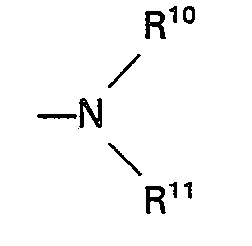
- Preferred color-forming 4-(4'-secondary or tertiary-amino anilino)-1-carboxamidonaphthalene dye precursors of the invention are represented by the formula: wherein,
- Suitable substituted alkyl groups include alkyl containing a sulfonamido group, such as CH3S02NH-, a carboxamido group, an alkoxy group, such as methoxy or ethoxy, hydroxy, carboxyl (-COOH), an aryl group, alkylcarbonyl, such as methylcarbonyl and ethylcarbonyl, arylcarbonyl, such as phenylcarbonyl, alkylamino, such as methylamino and ethylamino, and arylamino, such as phenylamino.
- a substituted alkyl group is
- An alkyl group containing an aryl substituent is also known as an aralkyl group e.g. a benzyl group.
- suitable substituted aryl groups include phenyl containing an alkoxy group, such as methoxy and ethoxy, carboxyl, alkyl such as methyl, ethyl, propyl and butyl and hydroxy.
- An especially useful substituted aryl group is an alkyl substituted aryl group, such as tolyl, 2,4,6-triisopropylphenyl and t-butylphenyl.
- An alkyl substituted aryl group is alsko known as an alkaryl group.
- Particularly preferred dye precursors are those wherein R 1 is NH ⁇ R 10 .
- a ureido group is provided on the naphthalene nucleus which enhances dye stability and increases the ease of dye formation.
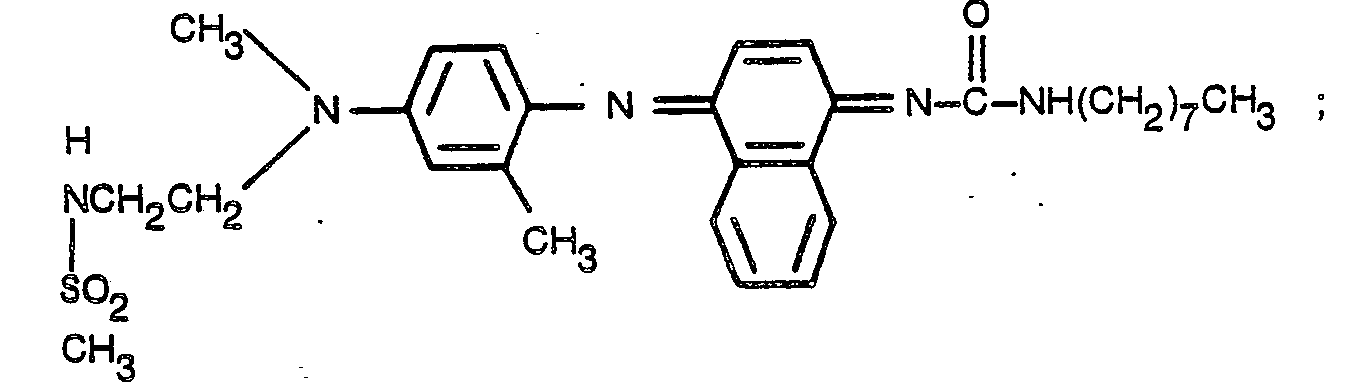
- Examples of useful color-forming dye precursors according to the invention include:
- An especially preferred color-forming compound of this invention for use in a photographic material comprising a support having thereon, in association, in a gelatino binder: (a) photosensitive silver halide; and (b) a color-forming compound which is imagewise converted upon exposure and processing of the material to a dye by cross-oxidation by means of a cross-oxidizing developing agent, is represented by the formula:
- a carboxamido group means a group represented by the formula: wherein R 23 is a substituent which does not adversely affect the color-forming dye precursor or imide dye.
- R is, for example, alkyl containing 1 to 20 carbon atoms, such as methyl, ethyl, propyl, butyl, decyl, and eicosyl, or aryl containing 6 to 20 carbon atoms, such as phenyl and tolyl. Examples of such groups include phenylcarboxamido, methylcarboxamido and tolylcarboxamido.
- a sulfonamido group means an unsubstituted sulfonamido group or a sulfonamido group th.at is substituted by a group that does not adversely affect the desired properties of the color-forming dye precursor.
- a sulfonamido group may be, for example, a group represented by the structure: wherein,
- a carbamoyl group means an unsubstituted carbamoyl group or a carbamoyl group that is substituted by a group that does not adversely affect the desired properties of the color-forming dye - precursor.
- a carbamoyl group herein means, for example, a group represented by the structure: wherein, ' -
- carbamoyl groups include methylcarbamoyl, ethylcarbamoyl, and phenylcarbamoyl.
- a sulfonamoyl group means an unsubstituted sulfamoyl group or a sulfamoyl group that is substituted by a group that does not adversely affect the desired properties of the color-forming dye precursor.
- a sulfamoyl group herein means, for example, a group represented by the structure: wherein,
- sulfamoyl groups include:
- the color-forming dye precursors are prepared by condensation of a phenylenediamine compound with a substituted halonitronaphthalene wherein the nitro groiup is in the 4 position with respect to a halogen atom on the naphthalene ring, followed by reduction of the nitro group and subsequent formation of the amidonaphthalene from the intermediate amine.
- An illustrative method of preparation of a color-forming dye precursor according to the invention is the preparation of 4 ⁇ -4-(N-(2-methylsulfonamidoethyl)ethylamino]-2-methylanilino ⁇ -1-[N'-octylureido)-naphthalene as follows:
- Another example of a preparation according to the invention is the preparation of 4-(4'-N,N- ' diethylamino-2-methylanilino)-1-decanamidonaphthalene.
- This preparation is as follows: 4-(4-N,N-diethylamino-2-methylanilino)-1-nitronaphthalene (12 g., 0.0034 mole) is reduced.in tetrahydrofuran (200 ml) on a Parr apparatus by means of a catalyst, such as palladium on charcoal, at 276 kPa (40 pounds per square inch) hydrogen pressure. The catalyst is then removed. Acid acceptor, such as triethylamine (11.2 ml, 0.08 mole)'is added.
- decanoyl chloride (12.7 g., 0.0037 mole) in tetrahydrofuran (50 ml) is added dropwise. The resulting mixture is stirred until reaction completion, such as for about 16 hours. Water is added and the product taken up with a solvent, such as ether. Following drying and concentration of the solvent solution, the residue is typically purified, such as by recrystallization from ethanol and then methanol, to produce a white crystalline product having a melting point of 147 to 148°C.
- the color-forming 4p(4'-secondary or tertiary-amino anilino)-1-carboxamidonaphthalene dye precursors may be used in a photographic material and process in a range of concentrations. Selection of an optimum concentration of the dye precursor or combination of such dye precursors depends upon the desired image, the particular photographic material, processing steps and conditions, other components in the photographic material, and the particular dye precursor.
- a preferred concentration of dye precursor is within the range of 0.1 to 0.6 mole of per mole of photosensitive silver halide in the photographic material.
- An especially useful concentration of color-forming dye precursor is within the range of 0.1 to 0.2 mole per mole of silver halide in the photographic material.
- a preferred concentration of color-forming dye precursor is within the range of 0.5 to 22 mg per square decimeter of support, such as a concentration within the range of 5 to 11 mg per square decimeter of support.
- the hue of the dye produced from the color-forming dye precursor will vary, depending upon such factors as the particular groups on the color-forming dye precursor, processing conditions, other components in the photographic materia) such as dispersion solvents, and whether a combination of dyes is present in the photographic material or not.
- the color-forming dye precursor in the photographic material is preferably colorless prior to exposure and processing. Some of the suitable color-forming dye precursors have a slight color, such as a slight yellow color, in the photographic material. This slight color is not considered unacceptable.
- the color-forming dye precursor generally absorbs electromagnetic radiation outside the visible region of the electromagnetic spectrum before imagewise exposure and processing of the photographic material.
- the nature of the absorption and degree of absorption of the color-forming dye precursor depends upon the nature, for the most part, of the substituent groups on the color-forming dye precursor.
- the photographic materials may comprise a photosensitive component which consists essentially of photographic silver halide.
- useful photographic silver halides are silver chloride, silver bromide, silver bromoiodide, silver chlorobromoiodide, silver iodide and mixtures thereof.
- the silver halide may be present in the photographic material in the form of an emulsion which is a dispersion of the photographic silver halide in a suitable binder.
- the silver halide may be present in a range of grain sizes from fine grain to coarse grain.
- Negative and direct positive silver halide emulsions may be used.
- Such photographic emulsions are described in, for example, Research Disclosure, December, 1978, Item No. 17643.
- a composition containing the silver halide may be prepared by any of the well known procedures in the photographic art, such as described in Research Disclosure, December 1978, Item No. 17643.
- the photographic material may contain addenda commonly found to be useful in silver halide photographic materials. These addenda include chemical sensitizers, brighteners, antifoggants, emulsion stabilizers, light absorbing and scattering materials, hardeners, coating aids, plasticizers, lubricants, antistatic materials, matting agents, and developing modifiers, as described in Research Disclosure, December 1978, Item No. 17643.
- the photographic silver halide may be spectrally sensitized by means of spectral sensitizing dyes, as described in, for example, Research Disclosure, December 1978, Item No. 17643.
- spectral sensitizing dyes include such dyes as polymethine dyes which include the cyanines, merocyaanines, complex cyanines and merocyanines (including tri, tetra and polynuclear cyanines and merocyanines), as well as oxonols, hemioxonols, styryls, merostyryls and streptocyanines. Combinations of spectral sensitizing dyes may be used.
- the photographic silver halide may be used in a range of concentrations in a photographic material.
- An optimum concentration of photographic silver halide depends upon such factors as the desired image, processing conditions, particular dye precursor, other components of the photographic material and the _particular photographic silver halide.
- a preferred concentration of photographic silver halide is within the range of 2 to 7 moles of per mole of color-forming dye precursor in the photographic material.
- the coverage of photographic silver halide is less than otherwise might be required, due to the enhancing properties of the dye produced upon processing of the photographic material.
- the color-forming dye precursor may be in any location in a silver halide photographic material which allows production of the desired dye upon processing.
- the color-forming dye precursor may, if desired, be in a layer adjacent or contiguous to the layer comprising the photosensitive silver halide.
- the color-forming dye precursor is frequently immobilized in an oil phase in the photographic material. This enables the dye precursor to be dispersed satisfactorily.
- the color-forming dye precursor is dispersed in a dispersion solvent to produce a desired photographic material.
- Coupler solvents known in the photographic art are useful for aiding dispersion of the color-forming dye precursor. Examples of useful coupler solvents include N-n-butylacetanilide, diethyl lauramide, di-n-butyl phthalate and 2,4-ditertiaryamyiphenoi.
- the color-forming dye precursor may also be loaded into a latex or a nonsolvent dispersion may be prepared, if desired.
- Any silver halide developing agent may be used, provided it comprises a cross-oxidizing developing agent which will cross-oxidize with the color-forming dye precursor.
- a silver halide developer called herein a cross-oxidizing developing agent, becomes oxidized during development by reducing exposed silver halide to silver metal. The oxidized developer then cross-oxidizes the color-forming dye precursor to form the desired dye.
- a cross-oxidizing developing agent enables the color-forming dye precursor to become oxidized without the color-forming dye precursor itself developing silver.
- the cross-oxidizing developing agent is viewed alternatively as an electron transfer agent which shuttles electrons between the developing silver halide and the color-forming dye precursor.
- the requirements for a cross-oxidizing developing agent are: (a) the developing agent must have sufficient electrochemical potential under the conditions of use to develop exposed silver halide, (b) in its oxidized form, the developing agent must be of such electrochemical potential as to oxidize the color-forming dye precursor, and (c) in its oxidized form, the developing agent must be stable to decomposition by other chemical reactions for a sufficient period to undergo the redox reaction with the color-forming dye precursor. Whether a developing agent is a cross-oxidizing developing agent or not depends upon whether the oxidized form is sufficiently stable and the oxidizing potential is such that an effective transferral of electrons occurs through whatever phase barriers exist during cross-oxidizing development. Whether a particular developing agent meets these requirements depends upon the conditions under which development occurs.
- a particular developing agent is a cross-oxidizing developer, including the pH of the developing composition, the temperature of the development process and the length of development time.
- developing agents which are useful as cross-oxidizing developing agents include 3-pyrazolidone developers, such as 1-phenyl-3-pyrazolidone, 1-phenyl-4,4-dimethyl-3-pyrazolidone and 4-hydroxymethyi-4-methyi-1-phenyi-3-pyrazoiidone.
- Such cross-oxidizing developing agents are described in, for example, U.S. Patent 3,938,995.
- Combinations of non-cross-oxidizing developing agents and cross-oxidizing developing agents are useful, provided a minor proportion of the non-cross-oxidizing developing agent is present, such as less than about 10 percent of the total combination is non-cross-oxidizing developing agent.
- Examples of combinations of a non-cross-oxidizing developing agent and a cross-oxidizing developing agent include 4-hydroxymethyl-4-methyl-1-phenyl-3-pyrazolidone with a minor proportion of at least one of the following non-cross-oxidizing developing agents:ascorbic acid, hydroquinone and pyrimidine. Selection of an optimum cross-oxidizing silver halide developing agent or developing agent combination will depend upon such factors as the desired image, the particular photosensitive silver halide, processing conditions, and the particular color-forming dye precursor.
- a silver halide developing agent or silver halide developing agent combination may be incorporated in the photographic material.
- the silver halide developing agent is most useful in a processing solution in which the photographic material is processed after exposure.
- the developing agent may be used in a range of concentration in the photographic material or in a processing composition in which the photographic material is processed.
- a preferred concentration of developing agent in the photographic material is within the range of 0.01 to 1.0 mole of developing agent per mole of color-forming dye precursor in the photographic material.
- a preferred concentration of developing agent in a processing solution for processing a photographic material containing a color-forming dye precursor is within the range of 0.5 to 2 grams of developing agent per liter of processing solution.
- developer herein includes compounds which are developing agents or developing agent precursors. That is, those compounds are included which are not developing agents in the photographic material until a condition occurs, such as contact with a suitable activator for the photographic material.
- the tone of the silver image and dye image produced in the photographic material will vary, depending upon such factors as the silver morphology of the developed silver image, the covering power of the silver materials, the particular dye formed, the particular developing agent, processing conditions, and other components in the photographic material.
- a dye produced is preferably complementary in hue to the silver image.
- a combination of dyes and a silver image that produce a neutral-appearing image are preferred.
- the photographic materials may comprise a variety of binders alone or in combination.
- the binders include both naturally occurring substances, such as proteins, for example, gelatin, gelatin derivatives, cellulose derivatives, polysaccharides, such as dextran, and gum arabic; but also include synthetic polymeric materials, such as water-soluble polyvinyl compounds, e.g. poly(vinylpyrrolidone) and acrylamide polymers.
- useful binders include those described in, for instance, Research Disclosure, December 1978, Item No. 17643.
- the photographic materials may contain an overcoat layer, and/or interlayer, and/or subbing layer to provide desired properties.
- the overcoat layer for example, increases resistance to abrasion and other markings on the material.
- the overcoat layer, interlayer or subbing layer contain, alone or in combination, the described binders.
- a photographic materials may comprise a variety of supports.
- Useful supports iinclude those that are resistant to adverse changes in structure due to processing conditions and which do not adversely affect the desired sensitometric properties of the photographic materials.
- Examples of useful supports include cellulose ester, poly(vinylacetal), poly(ethylene terephthalate) and polycarbonate films, as well as related films and resinous materials. Glass, paper' and metal supports are also useful.
- a flexible support is preferred.
- the photographic coating compositions may be coated on a support by procedures known in the photographic art. Such procedures include, for example, immersion or dip coating, roller coating, reversal roll coating, airknife coating, doctor blade coating, spray coating, extrusion coating, bead coating, stretch flow coating and curtain coating.
- the photographic materials may be imagewise exposed by means of various forms of energy to produce a developable image.
- forms of energy include those to which the photosensitive silver halide is sensitive, and encompass ultraviolet, visible and infrared regions of the electromagnetic spectrum, as well as electron-beam and beta radiation, gamma ray, X-ray, alpha particle, neutron radiation and other forms of corpuscular wave-like radiant energy in either coherent or non-coherent forms.
- Lasers may be used, for example. Exposures are monochromatic, orthochromatic or panchromatic, depending on the spectral sensitization of the photosensitive silver halide. Imagewise exposure is generally for a sufficient time and intensity to produce a developable latent image in the photographic material.
- a photographic material containing a dye precursor according to the invention may be processed in (a) a process which produces a positive dye image, (b) a process which produces a negative dye image and negative silver image, (c) a process which produces a negative dye image, or (d) a process which produces a positive dye image and a positive silver image.
- the light-sensitive silver-halide in the photographic material is processed following exposure to form a visible image. This is done, for example, by associating the silver halide at one stage of the process with an aqueous alkaline medium in the presence of a cross- odixizing developing agent contained in the medium and/or in the photographic material.
- a positive dye image also known as a reversal dye image
- the exposed silver halide is reduced to elemental silver by the non-cross-oxodizing developing composition.
- the non-cross-oxidizing developing composition does not, when oxidized, oxidize the color-forming dye precursor according to the invention to its corresponding dye.
- the non-cross-oxidizing developer composition useful in this step may be an alkaline solution, preferably an aqueous solution comprising a non-cross-oxidizing developing agent.
- Non-cross-oxidizing developing agents are known in the photographic art and include many silver halide developing agents which will reduce exposed photosensitive silver halide to silver, but will not oxidize the color-forming dye precursor to a corresponding dye. Examples of useful non-cross-oxidizing developing agents are described in, for example, Research Disclosure, December 1978, Item No. 17643.
- Useful non-cross-oxidizing developers include developer compositions comprising ascorbic acid, hydroquinone, pyrimidine developing agents and a combination of hydroquinone and N-methyl-p-aminophenol.
- fogging of the photographic material is accomplished by exposing the photographic material to light or by chemical fogging by means of chemical fogging agents known in the photographic art.
- a second silver halide developing step is carried out. This is carried out by means of a cross-oxidizing developing composition. It is in this step that the color-forming dye precursor is converted to a dye in the image areas. Any silver halide developing composition is useful in this step, provided that it cross-oxidizes the color-forming dye precursor to a desired dye.
- Such silver halide developing compositions include alkaline solutions comprising a cross-oxidizing silver halide developing agent, preferably a 3-pyrazolidone cross-oxidizing silver halide developing agent. This cross-oxidizing developing agent becomes oxidized during development by reducing exposed or fogged silver halide to silver metal. The oxidized developing agent then cross-oxidizes the color-forming dye precursor to a desired dye.
- the photographic material upon processing, contains a concentration of dye in inverse proportion to the amount of exposure of the photographic material. That is, a positive dye image, also described herein as a reversal dye image, is formed.
- An especially useful process for producing a positive dye image in an imagewise exposed photographic material containing a dye precursor of the invention comprises: (a) developing the exposed photographic material in an alkaline photographic developer in the absence of a cross-oxidizing silver halide developing agent, and then (b) uniformly exposing the material to a flash exposure of light, followed by (c) developing the photographic material in an alkaline, cross-oxidizing developer, comprising an aqueous, alkaline solution of 4-methyl-4-hydroxymethyl-1-phenyl-3-pyrazolidone, and (d) bleaching and fixing the photographic material in a silver halide bleaching and fixing solution to produce a positive dye image. It may be preferred to treat the photographic material by means of a development stop bath after step (a) and before step (b).
- Photographic materials containing a dye precursor according to the invention are also useful for producing negative dye images.
- Such negative dye images may be produced in an exposed photographic element comprising a support having thereon, in reactive association, in a binder, (a) photosensitive silver halide, and (b) a color-forming 4-(4'-secondary or tertiary-amino anilino)-1-carboxamidonaphthalene dye precursor by (A) developing the photographic element in an alkaline, cross-oxidizing photographic silver halide developer composition to produce a negative dye image and silver image; then (B) removing at least part of the silver image from the photographic material, such as by bleaching and fixing the silver-from the material.
- Removal of the silver is accomplished by means of bleaching and fixing composittons known in the photographic art.
- the optimum bleaching and fixing compositions are selected to provide the desired dye image. Suitable bleaching and fixing compositions are described n Grant Haist, Modern Photographic Processing, Vol. 2, Chapter 10 (1979).
- the bleaching agent employed should be of such strength that it does not oxidize the color-forming dye precursor and thereby lead to uniform dye density in the material.
- Photographic materials containing a dye precursor according to the invention comprising direct-positive photographic silver halide are useful for forming positive dye images and positive silver images.
- a process of producing a positive dye image and a positive silver image in an imagewise exposed photographic material comprising a support having thereon, in reactive association, in a binder, (a) direct-positive photographic silver halide, and (b) a color-forming 4-(4'-secondary or tertiary-amino anilino)-1-carboxamidonaphthalene dye precursor comprises (A) developing the photographic element in an alkaline, cross-oxidizing photographic silver halide developing composition; then (B) fixing the resulting photographic material to produce a positive dye image and a positive silver image.
- Fixing the photographic material is accomplished by means of fixing compositions known in the photographic art, such as s sodium thiosulfate fixing composition.
- An advantage of the photographic material and process is that the dye images produced upon processing possess desired stability to post-processing conditions and visible light exposure.
- a simple test is useful for establishing the degree of stability which is desired for a dye image produced from a color-forming dye precursor according to the invention.
- One such test is a test well known in the photographic art in which a processed photographic material is exposed to a Simulated Average North American Skylight (SANS) with continuous 5400 lux of exposure at an average temperature of 21°C at 45 percent relative humidity. A comparison of the stability of the tested dye is then observed.
- SANS Simulated Average North American Skylight
- a developed image is produced after imagewise exposure of the photographic material by contacting the material with an alkaline activator solution which enables development of the exposed silver halide, as well as production of the desired dye.
- alkaline activators are useful for developing an image in a photographic material comprising an incorporated cross-oxidizing silver halide developing agent.
- Alkaline activators which are known to be useful in the photographic art, such as in stabilization processing, are useful for developing an image in the described photographic material.
- alkaline activators examples include sodium hydroxide, potassium hydroxide, trisodium phosphate 12H 2 0 (pH 12), sodium metaborate (pH 12), disodium phosphate and monosodium phosphate.
- An optimum alkaline activator will depend upon such factors as the desired image, the particular cross-oxidizing developing agent, processing conditions and the particular color-forming dye precursor.
- An especially useful alkaline activator comprises trisodium phosphate (pH 12).
- the alkaline activator may be used in a range of concentrations.
- a preferred concentration of alkaline activator is within the range of 10 to 50 grams per liter of activator solution which produces a pH within the range of 11 to 12.
- An optimum concentration of alkaline activator will depend upon such factors as the desired image, the particular activator, processing conditions, particular cross-oxidizing developing agent, particular photosensitive silver halide and particular color-forming dye precursor.
- the photographic material After exposure and processing, the photographic material comprises a dye image or, alternatively, a dye image and a silver image.
- Preferred dyes are represented by the formula: wherein,
- naphthoquinoneimide dyes produced from the dye precursors of the invention are:
- the naphthoquinoneimide dyes have increased stability to hydrolysis compared to corresponding benzoquinoneimide dyes. This is believed to be due at least in part to the resistance which naphthoquinoneimide dyes exhibit to formation of a resonance structure that favors formation of an indoaniline dye.
Landscapes
- Chemical & Material Sciences (AREA)
- Organic Chemistry (AREA)
- Physics & Mathematics (AREA)
- General Physics & Mathematics (AREA)
- Silver Salt Photography Or Processing Solution Therefor (AREA)
- Compositions Of Macromolecular Compounds (AREA)
Claims (13)






dadurch gekennzeichnet, daß die Farbstoffvorläuferverbindung eine Carboxamidonaphthalinverbindung nach einem der vorstehenden Ansprüche ist.




Applications Claiming Priority (2)
| Application Number | Priority Date | Filing Date | Title |
|---|---|---|---|
| US06/382,546 US4423126A (en) | 1982-05-27 | 1982-05-27 | Color-forming carboxamidonaphthalene dye precursor and carboximide dye in photographic material and process |
| US382546 | 1982-05-27 |
Publications (3)
| Publication Number | Publication Date |
|---|---|
| EP0095899A2 EP0095899A2 (de) | 1983-12-07 |
| EP0095899A3 EP0095899A3 (en) | 1984-02-29 |
| EP0095899B1 true EP0095899B1 (de) | 1986-08-20 |
Family
ID=23509442
Family Applications (1)
| Application Number | Title | Priority Date | Filing Date |
|---|---|---|---|
| EP83303041A Expired EP0095899B1 (de) | 1982-05-27 | 1983-05-26 | Farbbildende Carboxamidonaphthalen-Farbstoffvorläufer, photographische Elemente,die diese enthalten und entsprechende Carboximidefarbstoffe |
Country Status (5)
| Country | Link |
|---|---|
| US (1) | US4423126A (de) |
| EP (1) | EP0095899B1 (de) |
| JP (1) | JPS58215460A (de) |
| CA (1) | CA1206972A (de) |
| DE (1) | DE3365436D1 (de) |
Families Citing this family (5)
| Publication number | Priority date | Publication date | Assignee | Title |
|---|---|---|---|---|
| US4468444A (en) * | 1983-04-21 | 1984-08-28 | Eastman Kodak Company | Pyrylium-sensitized leuco base photoconductive compositions and elements containing naphthalene bis-dicarboximide compounds |
| JPS6134540A (ja) * | 1984-07-06 | 1986-02-18 | Fuji Photo Film Co Ltd | 熱現像カラ−感光材料 |
| US4865958A (en) * | 1988-08-18 | 1989-09-12 | Eastman Kodak Company | Photographic recording material comprising leuco dye for cold silver image tone |
| US5695914A (en) * | 1995-09-15 | 1997-12-09 | Eastman Kodak Company | Process of forming a dye image |
| WO2001036403A1 (en) * | 1999-11-16 | 2001-05-25 | Boehringer Ingelheim Pharmaceuticals, Inc. | Urea derivatives as anti-inflammatory agents |
Family Cites Families (8)
| Publication number | Priority date | Publication date | Assignee | Title |
|---|---|---|---|---|
| US3482971A (en) * | 1967-07-24 | 1969-12-09 | Polaroid Corp | Scavengers for oxidized developing agent |
| US3620731A (en) * | 1969-09-29 | 1971-11-16 | Polaroid Corp | Novel processes for forming two negative color transfer images |
| US4007212A (en) * | 1970-03-26 | 1977-02-08 | Polaroid Corporation | Novel amide compounds |
| CA989862A (en) | 1972-02-28 | 1976-05-25 | Bristol-Myers Canada Limited | Arylsubstituted nitroparaphenylenediamine compounds |
| US4035184A (en) * | 1974-07-10 | 1977-07-12 | Eastman Kodak Company | Method of producing reversal color images |
| US3938995A (en) * | 1974-07-10 | 1976-02-17 | Eastman Kodak Company | Silver halide color photographic element and process containing leuco dyes |
| FR2338036A1 (fr) * | 1976-01-19 | 1977-08-12 | Oreal | Compositions tinctoriales a base de diphenylamines et de polyhydroxybenzenes |
| US4368246A (en) * | 1981-07-06 | 1983-01-11 | Eastman Kodak Company | Photographic materials and processes comprising color-forming sulfonamidodiphenylamine dye precursors and corresponding phenazine dyes |
-
1982
- 1982-05-27 US US06/382,546 patent/US4423126A/en not_active Expired - Fee Related
- 1982-10-12 CA CA000413214A patent/CA1206972A/en not_active Expired
-
1983
- 1983-05-26 JP JP58091632A patent/JPS58215460A/ja active Pending
- 1983-05-26 DE DE8383303041T patent/DE3365436D1/de not_active Expired
- 1983-05-26 EP EP83303041A patent/EP0095899B1/de not_active Expired
Also Published As
| Publication number | Publication date |
|---|---|
| DE3365436D1 (en) | 1986-09-25 |
| EP0095899A2 (de) | 1983-12-07 |
| CA1206972A (en) | 1986-07-02 |
| JPS58215460A (ja) | 1983-12-14 |
| US4423126A (en) | 1983-12-27 |
| EP0095899A3 (en) | 1984-02-29 |
Similar Documents
| Publication | Publication Date | Title |
|---|---|---|
| EP0009989B1 (de) | Photographisches Aufzeichnungsmaterial, das in der Photographie anwendbare blockierte Verbindungen enthält | |
| US4524128A (en) | Spectrally sensitized silver halide photothermographic material | |
| US4426441A (en) | Dye-forming developers in an imaging material and process | |
| US4459347A (en) | Adsorbable arylhydrazides and applications thereof to silver halide photography | |
| US4052213A (en) | Light-sensitive photographic material | |
| US4499304A (en) | Color-forming sulfonamidodiphenylamines and corresponding sulfonimide dyes | |
| EP0069585B1 (de) | Farbbildende Sulfonamidodiphenylamine, photographische Elemente die diese enthalten und entsprechende Sulfonimidefarbstoffe | |
| EP0095899B1 (de) | Farbbildende Carboxamidonaphthalen-Farbstoffvorläufer, photographische Elemente,die diese enthalten und entsprechende Carboximidefarbstoffe | |
| US4088491A (en) | Light sensitive photographic material | |
| GB1584113A (en) | Imidazolinones and thiazolinones and their use in light-sensitive photographic material | |
| US4380666A (en) | Color-forming sulfonamidodiphenylamine dye precursor that produces phenazine dye | |
| US4175968A (en) | Color photographic materials containing anti-fogging agents | |
| US4390606A (en) | Color-forming para-sulfonamidodiphenylamine dye precursor and sulfonimide dye in photographic material and process | |
| US4368246A (en) | Photographic materials and processes comprising color-forming sulfonamidodiphenylamine dye precursors and corresponding phenazine dyes | |
| CA1189071A (en) | Alkanediyl bridged benzimidazolo monomethine cyanine dyes, processes for their preparation, and photographic emulsions and elements containing such dyes | |
| US3721823A (en) | Color radiography | |
| US4536598A (en) | Color-forming carboxamidonaphthalene dye precursor and carboximide dye in photographic material and process | |
| US4472497A (en) | White light handleable photographic materials | |
| EP0093556A2 (de) | Farbstoffvorläufer, diese enthaltende photographische Elemente und Verfahren zur Bildentwicklung | |
| US4507479A (en) | Color-forming sulfonamidodiphenylamine dye precursor that produces phenazine dye | |
| JPH0212239A (ja) | カラー写真要素 | |
| EP0069584B1 (de) | Farbbildende Sulfonamidodiphenylamine, photographische Elemente die diese enthalten und entsprechende Phenazinfarbstoffe | |
| EP0128594B1 (de) | Photographisches Material für das Silbersalzdiffusionsübertragungsverfahren | |
| US4569899A (en) | Photographic element for silver salt diffusion transfer process | |
| EP0088581B1 (de) | Photografisches Material das bei Tageslicht behandelt werden kann |
Legal Events
| Date | Code | Title | Description |
|---|---|---|---|
| PUAI | Public reference made under article 153(3) epc to a published international application that has entered the european phase |
Free format text: ORIGINAL CODE: 0009012 |
|
| AK | Designated contracting states |
Designated state(s): DE FR GB |
|
| PUAL | Search report despatched |
Free format text: ORIGINAL CODE: 0009013 |
|
| AK | Designated contracting states |
Designated state(s): DE FR GB |
|
| 17P | Request for examination filed |
Effective date: 19840808 |
|
| GRAA | (expected) grant |
Free format text: ORIGINAL CODE: 0009210 |
|
| AK | Designated contracting states |
Kind code of ref document: B1 Designated state(s): DE FR GB |
|
| REF | Corresponds to: |
Ref document number: 3365436 Country of ref document: DE Date of ref document: 19860925 |
|
| ET | Fr: translation filed | ||
| PLBE | No opposition filed within time limit |
Free format text: ORIGINAL CODE: 0009261 |
|
| STAA | Information on the status of an ep patent application or granted ep patent |
Free format text: STATUS: NO OPPOSITION FILED WITHIN TIME LIMIT |
|
| 26N | No opposition filed | ||
| PG25 | Lapsed in a contracting state [announced via postgrant information from national office to epo] |
Ref country code: GB Effective date: 19880526 |
|
| PG25 | Lapsed in a contracting state [announced via postgrant information from national office to epo] |
Ref country code: FR Free format text: LAPSE BECAUSE OF NON-PAYMENT OF DUE FEES Effective date: 19890131 |
|
| GBPC | Gb: european patent ceased through non-payment of renewal fee | ||
| PG25 | Lapsed in a contracting state [announced via postgrant information from national office to epo] |
Ref country code: DE Effective date: 19890201 |
|
| REG | Reference to a national code |
Ref country code: FR Ref legal event code: ST |