EP0096430A1 - Klonierungssystem für kluyveromyce Spezies - Google Patents
Klonierungssystem für kluyveromyce Spezies Download PDFInfo
- Publication number
- EP0096430A1 EP0096430A1 EP83200714A EP83200714A EP0096430A1 EP 0096430 A1 EP0096430 A1 EP 0096430A1 EP 83200714 A EP83200714 A EP 83200714A EP 83200714 A EP83200714 A EP 83200714A EP 0096430 A1 EP0096430 A1 EP 0096430A1
- Authority
- EP
- European Patent Office
- Prior art keywords
- kluyveromyces
- yeast
- sequence
- plasmid
- process according
- Prior art date
- Legal status (The legal status is an assumption and is not a legal conclusion. Google has not performed a legal analysis and makes no representation as to the accuracy of the status listed.)
- Granted
Links
- 241000235649 Kluyveromyces Species 0.000 title claims abstract description 54
- 238000010367 cloning Methods 0.000 title abstract description 12
- 108090000623 proteins and genes Proteins 0.000 claims abstract description 78
- 108020004414 DNA Proteins 0.000 claims abstract description 73
- 240000004808 Saccharomyces cerevisiae Species 0.000 claims abstract description 58
- 239000013598 vector Substances 0.000 claims abstract description 53
- 108090000746 Chymosin Proteins 0.000 claims abstract description 26
- 108010005774 beta-Galactosidase Proteins 0.000 claims abstract description 24
- 102100026189 Beta-galactosidase Human genes 0.000 claims abstract description 20
- 230000003362 replicative effect Effects 0.000 claims abstract description 19
- 229940080701 chymosin Drugs 0.000 claims abstract description 15
- GNOLWGAJQVLBSM-UHFFFAOYSA-N n,n,5,7-tetramethyl-1,2,3,4-tetrahydronaphthalen-1-amine Chemical compound C1=C(C)C=C2C(N(C)C)CCCC2=C1C GNOLWGAJQVLBSM-UHFFFAOYSA-N 0.000 claims abstract description 14
- 108020004511 Recombinant DNA Proteins 0.000 claims abstract description 11
- 239000000463 material Substances 0.000 claims abstract description 7
- 210000000349 chromosome Anatomy 0.000 claims abstract description 6
- 230000006798 recombination Effects 0.000 claims abstract description 4
- 238000005215 recombination Methods 0.000 claims abstract description 4
- 239000013612 plasmid Substances 0.000 claims description 157
- 241001138401 Kluyveromyces lactis Species 0.000 claims description 67
- 210000004027 cell Anatomy 0.000 claims description 60
- 238000000034 method Methods 0.000 claims description 51
- 230000009466 transformation Effects 0.000 claims description 31
- 108090000765 processed proteins & peptides Proteins 0.000 claims description 21
- 102000004196 processed proteins & peptides Human genes 0.000 claims description 21
- 229920001184 polypeptide Polymers 0.000 claims description 19
- 210000001938 protoplast Anatomy 0.000 claims description 18
- 210000005253 yeast cell Anatomy 0.000 claims description 17
- 238000004519 manufacturing process Methods 0.000 claims description 16
- 102100035529 Lysine-tRNA ligase Human genes 0.000 claims description 11
- 101100309712 Arabidopsis thaliana SD11 gene Proteins 0.000 claims description 10
- 229930027917 kanamycin Natural products 0.000 claims description 9
- 229960000318 kanamycin Drugs 0.000 claims description 9
- SBUJHOSQTJFQJX-NOAMYHISSA-N kanamycin Chemical compound O[C@@H]1[C@@H](O)[C@H](O)[C@@H](CN)O[C@@H]1O[C@H]1[C@H](O)[C@@H](O[C@@H]2[C@@H]([C@@H](N)[C@H](O)[C@@H](CO)O2)O)[C@H](N)C[C@@H]1N SBUJHOSQTJFQJX-NOAMYHISSA-N 0.000 claims description 9
- 229930182823 kanamycin A Natural products 0.000 claims description 9
- 108091026890 Coding region Proteins 0.000 claims description 8
- 239000003550 marker Substances 0.000 claims description 7
- 101000658867 Homo sapiens Lysine-tRNA ligase Proteins 0.000 claims description 6
- WCUXLLCKKVVCTQ-UHFFFAOYSA-M Potassium chloride Chemical compound [Cl-].[K+] WCUXLLCKKVVCTQ-UHFFFAOYSA-M 0.000 claims description 6
- 230000010076 replication Effects 0.000 claims description 6
- 235000014663 Kluyveromyces fragilis Nutrition 0.000 claims description 5
- 239000013604 expression vector Substances 0.000 claims description 5
- 230000001131 transforming effect Effects 0.000 claims description 5
- 239000013611 chromosomal DNA Substances 0.000 claims description 4
- 108090000204 Dipeptidase 1 Proteins 0.000 claims description 3
- 108010073178 Glucan 1,4-alpha-Glucosidase Proteins 0.000 claims description 3
- 102000006635 beta-lactamase Human genes 0.000 claims description 3
- 239000001103 potassium chloride Substances 0.000 claims description 3
- 235000011164 potassium chloride Nutrition 0.000 claims description 3
- 239000002243 precursor Substances 0.000 claims description 3
- 108010064037 prorennin Proteins 0.000 claims description 3
- 238000013518 transcription Methods 0.000 claims description 3
- 230000035897 transcription Effects 0.000 claims description 3
- 108090000637 alpha-Amylases Proteins 0.000 claims description 2
- 102000004139 alpha-Amylases Human genes 0.000 claims description 2
- 229940024171 alpha-amylase Drugs 0.000 claims description 2
- 108010051210 beta-Fructofuranosidase Proteins 0.000 claims description 2
- 239000000470 constituent Substances 0.000 claims description 2
- 239000001573 invertase Substances 0.000 claims description 2
- 235000011073 invertase Nutrition 0.000 claims description 2
- 238000012423 maintenance Methods 0.000 claims description 2
- 241000235070 Saccharomyces Species 0.000 claims 4
- 241000235650 Kluyveromyces marxianus Species 0.000 claims 1
- 108020005091 Replication Origin Proteins 0.000 claims 1
- 108010059881 Lactase Proteins 0.000 abstract description 18
- 229940116108 lactase Drugs 0.000 abstract description 14
- 102000004169 proteins and genes Human genes 0.000 abstract description 7
- 239000012634 fragment Substances 0.000 description 64
- 235000014680 Saccharomyces cerevisiae Nutrition 0.000 description 47
- 108010054576 Deoxyribonuclease EcoRI Proteins 0.000 description 25
- 241000588724 Escherichia coli Species 0.000 description 25
- 238000011534 incubation Methods 0.000 description 23
- 239000002773 nucleotide Substances 0.000 description 20
- 125000003729 nucleotide group Chemical group 0.000 description 19
- 244000285963 Kluyveromyces fragilis Species 0.000 description 17
- 239000000243 solution Substances 0.000 description 16
- 239000000203 mixture Substances 0.000 description 15
- IJGRMHOSHXDMSA-UHFFFAOYSA-N Atomic nitrogen Chemical compound N#N IJGRMHOSHXDMSA-UHFFFAOYSA-N 0.000 description 14
- 102000006602 glyceraldehyde-3-phosphate dehydrogenase Human genes 0.000 description 13
- 108020004445 glyceraldehyde-3-phosphate dehydrogenase Proteins 0.000 description 13
- LFQSCWFLJHTTHZ-UHFFFAOYSA-N Ethanol Chemical compound CCO LFQSCWFLJHTTHZ-UHFFFAOYSA-N 0.000 description 12
- FBPFZTCFMRRESA-FSIIMWSLSA-N D-Glucitol Natural products OC[C@H](O)[C@H](O)[C@@H](O)[C@H](O)CO FBPFZTCFMRRESA-FSIIMWSLSA-N 0.000 description 11
- WQZGKKKJIJFFOK-GASJEMHNSA-N Glucose Natural products OC[C@H]1OC(O)[C@H](O)[C@@H](O)[C@@H]1O WQZGKKKJIJFFOK-GASJEMHNSA-N 0.000 description 11
- 230000033228 biological regulation Effects 0.000 description 11
- 230000035800 maturation Effects 0.000 description 11
- 239000000600 sorbitol Substances 0.000 description 11
- HEDRZPFGACZZDS-UHFFFAOYSA-N Chloroform Chemical compound ClC(Cl)Cl HEDRZPFGACZZDS-UHFFFAOYSA-N 0.000 description 10
- 108010042407 Endonucleases Proteins 0.000 description 10
- ISWSIDIOOBJBQZ-UHFFFAOYSA-N Phenol Chemical compound OC1=CC=CC=C1 ISWSIDIOOBJBQZ-UHFFFAOYSA-N 0.000 description 10
- FAPWRFPIFSIZLT-UHFFFAOYSA-M Sodium chloride Chemical compound [Na+].[Cl-] FAPWRFPIFSIZLT-UHFFFAOYSA-M 0.000 description 10
- 239000008103 glucose Substances 0.000 description 10
- 102000016928 DNA-directed DNA polymerase Human genes 0.000 description 9
- 108010014303 DNA-directed DNA polymerase Proteins 0.000 description 9
- 239000011543 agarose gel Substances 0.000 description 9
- 230000029087 digestion Effects 0.000 description 9
- 229920001817 Agar Polymers 0.000 description 8
- 102100031780 Endonuclease Human genes 0.000 description 8
- 102000004190 Enzymes Human genes 0.000 description 8
- 108090000790 Enzymes Proteins 0.000 description 8
- GUBGYTABKSRVRQ-QKKXKWKRSA-N Lactose Natural products OC[C@H]1O[C@@H](O[C@H]2[C@H](O)[C@@H](O)C(O)O[C@@H]2CO)[C@H](O)[C@@H](O)[C@H]1O GUBGYTABKSRVRQ-QKKXKWKRSA-N 0.000 description 8
- 101150006914 TRP1 gene Proteins 0.000 description 8
- 239000008272 agar Substances 0.000 description 8
- 229960000723 ampicillin Drugs 0.000 description 8
- AVKUERGKIZMTKX-NJBDSQKTSA-N ampicillin Chemical compound C1([C@@H](N)C(=O)N[C@H]2[C@H]3SC([C@@H](N3C2=O)C(O)=O)(C)C)=CC=CC=C1 AVKUERGKIZMTKX-NJBDSQKTSA-N 0.000 description 8
- 229940088598 enzyme Drugs 0.000 description 8
- 239000000284 extract Substances 0.000 description 8
- 239000008101 lactose Substances 0.000 description 8
- 239000002609 medium Substances 0.000 description 8
- 108091008146 restriction endonucleases Proteins 0.000 description 8
- UXVMQQNJUSDDNG-UHFFFAOYSA-L Calcium chloride Chemical compound [Cl-].[Cl-].[Ca+2] UXVMQQNJUSDDNG-UHFFFAOYSA-L 0.000 description 7
- 102000012410 DNA Ligases Human genes 0.000 description 7
- 108010061982 DNA Ligases Proteins 0.000 description 7
- ROHFNLRQFUQHCH-YFKPBYRVSA-N L-leucine Chemical compound CC(C)C[C@H](N)C(O)=O ROHFNLRQFUQHCH-YFKPBYRVSA-N 0.000 description 7
- 239000000872 buffer Substances 0.000 description 7
- 239000001110 calcium chloride Substances 0.000 description 7
- 229910001628 calcium chloride Inorganic materials 0.000 description 7
- 238000009396 hybridization Methods 0.000 description 7
- 229910052757 nitrogen Inorganic materials 0.000 description 7
- OKTJSMMVPCPJKN-UHFFFAOYSA-N Carbon Chemical compound [C] OKTJSMMVPCPJKN-UHFFFAOYSA-N 0.000 description 6
- 229910052799 carbon Inorganic materials 0.000 description 6
- 238000005119 centrifugation Methods 0.000 description 6
- 239000000047 product Substances 0.000 description 6
- 235000018102 proteins Nutrition 0.000 description 6
- 239000002202 Polyethylene glycol Substances 0.000 description 5
- 230000015572 biosynthetic process Effects 0.000 description 5
- 238000003776 cleavage reaction Methods 0.000 description 5
- 244000005700 microbiome Species 0.000 description 5
- 108020004707 nucleic acids Proteins 0.000 description 5
- 102000039446 nucleic acids Human genes 0.000 description 5
- 150000007523 nucleic acids Chemical class 0.000 description 5
- 229920001223 polyethylene glycol Polymers 0.000 description 5
- 230000007017 scission Effects 0.000 description 5
- 239000011780 sodium chloride Substances 0.000 description 5
- 239000000126 substance Substances 0.000 description 5
- 238000003786 synthesis reaction Methods 0.000 description 5
- XLYOFNOQVPJJNP-UHFFFAOYSA-N water Substances O XLYOFNOQVPJJNP-UHFFFAOYSA-N 0.000 description 5
- 108020004705 Codon Proteins 0.000 description 4
- 101150112014 Gapdh gene Proteins 0.000 description 4
- 101150022713 LAC4 gene Proteins 0.000 description 4
- 238000002105 Southern blotting Methods 0.000 description 4
- 108091081024 Start codon Proteins 0.000 description 4
- 239000007984 Tris EDTA buffer Substances 0.000 description 4
- 238000004458 analytical method Methods 0.000 description 4
- 230000001580 bacterial effect Effects 0.000 description 4
- 210000002421 cell wall Anatomy 0.000 description 4
- 238000006243 chemical reaction Methods 0.000 description 4
- 230000000694 effects Effects 0.000 description 4
- 238000001962 electrophoresis Methods 0.000 description 4
- 238000002474 experimental method Methods 0.000 description 4
- 238000002955 isolation Methods 0.000 description 4
- KWGKDLIKAYFUFQ-UHFFFAOYSA-M lithium chloride Chemical compound [Li+].[Cl-] KWGKDLIKAYFUFQ-UHFFFAOYSA-M 0.000 description 4
- 239000011541 reaction mixture Substances 0.000 description 4
- 230000008929 regeneration Effects 0.000 description 4
- 238000011069 regeneration method Methods 0.000 description 4
- BRZYSWJRSDMWLG-DJWUNRQOSA-N (2r,3r,4r,5r)-2-[(1s,2s,3r,4s,6r)-4,6-diamino-3-[(2s,3r,4r,5s,6r)-3-amino-4,5-dihydroxy-6-[(1r)-1-hydroxyethyl]oxan-2-yl]oxy-2-hydroxycyclohexyl]oxy-5-methyl-4-(methylamino)oxane-3,5-diol Chemical compound O1C[C@@](O)(C)[C@H](NC)[C@@H](O)[C@H]1O[C@@H]1[C@@H](O)[C@H](O[C@@H]2[C@@H]([C@@H](O)[C@H](O)[C@@H]([C@@H](C)O)O2)N)[C@@H](N)C[C@H]1N BRZYSWJRSDMWLG-DJWUNRQOSA-N 0.000 description 3
- 241000894006 Bacteria Species 0.000 description 3
- 108091003079 Bovine Serum Albumin Proteins 0.000 description 3
- 102000053602 DNA Human genes 0.000 description 3
- KCXVZYZYPLLWCC-UHFFFAOYSA-N EDTA Chemical compound OC(=O)CN(CC(O)=O)CCN(CC(O)=O)CC(O)=O KCXVZYZYPLLWCC-UHFFFAOYSA-N 0.000 description 3
- 241001131785 Escherichia coli HB101 Species 0.000 description 3
- CEAZRRDELHUEMR-URQXQFDESA-N Gentamicin Chemical compound O1[C@H](C(C)NC)CC[C@@H](N)[C@H]1O[C@H]1[C@H](O)[C@@H](O[C@@H]2[C@@H]([C@@H](NC)[C@@](C)(O)CO2)O)[C@H](N)C[C@@H]1N CEAZRRDELHUEMR-URQXQFDESA-N 0.000 description 3
- KFZMGEQAYNKOFK-UHFFFAOYSA-N Isopropanol Chemical compound CC(C)O KFZMGEQAYNKOFK-UHFFFAOYSA-N 0.000 description 3
- 108010086093 Mung Bean Nuclease Proteins 0.000 description 3
- 101710163270 Nuclease Proteins 0.000 description 3
- 239000001888 Peptone Substances 0.000 description 3
- 108010080698 Peptones Proteins 0.000 description 3
- HEMHJVSKTPXQMS-UHFFFAOYSA-M Sodium hydroxide Chemical compound [OH-].[Na+] HEMHJVSKTPXQMS-UHFFFAOYSA-M 0.000 description 3
- 239000007983 Tris buffer Substances 0.000 description 3
- 229940098773 bovine serum albumin Drugs 0.000 description 3
- 229940041514 candida albicans extract Drugs 0.000 description 3
- 108010067454 caseinomacropeptide Proteins 0.000 description 3
- 238000010276 construction Methods 0.000 description 3
- 238000000605 extraction Methods 0.000 description 3
- 235000013305 food Nutrition 0.000 description 3
- 230000012010 growth Effects 0.000 description 3
- 238000010438 heat treatment Methods 0.000 description 3
- 230000000977 initiatory effect Effects 0.000 description 3
- 235000019319 peptone Nutrition 0.000 description 3
- 238000002360 preparation method Methods 0.000 description 3
- 230000000717 retained effect Effects 0.000 description 3
- 241000894007 species Species 0.000 description 3
- 230000002269 spontaneous effect Effects 0.000 description 3
- 239000007858 starting material Substances 0.000 description 3
- 238000012360 testing method Methods 0.000 description 3
- 229930101283 tetracycline Natural products 0.000 description 3
- OFVLGDICTFRJMM-WESIUVDSSA-N tetracycline Chemical compound C1=CC=C2[C@](O)(C)[C@H]3C[C@H]4[C@H](N(C)C)C(O)=C(C(N)=O)C(=O)[C@@]4(O)C(O)=C3C(=O)C2=C1O OFVLGDICTFRJMM-WESIUVDSSA-N 0.000 description 3
- YNJBWRMUSHSURL-UHFFFAOYSA-N trichloroacetic acid Chemical compound OC(=O)C(Cl)(Cl)Cl YNJBWRMUSHSURL-UHFFFAOYSA-N 0.000 description 3
- LENZDBCJOHFCAS-UHFFFAOYSA-N tris Chemical compound OCC(N)(CO)CO LENZDBCJOHFCAS-UHFFFAOYSA-N 0.000 description 3
- 238000011144 upstream manufacturing Methods 0.000 description 3
- 239000012138 yeast extract Substances 0.000 description 3
- QKNYBSVHEMOAJP-UHFFFAOYSA-N 2-amino-2-(hydroxymethyl)propane-1,3-diol;hydron;chloride Chemical compound Cl.OCC(N)(CO)CO QKNYBSVHEMOAJP-UHFFFAOYSA-N 0.000 description 2
- 102000004594 DNA Polymerase I Human genes 0.000 description 2
- 108010017826 DNA Polymerase I Proteins 0.000 description 2
- 102000004533 Endonucleases Human genes 0.000 description 2
- 229930182566 Gentamicin Natural products 0.000 description 2
- DHMQDGOQFOQNFH-UHFFFAOYSA-N Glycine Chemical compound NCC(O)=O DHMQDGOQFOQNFH-UHFFFAOYSA-N 0.000 description 2
- 108010050904 Interferons Proteins 0.000 description 2
- 102000014150 Interferons Human genes 0.000 description 2
- QIVBCDIJIAJPQS-VIFPVBQESA-N L-tryptophane Chemical compound C1=CC=C2C(C[C@H](N)C(O)=O)=CNC2=C1 QIVBCDIJIAJPQS-VIFPVBQESA-N 0.000 description 2
- ROHFNLRQFUQHCH-UHFFFAOYSA-N Leucine Natural products CC(C)CC(N)C(O)=O ROHFNLRQFUQHCH-UHFFFAOYSA-N 0.000 description 2
- TWRXJAOTZQYOKJ-UHFFFAOYSA-L Magnesium chloride Chemical compound [Mg+2].[Cl-].[Cl-] TWRXJAOTZQYOKJ-UHFFFAOYSA-L 0.000 description 2
- 108060004795 Methyltransferase Proteins 0.000 description 2
- 239000000020 Nitrocellulose Substances 0.000 description 2
- 108091028043 Nucleic acid sequence Proteins 0.000 description 2
- 108091034117 Oligonucleotide Proteins 0.000 description 2
- 102000004160 Phosphoric Monoester Hydrolases Human genes 0.000 description 2
- 108090000608 Phosphoric Monoester Hydrolases Proteins 0.000 description 2
- 241000235347 Schizosaccharomyces pombe Species 0.000 description 2
- 229920005654 Sephadex Polymers 0.000 description 2
- 239000012507 Sephadex™ Substances 0.000 description 2
- DBMJMQXJHONAFJ-UHFFFAOYSA-M Sodium laurylsulphate Chemical compound [Na+].CCCCCCCCCCCCOS([O-])(=O)=O DBMJMQXJHONAFJ-UHFFFAOYSA-M 0.000 description 2
- QIVBCDIJIAJPQS-UHFFFAOYSA-N Tryptophan Natural products C1=CC=C2C(CC(N)C(O)=O)=CNC2=C1 QIVBCDIJIAJPQS-UHFFFAOYSA-N 0.000 description 2
- JLCPHMBAVCMARE-UHFFFAOYSA-N [3-[[3-[[3-[[3-[[3-[[3-[[3-[[3-[[3-[[3-[[3-[[5-(2-amino-6-oxo-1H-purin-9-yl)-3-[[3-[[3-[[3-[[3-[[3-[[5-(2-amino-6-oxo-1H-purin-9-yl)-3-[[5-(2-amino-6-oxo-1H-purin-9-yl)-3-hydroxyoxolan-2-yl]methoxy-hydroxyphosphoryl]oxyoxolan-2-yl]methoxy-hydroxyphosphoryl]oxy-5-(5-methyl-2,4-dioxopyrimidin-1-yl)oxolan-2-yl]methoxy-hydroxyphosphoryl]oxy-5-(6-aminopurin-9-yl)oxolan-2-yl]methoxy-hydroxyphosphoryl]oxy-5-(6-aminopurin-9-yl)oxolan-2-yl]methoxy-hydroxyphosphoryl]oxy-5-(6-aminopurin-9-yl)oxolan-2-yl]methoxy-hydroxyphosphoryl]oxy-5-(6-aminopurin-9-yl)oxolan-2-yl]methoxy-hydroxyphosphoryl]oxyoxolan-2-yl]methoxy-hydroxyphosphoryl]oxy-5-(5-methyl-2,4-dioxopyrimidin-1-yl)oxolan-2-yl]methoxy-hydroxyphosphoryl]oxy-5-(4-amino-2-oxopyrimidin-1-yl)oxolan-2-yl]methoxy-hydroxyphosphoryl]oxy-5-(5-methyl-2,4-dioxopyrimidin-1-yl)oxolan-2-yl]methoxy-hydroxyphosphoryl]oxy-5-(5-methyl-2,4-dioxopyrimidin-1-yl)oxolan-2-yl]methoxy-hydroxyphosphoryl]oxy-5-(6-aminopurin-9-yl)oxolan-2-yl]methoxy-hydroxyphosphoryl]oxy-5-(6-aminopurin-9-yl)oxolan-2-yl]methoxy-hydroxyphosphoryl]oxy-5-(4-amino-2-oxopyrimidin-1-yl)oxolan-2-yl]methoxy-hydroxyphosphoryl]oxy-5-(4-amino-2-oxopyrimidin-1-yl)oxolan-2-yl]methoxy-hydroxyphosphoryl]oxy-5-(4-amino-2-oxopyrimidin-1-yl)oxolan-2-yl]methoxy-hydroxyphosphoryl]oxy-5-(6-aminopurin-9-yl)oxolan-2-yl]methoxy-hydroxyphosphoryl]oxy-5-(4-amino-2-oxopyrimidin-1-yl)oxolan-2-yl]methyl [5-(6-aminopurin-9-yl)-2-(hydroxymethyl)oxolan-3-yl] hydrogen phosphate Polymers Cc1cn(C2CC(OP(O)(=O)OCC3OC(CC3OP(O)(=O)OCC3OC(CC3O)n3cnc4c3nc(N)[nH]c4=O)n3cnc4c3nc(N)[nH]c4=O)C(COP(O)(=O)OC3CC(OC3COP(O)(=O)OC3CC(OC3COP(O)(=O)OC3CC(OC3COP(O)(=O)OC3CC(OC3COP(O)(=O)OC3CC(OC3COP(O)(=O)OC3CC(OC3COP(O)(=O)OC3CC(OC3COP(O)(=O)OC3CC(OC3COP(O)(=O)OC3CC(OC3COP(O)(=O)OC3CC(OC3COP(O)(=O)OC3CC(OC3COP(O)(=O)OC3CC(OC3COP(O)(=O)OC3CC(OC3COP(O)(=O)OC3CC(OC3COP(O)(=O)OC3CC(OC3COP(O)(=O)OC3CC(OC3COP(O)(=O)OC3CC(OC3CO)n3cnc4c(N)ncnc34)n3ccc(N)nc3=O)n3cnc4c(N)ncnc34)n3ccc(N)nc3=O)n3ccc(N)nc3=O)n3ccc(N)nc3=O)n3cnc4c(N)ncnc34)n3cnc4c(N)ncnc34)n3cc(C)c(=O)[nH]c3=O)n3cc(C)c(=O)[nH]c3=O)n3ccc(N)nc3=O)n3cc(C)c(=O)[nH]c3=O)n3cnc4c3nc(N)[nH]c4=O)n3cnc4c(N)ncnc34)n3cnc4c(N)ncnc34)n3cnc4c(N)ncnc34)n3cnc4c(N)ncnc34)O2)c(=O)[nH]c1=O JLCPHMBAVCMARE-UHFFFAOYSA-N 0.000 description 2
- 235000001014 amino acid Nutrition 0.000 description 2
- 150000001413 amino acids Chemical class 0.000 description 2
- 230000003115 biocidal effect Effects 0.000 description 2
- 238000005516 engineering process Methods 0.000 description 2
- 238000012869 ethanol precipitation Methods 0.000 description 2
- 238000000855 fermentation Methods 0.000 description 2
- 230000004151 fermentation Effects 0.000 description 2
- 239000000499 gel Substances 0.000 description 2
- 235000021472 generally recognized as safe Nutrition 0.000 description 2
- 230000002068 genetic effect Effects 0.000 description 2
- 239000001963 growth medium Substances 0.000 description 2
- 230000002779 inactivation Effects 0.000 description 2
- 229940079322 interferon Drugs 0.000 description 2
- 150000002500 ions Chemical class 0.000 description 2
- 238000011031 large-scale manufacturing process Methods 0.000 description 2
- 239000007788 liquid Substances 0.000 description 2
- 230000035772 mutation Effects 0.000 description 2
- 229920001220 nitrocellulos Polymers 0.000 description 2
- 230000003204 osmotic effect Effects 0.000 description 2
- 239000008188 pellet Substances 0.000 description 2
- YBYRMVIVWMBXKQ-UHFFFAOYSA-N phenylmethanesulfonyl fluoride Chemical compound FS(=O)(=O)CC1=CC=CC=C1 YBYRMVIVWMBXKQ-UHFFFAOYSA-N 0.000 description 2
- 238000001556 precipitation Methods 0.000 description 2
- 239000000523 sample Substances 0.000 description 2
- 238000000926 separation method Methods 0.000 description 2
- 235000019333 sodium laurylsulphate Nutrition 0.000 description 2
- 239000003381 stabilizer Substances 0.000 description 2
- 239000011800 void material Substances 0.000 description 2
- 238000005406 washing Methods 0.000 description 2
- JIAARYAFYJHUJI-UHFFFAOYSA-L zinc dichloride Chemical compound [Cl-].[Cl-].[Zn+2] JIAARYAFYJHUJI-UHFFFAOYSA-L 0.000 description 2
- DGVVWUTYPXICAM-UHFFFAOYSA-N β‐Mercaptoethanol Chemical compound OCCS DGVVWUTYPXICAM-UHFFFAOYSA-N 0.000 description 2
- HRPVXLWXLXDGHG-UHFFFAOYSA-N Acrylamide Chemical compound NC(=O)C=C HRPVXLWXLXDGHG-UHFFFAOYSA-N 0.000 description 1
- 101100163849 Arabidopsis thaliana ARS1 gene Proteins 0.000 description 1
- 101100238763 Bacillus subtilis hsdRM gene Proteins 0.000 description 1
- 108020000946 Bacterial DNA Proteins 0.000 description 1
- 241000283690 Bos taurus Species 0.000 description 1
- 108010076119 Caseins Proteins 0.000 description 1
- DYDCUQKUCUHJBH-UWTATZPHSA-N D-Cycloserine Chemical compound N[C@@H]1CONC1=O DYDCUQKUCUHJBH-UWTATZPHSA-N 0.000 description 1
- DYDCUQKUCUHJBH-UHFFFAOYSA-N D-Cycloserine Natural products NC1CONC1=O DYDCUQKUCUHJBH-UHFFFAOYSA-N 0.000 description 1
- FBPFZTCFMRRESA-JGWLITMVSA-N D-glucitol Chemical compound OC[C@H](O)[C@@H](O)[C@H](O)[C@H](O)CO FBPFZTCFMRRESA-JGWLITMVSA-N 0.000 description 1
- 230000006820 DNA synthesis Effects 0.000 description 1
- 241000255581 Drosophila <fruit fly, genus> Species 0.000 description 1
- 238000002965 ELISA Methods 0.000 description 1
- 108091092566 Extrachromosomal DNA Proteins 0.000 description 1
- 108010010803 Gelatin Proteins 0.000 description 1
- 239000004471 Glycine Substances 0.000 description 1
- 108010051696 Growth Hormone Proteins 0.000 description 1
- 241000237369 Helix pomatia Species 0.000 description 1
- 101000740205 Homo sapiens Sal-like protein 1 Proteins 0.000 description 1
- DGAQECJNVWCQMB-PUAWFVPOSA-M Ilexoside XXIX Chemical compound C[C@@H]1CC[C@@]2(CC[C@@]3(C(=CC[C@H]4[C@]3(CC[C@@H]5[C@@]4(CC[C@@H](C5(C)C)OS(=O)(=O)[O-])C)C)[C@@H]2[C@]1(C)O)C)C(=O)O[C@H]6[C@@H]([C@H]([C@@H]([C@H](O6)CO)O)O)O.[Na+] DGAQECJNVWCQMB-PUAWFVPOSA-M 0.000 description 1
- 102000006992 Interferon-alpha Human genes 0.000 description 1
- 108010047761 Interferon-alpha Proteins 0.000 description 1
- -1 Li+ Chemical class 0.000 description 1
- 102000003960 Ligases Human genes 0.000 description 1
- 108090000364 Ligases Proteins 0.000 description 1
- 101000763602 Manilkara zapota Thaumatin-like protein 1 Proteins 0.000 description 1
- 101000763586 Manilkara zapota Thaumatin-like protein 1a Proteins 0.000 description 1
- PKVZBNCYEICAQP-UHFFFAOYSA-N Mecamylamine hydrochloride Chemical compound Cl.C1CC2C(C)(C)C(NC)(C)C1C2 PKVZBNCYEICAQP-UHFFFAOYSA-N 0.000 description 1
- 101000966653 Musa acuminata Glucan endo-1,3-beta-glucosidase Proteins 0.000 description 1
- 101100205180 Neurospora crassa (strain ATCC 24698 / 74-OR23-1A / CBS 708.71 / DSM 1257 / FGSC 987) leu-6 gene Proteins 0.000 description 1
- 108010058846 Ovalbumin Proteins 0.000 description 1
- 206010034133 Pathogen resistance Diseases 0.000 description 1
- 108010021757 Polynucleotide 5'-Hydroxyl-Kinase Proteins 0.000 description 1
- 102000008422 Polynucleotide 5'-hydroxyl-kinase Human genes 0.000 description 1
- 102000001218 Rec A Recombinases Human genes 0.000 description 1
- 108010055016 Rec A Recombinases Proteins 0.000 description 1
- 102100037204 Sal-like protein 1 Human genes 0.000 description 1
- 101100097319 Schizosaccharomyces pombe (strain 972 / ATCC 24843) ala1 gene Proteins 0.000 description 1
- 238000012300 Sequence Analysis Methods 0.000 description 1
- VMHLLURERBWHNL-UHFFFAOYSA-M Sodium acetate Chemical compound [Na+].CC([O-])=O VMHLLURERBWHNL-UHFFFAOYSA-M 0.000 description 1
- 102100038803 Somatotropin Human genes 0.000 description 1
- 101100370749 Streptomyces coelicolor (strain ATCC BAA-471 / A3(2) / M145) trpC1 gene Proteins 0.000 description 1
- 101710203193 Thaumatin-like protein Proteins 0.000 description 1
- 229920004890 Triton X-100 Polymers 0.000 description 1
- 230000002411 adverse Effects 0.000 description 1
- 229940126575 aminoglycoside Drugs 0.000 description 1
- 239000003242 anti bacterial agent Substances 0.000 description 1
- 229940088710 antibiotic agent Drugs 0.000 description 1
- 239000000427 antigen Substances 0.000 description 1
- 108091007433 antigens Proteins 0.000 description 1
- 102000036639 antigens Human genes 0.000 description 1
- 238000000376 autoradiography Methods 0.000 description 1
- 239000011324 bead Substances 0.000 description 1
- WQZGKKKJIJFFOK-VFUOTHLCSA-N beta-D-glucose Chemical compound OC[C@H]1O[C@@H](O)[C@H](O)[C@@H](O)[C@@H]1O WQZGKKKJIJFFOK-VFUOTHLCSA-N 0.000 description 1
- 230000008033 biological extinction Effects 0.000 description 1
- 244000309466 calf Species 0.000 description 1
- 239000005018 casein Substances 0.000 description 1
- BECPQYXYKAMYBN-UHFFFAOYSA-N casein, tech. Chemical compound NCCCCC(C(O)=O)N=C(O)C(CC(O)=O)N=C(O)C(CCC(O)=N)N=C(O)C(CC(C)C)N=C(O)C(CCC(O)=O)N=C(O)C(CC(O)=O)N=C(O)C(CCC(O)=O)N=C(O)C(C(C)O)N=C(O)C(CCC(O)=N)N=C(O)C(CCC(O)=N)N=C(O)C(CCC(O)=N)N=C(O)C(CCC(O)=O)N=C(O)C(CCC(O)=O)N=C(O)C(COP(O)(O)=O)N=C(O)C(CCC(O)=N)N=C(O)C(N)CC1=CC=CC=C1 BECPQYXYKAMYBN-UHFFFAOYSA-N 0.000 description 1
- 235000021240 caseins Nutrition 0.000 description 1
- 239000003054 catalyst Substances 0.000 description 1
- 239000006285 cell suspension Substances 0.000 description 1
- 230000001413 cellular effect Effects 0.000 description 1
- 230000003196 chaotropic effect Effects 0.000 description 1
- 238000012512 characterization method Methods 0.000 description 1
- 239000007795 chemical reaction product Substances 0.000 description 1
- 229960005091 chloramphenicol Drugs 0.000 description 1
- WIIZWVCIJKGZOK-RKDXNWHRSA-N chloramphenicol Chemical compound ClC(Cl)C(=O)N[C@H](CO)[C@H](O)C1=CC=C([N+]([O-])=O)C=C1 WIIZWVCIJKGZOK-RKDXNWHRSA-N 0.000 description 1
- 230000000052 comparative effect Effects 0.000 description 1
- 230000000295 complement effect Effects 0.000 description 1
- 150000001875 compounds Chemical class 0.000 description 1
- 238000011109 contamination Methods 0.000 description 1
- 229960003077 cycloserine Drugs 0.000 description 1
- 108010035432 cytochrome C(L) Proteins 0.000 description 1
- SUYVUBYJARFZHO-RRKCRQDMSA-N dATP Chemical compound C1=NC=2C(N)=NC=NC=2N1[C@H]1C[C@H](O)[C@@H](COP(O)(=O)OP(O)(=O)OP(O)(O)=O)O1 SUYVUBYJARFZHO-RRKCRQDMSA-N 0.000 description 1
- SUYVUBYJARFZHO-UHFFFAOYSA-N dATP Natural products C1=NC=2C(N)=NC=NC=2N1C1CC(O)C(COP(O)(=O)OP(O)(=O)OP(O)(O)=O)O1 SUYVUBYJARFZHO-UHFFFAOYSA-N 0.000 description 1
- RGWHQCVHVJXOKC-SHYZEUOFSA-J dCTP(4-) Chemical compound O=C1N=C(N)C=CN1[C@@H]1O[C@H](COP([O-])(=O)OP([O-])(=O)OP([O-])([O-])=O)[C@@H](O)C1 RGWHQCVHVJXOKC-SHYZEUOFSA-J 0.000 description 1
- HAAZLUGHYHWQIW-KVQBGUIXSA-N dGTP Chemical compound C1=NC=2C(=O)NC(N)=NC=2N1[C@H]1C[C@H](O)[C@@H](COP(O)(=O)OP(O)(=O)OP(O)(O)=O)O1 HAAZLUGHYHWQIW-KVQBGUIXSA-N 0.000 description 1
- NHVNXKFIZYSCEB-XLPZGREQSA-N dTTP Chemical compound O=C1NC(=O)C(C)=CN1[C@@H]1O[C@H](COP(O)(=O)OP(O)(=O)OP(O)(O)=O)[C@@H](O)C1 NHVNXKFIZYSCEB-XLPZGREQSA-N 0.000 description 1
- 235000013365 dairy product Nutrition 0.000 description 1
- 239000008121 dextrose Substances 0.000 description 1
- VHJLVAABSRFDPM-QWWZWVQMSA-N dithiothreitol Chemical compound SC[C@@H](O)[C@H](O)CS VHJLVAABSRFDPM-QWWZWVQMSA-N 0.000 description 1
- 239000003814 drug Substances 0.000 description 1
- 230000008030 elimination Effects 0.000 description 1
- 238000003379 elimination reaction Methods 0.000 description 1
- 230000002255 enzymatic effect Effects 0.000 description 1
- 238000009585 enzyme analysis Methods 0.000 description 1
- ZMMJGEGLRURXTF-UHFFFAOYSA-N ethidium bromide Chemical compound [Br-].C12=CC(N)=CC=C2C2=CC=C(N)C=C2[N+](CC)=C1C1=CC=CC=C1 ZMMJGEGLRURXTF-UHFFFAOYSA-N 0.000 description 1
- 229960005542 ethidium bromide Drugs 0.000 description 1
- DNJIEGIFACGWOD-UHFFFAOYSA-N ethyl mercaptane Natural products CCS DNJIEGIFACGWOD-UHFFFAOYSA-N 0.000 description 1
- 230000002349 favourable effect Effects 0.000 description 1
- 238000011049 filling Methods 0.000 description 1
- 239000008273 gelatin Substances 0.000 description 1
- 229920000159 gelatin Polymers 0.000 description 1
- 235000019322 gelatine Nutrition 0.000 description 1
- 235000011852 gelatine desserts Nutrition 0.000 description 1
- 238000012215 gene cloning Methods 0.000 description 1
- 238000010353 genetic engineering Methods 0.000 description 1
- 239000003102 growth factor Substances 0.000 description 1
- 239000000122 growth hormone Substances 0.000 description 1
- 238000003306 harvesting Methods 0.000 description 1
- 229940088597 hormone Drugs 0.000 description 1
- 239000005556 hormone Substances 0.000 description 1
- 101150102883 hsdM gene Proteins 0.000 description 1
- 230000001900 immune effect Effects 0.000 description 1
- 239000003112 inhibitor Substances 0.000 description 1
- 238000003780 insertion Methods 0.000 description 1
- 230000037431 insertion Effects 0.000 description 1
- 230000010354 integration Effects 0.000 description 1
- 230000000968 intestinal effect Effects 0.000 description 1
- INHCSSUBVCNVSK-UHFFFAOYSA-L lithium sulfate Inorganic materials [Li+].[Li+].[O-]S([O-])(=O)=O INHCSSUBVCNVSK-UHFFFAOYSA-L 0.000 description 1
- 230000002101 lytic effect Effects 0.000 description 1
- 229910001629 magnesium chloride Inorganic materials 0.000 description 1
- 229910052943 magnesium sulfate Inorganic materials 0.000 description 1
- 239000012528 membrane Substances 0.000 description 1
- 244000000010 microbial pathogen Species 0.000 description 1
- 235000013336 milk Nutrition 0.000 description 1
- 239000008267 milk Substances 0.000 description 1
- 210000004080 milk Anatomy 0.000 description 1
- 230000037230 mobility Effects 0.000 description 1
- 238000010369 molecular cloning Methods 0.000 description 1
- 238000012544 monitoring process Methods 0.000 description 1
- 230000001473 noxious effect Effects 0.000 description 1
- 229940092253 ovalbumin Drugs 0.000 description 1
- 230000001717 pathogenic effect Effects 0.000 description 1
- 239000008177 pharmaceutical agent Substances 0.000 description 1
- 238000002135 phase contrast microscopy Methods 0.000 description 1
- 238000013492 plasmid preparation Methods 0.000 description 1
- 239000013600 plasmid vector Substances 0.000 description 1
- 231100000614 poison Toxicity 0.000 description 1
- 230000007096 poisonous effect Effects 0.000 description 1
- 230000008488 polyadenylation Effects 0.000 description 1
- 230000003389 potentiating effect Effects 0.000 description 1
- 238000011533 pre-incubation Methods 0.000 description 1
- 239000002244 precipitate Substances 0.000 description 1
- 238000012545 processing Methods 0.000 description 1
- 230000002797 proteolythic effect Effects 0.000 description 1
- 230000001698 pyrogenic effect Effects 0.000 description 1
- 230000001105 regulatory effect Effects 0.000 description 1
- 108010005090 rennin-like enzyme (Aspergillus ochraceus) Proteins 0.000 description 1
- 238000011160 research Methods 0.000 description 1
- 238000012552 review Methods 0.000 description 1
- 150000003839 salts Chemical class 0.000 description 1
- 239000006152 selective media Substances 0.000 description 1
- 230000035945 sensitivity Effects 0.000 description 1
- 238000012163 sequencing technique Methods 0.000 description 1
- 239000011734 sodium Substances 0.000 description 1
- 229910052708 sodium Inorganic materials 0.000 description 1
- 239000001632 sodium acetate Substances 0.000 description 1
- 235000017281 sodium acetate Nutrition 0.000 description 1
- 239000001509 sodium citrate Substances 0.000 description 1
- NLJMYIDDQXHKNR-UHFFFAOYSA-K sodium citrate Chemical compound O.O.[Na+].[Na+].[Na+].[O-]C(=O)CC(O)(CC([O-])=O)C([O-])=O NLJMYIDDQXHKNR-UHFFFAOYSA-K 0.000 description 1
- 229940083575 sodium dodecyl sulfate Drugs 0.000 description 1
- 238000003860 storage Methods 0.000 description 1
- 239000006228 supernatant Substances 0.000 description 1
- 239000000725 suspension Substances 0.000 description 1
- 239000000892 thaumatin Substances 0.000 description 1
- 235000010436 thaumatin Nutrition 0.000 description 1
- 231100000331 toxic Toxicity 0.000 description 1
- 230000002588 toxic effect Effects 0.000 description 1
- 230000005030 transcription termination Effects 0.000 description 1
- 238000011426 transformation method Methods 0.000 description 1
- 238000013519 translation Methods 0.000 description 1
- 230000014621 translational initiation Effects 0.000 description 1
- 101150016309 trpC gene Proteins 0.000 description 1
- 239000011592 zinc chloride Substances 0.000 description 1
- 235000005074 zinc chloride Nutrition 0.000 description 1
- 108010082737 zymolyase Proteins 0.000 description 1
Images





Classifications
-
- C—CHEMISTRY; METALLURGY
- C12—BIOCHEMISTRY; BEER; SPIRITS; WINE; VINEGAR; MICROBIOLOGY; ENZYMOLOGY; MUTATION OR GENETIC ENGINEERING
- C12N—MICROORGANISMS OR ENZYMES; COMPOSITIONS THEREOF; PROPAGATING, PRESERVING, OR MAINTAINING MICROORGANISMS; MUTATION OR GENETIC ENGINEERING; CULTURE MEDIA
- C12N9/00—Enzymes; Proenzymes; Compositions thereof; Processes for preparing, activating, inhibiting, separating or purifying enzymes
- C12N9/14—Hydrolases (3)
- C12N9/24—Hydrolases (3) acting on glycosyl compounds (3.2)
- C12N9/2402—Hydrolases (3) acting on glycosyl compounds (3.2) hydrolysing O- and S- glycosyl compounds (3.2.1)
- C12N9/2405—Glucanases
- C12N9/2408—Glucanases acting on alpha -1,4-glucosidic bonds
- C12N9/2411—Amylases
- C12N9/2428—Glucan 1,4-alpha-glucosidase (3.2.1.3), i.e. glucoamylase
-
- C—CHEMISTRY; METALLURGY
- C07—ORGANIC CHEMISTRY
- C07K—PEPTIDES
- C07K14/00—Peptides having more than 20 amino acids; Gastrins; Somatostatins; Melanotropins; Derivatives thereof
- C07K14/415—Peptides having more than 20 amino acids; Gastrins; Somatostatins; Melanotropins; Derivatives thereof from plants
- C07K14/43—Sweetening agents, e.g. thaumatin, monellin
-
- C—CHEMISTRY; METALLURGY
- C12—BIOCHEMISTRY; BEER; SPIRITS; WINE; VINEGAR; MICROBIOLOGY; ENZYMOLOGY; MUTATION OR GENETIC ENGINEERING
- C12N—MICROORGANISMS OR ENZYMES; COMPOSITIONS THEREOF; PROPAGATING, PRESERVING, OR MAINTAINING MICROORGANISMS; MUTATION OR GENETIC ENGINEERING; CULTURE MEDIA
- C12N15/00—Mutation or genetic engineering; DNA or RNA concerning genetic engineering, vectors, e.g. plasmids, or their isolation, preparation or purification; Use of hosts therefor
- C12N15/09—Recombinant DNA-technology
- C12N15/63—Introduction of foreign genetic material using vectors; Vectors; Use of hosts therefor; Regulation of expression
- C12N15/67—General methods for enhancing the expression
- C12N15/68—Stabilisation of the vector
-
- C—CHEMISTRY; METALLURGY
- C12—BIOCHEMISTRY; BEER; SPIRITS; WINE; VINEGAR; MICROBIOLOGY; ENZYMOLOGY; MUTATION OR GENETIC ENGINEERING
- C12N—MICROORGANISMS OR ENZYMES; COMPOSITIONS THEREOF; PROPAGATING, PRESERVING, OR MAINTAINING MICROORGANISMS; MUTATION OR GENETIC ENGINEERING; CULTURE MEDIA
- C12N15/00—Mutation or genetic engineering; DNA or RNA concerning genetic engineering, vectors, e.g. plasmids, or their isolation, preparation or purification; Use of hosts therefor
- C12N15/09—Recombinant DNA-technology
- C12N15/63—Introduction of foreign genetic material using vectors; Vectors; Use of hosts therefor; Regulation of expression
- C12N15/79—Vectors or expression systems specially adapted for eukaryotic hosts
- C12N15/80—Vectors or expression systems specially adapted for eukaryotic hosts for fungi
- C12N15/81—Vectors or expression systems specially adapted for eukaryotic hosts for fungi for yeasts
- C12N15/815—Vectors or expression systems specially adapted for eukaryotic hosts for fungi for yeasts for yeasts other than Saccharomyces
-
- C—CHEMISTRY; METALLURGY
- C12—BIOCHEMISTRY; BEER; SPIRITS; WINE; VINEGAR; MICROBIOLOGY; ENZYMOLOGY; MUTATION OR GENETIC ENGINEERING
- C12N—MICROORGANISMS OR ENZYMES; COMPOSITIONS THEREOF; PROPAGATING, PRESERVING, OR MAINTAINING MICROORGANISMS; MUTATION OR GENETIC ENGINEERING; CULTURE MEDIA
- C12N15/00—Mutation or genetic engineering; DNA or RNA concerning genetic engineering, vectors, e.g. plasmids, or their isolation, preparation or purification; Use of hosts therefor
- C12N15/09—Recombinant DNA-technology
- C12N15/87—Introduction of foreign genetic material using processes not otherwise provided for, e.g. co-transformation
- C12N15/90—Stable introduction of foreign DNA into chromosome
-
- C—CHEMISTRY; METALLURGY
- C12—BIOCHEMISTRY; BEER; SPIRITS; WINE; VINEGAR; MICROBIOLOGY; ENZYMOLOGY; MUTATION OR GENETIC ENGINEERING
- C12N—MICROORGANISMS OR ENZYMES; COMPOSITIONS THEREOF; PROPAGATING, PRESERVING, OR MAINTAINING MICROORGANISMS; MUTATION OR GENETIC ENGINEERING; CULTURE MEDIA
- C12N9/00—Enzymes; Proenzymes; Compositions thereof; Processes for preparing, activating, inhibiting, separating or purifying enzymes
- C12N9/14—Hydrolases (3)
- C12N9/48—Hydrolases (3) acting on peptide bonds (3.4)
- C12N9/50—Proteinases, e.g. Endopeptidases (3.4.21-3.4.25)
- C12N9/64—Proteinases, e.g. Endopeptidases (3.4.21-3.4.25) derived from animal tissue
- C12N9/6421—Proteinases, e.g. Endopeptidases (3.4.21-3.4.25) derived from animal tissue from mammals
- C12N9/6478—Aspartic endopeptidases (3.4.23)
- C12N9/6481—Pepsins (3.4.23.1; 3.4.23.2; 3.4.23.3)
-
- C—CHEMISTRY; METALLURGY
- C07—ORGANIC CHEMISTRY
- C07K—PEPTIDES
- C07K2319/00—Fusion polypeptide
- C07K2319/01—Fusion polypeptide containing a localisation/targetting motif
- C07K2319/036—Fusion polypeptide containing a localisation/targetting motif targeting to the medium outside of the cell, e.g. type III secretion
Definitions
- This invention relates to the field of recombinant DNA biotechnology. It particularly relates to the use of recombinant DNA biotechnology in the production of polypeptides. More particularly, the present invention relates to new recombinant DNA cloning vehicles and suitable host organisms therefor, which can be used for the high yield production of polypeptides, e.g. enzymes such as beta-galactosidase (lactase) and chymosin and its precursors.
- enzymes such as beta-galactosidase (lactase) and chymosin and its precursors.
- microorganisms have proved to be capable of producing foreign peptides and proteins, encoded by foreign genes artificially introduced by means of a transformation system and expressed under the control of regulatory sequences.
- the basic constituents of recombinant DNA technology are formed by:
- Some of these products are used as pharmaceutical agents, e.g. growth hormone and interferon, others as auxiliaries in the food industry e.g. beta-galactosidase (lactase), chymosin and amyloglucosidase, and still others may act as biological catalysts for the conversion of certain compounds.
- Every contamination of pharmaceuticals or food with harmful organisms or substances should be excluded.
- the host organisms should also be harmless to persons handling the microbes during experimentation or large scale production processes. Therefore, a prerequisite for the host is that it is not pathogenic.
- E. coli is not the most desirable organism to use for commercial production of substances applied in pharmaceutical and food industry. It may even prove to be unsuitable as a host/vector system in some situations, because of the presence of a number of toxic pyrogenic factors. The elimination of these may often cause problems. Therefore, E. coli has only a very limited use as production organism in fermentation industry. Also the proteolytic activities in E. coli may seriously limit yields of some useful products.
- GRAS Generally Recognized as Safe
- yeasts suitable for commercial exploitation yeasts are perhaps the easiest ones to manage.
- Yeast, especially bakers' yeast, is relatively cheap, easy to grow in large quantities and has a highly developed genetic system.
- yeast is frequently used to indicate only Saccharomyces cerevisiae or bakers' yeast, which is one of the most common and well-known species. It will be understood that the term yeast as used in this specification is meant to indicate all genera and is not restricted to the species Saccharomyces cerevisiae.
- Saccharomyces cerevisiae leucine gene has been successfully cloned and expressed in Schizosaccharomyces pombe (D. Beach, and P. Nurse, Nature 290 (1981) 140-142).
- Yeast vectors which have been described to give successful transformation are based on the natural 2 pm (2 micron) plasmid occurring in many strains of S. cerevisiae (see e.g. J.D. Beggs, Nature 275 (1978), 104-109), and on the autonomously replicating sequences (ARS) derived from yeast chromosomal DNA (see e.g. K. Struhl et al., Proc. Natl. Acad. Sci. USA 76 (1979), 1035-1039), respectively.
- Vectors for Saccharomyces cerevisiae which can be used for transformation purposes have also been described by C.P. Hollenberg, Current Topics in Microbiology and Immunology, 96 (1982) 119-144.
- auxotrophic markers are often not available or are undesired, precluding a direct selection by auxotrophic complementation.
- Is is another object of this invention to provide new genetically engineered yeast strains of the genus Kluyveromyces which are capable of producing chymosin and its precursor forms in culture for mass production.
- Kluyveromyces lactis and Kluyveromyces fragilis are biotechnologically important and are of commercial interest.
- Kluyveromyces lactis and Kluyveromyces fragilis are used for the commercial production of the enzyme lactase (beta-galactosidase).
- lactase beta-galactosidase
- Kluyveromyces organisms are mentioned on the GRAS-list.
- yeast cells possess a cell wall impermeable for plasmids. Therefore, a usual preparatory step of yeast transformation is the removal of the cell wall, yielding protoplasts which are able to take up plasmids.
- Cell wall lytic enzymes which advantageously may be used are selected from the group of beta-1,3-glucanases.
- a suitable example is helicase, a crude enzyme preparation originating from gut of the snail Helix pomatia.
- Another suitable representative is zymolyase.
- plasmid pJDB219 has a high copy number in Saccharomyces cerevisiae, but transforms Schizosaccharomyces pombe at the very low frequency of only 2 transformants per microgram DNA.
- the new vectors which are particularly suitable for Kluyveromyces and preferably for K. lactis and K. fragilis, can be distinguished in two categories according to the constituting DNA sequences which control the function of replication and maintenance in, for example, Kluyveromyces species viz.:
- Suitable and preferred ARS vectors are those originating from Kluyveromyces, also referred to as KARS vectors.
- Said vectors of the KARS type are preferably used because of their high transformation frequency.
- Vectors of the second category usually transform with low frequency but they are very stably retained in the host cells.
- Preferred vectors of the first category are, for example, KARS vectors originating from K. lactis, of which pKARS12 and pKARS2 are the most preferred.
- pKARS12 and pKARS2 are hybrid plasmids composed of a K. lactis DNA fragment containing the KARS12 and KARS2 sequence, respectively which are inserted into the known S. cerevisiae plasmid YRp7.
- a preferred vector of the second category is, for example, pL4, a hybrid plasmid composed of the ARS1 carrying plasmid YRp7 and a K. lactis XhoI DNA fragment carrying the LAC4 gene.
- centromer region from the K. lactis or S. cerevisiae chromosome is inserted in the vector.
- Escherichia coli is a suitable host, especially for cloning and storage.
- the ampicillin resistance gene (Amp R ) is also a suitable selectable marker on the vector.
- the plasmids are preferably multiplied and stored within E. coli cells, particularly those of the strains DG75 and JA221.
- the transformed strains are selectively grown on L-broth containing:
- the protoplasts of the yeast host are transformed by the aforementioned vectors in a usual incubation medium containing Tris, calcium chloride and polyethylene glycol having a molecular weight ranging from 2000 to 6000, but preferably of 4000.
- Prokaryotic transformants can easily be detected by well-known means of primary selection. Even if the desired property is not recognizable in the phenotype of the transformant, the vector usually contains one or more genes coding for primary selectable properties like antibiotic resistance or genes coding for essential growth factors. In the latter case the corresponding auxotrophic mutant of the host should be available. While there are many auxotrophic prokaryotes available, the number of auxotrophic industrial yeasts is limited. Mutation of a gene from a production strain often adversely affects important growth and production characteristics of that strain.
- the transformation method according to this invention using whole cells instead of protoplasts for the transformation of Kluyveromyces species, can be suitably performed as follows.
- the method according to the invention comprises growing Kluyveromyces cells in standard yeast medium and harvesting the cells at OP 610 n m between 1 and 25. Optimal results are obtained at OD610nm between 4 and 10.
- the Kluyveromyces cells are washed and preheated with certain types of chaotropic ions, e.g. Li + , Cs + , Rb + .
- LiCl and Li 2 S0 4 are conveniently used, at final concentrations of about 20mM-0.2M, preferably about 0.1M.
- the Kluyveromyces cells are incubated with said monovalent ions at 30°C for about 5-120 minutes, usually about 60 min. followed by an incubation with DNA.
- the transformation can be enhanced if subsequently polyethylene glycol is added. Generally, an equal volume of 70% polyethylene glycol 7000 is used.
- the Kluyveromyces transformation can be further enhanced by exposing the cells to a heat treatment. For example, by a treatment for about 5 minutes at about 42°C, the enhancement is about 20-fold.
- antibiotic resistance markers In contrast to prokaryotes, the use of antibiotic resistance markers in yeast is far from easy. Only a small number of antibiotics is active against yeast. Moreover, the resistance factors predominantly originate from bacteria and it is not at all obvious if they can be expressed in yeast cells and used as a selective marker.
- Kanamycin and the aminoglycoside G418 which is related to gentamycin have been shown to be poisonous for cells of wild type yeast strains.
- transposable resistance element Tn601 (present on bacterial plasmid pCR1) contains a gene that confers resistance to kanamycin to transformants of Saccharomyces cerevisiae.
- the plasmid PTY75-LAC4 a hybrid plasmid composed of the plasmid pCRl, the 2 ⁇ m plasmid from S. cerevisiae and the S al I fragment from plasmid pKl6, carrying the K. lactis LAC4 gene and forming also a feature of the present invention, contains the same resistance gene. It has now been found that this gene is expressed also in Kluyveromyces lactis, enabling the strain to inactivate G418 taken up from the growth medium and providing thus a tool for primary selection of Kluyveromyces lactis transformants.
- plasmid PTY75-LAC4 does not contain any autonomously replicating sequence from Kluyveromyces, it was surprisingly found that plasmids containing the 2 fm plasmid from S. cerevisiae, such as PTY75-LAC4, do replicate autonomously in Kluyveromyces species.
- G418 resistant yeast cells transformed by PTY75-LAC4 was performed on regeneration plates containing glucose, sorbitol and 0.2 mg/ml G418.
- KC1 is not suited here because, dueg to high salt concentration, Kluyveromyces lactis cells are insensitive to G418, even in concentrations up to 0.8 mg per ml.
- Resistant colonies appear within 5-6 days after transformation with PTY75-LAC4.
- Real transformants can be distinguished from colonies which have become resistant by spontaneous mutation by checking the presence of PTY75-LAC4 DNA by colony hybridisation with labelled pCRl DNA, or, in case a K. lactis lac4 mutant is used as host strain, by checking their ability to grow on minimal medium (yeast nitrogen base, Difco) with lactose as the sole carbon source. On the average, 5% of the resistant colonies were found to contain PTY75-LAC4 DNA or to be Lac +. By this method of selection about 4 transformants per microgram of plasmid DNA were obtained.
- plasmid pL4 or KARS-type plasmids When plasmid pL4 or KARS-type plasmids are used, one also has the possibility of selecting for the presence of tryptophan prototrophy in the transformants. In comparison with plasmid PTY75-LAC4, the use of plasmid pL4 caused a substantial increase in the efficiency of transformation: 30 transformants per microgram DNA were found. The KARS-type plasmids, however, having 10 3- 10 4 transformants per microgram DNA appear to be far superior.
- the plasmid PTY75-LAC4 and KARS-containing plamids were found to exist in transformed cells autonomously replicating. This was demonstrated with the aid of DNA analysis. Undigested minilysates of transformants were analyzed according to the Southern blot procedure, by hybridization with 32 P -labelled pCRl, the bacterial component of plasmid PTY75-LAC4 or with labelled pBR322, the bacterial part of the pKARS plasmids.
- Comparative electrophoresis of a minilysate of an untransformed Kluyveromyces lactis lac4 mutant and of purified plasmid preparations shows that only in the transformants hybridizing bands are present with electrophoretic mobilities corresponding to supercoiled and open circular forms of the plasmid used for transformation.
- Presence of the plasmid in transformed cells was further confirmed by transforming E. coli with the DNA preparation from the yeast transformants and isolating the same plasmids from the E. coli transformants formed.
- the process of the present invention can be applied to host strains of the species Kluyveromyces lactis as well as to strains of the species Kluyveromyces fragilis. Both species are safe organisms and appear on the GRAS-list.
- Particularly useful hosts are the mutants Kluyveromyces lactis SD11 lac4 trpl and SD69 lac4 which are derived from the wild type CBS 2360 and deposited under Rule 28, resp. 28a of the European Patent Convention with Centraal Bureau voor Schimmelcultures, Oosterstraat 1, 3742 SK Baarn, Netherlands, under numbers CBS 8092 and CBS 8093, respectively, on 19th May 1982.
- transforming plasmids remain within the host cell as separate entities capable of autonomous replication and expression. It is pointed out here, however, that genes, after having been introduced on plasmids (with or without replication sequences) can subsequently also be integrated in the chromosomal DNA of the cell.
- LAC4 gene Integration of the LAC4 gene can be demonstrated by Southern blot DNA analysis of the total cell DNA that is digested by restriction enzymes, the pL4 plasmid functioning as a labelled hybridization probe.
- yeast nitrogen base medium DIFCO
- 2% lactose instead of glucose for K. lactis SD69 lac4 (PTY75-LAC4) and for K. lactis SD69 lac4 (pL4) and yeast nitrogen base medium (DIFCO) plus 2% glucose for K. lactis SD11 trpl lac4 (pKARS12).
- Hybrid plasmids have been constructed consisting of KARS12-LAC4 and KARSl2-2 fm DNA-LAC4 sequences.
- the new microorganisms according to the invention are used for large scale production, it is desirable to remove all bacterial DNA sequences from the vector plasmids.
- Genes can remain on autonomously replicating plasmids after having been introduced into the cell or may be integrated in the chromosomal DNA of the host cell.
- the invention can be used for the cloning and expression of both prokaryotic and eukaryotic genes in Kluyveromyces as a host, preferably using a plasmid vector of one of the types as described hereinbefore.
- Suitable prokaryotic genes for use according to the invention are, for example, lactase, alpha-amylase, amyloglucosidase and beta-lactamase.
- Suitable eukaryotic genes for use according to the invention are, for example, lactase, chymosin, invertase and interferon.
- prokaryotic and eukaryotic genes both homologous and heterologous
- the invention can advantageously be used for the high production of chemical substances, in particular polypeptides.
- a preferred embodiment of the invention is the production of chymosin, a milk clotting enzyme.
- the choice of a particular Kluyveromyces strain as a host and the optimal process conditions may vary with, inter alia, the gene and vector to be selected.
- the optimal selection and process conditions can be established by routine experimentation. These variations are all included within this invention.
- plasmid pK16 described by R. Dickson, (Gene 10 (1980) 347-356) and 0.5 ⁇ g of the plasmid PTY75 described by C.P. Hollenberg et al. (Gene 1 (1976) 33-47) were digested with the restriction enzyme Sal I. The two digests were mixed and after inactivation of the restriction enzyme the solution was incubated with T4-ligase, yielding a solution with recombinant DNA.
- This ligated mixture was used to transform to the E. coli strain DG75 (hsdSl leu-6 ara-14 galK2 xyl-5 mt-1 rpsL20 thi-1 supE44- ⁇ -lac ⁇ z 39) according to R.C. Dickson et al., Cell 15 (1978) 123-130, resulting in kanamycin resistance (Kan R ). Kan R colonies were further selected on supplemented minimal plates, containing lactose as the sole carbon source, for the formation of lac + colonies.
- the plasmid PTY75-LAC4 was isolated from one of the selected Kan R lac + transformants, using the method according to L. Katz et al., J. Bacteriol. 114 (1973) 577-591.
- Plasmid pKARS12 showed the highest transformation frequency of 3x10 4 per microgram of DNA, but plasmid pKARS2 appeared to be more convenient in further processing.
- the recombinant plasmids obtained could also be transferred to E. coli JA221 (,6trp E5, leu B6, lac y, rec A, hsdM + , hsdR-).
- a mixture of YRp7 and K. lactis DNA fragments was prepared as described in Example 2.
- E. coli DG75 strain was transformed with the ligated mixture and subsequently plated on M9 minimal agar, the medium of which contained lactose as the sole carbon source, to which leucine had been added.
- L ac + colonies appeared after 8 days at 30°C. Plasmid pL4 was isolated from one of these lac + colonies using the method of Katz et al. (see Example 1).
- Cells of the Kluyveromyces lactis mutant SD69 lac4 were suspended in a growth medium (pH 6.8) containing 1% of yeast extract, 2% of peptone and 2% of glucose. The growth was continued until the exponential phase (3-5.10 7 cells per ml) had been reached.
- yeast cells were collected by centrifugation, washed with water and resuspended in a solution (pH 8.0) containing 1.2M sorbitol, 25mM EDTA and 0.2M fresh mercaptoethanol.
- Protoplasts were formed and after 15-20 min. these were centrifuged, washed three times with 1.2M sorbitol and resuspended to a concentration of about 5.10 10 cells per ml in 0.1 ml of a solution containing lOmM CaCl 2 and 1.2M sorbitol.
- Protoplasts were precipitated by centrifugation and then resuspended to a concentration of about 5.10 10 protoplasts per ml in a solution (pH 6.8) containing 7 mM CaCl 2 , 1.2M sorbitol, 0.5 mg/ml yeast extract, 1 mg/ml peptone and 2 mg/ml glucose.
- K. lactis strain SD69 lac4 was transformed with plasmid pL4 using the same method as described for PTY75-LAC4 in Example 4.
- the transformants were selected on yeast nitrogen base plates (DIFCO) containing 2% of lactose.
- the transformation frequence was 20 transformants per microgram of plasmid DNA.
- the molecular weights of pKARS plasmids were determined after digestion with endonucleases Eco RI and Hind III, using 0.8% of agarose gel and the usual molecular weight markers.
- Plasmid pEK2-7 was used to transform K. lactis SD 11.
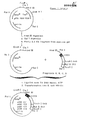
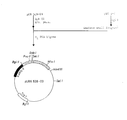
- This plasmid consists of the well-known plasmid YRp7 into which a 1.2 kb fragment containing the autonomously replicating sequence derived from KARS-2 has been cloned ( Figure 2).
- K. lactis SD11 was grown overnight at 30°C in 1% yeast extract, 2% peptone and 2% glucose (pH 5.3). The cells were harvested at OD 610 nm of 4-8 by centrifugation at 1000xg for 5 minutes. The cells were washed with TE-buffer (10 mM Tris-HC1, 1 mM EDTA, pH8.0) and the pellet was resuspended in TE-buffer at a concentration of 2 x 10 8 cells per ml. This suspension was diluted with one volume of 0.2 M LiCl and shaken at 30°C for 60 minutes.
- TE-buffer 10 mM Tris-HC1, 1 mM EDTA, pH8.0
- Plasmid pEK2-7 DNA (10 ug) was added to 0.1 ml of Li-treated cells and the incubation was continued at 30°C for 30 min. One volume of 70% polyethylene glycol 7000 was added and the mixture was incubated for another 60 minutes at 30°C. The mixture was exposed to heat treatment at 42°C for 5 minutes and the cells were washed with sterile, demineralized water. Cells were plated onto minimal agar containing 2% glucose and 0.67% yeast nitrogen base.
- the first plasmid pGB 180 was constructed by cloning the 3.5 kb Bgl II fragment from plasmid pEK2-7 ( Figure 2) containing the KARS-2 autonomously replicating sequence from K . lactis and the TRP1 gene from S. cerevisiae into the Bam Hl site of pJDB 207 (J.D. Beggs, Alfred Benzon Symposium 16 (1981) 383).
- Figure 2 K. fragilis leu mutants obtained after UV-treatment of K. fragilis were transformed with pGB by the Li + method as described in Example 14.
- the second plasmid, pGB 181 was constructed by cloning the 3.5 kb BglII fragment from pEK2-7 as described above into the Bam Hl site of the well-known plasmid pACYC184 which contains the transposon Tn601 conferring resistance to kanamycin and the gentamycin derivative G418.
- K. fragilis strain C12 was transformed with plasmid pGB 181 by the Li + method as described in Example 14.
- the transformed cells were plated onto YNPD-agar containing 50 F g of G418 per ml. Transformants were detected after incubation at 30°C for 48 hours, whereas spontaneous resistant mutants were detected only after 6 days.
- DNA was extracted from K. fragilis transformants and transformed into suitable E. coli DG 75 cells. DNA extracted from kanamycin-resistant E. coli cells showed the presence of plasmid pGB 181.
- K. fragilis strains can be transformed by plasmids containing KARS-sequences and that these plasmids are autonomously replicating in K. fragilis.
- This Example comprises a number of steps the most essential of which are:
- the plasmids pUR 1531, pUR 1522, pUR 1523 and pUR 1524 contain an Eco Rl restriction site just in front of the ATG initiation codon. Because an additional Eco Rl site is present within the chymosin gene, it was aimed to introduce a Sal I linker molecule just in front of the first Eco Rl site to facilitate the introduction of various promotor sequences directing the expression of the distal structural genes.
- DNA was incubated with 50 units of endonuclease Eco Rl in the presence of 125 M g/ml ethidiumbromide in 10 mM Tris-HCl, 50 mM NaCl, 6 mM beta-mercaptoethanol, 10mM MgCl 2 and 100 ug/ml bovine serum albumin, pH 7.5, at 37°C for 60 minutes. Plasmid DNA was predominantly converted to linear and open circular molecules under these conditions. The DNA was extracted with one volume of phenol and one volume of chloroform and precipitated with one volume of propanol-2.
- the DNA was dissolved in TE-buffer and completely digested with endonuclease Sal I. A DNA fragment of about 1800 bp was isolated from agarose gel by electroelution.
- the fragments were extracted with phenol and chloroform and precipitated with propanol-2.
- the precipitates were dissolved in TE-buffer.
- a phosphorylated Sal I-linker (prepared as described in Maniatis et al, Molecular Cloning, CSH) was added to this mixture together with T4 DNA ligase (10 3 Units).
- the fragments (A,B,C,D) were purified by phenol and chloroform extraction and precipitation with propanol-2.
- Hind III-Sal I fragment (about 0.5 pg) derived from plasmid pPA153-209 containing a temperature-sensitive replicon and an ampicillin resistant gene (encoding beta-lactamase), and purified from an agarose gel by electroelution.
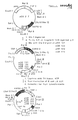
- the ligated molecules were transformed into E. coli HB 101 and ampicillin resistant, tetracyclin sensitive clones were cultured and plasmid DNA extracted. Digestion of plasmid DNA with enconucleases Sal I, Eco Rl and Hind III confirmed that the plasmids pGB131, pGB122, pGB123 and pGB124 ( Figure 1) were obtained.
- Sal I-digested plasmids containing the KARS-2 sequence, the TRP1 gene and the structural gene of preprochymosin or its various maturation forms are well suited to accept Sal I-linked promotor sequences to direct the synthesis of the distal structural gene in K. lactis transformants.
- promotor sequences have to be provided with Sal I linkers.
- Any promotor sequence can be provided with such a Sal I linker and in the following Examples this is illustrated with
- Plasmid pYeCYCl consisting of the isocytochrome cl gene cloned into plasmid pBR322 was used as the starting material (G. Faye et al., Proc. Natl. Acad. Sci. USA 78 (1981) 2258).
- Plasmid pYeCYCl was cleaved with endonuclease Eco R1, ligated with T4 DNA ligase and transformed into E. coli HB101, yielding a plasmid pCl5 containing the 1930 bp fragment carrying the promotor and 8 nucleotides of the isocytochrome cl gene.
- Plasmid pCl5 was cleaved with endonuclease Eco RI and incubated with nuclease Bal 31 for a short while to remove just a few nucleotides.
- the Bal 31 digested ends were converted to blunt-ends with DNA polymerase (Klenow fragment) and a phosphorylated Eco RI linker was ligated to this DNA. After incubation with endonuclease Eco RI, ligation and transformation into E. coli, a transformant pC15-R12 was indentified in which 12 nucleotides from the cytochrome cl gene had been removed.
- a Sal I linker was introduced by cleaving plasmid pC15-R12 with endonuclease Eco RI, filling in the cohesive ends with DNA polymerase, ligation of a phosphorylated Sal I linker, incubation with endonuclease Sal I and recloning the resulting 1070 bp fragment in the Sal I digested plasmids pGB151, pGB152, pGB153 and pGB154, respectively, yielding the isocytochrome cl promotor containing plasmids pGB161, pGBl62, pGB163 and pGB164, respectively as identified by colony hybridization with the 32 P-labeled 1070 bp fragment as probe. Plasmid DNA was prepared from the positive clones and the correct orientation of the isocytochrome cl promotor was confirmed by the presence of a 850 bp fragment after digestion with endonuclease Sma I.
- the starting material was plasmid pK16 containing the lactase gene from K. lactis cloned into the Eco RI site of plasmid pBR322 (R.C. Dickson and J.S. Markin, Cell 15 (1978), 123).
- Plasmid pKl6 was digested with endonuclease Cla I and the fragment containing the promotor and about 450 bp of the structural gene were recloned into the plasmid pBR322 digested with endonucleases Cla I and Acc I (partially).
- the retained Cla I site at about 450 bp in the lactase structural gene was opened by incubation with endonuclease Cla I and trimmed by incubation with nuclease BA1 31.
- the Bal 31 ends were rendered blunt-ends by incubation with DNA polymerase and a phosphorylated Eco RI linker was ligated to this trimmed fragment.
- Sal I linkers were added to this fragment as described in the previous example (16.C2).
- the Sal I linked lactase promotor was ligated to Sal I-cleaved plasmids pGB 151, pGB 152, pGB 153 and pGB 154, respectively, yielding plasmids pGB 171, pGB 172, pGB 173 and pGB 174, respectively.
- Plasmids obtained as described in this Example 16 were introduced into Kluyveromyces lactis SDll lac4 trpl by the L i + method as described in Example 14, selecting for Trp + transformants.
- Cell-extracts were prepared as follows: K. lactis transformants were grown at 30°C for about 16-24 hours in YNB-medium containing 2% dextrose.
- Cells were harvested at OD 610 nm between 2.2-6.0 by centrifugation at 6000 pm for 10 minutes in a Sorvall G-S3 rotor. The pellet was resuspended in sterile destilled water to OD 600 of 600 and chilled on ice.
- 0.5 ml of this cell suspension was diluted with 0.5 ml of ice-cold water and mixed with 2 g of Ballotini beads (diameter 0.25-0.35 mm Braun-Melsungen GMBH, GFR).
- the cells were disrupted by shaking for 4 minutes on a Vortex shaker at maximal speed.
- the filters were subsequently incubated with preincubation buffer (0.35M NaCl, 10 mM Tris-HC1 (pH 7.6), 2% bovine serum albumin) for 30 minutes.
- the filters were washed three times for 5 minutes with RIA-buffer (0.125M NaCl, 10 mM Tris-HC1, pH 7.6, 0.1 mM PMSF, 1% Triton X100, 0.5% sodium desoxy- cholatae, 0.1% sodium dodecylsulfate and 0.3% gelatin).
- the filters were incubated overnight at 4°C in 1 ml RIA buffer containing 10 1 of chymosin antiserum. Antiserum was removed by washing with RIA buffer (three times) and incubated with 1 fCi 125 I-protein A in 1 ml of RIA-buffer for 60 minutes at 22°C.
- 125 I -protein A was removed by washing with RIA buffer (5 times).
- the filters were dried and autoratiographed overnight.
- the solution was incubated for 15 minutes at 31°C.
- TCA trichloroacetic acid
- Denatured proteins are pelleted by centrifugation and 1 ml of the clear supernatant was neutralised with 0.4 ml of 1N NaOH.
- the solution was centrifuged again and the amount of GMP produced was detected with HPLC monitoring the extinction at 214 nm.
- Extracts from K. lactis transformants containing prochymosin were first incubated at pH 2 for 2 hours and subsequently neutralized before performing the chymosin activity test. Chymosin was only found after the pH 2 treatment.
- This Example comprises a number of steps the most essential of which are:
- a DNA pool of the yeast S. cerevisiae was prepared in the hybrid E. coli-yeast plasmid pFl (M.R. Chevallier et al., Gene 11 (1980) 11-19) by a method similar to the one described by M. Carlson and D. Botstein, Cell 28 (1982) 145-154.
- Purified yeast DNA was partially digested with restriction endonuclease Sau 3A and the resulting DNA fragments (with an average length of 5 kb) were ligated by T4 DNA ligase in the dephosphorylated Bam HI site of pFl 1. After transformation of CaCl 2 -treated E. coli cells with the ligated material a pool about 30.000 ampicillin resistant clones was obtained.
- plasmid pFl 1-33 was digested with Sal I and the three resulting DNA fragments were subjected to a Southern blot hybridization test with the chemically synthesized oligomer (E.M. Southern, J. Mol. Biol. 98 (1975) 503-517).
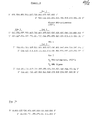
- a positively hybridizing 4.3 kb long restriction fragment was isolated on a preparative scale by electroelution from a 0.7% agarose gel and was then cleaved with Dde I. Of the resulting Dde I fragments only the largest one had a recognition site for Pvu II, a cleavage site located within the GADPH regulon region (Fig. 1). The largest Dde I fragment was isolated and incubated with Klenow DNA polymerase and four dNTP's (A.R. Davis et al., Gene 10 (1980) 205-218) to generate a blunt-ended DNA molecule.
- the DNA fragment was equipped with the 32p_ labeled Eco RI linker 5'GGAATTCC3' by incubation with T4 DNA ligase. Due to the Klenow polymerase reaction and the subsequent ligation of the Eco RI linker, the original Dde I sites were reconstructed at the end of the regulon fragment.
- the reaction mixture was heated to 65°C for 10 minutes, then sodium chloride was added (final concentration 50 mmol/1) and the whole mix was incubated with Eco RI. Incubation was terminated by extraction with phenol/chloroform, the DNA was precipitated twice with ethanol, resuspended and then ligated into a suitable vector molecule. Since the Dde I regulon fragment was equiped with Eco RI sites it can be easily introduced into the Eco RI site of pUR 528 (EP-PA 54331) to create a plasmid in which the yeast regulon is adjacent to the structural gene encoding preprothaumatin.
- the latter plasmid was obtained by cleavage of pUR 528 with Eco RI, treatment of the linearized plasmid molecule with (calf intestinal) phosphatase to prevent self-ligation and incubation of each of these vector molecules as well as the purified Dde I promotor fragment with T4 DNA ligase. Transformation of the various ligation mixes in CaCl 2 -treated E. coli HB101 cells yielded several ampicillin resistant colonies. From some of these colonies plasmid DNA was isolated (H.C. Birnboim and J. Doly, Nucleic Acids Res. 7 (1979) 1513-1523) and incubated with PvuII to test the orientation of the insert.
- plasmids containing the Eco RI (Dde I) GAPDH regulon fragment in the correct orientation are indicated by the addendum-01 to the original code of the plasmid (for example pUR 528 is changed in pUR 528-01; see Fig. 7).
- plasmid DNA e.g. pUR 528-01
- 5 units Mung bean nuclease obtained from P.L. Biochemicals Inc.
- the nuclease was inactivated by addition of SDS to a final concentration of 0.1% (D.
- Plasmids containing the GAPDH promotor fragment but having only a single Eco RI recognition site adjacent to the ATG initiation codon of a downstream located structural gene are referred to as -02 type plasmids (for example: pUR 528-01 is changed in pUR 528-02; see Fig. 7).
- the Eco RI (Dde I) GAPDH promotor fragment contains the nucleotides -850 to -39 of the original GAPDH promoter/regulation region. Not contained in this promoter fragment are the 38 nucleotides preceding the ATG initiation codon of the GAPDH encoding gene.
- the latter 38-nucleotides long fragment contains the PuCACACA sequence, which is found in several yeast genes. Said puCACACA sequence situated about 20 bp upstream of the translation start site (M.J.
- nucleic Acid Res. 10 (1982) 2625-2637) provides the nucleotide sequence upstream of the ATG codon which is optimal for protein initiation (M. Kozak, Nucleic Acids Res. 9 (1981) 5233-5252). Moreover, these nucleotides allow the formation of a small loop structure which might be involved in the regulation of expression of the GAPDH gene.
- the missing DNA fragment was obtained by the chemical synthesis of two partially overlapping oligomers.
- the Sac I site present in the overlapping part of the two oligonucleotides was introduced for two reasons: (i) to enable manipulation of the nucleotide sequence immediately upstream of the ATG codon including the construction of poly A-tailed yeast expression vectors; (ii) to give a cleavage site for an enzyme generating 3'- protruding ends that can easily and reproducibly be removed by incubation with T4 DNA polymerase in the presence of the four dNTP's. Equimolar amounts of the two purified oligomers were phosphorylated at their 5'-termini, hybridized (J.J.
- the DNA was then phosphorylated by incubation with polynucleotide kinase and digested with Dde I. To remove the nucleotides cleaved off in the latter reaction, the reaction mix was subjected to two precipitations with ethanol.
- cloning of the resulting synthetic DNA fragment was carried out by the simultaneous ligation of this fragment and a BgIII-DdeI GAPDH promoter regulation fragment in a vector molecule from which the Eco RI site preceding the ATG initiation codon was removed by Mung bean nuclease digestion (cf. E.).
- the BglII-DdeI promoter/regulation fragment was obtained by digestion of plasmid pUR 528-02 with DdeI and BglII. Separation of the resulting restriction fragments by electrophoresis through a 2% agarose gel and subsequent isolation of the fragment from the gel yielded the purified 793 nucleotides long promotor/ regulation fragment.
- the nucleotide sequence preceding the ATG codon is 5'-GAATTC(T)ATG-3' (EP-PA 54330 and EP-PA 54331), which is different from the favourable nucleotide sequence given by M. Kozak (Nucleic Acids Res. 9 (1981) 5233-5252). Since our aim was to reconstitute the original GAPDH promotor/regulation/protein initiation region as accurately as possible, the Eco RI site was removed in order to ligate the synthetic DNA fragment to the resulting blunt-end. Removal of the Eco RI site was accomplished by Mung bean nuclease digestion of Eco RI-cleaved pUR 528-02 DNA.
- the plasmid DNA was digested with BglII and incubated with phosphatase. After separation of the two DNA fragments by electrophoresis through a 0.7% agarose gel, the largest fragment was isolated and used as the vector in which the BgIII-DdeI promoter fragment as well as the -DdeI- treated - synthetic DNA fragment were ligated.
- Plasmids in which the DdeI promoter/regulation fragment together with the Sac I recognition site containing synthetic DNA fragment are introduced are indicated by the addendum -03 (for example: pUR 528-02 is changed into pUR 528-03).
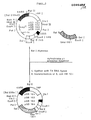
- the KARS2 replicon and the TRP1 gene were excised from pEK 2-7 by digestion with Bgl II, followed by isolation from a 0.7% agarose gel of the 3.5 kb fragment. This purified fragment was inserted in the dephosphorylated Bgl II cleavage site of pUR 528-03 by incubation with T4 DNA ligase. Transformation of the ligation mix in E. coli yielded plasmid pURK 528-03 (Fig. 10). Transformants generated by the introduction of plasmid pURK 528-03 into K. lactis SD11 cells by the Li + method were shown to synthesize thaumatin-like proteins assayed as described by L. Edens et al., Gene 18 (1982) 1-12, see Fig. 11.
Landscapes
- Health & Medical Sciences (AREA)
- Life Sciences & Earth Sciences (AREA)
- Genetics & Genomics (AREA)
- Chemical & Material Sciences (AREA)
- Engineering & Computer Science (AREA)
- Organic Chemistry (AREA)
- Bioinformatics & Cheminformatics (AREA)
- Zoology (AREA)
- Wood Science & Technology (AREA)
- Biomedical Technology (AREA)
- Biotechnology (AREA)
- General Engineering & Computer Science (AREA)
- Molecular Biology (AREA)
- Biochemistry (AREA)
- General Health & Medical Sciences (AREA)
- Microbiology (AREA)
- Biophysics (AREA)
- Medicinal Chemistry (AREA)
- Physics & Mathematics (AREA)
- Mycology (AREA)
- Plant Pathology (AREA)
- Proteomics, Peptides & Aminoacids (AREA)
- Gastroenterology & Hepatology (AREA)
- Botany (AREA)
- Micro-Organisms Or Cultivation Processes Thereof (AREA)
- Preparation Of Compounds By Using Micro-Organisms (AREA)
- Medicines Containing Material From Animals Or Micro-Organisms (AREA)
- Enzymes And Modification Thereof (AREA)
- Medicines That Contain Protein Lipid Enzymes And Other Medicines (AREA)
- Pyrane Compounds (AREA)
Priority Applications (1)
| Application Number | Priority Date | Filing Date | Title |
|---|---|---|---|
| AT83200714T ATE49421T1 (de) | 1982-05-19 | 1983-05-19 | Klonierungssystem fuer kluyveromyce spezies. |
Applications Claiming Priority (2)
| Application Number | Priority Date | Filing Date | Title |
|---|---|---|---|
| NL8202091 | 1982-05-19 | ||
| NL8202091 | 1982-05-19 |
Publications (3)
| Publication Number | Publication Date |
|---|---|
| EP0096430A1 true EP0096430A1 (de) | 1983-12-21 |
| EP0096430B1 EP0096430B1 (de) | 1990-01-10 |
| EP0096430B2 EP0096430B2 (de) | 1998-04-01 |
Family
ID=19839766
Family Applications (2)
| Application Number | Title | Priority Date | Filing Date |
|---|---|---|---|
| EP83200714A Expired - Lifetime EP0096430B2 (de) | 1982-05-19 | 1983-05-19 | Klonierungssystem für kluyveromyce Spezies |
| EP83200712A Expired EP0096910B1 (de) | 1982-05-19 | 1983-05-19 | Hefe des Genus Kluyveromyces, modifiziert zur Expression von Preprothaumatin oder seinen verschiedenen allelischen und modifizierten Formen oder Maturationsformen |
Family Applications After (1)
| Application Number | Title | Priority Date | Filing Date |
|---|---|---|---|
| EP83200712A Expired EP0096910B1 (de) | 1982-05-19 | 1983-05-19 | Hefe des Genus Kluyveromyces, modifiziert zur Expression von Preprothaumatin oder seinen verschiedenen allelischen und modifizierten Formen oder Maturationsformen |
Country Status (20)
| Country | Link |
|---|---|
| US (2) | US4657857A (de) |
| EP (2) | EP0096430B2 (de) |
| JP (3) | JPS59501572A (de) |
| AR (1) | AR241796A1 (de) |
| AT (2) | ATE49421T1 (de) |
| AU (1) | AU571181B2 (de) |
| BR (1) | BR8307525A (de) |
| CA (1) | CA1224735A (de) |
| DE (2) | DE3379665D1 (de) |
| DK (1) | DK173699B1 (de) |
| ES (1) | ES522556A0 (de) |
| FI (1) | FI81379C (de) |
| GR (1) | GR78852B (de) |
| HU (1) | HU204097B (de) |
| IE (1) | IE55817B1 (de) |
| IL (1) | IL68733A (de) |
| NO (1) | NO172397C (de) |
| NZ (1) | NZ204302A (de) |
| PT (1) | PT76727B (de) |
| WO (2) | WO1983004050A1 (de) |
Cited By (32)
| Publication number | Priority date | Publication date | Assignee | Title |
|---|---|---|---|---|
| EP0109559A1 (de) * | 1982-10-20 | 1984-05-30 | SUNTORY KABUSHIKI KAISHA, also known as SUNTORY LTD. | Plasmidvektor für Hefe mit hoher Zweckmässigkeit und Verfahren zu dessen Verwendung |
| WO1984004538A1 (fr) * | 1983-05-19 | 1984-11-22 | Unilever Nv | Ameliorations apportees a l'expression de genes fraichement introduits dans des cellules de levure |
| EP0139501A3 (de) * | 1983-10-11 | 1986-10-15 | Beatrice Companies, Inc. | Herstellung und Expression von Genen für Thaumatin |
| EP0183071A3 (en) * | 1984-10-30 | 1987-09-23 | Phillips Petroleum Company | Regulatory region for heterologous gene expression in yeast |
| EP0183070A3 (en) * | 1984-10-30 | 1987-09-30 | Phillips Petroleum Company | Transformation of yeasts of the genus pichia |
| EP0257115A1 (de) * | 1986-08-21 | 1988-03-02 | Heineken Technisch Beheer B.V. | Durch rekombinante DNS-Technologie konstruierte amylolytische enzymproduzierende Mikroorganismen und ihre Verwendung in Gärungsverfahren |
| EP0260404A3 (en) * | 1986-08-21 | 1988-07-06 | Heineken Technisch Beheer B.V. | Amylolytic enzymes producing microorganisms constructed by recombinant dna technology and their use for fermentation processes |
| EP0241435A3 (en) * | 1986-03-27 | 1988-09-14 | Univ Roma | Vectors for the cloning and expression of heterologous genes in yeast and the yeast strains transformed by said vectors |
| EP0301670A1 (de) * | 1987-07-28 | 1989-02-01 | Gist-Brocades N.V. | Kluyveromyces als Wirtsstamm |
| US5151354A (en) * | 1986-08-21 | 1992-09-29 | Cornelius Hollenberg | Fermentation processes using amylolytic enzyme producing microorganisms |
| EP0707068A1 (de) * | 1984-05-22 | 1996-04-17 | Omnigene Inc | Hefevektor |
| US5932438A (en) * | 1994-04-21 | 1999-08-03 | Urquima, S.A. | Preparation of thaumatin sweeteners |
| US6214577B1 (en) | 1984-05-22 | 2001-04-10 | Robert Rogers Yocum | Yeast vectors conferring antibiotic resistance |
| US6602682B1 (en) * | 1982-05-19 | 2003-08-05 | Dsm N.V. | Kluyveromyces as a host strain |
| EP1762243A1 (de) | 1999-03-31 | 2007-03-14 | Oxford Biomedica (UK) Ltd | Faktor zur Regulierung des Neuritenwachstums |
| WO2008101893A2 (en) | 2007-02-20 | 2008-08-28 | Dsm Ip Assets B.V. | Novel sialidase |
| WO2008113799A1 (en) | 2007-03-22 | 2008-09-25 | Dsm Ip Assets B.V. | Novel lysyl oxidases |
| EP2042196A2 (de) | 2001-10-10 | 2009-04-01 | Neose Technologies, Inc. | Neumodulierung und Glykokonjugation von Granulozyten-Kolonie stimulierender Faktor (G-CSF) |
| US7527953B2 (en) | 2002-07-25 | 2009-05-05 | Dsm Ip Assets B.V. | Genes from Propionibacterium freudenreichii encoding enzymes involved in vitamin B12 biosynthesis |
| EP2175013A1 (de) | 2000-12-07 | 2010-04-14 | DSM IP Assets B.V. | Mit Carboxy-Terminal Prolin Peptide angereicherte Proteinhydrolysate |
| EP2177503A1 (de) | 2004-02-20 | 2010-04-21 | UCL Business PLC | Cannabinoid-rezeptormodulatoren |
| EP2202240A1 (de) | 2000-08-18 | 2010-06-30 | Sterix Limited | Verbindung |
| EP2338333A2 (de) | 2003-04-09 | 2011-06-29 | BioGeneriX AG | Glycopegylierungsverfahren und durch die Verfahren hergestellte Proteine/Peptide |
| EP2341146A2 (de) | 2001-07-05 | 2011-07-06 | Imperial College Innovations Limited | Methode zur Bestimmung der Chromatinstruktur |
| WO2011101339A2 (en) | 2010-02-18 | 2011-08-25 | Dsm Ip Assets B.V. | Fermentation broth and filtration filter cake and uses thereof |
| WO2012007446A1 (en) | 2010-07-13 | 2012-01-19 | Dsm Ip Assets B.V. | Use of a mutarotase in the production of dried powders |
| WO2012007445A1 (en) | 2010-07-13 | 2012-01-19 | Dsm Ip Assets B.V. | Mutarotase in crystallization |
| US8119171B2 (en) | 2000-12-07 | 2012-02-21 | Dsm Ip Assets B.V. | Method for the prevention or reduction of haze in beverages |
| EP2439266A2 (de) | 2005-11-28 | 2012-04-11 | DSM IP Assets B.V. | Enzympräparate zur Abgabe eines schlechten Geschmacks |
| US8257760B2 (en) | 2002-06-07 | 2012-09-04 | Dsm Ip Assets B.V. | Method for the prevention or reduction of haze in beverages |
| US8372620B2 (en) | 1998-12-23 | 2013-02-12 | Dupont Nutrition Biosciences Aps | Bacterial xylanases |
| US9670473B2 (en) | 2006-01-10 | 2017-06-06 | Angiodesign (Uk) Limited | Crystals of angiotensin-converting enzyme (ACE) |
Families Citing this family (33)
| Publication number | Priority date | Publication date | Assignee | Title |
|---|---|---|---|---|
| JPS58146281A (ja) * | 1981-10-19 | 1983-08-31 | Suntory Ltd | 酵母細胞の形質転換法 |
| JPS59501572A (ja) * | 1982-05-19 | 1984-09-06 | ユニリーバー ナームローゼ ベンノートシヤープ | クルイベロミセス属酵母およびその製造法 |
| CA1341302C (en) * | 1983-02-22 | 2001-10-09 | Rae Lyn Burke | Yeast expression systems with vectors having gapdh or pyk promoters and synthesis of foreign protein |
| US4876197A (en) * | 1983-02-22 | 1989-10-24 | Chiron Corporation | Eukaryotic regulatable transcription |
| US5422267A (en) * | 1984-05-22 | 1995-06-06 | Robert R. Yocum | Industrial yeast comprising an integrated glucoamylase gene |
| US5240838A (en) * | 1984-07-27 | 1993-08-31 | Internationale Otrool Maatschappij "Octropa" B.V. | Regulatory sequences of alcohol oxidase (MOX) and dihydroxyacetonesynthase (DAS) of Hansenula polymorpha |
| US5741672A (en) * | 1984-07-27 | 1998-04-21 | Unilever Patent Holdings B.V. | Expression and production of polypeptides using the promoters of the hansenula polymorpha MOX and DAS genes |
| US4837148A (en) * | 1984-10-30 | 1989-06-06 | Phillips Petroleum Company | Autonomous replication sequences for yeast strains of the genus pichia |
| US5047340A (en) * | 1985-06-05 | 1991-09-10 | The University Of Kentucky Research Foundation | LAC+ saccharomyces cerevisiae |
| CA1310923C (en) * | 1985-11-13 | 1992-12-01 | Joachim Ludwig Weickmann | Dna encoding [asp --] and [lys -, asp --] thaumatin i |
| CA1339101C (en) * | 1986-06-03 | 1997-07-29 | Nicolaas Overbeeke | Production of guar alpha-galactosidase and immunologically related alpha-galactosidases by host organisms transformed with recombinant dna methods |
| US5882884A (en) * | 1987-06-19 | 1999-03-16 | Lucky Biotech Corporation | Expression of proteinaceous sweeteners in yeast |
| FR2649991B2 (fr) | 1988-08-05 | 1994-03-04 | Rhone Poulenc Sante | Utilisation de derives stables du plasmide pkd1 pour l'expression et la secretion de proteines heterologues dans les levures du genre kluyveromyces |
| US5221624A (en) * | 1988-11-08 | 1993-06-22 | International Genetic Engineering, Inc. | DNA encoding (Lys46, Asp97, Asp113) and (Lys46, Asp.sup.137) thaumatin I polypeptides |
| US5204252A (en) * | 1989-02-08 | 1993-04-20 | Henkel Research Corporation | Candida tropicalis transformation system |
| AU638438B2 (en) | 1989-02-24 | 1993-07-01 | Monsanto Technology Llc | Synthetic plant genes and method for preparation |
| US20010003849A1 (en) | 1989-08-07 | 2001-06-14 | Kenneth A. Barton | Expression of genes in plants |
| US5264554A (en) * | 1990-01-19 | 1993-11-23 | The Blood Center Of Southeastern Wisconsin, Inc. | Platelet cell adhesion molecule and variants thereof |
| FR2678636A1 (fr) * | 1991-07-02 | 1993-01-08 | Rhone Poulenc Rorer Sa | Procede de production de proteines recombinantes et cellules hote utilisees. |
| FR2680518A1 (fr) * | 1991-08-21 | 1993-02-26 | Rhone Poulenc Rorer Sa | Promoteur de levure et son utilisation. |
| US5837517A (en) * | 1995-05-05 | 1998-11-17 | Novo Nordisk A/S | Protease variants and compositions |
| US6682924B1 (en) * | 1995-05-05 | 2004-01-27 | Novozymes A/S | Protease variants and compositions |
| US6265186B1 (en) | 1997-04-11 | 2001-07-24 | Dsm N.V. | Yeast cells comprising at least two copies of a desired gene integrated into the chromosomal genome at more than one non-ribosomal RNA encoding domain, particularly with Kluyveromyces |
| ATE398181T1 (de) * | 1997-04-11 | 2008-07-15 | Dsm Ip Assets Bv | Hefezellen welche zumindest zwei kopien von einem erwünschten gens enthalt und integrierte in dem chromosomal genom auf mehr als einem nicht- ribosomaler rns kodierende bereich, ins besonders mit kluyveromyces |
| ES2154995B1 (es) * | 1998-11-20 | 2001-11-16 | Consejo Superior Investigacion | Levadura panadera recombinante capaz de asimilar lactosa. |
| WO2000071738A1 (en) | 1999-05-21 | 2000-11-30 | Cargill Dow Llc | Methods and materials for the synthesis of organic products |
| DE19943383B4 (de) * | 1999-09-10 | 2006-03-16 | Tad Pharma Gmbh | Regulatorische Sequenzen und Expressionskassetten für Hefen |
| CA2418777A1 (en) * | 2000-08-10 | 2003-02-10 | Ono Pharmaceutical Co., Ltd. | Glycerylaldehyde-3-phosphate dehydrogenase promoter which induces apoptosis |
| US7141410B2 (en) * | 2000-11-22 | 2006-11-28 | Natureworks Llc | Methods and materials for the production of organic products in cells of Candida species |
| BR0115558A (pt) | 2000-11-22 | 2004-08-17 | Cargill Dow Polymers Llc | ácido nucleico isolado, construção de expressão recombinante, célula de levedura transformada com a construção de expressão recombinante, e, método para produzir ácido lático |
| US7517671B2 (en) | 2002-02-28 | 2009-04-14 | New England Biolabs, Inc. | Methods and compositions for concentrating secreted recombinant protein |
| WO2011105841A2 (ko) * | 2010-02-24 | 2011-09-01 | 중앙대학교 산학협력단 | 브라제인 발현용 재조합 발현벡터 및 높은 단맛을 가지는 신규한 브라제인 다중 변이체 |
| WO2021178805A1 (en) | 2020-03-06 | 2021-09-10 | Gevo, Inc. | Novel nkr variants for increased production of isobutanol |
Citations (8)
| Publication number | Priority date | Publication date | Assignee | Title |
|---|---|---|---|---|
| US4237224A (en) | 1974-11-04 | 1980-12-02 | Board Of Trustees Of The Leland Stanford Jr. University | Process for producing biologically functional molecular chimeras |
| EP0045573A2 (de) * | 1980-08-05 | 1982-02-10 | The Board Of Trustees Of The Leland Stanford Junior University | Eukaryotisches Segment mit autonomer Replikation |
| EP0048081A2 (de) * | 1980-09-09 | 1982-03-24 | The Regents Of The University Of California | DNS, fähig zur Replikation und zur stabilen mitotischen Instandhaltung in einem eukaryotischen Wirt, Verfahren zu ihrer Herstellung und diese enthaltende eukaryotische Zelle |
| EP0057350A2 (de) * | 1981-01-16 | 1982-08-11 | Collaborative Research Inc. | Rekombinante DNS-Mittel und Verfahren |
| GB2094341A (en) * | 1981-03-09 | 1982-09-15 | Mitsubishi Chem Ind | Killer yeasts |
| EP0060057A1 (de) * | 1981-02-25 | 1982-09-15 | Genentech, Inc. | Expression von Polypeptiden in Hefen |
| EP0073635A2 (de) * | 1981-08-25 | 1983-03-09 | Celltech Limited | Expressionsvektoren |
| EP0077109A2 (de) | 1981-10-14 | 1983-04-20 | Unilever N.V. | DNS Moleküle enthaltend die Gene für Preprochymosin und dessen Reifungsformen und dadurch transformierte Mikroorganismen |
Family Cites Families (5)
| Publication number | Priority date | Publication date | Assignee | Title |
|---|---|---|---|---|
| FR2441659A1 (fr) * | 1978-11-14 | 1980-06-13 | Anvar | Nouveaux plasmides hybrides et microorganismes les contenant |
| WO1982002091A1 (en) * | 1980-12-10 | 1982-06-24 | Instruments Inc Beckman | Entraining vaporized sample in metastable gas |
| DE3177281T2 (de) * | 1980-12-12 | 1992-12-10 | Unilever Nv | Strukturgene, die fuer die verschiedenen allelischen und reifungsformen von praeprothaumatin und deren mutanten kodieren, diese strukturgene enthaltende klonierungsvektoren und deren expression in mikrobiellen wirtzellen. |
| DE3175357D1 (en) * | 1980-12-12 | 1986-10-23 | Unilever Nv | Dna sequences encoding various allelic forms of mature thaumatin, recombinant plasmids comprising said dna's and a process for their preparation, bacterial cultures comprising said recombinant plasmids, and method for producing mature thaumatin |
| JPS59501572A (ja) * | 1982-05-19 | 1984-09-06 | ユニリーバー ナームローゼ ベンノートシヤープ | クルイベロミセス属酵母およびその製造法 |
-
1983
- 1983-05-19 JP JP58501746A patent/JPS59501572A/ja active Granted
- 1983-05-19 AU AU15539/83A patent/AU571181B2/en not_active Expired
- 1983-05-19 HU HU832272A patent/HU204097B/hu not_active IP Right Cessation
- 1983-05-19 ES ES522556A patent/ES522556A0/es active Granted
- 1983-05-19 AR AR83293108A patent/AR241796A1/es active
- 1983-05-19 EP EP83200714A patent/EP0096430B2/de not_active Expired - Lifetime
- 1983-05-19 AT AT83200714T patent/ATE49421T1/de not_active IP Right Cessation
- 1983-05-19 PT PT76727A patent/PT76727B/pt unknown
- 1983-05-19 BR BR8307525A patent/BR8307525A/pt unknown
- 1983-05-19 WO PCT/EP1983/000128 patent/WO1983004050A1/en not_active Ceased
- 1983-05-19 IE IE1185/83A patent/IE55817B1/en not_active IP Right Cessation
- 1983-05-19 CA CA000428497A patent/CA1224735A/en not_active Expired
- 1983-05-19 DE DE8383200712T patent/DE3379665D1/de not_active Expired
- 1983-05-19 DE DE8383200714T patent/DE3381090D1/de not_active Expired - Lifetime
- 1983-05-19 IL IL68733A patent/IL68733A/xx unknown
- 1983-05-19 US US06/570,984 patent/US4657857A/en not_active Expired - Fee Related
- 1983-05-19 AT AT83200712T patent/ATE42338T1/de not_active IP Right Cessation
- 1983-05-19 GR GR71403A patent/GR78852B/el unknown
- 1983-05-19 JP JP58501749A patent/JP2608540B2/ja not_active Expired - Lifetime
- 1983-05-19 WO PCT/EP1983/000129 patent/WO1983004051A1/en not_active Ceased
- 1983-05-19 EP EP83200712A patent/EP0096910B1/de not_active Expired
- 1983-05-20 NZ NZ204302A patent/NZ204302A/en unknown
-
1984
- 1984-01-11 DK DK198400113A patent/DK173699B1/da not_active IP Right Cessation
- 1984-01-13 NO NO84840133A patent/NO172397C/no not_active IP Right Cessation
- 1984-01-16 FI FI840149A patent/FI81379C/fi not_active IP Right Cessation
- 1984-01-19 US US06/572,414 patent/US4859596A/en not_active Expired - Lifetime
-
1986
- 1986-02-26 JP JP61041331A patent/JPH0685720B2/ja not_active Expired - Lifetime
Patent Citations (8)
| Publication number | Priority date | Publication date | Assignee | Title |
|---|---|---|---|---|
| US4237224A (en) | 1974-11-04 | 1980-12-02 | Board Of Trustees Of The Leland Stanford Jr. University | Process for producing biologically functional molecular chimeras |
| EP0045573A2 (de) * | 1980-08-05 | 1982-02-10 | The Board Of Trustees Of The Leland Stanford Junior University | Eukaryotisches Segment mit autonomer Replikation |
| EP0048081A2 (de) * | 1980-09-09 | 1982-03-24 | The Regents Of The University Of California | DNS, fähig zur Replikation und zur stabilen mitotischen Instandhaltung in einem eukaryotischen Wirt, Verfahren zu ihrer Herstellung und diese enthaltende eukaryotische Zelle |
| EP0057350A2 (de) * | 1981-01-16 | 1982-08-11 | Collaborative Research Inc. | Rekombinante DNS-Mittel und Verfahren |
| EP0060057A1 (de) * | 1981-02-25 | 1982-09-15 | Genentech, Inc. | Expression von Polypeptiden in Hefen |
| GB2094341A (en) * | 1981-03-09 | 1982-09-15 | Mitsubishi Chem Ind | Killer yeasts |
| EP0073635A2 (de) * | 1981-08-25 | 1983-03-09 | Celltech Limited | Expressionsvektoren |
| EP0077109A2 (de) | 1981-10-14 | 1983-04-20 | Unilever N.V. | DNS Moleküle enthaltend die Gene für Preprochymosin und dessen Reifungsformen und dadurch transformierte Mikroorganismen |
Non-Patent Citations (43)
| Title |
|---|
| A. HINNEN ET AL., PROC. NATL. ACAD. SCI. USA, vol. 75, 1978, pages 1929 |
| A. JIMENEZ; J. DAVIS, NATURE, vol. 287, 1980, pages 869 - 871 |
| A.C.M. HOOYDONK; C. OLIEMAN, NETHERL. MILK DAIRY, vol. 36, 1982, pages 153 |
| A.R. DAVIS ET AL., GENE, vol. 10, 1980, pages 205 - 218 |
| C.P. HOLLENBERG ET AL., GENE, vol. 1, 1976, pages 33 - 47 |
| C.P. HOLLENBERG, CURRENT TOPICS IN MICROBIOLOGY AND IMMUNOLOGY, vol. 96, 1982, pages 119 - 144 |
| CURRENT TOPICS IN MICROBIOLOGY AND IMMUNOLOGY, vol. 96, 1982, pages 119 - 144 |
| D. BEACH; P. NURSE, NATURE, vol. 290, 1981, pages 140 - 142 |
| D. KOWALSKI ET AL., BIOCHEMISTRY, vol. 15, 1976, pages 4457 - 4463 |
| D.J. KEMP; A.F. COWMAN, PROC. NATL. ACAD. SCI. USA, vol. 78, 1981, pages 4520 - 4524 |
| E. ERHART; C.P. HOLLENBERG, CURRENT GENETICS, vol. 3, 1981, pages 83 - 89 |
| E.M. SOUTHERN, J. MOL. BIOL., vol. 98, 1975, pages 503 - 517 |
| F. BOLIVAR; K. BACKMAN, METHODS IN ENZYMOLOGY, vol. 68, 1979, pages 245 - 267 |
| G. FAYE ET AL., PROC. NATL. ACAD. SCI. USA, vol. 78, 1981, pages 2258 |
| GENE, vol. 10, 1980, pages 347-356, Elsevier/North-Holland Biomedical Press * |
| GENE, vol. 15, 1981, pages 157-166, Elsevier/North-Holland Biomedical Press * |
| H.C. BIRNBOIM; J. DOLY, NUCLEIC ACIDS RES., vol. 7, 1979, pages 1513 - 1523 |
| HOLLENBERG: "Extrachromosomal DNA, ICN-UCLA Symp.", vol. 15, 1979, ACAD. PRESS, pages: 325 - 338 |
| ITO ET AL., J. BACTERIOL., vol. 153, 1983, pages 163 - 168 |
| J.D. BEGGS, ALFRED BENZON SYMPOSIUM, vol. 16, 1981, pages 383 |
| J.D. BEGGS, NATURE, vol. 275, 1978, pages 104 - 109 |
| J.J. ROSSI ET AL., J. BIOL. CHEM., vol. 257, 1982, pages 9226 - 9229 |
| J.P. HOLLAND; M.J. HOLLAND, J. BIOL. CHEM., vol. 255, 1980, pages 2596 - 2605 |
| JOURNAL OF BACTERIOLOGY, vol. 147, no. 1, July 1981, pages 155-160, * |
| K. STRUHL ET AL., PROC. NATL. ACAD. SCI. USA, vol. 76, 1979, pages 1035 - 1039 |
| L. EDENS ET AL., GENE, vol. 18, 1982, pages 1 - 12 |
| L. KATZ ET AL., J. BACTERIOL., vol. 114, 1973, pages 577 |
| L. KATZ ET AL., J. BACTERIOL., vol. 114, 1973, pages 577 - 591 |
| M. CARLSON; D. BOTSTEIN, CELL, vol. 28, 1982, pages 145 - 154 |
| M. KOZAK, NUCLEIC ACIDS RES., vol. 9, 1981, pages 5233 - 5252 |
| M.J. DOBSON ET AL., NUCLEIC ACID RES., vol. 10, 1982, pages 2625 - 2637 |
| M.R. CHEVALLIER ET AL., GENE, vol. 11, 1980, pages 11 - 19 |
| MANIATIS ET AL.: "Molecular Cloning", CSH |
| NATURE, vol. 293, 29th October 1981, pages 717-722, Macmillan Journals Ltd. * |
| PATENTS ABSTRACTS OF JAPAN * |
| PATENTS ABSTRACTS OF JAPAN, vol. 5, no. 98(C-60)(770), 25th June 1981, & JP - A - 56 39099 (MITSUBISHI KASEI KOGYO K.K.) 14-04-1981 * |
| R. DICKSON, GENE, vol. 10, 1980, pages 347 - 356 |
| R.B. WALLACE ET AL., NUCLEIC ACID RES., vol. 9, 1981, pages 879 - 894 |
| R.C. DICKSON ET AL., CELL, vol. 15, 1978, pages 123 - 130 |
| R.C. DICKSON; J.S. MARKIN, CELL, vol. 15, 1978, pages 123 |
| R.E. THAYER, ANAL. BIOCHEM., vol. 98, 1979, pages 60 - 63 |
| STRUHL ET AL., PROC. NATL. ACAD. SCI., vol. 76, 1979, pages 1035 - 1039 |
| STRUHL ET AL., PROC. NATL. ACAD. SCI., vol. 76, 1979, pages 1035 - 39 |
Cited By (45)
| Publication number | Priority date | Publication date | Assignee | Title |
|---|---|---|---|---|
| US6602682B1 (en) * | 1982-05-19 | 2003-08-05 | Dsm N.V. | Kluyveromyces as a host strain |
| EP0109559A1 (de) * | 1982-10-20 | 1984-05-30 | SUNTORY KABUSHIKI KAISHA, also known as SUNTORY LTD. | Plasmidvektor für Hefe mit hoher Zweckmässigkeit und Verfahren zu dessen Verwendung |
| WO1984004538A1 (fr) * | 1983-05-19 | 1984-11-22 | Unilever Nv | Ameliorations apportees a l'expression de genes fraichement introduits dans des cellules de levure |
| EP0129268A3 (en) * | 1983-05-19 | 1985-06-19 | Unilever Nv | Improvements in the expression of newly introduced genes in yeast cells |
| EP0139501A3 (de) * | 1983-10-11 | 1986-10-15 | Beatrice Companies, Inc. | Herstellung und Expression von Genen für Thaumatin |
| EP0707068A1 (de) * | 1984-05-22 | 1996-04-17 | Omnigene Inc | Hefevektor |
| US6214577B1 (en) | 1984-05-22 | 2001-04-10 | Robert Rogers Yocum | Yeast vectors conferring antibiotic resistance |
| EP0183071A3 (en) * | 1984-10-30 | 1987-09-23 | Phillips Petroleum Company | Regulatory region for heterologous gene expression in yeast |
| EP0183070A3 (en) * | 1984-10-30 | 1987-09-30 | Phillips Petroleum Company | Transformation of yeasts of the genus pichia |
| EP0241435A3 (en) * | 1986-03-27 | 1988-09-14 | Univ Roma | Vectors for the cloning and expression of heterologous genes in yeast and the yeast strains transformed by said vectors |
| US5151354A (en) * | 1986-08-21 | 1992-09-29 | Cornelius Hollenberg | Fermentation processes using amylolytic enzyme producing microorganisms |
| EP0260404A3 (en) * | 1986-08-21 | 1988-07-06 | Heineken Technisch Beheer B.V. | Amylolytic enzymes producing microorganisms constructed by recombinant dna technology and their use for fermentation processes |
| EP0257115A1 (de) * | 1986-08-21 | 1988-03-02 | Heineken Technisch Beheer B.V. | Durch rekombinante DNS-Technologie konstruierte amylolytische enzymproduzierende Mikroorganismen und ihre Verwendung in Gärungsverfahren |
| EP0301670A1 (de) * | 1987-07-28 | 1989-02-01 | Gist-Brocades N.V. | Kluyveromyces als Wirtsstamm |
| AU628018B2 (en) * | 1987-07-28 | 1992-09-10 | Dsm Ip Assets B.V. | Kluyveromyces as a host strain |
| US5932438A (en) * | 1994-04-21 | 1999-08-03 | Urquima, S.A. | Preparation of thaumatin sweeteners |
| US8372620B2 (en) | 1998-12-23 | 2013-02-12 | Dupont Nutrition Biosciences Aps | Bacterial xylanases |
| EP1762243A1 (de) | 1999-03-31 | 2007-03-14 | Oxford Biomedica (UK) Ltd | Faktor zur Regulierung des Neuritenwachstums |
| EP2202240A1 (de) | 2000-08-18 | 2010-06-30 | Sterix Limited | Verbindung |
| EP2175013A1 (de) | 2000-12-07 | 2010-04-14 | DSM IP Assets B.V. | Mit Carboxy-Terminal Prolin Peptide angereicherte Proteinhydrolysate |
| US8119171B2 (en) | 2000-12-07 | 2012-02-21 | Dsm Ip Assets B.V. | Method for the prevention or reduction of haze in beverages |
| EP2341146A2 (de) | 2001-07-05 | 2011-07-06 | Imperial College Innovations Limited | Methode zur Bestimmung der Chromatinstruktur |
| EP2305313A2 (de) | 2001-10-10 | 2011-04-06 | BioGeneriX AG | Neumodulierung und Glykokonjugation von Interferon alpha (IFNa) |
| EP2305314A2 (de) | 2001-10-10 | 2011-04-06 | BioGeneriX AG | Neumodulierung und Glykokonjugation von Antikörpern |
| EP2080525A1 (de) | 2001-10-10 | 2009-07-22 | BioGeneriX AG | Remodellierung und Glycokonjugation von Peptiden |
| EP2279755A2 (de) | 2001-10-10 | 2011-02-02 | BioGeneriX AG | Neumodulierung und Glykokonjugation von Fibroblasten-Wachstumsfaktor (FGF) |
| EP2279753A2 (de) | 2001-10-10 | 2011-02-02 | Novo Nordisk A/S | Umgestaltung und Glycokonjugation von Peptiden |
| EP2279754A2 (de) | 2001-10-10 | 2011-02-02 | BioGeneriX AG | Neumodulierung und Glykokonjugation von humanen Wachstumshormon (hGH) |
| EP2298354A2 (de) | 2001-10-10 | 2011-03-23 | BioGeneriX AG | Neumodulierung und Glykokonjugation von Interferon-beta |
| EP2042196A2 (de) | 2001-10-10 | 2009-04-01 | Neose Technologies, Inc. | Neumodulierung und Glykokonjugation von Granulozyten-Kolonie stimulierender Faktor (G-CSF) |
| EP2322229A2 (de) | 2001-10-10 | 2011-05-18 | Novo Nordisk A/S | Neumodulierung und Glykokonjugation von Granulozyten-Kolonie stimulierender Faktor (G-CSF) |
| EP2305311A2 (de) | 2001-10-10 | 2011-04-06 | BioGeneriX AG | Glykokonjugation von Peptiden |
| EP2305312A2 (de) | 2001-10-10 | 2011-04-06 | BioGeneriX AG | Neumodulierung und Glykokonjugation von Follitropin (FSH) |
| US8257760B2 (en) | 2002-06-07 | 2012-09-04 | Dsm Ip Assets B.V. | Method for the prevention or reduction of haze in beverages |
| US7527953B2 (en) | 2002-07-25 | 2009-05-05 | Dsm Ip Assets B.V. | Genes from Propionibacterium freudenreichii encoding enzymes involved in vitamin B12 biosynthesis |
| EP2338333A2 (de) | 2003-04-09 | 2011-06-29 | BioGeneriX AG | Glycopegylierungsverfahren und durch die Verfahren hergestellte Proteine/Peptide |
| EP2177503A1 (de) | 2004-02-20 | 2010-04-21 | UCL Business PLC | Cannabinoid-rezeptormodulatoren |
| EP2439266A2 (de) | 2005-11-28 | 2012-04-11 | DSM IP Assets B.V. | Enzympräparate zur Abgabe eines schlechten Geschmacks |
| EP3563688A1 (de) | 2005-11-28 | 2019-11-06 | DSM IP Assets B.V. | Enzympräparate zur abgabe eines reinen geschmacks |
| US9670473B2 (en) | 2006-01-10 | 2017-06-06 | Angiodesign (Uk) Limited | Crystals of angiotensin-converting enzyme (ACE) |
| WO2008101893A2 (en) | 2007-02-20 | 2008-08-28 | Dsm Ip Assets B.V. | Novel sialidase |
| WO2008113799A1 (en) | 2007-03-22 | 2008-09-25 | Dsm Ip Assets B.V. | Novel lysyl oxidases |
| WO2011101339A2 (en) | 2010-02-18 | 2011-08-25 | Dsm Ip Assets B.V. | Fermentation broth and filtration filter cake and uses thereof |
| WO2012007446A1 (en) | 2010-07-13 | 2012-01-19 | Dsm Ip Assets B.V. | Use of a mutarotase in the production of dried powders |
| WO2012007445A1 (en) | 2010-07-13 | 2012-01-19 | Dsm Ip Assets B.V. | Mutarotase in crystallization |
Also Published As
Similar Documents
| Publication | Publication Date | Title |
|---|---|---|
| AU571181B2 (en) | Cloning system for kluyveromyces species | |
| US4943529A (en) | Kluyveromyces as a host strain | |
| EP0301670B2 (de) | Kluyveromyces als Wirtsstamm | |
| JP3068139B2 (ja) | 酵母よりヒト血清アルブミンおよびその他の異種蛋白質を微生物学的に生産する方法 | |
| JP2873012B2 (ja) | 酵母ベクター | |
| NO854333L (no) | Isolering av gener fra gjaerarter av slekten pichia. | |
| JP2633885B2 (ja) | 新規な発現系 | |
| EP0353188B1 (de) | Expressionssystem | |
| US5447862A (en) | Pectin lyase genes of aspergillus niger | |
| US5679544A (en) | Modified Kluyveromyces yeasts, their preparation and use | |
| US6344341B1 (en) | Increased production of secreted proteins by recombinant yeast cells | |
| CA2089752A1 (en) | Production of human lysozyme in methylotrophic yeast cells and efficient secretion therefrom | |
| JP3041009B2 (ja) | プラスミノーゲンアクチベーター遺伝子を有する融合遺伝子、およびその用途 |
Legal Events
| Date | Code | Title | Description |
|---|---|---|---|
| PUAI | Public reference made under article 153(3) epc to a published international application that has entered the european phase |
Free format text: ORIGINAL CODE: 0009012 |
|
| AK | Designated contracting states |
Designated state(s): AT BE CH DE FR GB IT LI LU NL SE |
|
| 17P | Request for examination filed |
Effective date: 19840107 |
|
| GRAA | (expected) grant |
Free format text: ORIGINAL CODE: 0009210 |
|
| AK | Designated contracting states |
Kind code of ref document: B1 Designated state(s): AT BE CH DE FR GB IT LI LU NL SE |
|
| REF | Corresponds to: |
Ref document number: 49421 Country of ref document: AT Date of ref document: 19900115 Kind code of ref document: T |
|
| REF | Corresponds to: |
Ref document number: 3381090 Country of ref document: DE Date of ref document: 19900215 |
|
| ITF | It: translation for a ep patent filed | ||
| ET | Fr: translation filed | ||
| PLBI | Opposition filed |
Free format text: ORIGINAL CODE: 0009260 |
|
| 26 | Opposition filed |
Opponent name: RHONE-POULENC SANTE Effective date: 19901009 |
|
| NLR1 | Nl: opposition has been filed with the epo |
Opponent name: RHONE-POULENC SANTE |
|
| ITTA | It: last paid annual fee | ||
| EPTA | Lu: last paid annual fee | ||
| EAL | Se: european patent in force in sweden |
Ref document number: 83200714.0 |
|
| APAC | Appeal dossier modified |
Free format text: ORIGINAL CODE: EPIDOS NOAPO |
|
| PLAW | Interlocutory decision in opposition |
Free format text: ORIGINAL CODE: EPIDOS IDOP |
|
| PLAW | Interlocutory decision in opposition |
Free format text: ORIGINAL CODE: EPIDOS IDOP |
|
| PUAH | Patent maintained in amended form |
Free format text: ORIGINAL CODE: 0009272 |
|
| STAA | Information on the status of an ep patent application or granted ep patent |
Free format text: STATUS: PATENT MAINTAINED AS AMENDED |
|
| 27A | Patent maintained in amended form |
Effective date: 19980401 |
|
| AK | Designated contracting states |
Kind code of ref document: B2 Designated state(s): AT BE CH DE FR GB IT LI LU NL SE |
|
| REG | Reference to a national code |
Ref country code: CH Ref legal event code: AEN Free format text: AUFRECHTERHALTUNG DES PATENTES IN GEAENDERTER FORM |
|
| NLR2 | Nl: decision of opposition | ||
| ITF | It: translation for a ep patent filed | ||
| ET3 | Fr: translation filed ** decision concerning opposition | ||
| NLR3 | Nl: receipt of modified translations in the netherlands language after an opposition procedure | ||
| REG | Reference to a national code |
Ref country code: CH Ref legal event code: PUE Owner name: GIST-BROCADES N.V. TRANSFER- DSM N.V. |
|
| REG | Reference to a national code |
Ref country code: FR Ref legal event code: TP |
|
| BECA | Be: change of holder's address |
Free format text: 19981015 *DSM N.V.:HET OVERLOON 1, 6411 TE HEERLEN |
|
| NLS | Nl: assignments of ep-patents |
Owner name: DSM N.V. |
|
| REG | Reference to a national code |
Ref country code: GB Ref legal event code: 732E |
|
| PGFP | Annual fee paid to national office [announced via postgrant information from national office to epo] |
Ref country code: SE Payment date: 20000503 Year of fee payment: 18 |
|
| PGFP | Annual fee paid to national office [announced via postgrant information from national office to epo] |
Ref country code: CH Payment date: 20000504 Year of fee payment: 18 Ref country code: AT Payment date: 20000504 Year of fee payment: 18 |
|
| PGFP | Annual fee paid to national office [announced via postgrant information from national office to epo] |
Ref country code: NL Payment date: 20000509 Year of fee payment: 18 |
|
| PGFP | Annual fee paid to national office [announced via postgrant information from national office to epo] |
Ref country code: LU Payment date: 20000518 Year of fee payment: 18 |
|
| PGFP | Annual fee paid to national office [announced via postgrant information from national office to epo] |
Ref country code: BE Payment date: 20000523 Year of fee payment: 18 |
|
| PG25 | Lapsed in a contracting state [announced via postgrant information from national office to epo] |
Ref country code: LU Free format text: LAPSE BECAUSE OF NON-PAYMENT OF DUE FEES Effective date: 20010519 Ref country code: AT Free format text: LAPSE BECAUSE OF NON-PAYMENT OF DUE FEES Effective date: 20010519 |
|
| PG25 | Lapsed in a contracting state [announced via postgrant information from national office to epo] |
Ref country code: SE Free format text: LAPSE BECAUSE OF NON-PAYMENT OF DUE FEES Effective date: 20010520 |
|
| PG25 | Lapsed in a contracting state [announced via postgrant information from national office to epo] |
Ref country code: BE Free format text: LAPSE BECAUSE OF NON-PAYMENT OF DUE FEES Effective date: 20010531 |
|
| PG25 | Lapsed in a contracting state [announced via postgrant information from national office to epo] |
Ref country code: LI Free format text: LAPSE BECAUSE OF NON-PAYMENT OF DUE FEES Effective date: 20010618 Ref country code: CH Free format text: LAPSE BECAUSE OF NON-PAYMENT OF DUE FEES Effective date: 20010618 |
|
| BERE | Be: lapsed |
Owner name: DSM N.V. Effective date: 20010531 |
|
| PG25 | Lapsed in a contracting state [announced via postgrant information from national office to epo] |
Ref country code: NL Free format text: LAPSE BECAUSE OF NON-PAYMENT OF DUE FEES Effective date: 20011201 |
|
| REG | Reference to a national code |
Ref country code: GB Ref legal event code: IF02 |
|
| REG | Reference to a national code |
Ref country code: CH Ref legal event code: PL |
|
| NLV4 | Nl: lapsed or anulled due to non-payment of the annual fee |
Effective date: 20011201 |
|
| PGFP | Annual fee paid to national office [announced via postgrant information from national office to epo] |
Ref country code: FR Payment date: 20020501 Year of fee payment: 20 |
|
| PGFP | Annual fee paid to national office [announced via postgrant information from national office to epo] |
Ref country code: GB Payment date: 20020515 Year of fee payment: 20 |
|
| PGFP | Annual fee paid to national office [announced via postgrant information from national office to epo] |
Ref country code: DE Payment date: 20020520 Year of fee payment: 20 |
|
| PG25 | Lapsed in a contracting state [announced via postgrant information from national office to epo] |
Ref country code: GB Free format text: LAPSE BECAUSE OF EXPIRATION OF PROTECTION Effective date: 20030518 |
|
| REG | Reference to a national code |
Ref country code: GB Ref legal event code: PE20 |
|
| APAH | Appeal reference modified |
Free format text: ORIGINAL CODE: EPIDOSCREFNO |