EP0107149A1 - Napthalinderivate und Verfahren zu deren Herstellung - Google Patents
Napthalinderivate und Verfahren zu deren Herstellung Download PDFInfo
- Publication number
- EP0107149A1 EP0107149A1 EP83110187A EP83110187A EP0107149A1 EP 0107149 A1 EP0107149 A1 EP 0107149A1 EP 83110187 A EP83110187 A EP 83110187A EP 83110187 A EP83110187 A EP 83110187A EP 0107149 A1 EP0107149 A1 EP 0107149A1
- Authority
- EP
- European Patent Office
- Prior art keywords
- optically active
- hydrogen
- combined together
- naphthalene derivative
- lower alkyl
- Prior art date
- Legal status (The legal status is an assumption and is not a legal conclusion. Google has not performed a legal analysis and makes no representation as to the accuracy of the status listed.)
- Granted
Links
- WVOIXYYALUFUSM-UHFFFAOYSA-N CCC(CCC1)c2c1cc(C)cc2 Chemical compound CCC(CCC1)c2c1cc(C)cc2 WVOIXYYALUFUSM-UHFFFAOYSA-N 0.000 description 1
- JFAKBTZLZUCGTL-UHFFFAOYSA-N O=NC1=CC2C=CC#CC2C=C1 Chemical compound O=NC1=CC2C=CC#CC2C=C1 JFAKBTZLZUCGTL-UHFFFAOYSA-N 0.000 description 1
Images




Classifications
-
- C—CHEMISTRY; METALLURGY
- C07—ORGANIC CHEMISTRY
- C07D—HETEROCYCLIC COMPOUNDS
- C07D217/00—Heterocyclic compounds containing isoquinoline or hydrogenated isoquinoline ring systems
- C07D217/12—Heterocyclic compounds containing isoquinoline or hydrogenated isoquinoline ring systems with radicals, substituted by hetero atoms, attached to carbon atoms of the nitrogen-containing ring
- C07D217/18—Aralkyl radicals
- C07D217/20—Aralkyl radicals with oxygen atoms directly attached to the aromatic ring of said aralkyl radical, e.g. papaverine
-
- C—CHEMISTRY; METALLURGY
- C07—ORGANIC CHEMISTRY
- C07C—ACYCLIC OR CARBOCYCLIC COMPOUNDS
- C07C311/00—Amides of sulfonic acids, i.e. compounds having singly-bound oxygen atoms of sulfo groups replaced by nitrogen atoms, not being part of nitro or nitroso groups
- C07C311/15—Sulfonamides having sulfur atoms of sulfonamide groups bound to carbon atoms of six-membered aromatic rings
-
- C—CHEMISTRY; METALLURGY
- C07—ORGANIC CHEMISTRY
- C07D—HETEROCYCLIC COMPOUNDS
- C07D207/00—Heterocyclic compounds containing five-membered rings not condensed with other rings, with one nitrogen atom as the only ring hetero atom
- C07D207/46—Heterocyclic compounds containing five-membered rings not condensed with other rings, with one nitrogen atom as the only ring hetero atom with hetero atoms directly attached to the ring nitrogen atom
- C07D207/48—Sulfur atoms
-
- C—CHEMISTRY; METALLURGY
- C07—ORGANIC CHEMISTRY
- C07D—HETEROCYCLIC COMPOUNDS
- C07D281/00—Heterocyclic compounds containing rings of more than six members having one nitrogen atom and one sulfur atom as the only ring hetero atoms
- C07D281/02—Seven-membered rings
- C07D281/04—Seven-membered rings having the hetero atoms in positions 1 and 4
- C07D281/08—Seven-membered rings having the hetero atoms in positions 1 and 4 condensed with carbocyclic rings or ring systems
- C07D281/10—Seven-membered rings having the hetero atoms in positions 1 and 4 condensed with carbocyclic rings or ring systems condensed with one six-membered ring
-
- Y—GENERAL TAGGING OF NEW TECHNOLOGICAL DEVELOPMENTS; GENERAL TAGGING OF CROSS-SECTIONAL TECHNOLOGIES SPANNING OVER SEVERAL SECTIONS OF THE IPC; TECHNICAL SUBJECTS COVERED BY FORMER USPC CROSS-REFERENCE ART COLLECTIONS [XRACs] AND DIGESTS
- Y10—TECHNICAL SUBJECTS COVERED BY FORMER USPC
- Y10T—TECHNICAL SUBJECTS COVERED BY FORMER US CLASSIFICATION
- Y10T436/00—Chemistry: analytical and immunological testing
- Y10T436/25—Chemistry: analytical and immunological testing including sample preparation
Definitions
- This invention relates to a novel optically active naphthalene derivative and a method for preparation thereof. It also relates to a method for determining the optical purity of an optically active compound by the use of said naphthalene derivative.
- Said optically active naphthalene derivative of the present invention is represented by the following formula: wherein R 1 is hydrogen and R 2 is lower alkyl or phenyl-lower alkyl; or R 1 and R 2 are combined together to form lower alkylene; X is halogen; and the absolute configuration at the asymmetric carbon atom shown by the asterisk is either (S)- or (R)-configuration.
- optically active compounds have been used as drugs. Since optical isomers display different biochemical and pharmacological effects, however, the pharmacokinetic studies of each optical isomers of such drug are of great importance in evaluating the pharmacological effects thereof.
- chiral reagents which have been used in the above-mentioned indirect method include, for example, (d)-3-(2-naphthyl ⁇ propionyl chloride [Summary Report of Japanese Pharmaceutical Society's 101th Meeting, page 3C 11 - 5], (S)-(+)-2-octanol [Journal of the Pharmaceutical Sceience 68 (1979), No.1, pages 112 - 114], (-)- ⁇ (-methoxy- ⁇ -methyl-1-naphthylacetic acid and (-)-d-methoxy-d-methyl-2-naphthylacetic acid [Journal of Chromatography 152 (1978), pages 413 - 419).
- a chiral reagent to be used must be optically pure and 2 the reaction of said chiral reagent with an optically active compound must proceed quantitatively without racemization or epimerization.
- 3 such chiral reagent must have a chromophore or fluorophore responding with a satisfactory sensitivity in a detector and at the same time 4 must have a functional group capable of forming a covalent linkage with said optically active compound.
- optically active naphthalene derivative [I] of the invention satisfies all the requirements 1 to 4 mentioned above and can be used advantageously as the chiral reagent for determination of the optical purity of an optically active compound containing within its molecule at least one functional group selected form the class consisting of hydroxy, amino and imino groups.
- optically active naphthalene derivative of the present invention include those of the formula [I] in which R 1 is hydrogen and R 2 is lower alkyl of one to five carbon atoms or phenyl-lower alkyl (said lower alkyl having one to three carbon atoms), or R 1 and R 2 are combined together to form alkylene of two to four carbon atoms, and X is halogen.
- a preferred subgenus is the derivative of the formula [I] in which R 1 is hydrogen and R 2 is lower alkyl of one to four carbon atoms (e.g., methyl, ethyl, n-propyl, isopropyl, n-butyl, isobutyl), benzyl or phenethyl, or R 1 and R 2 are combined together to form lower alkylene of two to four carbon atoms (e.g., ethylene, trimethylene, tetramethylene), and X is halogen (e.g., fluorine, bromine, chlorine).
- R 1 is hydrogen and R 2 is lower alkyl of one to four carbon atoms (e.g., methyl, ethyl, n-propyl, isopropyl, n-butyl, isobutyl), benzyl or phenethyl, or R 1 and R 2 are combined together to form lower alkylene of two to four carbon atoms (e
- halogen atom (X) in the naphthalene derivative [I] are fluorine and chlorine atoms, among which chlorine atom is most suitable for use in the present invention.
- the optically active napthalene derivative [I] can be prepared by halogenating a compound of the formula: wherein R 1 , R 2 and the asterisk are as defined above.
- the halogenation of the compound [II] can be accomplished by treating it with a halogenating agent in a solvent.
- a halogenating agent include oxalyl halide (e.g., oxalyl chloride), thionyl halide (e.g., thionyl chloride) and the like.
- Benzene, tetrahydrofuran and a mixture thereof are suitable as the solvent. It is preferred to carry out the reaction at a temperature between 10° and 80°C.
- This halogenation reaction proceeds advantageously without racemization of the starting compound [II], and the naphthalene derivative [I] of the invention in optically pure form can be readily obtained from the corresponding optically pure compound III).
- the compound [II] which is used as the starting material of the present invention is prepared, for example, by condensing an amino acid of the formula: wherein R 1 1 R 2 and the asterisk are as defined above, with (2-naphthyl)sulfonyl chloride in accordance with the method described in Chemische Berichte Vol. 35, page 3783 (1902). Since this condensation also proceeds without racemization and the compound [III] used is a natural amino acid such as proline, alanine or phenylalanine, the starting compound [II] of the invention is easily obtained in optically pure form by the use of the optically pure amino acid [III] which is freely available in the market.
- the naphthalene derivative [I] of the invention can be used for determining the optical purity of various optically active compounds which contain within the molecule thereof at least one functional group selected from the class consisting of hydroxy, amino and imino groups. Not only optically active compounds containing one asymmetric carbon atom within the molecule, but optically active compounds containing two or more asymmetric carbon atoms therein can also be used for this purpose.
- hydroxy group-containing optically active compounds which are eligible for this purpose include optially active 3-hydroxy-cis and/or trans-2,3-dihydro-5-[2-(dimethylamino)ethyl]-2-(p-methoxyphenyl)-1,5-benzothiazepine-4(5H)-one, optically active 2-hydroxypentane, optically active 2-hydroxy - 3-dimethyl-butane, optically active d-methylbenzylalcohol, optically active ⁇ -methyl-2-nitrobenzylalcohol, optically active 2-hydroxy-17-ethoxycarbonyl- heptadecane, optically active 2-hydroxy-phenylacetic acid, optically active 2-hydroxypropionic acid and so forth.
- amino group-containing optically active compounds which are eligible for the same purpose include optically active phenylglycine, optically active phenylalanine, optically active histidine, optically active cystein, optically active methionine, optically active leucine, optically active ⁇ -trifluoromethyl-benzylhydrazine, optically active ⁇ -methylbenzylamine, optically active d-methyl-2-chlorobenzylamine, optically active ⁇ -methyl-2-nitrobenzylamine, optically active ⁇ -methylphenethylamine, optically active ⁇ -methyl-2-chlorophenethylamine, optically active ⁇ -methyl-2-nitrophenethylamine, optically active 1-amino-l-(2-naphthyl)-ethane and so forth.
- the naphthalene derivative [I] may be used for determination of optical purity of optically active compounds containing both of hydroxy and amino groups or both of hydroxy and imino groups within their molecules.
- optically active p-hydroxyphenyl- glycine optically active p-hydroxyphenylalanine, optically active 3,4-dihydroxyphenylalanin, optically active serine, optically active ⁇ -(3,4-dimethoxyphenethylaminomethyl)-4-hydroxy- benzylalcohol, optically active d-(3,4-dimethoxyphenethyl- aminomethyl)-2-hydroxybenzylalcohol, optically active 5,7-dihydroxy-l-(3,4,5-trimethoxybenzyl)-l,2,3,4-tetrahydroisoquinoline, optically active 6,7-dihydroxy-1-(3,4,5-trimethoxybenzyl)-1,2,3,4-tetrahydroisoquinoline, optically
- optical purity of the optically active compound mentioned above can be determined by condensing it with the naphthalene derivative [I]to give the corresponding diastereomers, and subjecting said diastereomers to liquid chromatography.
- the condensation of the optically active compound and the naphthalene derivative [I] can be conducted in the presence of an acid acceptor in a solvent.
- the acid acceptor include organic tertiary amines such as triethylamine, pyridine and the like. Methylene chloride, chloroform, ether, tetrahydrofuran and a mixture thereof are suitable as the solvent. It is preferred to carry out the reaction at a temperature between 5°C and 30°C.
- the absolute configuration of the naphthalene derivative [I] may be either (S)- or (R)- configuration irrespectively of the absolute configuration of said optically active compound.
- the liquid chromatography of the diastereomers thus obtained is conducted in conventional manners such as those described in Japanese Pharmacopoeia 10th-Edition (English version), General Tests, pages 745 - 747. For example, it may be carried out by injecting said diastereomers into a chromatographic column (stationary phase) through a injection port using a microsyringe or sample valve, and then developing the column with a mobile phase solvent.
- This liquid chromatography may be carried out by means of partition chromatography, but it is generally preferred to carry it out by means of adsorption chromatography.
- silica gel, alumina and the like are preferably used as the stationary phase for the adsorption chromatography.
- Alkyl-silica gel e.g., octadecanyl-silica gel, nonyl-silica gel
- aminoalkyl-silica gel e.g., 3-aminopropyl-silica gel
- cyanoalkyl-silica gel e.g., 3-cyanopropyl-silica gel
- any solvents which are used as developing solvents for chromatography of the optically active compound to be tested can be used as the mobile phase solvent of the present invention.
- solvents include, for example, alkanes (e.g., n-pentane, n-hexane, n-heptane), halogenoalkanes (e.g., methylene chloride, chloroform, carbon tetrachloride, 1,2-dichloroethane), alkyl ether (e.g., methyl ether, ethyl ether, isopropyl ether, tetrahydrofuran, dioxane), cycloalkanes (e.g., cyclohexane), substituted or unsubstituted benzenes (e.g., benzene, toluene, nitrobenzene, phenol), alkanols (e.g., methanol, ethanol, propano
- each diastereomers are separated preferably from each other by using one of these solvents or a mixture of two or more solvents (mixed in appropriate ratio) selected therefrom, depending on a particular optically active compound to be tested.
- Each components of the diastereomers thus separated by the above-mentioned liquid chromatography can be readily detected by an ultraviolet absorbance detector and recorded on a recorder as a chromatogram.
- the quantity of each components recorded is estimated by measuring the peak area or peak height of the components on the chromatogram.
- such quantity of each components can be measured by any one of "Internal Standard Method", “Area Percentage Method” or “Absolute Calibration Curve method” described in Japanese Pharmacopoeia 10th-Edition (English version), General Test, pages 738 - 740 and 745 - 747.
- the optical purity of the optically active compound used as a sample of the invention can be easily determined by comparing the quantitative ratio of said each components.
- the naphthalene derivative [I] of the present invention is quite useful as a chiral reagent for determining the optical purity of a variety of optically active compounds (i.e., those containing within the molecule at least one functional group selected from hydroxy, amino and imino groups) by liquid chromatography, because it shows excellent reactivity toward said optically active compound and there is no racemization or epimerization during the derivaration reaction which converts said optically active compound into a diastereomeric mixture, and also because it has a chromophore responding with strong sensitivity in a UV detector.
- Another advantage of the naphthalene derivative [I] is that it always exists as solid at ambient temperature and is easy to handle in carrying out the experiments.
- the naphthalene derivative [I] can be used for the purpose of the present invention without investigating the optical purity thereof prior to use because said naphthalene derivative [I] can be always prepared in optically pure form, i.e., without racemization, from the corresponding optically pure amino acid available in the market.
- the naphthalene derivative [I] of the invention shows higher separation efficiency of each diasteromers and is much more effective for determining the optical purity of an optically active compound.
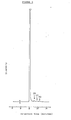
- sample when the optical purity of d.l-3-hydroXy-cis/trans-2,3-dihydro-5- C2-(dimethyl- amino)ethyl]-2-(p-methoxyphenyl)-1,5-benzothazepine-4(5H)-one (referred to below as "sample") is examined by reacting it with (S)-l-(2-naphthylsulfonyl)pyrrolidin-2-carbonyl chloride (a chiral reagent) of the invention and then subjecting the resultant diastereomers to liquid chromatography, each four isomers (i.e., d-cis, l-cis, d-trans and l-trans isomers) of said sample are separated completely on the chromatogram and the quantitaive ratio of these four isomers are easily estimated therefrom, though (d)-3-(2-naphthyl)propionyl chloride when used as a chiral rea
- This chromatogram also indicates that the sample contains 25.1 w/w % of l-3-hydroxy-cis-2,3-dihydro-5-2-(dimethylamino)-ethyl]-2-(p-methoxyphenyl)-1,5-benzothiazepine-4(5H)-one and 24.6 to 23.5 w/w % of each one of d-3-hydroxy-trans-2,3-dihydro-5-[2-(dimethylamino)ethyl]-2-(p-methoxyphenyl)-1,5-benzothiazepine-4(5H)-one andl -3-hydroxy-trans-2,3-dihydro-5-[2-(dimethyiamno)ethyl]-2-(p-methoxyphenyl)-1,5-benzothiazepine-4(5H)-one, respectively.
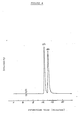
- the diastereomer obtained in paragraph (1) is applied to high performance liquid chromatography under the same conditions as described in Example 4-(3).
- the chromatogram obtained is shown in Figure 2. This chromatogram indicates that d-3-hydroxy-cis-2,3-dihydro-5-[2-(dimethylamino)ethyl7-2-(p-methoxyphenyl)-1,5-benzothiazepine-4(5H)-one used as the sample in paragraph (1) is optically pure and quite free from its levorotatory enantiomer.
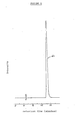
- the diastereomer obtained in paragraph (1) is applied to high performance liquid chromatography under the same conditions as described in Example 7-(2).
- the chromatogram obtained is shown in Figure 5. This chromatogram indicates that l- ⁇ -(3,4-dimethoxyphenethyl- aminomethyl)-4-hydroxybenzylalcohol used as the sample in paragraph (1) is optically pure.
- the diastereomers obtained in paragraph (1) is applied to high performance liquid chromatography under the same conditions as described in Example 7-(2).
- the chromatogram obtained is shown in Figure 6. This chromatogram indicates that even one w/w % of the optical impurity (d-isomer) contained in the above-mentioned enantiomer can be detected by the use of (S)-l-(2-naphthylsulfonyl)pyrrolidine-2-carbonyl chloride.
Landscapes
- Chemical & Material Sciences (AREA)
- Organic Chemistry (AREA)
- Organic Low-Molecular-Weight Compounds And Preparation Thereof (AREA)
- Investigating Or Analyzing Non-Biological Materials By The Use Of Chemical Means (AREA)
Applications Claiming Priority (2)
| Application Number | Priority Date | Filing Date | Title |
|---|---|---|---|
| JP57185884A JPS5976051A (ja) | 1982-10-21 | 1982-10-21 | ナフタレン誘導体、その製法及び該誘導体を用いる光学純度検定試薬 |
| JP185884/82 | 1982-10-21 |
Publications (2)
| Publication Number | Publication Date |
|---|---|
| EP0107149A1 true EP0107149A1 (de) | 1984-05-02 |
| EP0107149B1 EP0107149B1 (de) | 1985-10-16 |
Family
ID=16178558
Family Applications (1)
| Application Number | Title | Priority Date | Filing Date |
|---|---|---|---|
| EP83110187A Expired EP0107149B1 (de) | 1982-10-21 | 1983-10-12 | Napthalinderivate und Verfahren zu deren Herstellung |
Country Status (8)
| Country | Link |
|---|---|
| US (1) | US4565877A (de) |
| EP (1) | EP0107149B1 (de) |
| JP (1) | JPS5976051A (de) |
| KR (1) | KR910002947B1 (de) |
| CA (1) | CA1228853A (de) |
| DE (1) | DE3361034D1 (de) |
| ES (1) | ES8600231A1 (de) |
| PT (1) | PT77537B (de) |
Families Citing this family (17)
| Publication number | Priority date | Publication date | Assignee | Title |
|---|---|---|---|---|
| US5562614A (en) * | 1993-11-22 | 1996-10-08 | Advanced Cardiovascular Systems, Inc. | Programmable manifold system for automatic fluid delivery |
| US5368737A (en) * | 1984-03-29 | 1994-11-29 | Daicel Chemical Industries, Ltd. | Separation agent comprising acyl-or carbamoyl-substituted polysaccharide |
| US5229002A (en) * | 1984-03-29 | 1993-07-20 | Daicel Chemical Industries, Ltd. | Separation agent comprising acyl- or carbamoyl-substituted polysaccharide |
| JPS60226829A (ja) * | 1984-03-29 | 1985-11-12 | Daicel Chem Ind Ltd | 多糖誘導体より成る分離剤 |
| US5489387A (en) * | 1984-03-29 | 1996-02-06 | Daicel Chemical Industries, Ltd. | Separation agent comprising acyl- or carbamoyl-substituted polysaccharide |
| JPS6177760A (ja) * | 1984-09-26 | 1986-04-21 | Daicel Chem Ind Ltd | 分離剤 |
| US4818704A (en) * | 1986-05-16 | 1989-04-04 | Eka Nobel Ab | Method for the separation and determination of enantiomeric amine compounds using an optically active agent |
| JPS6420445A (en) * | 1987-07-15 | 1989-01-24 | Sumitomo Chemical Co | Chromatograph packing agent and analysis of enantiomer using said agent |
| US5360928A (en) * | 1989-10-23 | 1994-11-01 | Research Corporation Technologies, Inc. | Synthesis and use of amino acid fluorides as peptide coupling reagents |
| US5712418A (en) * | 1989-10-23 | 1998-01-27 | Research Corporation Technologies, Inc. | Synthesis and use of amino acid fluorides as peptide coupling reagents |
| EP0470300B1 (de) * | 1990-08-09 | 1997-07-02 | Koninklijke Philips Electronics N.V. | Elektronenstrahlvorrichtung mit monopolförmigem, magnetischem Feld |
| US5338529A (en) * | 1992-04-27 | 1994-08-16 | Research Corporation Technologies, Inc. | Recognition and separation of carbon clusters |
| US5290440A (en) * | 1992-06-23 | 1994-03-01 | Research Corporation Technologies, Inc. | High performance chiral selector |
| AU7639994A (en) * | 1993-08-27 | 1995-03-21 | Dow Chemical Company, The | Process for the separation of enantiomers |
| US5707985A (en) * | 1995-06-07 | 1998-01-13 | Tanabe Seiyaku Co. Ltd. | Naphthyl-, quinolyl- and isoquinolyl- sulfonamide derivatives as cell adhesion modulators |
| JP2005314398A (ja) * | 2004-03-30 | 2005-11-10 | Wako Pure Chem Ind Ltd | 重窒素化ニトロベンゼンスルホンアミド、その誘導体及びこれらの製造法 |
| DE112005000772B4 (de) * | 2004-04-07 | 2017-12-28 | Waters Technologies Corp. (N.D.Ges.D. Staates Delaware) | Flüssigchromatographiereagenz und Verfahren zum Auftrennen von Enantiomeren |
Citations (2)
| Publication number | Priority date | Publication date | Assignee | Title |
|---|---|---|---|---|
| US3424749A (en) * | 1965-06-23 | 1969-01-28 | Heinz A Pfenninger | Certain n-(benzenesulfonyl) pipecolinic acids and lower alkyl esters thereof |
| EP0064445A1 (de) * | 1981-04-23 | 1982-11-10 | Choay S.A. | N-substituierte 2,4-Dialkoxybenzensulfonamide |
-
1982
- 1982-10-21 JP JP57185884A patent/JPS5976051A/ja active Granted
-
1983
- 1983-10-11 US US06/540,414 patent/US4565877A/en not_active Expired - Fee Related
- 1983-10-12 EP EP83110187A patent/EP0107149B1/de not_active Expired
- 1983-10-12 DE DE8383110187T patent/DE3361034D1/de not_active Expired
- 1983-10-17 KR KR1019830004906A patent/KR910002947B1/ko not_active Expired
- 1983-10-20 ES ES526611A patent/ES8600231A1/es not_active Expired
- 1983-10-20 PT PT77537A patent/PT77537B/pt not_active IP Right Cessation
- 1983-10-21 CA CA000439465A patent/CA1228853A/en not_active Expired
Patent Citations (2)
| Publication number | Priority date | Publication date | Assignee | Title |
|---|---|---|---|---|
| US3424749A (en) * | 1965-06-23 | 1969-01-28 | Heinz A Pfenninger | Certain n-(benzenesulfonyl) pipecolinic acids and lower alkyl esters thereof |
| EP0064445A1 (de) * | 1981-04-23 | 1982-11-10 | Choay S.A. | N-substituierte 2,4-Dialkoxybenzensulfonamide |
Also Published As
| Publication number | Publication date |
|---|---|
| JPS64389B2 (de) | 1989-01-06 |
| PT77537B (en) | 1986-06-02 |
| PT77537A (en) | 1983-11-01 |
| ES526611A0 (es) | 1985-10-01 |
| JPS5976051A (ja) | 1984-04-28 |
| DE3361034D1 (en) | 1985-11-21 |
| ES8600231A1 (es) | 1985-10-01 |
| EP0107149B1 (de) | 1985-10-16 |
| KR910002947B1 (ko) | 1991-05-11 |
| CA1228853A (en) | 1987-11-03 |
| KR840009082A (ko) | 1984-12-24 |
| US4565877A (en) | 1986-01-21 |
Similar Documents
| Publication | Publication Date | Title |
|---|---|---|
| EP0107149B1 (de) | Napthalinderivate und Verfahren zu deren Herstellung | |
| Goto et al. | Separation and determination of naproxen enantiomers in serum by high-performance liquid chromatography | |
| Ilisz et al. | Application of chiral derivatizing agents in the high-performance liquid chromatographic separation of amino acid enantiomers: a review | |
| CA2172282C (en) | Chiral surfactants and methods for their use in chiral separations | |
| US4709016A (en) | Molecular analytical release tags and their use in chemical analysis | |
| Pirkle et al. | A rational approach to the design of highly effective chiral stationary phases for the liquid chromatographic separation of enantiomers | |
| US6669842B1 (en) | Macrocyclic antibiotics as separation agents | |
| Toyo'oka | Recent progress in liquid chromatographic enantioseparation based upon diastereomer formation with fluorescent chiral derivatization reagents | |
| US8168440B2 (en) | Polymeric sulfated surfactants for capillary electrophoresis (CE) and CE-mass spectrometry (CE-MS) | |
| Sun et al. | Chiral derivatization reagents for drug enantioseparation by high‐performance liquid chromatography based upon pre‐column derivatization and formation of diastereomers: enantioselectivity and related structure | |
| US4919803A (en) | Liquid chromatographic chiral stationary phase | |
| Miyano et al. | Optical resolution of 2'-methoxy-1, 1'-binaphthyl-2-carboxylic acid, and application to chiral derivatizing agent for HPLC separation of enantiomeric alcohols and amines. | |
| Kleidernigg et al. | Indirect separation of chiral proteinogenic α-amino acids using the fluorescence active (1R, 2R)-N-[(2-isothiocyanato) cyclohexyl]-6-methoxy-4-quinolinylamide) as chiral derivatizing agent: A comparison | |
| Sioufi et al. | Determination of the S (+)-and R (−)-enantiomers of baclofen in plasma and urine by gas chromatography using a chiral fused-silica capillary column and an electron-capture detector | |
| Liu et al. | Enantiometric separation of di-and tri-peptides with chiral fluorescence labeling reagents by liquid chromatography | |
| Kondo et al. | 6-Methoxy-2-(4-substituted phenyl) benzoxazoles as fluorescent chiral derivatization reagents for carboxylic acid enantiomers | |
| Toyo'oka | Development of Benzofurazan− bearing Fluorescence Labeling Reagents for separation and detection in high− performance liquid chromatography | |
| Toyo'oka | Fluorescent chiral derivatization reagents possessing benzofurazan structure for the resolution of optical isomers in HPLC: The synthesis, characteristics and application | |
| Domergue et al. | One-step conversion of amino acids into N-menthyloxycarbonyl alkyl ester derivatives for chiral gas chromatography | |
| FI90410C (fi) | Optisesti aktiivinen reagenssi ja menetelmä enantiomeeristen primaaristen ja sekundaaristen amiinien määrittämiseksi HPLC:llä | |
| Nishi et al. | New chiral derivatization reagent for the resolution of amino acids as diastereomers by TLC and HPLC | |
| Iwaki et al. | Resolution and sensitive detection of carboxylic acid enantiomers using fluorescent chiral derivatization reagents by high-performance liquid chromatography | |
| Durden | An evaluation of the negative ion mass spectra of electron‐capturing derivatives of the biogenic trace amines I—phenylethylamine | |
| Durden et al. | Enantioselective gas chromatographic assay of 2-alkylamines using N-(trifluoroacetyl) prolyl derivatives and a chiral capillary column | |
| Primofiore et al. | Specific inhibition of benzodiazepine receptor binding by some N-(indol-3-ylglyoxylyl) amino acid derivatives: Stereoselective interactions |
Legal Events
| Date | Code | Title | Description |
|---|---|---|---|
| PUAI | Public reference made under article 153(3) epc to a published international application that has entered the european phase |
Free format text: ORIGINAL CODE: 0009012 |
|
| AK | Designated contracting states |
Designated state(s): BE CH DE FR GB IT LI |
|
| 17P | Request for examination filed |
Effective date: 19840518 |
|
| GRAA | (expected) grant |
Free format text: ORIGINAL CODE: 0009210 |
|
| AK | Designated contracting states |
Designated state(s): BE CH DE FR GB IT LI |
|
| ITF | It: translation for a ep patent filed | ||
| REF | Corresponds to: |
Ref document number: 3361034 Country of ref document: DE Date of ref document: 19851121 |
|
| ET | Fr: translation filed | ||
| PLBE | No opposition filed within time limit |
Free format text: ORIGINAL CODE: 0009261 |
|
| STAA | Information on the status of an ep patent application or granted ep patent |
Free format text: STATUS: NO OPPOSITION FILED WITHIN TIME LIMIT |
|
| 26N | No opposition filed | ||
| ITTA | It: last paid annual fee | ||
| PGFP | Annual fee paid to national office [announced via postgrant information from national office to epo] |
Ref country code: GB Payment date: 19920814 Year of fee payment: 10 |
|
| PGFP | Annual fee paid to national office [announced via postgrant information from national office to epo] |
Ref country code: FR Payment date: 19920827 Year of fee payment: 10 |
|
| PGFP | Annual fee paid to national office [announced via postgrant information from national office to epo] |
Ref country code: CH Payment date: 19920831 Year of fee payment: 10 |
|
| PGFP | Annual fee paid to national office [announced via postgrant information from national office to epo] |
Ref country code: BE Payment date: 19920903 Year of fee payment: 10 |
|
| PGFP | Annual fee paid to national office [announced via postgrant information from national office to epo] |
Ref country code: DE Payment date: 19921005 Year of fee payment: 10 |
|
| PG25 | Lapsed in a contracting state [announced via postgrant information from national office to epo] |
Ref country code: GB Effective date: 19931012 |
|
| PG25 | Lapsed in a contracting state [announced via postgrant information from national office to epo] |
Ref country code: LI Effective date: 19931031 Ref country code: CH Effective date: 19931031 Ref country code: BE Effective date: 19931031 |
|
| BERE | Be: lapsed |
Owner name: TANABE SEIYAKU CO. LTD Effective date: 19931031 |
|
| GBPC | Gb: european patent ceased through non-payment of renewal fee |
Effective date: 19931012 |
|
| PG25 | Lapsed in a contracting state [announced via postgrant information from national office to epo] |
Ref country code: FR Effective date: 19940630 |
|
| REG | Reference to a national code |
Ref country code: CH Ref legal event code: PL |
|
| PG25 | Lapsed in a contracting state [announced via postgrant information from national office to epo] |
Ref country code: DE Effective date: 19940701 |
|
| REG | Reference to a national code |
Ref country code: FR Ref legal event code: ST |