EP0125017A2 - Verfahren zum Zurückgewinnen von Borsäure aus radioaktiven Abfällen - Google Patents
Verfahren zum Zurückgewinnen von Borsäure aus radioaktiven Abfällen Download PDFInfo
- Publication number
- EP0125017A2 EP0125017A2 EP84302333A EP84302333A EP0125017A2 EP 0125017 A2 EP0125017 A2 EP 0125017A2 EP 84302333 A EP84302333 A EP 84302333A EP 84302333 A EP84302333 A EP 84302333A EP 0125017 A2 EP0125017 A2 EP 0125017A2
- Authority
- EP
- European Patent Office
- Prior art keywords
- boric acid
- alcohol
- water
- solids
- process according
- Prior art date
- Legal status (The legal status is an assumption and is not a legal conclusion. Google has not performed a legal analysis and makes no representation as to the accuracy of the status listed.)
- Withdrawn
Links
Images
Classifications
-
- G—PHYSICS
- G21—NUCLEAR PHYSICS; NUCLEAR ENGINEERING
- G21F—PROTECTION AGAINST X-RADIATION, GAMMA RADIATION, CORPUSCULAR RADIATION OR PARTICLE BOMBARDMENT; TREATING RADIOACTIVELY CONTAMINATED MATERIAL; DECONTAMINATION ARRANGEMENTS THEREFOR
- G21F9/00—Treating radioactively contaminated material; Decontamination arrangements therefor
- G21F9/28—Treating solids
- G21F9/30—Processing
-
- G—PHYSICS
- G21—NUCLEAR PHYSICS; NUCLEAR ENGINEERING
- G21F—PROTECTION AGAINST X-RADIATION, GAMMA RADIATION, CORPUSCULAR RADIATION OR PARTICLE BOMBARDMENT; TREATING RADIOACTIVELY CONTAMINATED MATERIAL; DECONTAMINATION ARRANGEMENTS THEREFOR
- G21F9/00—Treating radioactively contaminated material; Decontamination arrangements therefor
- G21F9/28—Treating solids
- G21F9/30—Processing
- G21F9/301—Processing by fixation in stable solid media
- G21F9/302—Processing by fixation in stable solid media in an inorganic matrix
- G21F9/305—Glass or glass like matrix
-
- G—PHYSICS
- G21—NUCLEAR PHYSICS; NUCLEAR ENGINEERING
- G21F—PROTECTION AGAINST X-RADIATION, GAMMA RADIATION, CORPUSCULAR RADIATION OR PARTICLE BOMBARDMENT; TREATING RADIOACTIVELY CONTAMINATED MATERIAL; DECONTAMINATION ARRANGEMENTS THEREFOR
- G21F9/00—Treating radioactively contaminated material; Decontamination arrangements therefor
- G21F9/04—Treating liquids
- G21F9/06—Processing
-
- G—PHYSICS
- G21—NUCLEAR PHYSICS; NUCLEAR ENGINEERING
- G21F—PROTECTION AGAINST X-RADIATION, GAMMA RADIATION, CORPUSCULAR RADIATION OR PARTICLE BOMBARDMENT; TREATING RADIOACTIVELY CONTAMINATED MATERIAL; DECONTAMINATION ARRANGEMENTS THEREFOR
- G21F9/00—Treating radioactively contaminated material; Decontamination arrangements therefor
- G21F9/04—Treating liquids
- G21F9/06—Processing
- G21F9/08—Processing by evaporation; by distillation
-
- G—PHYSICS
- G21—NUCLEAR PHYSICS; NUCLEAR ENGINEERING
- G21F—PROTECTION AGAINST X-RADIATION, GAMMA RADIATION, CORPUSCULAR RADIATION OR PARTICLE BOMBARDMENT; TREATING RADIOACTIVELY CONTAMINATED MATERIAL; DECONTAMINATION ARRANGEMENTS THEREFOR
- G21F9/00—Treating radioactively contaminated material; Decontamination arrangements therefor
- G21F9/28—Treating solids
- G21F9/30—Processing
- G21F9/301—Processing by fixation in stable solid media
- G21F9/302—Processing by fixation in stable solid media in an inorganic matrix
- G21F9/304—Cement or cement-like matrix
Definitions
- This invention relates to a process for recovering boric acid from nuclear waste.
- Nuclear wastes containing large amounts of boric acid are generated during the operation of pressurized water reactor (PWR) electrical generating plants.
- Other sources of such wastes are low level burial sites which have either intercepted and stored run-off from the burial trenches or received unacceptable, unsolidified boric acid waste.
- boric acid is a very leachable substance in concrete and as it leaches out, it leaves pores through which the radionuclides can escape.
- U.S. Patent Specification No. 4,086,325 discloses a process for drying solutions containing boric acid by the addition of an oxidizing agent, such as hydrogen peroxide.
- an oxidizing agent such as hydrogen peroxide.
- the boric acid solution is first neutralized with sodium hydroxide.
- the sodium borate is then oxidized to an insoluble perborate by the addition of hydrogen peroxide.
- U.S. Patent Specification No. 4,314,877 discloses a method and apparatus for drawing radioactive waste for the concentrates from evaporators in order to reduce the volume on the resultant waste.
- U.S. Patent Specification No. 4,257,912 discloses a process for encapsulating spent nuclear fuel into concrete.
- the present invention resides in a process for separating and recovering boric acid from water-containing solids which include boric acid and radionuclides characterized by (A) separating said water from said solids by evaporating said water at a temperature under about 130°F; (B) adding to said solids an alcohol selected from the group consisting of methanol, ethanol, propanol, isopropanol, and mixtures thereof, in an amount at least 1.4 times that stoichiometrically required to react with said boric acid to form a boron alkoxide and water; (C) separating said boron alkoxide from said solids by evaporating said boron alkoxide; (D) adding water to said boron alkoxide to form boric acid and an alcohol; and (E) separating said alcohol from said boric acid by evaporating said alcohol.
- A separating said water from said solids by evaporating said water at a temperature under about 130°F
- B adding to said solid
- the process of this invention lowers the volume and mass of nuclear waste that must be solidified up to about eight times less than it would be if the boric acid were present.
- the resulting cement containing the nuclear waste without the boric acid present is stronger and less susceptible to leaching of the radionuclides.
- An added advantage of the process of this invention is that the boric acid is recovered and can be reused in the nuclear reactor.
- the process of this invention is relatively uncomplicated and inexpensive to implement.
- the radioactive stream containing boric acid which is treated in the process of a preferred embodiment of the present invention is an aqueous stream which typically comes from in the primary loop of pressurized water reactors. That stream may consist of about 10 to 1,000 ppm of boron, usually as boric acid, and may also contain lithium, calcium, magnesium, aluminum, suspended solids such as metal oxides, and radionuclides such as cobalt and various fission products.
- the stream is usually heated to evaporate some of the water and concentrate the boric acid to from 4 to 12%. (All percentages herein are by weight unless otherwise indicated. )
- the aqueous stream containing the boric acid and radionuclides is evaporated to dryness.
- This can be accomplished in a spray dryer or other type of evaporator, but it is preferably done in a scraped film evaporator because that is one of the few types of evaporators that will take the stream to complete dryness.
- the drying should be done at temperatures less than 130°F to avoid volatilizing the boric acid.
- the evaporation should be done under vacuum at temperatures less than 100°F, which can be easily accomplished in a scraped film evaporator.
- the solids from the first step are mixed with an alcohol to form a boron alkoxide.
- the alcohol reacts with the boric acid to form the corresponding boron alkoxide and water according to the equation: where R is alkyl.
- the alcohol in addition to reacting with the boric acid to form a boron alkoxide, also forms an azeotrope with the boron alkoxide.
- Sufficient alcohol should be added to react with all of the boric acid which is present and form the azeotrope. That is, the amount of alcohol should be at least 1.4 times the stoichiometric reaction amount, and up to about 100 mole % in excess of stoichiometric may be used to ensure complete reaction.
- the alcohol may be methanol, ethanol, propanol, isopropanol, or a mixture thereof, but methanol is preferred as boron methoxide is the most stable boron alkoxide and it forms the lowest boiling point azeotrope, which reduces its chances of decomposition. If ethanol, propanol, or isopropanol is used, it may be necessary to add benzene or another compound which forms an azeotrope with water in order to remove the water as it is formed.
- the stream is heated to evaporate the boron alkoxide and the alcohol. If methanol is used, they will evaporate together as a boron alkoxide-alcohol azeotrope. If ethanol, propanol, or isopropanol is used, an alcohol-water azeotrope will evaporate first, followed by the boron alkoxide.
- the methanol azeotrope is 27% methanol and 73% trimethylborate and the temperature of a stream will be 54°C, the temperature at which the azeotrope evaporates. Evaporation is preferably performed by using steam around the jacket of the reactor. Steam at from 212 to 338°F in an amount of from 2h to 3 pounds of steam per pound of boric acid is suitable if 1.4 times the stoichiometric amount of methanol is used.
- the material remaining in the bottom of the reactor (“crud") may then be solidified in cement, glass, or other materials, according to processes well known in the art.
- a relatively new way of solidifying this material is to add alkoxide glass formers which are then partially hydrolyzed and heated to form a polymeric glass.
- the vaporized boron alkoxide is mixed with water to reform boric acid according to the equation:
- the amount of water used should be at least stoichiometric, but excess water will not be a disadvantage as the boric acid is mixed with water for reuse in the reactor anyway.
- Recycled boric acid is typically about a 4% solution.
- the alcohol is separated from the boric acid by evaporation of the alcohol to leave a relatively pure boric acid aqueous solution. This is accomplished by heating the stream at the boiling point of alcohol, which is 64.7°C for methanol, until all of the alcohol has been removed. Again, a scrapped film evaporator is the preferred apparatus, though other evaporators can also be used. The remaining boric acid can then be recycled into the reactor, if desired.
- the process of this invention can be conducted continuously, in batch, or a mixture of continuous and batch; batch is preferred as it is easier to control.
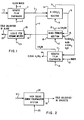
- Figure 1 is a block diagram which shows the process of this invention using methanol to form boron methoxide, and using alkoxide glass formers to solidify the solids.
- an aqueous solution containing 12% boric acid and 1% crud passes through line 1 to scraped film evaporator 2, which is heated with steam in line 3 producing clean water in line 4.
- the solids pass through line 5 to boric acid reactor 6.
- Methanol enters the reactor in line 7 and steam in line 8 heats the reactor.
- the azeotrope leaves the reactor in line 9 and the crud leaves in line 10.
- the azeotrope passes to scraped film evaporator 11 and is mixed with water in line 12.
- Heat from steam in line 13 evaporates methanol in line 7, leaving clean boric acid in line 14.
- the crud in line 10 is mixed with alkoxide glass formers in line 15 in mixer 16.
- Steam heat from line 17 evaporates the methanol in line 18.
- the solids then move through line 19 to melter 20, where electrical power is for applied (line 21), producing crud solidified in glass in line 22.
- the following table gives the flow rate, temperature and material balance in the various lines shown in Figure 1.
- Figure 2 illustrates a modification of the process shown in Figure 1 where the solids are encapsulated in cement instead of in glass forming alkoxides.
Landscapes
- Physics & Mathematics (AREA)
- Engineering & Computer Science (AREA)
- General Engineering & Computer Science (AREA)
- High Energy & Nuclear Physics (AREA)
- Chemical & Material Sciences (AREA)
- Inorganic Chemistry (AREA)
- Vaporization, Distillation, Condensation, Sublimation, And Cold Traps (AREA)
- Organic Low-Molecular-Weight Compounds And Preparation Thereof (AREA)
- Treatment Of Water By Oxidation Or Reduction (AREA)
- Removal Of Specific Substances (AREA)
- Physical Water Treatments (AREA)
- Glass Compositions (AREA)
Applications Claiming Priority (2)
| Application Number | Priority Date | Filing Date | Title |
|---|---|---|---|
| US06/482,737 US4540512A (en) | 1983-04-06 | 1983-04-06 | Recovery of boric acid from nuclear waste |
| US482737 | 1983-04-06 |
Publications (2)
| Publication Number | Publication Date |
|---|---|
| EP0125017A2 true EP0125017A2 (de) | 1984-11-14 |
| EP0125017A3 EP0125017A3 (de) | 1986-10-29 |
Family
ID=23917239
Family Applications (1)
| Application Number | Title | Priority Date | Filing Date |
|---|---|---|---|
| EP84302333A Withdrawn EP0125017A3 (de) | 1983-04-06 | 1984-04-05 | Verfahren zum Zurückgewinnen von Borsäure aus radioaktiven Abfällen |
Country Status (6)
| Country | Link |
|---|---|
| US (1) | US4540512A (de) |
| EP (1) | EP0125017A3 (de) |
| JP (1) | JPS59195200A (de) |
| KR (1) | KR840008511A (de) |
| CA (1) | CA1210217A (de) |
| ES (1) | ES531256A0 (de) |
Cited By (4)
| Publication number | Priority date | Publication date | Assignee | Title |
|---|---|---|---|---|
| DE3804431A1 (de) * | 1987-02-13 | 1988-08-25 | Doryokuro Kakunenryo | Verfahren zum behandeln von radioaktivem fluessigem abfall |
| WO1990007186A1 (de) * | 1988-12-14 | 1990-06-28 | Noell Gmbh | Aufbereiten von radioaktivem abwasser |
| EP0630029A1 (de) * | 1993-06-16 | 1994-12-21 | "STUDIECENTRUM VOOR KERNENERGIE", instelling van openbaar nut. | Verfahren zum Trennen von Borsäure |
| BE1012246A3 (nl) * | 1998-10-22 | 2000-08-01 | Studiecentrum Kernenergi | Werkwijze en inrichting voor het afscheiden van boorzuur. |
Families Citing this family (5)
| Publication number | Priority date | Publication date | Assignee | Title |
|---|---|---|---|---|
| US4883654A (en) * | 1987-01-09 | 1989-11-28 | Young Deborah A | Cosmetic preparation |
| US8372367B2 (en) * | 2009-10-26 | 2013-02-12 | Emc Metals Corporation | System and method for recovering boron values from plant tailings |
| JP2013096896A (ja) * | 2011-11-02 | 2013-05-20 | Toshiba Corp | ホウ酸含有廃液の処理方法及び処理装置 |
| EP2887359B1 (de) * | 2013-12-20 | 2018-01-31 | GNS Gesellschaft für Nuklear-Service mbH | Verfahren zur Trocknung von Transport- und/oder Lagerbehältern für radioaktive Abfälle |
| RU2652978C1 (ru) * | 2017-04-12 | 2018-05-04 | Федеральное государственное бюджетное учреждение науки Федеральный исследовательский центр "Кольский научный центр Российской академии наук" (ФИЦ КНЦ РАН) | Способ переработки жидких отходов АЭС с борным регулированием |
Family Cites Families (10)
| Publication number | Priority date | Publication date | Assignee | Title |
|---|---|---|---|---|
| US4225390A (en) * | 1970-01-14 | 1980-09-30 | Westinghouse Electric Corp. | Boron control system for a nuclear power plant |
| GB1298168A (en) * | 1970-05-19 | 1972-11-29 | Westinghouse Electric Corp | Control system for a nuclear power plant |
| CH588148A5 (de) * | 1972-10-24 | 1977-05-31 | Nordostschweizerische Kraftwer | |
| BE838533A (fr) * | 1976-02-13 | 1976-05-28 | Procede de sechage des solutions contenant de l'acide borique | |
| DE2723025C3 (de) * | 1977-05-21 | 1980-03-13 | Rheinisch-Westfaelisches Elektrizitaetswerk Ag, 4300 Essen | Verfahren zum Aufbereiten von Borsäure, radioaktives Antimon und weitere radioaktive Nuklide enthaltendem Abwasser |
| US4257912A (en) * | 1978-06-12 | 1981-03-24 | Westinghouse Electric Corp. | Concrete encapsulation for spent nuclear fuel storage |
| DE2944302C2 (de) * | 1979-11-02 | 1985-10-03 | Kraftwerk Union AG, 4330 Mülheim | Verfahren und Einrichtung zum Trocknen von radioaktiven Abwasserkonzentraten mit Borsalzen aus Verdampferanlagen von Kernreaktoren |
| US4409137A (en) * | 1980-04-09 | 1983-10-11 | Belgonucleaire | Solidification of radioactive waste effluents |
| US4377507A (en) * | 1980-06-25 | 1983-03-22 | Westinghouse Electric Corp. | Containing nuclear waste via chemical polymerization |
| US4379081A (en) * | 1981-03-12 | 1983-04-05 | Westinghouse Electric Corp. | Method of encapsulating waste radioactive material |
-
1983
- 1983-04-06 US US06/482,737 patent/US4540512A/en not_active Expired - Fee Related
-
1984
- 1984-03-21 CA CA000450130A patent/CA1210217A/en not_active Expired
- 1984-04-02 JP JP59066609A patent/JPS59195200A/ja active Pending
- 1984-04-03 ES ES531256A patent/ES531256A0/es active Granted
- 1984-04-05 EP EP84302333A patent/EP0125017A3/de not_active Withdrawn
- 1984-04-05 KR KR1019840001804A patent/KR840008511A/ko not_active Withdrawn
Cited By (8)
| Publication number | Priority date | Publication date | Assignee | Title |
|---|---|---|---|---|
| DE3804431A1 (de) * | 1987-02-13 | 1988-08-25 | Doryokuro Kakunenryo | Verfahren zum behandeln von radioaktivem fluessigem abfall |
| WO1990007186A1 (de) * | 1988-12-14 | 1990-06-28 | Noell Gmbh | Aufbereiten von radioaktivem abwasser |
| US5096624A (en) * | 1988-12-14 | 1992-03-17 | Noell Gmbh | Process for the treatment of radioactive waste water |
| EP0630029A1 (de) * | 1993-06-16 | 1994-12-21 | "STUDIECENTRUM VOOR KERNENERGIE", instelling van openbaar nut. | Verfahren zum Trennen von Borsäure |
| BE1007223A3 (nl) * | 1993-06-16 | 1995-04-25 | Studiecentrum Kernenergi | Werkwijze voor het afscheiden van boorzuur. |
| US5468347A (en) * | 1993-06-16 | 1995-11-21 | Studiecentrum Voor Kernenergie | Method for separating boric acid |
| US5587047A (en) * | 1993-06-16 | 1996-12-24 | Studiecentrum Voor Kernenergie | Method for separating boric acid |
| BE1012246A3 (nl) * | 1998-10-22 | 2000-08-01 | Studiecentrum Kernenergi | Werkwijze en inrichting voor het afscheiden van boorzuur. |
Also Published As
| Publication number | Publication date |
|---|---|
| US4540512A (en) | 1985-09-10 |
| JPS59195200A (ja) | 1984-11-06 |
| KR840008511A (ko) | 1984-12-15 |
| ES8603791A1 (es) | 1986-01-01 |
| ES531256A0 (es) | 1986-01-01 |
| EP0125017A3 (de) | 1986-10-29 |
| CA1210217A (en) | 1986-08-26 |
Similar Documents
| Publication | Publication Date | Title |
|---|---|---|
| US4032614A (en) | Process for the disposal of alkali metals | |
| US4086325A (en) | Process for drying solutions containing boric acid | |
| US4540512A (en) | Recovery of boric acid from nuclear waste | |
| EP0158780B1 (de) | Verfahren und Vorrichtung zur Verfestigung radioaktiver Abfälle | |
| US4253985A (en) | Process for handling and solidification of radioactive wastes from pressurized water reactors | |
| JP3232993B2 (ja) | 放射性廃棄物の処理方法 | |
| GB2217098A (en) | Process for vitrifying radioactive liquid waste with surpressed formation of gaseous ruthenium. | |
| EP1243000B1 (de) | Verfahren zum abtrennen von uran aus ausgebrannten kernbrennstoffen | |
| KR100688028B1 (ko) | 방사성 폐기물 처리 방법 및 장치 | |
| FI66095B (fi) | Saett att i cement baedda in borsyra eller borathaltigt radioaktivt avfall | |
| EP0102153B1 (de) | Verfahren zur Herstellung von Asche-Aggregaten | |
| US4643846A (en) | Process for the treatment of radioactive sodium | |
| KR100587157B1 (ko) | 감손우라늄이 포함된 폐촉매 처리방법 | |
| US4070438A (en) | Method for loading resin beds | |
| US4271034A (en) | Process of denitration of highly radio-active waste solutions | |
| JPS55154313A (en) | Manufacture of flaky aluminum boride | |
| JPS63315998A (ja) | 放射性廃液の処理方法 | |
| Lewis | Process for the disposal of alkali metals | |
| DE2617968A1 (de) | Verfahren zur aufarbeitung von bei der herstellung von brenn- und/oder brutstoffen fuer kernreaktoren anfallendem ammoniumnitrat | |
| JPH0631849B2 (ja) | 含ヨウ素アルカリ性廃液の固化処理方法 | |
| JPH0631182A (ja) | 新しい無機イオン交換体並びにこれを用いた放射性ヨウ化物イオンの除去及び固化方法 | |
| JPS62129799A (ja) | 放射性廃有機溶媒の分解処理方法 | |
| JP3434091B2 (ja) | 使用済核燃料の処理方法 | |
| US3925532A (en) | Process for manufacturing aluminum sulfate | |
| JPS5817438B2 (ja) | 廃液処理法 |
Legal Events
| Date | Code | Title | Description |
|---|---|---|---|
| PUAI | Public reference made under article 153(3) epc to a published international application that has entered the european phase |
Free format text: ORIGINAL CODE: 0009012 |
|
| AK | Designated contracting states |
Designated state(s): DE FR GB IT SE |
|
| PUAL | Search report despatched |
Free format text: ORIGINAL CODE: 0009013 |
|
| AK | Designated contracting states |
Kind code of ref document: A3 Designated state(s): DE FR GB IT SE |
|
| 17P | Request for examination filed |
Effective date: 19870429 |
|
| 17Q | First examination report despatched |
Effective date: 19890116 |
|
| STAA | Information on the status of an ep patent application or granted ep patent |
Free format text: STATUS: THE APPLICATION IS DEEMED TO BE WITHDRAWN |
|
| 18D | Application deemed to be withdrawn |
Effective date: 19890527 |
|
| RIN1 | Information on inventor provided before grant (corrected) |
Inventor name: LAHODA, EDWARD JEAN |