EP0136256A2 - Procédé de préparation de nourséothricine et de ses adsorbants - Google Patents
Procédé de préparation de nourséothricine et de ses adsorbants Download PDFInfo
- Publication number
- EP0136256A2 EP0136256A2 EP84810137A EP84810137A EP0136256A2 EP 0136256 A2 EP0136256 A2 EP 0136256A2 EP 84810137 A EP84810137 A EP 84810137A EP 84810137 A EP84810137 A EP 84810137A EP 0136256 A2 EP0136256 A2 EP 0136256A2
- Authority
- EP
- European Patent Office
- Prior art keywords
- phosphate
- nourseothricin
- culture
- sterilization
- fermentation
- Prior art date
- Legal status (The legal status is an assumption and is not a legal conclusion. Google has not performed a legal analysis and makes no representation as to the accuracy of the status listed.)
- Withdrawn
Links
Images




Classifications
-
- C—CHEMISTRY; METALLURGY
- C12—BIOCHEMISTRY; BEER; SPIRITS; WINE; VINEGAR; MICROBIOLOGY; ENZYMOLOGY; MUTATION OR GENETIC ENGINEERING
- C12P—FERMENTATION OR ENZYME-USING PROCESSES TO SYNTHESISE A DESIRED CHEMICAL COMPOUND OR COMPOSITION OR TO SEPARATE OPTICAL ISOMERS FROM A RACEMIC MIXTURE
- C12P19/00—Preparation of compounds containing saccharide radicals
- C12P19/26—Preparation of nitrogen-containing carbohydrates
- C12P19/28—N-glycosides
-
- C—CHEMISTRY; METALLURGY
- C07—ORGANIC CHEMISTRY
- C07H—SUGARS; DERIVATIVES THEREOF; NUCLEOSIDES; NUCLEOTIDES; NUCLEIC ACIDS
- C07H17/00—Compounds containing heterocyclic radicals directly attached to hetero atoms of saccharide radicals
- C07H17/02—Heterocyclic radicals containing only nitrogen as ring hetero atoms
-
- C—CHEMISTRY; METALLURGY
- C12—BIOCHEMISTRY; BEER; SPIRITS; WINE; VINEGAR; MICROBIOLOGY; ENZYMOLOGY; MUTATION OR GENETIC ENGINEERING
- C12N—MICROORGANISMS OR ENZYMES; COMPOSITIONS THEREOF; PROPAGATING, PRESERVING, OR MAINTAINING MICROORGANISMS; MUTATION OR GENETIC ENGINEERING; CULTURE MEDIA
- C12N1/00—Microorganisms; Compositions thereof; Processes of propagating, maintaining or preserving microorganisms or compositions thereof; Processes of preparing or isolating a composition containing a microorganism; Culture media therefor
- C12N1/20—Bacteria; Culture media therefor
- C12N1/205—Bacterial isolates
-
- C—CHEMISTRY; METALLURGY
- C12—BIOCHEMISTRY; BEER; SPIRITS; WINE; VINEGAR; MICROBIOLOGY; ENZYMOLOGY; MUTATION OR GENETIC ENGINEERING
- C12P—FERMENTATION OR ENZYME-USING PROCESSES TO SYNTHESISE A DESIRED CHEMICAL COMPOUND OR COMPOSITION OR TO SEPARATE OPTICAL ISOMERS FROM A RACEMIC MIXTURE
- C12P1/00—Preparation of compounds or compositions, not provided for in groups C12P3/00 - C12P39/00, by using microorganisms or enzymes
- C12P1/06—Preparation of compounds or compositions, not provided for in groups C12P3/00 - C12P39/00, by using microorganisms or enzymes by using actinomycetales
-
- C—CHEMISTRY; METALLURGY
- C12—BIOCHEMISTRY; BEER; SPIRITS; WINE; VINEGAR; MICROBIOLOGY; ENZYMOLOGY; MUTATION OR GENETIC ENGINEERING
- C12R—INDEXING SCHEME ASSOCIATED WITH SUBCLASSES C12C - C12Q, RELATING TO MICROORGANISMS
- C12R2001/00—Microorganisms ; Processes using microorganisms
- C12R2001/01—Bacteria or Actinomycetales ; using bacteria or Actinomycetales
- C12R2001/465—Streptomyces
- C12R2001/57—Streptomyces noursei
Definitions
- the invention relates to a new process for the fermentative production of nourseothrioin and its production in the form of its salts and adsorbates.
- Nourseothricin is an antibiotic belonging to the group of streptothricins, which, after administration in ergotropic doses with animal feed, causes an accelerated increase in live weight and at the same time a reduction in the amount of feed in agricultural livestock. It is therefore useful for animal production as well as the pharmaceutical and compound feed industries.
- Nourseothricin isolated from the culture of a variant of Streptomyces noursei ATCC 11455 is effective in vitro against Gram-positive and negative bacteria and against mycobacteria (Bradler, G. and Thrum, H .: Nourseothricin A and B, two new antibacterial antibiotics one Streptomyces-Noursei variant, Zschr. General Microbiol. 3, 105 to 112 (1963)).
- Nourseothricin is a base that is soluble in water and lower alcohols. Manageable forms are its salts.
- the molecule of nourseothrioin is made up of the amino sugar gulosamine and the amino acids streptolidine and ⁇ -lysine. The individual components of nourseothricin differ in the number of p-linked ⁇ -lysine residues in the molecule.
- nourseothricin complex consists of approximately the same proportions of the two main components F and D and about 10% of the two secondary components C and E (Gräfe, U .; Bocker, H .; Reinhardt, G. and Thrum, H .: Regulatory influence of nourseothricin biosynthesis by o-aminobenzoic acid in cultures of Streptomyces noursei JA 3890b. Zschr. General microbiol. 14, 659 to 673 (1974)).
- streptomycete strain forming the antibiotic nourseothricin is deposited under the name Streptomyoes noursei ZIMET 3890b in the strain collection of the Central Institute for Microbiology and Experimental Therapy of the Academy of Sciences of the GDR and is now called Streptomyces noursei ZIMET 43716.
- the inoculation can also be carried out directly with a preserve of submerged mycelium of the nourseothricin-forming streptomycete strain, dried on gelatin and lyophilized.
- the liquid nutrient media for submerged cultivation of the inoculation material contain carbon and nitrogen sources as well as inorganic salts as substrates. Glucose and / or glycerin are used as carbon sources. Soy flour, various amino acids and / or ammonium salts are particularly suitable as nitrogen sources.
- the most favorable acidity for the cultivation of the inoculum at the beginning of the cultivation is in the range from pH 6.0 to pH 6.7.
- the incubation takes place at temperatures of 28 to 30 ° C over a period of 24 to 48 hours.
- the vaccine material thus attracted is used to inoculate sterile liquid nutrient media for the main culture.
- nutrient media consist of carbon and nitrogen sources as well as inorganic salts.
- Corn starch and / or glucose are used as the carbon source.
- Soy flour, various amino acids and / or ammonium salts are particularly suitable as nitrogen sources.
- the most favorable acidity for antibiotic formation at the beginning of the fermentation is in the range from pH 6.0 to pH 7.5.
- the cultivation takes place at temperatures of 26 to 32 ° C, preferably at 28 to 30 ° C for up to 150 hours.
- the submerged cultivation of the Streptomyces noursei ZIMET JA 3890b is carried out in a known manner as a shake culture or in stirred and aerated fermenters without metering in of substrates or regulating the pH.
- o-aminobenzoic acid and / or other aminoaryl carboxylic acids specifically repress the formation of a-type cytochrome (cytochrome oxidases) and thereby indirectly both the amino acid transport from the nutrient medium into the mycelium and that Inhibit oxidative deamination of the amino acids in the cells of the nourseothricin generator.
- this avoids repression of the secondary metabolism through a cellular oversupply of nitrogen catabolites.
- this prevents the amino acids of the medium serving as precursors of the nourseothricin from being largely used up by the antibiotic generator during its growth phase.
- These amino acids are therefore more readily available to the secondary metabolism in the course of nourseothricin formation, since the inorganic nitrogen source (ammonium nitrogen) is preferably used for biomass formation.
- the fermentative Nourseothrioin production using aminoaryloarboxylic acids which is known to enable a substantial increase in the fermentation yield, has disadvantages, in particular with regard to costs, sterilization and wastewater problems, which are opposed to large-scale use.
- the initial concentrations of soluble or available phosphate are of decisive importance for the fermentative yield of the desired secondary metabolite, because on the one hand a certain amount of phosphate is required for the growth of the producing microorganisms and on the other hand too high initial phosphate concentrations inhibit the secondary metabolite formation.
- the patent DD 155239 claims the use of the concentration of the phosphate ions contained in the culture medium as a control variable for stabilizing the cultivation process.
- the method only relates to the fermentative extraction of biomass, the target value of the concentration being set in the range from 20 to 60 mg / L phosphorus.
- the application of this method to the regulation of the biosynthesis of secondary metabolites in microbial batch cultures is not known.
- the nutrient medium and the producing microorganism are adapted to one another by mutual modification in such a way that a compromise is reached between the two opposing regulatory influences of the phosphate.
- this way of gradually increasing performance is time-consuming and cost-intensive.
- a Ver The fermentative yield can also be improved by controlling the fermentation process, preferably as real-time control (Sukatsch, DA and Nesemann, G .: Automatic parameter recording in industrial fermentations. Chemie-Technik 6, 261 (1977)).
- the aim of the invention is to produce the active ingredient nourseothricin in a high space-time yield.
- the invention is based on the object of specifying a technically advantageous process which, while avoiding the disadvantages of the previously known solutions, enables industrial production of nourseothricin in the form of the salts and adsorbates.
- inhibitors of the respiratory chain and / or the amino acid transport can be omitted if strains of high amylolytic activity are used and polymeric carbon sources, especially maize starch, are used.
- metabolic activity of the nourseothricin-producing cultures is primarily determined by the specific availability of the phosphate during the fermentation and not solely by the supply of carbon and nitrogen sources.
- the initial concentrations of soluble and also of biologically available phosphate in the sterilized nutrient medium are carried out by carrying out thermal sterilization based on a sterilization functional, the content of sulfate ion and inorganic salts or metal ions, which are combined with phosphate or Sulfate ions give poorly soluble sediments, are lowered. It has been shown that for lowering these initial concentrations in the presence of a sufficient amount of sulfate ions, the acidity of the weakly acidic nutrient medium is shifted to alkaline pH values in the course of the sterilization by precipitation of calcium sulfate and the associated removal of the acidic sulfate ions is responsible for the medium.
- the initial concentration of soluble or biologically available phosphate is also lowered by setting an alkaline pH before sterilization.
- the increase in pH causes conditions for the precipitation of the Phos pnats are given as sparingly soluble sediments with certain metal ions present in the nutrient medium.
- the precipitation of the phosphate-containing sediments is prevented by the targeted addition of such metal ions, for example zinc (II) and / or iron (III), aluminum (III), magnesium (II), calcium (II), manganese (II) and others. promoted.
- Particularly favorable for phosphate precipitation is the sterilization method used in most technical fermentations with directly acting, tensioned water vapor, as well as the presence of calcium carbonate, which is used to pH buffer the fermentation.
- the phosphate content of the medium can generally also be reduced by reducing the proportion of the phosphate-containing complex feedstocks. This makes the process cheaper.
- the initial phosphate concentration of dissolved or biologically available phosphate is reduced in such a way that the upper tolerance values of the phosphate specific for the nourseothricin-producing microorganism are always fallen below.
- These low phosphate concentrations now offer the possibility of obtaining a medium which is largely standardized with respect to the phosphate by a defined supply of phosphate after sterilization.
- the phosphate metabolism of the microorganisms can be controlled via the addition regime of the phosphate so that a high product yield is obtained.
- the phosphate can be supplied in the form of a solution or a solid or a suspension.
- the phosphate can be present either as free phosphate ions or as chemically or physically bound phosphate.
- phosphate or phosphate-containing substances are added after the sterilization or during the fermentation by a single and / or repeated and / or continuous addition. The continuous addition can be done with under different rates are carried out during the fermentation.
- This addition takes place in addition to that in the culture solution from the complex phosphate sources, for example soy flour, peanut flour, potato starch and the like. a., by hydrolytic or enzymatic digestion or by reversible release from inorganic sediments liberated phosphate.
- the hydrolytic digestion of the aforementioned organic substrates is promoted by sterilization in an alkaline reaction.
- a better release of phosphate from inorganic sediments stimulates the metabolic activities.
- the productivity of nourseothrioin formation is favorably influenced over a longer period of time.
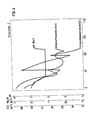
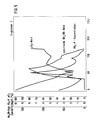
- the choice of the appropriate setpoint interval for regulating the pH of the culture solution in the range of physiologically regulative ef fective pH values when metering in a suitably concentrated ammonium hydroxide solution to ensure the lower pH limit has the effect that the time course of the ammonium hydroxide metering rate depicts the time course of the consumption rate of the physiologically active phosphate.
- the imaging scale depends on the definition of the lower control limit of the pH. The pH curve in the first fermentation hours and thus the onset of the ammonium hydroxide dosing rate are determined by the buffering of the starting nutrient medium.
- This provides a continuous signal of good sensitivity for the control of the direct and / or indirect dosing of phosphate and thus for the control of the metabolic activity of the fermentation culture.
- the current ammonium hydroxide metering rate serves as a control variable for the metering of carbon sources and other nitrogen sources and substances with an effector effect and, taking into account the specific oxygen transfer rate of the fermenter in question, the direct phosphate metering must be changed so that the fermentation proceeds with a favorable product formation rate.
- the lead time of the metabolic activity is represented by the heat of reaction and / or the respiration rate.
- the current heat of reaction and respiration are also control variables for the dosing of phosphate or other substances.
- the specific implementation of the described method depends on how the streptomycete strain used is to be classified with regard to the 3 criteria mentioned above.
- nouxseothricin can be isolated in the form of an adsorbate containing mycelium.
- the culture solution is adjusted to a weakly acidic reaction, in particular pH 6.0 to 6.2, by adding dilute sulfuric acid.
- a physiologically acceptable adsorbent for example natrified bentonite
- the settling nourseothricin-containing solid is separated off by filtration or centrifugation and dried in a warm air stream at a product temperature of at most 70 °.
- the mycelium-containing adsorbate produced in this way contains 1 to 10%, predominantly 4 to 7% active substance, calculated as nourseothricin base.
- nourseothricin salts are sparingly soluble in 90 to 95% aqueous methanol and can be isolated and purified under the process conditions described below.
- the multivalent inorganic cations present as accompanying substances in the eluates are then precipitated as salts which are sparingly soluble in water.
- the monovalent inorganic cations are then removed by treating the eluates with a highly cross-linked cation exchanger of the sulfonic acid type in H form and the acids released are neutralized with an anion exchanger in OH form. After concentrating the eluates in vacuo and removing the impurities by adsorption on activated carbon, the pure salts of nourseothricin are finally obtained by methanol precipitation or gentle drying.
- Nourseothrioin sulfate is an amorphous, white powder that is easily soluble in water and poorly soluble in methanol and most organic solvents.
- Nourseothricin oxalate is an amorphous, white powder that is easily soluble in water and poorly soluble in alcohols and other organic solvents.
- Nourseothricin phosphate is an amorphous, white, easily soluble in water, poorly soluble in alcohols and other organic solvents.
- the Elementals composition (31.59, 31.85; H 6.25, 6.63; N 14.95 15.18; P 10.08, 10.36) corresponds to the following composition of a 1: 1 mixture of streptothricin-D- (C 31 H 58 N 12 O 10 ⁇ 4 H3P04 0-1 H 2 O) and streptothricin-F-phosphate (C 19 H 34 N 8 O 8 ⁇ 2 H 3 PO 4 ⁇ 0-1 H 2 O) ⁇
- the relative antimicrobial antivity of the salts thus obtained can be determined microbiologically using the perforated plate diffusion test using Baoillus rubtilis ATCC 6633 as the test organism.
- a purified nourseothricin sulfate is used, the composition of which is a 1: 1 mixture of streptothricin D- (C 31 H 58 N 12 O 10 .2.5 H 2 SO 4 .H 2 O) and streptothrioin F sulfate (C 19 H 34 N 8 O 8 ⁇ 1.5 H 2 O) corresponds
- the conditions for the microbiological value determination are to be selected such that 0.05 ml of a test solution containing 10 ⁇ g nourseothricin base per ml with a punch hole diameter of 9 mm gives an inhibition zone of 19 + 1 mm diameter.
- a lyophilized spore preserve of the strain Streptomyces noursei ZIMET 43716 is spread on a suitable agar medium, for example Emerson agar. After incubation at 30 ° C for about 7 days, pieces of mycelium grass about 2 cm in size are cut out and in each case a culture batch is inoculated with the first preculture.
- the medium of this preculture has the following composition per liter: 40.0 g glucose; 15.0 g soybean extraction ear; 0.3 g KH 2 PO 4 ; 5.0 g NaCl; 3.0 g CaCO 3 ; Tap water ad 1000 ml; pH 6.5 to 6.9 (before sterilization).
- This medium is filled into 500 ml steep-breast bottles, which are sealed with cotton plugs, in quantities of 50 ml each.
- the sterilization is carried out by heating in an autoclave at 121 ° C. for 35 minutes.
- the inoculated batches are incubated for 48 hours as shake cultures at 29 ° C.
- the cultures of the main culture are inoculated with 3 ml each of the pre-cultures obtained in this way.
- the nutrient media of the main culture are filled in quantities of 80 ml in 500 ml steep-breast bottles sealed with cotton plugs and 30 minutes sterilized at 121 C in an autoclave.
- the batches of the main culture thus treated are used at the time of inoculation with sterile-filtered, aqueous, neutral solutions of the substances listed in Tables 1 and 2 (maximum 3.0 ml additive / 80 ml medium).
- a lyophilized spore preserve of the selectant NG 13-14 of the Nourseothricin-forming strain ZIMET 43716 is spread on a suitable agar medium, for example Emerson agar. After about seven days of incubation at 30 ° C, about 2 cm 2 large pieces of the mycelium lawn are cut out and in each case inoculated a culture approach of the preliminary breeding.
- the pre-cultivation medium contains the following feedstocks per liter of tap water: 40 g glucose; 15 g soybean meal; 0.3 g KH 2 PO 4 ; 5 g NaCl and 3 g CaCO 3 .
- the acidity is set to pH 6.5 before sterilization. This medium is filled into 500 ml large, steep-breast bottles sealed with cotton plugs in quantities of 50 ml each. The sterilization is carried out by heating for 35 minutes at 121 ° C in an autoclave.
- the inoculated pre-breeding batches are incubated for 48 hours as shake cultures at 29 ° C.
- the 2500 ml culture batch of the main culture in the laboratory fermentor is inoculated with 150 ml of the pre-cultivations thus obtained.
- the medium Bo-34 is used for the main culture, wel ohes in liters of tap water contains the following ingredients: 32 g potato starch; 29 g glucose; 11 g soybean meal; 11 g (NH 4 ) 2 SO 4 ; 2 g MgSO 4 ⁇ 7H 2 O; 1 g NaCl ; 6 g GACO 3 and 0, 5 g of ZnSO 4 ⁇ 7H20.
- 1 ml of antaphrone is added to 2500 ml of nutrient medium as a defoamer on a silicone basis. Before sterilization, the acidity has a pH of 6.0. After the fermenter culture vessel filled with 2500 ml was steeped at 121 ° C.
- the starting acidity was adjusted to pH 6.8 by aseptically adding 10% sterile sulfuric acid.
- the inoculated fermentation batches are incubated for 168 hours at a temperature of 30 ° C. and an aeration rate of 2500 ml of air per minute while stirring at 800 revolutions ⁇ min ⁇ 1 (rpm).
- a solution of 4 g of KH 2 PO 4 per liter of distilled water is continuously metered in over a period of 5 hours at a rate of 1.8 ml / hour using a peristaltic pump; This is then added over a period of 21 hours at a rate of 3.5 ml / hour.
- samples of the culture solution are periodically taken under aseptic conditions and the contents of nourseothricin base are determined in them by means of the perforated plate diffusion test using Bacillus subtilis ATCC 6633 as test germ, glucose, ammonium nitrogen and solids.
- the parameters p0 2 , pH and CO 2 content in the exhaust air are tracked during the process by registering measurements.
- the drop in the acidity of the culture solution below pH 5.8 is prevented by adding sterile 5% sodium hydroxide solution.
- glucose concentration drops to 5 g / l or the ammonium nitrogen to 0.5 g / l, recognizable by an increase in the pH values and the pO 2 values and a decrease in the CO 2 content in the exhaust air, 25 g Glucose or 10 g (PH 4 ) 2 SO 4 as concentrated, sterile solutions dis continuously added.
- a mycelium preserve lyophilically dried on glucose-gelatin (gross weight of the preserve content about 300 mg) of the nourseothricin-forming Streptomyces strain mentioned in Example 2 is suspended with 3 ml of a 0.9% NaCl solution. Of this suspension, 0.5 ml serve as an inoculum of 400 ml of the first stage bred.
- the Vorzuoht medium has the same composition and acidity as specified in Example 2. This medium is filled into 2,500 ml steep breast bottles, which are sealed with cotton plugs, in quantities of 400 ml each. Sterilization is carried out by heating to 121 ° C in an autoclave for 35 minutes.
- the batches which are cooled to room temperature and inoculated, are incubated for 48 hours as shake cultures (180 rpm) at 29 ° C.
- the second stage of the preliminary cultivation is a stainless steel fermenter filled with 150 liters of heat-sterilized medium (60 minutes at 121 ° C.) of the same composition as in the first preliminary culture stage, equipped with devices for sterile ventilation and a stirrer ( 250 liters gross volume) inoculated.
- the cultivation takes place at 27 to 29 ° C., a stirrer speed of 240 rpm and an aeration rate of 1 liter of air per liter of culture solution per minute.
- stainless steel fermenters (710 liters gross volume) are provided with devices for sterile ventilation and a central agitator, which are filled with 500 liters of Bo-34 nutrient medium (for a recipe, see Example 2).
- 0.5 g / 1 antaphron are added as defoamers.
- the acidity is adjusted to the pH range 6.7 to 7.0 before sterilization.
- the nutrient medium (without glucose content) is sterilized in situ by preheating with jacket steam to about 70 ° C and then heating with direct steam to 121 ° C for 15 minutes.
- the gluoses After cooling to about 30 ° C., the gluoses, sterilized separately in the form of a 50% strength aqueous solution, are heated under aseptic conditions by heating to 121 ° C. for 30 minutes. Before the inoculation, the start acidity is adjusted to values between pH 6.9 to 7.1 using sterile 10% sulfuric acid.
- the fermenter batches of the main culture, inoculated with 5% inoculum from the second pre-cultivation stage, are stirred for 120 hours at temperatures between 28 to 30 ° C, an aeration rate of 500 liters of air per minute (pressure 0.14 to 0.16 MPa) ( 320 rpm) cultivated.
- 87 g of KH 2 P0 4 are metered into one of the two fermenter batches as an aqueous solution by means of a peristaltic pump at a constant rate. If the acidity drops below pH 6.3, the pH is reset using sterile 25% aqueous ammonium hydroxide solution.
- samples of the culture solution are taken periodically under aseptic conditions and the concentrations of nourseothricin base are determined in them by means of the Loohplate diffusion test using Bacillus subtilis ATCC 6633 as test germ, on glucose, on ammonium nitrogen and on solids.
- the parameters pH and CO 2 content in the exhaust air are tracked during the process by registering measurements.
- glucose concentration drops below 5 g / 1 or the ammonium nitrogen below 0.5 g / l, recognizable by an increase in the measured pH values and a decrease in the CO 2 content in the exhaust air, 5000 g glucose or 1800 g becomes Ammonium sulfate is added discontinuously as concentrated, sterile aqueous solutions.
- the other fermenter approach receives no addition of phosphate, glucose or ammonium sulfate. There is no pH regulation; the continuously measured acidity values range from pH 6.4 to pH 7.2. When the fermentation is terminated, the culture solution still contains amounts above 5 g / l glucose and 0.5 g / l ammonium nitrogen.
- the suspension of a myceliumophil preserve in physiological saline from a strain of Streptomyces noursei serves as an inooulum for the 1st submersal passage.
- the nutrient medium contains per liter of tap water: 15 g Glu- c ose; 15 g soybean meal; 0.3 g KH 2 PO 4 ; 5.0 g NaCl; 1.0 g CaC0 3 ; pH 6.5 to 6.9 (filled with 50 ml each in 500 ml shake flasks).
- the medium is sterilized at 120 ° C for 35 minutes.
- the second submerged passage 250 ml filling, 2000 ml soaking flask
- 600 ml of the 2nd submerged passage are used for the inoculation of 800 1 inoculum fermentation medium.
- the nutrient medium contains: 15 g glucose; 15 g soybean meal; 0.3 g KH 2 PO 4 ; 5.0 g NaCl; 1.0 g CaCO 3 ; 5 g antaphron; 37.5 g sunflower oil.
- the pH value is adjusted before sterilization to 7.2 to 7.4, it is after completion of the sterilization 6.8 to 7.0. Sterilization takes place at 120 ° C for 60 minutes. After about 30 hours of cultivation at 28 ° C, about 60 mg / l of soluble phosphate are consumed and 12 to 15 g / l of biomass are formed. The inoculum amount of 800 l is sufficient for inoculating about 18 m 3 of product formation medium from the main culture.
- the nutrient medium of the production fermentor contains in liters: 32.0 g potato starch; Soybean meal 15.0g 1.0g NaCl; 6.0 CaCO 3 ; 0.5 g ZnSO 4 ⁇ 7H20; 2.0 gNgSO 4 ⁇ 7H 2 O; 3.0 g sunflower oil; 0.3 g antaphron; 29, OgGlucose; 6.0 g (NH 4 ) 2 SO4.
- glucose and ammonium sulfate are added to the nutrient medium after separate sterilization (120 ° C, 30 minutes).
- the medium is sterilized at 115 ° C for 60 minutes, with a pH of 7.5 to 7.8 being set before the start, which reaches values between 7.2 and 8.2 after the end of the sterilization.
- the completed medium reaches pH values between 7.0 and 7.4.
- the fermentation takes place at 28 ° C with an aeration ratio of 0.3 VVM (volume of air per volume of culture solution in one minute) at 0.02 MPa and an oxygen partial pressure of 60%.
- glucose of 15 g / l and ammonium nitrogen 0.2 g / 1 are undershot, these components are metered in as 50% sterile solutions until the culture solution reaches a pH value of 5.2 with an ammonium nitrogen value above 300 mg / l .
- ammonium nitrogen takes place via the metering of ammonia water at a constant pH value of 5.5. After a fermentation time of 130 hours, a biological activity of 8000 to 11000 ⁇ g nourseothricin / ml culture solution is formed.
- the second pre-cultivation stage is inoculated with 180 l of steam-sterilized medium (45 minutes at 120 ° C.) of the same composition as in the first pre-cultivation stage of filled stainless steel fermenters (gross volume 2401).
- the cultivation takes place over 40 hours at 28 to 29 ° C, a stirrer speed of 240 rpm and an aeration rate of 1.0 VVM.
- Stainless steel fermentors (gross volume 4200 1) are used for the main culture, which are filled with 2500 1 nutrient solution of the following basic composition: 62.5 g corn starch; 2.5 g glucose; 16 g soybean meal; 11 g (NH 4 ) 2 SO 4 ; 2 g MgSO 4 • 7H 2 0; 1 g NaCl; 6 g CaC0 3 ; 0.5 g polypropylene glycol; Tap water ad 1000.
- the acidity of the nutrient solution is determined before sterilization adjusted the pH 6.2.
- the sterilization (without glucose content) is carried out by heating with direct steam to 120 ° C for 15 minutes. After cooling to 29 ° C., the glucose, separately sterilized in the form of a 50% aqueous solution, is added aseptically. Before the inoculation, the start acidity of the nutrient solution is adjusted to pH 6.8 + 0.1 with sulfuric acid. The fermentation batches are inoculated with 4% inoculum from the second pre-breeding stage. The cultivation takes place over 140 hours at 29 ° C, an aeration rate of 0.5 VVM (0th to 20th hour) or 1.0VVM (20th to 140th hour) at 0.03 MPa gauge pressure with stirring at 180 rpm. The acidity of the culture solution is constantly controlled with a 25% ammonium hydroxide solution after the pH has dropped to 6.0 ⁇ 0.1.
- nourseothricin concentrations are determined in the culture solutions in the biological test:
- the second composition is inoculated with 150 1 steam-sterilized medium (30 minutes at 120 ° C.) of the same composition as in the first pre-cultivation stage filled stainless steel fermenters (gross volume 240 1).
- the cultivation takes place over 40 hours at 28 to 29 ° C, a stirrer speed of 240 rpm and an aeration rate of 1.0 VVM at an overpressure of 0.03 MPa.
- a stainless steel fermenter (gross volume 720 1) is used for the main culture, which is filled with 500 1 nutrient solution of the following composition (per liter): 60 g corn starch; 25 g peanut extraction meal; 10 g corn steep liquor (100% dry substance) 10 g (NH 4 ) 2 S04; 5 g Rügen chalk; 3 g sunflower oil; Tap water ad 1000.
- the pH of the broth is adjusted before sterilization on p H 6.8 to 7.0. Sterilization takes place over 30 minutes at 120 ° C.
- the fermentation batch is inoculated with 5% inoculum from the second pre-breeding stage.
- an additional two 30 g of corn starch per 1 culture are added as a 30% suspension (after liquefying the aqueous suspension in a manner known per se by treatment with enzyme preparations with amylolytic activity, for example brewing enzyme and subsequent sterilization).
- the acidity of the culture solution is kept constant by means of a 25% ammonium hydroxide solution to a pH of 6.2 + 0.1.
- a stainless steel fermenter (4200 liters gross volume), equipped with a device for sterile ventilation and a centrally located agitator, was used, which was filled with 2500 liters of nutrient medium with the following composition, based on 1 liter of tap water: 32 g potato starch, 60 g glucose, 11 g soybean meal, 11 g (NH 4 ) 2 SO 4 , 2 g MgSO 4 • 7H 2 O, 1 g NaCl, 6 g CaC0 3 and 0.5 g ZnS0 4 .
- 0.5 g of NM 40 Antaphron are added as defoamers per liter of culture solution.
- the Azidi The pH is adjusted to 6.2 before sterilization.
- the thermal in situ sterilization of the nutrient medium (without glucose content) with direct steam is based on the sterilization functional value as a control variable.
- the current value of the sterilization functional St was determined according to +
- the fermentation batch of the main culture inoculated with 4% inoculum from the second pre-cultivation stage is 120 hours at 29 ° C, an aeration rate of 1250 liters per minute (0th to 12th hour) or 2500 liters per minute (12th to 120th hour) ) at 0.03 Pa overpressure with stirring at 180 min -1 .
- the fermentation is carried out manually discontinuously with regard to the control interventions by means of direct phosphate metering and glucose metering in accordance with the behavior of the ammonium hydroxide metering rate.
- the pH setpoint interval is set at 6.2 ⁇ 0.05 and the lower limit pH 6.15 is reached after 38 hours of fermentation.
- a sterile aqueous solution of K H2 P0 4 is used for direct phosphate metering. During the first 32 hours, this solution is metered in such a way that a total of 42 mg of phosphorus in the form of phosphate are used per liter of culture solution to stimulate metabolic activity. Determined by the selected pH setpoint interval, the buffering state of the nutrient medium and the alkali concentration, the ammonium hydroxide (25%) dose is used from the 38th hour.
- the dosing rate reaches its maximum value at the 62nd hour and then drops correspondingly to the transition from direct to indirect dosing of phosphate due to release from substrates. In this way the fermentation is close to the optimal one for about 20 hours
- the increased decrease in the increase in the ammonium hydroxide metering rate after the second phosphate metering is reason for metering in 48 g of glucose per liter of culture solution at the 56th hour.
- the indication of the transition to indirect phosphate dosing around the 95th hour is used to trigger the second glucose dose of 18 g glucose per liter of culture solution.
- the heat of reaction and the composition of the exhaust air show the state of the fermentation phases and serve to avoid substrate limitations.
- the final nourseothricin value of 10.5 ⁇ g / ml culture solution is achieved by the effective specific product formation rate over the period of 45 hours between 8 • 10-3 per hour and 9 • 10 -3 per hour.
- the glucose used is fully fermented and the biomass limit set for processing technology is not exceeded.
- the eluate from column I (32.8 l) is admixed with diammonium hydrogenphosphate and ammonia until there is no longer a low bottom at pH values from 7.5 to 7.7.
- the clear filtrate for desalination is filtered at a rate of 20 l / hour over 10 l Wofatit KP 16 (H form) and then over 10 l Wofatit AD 41 (OH form).
- the eluate and wash water are combined (approx. 55 l), concentrated to 6.5 l in a vacuum at 30 to 40 ° C. and treated with 100 g of activated carbon.
- the filtrate is adjusted to pH 4.0 to 4.5 with sulfuric acid and then added dropwise to 75 l of methanol with stirring, amorphous nourseothricin sulfate precipitating.
- the precipitate is filtered off, washed with methanol and dried in vacuo at 40 ° C.
- the elemental analysis corresponds approximately to the following composition of a 2: 1 mixture of streptothrioin D - and streptothricin F-sulfate: (2C 31 H 58 N 12 O 10 • 2H 2 SO 4 + 2H 2 0 C 19 H 34 N 8 O 8 • H 2 SO 4 • 2H 2 O)
- Precipitated calcium phosphate is filtered off together with the ion exchanger and ammonia up to pH 7.7 is added to the filtrate, ammonium magnesium phosphate precipitating and being removed by filtration. Subsequently, monovalent cations are separated from the nourseothricin phosphate solution by trituration with 1 1 Wofatit KP 16 (H-form). The solution (17 l) is then evaporated to 1.5 l in vacuo at 40 ° C., acidified to pH 4.5 with phosphoric acid and treated with 7.5 g of activated carbon. The clear filtrate is added dropwise in 20 l of methanol.
- Nourseothricin phosphate remaining in solution colloidally is flocculated by adding 25% dimethylamine solution and brought into a good filterable form. The precipitate is filtered off, washed with methanol and dried in vacuo over calcium chloride.
- the solution is then neutralized with 0.5 l of Wofatit AD 41 (OH form) and evaporated to 800 ml at 40 ° C. in vacuo.
- the concentrate is treated with 7 g of activated carbon and, after filtration, added dropwise to 12 l of methanol.
- Nourseotbricin oxalate that remains in solution colloidally is flocculated by adding 25% dimethylamine solution and brought into a form that is easy to filter.
- the filtered precipitate is washed with methanol and dried in vacuo over calcium chloride.
- nourseothrioin in the form of mycelium adsorbate in staggered doses up to 52.5 mg active ingredient / animal / day to calves had a very favorable influence on animal health, recognizable by a significant decrease in the number of injuries and a drastic reduction in the number of diarrhea days.
- the beneficial effects on the increase in live weight of calves were particularly noticeable during the first four weeks of life.
- Daily supplements of 35 mg / animal nourseothricin to the feed brought about an improvement in the live weight development of 25% after 4 weeks of fattening; after completion of the 10-week fattening trial, this value was a maximum of 13%.
- a bentonite suspension is prepared in a stirred tank made of acid-resistant material by adding 2 kg of natrified bentonite in 15 liters of water and adding 0.2 liters a 25% sulfuric acid.
- the swelling time of this suspension must be at least 12 hours.
- a vacuum rotary filter is particularly well suited for such separation work, which has to be prepared with a corresponding lead time by pulling on a filter aid layer from a specially prepared calcium sulfate.
- the solid filtered off as an intermediate product is 12 to 14 kg with a residual moisture of 58 to 65%.
- filter aids 2.0 to 2.5 kg are used.
- the separated, moist solid is to be fed to the drying immediately.
- the product temperature must not exceed 70 ° C during the drying process in the hot air stream.
- 4.5 to 5.0 dry products with a nourseothricin content of 75 to 85 g per kg dry substance are obtained from 12 to 14 kg of moist solid.
- the drug content was determined using the agar plate diffusion test determined from Baoillus subtilis ATCC 6633 as test germ.
- the dry product When using a ring flow dryer, the dry product is so fine that it can be used directly as a premix for dosing in the compound feed.
- the product obtained using a tray, belt or fluidized-bed dryer must be ground before standardization or mixing.
- the dosage of the Misohfutterstoff is so dimensioned that the Nourseotbricin - content of 5 to 100 mg per kg of compound feed is Trookensubstanz.
- composition of the miso feed intended for the individual agricultural livestock species and fattening periods is regulated in a binding manner by u quality requirements for compound feed in animal production ".
- a nourseothricin-containing premix in the form of a mycelium-containing dry product formalin is added to the culture solution, as described in Example 12, immediately after the end of the fermentation, and the acidity of pH 6.0 is adjusted by metering in 25% sulfuric acid.
- the culture solution pretreated in this way is then concentrated under mild conditions in a suitable evaporator (vacuum circulation evaporator, negative pressure 4 ⁇ 10 to 6 10 4 Pa, temperature 70 ° C.) and the concentrate is then dried using a vacuum drum dryer until the fine-particle solid product.
- a suitable evaporator vacuum circulation evaporator, negative pressure 4 ⁇ 10 to 6 10 4 Pa, temperature 70 ° C.
- the concentrate is then dried using a vacuum drum dryer until the fine-particle solid product.
- a vacuum of 4. 104 to 6 ⁇ 104 Pa drying process the material to be dried must not be heated above 70 ° C; the residual moisture of the dried end product must be less than 3%.
- the dry mycelium product obtained in this way must be ground before standardization or mixing.
- the feed rations for the test groups were supplemented with pure substances of nourseothricin hydrochloride, cormogrisin and zinc bacitracin.
- test A For two feeding trials carried out in floor husbandry (trials A and B), 48 piglets each of Crossbreeds currently used in pig production are divided into sub-groups of 12 animals each.
- the mean live mass at the start of the test was 10.7 kg (test A) and 12.6 kg (test B).
- the feed rations for the test group were supplemented with a nourseothrioin premix in the form of mycelium-containing bentonite adsorbate.
- the milk exchanger potions contained 100 g of the milk exchanger for calves dissolved in water per liter.
Landscapes
- Chemical & Material Sciences (AREA)
- Organic Chemistry (AREA)
- Life Sciences & Earth Sciences (AREA)
- Engineering & Computer Science (AREA)
- Health & Medical Sciences (AREA)
- Wood Science & Technology (AREA)
- Zoology (AREA)
- Biotechnology (AREA)
- Genetics & Genomics (AREA)
- Biochemistry (AREA)
- General Health & Medical Sciences (AREA)
- Bioinformatics & Cheminformatics (AREA)
- General Engineering & Computer Science (AREA)
- Microbiology (AREA)
- Molecular Biology (AREA)
- Chemical Kinetics & Catalysis (AREA)
- General Chemical & Material Sciences (AREA)
- Biomedical Technology (AREA)
- Virology (AREA)
- Tropical Medicine & Parasitology (AREA)
- Medicinal Chemistry (AREA)
- Mycology (AREA)
- Nitrogen And Oxygen Or Sulfur-Condensed Heterocyclic Ring Systems (AREA)
- Micro-Organisms Or Cultivation Processes Thereof (AREA)
- Preparation Of Compounds By Using Micro-Organisms (AREA)
Applications Claiming Priority (10)
| Application Number | Priority Date | Filing Date | Title |
|---|---|---|---|
| DD255165 | 1983-09-28 | ||
| DD25516583 | 1983-09-28 | ||
| DD255943 | 1983-10-25 | ||
| DD25594483A DD229854A3 (de) | 1983-10-25 | 1983-10-25 | Verfahren zur fermentativen herstellung von sekundaermetaboliten |
| DD255946 | 1983-10-25 | ||
| DD25594583A DD231949A3 (de) | 1983-10-25 | 1983-10-25 | Verfahren zur fermentativen herstellung von nourseothricin |
| DD255944 | 1983-10-25 | ||
| DD255945 | 1983-10-25 | ||
| DD25594683 | 1983-10-25 | ||
| DD25594383A DD230562A3 (de) | 1983-10-25 | 1983-10-25 | Verfahren zur herstellung von nourseothricin |
Publications (2)
| Publication Number | Publication Date |
|---|---|
| EP0136256A2 true EP0136256A2 (fr) | 1985-04-03 |
| EP0136256A3 EP0136256A3 (fr) | 1987-09-09 |
Family
ID=27509733
Family Applications (1)
| Application Number | Title | Priority Date | Filing Date |
|---|---|---|---|
| EP84810137A Withdrawn EP0136256A3 (fr) | 1983-09-28 | 1984-03-23 | Procédé de préparation de nourséothricine et de ses adsorbants |
Country Status (1)
| Country | Link |
|---|---|
| EP (1) | EP0136256A3 (fr) |
Cited By (1)
| Publication number | Priority date | Publication date | Assignee | Title |
|---|---|---|---|---|
| WO2011120498A1 (fr) * | 2010-04-01 | 2011-10-06 | M2P-Labs Gmbh | Procédé pour mettre en oeuvre une réaction biochimique à quantité de produits de départ limitée |
-
1984
- 1984-03-23 EP EP84810137A patent/EP0136256A3/fr not_active Withdrawn
Non-Patent Citations (4)
| Title |
|---|
| CHEMICAL ABSTRACTS, Band 101, 1984, Seite 420, Zusammenfassung Nr. 226515n, Columbus, Ohio, US; P.J. MUELLER et al.: "Effect of phosphate on the biosynthesis of nourseothricin by Streptomyces noursei JA 3890b", & Z. ALLG. MIKROBIOL. 1984, 24(8), 555-64 * |
| CHEMICAL ABSTRACTS, Band 101, 1984, Seite 483, Zusammenfassung Nr. 208993k, Columbus, Ohio, US; M. PEISSKER et al.: "Moded aided dynamic process analysis and optimization for the nourseothricin fermentation", & Z. ALLG. MIKROBIOL. 1984, 24(7), 467-77 * |
| CHEMICAL ABSTRACTS, Band 92, 1980, Seite 288, Zusammenfassung Nr. 211542r, Columbus, Ohio, US; U. GRAEFE et al.: "Regulative influence of o-aminobenzoic acid on the biosynthesis of nourseothricin in cultures of Streptomyces noursei JA 3890b. V. Effect of OABA on cytochrome levels and amino acid transport", & Z. ALLG. MIKROBIOL. 1980, 20(3), 185-94 * |
| CHEMICAL ABSTRACTS, Band 96, 1982, Seite 336, Zusammenfassung Nr. 118706v, Columbus, Ohio, US; U. GRAEFE et al.: "Nitrogen catabolite regulation of streptothricin biosynthesis by Streptomyces noursei JA 3890b", & ADV. BIOTECHNOL., ÄProc. Int. Ferment. Symp.Ü, 6th 1980 (Pub. 1981), 3, 193-8 * |
Cited By (1)
| Publication number | Priority date | Publication date | Assignee | Title |
|---|---|---|---|---|
| WO2011120498A1 (fr) * | 2010-04-01 | 2011-10-06 | M2P-Labs Gmbh | Procédé pour mettre en oeuvre une réaction biochimique à quantité de produits de départ limitée |
Also Published As
| Publication number | Publication date |
|---|---|
| EP0136256A3 (fr) | 1987-09-09 |
Similar Documents
| Publication | Publication Date | Title |
|---|---|---|
| DE2634499A1 (de) | Neue tylosinderivate und verfahren zu ihrer herstellung | |
| DE3876477T2 (de) | Verfahren zur herstellung oder extraktion von aminosaeuren aus duenger. | |
| DE3024076A1 (de) | Verfahren zur herstellung eines mineralstoffhaltigen praeparats | |
| DE2146400C3 (de) | Neuer biosynthetischer Wirkstoff, Verfahren zu seiner Herstellung und diesen Wirkstoff enthaltende Arzneimittelpräparate | |
| DD282706A5 (de) | Verfahren zur herstellung eines biophysikalisch derivatisierten hefepraeparates mit atmungssteigender aktivitaet, diese enthaltende futtermittel und pflanzenwuchsstoffe sowie ihre verwendung | |
| DE2931082C2 (fr) | ||
| DE2401519A1 (de) | Mikrobiologisches verfahren zur herstellung fluessigen und trockenen futterkonzentrates von l-lysin und kristallinen l-lysins | |
| DE3003624A1 (de) | Antibiotica c-19393 s tief 2 und h tief 2 | |
| EP0133971A1 (fr) | Antibiotique, sa préparation et son application | |
| DE1205934B (de) | Verfahren zur biotechnischen Herstellung von 1-Citrullin | |
| CH636499A5 (en) | Process for the preparation of germanium-containing algae | |
| DE2404958C2 (de) | Metabolit A-27106 und Verfahren zu seiner Herstellung | |
| CA1212919A (fr) | Methode de preparation de la nourseothricine et de ses produits d'absorption | |
| SU1423093A1 (ru) | Способ получени комбикорма | |
| EP0248238B1 (fr) | Procédé de préparation par fermentation de L-isoleucine à partir de D,L-alpha-hydroxy butyrate | |
| DE2209018A1 (de) | Neues Antibioticum A-4696 | |
| DE933846C (de) | Verfahren zur Herstellung von fuer die Aufbesserung von tiereiweissarmem Futter geeigneten Vitaminsubstanzen | |
| DE940422C (de) | Verfahren zur Herstellung von Vitaminsubstanzen | |
| DE2652681A1 (de) | Verfahren zur herstellung des antibioticums 924a1 | |
| DD230562A3 (de) | Verfahren zur herstellung von nourseothricin | |
| CN121241991A (zh) | 一种基于复合菌剂发酵饲料养殖大头金蝇幼虫的方法 | |
| DE1492907C (de) | Verfahren zur Herstellung von Beifuttermittel | |
| AT215077B (de) | Verfahren zur Herstellung 5, 6-Dimethylbenzimidazolcobalamin | |
| DD161182A3 (de) | Verfahren zur herstellung eines antibiotikums der strepthothricin-gruppe | |
| SU1390242A1 (ru) | Способ получени ноурзеотрицина |
Legal Events
| Date | Code | Title | Description |
|---|---|---|---|
| PUAI | Public reference made under article 153(3) epc to a published international application that has entered the european phase |
Free format text: ORIGINAL CODE: 0009012 |
|
| AK | Designated contracting states |
Designated state(s): AT BE DE FR GB NL |
|
| RTI1 | Title (correction) | ||
| PUAL | Search report despatched |
Free format text: ORIGINAL CODE: 0009013 |
|
| AK | Designated contracting states |
Kind code of ref document: A3 Designated state(s): AT BE DE FR GB NL |
|
| 17P | Request for examination filed |
Effective date: 19880218 |
|
| 17Q | First examination report despatched |
Effective date: 19900102 |
|
| RAP1 | Party data changed (applicant data changed or rights of an application transferred) |
Owner name: JENAPHARM GMBH JENA |
|
| STAA | Information on the status of an ep patent application or granted ep patent |
Free format text: STATUS: THE APPLICATION IS DEEMED TO BE WITHDRAWN |
|
| 18D | Application deemed to be withdrawn |
Effective date: 19911105 |
|
| RIN1 | Information on inventor provided before grant (corrected) |
Inventor name: MUELLER, PETER-JUERGEN, DR.DIPL. CHEM. Inventor name: MENNER, MICHAEL, DR.DIPL. BIOL. Inventor name: SCHNEIDER, JOERG, PROF. DR.DIPL. CHEM. Inventor name: POHL, HANS DIETER, DR.DIPL. ING. Inventor name: BERGTER, FRIEDRICH, PROF. DR.DIPL. BIOL. Inventor name: FORBERG, WOLFGANG, DR.DIPL. CHEM. Inventor name: JUNNE, WOLFDIPL. ING. Inventor name: GROSSE, HANS-HELMUT, DR.DIPL. PHYS. Inventor name: THRUM, HEINZ, DR.DIPL. CHEM. Inventor name: PLONKA, GUNTER, DR.DIPL. BIOL. Inventor name: FRICKE, HEINZ, DR.DIPL. CHEM. Inventor name: BORMANN, ERNST-JOACHIM, DR.DIPL. BIOL. Inventor name: MENZEL, KLAUS-DIETER Inventor name: GRAEFE, UDO, DR.DIPL. CHEM. Inventor name: BOCKER, HARALD, DR.DIPL. BIOL. Inventor name: HELLER, INGEBORG, DR.DIPL. BIOL. Inventor name: LINDE, HELLMUT, DR.DIPL. CHEM. Inventor name: HILLIGER, MATTHIAS, DR. DIPL. BIOL. |