EP0141144B1 - Agent de moussage pour compositions thermoplastiques - Google Patents
Agent de moussage pour compositions thermoplastiques Download PDFInfo
- Publication number
- EP0141144B1 EP0141144B1 EP84110478A EP84110478A EP0141144B1 EP 0141144 B1 EP0141144 B1 EP 0141144B1 EP 84110478 A EP84110478 A EP 84110478A EP 84110478 A EP84110478 A EP 84110478A EP 0141144 B1 EP0141144 B1 EP 0141144B1
- Authority
- EP
- European Patent Office
- Prior art keywords
- oxadiazolone
- composition
- alkyl
- phenyl
- product
- Prior art date
- Legal status (The legal status is an assumption and is not a legal conclusion. Google has not performed a legal analysis and makes no representation as to the accuracy of the status listed.)
- Expired
Links
- 239000000203 mixture Substances 0.000 title claims description 27
- 239000004604 Blowing Agent Substances 0.000 title description 8
- 229920001169 thermoplastic Polymers 0.000 title description 3
- 239000004416 thermosoftening plastic Substances 0.000 title description 2
- IISBACLAFKSPIT-UHFFFAOYSA-N bisphenol A Chemical compound C=1C=C(O)C=CC=1C(C)(C)C1=CC=C(O)C=C1 IISBACLAFKSPIT-UHFFFAOYSA-N 0.000 claims description 18
- 125000003118 aryl group Chemical group 0.000 claims description 13
- 239000002666 chemical blowing agent Substances 0.000 claims description 11
- 239000004417 polycarbonate Substances 0.000 claims description 11
- 229920000515 polycarbonate Polymers 0.000 claims description 11
- 229920005992 thermoplastic resin Polymers 0.000 claims description 11
- 150000001875 compounds Chemical class 0.000 claims description 9
- 229920000728 polyester Polymers 0.000 claims description 6
- 125000000217 alkyl group Chemical group 0.000 claims description 5
- 239000003365 glass fiber Substances 0.000 claims description 5
- 125000006710 (C2-C12) alkenyl group Chemical group 0.000 claims description 4
- 229910052783 alkali metal Inorganic materials 0.000 claims description 4
- 150000001340 alkali metals Chemical class 0.000 claims description 4
- 125000000732 arylene group Chemical group 0.000 claims description 4
- 125000004435 hydrogen atom Chemical group [H]* 0.000 claims description 4
- -1 C7―C20 alkaryl Chemical group 0.000 claims description 3
- 229920001283 Polyalkylene terephthalate Polymers 0.000 claims description 3
- 125000002947 alkylene group Chemical group 0.000 claims description 3
- 238000000465 moulding Methods 0.000 claims description 3
- 125000006702 (C1-C18) alkyl group Chemical group 0.000 claims description 2
- 125000003837 (C1-C20) alkyl group Chemical group 0.000 claims description 2
- 125000004209 (C1-C8) alkyl group Chemical group 0.000 claims description 2
- 125000006835 (C6-C20) arylene group Chemical group 0.000 claims description 2
- 125000002877 alkyl aryl group Chemical group 0.000 claims description 2
- 125000004665 trialkylsilyl group Chemical group 0.000 claims description 2
- 229920000139 polyethylene terephthalate Polymers 0.000 claims 1
- 239000005020 polyethylene terephthalate Substances 0.000 claims 1
- ZMANZCXQSJIPKH-UHFFFAOYSA-N Triethylamine Chemical compound CCN(CC)CC ZMANZCXQSJIPKH-UHFFFAOYSA-N 0.000 description 24
- 239000000047 product Substances 0.000 description 22
- CSCPPACGZOOCGX-UHFFFAOYSA-N Acetone Chemical compound CC(C)=O CSCPPACGZOOCGX-UHFFFAOYSA-N 0.000 description 19
- YMWUJEATGCHHMB-UHFFFAOYSA-N Dichloromethane Chemical compound ClCCl YMWUJEATGCHHMB-UHFFFAOYSA-N 0.000 description 18
- ZVTQYRVARPYRRE-UHFFFAOYSA-N oxadiazol-4-one Chemical class O=C1CON=N1 ZVTQYRVARPYRRE-UHFFFAOYSA-N 0.000 description 16
- HEMHJVSKTPXQMS-UHFFFAOYSA-M Sodium hydroxide Chemical compound [OH-].[Na+] HEMHJVSKTPXQMS-UHFFFAOYSA-M 0.000 description 15
- 239000000243 solution Substances 0.000 description 15
- 238000006243 chemical reaction Methods 0.000 description 14
- XLYOFNOQVPJJNP-UHFFFAOYSA-N water Substances O XLYOFNOQVPJJNP-UHFFFAOYSA-N 0.000 description 13
- WEVYAHXRMPXWCK-UHFFFAOYSA-N Acetonitrile Chemical compound CC#N WEVYAHXRMPXWCK-UHFFFAOYSA-N 0.000 description 12
- KWYUFKZDYYNOTN-UHFFFAOYSA-M Potassium hydroxide Chemical compound [OH-].[K+] KWYUFKZDYYNOTN-UHFFFAOYSA-M 0.000 description 12
- IJGRMHOSHXDMSA-UHFFFAOYSA-N Atomic nitrogen Chemical compound N#N IJGRMHOSHXDMSA-UHFFFAOYSA-N 0.000 description 10
- LFQSCWFLJHTTHZ-UHFFFAOYSA-N Ethanol Chemical compound CCO LFQSCWFLJHTTHZ-UHFFFAOYSA-N 0.000 description 10
- YGYAWVDWMABLBF-UHFFFAOYSA-N Phosgene Chemical compound ClC(Cl)=O YGYAWVDWMABLBF-UHFFFAOYSA-N 0.000 description 9
- 229940106691 bisphenol a Drugs 0.000 description 8
- 229910052799 carbon Inorganic materials 0.000 description 8
- 238000002360 preparation method Methods 0.000 description 8
- 229940086542 triethylamine Drugs 0.000 description 8
- RIOQSEWOXXDEQQ-UHFFFAOYSA-N triphenylphosphine Chemical compound C1=CC=CC=C1P(C=1C=CC=CC=1)C1=CC=CC=C1 RIOQSEWOXXDEQQ-UHFFFAOYSA-N 0.000 description 8
- 229910052757 nitrogen Inorganic materials 0.000 description 7
- 239000011347 resin Substances 0.000 description 7
- 229920005989 resin Polymers 0.000 description 7
- UHOVQNZJYSORNB-UHFFFAOYSA-N Benzene Chemical compound C1=CC=CC=C1 UHOVQNZJYSORNB-UHFFFAOYSA-N 0.000 description 6
- KFZMGEQAYNKOFK-UHFFFAOYSA-N Isopropanol Chemical compound CC(C)O KFZMGEQAYNKOFK-UHFFFAOYSA-N 0.000 description 6
- OKKJLVBELUTLKV-UHFFFAOYSA-N Methanol Chemical compound OC OKKJLVBELUTLKV-UHFFFAOYSA-N 0.000 description 6
- 238000000354 decomposition reaction Methods 0.000 description 6
- XAEFZNCEHLXOMS-UHFFFAOYSA-M potassium benzoate Chemical compound [K+].[O-]C(=O)C1=CC=CC=C1 XAEFZNCEHLXOMS-UHFFFAOYSA-M 0.000 description 6
- MARUHZGHZWCEQU-UHFFFAOYSA-N 5-phenyl-2h-tetrazole Chemical compound C1=CC=CC=C1C1=NNN=N1 MARUHZGHZWCEQU-UHFFFAOYSA-N 0.000 description 5
- 239000000843 powder Substances 0.000 description 5
- 239000002244 precipitate Substances 0.000 description 5
- 239000002904 solvent Substances 0.000 description 5
- 0 CN1N=C(*)OC1 Chemical compound CN1N=C(*)OC1 0.000 description 4
- 239000004594 Masterbatch (MB) Substances 0.000 description 4
- MVPPADPHJFYWMZ-UHFFFAOYSA-N chlorobenzene Chemical compound ClC1=CC=CC=C1 MVPPADPHJFYWMZ-UHFFFAOYSA-N 0.000 description 4
- 239000012141 concentrate Substances 0.000 description 4
- 238000005187 foaming Methods 0.000 description 4
- 229910052739 hydrogen Inorganic materials 0.000 description 4
- 238000002844 melting Methods 0.000 description 4
- 230000008018 melting Effects 0.000 description 4
- 239000011541 reaction mixture Substances 0.000 description 4
- OKTJSMMVPCPJKN-UHFFFAOYSA-N Carbon Chemical compound [C] OKTJSMMVPCPJKN-UHFFFAOYSA-N 0.000 description 3
- XTHFKEDIFFGKHM-UHFFFAOYSA-N Dimethoxyethane Chemical compound COCCOC XTHFKEDIFFGKHM-UHFFFAOYSA-N 0.000 description 3
- XEKOWRVHYACXOJ-UHFFFAOYSA-N Ethyl acetate Chemical compound CCOC(C)=O XEKOWRVHYACXOJ-UHFFFAOYSA-N 0.000 description 3
- UFHFLCQGNIYNRP-UHFFFAOYSA-N Hydrogen Chemical compound [H][H] UFHFLCQGNIYNRP-UHFFFAOYSA-N 0.000 description 3
- YXFVVABEGXRONW-UHFFFAOYSA-N Toluene Chemical compound CC1=CC=CC=C1 YXFVVABEGXRONW-UHFFFAOYSA-N 0.000 description 3
- WARCRYXKINZHGQ-UHFFFAOYSA-N benzohydrazide Chemical compound NNC(=O)C1=CC=CC=C1 WARCRYXKINZHGQ-UHFFFAOYSA-N 0.000 description 3
- 230000015572 biosynthetic process Effects 0.000 description 3
- 230000015556 catabolic process Effects 0.000 description 3
- 239000003054 catalyst Substances 0.000 description 3
- 239000003795 chemical substances by application Substances 0.000 description 3
- 238000006731 degradation reaction Methods 0.000 description 3
- 239000004088 foaming agent Substances 0.000 description 3
- 150000008282 halocarbons Chemical class 0.000 description 3
- 239000001257 hydrogen Substances 0.000 description 3
- 238000000034 method Methods 0.000 description 3
- VLKZOEOYAKHREP-UHFFFAOYSA-N n-Hexane Chemical compound CCCCCC VLKZOEOYAKHREP-UHFFFAOYSA-N 0.000 description 3
- 239000011368 organic material Substances 0.000 description 3
- 239000008188 pellet Substances 0.000 description 3
- 238000010992 reflux Methods 0.000 description 3
- 239000007787 solid Substances 0.000 description 3
- 239000000126 substance Substances 0.000 description 3
- 238000003786 synthesis reaction Methods 0.000 description 3
- QPFMBZIOSGYJDE-UHFFFAOYSA-N 1,1,2,2-tetrachloroethane Chemical compound ClC(Cl)C(Cl)Cl QPFMBZIOSGYJDE-UHFFFAOYSA-N 0.000 description 2
- RYHBNJHYFVUHQT-UHFFFAOYSA-N 1,4-Dioxane Chemical compound C1COCCO1 RYHBNJHYFVUHQT-UHFFFAOYSA-N 0.000 description 2
- RAJBBCRVFJSVCP-UHFFFAOYSA-N 5-[2-(4-oxooxadiazol-5-yl)ethyl]oxadiazol-4-one Chemical compound O=C1N=NOC1CCC1C(=O)N=NO1 RAJBBCRVFJSVCP-UHFFFAOYSA-N 0.000 description 2
- ZMXDDKWLCZADIW-UHFFFAOYSA-N N,N-Dimethylformamide Chemical compound CN(C)C=O ZMXDDKWLCZADIW-UHFFFAOYSA-N 0.000 description 2
- WCUXLLCKKVVCTQ-UHFFFAOYSA-M Potassium chloride Chemical compound [Cl-].[K+] WCUXLLCKKVVCTQ-UHFFFAOYSA-M 0.000 description 2
- ZDVDCDLBOLSVGM-UHFFFAOYSA-N [chloro(phenyl)methyl]benzene Chemical compound C=1C=CC=CC=1C(Cl)C1=CC=CC=C1 ZDVDCDLBOLSVGM-UHFFFAOYSA-N 0.000 description 2
- 150000001447 alkali salts Chemical class 0.000 description 2
- KCXMKQUNVWSEMD-UHFFFAOYSA-N benzyl chloride Chemical compound ClCC1=CC=CC=C1 KCXMKQUNVWSEMD-UHFFFAOYSA-N 0.000 description 2
- 229940073608 benzyl chloride Drugs 0.000 description 2
- RDHPKYGYEGBMSE-UHFFFAOYSA-N bromoethane Chemical compound CCBr RDHPKYGYEGBMSE-UHFFFAOYSA-N 0.000 description 2
- 239000004202 carbamide Substances 0.000 description 2
- 238000001816 cooling Methods 0.000 description 2
- 238000002845 discoloration Methods 0.000 description 2
- 238000000921 elemental analysis Methods 0.000 description 2
- 239000000706 filtrate Substances 0.000 description 2
- 238000001914 filtration Methods 0.000 description 2
- 239000007789 gas Substances 0.000 description 2
- 238000010438 heat treatment Methods 0.000 description 2
- 238000001746 injection moulding Methods 0.000 description 2
- 239000000155 melt Substances 0.000 description 2
- 229920002492 poly(sulfone) Polymers 0.000 description 2
- 229920005668 polycarbonate resin Polymers 0.000 description 2
- 239000004431 polycarbonate resin Substances 0.000 description 2
- IVRIRQXJSNCSPQ-UHFFFAOYSA-N propan-2-yl carbonochloridate Chemical compound CC(C)OC(Cl)=O IVRIRQXJSNCSPQ-UHFFFAOYSA-N 0.000 description 2
- 238000010926 purge Methods 0.000 description 2
- 239000003381 stabilizer Substances 0.000 description 2
- 238000003756 stirring Methods 0.000 description 2
- ZARHVYCXEHRYFZ-OQLLNIDSSA-N CC(C)OC(N(CC(OC)=O)/N=C/c1ccccc1)=O Chemical compound CC(C)OC(N(CC(OC)=O)/N=C/c1ccccc1)=O ZARHVYCXEHRYFZ-OQLLNIDSSA-N 0.000 description 1
- BVKZGUZCCUSVTD-UHFFFAOYSA-L Carbonate Chemical compound [O-]C([O-])=O BVKZGUZCCUSVTD-UHFFFAOYSA-L 0.000 description 1
- GSNUFIFRDBKVIE-UHFFFAOYSA-N DMF Natural products CC1=CC=C(C)O1 GSNUFIFRDBKVIE-UHFFFAOYSA-N 0.000 description 1
- OTMSDBZUPAUEDD-UHFFFAOYSA-N Ethane Chemical compound CC OTMSDBZUPAUEDD-UHFFFAOYSA-N 0.000 description 1
- 239000004609 Impact Modifier Substances 0.000 description 1
- CTQNGGLPUBDAKN-UHFFFAOYSA-N O-Xylene Chemical compound CC1=CC=CC=C1C CTQNGGLPUBDAKN-UHFFFAOYSA-N 0.000 description 1
- RFJQGIYJJLWZJP-UHFFFAOYSA-N O=C1OC(c2ccccc2)=NN1 Chemical compound O=C1OC(c2ccccc2)=NN1 RFJQGIYJJLWZJP-UHFFFAOYSA-N 0.000 description 1
- 239000004952 Polyamide Substances 0.000 description 1
- 239000004695 Polyether sulfone Substances 0.000 description 1
- 239000004697 Polyetherimide Substances 0.000 description 1
- 239000004721 Polyphenylene oxide Substances 0.000 description 1
- 239000002253 acid Substances 0.000 description 1
- 229920000122 acrylonitrile butadiene styrene Polymers 0.000 description 1
- 239000000654 additive Substances 0.000 description 1
- 230000032683 aging Effects 0.000 description 1
- 150000001298 alcohols Chemical class 0.000 description 1
- 238000004458 analytical method Methods 0.000 description 1
- 239000007864 aqueous solution Substances 0.000 description 1
- 238000000149 argon plasma sintering Methods 0.000 description 1
- 159000000032 aromatic acids Chemical class 0.000 description 1
- 150000007980 azole derivatives Chemical class 0.000 description 1
- 229940054066 benzamide antipsychotics Drugs 0.000 description 1
- 150000003936 benzamides Chemical class 0.000 description 1
- UTTHLMXOSUFZCQ-UHFFFAOYSA-N benzene-1,3-dicarbohydrazide Chemical compound NNC(=O)C1=CC=CC(C(=O)NN)=C1 UTTHLMXOSUFZCQ-UHFFFAOYSA-N 0.000 description 1
- HCOMFAYPHBFMKU-UHFFFAOYSA-N butanedihydrazide Chemical compound NNC(=O)CCC(=O)NN HCOMFAYPHBFMKU-UHFFFAOYSA-N 0.000 description 1
- 150000004649 carbonic acid derivatives Chemical class 0.000 description 1
- 150000007942 carboxylates Chemical class 0.000 description 1
- 239000007795 chemical reaction product Substances 0.000 description 1
- 239000000470 constituent Substances 0.000 description 1
- 229920006038 crystalline resin Polymers 0.000 description 1
- 230000008030 elimination Effects 0.000 description 1
- FYIBGDKNYYMMAG-UHFFFAOYSA-N ethane-1,2-diol;terephthalic acid Chemical compound OCCO.OC(=O)C1=CC=C(C(O)=O)C=C1 FYIBGDKNYYMMAG-UHFFFAOYSA-N 0.000 description 1
- 229940093499 ethyl acetate Drugs 0.000 description 1
- 235000019439 ethyl acetate Nutrition 0.000 description 1
- 238000001704 evaporation Methods 0.000 description 1
- 239000000945 filler Substances 0.000 description 1
- 239000008187 granular material Substances 0.000 description 1
- 229940042795 hydrazides for tuberculosis treatment Drugs 0.000 description 1
- 238000009863 impact test Methods 0.000 description 1
- 238000002347 injection Methods 0.000 description 1
- 239000007924 injection Substances 0.000 description 1
- 239000007788 liquid Substances 0.000 description 1
- 239000000463 material Substances 0.000 description 1
- 230000003287 optical effect Effects 0.000 description 1
- AHWALFGBDFAJAI-UHFFFAOYSA-N phenyl carbonochloridate Chemical compound ClC(=O)OC1=CC=CC=C1 AHWALFGBDFAJAI-UHFFFAOYSA-N 0.000 description 1
- 229920002647 polyamide Polymers 0.000 description 1
- 229920006393 polyether sulfone Polymers 0.000 description 1
- 229920001601 polyetherimide Polymers 0.000 description 1
- 238000012667 polymer degradation Methods 0.000 description 1
- 239000003505 polymerization initiator Substances 0.000 description 1
- 229920006380 polyphenylene oxide Polymers 0.000 description 1
- 239000001103 potassium chloride Substances 0.000 description 1
- 235000011164 potassium chloride Nutrition 0.000 description 1
- 239000012264 purified product Substances 0.000 description 1
- 238000001953 recrystallisation Methods 0.000 description 1
- 239000003340 retarding agent Substances 0.000 description 1
- 150000003839 salts Chemical class 0.000 description 1
- 125000000472 sulfonyl group Chemical group *S(*)(=O)=O 0.000 description 1
- 239000000725 suspension Substances 0.000 description 1
- LXEJRKJRKIFVNY-UHFFFAOYSA-N terephthaloyl chloride Chemical compound ClC(=O)C1=CC=C(C(Cl)=O)C=C1 LXEJRKJRKIFVNY-UHFFFAOYSA-N 0.000 description 1
- 150000003512 tertiary amines Chemical class 0.000 description 1
- ILWRPSCZWQJDMK-UHFFFAOYSA-N triethylazanium;chloride Chemical compound Cl.CCN(CC)CC ILWRPSCZWQJDMK-UHFFFAOYSA-N 0.000 description 1
- 125000000391 vinyl group Chemical group [H]C([*])=C([H])[H] 0.000 description 1
- 229920002554 vinyl polymer Polymers 0.000 description 1
- 239000008096 xylene Substances 0.000 description 1
Classifications
-
- C—CHEMISTRY; METALLURGY
- C07—ORGANIC CHEMISTRY
- C07D—HETEROCYCLIC COMPOUNDS
- C07D271/00—Heterocyclic compounds containing five-membered rings having two nitrogen atoms and one oxygen atom as the only ring hetero atoms
- C07D271/02—Heterocyclic compounds containing five-membered rings having two nitrogen atoms and one oxygen atom as the only ring hetero atoms not condensed with other rings
- C07D271/10—1,3,4-Oxadiazoles; Hydrogenated 1,3,4-oxadiazoles
- C07D271/113—1,3,4-Oxadiazoles; Hydrogenated 1,3,4-oxadiazoles with oxygen, sulfur or nitrogen atoms, directly attached to ring carbon atoms, the nitrogen atoms not forming part of a nitro radical
-
- C—CHEMISTRY; METALLURGY
- C08—ORGANIC MACROMOLECULAR COMPOUNDS; THEIR PREPARATION OR CHEMICAL WORKING-UP; COMPOSITIONS BASED THEREON
- C08J—WORKING-UP; GENERAL PROCESSES OF COMPOUNDING; AFTER-TREATMENT NOT COVERED BY SUBCLASSES C08B, C08C, C08F, C08G or C08H
- C08J9/00—Working-up of macromolecular substances to porous or cellular articles or materials; After-treatment thereof
- C08J9/04—Working-up of macromolecular substances to porous or cellular articles or materials; After-treatment thereof using blowing gases generated by a previously added blowing agent
- C08J9/06—Working-up of macromolecular substances to porous or cellular articles or materials; After-treatment thereof using blowing gases generated by a previously added blowing agent by a chemical blowing agent
- C08J9/10—Working-up of macromolecular substances to porous or cellular articles or materials; After-treatment thereof using blowing gases generated by a previously added blowing agent by a chemical blowing agent developing nitrogen, the blowing agent being a compound containing a nitrogen-to-nitrogen bond
- C08J9/108—Working-up of macromolecular substances to porous or cellular articles or materials; After-treatment thereof using blowing gases generated by a previously added blowing agent by a chemical blowing agent developing nitrogen, the blowing agent being a compound containing a nitrogen-to-nitrogen bond in a heterocyclic ring containing at least one carbon atom
Definitions
- the chemical blowing agents of the invention are characterized in their improved compatibility with the resin upon foaming.
- the present invention is based on the discovery that certain oxadiazolone compounds, some of which are described in Tett. Lett. (44) pp. 3875-3878 (1974), can be employed as foaming agents in high temperature thermoplastic polymers such as polycarbonate, polysulfone and the like.
- Other blowing agents such as 5-phenyltetrazol and benzamides (U.S. Patent 3,781,233 and U.S. 3,779,954) and dioxazolones (U.S. Patent 4,288,560) although effective foaming agents for polycarbonate, cause degradation of the resin during the foaming process.
- the principal technical advantage of the present oxadiazolone derivatives is, therefore, the fact that less degradation of the resin results during foaming.
- the azole derivatives used in the present invention are noted for their improved compatibility with the resin upon foaming as expressed in the virtual elimination of resin degradation.
- the subject of instant invention is a molding composition
- a molding composition comprising (a) a thermoplastic resin and (b) a chemical blowing agent selected from the group consisting of compounds having the formula wherein
- 1,3,4-oxadiazolone-(2) compounds are used as optical brighteners in organic materials or substances which contain these organic materials.
- organic materials are suitable ethylene glycol terephthalic acid polyesters or polycarbonates.
- These special 1,3,4-oxadiazolone-(2) compounds have not enough thermal stability because they contain radicals like which are oxydizable and polymerizable in a way which makes these compounds unsuitable as blowing agents in thermoplastic resins.
- compositions suitable in the present practice as chemical blowing agents may be carried out by the phosgenation of acid hydrazides, the reaction is preferably carried out in any suitable solvent such as any of CH 2 CI 2 , MCB, toluene, xylene, water, acetone, CHCI 3 and tetrachloroethane or mixtures thereof.
- the solvent is preferably aprotic or polar such as acetonitrile, DMF, acetone or glycol dimethylether; suitable catalysts for the reaction include triphenyl phosphine, or a tertiary amine such as triethyl amine present at an amount of 0.05 to about 5 percent relative to the weight of the salt.
- a yet additional synthesis route entails a reaction of organo halides (Hal-R-Hal) with alkali salts of oxadiazolone.
- the following 2-phenyl-4-ethyl-1,3,4-oxadiazolone-(5) was prepared by reacting 100 g (0.5 mole) of the potassium salt of 2-phenyl-1,3,4-oxadiazolone-(5), with 54.5 g (0.5 moles) of ethyl bromide (b.p. 38°C), in 400 ml of acetonitrile, at about 30-35°C for 1 hour. Further, 10.9 g (0.1 mole) of ethyl bromide were added to the reaction (6 hours, 82°C, reflux). The reaction product was filtered and the filtrate evaporated and the residue was recrystallized from an ethanol solution. The product conforming to is characterized in that its melting point was determined to be 46°C and its decomposition temperature was 240°C. Its gas yield is indicated to be about 236 ml/gm.
- N,N'-bis(2-phenyl-1,3,4-oxadiazolone-(5)-urea may be carried out by either of the following routes:
- the yield was 296.2 g (80.5% of theory, recrystallized from monochlorobenzene) and the product was characterized in that its melting temperature was 193-194°C and in that its decomposition temperature was about 280-285°C.
- the product, 2-phenyl-1,3,4-oxadiazolone-(5), is reacted in 400 ml of water and a sufficient amount of sodium hydroxide to maintain a pH of 10 with 37.84 gms (0.184 moles) of terephthalic acid dichloride in the presence of 0.014 g of triethylamine to yield a colorless precipitate.
- the product was dried at 80° to 100°C in vacuum.
- the yield was 78 g (93% of theory) and the product was characterized in that its melt temperature was about 282°C and in that its decomposition temperature was at about 285°C.
- the product is insoluble in alcohols, acetone, dioxane, ethylacetate, or halogenated hydrocarbons.
- the elemental analysis indicates 63.20% carbon, 3.10% hydrogen and 12.30% nitrogen; compared to the theoretical values of 63.40%, 3.08% and 12.33%, respectively.
- the oxadiazolone of the example was blended with a polycarbonate resin similar to that of Example 5.
- a relative viscosity of 1.285 was observed after heating at 300°C for 30 min. in comparison to 1.273 obtained for a blend containing the same polycarbonate resin and 5-phenyl-tetrazol.
- the chemical blowing agent of the invention is blended with a thermoplastic resin in an extruder and the extrudate comminuted into suitable pellets.
- the amount of added chemical blowing agent is generally 0.1 to 25 percent, with concentrates generally containing the higher amounts of the chemical blowing agents, preferably 3 to 25% and molding composition generally containing the lower end of the range, preferably 0.1 to 1.0%, the percents being relative to the total weight of the chemical blowing agent and thermoplastic resin.
- the chemical blowing agent is used as a component of a concentrate, it is contemplated that the following are the operational variations:
- thermoplastic resins suitable in the context of the invention are polysulfone, polyether sulfone, polyester, polycarbonate, polyestercarbonate, aromatic polyester, including such as are based on bisphenol A and aromatic acids, thermotropic liquid crystalline resins, polyamide, polyetherimide, polyphenyleneoxide, ABS resins and mixtures thereof. Most preferred are polycarbonate, polyalkylene terephthalate, aromatic polyester carbonates and aromatic polyesters.
- the resins listed above as suitable and as preferred are known in the art and are preferable by known methods or are readily available in commerce. Examples for polycarbonates are homopolycarbonates based on bisphenol-A.
- the blends comprising the chemical blowing agent of the invention and a thermoplastic resin may further contain any of flame retarding agents, impact modifiers, glass fibers and/or fillers of various types as well as stabilizers and release agents as are known in the art.
- Compound (I) above was tumble blended into hot (70-80°C) pellets of a product containing essentially a bisphenol-A based homopolycarbonate, glass fibers, a flame regardant and a stabilizer.
- the composition was injection molded into 101.6 mm diameter discs having a thickness of 6.35 mm, using a Newbury 113 g injection molding machine.
- the melt temperature was held constant at 590°C.
- a maximum density reduction of 25.0 and 38.7% (0.2 and 0.4% blowing agent, respectively) was achieved.
- the impact strength of the foamed polycarbonate disc at a 27% density reduction was determined using the standard Gardner impact test. The results (see table) show an improvement in impact strength relative to 5-phenyl-tetrazol a prior art agent.
- a master batch concentrate consisting of 95 wt. % of a bisphenol-A based homopolycarbonate having a weight average molecular weight of 24,000 and 5 wt. % of oxadiazolone (II) is made on a Reifenhauser BT 93 twin screw extruder at 220-240°C.
- the foamed disc had a homogeneous surface and showed no discoloration.
- a master batch consisting of 95 percent by weight of a bisphenol-A based homopolycarbonate (weight average molecular weight 24,000 - as measured by light scattering in dioxane) and 5 percent by weight of oxadiazolone (III) is prepared by coextrusion (twin-screw extruder- Reifen Reifenelle- at 220-240°C).
- a bisphenol-A based homopolycarbonate weight average molecular weight 24,000 - as measured by light scattering in dioxane
- III oxadiazolone
Landscapes
- Chemical & Material Sciences (AREA)
- Organic Chemistry (AREA)
- General Chemical & Material Sciences (AREA)
- Engineering & Computer Science (AREA)
- Materials Engineering (AREA)
- Health & Medical Sciences (AREA)
- Chemical Kinetics & Catalysis (AREA)
- Medicinal Chemistry (AREA)
- Polymers & Plastics (AREA)
- Heterocyclic Carbon Compounds Containing A Hetero Ring Having Nitrogen And Oxygen As The Only Ring Hetero Atoms (AREA)
- Manufacture Of Porous Articles, And Recovery And Treatment Of Waste Products (AREA)
Claims (8)


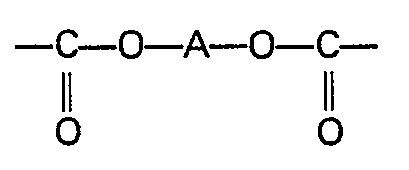

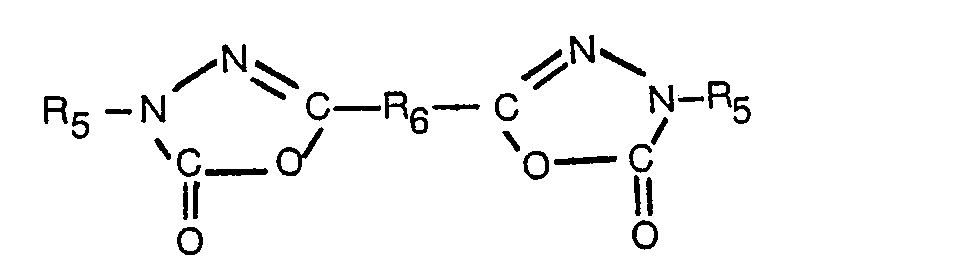

Applications Claiming Priority (2)
| Application Number | Priority Date | Filing Date | Title |
|---|---|---|---|
| US531982 | 1983-09-14 | ||
| US06/531,982 US4500653A (en) | 1983-09-14 | 1983-09-14 | Blowing agents for thermoplastic compositions |
Publications (3)
| Publication Number | Publication Date |
|---|---|
| EP0141144A2 EP0141144A2 (fr) | 1985-05-15 |
| EP0141144A3 EP0141144A3 (en) | 1985-08-28 |
| EP0141144B1 true EP0141144B1 (fr) | 1988-04-06 |
Family
ID=24119901
Family Applications (1)
| Application Number | Title | Priority Date | Filing Date |
|---|---|---|---|
| EP84110478A Expired EP0141144B1 (fr) | 1983-09-14 | 1984-09-04 | Agent de moussage pour compositions thermoplastiques |
Country Status (5)
| Country | Link |
|---|---|
| US (1) | US4500653A (fr) |
| EP (1) | EP0141144B1 (fr) |
| JP (1) | JPS6086131A (fr) |
| CA (1) | CA1218200A (fr) |
| DE (1) | DE3470318D1 (fr) |
Families Citing this family (4)
| Publication number | Priority date | Publication date | Assignee | Title |
|---|---|---|---|---|
| DE3323283A1 (de) * | 1983-06-28 | 1985-01-10 | Bayer Ag, 5090 Leverkusen | Herstellung von 2-aryl-4-acyl-1,3,4-oxdiazolonen |
| DE3405418A1 (de) * | 1984-02-15 | 1985-08-22 | Bayer Ag, 5090 Leverkusen | Verfahren zum verschaeumen von thermoplastischen aromatischen polycarbonaten |
| US5854294A (en) * | 1996-01-19 | 1998-12-29 | Jsp Corporation | Process for producing foamed body of polycarbonate resin and foamed body obtained thereby |
| JP7171567B2 (ja) * | 2016-11-28 | 2022-11-15 | エフ.ホフマン-ラ ロシュ アーゲー | 一過性受容体電位型チャネル阻害剤としてのオキサジアゾロン類 |
Family Cites Families (11)
| Publication number | Priority date | Publication date | Assignee | Title |
|---|---|---|---|---|
| DE2103198A1 (de) * | 1971-01-23 | 1972-07-27 | Bayer | Treibmittel |
| DE2126145A1 (de) * | 1971-05-26 | 1972-12-07 | Bayer | Treibmittel |
| US4007165A (en) * | 1971-06-01 | 1977-02-08 | Pennwalt Corporation | Unsymmetrical tertiary-aliphatic azoalkanes |
| US4263409A (en) * | 1974-08-02 | 1981-04-21 | General Electric Company | Process for the production of a foamed thermoplastic composition |
| US4097425A (en) * | 1975-08-28 | 1978-06-27 | General Electric Company | Thermoplastic formable blends, a foaming method and products made thereby |
| GB1562616A (en) * | 1975-08-28 | 1980-03-12 | Gen Electric | Thermoplastic blends |
| DE2964012D1 (en) * | 1978-07-21 | 1982-12-16 | Ciba Geigy Ag | Process for foaming synthetic resins and foamed synthetic resins obtained according to this process |
| DE2833470A1 (de) * | 1978-07-29 | 1980-02-07 | Hoechst Ag | 1,3,4-oxadiazolon(2)-verbindungen und verfahren zu deren herstellung |
| US4334030A (en) * | 1979-11-23 | 1982-06-08 | General Electric Company | Thermoplastic foamable blends |
| US4406846A (en) * | 1982-11-30 | 1983-09-27 | Standard Oil Company (Indiana) | Foamed thermoplastic resin comprising poly(p-methylenebenzoate) |
| DE3323283A1 (de) * | 1983-06-28 | 1985-01-10 | Bayer Ag, 5090 Leverkusen | Herstellung von 2-aryl-4-acyl-1,3,4-oxdiazolonen |
-
1983
- 1983-09-14 US US06/531,982 patent/US4500653A/en not_active Expired - Fee Related
-
1984
- 1984-08-13 CA CA000460919A patent/CA1218200A/fr not_active Expired
- 1984-09-04 EP EP84110478A patent/EP0141144B1/fr not_active Expired
- 1984-09-04 DE DE8484110478T patent/DE3470318D1/de not_active Expired
- 1984-09-11 JP JP59188972A patent/JPS6086131A/ja active Granted
Also Published As
| Publication number | Publication date |
|---|---|
| JPS6086131A (ja) | 1985-05-15 |
| US4500653A (en) | 1985-02-19 |
| JPH0315935B2 (fr) | 1991-03-04 |
| EP0141144A3 (en) | 1985-08-28 |
| DE3470318D1 (en) | 1988-05-11 |
| EP0141144A2 (fr) | 1985-05-15 |
| CA1218200A (fr) | 1987-02-17 |
Similar Documents
| Publication | Publication Date | Title |
|---|---|---|
| US4315859A (en) | 1,3,5-Triazines containing at least one piperidine radical | |
| US4469861A (en) | Polycarbonate composition from branched chain dihydric phenol | |
| CA1307613C (fr) | Composes intumescents retardant la propagation de la flamme, contenant un carbonate, un ether ou un ester d'element bicyclique | |
| JPH0328431B2 (fr) | ||
| US4554309A (en) | Polycarbonate from cycloalkylidene tetra alkyl substituted diphenol | |
| US5013777A (en) | Novel single-functional and mixtures of multi-functional oligomeric performance additive compositions and their uses | |
| US5162405A (en) | Single-functional and mixtures of multi-functional oligomeric performance additive compositions and their uses | |
| US4487917A (en) | Copolyester-carbonate resins exhibiting improved processability | |
| EP0505898A1 (fr) | Compositions de polyester ayant une vitesse de cristallisation élevée | |
| US4500653A (en) | Blowing agents for thermoplastic compositions | |
| US4119612A (en) | Polymeric and oligomeric formals | |
| JPS59219265A (ja) | 合成ポリマー用安定剤として有用なジピペリジン―ジ―カーバメート | |
| US5281637A (en) | Flameproofed thermoplastic polyester molding material and its use | |
| EP0368198A2 (fr) | Masse à mouler thermoplastique et procédé pour sa préparation | |
| WO1990010030A1 (fr) | 5-amidotetrazoles a substitution | |
| JPS63183573A (ja) | エポキシ化イソシアネート類及びその製造方法 | |
| US4254014A (en) | Polycarbonate containing a bis(cyclic phosphite) as a thermal stabilizer | |
| US4446296A (en) | Acyloxy terminated polycarbonates | |
| GB1562616A (en) | Thermoplastic blends | |
| JP4080578B2 (ja) | ガラス転位温度の低い難燃性ポリエステルカーボネート | |
| JPH0248587B2 (fr) | ||
| JP3834645B2 (ja) | 樹脂配合用難燃化剤 | |
| US4906725A (en) | Polycarbonate containing spiro dilactam segment | |
| US4341693A (en) | Oligomeric epoxide resins and their use as flameproofing agents | |
| US4526956A (en) | Copolyester-carbonates exhibiting improved processability |
Legal Events
| Date | Code | Title | Description |
|---|---|---|---|
| PUAI | Public reference made under article 153(3) epc to a published international application that has entered the european phase |
Free format text: ORIGINAL CODE: 0009012 |
|
| 17P | Request for examination filed |
Effective date: 19840904 |
|
| AK | Designated contracting states |
Designated state(s): DE FR GB IT |
|
| PUAL | Search report despatched |
Free format text: ORIGINAL CODE: 0009013 |
|
| AK | Designated contracting states |
Designated state(s): DE FR GB IT |
|
| 17Q | First examination report despatched |
Effective date: 19860724 |
|
| RAP1 | Party data changed (applicant data changed or rights of an application transferred) |
Owner name: MOBAY CORPORATION |
|
| GRAA | (expected) grant |
Free format text: ORIGINAL CODE: 0009210 |
|
| ITF | It: translation for a ep patent filed | ||
| AK | Designated contracting states |
Kind code of ref document: B1 Designated state(s): DE FR GB IT |
|
| REF | Corresponds to: |
Ref document number: 3470318 Country of ref document: DE Date of ref document: 19880511 |
|
| ET | Fr: translation filed | ||
| PLBE | No opposition filed within time limit |
Free format text: ORIGINAL CODE: 0009261 |
|
| STAA | Information on the status of an ep patent application or granted ep patent |
Free format text: STATUS: NO OPPOSITION FILED WITHIN TIME LIMIT |
|
| 26N | No opposition filed | ||
| PGFP | Annual fee paid to national office [announced via postgrant information from national office to epo] |
Ref country code: DE Payment date: 19930813 Year of fee payment: 10 |
|
| PGFP | Annual fee paid to national office [announced via postgrant information from national office to epo] |
Ref country code: GB Payment date: 19930825 Year of fee payment: 10 |
|
| PGFP | Annual fee paid to national office [announced via postgrant information from national office to epo] |
Ref country code: FR Payment date: 19930917 Year of fee payment: 10 |
|
| ITTA | It: last paid annual fee | ||
| PG25 | Lapsed in a contracting state [announced via postgrant information from national office to epo] |
Ref country code: GB Effective date: 19940904 |
|
| GBPC | Gb: european patent ceased through non-payment of renewal fee |
Effective date: 19940904 |
|
| PG25 | Lapsed in a contracting state [announced via postgrant information from national office to epo] |
Ref country code: FR Effective date: 19950531 |
|
| PG25 | Lapsed in a contracting state [announced via postgrant information from national office to epo] |
Ref country code: DE Effective date: 19950601 |
|
| REG | Reference to a national code |
Ref country code: FR Ref legal event code: ST |