EP0149454A2 - Compositions de résines de poly(éther de phénylène) et de résines de polystyrène à haute résistance au choc ayant une stabilité contre la lumière ultraviolette améliorée - Google Patents
Compositions de résines de poly(éther de phénylène) et de résines de polystyrène à haute résistance au choc ayant une stabilité contre la lumière ultraviolette améliorée Download PDFInfo
- Publication number
- EP0149454A2 EP0149454A2 EP85100060A EP85100060A EP0149454A2 EP 0149454 A2 EP0149454 A2 EP 0149454A2 EP 85100060 A EP85100060 A EP 85100060A EP 85100060 A EP85100060 A EP 85100060A EP 0149454 A2 EP0149454 A2 EP 0149454A2
- Authority
- EP
- European Patent Office
- Prior art keywords
- composition according
- resin
- polyphenylene ether
- alkyl
- hydrogen
- Prior art date
- Legal status (The legal status is an assumption and is not a legal conclusion. Google has not performed a legal analysis and makes no representation as to the accuracy of the status listed.)
- Granted
Links
Images


Classifications
-
- C—CHEMISTRY; METALLURGY
- C08—ORGANIC MACROMOLECULAR COMPOUNDS; THEIR PREPARATION OR CHEMICAL WORKING-UP; COMPOSITIONS BASED THEREON
- C08K—Use of inorganic or non-macromolecular organic substances as compounding ingredients
- C08K5/00—Use of organic ingredients
- C08K5/04—Oxygen-containing compounds
- C08K5/13—Phenols; Phenolates
- C08K5/132—Phenols containing keto groups, e.g. benzophenones
-
- C—CHEMISTRY; METALLURGY
- C08—ORGANIC MACROMOLECULAR COMPOUNDS; THEIR PREPARATION OR CHEMICAL WORKING-UP; COMPOSITIONS BASED THEREON
- C08K—Use of inorganic or non-macromolecular organic substances as compounding ingredients
- C08K5/00—Use of organic ingredients
- C08K5/16—Nitrogen-containing compounds
- C08K5/34—Heterocyclic compounds having nitrogen in the ring
- C08K5/3412—Heterocyclic compounds having nitrogen in the ring having one nitrogen atom in the ring
- C08K5/3432—Six-membered rings
- C08K5/3435—Piperidines
Definitions
- the polyphenylene ether (oxide) resins are high performance engineering thermoplastics possessing relatively high melt viscosities and softening points, and which are useful in many commercial applications requiring high temperature resistance, including the formation of films, fibers and molded articles.
- the polyphenylene ether, resins and methods of their preparation are described in U.S. Patent Nos. 3,306,874 and 3,306,875 (Hay), U.S. Patent Nos. 3,257,357 and 3,257,358 (Stamatoff), and elsewhere.
- polystyrene resins are also known to be admixable with polystyrene resins, unmodified or modified with rubber, as disclosed in U.S. Patent No. 3,383,435 (Cizek), to form blends which are extrudable or moldable into articles of various shapes and sizes.
- Polyphenylene ethers are normally prone to undergoing discoloration, that is, yellowing, during processing at elevated temperatures and, after molding, upon exposure to ultraviolet (UV) light for extended periods.
- stabilizing additives are sometimes included.
- Cooper, et al. in U.S. Patent No. 3,925,509 disclose blends of polyphenylene ether resin and high impact, rubber-modified polystyrene resin which have been modified to be more ultraviolet light stable by adding a light absorbing compound selected from among hydroxybenzotriazoles, hydroxybenzophenones, and substituted derivatives thereof in combination with an organic nickel compound.
- Bennett in U.S. Patent No.
- 3,563,934 discloses that an alkanolamine or a morphaline can be incorporated in a polyphenylene oxide resin to improve the flow and the thermal color stability of the polymer during molding, and to permit lighter colored objects to be more easily molded from the polymer.
- the present invention is based on the discovery that certain alkoxybenzophenones not disclosed by Shu in combination with certain hindered amines provide very good ultraviolet light stability in polyphenylene ether resins and blends and, moreover, the stability is better than that obtained with the best specific embodiment described by Shu. This is accomplished with good retention of other physical properties, including melt processability, impact strength, heat deflection temperature,and flame resistance (if present).
- the invention in its broadest aspects, comprises an admixtures of (a) a polyphenylene ether resin or a polyphenylene ether resin modified with an alkenyl aromatic resin; and
- a 2,4-dihydroxybenzophenone is condensation reacted with the glycidyl ether of an alkyl-substituted alcohol, for example, 2-ethyl hexanol, in the presence of a stall amount of the sodium salt of the dihydroxybenzophenone as the catalyst.
- the reaction is preferably conducted in solution in an organic solvent, for example, 2-met- hcxy ethanol, using an elevated temperature, for example about 100°C.
- Hindered amine compounds within Formula II above which are tetraalkyl dipiperidinyl aliphatic diesters, can be prepared by referring to the procedures described in U.S. Patent No. 3,640,928 (Murayama, et al.), which is incorporated herein by reference.
- component (b)(1) is included in a major amount and component (b)(2) in a minor amount, based on the total weight of (b).
- (b)(1) is present in amounts of from about 0.5 to about 10 parts by weight, and (b)(2) in amounts of from about 0.05 to about 2 parts by weight, for each 100 parts of resin components. Larger amounts can be employed and may actually be desirable in some instances, but for most purposes the aforementioned proportions will be sufficient to achieve satisfactory results.
- Preferred polyphenylene ether resins are homopolymers or copolymers having units of the formula in which Q, Q', Q" and Q"' are, independently, selected from the group consisting of hydrogen, halogen, hydrocarbon radicals, halohydrocarbon radicals, hydrocarboncxy radicals, and halohydrocarbonoxy radicals; and n represents the total number of monomer units and is an integer of at least about 20, and more usually at least 50.
- the polyphenylene ether resins are, in general, self-condensation products of monohydric, monocyclic phenols produced by reacting the phenols with oxygen in the presence of complex metal catalysts, with the molecular weight being controlled by the reaction time, longer times providing a higher average number of repeating units.
- Particular procedures are known to those skilled in the art and are described in the patent literature, including the Hay and Stamatoff patents mentioned above.
- Suitable phenolic monomers include but are not limited to: 2,6-dimethylphenol; 2,6-diethylphenol; 2,6- dibutylphenol; 2,6-dilaurylphenol; 2,6-dipropylphenol; 2,6-diphenylphenol; 2-methyl-6-ethylphenol; 2-methyl-6-cyclohexylphenol; 2-methyl-6-tolylphenol; 2-methyl-6-methoxyphenol; 2-methyl-6-butylphenol; 2-6-dimethoxy- phenol; 2,3,6-trimethylphenol; 2,3,5,6-tetramethylphenol; and 2,6-diethoxyphenol.
- poly(2,6-dilauryl- l,4-phenylene)ether poly(2,6-diphenyl-1,4-phenylene) ether; poly(2,6-dimethoxy-1,4-phenylene)ether; poly(2, 6-diethoxy-1,4-phenylene)ether; poly(2-methoxy-6-ethoxy-l, 4-phenylene)ether; poly(2-ethyl-6-stearyloxy-1,4-phenylene)ether; poly(2,6-dichloro-1,4-phenylene)ether; poly (2-methyl-6-phenyl-1,4-phenylene)ether; poly(2,6-dibenzyl-1,4-phenylene)ether; poly(2-ethoxy-1,4-phenylene) ether; poly(2-chloro-1,4-phenylene)ether; poly(2,6-dibromo-1,4-phenylene)ether; and the like.
- copolymers prepared from mixtures of phenolic monomers are also included within the above formula. Special mention is made of those based on the reaction of 2,6-dimethylphenol with other phenols, for example, with 2,3,6-trimethylphenol or 2-methyl-6-butylphenol, to produce the corresponding copolymer, for example, poly(2,6-dimethyl-co-2,3,6-trimethyl-1,4-phenylene) ether, poly(2,6-dimethyl-co-2-methyl-6-butyl-1,4-phenylene)ether, and so forth.
- homopolymers having alkyl substituents in the two positions ortho to the oxygen ether atom that is, those of the above formula in which Q and Q' are alkyl, and particularly alkyl having from 1 to 4 carbon atoms.
- Most preferred is poly(2,6-dimethyl-l,4-phenylene ether).
- the preferred rubber modified, high impact alkenyl aromatic resins when used, are those in which the alkenyl aromatic portion is derived at least in part from compounds of the formula wherein R and R are selected from the group consisting of lower alkyl or alkenyl groups of from 1 to 6 carbon atoms and hydrogen; R 3 and R 4 are selected from the group consisting of halogen, that is, fluoro, iodo, chloro, bram, hydrogen and lower alkyl of from 1 to 6 carbon atoms; R and R are selected from the group consisting of hydrogen and lower alkyl and alkenyl groups of from 1 to 6 carbon atoms, or R 6 and R may be concatenated together with hydrocarbyl groups to form a naphthyl group.
- sytrene and its homologs and analogs.
- examples include alpha-methyl styrene, para-methyl styrene, 2,4-dimethyl styrene, chlorostyrene, dichlorostyrene, bromostyrene, dibromostyrene, fluoro or difluorostyrene, iodo or diiodostyrene, p-tert-butylstyrene, p-ethylstyrene, vinyl xylene, divinylbenzene, and vinyl napthalene. Styrene is especially preferred.
- Suitable rubber modifiers which can be in admixture or interpolymerized with the alkenyl aromatic resin, include natural rubber, as well as synthetic rubbers such as polyisoprene, polybutadiene, polychloroprene, ethylene-propylene-diene terpolymers (EPDM rubber), styrene-butadiene copolymers (SBR rubber), styrene-acrylonitrile copolymers (SAN), ethylene-propylene copolymers (EPR rubber), acrylonitrile rubbers, polyurethane rubbers and polyorganosiloxane (silicone) rubbers.
- natural rubber as well as synthetic rubbers such as polyisoprene, polybutadiene, polychloroprene, ethylene-propylene-diene terpolymers (EPDM rubber), styrene-butadiene copolymers (SBR rubber), styrene-acrylonitrile copolymers (SAN),
- the rubber content can vary widely but generally will range in amount from about 5 to about 45 percent by weight, depending on particular requirements of impact resistant modification.
- the plasticizer will generally be any high boiling liquid or low melting solid having the effect of softening the composition and reducing the glass transition temperature of the polyphenylene ether resin.
- the plasticizer may be selected from among non-polymeric and polymeric materials known to exert these effects.
- suitable types include linear aliphatic esters based on dibasic acids, such as adipates, azelates and sebacates, or linear aliphatic esters based on phosphorus.
- Other suitable types include cyclic esters, such as phthalates, terephthalates, benzoates and trimellitates.
- organic phosphate plasticizers and particularly aromatic phosphate compounds of the formula in which each Q represents the same or a different radical selected independently from among alkyl, cycloalkyl, aryl, alkyl-substituted aryl, aryl-substituted alkyl, halogen, and hydrogen, with at least one Q always being aryl.
- Examples include phenylbisdodecyl phosphate, phenylbisneopentyl phosphate, phenylethylene hydrogen phosphate, phenyl-bis-(3,5,5'-trimethylhexyl phosphate), ethyldiphenyl phosphate, 2-ethylhexyl di(p-tolyl) phosphate, diphenyl hydrogen phosphate, bis(2-ethylhexyl) p-tolylphosphate, tritolyl phosphate, bis(2-ethylhexyl) phenyl phosphate, tri(nonyl-phenyl)phosphate, phenylmethyl hydrogen phosphate, di(dodecyl)p-tolyl phosphate, tricresyl phosphate, triphenyl phosphate, dibutylphenyl phosphate, 2-chloroethyldiphenyl phosphate, p-tolyl- bis-(
- polymeric plasticizing resins and especially polystyrene homopolymers, which have a plasticizing function and can be used for this purpose in the present blends.
- Plasticized compositions in accordance with the invention can and often do also include effective amounts of an impact strength enhancing modifier or modifiers. These may be selected from polymeric materials customarily employed for this purpose. Typically, they will be copolymers or terpolymers of alkenyl aromatic compounds of the formula shown above with rubber or elastomeric precursors. Preferred are linear block, graft or radial teleblock copolymers or terpolymers of styrene and butadiene, or of styrene and isoprene, as well as hydrogenated versions thereof in which the unsaturation of the aliphatic portion has been reduced. The amounts are conventional.
- compositions can and often are included in the compositions.
- these may be selected from among the various materials customarily employed in pol y phenylene ether resin blends, including flame retardant agents, mineral fillers (for example, clay, talc, mica or aluminum silicate), reinforcing agents (for example, glass fibers, flakes or spheres or titanate fibers), coloring agents (for example, dyes or pigments), plasticizers, odor suppressants, mold release agents, flow enhancing agents (for example, melt viscosity reducers), and so forth. Those may be employed singly or in various combinations, in amounts which are conventional.
- compositions of this invention may also be formulated to contain one or more flame retardant agents, alone or in combination with supplementary materials known to synergistically enhance their effect.
- flame retardant agents may be selected from among the numerous materials known to those skilled in the art, which in general will be those compounds, or oligomers or polymers, containing chemical elements employed for their ability to impart flame resistance, for example, bromine, chlorine, antimony, phosphorus and nitrogen.
- Examples include various aliphatic and aromatic phosphates, phosphonates and phosphites; halogenated (brominated or chlorinated) organic compounds; halogenated organic compounds in admixture with antimony oxide; halogen- containing compounds in admixture with phosphorus compounds containing phosphorus-nitrogen bonds; halogenated (brominated or chlorinated) polymers such as polystyrene and aromatic polycarbonates or their lower molecular weight oligomeric counterparts.
- flame retardant organophosphate compounds including aromatic phosphate flame retardant-plasticizers such as found among the compounds mentioned above; brominated or chlorinated bis-phenoxy alkanes, e.g., 1,2-bis(2,4,6-tribromophen- oxy)ethane or 1,2-bis(2,3,4,5,6-pentabromophenoxy)ethane; di- or polyfunctional phosphates such as disclosed in British Patent No. 2,043,083; and brominated or chlorinated polystyrenes.
- triphenyl phosphate and isopropylated triphenyl phosphate are especially preferred. Amounts of up to 30 parts by weight for each 100 parts of the polymeric components present in the blends are typical.
- compositions may be prepared into shaped articles in any convenient manner.
- the ingredients are dry or solution blended, the mixture is passed through a screw extruder at a temperature from about 450 to about 650°F., the extrudate is cooled and chopped into pieces, and the pieces are injection molded at a temperature of from about 450 to about 650°F.
- compositions may be prepared into any of the articles for which polyphenylene ether resins and blends are known. They are especially suitable for types of products intended for use in the outdoors where they will be exposed to the sun, or indoors under strong artificial light, either of which can change the original color of the plastic.
- the present kinds of blends can be manufactured into grilles, headlamp bezels, wheelcovers and decorative trim on automobiles, home laundry and dishwasher consoles, air conditioner grilles, personal care or home use products such as coffee makers, food processors, curling irons, and shower massagers, bases and housings for office business machines, TV cabinets, and so forth.
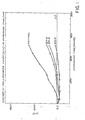
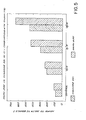
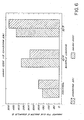
- the UV resistance was measured by monitoring color change throughout the course of an exposure to a high intensity UV source. The exposure time to a prescribed objectionable color change is then used to judge the relative UV performance of different materials. More particularly, two sets of polyphenylene ether resin formulations were prepared and test plaques molded from them were exposed to xenon arc radiation under a glass filter of 0.13 inch thickness in an Atlas Fadeometer. The UV irradiance at 420 nanomtters (nm) was maintained at 1.47 watts/s q uare meter. The black panel temperature and relative humidity were controlled tc 62°C. and 50%, respectively.
- compositions in accordance with this invention were prepared by forming an admixture of 40 parts by weight of poly(2,6-dimethyl-1,4-phenylene ether)resin (PPO,® General Electric Co.), 60 parts by weight of polybutadiene rubber-modified high impact polystyrene resin (Foster Grant's FG - 834 HIPS), 13 parts by weight of isopropylated triphenyl phosphate flame retardant-plasticizer (KRONITEX 50, FMC Corp.).
- PPO poly(2,6-dimethyl-1,4-phenylene ether)resin
- PPO polybutadiene rubber-modified high impact polystyrene resin
- KRONITEX 50 isopropylated triphenyl phosphate flame retardant-plasticizer
- blends were prepared to contain the same ingredients in the same amounts as above, except that the color stabilizer was composed of, in combination, 2-hydrcxy-4-n-octoxybenzophenone (CYASORB 531, American Cyanamid Co.) and TINUVIN 770.
- a control blend containing no stabilizer components was prepared for each set of blends.
Landscapes
- Chemical & Material Sciences (AREA)
- Health & Medical Sciences (AREA)
- Chemical Kinetics & Catalysis (AREA)
- Medicinal Chemistry (AREA)
- Polymers & Plastics (AREA)
- Organic Chemistry (AREA)
- Compositions Of Macromolecular Compounds (AREA)
Applications Claiming Priority (2)
| Application Number | Priority Date | Filing Date | Title |
|---|---|---|---|
| US57033084A | 1984-01-13 | 1984-01-13 | |
| US570330 | 1984-01-13 |
Publications (3)
| Publication Number | Publication Date |
|---|---|
| EP0149454A2 true EP0149454A2 (fr) | 1985-07-24 |
| EP0149454A3 EP0149454A3 (en) | 1986-01-22 |
| EP0149454B1 EP0149454B1 (fr) | 1988-12-21 |
Family
ID=24279229
Family Applications (1)
| Application Number | Title | Priority Date | Filing Date |
|---|---|---|---|
| EP19850100060 Expired EP0149454B1 (fr) | 1984-01-13 | 1985-01-03 | Compositions de résines de poly(éther de phénylène) et de résines de polystyrène à haute résistance au choc ayant une stabilité contre la lumière ultraviolette améliorée |
Country Status (3)
| Country | Link |
|---|---|
| EP (1) | EP0149454B1 (fr) |
| JP (1) | JPS60221452A (fr) |
| DE (1) | DE3566897D1 (fr) |
Cited By (7)
| Publication number | Priority date | Publication date | Assignee | Title |
|---|---|---|---|---|
| EP0240723A3 (en) * | 1986-03-17 | 1989-03-08 | General Electric Company | Uv-light stabilizer composition comprising cyclic aliphatic epoxy, uv screener, and polyalkyldipiperidine (hals) compounds |
| US5026751A (en) * | 1986-03-17 | 1991-06-25 | General Electric Company | UV light stabilizer composition comprising cyclic aliphatic epoxy UV screener, and polyalkyldipiperidine (HALS) compounds |
| EP0457228A3 (en) * | 1990-05-16 | 1992-08-26 | Hoechst Aktiengesellschaft | Antistatically equipped and photostable polyphenylene ether moulding composition |
| EP0675160A3 (fr) * | 1994-03-29 | 1995-11-29 | Gen Electric | Compositions à base de polyamides stabilisées à la lumière ultraviolette. |
| US5478873A (en) * | 1993-09-01 | 1995-12-26 | Sumitomo Chemical Company, Limited | Thermoplastic resin composition |
| DE19907016A1 (de) * | 1999-02-18 | 2000-08-24 | Menzolit Fibron Gmbh | Härtbare Formmasse |
| CN101759994B (zh) * | 2008-12-23 | 2012-08-29 | 金发科技股份有限公司 | 一种半透明聚苯醚复合物及其制备方法 |
Family Cites Families (2)
| Publication number | Priority date | Publication date | Assignee | Title |
|---|---|---|---|---|
| US3925509A (en) * | 1973-12-26 | 1975-12-09 | Gen Electric | Light stabilized polyphenylene ether resin composition |
| JPS56501881A (fr) * | 1980-01-14 | 1981-12-24 |
-
1985
- 1985-01-03 DE DE8585100060T patent/DE3566897D1/de not_active Expired
- 1985-01-03 EP EP19850100060 patent/EP0149454B1/fr not_active Expired
- 1985-01-11 JP JP225585A patent/JPS60221452A/ja active Granted
Cited By (8)
| Publication number | Priority date | Publication date | Assignee | Title |
|---|---|---|---|---|
| EP0240723A3 (en) * | 1986-03-17 | 1989-03-08 | General Electric Company | Uv-light stabilizer composition comprising cyclic aliphatic epoxy, uv screener, and polyalkyldipiperidine (hals) compounds |
| US5026751A (en) * | 1986-03-17 | 1991-06-25 | General Electric Company | UV light stabilizer composition comprising cyclic aliphatic epoxy UV screener, and polyalkyldipiperidine (HALS) compounds |
| EP0457228A3 (en) * | 1990-05-16 | 1992-08-26 | Hoechst Aktiengesellschaft | Antistatically equipped and photostable polyphenylene ether moulding composition |
| US5382613A (en) * | 1990-05-16 | 1995-01-17 | Hoechst Ag | Light-stable polyphenylene ether molding composition with an antistatic finish |
| US5478873A (en) * | 1993-09-01 | 1995-12-26 | Sumitomo Chemical Company, Limited | Thermoplastic resin composition |
| EP0675160A3 (fr) * | 1994-03-29 | 1995-11-29 | Gen Electric | Compositions à base de polyamides stabilisées à la lumière ultraviolette. |
| DE19907016A1 (de) * | 1999-02-18 | 2000-08-24 | Menzolit Fibron Gmbh | Härtbare Formmasse |
| CN101759994B (zh) * | 2008-12-23 | 2012-08-29 | 金发科技股份有限公司 | 一种半透明聚苯醚复合物及其制备方法 |
Also Published As
| Publication number | Publication date |
|---|---|
| EP0149454A3 (en) | 1986-01-22 |
| JPS60221452A (ja) | 1985-11-06 |
| JPH0433305B2 (fr) | 1992-06-02 |
| DE3566897D1 (en) | 1989-01-26 |
| EP0149454B1 (fr) | 1988-12-21 |
Similar Documents
| Publication | Publication Date | Title |
|---|---|---|
| US3639506A (en) | Flame retardant composition of polyphenylene ether styrene resin aromatic phosphate and aromatic halogen compound | |
| US4835201A (en) | Compositions of polyphenylene ether resin and high impact polystyrene resin having improved ultraviolet light resistance | |
| EP0240723B1 (fr) | Composition de stabilisant contre le rayonnement UV comprenant un composé époxy cyclo-aliphatique, un filtre de rayons UV et des composés de polyalkyldipipéridines | |
| US4405739A (en) | Polyphenylene ether resins and compositions heat stabilized with phosphite compounds | |
| US5106899A (en) | Plasticized polyphenylene ether compositions | |
| US4203931A (en) | Flame retardant thermoplastic polyphenylene ether resin compositions | |
| EP0146878B1 (fr) | Compositions de résines de polyéther de phénylène et de résines de polystyrène à haute résistance au choc à stabilité améliorée à la lumière ultraviolette | |
| EP0149454B1 (fr) | Compositions de résines de poly(éther de phénylène) et de résines de polystyrène à haute résistance au choc ayant une stabilité contre la lumière ultraviolette améliorée | |
| US4298514A (en) | Flame retardant thermoplastic polyphenylene ether resin compositions | |
| US4588764A (en) | Compositions of polyphenylene ether resin and diphosphites | |
| US20060068317A1 (en) | Poly(arylene ether) composition | |
| US4535106A (en) | Thermoplastic compositions of polyphenylene ether resin and pre-compounded blend of organopolysiloxane and poly(arylolefin-olefin) | |
| US4785076A (en) | Polyphenylene ether resin blends having improved ultraviolet light stability | |
| CA1269787A (fr) | Melanges de resine de poly(oxyphenylene) offrant une meilleure stabilite a la lumiere ultra-violette | |
| US4483953A (en) | Polyphenylene ether resins and compositions heat stabilized with trineopentylene diphosphite | |
| CA1272336A (fr) | Compositions de resine d'ether de polyphenylene, et resine de polystyrene a forte resistance aux impacts | |
| EP0085834B1 (fr) | Agent d'ignifugation inhibitant la décoloration comprenant un stable composé organique halogéné et un composé de bore | |
| CA1262786A (fr) | Compositions a base de resine ether de polyphenylene a qualites accrues de fluabilite et peinturabilite | |
| EP0086947A1 (fr) | Composition de PPE contenant un modificateur de résistance au choc, agent ignifugeant/plastifiant et un reducteur de la viscosité fondue | |
| CA1201242A (fr) | Resines de poly(oxyde de phenylene) et compositions de resines stabilisees thermiquement a l'aide de diphosphite de trineopentylene | |
| KR0173465B1 (ko) | 정전기방지제를 함유한 광-안정 폴리페닐렌 에테르 성형 조성물 | |
| EP0719832A2 (fr) | Compositions thermoplastiques contenant des résines polyéther de phénylène et polyoléfines | |
| JPH0576502B2 (fr) | ||
| EP0129762A2 (fr) | Compositions de résines de polyphénylène éther contenant un composé aromatique halogéné seul comme agent retardateur de flamme | |
| US4624979A (en) | Flame retardant polyphenylene ether-polystyrene blends of increased heat resistance and method of achievement |
Legal Events
| Date | Code | Title | Description |
|---|---|---|---|
| PUAI | Public reference made under article 153(3) epc to a published international application that has entered the european phase |
Free format text: ORIGINAL CODE: 0009012 |
|
| AK | Designated contracting states |
Designated state(s): DE FR GB IT NL |
|
| PUAL | Search report despatched |
Free format text: ORIGINAL CODE: 0009013 |
|
| AK | Designated contracting states |
Designated state(s): DE FR GB IT NL |
|
| 17P | Request for examination filed |
Effective date: 19860711 |
|
| 17Q | First examination report despatched |
Effective date: 19870615 |
|
| GRAA | (expected) grant |
Free format text: ORIGINAL CODE: 0009210 |
|
| AK | Designated contracting states |
Kind code of ref document: B1 Designated state(s): DE FR GB IT NL |
|
| REF | Corresponds to: |
Ref document number: 3566897 Country of ref document: DE Date of ref document: 19890126 |
|
| ET | Fr: translation filed | ||
| ITF | It: translation for a ep patent filed | ||
| PLBE | No opposition filed within time limit |
Free format text: ORIGINAL CODE: 0009261 |
|
| STAA | Information on the status of an ep patent application or granted ep patent |
Free format text: STATUS: NO OPPOSITION FILED WITHIN TIME LIMIT |
|
| 26N | No opposition filed | ||
| ITTA | It: last paid annual fee | ||
| PGFP | Annual fee paid to national office [announced via postgrant information from national office to epo] |
Ref country code: FR Payment date: 19941214 Year of fee payment: 11 |
|
| PGFP | Annual fee paid to national office [announced via postgrant information from national office to epo] |
Ref country code: DE Payment date: 19941227 Year of fee payment: 11 |
|
| PGFP | Annual fee paid to national office [announced via postgrant information from national office to epo] |
Ref country code: GB Payment date: 19941228 Year of fee payment: 11 |
|
| PGFP | Annual fee paid to national office [announced via postgrant information from national office to epo] |
Ref country code: NL Payment date: 19950131 Year of fee payment: 11 |
|
| PG25 | Lapsed in a contracting state [announced via postgrant information from national office to epo] |
Ref country code: GB Effective date: 19960103 |
|
| PG25 | Lapsed in a contracting state [announced via postgrant information from national office to epo] |
Ref country code: NL Effective date: 19960801 |
|
| GBPC | Gb: european patent ceased through non-payment of renewal fee |
Effective date: 19960103 |
|
| PG25 | Lapsed in a contracting state [announced via postgrant information from national office to epo] |
Ref country code: FR Effective date: 19960930 |
|
| NLV4 | Nl: lapsed or anulled due to non-payment of the annual fee |
Effective date: 19960801 |
|
| PG25 | Lapsed in a contracting state [announced via postgrant information from national office to epo] |
Ref country code: DE Effective date: 19961001 |
|
| REG | Reference to a national code |
Ref country code: FR Ref legal event code: ST |