EP0154816A2 - Sulfonsäuregruppenhaltige Azoverbindungen - Google Patents
Sulfonsäuregruppenhaltige Azoverbindungen Download PDFInfo
- Publication number
- EP0154816A2 EP0154816A2 EP85101428A EP85101428A EP0154816A2 EP 0154816 A2 EP0154816 A2 EP 0154816A2 EP 85101428 A EP85101428 A EP 85101428A EP 85101428 A EP85101428 A EP 85101428A EP 0154816 A2 EP0154816 A2 EP 0154816A2
- Authority
- EP
- European Patent Office
- Prior art keywords
- oder
- alkyl
- methyl
- hydrogen
- bis
- Prior art date
- Legal status (The legal status is an assumption and is not a legal conclusion. Google has not performed a legal analysis and makes no representation as to the accuracy of the status listed.)
- Granted
Links
- 125000000542 sulfonic acid group Chemical group 0.000 title description 2
- -1 Chlor, Brom, Methyl Chemical group 0.000 claims abstract description 58
- 125000002496 methyl group Chemical group [H]C([H])([H])* 0.000 claims abstract description 24
- 239000001257 hydrogen Substances 0.000 claims abstract description 23
- 229910052739 hydrogen Inorganic materials 0.000 claims abstract description 23
- UFHFLCQGNIYNRP-UHFFFAOYSA-N Hydrogen Chemical compound [H][H] UFHFLCQGNIYNRP-UHFFFAOYSA-N 0.000 claims abstract description 21
- 125000002887 hydroxy group Chemical group [H]O* 0.000 claims abstract description 16
- 239000000460 chlorine Substances 0.000 claims abstract description 15
- 229910052801 chlorine Inorganic materials 0.000 claims abstract description 15
- 125000000020 sulfo group Chemical group O=S(=O)([*])O[H] 0.000 claims abstract description 15
- ZAMOUSCENKQFHK-UHFFFAOYSA-N Chlorine atom Chemical compound [Cl] ZAMOUSCENKQFHK-UHFFFAOYSA-N 0.000 claims abstract description 14
- 150000002431 hydrogen Chemical group 0.000 claims abstract description 14
- 150000001875 compounds Chemical class 0.000 claims abstract description 13
- 125000001997 phenyl group Chemical group [H]C1=C([H])C([H])=C(*)C([H])=C1[H] 0.000 claims abstract description 13
- 125000002023 trifluoromethyl group Chemical group FC(F)(F)* 0.000 claims abstract description 13
- 239000001301 oxygen Substances 0.000 claims abstract description 12
- 229910052760 oxygen Inorganic materials 0.000 claims abstract description 12
- 125000004769 (C1-C4) alkylsulfonyl group Chemical group 0.000 claims abstract description 10
- PXGOKWXKJXAPGV-UHFFFAOYSA-N Fluorine Chemical compound FF PXGOKWXKJXAPGV-UHFFFAOYSA-N 0.000 claims abstract description 10
- 125000000217 alkyl group Chemical group 0.000 claims abstract description 10
- WKBOTKDWSSQWDR-UHFFFAOYSA-N Bromine atom Chemical compound [Br] WKBOTKDWSSQWDR-UHFFFAOYSA-N 0.000 claims abstract description 9
- GDTBXPJZTBHREO-UHFFFAOYSA-N bromine Substances BrBr GDTBXPJZTBHREO-UHFFFAOYSA-N 0.000 claims abstract description 9
- 229910052794 bromium Inorganic materials 0.000 claims abstract description 9
- QVGXLLKOCUKJST-UHFFFAOYSA-N atomic oxygen Chemical compound [O] QVGXLLKOCUKJST-UHFFFAOYSA-N 0.000 claims abstract description 8
- 125000004093 cyano group Chemical group *C#N 0.000 claims abstract description 7
- 239000002253 acid Substances 0.000 claims abstract description 6
- 238000004043 dyeing Methods 0.000 claims abstract description 6
- 239000011737 fluorine Substances 0.000 claims abstract description 6
- 229910052731 fluorine Inorganic materials 0.000 claims abstract description 6
- 125000003903 2-propenyl group Chemical group [H]C([*])([H])C([H])=C([H])[H] 0.000 claims abstract description 5
- 125000000738 acetamido group Chemical group [H]C([H])([H])C(=O)N([H])[*] 0.000 claims abstract description 5
- 125000002777 acetyl group Chemical group [H]C([H])([H])C(*)=O 0.000 claims abstract description 5
- 125000004391 aryl sulfonyl group Chemical group 0.000 claims abstract description 5
- 125000003236 benzoyl group Chemical group [H]C1=C([H])C([H])=C(C([H])=C1[H])C(*)=O 0.000 claims abstract description 5
- 125000001797 benzyl group Chemical group [H]C1=C([H])C([H])=C(C([H])=C1[H])C([H])([H])* 0.000 claims abstract description 5
- 125000000956 methoxy group Chemical group [H]C([H])([H])O* 0.000 claims abstract description 5
- 125000004170 methylsulfonyl group Chemical group [H]C([H])([H])S(*)(=O)=O 0.000 claims abstract description 5
- 125000000286 phenylethyl group Chemical group [H]C1=C([H])C([H])=C(C([H])=C1[H])C([H])([H])C([H])([H])* 0.000 claims abstract description 5
- 125000001436 propyl group Chemical group [H]C([*])([H])C([H])([H])C([H])([H])[H] 0.000 claims abstract description 5
- 125000000008 (C1-C10) alkyl group Chemical group 0.000 claims abstract description 4
- 125000001511 cyclopentyl group Chemical group [H]C1([H])C([H])([H])C([H])([H])C([H])(*)C1([H])[H] 0.000 claims abstract description 4
- 239000010985 leather Substances 0.000 claims abstract description 4
- 229920002647 polyamide Polymers 0.000 claims abstract description 4
- 239000004952 Polyamide Substances 0.000 claims abstract description 3
- 150000007513 acids Chemical class 0.000 claims abstract description 3
- 125000004397 aminosulfonyl group Chemical group NS(=O)(=O)* 0.000 claims abstract description 3
- 125000001309 chloro group Chemical group Cl* 0.000 claims abstract description 3
- 125000004435 hydrogen atom Chemical group [H]* 0.000 claims abstract description 3
- QJGQUHMNIGDVPM-UHFFFAOYSA-N nitrogen group Chemical group [N] QJGQUHMNIGDVPM-UHFFFAOYSA-N 0.000 claims abstract description 3
- 229920006395 saturated elastomer Polymers 0.000 claims abstract description 3
- 125000003545 alkoxy group Chemical group 0.000 claims abstract 3
- 125000000951 phenoxy group Chemical group [H]C1=C([H])C([H])=C(O*)C([H])=C1[H] 0.000 claims 1
- 125000003944 tolyl group Chemical group 0.000 claims 1
- IJGRMHOSHXDMSA-UHFFFAOYSA-N Atomic nitrogen Chemical compound N#N IJGRMHOSHXDMSA-UHFFFAOYSA-N 0.000 abstract description 6
- MYMOFIZGZYHOMD-UHFFFAOYSA-N Dioxygen Chemical compound O=O MYMOFIZGZYHOMD-UHFFFAOYSA-N 0.000 abstract description 4
- 125000002704 decyl group Chemical group [H]C([H])([H])C([H])([H])C([H])([H])C([H])([H])C([H])([H])C([H])([H])C([H])([H])C([H])([H])C([H])([H])C([H])([H])* 0.000 abstract description 4
- 125000000113 cyclohexyl group Chemical group [H]C1([H])C([H])([H])C([H])([H])C([H])(*)C([H])([H])C1([H])[H] 0.000 abstract description 3
- 229910052757 nitrogen Inorganic materials 0.000 abstract description 3
- 125000002347 octyl group Chemical group [H]C([*])([H])C([H])([H])C([H])([H])C([H])([H])C([H])([H])C([H])([H])C([H])([H])C([H])([H])[H] 0.000 abstract description 2
- HEMHJVSKTPXQMS-UHFFFAOYSA-M Sodium hydroxide Chemical compound [OH-].[Na+] HEMHJVSKTPXQMS-UHFFFAOYSA-M 0.000 description 39
- 239000000203 mixture Substances 0.000 description 31
- 239000000975 dye Substances 0.000 description 25
- VEXZGXHMUGYJMC-UHFFFAOYSA-N Hydrochloric acid Chemical compound Cl VEXZGXHMUGYJMC-UHFFFAOYSA-N 0.000 description 14
- XLYOFNOQVPJJNP-UHFFFAOYSA-N water Substances O XLYOFNOQVPJJNP-UHFFFAOYSA-N 0.000 description 14
- ZMXDDKWLCZADIW-UHFFFAOYSA-N N,N-Dimethylformamide Chemical compound CN(C)C=O ZMXDDKWLCZADIW-UHFFFAOYSA-N 0.000 description 12
- 238000005859 coupling reaction Methods 0.000 description 12
- QTBSBXVTEAMEQO-UHFFFAOYSA-N Acetic acid Chemical compound CC(O)=O QTBSBXVTEAMEQO-UHFFFAOYSA-N 0.000 description 8
- 230000008878 coupling Effects 0.000 description 8
- 238000010168 coupling process Methods 0.000 description 8
- GZSGTFDLLISMMA-UHFFFAOYSA-N n-(2,4-dichlorophenyl)acetamide Chemical compound CC(=O)NC1=CC=C(Cl)C=C1Cl GZSGTFDLLISMMA-UHFFFAOYSA-N 0.000 description 7
- 229920002292 Nylon 6 Polymers 0.000 description 6
- FAPWRFPIFSIZLT-UHFFFAOYSA-M Sodium chloride Chemical compound [Na+].[Cl-] FAPWRFPIFSIZLT-UHFFFAOYSA-M 0.000 description 6
- 239000000843 powder Substances 0.000 description 6
- UUBOVWHMFBDDEN-UHFFFAOYSA-N 2-amino-3,5-dichlorobenzenesulfonic acid Chemical compound NC1=C(Cl)C=C(Cl)C=C1S(O)(=O)=O UUBOVWHMFBDDEN-UHFFFAOYSA-N 0.000 description 5
- 210000002268 wool Anatomy 0.000 description 5
- FFRBMBIXVSCUFS-UHFFFAOYSA-N 2,4-dinitro-1-naphthol Chemical compound C1=CC=C2C(O)=C([N+]([O-])=O)C=C([N+]([O-])=O)C2=C1 FFRBMBIXVSCUFS-UHFFFAOYSA-N 0.000 description 4
- NPBHSNVITUSJGS-UHFFFAOYSA-N 5-amino-2,4-dichlorobenzenesulfonic acid Chemical compound NC1=CC(S(O)(=O)=O)=C(Cl)C=C1Cl NPBHSNVITUSJGS-UHFFFAOYSA-N 0.000 description 4
- 0 C(C1)[C@@]2CC*[C@@]1C2 Chemical compound C(C1)[C@@]2CC*[C@@]1C2 0.000 description 4
- 239000004280 Sodium formate Substances 0.000 description 4
- 238000010521 absorption reaction Methods 0.000 description 4
- 229960000583 acetic acid Drugs 0.000 description 4
- 238000001914 filtration Methods 0.000 description 4
- 239000012362 glacial acetic acid Substances 0.000 description 4
- 238000000034 method Methods 0.000 description 4
- LQNUZADURLCDLV-UHFFFAOYSA-N nitrobenzene Chemical compound [O-][N+](=O)C1=CC=CC=C1 LQNUZADURLCDLV-UHFFFAOYSA-N 0.000 description 4
- HLBBKKJFGFRGMU-UHFFFAOYSA-M sodium formate Chemical compound [Na+].[O-]C=O HLBBKKJFGFRGMU-UHFFFAOYSA-M 0.000 description 4
- 235000019254 sodium formate Nutrition 0.000 description 4
- LPXPTNMVRIOKMN-UHFFFAOYSA-M sodium nitrite Chemical compound [Na+].[O-]N=O LPXPTNMVRIOKMN-UHFFFAOYSA-M 0.000 description 4
- WMFOQBRAJBCJND-UHFFFAOYSA-M Lithium hydroxide Chemical compound [Li+].[OH-] WMFOQBRAJBCJND-UHFFFAOYSA-M 0.000 description 3
- VMHLLURERBWHNL-UHFFFAOYSA-M Sodium acetate Chemical compound [Na+].CC([O-])=O VMHLLURERBWHNL-UHFFFAOYSA-M 0.000 description 3
- 230000002378 acidificating effect Effects 0.000 description 3
- 239000012954 diazonium Substances 0.000 description 3
- 150000001989 diazonium salts Chemical class 0.000 description 3
- 239000000047 product Substances 0.000 description 3
- 239000001632 sodium acetate Substances 0.000 description 3
- 235000017281 sodium acetate Nutrition 0.000 description 3
- 239000011780 sodium chloride Substances 0.000 description 3
- 239000000725 suspension Substances 0.000 description 3
- 238000005160 1H NMR spectroscopy Methods 0.000 description 2
- NATVSFWWYVJTAZ-UHFFFAOYSA-N 2,4,6-trichloroaniline Chemical compound NC1=C(Cl)C=C(Cl)C=C1Cl NATVSFWWYVJTAZ-UHFFFAOYSA-N 0.000 description 2
- VHBWYXZJBMXNBI-UHFFFAOYSA-N 2,6-bis(3-hydroxypropylamino)-4-methylpyridine-3-carbonitrile Chemical compound CC1=CC(NCCCO)=NC(NCCCO)=C1C#N VHBWYXZJBMXNBI-UHFFFAOYSA-N 0.000 description 2
- ONIKNECPXCLUHT-UHFFFAOYSA-N 2-chlorobenzoyl chloride Chemical compound ClC(=O)C1=CC=CC=C1Cl ONIKNECPXCLUHT-UHFFFAOYSA-N 0.000 description 2
- OKTJSMMVPCPJKN-UHFFFAOYSA-N Carbon Chemical compound [C] OKTJSMMVPCPJKN-UHFFFAOYSA-N 0.000 description 2
- FZERHIULMFGESH-UHFFFAOYSA-N N-phenylacetamide Chemical compound CC(=O)NC1=CC=CC=C1 FZERHIULMFGESH-UHFFFAOYSA-N 0.000 description 2
- IOVCWXUNBOPUCH-UHFFFAOYSA-N Nitrous acid Chemical compound ON=O IOVCWXUNBOPUCH-UHFFFAOYSA-N 0.000 description 2
- CDBYLPFSWZWCQE-UHFFFAOYSA-L Sodium Carbonate Chemical compound [Na+].[Na+].[O-]C([O-])=O CDBYLPFSWZWCQE-UHFFFAOYSA-L 0.000 description 2
- QAOWNCQODCNURD-UHFFFAOYSA-N Sulfuric acid Chemical compound OS(O)(=O)=O QAOWNCQODCNURD-UHFFFAOYSA-N 0.000 description 2
- 150000003863 ammonium salts Chemical class 0.000 description 2
- 238000001816 cooling Methods 0.000 description 2
- 239000002270 dispersing agent Substances 0.000 description 2
- 238000001035 drying Methods 0.000 description 2
- 125000001495 ethyl group Chemical group [H]C([H])([H])C([H])([H])* 0.000 description 2
- 239000000706 filtrate Substances 0.000 description 2
- 125000004573 morpholin-4-yl group Chemical group N1(CCOCC1)* 0.000 description 2
- 125000000963 oxybis(methylene) group Chemical group [H]C([H])(*)OC([H])([H])* 0.000 description 2
- 235000010288 sodium nitrite Nutrition 0.000 description 2
- 238000001256 steam distillation Methods 0.000 description 2
- 238000003756 stirring Methods 0.000 description 2
- YBBRCQOCSYXUOC-UHFFFAOYSA-N sulfuryl dichloride Chemical compound ClS(Cl)(=O)=O YBBRCQOCSYXUOC-UHFFFAOYSA-N 0.000 description 2
- 239000000080 wetting agent Substances 0.000 description 2
- KEQGZUUPPQEDPF-UHFFFAOYSA-N 1,3-dichloro-5,5-dimethylimidazolidine-2,4-dione Chemical compound CC1(C)N(Cl)C(=O)N(Cl)C1=O KEQGZUUPPQEDPF-UHFFFAOYSA-N 0.000 description 1
- OAYXUHPQHDHDDZ-UHFFFAOYSA-N 2-(2-butoxyethoxy)ethanol Chemical compound CCCCOCCOCCO OAYXUHPQHDHDDZ-UHFFFAOYSA-N 0.000 description 1
- FCQNVWIXQFQXRW-UHFFFAOYSA-N 2-amino-3,4-dichlorobenzenesulfonic acid Chemical compound NC1=C(Cl)C(Cl)=CC=C1S(O)(=O)=O FCQNVWIXQFQXRW-UHFFFAOYSA-N 0.000 description 1
- ZRJIOHJJKYYDOS-UHFFFAOYSA-N 2-amino-5-chloro-3-(trifluoromethyl)benzenesulfonic acid Chemical compound NC1=C(C(F)(F)F)C=C(Cl)C=C1S(O)(=O)=O ZRJIOHJJKYYDOS-UHFFFAOYSA-N 0.000 description 1
- 125000000954 2-hydroxyethyl group Chemical group [H]C([*])([H])C([H])([H])O[H] 0.000 description 1
- RFONJRMUUALMBA-UHFFFAOYSA-N 2-methanidylpropane Chemical compound CC(C)[CH2-] RFONJRMUUALMBA-UHFFFAOYSA-N 0.000 description 1
- 125000004200 2-methoxyethyl group Chemical group [H]C([H])([H])OC([H])([H])C([H])([H])* 0.000 description 1
- YTTFFPATQICAQN-UHFFFAOYSA-N 2-methoxypropan-1-ol Chemical compound COC(C)CO YTTFFPATQICAQN-UHFFFAOYSA-N 0.000 description 1
- JDFDHBSESGTDAL-UHFFFAOYSA-N 3-methoxypropan-1-ol Chemical compound COCCCO JDFDHBSESGTDAL-UHFFFAOYSA-N 0.000 description 1
- RJZLMBIYRSBCDQ-UHFFFAOYSA-N 6-amino-5-[[2-[ethyl(phenyl)sulfamoyl]phenyl]diazenyl]-4-hydroxynaphthalene-2-sulfonic acid Chemical compound CCN(C1=CC=CC=C1)S(=O)(=O)C1=CC=CC=C1N=NC1=C(N)C=CC2=C1C(O)=CC(=C2)S(O)(=O)=O RJZLMBIYRSBCDQ-UHFFFAOYSA-N 0.000 description 1
- WJWHGLNUYRGFQF-UHFFFAOYSA-N COCCN1C(O)=CC(C)=C(C#N)C1=O Chemical compound COCCN1C(O)=CC(C)=C(C#N)C1=O WJWHGLNUYRGFQF-UHFFFAOYSA-N 0.000 description 1
- 244000248349 Citrus limon Species 0.000 description 1
- 235000005979 Citrus limon Nutrition 0.000 description 1
- 229960001413 acetanilide Drugs 0.000 description 1
- 150000001412 amines Chemical class 0.000 description 1
- 125000003710 aryl alkyl group Chemical group 0.000 description 1
- 230000008901 benefit Effects 0.000 description 1
- 239000001045 blue dye Substances 0.000 description 1
- 125000000484 butyl group Chemical group [H]C([*])([H])C([H])([H])C([H])([H])C([H])([H])[H] 0.000 description 1
- 239000006227 byproduct Substances 0.000 description 1
- 230000008859 change Effects 0.000 description 1
- 238000006243 chemical reaction Methods 0.000 description 1
- 238000005660 chlorination reaction Methods 0.000 description 1
- XTHPWXDJESJLNJ-UHFFFAOYSA-N chlorosulfonic acid Substances OS(Cl)(=O)=O XTHPWXDJESJLNJ-UHFFFAOYSA-N 0.000 description 1
- 238000005352 clarification Methods 0.000 description 1
- 125000000664 diazo group Chemical group [N-]=[N+]=[*] 0.000 description 1
- 238000006193 diazotization reaction Methods 0.000 description 1
- 238000002474 experimental method Methods 0.000 description 1
- 239000004744 fabric Substances 0.000 description 1
- 230000002349 favourable effect Effects 0.000 description 1
- 239000013067 intermediate product Substances 0.000 description 1
- 238000004519 manufacturing process Methods 0.000 description 1
- 230000005012 migration Effects 0.000 description 1
- 238000013508 migration Methods 0.000 description 1
- 230000001617 migratory effect Effects 0.000 description 1
- UYAFIBWBOORJHP-UHFFFAOYSA-N n-(2,4,6-trichlorophenyl)acetamide Chemical compound CC(=O)NC1=C(Cl)C=C(Cl)C=C1Cl UYAFIBWBOORJHP-UHFFFAOYSA-N 0.000 description 1
- 230000020477 pH reduction Effects 0.000 description 1
- 125000003884 phenylalkyl group Chemical group 0.000 description 1
- 238000001556 precipitation Methods 0.000 description 1
- 230000008569 process Effects 0.000 description 1
- 239000011541 reaction mixture Substances 0.000 description 1
- 238000001953 recrystallisation Methods 0.000 description 1
- 239000001044 red dye Substances 0.000 description 1
- 230000002441 reversible effect Effects 0.000 description 1
- 150000003839 salts Chemical class 0.000 description 1
- 229910000029 sodium carbonate Inorganic materials 0.000 description 1
- 238000001179 sorption measurement Methods 0.000 description 1
- 239000007921 spray Substances 0.000 description 1
- 125000001424 substituent group Chemical group 0.000 description 1
- 238000006277 sulfonation reaction Methods 0.000 description 1
- 125000003718 tetrahydrofuranyl group Chemical group 0.000 description 1
Classifications
-
- C—CHEMISTRY; METALLURGY
- C09—DYES; PAINTS; POLISHES; NATURAL RESINS; ADHESIVES; COMPOSITIONS NOT OTHERWISE PROVIDED FOR; APPLICATIONS OF MATERIALS NOT OTHERWISE PROVIDED FOR
- C09B—ORGANIC DYES OR CLOSELY-RELATED COMPOUNDS FOR PRODUCING DYES, e.g. PIGMENTS; MORDANTS; LAKES
- C09B29/00—Monoazo dyes prepared by diazotising and coupling
- C09B29/34—Monoazo dyes prepared by diazotising and coupling from other coupling components
- C09B29/36—Monoazo dyes prepared by diazotising and coupling from other coupling components from heterocyclic compounds
- C09B29/3604—Monoazo dyes prepared by diazotising and coupling from other coupling components from heterocyclic compounds containing only a nitrogen as heteroatom
- C09B29/3617—Monoazo dyes prepared by diazotising and coupling from other coupling components from heterocyclic compounds containing only a nitrogen as heteroatom containing a six-membered heterocyclic with only one nitrogen as heteroatom
- C09B29/3621—Monoazo dyes prepared by diazotising and coupling from other coupling components from heterocyclic compounds containing only a nitrogen as heteroatom containing a six-membered heterocyclic with only one nitrogen as heteroatom from a pyridine ring
-
- C—CHEMISTRY; METALLURGY
- C09—DYES; PAINTS; POLISHES; NATURAL RESINS; ADHESIVES; COMPOSITIONS NOT OTHERWISE PROVIDED FOR; APPLICATIONS OF MATERIALS NOT OTHERWISE PROVIDED FOR
- C09B—ORGANIC DYES OR CLOSELY-RELATED COMPOUNDS FOR PRODUCING DYES, e.g. PIGMENTS; MORDANTS; LAKES
- C09B29/00—Monoazo dyes prepared by diazotising and coupling
- C09B29/0003—Monoazo dyes prepared by diazotising and coupling from diazotized anilines
- C09B29/0007—Monoazo dyes prepared by diazotising and coupling from diazotized anilines containing acid groups, e.g. CO2H, SO3H, PO3H2, OSO3H, OPO2H2; Salts thereof
-
- C—CHEMISTRY; METALLURGY
- C09—DYES; PAINTS; POLISHES; NATURAL RESINS; ADHESIVES; COMPOSITIONS NOT OTHERWISE PROVIDED FOR; APPLICATIONS OF MATERIALS NOT OTHERWISE PROVIDED FOR
- C09B—ORGANIC DYES OR CLOSELY-RELATED COMPOUNDS FOR PRODUCING DYES, e.g. PIGMENTS; MORDANTS; LAKES
- C09B29/00—Monoazo dyes prepared by diazotising and coupling
- C09B29/34—Monoazo dyes prepared by diazotising and coupling from other coupling components
- C09B29/36—Monoazo dyes prepared by diazotising and coupling from other coupling components from heterocyclic compounds
- C09B29/3604—Monoazo dyes prepared by diazotising and coupling from other coupling components from heterocyclic compounds containing only a nitrogen as heteroatom
- C09B29/3665—Monoazo dyes prepared by diazotising and coupling from other coupling components from heterocyclic compounds containing only a nitrogen as heteroatom containing a six-membered heterocyclic ring with two nitrogen atoms
- C09B29/3669—Monoazo dyes prepared by diazotising and coupling from other coupling components from heterocyclic compounds containing only a nitrogen as heteroatom containing a six-membered heterocyclic ring with two nitrogen atoms from a pyrimidine ring
-
- Y—GENERAL TAGGING OF NEW TECHNOLOGICAL DEVELOPMENTS; GENERAL TAGGING OF CROSS-SECTIONAL TECHNOLOGIES SPANNING OVER SEVERAL SECTIONS OF THE IPC; TECHNICAL SUBJECTS COVERED BY FORMER USPC CROSS-REFERENCE ART COLLECTIONS [XRACs] AND DIGESTS
- Y10—TECHNICAL SUBJECTS COVERED BY FORMER USPC
- Y10S—TECHNICAL SUBJECTS COVERED BY FORMER USPC CROSS-REFERENCE ART COLLECTIONS [XRACs] AND DIGESTS
- Y10S534/00—Organic compounds -- part of the class 532-570 series
- Y10S534/02—Azo compounds containing chains of eight or more carbon atoms not provided for elsewhere in this class
Definitions
- Some compounds of the invention are also useful for dyeing leather.
- the product can be washed with water and dried, and 330 parts of 2,4-dichloroacetanilide are then obtained, which contain approximately 5% of 2,4,6-trichloroacetanilide. If the nitrobenzene recovered as filtrate, in which some 2,4-dichloroacetanilide is still dissolved, is used again in a second experiment, the yield increases to 396 parts.
- the dye dissolves in water with a yellow color and dyes polycaprolactam and wool in strong, lightfast, golden yellow tones.
- the absorption maximum of a solution of approx. 0.020 parts of dye in 900 parts of dimethylformamide and 150 parts of glacial acetic acid is at 427.5 nm.
- the special advantage of this dye is the high migratory power and the ability to synchronously apply polycaprolactam to red and blue dyes.
- the dye in combination dyes is also suitable for beige tones, which are characterized by high light fastness and, in particular, are not phototropic to incandescent light (no reversible change in shade after a greener shade).
- the mixture is stirred for a further 15 to 30 minutes and the pH of the mixture is then slowly raised to 1 to 1.5 by adding sodium hydroxide solution or sodium formate.
- the acid resulting from the coupling reaction is then continuously bound by adding appropriate amounts of sodium hydroxide solution or sodium formate.
- the pH is raised to 3 to 3.5 by adding dilute sodium hydroxide solution or sodium acetate.
- the coupling reaction is quickly ended.
- the resulting dye of the formula is almost completely precipitated by adding 40 parts of sodium chloride and then isolated by filtration. After drying, 44 parts of a brown powder are obtained.
- the dye dissolves in water with a yellow color and dyes polycaprolactam and wool in strong, lightfast, golden yellow tones.
Landscapes
- Chemical & Material Sciences (AREA)
- Organic Chemistry (AREA)
- Coloring (AREA)
- Organic Low-Molecular-Weight Compounds And Preparation Thereof (AREA)
- Detergent Compositions (AREA)
- Polymerization Catalysts (AREA)
Abstract

- Y Fluor, Chlor, Brom, Methyl, Trifluormethyl, C1-C4-Alkylsulfonyl, X Arylsulfonyl, Acetyl oder Benzoyl
- Y Wasserstoff, Fluor, Chlor, Brom, Sulfamoyl, C1-C4-Mono-oder -Dialkylsulfamoyl, C1-C4-Alkylsulfonyl, Methyl oder Trifluormethyl
- Y1 Wasserstoff, Hydroxysulfonyl, Methyl oder Chlor
- Y2 Wasserstoff oder Hydroxysulfonyl und
- K ein Rest der Formel
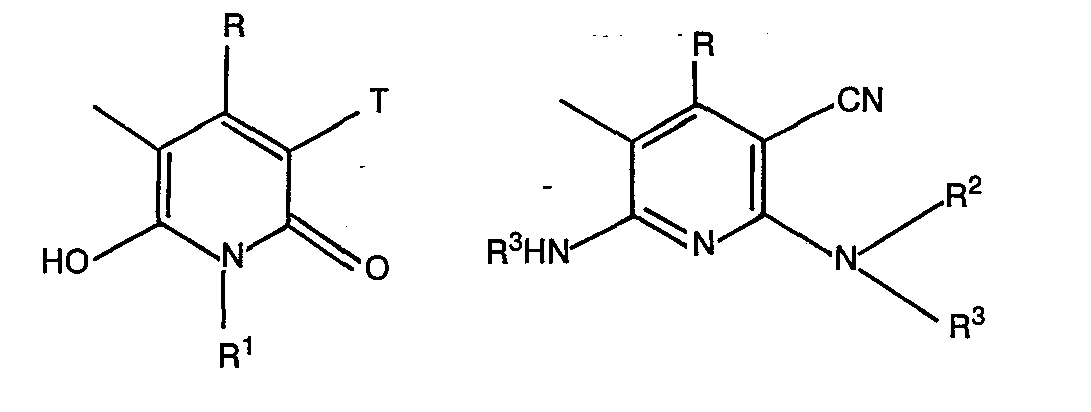

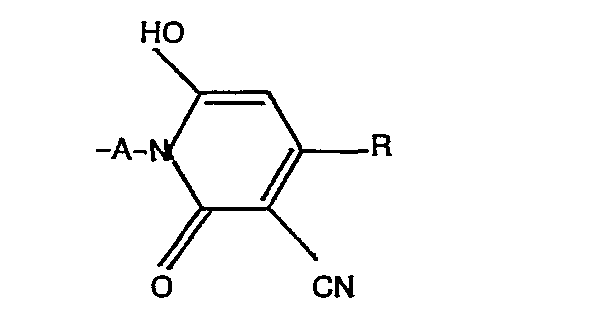
- R3 Wasserstoff, Allyl, gegebenenfalls durch Sauerstoff unterbrochenes und gegebenenfalls durch Hydroxy, Cyan, C1- bis C4-Alkanoyloxy, C1- bis C8-Alkoxy, Cyclohexoxy, Phenyl, Phenoxy, Sulfophenoxy, Sulfophenyl oder Hydroxysulfonyfoxy substituiertes C1- bis C10-Alkyl, Cyclopentyl, gegebenenfalls durch Hydroxyl, Hydroxyethoxy oder Methyl substituiertes Cyclohexyl, Pyrrolidonylalkyl, Phenyl, Methoxyphenyl, Sulfophenyl, C1- bis C4-Alkoxysulfophenyl oder einen Rest der Formel
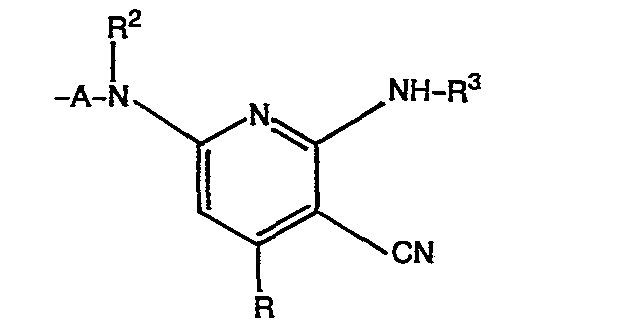
- R2 und R3 zusammen mit dem Stickstoff einen gesättigten 5- oder 6-Ring und
- Z gegebenenfalls durch Chlor, Methyl, Methoxy oder Acetylamino substituiertes Phenyl bedeuten, wobei
- A ein gegebenenfalls durch Sauerstoff unterbrochener C2- bis C10-Alkytrest ist.
Description
- Die Erfindung betrifft Verbindungen, die in Form der freien Säuren der allgemeinen Formel I

- X Fluor, Chlor, Brom, Methyl, Trifluormethyl, C1-C4-Alkylsulfonyl, Arylsulfonyl, Acetyl oder Benzoyl
- Y Wasserstoff, Fluor, Chlor, Brom, Sulfamoyl, C1-C4-Mono- oder -Dialkylsulfamoyl, C1-C4-Alkylsulfonyl, Methyl oder Trifluormethyl
- Y1 Wasserstoff, Hydroxysulfonyl, Methyl oder Chlor
- Y2 Wasserstoff oder Hydroxysulfonyl und
- K ein Rest der Formel

- T Cyan oder Methylsulfonyl
- R Wasserstoff oder C1- bis C3-Alkyl
- R1 Wasserstoff, Alkyl, gegebenenfalls durch Hydroxy, Cyan, C1- bis C4-Alkanoyloxy oder C1- bis Ca-Alkoxy substituiertes C1- bis C10-Alkyl, Benzyl, Sulfobenzyl, Phenylethyl, Sulfophenylethyl oder -propyl oder den Rest der Formel

- R2 Wasserstoff oder C1- bis C8-Alkyl,
- R3 Wasserstoff, Allyl, gegebenenfalls durch Sauerstoff unterbrochenes und gegebenenfalls durch Hydroxy, Cyan, C1- bis C4-Alkanoyloxy, C1- bis Ca-Alkoxy, Cyclohexoxy, Phenyl, Phenoxy, Sulfophenoxy, Sulfophenyl oder Hydroxysulfonyloxy substituiertes C1- bis C10-Alkyl, Cyclopentyl. gegebenenfalls durch Hydroxyl, Hydroxyethoxy oder Methyl substituiertes Cyclohexyl, Pyrrolidonylalkyl. Phenyl, Methoxyphenyl, Sulfophenyl, C1- bis C4-Alkoxysulfophenyl oder einen Rest der Formel

- R2 und R3 zusammen mit dem Stickstoff einen gesättigten 5- oder 6-Ring und
- Z gegebenenfalls durch Chlor, Methyl, Methoxy oder Acetylamino substituiertes Phenyl bedeuten, wobei
- A ein gegebenenfalls durch Sauerstoff unterbrochener C2- bis C10-Alkylrest ist.
- Reste R sind neben Wasserstoff Ethyl oder Propyl und vorzugsweise Methyl. Einzelne Reste R1, R2 und R3 (soweit unter die allgemeine Definition fallend) sind neben den schon genannten z.B.:
- 1. gegebenenfalls substituierte Alkylreste: CH3, C2H5, n- oder i-C3H7, n- oder i-C4H9, C6H13.


- 2. gegebenenfalls substituierte Cycloalkylreste:

- 3. Aralkylreste:
- CH2C6H5, C2H4C6H5,

- CH2C6H5, C2H4C6H5,
- 4. sowie C6H4CH3 anstelle von C6H5;
- sulfierte Phenylalkylreste:


- sulfierte Phenylalkylreste:
- 5. CH2CH=CN2 und


- Hervorzuheben sind außerdem die guten Lichtechtheiten auf Wolle und das günstige Phototropie-Verhalten sowie das sehr gute Egalisieren.
- Einige erfindungsgemäße Verbindungen sind auch zum Färben von 'Leder brauchbar.
- In den folgenden Beisipelen beziehen sich Angaben über Teile und Prozente, sofern nicht anders vermekt, auf das Gewicht.
- 270 Teile Acetanilid werden in 1000 Raumteilen Nitrobenzol innerhalb von 3 Std. bei 50 bis 70°C mit 396 Raumteilen Sulfurylchlorid versetzt (man beginnt die Chlorierung bei niederer Temperatur und steigert sie dann, um die Ausfällung von 2,4-Dichloracetanilid zu unterbinden). Nach beendeter Sulfurylchlorid-Zugabe rührt man 1 Std. bei 70 bis 75°C nach und bläst anschließend gelöste Salzsäure mit Stickstoff aus. Danach läßt man erkalten, wodurch 2,4-Dichloracetanilid ausfällt, das durch Abfiltrieren isoliert wird.
- Man kann das Produkt mit Wasser waschen und trocknen und erhält dann 330 Teile 2,4-Dichloracetanilid, die ungefähr 5 Z 2,4,6-Trichloracetanilid enthalten. Setzt man das als Filtrat zurückgewonnene Nitrobenzol, in dem noch etwas 2,4-Dichloracetanilid gelöst ist, bei einem zweiten Versuch wieder ein, so erhöht sich die Ausbeute auf 396 Teile.
- 204 Teile des rohen 2,4-Dichloracetanilids werden unter Rühren zu 300 Teilen 100 %iger Schwefelsäure gegeben. Dann erhitzt man das Gemisch weiter auf 130°C und tropft bei dieser Temperatur 235 Teile Chlorsulfonsäure so zu, daß das freiwerdende Salzsäure-Gas gut abgeführt werden kann. Anschließend rührt man 1 Std. bei 135 bis 140°C nach bis die Sulfierung beendet ist. Dann läßt man auf 80 bis 50°C abkühlen und gießt die Mischung in 1300 Raumteile Wasser ein. Nach kurzer Wasserdampfdestillation erhält man im Destillat 10 Teile reines 2,4,6-Trichloranilin als Nebenprodukt. Das Reaktionsgemisch wird dann auf Raumtemperatur abgekühlt, ausgefallene 2,3-Dichloranilin-6-sulfonsäure abfiltriert und mit verdünnter Salzsäure gewaschen. Man erhält 204 Teile 2,4-Dichloranilin-6-sulfosäure ber. 100 X als farblose wäßrige Paste, die feucht für Diazotierungen eingesetzt werden kann. H-NMR in D20: 7,3 ppm, 7,6 ppm Kopplung: 3 Hz (als Ammoniumsalz)
- 600 Teile Oleum (23 Xig) werden vorsichtig mit 204 Teilen rohem 2,4-Dichloracetanilid versetzt. Man erhitzt das Gemisch auf 140°C und rührt 1 Std. bei.dieser Temperatur. Danach läßt man auf 80 bis 50°C abkühlen und gießt die Mischung in 1000 Teile Wasser. Durch Wasserdampfdestillation werden 10 Teile 2,4,6-Trichloranilin abgetrennt, der Rest wird nach dem Erkalten filtriert. Das isolierte, graue Produkt wird mit ca. 5000 Teilen Wasser verrührt und mit Natronlauge neutralisiert. Nach dem Versetzen mit etwas Aktivkohle erhitzt man auf ca. 95°C, filtriert und fällt aus dem Filtrat durch Ansäuern die entstandene 2,4-Dichloranilin-5-sulfosäure aus, die nach dem Abkühlen wie üblich isoliert wird. Das Produkt enthält noch einen geringen Anteil 2,4-Dichloranilin-6-sulfosäu- re, der durch Umkristallisation aus Wasser entfernt werden kann. 2,4-Dichloranilin-5-sulfosäure fällt als farbloses Pulver an. Ausbeute: ca. 140 Teile H-NMR in D2: 7,45 ppm (als Ammoniumsalz)
- 19,5 Teile 2,4-Dichloranilin-6-sulfosäure werden in 200 Raumteilen heißem Wasser mit Natronlauge bei pH 7,5 bis 10 gelöst. Man gibt ein sauer wirksames Netzmittel und 27 Raumteile einer 23 Z-igen, wäßrigen Natriumnitritlösung hinzu und kühlt auf 0 bis 5°C ab. Nach Zugabe von 60 Teilen Eis gibt man auf einmal 55 Teile einer 15 bis 18 X-igen Salzsäurelösung hinzu und rührt die Mischung noch 3 Stunden bei 0 bis 5°C. Dann läßt man eine Lösung oder Suspension aus 21,2 Teilen 2,6-Bis-(3-hydroxypropyl- amino)-3-cyan-4-methylpyridin in 120 Raumteilen Wasser und 7 Raumteilen konzentrierter Salzsäure einfließen. Man rührt 15 bis 30 Minuten nach und hebt den pH-Wert des Gemisches dann durch Zugabe von Natronlauge oder Natriumformiat langsam auf 2 bis 2,5 an. Die durch die Kupplungsreaktion entstehende Säure wird anschließend durch Zugabe entsprechender Mengen
- Natronlauge oder Natriumformiat kontinuierlich gebunden. Nachdem man die Reaktion ungefähr 30 bis 60 Minuten bei pH 2 bis 2,5 gehalten hat, hebt man den pH-Wert des Gemisches durch Zugabe von verd. Natronlauge oder Natriumacetat auf 3 bis 3,5 an und rührt bei diesem pH-Wert, bis die Kupplung weitgehend beendet ist. Danach wird der pH-Wert des Gemisches durch Versetzen mit verd. Natronlauge auf 4,3 bis 4,7 angehoben. Die Kupplungsreaktion ist dann rasch beendet. Der entstandene Farbstoff der Formel

- Der Farbstoff löst sich in Wasser mit gelber Farbe und färbt Polycaprolactam und Wolle in kräftigen, lichtechten, goldgelben Tönen. Das Absorptionsmaximum einer Lösung von ca. 0,020 Teilen Farbstoff in 900 Raumteilen Dimethylformamid und 150 Raumteilen Eisessig ist bei 427,5 nm.
- Der besondere Vorteil dieses Farbstoffes ist das hohe Migriervermögen und die Fähigkeit, zusammen mit Rot- und Blaufarbstoffen synchron auf Polycaprolactam aufzuziehen. Zum Beispiel ergibt eine Färbemischung von ca. 4 Teilen dieses Farbstoffes mit a. 4 Teilen Acid Red 57 und 3 Teilen Acid Blue 72 ein (Dunkel-)Braun. Alle drei Farbstoffe ziehen im Temperaturbereich von 60 bis 100°C mit gleicher Geschwindigkeit auf Polycaprolactamgewebe auf, so daß die Färbung zu jedem Zeitpunkt braun bleibt. Ebenso ist der Farbstoff in Kombinationsfärbungen für Beige-Töne geeignet, die sich durch hohe Lichtechtheit auszeichnen und insbesondere gegenüber Glühlampenlicht nicht phototrop sind (keine reversible Farbtonänderung nach grünerem Farbton).
- 19,5 Teile 2,4-Dichlaranilin-6-sulfonsäure werden analog zu der in Beispiel 1 beschriebenen Arbeitsweise diazotiert. Danach zerstört man überschüssige salpetrige Säure wie üblich und puffert das Diazoniumsalzgemisch mit Natriumacetat auf pH 2 bis 4 ab- Danach läßt man eine Lösung aus 16,7 Teilen 1-(2-Methoxyethyl)-6-hydroxy-3-cyan-4-methylpyridon-2 in 200 Raumteilen Wasser, 10 Teilen 50 Ziger Natronlauge und 0,3 Teilen eines sauer wirksamen Dispergiermittels hinzulaufen. Die Kupplungsmischung rührt 60 bis 80 Minuten nach. Dann säuert-man mit konzentrierter Salzsäre auf pH 0.3 bis 0,5 an saugt den ausgefallenen Farbstoff der Formel

- 22,1 Teile 2-Trifluormethyl-4-chloranilin-6-sulfonsäure werden analog zu der in Beispiel 1 beschriebenen Arbeitsweise diazotiert. In das Diazoniumsalzgemisch gibt man dann 31 Teile der Kupplungskomponente der Formel

- Man erhält 73 Teile eines roten Pulvers. Der entstandene Farbstoff hat die Formel

- und ein Adsorptionsmaximum von 430 nm in Dimethylformamid/Eisessig = 9:1 Teilen. Er färbt Wolle und Polycaprolactam in echten, kräftigen goldgelben Tönen.
- 19,5 Teile 2,4-Dichloranilin-6-sulfosäure werden analog zu der in Beispiel 1 beschriebenen Arbeitsweise diazotiert. Nach dem Zerstören von überschüssiger salpetriger Säure gibt man 24,2 Teile 2-Phenyl-4,6-bis-(3-hydroxypropylaminol-pyrimidin hinzu und rührt bis zur Lösung der Kupplungskomponente nach. Dann gibt man ein bei pH 7 bis 10 gut wirksames Dispergiermittel hinzu und stellt den pH-Wert der Kupplungsmischung mit Natronlauge und danach mit etwas Sodalösung (als Puffer) auf pH 8,5 bis 9,2 ein. Man läßt über Nacht rühren. Der entstandene Farbstoff der Formel


- 19,5 Teile 2.4-Dichloranilin-5-sulfosäure werden über Nacht mit 50 Teilen 15 Xiger Salzsäure in Gegenwart eines sauer wirksamen Netzmittels verrührt. Dann kühlt man das Gemisch mit Eis auf 0°C ab, gibt anschließend innerhalb von 5 bis 20 Minuten 27 Raumteile einer 23 %igen Natriumnitritlösung hinzu und rührt die Suspension noch 3 Stunden bei 0 bis 5°C. Dann läßt man eine Lösung oder Suspension aus 21,2 Teilen 2,6-Bis-(3-hydroxy- propylamino)-3-cyan-4-methylpyridin in 120 Raumteilen Wasser und 7 Raumteilen konzentrierter Salzsäure zufließen. Man rührt 15 bis 30 Minuten nach und hebt den pH-Wert des Gemisches dann durch Zugabe von Natronlauge oder Natriumformiat langsam auf 1 bis 1,5 an. Die durch die Kupplungsreaktion entstehende Säure wird anschließend durch Zugabe entsprechender Mengen Natronlauge oder Natriumformiat kontinuierlich gebunden. Nachdem man das Gemisch ungefähr 30 bis 60 Minuten bei pH 1 bis 1,5 gehalten hat, hebt man den pH-Wert durch Zugabe von verd. Natronlauge oder Natriumacetat auf 3 bis 3,5 an. Die Kupplungsreaktion ist rasch beendet. Der entstandene Farbstoff der Formel

- Der Farbstoff löst sich in Wasser mit gelber Farbe und färbt Polycaprolactam und Wolle in kräftigen, lichtechten, goldgelben Tönen.
- Das Absorptionsmaximum einer Lösung von ca. 0,020 Teilen Farbstoff in 900 Raumteilen Dimethylformamid und 150 Raumteilen Eisessig ist bei 457 nm (Wasser: 435 nm).


Claims (7)


Applications Claiming Priority (2)
| Application Number | Priority Date | Filing Date | Title |
|---|---|---|---|
| DE19843405859 DE3405859A1 (de) | 1984-02-18 | 1984-02-18 | Sulfongruppenhaltige azoverbindungen |
| DE3405859 | 1984-02-18 |
Publications (3)
| Publication Number | Publication Date |
|---|---|
| EP0154816A2 true EP0154816A2 (de) | 1985-09-18 |
| EP0154816A3 EP0154816A3 (en) | 1986-08-27 |
| EP0154816B1 EP0154816B1 (de) | 1988-12-14 |
Family
ID=6228109
Family Applications (1)
| Application Number | Title | Priority Date | Filing Date |
|---|---|---|---|
| EP85101428A Expired EP0154816B1 (de) | 1984-02-18 | 1985-02-11 | Sulfonsäuregruppenhaltige Azoverbindungen |
Country Status (4)
| Country | Link |
|---|---|
| US (1) | US4652633A (de) |
| EP (1) | EP0154816B1 (de) |
| JP (1) | JPS60188469A (de) |
| DE (2) | DE3405859A1 (de) |
Cited By (3)
| Publication number | Priority date | Publication date | Assignee | Title |
|---|---|---|---|---|
| WO1992014791A1 (de) * | 1991-02-20 | 1992-09-03 | Basf Aktiengesellschaft | Azofarbstoffe mit einer diazokomponente aus der aminobenzophenonreihe sowie disulfonierte pyridonverbindungen |
| EP0699719A3 (de) * | 1994-08-30 | 1996-08-28 | Ciba Geigy Ag | Azofarbstoffe, Verfahren zu deren Herstellung und deren Verwendung |
| WO2007045829A3 (en) * | 2005-10-22 | 2007-07-26 | Fujifilm Imaging Colorants Ltd | Yellow azo dyes for ink jet printing |
Families Citing this family (8)
| Publication number | Priority date | Publication date | Assignee | Title |
|---|---|---|---|---|
| JPH10504275A (ja) | 1994-06-03 | 1998-04-28 | ジョン・ワイス・アンド・ブラザー・リミテッド | ピペラジン誘導体を製造するための新規な方法および中間体 |
| FR2727410B1 (fr) * | 1994-11-25 | 1996-12-20 | Synthelabo | Chlorures de sulfonyles, leur preparation et leur utilisation comme intermediaires de synthese |
| KR101059025B1 (ko) * | 2003-01-17 | 2011-08-23 | 캐보트 코포레이션 | 착색 안료 수분산액의 제조 방법 및 잉크젯 잉크 조성물 |
| KR100601562B1 (ko) | 2004-07-29 | 2006-07-19 | 삼성에스디아이 주식회사 | 전극 조립체 및 이를 이용한 리튬 이차 전지 |
| GB0521546D0 (en) * | 2005-10-22 | 2005-11-30 | Avecia Inkjet Ltd | Yellow azo dyes for ink jet printing |
| JP5572987B2 (ja) * | 2008-05-14 | 2014-08-20 | 住友化学株式会社 | アゾ化合物又はその塩 |
| JP5957817B2 (ja) * | 2010-07-20 | 2016-07-27 | 住友化学株式会社 | 化合物 |
| CN105579531B (zh) * | 2013-09-27 | 2017-12-01 | 佳能株式会社 | 染料化合物、墨和滤色器用抗蚀剂组合物 |
Family Cites Families (10)
| Publication number | Priority date | Publication date | Assignee | Title |
|---|---|---|---|---|
| DE2004487C3 (de) * | 1970-01-31 | 1979-12-06 | Basf Ag, 6700 Ludwigshafen | Wasserlösliche Azofarbstoffe, Verfahren zu ihrer Herstellung und ihre Verwendung |
| IT985617B (it) * | 1972-04-06 | 1974-12-10 | Basf Ag | Azocoloranti idrosolubili della serie 2 6 diamminopiridinica |
| DE2234621A1 (de) * | 1972-07-14 | 1974-01-31 | Hoechst Ag | Wasserloesliche azofarbstoffe, verfahren zu ihrer herstellung und ihre verwendung |
| DE2302582C3 (de) * | 1973-01-19 | 1978-05-03 | Basf Ag, 6700 Ludwigshafen | Wasserlösliche Azofarbstoffe der Diamino-pyrimidin-Reihe, Verfahren zu ihrer Herstellung und Farbstoffzubereitungen |
| US4145341A (en) * | 1973-01-19 | 1979-03-20 | Basf Aktiengesellschaft | Water-soluble azo dyes containing diaminopyrimidine coupler components |
| US4359418A (en) * | 1979-03-12 | 1982-11-16 | Ciba-Geigy Corporation | Amine salts of azo dyestuffs of the pyridone series |
| GB2067585A (en) * | 1980-01-17 | 1981-07-30 | Ici Ltd | Water-soluble monoazo dyes |
| DE3007628A1 (de) * | 1980-02-29 | 1981-10-01 | Basf Ag, 6700 Ludwigshafen | Verfahren zum faerben der wolle von pelzfellen |
| EP0048538A1 (de) * | 1980-09-11 | 1982-03-31 | Imperial Chemical Industries Plc | Azofarbstoffe |
| DE3316887A1 (de) * | 1983-05-07 | 1984-11-08 | Agfa-Gevaert Ag, 5090 Leverkusen | Photographisches aufzeichnungsmaterial und neue azofarbstoffe |
-
1984
- 1984-02-18 DE DE19843405859 patent/DE3405859A1/de not_active Withdrawn
-
1985
- 1985-02-11 DE DE8585101428T patent/DE3566810D1/de not_active Expired
- 1985-02-11 EP EP85101428A patent/EP0154816B1/de not_active Expired
- 1985-02-15 US US06/702,067 patent/US4652633A/en not_active Expired - Fee Related
- 1985-02-18 JP JP60028503A patent/JPS60188469A/ja active Pending
Cited By (6)
| Publication number | Priority date | Publication date | Assignee | Title |
|---|---|---|---|---|
| WO1992014791A1 (de) * | 1991-02-20 | 1992-09-03 | Basf Aktiengesellschaft | Azofarbstoffe mit einer diazokomponente aus der aminobenzophenonreihe sowie disulfonierte pyridonverbindungen |
| US5380859A (en) * | 1991-02-20 | 1995-01-10 | Basf Aktiengesellschaft | Pyridone compounds and the preparation of disulfonated pyridone compounds |
| EP0699719A3 (de) * | 1994-08-30 | 1996-08-28 | Ciba Geigy Ag | Azofarbstoffe, Verfahren zu deren Herstellung und deren Verwendung |
| WO2007045829A3 (en) * | 2005-10-22 | 2007-07-26 | Fujifilm Imaging Colorants Ltd | Yellow azo dyes for ink jet printing |
| GB2445301A (en) * | 2005-10-22 | 2008-07-02 | Fujifilm Imaging Colorants Ltd | Yellow azo dyes for ink jet printing |
| GB2445301B (en) * | 2005-10-22 | 2010-01-13 | Fujifilm Imaging Colorants Ltd | Yellow azo dyes for ink jet printing |
Also Published As
| Publication number | Publication date |
|---|---|
| EP0154816B1 (de) | 1988-12-14 |
| DE3566810D1 (en) | 1989-01-19 |
| US4652633A (en) | 1987-03-24 |
| JPS60188469A (ja) | 1985-09-25 |
| EP0154816A3 (en) | 1986-08-27 |
| DE3405859A1 (de) | 1985-08-22 |
Similar Documents
| Publication | Publication Date | Title |
|---|---|---|
| DE2004487C3 (de) | Wasserlösliche Azofarbstoffe, Verfahren zu ihrer Herstellung und ihre Verwendung | |
| EP0154816A2 (de) | Sulfonsäuregruppenhaltige Azoverbindungen | |
| DE2040620C3 (de) | Wasserlösliche, faserreaktive Monoazofarbstoffe, Verfahren zu ihrer Herstellung und ihre Verwendung zum Färben und Bedrucken von Leder, Wolle, Seide, Polyamiden und Cellulose | |
| EP0034715A1 (de) | Marineblaue Farbstoffmischungen und ihre Verwendung zum Färben von Polyestern | |
| EP0036553A1 (de) | Verfahren zur Herstellung von Flüssigeinstellungen basischer Azofarbstoffe | |
| EP0111236B1 (de) | Pyridonfarbstoffe | |
| EP0084150B1 (de) | Benzisothiazolazofarbstoffe | |
| DE2801951A1 (de) | Azofarbstoffe | |
| DE2817033C2 (de) | Reaktivfarbstoffe | |
| EP0055808A2 (de) | Komplexfarbstoff-Gemische | |
| EP0197471A1 (de) | Azofarbstoffe mit Thiophen-Diazokomponenten | |
| EP0043439B1 (de) | Trisazo/azoxyfarbstoffgemische, Verfahren zu ihrer Herstellung sowie ihre Verwendung | |
| DE2033281A1 (en) | Water-soluble azo dyes - from diazotised heterocyclic amines and pyridone-(6) coupling components | |
| CH497512A (de) | Verfahren zur Herstellung von wasserlöslichen Monoazofarbstoffen | |
| DE1644074C3 (de) | Sulfonsäuregruppenhaltige Monoazofarbstoffe, Verfahren zu deren Herstellung und Farbstoffzubereitungen | |
| EP0198206A1 (de) | Azofarbstoffe | |
| EP0023309A1 (de) | Disazofarbstoffe der Aminopyridin- oder Aminopyrimidinreihe sowie ihre Verwendung beim Färben cellulosehaltigen Textilmaterials | |
| EP0126378B1 (de) | Verfahren zur Herstellung von sauren Nitrofarbstoffen | |
| EP0017769A1 (de) | Farbstoffe der Thiazolreihe und ihre Verwendung | |
| DE964975C (de) | Verfahren zur Herstellung von Monoazofarbstoffen | |
| DE2028395A1 (de) | ||
| DE3804103A1 (de) | Monoazo-pyridon-verbindungen und ihre verwendung zum faerben von hydrophobem fasermaterial | |
| EP0877775A2 (de) | Saure disazofarbstoffe sowie sulfonamide als deren zwischenprodukte | |
| DE2237554A1 (de) | Mono-disazoamino-substituierte farbstoffe, zwischenprodukte und verfahren zu ihrer herstellung | |
| DE398792C (de) | Verfahren zur Herstellung saurer Azofarbstoffe |
Legal Events
| Date | Code | Title | Description |
|---|---|---|---|
| PUAI | Public reference made under article 153(3) epc to a published international application that has entered the european phase |
Free format text: ORIGINAL CODE: 0009012 |
|
| AK | Designated contracting states |
Designated state(s): CH DE FR GB IT LI |
|
| PUAL | Search report despatched |
Free format text: ORIGINAL CODE: 0009013 |
|
| AK | Designated contracting states |
Kind code of ref document: A3 Designated state(s): CH DE FR GB IT LI |
|
| 17P | Request for examination filed |
Effective date: 19860717 |
|
| 17Q | First examination report despatched |
Effective date: 19870403 |
|
| GRAA | (expected) grant |
Free format text: ORIGINAL CODE: 0009210 |
|
| AK | Designated contracting states |
Kind code of ref document: B1 Designated state(s): CH DE FR GB IT LI |
|
| ITF | It: translation for a ep patent filed | ||
| REF | Corresponds to: |
Ref document number: 3566810 Country of ref document: DE Date of ref document: 19890119 |
|
| GBT | Gb: translation of ep patent filed (gb section 77(6)(a)/1977) | ||
| ET | Fr: translation filed | ||
| PLBE | No opposition filed within time limit |
Free format text: ORIGINAL CODE: 0009261 |
|
| STAA | Information on the status of an ep patent application or granted ep patent |
Free format text: STATUS: NO OPPOSITION FILED WITHIN TIME LIMIT |
|
| 26N | No opposition filed | ||
| PGFP | Annual fee paid to national office [announced via postgrant information from national office to epo] |
Ref country code: FR Payment date: 19910117 Year of fee payment: 7 |
|
| PGFP | Annual fee paid to national office [announced via postgrant information from national office to epo] |
Ref country code: CH Payment date: 19910118 Year of fee payment: 7 |
|
| PGFP | Annual fee paid to national office [announced via postgrant information from national office to epo] |
Ref country code: GB Payment date: 19910201 Year of fee payment: 7 |
|
| PGFP | Annual fee paid to national office [announced via postgrant information from national office to epo] |
Ref country code: DE Payment date: 19910218 Year of fee payment: 7 |
|
| ITTA | It: last paid annual fee | ||
| PG25 | Lapsed in a contracting state [announced via postgrant information from national office to epo] |
Ref country code: GB Effective date: 19920211 |
|
| PG25 | Lapsed in a contracting state [announced via postgrant information from national office to epo] |
Ref country code: DE Effective date: 19920222 |
|
| PG25 | Lapsed in a contracting state [announced via postgrant information from national office to epo] |
Ref country code: LI Effective date: 19920229 Ref country code: CH Effective date: 19920229 |
|
| GBPC | Gb: european patent ceased through non-payment of renewal fee | ||
| PG25 | Lapsed in a contracting state [announced via postgrant information from national office to epo] |
Ref country code: FR Effective date: 19921030 |
|
| REG | Reference to a national code |
Ref country code: CH Ref legal event code: PL |
|
| REG | Reference to a national code |
Ref country code: FR Ref legal event code: ST |