EP0159578A2 - Amorphe Kieselsäureteilchen, Verfahren zu deren Herstellung und deren Verwendung - Google Patents
Amorphe Kieselsäureteilchen, Verfahren zu deren Herstellung und deren Verwendung Download PDFInfo
- Publication number
- EP0159578A2 EP0159578A2 EP85103873A EP85103873A EP0159578A2 EP 0159578 A2 EP0159578 A2 EP 0159578A2 EP 85103873 A EP85103873 A EP 85103873A EP 85103873 A EP85103873 A EP 85103873A EP 0159578 A2 EP0159578 A2 EP 0159578A2
- Authority
- EP
- European Patent Office
- Prior art keywords
- silica particles
- acid
- catalyst
- amorphous
- amorphous silica
- Prior art date
- Legal status (The legal status is an assumption and is not a legal conclusion. Google has not performed a legal analysis and makes no representation as to the accuracy of the status listed.)
- Granted
Links
Images



Classifications
-
- B—PERFORMING OPERATIONS; TRANSPORTING
- B01—PHYSICAL OR CHEMICAL PROCESSES OR APPARATUS IN GENERAL
- B01J—CHEMICAL OR PHYSICAL PROCESSES, e.g. CATALYSIS OR COLLOID CHEMISTRY; THEIR RELEVANT APPARATUS
- B01J23/00—Catalysts comprising metals or metal oxides or hydroxides, not provided for in group B01J21/00
- B01J23/38—Catalysts comprising metals or metal oxides or hydroxides, not provided for in group B01J21/00 of noble metals
- B01J23/40—Catalysts comprising metals or metal oxides or hydroxides, not provided for in group B01J21/00 of noble metals of the platinum group metals
-
- B—PERFORMING OPERATIONS; TRANSPORTING
- B01—PHYSICAL OR CHEMICAL PROCESSES OR APPARATUS IN GENERAL
- B01J—CHEMICAL OR PHYSICAL PROCESSES, e.g. CATALYSIS OR COLLOID CHEMISTRY; THEIR RELEVANT APPARATUS
- B01J21/00—Catalysts comprising the elements, oxides, or hydroxides of magnesium, boron, aluminium, carbon, silicon, titanium, zirconium, or hafnium
- B01J21/06—Silicon, titanium, zirconium or hafnium; Oxides or hydroxides thereof
- B01J21/08—Silica
-
- B—PERFORMING OPERATIONS; TRANSPORTING
- B01—PHYSICAL OR CHEMICAL PROCESSES OR APPARATUS IN GENERAL
- B01J—CHEMICAL OR PHYSICAL PROCESSES, e.g. CATALYSIS OR COLLOID CHEMISTRY; THEIR RELEVANT APPARATUS
- B01J23/00—Catalysts comprising metals or metal oxides or hydroxides, not provided for in group B01J21/00
- B01J23/38—Catalysts comprising metals or metal oxides or hydroxides, not provided for in group B01J21/00 of noble metals
- B01J23/40—Catalysts comprising metals or metal oxides or hydroxides, not provided for in group B01J21/00 of noble metals of the platinum group metals
- B01J23/42—Platinum
-
- B—PERFORMING OPERATIONS; TRANSPORTING
- B01—PHYSICAL OR CHEMICAL PROCESSES OR APPARATUS IN GENERAL
- B01J—CHEMICAL OR PHYSICAL PROCESSES, e.g. CATALYSIS OR COLLOID CHEMISTRY; THEIR RELEVANT APPARATUS
- B01J23/00—Catalysts comprising metals or metal oxides or hydroxides, not provided for in group B01J21/00
- B01J23/38—Catalysts comprising metals or metal oxides or hydroxides, not provided for in group B01J21/00 of noble metals
- B01J23/40—Catalysts comprising metals or metal oxides or hydroxides, not provided for in group B01J21/00 of noble metals of the platinum group metals
- B01J23/46—Ruthenium, rhodium, osmium or iridium
- B01J23/462—Ruthenium
-
- B—PERFORMING OPERATIONS; TRANSPORTING
- B01—PHYSICAL OR CHEMICAL PROCESSES OR APPARATUS IN GENERAL
- B01J—CHEMICAL OR PHYSICAL PROCESSES, e.g. CATALYSIS OR COLLOID CHEMISTRY; THEIR RELEVANT APPARATUS
- B01J23/00—Catalysts comprising metals or metal oxides or hydroxides, not provided for in group B01J21/00
- B01J23/70—Catalysts comprising metals or metal oxides or hydroxides, not provided for in group B01J21/00 of the iron group metals or copper
- B01J23/74—Iron group metals
- B01J23/755—Nickel
-
- C—CHEMISTRY; METALLURGY
- C01—INORGANIC CHEMISTRY
- C01B—NON-METALLIC ELEMENTS; COMPOUNDS THEREOF; METALLOIDS OR COMPOUNDS THEREOF NOT COVERED BY SUBCLASS C01C
- C01B33/00—Silicon; Compounds thereof
- C01B33/113—Silicon oxides; Hydrates thereof
- C01B33/12—Silica; Hydrates thereof, e.g. lepidoic silicic acid
- C01B33/18—Preparation of finely divided silica neither in sol nor in gel form; After-treatment thereof
- C01B33/187—Preparation of finely divided silica neither in sol nor in gel form; After-treatment thereof by acidic treatment of silicates
-
- C—CHEMISTRY; METALLURGY
- C07—ORGANIC CHEMISTRY
- C07C—ACYCLIC OR CARBOCYCLIC COMPOUNDS
- C07C209/00—Preparation of compounds containing amino groups bound to a carbon skeleton
- C07C209/30—Preparation of compounds containing amino groups bound to a carbon skeleton by reduction of nitrogen-to-oxygen or nitrogen-to-nitrogen bonds
- C07C209/32—Preparation of compounds containing amino groups bound to a carbon skeleton by reduction of nitrogen-to-oxygen or nitrogen-to-nitrogen bonds by reduction of nitro groups
- C07C209/36—Preparation of compounds containing amino groups bound to a carbon skeleton by reduction of nitrogen-to-oxygen or nitrogen-to-nitrogen bonds by reduction of nitro groups by reduction of nitro groups bound to carbon atoms of six-membered aromatic rings in presence of hydrogen-containing gases and a catalyst
-
- C—CHEMISTRY; METALLURGY
- C07—ORGANIC CHEMISTRY
- C07C—ACYCLIC OR CARBOCYCLIC COMPOUNDS
- C07C4/00—Preparation of hydrocarbons from hydrocarbons containing a larger number of carbon atoms
- C07C4/02—Preparation of hydrocarbons from hydrocarbons containing a larger number of carbon atoms by cracking a single hydrocarbon or a mixture of individually defined hydrocarbons or a normally gaseous hydrocarbon fraction
- C07C4/06—Catalytic processes
-
- C—CHEMISTRY; METALLURGY
- C07—ORGANIC CHEMISTRY
- C07C—ACYCLIC OR CARBOCYCLIC COMPOUNDS
- C07C5/00—Preparation of hydrocarbons from hydrocarbons containing the same number of carbon atoms
- C07C5/02—Preparation of hydrocarbons from hydrocarbons containing the same number of carbon atoms by hydrogenation
- C07C5/10—Preparation of hydrocarbons from hydrocarbons containing the same number of carbon atoms by hydrogenation of aromatic six-membered rings
-
- C—CHEMISTRY; METALLURGY
- C07—ORGANIC CHEMISTRY
- C07C—ACYCLIC OR CARBOCYCLIC COMPOUNDS
- C07C5/00—Preparation of hydrocarbons from hydrocarbons containing the same number of carbon atoms
- C07C5/32—Preparation of hydrocarbons from hydrocarbons containing the same number of carbon atoms by dehydrogenation with formation of free hydrogen
- C07C5/373—Preparation of hydrocarbons from hydrocarbons containing the same number of carbon atoms by dehydrogenation with formation of free hydrogen with simultaneous isomerisation
- C07C5/393—Preparation of hydrocarbons from hydrocarbons containing the same number of carbon atoms by dehydrogenation with formation of free hydrogen with simultaneous isomerisation with cyclisation to an aromatic six-membered ring, e.g. dehydrogenation of n-hexane to benzene
- C07C5/41—Catalytic processes
- C07C5/415—Catalytic processes with metals
- C07C5/417—Catalytic processes with metals of the platinum group
-
- C—CHEMISTRY; METALLURGY
- C12—BIOCHEMISTRY; BEER; SPIRITS; WINE; VINEGAR; MICROBIOLOGY; ENZYMOLOGY; MUTATION OR GENETIC ENGINEERING
- C12N—MICROORGANISMS OR ENZYMES; COMPOSITIONS THEREOF; PROPAGATING, PRESERVING, OR MAINTAINING MICROORGANISMS; MUTATION OR GENETIC ENGINEERING; CULTURE MEDIA
- C12N11/00—Carrier-bound or immobilised enzymes; Carrier-bound or immobilised microbial cells; Preparation thereof
- C12N11/14—Enzymes or microbial cells immobilised on or in an inorganic carrier
-
- B—PERFORMING OPERATIONS; TRANSPORTING
- B01—PHYSICAL OR CHEMICAL PROCESSES OR APPARATUS IN GENERAL
- B01J—CHEMICAL OR PHYSICAL PROCESSES, e.g. CATALYSIS OR COLLOID CHEMISTRY; THEIR RELEVANT APPARATUS
- B01J35/00—Catalysts, in general, characterised by their form or physical properties
- B01J35/40—Catalysts, in general, characterised by their form or physical properties characterised by dimensions, e.g. grain size
-
- B—PERFORMING OPERATIONS; TRANSPORTING
- B01—PHYSICAL OR CHEMICAL PROCESSES OR APPARATUS IN GENERAL
- B01J—CHEMICAL OR PHYSICAL PROCESSES, e.g. CATALYSIS OR COLLOID CHEMISTRY; THEIR RELEVANT APPARATUS
- B01J35/00—Catalysts, in general, characterised by their form or physical properties
- B01J35/60—Catalysts, in general, characterised by their form or physical properties characterised by their surface properties or porosity
- B01J35/61—Surface area
- B01J35/615—100-500 m2/g
-
- B—PERFORMING OPERATIONS; TRANSPORTING
- B01—PHYSICAL OR CHEMICAL PROCESSES OR APPARATUS IN GENERAL
- B01J—CHEMICAL OR PHYSICAL PROCESSES, e.g. CATALYSIS OR COLLOID CHEMISTRY; THEIR RELEVANT APPARATUS
- B01J35/00—Catalysts, in general, characterised by their form or physical properties
- B01J35/60—Catalysts, in general, characterised by their form or physical properties characterised by their surface properties or porosity
- B01J35/61—Surface area
- B01J35/617—500-1000 m2/g
-
- B—PERFORMING OPERATIONS; TRANSPORTING
- B01—PHYSICAL OR CHEMICAL PROCESSES OR APPARATUS IN GENERAL
- B01J—CHEMICAL OR PHYSICAL PROCESSES, e.g. CATALYSIS OR COLLOID CHEMISTRY; THEIR RELEVANT APPARATUS
- B01J35/00—Catalysts, in general, characterised by their form or physical properties
- B01J35/60—Catalysts, in general, characterised by their form or physical properties characterised by their surface properties or porosity
- B01J35/63—Pore volume
- B01J35/638—Pore volume more than 1.0 ml/g
-
- C—CHEMISTRY; METALLURGY
- C01—INORGANIC CHEMISTRY
- C01P—INDEXING SCHEME RELATING TO STRUCTURAL AND PHYSICAL ASPECTS OF SOLID INORGANIC COMPOUNDS
- C01P2002/00—Crystal-structural characteristics
- C01P2002/02—Amorphous compounds
-
- C—CHEMISTRY; METALLURGY
- C01—INORGANIC CHEMISTRY
- C01P—INDEXING SCHEME RELATING TO STRUCTURAL AND PHYSICAL ASPECTS OF SOLID INORGANIC COMPOUNDS
- C01P2004/00—Particle morphology
- C01P2004/01—Particle morphology depicted by an image
- C01P2004/03—Particle morphology depicted by an image obtained by SEM
-
- C—CHEMISTRY; METALLURGY
- C01—INORGANIC CHEMISTRY
- C01P—INDEXING SCHEME RELATING TO STRUCTURAL AND PHYSICAL ASPECTS OF SOLID INORGANIC COMPOUNDS
- C01P2004/00—Particle morphology
- C01P2004/30—Particle morphology extending in three dimensions
- C01P2004/32—Spheres
-
- C—CHEMISTRY; METALLURGY
- C01—INORGANIC CHEMISTRY
- C01P—INDEXING SCHEME RELATING TO STRUCTURAL AND PHYSICAL ASPECTS OF SOLID INORGANIC COMPOUNDS
- C01P2006/00—Physical properties of inorganic compounds
- C01P2006/12—Surface area
-
- C—CHEMISTRY; METALLURGY
- C01—INORGANIC CHEMISTRY
- C01P—INDEXING SCHEME RELATING TO STRUCTURAL AND PHYSICAL ASPECTS OF SOLID INORGANIC COMPOUNDS
- C01P2006/00—Physical properties of inorganic compounds
- C01P2006/80—Compositional purity
-
- C—CHEMISTRY; METALLURGY
- C07—ORGANIC CHEMISTRY
- C07C—ACYCLIC OR CARBOCYCLIC COMPOUNDS
- C07C2521/00—Catalysts comprising the elements, oxides or hydroxides of magnesium, boron, aluminium, carbon, silicon, titanium, zirconium or hafnium
- C07C2521/06—Silicon, titanium, zirconium or hafnium; Oxides or hydroxides thereof
- C07C2521/08—Silica
-
- C—CHEMISTRY; METALLURGY
- C07—ORGANIC CHEMISTRY
- C07C—ACYCLIC OR CARBOCYCLIC COMPOUNDS
- C07C2523/00—Catalysts comprising metals or metal oxides or hydroxides, not provided for in group C07C2521/00
- C07C2523/38—Catalysts comprising metals or metal oxides or hydroxides, not provided for in group C07C2521/00 of noble metals
- C07C2523/40—Catalysts comprising metals or metal oxides or hydroxides, not provided for in group C07C2521/00 of noble metals of the platinum group metals
- C07C2523/42—Platinum
-
- C—CHEMISTRY; METALLURGY
- C07—ORGANIC CHEMISTRY
- C07C—ACYCLIC OR CARBOCYCLIC COMPOUNDS
- C07C2523/00—Catalysts comprising metals or metal oxides or hydroxides, not provided for in group C07C2521/00
- C07C2523/38—Catalysts comprising metals or metal oxides or hydroxides, not provided for in group C07C2521/00 of noble metals
- C07C2523/40—Catalysts comprising metals or metal oxides or hydroxides, not provided for in group C07C2521/00 of noble metals of the platinum group metals
- C07C2523/44—Palladium
-
- C—CHEMISTRY; METALLURGY
- C07—ORGANIC CHEMISTRY
- C07C—ACYCLIC OR CARBOCYCLIC COMPOUNDS
- C07C2523/00—Catalysts comprising metals or metal oxides or hydroxides, not provided for in group C07C2521/00
- C07C2523/38—Catalysts comprising metals or metal oxides or hydroxides, not provided for in group C07C2521/00 of noble metals
- C07C2523/40—Catalysts comprising metals or metal oxides or hydroxides, not provided for in group C07C2521/00 of noble metals of the platinum group metals
- C07C2523/46—Ruthenium, rhodium, osmium or iridium
-
- C—CHEMISTRY; METALLURGY
- C07—ORGANIC CHEMISTRY
- C07C—ACYCLIC OR CARBOCYCLIC COMPOUNDS
- C07C2523/00—Catalysts comprising metals or metal oxides or hydroxides, not provided for in group C07C2521/00
- C07C2523/70—Catalysts comprising metals or metal oxides or hydroxides, not provided for in group C07C2521/00 of the iron group metals or copper
- C07C2523/74—Iron group metals
- C07C2523/755—Nickel
-
- C—CHEMISTRY; METALLURGY
- C07—ORGANIC CHEMISTRY
- C07C—ACYCLIC OR CARBOCYCLIC COMPOUNDS
- C07C2601/00—Systems containing only non-condensed rings
- C07C2601/12—Systems containing only non-condensed rings with a six-membered ring
- C07C2601/14—The ring being saturated
Definitions
- the present invention relates to amorphous, approximately spherical silica particles obtained by the acidic hydrolysis of approximately spherical synthetic calcium silicate particles having a particle size of from 20 to 120 4m.
- the invention further relates to a method for producing these silica particles and to a use thereof, more specifically as a support for catalysts.
- Amorphous silica particles may be prepared according to a variety of methods.
- the particles are used for various purposes; in particular, as a support for catalysts.
- the preparation of amorphous silica particles in general is achieved by neutralizing aqueous sodium silicate solutions with inorganic acids, such as hydrochloric acid or sulfuric acid. The resulting precipitates are washed and dried. Examples of such preparation methods are described in U.S. Patents 2,114,123 and 1,751,955. Further methods for the preparation of amorphous silica particles utilize hydrolysis or flame combustion in the gaseous state.
- These silicas are commercially available, for example, under the trade names of "Aerosil", “Spherosil”, “Cabosil”, or "Xerogel".
- amorphous silica particles in general, are of irregular or spherical shape and have different particle sizes, depending on the preparation method and further processing. For certain purposes, finely divided silica particles can be shaped into larger pellets by using suitable binders. For an activation for use as a catalyst support, the silica particles sometimes are calcined. In British Patent Specification No. 1,511,125, corresponding to German Offenlegungsschrift 26 12 281, there are described amorphous silica particles, molded articles having been obtained therefrom, and processes for the preparation thereof.
- the silica particles described therein are obtained by hydrolyzing synthetic calcium silicates having a particle size of from 20 to 120 t i m with carbon dioxide in the presence of water followed by acid leaching with concentrated hydrochloric acid.
- the resulting products still completely exhibit the morphology of the crystalline starting material, although they exclusively consist of amorphous silica.
- the silica thus obtained has a larger porosity and a higher specific surface area than the starting calcium silicate particles.
- the silica particles thus obtained are usable for various purposes, inter alia, as a support for catalysts.
- silicas produced in the gaseous state are also suitable as supports for catalysts.
- a drawback inherent to such catalysts is the relatively high price.
- products meeting the objects of the invention are formed, when approximately spherical synthetic calcium silicates having a particle size of from 20 to 120 ⁇ m and a crystal needle structure of interlocking needles of xonotlite, tobermorite, and/or CSH crystals are hydrolyzed at room temperature or a slightly elevated temperature at a pH of from 0.6 to 3.0, preferably from 0.8 to 2.2 and most preferred 1.0 to 1.8, with an acid that does not form a sparingly soluble calcium salt.
- Suitable acids therefore are, more specifically, strong to medium organic or inorganic acids.
- Sulfamic acid, benzenesulfonic acid, p-toluenesulfonic acid, 5-sulfosalicylic acid, 4-toluidinesulfamic acid, sulfanilic acid, or mixtures thereof have proven to be particularly suitable.
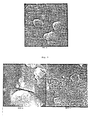
- maintaining the pH range is of crucial importance, as only then products will be obtained that have a uniform micro-granular (and apparently closed surface) and, in the interior thereof, have a structure that only weakly recalls the original crystal needle structure of the starting material.
- the structure of the silica is compacted as compared to the structure of the starting material, so that the apparent particle volume of the starting material (amounting to 3.2 to 5.6 cm 3 /g) is lowered to 1.3 to 3.0 cm 3 /g.
- apparent particle volume expressed in cm 3 /g is the reciprocal of apparent bulk density (expressed in g/cm 3 ), a well-known expression in powder technology. The apparent particle volume was used for the experiments to compare volumes of given weights of powder).
- the specific surface of the compacted silica particles has been increased by a multiple.
- the spherical silica particles according to the invention have a specific surface area of from 250 to 800 m 2 /g, normally 300 to 600 m 2 /g, while they have an amorphous structure.
- the external surface has a continuous fine-grain, but nevertheless amorphous, structure, and in the interior there is found a structure that is also amorphous, which, however, still weakly recalls the original crystal needle structure of the starting material.
- the internal texture has conserved the memory of the original primary needle-shaped crystals but the latter are considerably altered and are now coated with a layer of amorphous material.
- Another surprising effect consists in that, in spite of the shrinkage and change in texture, the soluble calcium salts can be easily washed out and the obtained product can be filtered off without any trouble.
- the reasons for these unexpected results so far are not known. More specifically, there is still no explanation as to why these results are only obtained within the relatively narrow pH range of from 0.6 to 3, and preferably from 0.8 to 2.2.
- the amorphous silica particles according to the present invention may also be characterized by that they have a uniform microgranular structure on the external surface thereof and a structure in the interior thereof which structure only weakly recalls the original crystal needle structure of the starting materials.
- approximately spherical synthetic calcium silicates of a size from 20 to 120 ⁇ m are used as the starting materials, the needle structure of which consists of interlocking needles of xonotlite, tobermorite, and/or CSH crystals.
- the process is characterized in that the calcium silicates are hydrolyzed in the pH range of from 0.6 to 3.0 at room temperature (or a slightly higher or lower temperature) with an acid that does not form a sparingly soluble calcium salt, the insoluble silica particles are separated, washed out with water and dried.
- the process is carried out at a pH from 0.8 to 2.2.
- a pH of from 1.0 to 1.8 has proven to be most preferable.
- the temperature normally should be chosen between 0 and 60°C. The temperature mainly influences the velocity of the reaction.
- strong or medium organic or inorganic acids are suitable.
- Preferred as particularly suitable are sulfamic acid, benzenesulfonic acid, p-toluenesulfonic acid, 5-sulfosalicylic acid, 4-toluidinesulfamic acid, sulfanilic acid, or mixtures thereof.
- the amorphous, approximately spherical silica particles according to the invention and prepared according to the invention may be employed for various purposes. They are particularly suitable for use as a catalyst support.
- the catalysts to be considered are, more specifically, metal catalysts selected from one or more metals of the groups Ib, IIb, IIIb, IVb, Vb, VIb, VIIb, and VIII of the Periodic Table. Surprisingly good results were achieved with catalysts containing one or more metals of the group of platinum, palladium, nickel, and ruthenium.
- the silica particles according to the present invention are superior to those previously known with respect to their density, surface structure, and mechanical abrasive strength, they are also well usable for other conventional uses of silicas. Thus, they are usable as fillers, drying substances, absorbents, deodorants, filter aids, heat-stable filters, additives for adhesives, heat-protecting agents, delustering agents in the paper industry, emulsifiers for cosmetics, abrasion- resistant agents, heat insulators, viscosity-controlling agents, pigments, tooth paste, carriers for agricultural chemicals and pharmaceuticals, absorbents for gas chromatography, molecular sieves, and shaped articles.
- silica particles according to the invention are further illustrated by the following examples:
- Xonotlite (50 g) made according to Reference Example 1 (dry weight basis of 110°C) is dispersed in 2,000 ml of demineralized water; a 1N sulfamic acid solution is added.
- the acid is rapidly added in an amount so that the pH of the suspension is about 1.3.
- the suspension is continuously stirred at room temperature. With an increasing degree of neutralization, the pH will rise again so that further acid has to be added in order to maintain the pH range at from 1.4 to 1.6. After 30 minutes, there had been added about 1,000 ml of the acid solution, and the pH was stabilized at 1.5. It remained at this value for at least 24 hours.
- the resulting solid product consisting of amorphous silica particles had the following properties:
- Example 1 The product according to Example 1 was impregnated with an aqueous solution of a platinum salt (Pt (NH 3 ) 4 Cl 2 ) corresponding to 2% by weight of platinum metal.
- the thus-obtained impregnated solid product was heated under oxygen at 450°C and then reduced with hydrogen at 450°C. Thereby a platinum having been uniformly distributed on the support was obtained.
- Silica particles according to Example 1 were impregnated with an aqueous solution of nickel nitrate, whereby 2% by weight of nickel was deposited on the carrier.
- the thus-obtained impregnated solid product was thermally treated under oxygen at 550°C and then reduced with hydrogen at 450°C.
- a nickel supported catalyst was obtained.
- silica (Aerosil 350) was used as the support.
- Silica particles according to Example 1 were impregnated with an aqueous solution of ruthenium chloride (RuCl 3 ), whereby 5% by weight of ruthenium was deposited on the carrier.
- the thus-obtained solid product was reduced in hydrogen at 500°C, whereby a ruthenium supported catalyst was obtained.
- a commercially available silica (Aerosil 350) was used as the support.
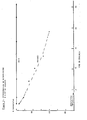
- the properties of nickel catalysts on various silica supports were investigated with respect to the employed extraction methods.
- the xonotlite product according to Reference Example 1 was treated in four different manners.
Landscapes
- Chemical & Material Sciences (AREA)
- Organic Chemistry (AREA)
- Chemical Kinetics & Catalysis (AREA)
- Engineering & Computer Science (AREA)
- Materials Engineering (AREA)
- Bioinformatics & Cheminformatics (AREA)
- Life Sciences & Earth Sciences (AREA)
- Inorganic Chemistry (AREA)
- Genetics & Genomics (AREA)
- Health & Medical Sciences (AREA)
- Wood Science & Technology (AREA)
- Zoology (AREA)
- General Health & Medical Sciences (AREA)
- General Engineering & Computer Science (AREA)
- Biomedical Technology (AREA)
- Biochemistry (AREA)
- Microbiology (AREA)
- Biotechnology (AREA)
- General Chemical & Material Sciences (AREA)
- Oil, Petroleum & Natural Gas (AREA)
- Silicon Compounds (AREA)
- Catalysts (AREA)
Priority Applications (1)
| Application Number | Priority Date | Filing Date | Title |
|---|---|---|---|
| AT85103873T ATE44020T1 (de) | 1984-04-14 | 1985-03-30 | Amorphe kieselsaeureteilchen, verfahren zu deren herstellung und deren verwendung. |
Applications Claiming Priority (2)
| Application Number | Priority Date | Filing Date | Title |
|---|---|---|---|
| DE3414232 | 1984-04-14 | ||
| DE3414232 | 1984-04-14 |
Publications (3)
| Publication Number | Publication Date |
|---|---|
| EP0159578A2 true EP0159578A2 (de) | 1985-10-30 |
| EP0159578A3 EP0159578A3 (en) | 1986-09-10 |
| EP0159578B1 EP0159578B1 (de) | 1989-06-14 |
Family
ID=6233656
Family Applications (1)
| Application Number | Title | Priority Date | Filing Date |
|---|---|---|---|
| EP85103873A Expired EP0159578B1 (de) | 1984-04-14 | 1985-03-30 | Amorphe Kieselsäureteilchen, Verfahren zu deren Herstellung und deren Verwendung |
Country Status (5)
| Country | Link |
|---|---|
| US (1) | US4689315A (de) |
| EP (1) | EP0159578B1 (de) |
| JP (1) | JPS616118A (de) |
| AT (1) | ATE44020T1 (de) |
| DE (1) | DE3571021D1 (de) |
Cited By (6)
| Publication number | Priority date | Publication date | Assignee | Title |
|---|---|---|---|---|
| US4720475A (en) * | 1985-10-29 | 1988-01-19 | Redco N.V. | Silica-particles containing alumina, process for preparing same and the use thereof |
| FR2609705A1 (fr) * | 1987-01-20 | 1988-07-22 | Mizusawa Industrial Chem | Particules spheriques de silice ou de silice-alumine amorphe, charges les contenant et procede pour leur preparation. |
| FR2612910A1 (fr) * | 1987-03-31 | 1988-09-30 | Mizusawa Industrial Chem | Procede de preparation de particules siliceuses, analcime active et silice amorphe obtenues par ce procede, et charges et fluide electrovisqueux qui en contiennent |
| EP0339012A1 (de) * | 1988-04-22 | 1989-10-25 | U C B, S.A. | Verfahren zur Herstellung von gamma-Butyrolacton |
| WO1995022606A1 (en) * | 1994-02-21 | 1995-08-24 | Novo Nordisk A/S | Method for production of an immobilized enzyme preparation and use of the immobilized enzyme preparation |
| US6416672B1 (en) * | 2000-08-25 | 2002-07-09 | The Regents Of The University Of California | Removal of dissolved and colloidal silica |
Families Citing this family (10)
| Publication number | Priority date | Publication date | Assignee | Title |
|---|---|---|---|---|
| US5393329A (en) * | 1991-09-06 | 1995-02-28 | Kabushiki Kaisha Toyota Chuo Kenkyusho | Fuel-sorbing device using layered porous silica |
| GB9210265D0 (en) * | 1992-05-13 | 1992-07-01 | Unilever Plc | Catalysts and catalyst supports |
| US5895770A (en) * | 1995-02-28 | 1999-04-20 | Pq Corporation | Olefin polymerization catalysts with specific silica supports |
| US6090742A (en) * | 1997-04-22 | 2000-07-18 | Exxon Research And Engineering Company | Process for the preparation of high activity hydrocarbon synthesis catalysts; and catalyst compositions |
| US6107237A (en) * | 1997-07-10 | 2000-08-22 | University Of Florida | Homogeneous metathesis/heterogeneous hydrogenation |
| IL134477A (en) * | 2000-02-10 | 2004-05-12 | Promeks As | Process for the preparation of amorphous silica |
| EP1277826A1 (de) * | 2001-07-18 | 2003-01-22 | ATOFINA Research | Hydrierungsverfahren und Dehydrierungsverfahren und Katalysatoren dafür |
| WO2010105941A1 (de) * | 2009-03-16 | 2010-09-23 | Basf Se | Katalysatorträger auf silicagel-basis |
| FR3038851B1 (fr) * | 2015-07-13 | 2019-11-08 | IFP Energies Nouvelles | Catalyseur a base de tantale depose sur silice pour la transformation de l'ethanol en butadiene |
| CN105060307B (zh) * | 2015-09-09 | 2017-04-05 | 确成硅化学股份有限公司 | 一种高比表面积白炭黑及其生产方法 |
Family Cites Families (6)
| Publication number | Priority date | Publication date | Assignee | Title |
|---|---|---|---|---|
| US2871200A (en) * | 1955-08-22 | 1959-01-27 | Union Oil Co | Hydrocarbon conversion catalysts |
| DE1519084A1 (de) * | 1963-01-23 | 1970-05-06 | Degussa | Verfahren zur Herstellung einer als Mattierungsmittel fuer Lacke geeigneten Kieselsaeure |
| US3501324A (en) * | 1966-07-15 | 1970-03-17 | Osaka Packing | Manufacturing aqueous slurry of hydrous calcium silicate and products thereof |
| SE420596B (sv) * | 1975-03-25 | 1981-10-19 | Osaka Packing | Formad kropp av amorf kiseldioxid, eventuellt innehallande kalciumkarbonat, sett att framstella en formad kropp av amorf kiseldioxid samt partikel av amorf kiseldioxid for framstellning av en formad kropp |
| US4368303A (en) * | 1980-02-06 | 1983-01-11 | Phillips Petroleum Company | Titanium impregnated silica-chromium catalysts |
| DD153107A1 (de) * | 1980-09-16 | 1981-12-23 | Ulrich Mellenthin | Verfahren zur herstellung hochdisperser kieselsaeure |
-
1985
- 1985-03-27 US US06/716,695 patent/US4689315A/en not_active Expired - Fee Related
- 1985-03-30 EP EP85103873A patent/EP0159578B1/de not_active Expired
- 1985-03-30 AT AT85103873T patent/ATE44020T1/de not_active IP Right Cessation
- 1985-03-30 DE DE8585103873T patent/DE3571021D1/de not_active Expired
- 1985-04-11 JP JP60078242A patent/JPS616118A/ja active Granted
Cited By (10)
| Publication number | Priority date | Publication date | Assignee | Title |
|---|---|---|---|---|
| US4720475A (en) * | 1985-10-29 | 1988-01-19 | Redco N.V. | Silica-particles containing alumina, process for preparing same and the use thereof |
| EP0221405A3 (en) * | 1985-10-29 | 1990-01-31 | Redco N.V. | Silica-particles containing alumina, process for preparing same and use thereof |
| FR2609705A1 (fr) * | 1987-01-20 | 1988-07-22 | Mizusawa Industrial Chem | Particules spheriques de silice ou de silice-alumine amorphe, charges les contenant et procede pour leur preparation. |
| DE3801535A1 (de) * | 1987-01-20 | 1988-07-28 | Mizusawa Industrial Chem | Kugelfoermige siliciumdioxid- oder siliciumdioxid-aluminiumoxid-teilchen und verfahren zu ihrer herstellung |
| FR2612910A1 (fr) * | 1987-03-31 | 1988-09-30 | Mizusawa Industrial Chem | Procede de preparation de particules siliceuses, analcime active et silice amorphe obtenues par ce procede, et charges et fluide electrovisqueux qui en contiennent |
| EP0339012A1 (de) * | 1988-04-22 | 1989-10-25 | U C B, S.A. | Verfahren zur Herstellung von gamma-Butyrolacton |
| US5118821A (en) * | 1988-04-22 | 1992-06-02 | U C B, S.A. | Process for the production of gamma-butyrolactone |
| WO1995022606A1 (en) * | 1994-02-21 | 1995-08-24 | Novo Nordisk A/S | Method for production of an immobilized enzyme preparation and use of the immobilized enzyme preparation |
| US5776741A (en) * | 1994-02-21 | 1998-07-07 | Novo Nordisk A/S | Method of enzyme immobilization on a particulate silica carrier for synthesis inorganic media |
| US6416672B1 (en) * | 2000-08-25 | 2002-07-09 | The Regents Of The University Of California | Removal of dissolved and colloidal silica |
Also Published As
| Publication number | Publication date |
|---|---|
| JPH0513090B2 (de) | 1993-02-19 |
| JPS616118A (ja) | 1986-01-11 |
| DE3571021D1 (en) | 1989-07-20 |
| US4689315A (en) | 1987-08-25 |
| EP0159578B1 (de) | 1989-06-14 |
| ATE44020T1 (de) | 1989-06-15 |
| EP0159578A3 (en) | 1986-09-10 |
Similar Documents
| Publication | Publication Date | Title |
|---|---|---|
| US4689315A (en) | Amorphous silica particles, a method for producing same, and catalyst thereof | |
| KR880001778B1 (ko) | 촉매지지체 코우팅용 알루미나 조성물에 의한 촉매지지체의 코우팅 방법 및 이와같이 수득된 촉매지지체 | |
| US3257310A (en) | Steam activated catalyst | |
| Buelna et al. | Sol–gel-derived mesoporous γ-alumina granules | |
| JPS6049135B2 (ja) | 二重多孔度を有する球状体及びその製造法 | |
| US5234883A (en) | Catalyst for hardening fatty acids and process for its preparation | |
| JPS61155207A (ja) | エイジングされていない無機酸化物を含むエーロゲル及びそれらの調製法 | |
| US3979334A (en) | Manufacture of spheroidal alumina particles | |
| JPH0278439A (ja) | 化学的方法と触媒 | |
| EP0234755A2 (de) | Borsilikat-Molekularsieb | |
| AU2003254740A1 (en) | Modification of the pore structure of metal oxide and mixed metal oxide supports for catalyst synthesis | |
| US4692423A (en) | Method for preparing structured catalytic solids | |
| US5085705A (en) | Alumina-silica-sulfates, method of preparation and compositions | |
| JPH05253481A (ja) | 触媒成形体 | |
| US6068825A (en) | Method for the preparation of a high-quality powder of amorphous silicic acid | |
| US5236681A (en) | Layered silicate | |
| CA1299124C (en) | Biological support | |
| US3842114A (en) | Isomerization catalyst activation process | |
| EP0184461A2 (de) | Nachbehandlung einer auf AMS-1B kristallinem Molekularsiebbasierenden Katalysatorzusammensetzung | |
| US4720475A (en) | Silica-particles containing alumina, process for preparing same and the use thereof | |
| US3948760A (en) | Catalytic conversion of hydrocarbons by improved zeolite catalyst | |
| JPH01246128A (ja) | 酸化アルミニウムを基にした顆粒の製造法 | |
| CA2017760A1 (en) | Zeolites | |
| KR101109814B1 (ko) | 올레핀의 선택적 수소화 방법 | |
| CA1094533A (en) | Reforming catalyst and a hydrocarbon catalytic reforming process using the catalyst |
Legal Events
| Date | Code | Title | Description |
|---|---|---|---|
| PUAI | Public reference made under article 153(3) epc to a published international application that has entered the european phase |
Free format text: ORIGINAL CODE: 0009012 |
|
| 17P | Request for examination filed |
Effective date: 19850330 |
|
| AK | Designated contracting states |
Designated state(s): AT BE CH DE FR GB IT LI LU NL SE |
|
| PUAL | Search report despatched |
Free format text: ORIGINAL CODE: 0009013 |
|
| AK | Designated contracting states |
Kind code of ref document: A3 Designated state(s): AT BE CH DE FR GB IT LI LU NL SE |
|
| 17Q | First examination report despatched |
Effective date: 19871009 |
|
| GRAA | (expected) grant |
Free format text: ORIGINAL CODE: 0009210 |
|
| AK | Designated contracting states |
Kind code of ref document: B1 Designated state(s): AT BE CH DE FR GB IT LI LU NL SE |
|
| REF | Corresponds to: |
Ref document number: 44020 Country of ref document: AT Date of ref document: 19890615 Kind code of ref document: T |
|
| ITF | It: translation for a ep patent filed | ||
| REF | Corresponds to: |
Ref document number: 3571021 Country of ref document: DE Date of ref document: 19890720 |
|
| ET | Fr: translation filed | ||
| PLBE | No opposition filed within time limit |
Free format text: ORIGINAL CODE: 0009261 |
|
| STAA | Information on the status of an ep patent application or granted ep patent |
Free format text: STATUS: NO OPPOSITION FILED WITHIN TIME LIMIT |
|
| 26N | No opposition filed | ||
| ITTA | It: last paid annual fee | ||
| PGFP | Annual fee paid to national office [announced via postgrant information from national office to epo] |
Ref country code: GB Payment date: 19940211 Year of fee payment: 10 |
|
| PGFP | Annual fee paid to national office [announced via postgrant information from national office to epo] |
Ref country code: FR Payment date: 19940223 Year of fee payment: 10 |
|
| PGFP | Annual fee paid to national office [announced via postgrant information from national office to epo] |
Ref country code: BE Payment date: 19940228 Year of fee payment: 10 |
|
| PGFP | Annual fee paid to national office [announced via postgrant information from national office to epo] |
Ref country code: SE Payment date: 19940317 Year of fee payment: 10 Ref country code: AT Payment date: 19940317 Year of fee payment: 10 |
|
| PGFP | Annual fee paid to national office [announced via postgrant information from national office to epo] |
Ref country code: CH Payment date: 19940324 Year of fee payment: 10 |
|
| PGFP | Annual fee paid to national office [announced via postgrant information from national office to epo] |
Ref country code: NL Payment date: 19940331 Year of fee payment: 10 Ref country code: LU Payment date: 19940331 Year of fee payment: 10 |
|
| PGFP | Annual fee paid to national office [announced via postgrant information from national office to epo] |
Ref country code: DE Payment date: 19940422 Year of fee payment: 10 |
|
| EPTA | Lu: last paid annual fee | ||
| EAL | Se: european patent in force in sweden |
Ref document number: 85103873.7 |
|
| PG25 | Lapsed in a contracting state [announced via postgrant information from national office to epo] |
Ref country code: LU Free format text: LAPSE BECAUSE OF NON-PAYMENT OF DUE FEES Effective date: 19950330 Ref country code: GB Effective date: 19950330 Ref country code: AT Effective date: 19950330 |
|
| PG25 | Lapsed in a contracting state [announced via postgrant information from national office to epo] |
Ref country code: SE Effective date: 19950331 Ref country code: LI Effective date: 19950331 Ref country code: CH Effective date: 19950331 Ref country code: BE Effective date: 19950331 |
|
| BERE | Be: lapsed |
Owner name: REDCO N.V. Effective date: 19950331 |
|
| PG25 | Lapsed in a contracting state [announced via postgrant information from national office to epo] |
Ref country code: NL Effective date: 19951001 |
|
| GBPC | Gb: european patent ceased through non-payment of renewal fee |
Effective date: 19950330 |
|
| PG25 | Lapsed in a contracting state [announced via postgrant information from national office to epo] |
Ref country code: FR Free format text: LAPSE BECAUSE OF NON-PAYMENT OF DUE FEES Effective date: 19951130 |
|
| REG | Reference to a national code |
Ref country code: CH Ref legal event code: PL |
|
| NLV4 | Nl: lapsed or anulled due to non-payment of the annual fee |
Effective date: 19951001 |
|
| PG25 | Lapsed in a contracting state [announced via postgrant information from national office to epo] |
Ref country code: DE Effective date: 19951201 |
|
| EUG | Se: european patent has lapsed |
Ref document number: 85103873.7 |
|
| REG | Reference to a national code |
Ref country code: FR Ref legal event code: ST |