EP0159943A2 - Vecteurs d'expression, fragments d'ADN, peptides, hôtes et procédé de production de protéines - Google Patents
Vecteurs d'expression, fragments d'ADN, peptides, hôtes et procédé de production de protéines Download PDFInfo
- Publication number
- EP0159943A2 EP0159943A2 EP85400726A EP85400726A EP0159943A2 EP 0159943 A2 EP0159943 A2 EP 0159943A2 EP 85400726 A EP85400726 A EP 85400726A EP 85400726 A EP85400726 A EP 85400726A EP 0159943 A2 EP0159943 A2 EP 0159943A2
- Authority
- EP
- European Patent Office
- Prior art keywords
- cardiodilatin
- cardionatrin
- plasmid
- fragment
- structural gene
- Prior art date
- Legal status (The legal status is an assumption and is not a legal conclusion. Google has not performed a legal analysis and makes no representation as to the accuracy of the status listed.)
- Granted
Links
- 108090000623 proteins and genes Proteins 0.000 title claims abstract description 51
- 238000000034 method Methods 0.000 title claims abstract description 19
- 239000013604 expression vector Substances 0.000 title claims abstract description 17
- 238000004519 manufacturing process Methods 0.000 title claims abstract description 10
- 102000004169 proteins and genes Human genes 0.000 title claims description 18
- 102000007079 Peptide Fragments Human genes 0.000 title description 2
- 108010033276 Peptide Fragments Proteins 0.000 title description 2
- 239000012634 fragment Substances 0.000 claims abstract description 92
- 102400001282 Atrial natriuretic peptide Human genes 0.000 claims abstract description 46
- 101800001890 Atrial natriuretic peptide Proteins 0.000 claims abstract description 46
- NSQLIUXCMFBZME-MPVJKSABSA-N carperitide Chemical compound C([C@H]1C(=O)NCC(=O)NCC(=O)N[C@@H](CCCNC(N)=N)C(=O)N[C@@H](CCSC)C(=O)N[C@@H](CC(O)=O)C(=O)N[C@@H](CCCNC(N)=N)C(=O)N[C@H](C(NCC(=O)N[C@@H](C)C(=O)N[C@@H](CCC(N)=O)C(=O)N[C@@H](CO)C(=O)NCC(=O)N[C@@H](CC(C)C)C(=O)NCC(=O)N[C@@H](CSSC[C@@H](C(=O)N1)NC(=O)[C@H](CO)NC(=O)[C@H](CO)NC(=O)[C@H](CCCNC(N)=N)NC(=O)[C@H](CCCNC(N)=N)NC(=O)[C@H](CC(C)C)NC(=O)[C@@H](N)CO)C(=O)N[C@@H](CC(N)=O)C(=O)N[C@@H](CO)C(=O)N[C@@H](CC=1C=CC=CC=1)C(=O)N[C@@H](CCCNC(N)=N)C(=O)N[C@@H](CC=1C=CC(O)=CC=1)C(O)=O)=O)[C@@H](C)CC)C1=CC=CC=C1 NSQLIUXCMFBZME-MPVJKSABSA-N 0.000 claims abstract description 46
- QGFSVPWZEPKNDV-BRTFOEFASA-N ranp Chemical compound C([C@H]1C(=O)NCC(=O)NCC(=O)N[C@@H](CCCNC(N)=N)C(=O)N[C@H](C(=O)N[C@@H](CC(O)=O)C(=O)N[C@@H](CCCNC(N)=N)C(=O)N[C@H](C(NCC(=O)N[C@@H](C)C(=O)N[C@@H](CCC(N)=O)C(=O)N[C@@H](CO)C(=O)NCC(=O)N[C@@H](CC(C)C)C(=O)NCC(=O)N[C@@H](CSSC[C@@H](C(=O)N1)NC(=O)[C@H](CO)NC(=O)[C@H](CO)NC(=O)[C@H](CCCNC(N)=N)NC(=O)[C@H](CCCNC(N)=N)NC(=O)[C@H](CC(C)C)NC(=O)[C@@H](N)CO)C(=O)N[C@@H](CC(N)=O)C(=O)N[C@@H](CO)C(=O)N[C@@H](CC=1C=CC=CC=1)C(=O)N[C@@H](CCCNC(N)=N)C(=O)N[C@@H](CC=1C=CC(O)=CC=1)C(O)=O)=O)[C@@H](C)CC)[C@@H](C)CC)C1=CC=CC=C1 QGFSVPWZEPKNDV-BRTFOEFASA-N 0.000 claims abstract description 46
- 102100034296 Natriuretic peptides A Human genes 0.000 claims abstract description 45
- 108010031762 cardiodilatin Proteins 0.000 claims abstract description 45
- 108090000765 processed proteins & peptides Proteins 0.000 claims abstract description 28
- 241000588724 Escherichia coli Species 0.000 claims description 26
- 230000001766 physiological effect Effects 0.000 claims description 21
- 239000000126 substance Substances 0.000 claims description 16
- 101150044170 trpE gene Proteins 0.000 claims description 15
- 101100408135 Pseudomonas aeruginosa (strain ATCC 15692 / DSM 22644 / CIP 104116 / JCM 14847 / LMG 12228 / 1C / PRS 101 / PAO1) phnA gene Proteins 0.000 claims description 14
- 238000010367 cloning Methods 0.000 claims description 11
- 150000001413 amino acids Chemical group 0.000 claims description 7
- 240000004808 Saccharomyces cerevisiae Species 0.000 claims description 3
- 238000012258 culturing Methods 0.000 claims description 3
- 244000005700 microbiome Species 0.000 claims description 3
- 230000001105 regulatory effect Effects 0.000 claims description 2
- 239000013612 plasmid Substances 0.000 description 80
- 108020004414 DNA Proteins 0.000 description 33
- 239000002299 complementary DNA Substances 0.000 description 22
- 235000018102 proteins Nutrition 0.000 description 16
- 102000012410 DNA Ligases Human genes 0.000 description 13
- 108010061982 DNA Ligases Proteins 0.000 description 13
- 108091028043 Nucleic acid sequence Proteins 0.000 description 10
- 239000007853 buffer solution Substances 0.000 description 10
- 108020004999 messenger RNA Proteins 0.000 description 10
- 108091008146 restriction endonucleases Proteins 0.000 description 10
- 125000003275 alpha amino acid group Chemical group 0.000 description 8
- 238000010276 construction Methods 0.000 description 7
- 238000002360 preparation method Methods 0.000 description 7
- 108091032973 (ribonucleotides)n+m Proteins 0.000 description 6
- LFQSCWFLJHTTHZ-UHFFFAOYSA-N Ethanol Chemical compound CCO LFQSCWFLJHTTHZ-UHFFFAOYSA-N 0.000 description 6
- 238000003776 cleavage reaction Methods 0.000 description 6
- 230000007017 scission Effects 0.000 description 6
- 108091003079 Bovine Serum Albumin Proteins 0.000 description 5
- 108010014303 DNA-directed DNA polymerase Proteins 0.000 description 5
- 102000016928 DNA-directed DNA polymerase Human genes 0.000 description 5
- 241001131785 Escherichia coli HB101 Species 0.000 description 5
- 208000034454 F12-related hereditary angioedema with normal C1Inh Diseases 0.000 description 5
- 235000001014 amino acid Nutrition 0.000 description 5
- 229940098773 bovine serum albumin Drugs 0.000 description 5
- 230000000694 effects Effects 0.000 description 5
- 208000016861 hereditary angioedema type 3 Diseases 0.000 description 5
- 125000003729 nucleotide group Chemical group 0.000 description 5
- 239000002243 precursor Substances 0.000 description 5
- 239000000523 sample Substances 0.000 description 5
- 238000011144 upstream manufacturing Methods 0.000 description 5
- AIYUHDOJVYHVIT-UHFFFAOYSA-M caesium chloride Chemical compound [Cl-].[Cs+] AIYUHDOJVYHVIT-UHFFFAOYSA-M 0.000 description 4
- 239000000463 material Substances 0.000 description 4
- 239000002773 nucleotide Substances 0.000 description 4
- 239000013598 vector Substances 0.000 description 4
- 108010008286 DNA nucleotidylexotransferase Proteins 0.000 description 3
- 102100033215 DNA nucleotidylexotransferase Human genes 0.000 description 3
- 102100034343 Integrase Human genes 0.000 description 3
- QIVBCDIJIAJPQS-VIFPVBQESA-N L-tryptophane Chemical compound C1=CC=C2C(C[C@H](N)C(O)=O)=CNC2=C1 QIVBCDIJIAJPQS-VIFPVBQESA-N 0.000 description 3
- BAWFJGJZGIEFAR-NNYOXOHSSA-N NAD zwitterion Chemical compound NC(=O)C1=CC=C[N+]([C@H]2[C@@H]([C@H](O)[C@@H](COP([O-])(=O)OP(O)(=O)OC[C@@H]3[C@H]([C@@H](O)[C@@H](O3)N3C4=NC=NC(N)=C4N=C3)O)O2)O)=C1 BAWFJGJZGIEFAR-NNYOXOHSSA-N 0.000 description 3
- 108091034057 RNA (poly(A)) Proteins 0.000 description 3
- 241000282898 Sus scrofa Species 0.000 description 3
- QIVBCDIJIAJPQS-UHFFFAOYSA-N Tryptophan Natural products C1=CC=C2C(CC(N)C(O)=O)=CNC2=C1 QIVBCDIJIAJPQS-UHFFFAOYSA-N 0.000 description 3
- 125000000539 amino acid group Chemical group 0.000 description 3
- 229960000723 ampicillin Drugs 0.000 description 3
- AVKUERGKIZMTKX-NJBDSQKTSA-N ampicillin Chemical compound C1([C@@H](N)C(=O)N[C@H]2[C@H]3SC([C@@H](N3C2=O)C(O)=O)(C)C)=CC=CC=C1 AVKUERGKIZMTKX-NJBDSQKTSA-N 0.000 description 3
- 230000001413 cellular effect Effects 0.000 description 3
- 229920002678 cellulose Polymers 0.000 description 3
- 239000001913 cellulose Substances 0.000 description 3
- RGWHQCVHVJXOKC-SHYZEUOFSA-J dCTP(4-) Chemical compound O=C1N=C(N)C=CN1[C@@H]1O[C@H](COP([O-])(=O)OP([O-])(=O)OP([O-])([O-])=O)[C@@H](O)C1 RGWHQCVHVJXOKC-SHYZEUOFSA-J 0.000 description 3
- HAAZLUGHYHWQIW-KVQBGUIXSA-N dGTP Chemical compound C1=NC=2C(=O)NC(N)=NC=2N1[C@H]1C[C@H](O)[C@@H](COP(O)(=O)OP(O)(=O)OP(O)(O)=O)O1 HAAZLUGHYHWQIW-KVQBGUIXSA-N 0.000 description 3
- NHVNXKFIZYSCEB-XLPZGREQSA-N dTTP Chemical compound O=C1NC(=O)C(C)=CN1[C@@H]1O[C@H](COP(O)(=O)OP(O)(=O)OP(O)(O)=O)[C@@H](O)C1 NHVNXKFIZYSCEB-XLPZGREQSA-N 0.000 description 3
- 238000012869 ethanol precipitation Methods 0.000 description 3
- 239000000499 gel Substances 0.000 description 3
- 229930182817 methionine Chemical group 0.000 description 3
- 229950006238 nadide Drugs 0.000 description 3
- 229930027945 nicotinamide-adenine dinucleotide Natural products 0.000 description 3
- 239000008188 pellet Substances 0.000 description 3
- 238000012163 sequencing technique Methods 0.000 description 3
- IJGRMHOSHXDMSA-UHFFFAOYSA-N Atomic nitrogen Chemical compound N#N IJGRMHOSHXDMSA-UHFFFAOYSA-N 0.000 description 2
- 108020004705 Codon Proteins 0.000 description 2
- 108091036060 Linker DNA Proteins 0.000 description 2
- 108010092799 RNA-directed DNA polymerase Proteins 0.000 description 2
- 108091081024 Start codon Proteins 0.000 description 2
- 108020005038 Terminator Codon Proteins 0.000 description 2
- 238000000246 agarose gel electrophoresis Methods 0.000 description 2
- 210000003484 anatomy Anatomy 0.000 description 2
- 239000007864 aqueous solution Substances 0.000 description 2
- 230000036772 blood pressure Effects 0.000 description 2
- 238000004440 column chromatography Methods 0.000 description 2
- 230000000295 complement effect Effects 0.000 description 2
- SUYVUBYJARFZHO-RRKCRQDMSA-N dATP Chemical compound C1=NC=2C(N)=NC=NC=2N1[C@H]1C[C@H](O)[C@@H](COP(O)(=O)OP(O)(=O)OP(O)(O)=O)O1 SUYVUBYJARFZHO-RRKCRQDMSA-N 0.000 description 2
- SUYVUBYJARFZHO-UHFFFAOYSA-N dATP Natural products C1=NC=2C(N)=NC=NC=2N1C1CC(O)C(COP(O)(=O)OP(O)(=O)OP(O)(O)=O)O1 SUYVUBYJARFZHO-UHFFFAOYSA-N 0.000 description 2
- 238000002298 density-gradient ultracentrifugation Methods 0.000 description 2
- 230000000994 depressogenic effect Effects 0.000 description 2
- VHJLVAABSRFDPM-QWWZWVQMSA-N dithiothreitol Chemical compound SC[C@@H](O)[C@H](O)CS VHJLVAABSRFDPM-QWWZWVQMSA-N 0.000 description 2
- 239000002934 diuretic Substances 0.000 description 2
- 230000001882 diuretic effect Effects 0.000 description 2
- 210000002837 heart atrium Anatomy 0.000 description 2
- 238000003780 insertion Methods 0.000 description 2
- 230000037431 insertion Effects 0.000 description 2
- 239000002609 medium Substances 0.000 description 2
- 238000002264 polyacrylamide gel electrophoresis Methods 0.000 description 2
- 102000004196 processed proteins & peptides Human genes 0.000 description 2
- 238000011160 research Methods 0.000 description 2
- 238000012216 screening Methods 0.000 description 2
- 230000009466 transformation Effects 0.000 description 2
- 230000000304 vasodilatating effect Effects 0.000 description 2
- FZPKSSRLAIBRQA-UHFFFAOYSA-N (diaminomethylideneamino) thiocyanate Chemical compound NC(N)=NSC#N FZPKSSRLAIBRQA-UHFFFAOYSA-N 0.000 description 1
- NCMVOABPESMRCP-SHYZEUOFSA-N 2'-deoxycytosine 5'-monophosphate Chemical compound O=C1N=C(N)C=CN1[C@@H]1O[C@H](COP(O)(O)=O)[C@@H](O)C1 NCMVOABPESMRCP-SHYZEUOFSA-N 0.000 description 1
- 229920000936 Agarose Polymers 0.000 description 1
- 102000002260 Alkaline Phosphatase Human genes 0.000 description 1
- 108020004774 Alkaline Phosphatase Proteins 0.000 description 1
- 241000283690 Bos taurus Species 0.000 description 1
- 101000583086 Bunodosoma granuliferum Delta-actitoxin-Bgr2b Proteins 0.000 description 1
- 108020004638 Circular DNA Proteins 0.000 description 1
- 229910021580 Cobalt(II) chloride Inorganic materials 0.000 description 1
- 102000004190 Enzymes Human genes 0.000 description 1
- 108090000790 Enzymes Proteins 0.000 description 1
- 241000283073 Equus caballus Species 0.000 description 1
- 241000701959 Escherichia virus Lambda Species 0.000 description 1
- 108700039691 Genetic Promoter Regions Proteins 0.000 description 1
- 101710203526 Integrase Proteins 0.000 description 1
- 241001465754 Metazoa Species 0.000 description 1
- 241000699666 Mus <mouse, genus> Species 0.000 description 1
- 125000001429 N-terminal alpha-amino-acid group Chemical group 0.000 description 1
- 108091034117 Oligonucleotide Proteins 0.000 description 1
- 241000724206 Phage M13mp7 Species 0.000 description 1
- 241000700159 Rattus Species 0.000 description 1
- 239000004098 Tetracycline Substances 0.000 description 1
- VCORFLZFSPUNDN-UAGCYRGNSA-N [(2r,3s,5r)-5-(6-aminopurin-9-yl)-3-[[(2r,3s,5r)-5-(6-aminopurin-9-yl)-3-hydroxyoxolan-2-yl]methoxy-hydroxyphosphoryl]oxyoxolan-2-yl]methyl [(2r,3s,5r)-5-(6-aminopurin-9-yl)-2-(phosphonooxymethyl)oxolan-3-yl] hydrogen phosphate Polymers C1=NC2=C(N)N=CN=C2N1[C@H](O[C@@H]1COP(O)(=O)O[C@@H]2[C@H](O[C@H](C2)N2C3=NC=NC(N)=C3N=C2)COP(O)(O)=O)C[C@@H]1OP(O)(=O)OC[C@@H](O1)[C@@H](O)C[C@@H]1N1C(N=CN=C2N)=C2N=C1 VCORFLZFSPUNDN-UAGCYRGNSA-N 0.000 description 1
- JLCPHMBAVCMARE-UHFFFAOYSA-N [3-[[3-[[3-[[3-[[3-[[3-[[3-[[3-[[3-[[3-[[3-[[5-(2-amino-6-oxo-1H-purin-9-yl)-3-[[3-[[3-[[3-[[3-[[3-[[5-(2-amino-6-oxo-1H-purin-9-yl)-3-[[5-(2-amino-6-oxo-1H-purin-9-yl)-3-hydroxyoxolan-2-yl]methoxy-hydroxyphosphoryl]oxyoxolan-2-yl]methoxy-hydroxyphosphoryl]oxy-5-(5-methyl-2,4-dioxopyrimidin-1-yl)oxolan-2-yl]methoxy-hydroxyphosphoryl]oxy-5-(6-aminopurin-9-yl)oxolan-2-yl]methoxy-hydroxyphosphoryl]oxy-5-(6-aminopurin-9-yl)oxolan-2-yl]methoxy-hydroxyphosphoryl]oxy-5-(6-aminopurin-9-yl)oxolan-2-yl]methoxy-hydroxyphosphoryl]oxy-5-(6-aminopurin-9-yl)oxolan-2-yl]methoxy-hydroxyphosphoryl]oxyoxolan-2-yl]methoxy-hydroxyphosphoryl]oxy-5-(5-methyl-2,4-dioxopyrimidin-1-yl)oxolan-2-yl]methoxy-hydroxyphosphoryl]oxy-5-(4-amino-2-oxopyrimidin-1-yl)oxolan-2-yl]methoxy-hydroxyphosphoryl]oxy-5-(5-methyl-2,4-dioxopyrimidin-1-yl)oxolan-2-yl]methoxy-hydroxyphosphoryl]oxy-5-(5-methyl-2,4-dioxopyrimidin-1-yl)oxolan-2-yl]methoxy-hydroxyphosphoryl]oxy-5-(6-aminopurin-9-yl)oxolan-2-yl]methoxy-hydroxyphosphoryl]oxy-5-(6-aminopurin-9-yl)oxolan-2-yl]methoxy-hydroxyphosphoryl]oxy-5-(4-amino-2-oxopyrimidin-1-yl)oxolan-2-yl]methoxy-hydroxyphosphoryl]oxy-5-(4-amino-2-oxopyrimidin-1-yl)oxolan-2-yl]methoxy-hydroxyphosphoryl]oxy-5-(4-amino-2-oxopyrimidin-1-yl)oxolan-2-yl]methoxy-hydroxyphosphoryl]oxy-5-(6-aminopurin-9-yl)oxolan-2-yl]methoxy-hydroxyphosphoryl]oxy-5-(4-amino-2-oxopyrimidin-1-yl)oxolan-2-yl]methyl [5-(6-aminopurin-9-yl)-2-(hydroxymethyl)oxolan-3-yl] hydrogen phosphate Polymers Cc1cn(C2CC(OP(O)(=O)OCC3OC(CC3OP(O)(=O)OCC3OC(CC3O)n3cnc4c3nc(N)[nH]c4=O)n3cnc4c3nc(N)[nH]c4=O)C(COP(O)(=O)OC3CC(OC3COP(O)(=O)OC3CC(OC3COP(O)(=O)OC3CC(OC3COP(O)(=O)OC3CC(OC3COP(O)(=O)OC3CC(OC3COP(O)(=O)OC3CC(OC3COP(O)(=O)OC3CC(OC3COP(O)(=O)OC3CC(OC3COP(O)(=O)OC3CC(OC3COP(O)(=O)OC3CC(OC3COP(O)(=O)OC3CC(OC3COP(O)(=O)OC3CC(OC3COP(O)(=O)OC3CC(OC3COP(O)(=O)OC3CC(OC3COP(O)(=O)OC3CC(OC3COP(O)(=O)OC3CC(OC3COP(O)(=O)OC3CC(OC3CO)n3cnc4c(N)ncnc34)n3ccc(N)nc3=O)n3cnc4c(N)ncnc34)n3ccc(N)nc3=O)n3ccc(N)nc3=O)n3ccc(N)nc3=O)n3cnc4c(N)ncnc34)n3cnc4c(N)ncnc34)n3cc(C)c(=O)[nH]c3=O)n3cc(C)c(=O)[nH]c3=O)n3ccc(N)nc3=O)n3cc(C)c(=O)[nH]c3=O)n3cnc4c3nc(N)[nH]c4=O)n3cnc4c(N)ncnc34)n3cnc4c(N)ncnc34)n3cnc4c(N)ncnc34)n3cnc4c(N)ncnc34)O2)c(=O)[nH]c1=O JLCPHMBAVCMARE-UHFFFAOYSA-N 0.000 description 1
- 238000004458 analytical method Methods 0.000 description 1
- 210000004102 animal cell Anatomy 0.000 description 1
- 235000009697 arginine Nutrition 0.000 description 1
- 125000000637 arginyl group Chemical class N[C@@H](CCCNC(N)=N)C(=O)* 0.000 description 1
- 238000006243 chemical reaction Methods 0.000 description 1
- 230000002759 chromosomal effect Effects 0.000 description 1
- NKLPQNGYXWVELD-UHFFFAOYSA-M coomassie brilliant blue Chemical compound [Na+].C1=CC(OCC)=CC=C1NC1=CC=C(C(=C2C=CC(C=C2)=[N+](CC)CC=2C=C(C=CC=2)S([O-])(=O)=O)C=2C=CC(=CC=2)N(CC)CC=2C=C(C=CC=2)S([O-])(=O)=O)C=C1 NKLPQNGYXWVELD-UHFFFAOYSA-M 0.000 description 1
- 238000012217 deletion Methods 0.000 description 1
- 230000037430 deletion Effects 0.000 description 1
- 230000029087 digestion Effects 0.000 description 1
- 239000013613 expression plasmid Substances 0.000 description 1
- 239000011521 glass Substances 0.000 description 1
- 239000001963 growth medium Substances 0.000 description 1
- ZJYYHGLJYGJLLN-UHFFFAOYSA-N guanidinium thiocyanate Chemical compound SC#N.NC(N)=N ZJYYHGLJYGJLLN-UHFFFAOYSA-N 0.000 description 1
- 239000007788 liquid Substances 0.000 description 1
- LWJROJCJINYWOX-UHFFFAOYSA-L mercury dichloride Chemical compound Cl[Hg]Cl LWJROJCJINYWOX-UHFFFAOYSA-L 0.000 description 1
- 238000010369 molecular cloning Methods 0.000 description 1
- 239000003158 myorelaxant agent Substances 0.000 description 1
- 229910052757 nitrogen Inorganic materials 0.000 description 1
- 229920002401 polyacrylamide Polymers 0.000 description 1
- 239000000843 powder Substances 0.000 description 1
- 230000003362 replicative effect Effects 0.000 description 1
- 238000006467 substitution reaction Methods 0.000 description 1
- 229960002180 tetracycline Drugs 0.000 description 1
- 229930101283 tetracycline Natural products 0.000 description 1
- 235000019364 tetracycline Nutrition 0.000 description 1
- 150000003522 tetracyclines Chemical class 0.000 description 1
- -1 that is Proteins 0.000 description 1
- 230000001131 transforming effect Effects 0.000 description 1
- 230000014621 translational initiation Effects 0.000 description 1
- XLYOFNOQVPJJNP-UHFFFAOYSA-N water Substances O XLYOFNOQVPJJNP-UHFFFAOYSA-N 0.000 description 1
Images





Classifications
-
- C—CHEMISTRY; METALLURGY
- C07—ORGANIC CHEMISTRY
- C07K—PEPTIDES
- C07K14/00—Peptides having more than 20 amino acids; Gastrins; Somatostatins; Melanotropins; Derivatives thereof
- C07K14/435—Peptides having more than 20 amino acids; Gastrins; Somatostatins; Melanotropins; Derivatives thereof from animals; from humans
- C07K14/575—Hormones
- C07K14/58—Atrial natriuretic factor complex; Atriopeptin; Atrial natriuretic peptide [ANP]; Cardionatrin; Cardiodilatin
-
- C—CHEMISTRY; METALLURGY
- C12—BIOCHEMISTRY; BEER; SPIRITS; WINE; VINEGAR; MICROBIOLOGY; ENZYMOLOGY; MUTATION OR GENETIC ENGINEERING
- C12N—MICROORGANISMS OR ENZYMES; COMPOSITIONS THEREOF; PROPAGATING, PRESERVING, OR MAINTAINING MICROORGANISMS; MUTATION OR GENETIC ENGINEERING; CULTURE MEDIA
- C12N15/00—Mutation or genetic engineering; DNA or RNA concerning genetic engineering, vectors, e.g. plasmids, or their isolation, preparation or purification; Use of hosts therefor
- C12N15/09—Recombinant DNA-technology
- C12N15/63—Introduction of foreign genetic material using vectors; Vectors; Use of hosts therefor; Regulation of expression
- C12N15/70—Vectors or expression systems specially adapted for E. coli
-
- A—HUMAN NECESSITIES
- A61—MEDICAL OR VETERINARY SCIENCE; HYGIENE
- A61K—PREPARATIONS FOR MEDICAL, DENTAL OR TOILETRY PURPOSES
- A61K38/00—Medicinal preparations containing peptides
-
- C—CHEMISTRY; METALLURGY
- C07—ORGANIC CHEMISTRY
- C07K—PEPTIDES
- C07K2319/00—Fusion polypeptide
-
- C—CHEMISTRY; METALLURGY
- C07—ORGANIC CHEMISTRY
- C07K—PEPTIDES
- C07K2319/00—Fusion polypeptide
- C07K2319/01—Fusion polypeptide containing a localisation/targetting motif
- C07K2319/02—Fusion polypeptide containing a localisation/targetting motif containing a signal sequence
-
- C—CHEMISTRY; METALLURGY
- C07—ORGANIC CHEMISTRY
- C07K—PEPTIDES
- C07K2319/00—Fusion polypeptide
- C07K2319/70—Fusion polypeptide containing domain for protein-protein interaction
- C07K2319/74—Fusion polypeptide containing domain for protein-protein interaction containing a fusion for binding to a cell surface receptor
- C07K2319/75—Fusion polypeptide containing domain for protein-protein interaction containing a fusion for binding to a cell surface receptor containing a fusion for activation of a cell surface receptor, e.g. thrombopoeitin, NPY and other peptide hormones
Definitions
- This invention relates to an expression vector, DNA fragment, peptide and host which are useful for production of a protein having valuable physiological properties, such as blood pressure depressant activity, as well as to a process for production of such a protein.
- cardionatrin is derived from a precursor protein from the atrium and has Na + diuretic and vasodilating activities. Cardionatrin is a peptide consisting of 28 amino acids:
- cardiodilatin is a peptide having a molecular weight of approximately 7,500 and derived from a precursor protein from the atrium, and exhibits a muscle relaxant activity.
- cardiodilatin derived from swine has the N-terminal sequence of 30 amino acids. See Anatomy and Embryology, 168, 307-313 (1983):
- the present inventors have studied in order to establish DNA sequences of such precursor proteins and, accordingly to obtain a DNA fragment containing the base sequence which codes for the precursor of cardionatrin and also an expression vector suitable for production of a desired protein. Now, we have found that a DNA sequence coding for cardiodilation is also present in a cDNA fragment containing the DNA sequence which codes for cardionatrin, and attained the present invention.
- This invention provides an expression vector which contains a structural gene coding for cardionatrin and/or cardiodilatin or a structural gene coding for at least a portion of a cardionatrin-like and/or cardiodilatin-like substance having a physiological activity equivalent to said cardionatrin and/or cardiodilatin.
- a DNA fragment which comprises the base sequence coding for cardionatrin and represented by the following formula (I): or a base sequence coding for a cardionatrin-like substance having a physiological activity equivalent to said cardionatrin.
- DNA fragment which comprises the base sequence coding for cardiodilatin and represented by the following formula (II): or a base sequence coding for a cardiodilatin-like substance having a physiological activity equivalent to said cardiodilatin.
- the present invention also provides a DNA fragment which comprises both the base sequence coding for cardionatrin and represented by the formula (I) and the base sequence coding for cardiodilatin and represented by the formula (II), or both a base sequence coding for a cardionatrin-like substance having a physiological activity equivalent to said cardionatrin and a base sequence coding for a cardiodilatin-like substance having a physiological activity equivalent to said cardiodilatin.
- cardionatrin having the following amino acid sequence (IV): or cardionatrin-like peptide having a physiological activity equivalent to said cardionatrin.
- the invention provides a host transformed with the expression vector which contains a structural gene coding for cardionatrin and/or cardiodilatin or a structural gene coding for at least a portion of a cardionatrin-like and/or cardiodilatin-like substance having a physiological activity equivalent to said cardionatrin and/or cardiodilatin, as well as a process comprising culturing such a host and collecting a protein produced.
- RNA is purified by an oligo(dT) cellulose column chromatography in any conventional manner to isolate a poly(A)-containing RNA as a mRNA material.
- a cDNA library is prepared from the mRNA material by Okayama and Berg's method: Molecular and Cellular Biology, 2, 161-170 (1982).
- a vector primer and an oligo(dG)-tailed linker are prepared from a hybrid plasmid derived from pBR322 and SV40. Then, cDNA is synthesized in the presence of the vector primer and the mRNA material with the aid of a reverse transcriptase. The cDNA is digested with a restriction enzyme, HindIII, and cyclized together with the linker. The mRNA in the cyclized plasmid is substituted by DNA. Thus, a cDNA fragment-containing plasmid is obtained. Thereafter, an Escherichia coli, for example, is transformed with the plasmid and an ampicillin-resistant strain is selected.
- oligo I and oligo II are synthesized: These probes are complementary to the DNA sequence coding for Met-Asp-Arg-Ile-Gly of cardionatrin:
- the probes are employed for screening the cDNA library to select clones which hybridize with the probes.
- a cDNA fragment derived from such a clone is sequenced by the Maxam-Gilbert method: Methods in Enzymology, 65, 499-560 (1980).
- the cDNA fragment contains the DNA sequence coding for cardionatrin and/or cardiodilatin according to the invention.
- a cDNA fragment is not limited to the specified nucleotide sequence and the specified number of nucleotide residues. It is contemplated that any nucleotide sequence which may have any substitution(s), deletion(s; and/or addition(s) of nucleotide(s) is all encompassed in the invention, as far as such a DNA sequence codes for a cardionatrin-like and/or cardiodilatin-like substance (peptide) which has a physiological activity (activities) equivalent to that (those) of cardionatrin and/or cardiodilatin.
- peptide cardionatrin-like and/or cardiodilatin-like substance
- a cDNA fragment is not limited to the aforementioned human-derived fragment but it encompasses all fragments derived from any other higher animals, for example, bovine, swine, horse, mouse, rat or the like.
- any ribosome binding site-containing linker, methionine linker, termination linker, or the like may be added to such a DNA fragment to obtain a DNA fragment capable of effecting expression of a desired cardiodilatin-like peptide.
- cardiodilatin-like substance or peptide herein means any analogue of cardiodilatin having the same physiological activity (activities) as cardiodilatin per se.
- DNA fragments containing a base sequence which codes for a cardiodilatin-like peptide comprises the base sequence of the formula (V) coding for a cardiodilatin-like peptide to which a translational initiation codon and translational termination codons are added at the 5'- and 3'-ends, respectively, as shown in the following formula (VI):
- This DNA fragment is characterized by an initiation codon at the 5'-end and two termination codons at the 3'-end, and accordingly, a non-fused protein may be obtained in the production of the cardiodilatin-like peptide.
- the expression vectors of the invention may be prepared by inserting a DNA fragment, which contains a base sequence coding for cardionatrin and/or cardiodilatin or at least a portion of a cardionatrin-like and/or cardiodilatin-like substance, into a cloning site of an expression vector, which has a regulatory region for expression, such as promoter(s) upstream of said cloning site.
- a promoter may be suitably selected from E. coli trp, tac, om p and the like, but not limited to these.
- Expression vectors derived from a yeast, such as pYK, pGK and the like, may also be employed.
- the expression vector which is suitable for expression in the invention is constructed in the following manner:
- a plasmid suitable for expression of a fused protein is prepared.
- the plasmid contains E. coli trp (tryptophan) operon, that is, trp promoter/operator sequence, leader sequence and a portion of the trpE structural gene, and further a plurality of cloning sites linked to said portion of the trpE structural gene.
- E. coli trp tryptophan
- a DNA fragment containing the gene coding for cardionatrin is inserted into one of the cloning sites.
- Starting plasmids which may be utilized are those derived from E. coli and contained therein in a large number of copies, namely, E. coli multi-copy plasmids.
- the plasmids contain an EcoRI restriction site(s) as an insertion site. They include, for example, pBR322, pBR325, pBR327 or the like, but pBR322 is most preferable.
- a fragment containing the trp promoter/operator sequence, the leader sequence and a portion of the trpE structural gene is inserted into an insertion site, that is EcoRI site.
- a fragment containing the trp promoter/operator sequence, the leader sequence and a portion of the trpE structural gene may be obtained by digesting a gene containing the E. coli tryptophan operon with a restriction enzyme, BgIII, and forming EcoRI sites at the ends of the fragment containing the trp promoter/operator, the leader sequence and the portion of trpE.
- Such a gene containing E. coli tryptophan operon includes E. coli chromosomal genes.
- a phage ⁇ trpE-A 60-3 and a plasmid RSF2124-trp derived from a plasmid RSF2124 may preferably be utilized, in consideration of the advantages in the location of the BglII site upstream of the promoter region.
- the plasmid RSF2124-trp is digested with BglII.
- the resulting 2.3 kb B g lII fragment contains the trp promoter/ operator, the leader sequence and a portion of the trpE structural gene.
- EcoRI sites are then formed at both ends of the 2.3 kb fragment.
- such sites can be formed by ligating a synthetic linker providing an EcoRI site, namely an EcoRI linker, to the fragment ends.
- such an EcoRI fragment can be obtained by introducing the 2.3 kb BglII fragment into a BamHI site of a phage M13mp7 (RF), transforming an E. coli, collecting a replicative form (RF) from the transformant, and digesting with the restriction enzyme EcoRI.
- the EcoRI fragment having EcoRI sites at both ends is then inserted into an EcoRI site of a starting plasmid, pBR322.
- An E. coli is transformed with the resultant plasmid.
- the plasmid obtained has EcoRI sites both upstream and downstream of the promoter (P T ): Fig. 1.
- the plasmid is partially digested with EcoRI, treated with T4 DNA polymerase, ligated with T4 DNA ligase, and used to transform an E. coli, and thus a desired 6.6 kb plasmid pBR322-trpE is obtained: Fig. 1.
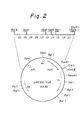
- Fig. 2 shows the restriction cleavage map of the plasmid pBR322-trpE.
- P L represents ⁇ phage promoter
- Ap is ampicillin resistance
- Tc is tetracycline resistance.
- the plasmid pBR322-trpE is partially digested with HpaI and totally with EcoRI to prepare a HpaI-EcoRI fragment containing trpE.
- a DNA fragment having a plurality of cloning sites is obtained.
- a plasmid pUC3 is digested with EcoRI and SaIl to obtain a 20 bp EcoRI-SalI fragment having a SmaI restriction site and a BamHI restriction site.
- At least one of the cloning sites is in phase with the trpE structural gene.
- a plasmid pBR322 is digested with EcoRI, treated with T4 DNA polymerase to form blunt ends, and digested with SalI to obtain a larger (EcoRI)-SalI fragment wherein (EcoRI) respresents the blunt end.
- the plasmid pBR322-trpEm contains the trp promoter/ operator sequence, the leader sequence and a portion of the trpE structural gene.
- the plasmid further has a plurality of cloning sites, namely, EcoRI, SmaI, BamHI and SalI sites, which are linked to the trpE gene.
- linked to herein means: the cloning sites are linked to the tr p E structural gene through a sequence which may code for up to 10 amino acids and contains no stop codon.
- the plasmid can be employed as an expression vector for a fused protein by utilizing the multipurpose cloning sites.
- a HaeIII fragment containing the base sequence coding for the amino acid sequence of cardionatrin is obtained from the DNA fragment pHANF66 shown in Fig. 4. Indeed, the DNA fragment is digested with PstI and then with HaeIII to prepare a 190 bp HaeIII fragment containing the gene coding for cardionatrin.
- the resultant fragment is inserted into the SmaI site of the pBR322-trpEm and used to transform an E. coli.
- a desired plasmid pBR322-trpEmANF Fig. 5.
- Culture of the transformant incorporating the plasmid pBR322-trpEmANF may produce stably and efficiently a fused protein of cardionatrin.
- a 301 bp fragment containing the sequence coding for cardiodilatin is obtained from a plasmid pHANF48: Nature, 310, 23, 699 (1984).
- the fragment is ligated with a methionine linker and digested with a restriction enzyme, HindIII, to obtain a 333 bp fragment.
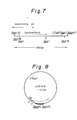
- the 333 bp fragment is ligated with a linker containing a ribosome binding sequence (RBS) shown in Fig. 6, and digested with a restriction enzyme, BamHI, to obtain a 365 bp fragment shown in Fig. 7.
- RBS ribosome binding sequence
- a plasmid pUCcd8 is obtained: Fig. 8.
- the plasmid pUCcd8 is partially digested with a restriction enzyme, AvaI, and ligated with a termination linker, namely Term linker: TGA ACT TAG ACT.
- AvaI restriction enzyme
- a termination linker namely Term linker: TGA ACT TAG ACT.
- a plasmid pDR540 purchased from P.L Biochemicals is digested with EcoRI and BamHI to prepare an approximately 370 bp fragment-
- the plasmid pUCcd8term is digested with ApaI and BamHI to obtain a 260 bp fragment.
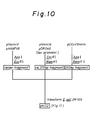
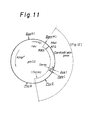
- the plasmid pHANF43 is digested EcoRI and ApaI to obtain a larger fragment. These three fragments are together ligated and used to transform an E. coli. There is obtained a desired expression plasmid, phCD: Fig. 11.
- the expression vector of the invention may be introduced into a host.
- a desired protein can be produced by culturing the transformed host in any conventional manner.
- the hosts which may be used in the invention include microorganisms, such as E. coli, yeast and the like, as well as animal cells.
- the protein produced according to the invention is a peptide, that is, cardionatrin represented by the following formula (IV) or cardiodilatin represented by the following formula (III), or a cardionatrin-like or cardiodilatin-like peptide having the same physiological activity as the cardionatrin or cardiodilatin.
- peptides may exhibit vasodilating (blood pressure depressant), Na + diuretic and other activities.
- Enzymes which were employed in the examples were obtained from New England Biolabs, Inc., USA or Takara Shuzo Co., Ltd., Japan and buffer solutions etc. were according to the manufacturer's recommendation.
- hybrid plasmid 400 ⁇ g derived from pBR322 and SV40 (0.71-0.86 map unit) was digested with KpnI at 37°C for 4 hours in a buffer solution containing bovine serum albumin. DNA was recovered by ethanol precipitation in a conventional manner.
- the DNA was dissolved in a buffer solution containing dTTP. Terminal deoxy nucleotidyl transferase was added and incubated at 37°C for 30 minutes. Thus, about 60 dT tail was added to KpnI site. DNA was then recovered by ethanol precipitation.
- the DNA was digested with H D aI at 37°C for 5 hours in a buffer solution containing bovine serum albumin.
- the larger DNA fragment was purified by agarose gel electrophoresis and recovered by glass powder method: Vogelstein et al., Proc. Natl. Acad. Sci. U.S.A., 76, 615-619 (1979).
- the DNA was applied to oligo(dA) cellulose column at 0°C, eluted with water, and recovered by ethanol precipitation.
- a hybrid plasmid derived from pBR322 and SV40 (0.19-0.32 map unit) was digested with PstI at 37°C for one hour and a half in a buffer solution containing bovine serum albumin. DNA was recovered and dissolved in a buffer solution containing dGTP. Terminal deoxy nucleotidyl transferase was added and incubated at 37°C for 20 minutes.
- the DNA containing about 10-15 dG tail was recovered and digested with HindIII at 37°C for one hour in a buffer solution containing bovine serum albumin. The DNA was subjected to 1.8% agarose gel electrophoresis.
- plasmid-cDNA:mRNA was synthesized. This was ethanol precipitated and recovered in the form of pellets.
- the pellets were dissolved in a buffer solution containing CoCl 2 , dithiothreitol, poly(A), [ 32 P]dCTP and terminal deoxy nucleotidyl transferase, and incubated at 37°C for 10 minutes.
- dCMP was added to both ends in an amount of 10-15 residues per each end.
- the recovered pellets containing the oligo(dC)-tailed plasmid-cDNA:mRNA were dissolved in a buffer solution containing bovine serum albumin, digested with HindIII at 37°C for one hour, and ethanol precipitated. Thus, HindIII-digested oligo(dC)-tailed cDNA:mRNA plasmid was recovered.
- the cDNA:mRNA plasmid was dissolved in a buffer solution containing the oligo(dG)-tailed linker DNA obtained in (2), incubated at 65°C for 2 minutes and then at 42°C for 30 minutes, and cooled to 0°C.
- E. coli DNA ligase was added in the presence of ⁇ -NAD (nicotinamide adenine dinucleotide) and incubated overnight. Thereafter, dATP, dTTP, dGTP, dCTP, ⁇ -NAD, E. coli DNA ligase, E. coli DNA polymerase and E. coli RNase H were added, incubated at 12°C for one hour and then at room temperature for one hour, and cooled to stop the reaction. Thus, the desired plasmid containing cDNA fragment was obtained.
- the plasmid was used to transform E. coli HB101 in a conventional manner.
- oligo I and II were used as a probe for screening the cDNA library. Twelve clones which hybridized with the probes were selected from 40,000 transformants, and cDNA fragments were extracted from the clones. The restriction enzyme map of the cDNA fragment was established and sequencing of the fragments, pHANF48 and pHANF66, was performed in accordance with the Maxam-Gilbert method: Methods in Enzymology, 65, 499-560 (1980).
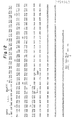
- Fig. 13 shows the base sequence of the cDNA fragment (pHANF48) and the amino acid sequence deduced therefrom, as well as the cleavage sites of restriction enzymes.
- the doubly framed sequence corresponds to cardiodilatin consisting of 72 amino acid residues and the singly framed sequence corresponds to cardionatrin.
- the DNA sequence of cardiodilatin was deduced from the fact that the number of amino acid residues was estimated at 72-75 from its molecular weight of 7,500, and also from the locations of arginines which are readily processed in the living body.
- the human-derived cardiodilatin As compared with the swine-derived cardiodilatin described in Anatomy and Embryology, 163, 307-313 (1983), the human-derived cardiodilatin has four different amino acids in the N-terminal sequence of 30 amino acids.
- Fig. 4 shows the base sequence of the DNA fragment pHANF66 and the amino acid sequence deduced therefrom, as well as the cleavage sites of restriction enzymes.
- the singly framed sequence corresponds to cardionatrin.
- Plasmid RSF2124-trp described in Gene, 1, 141-152 (1977) was digested with BalII at 37°C for one hour and electrophoresed on 1% agarose to obtain 2.3 kb BglII fragment.
- RF was taken from the transformant and digested with EcoRI at 37°C for one hour to obtain an EcoRI fragment.
- the EcoRI fragment contained tr p promoter/o p erator, leader sequence and a portion of trpE structural gene and had EcoRI sites at both ends.
- Plasmid pBR322 was digested with EcoRI at 37°C for one hour and ligated with the EcoRI fragment at 15°C for 14 hours in the presence of T4 DNA ligase.
- E. coli HB101 was transformed and a plasmid having EcoRI sites both upstream and downstream of the promoter (P T ) was obtained from the transformant (Fig. 1).
- the plasmid was partially digested with EcoRI at 37°C, incubated at 37°C for 30 minutes in the presence of T4 DNA polymerase and ligated at 15°C for 14 hours in the presence of T4 DNA ligase.
- E. coli HB101 was transformed and the desired plasmid pBR322-trpE was obtained (Fig. 1).
- This 6.6 kb plasmid had an EcoRI site downstream of P T .
- the restriction map of the plasmid is shown in Fi g . 2.
- the plasmid pBR322-trpE obtained in (Ia) was partially digested with HpaI at 37°C for 30 minutes and digested with EcoRI at 37°C for 2 hours. Thus, H p aI-EcoRI fragment containing trpE was obtained.
- Plasmid pUC8 was digested with EcoRI and SalI at 37°C for 2 hours to obtain a desired fragment containing a plurality of multipurpose cloning sites.
- Plasmid DNA was prepared from the transformant by Helensky's method: Biochemistry, 22, 4428-4440 (1970). Analysis of the base sequence of the DNA by the Maxam-Gilbert method confirmed the desired DNA, that is, plasmid pBR322- trpEm.
- the fragment pHANF66 (50 ⁇ g) obtained in Example 1 was digested with PstI at 37°C for 2 hours and subjected to polyacrylamide gel electrophoresis. About 700 bp fragment was extracted from the gel, digested with HaeIII at 37°C for 2 hours and subjected to polyacrylamide gel electrophoresis. A fragment (190 bp) was extracted (Fig. 5).
- Plasmid pBR322-trpEm (10 ⁇ g) was digested with SmaI at 37°C for 3 hours and treated with alkaline phosphatase (BAP) at 37°C for 30 minutes. These procedures were repeated twice (Fig. 5).
- E. coli transformed with plasmid pBR322-trpEmANF was cultured in M9CA medium (Molecular Cloning; Cold Spring Harbor Laboratories, 1982, p. 441).
- the culture medium was subjected to 10% SDS-polyacrylamide gel to analyze fused proteins.
- An expected band of a peptide consisting of 378 amino acid residues (about 40 kilo daltons) was confirmed in the gel stained by Coomassie Brilliant Blue R.
- the plasmid pHANF48 was digested with PvuII and Rsal to obtain 301 bp fragment containing the gene for cardiodilatin.
- the 301 bp fragment was ligated with methionine linker at 8°C for 14 hours in the presence of T4 DNA ligase and digested with HindIII at 37°C for 2 hours.
- the resulting 333 bp fragment was ligated with the linker of Fig. 6 containing the ribosome binding sequence at 8°C for 14 hours in the presence of T4 DNA ligase, and digested with BamHI at 37°C for 2 hours.
- 365 bp fragment shown in Fig. 7 was obtained.
- plasmid pUC8 was digested with BamHI at 37°C for 2 hours.
- the 365 b p fragment was inserted into this BamHI site.
- Plasmid pUCcd8 was digested with AvaI (partial) at 37°C for 30 minutes and ligated with the termination (Term) linker containing stop codons in the presence of T4 DNA ligase.
- plasmid pUCcd8term was obtained: Fig. 9.
- Plasmid pDR540 containing tac promoter was digested with EcoRI and BamHI at 37°C for 2 hours to obtain about 370 b p fragment: Fig. 10.
- the plasmid pUCcd8term was digested with ApaI and BamHI at 37°C for 2 hours to obtain 260 bp fragment: Fig. 10.
- pHANF48 was digested with ApaI and EcoRI to obtain a large fragment containing the ampicillin resistance gene: Fig. 10.
- E. coli JM105 transformed with the plasmid phCD was cultured in M9-CA medium. Production of a cardiodilatin-like peptide having a molecular weight of approximately 7,500 was confirmed by sequencing the N-terminal amino acids.
- amino acid sequence of the peptide is shown below:
Landscapes
- Health & Medical Sciences (AREA)
- Chemical & Material Sciences (AREA)
- Genetics & Genomics (AREA)
- Life Sciences & Earth Sciences (AREA)
- Organic Chemistry (AREA)
- Engineering & Computer Science (AREA)
- Zoology (AREA)
- Biochemistry (AREA)
- General Engineering & Computer Science (AREA)
- Biophysics (AREA)
- General Health & Medical Sciences (AREA)
- Bioinformatics & Cheminformatics (AREA)
- Biotechnology (AREA)
- Molecular Biology (AREA)
- Biomedical Technology (AREA)
- Wood Science & Technology (AREA)
- Gastroenterology & Hepatology (AREA)
- Physics & Mathematics (AREA)
- Proteomics, Peptides & Aminoacids (AREA)
- Medicinal Chemistry (AREA)
- Toxicology (AREA)
- Plant Pathology (AREA)
- Endocrinology (AREA)
- Microbiology (AREA)
- Cardiology (AREA)
- Preparation Of Compounds By Using Micro-Organisms (AREA)
Applications Claiming Priority (8)
| Application Number | Priority Date | Filing Date | Title |
|---|---|---|---|
| JP59073663A JPH064030B2 (ja) | 1984-04-12 | 1984-04-12 | Dna |
| JP73663/84 | 1984-04-12 | ||
| JP59128335A JPH064031B2 (ja) | 1984-06-21 | 1984-06-21 | Dna |
| JP128335/84 | 1984-06-21 | ||
| JP59170739A JPS6152289A (ja) | 1984-08-16 | 1984-08-16 | プラスミド |
| JP170739/84 | 1984-08-16 | ||
| JP59213897A JPS6192573A (ja) | 1984-10-12 | 1984-10-12 | Dnaフラグメント |
| JP213897/84 | 1984-10-12 |
Publications (3)
| Publication Number | Publication Date |
|---|---|
| EP0159943A2 true EP0159943A2 (fr) | 1985-10-30 |
| EP0159943A3 EP0159943A3 (en) | 1987-06-24 |
| EP0159943B1 EP0159943B1 (fr) | 1991-09-11 |
Family
ID=27465605
Family Applications (1)
| Application Number | Title | Priority Date | Filing Date |
|---|---|---|---|
| EP85400726A Expired EP0159943B1 (fr) | 1984-04-12 | 1985-04-11 | Vecteurs d'expression, fragments d'ADN, peptides, hôtes et procédé de production de protéines |
Country Status (3)
| Country | Link |
|---|---|
| US (1) | US4851349A (fr) |
| EP (1) | EP0159943B1 (fr) |
| DE (1) | DE3584029D1 (fr) |
Cited By (4)
| Publication number | Priority date | Publication date | Assignee | Title |
|---|---|---|---|---|
| DE3443257A1 (de) * | 1984-11-28 | 1986-05-28 | Bissendorf Peptide GmbH, 3002 Wedemark | Mittel enthaltend vollsynthetisches alpha-humanes atriales natriuretisches peptid (alpha-hanap) |
| EP0224676A1 (fr) * | 1985-10-08 | 1987-06-10 | Bissendorf Peptide GmbH | Médicament contenant de la cardiodilatine préparée par fermentation et procédé pour sa production |
| US4751284A (en) * | 1983-12-24 | 1988-06-14 | Organogen Medizinisch-Molekularbiologische Forschungsgesellschaft m.b.H | Cardiodilatin, a new peptide hormone and process for its preparation |
| EP0206769A3 (en) * | 1985-06-20 | 1988-12-28 | Fujisawa Pharmaceutical Co., Ltd. | A process for the production of alpha-human atrial natriuretic polypeptide |
Families Citing this family (5)
| Publication number | Priority date | Publication date | Assignee | Title |
|---|---|---|---|---|
| AU600652B2 (en) * | 1984-06-08 | 1990-08-23 | Hisayuki Matsuo | Human atrial natriuretic peptide and gene encoding same |
| DE102010032482A1 (de) | 2010-07-28 | 2012-02-02 | Justus-Liebig-Universität Giessen | Stoffe zur Beeinflussung der natriuretischen Peptid-Rezeptoren A und B und deren Verwendung |
| WO2012013597A1 (fr) | 2010-07-28 | 2012-02-02 | Justus-Liebig-Universität Giessen | Substances et utilisation desdites substances pour influer sur les récepteurs peptidiques natriurétiques |
| US20120277155A1 (en) | 2011-02-25 | 2012-11-01 | Medtronic, Inc. | Therapy for kidney disease and/or heart failure |
| EP2750697A4 (fr) | 2011-09-02 | 2015-03-25 | Medtronic Inc | Compositions de peptides natriurétiques chimériques et procédés de préparation |
Family Cites Families (2)
| Publication number | Priority date | Publication date | Assignee | Title |
|---|---|---|---|---|
| DE3588006T2 (de) * | 1984-04-19 | 1995-08-10 | Scios Nova Inc | Atrielle natriumuretische/gefässerweiterende polypeptide. |
| AU600652B2 (en) * | 1984-06-08 | 1990-08-23 | Hisayuki Matsuo | Human atrial natriuretic peptide and gene encoding same |
-
1985
- 1985-04-10 US US06/721,579 patent/US4851349A/en not_active Expired - Fee Related
- 1985-04-11 EP EP85400726A patent/EP0159943B1/fr not_active Expired
- 1985-04-11 DE DE8585400726T patent/DE3584029D1/de not_active Expired - Lifetime
Cited By (7)
| Publication number | Priority date | Publication date | Assignee | Title |
|---|---|---|---|---|
| US4751284A (en) * | 1983-12-24 | 1988-06-14 | Organogen Medizinisch-Molekularbiologische Forschungsgesellschaft m.b.H | Cardiodilatin, a new peptide hormone and process for its preparation |
| US4782044A (en) * | 1983-12-24 | 1988-11-01 | Organon-Medizinisch-Molekularbiologische Forschungsgellschaft M.B.H | Composition containing cordiodilatin or fragments thereof and methods of obtaining cardiodilatin |
| DE3443257A1 (de) * | 1984-11-28 | 1986-05-28 | Bissendorf Peptide GmbH, 3002 Wedemark | Mittel enthaltend vollsynthetisches alpha-humanes atriales natriuretisches peptid (alpha-hanap) |
| EP0182984A3 (en) * | 1984-11-28 | 1987-06-16 | Bissendorf Peptide Gmbh | Medicament containing fully synthetic alpha-human atrial natriuretic peptide (alpha-hanap) |
| EP0206769A3 (en) * | 1985-06-20 | 1988-12-28 | Fujisawa Pharmaceutical Co., Ltd. | A process for the production of alpha-human atrial natriuretic polypeptide |
| US6403336B1 (en) | 1985-06-20 | 2002-06-11 | Fujisawa Pharmaceutical Co., Ltd. | Process for the production of α-human atrial natriuretic polypeptide |
| EP0224676A1 (fr) * | 1985-10-08 | 1987-06-10 | Bissendorf Peptide GmbH | Médicament contenant de la cardiodilatine préparée par fermentation et procédé pour sa production |
Also Published As
| Publication number | Publication date |
|---|---|
| EP0159943A3 (en) | 1987-06-24 |
| US4851349A (en) | 1989-07-25 |
| DE3584029D1 (de) | 1991-10-17 |
| EP0159943B1 (fr) | 1991-09-11 |
Similar Documents
| Publication | Publication Date | Title |
|---|---|---|
| AU638277B2 (en) | Fusion proteins, their preparation and use | |
| US4582800A (en) | Novel vectors and method for controlling interferon expression | |
| DK172897B1 (da) | Fremgangsmåde til forbedring af translationseffektiviteten af en mikrobiel mRNA, der transkrivberes fra DNA, som koder for | |
| Williams et al. | Design, synthesis and expression of a human interteukin-2 gene incorporating the codon usage bias found in highly expressed Escherichia coli genes | |
| DE3786767T3 (de) | Neues Polypeptid. | |
| EP0104920B1 (fr) | Séquences d'ADN, molécules d'ADN recombinantes et procédés pour la production des polypeptides semblables à l'hormone de la croissance du porc | |
| WO1999016858A1 (fr) | Sequences de regulation de l'expression | |
| EP1114865B1 (fr) | Production d'une hormone humaine de parathyroide | |
| EP0159943A2 (fr) | Vecteurs d'expression, fragments d'ADN, peptides, hôtes et procédé de production de protéines | |
| US20030153049A1 (en) | Escherichia coli strain secreting human granulocyte colony stimulating factor (g-csf) | |
| US5260201A (en) | Methods and products for facile microbial expression of DNA sequences | |
| EP0146901B1 (fr) | Promoteur et son utilisation | |
| EP0134673B1 (fr) | Vecteur de plasmide et son utilisation | |
| EP0153961B1 (fr) | Substances recombinantes et procedes de production du peptide iii activant le tissu connectif humain et de ses analogues | |
| EP0136472A1 (fr) | Production de la sécrétine | |
| US5270180A (en) | Method for the production of salmon growth hormone using a synthetic gene | |
| DE69221708T2 (de) | Neue Translationsaktivierungssequenz | |
| Krawetz et al. | A vector-primer-cloner-sequencer plasmid for the construction of cDNA libraries: evidence for a rat glyceraldehyde-3-phosphate dehydrogenase-like mRNA and a ferritin mRNA within testis | |
| US5489529A (en) | DNA for expression of bovine growth hormone | |
| KR960010951B1 (ko) | 신규한 인간 상피세포 성장인자 유전자 | |
| KR920003664B1 (ko) | 합성유전자에 의한 효모세포로부터 소성장호르몬의 대량 제조방법 | |
| WO1988005079A1 (fr) | Procede de production de l'hormone de croissance du saumon par l'utilisation d'un gene synthetique | |
| EP0237913A1 (fr) | Séquences d'effecteur de transcription | |
| JPH05276978A (ja) | 利尿作用を有するポリペプチドの製造方法 | |
| JPH064031B2 (ja) | Dna |
Legal Events
| Date | Code | Title | Description |
|---|---|---|---|
| PUAI | Public reference made under article 153(3) epc to a published international application that has entered the european phase |
Free format text: ORIGINAL CODE: 0009012 |
|
| AK | Designated contracting states |
Designated state(s): CH DE FR GB IT LI SE |
|
| ITCL | It: translation for ep claims filed |
Representative=s name: SOCIETA' ITALIANA BREVETTI S.P.A. |
|
| PUAL | Search report despatched |
Free format text: ORIGINAL CODE: 0009013 |
|
| AK | Designated contracting states |
Kind code of ref document: A3 Designated state(s): CH DE FR GB IT LI SE |
|
| 17P | Request for examination filed |
Effective date: 19870921 |
|
| RAP1 | Party data changed (applicant data changed or rights of an application transferred) |
Owner name: MITSUBISHI KASEI CORPORATION |
|
| 17Q | First examination report despatched |
Effective date: 19890224 |
|
| GRAA | (expected) grant |
Free format text: ORIGINAL CODE: 0009210 |
|
| AK | Designated contracting states |
Kind code of ref document: B1 Designated state(s): CH DE FR GB IT LI SE |
|
| ITF | It: translation for a ep patent filed | ||
| REF | Corresponds to: |
Ref document number: 3584029 Country of ref document: DE Date of ref document: 19911017 |
|
| ET | Fr: translation filed | ||
| PLBE | No opposition filed within time limit |
Free format text: ORIGINAL CODE: 0009261 |
|
| STAA | Information on the status of an ep patent application or granted ep patent |
Free format text: STATUS: NO OPPOSITION FILED WITHIN TIME LIMIT |
|
| 26N | No opposition filed | ||
| EAL | Se: european patent in force in sweden |
Ref document number: 85400726.7 |
|
| PGFP | Annual fee paid to national office [announced via postgrant information from national office to epo] |
Ref country code: FR Payment date: 19980320 Year of fee payment: 14 |
|
| PGFP | Annual fee paid to national office [announced via postgrant information from national office to epo] |
Ref country code: SE Payment date: 19980323 Year of fee payment: 14 |
|
| PGFP | Annual fee paid to national office [announced via postgrant information from national office to epo] |
Ref country code: GB Payment date: 19980414 Year of fee payment: 14 |
|
| PGFP | Annual fee paid to national office [announced via postgrant information from national office to epo] |
Ref country code: CH Payment date: 19980422 Year of fee payment: 14 |
|
| PGFP | Annual fee paid to national office [announced via postgrant information from national office to epo] |
Ref country code: DE Payment date: 19980630 Year of fee payment: 14 |
|
| PG25 | Lapsed in a contracting state [announced via postgrant information from national office to epo] |
Ref country code: GB Free format text: LAPSE BECAUSE OF NON-PAYMENT OF DUE FEES Effective date: 19990411 |
|
| PG25 | Lapsed in a contracting state [announced via postgrant information from national office to epo] |
Ref country code: SE Free format text: LAPSE BECAUSE OF NON-PAYMENT OF DUE FEES Effective date: 19990412 |
|
| PG25 | Lapsed in a contracting state [announced via postgrant information from national office to epo] |
Ref country code: LI Free format text: LAPSE BECAUSE OF NON-PAYMENT OF DUE FEES Effective date: 19990430 Ref country code: CH Free format text: LAPSE BECAUSE OF NON-PAYMENT OF DUE FEES Effective date: 19990430 |
|
| GBPC | Gb: european patent ceased through non-payment of renewal fee |
Effective date: 19990411 |
|
| REG | Reference to a national code |
Ref country code: CH Ref legal event code: PL |
|
| PG25 | Lapsed in a contracting state [announced via postgrant information from national office to epo] |
Ref country code: FR Free format text: LAPSE BECAUSE OF NON-PAYMENT OF DUE FEES Effective date: 19991231 |
|
| EUG | Se: european patent has lapsed |
Ref document number: 85400726.7 |
|
| REG | Reference to a national code |
Ref country code: FR Ref legal event code: ST |
|
| PG25 | Lapsed in a contracting state [announced via postgrant information from national office to epo] |
Ref country code: DE Free format text: LAPSE BECAUSE OF NON-PAYMENT OF DUE FEES Effective date: 20000201 |