EP0165461A1 - Einspannvorrichtung für Häkelnadeln - Google Patents
Einspannvorrichtung für Häkelnadeln Download PDFInfo
- Publication number
- EP0165461A1 EP0165461A1 EP85105904A EP85105904A EP0165461A1 EP 0165461 A1 EP0165461 A1 EP 0165461A1 EP 85105904 A EP85105904 A EP 85105904A EP 85105904 A EP85105904 A EP 85105904A EP 0165461 A1 EP0165461 A1 EP 0165461A1
- Authority
- EP
- European Patent Office
- Prior art keywords
- needle
- clamping device
- needles
- shafts
- clamping
- Prior art date
- Legal status (The legal status is an assumption and is not a legal conclusion. Google has not performed a legal analysis and makes no representation as to the accuracy of the status listed.)
- Granted
Links
- 238000009945 crocheting Methods 0.000 title 1
- 125000006850 spacer group Chemical group 0.000 claims abstract description 18
- 239000002184 metal Substances 0.000 claims description 3
- 229910052751 metal Inorganic materials 0.000 claims description 3
- 230000037431 insertion Effects 0.000 claims description 2
- 238000003780 insertion Methods 0.000 claims description 2
- 230000015572 biosynthetic process Effects 0.000 abstract 1
- XEEYBQQBJWHFJM-UHFFFAOYSA-N Iron Chemical compound [Fe] XEEYBQQBJWHFJM-UHFFFAOYSA-N 0.000 description 2
- 238000003801 milling Methods 0.000 description 2
- 229910000831 Steel Inorganic materials 0.000 description 1
- 229910052742 iron Inorganic materials 0.000 description 1
- 239000010959 steel Substances 0.000 description 1
Images
Classifications
-
- D—TEXTILES; PAPER
- D04—BRAIDING; LACE-MAKING; KNITTING; TRIMMINGS; NON-WOVEN FABRICS
- D04B—KNITTING
- D04B27/00—Details of, or auxiliary devices incorporated in, warp knitting machines, restricted to machines of this kind
- D04B27/06—Needle bars; Sinker bars
Definitions
- the present invention relates to a clamping device for crochet needles (hereinafter also simply called “needles”).
- needles Such jigs are such.
- B. used for crochet gallon machines, as is apparent from EP-OS 110 271 (28-71f-ep) of the same applicant.
- the jig can also be used with Raschel machines. In any case, it is attached to the needle bar of one of these machines.
- the present invention solves the problem of clamping more than 10 needles per centimeter width in two different ways.
- spacer plates are arranged between the needle shafts.
- each individual needle can be replaced individually.
- the result of the support strips and spacer sheets is a comb-like structure in which the shafts of the needles can be inserted individually. Since it is not difficult to use very thin spacer plates, the limit on the number of needles that can be accommodated per centimeter width only results from the necessary thickness of the needle shafts and the necessary mutual distances between the working areas of the needles.
- Groups of support strips and spacer plates are accommodated in one main part, and a single needle can be easily replaced after the tensioning parts have been released.
- grooves are also milled. However, these grooves have only a very small depth, so that there is no longer any risk of damage to the webs remaining between the grooves.
- Opposite grooves are used to securely clamp the needle shafts, one of which is provided in one main part, the other, opposite, in the other main part. These grooves encompass only a small part of the height of the needle shafts, in any case substantially less than half the height of a needle shaft, so that the majority of the needle shafts lie outside the grooves.
- the inertial mass of the clamping device is reduced, which is to be accelerated back and forth during the back and forth movement of the needle bar.
- the working speed of the machines can be increased in this way.
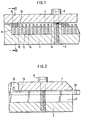
- the clamping device according to FIGS. 1 and 2 has two main parts made of light metal, namely a lower part 2 and a clamping cover 4.
- the clamping parts which serve to tighten the clamping cover 4 against the lower part 2 are screw bolts 6 which pass through a cylindrical opening in the clamping cover 4 engage in a threaded hole 8 in the lower part.
- the lower part has recesses 10 in the form of channels of rectangular cross section.
- a group of support strips 12 is accommodated in each recess. The outermost are supported on the side walls 14 of the recesses 10.
- the support strips have a lower height than the spacer plates, so that a comb-like structure with needle beds 18 is created.
- the support strips 12 have the same thickness as the shafts 20 of the needles to be clamped.
- the thicknesses of the needle shafts 20, the support strips 12 and the spacer plates 16 and the width of the recesses 10 are dimensioned such that a whole number of support strips and needle shafts press fit into the recesses, with a needle shaft lying on the outside of the side walls 14.
- the needles 20 have a curved end 22 and are clamped in such a way that this end abuts the back of the clamping cover 4. As a result, all are aligned in the simplest manner in their longitudinal direction. This also makes it easy to replace and align individual needles.
- the spacer plates and the support strips can be glued together. This arrangement makes it possible to replace a single needle after loosening the clamping cover, but to leave all others intact in their needle bed 18.
- the clamping device is very simple and can be manufactured at low cost. Parts for attachment to the needle bar of a crochet gallon or Raschel machine have not been shown here, but are known per se.
- Two numerical examples are intended to illustrate that, according to the invention, a relatively large number of needles per centimeter width of a recess 10 can be accommodated.
- the heights of the parts to be accommodated in a recess can, for. B. have the following values:
- the support strips and spacers can be made of soft iron or steel. It is important that they have the same thickness throughout their length.
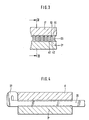
- the clamping device in turn has a lower part 2 'and a clamping cover 4'. Both can be clamped together using bolts not shown here.
- Very flat grooves 40 are milled into the lower part, between which webs 42 of a substantially smaller width than that of the grooves remain.
- Grooves 44 of the same dimensions are milled into the clamping cover 4 ', between which webs 46 of the same width remain as in the lower part.
- the depth of the grooves 40 and 44 is substantially less than half the height of the needle shafts 20, so that the needle shafts are exposed over most of their height.
- the grooves are milled with a set milling cutter, and all grooves for a group of needles at the same time. Given the shallow depth of the grooves, there is no risk of damaging the webs 46.
- the widths of the webs can have the same values as those given above for the thickness of the spacer plates.
- the rear ends 22 of the needles 20 in turn abut the rear end of the clamping cover 4 '. This in turn enables the alignment of each needle pack, both after the first insertion of the needles and after the replacement of individual needles.
- the screw bolts 6 can be loosened to replace individual needles, but without removing them, then pulling individual needles out backwards and inserting new ones, aligning the needle packs against the clamping covers 4 or 4 ′ and tightening the screw bolts again.
Landscapes
- Textile Engineering (AREA)
- Engineering & Computer Science (AREA)
- Knitting Machines (AREA)
- Clamps And Clips (AREA)
- Fluid-Damping Devices (AREA)
- Impact Printers (AREA)
- Load-Engaging Elements For Cranes (AREA)
- Gripping Jigs, Holding Jigs, And Positioning Jigs (AREA)
- Preliminary Treatment Of Fibers (AREA)
- Surgical Instruments (AREA)
- Sheet Holders (AREA)
- Electrical Discharge Machining, Electrochemical Machining, And Combined Machining (AREA)
- Processing Of Solid Wastes (AREA)
- Massaging Devices (AREA)
- Body Structure For Vehicles (AREA)
- Hooks, Suction Cups, And Attachment By Adhesive Means (AREA)
- Looms (AREA)
- Vehicle Body Suspensions (AREA)
- Orthopedics, Nursing, And Contraception (AREA)
- Nitrogen And Oxygen Or Sulfur-Condensed Heterocyclic Ring Systems (AREA)
- Advancing Webs (AREA)
- Adornments (AREA)
- Mechanical Means For Catching Fish (AREA)
- Greenhouses (AREA)
- Undergarments, Swaddling Clothes, Handkerchiefs Or Underwear Materials (AREA)
- Slide Fasteners, Snap Fasteners, And Hook Fasteners (AREA)
- Control Of Combustion (AREA)
- Magnetically Actuated Valves (AREA)
- Jigs For Machine Tools (AREA)
- Basic Packing Technique (AREA)
- Supports Or Holders For Household Use (AREA)
Abstract
Description
- Die vorliegende Erfindung bezieht sich auf eine Einspannvorrichtung für Häkelnadeln (im folgenden auch einfach "Nadeln" genannt). Derartige Einspannvorrichtungen werden z. B. für Häkelgalonmaschinen verwendet, wie es sich aus der EP-OS 110 271 (28-71f-ep) derselben Anmelder ergibt. Die Einspannvorrichtung kann aber auch bei Raschelmaschinen verwendet werden. In jedem Falle wird sie an der Nadelbarre einer dieser Maschinen angebracht.
- Es besteht ein Bedarf, Bänder mit 10 oder mehr Fäder je Zentimeter Breite auf Häkelgalon- oder Raschelmaschinen herzustellen. Besondere Bedeutung hat dies für elastische Bänder, wie sie für Unterwäsche und Sportwäsche benötigt werden.
- Aus der US-PS 4 137 730 ist es bekannt, in einer Einspannvorrichtung eine Gruppe von Häkelnadeln einzuspannen, wobei für die gegenseitigen Abstände zwischen den Häkelnadeln Distanzbleche sorgen. Hierdurch lassen sich Nadeln zwar dicht nebeneinander einspannen. Ist es jedoch später erforderlich, eine zerbrochene Nadel auszuwechseln, so muß die ganze Nadelgruppe aufgelöst und nach dem Austausch der einen Nadel wieder erneut sorgfältig zusammengesetzt werden. Dies bedeutet einen erheblichen Zeitaufwand.
- Andererseits ist es aus der US-PS 3 823 581-bekannt, in den einen Hauptteil der Einspannvorrichtung dicht nebeneinander Nuten einzufräsen, von denen jede den Schaft einer Nadel aufnimmt. Ähnliches ist aus der oben genannten EP-05 Figur 8 und 9 bekannt. Die Nuten haben zumindest annähernd die Höhe der Nadelschäfte. Dem Einfräsen einer größeren Anzahl von Nuten je Zentimeter Breite eines der Hauptteile der Einspannvorrichtung sind Grenzen gesetzt. Wird die Anzahl der Nuten auf über 10 je Zentimeter Breite erhöht; so ergeben sich schließlich Stege zwischen den Nuten von 0,2 oder weniger mm Breite. Dies läßt sich auch nicht durch Verwendung dünnerer Nadeln vermeiden, denn die Nadeln müssen eine bestimmte Stabilität haben, so daß die Verwendung von Nadeln unterhalb von 0,4 mm Breite unzweckmäßig ist.
- Werden zum Einfräsen der Nuten Satzfräser verwendet, so kann man zwar eine Gruppe nebeneinanderliegender Nuten in einem Arbeitsgang herstellen. Selbst dann ist es aber technisch nicht möglich, Nuten mit dazwischen verbleibenden Stegen von 0,2 oder weniger mm herzustellen, ohne daß dabei relativ viel Ausschuß durch zerbrochene Stege entsteht.
- Durch die vorliegende Erfindung wird das Problem, mehr als 10 Nadeln je Zentimeter Breite einzuspannen, auf prinzipiell zwei verschiedene Weisen gelöst.
- Nach Anspruch 1 werden, ebenso wie nach der US-PS 4 137 730 zwischen den Nadelschäften Distanzbleche angeordnet. Es wird aber dafür gesorgt, daß jede einzelne Nadel für sich ausgetauscht werden kann. Dies wird dadurch erreicht, daß zwischen die Distanzbleche nicht nur die Nadelschäfte selbst sondern außerdem Stützstreifen eingefügt werden. Es ergibt sich somit aus Stützstreifen und Distanzblechen ein kammartiges Gebilde, in das die Schäfte der Nadeln einzeln eingelegt werden können. Da es keine Schwierigkeiten bereitet, sehr dünne Distanzbleche zu verwenden, ergibt sich die Grenze der Anzahl von Nadeln, die je Zentimeter Breite unterzubringen sind, nur noch aus der notwendigen Dicke der Nadelschäfte und-den notwendigen gegenseitigen Abständen der Arbeitsbereiche der Nadeln.
- Es werden jeweils Gruppen von Stützstreifen und Distanzblechen in dem einen Hauptteil untergebracht, und es läßt sich nach Lösung der Spannteile ohne weiteres eine einzelne Nadel auswechseln.
- Werden nach Anspruch 2 die Stützstreifen und die Distanzbleche miteinander verklebt, so erhöht sich die Sicherheit, daß beim Auswechseln einer Nadel nicht andere Teile verschoben werden.
- Eine andere Lösung desselben Problems ergibt sich aus Anspruch 4. Hiernach werden zwar ebenfalls Nuten gefräst. Diese Nuten haben aber nur eine sehr geringe Tiefe, so daß die Gefahr einer Beschädigung der zwischen den Nuten verbleibenden Stege nicht mehr besteht. Zum sicheren Einspannen der Nadelschäfte dienen einander gegenüberliegende Nuten, von denen die einen in dem einen Hauptteil, die anderen, gegenüberliegend, in dem anderen Hauptteil vorgesehen sind. Diese Nuten umgreifen nur einen geringen Teil der Höhe der Nadelschäfte, jedenfalls wesentlich weniger als die halbe Höhe eines Nadelschafts, so daß der größte Teil der Nadelschäfte außerhalb der Nuten liegt.
- Werden nach Anspruch 5 die Hauptteile aus Leichtmetall gefertigt, so wird die träge Masse der Einspannvorrichtung verringert, die bei der Hin- und Herbewegung der Nadelbarre ständig hin und her zu beschleunigen ist. Es kann so die Arbeitsgeschwindigkeit der Maschinen erhöht werden.
- Ausführungsbeispiele mit weiteren Merkmalen der Erfindung werden im folgenden anhand der Zeichnungen beschrieben.
- Figur 1 ist ein Schnitt quer zur Längsrichtung der Nadeln durch eine erste Ausführungsform einer Einspannvorrichtung nach der Erfindung nach Linie I-I in Figur 2.
- Figur 2 ist ein Schnitt nach Linie II-II in Figur 1, d. h. parallel zur Längsrichtung der Nadeln.
- Figur 3 ist ein Schnitt entsprechend Figur 1 durch eine zweite Ausführungsform einer Einspannvorrichtung nach der Erfindung nach Linie IV-IV in Figur 4.
- Figur 4 ist ein Schnitt nach Linie IV-IV in Figur 3, d. h. parallel zur Längsrichtung der Nadeln.
- Die Einspannvorrichtung nach Figur 1 und 2 hat zwei aus Leichtmetall gefertigte Hauptteile, nämlich einen Unterteil 2 und einen Klemmdeckel 4. Als Spannteile, die zum Festziehen des Klemmdeckels 4 gegen den Unterteil 2 dienen, fungieren hier Schraubbolzen 6, die durch eine zylindrische Öffnung des Klemmdeckels 4 in eine Gewindebohrung 8 des Unterteils greifen. Der Unterteil hat Ausnehmungen 10 in Form von Rinnen von rechteckigem Querschnitt. In jeder Ausnehmung ist eine Gruppe von Stützstreifen 12 untergebracht. Die äußersten stützen sich an den Seitenwandungen 14 der Ausnehmungen 10 ab. Zwischen je zwei Stützstreifen befindet sich ein Distanzblech 16. Die Stützstreifen haben eine geringere Höhe als die Distanzbleche, so daß ein kammartiges Gebilde mit Nadelbetten 18 entsteht. Di-e Stützstreifen 12 haben die gleiche Dicke wie die Schäfte 20 der einzuspannenden Nadeln.
- Die Dicken der Nadelschäfte 20, der Stützstreifen 12 und der Distanzbleche 16 sowie die Breite der Ausnehmungen 10 werden so bemessen, daß eine ganze Anzahl von Stützstreifen und Nadelschäften unter Preßpassung in die Ausnehmungen hineinpaßt, wobei jeweils ganz außen an den Seitenwandungen 14 ein Nadelschaft liegt.
- Die Nadeln 20 haben ein gekrümmtes Ende 22 und sind so eingespannt, daß dieses Ende gegen die Rückseite des Klemmdeckels 4 stößt. Dadurch sind alle in ihrer Längsrichtung in einfachster Weise ausgerichtet. Dies ermöglicht auch das einfache Auswechseln und Ausrichten einzelner Nadeln.
- Die Distanzbleche und die Stützstreifen können miteinander verklebt sein. Diese Anordnung ermöglicht es, nach dem Lösen des Klemmdeckels eine einzelne Nadel auszuwechseln, alle anderen aber unangetastet in ihrem Nadelbett 18 liegenzulassen.
- Wie die Figuren 1 und 2 zeigen, ist die Einspannvorrichtung sehr einfach aufgebaut und kann mit geringen Kosten hergestellt werden. Teile zur Befestigung an der Nadelbarre einer Häkelgalon-oder Raschelmaschine wurden hier nicht dargestellt, sind aber an sich bekannt.
- Zwei Zahlenbeispiele sollen veranschaulichen, daß nach der Erfindung relativ viele Nadeln je Zentimeter Breite einer Ausnehmung 10 untergebracht werden können.

- Die Höhen der in einer Ausnehmung unterzubringenden Teile können z. B. folgende Werte haben:

- Die Stützstreifen und die Distanzbleche können aus weichem Eisen bestehen oder aus Stahl. Wichtig ist, daß sie über ihre Länge durchgehend gleiche Dicken behalten.
- Bei der Ausführungsform nach Figur 3 und 4 hat die Klemmvorrichtung wiederum einen Unterteil 2' und einen Klemmdeckel 4'. Beide können durch hier nicht gezeigte Schraubbolzen miteinander verspannt werden. In den Unterteil sind sehr flache Nuten 40 eingefräst, zwischen denen Stege 42 von wesentlich geringerer Breite als die der Nuten verbleiben. In den Klemmdeckel 4' sind Nuten 44 gleicher Abmessungen gefräst, zwischen denen Stege 46 gleicher Breite wie im Unterteil stehen bleiben. Die Tiefe der Nuten 40 und 44 ist wesentlich kleiner als die halbe Höhe der Nadelschäfte 20, so daß die Nadelschäfte über den größten Teil ihrer Höhe freiliegen.
- Die Nuten werden mit einem Satzfräser eingefräst, und zwar jeweils alle Nuten für eine Gruppe von Nadeln gleichzeitig. Bei der geringen Tiefe der Nuten ist keine Beschädigung der Stege 46 zu befürchten.
- Die Breiten der Stege können die gleichen Werte haben wie sie oben für die Dicken der Distanzbleche angegeben wurden.
- Die rückwärtigen Enden 22 der Nadeln 20 stoßen wiederum an das rückwärtige Ende des Klemmdeckels 4'. Dies ermöglicht wiederum das Ausrichten jedes Nadelpakets, sowohl nach dem ersten Einlegen der Nadeln wie auch nach dem Auswechseln einzelner Nadeln.
- Auch bei dieser Ausführungsform sind als Spannteile Schraubbolzen vorgesehen, die jedoch der Einfachheit halber nicht dargestellt wurden.
- Bei beiden Ausführungsformen kann man zum Auswechseln einzelner Nadeln die Schraubbolzen 6 lösen, ohne sie aber zu entfernen, dann einzelne Nadeln rückwärts herausziehen und neue einschieben, die Nadelpakete gegen die Klemmdeckel 4 bzw. 4' ausrichten und die Schraubbolzen wieder festziehen.
-
- 2, 2' Unterteil = Hauptteil
- 4, 4' Klemmdeckel = Hauptteil
- 6 Schraubbolzen
- 8 Gewindebohrung
- 10 Ausnehmung
- 12 Stützstreifen
- 14 Seitenwandung
- 16 Distanzblech
- 18 Nadelbett
- 20 (Nadel-) Schaft
- 22 Ende der Nadel
- 40, 44 Nut
- 42, 46 Steg
Claims (5)
- Einspannvorrichtung für Häkelnadeln (Nadeln) zur Befestigung an der Nadelbarre einer Häkelgalon- oder Raschelmaschine mit folgenden Merkmalen:a) Die Einspannvorrichtung hat zwei durch Spannteile gegeneinanderklemmbare Hauptteile, von denen der eine an der Nadelbarre zu befestigen ist;b) der eine Hauptteil dient zur Aufnahme der Nadelschäfte;c) es sind Distanzbleche vorgesehen, die zwischen die Nadelschäfte einzufügen sind,
gekennzeichnet durch folgende Merkmale:d) der eine Hauptteil (2) hat Ausnehmungen (10) für je eine Gruppe von Nadeln;e) Stützstreifen (12) von der Dicke der Nadelschäfte (20) sind zum Einfügen einerseits zwischen die Distanzbleche (16), andererseits zwischen die Böden der Ausnehmungen (10) und die Nadelschäfte vorgesehen.
(Figur 1 und 2) - 2. Einspannvorrichtung nach Anspruch 1 oder 2, dadurch gekennzeichnet, daß die Stützstreifen (12) und die Distanzbleche (16) miteinander verklebt sind.
- 3. Einspannvorrichtung nach Anspruch 1, gekennzeichnet durch folgende Merkmale:a) Die Ausnehmungen (10) haben die Form von Rinnen mit rechteckigem Querschnitt;b) die Seitenwandungen (14) der Ausnehmungen dienen zum seitlichen Abstützen je eines weiteren Stützstreifens (12) und des Schaftes (20) je einer weiteren Nadel.
- 4. Einspannvorrichtung für Häkelnadeln (Nadeln) zur Befestigung an der Nadelbarre einer Häkelgalon- oder Raschelmaschine mit folgenden Merkmalen:a) Die Einspannvorrichtung hat zwei durch Spannteile gegeneinanderklemmbare Hauptteile, von denen der eine an der Nadelbarre zu befestigen ist;b) die Einspannvorrichtung hat Nuten zur Aufnahme je eines Schaftes der Nadeln,
gekennzeichnet durch folgende Merkmale:c) Die Nuten (40, 44) sind in beiden Hauptteilen einander gegenüberliegend angeordnet und haben eine Tiefe, die nur einen Bruchteil der halben Höhe der Nadelschäfte (20) beträgt. - 5. Einspannvorrrichtung nach einem der vorangehenden Ansprüche, dadurch gekennzeichnet, daß die Hauptteile aus Leichtmetall gefertigt sind.
Priority Applications (2)
| Application Number | Priority Date | Filing Date | Title |
|---|---|---|---|
| DE8787105158T DE3574033D1 (en) | 1984-06-02 | 1985-05-14 | Clamping device for needles |
| AT85105904T ATE33859T1 (de) | 1984-06-02 | 1985-05-14 | Einspannvorrichtung fuer haekelnadeln. |
Applications Claiming Priority (2)
| Application Number | Priority Date | Filing Date | Title |
|---|---|---|---|
| DE3420693 | 1984-06-02 | ||
| DE3420693A DE3420693A1 (de) | 1984-06-02 | 1984-06-02 | Einspannvorrichtung fuer haekelnadeln |
Related Child Applications (1)
| Application Number | Title | Priority Date | Filing Date |
|---|---|---|---|
| EP87105158.7 Division-Into | 1985-05-14 |
Publications (2)
| Publication Number | Publication Date |
|---|---|
| EP0165461A1 true EP0165461A1 (de) | 1985-12-27 |
| EP0165461B1 EP0165461B1 (de) | 1988-04-27 |
Family
ID=6237535
Family Applications (2)
| Application Number | Title | Priority Date | Filing Date |
|---|---|---|---|
| EP87105158A Expired EP0244656B1 (de) | 1984-06-02 | 1985-05-14 | Einspannvorrichtung für Nadeln |
| EP85105904A Expired EP0165461B1 (de) | 1984-06-02 | 1985-05-14 | Einspannvorrichtung für Häkelnadeln |
Family Applications Before (1)
| Application Number | Title | Priority Date | Filing Date |
|---|---|---|---|
| EP87105158A Expired EP0244656B1 (de) | 1984-06-02 | 1985-05-14 | Einspannvorrichtung für Nadeln |
Country Status (23)
| Country | Link |
|---|---|
| US (1) | US4571961A (de) |
| EP (2) | EP0244656B1 (de) |
| JP (2) | JPS60259660A (de) |
| AT (2) | ATE47730T1 (de) |
| AU (1) | AU573346B2 (de) |
| BR (1) | BR8502628A (de) |
| CA (1) | CA1253708A (de) |
| CS (1) | CS264330B2 (de) |
| DD (1) | DD239429A5 (de) |
| DE (3) | DE3420693A1 (de) |
| DK (1) | DK158840C (de) |
| ES (1) | ES287144Y (de) |
| FI (1) | FI80483C (de) |
| GR (1) | GR851329B (de) |
| HU (1) | HU207877B (de) |
| IE (1) | IE56559B1 (de) |
| IL (1) | IL75385A (de) |
| MX (1) | MX164361B (de) |
| NO (1) | NO160089C (de) |
| PL (1) | PL144327B1 (de) |
| PT (1) | PT80535B (de) |
| TR (1) | TR22415A (de) |
| ZA (2) | ZA854129B (de) |
Cited By (1)
| Publication number | Priority date | Publication date | Assignee | Title |
|---|---|---|---|---|
| WO1995000690A1 (de) * | 1993-06-24 | 1995-01-05 | Berger Gmbh | Vorrichtung zum einspannen und führen von häkelnadeln für eine häkelmaschine |
Families Citing this family (7)
| Publication number | Priority date | Publication date | Assignee | Title |
|---|---|---|---|---|
| DE4131809A1 (de) * | 1991-09-24 | 1993-03-25 | Berger Gmbh | Vorrichtung zum einspannen und fuehren von haekelnadeln fuer eine haekelmaschine |
| DE19618368B4 (de) * | 1996-05-08 | 2005-11-24 | Karl Mayer Textilmaschinenfabrik Gmbh | Anordnung aus Fadenführungselementen einer Kettenwirk- oder Strickmaschine und einem Träger |
| DE502006003709D1 (de) * | 2006-01-25 | 2009-06-25 | Groz Beckert Kg | Wirknadel und Barre für diese |
| EP1988199B1 (de) * | 2007-05-03 | 2009-10-28 | Groz-Beckert KG | Wirkmaschinenwerkzeug, insbesondere für feinste Teilung |
| JP6595919B2 (ja) * | 2016-01-06 | 2019-10-23 | 大森機械工業株式会社 | 製函機 |
| EP3354782B1 (de) * | 2017-01-25 | 2019-08-07 | Karl Mayer Textilmaschinenfabrik GmbH | Wirkwerkzeugbarre und verfahren zum montieren von wirkwerkzeugen |
| CN116949659B (zh) * | 2023-03-02 | 2025-09-16 | 陕西可利雅纺织科技有限公司 | 一种经编机的导纱针调节机构 |
Citations (3)
| Publication number | Priority date | Publication date | Assignee | Title |
|---|---|---|---|---|
| FR2229255A5 (en) * | 1973-05-08 | 1974-12-06 | Inst Textile De France | Needle or platen guiding device - for hosiery looms, with stack of needle gates and sepg. walls |
| DE3012647A1 (de) * | 1980-04-01 | 1981-10-08 | Société de Developpement Mécanique et Textile SODEMETEX S.A., Saint Just Malmont | Nadelschiene fuer textilmaschinen, insbesondere kettenwirkmaschinen |
| GB2099861A (en) * | 1981-05-29 | 1982-12-15 | Textima Veb K | Holder for retaining the knitting needles in a warp knitting machine |
Family Cites Families (11)
| Publication number | Priority date | Publication date | Assignee | Title |
|---|---|---|---|---|
| US2384451A (en) * | 1941-10-07 | 1945-09-11 | Textile Machine Works | Sinker head for knitting machines |
| DE813741C (de) * | 1949-09-02 | 1951-09-17 | Arthur G Scholte | Hochleistungskettenwirkmaschine |
| GB788764A (en) * | 1955-02-23 | 1958-01-08 | Karl Mayer Erste Hessische Wir | Improvements in or relating to needle bars for warp knitting machines |
| DE1746643U (de) * | 1956-02-08 | 1957-06-13 | Arwa Feinstrumpfwirkerei G M B | Nadelbarre fuer flachwirkmaschinen. |
| US2914094A (en) * | 1958-03-18 | 1959-11-24 | Whitaker Reed Company | Loom reed having removable dents |
| US2995911A (en) * | 1959-12-10 | 1961-08-15 | Textile Machine Works | Element mounting means for straight bar knitting machines |
| US3811298A (en) * | 1972-04-10 | 1974-05-21 | K Kohl | Mounting support for the knitting needle of a warp knitting machine |
| US3823581A (en) * | 1973-02-02 | 1974-07-16 | C Russo | Knitting machine needle holder |
| US4137730A (en) * | 1978-04-20 | 1979-02-06 | Bassist Rudolf G | Needle support assembly for a knitting machine |
| DD139140A1 (de) * | 1978-10-11 | 1979-12-12 | Dietmar Baumgaertel | Halterung fuer wirknadeln |
| FR2444740A1 (fr) * | 1978-12-18 | 1980-07-18 | Dev Meca Textile | Dispositif de barre a aiguilles pour notamment metier maille, machine a guiper, etc. |
-
1984
- 1984-06-02 DE DE3420693A patent/DE3420693A1/de not_active Withdrawn
-
1985
- 1985-05-14 DE DE8585105904T patent/DE3562394D1/de not_active Expired
- 1985-05-14 EP EP87105158A patent/EP0244656B1/de not_active Expired
- 1985-05-14 AT AT87105158T patent/ATE47730T1/de not_active IP Right Cessation
- 1985-05-14 EP EP85105904A patent/EP0165461B1/de not_active Expired
- 1985-05-14 DE DE8787105158T patent/DE3574033D1/de not_active Expired
- 1985-05-14 AT AT85105904T patent/ATE33859T1/de not_active IP Right Cessation
- 1985-05-23 FI FI852063A patent/FI80483C/fi not_active IP Right Cessation
- 1985-05-24 US US06/737,457 patent/US4571961A/en not_active Expired - Lifetime
- 1985-05-28 TR TR26282A patent/TR22415A/xx unknown
- 1985-05-28 PT PT80535A patent/PT80535B/pt not_active IP Right Cessation
- 1985-05-29 AU AU43120/85A patent/AU573346B2/en not_active Ceased
- 1985-05-30 DK DK241985A patent/DK158840C/da not_active IP Right Cessation
- 1985-05-30 ES ES1985287144U patent/ES287144Y/es not_active Expired
- 1985-05-30 GR GR851329A patent/GR851329B/el unknown
- 1985-05-30 ZA ZA854129A patent/ZA854129B/xx unknown
- 1985-05-30 MX MX205468A patent/MX164361B/es unknown
- 1985-05-30 DD DD85276811A patent/DD239429A5/de not_active IP Right Cessation
- 1985-05-30 ZA ZA854128A patent/ZA854128B/xx unknown
- 1985-05-31 CA CA000482941A patent/CA1253708A/en not_active Expired
- 1985-05-31 BR BR8502628A patent/BR8502628A/pt not_active IP Right Cessation
- 1985-05-31 CS CS853926A patent/CS264330B2/cs unknown
- 1985-05-31 HU HU852124A patent/HU207877B/hu not_active IP Right Cessation
- 1985-05-31 IE IE1356/85A patent/IE56559B1/en not_active IP Right Cessation
- 1985-05-31 NO NO852194A patent/NO160089C/no unknown
- 1985-05-31 PL PL1985253735A patent/PL144327B1/pl unknown
- 1985-06-02 IL IL75385A patent/IL75385A/xx not_active IP Right Cessation
- 1985-06-03 JP JP60118995A patent/JPS60259660A/ja active Granted
-
1991
- 1991-08-27 JP JP23889191A patent/JPH0726299B2/ja not_active Expired - Lifetime
Patent Citations (3)
| Publication number | Priority date | Publication date | Assignee | Title |
|---|---|---|---|---|
| FR2229255A5 (en) * | 1973-05-08 | 1974-12-06 | Inst Textile De France | Needle or platen guiding device - for hosiery looms, with stack of needle gates and sepg. walls |
| DE3012647A1 (de) * | 1980-04-01 | 1981-10-08 | Société de Developpement Mécanique et Textile SODEMETEX S.A., Saint Just Malmont | Nadelschiene fuer textilmaschinen, insbesondere kettenwirkmaschinen |
| GB2099861A (en) * | 1981-05-29 | 1982-12-15 | Textima Veb K | Holder for retaining the knitting needles in a warp knitting machine |
Cited By (1)
| Publication number | Priority date | Publication date | Assignee | Title |
|---|---|---|---|---|
| WO1995000690A1 (de) * | 1993-06-24 | 1995-01-05 | Berger Gmbh | Vorrichtung zum einspannen und führen von häkelnadeln für eine häkelmaschine |
Also Published As
Similar Documents
| Publication | Publication Date | Title |
|---|---|---|
| DE4421388C2 (de) | Nadelbefestigungsvorrichtung für Wirkmaschinen | |
| DE2848554C2 (de) | Stanzwerkzeug | |
| DE2245215C3 (de) | Fadenleiter | |
| EP0165461B1 (de) | Einspannvorrichtung für Häkelnadeln | |
| EP0320869A2 (de) | Hilfsvorrichtung zum Zinkenfräsen | |
| EP2048271A1 (de) | Wirkwerkzeuganordnung und Wirkwerkzeugverbund | |
| DE2745793C3 (de) | Tufting-Maschine | |
| EP0591470B1 (de) | Vorrichtung zum einspannen und führen von häkelnadeln für eine häkelmaschine | |
| CH695346A5 (de) | Kettenwirkmaschine mit mehreren Musterlegebarren. | |
| EP0221340A1 (de) | Halterahmen für Gattermesser | |
| DE19733578A1 (de) | Biegemaschine zum mehrseitigen Biegen | |
| DE2940635C2 (de) | Profilstahlschere, -stanze o.dgl. | |
| DE2503563C2 (de) | Schlingen-Schneidvorrichtung für eine Tufting-Maschine | |
| DE2427413C3 (de) | Mehrfachwerkzeughalter für Drehmaschinen | |
| DE2802657A1 (de) | Spanabhebendes werkzeug | |
| EP1069220B1 (de) | Verfahren und Hilfsvorrichtung zum Einlesen von Fäden in Führungsorgane einer Behandlungsvorrichtung zur Behandlung der Fäden und eine solche Behandlungsvorrichtung | |
| DE102010044673B4 (de) | Wirkwerkzeugbarren-Reparaturset und Wirkwerkzeugbarre | |
| DE3019139C2 (de) | Haltevorrichtung für Tuftwerkzeuge sowie Werkzeug dafür | |
| DE3411125A1 (de) | Vorrichtung zum greifen von elektronischen bauelementen, insbesondere ic's | |
| DE2925133A1 (de) | Messerblock fuer eine tuftingmaschine | |
| DE3628301C2 (de) | ||
| DE4101532A1 (de) | Spreizwerkzeug | |
| DE3143712A1 (de) | Vorrichtung zur herstellung von geschweissten gittern | |
| DE19955910A1 (de) | Werkstückspannmittel | |
| AT274554B (de) | Bogengreifer für Papierverarbeitungsmaschinen |
Legal Events
| Date | Code | Title | Description |
|---|---|---|---|
| PUAI | Public reference made under article 153(3) epc to a published international application that has entered the european phase |
Free format text: ORIGINAL CODE: 0009012 |
|
| AK | Designated contracting states |
Designated state(s): AT BE CH DE FR GB IT LI LU NL SE |
|
| 17P | Request for examination filed |
Effective date: 19851221 |
|
| 17Q | First examination report despatched |
Effective date: 19870213 |
|
| GRAA | (expected) grant |
Free format text: ORIGINAL CODE: 0009210 |
|
| AK | Designated contracting states |
Kind code of ref document: B1 Designated state(s): AT BE CH DE FR GB IT LI LU NL SE |
|
| REF | Corresponds to: |
Ref document number: 33859 Country of ref document: AT Date of ref document: 19880515 Kind code of ref document: T |
|
| REF | Corresponds to: |
Ref document number: 3562394 Country of ref document: DE Date of ref document: 19880601 |
|
| ET | Fr: translation filed | ||
| ITF | It: translation for a ep patent filed | ||
| GBT | Gb: translation of ep patent filed (gb section 77(6)(a)/1977) | ||
| PLBE | No opposition filed within time limit |
Free format text: ORIGINAL CODE: 0009261 |
|
| STAA | Information on the status of an ep patent application or granted ep patent |
Free format text: STATUS: NO OPPOSITION FILED WITHIN TIME LIMIT |
|
| 26N | No opposition filed | ||
| ITTA | It: last paid annual fee | ||
| PGFP | Annual fee paid to national office [announced via postgrant information from national office to epo] |
Ref country code: GB Payment date: 19930504 Year of fee payment: 9 |
|
| PGFP | Annual fee paid to national office [announced via postgrant information from national office to epo] |
Ref country code: FR Payment date: 19930510 Year of fee payment: 9 |
|
| PGFP | Annual fee paid to national office [announced via postgrant information from national office to epo] |
Ref country code: SE Payment date: 19930517 Year of fee payment: 9 |
|
| PGFP | Annual fee paid to national office [announced via postgrant information from national office to epo] |
Ref country code: NL Payment date: 19930531 Year of fee payment: 9 |
|
| PGFP | Annual fee paid to national office [announced via postgrant information from national office to epo] |
Ref country code: BE Payment date: 19930616 Year of fee payment: 9 |
|
| PGFP | Annual fee paid to national office [announced via postgrant information from national office to epo] |
Ref country code: DE Payment date: 19930622 Year of fee payment: 9 |
|
| PGFP | Annual fee paid to national office [announced via postgrant information from national office to epo] |
Ref country code: LU Payment date: 19930702 Year of fee payment: 9 |
|
| EPTA | Lu: last paid annual fee | ||
| PG25 | Lapsed in a contracting state [announced via postgrant information from national office to epo] |
Ref country code: LU Free format text: LAPSE BECAUSE OF NON-PAYMENT OF DUE FEES Effective date: 19940514 Ref country code: GB Effective date: 19940514 |
|
| PG25 | Lapsed in a contracting state [announced via postgrant information from national office to epo] |
Ref country code: SE Effective date: 19940515 |
|
| PG25 | Lapsed in a contracting state [announced via postgrant information from national office to epo] |
Ref country code: BE Effective date: 19940531 |
|
| BERE | Be: lapsed |
Owner name: BERGER JOSEPH Effective date: 19940531 Owner name: BERGER JOHANN Effective date: 19940531 |
|
| PG25 | Lapsed in a contracting state [announced via postgrant information from national office to epo] |
Ref country code: NL Effective date: 19941201 |
|
| GBPC | Gb: european patent ceased through non-payment of renewal fee |
Effective date: 19940514 |
|
| NLV4 | Nl: lapsed or anulled due to non-payment of the annual fee | ||
| EUG | Se: european patent has lapsed |
Ref document number: 85105904.8 Effective date: 19941210 |
|
| PG25 | Lapsed in a contracting state [announced via postgrant information from national office to epo] |
Ref country code: FR Effective date: 19950131 |
|
| PG25 | Lapsed in a contracting state [announced via postgrant information from national office to epo] |
Ref country code: DE Effective date: 19950201 |
|
| EUG | Se: european patent has lapsed |
Ref document number: 85105904.8 |
|
| REG | Reference to a national code |
Ref country code: FR Ref legal event code: ST |
|
| PGFP | Annual fee paid to national office [announced via postgrant information from national office to epo] |
Ref country code: AT Payment date: 19960514 Year of fee payment: 12 |
|
| PGFP | Annual fee paid to national office [announced via postgrant information from national office to epo] |
Ref country code: CH Payment date: 19960528 Year of fee payment: 12 |
|
| PG25 | Lapsed in a contracting state [announced via postgrant information from national office to epo] |
Ref country code: AT Effective date: 19970514 |
|
| PG25 | Lapsed in a contracting state [announced via postgrant information from national office to epo] |
Ref country code: LI Free format text: LAPSE BECAUSE OF NON-PAYMENT OF DUE FEES Effective date: 19970531 Ref country code: CH Free format text: LAPSE BECAUSE OF NON-PAYMENT OF DUE FEES Effective date: 19970531 |
|
| REG | Reference to a national code |
Ref country code: CH Ref legal event code: PL |