EP0172579A2 - Kieselträger - Google Patents
Kieselträger Download PDFInfo
- Publication number
- EP0172579A2 EP0172579A2 EP85110571A EP85110571A EP0172579A2 EP 0172579 A2 EP0172579 A2 EP 0172579A2 EP 85110571 A EP85110571 A EP 85110571A EP 85110571 A EP85110571 A EP 85110571A EP 0172579 A2 EP0172579 A2 EP 0172579A2
- Authority
- EP
- European Patent Office
- Prior art keywords
- silica
- compound
- chemical group
- groups
- polymer
- Prior art date
- Legal status (The legal status is an assumption and is not a legal conclusion. Google has not performed a legal analysis and makes no representation as to the accuracy of the status listed.)
- Granted
Links
Images


Classifications
-
- B—PERFORMING OPERATIONS; TRANSPORTING
- B01—PHYSICAL OR CHEMICAL PROCESSES OR APPARATUS IN GENERAL
- B01J—CHEMICAL OR PHYSICAL PROCESSES, e.g. CATALYSIS OR COLLOID CHEMISTRY; THEIR RELEVANT APPARATUS
- B01J20/00—Solid sorbent compositions or filter aid compositions; Sorbents for chromatography; Processes for preparing, regenerating or reactivating thereof
- B01J20/30—Processes for preparing, regenerating, or reactivating
- B01J20/32—Impregnating or coating ; Solid sorbent compositions obtained from processes involving impregnating or coating
- B01J20/3202—Impregnating or coating ; Solid sorbent compositions obtained from processes involving impregnating or coating characterised by the carrier, support or substrate used for impregnation or coating
- B01J20/3204—Inorganic carriers, supports or substrates
-
- B—PERFORMING OPERATIONS; TRANSPORTING
- B01—PHYSICAL OR CHEMICAL PROCESSES OR APPARATUS IN GENERAL
- B01J—CHEMICAL OR PHYSICAL PROCESSES, e.g. CATALYSIS OR COLLOID CHEMISTRY; THEIR RELEVANT APPARATUS
- B01J20/00—Solid sorbent compositions or filter aid compositions; Sorbents for chromatography; Processes for preparing, regenerating or reactivating thereof
- B01J20/02—Solid sorbent compositions or filter aid compositions; Sorbents for chromatography; Processes for preparing, regenerating or reactivating thereof comprising inorganic material
- B01J20/10—Solid sorbent compositions or filter aid compositions; Sorbents for chromatography; Processes for preparing, regenerating or reactivating thereof comprising inorganic material comprising silica or silicate
- B01J20/103—Solid sorbent compositions or filter aid compositions; Sorbents for chromatography; Processes for preparing, regenerating or reactivating thereof comprising inorganic material comprising silica or silicate comprising silica
-
- B—PERFORMING OPERATIONS; TRANSPORTING
- B01—PHYSICAL OR CHEMICAL PROCESSES OR APPARATUS IN GENERAL
- B01J—CHEMICAL OR PHYSICAL PROCESSES, e.g. CATALYSIS OR COLLOID CHEMISTRY; THEIR RELEVANT APPARATUS
- B01J20/00—Solid sorbent compositions or filter aid compositions; Sorbents for chromatography; Processes for preparing, regenerating or reactivating thereof
- B01J20/02—Solid sorbent compositions or filter aid compositions; Sorbents for chromatography; Processes for preparing, regenerating or reactivating thereof comprising inorganic material
- B01J20/10—Solid sorbent compositions or filter aid compositions; Sorbents for chromatography; Processes for preparing, regenerating or reactivating thereof comprising inorganic material comprising silica or silicate
- B01J20/14—Diatomaceous earth
-
- B—PERFORMING OPERATIONS; TRANSPORTING
- B01—PHYSICAL OR CHEMICAL PROCESSES OR APPARATUS IN GENERAL
- B01J—CHEMICAL OR PHYSICAL PROCESSES, e.g. CATALYSIS OR COLLOID CHEMISTRY; THEIR RELEVANT APPARATUS
- B01J20/00—Solid sorbent compositions or filter aid compositions; Sorbents for chromatography; Processes for preparing, regenerating or reactivating thereof
- B01J20/22—Solid sorbent compositions or filter aid compositions; Sorbents for chromatography; Processes for preparing, regenerating or reactivating thereof comprising organic material
- B01J20/26—Synthetic macromolecular compounds
- B01J20/261—Synthetic macromolecular compounds obtained by reactions only involving carbon to carbon unsaturated bonds
-
- B—PERFORMING OPERATIONS; TRANSPORTING
- B01—PHYSICAL OR CHEMICAL PROCESSES OR APPARATUS IN GENERAL
- B01J—CHEMICAL OR PHYSICAL PROCESSES, e.g. CATALYSIS OR COLLOID CHEMISTRY; THEIR RELEVANT APPARATUS
- B01J20/00—Solid sorbent compositions or filter aid compositions; Sorbents for chromatography; Processes for preparing, regenerating or reactivating thereof
- B01J20/22—Solid sorbent compositions or filter aid compositions; Sorbents for chromatography; Processes for preparing, regenerating or reactivating thereof comprising organic material
- B01J20/26—Synthetic macromolecular compounds
- B01J20/264—Synthetic macromolecular compounds derived from different types of monomers, e.g. linear or branched copolymers, block copolymers, graft copolymers
-
- B—PERFORMING OPERATIONS; TRANSPORTING
- B01—PHYSICAL OR CHEMICAL PROCESSES OR APPARATUS IN GENERAL
- B01J—CHEMICAL OR PHYSICAL PROCESSES, e.g. CATALYSIS OR COLLOID CHEMISTRY; THEIR RELEVANT APPARATUS
- B01J20/00—Solid sorbent compositions or filter aid compositions; Sorbents for chromatography; Processes for preparing, regenerating or reactivating thereof
- B01J20/22—Solid sorbent compositions or filter aid compositions; Sorbents for chromatography; Processes for preparing, regenerating or reactivating thereof comprising organic material
- B01J20/26—Synthetic macromolecular compounds
- B01J20/265—Synthetic macromolecular compounds modified or post-treated polymers
-
- B—PERFORMING OPERATIONS; TRANSPORTING
- B01—PHYSICAL OR CHEMICAL PROCESSES OR APPARATUS IN GENERAL
- B01J—CHEMICAL OR PHYSICAL PROCESSES, e.g. CATALYSIS OR COLLOID CHEMISTRY; THEIR RELEVANT APPARATUS
- B01J20/00—Solid sorbent compositions or filter aid compositions; Sorbents for chromatography; Processes for preparing, regenerating or reactivating thereof
- B01J20/22—Solid sorbent compositions or filter aid compositions; Sorbents for chromatography; Processes for preparing, regenerating or reactivating thereof comprising organic material
- B01J20/26—Synthetic macromolecular compounds
- B01J20/265—Synthetic macromolecular compounds modified or post-treated polymers
- B01J20/267—Cross-linked polymers
-
- B—PERFORMING OPERATIONS; TRANSPORTING
- B01—PHYSICAL OR CHEMICAL PROCESSES OR APPARATUS IN GENERAL
- B01J—CHEMICAL OR PHYSICAL PROCESSES, e.g. CATALYSIS OR COLLOID CHEMISTRY; THEIR RELEVANT APPARATUS
- B01J20/00—Solid sorbent compositions or filter aid compositions; Sorbents for chromatography; Processes for preparing, regenerating or reactivating thereof
- B01J20/28—Solid sorbent compositions or filter aid compositions; Sorbents for chromatography; Processes for preparing, regenerating or reactivating thereof characterised by their form or physical properties
- B01J20/28014—Solid sorbent compositions or filter aid compositions; Sorbents for chromatography; Processes for preparing, regenerating or reactivating thereof characterised by their form or physical properties characterised by their form
- B01J20/28016—Particle form
-
- B—PERFORMING OPERATIONS; TRANSPORTING
- B01—PHYSICAL OR CHEMICAL PROCESSES OR APPARATUS IN GENERAL
- B01J—CHEMICAL OR PHYSICAL PROCESSES, e.g. CATALYSIS OR COLLOID CHEMISTRY; THEIR RELEVANT APPARATUS
- B01J20/00—Solid sorbent compositions or filter aid compositions; Sorbents for chromatography; Processes for preparing, regenerating or reactivating thereof
- B01J20/28—Solid sorbent compositions or filter aid compositions; Sorbents for chromatography; Processes for preparing, regenerating or reactivating thereof characterised by their form or physical properties
- B01J20/28014—Solid sorbent compositions or filter aid compositions; Sorbents for chromatography; Processes for preparing, regenerating or reactivating thereof characterised by their form or physical properties characterised by their form
- B01J20/28033—Membrane, sheet, cloth, pad, lamellar or mat
-
- B—PERFORMING OPERATIONS; TRANSPORTING
- B01—PHYSICAL OR CHEMICAL PROCESSES OR APPARATUS IN GENERAL
- B01J—CHEMICAL OR PHYSICAL PROCESSES, e.g. CATALYSIS OR COLLOID CHEMISTRY; THEIR RELEVANT APPARATUS
- B01J20/00—Solid sorbent compositions or filter aid compositions; Sorbents for chromatography; Processes for preparing, regenerating or reactivating thereof
- B01J20/28—Solid sorbent compositions or filter aid compositions; Sorbents for chromatography; Processes for preparing, regenerating or reactivating thereof characterised by their form or physical properties
- B01J20/28014—Solid sorbent compositions or filter aid compositions; Sorbents for chromatography; Processes for preparing, regenerating or reactivating thereof characterised by their form or physical properties characterised by their form
- B01J20/28033—Membrane, sheet, cloth, pad, lamellar or mat
- B01J20/28038—Membranes or mats made from fibers or filaments
-
- B—PERFORMING OPERATIONS; TRANSPORTING
- B01—PHYSICAL OR CHEMICAL PROCESSES OR APPARATUS IN GENERAL
- B01J—CHEMICAL OR PHYSICAL PROCESSES, e.g. CATALYSIS OR COLLOID CHEMISTRY; THEIR RELEVANT APPARATUS
- B01J20/00—Solid sorbent compositions or filter aid compositions; Sorbents for chromatography; Processes for preparing, regenerating or reactivating thereof
- B01J20/28—Solid sorbent compositions or filter aid compositions; Sorbents for chromatography; Processes for preparing, regenerating or reactivating thereof characterised by their form or physical properties
- B01J20/28054—Solid sorbent compositions or filter aid compositions; Sorbents for chromatography; Processes for preparing, regenerating or reactivating thereof characterised by their form or physical properties characterised by their surface properties or porosity
- B01J20/28057—Surface area, e.g. B.E.T specific surface area
-
- B—PERFORMING OPERATIONS; TRANSPORTING
- B01—PHYSICAL OR CHEMICAL PROCESSES OR APPARATUS IN GENERAL
- B01J—CHEMICAL OR PHYSICAL PROCESSES, e.g. CATALYSIS OR COLLOID CHEMISTRY; THEIR RELEVANT APPARATUS
- B01J20/00—Solid sorbent compositions or filter aid compositions; Sorbents for chromatography; Processes for preparing, regenerating or reactivating thereof
- B01J20/28—Solid sorbent compositions or filter aid compositions; Sorbents for chromatography; Processes for preparing, regenerating or reactivating thereof characterised by their form or physical properties
- B01J20/28054—Solid sorbent compositions or filter aid compositions; Sorbents for chromatography; Processes for preparing, regenerating or reactivating thereof characterised by their form or physical properties characterised by their surface properties or porosity
- B01J20/28078—Pore diameter
-
- B—PERFORMING OPERATIONS; TRANSPORTING
- B01—PHYSICAL OR CHEMICAL PROCESSES OR APPARATUS IN GENERAL
- B01J—CHEMICAL OR PHYSICAL PROCESSES, e.g. CATALYSIS OR COLLOID CHEMISTRY; THEIR RELEVANT APPARATUS
- B01J20/00—Solid sorbent compositions or filter aid compositions; Sorbents for chromatography; Processes for preparing, regenerating or reactivating thereof
- B01J20/281—Sorbents specially adapted for preparative, analytical or investigative chromatography
- B01J20/286—Phases chemically bonded to a substrate, e.g. to silica or to polymers
-
- B—PERFORMING OPERATIONS; TRANSPORTING
- B01—PHYSICAL OR CHEMICAL PROCESSES OR APPARATUS IN GENERAL
- B01J—CHEMICAL OR PHYSICAL PROCESSES, e.g. CATALYSIS OR COLLOID CHEMISTRY; THEIR RELEVANT APPARATUS
- B01J20/00—Solid sorbent compositions or filter aid compositions; Sorbents for chromatography; Processes for preparing, regenerating or reactivating thereof
- B01J20/281—Sorbents specially adapted for preparative, analytical or investigative chromatography
- B01J20/286—Phases chemically bonded to a substrate, e.g. to silica or to polymers
- B01J20/287—Non-polar phases; Reversed phases
-
- B—PERFORMING OPERATIONS; TRANSPORTING
- B01—PHYSICAL OR CHEMICAL PROCESSES OR APPARATUS IN GENERAL
- B01J—CHEMICAL OR PHYSICAL PROCESSES, e.g. CATALYSIS OR COLLOID CHEMISTRY; THEIR RELEVANT APPARATUS
- B01J20/00—Solid sorbent compositions or filter aid compositions; Sorbents for chromatography; Processes for preparing, regenerating or reactivating thereof
- B01J20/30—Processes for preparing, regenerating, or reactivating
- B01J20/3092—Packing of a container, e.g. packing a cartridge or column
-
- B—PERFORMING OPERATIONS; TRANSPORTING
- B01—PHYSICAL OR CHEMICAL PROCESSES OR APPARATUS IN GENERAL
- B01J—CHEMICAL OR PHYSICAL PROCESSES, e.g. CATALYSIS OR COLLOID CHEMISTRY; THEIR RELEVANT APPARATUS
- B01J20/00—Solid sorbent compositions or filter aid compositions; Sorbents for chromatography; Processes for preparing, regenerating or reactivating thereof
- B01J20/30—Processes for preparing, regenerating, or reactivating
- B01J20/32—Impregnating or coating ; Solid sorbent compositions obtained from processes involving impregnating or coating
- B01J20/3214—Impregnating or coating ; Solid sorbent compositions obtained from processes involving impregnating or coating characterised by the method for obtaining this coating or impregnating
- B01J20/3217—Resulting in a chemical bond between the coating or impregnating layer and the carrier, support or substrate, e.g. a covalent bond
-
- B—PERFORMING OPERATIONS; TRANSPORTING
- B01—PHYSICAL OR CHEMICAL PROCESSES OR APPARATUS IN GENERAL
- B01J—CHEMICAL OR PHYSICAL PROCESSES, e.g. CATALYSIS OR COLLOID CHEMISTRY; THEIR RELEVANT APPARATUS
- B01J20/00—Solid sorbent compositions or filter aid compositions; Sorbents for chromatography; Processes for preparing, regenerating or reactivating thereof
- B01J20/30—Processes for preparing, regenerating, or reactivating
- B01J20/32—Impregnating or coating ; Solid sorbent compositions obtained from processes involving impregnating or coating
- B01J20/3231—Impregnating or coating ; Solid sorbent compositions obtained from processes involving impregnating or coating characterised by the coating or impregnating layer
- B01J20/3242—Layers with a functional group, e.g. an affinity material, a ligand, a reactant or a complexing group
- B01J20/3268—Macromolecular compounds
- B01J20/327—Polymers obtained by reactions involving only carbon to carbon unsaturated bonds
-
- B—PERFORMING OPERATIONS; TRANSPORTING
- B01—PHYSICAL OR CHEMICAL PROCESSES OR APPARATUS IN GENERAL
- B01J—CHEMICAL OR PHYSICAL PROCESSES, e.g. CATALYSIS OR COLLOID CHEMISTRY; THEIR RELEVANT APPARATUS
- B01J20/00—Solid sorbent compositions or filter aid compositions; Sorbents for chromatography; Processes for preparing, regenerating or reactivating thereof
- B01J20/30—Processes for preparing, regenerating, or reactivating
- B01J20/32—Impregnating or coating ; Solid sorbent compositions obtained from processes involving impregnating or coating
- B01J20/3231—Impregnating or coating ; Solid sorbent compositions obtained from processes involving impregnating or coating characterised by the coating or impregnating layer
- B01J20/3242—Layers with a functional group, e.g. an affinity material, a ligand, a reactant or a complexing group
- B01J20/3268—Macromolecular compounds
- B01J20/3276—Copolymers
-
- B—PERFORMING OPERATIONS; TRANSPORTING
- B01—PHYSICAL OR CHEMICAL PROCESSES OR APPARATUS IN GENERAL
- B01J—CHEMICAL OR PHYSICAL PROCESSES, e.g. CATALYSIS OR COLLOID CHEMISTRY; THEIR RELEVANT APPARATUS
- B01J20/00—Solid sorbent compositions or filter aid compositions; Sorbents for chromatography; Processes for preparing, regenerating or reactivating thereof
- B01J20/30—Processes for preparing, regenerating, or reactivating
- B01J20/32—Impregnating or coating ; Solid sorbent compositions obtained from processes involving impregnating or coating
- B01J20/3231—Impregnating or coating ; Solid sorbent compositions obtained from processes involving impregnating or coating characterised by the coating or impregnating layer
- B01J20/3242—Layers with a functional group, e.g. an affinity material, a ligand, a reactant or a complexing group
- B01J20/3268—Macromolecular compounds
- B01J20/3278—Polymers being grafted on the carrier
-
- B—PERFORMING OPERATIONS; TRANSPORTING
- B01—PHYSICAL OR CHEMICAL PROCESSES OR APPARATUS IN GENERAL
- B01J—CHEMICAL OR PHYSICAL PROCESSES, e.g. CATALYSIS OR COLLOID CHEMISTRY; THEIR RELEVANT APPARATUS
- B01J20/00—Solid sorbent compositions or filter aid compositions; Sorbents for chromatography; Processes for preparing, regenerating or reactivating thereof
- B01J20/30—Processes for preparing, regenerating, or reactivating
- B01J20/32—Impregnating or coating ; Solid sorbent compositions obtained from processes involving impregnating or coating
- B01J20/3231—Impregnating or coating ; Solid sorbent compositions obtained from processes involving impregnating or coating characterised by the coating or impregnating layer
- B01J20/3242—Layers with a functional group, e.g. an affinity material, a ligand, a reactant or a complexing group
- B01J20/3268—Macromolecular compounds
- B01J20/328—Polymers on the carrier being further modified
-
- B—PERFORMING OPERATIONS; TRANSPORTING
- B01—PHYSICAL OR CHEMICAL PROCESSES OR APPARATUS IN GENERAL
- B01J—CHEMICAL OR PHYSICAL PROCESSES, e.g. CATALYSIS OR COLLOID CHEMISTRY; THEIR RELEVANT APPARATUS
- B01J20/00—Solid sorbent compositions or filter aid compositions; Sorbents for chromatography; Processes for preparing, regenerating or reactivating thereof
- B01J20/30—Processes for preparing, regenerating, or reactivating
- B01J20/32—Impregnating or coating ; Solid sorbent compositions obtained from processes involving impregnating or coating
- B01J20/3231—Impregnating or coating ; Solid sorbent compositions obtained from processes involving impregnating or coating characterised by the coating or impregnating layer
- B01J20/3242—Layers with a functional group, e.g. an affinity material, a ligand, a reactant or a complexing group
- B01J20/3268—Macromolecular compounds
- B01J20/328—Polymers on the carrier being further modified
- B01J20/3282—Crosslinked polymers
-
- B—PERFORMING OPERATIONS; TRANSPORTING
- B01—PHYSICAL OR CHEMICAL PROCESSES OR APPARATUS IN GENERAL
- B01J—CHEMICAL OR PHYSICAL PROCESSES, e.g. CATALYSIS OR COLLOID CHEMISTRY; THEIR RELEVANT APPARATUS
- B01J20/00—Solid sorbent compositions or filter aid compositions; Sorbents for chromatography; Processes for preparing, regenerating or reactivating thereof
- B01J20/30—Processes for preparing, regenerating, or reactivating
- B01J20/32—Impregnating or coating ; Solid sorbent compositions obtained from processes involving impregnating or coating
- B01J20/3291—Characterised by the shape of the carrier, the coating or the obtained coated product
- B01J20/3293—Coatings on a core, the core being particle or fiber shaped, e.g. encapsulated particles, coated fibers
-
- B—PERFORMING OPERATIONS; TRANSPORTING
- B01—PHYSICAL OR CHEMICAL PROCESSES OR APPARATUS IN GENERAL
- B01J—CHEMICAL OR PHYSICAL PROCESSES, e.g. CATALYSIS OR COLLOID CHEMISTRY; THEIR RELEVANT APPARATUS
- B01J39/00—Cation exchange; Use of material as cation exchangers; Treatment of material for improving the cation exchange properties
- B01J39/08—Use of material as cation exchangers; Treatment of material for improving the cation exchange properties
- B01J39/16—Organic material
- B01J39/17—Organic material containing also inorganic materials, e.g. inert material coated with an ion-exchange resin
-
- B—PERFORMING OPERATIONS; TRANSPORTING
- B01—PHYSICAL OR CHEMICAL PROCESSES OR APPARATUS IN GENERAL
- B01J—CHEMICAL OR PHYSICAL PROCESSES, e.g. CATALYSIS OR COLLOID CHEMISTRY; THEIR RELEVANT APPARATUS
- B01J39/00—Cation exchange; Use of material as cation exchangers; Treatment of material for improving the cation exchange properties
- B01J39/26—Cation exchangers for chromatographic processes
-
- B—PERFORMING OPERATIONS; TRANSPORTING
- B01—PHYSICAL OR CHEMICAL PROCESSES OR APPARATUS IN GENERAL
- B01D—SEPARATION
- B01D15/00—Separating processes involving the treatment of liquids with solid sorbents; Apparatus therefor
- B01D15/08—Selective adsorption, e.g. chromatography
- B01D15/26—Selective adsorption, e.g. chromatography characterised by the separation mechanism
- B01D15/36—Selective adsorption, e.g. chromatography characterised by the separation mechanism involving ionic interaction, e.g. ion-exchange, ion-pair, ion-suppression or ion-exclusion
- B01D15/361—Ion-exchange
-
- B—PERFORMING OPERATIONS; TRANSPORTING
- B01—PHYSICAL OR CHEMICAL PROCESSES OR APPARATUS IN GENERAL
- B01D—SEPARATION
- B01D15/00—Separating processes involving the treatment of liquids with solid sorbents; Apparatus therefor
- B01D15/08—Selective adsorption, e.g. chromatography
- B01D15/26—Selective adsorption, e.g. chromatography characterised by the separation mechanism
- B01D15/36—Selective adsorption, e.g. chromatography characterised by the separation mechanism involving ionic interaction, e.g. ion-exchange, ion-pair, ion-suppression or ion-exclusion
- B01D15/361—Ion-exchange
- B01D15/362—Cation-exchange
-
- B—PERFORMING OPERATIONS; TRANSPORTING
- B01—PHYSICAL OR CHEMICAL PROCESSES OR APPARATUS IN GENERAL
- B01D—SEPARATION
- B01D15/00—Separating processes involving the treatment of liquids with solid sorbents; Apparatus therefor
- B01D15/08—Selective adsorption, e.g. chromatography
- B01D15/26—Selective adsorption, e.g. chromatography characterised by the separation mechanism
- B01D15/36—Selective adsorption, e.g. chromatography characterised by the separation mechanism involving ionic interaction, e.g. ion-exchange, ion-pair, ion-suppression or ion-exclusion
- B01D15/361—Ion-exchange
- B01D15/363—Anion-exchange
-
- B—PERFORMING OPERATIONS; TRANSPORTING
- B01—PHYSICAL OR CHEMICAL PROCESSES OR APPARATUS IN GENERAL
- B01D—SEPARATION
- B01D15/00—Separating processes involving the treatment of liquids with solid sorbents; Apparatus therefor
- B01D15/08—Selective adsorption, e.g. chromatography
- B01D15/26—Selective adsorption, e.g. chromatography characterised by the separation mechanism
- B01D15/38—Selective adsorption, e.g. chromatography characterised by the separation mechanism involving specific interaction not covered by one or more of groups B01D15/265 and B01D15/30 - B01D15/36, e.g. affinity, ligand exchange or chiral chromatography
- B01D15/3804—Affinity chromatography
-
- B—PERFORMING OPERATIONS; TRANSPORTING
- B01—PHYSICAL OR CHEMICAL PROCESSES OR APPARATUS IN GENERAL
- B01J—CHEMICAL OR PHYSICAL PROCESSES, e.g. CATALYSIS OR COLLOID CHEMISTRY; THEIR RELEVANT APPARATUS
- B01J2220/00—Aspects relating to sorbent materials
- B01J2220/50—Aspects relating to the use of sorbent or filter aid materials
- B01J2220/54—Sorbents specially adapted for analytical or investigative chromatography
-
- B—PERFORMING OPERATIONS; TRANSPORTING
- B01—PHYSICAL OR CHEMICAL PROCESSES OR APPARATUS IN GENERAL
- B01J—CHEMICAL OR PHYSICAL PROCESSES, e.g. CATALYSIS OR COLLOID CHEMISTRY; THEIR RELEVANT APPARATUS
- B01J2220/00—Aspects relating to sorbent materials
- B01J2220/50—Aspects relating to the use of sorbent or filter aid materials
- B01J2220/58—Use in a single column
Definitions
- the present invention is directed to chromatographic supports for large scale separation and purification of biological macromolecules utilizing various chromatographic separation techniques.
- the supports of the instant invention comprise a low molecular weight copolymer covalently bonded to the silica, the low molecular weight copolymer formed from at least one polymerizable compound which has a chemical group capable of direct covalent coupling to said silica particle and one or more polymerizable compounds containing organic functional groups capable of immobilizing a bio-active molecule.
- the low molecular weight copolymer is first formed and then attached to the silica particle.
- the key factor is the nature of the supporting matrix, which governs capacity, flow speed, and resolution for separation.
- Resolution of components in a chromatographic column is achieved by partitioning solutes between two physically distinct phases that share a common interfacial boundary, the two physically distinct phases respectively the stationary phase and the mobile phase.
- K usually referred to as the partition coefficient.
- Maximum resolution is achieved by choosing the two phases that produce the greatest difference in the partition coefficient of solutes.
- the mobile phase can be modified by changing the pH and/or ionic strength of the solvent.
- the character of the stationary phase plays a substantial role in column performance.
- the stationary phase is frequently immobilized on a support matrix.
- the basis for partitioning is ionic association of solutes with anionic or cationic stationary phase bonded to the inert support.
- the fundamental frame work of these ion exchange resins is an elastic three-dimensional hydrocarbon network comprising ionizable groups, either cationic or anionic, chemically bonded to the backbone, a hydrocarbon framework.
- the network is normally fixed, insoluble in common solvents, and chemically inert.
- the ionizable functional groups attached to the matrix carry active ions which can react with or can be replaced by ions in the solute phase. Therefore, the ions in the solute phase can be easily interchanged for the ions initially bound to the polymeric resins.
- Typical examples of commercially available ion exchange resins are the polystyrenes crosslinked with DVB (divinylbenzene), and the methacrylates copolymerized with DVB.
- DVB divinylbenzene
- a three-dimensional network is formed first, and the functional groups are then introduced into benzene rings through chlorometh- ylation.
- ion exchange resins are elastic three-dimensional polymers, they have no definite pore size, and therefore only a steadily increasing resistance of the polymer network limits the uptake of ions and molecules of increasing size. The resistance to flow exhibited by these resins is controlled by the degree of crosslinking of the resins.
- the hydrocarbon network With the low degree of cross-linking, the hydrocarbon network is more easily stretched, the swelling is large, and the resin exchanges small ions rapidly and even permits relatively large ions to undergo reaction. Conversely, as the crosslinking is increased, the hydrocarbon matrix is less resilient, the pores of the resin network are narrowed, the exchange process is slower, and the exchanger increases its tendency to exclude large ions from entering the structure.
- the ion exchange resins made from polymeric resins have been successfully applied for the removal of both organic and inorganic ions from aqueous media, but they are normally unsuitable for the separation of biopolymers such as proteins. This is due, among other reasons, to the following:
- cellulose ion exchangers The cellulose ion exchange materials have been made by attaching substituent groups with either basic or acidic properties to the cellulose molecule by esterification, etherification, or oxidation reactions.
- cationic exchange celluloses are carboxymethylated cellulose (CM), succinic half esters of cellulose, sulfoethyl- ated cellulose, and phosphorylated cellulose.
- anionic exchange celluloses are diethylaminoethyl cellulose (DEAE), and triethylaminoethyl cellulose (TEAE).
- ion exchange materials based on cellulose as the principle backbone or anchoring polymer have not enjoyed complete success due primarily to an inherent property of cellulose, its affinity for water.
- prior art ion exchange materials based on cellulose while typically having high exchange capacity, are difficult to use as a consequence of their tendency to swell, gelatinize, or disperse on contact with an aqueous solution.
- cellulosic ion exchangers are advantageous in that they lack nonspecific adsorption and have practicable pore structure, an ideal ion exchange material should only minimally interact with the solvent system which carries the ion in solution through its pores. This at most minimum interaction with the solvent system is essential to obtain a rapid, free-flowing ion exchange system.
- polysaccharides such as Sephadex R and Sepha- rose .
- the success of polysaccharides as chromatographic support is primarily based upon the ability of saccharides to imbibe large quantities of water and swell into a hydrophilic matrix, the chemical stability of the hydrophilic matrix, the relative ease with which these polysaccharides can be derivatized with functional groups, and the ability of saccharides to stabilize the sensitive biological molecules.
- Swelling of gels in buffers is caused primarily by the tendency of the functional groups to become hydrated.
- the amount of swelling is directly proportional to the number of hydrophilic functional groups attached to the gel matrix, and is inversely proportional to the degree of crosslinking present in the gel.
- This characteristic swelling is a reversible process, and at equilibrium there is a balance between two forces: the tendency of the gel to undergo further hydration, and hence to increase the osmotic pressure within the gel beads, and, in opposition, the elastic forces of the gel matrix. Since the pH, the electrolyte concentration, and the nature of counter-ion can all affect the hydration, leading to a different degree of gel swelling, the pore size in the gels is not well defined but is rather dependent upon environmental conditions.
- Gels without crosslinking provide large pores and high capacity due to maximum swelling.
- the same non-crosslinked gels lack structural integrity and are easily crushed with a minimum amount of pressure. Removal of the solvent from the gels often results in the collapse of the matrix.
- highly crosslinked gels have sufficient mechanical strength, but lose capacity and pore size due to restriction in swelling.
- ion exchange gels made from synthetic polymers. These include cross- linked polyacrylamide (Bio-Gel pR ), microreticular forms of polystyrene (Styragel R ), polyvinyl acetate (Merck-o-Gel OR R ), crosslinked poly (2-hydroxy-ethyl- methacrylate) (Spheron R ), and polyacryloylmorpholine (Enzacryl R ). With each of these, it is possible to obtain either dimensional stability without high capacity, or high capacity without dimensional stability. It is, however, not possible to obtain both high capacity and dimensional stability at the same time.
- Hybrid gels are made by combining a semi-rigid component, for the purpose of conferring mechanical stability, with a second component, a softer network, which is responsible for carrying functional groups.
- Agarose gel which would otherwise be very soft and compressible, can be made stronger by hybridizing with crosslinked polyacrylamide.
- the crosslinked polyacrylamide component is mechanically stronger than the agarose, improves the gel flow properties, and reduces the gel swelling, but it sacrifices molecular fractionation range.
- Other hybrid gel examples include polyacryloylmorpholine and agarose, as well as composite polystyrene gels, large pore polystyrenes as a frame work, filled with a second type of lightly crosslinked polymer.
- Yet another composite gel structure is achieved by combining inorganic materials coated with organic materials, typically the type known as Spherosil R .
- Porous silica beads are impregnated with DEAE-dextran so that the product will have the mechanical properties of silica, with the ion exchange properties of DEAE-dextrans.
- These composites however, have severe channeling defects arising as a result of particle packing, and they have capacity limitations on the coated surfaces.
- Totally rigid inorganic supports such as porous silica or porous glass which are susceptible to degradation have also been used to provide high porosity, and high flow rate systems.
- non-specific adsorption of proteins due to the silanol groups on the silica surface is a problem. Since the hydrolysis of silica is directly related to the pH conditions, the non-specific adsorption by silica is minimal at neutral pH, but increases as the pH changes to the acidic or alkaline ranges.
- Prior art methods to avoid the non-specific adsorption of silica as a result of p H changes, have involved coatings of hydrophilic organic polymers. However, these prior art coating methods have relied heavily on silane coupling agents.
- the silane coupling agents have the general formula X 3 -Si-RY, where Y is the organic functional group and X 3 are hydrolyzable groups.
- the organic functional groups (Y) are chosen for reactivity or compatibility with the bio-macromolecules, while the hydrolyzable groups are intermediates in formation of silane groups for binding to mineral inorganic surfaces.
- Typical silane monomers which are specifically useful for chromatography have the form- ula ( CH30 ) 3S i CH2R in which R could be amino, DEAE, or glycido (epoxy).
- U.S. Patent 3,577,226 to J. J. Kirkland discloses a pellicular silica support wherein a porous silica is impregnated with a suitable monomer mixture containing an initiator, a crosslinked polymer being formed in the cavities of the silica gel in situ. Either an ionogenic monomer is used or the ionic groups are introduced into the polymer by subsequent chemical reaction.
- Kalal et al. U.S. Patent 4,332,694 discloses three-dimensional carriers of inorganic porous material (silica) in combination with a reactive polymer containing epoxy groups, a part of the epoxy groups reacting with SiOH groups on the surface of the inorganic porous material, a part of the epoxy groups available for oxidation, isomerization, or hydrolysis to effect substitution of functional groups.
- Kalal et al. does not distinguish between in situ polymerization and treatment of the inorganic substrate with a low molecular weight polymer containing the epoxy groups.
- the reference does not recite modifiers which are copolymers of a reactive monomer capable of covalently bonding to the substrate and a different linking monomer capable of immobilizing biological materials.
- a carrier for bioactive material is also disclosed in Nakashima et al., U.S. Patent 4,352,884.
- the Nakashima carrier comprises a substrate coated with a copolymer.
- the substrate may be one of various materials, including inorganic materials such as silica.
- the copolymer is made of a hydrophilic acrylate or methacrylate monomer which is a hydroxy or alkoxy acyl acrylate or methacrylate, and a copolymerizable carboxylic acid or amine.
- the base material or substrate is coated with the copolymer with conventional coating or deposition procedures, such as spraying, dipping, phase separation or the like.
- the copolymer may also contain small amounts of a cross- linking agent such as glycidyl acrylate or methacrylate.
- the crosslinking agent allows for crosslinking treatment after the coating process and provides for the prevention of elution (presumably of the bioactive materials) from the coating layer.
- the amounts of crosslinking agent are quite small, they range between 0.5 and 1% by weight of the total copolymer weight. Such amounts of crosslinking agent are insufficient to cause substantial covalent bonding or grafting of the copolymer onto the underlying substrate.
- the copolymer in Nakashima is thus essentially only physically coating the underlying substrate. Physical coating, however, is accompanied by a series of problems.
- the carrier would not be expected to have an even distribution of the copolymer which shows a multi-layered structure, and may have a possible uneven distribution of functional groups.
- Kraemer U.S. Patent 4,070,308 which shows copolymers of glycidyl-and amino- containing acrylates, useful as carriers for biologically active substances such as polysaccharides, enzymes, peptides, hormones, etc.
- the structure of the final product, in Kraemer is that of an acrylic copolymer chain covalently modified at a multiplicity of sites thereon with substances such as enzymes, proteins, and the like.
- the silica particles are coated with a plurality of acrylic copolymer chains, each chain covalently attached on the silica particle.
- a chromatographic material which may be a packing material such as silica, the packing material having a stable uniform film of a polymeric stationary phase.
- the stationary phase is chemically bonded to the material, either directly or through a chemical coupling or bonding agent which has a reactive group capable of reacting with the reactive site provided by the silica, and also a reactive site capable of reacting with the polymeric agent.
- the polymeric film covalently coupled to the silica of Good is a polyacrylic or a substituted polyacrylic acid or other unsaturated acid.
- the coupling agents to be used to combine the polyacrylate to the silica must be capable of forming an integral physical or chemical bond to the polymeric film (see col. 8, lines 45-48) and are generally described as being unsaturated silanes (see col. 8, lines 70ff).
- silica is chemically bonded to a "copolymer" made from the coupling agent polymerized onto a homo- or copolymer which may be polyacrylate or polymethacrylate. These copolymers do not carry ionic exchange groups or anchoring groups for affinity chromatography as described in the instant invention.
- the present invention is directed to a novel molecular support useful for ion exchange chromatography, affinity chromatography, and reverse phase chromatography industrial scale chromatographic operations and for industrial processes of ion exchange, affinity, and reverse phase chromatography.
- the invention is further directed to processes for the preparation of ion exchange, affinity, and reverse phase chromatographic supports, as well as chromatographic supports which are more economical and simpler to produce than the silane-coupled chromatographic supports.
- the supports of this invention demonstrate sufficient mechanical stability to withstand high flow velocity and pressure and also eliminate protein loss due to non-specific adsorption by silica under different pH conditions.
- the present invention comprises a modified silica material which comprises silica covalently bonded to a synthetic polymer, said synthetic polymer made from a polymerizable compound which has a chemical group capable of direct or indirect covalent coupling to said silica, in combination with one or more polymerizable compounds containing an ionizable chemical group, a chemical group capable of transformation to an ionizable group, a chemical group capable of causing covalent coupling of the synthetic polymer to an affinity ligand or a biologically active molecule, or a hydrophobic chemical group.
- the instant invention further comprises molecular separation materials derived from the aforementioned modified silica materials in combination with a fibrous support substrate and molecular separation processes and/or biochemical reaction processes utilizing the aforementioned modified silica materials.
- the present invention is directed to the discovery and development of modified siliceous materials which are useful insoluble supports for chromatographic separation. Additionally, however, these materials are also useful as selective adsorbents, selective electrodes, and even as insoluble supports for bioreactors. As such, the modified siliceous materials function by at least temporarily immobilizing, in a highly selective fashion, bio-active materials.
- bio-active material is used herein to mean any tissues, cells, enzymes, antigens, antibodies, immune complexes, complements and other serum proteins or polysaccharides or complexes thereof.
- siliceous material is meant to include any and all siliceous materials in particulate form commonly used as carrier materials. Typically, these materials have a specific surface area of 5 to 1500 m 2 /g, a micropore diameter of 20 to 2000 A, and a particle diameter of 1 to 1 millimeter.
- silica material includes, but is not limited to, silicate containing clay minerals including talc, kaolinite, pyrophyllite, serpentine, smectite, montmorillonite, mica, and vermiculite; synthetic silicates such as silica gels, powders, porous glass and those prepared by hydrolysis of calcium silicide or sodium silicate; and biogenic silicas such as kieselguhr and diatomaceous earth.
- the silica material of the instant invention is characterized by surface hydroxy groups through which covalent coupling with the attached synthetic polymer is effected.
- synthetic polymer encompasses either copolymers or homopolymers.
- the synthetic polymer is a homopolymer. More commonly, the polymer is a copolymer containing groups capable of coupling to the silica and also different groups capable of serving as anchoring groups for the bio- active material. In its most general form, the copolymer could be a random, a block, or an alternating copolymer.
- the synthetic polymer comprises (a) a polymerizable compound which has a chemical group capable of covalent coupling to silica, and (b) one or more polymerizable compounds containing a chemical group capable of at least temporarily immobilizing bio-active materials.
- Typical polymerizable compounds in category (b) above include (i) an ionizable chemical group, (ii) a chemical group capable of transformation to an ionizable group, (iii) a chemical group capable of causing the resulting polymer to bind to an affinity ligand or a biologically active molecule or (iv) a hydrophobic chemical group.
- covalent coupling is intended direct covalent coupling as well as indirect coupling through a bridge compound.
- the polymerizable compound (a) above includes those compounds which contain a hydroxy reactive group.
- the hydroxy reactive group-containing comonomers (a) are those monomers which contain a glycidyl group.
- the glycidyl group-containing monomers are the epoxy ethers and esters formed between the glycidyl alcohol and an unsaturated alcohol or unsaturated carboxylic acid, respectively.
- the glycidyl alcohols are aliphatic and cycloaliphatic alcohols and ether alcohols having from 3 to 18 carbon atoms which are esterified with an alpha, beta-unsaturated carboxylic acid, preferably acrylic or methacrylic acid, or etherified with an olefinically or acetylenically unsaturated alcohol.
- Typical compounds are glycidyl acrylate and methacrylate; 4,5-epoxypentyl acrylate; 4-(2,3- epoxy-propyl)-N butyl-methacrylate; 9,10-epoxy-stearyl acrylate; 4-(2,3-epoxy-propyl)-cyclohexyl methacrylate; ethelene glycol-monoglycidyl ether-acrylate; and allyl glycidyl ether.
- Other hydroxy reactive groups include N-methylol groups and anhydride groups.
- silica is utilized as a supporting core material only, thus permitting porosity to be controlled through the polymer matrix covalently linked to the silica surface.
- high silica surface area becomes less critical.
- the polymerizable comonomer (b) will vary depending on the ultimate use of the carrier material. If the carrier material's ultimate use is to serve as an ion exchange chromatographic material, the comonomer (b) may contain any of the well-known ionizable chemical groups or precursors thereof such as compounds containing a vinyl or vinylidine group and a carboxylic acid, a carboxylate salt, a carboxylate ester (preferably having 1 to 6 carbon atoms), a carboxylic acid amide, a secondary or a tertiary amine, a quaternary ammonium, a sulfonic acid, a sulfonic acid ester, a sulfonamide, a phosphoric or phosphonic acid, or a phosphoramide or phosphonamide group.
- the carrier material's ultimate use is to serve as an ion exchange chromatographic material
- the comonomer (b) may contain any of the well-known ionizable chemical
- comonomer (b) When comonomer (b) carries the precursor of a material having ion exchange properties, the ion exchangeable group itself can be obtained by unmasking, such as for example, by selective hydrolysis of an anhydride, ester or amide, or salt formation with an appropriate mono-, di- or trivalent alkali or alkaline earth metal, as is otherwise well known in the art.
- preferred ion exchange functionalities for comonomer (b) are aminoethyl, carboxymethyl, carboxyethyl, citrate, diethylaminoethyl, dimethylaminoethyl, ecteola (mixed amines), guanido ethyl, phosphonic acid, p-aminobenzyl, polyethylene imine, sulphoethyl, sulphomethyl, triethylaminoethyl, or chelating groups such as -N(C H 2 C 0 2 H ) 2 .
- comonomer (b) When the ultimate use of the carrier material is as a support for an affinity ligand, comonomer (b) carries a chemical group capable of causing the covalent coupling of said comonomer (b) to an affinity ligand, i.e. an "anchoring" group. Since most affinity ligands carry nucleophiles such as hydroxy, amino, thiol, carboxylate, and the like, any electrophilic group capable of reacting with such nucleophile can be present in comonomer (b). Such electrophilic groups include, but are not limited to, those described as active groups capable of reacting with the hydroxy group of cellulose.
- They also include activated carboxy groups used in peptide chemistry for the formation of peptide bonds, such as carbonyl chlorides, carboxylic anhydrides and carboxylic acid azide groups, as well as phenyl esters and aldehydes used for the formation of Schiff (imine) bases.
- activated carboxy groups used in peptide chemistry for the formation of peptide bonds such as carbonyl chlorides, carboxylic anhydrides and carboxylic acid azide groups, as well as phenyl esters and aldehydes used for the formation of Schiff (imine) bases.
- R is an alpha, beta-unsaturated, polymerizable radical and R 1 and R 2 are identical or different Cl - C6 alkyl or alkanoyl groups.
- R 3 may be a direct bond (-) or a C 2 -C 3 alkyl group.
- R 1 and R 2 together with the N atom may also form a heterocyclic ring.
- Typical compounds of this type are (2):
- Other compounds having activated carboxyl groups include acryloyl and methacryloyl chloride, acrylic and methacrylic anhydride, maleic anhydride, phenyl acrylate and methacrylate, glycidyl acrylate and methacrylate, 4-iodobutylacrylate and methacrylate and 2-isopropenyl-4, 4-dimethyloxazolone-5.
- the last mentioned compound is capable of reacting with the terminal amino group of proteins.
- a very useful potentially electrophilic reactive group in comonomer (b) useful for coupling to an affinity ligand is a group capable of being activated to an electrophilic group with a reagent such as a cyanogen halide. It is known in the art that cyanogen halides react with 1,2-diols to yield activated structures of the following type:
- This structure is then capable of reacting with the nucleophile of an affinity ligand.
- 1,2-diols present in comonomer (B) are various saccharides, including monosaccharides such as glucose, mannose and galactose, disaccharides such as lactose and maltose, trisaccharides such as raffinose or, generally, glycosides.
- the 1,2-diol-containing functional group can be attached to the polymerizable comonomer (b) by such reactions as esterification, amide formation, esterification and the like.
- the reaction of glycidyl acrylate or methacrylate with a saccharide to yield an ether-containing comonomer (b).
- any of the anchoring groups mentioned for comonomers (a) or (b) can also be used.
- Other types of activated groups such as those containing aldehydes or amines can also be used.
- the polymerizable comonomer (b) can be substantially of one type or can be a mixture of one or more types. This is particularly applicable when the ultimate use of the material is as an ion exchange carrier. Comonomer (b) can then contain such functional groups as anionic exchange groups and cationic exchange groups in various different ratios, if desired.
- the polymerizable monounsaturated compounds (b) are polymerizable compounds of the formula (4): wherein R 4 is hydrogen or methyl;
- AX may also have formula (5): wherein Y is -CO 2 - , -CH 2 CO 2 - , -SO 3 - , -CH 2 SO 3 - , -PO 4 H - , -CH 2 PO 4 H - , -CH 2 N(CH 2 COO - ) 2 , -CH 2 -NR 7 R 8 , or -CH 2 -NR 7 R 8 R 9 ,or the corresponding free acid, ester, or partial ester groups, as described previously.
- the groups R 7 , R 8 ; R 7 , R 9 , or R 8 , R 9 . may form a 5 - 7 membered heterocyclic ring with the nitrogen atom.
- R 7f R 8 , and Rg are as previously defined.
- A is CO or SO 2
- X is most preferably O-CH 2 -CH(OH)-CH 2 -saccharide, where "-saccharide” is a mono-, di- or polysaccharide having a group which can be activated for reaction with nucleophilic reactive groups on the affinity ligand or the biomolecule by a cyanogen halide.
- the preferred comonomer (a) for anion exchange materials is glycidyl acrylate or methacrylate.
- the preferred comonomer (b) for anion exchange materials is diethylaminoethyl acrylate or methacrylate or dimethylaminoethyl acrylate or methacrylate.
- the most preferred comonomer (b) for anchoring materials is the comonomer obtained from reaction of glycidyl acrylate or methacrylate with glucose, or glycidyl acrylate or methacrylate.
- the preferred comonomer (b) for cation exchange materials is methacrylic acid, acrylic acid and acrylic acid dimer, or glycidyl methacrylate further oxidized to a sulphonic, phosphonic or carboxylic acid group after polymerization.
- the average molecular weight of the silica-modifying polymer is dependent on the amount of monomers present therein. It is required to have at least a sufficient amount of comonomer (a) so as to be able to form covalent attachment throughout the silica.
- the amount of comonomer (b) cannot be too small, since otherwise the exchange capacity, or the anchoring/in- teracting capacity is negligible. Nor can the amount of comonomer (b) be too high, since this would cause great difficulty in the reaction between the reactive groups of comonomer (a) and the silica.
- the silica-modifying copolymer carries anywhere between 1 and 500 units (a) plus (b), most preferably between 20 and 100 units. This corresponds to molecular weights of between about 1,000 and 1,000,000, preferably between 5,000 and 50,000.
- the low molecular weight and low degree of cross- linking provide sufficient porosity to allow fast penetration and partitioning of biological molecules through the support while the silica core provides the necessary structural strength and integrity. If the molecular weight of the copolymer exceeds these limits, poor adhesion to the silica results, as well as low porosity resulting in retarded migration of the bioactive materials.
- neutral comonomers (c) can also be added to the polymer, if desired.
- These comonomers may be polymerizable unsaturated compounds carrying neutral chemical groups such as hydroxy groups, amide groups, alkyl groups, aryl groups and the like.
- Preferred among comonomers (c) are C l -C 6 alkyl acrylates or methacrylates, or the corresponding hydroxy alkyl acrylates or acrylates.
- the function of comonomers (c) may be to increase the presence of hydrophobic or hydrophilic residues in the pomers, so as to provide a desired balance of hydrophilic and hydrophobic groups, if necessary.
- the minimum ratio of comonomer (a) to total comonomer content is important.
- the synthetic polymer should have a sufficient amount of comonomer (a) to permit substantial covalent coupling of the polymer to the silica. If too little comonomer (a) is present in the polymer, then grafting becomes difficult, if not impossible. Generally, about 4-12, preferably 5-10% by weight of comonomer (a) relative to the total of (a) plus (b) (and (c) if any is present) is needed. Amounts of about 0.5 to 1 or 2% by weight appear merely to cross-link the polymer, without substantial grafting onto the silica.
- the upper limit of comonomer (a) in the polymer can be varied up to 99.9% by weight, depending on the desired amount of rigidity, functionality and hydrophilicity. Increasing the amount of comonomer (a) to much above 15 to 20% by weight, however, decreases the porosity. Large molecules then have difficulty in gaining full access to the functional groups in comonomer (b). It is preferred to have a predominance of comonomer (b) over comonomer (a).
- Comonomer (c) may be present in an amount of up to 20 percent by weight of the total (a) plus (b) plus (c).
- the weight ratio of silica to the modifying polymer is freely adjustable, and varies from 0.1 to 5 weight parts of copolymer to parts by weight of the silica.
- the preferred modified silica contains 40 to 180 weight percent of the copolymer, based on the weight of the silica. Where less than 40% polymer is employed, the resulting support provides a low capacity with high diffusion rate, while greater than 100 % polymer weight provides high capacity with low diffusion rate.
- comonomer (b) When comonomer (b) carries ionizable chemical groups capable of providing cation exchange capacity, it is found that unless some degree of crosslinking is provided, the flexibility of the material in solution tends to favor the formation of micelle-type aggregates and slow loss of capacity. Therefore, it is a preferred mode of the invention to provide polymeric crosslinking for these types of modified silica.
- Crosslinking can be provided either by incorporating into the polymerization recipe a small amount of polyunsaturated comonomer having at least two polymerizable alpha, beta-carbon double bonds, such as for example mono- and polyethylene glycol dimethacrylates and diacrylates (with the polyethylene glycol residue containing up to 6 ethylene groups), ethylene dimethacrylate, ethylene diacrylate, tetramethylene dimethacrylate, tetraethylene diacrylate, divinylbenzene, triallyl cyanurate, methylene-bis-acrylamide or -bis-methacrylamide, and the like.
- polyunsaturated comonomer having at least two polymerizable alpha, beta-carbon double bonds
- polyunsaturated comonomer having at least two polymerizable alpha, beta-carbon double bonds such as for example mono- and polyethylene glycol dimethacrylates and diacrylates (with the polyethylene glycol residue containing up to 6 ethylene groups), ethylene dime
- crosslinking agent is particularly applicable to copolymers made from an aminoalkyl comonomer (b). Because of the presence of a free pair of electrons on the aminoalkyl nitrogen atoms, cross- linking can be carried out with such bifunctional reagents as would react with nitrogen free electron pairs.
- diacyl halides such as Hal-CO-(CH 2 ) n -CO-Hal
- alkyl dihalides such as Hal-(CH 2 ) n -Hal
- Hal is a halide such as chloride, bromide or iodide
- n may be anywhere between 2 and 12.
- bifunctional reagents capable of reaction with nitrogen atoms can also be used, for example Hal-CO-phenyl-CO-Hal and Hal-phenyl-Hal.
- the advantage of these bifunctional ' reagents is that they simultaneously crosslink the copolymer, while also providing a cationic charge at the nitrogen centers, thereby ionizing the material.
- Yet another type of crosslinking agent is where n is 2 to 12.
- the amount of cross-linking agent is best determined empirically. It is to be considered sufficient when the polymer preserves the ion exchange capacity at a constant value over time, yet would be too high if swelling is prevented, and too much rigidity is obtained in the final materials. Ideally, an amount of cross-linking agent between 1 to 20 mole percent of the synthetic polymer units is sufficient, the amount dependent upon one size of the molecule being separated. A preferred range is 1 to 5 mole percent.
- affinity ligand is meant to include any small or high molecular weight molecule which can be immobilized in a stationary phase and used to purify a complementary binding molecule from a solute phase by affinity chromatography.
- a ligand can be an inhibitor, a cofactor, a prosthetic group, or a polymeric substrate, all of these useful to purify enzymes or holoenzymes.
- ligand/ligate pairs are enzyme/ polymeric inhibitors; nucleic acid, single strand/nucleic acid, complementary strand; hapten or antigen/antibody; antibody/proteins or polysaccharides; monosaccharides or polysaccharides/ lectins or receptors; lectins/glycoproteins or receptors; small target compounds/binding proteins; and binding protein/small target compounds.
- antigen/antibody pairs are used as the ligand/ligate pair, the technique takes the particular name of "immunoaffinity" chromatography.
- biologically active molecule which can be bound to the carriers of the invention can include enzymes, enzyme substrates, inhibitors, hormones, antibiotics, antibodies, antigens, peptides, saccharides, nucleic acids, and the like.
- the only requirement for these molecules is that they have reactive groups thereon which can be covalently coupled to the anchoring chemical groups on comonomer (b).
- enzymes such as hydrolases, isomerases, proteases, amylases, and the like. These immobilized enzymes can then be used in biochemical reactors, as is otherwise well known in the art.
- comonomer (b)(iv) is usually an acrylate or methacrylate ester of C6-C18 straight or branched chain alcohols, or of aromatic alcohols such as phenol or naphthol.
- the carrier materials of the present invention can be used per se in the same manner as other silica- based carrier materials of the prior art.
- the modified silica media can also be incorporated in unmodified fibers of various different sizes, and, in addition, can also be present together with other modified or unmodified particulate material.
- a particulate it is prefered to modify it so that it is also effective for molecular or ionic separations or reactions.
- Such a particulate should be contained in the fibrous phase in an amount effective to achieve the desired separations or reactions.
- the overall media is substantially inert and dimensionally stable.
- the preferred other particulates which can be used include all of those substances which can be provided in finely divided form and exhibit chromatographic functionality, i.e., capable of effective molecular separations and/or reactions. Mixtures of such compositions may also be utilized. Exemplary of such particulates are alumina, zirconium oxide, diatomaceous earth, perlite, clays such as vermiculite, carbon such as activated carbon, modified polymer particulates such as other ion exchange resins, crystalline cellulose, molecular sieves, and the like, the surfaces of which may be modified in a conventional manner.
- the particle size of the other particulate is not critical but influences somewhat the flow rate at which the sample to be treated passes through the material. Usually, uniform particle sizes greater than about 5 microns are preferred, with about 10-100 microns constituting a practical operational range.
- the amount of the particulate can vary widely from about 10 wt. % up to 80 wt. % or more of the solid phase. The optimum particulate concentration will vary depending on the molecular separation desired.
- the fibrous media should be capable of immobilizing the particulate contained therein, i.e., capable of preventing significant particulate loss from the stationary phase, yet having a porosity which enables the fluid to pass through the media. It is also possible to utilize extra fibers or binders.
- Other fibers usable for the media include polyacrylonitrile fibers, nylon fibers, wool fibers, rayon fibers and polyvinyl chloride fibers, and cellulose fibers such as wood pulp and cotton, and cellulose acetate.
- Another embodiment of the invention employs a structural fiber which assists in providing sheets of sufficient structural integrity in both the wet "as formed” condition, and in the final dry condition, and also allows handling during processing as well as suitability for the intended end use.
- Such fibers are typically relatively large, with commercially available diameters in the range of 6 to 60 micrometers.
- Wood pulp can also be used and has fiber diameters ranging from 15 to 25 micrometers, and fiber lengths of about 0.85 to about 6.5 mm.
- the unrefined self-bonding structural fibers typically have a Canadian Standard Freeness of +400 to +800 ml. Canadian Standard of Freeness is defined in U.S. Patent 4,309,247, incorporated herein by reference.
- These long self-bonding fibers may constitute greater than 50% of the fibrous media, by weight, preferably 60-100% of the fibrous media, and most preferably 100%.
- a minor portion of cellulose pulp which has been refined to a Canadian Standard Freeness of between +100 and -600 ml may be incorporated with a major portion of the normally dimensioned cellulose pulp (+400 to +800 ml).
- from about 1 to about 20% of the refined pulp and about 50% to about 90% of the unrefined cellulose may be contained in the matrix. Particulate may also be added.
- particulate materials are millimicron-size
- modified cellulosic fibrous media such as those described in co-pending commonly assigned U.S. Patent Application Serial No. 576,448, filed 2 February 1984, incorporated by reference.
- modified silica in combination with modified cellulosic material as described in co-pending U.S. Application Serial No. 576,448, further in combination with other prior art inorganic support materials, such as those described in Regnier, U.S. Patent 3,722,181, Mazarquil et al., U.S. Patent 4,034,139, Talley et al., U.S. Patent 4,118,316, H o C hang et al., U.S. Patent 4,029,583, Regnier, U.S. Patent 4,108,603, and co-pending U.S. Application Serial No. 643,212, filed concurrently herewith, all incorporated by reference herein.
- both the cellulosic fiber and the siliceous particulate are modified, and their interaction provides increased anchoring and/or ion exchange capacity.
- the addition of particulate material tends to increase the rigidity and strength of the fibrous media and renders it readily useful for industrial applications, especially those involving high pressure.
- the polymer-modified silica material of the instant invention is prepared, generally speaking, by forming the synthetic polymer and then condensing this synthetic polymer through its hydroxy reactive groups to the silica.
- Polymerization of the comonomers can be carried out by radical chain, step-reaction, ionic, and coordination polymerization. Radical polymerization is especially useful and the preferred mode.
- the free radical addition polymerization of radical polymerizable comonomers is carried out with free radical initiators using the well-known steps of initiation, addition, and termination.
- a usual procedure is to utilize a substance or substances which produce radicals capable of reacting with the monomers.
- Probably the simplest of all polymerization initiators are the organic peroxides and azo compounds. These substances decompose spontaneously into free radicals in common organic solvents at a finite rate, at temperatures between 50° and 140°C.
- benzoyl peroxide decomposes into two benzoyloxi radicals at 60°C.
- Another example is afforded by the azo compound azo-bisisobutryronitrile which similarly decomposes into radicals at easily accessible temperatures.
- the required free radical forming energy may be provided by irradiating the initiator system with ultraviolet light.
- initiation can be provided by irradiating the initiator system in the presence of initiators such as benzophenone and its derivatives, benzoin alkyl ethers or derivatives, or acetophenone, with ultraviolet light.
- biomo- lecular reactions may produce radicals capable of initiating polymerization.
- redox reactions which occur in aqueous media, and involve electron transfer processes.
- the systems Fe(II) plus hydrogen peroxide, or Ag(I), plus S 2 O 8 -2 are particularly important in initiating the radical polymerization of monomers.
- the redox initiators or photochemically induced initiators are particularly preferred in the present invention.
- the amount of initiator is that sufficient to initiate the polymerization reaction. Polymerization is carried out until substantially all of the monomers or comonomers are then incorporated to the polymeric chains. This can be readily ascertained by simple analytical tests on the reaction mixture.
- the most preferred method for preparing the modified silica particle of the instant invention comprises forming a very low molecular weight copolymer first and then pouring in the silica particles under conditions such that one component of the polymer will be opened up and be coupled on the silica surface to achieve better and stronger bonding between the organic polymer and the inorganic support.
- a polymerizable monomer containing a hydroxy- reactive group (coupling group) is polymerized with a polymerizable monomer containing a group capable of immobilizing a bio-active material (functional group) in the presence of an appropriate catalyst.
- the polymerizable monomer containing the coupling group is glycidyl methacrylate and polymerizable monomer containing the functional group is diethylaminoethyl methacrylate (DEAEMA), and the catalyst is a mixture of ammonium persulfate ((NH 4 ) 2 S 2 O 8 ) and sodium thiosulfate tNa 2 S 2 O 3 ).
- the copolymer prepared above is coupled to silica, the hydroxy-reactive end group of the thus-formed copolymer opening up and coupling covalently to the surface hydroxy groups of the silica.
- This step of the process is depicted immediately below as follows:
- the copolymer, covalently linked to the silica particles is crosslinked and/or quaternized by reaction with the appropriate crosslinked and/or quaternizing agent.
- Quaternization of amino acryl functions can be carried out simultaneously with crosslinking by reacting the modified silica with, for example, diacyl halides, acyl dihalides, or alkyl dihalides at a ratio of 2 to 70 parts, preferably 10 to 50 parts, of the halides per 100 parts of silica at appropriate temperature, time, and solvent conditions.
- Figure 1 is a structural formula representation of modified silica crosslinked and quaternized.
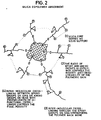
- Figure 2 is a structural formula representation of a modified silica depicting potential crosslinking sites.
- Another further reaction of the modified silica materials would be to anchor the affinity ligands or biologically active molecules to the anchoring group of the copolymer.
- This reaction can readily be accomplished by mixing in an appropriate solvent, normally aqueous, the affinity ligand or biomolecules to be anchored and the modified silica and carrying out anchoring for a time and under conditions to cause covalent coupling therebetween.
- the modified siliceous supports are characterized by excellent structural integrity, high binding capacity, especially for large protein molecules, low non- specific adsorption and, further, are well suited for individual "tailoring" to specific needs by controlling the degree of crosslinking of the polymer grafted to the siliceous substrate.
- bovine serum albumin binding capacity as a representative standard, the modified siliceous supports of the present invention provide surprisingly and unexpectedly high BSA binding capacity as compared to the prior art, while still retaining excellent structural characteristics and resistance to collapse.
- the BS A binding capacity of the supports of this invention are in the range of 600-900 milligrams of protein per gram of modified silica. At the same time, these modified supports retain excellent flow-through characteristics even in view of their superior binding capacities.
- the modified silicas of the present invention are characterized by very high exchange capacity (EC) where EC is expressed in terms of milliequivalents of the organic functional group-containing monomer per gram of silica (meq/g).
- EC very high exchange capacity
- the modified silicas of the present invention have an exchange capacity in excess of 2, frequently in excess of 3. See Examples 26-32 below. Applicants believe, but do not intend in any way to be limited by this belief, that this exchange capacity is a result of the process wherein the monomers are first polymerized and then covalently coupled to the silica support, thereby providing exchange capacity in excess of that previously available.
- a self-supporting fiber matrix using the modified silica of the invention can be made by vacuum filtering an aqueous slurry of fibers and, if desired, additional resins and modified particulate.
- This forms a sheet having uniformly high porosity, fine pore-size structure and excellent flow characteristics, the sheet substantially homogeneous with respect to fiber, resins, and particulate.
- the vacuum filtration is performed on a foraminous surface, normally a woven wire mesh which, in practice, may vary from 50 mesh to 200 mesh, with mesh openings ranging from 280 micrometers to 70 micrometers, respectively. Finer meshes are unsuitable because of clogging problems and/or structural inadequacy.
- the sequence of adding the overall components to the slurry is relatively unimportant, provided that the slurry is subjected to controlled hydrodynamic sheer forces during the mixing process.
- the slurry is normally prepared at, say, about 4% consistency and then diluted with additional water with a proper consistency required for vacuum filtering and sheet formation. This latter consistency will vary depending upon the type of equipment used to form the sheet.
- the slurry is cast into a foraminous surface, vacuum filtered, and dried in the conventional manner.
- the flat, dimensionally stable sheet may be of any desired thickness and is then cut to the appropriate dimensions for each type of application.
- the wet sheet is often dried and then cut to proper size in order to form discs.
- These discs may be loaded into an appropriately sized cylindrical column to form the desired medium, the disc and cylinder preferably in interference fit so that the disc can be pushed into the cylinder without distortion, but not fall under gravitational force.
- a pump may be used to pump solvent through the elements stacked in the column.
- the elements swell to form a substantially tight edge seal to the cylinder wall. Because the individual elements are dimensionally stable, the column is not sensitive to orientation or handling, a problem which is common with other chromatographic media, particularly with any gel-type media.
- a chromatography column for effecting chromatographic separation of at least two components of a sample flowing through the column, comprises a housing and at least one solid stationary phase within the housing.
- the stationary phase has chromatographic functionality and is effective for chromatographic separation. Means are provided for radially distributing the sample through the stationary phase and for collecting the sample after the sample has flowed through the stationary phase.
- the stationary phase comprises:
- the particles may be appropriately packed into a column and used in particulate form.
- the ion exchange, affinity, reverse phase, or bio-active materials of the invention can be used in any of the well-known prior processes of ion exchange, affinity, or reverse-phase chromatography, or as supports for bio-reactors. Because the monomers employed in the process of the instant invention are less expensive than the silane coupling agents of the prior art, the instant process and product is more economical and simpler than the prior art silane reaction products. Additionally, by utilizing silica as a core in the structure of the chromatographic material, sufficient mechanical stability to withstand high flow velocity and pressure is obtained. By coating the silica particle with an acrylic polymer, the protein loss due to non-specific adsorption of silica at high and low pH is avoided. Additionally, the use of a structural silica pore permits the use of polymers which are either non-crosslinked or cross-linked only to a very low degree, thereby providing a porosity which will allow fast penetration and partitioning of biological molecules through the support.
- chromatographic media made in accordance with this invention wherein comonomer (b) is a quaternized diethyl- or dimethylaminoethyl acrylate or methacrylate when used in combination with carbonaceous water purification media, are effective in preventing the colonization of bacteria within the filtration media.
- the present invention is of particular value in extending the useful life of these known carbonaceous purification media.
- the chromatographic media have further utility as molecular separation in the fractionation and purification of blood, particularly with regard to treatments for separating various blood fractions.
- the supports of the instant invention have a capacity which far exceeds that of the supports of the prior art where silane coupling agents are employed. Based on Thermal Gravametric Analysis, the weight gain on silica through silanization is less than 20% whereas more than 50% weight gain can be achieved by the instant process. Thus, more functional groups are introduced on silica surface, leading to higher column capacity.
- the rigidity of the matrix allows the column to be operable in unrestricted diameter for high volume processes.
- the column volume is virtually unaffected by changing pH or ionic strength in the buffer solution.
- Such a system can be equilibrated and regenerated in a short period of time, eliminating cumbersome procedures of column preparation and regeneration.
- DEAEM A diethelaminoethyl methacrylate
- GMA glycidyl methacrylate
- Nitrogen gases were bubbled through the reactor to remove air and to agitate the mixture for 5 minutes.
- 1 gram of ammonium persulfate and 1 gram of sodium thiosulfate were dissolved in 20 ml of H 2 0, and this aqueous mixture of catalysts then poured into the reactor solution.
- the reactor temperature was maintained at 40°C for 2 minutes, the excess catalyst and short reaction time producing a low molecular weight copolymer (optionally, a chain transfer agent could be added to further prevent the molecular weight build-up).
- Example 2 To the low molecular weight polymer of Example 1, containing excess catalyst, were added 10 grams of silica particles, grade 952 from Davidson Chemicals. The pH of the reactor was raised to 9.0 and the temperature to 90°-95°C for 1 hour. At this pH and temperature, the polymerization reaction between the DEAEMA and GMA was terminated and the epoxy groups of the acrylate copolymer reacted with the the surface hydroxy group on the silica particles. The modified silica particles were then filtered, washed with water, washed with methanol, and recovered.
- the modified silica particles of Example 1 were returned to the reactor, said reactor containing 100 ml methyl ethyl ketone mixed with 100 ml of water. 10 ml of of 1.6 dichlorohexane and 0.6 gram of potassium iodide were added to the reactor and the reactor allowed to reflux over night. The resulting product was filtered, washed with acetone and given an acetone wash followed by a water wash. Finally, the product was acidified with 10 ml of 2 normal HCL and then washed with water until the wash solution has a pH of about 5.
- BSA Bovine Serum Albumin
- the BSA absorption capacity at pH 5.5 after 50 hours is approximately 600 mg per gram of the proposed absorbent, which is 3 times more in capacity than that of silica prepared with silane coupling agent and 12 times the adsorption capacity of the untreated silica.
- the weight gain of acrylic copolymer was determined by Thermal Gravametric Analysis (TGA).
- TGA Thermal Gravametric Analysis
- the modified silica particles of Example 3 demonstrated a weight gain of 140%. Thus more than 1 gram of acrylic copolymer was covalently bonded to 1 gram of silica particles.
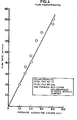
- Figure 4 is a graph showning the relationship between flow rate (ml/min) and pressure across the column (psi).
- a column having a dimension of 25 mm by 50 mm was prepared using 10 pads.
- the total pad weight was 3.15 grams, each pad containing 50% cotton and 50% of the silica-acrylic composite of Example 3.
- large scale column operation is made possible by the instant modified silica particles.
- the flow characteristics of this media may be adjusted by the ratio of cotton fiber to absorbent, the ratio of polymer to silica, the molecular weight and degree of cross-linking of the polymer, the particle size of silica, and the mode of pad fabrication, such as addition of dispersion agent for flocculent.
- DEAEMA/GMA copolymer was prepared according to Example 1.
- the resulting copolymer was coupled to varying amounts of silica (Si-952 from Davidson Chemical Company) in the proportions indicated in Table 1 below, using the procedure of Example 2.
- the acrylic-silica ratio was calculated based on the reagent weights and by TGA.
- the protein capacity for each of the resulting modified silica materials was evaluted by analyzing the UV adsorption at 280 nm in accordance with the procedure set forth in Example 4.
- the protein (BSA) binding capacity of each of the modified silica materials is listed in Table 1.
- DEAEMA/GMA copolymer was prepared according to Example 1 and covalently coupled to varying amounts of diatomaceous earth (d.e.) using the procedure as set out in Example 2 but substituting d.e. for silica.
- the diatomaceous earth was DE-4106 having a particle size in the range of 10-15 microns and commercially available from Dicalite, Los Angeles, California.
- Products having a weight ratio of polymer to silica from .1-1 were evaluated with regard to BSA binding capacity at pH 6.3, using UV absorption at 280 nm as in Example 4.
- the polymer- silica weight ratio and protein binding capacity of each of Examples 14-20 are set forth in Table 2 below.
- DEAE-4106 a commercially available product prepared by coating DE-4106 with diethylaminoethyl silane, was evaluated regarding BSA binding capacity, again using the procedure of Example 2.
- the BSA binding capacity at pH 6.3 was 120,800 mg/g, less than half that of Example 19, the present invention wherein the polymer-d.e. ratio was only 0.2.
- silica modified-ion exchange media carrying sulfonyl (-SO 3 ) groups were prepared by reacting glycidyl methacrylate with Si-952, the weight ratio of silica to monomer set forth in Table 3 below. The reaction was conducted in the presence of ammonium persulfate and sodium thiosulfate catalyst, at 80°C, with constant agitation, for 30 minutes. Sufficient HC1 and Na 2 S0 3 was then added to the reaction mixture to convert uncoupled epoxy groups to sulfopropyl groups.
- the Ca +2 capacity for each modified silica was evaluated at a pH range of 7.4-7.8 using the Bach testing kit available from Bach Co., Loveland, Co.; the gamma-globulin binding capacity for each polymer was evaluated with pH 5 buffer solution.
- the Ca +2 and gamma-globulin binding capacity are reported in Table 3 below.
- DMAEMA dimethylaminoethyl methacrylate
- DAEA dimethylaminoethyl acrylate
- EC Exchange capacity
- a silica support according to the present invention is subjected to thermogravimetric analysis (TGA) whereby the support is fired in a high-temperature furnace to burn off all of the acrylic polymer covalently coupled to the silica substrate.
- TGA thermogravimetric analysis
- the weight loss of the calcined modified support is the weight of acrylic polymer originally coupled.
- the acrylic polymer may or may not be totally organic functional group-containing. That portion of the acrylic polymer that is functional group-containing may be determined from the following equation: where
- W f the weight of functional group-containing monomer
- W m the weight of polymer as determined by TGA
- N.W. f the molecular weight of the functional group-containing monomer
- M.W. c the molecular weight of the coupling group-containing monomer.
- M.W. f is DEAEMA
- M.W. c is GMA
- the polymer contains DEAEMA and GMA in a ratio of 10:1.
- M.W. f /M.W. c + M.W. f equals 10/11. Therefore,
- meq of the functional monomer is the weight of functional monomer divided by its equivalent weight, where E.W. f equals the milliequivalent weight of the organic functional group-containing monomer.
- Various supports according to the present invention were evaluated, the results tabulated in Table 4 below.
- Various amounts of a DEAEMA-GMA polymer matrix were coupled to a silica substrate, the precise amount determined by TGA.
- the silica was Si-56 from Davidson Chemicals; in Example 30, the silica was Si-952 from Davidson Chemicals; and in Example 32, the silica was Si-4106 from Davidson Chemicals.
Landscapes
- Chemical & Material Sciences (AREA)
- Analytical Chemistry (AREA)
- Organic Chemistry (AREA)
- Chemical Kinetics & Catalysis (AREA)
- Inorganic Chemistry (AREA)
- Geochemistry & Mineralogy (AREA)
- Life Sciences & Earth Sciences (AREA)
- Solid-Sorbent Or Filter-Aiding Compositions (AREA)
- Treatment Of Liquids With Adsorbents In General (AREA)
- Pharmaceuticals Containing Other Organic And Inorganic Compounds (AREA)
- Silicon Compounds (AREA)
- Graft Or Block Polymers (AREA)
- Pigments, Carbon Blacks, Or Wood Stains (AREA)
- Polymerisation Methods In General (AREA)
- Immobilizing And Processing Of Enzymes And Microorganisms (AREA)
Priority Applications (1)
| Application Number | Priority Date | Filing Date | Title |
|---|---|---|---|
| AT85110571T ATE82525T1 (de) | 1984-08-22 | 1985-08-22 | Kieseltraeger. |
Applications Claiming Priority (2)
| Application Number | Priority Date | Filing Date | Title |
|---|---|---|---|
| US643613 | 1984-08-22 | ||
| US06/643,613 US4724207A (en) | 1984-02-02 | 1984-08-22 | Modified siliceous chromatographic supports |
Publications (3)
| Publication Number | Publication Date |
|---|---|
| EP0172579A2 true EP0172579A2 (de) | 1986-02-26 |
| EP0172579A3 EP0172579A3 (en) | 1987-01-07 |
| EP0172579B1 EP0172579B1 (de) | 1992-11-19 |
Family
ID=24581570
Family Applications (1)
| Application Number | Title | Priority Date | Filing Date |
|---|---|---|---|
| EP85110571A Expired - Lifetime EP0172579B1 (de) | 1984-08-22 | 1985-08-22 | Kieselträger |
Country Status (5)
| Country | Link |
|---|---|
| US (1) | US4724207A (de) |
| EP (1) | EP0172579B1 (de) |
| JP (1) | JPS61166861A (de) |
| AT (1) | ATE82525T1 (de) |
| DE (1) | DE3586838T2 (de) |
Cited By (14)
| Publication number | Priority date | Publication date | Assignee | Title |
|---|---|---|---|---|
| EP0249078A3 (en) * | 1986-06-07 | 1988-08-10 | Merck Patent Gesellschaft Mit Beschrankter Haftung | Optically active adsorbents |
| EP0337144A1 (de) * | 1988-03-31 | 1989-10-18 | MERCK PATENT GmbH | Trennmaterialien |
| WO1991001808A1 (de) * | 1989-08-11 | 1991-02-21 | B. Braun Melsungen Aktiengesellschaft | Verwendung von tentakel-kationenaustauschern zur selektiven eliminierung von low-density-lipoproteinen (ldl), fibrinogen und/oder harnstoff aus flüssigkeiten |
| US5149425A (en) * | 1988-11-09 | 1992-09-22 | Chembiomed, Ltd. | Affinity supports for hemoperfusion |
| US5240601A (en) * | 1988-11-09 | 1993-08-31 | Chembiomed, Ltd. | Affinity supports for hemoperfusion |
| WO1996009116A1 (en) * | 1994-09-23 | 1996-03-28 | Massey University | Chromatographic resins and methods for using same |
| EP1226869A2 (de) | 2001-01-29 | 2002-07-31 | Tosoh Corporation | Kationenaustauscher, Verfahren zu dessen Herstellung und dessen Verwendung |
| WO2009016258A1 (de) * | 2007-08-02 | 2009-02-05 | Basf Se | Wässrige polymerdispersion auf basis von n, n-diethylaminoethylmethacrylat, deren herstellung und verwendung |
| EP1930029A4 (de) * | 2005-09-27 | 2013-02-27 | Sumitomo Bakelite Co | Teilchen zur medizinischen verwendung und verfahren zu seiner herstellung |
| WO2014067605A1 (en) * | 2012-11-01 | 2014-05-08 | Merck Patent Gmbh | Surface modification of porous base supports |
| WO2015168383A1 (en) * | 2014-05-02 | 2015-11-05 | W. R. Grace & Co.-Conn. | Functionalized support material and methods of making and using functionalized support material |
| US10695744B2 (en) | 2015-06-05 | 2020-06-30 | W. R. Grace & Co.-Conn. | Adsorbent biprocessing clarification agents and methods of making and using the same |
| US11229896B2 (en) | 2014-01-16 | 2022-01-25 | W.R. Grace & Co.—Conn. | Affinity chromatography media and chromatography devices |
| US11628381B2 (en) | 2012-09-17 | 2023-04-18 | W.R. Grace & Co. Conn. | Chromatography media and devices |
Families Citing this family (83)
| Publication number | Priority date | Publication date | Assignee | Title |
|---|---|---|---|---|
| US4882226A (en) * | 1986-09-23 | 1989-11-21 | Akzo N.V. | Carrier material for use in chromatography or carrying out enzymatic reactions |
| JP2509542B2 (ja) * | 1987-02-26 | 1996-06-19 | 株式会社ワイエムシィ | 溶質分離用担体 |
| FR2616437B1 (fr) * | 1987-06-11 | 1990-09-07 | Ibf | Polymeres composites, leur preparation et leur utilisation en chromatographie liquide |
| US5153166A (en) * | 1988-08-18 | 1992-10-06 | Trustees Of At Biochem | Chromatographic stationary supports |
| US4908137A (en) * | 1989-04-11 | 1990-03-13 | Cuno, Incorporated | Heavy metal removal process |
| WO1990011825A1 (en) * | 1989-04-11 | 1990-10-18 | Cuno, Incorporated | Heavy metal removal filters |
| US5045210A (en) * | 1989-04-11 | 1991-09-03 | Cuno, Incorporated | Heavy metal removal process |
| WO1991004086A1 (en) * | 1989-09-18 | 1991-04-04 | Cuno, Incorporated | Filter media and use for pyrogen removal |
| JP2619537B2 (ja) * | 1989-09-18 | 1997-06-11 | 株式会社日立製作所 | 液体クロマトグラフの方法,その装置,そのシステム,及びその分離カラム |
| DE4139747A1 (de) * | 1991-12-03 | 1993-06-09 | Bayer Ag, 5090 Leverkusen, De | Fuellstoffhaltige, optisch aktive perlpolymerisate |
| US5906734A (en) * | 1992-06-19 | 1999-05-25 | Biosepra Inc. | Passivated porous polymer supports and methods for the preparation and use of same |
| US5470463A (en) * | 1992-06-19 | 1995-11-28 | Sepracor Inc. | Passivated porous supports and methods for the preparation and use of same |
| US5445732A (en) * | 1992-06-19 | 1995-08-29 | Sepracor Inc. | Passivated porous polymer supports and methods for the preparation and use of same |
| FR2716263B1 (fr) * | 1994-02-11 | 1997-01-17 | Pasteur Institut | Procédé d'alignement de macromolécules par passage d'un ménisque et applications dans un procédé de mise en évidence, séparation et/ou dosage d'une macromolécule dans un échantillon. |
| ATA43094A (de) * | 1994-03-01 | 1995-04-15 | Chemiefaser Lenzing Ag | Verfahren zur herstellung cellulosischer formkörper, lösung eines tert. aminoxids und ihre aufarbeitung |
| US5629186A (en) * | 1994-04-28 | 1997-05-13 | Lockheed Martin Corporation | Porous matrix and method of its production |
| US5906747A (en) * | 1995-11-13 | 1999-05-25 | Biosepra Inc. | Separation of molecules from dilute solutions using composite chromatography media having high dynamic sorptive capacity at high flow rates |
| US6207066B1 (en) * | 1996-07-23 | 2001-03-27 | Nuvue Technologies, L.L.C. | Method for purification of a blood component |
| US6210570B1 (en) | 1998-08-21 | 2001-04-03 | Agilent Technologies, Inc. | Monolithic silica column |
| US6156431A (en) * | 1999-01-04 | 2000-12-05 | United Chemical Technologies, Inc. | Extraction material comprising treated silica and method for determination of gamma-hydroxybutyrate |
| WO2000044928A2 (en) | 1999-01-27 | 2000-08-03 | Halaka Folim G | Materials and methods for the purification of polyelectrolytes |
| EP1733786B1 (de) * | 1999-02-05 | 2010-04-14 | Waters Technologies Corporation | Poröse hybridpartikel zur chromatographischen trennung |
| US6686035B2 (en) | 1999-02-05 | 2004-02-03 | Waters Investments Limited | Porous inorganic/organic hybrid particles for chromatographic separations and process for their preparation |
| US6248537B1 (en) | 1999-05-28 | 2001-06-19 | Institut Pasteur | Use of the combing process for the identification of DNA origins of replication |
| US20040091451A1 (en) * | 2000-05-29 | 2004-05-13 | Marie-Therese Charreyre | Biocompatible polymer for fixing biological ligands |
| US6528167B2 (en) * | 2001-01-31 | 2003-03-04 | Waters Investments Limited | Porous hybrid particles with organic groups removed from the surface |
| US6692700B2 (en) | 2001-02-14 | 2004-02-17 | Handylab, Inc. | Heat-reduction methods and systems related to microfluidic devices |
| US8895311B1 (en) | 2001-03-28 | 2014-11-25 | Handylab, Inc. | Methods and systems for control of general purpose microfluidic devices |
| US7829025B2 (en) | 2001-03-28 | 2010-11-09 | Venture Lending & Leasing Iv, Inc. | Systems and methods for thermal actuation of microfluidic devices |
| US7010391B2 (en) | 2001-03-28 | 2006-03-07 | Handylab, Inc. | Methods and systems for control of microfluidic devices |
| US6852287B2 (en) | 2001-09-12 | 2005-02-08 | Handylab, Inc. | Microfluidic devices having a reduced number of input and output connections |
| EP1417366A4 (de) | 2001-08-09 | 2010-10-27 | Waters Technologies Corp | Poröse anorganisch-organisch hybridartige monolithmaterialien für chromatographische trennungen sowie verfahren zu deren herstellung |
| FR2834227A1 (fr) * | 2001-12-27 | 2003-07-04 | Chiralsep Sarl | Materiaux supports optiquement actifs, leur procede de preparation et leurs utilisations |
| US20040224329A1 (en) * | 2003-05-08 | 2004-11-11 | Gjerde Douglas T. | Three-dimensional solid phase extraction surfaces |
| US6855263B2 (en) * | 2002-07-23 | 2005-02-15 | Nuvue Technologies, Inc. | Rapid process for purification and concentration of plasmin |
| US7264728B2 (en) * | 2002-10-01 | 2007-09-04 | Dow Corning Corporation | Method of separating components in a sample using silane-treated silica filter media |
| WO2004041398A2 (en) | 2002-10-30 | 2004-05-21 | Waters Investments Limited | Porous inorganic/organic hybrid materials and preparation thereof |
| EP1585574A4 (de) * | 2002-12-20 | 2006-04-26 | Cardiac Inv S Unltd Inc | Vorrichtung und verfahren zum implantieren von linksvatrikulären schrittmacherleitungen im koronarsinus |
| EP1645597A1 (de) * | 2003-07-09 | 2006-04-12 | Tokyo University of Science, Educational Foundation | Konjugat von feinen porösen teilchen mit polymermolekülen und verwendung davon |
| EP1654066B1 (de) | 2003-07-31 | 2014-11-12 | Handylab, Inc. | Verarbeitung von teilchenhaltigen proben |
| DE112005000269T5 (de) * | 2004-02-17 | 2007-01-25 | Waters Investments Ltd., New Castle | Poröse Hybridmonolithmaterialien mit von der Oberfläche entfernten organischen Gruppen |
| US8852862B2 (en) | 2004-05-03 | 2014-10-07 | Handylab, Inc. | Method for processing polynucleotide-containing samples |
| US10773186B2 (en) | 2004-07-30 | 2020-09-15 | Waters Technologies Corporation | Porous inorganic/organic hybrid materials with ordered domains for chromatographic separations and processes for their preparation |
| US8658277B2 (en) * | 2004-07-30 | 2014-02-25 | Waters Technologies Corporation | Porous inorganic/organic hybrid materials with ordered domains for chromatographic separations and processes for their preparation |
| US9308520B2 (en) * | 2005-12-16 | 2016-04-12 | Akzo Nobel N.V. | Silica based material |
| JP5530633B2 (ja) * | 2006-01-06 | 2014-06-25 | イー・エム・デイー・ミリポア・コーポレイシヨン | アフィニティークロマトグラフィーマトリックスおよびその作成および使用法。 |
| US11806718B2 (en) | 2006-03-24 | 2023-11-07 | Handylab, Inc. | Fluorescence detector for microfluidic diagnostic system |
| US7998708B2 (en) | 2006-03-24 | 2011-08-16 | Handylab, Inc. | Microfluidic system for amplifying and detecting polynucleotides in parallel |
| US9040288B2 (en) | 2006-03-24 | 2015-05-26 | Handylab, Inc. | Integrated system for processing microfluidic samples, and method of using the same |
| US10900066B2 (en) | 2006-03-24 | 2021-01-26 | Handylab, Inc. | Microfluidic system for amplifying and detecting polynucleotides in parallel |
| WO2008061165A2 (en) * | 2006-11-14 | 2008-05-22 | Handylab, Inc. | Microfluidic cartridge and method of making same |
| WO2008060604A2 (en) | 2006-11-14 | 2008-05-22 | Handylab, Inc. | Microfluidic system for amplifying and detecting polynucleotides in parallel |
| JP2010515804A (ja) | 2007-01-12 | 2010-05-13 | ウオーターズ・テクノロジーズ・コーポレイシヨン | クロマトグラフ分離用多孔質炭素−ヘテロ原子−ケイ素ハイブリッド無機/有機材料およびその調製のための方法 |
| US8133671B2 (en) | 2007-07-13 | 2012-03-13 | Handylab, Inc. | Integrated apparatus for performing nucleic acid extraction and diagnostic testing on multiple biological samples |
| US8182763B2 (en) | 2007-07-13 | 2012-05-22 | Handylab, Inc. | Rack for sample tubes and reagent holders |
| ES2648798T3 (es) | 2007-07-13 | 2018-01-08 | Handylab, Inc. | Materiales de captura de polinucleótidos y métodos de utilización de los mismos |
| US8105783B2 (en) | 2007-07-13 | 2012-01-31 | Handylab, Inc. | Microfluidic cartridge |
| US8287820B2 (en) | 2007-07-13 | 2012-10-16 | Handylab, Inc. | Automated pipetting apparatus having a combined liquid pump and pipette head system |
| US9186677B2 (en) | 2007-07-13 | 2015-11-17 | Handylab, Inc. | Integrated apparatus for performing nucleic acid extraction and diagnostic testing on multiple biological samples |
| US9618139B2 (en) | 2007-07-13 | 2017-04-11 | Handylab, Inc. | Integrated heater and magnetic separator |
| USD787087S1 (en) | 2008-07-14 | 2017-05-16 | Handylab, Inc. | Housing |
| EP2437882A4 (de) | 2009-06-01 | 2016-11-23 | Waters Technologies Corp | Hybridmaterial für chromatographie-trennungen |
| US11439977B2 (en) | 2009-06-01 | 2022-09-13 | Waters Technologies Corporation | Hybrid material for chromatographic separations comprising a superficially porous core and a surrounding material |
| JP5780622B2 (ja) * | 2009-12-22 | 2015-09-16 | 国立大学法人 新潟大学 | 抗菌剤およびその製造方法 |
| EP3834927B1 (de) | 2010-07-26 | 2026-03-25 | Waters Technologies Corporation | Verfahren zur herstellung eines oberflächenporösen materials |
| US12623205B2 (en) | 2010-07-26 | 2026-05-12 | Waters Technologies Corporation | Superficially porous materials comprising a substantially nonporous hybrid core having narrow particle size distribution |
| JP2013532829A (ja) * | 2010-07-29 | 2013-08-19 | イー・エム・デイー・ミリポア・コーポレイシヨン | クロマトグラフィーの媒介性能を改善するためのグラフト法 |
| CN106190806B (zh) | 2011-04-15 | 2018-11-06 | 贝克顿·迪金森公司 | 扫描实时微流体热循环仪和用于同步的热循环和扫描光学检测的方法 |
| DK2761305T3 (da) | 2011-09-30 | 2017-11-20 | Becton Dickinson Co | Forenet reagensstrimmel |
| USD692162S1 (en) | 2011-09-30 | 2013-10-22 | Becton, Dickinson And Company | Single piece reagent holder |
| WO2013067202A1 (en) | 2011-11-04 | 2013-05-10 | Handylab, Inc. | Polynucleotide sample preparation device |
| DK2810080T3 (da) | 2012-02-03 | 2024-06-17 | Becton Dickinson Co | Eksterne filer til fordeling af molekylære diagnostiske tests og bestemmelse af kompatabilitet imellem tests |
| MY195756A (en) | 2012-09-17 | 2023-02-09 | Grace W R & Co | Functionalized Particulate Support Material and Methods of Making and Using the Same |
| US9329158B2 (en) | 2013-03-15 | 2016-05-03 | Dionex Corporation | Epoxy chemistry derived materials as mixed mode chromatography media, method for their synthesis and use |
| US9216403B2 (en) | 2013-03-15 | 2015-12-22 | Dionex Corporation | Epoxy chemistry derived materials as reversed-phase and hydrophobic interaction chromatography media, method for their synthesis and use |
| US9796793B2 (en) | 2013-09-06 | 2017-10-24 | The Regents Of The University Of California | Metal oxide particles with uniform multilayer polymer coatings |
| US10214650B2 (en) | 2014-01-10 | 2019-02-26 | Asahi Kasei Kabushiki Kaisha | Aqueous composite particle dispersion |
| CN106103515B (zh) * | 2014-03-05 | 2020-04-14 | Jsr株式会社 | 固相载体及其制造方法、配体键合固相载体及其制造方法和靶物质的检测或分离方法 |
| JP6869181B2 (ja) | 2015-01-15 | 2021-05-12 | ダイオネックス コーポレイション | 改善されたpH安定性を有するクロマトグラフィー材料、その調製法、及びその使用 |
| BR112017023209B1 (pt) * | 2015-05-01 | 2023-03-21 | Teledyne Scientific & Imaging, Llc | Meio de filtragem granular revestido e processo para a filtragem de água |
| CN121869327A (zh) | 2016-03-06 | 2026-04-17 | 沃特世科技公司 | 用于色谱分离的具有受控孔隙度的多孔材料;其制备方法;以及其用途 |
| US11111398B2 (en) | 2017-01-11 | 2021-09-07 | International Business Machines Corporation | Subsurface modified silica materials |
| CN113318714A (zh) * | 2021-05-26 | 2021-08-31 | 浙江月旭材料科技有限公司 | 一种色谱用单分散二氧化硅微球及其制备方法和用途 |
Family Cites Families (36)
| Publication number | Priority date | Publication date | Assignee | Title |
|---|---|---|---|---|
| US3251475A (en) * | 1955-04-18 | 1966-05-17 | Fmc Corp | Fibrous filter body |
| GB1000038A (de) * | 1960-12-06 | |||
| NL130162C (de) * | 1962-08-06 | |||
| US3353682A (en) * | 1966-02-28 | 1967-11-21 | Pall Corp | Fluid-permeable fibrous multilayer materials and process of making the same |
| US3488922A (en) * | 1968-10-10 | 1970-01-13 | Du Pont | Method and apparatus for chromatographic separations with superficially porous glass beads having sorptively active crusts |
| US3772181A (en) * | 1968-11-29 | 1973-11-13 | Texaco Inc | Process for treating water-soluble organic wastes |
| US3577266A (en) * | 1969-01-13 | 1971-05-04 | Du Pont | Superficially porous chromatographic packing with sulfonated fluoropolymer coating |
| DE1902226A1 (de) * | 1969-01-17 | 1970-07-23 | Dr Istvan Halasz | Stationaere Phase fuer die Chromatographie fuer Ionenaustauscher oder Katalysatoren |
| US3583855A (en) * | 1969-04-28 | 1971-06-08 | Deering Milliken Res Corp | Modification of keratinic fibers with ethylenically unsaturated compounds |
| US3651210A (en) * | 1970-05-15 | 1972-03-21 | Ashland Oil Inc | Synthetic emulsion-graft copolymers further reacted with protein |
| US3795313A (en) * | 1970-05-22 | 1974-03-05 | Du Pont | Chromatographic packing with chemically bonded organic stationary phases |
| US3984349A (en) * | 1971-07-26 | 1976-10-05 | Societe Rhone-Progil | Modified porous bodies |
| US3808125A (en) * | 1972-08-25 | 1974-04-30 | Phillips Petroleum Co | Chromatographic apparatus |
| US3878092A (en) * | 1973-03-12 | 1975-04-15 | Phillips Petroleum Co | Chromatographic colums |
| US4070348A (en) * | 1973-07-25 | 1978-01-24 | Rohm Gmbh | Water-swellable, bead copolymer |
| US3983299A (en) * | 1974-03-04 | 1976-09-28 | Purdue Research Foundation | Bonded carbohydrate stationary phases for chromatography |
| FR2283101A1 (fr) * | 1974-08-30 | 1976-03-26 | Rhone Poulenc Ind | Supports mineraux modifies |
| US4029583A (en) * | 1975-02-28 | 1977-06-14 | Purdue Research Foundation | Chromatographic supports and methods and apparatus for preparing the same |
| US4100149A (en) * | 1975-08-28 | 1978-07-11 | Rhone-Poulenc Industries | Method of separating proteins by ion exchange |
| US4102746A (en) * | 1975-08-29 | 1978-07-25 | Amerace Corporation | Immobilized proteins |
| US4140653A (en) * | 1975-09-30 | 1979-02-20 | Toyo Soda Manufacturing Co., Ltd. | Solid support for liquid chromatography |
| US4309247A (en) * | 1976-03-15 | 1982-01-05 | Amf Incorporated | Filter and method of making same |
| US4086190A (en) * | 1976-04-19 | 1978-04-25 | Blount David H | Process for the production of silicic epoxy polymers |
| US4144190A (en) * | 1976-07-08 | 1979-03-13 | Ciba-Geigy Ag | Polysaccharide-containing adsorbent |
| US4118316A (en) * | 1976-10-13 | 1978-10-03 | Calgon Corporation | Quaternized siliceous supports for gel permeation chromatography |
| SE7712058L (sv) * | 1976-11-12 | 1978-05-13 | Ceskoslovenska Akademie Ved | Tredimensionell berare av oorganiskt, porost material och en reaktiv polymer och ett forfarande for framstellning derav |
| US4344775A (en) * | 1979-03-08 | 1982-08-17 | Max Klein | Method for separating gases liquid droplets and/or solid particles from gases or vapors |
| CA1148872A (en) * | 1979-04-06 | 1983-06-28 | Eugene A. Ostreicher | Filter with inorganic cationic colloidal silica |
| JPS56115727A (en) * | 1980-02-19 | 1981-09-11 | Kuraray Co Ltd | Carrier for immobilizing physiologically active substance |
| US4384954A (en) * | 1980-04-16 | 1983-05-24 | Kuraray Co., Ltd. | Column for adsorption of blood proteins |
| US4298500A (en) * | 1980-05-05 | 1981-11-03 | Varian Associates, Inc. | Mixed phase chromatographic compositions |
| ZA814216B (en) * | 1980-06-27 | 1982-07-28 | Akzo Nv | Porous inorganic support material coated with an organic stationary phase for use in chromatography and process for its preparation |
| US4262108A (en) * | 1980-07-18 | 1981-04-14 | Blount David H | Process for the production of polyisocyanate silicate plastics utilizing an alkali metal cellulose silicate condensation product |
| US4384957A (en) * | 1980-09-08 | 1983-05-24 | Amf Incorporated | Molecular separation column and use thereof |
| US4449978A (en) * | 1981-08-31 | 1984-05-22 | Air Products And Chemicals, Inc. | Nonwoven products having low residual free formaldehyde content |
| BR8405354A (pt) * | 1983-02-14 | 1985-02-12 | Amf Inc | Suportes polissacaridicos modificados |
-
1984
- 1984-08-22 US US06/643,613 patent/US4724207A/en not_active Expired - Lifetime
-
1985
- 1985-08-13 JP JP60178490A patent/JPS61166861A/ja active Pending
- 1985-08-22 EP EP85110571A patent/EP0172579B1/de not_active Expired - Lifetime
- 1985-08-22 AT AT85110571T patent/ATE82525T1/de not_active IP Right Cessation
- 1985-08-22 DE DE8585110571T patent/DE3586838T2/de not_active Expired - Fee Related
Cited By (24)
| Publication number | Priority date | Publication date | Assignee | Title |
|---|---|---|---|---|
| EP0249078A3 (en) * | 1986-06-07 | 1988-08-10 | Merck Patent Gesellschaft Mit Beschrankter Haftung | Optically active adsorbents |
| US5453186A (en) * | 1988-03-31 | 1995-09-26 | Merck Patent Gesellschaft Mit Beschrankter Haftung | Separating materials |
| AU618332B2 (en) * | 1988-03-31 | 1991-12-19 | Merck Patent Gesellschaft Mit Beschrankter Haftung | Separating materials |
| EP0337144A1 (de) * | 1988-03-31 | 1989-10-18 | MERCK PATENT GmbH | Trennmaterialien |
| US5149425A (en) * | 1988-11-09 | 1992-09-22 | Chembiomed, Ltd. | Affinity supports for hemoperfusion |
| US5240601A (en) * | 1988-11-09 | 1993-08-31 | Chembiomed, Ltd. | Affinity supports for hemoperfusion |
| WO1991001808A1 (de) * | 1989-08-11 | 1991-02-21 | B. Braun Melsungen Aktiengesellschaft | Verwendung von tentakel-kationenaustauschern zur selektiven eliminierung von low-density-lipoproteinen (ldl), fibrinogen und/oder harnstoff aus flüssigkeiten |
| WO1996009116A1 (en) * | 1994-09-23 | 1996-03-28 | Massey University | Chromatographic resins and methods for using same |
| US5652348A (en) * | 1994-09-23 | 1997-07-29 | Massey University | Chromatographic resins and methods for using same |
| US5945520A (en) * | 1994-09-23 | 1999-08-31 | Massey University | Chromatographic resins and methods for using same |
| EP1226869A2 (de) | 2001-01-29 | 2002-07-31 | Tosoh Corporation | Kationenaustauscher, Verfahren zu dessen Herstellung und dessen Verwendung |
| EP1226869A3 (de) * | 2001-01-29 | 2003-01-29 | Tosoh Corporation | Kationenaustauscher, Verfahren zu dessen Herstellung und dessen Verwendung |
| EP1930029A4 (de) * | 2005-09-27 | 2013-02-27 | Sumitomo Bakelite Co | Teilchen zur medizinischen verwendung und verfahren zu seiner herstellung |
| WO2009016258A1 (de) * | 2007-08-02 | 2009-02-05 | Basf Se | Wässrige polymerdispersion auf basis von n, n-diethylaminoethylmethacrylat, deren herstellung und verwendung |
| CN101778870B (zh) * | 2007-08-02 | 2012-11-07 | 巴斯夫欧洲公司 | 基于甲基丙烯酸n,n-二乙基氨基乙酯的聚合物水分散体,其制备及用途 |
| US8790693B2 (en) | 2007-08-02 | 2014-07-29 | Basf Se | Aqueous polymer dispersion based on N,N-diethylaminoethyl methacrylate, its preparation and use |
| US9732200B2 (en) | 2007-08-02 | 2017-08-15 | Basf Se | Aqueous polymer dispersion based on N,N-diethylaminoethyl methacrylate, its preparation and use |
| US11628381B2 (en) | 2012-09-17 | 2023-04-18 | W.R. Grace & Co. Conn. | Chromatography media and devices |
| WO2014067605A1 (en) * | 2012-11-01 | 2014-05-08 | Merck Patent Gmbh | Surface modification of porous base supports |
| US10166527B2 (en) | 2012-11-01 | 2019-01-01 | Merck Patent Gmbh | Surface modification of porous base supports |
| US11229896B2 (en) | 2014-01-16 | 2022-01-25 | W.R. Grace & Co.—Conn. | Affinity chromatography media and chromatography devices |
| WO2015168383A1 (en) * | 2014-05-02 | 2015-11-05 | W. R. Grace & Co.-Conn. | Functionalized support material and methods of making and using functionalized support material |
| US11389783B2 (en) | 2014-05-02 | 2022-07-19 | W.R. Grace & Co.-Conn. | Functionalized support material and methods of making and using functionalized support material |
| US10695744B2 (en) | 2015-06-05 | 2020-06-30 | W. R. Grace & Co.-Conn. | Adsorbent biprocessing clarification agents and methods of making and using the same |
Also Published As
| Publication number | Publication date |
|---|---|
| EP0172579B1 (de) | 1992-11-19 |
| DE3586838T2 (de) | 1993-04-01 |
| US4724207A (en) | 1988-02-09 |
| DE3586838D1 (de) | 1992-12-24 |
| JPS61166861A (ja) | 1986-07-28 |
| ATE82525T1 (de) | 1992-12-15 |
| EP0172579A3 (en) | 1987-01-07 |
Similar Documents
| Publication | Publication Date | Title |
|---|---|---|
| US4724207A (en) | Modified siliceous chromatographic supports | |
| US4663163A (en) | Modified polysaccharide supports | |
| AU580548B2 (en) | Polymer modified polysaccharide | |
| US4687820A (en) | Modified polypeptide supports | |
| US4791063A (en) | Polyionene transformed modified polysaccharide supports | |
| US5045210A (en) | Heavy metal removal process | |
| AU724288B2 (en) | Preformed polymer coating process and product | |
| EP0320023B1 (de) | Makroporöse Polymermembranen, ihre Herstellung und Verwendung zur Abtrennung von Polymere | |
| CA2732398C (en) | Graft copolymers for ion exchange chromatography | |
| US5059654A (en) | Affinity matrices of modified polysaccharide supports | |
| EP1163044B1 (de) | Negativ geladene membranen | |
| JP2005531767A (ja) | 表面改質ベースマトリックス | |
| EP0172580B1 (de) | Chromatographische Trennungsprozesse an Polypeptidträgermaterial | |
| KR101333577B1 (ko) | 개선된 크로마토그래피 매질의 제조방법 및 사용방법 | |
| WO1989007618A1 (en) | Affinity matrices of modified polysaccharide supports | |
| CN116550312A (zh) | 一种阳离子层析介质及其制备方法与应用 | |
| JP2543693B2 (ja) | 低比重リポ蛋白質の吸着材およびその製造方法 | |
| JPH05133947A (ja) | 液体クロマトグラフイー用担体およびそれを用いた液体クロマトグラフイー法 | |
| US5159039A (en) | Separation media containing acyl diazepines | |
| JPS6392627A (ja) | 親水性多孔粒子 | |
| WO1996031549A1 (de) | Dendrimere pfropfpolymerisate | |
| GB1574414A (en) | Composite materials | |
| US5158682A (en) | Separation media containing acyl diazepines | |
| WO1990011825A1 (en) | Heavy metal removal filters | |
| JP2001300308A (ja) | エンドトキシン吸着材 |
Legal Events
| Date | Code | Title | Description |
|---|---|---|---|
| PUAI | Public reference made under article 153(3) epc to a published international application that has entered the european phase |
Free format text: ORIGINAL CODE: 0009012 |
|
| AK | Designated contracting states |
Designated state(s): AT BE CH DE FR GB IT LI LU NL SE |
|
| PUAL | Search report despatched |
Free format text: ORIGINAL CODE: 0009013 |
|
| AK | Designated contracting states |
Kind code of ref document: A3 Designated state(s): AT BE CH DE FR GB IT LI LU NL SE |
|
| RAP1 | Party data changed (applicant data changed or rights of an application transferred) |
Owner name: CUNO INCORPORATED |
|
| 17P | Request for examination filed |
Effective date: 19870702 |
|
| 17Q | First examination report despatched |
Effective date: 19890615 |
|
| GRAA | (expected) grant |
Free format text: ORIGINAL CODE: 0009210 |
|
| ITF | It: translation for a ep patent filed | ||
| AK | Designated contracting states |
Kind code of ref document: B1 Designated state(s): AT BE CH DE FR GB IT LI LU NL SE |
|
| PG25 | Lapsed in a contracting state [announced via postgrant information from national office to epo] |
Ref country code: BE Effective date: 19921119 |
|
| REF | Corresponds to: |
Ref document number: 82525 Country of ref document: AT Date of ref document: 19921215 Kind code of ref document: T |
|
| REF | Corresponds to: |
Ref document number: 3586838 Country of ref document: DE Date of ref document: 19921224 |
|
| ET | Fr: translation filed | ||
| PG25 | Lapsed in a contracting state [announced via postgrant information from national office to epo] |
Ref country code: AT Effective date: 19930822 |
|
| PG25 | Lapsed in a contracting state [announced via postgrant information from national office to epo] |
Ref country code: SE Effective date: 19930823 |
|
| PG25 | Lapsed in a contracting state [announced via postgrant information from national office to epo] |
Ref country code: LU Free format text: LAPSE BECAUSE OF NON-PAYMENT OF DUE FEES Effective date: 19930831 Ref country code: LI Effective date: 19930831 Ref country code: CH Effective date: 19930831 |
|
| PLBE | No opposition filed within time limit |
Free format text: ORIGINAL CODE: 0009261 |
|
| STAA | Information on the status of an ep patent application or granted ep patent |
Free format text: STATUS: NO OPPOSITION FILED WITHIN TIME LIMIT |
|
| 26N | No opposition filed | ||
| PG25 | Lapsed in a contracting state [announced via postgrant information from national office to epo] |
Ref country code: NL Effective date: 19940301 |
|
| NLV4 | Nl: lapsed or anulled due to non-payment of the annual fee | ||
| REG | Reference to a national code |
Ref country code: CH Ref legal event code: PL |
|
| PGFP | Annual fee paid to national office [announced via postgrant information from national office to epo] |
Ref country code: FR Payment date: 19940908 Year of fee payment: 10 |
|
| PGFP | Annual fee paid to national office [announced via postgrant information from national office to epo] |
Ref country code: GB Payment date: 19940913 Year of fee payment: 10 |
|
| PGFP | Annual fee paid to national office [announced via postgrant information from national office to epo] |
Ref country code: DE Payment date: 19941005 Year of fee payment: 10 |
|
| EUG | Se: european patent has lapsed |
Ref document number: 85110571.8 Effective date: 19940310 |
|
| PG25 | Lapsed in a contracting state [announced via postgrant information from national office to epo] |
Ref country code: GB Effective date: 19950822 |
|
| GBPC | Gb: european patent ceased through non-payment of renewal fee |
Effective date: 19950822 |
|
| PG25 | Lapsed in a contracting state [announced via postgrant information from national office to epo] |
Ref country code: FR Effective date: 19960430 |
|
| PG25 | Lapsed in a contracting state [announced via postgrant information from national office to epo] |
Ref country code: DE Effective date: 19960501 |
|
| REG | Reference to a national code |
Ref country code: FR Ref legal event code: ST |