EP0176182B1 - Indolo-(6,5,4-cd)-indol Derivate und Verfahren zu deren Herstellung - Google Patents
Indolo-(6,5,4-cd)-indol Derivate und Verfahren zu deren Herstellung Download PDFInfo
- Publication number
- EP0176182B1 EP0176182B1 EP85305218A EP85305218A EP0176182B1 EP 0176182 B1 EP0176182 B1 EP 0176182B1 EP 85305218 A EP85305218 A EP 85305218A EP 85305218 A EP85305218 A EP 85305218A EP 0176182 B1 EP0176182 B1 EP 0176182B1
- Authority
- EP
- European Patent Office
- Prior art keywords
- alkyl
- formula
- group
- hydrogen
- compound
- Prior art date
- Legal status (The legal status is an assumption and is not a legal conclusion. Google has not performed a legal analysis and makes no representation as to the accuracy of the status listed.)
- Expired - Lifetime
Links
- 0 CC(C)(C*[C@]1C2)[C@@](*)[C@]1(CC=C)c1cccc3c1c2c[n]3* Chemical compound CC(C)(C*[C@]1C2)[C@@](*)[C@]1(CC=C)c1cccc3c1c2c[n]3* 0.000 description 6
Classifications
-
- C—CHEMISTRY; METALLURGY
- C07—ORGANIC CHEMISTRY
- C07D—HETEROCYCLIC COMPOUNDS
- C07D487/00—Heterocyclic compounds containing nitrogen atoms as the only ring hetero atoms in the condensed system, not provided for by groups C07D451/00 - C07D477/00
- C07D487/02—Heterocyclic compounds containing nitrogen atoms as the only ring hetero atoms in the condensed system, not provided for by groups C07D451/00 - C07D477/00 in which the condensed system contains two hetero rings
- C07D487/06—Peri-condensed systems
-
- A—HUMAN NECESSITIES
- A61—MEDICAL OR VETERINARY SCIENCE; HYGIENE
- A61P—SPECIFIC THERAPEUTIC ACTIVITY OF CHEMICAL COMPOUNDS OR MEDICINAL PREPARATIONS
- A61P25/00—Drugs for disorders of the nervous system
-
- C—CHEMISTRY; METALLURGY
- C07—ORGANIC CHEMISTRY
- C07D—HETEROCYCLIC COMPOUNDS
- C07D457/00—Heterocyclic compounds containing indolo [4, 3-f, g] quinoline ring systems, e.g. derivatives of ergoline, of the formula:, e.g. lysergic acid
- C07D457/02—Heterocyclic compounds containing indolo [4, 3-f, g] quinoline ring systems, e.g. derivatives of ergoline, of the formula:, e.g. lysergic acid with hydrocarbon or substituted hydrocarbon radicals, attached in position 8
-
- C—CHEMISTRY; METALLURGY
- C07—ORGANIC CHEMISTRY
- C07D—HETEROCYCLIC COMPOUNDS
- C07D457/00—Heterocyclic compounds containing indolo [4, 3-f, g] quinoline ring systems, e.g. derivatives of ergoline, of the formula:, e.g. lysergic acid
- C07D457/10—Heterocyclic compounds containing indolo [4, 3-f, g] quinoline ring systems, e.g. derivatives of ergoline, of the formula:, e.g. lysergic acid with hetero atoms directly attached in position 8
-
- Y—GENERAL TAGGING OF NEW TECHNOLOGICAL DEVELOPMENTS; GENERAL TAGGING OF CROSS-SECTIONAL TECHNOLOGIES SPANNING OVER SEVERAL SECTIONS OF THE IPC; TECHNICAL SUBJECTS COVERED BY FORMER USPC CROSS-REFERENCE ART COLLECTIONS [XRACs] AND DIGESTS
- Y02—TECHNOLOGIES OR APPLICATIONS FOR MITIGATION OR ADAPTATION AGAINST CLIMATE CHANGE
- Y02P—CLIMATE CHANGE MITIGATION TECHNOLOGIES IN THE PRODUCTION OR PROCESSING OF GOODS
- Y02P20/00—Technologies relating to chemical industry
- Y02P20/50—Improvements relating to the production of bulk chemicals
- Y02P20/55—Design of synthesis routes, e.g. reducing the use of auxiliary or protecting groups
Definitions
- This invention relates to novel pharmaceutical compounds and a novel process by which they may be prepared.
- One such ergoline found in nature is agroclavine, the compound bearing a methyl substituent at positions 7 and 9 and an ethylenic unsaturation in the 9,10 position.
- the present invention provides a new indoloindole structure derived from agroclavine and related ergoline compounds.
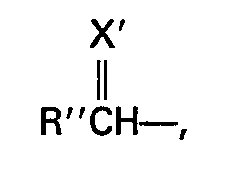
- R' is an aliphatic or aromatic function selected from:
- the compounds of the invention represent a novel type of structure in which the six-membered D-ring of such compounds as agroclavine, is replaced by a 5-membered ring. The have been found to affect the levels of prolactin in rats and are thus indicated for use in the treatment of disorders of the central nervous system.
- C 1-4 alkyl is intended to include both straight and branched chain groups, such as for example, methyl, ethyl, propyl, isopropyl, butyl and tert. butyl.
- An optionally substituted phenyl group is phenyl or phenyl substituted with one or more, preferably one to three substituents, selected from for example, C 1-4 alkyl especially methyl, C 1-4 alkoxy especially methoxy and ethoxy, nitro, cyano, hydroxy, halo and amino.
- R 2 and R 3 are each hydrogen, C 1-4 alkyl or a protecting group.
- a protecting group can be any group conventionally employed to protect a nitrogen on an indole nucleus. Such groups are well known and are discussed, for example, by R. J. Sundberg and H. F. Russell J.O.C. 38, (1973). They include groups of the formula R'CO where R' is C 1-4 alkyl, optionally substituted phenyl or optionally substituted phenyl C 1-4 alkyl, particularly preferred examples being acetyl, benzoyl, and especially benzenesulfonyl or toluenesulphonyl.
- Salts of the compounds of this invention include pharmaceutically-acceptable acid addition salts such as salts derived from non-toxic inorganic acids, for example, hydrochloric acid, nitric acid, phosphoric acid, sulphuric acid, hydrobromic acid, hydroiodic acid and phosphorous acid, as well as salts derived from non-toxic organic acids such as aliphatic mono and dicarboxylic acids, phenyl-substituted alkanoic acids, hydroxyalkanoic and hydroxyalkandioic acids, aromatic acids, aliphatic and aromatic sulphonic acids.
- non-toxic inorganic acids for example, hydrochloric acid, nitric acid, phosphoric acid, sulphuric acid, hydrobromic acid, hydroiodic acid and phosphorous acid
- non-toxic organic acids such as aliphatic mono and dicarboxylic acids, phenyl-substituted alkanoic acids, hydroxyalkanoic and hydroxyalkandi
- salts are also included within the scope of acid addition salts such as, for example, those with picric or oxalic acids; they may serve as intermediates in the purification of the compounds or in the preparation of other, for example pharmaceutically-acceptable, acid addition salts, or are useful for identification, characterisation or purification of the bases.
- cationic salts can be prepared such as inorganic salts formed with alkali or alkaline earth metals especially sodium and potassium, or organic base salts such as ammonium or tetramethylammonium.
- the zwitterionic form of the compounds formed with an amino function and a carboxy group is also included in the term "salt".
- Preferred compounds of formula (I) are those in which R' is an aliphatic or aromatic function as defined above, R 2 is hydrogen, C 1-4 alkyl or a protecting group and R 3 is C 1-4 alkyl; and acid addition salts thereof. Of these compounds three groups are especially preferred.
- the compounds of formula (I) are prepared by a novel method which involves the initial preparation of the compound in which the substituent R 1 is CH 3 CO-, which in turn can be converted to other aliphatic or aromatic functions.
- the invention includes a process for preparing a compound of formula (I) above, which comprises the rearrangement of a compound of the formula in which R 2 is as defined above and R 3 is C 1-4 alkyl or a protecting group, and -OX is a leaving group, to give a compound of formula (I) in which R' is ⁇ COCH 3 , and optionally converting the R' group to another aliphatic or aromatic function, or removing an R 2 or R 3 group when it is a protecting group.
- the compounds of formula (II) undergo a pinacolpinacolone rearrangement as described in Comprehensive Organic Chemistry (The Synthesis and Reactions of Organic Compounds) Pergamon Press 1979 Vol. 1, p. 688.
- the compound of formula (II) bearing a leaving group X on the 10-hydroxy substituent gives a compound of formula (I) when treated preferably with a base such as pyridine.
- Suitable X groups include, for example, groups of the formula R'S0 2 in which R' is C 1-4 alkyl or optionally substituted phenyl, for instance, methane sulphonate.
- the process of the invention is preferably carried out at a temperature of from 0°C to 100°C, for example, from 10°C to 60°C and in an inert organic solvent.
- a base such as pyridine which is a solvent for the reaction, excess base may be employed.
- Suitable oxidising agents include osmium tetroxide in stoichiometric amounts in an inert atmosphere such as nitrogen, or in catalytic amounts in the presence of a co-oxidant such as for example described in Comprehensive Organic Chemistry (The Synthesis and Reactions of Organic Compounds) Pergamon Press 1979, Vol. 1, p. 164, for instance N-methylmorpholine-N-oxide.
- R 2 is hydrogen
- R 2 and/or R 3 is C 1-4 alkyl or a protecting group
- reaction of agroclavine or norgroclavine with the appropriate C ' - 4 alkyl halide or with a suitable protecting group-donating compound by standard methods.
- compounds of formula (I) in which R 2 is hydrogen can be prepared by removal of a protecting group from the nitrogen atom by the use, for example, of potassium hydroxide and ethanol.
- R' groups can be derived from the compound in which R' is -COCH 3 by conventional methods known in the art, as for instance illustrated in the following Examples.
- compounds of the invention have useful central nervous system activity and low toxicity. This activity has been confirmed by their ability to alter serum prolactin levels in rats according to the test described by Clemens J. A. Smalstig E. B. and Sawyer B. D. (1974) Psychopharmacologia Vol. 40, p. 123.
- the following compounds significantly (p ⁇ 0.05) reduced the prolactin levels in reserpinised rats, by more than 20%, at dosages of 100 pg/kg i.p.,
- a positive result in the above test indicates that the compounds possess dopamine agonist activity which is indicative of use in the treatment of, for example, parkinsonism and hyperprolactinemia states.
- the compounds are effective over a wide dosage range, the actual dose administered being dependent on such factors as the particular compound being used, the condition being treated and the type and size of mammal being treated.
- the dosage required will normally fall within the range of 0.05 to 10 mg/ kg per day, for example in the treatment of adult human dosages of from 0.2 to 5 mg/kg may be used.
- compositions are prepared in a manner well known in the pharmaceutical art and normally comprise at least one active compound or pharmaceutically-acceptable salt of the invention associated with a pharmaceutically-acceptable carrier therefor.
- the active ingredient will usually be mixed with a carrier, or diluted by a carrier, or enclosed within a carrier which may be in the form of a capsule, sachet, paper or other container.
- the carrier When the carrier serves as a diluent, it may be a solid, semi-solid or liquid material which acts as a vehicle, excipient or medium for the active ingredient.
- suitable carriers are lactose, dextrose, sucrose, sorbitol, mannitol, stargesh, gum acacia, calcium phosphate, alginates, tragacanth, gelatin, syrup, methyl cellulose, methyl and propylhydroxybenzoate, talc, magnesium stearate or mineral oil.
- the compositions of the invention may, as is well-known in the art, be formulated so as to provide quick, sustained or delayed release of the active ingredient after administration to the patient.
- compositions may be formulated as tablets, capsules or suspensions for oral use and injection solutions for parenteral use.
- the compositions are formulated in a dosage uni: form, each dosage containing from 1 to 200 mg more usually 5to 100 mg, of the active ingredient.
- N-Benzenesulphonyl agroclavine (1.48 g) was dissolved under nitrogen in dry, degassed pyridine (10 ml). Diethyl ether (75 ml) was added with stirring followed by a solution of osmium tetroxide (1.0 g) in diethyl ether (20 ml). A copious brown precipitate formed and the mixture was left to stir for 16 hours. Addition of a solution of sodium hydrogen sulphite (1.628 g) in ethanol-water (40 ml, 1:1) gave a clear orange coloured solution containing a heavy brown precipitate of osmium (IV) oxide.
- Example 3 The diol of Example 3 (1.00 g) was dissolved in dry pyridine (4 ml), an excess of 4A molecular sieve (0.5 g) added and stirred solution cooled to 0°C. After 10 minutes, methanesulphonyl chloride (0.097 ml) was added and stirring continued for 16 hours.
- Example 5 To the dithioketal of Example 5 (0.259 g) and Raney nickel catalyst, 50 micron grade, (3.5 g) was added ethanol (20 ml) the resultant stirred suspension was heated to reflux. After 5 hours all starting material was indicated to have been consumed. To the cooled reaction was added chlorofrm (20 ml) and the mixture vigorously shaken and filtered. The residue was further extracted with chloroform-methanol (2 x 20 ml, 5:1) and the combined extracts evaporated under vacuum to give a dark green solid.
- the aqueous sodium hypochlorite solution was assayed prior to use in the reaction.
- the 9-carboxylic acid (0.142 g) was dissolved in thionyl chloride (0.3 ml) and stirred for 15 minutes, at 0°C. The excess thionyl chloride was removed under vacuum ( ⁇ 30°C) and the residue triturated with dry benzene (2 ml) to give the 9-acid chloride as an orange solid.
- the 9-carboxylic acid (0.50 g) was dissolved in thionyl chloride (1.245 ml) and stirred for 20 minutes at 0°C. The excess thionyl chloride was removed under vacuum ( ⁇ 30°C) to yield after trituration with dry benzene (5 ml) the 9-acid chloride as an orange solid.
- N-benzenesulphonyl 9-carboxamide (Example 18) (0.30 g) was added with stirring to anhydrous ammonia -45°C. Freshly cut sodium was added in small pieces until the blue colour persisted. After 15 minutes, the ammonia was allowed to evaporate leaving an orange residue. Ethanol (10 ml) was added to destroy residual sodium and the solution evaporated to dryness. The residue was extracted with chloroform-methanol (2 x 20 ml, 2:1), filtered and evaporated to give a product contaminated with inorganic salts as an orange solid.
- the compounds of the invention can be prepared in typical formulations, and for example the following are representative, the active ingredient being one of the pharmacologically active compounds.
- the active ingredient and starch are mixed together and massed with a solution of polyvinyl pyrrolidone in alcohol.
- the mass is extruded through a screen, dried, sized and mixed with sodium carboxymethyl starch and stearic acid prior to compression on a tablet machine. Tablets weighing 620 mg are obtained.
- a portion of the starch is mixed with the silicone fluid. To the powder is added the active ingredient and the remainder of the starch. This blended mixture is filled into hard gelatin capsules.
Landscapes
- Chemical & Material Sciences (AREA)
- Organic Chemistry (AREA)
- Health & Medical Sciences (AREA)
- Nuclear Medicine, Radiotherapy & Molecular Imaging (AREA)
- Pharmacology & Pharmacy (AREA)
- Neurosurgery (AREA)
- Biomedical Technology (AREA)
- Chemical Kinetics & Catalysis (AREA)
- General Chemical & Material Sciences (AREA)
- Medicinal Chemistry (AREA)
- Bioinformatics & Cheminformatics (AREA)
- Engineering & Computer Science (AREA)
- Neurology (AREA)
- Life Sciences & Earth Sciences (AREA)
- Animal Behavior & Ethology (AREA)
- General Health & Medical Sciences (AREA)
- Public Health (AREA)
- Veterinary Medicine (AREA)
- Pharmaceuticals Containing Other Organic And Inorganic Compounds (AREA)
- Nitrogen Condensed Heterocyclic Rings (AREA)
- Indole Compounds (AREA)
- Acyclic And Carbocyclic Compounds In Medicinal Compositions (AREA)
Claims (10)



unter Bildung einer Verbindung der Formel (I), worin R1 für -COCH3 steht, und gegebenenfalls Umwandlung der R'-Gruppe in eine andere aliphatische oder aromatische Funktion oder Entfernung einer R2- oder R3-Gruppe, wenn es sich dabei um eine Schutzgruppe handelt.

Priority Applications (1)
| Application Number | Priority Date | Filing Date | Title |
|---|---|---|---|
| AT85305218T ATE56012T1 (de) | 1984-07-27 | 1985-07-23 | Indolo-(6,5,4-cd)-indol derivate und verfahren zu deren herstellung. |
Applications Claiming Priority (2)
| Application Number | Priority Date | Filing Date | Title |
|---|---|---|---|
| GB8419278 | 1984-07-27 | ||
| GB848419278A GB8419278D0 (en) | 1984-07-27 | 1984-07-27 | Pharmaceutical compounds |
Publications (3)
| Publication Number | Publication Date |
|---|---|
| EP0176182A2 EP0176182A2 (de) | 1986-04-02 |
| EP0176182A3 EP0176182A3 (en) | 1986-05-14 |
| EP0176182B1 true EP0176182B1 (de) | 1990-08-29 |
Family
ID=10564592
Family Applications (1)
| Application Number | Title | Priority Date | Filing Date |
|---|---|---|---|
| EP85305218A Expired - Lifetime EP0176182B1 (de) | 1984-07-27 | 1985-07-23 | Indolo-(6,5,4-cd)-indol Derivate und Verfahren zu deren Herstellung |
Country Status (7)
| Country | Link |
|---|---|
| US (2) | US4742075A (de) |
| EP (1) | EP0176182B1 (de) |
| JP (1) | JPS6143189A (de) |
| AT (1) | ATE56012T1 (de) |
| DE (1) | DE3579401D1 (de) |
| GB (2) | GB8419278D0 (de) |
| IL (1) | IL75887A (de) |
Families Citing this family (6)
| Publication number | Priority date | Publication date | Assignee | Title |
|---|---|---|---|---|
| GB8608893D0 (en) * | 1986-04-11 | 1986-05-14 | Erba Farmitalia | D-nor-7-ergoline derivatives |
| EP3519816A4 (de) | 2016-09-29 | 2020-05-06 | The Regents of the University of California | Verbindungen zur erhöhung der neuronalen plastizität |
| MX2021010198A (es) | 2019-02-27 | 2021-09-21 | Univ California | Indoles n-sustituidos y otros heterociclos para el tratamiento de trastornos cerebrales. |
| KR102946120B1 (ko) | 2019-02-27 | 2026-03-30 | 더 리젠츠 오브 더 유니버시티 오브 캘리포니아 | 뇌 장애를 치료하기 위한 아제피노-인돌 및 다른 헤테로사이클 |
| WO2021076572A1 (en) * | 2019-10-14 | 2021-04-22 | The Regents Of The University Of California | Ergoline-like compounds for promoting neural plasticity |
| IL313455A (en) | 2021-12-15 | 2024-08-01 | Delix Therapeutics Inc | Phenoxy and benzyloxy modified psychroplastogens and their uses |
Family Cites Families (5)
| Publication number | Priority date | Publication date | Assignee | Title |
|---|---|---|---|---|
| GB1482871A (en) * | 1975-03-18 | 1977-08-17 | Farmaceutici Italia | Tetracyclic indole derivatives |
| IL57344A (en) * | 1978-05-23 | 1982-05-31 | Lilly Industries Ltd | Indolo(4,3-fg)-and indolo(3,4-gh)isoquinolines,their preparation and pharmaceutical compositions containing them |
| US4201862A (en) * | 1979-03-16 | 1980-05-06 | Eli Lilly And Company | 2-Azaergolines and 2-aza-8(or 9)-ergolenes |
| IL59507A (en) * | 1979-03-16 | 1984-01-31 | Erba Farmitalia | 5-(10-9)abeo-6-methylergoline derivatives,their preparation and pharmaceutical compositions containing them |
| GB2056437A (en) * | 1979-08-07 | 1981-03-18 | Erba Farmitalia | Secoergoline derivatives |
-
1984
- 1984-07-27 GB GB848419278A patent/GB8419278D0/en active Pending
-
1985
- 1985-07-22 US US06/757,223 patent/US4742075A/en not_active Expired - Fee Related
- 1985-07-23 IL IL75887A patent/IL75887A/xx not_active IP Right Cessation
- 1985-07-23 DE DE8585305218T patent/DE3579401D1/de not_active Expired - Fee Related
- 1985-07-23 EP EP85305218A patent/EP0176182B1/de not_active Expired - Lifetime
- 1985-07-23 AT AT85305218T patent/ATE56012T1/de not_active IP Right Cessation
- 1985-07-23 GB GB8518628A patent/GB2162182B/en not_active Expired
- 1985-07-26 JP JP60165648A patent/JPS6143189A/ja active Pending
-
1988
- 1988-01-27 US US07/148,807 patent/US4841056A/en not_active Expired - Fee Related
Non-Patent Citations (1)
| Title |
|---|
| Heterocycles (1981) 16, 375-379 * |
Also Published As
| Publication number | Publication date |
|---|---|
| US4742075A (en) | 1988-05-03 |
| JPS6143189A (ja) | 1986-03-01 |
| GB8419278D0 (en) | 1984-08-30 |
| EP0176182A3 (en) | 1986-05-14 |
| DE3579401D1 (de) | 1990-10-04 |
| EP0176182A2 (de) | 1986-04-02 |
| GB2162182A (en) | 1986-01-29 |
| GB2162182B (en) | 1989-04-12 |
| US4841056A (en) | 1989-06-20 |
| GB8518628D0 (en) | 1985-08-29 |
| ATE56012T1 (de) | 1990-09-15 |
| IL75887A (en) | 1988-05-31 |
| IL75887A0 (en) | 1985-12-31 |
Similar Documents
| Publication | Publication Date | Title |
|---|---|---|
| EP0266349B1 (de) | Tricyclische indolderivate, herstellung und anwendung als arzneimittel | |
| GB2034706A (en) | Benzodiazepines | |
| EP0065392A1 (de) | Pharmazeutische Zubereitungen, die Spirosuccinimidderivate enthalten | |
| NL8001771A (nl) | Nieuwe chinolonverbindingen en deze verbindingen bevattende farmaceutische preparaten. | |
| EP0176182B1 (de) | Indolo-(6,5,4-cd)-indol Derivate und Verfahren zu deren Herstellung | |
| RO108347B1 (ro) | DERIVATI DE BENZO-(b)-NAFTIRIDIN-1,8 SI PROCEDEU DE PREPARARE A ACESTORA | |
| EP0190367B1 (de) | Benzo-a,d,h-b,d-cinnolin-verbindungen, deren herstellung und arzneimittel die diese enthalten | |
| EP0259930B1 (de) | Derivate von Phenyl-, Pyrrolidin-2-yl-substituierten 5-Ring Heterocyclen mit antipsychotischer Wirkung | |
| EP0053789B1 (de) | 2-Pyridincarboxamid-Derivate, Verfahren zu ihrer Herstellung und eine pharmazeutische Zusammensetzung, die als anti-allergisches Mittel verwendbar ist | |
| CA1262250A (en) | .delta.-BUTYROLACTAMS, PHARMACOLOGICALLY ACTIVE COMPOSITIONS THEREOF, PROCESSES FOR THE PREPARATION THEREOF AND THEIR MEDICAL USE | |
| US4634708A (en) | Indolophenanthridines useful as dopaminergic and analgesic agents | |
| RU2073674C1 (ru) | Производные бензо-/с/-фенантридиния, способ их получения, фармацевтическая композиция | |
| US3984429A (en) | Pharmaceutically active compounds | |
| AU726586B2 (en) | Novel phenanthridinium derivatives | |
| US4843073A (en) | 1-t-butyl ergolines useful in the treatment of cerebral insufficiency and senile dementia | |
| EP0032821B1 (de) | Substituierte Benzopyranotriazole | |
| GB2199032A (en) | Pharmaceutical compounds and their preparation | |
| US4298610A (en) | Ester derivatives of quinolopyran-4-one-2-carboxylic acids and antiallergic antasthmatics | |
| US3728350A (en) | 1-(2-carboxyphenyl)-5,7-dimethoxy-3,4-dihydrocarbostyril intermediates for acronycis | |
| EP0012347B1 (de) | 7,8,9,10-Tetrahydrothieno(3,2-e)pyrido(4,3-b)indole, Verfahren zu ihrer Herstellung und diese enthaltende Arzneimittel | |
| US3880863A (en) | 17-Aralkyl-6 beta-azido-4,5 alpha-epox-ymorphinan-3-01{hu s | |
| CA2057829A1 (en) | 15-nitro-2beta,3beta-dihydro- and 15-nitro-2beta,3beta,6,7-tetrahydro tabersonine derivatives, pharmaceutical compositions containing them andprocess for preparing same | |
| US3766187A (en) | 3-(1,3-dialkoxy-, and 1-hydroxy-3-alkoxy-9-oxo - 4-acridanyl)propionates as intermediates for acronycine and related compounds | |
| EP0052238B1 (de) | Vincamin-Derivat, Verfahren zur Herstellung und das es enthaltende Arzneimittel | |
| Staskun | Steric inhibition to cyclization of. beta.-keto amides to indeno [1, 2, 3-de] quinolinones and related compounds |
Legal Events
| Date | Code | Title | Description |
|---|---|---|---|
| PUAI | Public reference made under article 153(3) epc to a published international application that has entered the european phase |
Free format text: ORIGINAL CODE: 0009012 |
|
| PUAL | Search report despatched |
Free format text: ORIGINAL CODE: 0009013 |
|
| 17P | Request for examination filed |
Effective date: 19850807 |
|
| AK | Designated contracting states |
Kind code of ref document: A2 Designated state(s): AT BE CH DE FR GB IT LI NL SE |
|
| AK | Designated contracting states |
Kind code of ref document: A3 Designated state(s): AT BE CH DE FR GB IT LI NL SE |
|
| 17Q | First examination report despatched |
Effective date: 19890109 |
|
| ITF | It: translation for a ep patent filed | ||
| GRAA | (expected) grant |
Free format text: ORIGINAL CODE: 0009210 |
|
| AK | Designated contracting states |
Kind code of ref document: B1 Designated state(s): AT BE CH DE FR GB IT LI NL SE |
|
| REF | Corresponds to: |
Ref document number: 56012 Country of ref document: AT Date of ref document: 19900915 Kind code of ref document: T |
|
| ET | Fr: translation filed | ||
| REF | Corresponds to: |
Ref document number: 3579401 Country of ref document: DE Date of ref document: 19901004 |
|
| PLBE | No opposition filed within time limit |
Free format text: ORIGINAL CODE: 0009261 |
|
| 26N | No opposition filed | ||
| PGFP | Annual fee paid to national office [announced via postgrant information from national office to epo] |
Ref country code: FR Payment date: 19920617 Year of fee payment: 8 |
|
| PGFP | Annual fee paid to national office [announced via postgrant information from national office to epo] |
Ref country code: SE Payment date: 19920622 Year of fee payment: 8 Ref country code: GB Payment date: 19920622 Year of fee payment: 8 |
|
| PGFP | Annual fee paid to national office [announced via postgrant information from national office to epo] |
Ref country code: CH Payment date: 19920626 Year of fee payment: 8 |
|
| PGFP | Annual fee paid to national office [announced via postgrant information from national office to epo] |
Ref country code: AT Payment date: 19920713 Year of fee payment: 8 |
|
| PGFP | Annual fee paid to national office [announced via postgrant information from national office to epo] |
Ref country code: NL Payment date: 19920731 Year of fee payment: 8 |
|
| PGFP | Annual fee paid to national office [announced via postgrant information from national office to epo] |
Ref country code: BE Payment date: 19920807 Year of fee payment: 8 |
|
| PGFP | Annual fee paid to national office [announced via postgrant information from national office to epo] |
Ref country code: DE Payment date: 19920910 Year of fee payment: 8 |
|
| PG25 | Lapsed in a contracting state [announced via postgrant information from national office to epo] |
Ref country code: GB Effective date: 19930723 Ref country code: AT Effective date: 19930723 |
|
| PG25 | Lapsed in a contracting state [announced via postgrant information from national office to epo] |
Ref country code: SE Effective date: 19930724 |
|
| PG25 | Lapsed in a contracting state [announced via postgrant information from national office to epo] |
Ref country code: LI Effective date: 19930731 Ref country code: CH Effective date: 19930731 Ref country code: BE Effective date: 19930731 |
|
| BERE | Be: lapsed |
Owner name: LILLY INDUSTRIES LTD Effective date: 19930731 |
|
| PG25 | Lapsed in a contracting state [announced via postgrant information from national office to epo] |
Ref country code: NL Effective date: 19940201 |
|
| NLV4 | Nl: lapsed or anulled due to non-payment of the annual fee | ||
| GBPC | Gb: european patent ceased through non-payment of renewal fee |
Effective date: 19930723 |
|
| PG25 | Lapsed in a contracting state [announced via postgrant information from national office to epo] |
Ref country code: FR Effective date: 19940331 |
|
| REG | Reference to a national code |
Ref country code: CH Ref legal event code: PL |
|
| PG25 | Lapsed in a contracting state [announced via postgrant information from national office to epo] |
Ref country code: DE Effective date: 19940401 |
|
| REG | Reference to a national code |
Ref country code: FR Ref legal event code: ST |
|
| EUG | Se: european patent has lapsed |
Ref document number: 85305218.1 Effective date: 19940210 |