EP0177568B1 - Rekombinant-dns-moleküle - Google Patents
Rekombinant-dns-moleküle Download PDFInfo
- Publication number
- EP0177568B1 EP0177568B1 EP85901792A EP85901792A EP0177568B1 EP 0177568 B1 EP0177568 B1 EP 0177568B1 EP 85901792 A EP85901792 A EP 85901792A EP 85901792 A EP85901792 A EP 85901792A EP 0177568 B1 EP0177568 B1 EP 0177568B1
- Authority
- EP
- European Patent Office
- Prior art keywords
- csf
- dna
- recombinant
- sequence
- mrna
- Prior art date
- Legal status (The legal status is an assumption and is not a legal conclusion. Google has not performed a legal analysis and makes no representation as to the accuracy of the status listed.)
- Expired - Lifetime
Links
Images




Classifications
-
- C—CHEMISTRY; METALLURGY
- C07—ORGANIC CHEMISTRY
- C07K—PEPTIDES
- C07K14/00—Peptides having more than 20 amino acids; Gastrins; Somatostatins; Melanotropins; Derivatives thereof
- C07K14/435—Peptides having more than 20 amino acids; Gastrins; Somatostatins; Melanotropins; Derivatives thereof from animals; from humans
- C07K14/52—Cytokines; Lymphokines; Interferons
- C07K14/53—Colony-stimulating factor [CSF]
- C07K14/535—Granulocyte CSF; Granulocyte-macrophage CSF
-
- A—HUMAN NECESSITIES
- A61—MEDICAL OR VETERINARY SCIENCE; HYGIENE
- A61P—SPECIFIC THERAPEUTIC ACTIVITY OF CHEMICAL COMPOUNDS OR MEDICINAL PREPARATIONS
- A61P37/00—Drugs for immunological or allergic disorders
Definitions
- This invention relates to DNA sequences, recombinant DNA molecules and processes for producing proteins or polypeptides with the specificity of protein molecules which control the production of particular blood cells. More specifically, this invention relates to DNA sequences and recombinant DNA molecules that are characterized in that they code for or include fragments that code for the protein molecule known as granulocyte-macrophage colony stimulating factor (GM-CSF).
- GM-CSF granulocyte-macrophage colony stimulating factor
- erythrocytes red blood cells
- granulocytes granulocytes
- macrophages and lymphocytes
- a set of protein molecules which stimulate multipotential precursor or stem cells in the bone marrow.
- these multipotential cells form cells of limited developmental potential which are variously referred to as committed progenitor cells, colony forming cells or CFCs for individual blood cell types.
- CFCs non-specific stimulators of the precursor stem cells or CFCs
- multi-CSF interleukin-3
- the so-called multi-CSF interleukin-3
- Fung, M.C., et al. Nature 307: 233-237 (1984) or Yokota, T., et al., Proc.
- GM-CSF granulocyte-macrophage colony stimulating factor
- G-CSF granulocyte colony stimulating factor
- M-CSF macrophage colony stimulating factor
- these colony stimulating factors can be produced chemically or biosynthetically, it should be possible to use these factors to improve blood cell production in vivo, to produce blood cells in the laboratory for transfusion and to accelerate the maturation of leukemic cells. For each of these applications, it is imperative that the types of blood cells produced be restricted. In particular, it is important to limit the production or activation of lymphocytes and/or their precursors.
- glycoproteins such as GM-CSF, G-CSF and M-CSF will be of particular importance since these stimulate only the production of cells required to fight primary infection or remove damaged tissue.
- This invention provides a DNA sequence coding for mammalian granulocyte-macrophage colony stimulating factor (GM-CSF) according to claim 1
- this invention provides a method of producing the recombinant DNA according to claim 1 comprising the steps of:
- this invention provides a cloning vector comprising a DNA sequence according to any of claims 1 to 5
- this invention provides a method of producing granulocyte-macrophage colony stimulating factor (GM-CSF) comprising culturing a host cell transformed by an expression vector comprising a promoter fragment which functions in said host cell and a DNA sequence according to claim 1, the DNA segment being in an orientation with said promoter such that in the host cell the GM-CSF DNA is expressed as a non-native GM-CSF protein.
- GM-CSF granulocyte-macrophage colony stimulating factor
- this invention provides a method for stimulating the production of granulocytes and macrophages comprising preparing recombinant granulocyte-macrophage stimulating factor by the method of claim 16 and contacting respective progenitor cells of said granulocytes and macrophages with a stimulating effective amount of granulocyte-macrophage stimulating factor.
- the present invention relates to the production and characterization of a recombinant DNA molecule for the production of the specific blood cell regulator granulocyte-macrophage colony stimulating factor (GM-CSF).
- GM-CSF granulocyte-macrophage colony stimulating factor
- this invention involves the production of DNA molecule coding for murine GM-CSF which may prove to be of particular importance in providing the basis for production of GM-CSF in alternative hosts, such as bacteria and animal cells.
- the DNA molecule of this invention may be used as a probe to isolate the gene sequence for the equivalent human GM-CSF for use in the production of human granulocytes and macrophages.
- the present invention provides a DNA sequence characterized in that at least a portion thereof codes for a protein or polypeptide displaying the biological activity of murine GM-CSF.
- a specific nucleotide sequence of this aspect of the invention is shown in Figure 2 (b).
- Clones harboring a nucleotide sequence useful for practicing the subject invention may be obtained by the following cloning strategy.
- GM-CSF One of the best sources of GM-CSF is stimulated mouse lung.
- GM-CSF containing recombinants were identified in this library using as probes, short synthetic oligonucleotides complementary to two portions of the GM-CSF mRNA sequence, as predicted from the partial amino acid sequences of the protein.
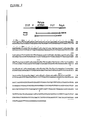
- Figure 1 shows the region of the GM-CSF amino acid sequence between residues 7 and 16, the possible combinations of nucleotide sequences that could encode this peptide and the oligonucleotides that were used as hybridization probes. Since the assignment of amino acid residue 9 was equivocal (being either histidine or cysteine) two different sets of oligonucleotides encompassing this region were synthesized; probe 1 assumes a histidine residue and probe 2 a cysteine residue at position 9. The second region within the amino acid sequence required an extremely degenerate set of oligonucleotides which were synthesized as two 48-fold degenerate sets, (probes 3 and 4).
- GM-CSF recombinants In order to identify GM-CSF recombinants a colony hybridization assay was employed. The library of cDNA clones was grown as single colonies on agar plates, replicas of the colonies transferred to nitrocellulose filters on which the colonies were then lysed and the plasmid DNA immobilized in situ. These filters were screened by hybridization with a mixture of all of the synthesized oligonucleotide probes which had been 32 P-labelled.
- nucleotide sequence of the clones was determined and is shown in Figure 2 (b), along with its encoded amino acid sequence.
- the amino acid sequence predicted by the nucleotide sequence of the clones are substantially similar to the N-terminal amino acid sequence determined from analyses of the protein, there being only 4 discrepancies between the two out of 29 positions compared. Two of the discrepancies occur at positions which were only tentatively assigned in the protein sequence.
- nucleotide sequence of the clone predicts a peptide with a molecular weight (13,500 daltons) very close to that expected for the GM-CSF protein.
- clone 38 can specifically select biologically active GM-CSF mRNA.
- Clone 38 DNA (and also DNA from the parental plasmid pJL3) was immobilized on nitrocellulose and was hybridized with RNA from mouse lung and also from a T cell line (LB3) which makes GM-CSF and a related (but distinct) regulator, IL3, after the cells have been stimulated with conA. After hybridization, the filters were washed to remove non-hybridized RNA and the specifically hybridized RNA then eluted.
- LB3 T cell line
- IL3 a related (but distinct) regulator
- RNA was injected into Xenopus oocytes (the ability of which to translate exogenous mRNA has been well documented) and the culture media assayed 3-5 days later for the presence of GM-CSF and IL3.
- a third line of experiments provides strong additional support for the identity of clone 38.
- clone 38 detects an mRNA species of approximately 1.2kb in length in RNA from cells which synthesize GM-CSF (mouse lung and conA-stimulated LB3) but not in a range of myeloid of lymphoid cells which do not synthesize GM-CSF nor in RNA from LB3 cells which had not been conA-stimulated.
- GM-CSF mouse lung and conA-stimulated LB3
- the mRNA corresponding to clone 38 is inducible along with the GM-CSF protein (See Example III).
- hybrid DNA molecules disclosed herein are also useful as probes for the detection and isolation of related gene sequences from other mammalian DNA libraries.
- the probes are conveniently labelled with an analytically detectable reagent.
- the invention should not be limited to any particular means of labelling. Although the examples employ a radioactive label for detection, other detection methods are well-known in the art and may be easily substituted.
- the cloned sequence may be subcloned into expression vectors.
- a sequence may be synthesized chemically, ligated to cloned sequence and introduced into an expression vector.
- the choice of an appropriate expression vector is well within the skill of an artisan in the field.
- the expression vector will contain a promoter fragment which functions in the host to be transformed and a convenient endonuclease cleavage site such that the gene sequence coding for GM-CSF may be combined therewith.
- This Example demonstrates the isolation of cDNA GM-CSF clones useful for practicing the subject invention.
- mice 90 C57 BL/6 mice were injected with bacterial endotoxin (5ug/mouse). After 3 hours the lungs were removed and incubated in vitro in serum free-Dulbecco's modified Eagles medium (Sheridan J. & D. Metcalf J. Cell Physiol. 81: 11-24 (1973)). After 0, 5 and 15 hours in vitro, batches of 30 pairs of lungs were homogenized for 60 seconds in 150ml 10mM Tris pH7.5, 0.1 M NaCI, 1 mM EDTA, 0.5% SDS, 200 ⁇ g/ml proteinase K.
- Duplex DNA copies of the pooled lung mRNA were synthesized using avian myeloblastosis virus reverse transcriptase for synthesis of the first-strand and Escherichia coli DNA polymerase I (Klenow fragment) for synthesis of the second strand, using standard techniques (Efstratiadis, A. et al. Cell 7: 279-288 (1976) and Maniatis, T., et al. "Molecular Cloning", Cold Spring Harbor Lab, New York (1982)).
- oligo(dC) tails (approximately 20-30 residues per end) were added using terminal deoxynucleotidyltransferase (Michelson, A.M. & S. Orkin J. Biol. Chem. 257: 14773-14782 (1982)).
- the tailed cDNA was fractionated by electrophoresis on a 1.5% agarose gel and molecules greater than 500 bases in length recovered and annealed to dG-tailed plasmid DNA.
- the plasmid used is an SV40-based expression vector that contains the ,8-lactamase gene and origin of DNA replication from pAT153, the SV40 origin of DNA replication and T-antigen coding sequences and a multicloning site adjacent to the SV40 late promoter (See Figure 3).
- E. coli MC1061 (Casadabon, M. and S. Cohen, J. Mol. Biol. 138: 179-207 (1980)) was transformed with the annealed cDNA-plasmid mixture using a high efficiency transformation procedure that yields 10 8 transformants per ⁇ g of vector DNA. Forty-six independent pools containing approximately 2,000-3,000 ampicillin-resistant clones were stored in 10% glycerol at -70 ° C.
- bacterial colonies from each pool were grown on agar plates (containing 40 ⁇ g ml- 1 ampicillin), transferred to nitrocellulose filter disks and plasmid DNA amplified by incubation of the filter on agar plates containing 200 ⁇ g ml- 1 chloramphenicol (Hanahan, D. & M. Meselson Gene 10: 63-67 (1980)). After regrowth of colonies on the original plate, a second nitrocellulose filter was prepared. The master plate was regrown a second time and then stored at 4°C. Plasmid DNA was released from the bacterial colonies and fixed to the nitrocellulose filters (Nicola N. & D. Metcalf, J. cell Physiol.
- the synthetic oligonucleotide probes described above were radioactively labelled using [y- 32 P] ATP and polynucleotide kinase and each was present in the hybridization reaction at 1.5 nm ml- 1. After hybridization, filters were extensively washed in 6xSSC, 0.1% SDS at 42°C and then autoradiographed. Colonies positive on duplicate filters were picked and rescreened at low density as before.
- This Example demonstrates the ability of pGM38 to select mRNA capable of directing the synthesis of GM-CSF.
- GM-CSF mRNA was identified by translation in Xenopus oocytes and the culture medium assayed for ability to stimulate granulocyte/macrophage proliferation in three microculture system: (1) liquid cultures containing purified fetal liver haematopoietic progenitor cells, which respond directly to all four colony stimulating factors (Burgess, A.W., et al., Blood 60: 1219-23 (1982)); (2) micro-agar cultures containing bone marrow cells, in which the formation of morphologically identifiable granulocyte and macrophage colonies can be stimulated by all four colony stimulating factors; and (3) liquid cultures containing the factor- dependent mast cell line 32D C13, which responds to multi-CSF but not GM-CSF. From this set of assays, GM-CSF and multi-CSF can be unambiguously distinguished.
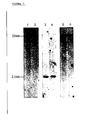
- Figure 4 shows that this probe detected a low abundance transcript of about 1.2 kilobases (kb) in mRNA from mouse lung (lane 3), but not in mRNA from several randomly selected cell lines which do not synthesize GM-CSF, including the thymoma-derived cell line TIKAUT (lane 1) and the plasmacytoma P3 (lane 2). Furthermore, this probe failed to detect any transcript in mRNA from WEH1-3B D- (lane 6), Rill (lane 7) and L cells (lane 8), which synthesize multi-CSF, G-CSF and M-CSF respectively. The very low abundance of the transcript corresponding to pGM38 in lung mRNA was surprising given the low frequency of pGM38-related cDNA clones in the lung cDNA library (-1 in 50,000).
- a cloned T lymphocyte cell line (LB3) was used in which the synthesis of both GM-CSF and multi-CSF is induced by concanavalin A.
- Figure 4 shows that the pGM38-derived probe detected an abundant mRNA in LB3 cells that had been stimulated with concanavalin A (lane 5 ) but failed to detect any transcript in mRNA from unstimulated LB3 cells (lane 4). As the probe used does not hybridize to the multi-CSF mRNA in WEH1-3B D- (lane 6), such is further evidence that pGM38 hybridized to the GM-CSF mRNA in LB3 cells.
- GM-CSF mRNA in the various cells was accomplished as follows. 5 ⁇ g of poly(A) RNA from TIKAUT (lane 1), P3 (lane 2), mouse lung (lane 3), unstimulated LB3 (lane 4), concanavalin A-stimulated LR3 (lane 5), WEH13B D- (lane 6), Rill (lane 7) and L cells (lane 8) were electrophoresed on 1 % formaldehyde/agarose gels, transferred to nitrocellulose and hybridized with a fragment of DNA spanning the entire insert of pGM38 32 P-labelled by nick-translation (Rigby, P.W.J., et al., J. Mol. Biol.
- Hybridization was at 65°C for 16 hours in 2xSSC, 0.1% SDS, 0.2% Ficoll, 0.2% PVP, 0.2% BSA containing 50 ⁇ g ml- 1 of denatured salmon sperm DNA.
- LB3 (formerly B3) is a cloned Thy-1 + , Lyt-2-, MT4 + T lymphocyte line derived from BALB/c anti-DBA/2 mixed leukocyte culture, and maintained by weekly passage with irradiated DBA/2 spleen cells (1,500 R) in the presence of interleukin-2.
- Concanavalin A-stimulated LB3 cells were prepared by culturing cells at 10 6 per ml with 5 ⁇ g ml- 1 concanavalin A in tissue culture medium with 5% fetal calf serum for 5 hours.
- the molecular weight markers used and their presumed molecular weights were: mammalian 28 and 18S rRNA (4,700 and 1,800 nucleotides) and E. coli 23 and 16S rRNA (2,904 and 1,541 nucleotides).
- a lower level of hybridization to residual 28S rRNA is evident after long autoradiographic exposure (tracks 1-3).
- Hybrid selection was performed essentially as described by Miller, J.S., et al. (Meth. Enzym. 101: 650-674 (1983)).
- pGM38 or vector (pJL3) DNA (5-ug aliquots) were bound to small squares of nitrocellulose and incubated with 1-2 ⁇ g aliquots of concanavalin A-stimulated LB3 mRNA in 50% formamide, 0.5 M Tris-HCI pH 7.5, 0.75 M NaCI, 0.002 M EDTA, 0.4% SDS, 10 ug ml- 1 E. coli tRNA in a reaction volume of 30 ul at 37 ° C for 16 hours.
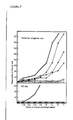
- RNA sample groups of 30 Xenopus oocytes were injected with 50 nl of RNA per egg. Unfractionared LB3 mRNA was at 1 ⁇ g ml- 1 for injection and 50 nl was injected per egg. After incubation of injected oocytes for 4 days, oocyte culture medium was diluted 1:2 in medium containing 5% fetal calf serum, filtered and 5- ⁇ l volumes assayed in serial dilutions in 15-ul cultures containing 200 fluorescence- activated cell sorter fractionated 14 day CBA fetal liver progenitor cells for 200 32D C13 cells. Each point in Figure 5 represents the mean cell count from duplicate cultures after 2 days of incubation.
- mRNA from concanavalin A-stimulated LB3 cells which synthesize both GM- and multi-CSF
- mRNA corresponding to pGM38 Figure 4
- Triplicate filters containing either pGM38 or vector DNAs were therefore challenged with concanavalin A-stimulated LB3 mRNA in a hybrid-selection experiment as described above.
- Figure 5 shows that medium from oocytes injected with mRNA selected by pGM38 DNA strongly stimulated fetal progenitor cell proliferation with the development of maturing granulocytes and macrophages (Figure 6). These oocyte-conditioned media also stimulated typical granulocyte-macrophage colony formation in micro-agar cultures (18% granulocyte, 53% mixed granulocyte-macrophage and 29% macrophage colonies). In neither assay was there evidence that these oocyte-conditioned media stimulated the proliferation of erythroid, megakaryocytic or eosinophilic cells, hence the active factor appeared to be GM-CSF rather than multi-CSF. In confirmation of this conclusion, these oocyte-conditioned media were found to be incapable of stimulating proliferation of 32D C13 cells ( Figure 5). Vector DNA alone failed to select mRNA corresponding to GM-CSF or multi-CSF ( Figure 5a, b).
- This Example provides the nucleotide sequence of GM-CSF gene.
- Nucleotide sequence analysis of the cDNA portion of pGM37 and pGM38 revealed that these two clones, which contain sequences complementary to overlapping portions of the same mRNA, contain the putative GM-CSF mRNA sequence.
- the relationship between the cDNA portion of the two clones and the mRNA is shown in Figure 2a.
- the nucleotide sequence given in Figure 2b is a composite derived from both clones. A stretch of 20 adenosine residues, corresponding to the poly(A) tail of the mRNA, preceded by the hexanucleotide AATAAA (found toward the 3' terminus of most eukaryotic mRNAs) is present at one end of pGM38. This allowed orientation of the sequences of the cDNA clones with that of the mRNA.
- Fig. 2b contains a single large open reading frame of 354 nucleotides; the amino acid sequence predicted by this region is presented from the first residue of the mature protein and is given above the nucleotide sequence. From residues 2 to 29, the amino acid sequence is identical (but for four residues) with the partial NH 2 -terminal amino acid sequence for GM-CSF, which is shown above that predicted by the cDNA. Of the four discrepancies, two of the residues (20 and 24) had been only tentatively assigned in the sequence of the protein. The first residue on the mature peptide, which could not be determined in the protein sequence, is predicted by the nucleotide sequence to be isoleucine.
- the primary structure of the protein deduced from the nucleotide sequence has a molecular weight of 13,500, which is in good agreement with the apparent molecular weight of 16,800 for GM-CSF extensively deglycosylated with endoglycosidase F.
- Two potential N-glycosylation sites (Asn-X-Thr) which occur within the predicted amino acid sequence, are indicated in Figure 2b by asterisks.
- pGM37 extends 20 nucleotides 5' to the first position presented in Figure 2b and does not contain an initiation codon; several hydrophobic amino acids are contained within this region (not shown), a characteristic of signal peptides of secreted proteins.
- the size of the GM-CSF mRNA is -1,200 nucleotides ( Figure 4), of which -150 nucleotides are probably contributed by the poly(A) tail.
- the 3' untranslated region is 319 nucleotides and the region encoding the mature protein 354 nucleotides ( Figure 2b). Thus some 350 nucleotides remain for the putative (NH 2 -terminal signal peptide an the 5' untranslated region.
- mice C57BL/6 from which the cDNA clones were isolated are richly inbred and hence should be homozygous at the GM-CSF locus, and as there appears to be only one gene encoding GM-CSF in the mouse germ line, it is likely that these three sequences ambiguities reflect artefacts created during cDNA synthesis, and indeed reverse transcriptase has an error frequency on synthetic polynucleotides of approximately one in 600 nucleotides.
- the sequence of the mRNA-synonymous strand is listed 5' to 3', with the predicted amino acid sequence of GM-CSF given above; numbers at the ends of lines indicated the position of the final residue (amino acid or nucleotide) on that line.
- the partial amino acid sequence determined for GM-CSF is indicated above the sequence derived from the clones; at positions where there is no discordance between the two, dashes are given.
- the first amino acid residue, determined by analysis of the protein, could not be assigned, and is indicated by a question mark. Potential N-glycosylation sites are indicated with asterisks, and the putative polyadenylation signal is underlined.
- Figure 7 also reveals that the GM-CSF gene is contained within the same EcoRl fragment in DNA from concanavalin A-stimulated LB3 cells (lane 6) as in embryo DNA (lane 5). No additional bands were evident in LB3 DNA nor was the intensity of hybridization different from that of embryo DNA, from which it is inferred that there are no alterations in the copy number or gross changes in the context of the GM-CSF gene in cells which synthesize large quantities of GM-CSF.
Landscapes
- Health & Medical Sciences (AREA)
- Chemical & Material Sciences (AREA)
- Life Sciences & Earth Sciences (AREA)
- Organic Chemistry (AREA)
- Medicinal Chemistry (AREA)
- General Health & Medical Sciences (AREA)
- Immunology (AREA)
- Genetics & Genomics (AREA)
- Proteomics, Peptides & Aminoacids (AREA)
- Molecular Biology (AREA)
- Biophysics (AREA)
- Biochemistry (AREA)
- Gastroenterology & Hepatology (AREA)
- Zoology (AREA)
- Toxicology (AREA)
- Engineering & Computer Science (AREA)
- General Chemical & Material Sciences (AREA)
- Bioinformatics & Cheminformatics (AREA)
- Animal Behavior & Ethology (AREA)
- Chemical Kinetics & Catalysis (AREA)
- Pharmacology & Pharmacy (AREA)
- Public Health (AREA)
- Nuclear Medicine, Radiotherapy & Molecular Imaging (AREA)
- Veterinary Medicine (AREA)
- Micro-Organisms Or Cultivation Processes Thereof (AREA)
- Preparation Of Compounds By Using Micro-Organisms (AREA)
- Measuring Or Testing Involving Enzymes Or Micro-Organisms (AREA)
- Peptides Or Proteins (AREA)
- Saccharide Compounds (AREA)
- Medicines That Contain Protein Lipid Enzymes And Other Medicines (AREA)
Claims (23)


Applications Claiming Priority (3)
| Application Number | Priority Date | Filing Date | Title |
|---|---|---|---|
| AU4173/84 | 1984-03-21 | ||
| AUPG417384 | 1984-03-21 | ||
| PCT/US1985/000465 WO1985004188A1 (en) | 1984-03-21 | 1985-03-19 | Recombinant dna molecules |
Related Child Applications (1)
| Application Number | Title | Priority Date | Filing Date |
|---|---|---|---|
| EP93110721.3 Division-Into | 1993-07-05 |
Publications (3)
| Publication Number | Publication Date |
|---|---|
| EP0177568A1 EP0177568A1 (de) | 1986-04-16 |
| EP0177568A4 EP0177568A4 (de) | 1987-10-08 |
| EP0177568B1 true EP0177568B1 (de) | 1994-06-22 |
Family
ID=3770545
Family Applications (2)
| Application Number | Title | Priority Date | Filing Date |
|---|---|---|---|
| EP93110721A Withdrawn EP0574029A1 (de) | 1984-03-21 | 1985-03-19 | Rekombinante DNS-Moleküle |
| EP85901792A Expired - Lifetime EP0177568B1 (de) | 1984-03-21 | 1985-03-19 | Rekombinant-dns-moleküle |
Family Applications Before (1)
| Application Number | Title | Priority Date | Filing Date |
|---|---|---|---|
| EP93110721A Withdrawn EP0574029A1 (de) | 1984-03-21 | 1985-03-19 | Rekombinante DNS-Moleküle |
Country Status (8)
| Country | Link |
|---|---|
| US (1) | US5602007A (de) |
| EP (2) | EP0574029A1 (de) |
| JP (3) | JPS61501490A (de) |
| AU (2) | AU594014B2 (de) |
| DE (1) | DE3587864T2 (de) |
| DK (1) | DK538485A (de) |
| NL (1) | NL940022I1 (de) |
| WO (1) | WO1985004188A1 (de) |
Cited By (1)
| Publication number | Priority date | Publication date | Assignee | Title |
|---|---|---|---|---|
| US7588755B1 (en) | 1980-04-03 | 2009-09-15 | Biogen Idec Ma Inc. | DNA sequences, recombinant DNA molecules and processes for producing human fibroblast interferon-like polypeptides |
Families Citing this family (53)
| Publication number | Priority date | Publication date | Assignee | Title |
|---|---|---|---|---|
| NZ228031A (en) * | 1984-07-06 | 1991-12-23 | Sandoz Ltd | Primate gm-csf and method of extraction |
| JPS61227526A (ja) * | 1984-07-25 | 1986-10-09 | Chugai Pharmaceut Co Ltd | 新規なコロニー刺激因子 |
| UA29377C2 (uk) * | 1984-09-19 | 2000-11-15 | Новартіс Аг | Спосіб отримання білка з активністю колонієстимулювального фактора гранулоцитів та макрофагів(gm-csf) приматів |
| IL77080A (en) * | 1984-11-20 | 1998-02-08 | Schering Biotech Corp | Polypeptides exhibiting human granulocyte macrophage and eosinophil cellular growth factor activity, vectors and transformed cells for their production and pharmaceutical compositions comprising them |
| US5078996A (en) * | 1985-08-16 | 1992-01-07 | Immunex Corporation | Activation of macrophage tumoricidal activity by granulocyte-macrophage colony stimulating factor |
| DE3681551D1 (de) * | 1985-09-30 | 1991-10-24 | Chugai Pharmaceutical Co Ltd | Menschlicher granulozyten-colony stimulierender faktor. |
| JPH0618778B2 (ja) * | 1985-10-04 | 1994-03-16 | 中外製薬株式会社 | 白血球減少症治療剤 |
| DE3545568A1 (de) * | 1985-12-21 | 1987-07-16 | Hoechst Ag | Gm-csf-protein, seine derivate, herstellung solcher proteine und ihre verwendung |
| US5298603A (en) * | 1985-12-21 | 1994-03-29 | Hoechst Aktiengesellschaft | GM-CSF protein, its derivatives, the preparation of proteins of this type, and their use |
| EP0232707A1 (de) * | 1986-01-09 | 1987-08-19 | Ajinomoto Co., Inc. | Menschlicher Faktor zur Steigerung des hämatopoietischen Zellwachstums |
| US5106733A (en) * | 1987-06-25 | 1992-04-21 | Immunex Corporation | Bovine granulocyte-macrophage colony stimulating factor |
| JPH03503897A (ja) * | 1988-04-21 | 1991-08-29 | メドベット・サイエンス・プロプライアテリー・リミテッド | ひとgm‐csf変異形類 |
| WO1991002063A1 (en) * | 1989-08-11 | 1991-02-21 | Amrad Corporation Limited | Improvements in granulocyte-macrophage colony-stimulating factor receptor and derivatives thereof |
| ES2328424T3 (es) | 1993-09-15 | 2009-11-12 | Novartis Vaccines And Diagnostics, Inc. | Vectores de alfavirus recombinantes. |
| WO1995023862A1 (en) * | 1994-03-04 | 1995-09-08 | Ludwig Institute For Cancer Research | Animals with targeted gene disruption |
| DE69738521T2 (de) | 1996-04-05 | 2009-05-07 | Novartis Vaccines and Diagnostics, Inc., Emeryville | Alphaviren-vektors mit einer reduzierten inhibierung der synthese von zellmakromolekülen |
| EP2298900A1 (de) | 1996-09-17 | 2011-03-23 | Novartis Vaccines and Diagnostics, Inc. | Zusammensetzungen und Verfahren zur Behandlung intrazellulärer Erkrankungen |
| US20080076706A1 (en) | 1997-07-14 | 2008-03-27 | Bolder Biotechnology, Inc. | Derivatives of Growth Hormone and Related Proteins, and Methods of Use Thereof |
| US7153943B2 (en) * | 1997-07-14 | 2006-12-26 | Bolder Biotechnology, Inc. | Derivatives of growth hormone and related proteins, and methods of use thereof |
| US6753165B1 (en) * | 1999-01-14 | 2004-06-22 | Bolder Biotechnology, Inc. | Methods for making proteins containing free cysteine residues |
| ATE375363T1 (de) * | 1997-07-14 | 2007-10-15 | Bolder Biotechnology Inc | Derivate des wachstumshormons und verwandte proteine |
| DE69821011T3 (de) | 1997-10-02 | 2009-01-08 | MAX-PLANCK-Gesellschaft zur Förderung der Wissenschaften e.V. | Verfahren zur Modulierung der Neovaskularisierung und/oder des Wachstums kollateraler Arterien und/oder anderer Arterien aus bestehenden arteriolären Verbindungen |
| WO2000039302A2 (en) | 1998-12-31 | 2000-07-06 | Chiron Corporation | Improved expression of hiv polypeptides and production of virus-like particles |
| US7935805B1 (en) | 1998-12-31 | 2011-05-03 | Novartis Vaccines & Diagnostics, Inc | Polynucleotides encoding antigenic HIV Type C polypeptides, polypeptides and uses thereof |
| US8288126B2 (en) | 1999-01-14 | 2012-10-16 | Bolder Biotechnology, Inc. | Methods for making proteins containing free cysteine residues |
| AU764681C (en) * | 1999-02-12 | 2005-07-07 | Washington University | Stimulating neutrophil function to treat inflammatory bowel disease |
| JP2004506021A (ja) * | 2000-08-11 | 2004-02-26 | ファブリル インコーポレイテッド | T細胞媒介性病態を改変するための方法および組成物 |
| US6911204B2 (en) * | 2000-08-11 | 2005-06-28 | Favrille, Inc. | Method and composition for altering a B cell mediated pathology |
| EP2292772A1 (de) | 2001-07-05 | 2011-03-09 | Novartis Vaccines and Diagnostics, Inc. | HIV Impfung mit für ein HIV Polypeptid kodierender DNS und einem HIV Polypeptid |
| AU2002320314A1 (en) | 2001-07-05 | 2003-01-21 | Chiron, Corporation | Polynucleotides encoding antigenic hiv type c polypeptides, polypeptides and uses thereof |
| US7381801B2 (en) | 2002-02-13 | 2008-06-03 | Ludwig Institute For Cancer Research | Chimerized GM-CSF antibodies |
| ES2627445T3 (es) | 2002-05-01 | 2017-07-28 | Miltenyi Biotec Technology, Inc. | Partículas de vector de lentivirus resistentes a la inactivación por el complemento |
| GB0210741D0 (en) * | 2002-05-10 | 2002-06-19 | Medical Res Council | Methods of therapy |
| GB0224415D0 (en) * | 2002-10-21 | 2002-11-27 | Medical Res Council | Compositions |
| JP4750024B2 (ja) | 2003-06-20 | 2011-08-17 | プロテイン サイエンシーズ コーポレイション | Sarsの免疫原を発現するベクター、そのようなベクター又はその発現産物を含有する組成物、並びにその作製及び使用の方法及びアッセイ |
| WO2006050394A2 (en) | 2004-11-01 | 2006-05-11 | Novartis Vaccines And Diagnostics Inc. | Combination approaches for generating immune responses |
| GB0524103D0 (en) * | 2005-11-26 | 2006-01-04 | Medical Res Council | Healing |
| CA2641169C (en) | 2006-02-08 | 2017-05-02 | Morphotek, Inc. | Antigenic gm-csf peptides and antibodies to gm-csf |
| US20100196336A1 (en) | 2006-05-23 | 2010-08-05 | Dongsu Park | Modified dendritic cells having enhanced survival and immunogenicity and related compositions and methods |
| AU2010307075B2 (en) | 2009-10-12 | 2014-12-18 | The United States Of America, As Represented By The Secretary, Department Of Health And Human Services | Granulysin in immunotherapy |
| US20140030218A1 (en) | 2011-01-05 | 2014-01-30 | Imperial Innovations Limited | Treatment And Screening |
| EP2870238A4 (de) | 2012-07-05 | 2016-03-09 | Ohio State Innovation Foundation | Zusammensetzungen und verfahren in zusammenhang mit viralen impfstoffen |
| CA2996762A1 (en) | 2015-08-31 | 2017-03-09 | Technovax, Inc. | Human respiratory syncytial virus (hrsv) virus-like particles (vlps) based vaccine |
| EP3778881A1 (de) | 2016-01-08 | 2021-02-17 | Replimune Limited | Modifiziertes onkolytisches virus |
| JP7250520B2 (ja) | 2016-04-13 | 2023-04-03 | ヤンセン ファーマシューティカルズ,インコーポレーテッド | 組換えアルテリウイルスレプリコン系およびその使用 |
| KR102718353B1 (ko) | 2016-10-17 | 2024-10-15 | 얀센 파마슈티칼즈, 인코포레이티드 | 재조합 바이러스 레플리콘 시스템 및 그의 용도 |
| JP7788787B2 (ja) | 2016-12-05 | 2025-12-19 | ヤンセン ファーマシューティカルズ,インコーポレーテッド | 遺伝子発現増強のための組成物および方法 |
| GB201700350D0 (en) | 2017-01-09 | 2017-02-22 | Replimune Ltd | Altered virus |
| EA202091513A1 (ru) | 2017-12-19 | 2020-09-09 | Янссен Сайенсиз Айрлэнд Анлимитед Компани | Вакцины против вируса гепатита b (hbv) и их применение |
| US11389531B2 (en) | 2017-12-19 | 2022-07-19 | Janssen Sciences Ireland Unlimited Company | Methods and apparatus for the delivery of hepatitis B virus (HBV) vaccines |
| US11020476B2 (en) | 2017-12-19 | 2021-06-01 | Janssen Sciences Ireland Unlimited Company | Methods and compositions for inducing an immune response against Hepatitis B Virus (HBV) |
| WO2019143949A2 (en) | 2018-01-19 | 2019-07-25 | Synthetic Genomics, Inc. | Induce and enhance immune responses using recombinant replicon systems |
| KR20210074314A (ko) | 2018-10-08 | 2021-06-21 | 얀센 파마슈티칼즈, 인코포레이티드 | 생체치료제의 투여를 위한 알파바이러스 기반 레플리콘 |
Family Cites Families (7)
| Publication number | Priority date | Publication date | Assignee | Title |
|---|---|---|---|---|
| IN150740B (de) * | 1978-11-24 | 1982-12-04 | Hoffmann La Roche | |
| US4438032A (en) * | 1981-01-30 | 1984-03-20 | The Regents Of The University Of California | Unique T-lymphocyte line and products derived therefrom |
| US4658018A (en) * | 1984-03-13 | 1987-04-14 | Immunex Corporation | Process for producing homogeneous colony stimulating factor |
| NZ228031A (en) * | 1984-07-06 | 1991-12-23 | Sandoz Ltd | Primate gm-csf and method of extraction |
| IL77080A (en) * | 1984-11-20 | 1998-02-08 | Schering Biotech Corp | Polypeptides exhibiting human granulocyte macrophage and eosinophil cellular growth factor activity, vectors and transformed cells for their production and pharmaceutical compositions comprising them |
| US4810643A (en) * | 1985-08-23 | 1989-03-07 | Kirin- Amgen Inc. | Production of pluripotent granulocyte colony-stimulating factor |
| US5298603A (en) * | 1985-12-21 | 1994-03-29 | Hoechst Aktiengesellschaft | GM-CSF protein, its derivatives, the preparation of proteins of this type, and their use |
-
1985
- 1985-03-18 AU AU40084/85A patent/AU594014B2/en not_active Expired
- 1985-03-19 EP EP93110721A patent/EP0574029A1/de not_active Withdrawn
- 1985-03-19 WO PCT/US1985/000465 patent/WO1985004188A1/en not_active Ceased
- 1985-03-19 JP JP60501426A patent/JPS61501490A/ja active Pending
- 1985-03-19 EP EP85901792A patent/EP0177568B1/de not_active Expired - Lifetime
- 1985-03-19 DE DE3587864T patent/DE3587864T2/de not_active Expired - Lifetime
- 1985-11-21 DK DK538485A patent/DK538485A/da not_active Application Discontinuation
-
1988
- 1988-12-09 US US07/283,108 patent/US5602007A/en not_active Expired - Lifetime
-
1990
- 1990-05-24 AU AU55893/90A patent/AU629938B2/en not_active Expired
-
1994
- 1994-11-03 NL NL940022C patent/NL940022I1/nl unknown
-
1996
- 1996-04-17 JP JP8095743A patent/JPH09271A/ja active Pending
-
1997
- 1997-11-26 JP JP9325042A patent/JPH10165190A/ja active Pending
Cited By (1)
| Publication number | Priority date | Publication date | Assignee | Title |
|---|---|---|---|---|
| US7588755B1 (en) | 1980-04-03 | 2009-09-15 | Biogen Idec Ma Inc. | DNA sequences, recombinant DNA molecules and processes for producing human fibroblast interferon-like polypeptides |
Also Published As
| Publication number | Publication date |
|---|---|
| DE3587864D1 (de) | 1994-07-28 |
| JPS61501490A (ja) | 1986-07-24 |
| WO1985004188A1 (en) | 1985-09-26 |
| AU629938B2 (en) | 1992-10-15 |
| AU594014B2 (en) | 1990-03-01 |
| EP0574029A1 (de) | 1993-12-15 |
| DK538485D0 (da) | 1985-11-21 |
| EP0177568A1 (de) | 1986-04-16 |
| US5602007A (en) | 1997-02-11 |
| AU4008485A (en) | 1985-09-26 |
| AU5589390A (en) | 1990-09-13 |
| JPH10165190A (ja) | 1998-06-23 |
| JPH09271A (ja) | 1997-01-07 |
| DE3587864T2 (de) | 1994-09-29 |
| NL940022I1 (nl) | 1995-01-02 |
| DK538485A (da) | 1985-11-21 |
| EP0177568A4 (de) | 1987-10-08 |
Similar Documents
| Publication | Publication Date | Title |
|---|---|---|
| EP0177568B1 (de) | Rekombinant-dns-moleküle | |
| Gough et al. | Molecular cloning of cDNA encoding a murine haematopoietic growth regulator, granulocyte—macrophage colony stimulating factor | |
| EP0285448B1 (de) | Leukämie hemmender Faktor | |
| KR910002692B1 (ko) | 수정 호르몬의 제조방법 | |
| Rajavashisth et al. | Cloning and tissue-specific expression of mouse macrophage colony-stimulating factor mRNA. | |
| Gisselbrecht et al. | Frequent c-fms activation by proviral insertion in mouse myeloblastic leukaemias | |
| Lobe et al. | Cloning of two genes that are specifically expressed in activated cytotoxic T lymphocytes. | |
| Haas et al. | cDNA cloning of the immunoglobulin heavy chain binding protein. | |
| EP0088540A2 (de) | DNS-Sequenzen, Rekombinante DNS-Moleküle und Verfahren zur Herstellung von dem immunen menschlichen Interferon ähnlichen Polypeptiden | |
| WO1988001297A1 (en) | Expression of g-csf and muteins thereof | |
| WO1992014748A1 (en) | Identification of a novel human receptor tyrosine kinase gene | |
| JP2002528066A (ja) | T細胞誘導性因子(tif)をコードする単離された核酸分子、コードされたタンパク質およびその使用 | |
| EP0165654A2 (de) | Gereinigtes Interleukin-1 | |
| EP0851030B9 (de) | PROTEIN, DAS FÜR MENSCHLICHE Th2-ZELLEN SPEZIFISCH IST, DAFÜR KODIERENDES GEN UND KORRESPONDIERENDE TRANSFORMANTE, REKOMBINANTER VEKTOR UND MONOKLONALER ANTKÖRPER | |
| EP0188864B1 (de) | Für menschliches Interleukin-1 alpha codierende DNA und die dazu korrespondierende Aminosäurenkette, Vektoren und Wirte, die eine solche DNA enthalten und deren Herstellung | |
| ZA200101819B (en) | Mammalian transforming growth factor beta - 9. | |
| JP2798240B2 (ja) | インターフェロン誘起遺伝子及び酵素 | |
| JP2888846B2 (ja) | 腫瘍遺伝子にコードされた成長因子活性を有するポリペプチド並びにその産生及び使用方法 | |
| CA1341625C (en) | Recombinant mammalian gm-csf, dna encoding mammalian gm-scf and methods of use thereof | |
| CA2358380A1 (en) | Testis-specific gene | |
| JPH07194389A (ja) | 哺乳類のgm−csfポリペプチドとその製造方法および顆粒球とマクロファージの産生を刺激する方法 | |
| KR0121322B1 (ko) | 백혈병 억제 인자 제조를 위한 재조합 dna 분자 및 숙주 세포 | |
| JP2000512133A (ja) | 多発性骨髄腫で変化した遺伝子の同定 | |
| Ferrari | The Calcyclin Gene | |
| JPH08271A (ja) | 新規なポリペプチド、その製造方法、そのポリペプチドをコードするdna、そのdnaからなるベクター、そのベクターで形質転換された宿主細胞、そのポリペプチドの抗体、およびそのペプチドまたは抗体を含有する薬学的組成物 |
Legal Events
| Date | Code | Title | Description |
|---|---|---|---|
| PUAI | Public reference made under article 153(3) epc to a published international application that has entered the european phase |
Free format text: ORIGINAL CODE: 0009012 |
|
| AK | Designated contracting states |
Kind code of ref document: A1 Designated state(s): BE CH DE FR GB LI NL SE |
|
| 17P | Request for examination filed |
Effective date: 19860314 |
|
| A4 | Supplementary search report drawn up and despatched |
Effective date: 19871008 |
|
| 17Q | First examination report despatched |
Effective date: 19891218 |
|
| RAP1 | Party data changed (applicant data changed or rights of an application transferred) |
Owner name: RESEARCH CORPORATION TECHNOLOGIES, INC. |
|
| GRAA | (expected) grant |
Free format text: ORIGINAL CODE: 0009210 |
|
| AK | Designated contracting states |
Kind code of ref document: B1 Designated state(s): BE CH DE FR GB LI NL SE |
|
| REG | Reference to a national code |
Ref country code: FR Ref legal event code: CP Free format text: PRODUCT NAME: MOLGRAMOSTIM; NAT. REGISTRATION NO/DATE: NL 17351 19930226; FIRST REGISTRATION: GB - 0201/0149 19921023 Spc suppl protection certif: 94C0010 Filing date: 19940707 |
|
| REF | Corresponds to: |
Ref document number: 3587864 Country of ref document: DE Date of ref document: 19940728 |
|
| ET | Fr: translation filed | ||
| REG | Reference to a national code |
Ref country code: SE Ref legal event code: SPCF Free format text: 85901792 |
|
| REG | Reference to a national code |
Ref country code: GB Ref legal event code: CTFF Free format text: GBCTFFSPC/GB94/015, 940929 |
|
| CCPA | Be: application for a complementary protection certificate |
Free format text: 094C0019 |
|
| REG | Reference to a national code |
Ref country code: FR Ref legal event code: CR Free format text: FRCR 94C0010, 940707 |
|
| REG | Reference to a national code |
Ref country code: NL Ref legal event code: AC1 Free format text: NLAC1 940022, 941103 |
|
| EAL | Se: european patent in force in sweden |
Ref document number: 85901792.3 |
|
| REG | Reference to a national code |
Ref country code: FR Ref legal event code: CY Free format text: FRCY 94C0010, 940707, EXPIRES:20071023 Ref country code: FR Ref legal event code: CP |
|
| PLBI | Opposition filed |
Free format text: ORIGINAL CODE: 0009260 |
|
| 26 | Opposition filed |
Opponent name: IMMUNEX CORPORATION Effective date: 19950322 |
|
| NLR1 | Nl: opposition has been filed with the epo |
Opponent name: IMMUNEX CORPORATION |
|
| PLBF | Reply of patent proprietor to notice(s) of opposition |
Free format text: ORIGINAL CODE: EPIDOS OBSO |
|
| REG | Reference to a national code |
Ref country code: CH Ref legal event code: SPCF Free format text: CHSPCFIKS 51528/921030 |
|
| REG | Reference to a national code |
Ref country code: CH Ref legal event code: SPCG Free format text: IKS 51528/19921030, 19951025, EXPIRES:20071030 Ref country code: CH Ref legal event code: SPCC Free format text: IKS 51528/19921030, 19951025 |
|
| PLBL | Opposition procedure terminated |
Free format text: ORIGINAL CODE: EPIDOS OPPC |
|
| CCPV | Be: grant of a complementary protection certificate |
Free format text: 094C0019, EXPIRES: 20061108 |
|
| PLBM | Termination of opposition procedure: date of legal effect published |
Free format text: ORIGINAL CODE: 0009276 |
|
| STAA | Information on the status of an ep patent application or granted ep patent |
Free format text: STATUS: OPPOSITION PROCEDURE CLOSED |
|
| 27C | Opposition proceedings terminated |
Effective date: 19970721 |
|
| NLR2 | Nl: decision of opposition | ||
| REG | Reference to a national code |
Ref country code: SE Ref legal event code: SPCG Free format text: 9490187, 911108, EXPIRES: 20061107 |
|
| REG | Reference to a national code |
Ref country code: GB Ref legal event code: CTFW Free format text: GBCTFWSPC/GB94/015, 19990104 |
|
| REG | Reference to a national code |
Ref country code: NL Ref legal event code: BC1 Free format text: NLBC1 940022 |
|
| REG | Reference to a national code |
Ref country code: GB Ref legal event code: IF02 |
|
| PGFP | Annual fee paid to national office [announced via postgrant information from national office to epo] |
Ref country code: GB Payment date: 20040205 Year of fee payment: 20 |
|
| PGFP | Annual fee paid to national office [announced via postgrant information from national office to epo] |
Ref country code: NL Payment date: 20040209 Year of fee payment: 20 |
|
| PGFP | Annual fee paid to national office [announced via postgrant information from national office to epo] |
Ref country code: FR Payment date: 20040302 Year of fee payment: 20 |
|
| PGFP | Annual fee paid to national office [announced via postgrant information from national office to epo] |
Ref country code: SE Payment date: 20040303 Year of fee payment: 20 |
|
| PGFP | Annual fee paid to national office [announced via postgrant information from national office to epo] |
Ref country code: CH Payment date: 20040319 Year of fee payment: 20 |
|
| PGFP | Annual fee paid to national office [announced via postgrant information from national office to epo] |
Ref country code: DE Payment date: 20040331 Year of fee payment: 20 |
|
| PGFP | Annual fee paid to national office [announced via postgrant information from national office to epo] |
Ref country code: BE Payment date: 20040416 Year of fee payment: 20 |
|
| PG25 | Lapsed in a contracting state [announced via postgrant information from national office to epo] |
Ref country code: LI Free format text: LAPSE BECAUSE OF EXPIRATION OF PROTECTION Effective date: 20050318 Ref country code: GB Free format text: LAPSE BECAUSE OF EXPIRATION OF PROTECTION Effective date: 20050318 Ref country code: CH Free format text: LAPSE BECAUSE OF EXPIRATION OF PROTECTION Effective date: 20050318 |
|
| PG25 | Lapsed in a contracting state [announced via postgrant information from national office to epo] |
Ref country code: NL Free format text: LAPSE BECAUSE OF EXPIRATION OF PROTECTION Effective date: 20050319 |
|
| BE20 | Be: patent expired |
Owner name: *RESEARCH CORP. TECHNOLOGIES INC. Effective date: 20050319 |
|
| REG | Reference to a national code |
Ref country code: GB Ref legal event code: PE20 |
|
| REG | Reference to a national code |
Ref country code: CH Ref legal event code: PL |
|
| NLV7 | Nl: ceased due to reaching the maximum lifetime of a patent |
Effective date: 20050319 |
|
| EUG | Se: european patent has lapsed | ||
| REG | Reference to a national code |
Ref country code: CH Ref legal event code: SPCN Spc suppl protection certif: C00177568/01 Representative=s name: ISLER AND PEDRAZZINI AG, CH |
|
| REG | Reference to a national code |
Ref country code: CH Ref legal event code: SPCL Spc suppl protection certif: C00177568/01 |
|
| BE20 | Be: patent expired |
Owner name: *RESEARCH CORP. TECHNOLOGIES INC. Effective date: 20050319 |
|
| REG | Reference to a national code |
Ref country code: BE Ref legal event code: CCRE Free format text: PRODUCT NAME: MOLGRAMOSTIME (RHUGM-CSF) RECOMBINANT HUMAN GRANULOCYTES MACROPHAGES COLONY STIMULATING FACTOR; NAT REG.: 151 IS 176 F 12 19930511; FIRST REG.: SE 11445 19911108 Spc suppl protection certif: 94C0019 Filing date: 19941209 Expiry date: 20050319 Extension date: 20061108 |