EP0178775A2 - Fluoreszierende Indikatorfarbstoffe für Calciumionen - Google Patents
Fluoreszierende Indikatorfarbstoffe für Calciumionen Download PDFInfo
- Publication number
- EP0178775A2 EP0178775A2 EP85306387A EP85306387A EP0178775A2 EP 0178775 A2 EP0178775 A2 EP 0178775A2 EP 85306387 A EP85306387 A EP 85306387A EP 85306387 A EP85306387 A EP 85306387A EP 0178775 A2 EP0178775 A2 EP 0178775A2
- Authority
- EP
- European Patent Office
- Prior art keywords
- compound
- amino
- physiologically acceptable
- independently
- formula
- Prior art date
- Legal status (The legal status is an assumption and is not a legal conclusion. Google has not performed a legal analysis and makes no representation as to the accuracy of the status listed.)
- Granted
Links
- 0 CCCINC(C(*)=C(*)c(c(*)c(C)c(**)c1)c1I)=*(C)* Chemical compound CCCINC(C(*)=C(*)c(c(*)c(C)c(**)c1)c1I)=*(C)* 0.000 description 5
Images




Classifications
-
- C—CHEMISTRY; METALLURGY
- C07—ORGANIC CHEMISTRY
- C07D—HETEROCYCLIC COMPOUNDS
- C07D307/00—Heterocyclic compounds containing five-membered rings having one oxygen atom as the only ring hetero atom
- C07D307/77—Heterocyclic compounds containing five-membered rings having one oxygen atom as the only ring hetero atom ortho- or peri-condensed with carbocyclic rings or ring systems
- C07D307/78—Benzo [b] furans; Hydrogenated benzo [b] furans
- C07D307/79—Benzo [b] furans; Hydrogenated benzo [b] furans with only hydrogen atoms, hydrocarbon or substituted hydrocarbon radicals, directly attached to carbon atoms of the hetero ring
-
- A—HUMAN NECESSITIES
- A61—MEDICAL OR VETERINARY SCIENCE; HYGIENE
- A61P—SPECIFIC THERAPEUTIC ACTIVITY OF CHEMICAL COMPOUNDS OR MEDICINAL PREPARATIONS
- A61P5/00—Drugs for disorders of the endocrine system
-
- C—CHEMISTRY; METALLURGY
- C07—ORGANIC CHEMISTRY
- C07D—HETEROCYCLIC COMPOUNDS
- C07D209/00—Heterocyclic compounds containing five-membered rings, condensed with other rings, with one nitrogen atom as the only ring hetero atom
- C07D209/02—Heterocyclic compounds containing five-membered rings, condensed with other rings, with one nitrogen atom as the only ring hetero atom condensed with one carbocyclic ring
- C07D209/04—Indoles; Hydrogenated indoles
- C07D209/08—Indoles; Hydrogenated indoles with only hydrogen atoms or radicals containing only hydrogen and carbon atoms, directly attached to carbon atoms of the hetero ring
-
- C—CHEMISTRY; METALLURGY
- C07—ORGANIC CHEMISTRY
- C07D—HETEROCYCLIC COMPOUNDS
- C07D215/00—Heterocyclic compounds containing quinoline or hydrogenated quinoline ring systems
- C07D215/02—Heterocyclic compounds containing quinoline or hydrogenated quinoline ring systems having no bond between the ring nitrogen atom and a non-ring member or having only hydrogen atoms or carbon atoms directly attached to the ring nitrogen atom
- C07D215/16—Heterocyclic compounds containing quinoline or hydrogenated quinoline ring systems having no bond between the ring nitrogen atom and a non-ring member or having only hydrogen atoms or carbon atoms directly attached to the ring nitrogen atom with hetero atoms or with carbon atoms having three bonds to hetero atoms with at the most one bond to halogen, e.g. ester or nitrile radicals, directly attached to ring carbon atoms
- C07D215/38—Nitrogen atoms
- C07D215/40—Nitrogen atoms attached in position 8
-
- C—CHEMISTRY; METALLURGY
- C07—ORGANIC CHEMISTRY
- C07D—HETEROCYCLIC COMPOUNDS
- C07D413/00—Heterocyclic compounds containing two or more hetero rings, at least one ring having nitrogen and oxygen atoms as the only ring hetero atoms
- C07D413/02—Heterocyclic compounds containing two or more hetero rings, at least one ring having nitrogen and oxygen atoms as the only ring hetero atoms containing two hetero rings
- C07D413/04—Heterocyclic compounds containing two or more hetero rings, at least one ring having nitrogen and oxygen atoms as the only ring hetero atoms containing two hetero rings directly linked by a ring-member-to-ring-member bond
-
- Y—GENERAL TAGGING OF NEW TECHNOLOGICAL DEVELOPMENTS; GENERAL TAGGING OF CROSS-SECTIONAL TECHNOLOGIES SPANNING OVER SEVERAL SECTIONS OF THE IPC; TECHNICAL SUBJECTS COVERED BY FORMER USPC CROSS-REFERENCE ART COLLECTIONS [XRACs] AND DIGESTS
- Y10—TECHNICAL SUBJECTS COVERED BY FORMER USPC
- Y10S—TECHNICAL SUBJECTS COVERED BY FORMER USPC CROSS-REFERENCE ART COLLECTIONS [XRACs] AND DIGESTS
- Y10S436/00—Chemistry: analytical and immunological testing
- Y10S436/80—Fluorescent dyes, e.g. rhodamine
Definitions
- the present invention relates to fluorescent indicator dyes that are specific for calcium ions. More specifically, the present invention relates to fluorescent, calcium-specific indicator dyes that fluoresce at different wavelengths depending on whether dye has bound calcium or is free of calcium. This wavelength shift makes it possible to measure calcium concentrations on an absolute scale by simply determining the ratio of fluorescence at the two wavelengths.
- the present invention relates to an improved method for synthesizing alpha-acyloxyalkyl bromides, especially acetoxymethyl bromide which is useful in preparing the acetoxymethyl esters contained within the claps of new fluorescent dyes disclosed herein.
- Cytosolic esterases then split off the ester groups, leaving the membrane-impermeant quin2 tetra-anion trapped in the cytosol.
- the fluorescence of quin2 provides a measure of cytosolic free calcium concentrations. It is calibrated by interpolation between the limiting fluorescence levels obtained by forcing the trapped dye to known saturatingly high as well as vanishingly low levels of calcium.
- quin2 Although quin2 has revealed much important biological information, it has severe and acknowledged limitations (see references 5 and 7). For example, quin2's preferred excitation wavelength of 339 nm is too short since it falls within the ultraviolet range. UV irradiation excites significant autofluorescence from the cells being monitored. In addition, such UV irradiation could cause biological side effects in the cells being tested. Also, it is known that light in this UV range does not penetrate microscope optics very well.
- a second problem with quin2 is the fact that its extinction coefficient « 5000) and fluorescence quantum yield (.03 to .14), though comparable to dansyl groups in aqueous solution, are too low. These spectroscopic properties mean that quin2 loadings of several tenths of millimolar or more are necessary to overcome cell autofluorescence. In some cell types, this much loading significantly buffers [Ca 2+ ]i transients.
- a third problem with quin2 is the fact that it signals Ca2+ by increasing its fluorescence intensity without much shift in either excitation or emission wavelengths.
- fluorescence intensity is also dependent on other poorly quantified or variable factors such as illumination intensity, emission collection efficiency, dye concentration, and effective cell thickness in the optical beam.
- an indicator dye that responded to calcium by shifting wavelengths while still maintaining strong fluorescence.
- the ratio of the fluorescences of two suitably chosen wavelengths would then signal calcium while cancelling out most or all of the possible variability due to instrument efficiency and content of effective dye.
- a fourth problem with quin2 is that it does not measure calcium at micromolar levels.
- the high effective affinity of quin2 for Ca2+ is ideal for measuring levels near or below typical resting values of [Ca 2+ ]ip i.e., near 10- 7 M.
- quin2 approaches saturation so that further changes in fluorescence intensity are small.
- dyes with weaker affinities are needed to quantify calcium at these elevated levels.
- the new fluorescent indicator compounds should exhibit a wavelength shift upon Ca2+ - binding.
- the new compounds should also overcome some of the specific problems associated with use of the known Ca-specific indicator, quin2. More specifically, as compared to quin 2, the new compounds should show much stronger fluorescence, a somewhat weaker affinity for Ca2+ and a better selectivity against magnesium and heavy metals.
- the present invention comprises a new class of fluorescent, calcium-specific indicator dyes that combines a stilbene-type fluorophore with a tetracarboxylate Ca2+ chelating compound having the octacoordinate ligating groups characteristic of EGTA and BAPTA.
- the new dyes are comprised of a BAPTA-like Ca2+ chelator coupled to a single fluorescent dye.
- the new dyes are comprised of a bis(2-aminophenoxy)ethane-N,N,N',N'- tetraacetic acid having the generic formula: R wherein:
- the compounds may be as physiologically acceptable (non toxic) salts and esters thereof.
- the new dyes are comprised of a BAPTA-like Ca a+ chelator coupled to a pair of fluorescent dyes.
- the new dyes are comprised of a compound having the generic formula: wherein:
- the compounds may be as physiologically acceptable (non toxic) salts and esters thereof.
- Preferred indicators in both the first and second forms contain heterocyclic bridges to restrict the ethylenic bond of the stilbene to the trans configuration and to reduce hydrophobicity.
- the present invention comprises a novel method for synthesizing alpha-acyloxyalkyl bromides, especially acetoxymethyl bromide which is useful in preparing the acetoxymethyl esters contained within the class of new indicators disclosed and claimed herein.
- Alpha-acyloxyalkyl bromides are useful to the pharmaceutical industry in the preparation of prodrugs (see references 38 and 39).
- the new method comprises reacting approximately 1 equivalent of 1,1-diacyloxyalkane and approximately 1 to 1.5 equivalents of trimethylsilyl bromide, in the presence of approximately 0.1 to 0.2 equivalents of a Lewis acid catalyst, in a reaction vessel, typically with stirring, until the reaction is complete, and then recovering the alpha-acyloxyalkyl bromides so. produced.
- Alpha-acyloxyalkyl bromides produced by known methods are contaminated with bis(1-bromoalkyl) ether.
- Alpha-acyloxyalkyl bromides produced by the new method of the present invention are free of contaminating bis(l-bromoalkyl)ether.
- the new method is capable of making certain alpha-acyloxyalkyl bromides that would be extremely difficult or impossible to make by known methods becuse those known methods require pure anhydrous aldehydes that are hygroscopic, unstable, and prone to polymerization.
- alpha-acyloxyalkyl bromides prepared by the new method may be used as synthetic intermediates, e.g. in the preparation of prodrugs.
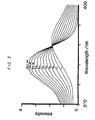
- FIGURES 3 to 7 are described in greater detail below.
- [Ca 2+ ]i means intracellular free calcium.
- esters and salts include esters and salts acceptable in humans and/or animals.
- Physiologically acceptable esters include those readily hydrolyzable esters which are known and used in the pharmaceutical industry, especially alpha-acyloxyalkyl esters. See generally, references 37 and 38.
- physiologically unacceptable salts or esters could be used if physiological acceptability were not required.
- microM means micromolar
- the new indicator dyes disclosed herein have in common at least one stilbene-type functionality attached to at least one of the aromatic rings in the parental BAPTA-like compound.
- This stilbene-type of function consists of an aromatic or heteroaromatic system that is coupled to a parental (BAPTA-like) aromatic ring through two carbons containing a trans double bond.
- the fluorophore is electronically coupled to the chelator, when calcium is bound by the molecule, the chelating portion of the molecule no longer donates electron density to the fluorophore portion, causing a decrease in maximum wavelength of absorbance. As long as there is no more than one sigma bond in a row in the link between fluorophore and BAPTA-like chelator, this electrical coupling will be maintained.
- the link between the fluorophore and chelator portions can also be part of a complex heterocycle, which in turn can be part of the fluorophore or part of the chelator.
- cation affinities of BAPTA derivatives can be increased or decreased by appropriate electron-donating or electron-withdrawing substituents (see generally reference 6).
- substitution of two methyl groups for the two hydrogens para to the two nitrogens of BAPTA strengthened Ca2+ binding by 0.4 log unit and similar disubstitution with bromine weakened Ca2+ binding by 1.2 log units (see reference 6).
- monosubstitution gives half as much effect on calcium affinity (data not shown).
- Those skilled in the art will realize that the effect of other substituents on the cation affinities of the present compounds should be quantitatively predictable by a Hammett-type linear free-energy relation.
- R 2 is anything except hydrogen
- the 5 position of that ring will be blocked and formylation can proceed only at the desired 5 position of the 4-W-benzene ring or equivalent quinoline.
- R 2 is hydrogen
- the presence of halogen at R l will deactivate that ring for electrophilic substitution and formylation will occur mainly at the desired position.
- the desired product can be prepared by controlled formylation and separation of the desired product or by beginning the synthesis with an appropriate 3-hydroxy-4-nitrobenz-aldehyde (see METHODS-OF SYNTHESIS section, infra).
- R 2 must be hydrogen and R l can be hydrogen, alkyl or any variation of substituent W.
- R l can be hydrogen, alkyl or any variation of substituent W.
- the desired formylation occurs at the 5 position of both phenyl rings or the 5 position of both the Rl, R2 phenyl and of the quinoline or benzopyran.
- the dye component of the molecules is based on trans stilbene, but can take many other forms.
- the ethylene bridge of stilbene can be locked in the trans configuration by forming a heterocyclic ring which includes the bridge.
- Y and Y' in the above generic formulae can together be a heteroatom, such as NR 5 and the dye molecule can be indole.
- the synthesis of such an indole is described infra in the METHODS-OF-SYNTHESIS section to illustrate this class of dye components (see indo-1).
- a heterocycle can also be formed which locks the ethylenic bridge to the phenyl ring of the chelating portion of the molecule.
- connection can be trans-ethylene or part of a heterocycle, as discussed above.
- Z phenyl or oxazole
- Z compounds which demonstrate use of phenyl or oxazole as Z, e.g. compounds stil-1 or fura-2, respectively, or, in conjunction with Y and Y l and the ethylenic bridge, indole as Z, e.g. compound indo-1.
- R 3 and R 3a substituents of Z serve to increase the hydrophilicity of the aromatic, generally hydrophobic, dye component of the final molecule.
- R3 and R 3a also can be used to adjust somewhat the maximum absorbance or emission wavelength of the dye.
- a wide variety of R3 and R3a substituents can be incorporated in the dyes disclosed and claimed in this invention, including the cyclic imide formed when R 3 and R3a together are -(CO)NR 5 (CO)-.
- carboxy, cyano, and aminosulfonyl for R3 are illustrated (see synthesis of compounds fura-1. fura-3, and stil-2, respectively).
- Example I discusses absorbance properties for the new indicators in the presence and absence of Ca2+ while Example II discusses the fluorescence properties.
- Example III discloses Ca2+ binding constants. Photoisomerization of the stilbene-type dyes is discussed in Example IV while cation selectivity is discussed in Example V.
- Example VI discusses membrane binding and Example VII discloses calibration equation for a dye using fluorescence intensity values at two wavelengths.
- increased brightness of fluorescence is the most dramatically noticeable advantage of the new dyes as compared with their immediate predecessors such as quin2.
- the new dyes are ten to thirty-fold more strongly fluorescent, partly because of their five-to-six-fold higher extinction coefficients and partly because of their higher quantum efficiencies of fluorescence (up to 0.5 as compared with about 0.1 for quin2).
- the increased fluorescence means that far less dye needs to be introduced into a given amount of cells to get an adequate signal. The less dye inside the cells, the less likelihood there is of significantly buffering the calcium levels being measured or otherwise perturbing the cells.
- the increased brightness can permit Ca2+ measurement in shorter observation times or from smaller volumes of tissue.
- the next most important feature of the new dyes is the ability of Ca2+ to significantly change the shape and wavelength distribution of the fluorescence spectra, not just the intensity. This wavelength shift makes it possible to measure calcium concentrations on an absolute scale simply from the ratio of fluorescences at two wavelengths, without consideration of dye concentration, optical pathlength, or absolute sensitivity of detection.
- All six of the preferred dyes (stil-1, stil-2, indo-1, fura-1, fura-2 and fura-3) disclosed herein as examples of the present invention have this feature in their excitation spectra.
- indo-1 is so far unique in also having a major change in emission wavelength upon binding calcium.
- Existing dyes such as quin2 change intensity but not peak wavelength upon binding calcium, making their signals relatively difficult to calibrate. As a result they are not as useful as the new dyes disclosed herein for measuring calcium concentrations on an absolute scale by means of the wavelength ratio method.
- both the wavelengths and Ca2+ dissociation constant should increase when groups more strongly electron-withdrawing than carboxylate are placed at the far end of the chromophore (compare fura-1 and fura-3).
- the terminal carboxylate is at least theoretically attractive as a deterrent of hydrophobic bonding of the long chromophore tail.
- a fifth advantage of the new dyes over known dyes such as quin2 is their better selectivity for Ca2+ over divalent cations such as Mg 2+ , Mn 2+ , Zn 2+ and Fe 2+.
- the improvements for fura-2 over quin2 are about three-fold, twelve-fold, and forty-fold for Mg 2+ , Mn2 + , and Zn 2+ respectively.
- Most workers using quin2 have implicitly assumed that cytosolic free Mg 2+ was 1 mM as was measured in lymphocytes (see reference 7).
- the true free [Mg 2+ ] were 0 or 2 mM respectively, the true (Ca 2+ ] values would be about 0.5 or 1.5 times higher than those estimated assuming 1 mM [Mg 2+ j.
- the new dyes should be less sensitive yet to uncertainties in [Mg 2+ ].
- the only clear instance of heavy metal interference with quin2 has been in certain tumor cell lines (see reference 8).
- the reduced heavy metal affinities of the new dyes should help guard against other occurrences as well as toxicity due to chelation of essential heavy metals.
- These dyes and quin2 might even be used as heavy metal indicators by working at the wavelengths where all the different Ca2+ curves cross each other.
- the improved divalent cation selectivity of the new dyes is probably due to the abandonment of the quinoline structure with its troublemaking ring nitrogen (see- reference 6).
- Magnesium binding affects the spectrum much less than Ca2+ - binding probably because Mg 2+ is too small to bind to both amino nitrogens at once (see reference 6) and tends to choose the nitrogen on the right side of the structure as drawn, since that one is not in conjugation with the slightly electron-withdrawing chromophoric skeleton.
- Fura-2 and EGTA both respond to increasing temperature by weakening their Ca2+ affinity and increasing their Mg 2+ affinity (see reference 11). This suggests that the thermodynamic bases for their Ca2 + :Mg 2+ selectivities are similar.
- fura-2 will be the preferred dye for most applications although indo-1 is the prime candidate for flow cytometry.
- the stilbenes are marginally easier to synthesize but do not fluoresce as brightly as the others.
- the stilbenes have complicated problems of photoisomerization and photodecomposition and are relatively difficult to load as acetoxymethyl esters (data not shown) due to insufficient solubility.
- the slightly longer wavelengths of fura-3 might compensate for its lower brightness and less hydrophilic chromophore.
- the new dyes have already made [Ca 2+ ]i measurements possible in a number of previously intractable systems. The prospect of studying individual cells or aggregated tissue should enormously expand the range and ease of optical measurement of [Ca 2+ ]i and its ubiquitous messenger functions.
- the present invention comprises a new class of fluorescent calcium-specific indicator dyes.
- Preferred examples of these new dyes include stil-1, stil-2, fura-1, fura-2, fura-3 and indo-1.
- FIGURES 1 and 2 outline the synthetic routes utilized in preparing these compounds. Full descriptions of the reaction conditions are described below. In both the figures and the discussion that follows, Roman numerals are used to identify the various chemical compounds.
- R' Me or Et
- R 2 a methyl, halogen, or alkoxy group as radical R 2
- R 2 is hydrogen
- a halogen at position R 1 will deactivate for electrophilic substitution the right hand benzene ring of the compound la, so that little or no formylation will occur on that ring.
- a methyl group at R 1 may slightly promote formylation at the R 2 position, but any doubly formylated impurities should be readily removable.
- R 2 is H and W is an 0 or NR 5 precursor, the ability of those W groups to promote electrophilic substitution is sufficient to direct formylation preferentially to the 5-position ortho to W. Since 8-aminoquinoline systems formylate much more readily than phenyl systems, no claimed combination of R l and R 2 will prevent the straightforward formylation of compounds containing quinoline or benzopyran systems.
- the same 5-formyl compound could be prepared by using an acetal of 3-hydroxy-4-nitro benzaldehyde in place of compound III and 2-nitro-4-R l- 5-R 2- phenoxide in place of compound 1 and following the steps illustrated below for the preparation of compound VI (condensation with 1,2-dibromo-ethane, reduction, and alkylation with alkylbromoacetate). Mild acid hydrolysis of such an analogue of compound VI would unmask the aldehyde to give monoaldehyde, la.
- Key steps in the preparation of the salicylaldehyde include the acid-catalyzed, selective debenzylation (see reference 20) of the phenolic group ortho to the nitro in preference to the phenolic group meta to nitro.
- the resulting 2-nitro-4 benzyloxyphenol can then be used as a starting material in the procedure outlined above to prepare the key aldehyde, 1b. Attempts to convert XXIV to XXV by hydroxide displacement of benzyloxide were unsuccessful.
- benzyloxycarbonyl protection of 4-(R 5- amino)phenol Nitration, nitrosation, or coupling with a suitable diazonium salt yields a substituted phenol analogous to compound XXI, infra.
- a phenol can be condensed with 1-bromo-2-(2-nitro-4-R 1 -5-R 2 -phenoxy)ethane, and reduced (H 2/ Pt). Any of nitro, nitroso or diazonium salt groups will thereby be reduced to NH 2 without affecting the benzyloxycarbonyl groups.
- One skilled in the art can use these teachings to prepare other compounds containing various groups R l , R 2 , R 7 , and R 8 .
- the methoxy group can be cleaved with BBr 3 or hot HI to yield a 6-hydroxy group, which can then be protected by reaction with dimethoxymethane under acid catalysis to yield 2-methyl-6-methoxymethyloxy-8-nitroquinoline.
- compounds can be prepared which contain a heterocyclic ring to lock the ethylene bridge in the trans configuration by connecting the ethylene to the rest of the dye portion of the molecule.
- indo-1, XVII is described, infra.
- the aldehyde of choice is condensed with a Wittig reagent carrying an ortho nitro group, which can then be reduced with triethyl phosphite to generate a nitrene, which cyclizes immediately to an indole (see reference 19).
- Compounds can also be prepared which lock the ethylene bridge in the trans configuration by connecting the ethylene bridge to the chelating portion of the molecule.
- the aldehyde is condensed with an appropriate halomethyl aromatic compound, for example, compounds such as XXXII, XXX or XXXIII (see FIGURE 2).
- Ring closure with a base such as potassium fluoride on alumina leads to the desired indole, by analogy to XXVII, XXXI and XXXIV.
- R 3 and R 3a are present when needed to provide hydrophilicity to the otherwise hydrophobic fluorophore "tail". R 3 and R 3a will also modify somewhat the fluorescent properties of the long wave chromophore.
- Z groups include heterocycles containing quaternary nitrogen, such as pyridinium.
- Z groups of this type do not require an R3 or R3 a substituent to reduce hydrophobicity of the fluorphore, although R3 or R 3a may still be useful to modify the fluorescence wavelength of the fluorophore.
- trifluoroacetoxymethyl bromide CF 3 COOCH 2 Br
- CF 3 COOCH 2 OCOCF 3 methylene bis(trifluoroacetate), CF 3 COOCH 2 OCOCF 3
- benzoyloxymethyl bromide C 6 H 5 COOCH 2 Br
- 1-acetoxy-1-bromoacetone was prepared from 1,1-diacetoxyacetone, itself prepared by action of sodium acetate on 1,1-dichloracetone.
- 1-acyloxyalkyl chlorides can also be obtained by this general procedure, though more vigorous conditions are required and lower yields result.
- C 6 H 5 COOCH 2 OCOC 6 H 5 and Me 3 SiCl reacted in CC1 4 with A1C1 3 catalysis at 100° (sealed vessel) for 60 hrs. and gave a 35% yield of C 6 H 5 COOCH 2 Cl.
- Alpha-acyloxyalkyl bromides prepared by the above method are useful in preparing esters of the flourescent dyes disclosed and claimed herein.
- acetoxymethyl esters of the compounds claimed herein were best made by: saponifying the methyl or ethyl esters of the target chelator (for example, compounds IX, XII, XU, XXVIII, XXXI, or XXXIX, below and in FIGURES 1 and 2) with KOH, adding four to six equivalents of a tetrabutylammonium salt (preferably the hydroxide), and evaporating in vacuo to dryness.
- the target chelator for example, compounds IX, XII, XU, XXVIII, XXXI, or XXXIX
- Potassium salts of 2-nitrophenoxides were prepared by adding a stoichiometric amount of concentrated aqueous KOH to the nitrophenol in methanol, then evaporating the solvent in vacua until the stoichiometric weight was reached.
- 1-bromo-2-(2'-nitro-5'-methylphenoxy)ethane (II) was prepared as follows: 57.6 g (0.30 mole) potassium 2-nitro-5-methylphenoxide (I), 187.4 g (1.0 mole) 1,2-dibromoethane, and 151 g dimethylformamide were heated together to 1200. The bright orange colour of the reaction mixture soon faded to pale yellow and a white precipitate was deposited. After cooling, the precipitate was filtered off and washed with water and dichloromethane. The insoluble residue was l,2-bis(2-nitro-5-methylphenoxy)ethane, 5.87 g (0.018 mole).
- the phosphonium salt (VIII) was prepared in 92% yield by reacting 12.16 g (50 mM) ethyl p-bromomethylbenzoate, XXVII (see reference30), with 14.48 g (55 mM) triphenylphosphine in refluxing toluene overnight. The precipitate was filtered off from the cooled reaction mixture. After washing, and drying it had m.p. 241-2430 and weighed 23.3 g, 92% yield and was sufficiently pure for further use.
- Sulfonamide phosphonium salt XI was prepared analogously to VIII by reacting triphenylphosphine with N,N-dimethyl 4-(chloromethyl)benzenesulfonamide in refluxing toluene. Its m.p. was 275-280 0 .
- the sulfonamide was prepared by reacting 4-chloromethyl benzenesulfonyl chloride (see reference 31) with a cold solution of dimethylamine in ether.
- Phosphonium salt XIV (m.p. 165-168) was prepared in 76% yield by reacting 1.5 g triphenylphosphine with 1.2 g ethyl 4-bromomethyl-3-nitrobenzoate in refluxing toluene overnight.
- the latter ester was prepared by stirring 2.43 g of ethyl p-bromomethylbenzoate, XXVI in 10 ml concentrated H 2 SO 4 at 5°C, while adding 1 ml conc HN0 3 (d 1.4) dropwise.
- the nitration mixture was poured onto crushed ice and extracted with CH 2 C1 2 . The extract was washed with dilute NaOH, dried, and evaporated to give an oil which eventually crystallized, m.p.
- the solid free acids are not stable for more than a few days, though their fully ionized salts are considerably more stable.
- the final products were not characterized by NMR, but were carefully studied by UV, fluorescence, and Ca2+ titration (see Table 1). The Ca2+ titration showed that no preparation contained more than 10% di- or tricarboxylate compounds (data not shown).
- XXXII l-(2-(5'-carboxyoxazol-2'-yl)-6-amino-benzo- furanoxy-5-)-2-(2'-amino-5'-methylphenoxy)ethane-N,N,N',N'-tetraacetic acid
- esters are saponified to free chelator polyanions by dissolving the ester in a water-miscible solvent such as methanol, ethanol, or dioxane and adding excess aqueous sodium, potassium, or tetrabutylammonium hydroxide.
- a water-miscible solvent such as methanol, ethanol, or dioxane
- Acetoxymethyl bromide, CH 3 COOCB 2 Br was prepared by stirring 4.0 g (30 mM) methylene diacetate and 5.0 g (33 mM) trimethylsilyl bromide, in the presence of 60 mg anhydrous ZnCl 2 but no added solvent, for 48 hr at room temperature.
- the product was distilled crudely at 10 torr, 40-60 0 then refractionated through a Vigreaux column at 10 torr, 55-57 0 , yielding 4.04 g, 87%, containing no detectable BrCH 2 0CH 2 Br by NMR.
- Lewis acid catalysis is essential; without it there is no reaction even at 110° in a sealed tube overnight.
- Methylene diacetate was prepared from paraformaldehyde and acetic anhydride (see reference 35) and was carefully distilled to remove CH 3 COOCH 2 0CH 2 0COCH 3 .
- EGTA calcium and magnesium affinities of EGTA at high ionic strength were measured by titrating 125 micromole portions of EGTA (Fluka Chemical, puriss grade) with 1.00 M KOH (J.T. Baker, low in carbonate).
- the EGTA was dissolved in 25 ml medium containing 225 mM KCl, 25 mM NaCl, and in some runs 10 mM CaCl 2 or 21 mM MgCl 2 . This solution was stirred in a Radiometer TTA80 Titrator, bubbled continuously with nitrogen, and thermostatted at 180C while KOH was added in .005 or .01 ml aliquotp from a ABU80 autoburet.
- the pH was measured with a PHM84 meter, a G2040C electrode and an Ag/AgCl reference electrode connected to the titration solution by a long length of .01 inch catheter tubing filled with 3M KC1; this electrode chain was calibrated with phthalate (4.001), phosphate (6.889), and borax (9.245) buffers made according to National Bureau of Standards recipes.
- the fifty to eighty pH readings in each titration were analyzed by the FORTRAN program SCOGS of Sayce (see reference 36).
- the resulting proton ionization constants for EGTA were 9.537 and 8.961 with computed uncertainties of ⁇ .012 and ⁇ .008 respectively.
- Free [Ca 2+ ] levels were controlled by Ca-EGTA buffers assuming apparent dissociation constants for Ca-EGTA of 380 nM at pH 7.00 in 0.1M KCl, 20°C; 151 nM at pH 7.20 in 0.1 M KCl, 20°C; 214 nM at pH 7.05 in 130 mM KC1, 20 mM NaCl at 37°C; and 490 nM at pH 7.02 in 225 mM KCl, 25 mM NaCl at 18°C.
- the first three apparent dissociation constants were calculated from the tables of Martell & Smith (see reference 11) as discussed in referencess 1 and 12.
- Free [Mg 2+ ] was likewise controlled by Mg-EGTA buffers assuming an apparent dissociation constant for Mg-EGTA of 21 mM at pH 7.18 in 130 mM KCl at 200, 8.96 mM at pH 7.05 in 130 mM KCl, 20 mM NaCl at 37 0 , and 99 mM at pH 7.02 in 225 mM KCl, 25 mM NaCl at 180. Again, the last value was freshly determined in this study.
- Heavy metal binding constants were measured as follows. Affinities of stil-1 and fura-2 for Zn 2+ were measured by titrating 1-2 microM dye in 120 mM KC1, 5 mM K 2 H 2 EGTA, 10 mM MOPS, 5 mM Tris, with 1M ZnC1 2 dispensed from a micrometer syringe. At each stage of the titration (13 steps from 0 to 7 mM total ZnCl 2 added) the pH was adjusted with base to be within .02 units of 7.12, the actual pH values was noted for computation of pZn, and the excitation spectrum was recorded at room temperature.
- the family of spectra had a roughly similar appearance to FIGURE 3 and was likewise analyzed by Hill plots of the fluorescence at 340 and 380 nm, i.e., by plotting log [(F - F m i n )/(F max - F)] vs. log [free Zn 2+ ] where F m i n and F max are the fluorescences at zero and excess Zn 2+ respectively.
- the effective dissociation constant of EGTA for Zn 2+ was taken to be 4.27 nM at pH 7.11 and to decrease by .02 log unit per .01 increase in pH. (see reference 11).
- One series also contained 0, 0.1, or 1 mM MnS0 4 and 0, 1.1, 2.2, 4.4, or 8.8 mM CaCl 2 ; another series had 2 mM CaCl 2 and 0, 0.1, 0.2, 0.5, 1, 2 mM Fe(NH 4 ) 2 (SO 4 ) 2 ; and a third series with 0.2 mM F e(NH 4 ) 2 ( S04 ) 2 and 0, 0.2, 0.4, 0.8, 2, 4, and 8 mM CaC1 2 .
- Binding to membranes was assessed by adding 0.3 ml portions of well-washed, packed human red cells to 1.5 ml volumes of 2 microM fura-2, fura-3, or indo-1, in media containing 145 mM NaCl, 5 mM KCl, 10 mM MOPS, 1 mM Na 2 HP0 4 , 1 mM MgCl 2 , and either 1 mM EGTA or 1 mM CaC1 2 . After several minutes equilibration, the suspensions were centrifuged and the fluorescence of the supernatant was measured with front-face geometry.
- the fluorescence excitation spectra for the new indicators disclosed herein shift to shorter wavelengths as [Ca 2+ ] increases, much as the absorption spectra do.
- FIGURE 3 presents a set of excitation spectra for fura-2 in calibration buffers of varied [Ca2+). Given such calibration data, the [Ca 2+ ] in an unknown solution containing the dye can be deduced from the shape of the excitation spectra.
- An explicit formula for this calibration is derived in Example VII.
- indole-type emission spectra show a clear crossover point whose position depends on the excitation wavelength because that affects the relative efficiency with which Ca2+ - free and Ca2+ - bound forms are excited.
- This is illustrated in FIGURE 4. That figure also shows that an excitation wavelength of 355-356 nm (as would be produced by a krypton laser), indo-1 gives the family of emission spectra in which the long and short wavelength peaks are of comparable amplitude.
- the quantum yields of fluorescence for all the new indicators are quite respectable, ranging up to ca. 0.5 for indo-1 and fura-2 with Ca2+.
- the Ca2+ - complex has a quantum efficiency between 1.3 and 2.1-fold higher than the Ca2+ - free dye.
- the quantum efficiencies of quin2 with and without Ca2+ are .14 and 0.029 respectively (see reference 6). Since fura-2 at half-saturation has a quantum efficiency four to five times higher than quin2 at half-saturation, and fura-2 has extinction coefficients about six times higher than quin2, one would predict that fura-2 should be some thirty-fold brighter than quin2. This estimate is confirmed by FIGURE 5, which shows that the fluorescence of 1 microM fura-2 at high and low Ca2+ is bracketed by that of 30 microM quin2 under identical conditions.
- Dissociation constants for the new indicators disclosed herein are in the range 100-300 nM at ionic strengths near 0.1 to 0.15. Such values are close to the dissociation constant (110 nM) of the parent compound BAPTA (see reference 6), showing that the substituents that make up the rest of the chromophores are only slightly electron-withdrawing. Fura-2 was also examined at higher ionic strengths, ca. 250 mM (225 mM KC1, 25 mM NaCl). A considerable decrease in Ca2+ binding strength is observed, to an apparent dissociation constant of 760 nM. Such a strong dependence on ionic strength is not surprising for the reaction of a tetravalent anion with a divalent cation.
- the stilbene-type indicators disclosed herein can exist in cis and trans isomers. Both isomers are included in the products (e.g., IX, XII, and XV) of the Wittig reactions. Separation of the isomers was attempted only with stil-l/Me and Et. Thin layer chromatography (chloroform-methanol 9:1 or 19:1 v/v) on AgN0 3 -impregnated silica was barely able to resolve the two isomers of stil-1/Et, the cis isomer migrating more slowly.
- trans stil-1 Assuming only the trans isomer is fluorescent (see reference 25), the photostationary state in the absence of Ca2+ contains about 75% trans, 25% cis. This ratio of trans to cis is unusually high for a stilbene photostationary state. If crude stil-1/Me containing the original mixture of cis and trans isomers is hydrolyzed, irradiation of the anion mixture increases the absorbance and fluorescence. Photoisomerization significantly complicates the use of trans stil-1 as a fluorescent indicator.
- stil-1 It becomes necessary to irradiate stil-1 strongly to reach photostationary equilibrium before Ca2+ measurement begins, and even then to minimize the intensity of the excitation beam and read Ca2+ from the ratio of excitation efficiencies at two wavelengths rather than from the absolute fluorescence intensity at any one excitation wavelength.
- stil-1 also undergoes yet another, albeit slow, photochemical reaction in addition to cis-trans isomerism. This slow reaction causes a gradual rise in fluorescence at long (> 300 nm) excitation wavelengths. It is most noticeable when a stil-1 sample is irradiated at very low [Ca 2+ ], then exposed to high Ca2+ during measurement of its excitation spectrum.
- Fura-2 is also better than quin2 in rejecting Mn 2+ , the Mn 2+ :Ca2 + preferences being 42-fold and 510-fold respectively (see reference 26).
- the predominant oxidation state of labile intracellular iron is +2 (see reference 27); Fe 2+ binds fura-2 between three and ten time as strongly as Ca2+ does. A more precise estimate was prevented by experimental scatter, which may reflect more complicated stoichiometry than 1:1 or imperfectly anaerobic conditions.
- Both Mn 2+ and Fe 2+ quench fura-2 as expected for metals with many unpaired electrons.
- EGTA prefers Zn2 + , Mn 2+ , and F e2 + to Ca2+, by factors of ca. 50, ca. 20, and ca. 8-fold respectively (see reference 11).
- FIGURE 7 indicates that pH variations over a reasonable range of intracellular values hardly effect either the spectra of the Ca2+ - free or Ca2+ - bound species or the effective Ca2+ dissociation constant.
- Red cells were used as model membranes to test binding because they are easy to add and remove. Red cells added to a hematocrit of 17% in a solution of fura-2, fura-3, or indo-1, then centrifuged out, decreased the fluorescence of the supernatant by less than 5%. This small drop in fluorescence could have been just dilution by the small unavoidable amount of extracellular fluid added with the packed cells. Even if it were attributed entirely to binding, the amount of dye bound to a membrane would be less than that contained in a layer 0.2 microns thick of adjacent aqueous solution. Such negligible binding was found whether the medium contained 1 mM Ca2+ or EGTA without Ca2+.
- the fluorescence ratio R is the ratio Solving for [Ca 2+ ] yields the calibration equation: Note that FA1/FA2 is simply the limiting value that R can have at zero [Ca 2+ ] and so may be considered R m i n , while F B1 /F B2 is the analogous limiting R max that the ratio has at saturating [Ca 2+ ].
- Equation 2 a form closely analogous to the calibration equation for a dye using intensity values at only one wavelength:
- equation 6 assume that the dye forms a simple 1:1 complex with Ca2+ (equation 2), that it behaves in cells as it does in calibration media and that it is sufficiently dilute for fluorescence intensity to be linearly proportional to the concentrations.of the fluorescent species (equation 1).
- equation 6 requires that F, F m i n , and F max all be determined at the same instrumental sensitivity, optical path length, and effective total concentration of dye.
- ratio operation has two main disadvantages. If tissue autofluorescence is significant, it has to be subtracted before forming the ratio, whereas it cancels out automatically in equation 6 as long as it is calcium-independent. Fortunately the brightness of the new dyes makes it easy to swamp autofluorescence. Also the instrumentation to alternate excitation wavelengths rapidly and to calculate the ratio of fluorescence intensities is not yet standardly available. In our laboratory at the University of California we have built a system in which two light sources and two monochromators are alternately selected by a butterfly-shaped sector mirror rotating at 10-30 Hz. Cancellation of large fluctuations in intensity has indeed been invaluable in studying monolayers and single small cells. However, it would be relatively difficult to provide sequential excitation wavelengths of stable relative intensity in flow cytometry, so that the emission shift of indo-1 makes it particularly attractive in this application. Summary
- the present invention discloses a new class of fluorescent, indicator dyes that are specific for calcium ions.
- the new fluorescent, indicator dyes combine a stilbene-type fluorophore with a tetracarboxylate parent Ca2+ chelating compound having the octacoordinate pattern of ligating groups characteristic of EGTA and BAPTA.
- the new dyes are composed of a BAPTA-like chelator coupled to a single fluorescent dye.
- the new dyes are comprised of a BAPTA-like chelator coupled to a pair of fluorescent dyes.
- Preferred compounds contain heterocyclic brides to reinforce the ethylenic bond of the stilbene and to reduce hydrophobicity.
- the new dye compounds disclosed herein are superior to existing fluorescent calcium indicators such as quin2 because the new compounds show a much stronger fluorescence, a somewhat weaker affinity for Ca2+, a better selectivity against magnesium and heavy metals, and most importantly a wavelength shift upon Ca2+ - binding.
- the new dye indicators should not only supersede quin2 in many applications, but should also ease [Ca 2+ ]i measurements in adherent cells, bulk tissues, or single cells under a microscope or in a flow cytometer.
- the present invention discloses an improved method for synthesizing alpha-acyloxyalkyl bromides wherein the bromides wherein the bromides so synthesized are free of contaminating bis(l-bromoalkyl)ether.
- alpha-acyloxy bromides are useful to the pharmaceutical industry in the preparation of prodrugs (see references 38 and 39).
- the improved method is specifically exemplified herein in the synthesis of acetoxymethyl bromide, a compound useful in preparing the acetoxymethyl esters disclosed and claimed herein.
Landscapes
- Chemical & Material Sciences (AREA)
- Organic Chemistry (AREA)
- Health & Medical Sciences (AREA)
- Life Sciences & Earth Sciences (AREA)
- General Health & Medical Sciences (AREA)
- Diabetes (AREA)
- Chemical Kinetics & Catalysis (AREA)
- General Chemical & Material Sciences (AREA)
- Medicinal Chemistry (AREA)
- Nuclear Medicine, Radiotherapy & Molecular Imaging (AREA)
- Bioinformatics & Cheminformatics (AREA)
- Pharmacology & Pharmacy (AREA)
- Engineering & Computer Science (AREA)
- Animal Behavior & Ethology (AREA)
- Endocrinology (AREA)
- Public Health (AREA)
- Veterinary Medicine (AREA)
- Plural Heterocyclic Compounds (AREA)
- Investigating Or Analysing Biological Materials (AREA)
- Investigating Or Analysing Materials By The Use Of Chemical Reactions (AREA)
- Peptides Or Proteins (AREA)
- Furan Compounds (AREA)
- Medicines That Contain Protein Lipid Enzymes And Other Medicines (AREA)
- Indole Compounds (AREA)
- Organic Low-Molecular-Weight Compounds And Preparation Thereof (AREA)
- Investigating Or Analyzing Non-Biological Materials By The Use Of Chemical Means (AREA)
- Luminescent Compositions (AREA)
Priority Applications (1)
| Application Number | Priority Date | Filing Date | Title |
|---|---|---|---|
| AT85306387T ATE38509T1 (de) | 1984-09-07 | 1985-09-09 | Fluoreszierende indikatorfarbstoffe fuer calciumionen. |
Applications Claiming Priority (2)
| Application Number | Priority Date | Filing Date | Title |
|---|---|---|---|
| US648649 | 1984-09-07 | ||
| US06/648,649 US4603209A (en) | 1984-09-07 | 1984-09-07 | Fluorescent indicator dyes for calcium ions |
Publications (3)
| Publication Number | Publication Date |
|---|---|
| EP0178775A2 true EP0178775A2 (de) | 1986-04-23 |
| EP0178775A3 EP0178775A3 (en) | 1986-08-27 |
| EP0178775B1 EP0178775B1 (de) | 1988-11-09 |
Family
ID=24601639
Family Applications (1)
| Application Number | Title | Priority Date | Filing Date |
|---|---|---|---|
| EP85306387A Expired EP0178775B1 (de) | 1984-09-07 | 1985-09-09 | Fluoreszierende Indikatorfarbstoffe für Calciumionen |
Country Status (6)
| Country | Link |
|---|---|
| US (1) | US4603209A (de) |
| EP (1) | EP0178775B1 (de) |
| JP (1) | JPH0694444B2 (de) |
| AT (1) | ATE38509T1 (de) |
| CA (1) | CA1254896A (de) |
| DE (1) | DE3566112D1 (de) |
Cited By (5)
| Publication number | Priority date | Publication date | Assignee | Title |
|---|---|---|---|---|
| EP0314480A3 (de) * | 1987-10-30 | 1991-07-03 | The Regents Of The University Of California | Fluoreszierende Indikator-Farbstoffe für Kalzium, die bei langen Wellenlängen arbeiten |
| EP0286402A3 (de) * | 1987-04-10 | 1991-07-03 | EASTMAN KODAK COMPANY (a New Jersey corporation) | Kalziumkomplexfarbstoffe und ihre Verwendung in analytischen Zusammensetzungen, Elementen und Verfahren |
| AU621858B2 (en) * | 1988-03-28 | 1992-03-26 | Abbott Laboratories | Calcium assay reagent |
| WO1998043082A1 (de) * | 1997-03-21 | 1998-10-01 | GESELLSCHAFT FüR BIOTECHNOLOGISCHE FORSCHUNG MBH (GBF) | Verbindungen zum nachweis von phosphorsäureestern |
| EP0861843A3 (de) * | 1997-02-27 | 1998-10-14 | Minnesota Mining And Manufacturing Company | Fluoreszierende ionophore Verbindungen enthaltend einen Kryptand/Kronenether Teil und einen Cumarin Teil, deren Herstellung und deren Verwendung zur Bestimmung von Metall-Kationen Konzentrationen |
Families Citing this family (151)
| Publication number | Priority date | Publication date | Assignee | Title |
|---|---|---|---|---|
| US4761481A (en) * | 1985-03-18 | 1988-08-02 | Baxter Travenol Laboratories, Inc. | Substituted pyridine derivatives |
| US4806604A (en) * | 1987-05-13 | 1989-02-21 | Regents Of The University Of California | Photosensitive calcium chelators |
| JPH01267443A (ja) * | 1988-04-19 | 1989-10-25 | Mitsubishi Kasei Corp | 光学的測定方法及び装置 |
| US5141627A (en) * | 1989-09-25 | 1992-08-25 | The Regents Of The University Of California | Chelators whose affinity for calcium ion is increased by illumination |
| US5459276A (en) * | 1994-05-20 | 1995-10-17 | Molecular Probes, Inc. | Benzazolylcoumarin-based ion indicators for heavy metals |
| US5453517A (en) * | 1992-02-25 | 1995-09-26 | Molecular Probes, Inc. | Reactive derivatives of bapta used to make ion-selective chelators |
| US5648270A (en) * | 1995-02-06 | 1997-07-15 | Molecular Probes, Inc. | Methods of sensing with fluorescent conjugates of metal-chelating nitrogen heterocycles |
| US5405975A (en) * | 1993-03-29 | 1995-04-11 | Molecular Probes, Inc. | Fluorescent ion-selective diaryldiaza crown ether conjugates |
| US5501980A (en) * | 1994-05-20 | 1996-03-26 | Molecular Probes, Inc. | Benzazolylcoumarin-based ion indicators |
| US5154890A (en) * | 1990-11-07 | 1992-10-13 | Hewlett-Packard Company | Fiber optic potassium ion sensor |
| JP2970967B2 (ja) * | 1991-11-20 | 1999-11-02 | 浜松ホトニクス株式会社 | 蛍光性プローブ試薬を用いた細胞内イオン濃度測定法 |
| US5262330A (en) * | 1992-02-27 | 1993-11-16 | Miles Inc. | Colorimetric methods and reagents for the assay of calcium in a test sample |
| US5324747A (en) * | 1992-07-15 | 1994-06-28 | Hoffmann-La Roche Inc. | N-substituted anilines, inhibitors of phospholipases A2 |
| JPH07194393A (ja) * | 1992-08-24 | 1995-08-01 | Hamamatsu Photonics Kk | 生細胞内イオン濃度の3波長測光法のための定数最適化方法 |
| US5310888A (en) * | 1992-10-22 | 1994-05-10 | Miles Inc. | Arylazo chromoionophores |
| US5602258A (en) * | 1992-10-23 | 1997-02-11 | The Regents Of University Of California | Azide-containing chelators whose affinity for calcium ion is decreased by illumination |
| US5409835A (en) * | 1992-12-30 | 1995-04-25 | The University Of Maryland At Baltimore | Long-wavelength fluorescent probe compounds for calcium ions and their use in ratiometrically measuring calcium ion concentrations |
| US5294799A (en) * | 1993-02-01 | 1994-03-15 | Aslund Nils R D | Apparatus for quantitative imaging of multiple fluorophores |
| US5358844A (en) * | 1993-02-18 | 1994-10-25 | Brigham And Women's Hospital, Inc. | Preservation of blood platelets |
| US5773227A (en) * | 1993-06-23 | 1998-06-30 | Molecular Probes, Inc. | Bifunctional chelating polysaccharides |
| US5516911A (en) * | 1993-12-30 | 1996-05-14 | The United States Of America As Represented By The Department Of Health And Human Services | Fluorescent intracellular calcium indicators |
| US5599831A (en) * | 1994-05-27 | 1997-02-04 | Poretz; Ronald D. | Method of preparation of pharmaceutical compositions |
| US5576433A (en) * | 1994-10-12 | 1996-11-19 | Texas Fluorescence Laboratories, Inc. | Fluorescent calcium indicators targeted to specific intracellular environments |
| US6013764A (en) * | 1996-07-17 | 2000-01-11 | Ortho Pharmaceutical Corp. | Liquid phase peptide synthesis of KL-4 pulmonary surfactant |
| US5747345A (en) * | 1996-08-15 | 1998-05-05 | Johnson & Johnson Clinical Diagnostics, Inc. | Calcium specific diaza-18-crown-6-ether chromoionophores |
| WO1998036081A2 (en) | 1997-02-13 | 1998-08-20 | Memorial Sloan-Kettering Cancer Center | Hybrid molecules for optically detecting changes in cellular microenvironments |
| US6180411B1 (en) | 1997-08-01 | 2001-01-30 | The Regents Of The University Of California | Light-triggered indicators that memorize analyte concentrations |
| US6391005B1 (en) | 1998-03-30 | 2002-05-21 | Agilent Technologies, Inc. | Apparatus and method for penetration with shaft having a sensor for sensing penetration depth |
| US6171866B1 (en) | 1998-09-30 | 2001-01-09 | Avl Medical Instruments | Luminescence indicator for determining calcium ions |
| DE19915137C2 (de) * | 1999-03-26 | 2001-10-18 | Michael Schaefer | Verfahren zur Quantifizierung mehrerer Fluorochrome in einer mehrfach gefärbten Probe bei der Fluoreszenzmikroskopie und Verwendungen des Verfahrens |
| US7060793B2 (en) * | 1999-05-21 | 2006-06-13 | The Regents Of The University Of California | Circularly permuted fluorescent protein indicators |
| US6699687B1 (en) | 1999-05-21 | 2004-03-02 | The Regents Of The University Of California | Circularly permuted fluorescent protein indicators |
| US6469154B1 (en) | 1999-05-21 | 2002-10-22 | The Regents Of The University Of California | Fluorescent protein indicators |
| US7169922B2 (en) * | 2000-08-04 | 2007-01-30 | Invitrogen Corporation | Derivatives of 1,2-dihydro-7-hydroxyquinolines containing fused rings |
| US8641644B2 (en) | 2000-11-21 | 2014-02-04 | Sanofi-Aventis Deutschland Gmbh | Blood testing apparatus having a rotatable cartridge with multiple lancing elements and testing means |
| US7579463B2 (en) * | 2000-12-20 | 2009-08-25 | Life Technologies Corporation | Crown ether derivatives |
| US6962992B2 (en) | 2000-12-20 | 2005-11-08 | Molecullar Probes, Inc. | Crown ether derivatives |
| US9427532B2 (en) | 2001-06-12 | 2016-08-30 | Sanofi-Aventis Deutschland Gmbh | Tissue penetration device |
| US9226699B2 (en) | 2002-04-19 | 2016-01-05 | Sanofi-Aventis Deutschland Gmbh | Body fluid sampling module with a continuous compression tissue interface surface |
| ATE485766T1 (de) | 2001-06-12 | 2010-11-15 | Pelikan Technologies Inc | Elektrisches betätigungselement für eine lanzette |
| US8337419B2 (en) | 2002-04-19 | 2012-12-25 | Sanofi-Aventis Deutschland Gmbh | Tissue penetration device |
| ES2336081T3 (es) | 2001-06-12 | 2010-04-08 | Pelikan Technologies Inc. | Dispositivo de puncion de auto-optimizacion con medios de adaptacion a variaciones temporales en las propiedades cutaneas. |
| AU2002348683A1 (en) | 2001-06-12 | 2002-12-23 | Pelikan Technologies, Inc. | Method and apparatus for lancet launching device integrated onto a blood-sampling cartridge |
| US7981056B2 (en) | 2002-04-19 | 2011-07-19 | Pelikan Technologies, Inc. | Methods and apparatus for lancet actuation |
| US9795747B2 (en) | 2010-06-02 | 2017-10-24 | Sanofi-Aventis Deutschland Gmbh | Methods and apparatus for lancet actuation |
| US7041068B2 (en) | 2001-06-12 | 2006-05-09 | Pelikan Technologies, Inc. | Sampling module device and method |
| US8323903B2 (en) | 2001-10-12 | 2012-12-04 | Life Technologies Corporation | Antibody complexes and methods for immunolabeling |
| US20050181464A1 (en) * | 2002-04-04 | 2005-08-18 | Affinium Pharmaceuticals, Inc. | Novel purified polypeptides from bacteria |
| US7976476B2 (en) | 2002-04-19 | 2011-07-12 | Pelikan Technologies, Inc. | Device and method for variable speed lancet |
| US7547287B2 (en) | 2002-04-19 | 2009-06-16 | Pelikan Technologies, Inc. | Method and apparatus for penetrating tissue |
| US8360992B2 (en) | 2002-04-19 | 2013-01-29 | Sanofi-Aventis Deutschland Gmbh | Method and apparatus for penetrating tissue |
| US8579831B2 (en) | 2002-04-19 | 2013-11-12 | Sanofi-Aventis Deutschland Gmbh | Method and apparatus for penetrating tissue |
| US8372016B2 (en) | 2002-04-19 | 2013-02-12 | Sanofi-Aventis Deutschland Gmbh | Method and apparatus for body fluid sampling and analyte sensing |
| US9248267B2 (en) | 2002-04-19 | 2016-02-02 | Sanofi-Aventis Deustchland Gmbh | Tissue penetration device |
| US8221334B2 (en) | 2002-04-19 | 2012-07-17 | Sanofi-Aventis Deutschland Gmbh | Method and apparatus for penetrating tissue |
| US7909778B2 (en) | 2002-04-19 | 2011-03-22 | Pelikan Technologies, Inc. | Method and apparatus for penetrating tissue |
| US7229458B2 (en) | 2002-04-19 | 2007-06-12 | Pelikan Technologies, Inc. | Method and apparatus for penetrating tissue |
| US9795334B2 (en) | 2002-04-19 | 2017-10-24 | Sanofi-Aventis Deutschland Gmbh | Method and apparatus for penetrating tissue |
| US8784335B2 (en) | 2002-04-19 | 2014-07-22 | Sanofi-Aventis Deutschland Gmbh | Body fluid sampling device with a capacitive sensor |
| US8267870B2 (en) | 2002-04-19 | 2012-09-18 | Sanofi-Aventis Deutschland Gmbh | Method and apparatus for body fluid sampling with hybrid actuation |
| US7232451B2 (en) | 2002-04-19 | 2007-06-19 | Pelikan Technologies, Inc. | Method and apparatus for penetrating tissue |
| US7331931B2 (en) | 2002-04-19 | 2008-02-19 | Pelikan Technologies, Inc. | Method and apparatus for penetrating tissue |
| US9314194B2 (en) | 2002-04-19 | 2016-04-19 | Sanofi-Aventis Deutschland Gmbh | Tissue penetration device |
| US7226461B2 (en) | 2002-04-19 | 2007-06-05 | Pelikan Technologies, Inc. | Method and apparatus for a multi-use body fluid sampling device with sterility barrier release |
| US8702624B2 (en) | 2006-09-29 | 2014-04-22 | Sanofi-Aventis Deutschland Gmbh | Analyte measurement device with a single shot actuator |
| US7297122B2 (en) | 2002-04-19 | 2007-11-20 | Pelikan Technologies, Inc. | Method and apparatus for penetrating tissue |
| US7175642B2 (en) | 2002-04-19 | 2007-02-13 | Pelikan Technologies, Inc. | Methods and apparatus for lancet actuation |
| US7491178B2 (en) | 2002-04-19 | 2009-02-17 | Pelikan Technologies, Inc. | Method and apparatus for penetrating tissue |
| US7674232B2 (en) | 2002-04-19 | 2010-03-09 | Pelikan Technologies, Inc. | Method and apparatus for penetrating tissue |
| US7892183B2 (en) | 2002-04-19 | 2011-02-22 | Pelikan Technologies, Inc. | Method and apparatus for body fluid sampling and analyte sensing |
| US7901362B2 (en) | 2002-04-19 | 2011-03-08 | Pelikan Technologies, Inc. | Method and apparatus for penetrating tissue |
| CN1665790A (zh) * | 2002-05-03 | 2005-09-07 | 莫莱丘莱尔探针公司 | 用于检测和分离磷酸化分子的组合物及方法 |
| US20040171034A1 (en) * | 2002-05-03 | 2004-09-02 | Brian Agnew | Compositions and methods for detection and isolation of phosphorylated molecules |
| US7445894B2 (en) * | 2002-05-03 | 2008-11-04 | Molecular Probes, Inc. | Compositions and methods for detection and isolation of phosphorylated molecules |
| US20050233307A1 (en) | 2002-09-12 | 2005-10-20 | Kyle Gee | Site-specific labeling of affinity tags in fusion proteins |
| US7465848B2 (en) | 2002-11-20 | 2008-12-16 | The General Hospital Corporation | Zebrafish assay |
| US8574895B2 (en) | 2002-12-30 | 2013-11-05 | Sanofi-Aventis Deutschland Gmbh | Method and apparatus using optical techniques to measure analyte levels |
| US8445702B2 (en) * | 2003-05-05 | 2013-05-21 | Life Technologies Corporation | Zinc binding compounds and their method of use |
| US20050250214A1 (en) * | 2004-05-05 | 2005-11-10 | Gee Kyle R | Zinc binding compounds and their method of use |
| EP1628567B1 (de) | 2003-05-30 | 2010-08-04 | Pelikan Technologies Inc. | Verfahren und vorrichtung zur injektion von flüssigkeit |
| EP1633235B1 (de) | 2003-06-06 | 2014-05-21 | Sanofi-Aventis Deutschland GmbH | Gerät für die entnahme von körperflüssigkeiten und analyten-nachweis |
| WO2006001797A1 (en) | 2004-06-14 | 2006-01-05 | Pelikan Technologies, Inc. | Low pain penetrating |
| CA2445420A1 (en) | 2003-07-29 | 2005-01-29 | Invitrogen Corporation | Kinase and phosphatase assays |
| US7727752B2 (en) * | 2003-07-29 | 2010-06-01 | Life Technologies Corporation | Kinase and phosphatase assays |
| US7619059B2 (en) | 2003-07-29 | 2009-11-17 | Life Technologies Corporation | Bimolecular optical probes |
| US7271265B2 (en) * | 2003-08-11 | 2007-09-18 | Invitrogen Corporation | Cyanine compounds and their application as quenching compounds |
| US20050064485A1 (en) * | 2003-09-12 | 2005-03-24 | Kurt Vogel | Multiplex binding and activity assays |
| US7282339B2 (en) * | 2003-09-17 | 2007-10-16 | Invitrogen Corporation | Competitive immunoassay |
| EP1671096A4 (de) | 2003-09-29 | 2009-09-16 | Pelikan Technologies Inc | Verfahren und apparatur für eine verbesserte probeneinfangvorrichtung |
| US9351680B2 (en) | 2003-10-14 | 2016-05-31 | Sanofi-Aventis Deutschland Gmbh | Method and apparatus for a variable user interface |
| US20050214807A1 (en) * | 2003-11-19 | 2005-09-29 | Iain Johnson | Environmental sensitive fluorogenic compounds and their application for singlet oxygen and protein detection |
| EP2607431B1 (de) * | 2003-12-05 | 2016-08-24 | Life Technologies Corporation | Cyanin Farbstoffverbindungen |
| US7776529B2 (en) | 2003-12-05 | 2010-08-17 | Life Technologies Corporation | Methine-substituted cyanine dye compounds |
| US7822454B1 (en) | 2005-01-03 | 2010-10-26 | Pelikan Technologies, Inc. | Fluid sampling device with improved analyte detecting member configuration |
| EP1706026B1 (de) | 2003-12-31 | 2017-03-01 | Sanofi-Aventis Deutschland GmbH | Verfahren und vorrichtung zur verbesserung der fluidströmung und der probennahme |
| WO2005071096A2 (en) | 2004-01-21 | 2005-08-04 | Molecular Probes, Inc. | Derivatives of cephalosporin and clavulanic acid for detecting beta-lacamase in a sample |
| US20050233467A1 (en) * | 2004-04-15 | 2005-10-20 | Akwasi Minta | Visible wavelength fluorescent calcium indicators that are (i) leakage resistant and (ii) operate near membranes |
| WO2006011062A2 (en) | 2004-05-20 | 2006-02-02 | Albatros Technologies Gmbh & Co. Kg | Printable hydrogel for biosensors |
| US9775553B2 (en) | 2004-06-03 | 2017-10-03 | Sanofi-Aventis Deutschland Gmbh | Method and apparatus for a fluid sampling device |
| WO2005120365A1 (en) | 2004-06-03 | 2005-12-22 | Pelikan Technologies, Inc. | Method and apparatus for a fluid sampling device |
| WO2006023231A2 (en) * | 2004-07-27 | 2006-03-02 | Molecular Probes, Inc. | Fluorescent metal ion indicators with large stokes shift |
| US8652831B2 (en) | 2004-12-30 | 2014-02-18 | Sanofi-Aventis Deutschland Gmbh | Method and apparatus for analyte measurement test time |
| JP5306811B2 (ja) * | 2005-05-11 | 2013-10-02 | ライフ テクノロジーズ コーポレーション | 2本鎖dnaへの高い選択性を有する蛍光化学物質及びそれらの使用 |
| DE102005022880B4 (de) * | 2005-05-18 | 2010-12-30 | Olympus Soft Imaging Solutions Gmbh | Trennung spektral oder farblich überlagerter Bildbeiträge in einem Mehrfarbbild, insbesondere in transmissionsmikroskopischen Mehrfarbbildern |
| US20070134685A1 (en) * | 2005-09-06 | 2007-06-14 | Invitrogen Corporation | Control of chemical modification |
| EP1934607B1 (de) * | 2005-10-13 | 2013-08-28 | Fundação D. Anna Sommer Champalimaud E Dr. Carlos Montez Champalimaud | Multiplex in situ immunochemische analyse |
| US7521577B2 (en) | 2006-01-12 | 2009-04-21 | Molecular Probes, Inc. | Heavy metal binding compounds and their method of use |
| US20070196860A1 (en) * | 2006-01-18 | 2007-08-23 | Invitrogen Corporation | Methods for Measuring Real Time Kinase Activity |
| US8551408B2 (en) | 2006-01-24 | 2013-10-08 | Life Technologies Corporation | Device and methods for quantifying analytes |
| EP1987361A4 (de) * | 2006-01-30 | 2009-03-04 | Invitrogen Corp | Zusammensetzungen und verfahren zur erkennung und quantifizierung toxischer substanzen in krankheitsstadien |
| DK3438131T3 (da) | 2006-02-10 | 2022-04-11 | Life Technologies Corp | Oligosaccharidmodifikation og mærkning af proteiner |
| US8114636B2 (en) | 2006-02-10 | 2012-02-14 | Life Technologies Corporation | Labeling and detection of nucleic acids |
| US8562802B1 (en) | 2006-02-13 | 2013-10-22 | Life Technologies Corporation | Transilluminator base and scanner for imaging fluorescent gels, charging devices and portable electrophoresis systems |
| JP2009536150A (ja) | 2006-03-23 | 2009-10-08 | アブソルバー, アーベー | 診断および治療適用のための異なる型の血液型抗原 |
| AU2007240316A1 (en) | 2006-04-20 | 2007-11-01 | Becton, Dickinson And Company | Thermostable proteins and methods of making and using thereof |
| WO2008076524A2 (en) | 2006-10-27 | 2008-06-26 | Life Technologies Corporation | Fluorogenic ph sensitive dyes and their method of use |
| US8586743B2 (en) * | 2007-01-30 | 2013-11-19 | Life Technologies Corporation | Labeling reagents and methods of their use |
| US9097730B2 (en) | 2007-04-13 | 2015-08-04 | Aat Bioquest, Inc. | Fluorescein lactone ion indicators and their applications |
| US9279817B2 (en) | 2007-04-13 | 2016-03-08 | Aat Bioquest, Inc. | Carbofluorescein lactone ion indicators and their applications |
| US20080254498A1 (en) | 2007-04-13 | 2008-10-16 | Abd Bioquest, Inc. | Fluorescent ion indicators and their applications |
| US8513451B2 (en) * | 2007-05-30 | 2013-08-20 | Hee Chol Kang | Fluorescent phospholipase A2 indicators |
| WO2008155778A2 (en) | 2007-06-19 | 2008-12-24 | Rajiv Gandhi Centre For Biotechnology | Assay for detection of transient intracellular ca2+ |
| JP4923298B2 (ja) * | 2007-09-07 | 2012-04-25 | コリア ユニバーシティ インダストリアル アンド アカデミック コラボレイション ファウンデーション | 細胞内カルシウムのリアルタイムモニタリング用二光子プローブ |
| WO2009126900A1 (en) | 2008-04-11 | 2009-10-15 | Pelikan Technologies, Inc. | Method and apparatus for analyte detecting device |
| EP2297344B1 (de) * | 2008-05-16 | 2018-03-14 | Life Technologies Corporation | Doppelmarkierungsverfahren zur messung von zellproliferation |
| EP2379515B1 (de) | 2008-12-29 | 2014-02-12 | Life Technologies Corporation | Fluoreszente metallionenindikatoren auf benzoxazolbasis |
| US9375169B2 (en) | 2009-01-30 | 2016-06-28 | Sanofi-Aventis Deutschland Gmbh | Cam drive for managing disposable penetrating member actions with a single motor and motor and control system |
| JP2012519170A (ja) | 2009-02-26 | 2012-08-23 | オーエスアイ・ファーマシューティカルズ,エルエルシー | 生体内の腫瘍細胞のemtステータスをモニターするためのinsitu法 |
| JP5906190B2 (ja) | 2009-10-17 | 2016-04-20 | アサンテ リサーチ, エルエルシーAsante Research, Llc | レシオメトリックであり、かつ赤色スペクトルで発光する蛍光カルシウム指示薬 |
| US8965476B2 (en) | 2010-04-16 | 2015-02-24 | Sanofi-Aventis Deutschland Gmbh | Tissue penetration device |
| US8974651B2 (en) | 2010-04-17 | 2015-03-10 | C.C. Imex | Illuminator for visualization of fluorophores |
| WO2012022734A2 (en) | 2010-08-16 | 2012-02-23 | Medimmune Limited | Anti-icam-1 antibodies and methods of use |
| WO2014066733A2 (en) | 2012-10-25 | 2014-05-01 | Life Technologies Corporation | Methods and compositions for enzyme-mediated site-specific radiolabeling of glycoproteins |
| US9360474B2 (en) | 2012-11-29 | 2016-06-07 | Opti Medical Systems, Inc. | Multi-layer device for selectively determining magnesium ion |
| WO2015050959A1 (en) | 2013-10-01 | 2015-04-09 | Yale University | Anti-kit antibodies and methods of use thereof |
| SI3052192T1 (sl) | 2013-10-02 | 2020-11-30 | Medimmune, Llc | Nevtralizarijoča protitelesa proti-influenci A in njihove uporabe |
| US9636034B2 (en) | 2013-10-23 | 2017-05-02 | Verily Life Sciences Llc | Non-invasive analyte detection system with modulation source |
| US10542918B2 (en) | 2013-10-23 | 2020-01-28 | Verily Life Sciences Llc | Modulation of a response signal to distinguish between analyte and background signals |
| US9835587B2 (en) | 2014-04-01 | 2017-12-05 | C.C. Imex | Electrophoresis running tank assembly |
| MX392761B (es) | 2014-07-15 | 2025-03-21 | Medimmune Llc | Anticuerpos anti-influenza b neutralizantes y usos de los mismos. |
| US10383957B2 (en) | 2015-01-06 | 2019-08-20 | Anthony H. de Haas | Near-infrared fluorescent surgical dye markers |
| US9861710B1 (en) | 2015-01-16 | 2018-01-09 | Verily Life Sciences Llc | Composite particles, methods, and in vivo diagnostic system |
| US10028659B2 (en) | 2015-03-26 | 2018-07-24 | Verily Life Sciences Llc | Aptamer-based sensors, implantable devices and detection system |
| WO2017181176A1 (en) | 2016-04-15 | 2017-10-19 | Lcahn School Of Medicine At Mount Sinai | Tissue profiling using multiplexed immunohistochemical consecutive staining |
| US20210108253A1 (en) | 2017-03-30 | 2021-04-15 | Life Technologies Corporation | Quantification of ngs dna by adapter sequence |
| US9810700B1 (en) | 2017-05-31 | 2017-11-07 | Aat Bioquest, Inc. | Fluorogenic calcium ion indicators and methods of using the same |
| CN111056985B (zh) * | 2020-01-02 | 2022-12-27 | 广州大学 | 一种部花菁类衍生物荧光探针及其制备方法和应用 |
| CN111138387B (zh) * | 2020-01-02 | 2022-11-01 | 广州大学 | 一种氰基呋喃酮类衍生物荧光探针及其制备方法和应用 |
| KR20230034333A (ko) | 2020-07-02 | 2023-03-09 | 라이프 테크놀로지스 코포레이션 | 트리뉴클레오티드 캡 유사체, 제조 및 이의 용도 |
| US20250092261A1 (en) | 2021-07-21 | 2025-03-20 | Life Technologies Corporation | Dibenzoxanthene Quenchers, Uses, and Methods of Preparation |
| US12523648B1 (en) * | 2025-02-13 | 2026-01-13 | ION Biosciences | Fluorescent indicators for calcium metal ion detection |
Family Cites Families (1)
| Publication number | Priority date | Publication date | Assignee | Title |
|---|---|---|---|---|
| CA1007551A (en) * | 1973-04-11 | 1977-03-29 | The Dow Chemical Company | Determination of calcium |
-
1984
- 1984-09-07 US US06/648,649 patent/US4603209A/en not_active Expired - Lifetime
-
1985
- 1985-08-30 CA CA000489749A patent/CA1254896A/en not_active Expired
- 1985-09-06 JP JP60197531A patent/JPH0694444B2/ja not_active Expired - Lifetime
- 1985-09-09 EP EP85306387A patent/EP0178775B1/de not_active Expired
- 1985-09-09 AT AT85306387T patent/ATE38509T1/de not_active IP Right Cessation
- 1985-09-09 DE DE8585306387T patent/DE3566112D1/de not_active Expired
Cited By (6)
| Publication number | Priority date | Publication date | Assignee | Title |
|---|---|---|---|---|
| EP0286402A3 (de) * | 1987-04-10 | 1991-07-03 | EASTMAN KODAK COMPANY (a New Jersey corporation) | Kalziumkomplexfarbstoffe und ihre Verwendung in analytischen Zusammensetzungen, Elementen und Verfahren |
| EP0314480A3 (de) * | 1987-10-30 | 1991-07-03 | The Regents Of The University Of California | Fluoreszierende Indikator-Farbstoffe für Kalzium, die bei langen Wellenlängen arbeiten |
| AU621858B2 (en) * | 1988-03-28 | 1992-03-26 | Abbott Laboratories | Calcium assay reagent |
| US5958782A (en) * | 1993-10-21 | 1999-09-28 | Minnesota Mining And Manufacturing Company | Cation-sensing composite structure and compounds for use therein |
| EP0861843A3 (de) * | 1997-02-27 | 1998-10-14 | Minnesota Mining And Manufacturing Company | Fluoreszierende ionophore Verbindungen enthaltend einen Kryptand/Kronenether Teil und einen Cumarin Teil, deren Herstellung und deren Verwendung zur Bestimmung von Metall-Kationen Konzentrationen |
| WO1998043082A1 (de) * | 1997-03-21 | 1998-10-01 | GESELLSCHAFT FüR BIOTECHNOLOGISCHE FORSCHUNG MBH (GBF) | Verbindungen zum nachweis von phosphorsäureestern |
Also Published As
| Publication number | Publication date |
|---|---|
| US4603209A (en) | 1986-07-29 |
| EP0178775B1 (de) | 1988-11-09 |
| JPS61100599A (ja) | 1986-05-19 |
| JPH0694444B2 (ja) | 1994-11-24 |
| DE3566112D1 (en) | 1988-12-15 |
| ATE38509T1 (de) | 1988-11-15 |
| CA1254896A (en) | 1989-05-30 |
| EP0178775A3 (en) | 1986-08-27 |
Similar Documents
| Publication | Publication Date | Title |
|---|---|---|
| US4603209A (en) | Fluorescent indicator dyes for calcium ions | |
| Grynkiewicz et al. | A new generation of Ca2+ indicators with greatly improved fluorescence properties. | |
| US5516911A (en) | Fluorescent intracellular calcium indicators | |
| US4849362A (en) | Fluorescent intracellular calcium indicators | |
| US4945171A (en) | Xanthene dyes having a fused (C) benzo ring | |
| US5049673A (en) | Fluorescent indicator dyes for calcium working at long wavelengths | |
| US5501980A (en) | Benzazolylcoumarin-based ion indicators | |
| Iatridou et al. | The development of a new family of intracellular calcium probes | |
| US4689432A (en) | Chelators whose affinity for calcium is decreased by illumination | |
| JPS588783A (ja) | 蛍光標識化特異性結合試薬 | |
| JPH10338695A (ja) | インダセン誘導体 | |
| JP4065053B2 (ja) | アルカリイオンの定量方法およびモノアザ−クラウンエーテル | |
| EP1173519B1 (de) | Neue carbopyronin-fluoreszenz-farbstoffe | |
| JP2000109452A (ja) | カルシウムイオンを測定するためのルミネセンス指示薬 | |
| JPS59106300A (ja) | 螢光発生基質 | |
| JP2006219453A (ja) | キノリン環を母核とする金属識別型二波長性蛍光分子 | |
| PT594047E (pt) | Cromoionoforos arilazo | |
| JPH06102669B2 (ja) | 置換チアゾリン−ジオキセタン基質、その製造方法およびその使用 | |
| JP2001516026A (ja) | 光学式二酸化炭素センサ | |
| Kermack et al. | CCXXVI.—Harmine and harmaline. Part VI. The synthesis of N-methyltetrahydronorharmine and the constitution of harmaline and of the alkylated harmines | |
| JP5906190B2 (ja) | レシオメトリックであり、かつ赤色スペクトルで発光する蛍光カルシウム指示薬 | |
| Tsien et al. | Fluorescent indicator dyes for calcium ions | |
| CN116925118B (zh) | 一种基于点击化学的Mcl-1蛋白标记探针、制备方法及应用 | |
| HU192056B (en) | Process for production og new tetrasolile derivatives | |
| JPH0435448B2 (de) |
Legal Events
| Date | Code | Title | Description |
|---|---|---|---|
| PUAI | Public reference made under article 153(3) epc to a published international application that has entered the european phase |
Free format text: ORIGINAL CODE: 0009012 |
|
| AK | Designated contracting states |
Kind code of ref document: A2 Designated state(s): AT BE CH DE FR GB IT LI LU NL SE |
|
| PUAL | Search report despatched |
Free format text: ORIGINAL CODE: 0009013 |
|
| AK | Designated contracting states |
Kind code of ref document: A3 Designated state(s): AT BE CH DE FR GB IT LI LU NL SE |
|
| 17P | Request for examination filed |
Effective date: 19861110 |
|
| 17Q | First examination report despatched |
Effective date: 19870819 |
|
| ITF | It: translation for a ep patent filed | ||
| GRAA | (expected) grant |
Free format text: ORIGINAL CODE: 0009210 |
|
| AK | Designated contracting states |
Kind code of ref document: B1 Designated state(s): AT BE CH DE FR GB IT LI LU NL SE |
|
| REF | Corresponds to: |
Ref document number: 38509 Country of ref document: AT Date of ref document: 19881115 Kind code of ref document: T |
|
| REF | Corresponds to: |
Ref document number: 3566112 Country of ref document: DE Date of ref document: 19881215 |
|
| ET | Fr: translation filed | ||
| PLBE | No opposition filed within time limit |
Free format text: ORIGINAL CODE: 0009261 |
|
| STAA | Information on the status of an ep patent application or granted ep patent |
Free format text: STATUS: NO OPPOSITION FILED WITHIN TIME LIMIT |
|
| 26N | No opposition filed | ||
| ITTA | It: last paid annual fee | ||
| EPTA | Lu: last paid annual fee | ||
| EAL | Se: european patent in force in sweden |
Ref document number: 85306387.3 |
|
| REG | Reference to a national code |
Ref country code: GB Ref legal event code: IF02 |
|
| PGFP | Annual fee paid to national office [announced via postgrant information from national office to epo] |
Ref country code: NL Payment date: 20040816 Year of fee payment: 20 |
|
| PGFP | Annual fee paid to national office [announced via postgrant information from national office to epo] |
Ref country code: AT Payment date: 20040819 Year of fee payment: 20 |
|
| PGFP | Annual fee paid to national office [announced via postgrant information from national office to epo] |
Ref country code: GB Payment date: 20040901 Year of fee payment: 20 |
|
| PGFP | Annual fee paid to national office [announced via postgrant information from national office to epo] |
Ref country code: FR Payment date: 20040920 Year of fee payment: 20 |
|
| PGFP | Annual fee paid to national office [announced via postgrant information from national office to epo] |
Ref country code: SE Payment date: 20040921 Year of fee payment: 20 |
|
| PGFP | Annual fee paid to national office [announced via postgrant information from national office to epo] |
Ref country code: CH Payment date: 20040924 Year of fee payment: 20 |
|
| PGFP | Annual fee paid to national office [announced via postgrant information from national office to epo] |
Ref country code: LU Payment date: 20041004 Year of fee payment: 20 |
|
| PGFP | Annual fee paid to national office [announced via postgrant information from national office to epo] |
Ref country code: BE Payment date: 20041021 Year of fee payment: 20 |
|
| PGFP | Annual fee paid to national office [announced via postgrant information from national office to epo] |
Ref country code: DE Payment date: 20041102 Year of fee payment: 20 |
|
| PG25 | Lapsed in a contracting state [announced via postgrant information from national office to epo] |
Ref country code: GB Free format text: LAPSE BECAUSE OF EXPIRATION OF PROTECTION Effective date: 20050908 |
|
| PG25 | Lapsed in a contracting state [announced via postgrant information from national office to epo] |
Ref country code: NL Free format text: LAPSE BECAUSE OF EXPIRATION OF PROTECTION Effective date: 20050909 |
|
| REG | Reference to a national code |
Ref country code: GB Ref legal event code: PE20 |
|
| BE20 | Be: patent expired |
Owner name: THE *REGENTS OF THE UNIVERSITY OF CALIFORNIA Effective date: 20050909 |
|
| REG | Reference to a national code |
Ref country code: CH Ref legal event code: PL |
|
| EUG | Se: european patent has lapsed | ||
| NLV7 | Nl: ceased due to reaching the maximum lifetime of a patent |
Effective date: 20050909 |
|
| BE20 | Be: patent expired |
Owner name: THE *REGENTS OF THE UNIVERSITY OF CALIFORNIA Effective date: 20050909 |