EP0182691B1 - Thiophène-2-sulfonamides substitués et leur préparation - Google Patents
Thiophène-2-sulfonamides substitués et leur préparation Download PDFInfo
- Publication number
- EP0182691B1 EP0182691B1 EP85402081A EP85402081A EP0182691B1 EP 0182691 B1 EP0182691 B1 EP 0182691B1 EP 85402081 A EP85402081 A EP 85402081A EP 85402081 A EP85402081 A EP 85402081A EP 0182691 B1 EP0182691 B1 EP 0182691B1
- Authority
- EP
- European Patent Office
- Prior art keywords
- thiophene
- sulfonamide
- compound
- alkyl
- hydroxypropylsulfonyl
- Prior art date
- Legal status (The legal status is an assumption and is not a legal conclusion. Google has not performed a legal analysis and makes no representation as to the accuracy of the status listed.)
- Expired - Lifetime
Links
- 0 CO[N+](CC*)[O-] Chemical compound CO[N+](CC*)[O-] 0.000 description 3
- CTRJIQCCWYYAEA-UHFFFAOYSA-N C=[S](c1ccc(S)[s]1)(N)(=O)=O Chemical compound C=[S](c1ccc(S)[s]1)(N)(=O)=O CTRJIQCCWYYAEA-UHFFFAOYSA-N 0.000 description 1
- JQVGKECBDVVUQY-UHFFFAOYSA-N CC(S1)=CCC1S(N)(=O)=O Chemical compound CC(S1)=CCC1S(N)(=O)=O JQVGKECBDVVUQY-UHFFFAOYSA-N 0.000 description 1
Classifications
-
- C—CHEMISTRY; METALLURGY
- C07—ORGANIC CHEMISTRY
- C07D—HETEROCYCLIC COMPOUNDS
- C07D409/00—Heterocyclic compounds containing two or more hetero rings, at least one ring having sulfur atoms as the only ring hetero atoms
- C07D409/02—Heterocyclic compounds containing two or more hetero rings, at least one ring having sulfur atoms as the only ring hetero atoms containing two hetero rings
- C07D409/12—Heterocyclic compounds containing two or more hetero rings, at least one ring having sulfur atoms as the only ring hetero atoms containing two hetero rings linked by a chain containing hetero atoms as chain links
-
- A—HUMAN NECESSITIES
- A61—MEDICAL OR VETERINARY SCIENCE; HYGIENE
- A61P—SPECIFIC THERAPEUTIC ACTIVITY OF CHEMICAL COMPOUNDS OR MEDICINAL PREPARATIONS
- A61P27/00—Drugs for disorders of the senses
- A61P27/02—Ophthalmic agents
-
- A—HUMAN NECESSITIES
- A61—MEDICAL OR VETERINARY SCIENCE; HYGIENE
- A61P—SPECIFIC THERAPEUTIC ACTIVITY OF CHEMICAL COMPOUNDS OR MEDICINAL PREPARATIONS
- A61P9/00—Drugs for disorders of the cardiovascular system
- A61P9/12—Antihypertensives
-
- C—CHEMISTRY; METALLURGY
- C07—ORGANIC CHEMISTRY
- C07D—HETEROCYCLIC COMPOUNDS
- C07D333/00—Heterocyclic compounds containing five-membered rings having one sulfur atom as the only ring hetero atom
- C07D333/02—Heterocyclic compounds containing five-membered rings having one sulfur atom as the only ring hetero atom not condensed with other rings
- C07D333/04—Heterocyclic compounds containing five-membered rings having one sulfur atom as the only ring hetero atom not condensed with other rings not substituted on the ring sulphur atom
- C07D333/26—Heterocyclic compounds containing five-membered rings having one sulfur atom as the only ring hetero atom not condensed with other rings not substituted on the ring sulphur atom with hetero atoms or with carbon atoms having three bonds to hetero atoms with at the most one bond to halogen, e.g. ester or nitrile radicals, directly attached to ring carbon atoms
- C07D333/30—Hetero atoms other than halogen
- C07D333/34—Sulfur atoms
-
- C—CHEMISTRY; METALLURGY
- C07—ORGANIC CHEMISTRY
- C07F—ACYCLIC, CARBOCYCLIC OR HETEROCYCLIC COMPOUNDS CONTAINING ELEMENTS OTHER THAN CARBON, HYDROGEN, HALOGEN, OXYGEN, NITROGEN, SULFUR, SELENIUM OR TELLURIUM
- C07F9/00—Compounds containing elements of Groups 5 or 15 of the Periodic Table
- C07F9/02—Phosphorus compounds
- C07F9/547—Heterocyclic compounds, e.g. containing phosphorus as a ring hetero atom
- C07F9/6553—Heterocyclic compounds, e.g. containing phosphorus as a ring hetero atom having sulfur atoms, with or without selenium or tellurium atoms, as the only ring hetero atoms
- C07F9/655345—Heterocyclic compounds, e.g. containing phosphorus as a ring hetero atom having sulfur atoms, with or without selenium or tellurium atoms, as the only ring hetero atoms the sulfur atom being part of a five-membered ring
Definitions
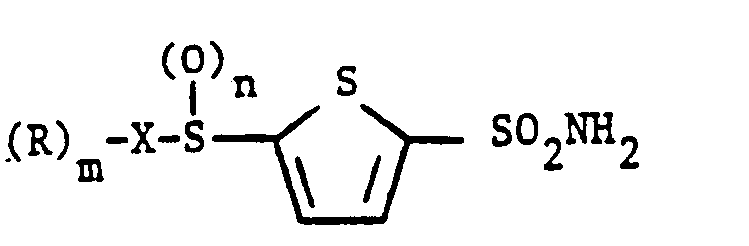
- This invention relates to novel thiophene-2-sulfonamides useful in the treatment of elevated intraocular pressure. More particularly this invention relates to compounds having the structural formula: wherein R, X and n are hereinafter defined, as well as the pharmaceutically and opthalmologically acceptable salts thereof. This invention also relates to pharmaceutical compositions and the use thereof for systemic and ophthalmic use employing a novel compound of this invention as active ingredient for the treatment of elevated intraocular pressure, especially when accompanied by pathological damage such as in the disease known as glaucoma.
- Glaucoma is an ocular disorder associated with elevated intraocular pressures which are too high for normal function and may result in irreversible loss of visual function. If untreated, glaucoma may eventually lead to blindness. Ocular hypertension, i.e., the condition of elevated intraocular pressure without optic nerve head damage or characteristic glaucomatous visual field defects, is now believed by many ophthalmologists to represent the earliest phase of glaucoma.
- carbonic anhydrase inhibitors block or impede this inflow pathway by inhibiting the enzyme, carbonic anhydrase. While such carbonic anhydrase inhibitors are now used to treat intraocular pressure by oral, intravenous or other systemic routes, they thereby have the distinct disadvantage of inhibiting carbonic anhydrase throughout the entire body. Such a gross disruption of a basic enzyme system is justified only during an acute attack of alarmingly elevated intraocular pressure, or when no other agent is effective. Despite the desirability of directing the carbonic anhydrase inhibitor only to the desired opthalmic target tissue, no topically effective carbonic anhydrase inhibitors are available for clinical use.
- an ophthalmic carbonic anhydrase inhibitor must not only penetrate the ophthalmic tissues to reach the active sites within the eye, but it must also be devoid of those side effects including irritation, allergic reaction and the like which would militate against long term administration.
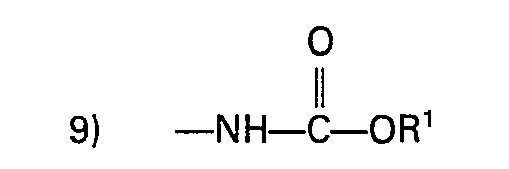
- novel compounds of this invention have structural formula: or a pharmaceutically acceptable salt thereof, wherein
- R 1 groups are the same or different, or can be joined together to form, with the nitrogen atom to which they are attached, a 5- or 6-membered heterocycle such as piperidino, piperazino, morpholino, 1-pyrrolyl, or the like.
- n 2, i.e. that the 5-substituent be a sulfone moiety. It is further preferred that X be ⁇ (CH 2 ) 1-4 ⁇ , and if R is phenyl or substituted phenyl it is preferred that X be ⁇ CH 2 ⁇ (methylene). Specific compounds within the scope of this invention are:
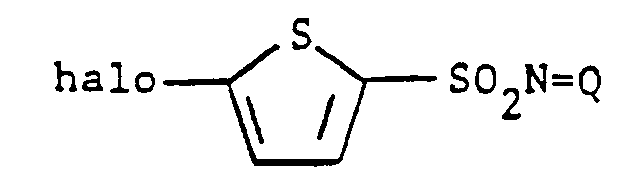
- the novel process of this invention comprises as the principle step the condensation reaction of a 5- halo-1-sulfamoylthiophene with a mercaptan of formula R-X-SH under the influence of a strong base.
- the reaction may be illustrated as follows: wherein halo is chloro, bromo or iodo, preferably bromo.
- the thiophene starting material is represented above as a thiophene sulfonamide and is a quite useful reagent. However, the reaction is usually cleaner and better yields are achieved if the sulfonamide group is protected by an easily removable protecting group such as the N,N-dimethylformamidine. In other words, the starting material might actually be of structure: The formamidine protecting group is readily removed by treatment with a mineral acid or aqueous base.
- the mercaptan, the halothiophene and strong base in approximately equimolar amounts are admixed in a polar organic solvent such as dimethyl formamide, hexamethylphosphoramide, dimethylsulfoxide, or the like and stirred at about 10°C to 100°C for about 0.5 to 3 hours.
- the preferred laboratory technique is to treat the mercaptan with the strong base at about 10°C to 30°C followed by addition of the halothiophene with aging at about 10°C to 100°C for the requisite time period.
- Strong bases suitable for use in the novel process include alkali metal hydrides and alkoxides such as sodium, or potassium hydrides, methoxides, ethoxides, isopropoxides, or t-butoxides.
- the sulfides produced by the foregoing process are converted to the corresponding sulfones by oxidation with hydrogen peroxide or a peracid such as m-chloroperbenzoic acid or Oxone R (a Dupont trade name for potassium hydrogen monoperoxysulfate).
- Oxidation with hydrogen peroxide is conducted in a carboxylic acid medium such as acetic or propionic acid at about 50 to 100°C for about 0.5 to 8 hours.
- the oxidation with a peracid is conducted in an inert organic solvent such as ethyl acetate, methanol, ethanol, butyl acetate, or isopropanol at about 10 to about 40°C for about 1 to 24 hours.
- the time is not critical and times longer that that necessary to complete the reaction are not detrimental.
- R is represented by the following reaction scheme: wherein R' has the meanings hereinbefore designated, and X' is chloro, bromo, iodo, or Generally equimolar amounts of the thiophene and are employed, although use of an excess of the more readily available reactant is satisfactory.
- the reaction is conducted in a suitable, inert solvent such as acetone, dimethylformamide, pyridine, ethyl acetate, tetrahydrofuran or benzene and the like with at least an equimolar amount of a hydrohalide acceptor when the acylating agent is an acyl halide or with a carboxylic acid acceptor when the acylating agent is an acid anhydride.
- a suitable, inert solvent such as acetone, dimethylformamide, pyridine, ethyl acetate, tetrahydrofuran or benzene and the like
- Bases such as triethylamine, pyridine and the like may be employed for this purpose.
- the reaction may be conducted with or without a catalyst at temperatures of from 0°C to the boiling point of the solvent used but preferably from about 15°C to 50°C.
- a 4,4-dialkylaminopyridine such as 4-dimethylaminopyridine or 4-pyrrolidinopyridine is preferred.
- R is of this invention.
- a compound with an appropriate haloformate, particularly a chloroformate of the formula: or a bis carbonate of the formula:
- the reaction is conducted in a suitable solvent such as dimethylformamide, pyridine, acetone, ethyl acetate, tetrahydrofuran or benzene and the like with at least an equimolar amount of a hydrohalide acceptor.
- a suitable solvent such as dimethylformamide, pyridine, acetone, ethyl acetate, tetrahydrofuran or benzene and the like with at least an equimolar amount of a hydrohalide acceptor.
- Bases such as triethylamine, pyridine and the like may be employed for this purpose.
- the reaction may be conducted with or without a catalyst at temperatures of from 0°C to the boiling point of the solvent used but preferably from 15°C to 50°C.
- triethylamine or a 4,4-dialkylaminopyridine such as 4-dimethylaminopyridine or 4-pyrrolidinopyridine is preferred.
- the hydroxy compound is treated with an "alkylating" agent of formula R'-X' wherein X 2 is a halide such as chloride, bromide or iodide, or other good leaving group such as mesylate, tosylate or benzenesulfonate in a suitable solvent such as dimethylformamide, hexamethylphosphoramide, or the like in the presence of a base such as an alkali metal alkoxide, preferably sodium methoxide, at about 0°C to 35°C, usually about room temperature for about 10 to 30 hours.
- a base such as an alkali metal alkoxide, preferably sodium methoxide, at about 0°C to 35°C, usually about room temperature for about 10 to 30 hours.
- the O-sulfates of this invention are prepared by reacting an hydroxyalkylsulfonylthiophene-2-sulfonamide with sulfamic acid in pyridine at elevated temperatures (about 50°C to the boiling point) for about 18 to 48 hours to provide the ammonium salt followed, if desired, by titration with hydroxides of the formula MOH to provide the other salts.
- O-phosphates of this invention are prepared by treatment of a hydroxy compound with phosphorus oxychloride, an alkyl dichlorophosphate or a dialkyl chlorophosphate in pyridine or similar basic solvent at about -5 to +5°C for about 0.25 to 1.0 hour.
- the sulfonamide group may be protected as an N,N-disubstituted formamide prepared and removed as described earlier.
- novel pharmaceutical formulations of this invention include formulations for systemic administration and ophthalmic formulations designed for topical ocular administration, preferably the latter.
- the formulations for systemic administration comprise a non-toxic pharmaceutically acceptable carrier and an effective amount of one or more of the novel compounds of this invention. They may be in a form (a) for oral administration; e.g., as tablets, in combination with other compounding ingredients customarily used such as talc, vegetable oils, polyols, benzyl alcohols, gums, gelatin, starches and other carriers; dissolved or dispersed or emulsified in a suitable liquid carrier; in hard or soft capsules, encapsulated in a suitable material; or (b) for parenteral administration; e.g., dissolved or dispersed in a suitable liquid carrier as a solution, suspension or emulsion, or (c) for transdermal application, e.g. as a patch.
- a for oral administration; e.g., as tablets, in combination with other compounding ingredients customarily used such as talc, vegetable oils, polyols, benzyl alcohols, gums, gelatin, starches and
- the active drugs of this invention are most suitably administered in the form of ophthalmic pharmaceutical compositions adapted for topical administration to the eye such as a solution, suspension, ointment, or as a solid insert.
- Formulations of these compounds may contain from 0.01 to 15% and especially 0.5% to 2% of medicament. They may contain a novel compound of this invention as the sole medicament or may contain as well an effective amount of a (3-adrenergic blocking agent such as timolol maleate or a parasympthomimetic agent such as pilocarpine.
- a (3-adrenergic blocking agent such as timolol maleate or a parasympthomimetic agent such as pilocarpine.
- the two active principles are present in approximately equal amounts on a weight basis.
- the pharmaceutical preparation which contains the active compound may be conveniently admixed with a non-toxic pharamceutical inorganic or organic carrier.
- pharamceutically acceptable carriers are, for example, water, mixtures of water and water-miscible solvents such as lower alkanols or aralkanols, vegetable oils, polyalkylene glycols, petroleum based jelly, ethyl cellulose, ethyl oleate, carboxymethylcellulose, polyvinylpyrrolidone, isopropyl myristate and other conventionally employed acceptable carriers.
- the pharmaceutical preparation may also contain non-toxic auxiliary substances such as emulsifying, preserving, wetting agents, bodying agents and the like, as for example, polyethylene glyocls 200, 300, 400 and 600, carbowaxes 1,000, 1,500, 4,000, 6,000 and 10,000, antibacterial components such as quarternary ammonium compounds, phenylmercuric salts known to have cold sterilizing properties and which are non-injurious in use, thimerosal, methyl a propyl paraben, benzyl alcohol, phenyl ethanol, buffering ingredients such as sodium chloride, sodium borate, sodium acetates, gluconate buffers, and other conventional ingredients such as sorbitan monlaurate, triethanolamine, polyoxyethylene sorbitan monopalmitylate, dioctyl sodium sulfosuccinate, monothioglycerol, thiosorbitol, ethylenediamine tetraacetic acid, and the like.
- the pharmaceutical preparation may also be in the form of a solid insert such as one which after dispensing the drug remains essentially intact, or a bio-erodible insert that either is soluble in lacrimal fluids, or otherwise disintegrates.
- doses of the present compounds of about 0.01 to about 50 mg/kg and preferably from about 0.1 to about 20 mg/kg of body weight per day may be used. Dosage may be single or multiple depending on the daily total required and the unit dosage.
- StepA Preparation of N,N-Dimethyl-N'-(5-bromothiophene-2-sulfonyl)formamidine
- Step B Preparation of N,N-Dimethyl-N'-[5-(4-methoxybenzylthio)thiophene-2-sulfonyl]formamidine
- m-Chloroperoxybenzoic acid (1.29 g, 80-85% pure, about 6 mmols) was added in one portion to a stirred solution of 5-(4-hydroxybenzylthio)thiophene-2-sulfonamide (0.86 g, 2.9 mmols) in ethyl acetate (10 ml) and methanol (2 ml). After two hours at ambient temperature, the mixture was diluted with 25 ml of ether and filtered to give 0.50 g off-white solid, m.p. 220-222°C (dec.).
- StepA Preparation of N,N-Dimethyl-N'-5[(2-hydroxyethylthio)thiophene-2-sulfonyl]formamidine
- the crude product from Step A was dissolved in methanol (50 ml), 10% aqueous sodium hydroxide (50 ml) was added and the solution was heated on the steam bath for 1.5 hours.
- the methanol was removed under reduced pressure, the residue diluted with water, acidified with 6N hydrochloric acid and extracted with ethyl acetate (3 x 250 ml).
- the residue after evaporation of the ethyl acetate was chromatographed over silica gel eluting with a 5%-7.5% methanol in chloroform (v/v) gradient.
- the fractions containing the desired product were pooled and evaporated to an oil that solidified after being subjected to vacuum for 24 hours. This material was crystallized from ether-petroleum ether after storage at -20°C, m.p. 46.5-47.5°C.
- reaction mixture was diluted with water (500 ml) and extracted with ethyl acetate (250 ml).
- Sodium hydroxide 100 g was added to the aqueous layer and this solution warmed on the steam bath for two hours.
- the mixture was filtered and the clear filtrate was acidified with concentrated HCI.
- the solution was extracted with ethyl acetate (3 x 300 ml), the extracts were washed with saturated NaCl and dried (Na 2 S0 4 ). Filtration and evaporation of the solvent left the product as a light amber oil, 13.3 g.
- a mixture of 3.00 g of 5-(3-hydroxypropylsulfonyl)thiophene-2-sulfonamide and 3.00 g of sulfamic acid in 20 ml of dry pyridine is refluxed gently for 36 hours.
- the pyridine is distilled from the mixture under vacuum at 50°C.
- the residue is dissolved in water and made basic by addition of concentrated ammonia.
- the solvent is evaporated.
- the product is separated from residual ammonium sulfamate by extraction into ethanol.
- the ethanol extract is filtered and evaporated to give crude sulfate as the ammonium salt.
- the salt is dissolved in distilled water and titrated with 1 equivalent of sodium hydroxide.
- the solvent is evaporated leaving the crude sodium sulfate salt.
- the product is boiled with 40 ml of saturated sodium chloride solution and sufficient water is added to obtain a clear solution. Upon cooling, 2.00 g of a white solid separates.
- Example 15 Treating the ammonium salt produced in Example 15 with potassium hydroxide, tetramethylammonium hydroxide, pyridine, imidazole, pralidoxime hydroxide or thiamine in place of the sodium hydroxide used in Example 15 prepares the corresponding salts.
- a solution of 2.5 g of 5-(3-hydroxypropylsulfonyl)thiophene-2-sulfonamide in 10 ml of pyridine is added over a 1 minute period to a well-stirred solution of 1.02 ml of phosphorous oxychloride in pyridine (10 ml) at 0°C. After 15 to 30 minutes the reaction mixture is poured into ice-water and the resulting solution is stirred for 15 minutes. The solvents were evaporated under high vacuum on a rotary evaporator. The product is resuspended in water and the pH of the solution is adjusted to 7.8 ⁇ 0.6. The solvents were removed and the solid dried under vacuum. The solid is redissolved in 100 ml of distilled water. Gradual addition of 400 ml of acetone leads to precipitation of the title compound.
- R 4 is C 1 ⁇ 3 alkyl or phenyl-C ' _ 3 alkyl are prepared by reacting an hydroxy compound with an appropriate alkyldichlorophosphate; e.g. ethyldichlorophosphate, or benzyldichlorophosphate.
- an appropriate alkyldichlorophosphate e.g. ethyldichlorophosphate, or benzyldichlorophosphate.
- reaction mixture is poured into water (300 ml).
- the resulting semi-solid is extracted into ethyl acetate, washed with saturated sodium chloride solution and dried over sodium sulfate. Removal of solvent in vacuo provides the desired product.
- Compound I phosphate buffer salts, and benzalkonium chloride are added tb and dissolved in water.
- the pH of the composition is adjusted to 6.8 and diluted to volume.
- the composition is rendered sterile by ionizing radiation.
- Compound 11 and the petrolatum are aseptically combined.
- Ophthalmic inserts are manufactured from compression molded films which are prepared on a Carver Press by subjecting the powdered mixture of the above ingredients to a compressional force of 12,000 Ibs (gauge) at 300°F for one to four minutes. The film is cooled under pressure by having cold water circulate in the platen. Opthalmic inserts are then individually cut from the film with a rod-shaped punch. Each insert is placed into a vial, which is then placed in a humidity cabinet (88% R.H. at 30°C) for two to four days. After removal from the humidity cabinet, the vials are stoppered and then capped. The vials containing the hydrate insert are then autoclaved at 250°F for 1 ⁇ 2 hour.
- Opthalmic inserts are manufactured from a solvent cast film prepared by making a viscous solution of the powdered ingredients listed above using methanol as the solvent. The solution is placed on a Teflon plate and allowed to dry at ambient conditions. After drying, the film is placed in an 88% R.H. cabinet until it is pliable. Appropriately sized inserts are cut from the film.
- Opthalmic inserts are manufactured from a solvent cast film which is prepared by making a viscous solution of the powdered blend of the above ingredients using a methanol/water solvent system (10 ml methanol is added to 2.5 g of the powered blend, to which 11 ml of water (in three divided portions) is added. The solution is placed on a Teflon plate and allowed to dry at ambient conditions. After drying, the film is placed in an 88% R.H. cabinet until it is pliable. Appropriately sized inserts are cut from the film.
- Ophthalmic inserts are manufactured from compression molded films which are prepared on a Carver Press by subjecting the powdered mixture of the above ingredients to a compressional force of 5443 kg (12,000 lbs) 5443 kg (gauge) at 177°C for one minute. The film is cooled under pressure by having cold water circulate in the platen. Opthalmic inserts are then individually cut from the film with a punch. Each insert is placed into a vial, which is then placed in a humidity cabinet (88% R.H. at 30°C) for two to four days. After removal from the humidity cabinet, the vials are stoppered and then capped. The vials containing the hydrated insert are thus autoclaved at 250°F for one-half hour.
- the solid inserts of this invention are available for use by the patient in a pathogen free condition.
- the sterilization is preferably conducted after packaging.
- the best mode of sterilizing is to employ ionizing radiation including radiation emanating from Cobalt 60 or high energy electron beams.
Landscapes
- Chemical & Material Sciences (AREA)
- Organic Chemistry (AREA)
- Health & Medical Sciences (AREA)
- General Health & Medical Sciences (AREA)
- Life Sciences & Earth Sciences (AREA)
- Chemical Kinetics & Catalysis (AREA)
- Public Health (AREA)
- General Chemical & Material Sciences (AREA)
- Medicinal Chemistry (AREA)
- Engineering & Computer Science (AREA)
- Bioinformatics & Cheminformatics (AREA)
- Animal Behavior & Ethology (AREA)
- Veterinary Medicine (AREA)
- Pharmacology & Pharmacy (AREA)
- Nuclear Medicine, Radiotherapy & Molecular Imaging (AREA)
- Cardiology (AREA)
- Heart & Thoracic Surgery (AREA)
- Ophthalmology & Optometry (AREA)
- Biochemistry (AREA)
- Molecular Biology (AREA)
- Pharmaceuticals Containing Other Organic And Inorganic Compounds (AREA)
Claims (10)






Applications Claiming Priority (2)
| Application Number | Priority Date | Filing Date | Title |
|---|---|---|---|
| US66766684A | 1984-11-02 | 1984-11-02 | |
| US667666 | 1996-06-21 |
Publications (2)
| Publication Number | Publication Date |
|---|---|
| EP0182691A1 EP0182691A1 (fr) | 1986-05-28 |
| EP0182691B1 true EP0182691B1 (fr) | 1990-07-04 |
Family
ID=24679132
Family Applications (1)
| Application Number | Title | Priority Date | Filing Date |
|---|---|---|---|
| EP85402081A Expired - Lifetime EP0182691B1 (fr) | 1984-11-02 | 1985-10-28 | Thiophène-2-sulfonamides substitués et leur préparation |
Country Status (3)
| Country | Link |
|---|---|
| EP (1) | EP0182691B1 (fr) |
| JP (1) | JPH06104664B2 (fr) |
| DE (1) | DE3578557D1 (fr) |
Families Citing this family (5)
| Publication number | Priority date | Publication date | Assignee | Title |
|---|---|---|---|---|
| US4797413A (en) * | 1986-05-14 | 1989-01-10 | Merck & Co., Inc. | Thieno thiopyran sulfonamide derivatives, pharmaceutical compositions and use |
| US4665090A (en) * | 1985-10-09 | 1987-05-12 | Merck & Co., Inc. | Substituted thiophene-2-sulfonamide antiglaucoma agents |
| EP0228237B1 (fr) * | 1985-12-24 | 1989-11-23 | Merck & Co. Inc. | Thiophène-2-sulfonamides substitués, agents de traitement du glaucome |
| US4929637A (en) * | 1985-12-24 | 1990-05-29 | Merck & Co., Inc. | Substituted thiophene-2-sulfonamide antiglaucoma agents |
| US4847289A (en) * | 1987-06-08 | 1989-07-11 | Merck & Co., Inc. | Thiophene sulfonamide antiglaucoma agents |
Citations (1)
| Publication number | Priority date | Publication date | Assignee | Title |
|---|---|---|---|---|
| EP0130109A2 (fr) * | 1983-06-20 | 1985-01-02 | Merck & Co. Inc. | Dérivés de thiophénesulfonamide, leur préparation et composition pharmaceutique pour le traitement topique de l'hypertension intra-oculaire |
Family Cites Families (3)
| Publication number | Priority date | Publication date | Assignee | Title |
|---|---|---|---|---|
| GB1459571A (en) * | 1974-09-12 | 1976-12-22 | Pfizer Ltd | Thiophene-2-sulphonamide derivatives and their use as therapeutic agents sheet orienting apparatus |
| ZA813332B (en) * | 1980-06-21 | 1982-05-26 | Pfizer | Larvicides and isecticides |
| US4477466A (en) * | 1983-05-23 | 1984-10-16 | Merck & Co., Inc. | Acyloxy derivatives of [phenylsulfonyl(or sulfinyl)]thiophenesulfonamide for the topical treatment of elevated intraocular pressure |
-
1985
- 1985-10-28 DE DE8585402081T patent/DE3578557D1/de not_active Expired - Lifetime
- 1985-10-28 EP EP85402081A patent/EP0182691B1/fr not_active Expired - Lifetime
- 1985-11-01 JP JP60244225A patent/JPH06104664B2/ja not_active Expired - Lifetime
Patent Citations (1)
| Publication number | Priority date | Publication date | Assignee | Title |
|---|---|---|---|---|
| EP0130109A2 (fr) * | 1983-06-20 | 1985-01-02 | Merck & Co. Inc. | Dérivés de thiophénesulfonamide, leur préparation et composition pharmaceutique pour le traitement topique de l'hypertension intra-oculaire |
Also Published As
| Publication number | Publication date |
|---|---|
| JPS61109787A (ja) | 1986-05-28 |
| EP0182691A1 (fr) | 1986-05-28 |
| JPH06104664B2 (ja) | 1994-12-21 |
| DE3578557D1 (de) | 1990-08-09 |
Similar Documents
| Publication | Publication Date | Title |
|---|---|---|
| US4751231A (en) | Substituted thieno[2,3-b]pyrrole-5-sulfonamides as antiglaucoma agents | |
| US4668697A (en) | Elevated intraocular pressure lowering benzo-[b]-thiophene-2-sulfonamide derivatives, compositions, and method of use therefor | |
| US4486444A (en) | (Hydroxybenzoyl)thiophenesulfonamide and acyl derivatives thereof for the topical treatment of elevated intraocular pressure | |
| EP0152340B1 (fr) | Dérivés de 2-sulfamoylbenzo[bêta]furanne et composition ophtalmique pour le traitement de pression intra-oculaire élevée | |
| EP0219429B1 (fr) | Benzènesulfonamides substitués et compositions antiglaucomes les contenant | |
| US4840963A (en) | 2-Sulfamoyl-1H-indole derivatives for the treatment of elevated intraocular pressure | |
| NZ208444A (en) | 2-thiophene derivatives and pharmaceutical compositions | |
| EP0228237B1 (fr) | Thiophène-2-sulfonamides substitués, agents de traitement du glaucome | |
| EP0130109B1 (fr) | Dérivés de thiophénesulfonamide, leur préparation et composition pharmaceutique pour le traitement topique de l'hypertension intra-oculaire | |
| EP0182691A1 (fr) | Thiophène-2-sulfonamides substitués et leur préparation | |
| US4665090A (en) | Substituted thiophene-2-sulfonamide antiglaucoma agents | |
| US4721794A (en) | Substituted thiophene-2-sulfonamide antiglaucoma agents | |
| EP0252640B1 (fr) | Alcanesulfonamides comme agents antiglaucome | |
| US4929637A (en) | Substituted thiophene-2-sulfonamide antiglaucoma agents | |
| EP0479480A3 (fr) | Thiéno(2,3-B)(1,4)thiazine-6-sulfonamides substitués comme agents antiglaucomiques | |
| US4505923A (en) | Ethers of hydroxybenzothiazole-2-sulfonamide for the topical treatment of elevated intraocular pressure | |
| US4798831A (en) | Substituted thieno[2,3-B]furan-2-sulfonamides as antiglaucoma agents | |
| US5308842A (en) | Tricyclic derivatives of the thienodiazocine and thienothiadiazocine classes of compounds | |
| EP0155214B1 (fr) | Dérivés de 2-sulfamoyle-1H-indole pour le traitement de la pression intraoculaire élevée | |
| US4539324A (en) | Substituted pyrimidin-2-ones and the salts thereof | |
| JPH0219837B2 (fr) | ||
| US4806562A (en) | Substituted thieno[2,3-b]thiophene-2-sulfonamides as antiglaucoma agents | |
| US4788192A (en) | 2-Sulfamoylbenzo(b)thiophene derivatives pharmaceutical compositions and use | |
| DK167064B1 (da) | Thienooe2,3-baafuran-2-sulfonamid og farmaceutisk praeparat indeholdende en saadan forbindelse | |
| US4812463A (en) | Alkanesulfonamides as antiglaucoma agents |
Legal Events
| Date | Code | Title | Description |
|---|---|---|---|
| PUAI | Public reference made under article 153(3) epc to a published international application that has entered the european phase |
Free format text: ORIGINAL CODE: 0009012 |
|
| AK | Designated contracting states |
Kind code of ref document: A1 Designated state(s): CH DE FR GB IT LI NL |
|
| ITCL | It: translation for ep claims filed |
Representative=s name: SOCIETA' ITALIANA BREVETTI S.P.A. |
|
| 17P | Request for examination filed |
Effective date: 19860922 |
|
| 17Q | First examination report despatched |
Effective date: 19871228 |
|
| GRAA | (expected) grant |
Free format text: ORIGINAL CODE: 0009210 |
|
| AK | Designated contracting states |
Kind code of ref document: B1 Designated state(s): CH DE FR GB IT LI NL |
|
| REF | Corresponds to: |
Ref document number: 3578557 Country of ref document: DE Date of ref document: 19900809 |
|
| ET | Fr: translation filed | ||
| ITF | It: translation for a ep patent filed | ||
| R20 | Corrections of a patent specification |
Effective date: 19900904 |
|
| PLBE | No opposition filed within time limit |
Free format text: ORIGINAL CODE: 0009261 |
|
| STAA | Information on the status of an ep patent application or granted ep patent |
Free format text: STATUS: NO OPPOSITION FILED WITHIN TIME LIMIT |
|
| 26N | No opposition filed | ||
| PGFP | Annual fee paid to national office [announced via postgrant information from national office to epo] |
Ref country code: CH Payment date: 19930923 Year of fee payment: 9 |
|
| PGFP | Annual fee paid to national office [announced via postgrant information from national office to epo] |
Ref country code: FR Payment date: 19930930 Year of fee payment: 9 |
|
| PGFP | Annual fee paid to national office [announced via postgrant information from national office to epo] |
Ref country code: GB Payment date: 19931001 Year of fee payment: 9 |
|
| ITTA | It: last paid annual fee | ||
| PGFP | Annual fee paid to national office [announced via postgrant information from national office to epo] |
Ref country code: NL Payment date: 19931031 Year of fee payment: 9 |
|
| PGFP | Annual fee paid to national office [announced via postgrant information from national office to epo] |
Ref country code: DE Payment date: 19931125 Year of fee payment: 9 |
|
| PG25 | Lapsed in a contracting state [announced via postgrant information from national office to epo] |
Ref country code: GB Effective date: 19941028 |
|
| PG25 | Lapsed in a contracting state [announced via postgrant information from national office to epo] |
Ref country code: LI Effective date: 19941031 Ref country code: CH Effective date: 19941031 |
|
| PG25 | Lapsed in a contracting state [announced via postgrant information from national office to epo] |
Ref country code: NL Effective date: 19950501 |
|
| NLV4 | Nl: lapsed or anulled due to non-payment of the annual fee | ||
| GBPC | Gb: european patent ceased through non-payment of renewal fee |
Effective date: 19941028 |
|
| PG25 | Lapsed in a contracting state [announced via postgrant information from national office to epo] |
Ref country code: FR Effective date: 19950630 |
|
| REG | Reference to a national code |
Ref country code: CH Ref legal event code: PL |
|
| PG25 | Lapsed in a contracting state [announced via postgrant information from national office to epo] |
Ref country code: DE Effective date: 19950701 |
|
| REG | Reference to a national code |
Ref country code: FR Ref legal event code: ST |