EP0190772A2 - Elektrisch leitfähiger Kunststoff - Google Patents
Elektrisch leitfähiger Kunststoff Download PDFInfo
- Publication number
- EP0190772A2 EP0190772A2 EP86102167A EP86102167A EP0190772A2 EP 0190772 A2 EP0190772 A2 EP 0190772A2 EP 86102167 A EP86102167 A EP 86102167A EP 86102167 A EP86102167 A EP 86102167A EP 0190772 A2 EP0190772 A2 EP 0190772A2
- Authority
- EP
- European Patent Office
- Prior art keywords
- electrically conductive
- electrode
- graphite
- percent
- carbon
- Prior art date
- Legal status (The legal status is an assumption and is not a legal conclusion. Google has not performed a legal analysis and makes no representation as to the accuracy of the status listed.)
- Granted
Links
Images

Classifications
-
- C—CHEMISTRY; METALLURGY
- C09—DYES; PAINTS; POLISHES; NATURAL RESINS; ADHESIVES; COMPOSITIONS NOT OTHERWISE PROVIDED FOR; APPLICATIONS OF MATERIALS NOT OTHERWISE PROVIDED FOR
- C09C—TREATMENT OF INORGANIC MATERIALS, OTHER THAN FIBROUS FILLERS, TO ENHANCE THEIR PIGMENTING OR FILLING PROPERTIES ; PREPARATION OF CARBON BLACK ; PREPARATION OF INORGANIC MATERIALS WHICH ARE NO SINGLE CHEMICAL COMPOUNDS AND WHICH ARE MAINLY USED AS PIGMENTS OR FILLERS
- C09C1/00—Treatment of specific inorganic materials other than fibrous fillers; Preparation of carbon black
- C09C1/44—Carbon
- C09C1/48—Carbon black
- C09C1/56—Treatment of carbon black ; Purification
-
- C—CHEMISTRY; METALLURGY
- C08—ORGANIC MACROMOLECULAR COMPOUNDS; THEIR PREPARATION OR CHEMICAL WORKING-UP; COMPOSITIONS BASED THEREON
- C08K—Use of inorganic or non-macromolecular organic substances as compounding ingredients
- C08K3/00—Use of inorganic substances as compounding ingredients
- C08K3/02—Elements
- C08K3/04—Carbon
-
- C—CHEMISTRY; METALLURGY
- C08—ORGANIC MACROMOLECULAR COMPOUNDS; THEIR PREPARATION OR CHEMICAL WORKING-UP; COMPOSITIONS BASED THEREON
- C08K—Use of inorganic or non-macromolecular organic substances as compounding ingredients
- C08K3/00—Use of inorganic substances as compounding ingredients
- C08K3/18—Oxygen-containing compounds, e.g. metal carbonyls
- C08K3/20—Oxides; Hydroxides
- C08K3/22—Oxides; Hydroxides of metals
-
- C—CHEMISTRY; METALLURGY
- C08—ORGANIC MACROMOLECULAR COMPOUNDS; THEIR PREPARATION OR CHEMICAL WORKING-UP; COMPOSITIONS BASED THEREON
- C08K—Use of inorganic or non-macromolecular organic substances as compounding ingredients
- C08K3/00—Use of inorganic substances as compounding ingredients
- C08K3/18—Oxygen-containing compounds, e.g. metal carbonyls
- C08K3/24—Acids; Salts thereof
- C08K3/26—Carbonates; Bicarbonates
-
- C—CHEMISTRY; METALLURGY
- C08—ORGANIC MACROMOLECULAR COMPOUNDS; THEIR PREPARATION OR CHEMICAL WORKING-UP; COMPOSITIONS BASED THEREON
- C08K—Use of inorganic or non-macromolecular organic substances as compounding ingredients
- C08K3/00—Use of inorganic substances as compounding ingredients
- C08K3/34—Silicon-containing compounds
-
- C—CHEMISTRY; METALLURGY
- C08—ORGANIC MACROMOLECULAR COMPOUNDS; THEIR PREPARATION OR CHEMICAL WORKING-UP; COMPOSITIONS BASED THEREON
- C08K—Use of inorganic or non-macromolecular organic substances as compounding ingredients
- C08K3/00—Use of inorganic substances as compounding ingredients
- C08K3/34—Silicon-containing compounds
- C08K3/36—Silica
-
- H—ELECTRICITY
- H01—ELECTRIC ELEMENTS
- H01B—CABLES; CONDUCTORS; INSULATORS; SELECTION OF MATERIALS FOR THEIR CONDUCTIVE, INSULATING OR DIELECTRIC PROPERTIES
- H01B1/00—Conductors or conductive bodies characterised by the conductive materials; Selection of materials as conductors
- H01B1/20—Conductive material dispersed in non-conductive organic material
- H01B1/24—Conductive material dispersed in non-conductive organic material the conductive material comprising carbon-silicon compounds, carbon or silicon
-
- H—ELECTRICITY
- H01—ELECTRIC ELEMENTS
- H01M—PROCESSES OR MEANS, e.g. BATTERIES, FOR THE DIRECT CONVERSION OF CHEMICAL ENERGY INTO ELECTRICAL ENERGY
- H01M4/00—Electrodes
- H01M4/02—Electrodes composed of, or comprising, active material
- H01M4/64—Carriers or collectors
- H01M4/66—Selection of materials
-
- H—ELECTRICITY
- H01—ELECTRIC ELEMENTS
- H01M—PROCESSES OR MEANS, e.g. BATTERIES, FOR THE DIRECT CONVERSION OF CHEMICAL ENERGY INTO ELECTRICAL ENERGY
- H01M4/00—Electrodes
- H01M4/02—Electrodes composed of, or comprising, active material
- H01M4/64—Carriers or collectors
- H01M4/66—Selection of materials
- H01M4/668—Composites of electroconductive material and synthetic resins
-
- C—CHEMISTRY; METALLURGY
- C01—INORGANIC CHEMISTRY
- C01P—INDEXING SCHEME RELATING TO STRUCTURAL AND PHYSICAL ASPECTS OF SOLID INORGANIC COMPOUNDS
- C01P2004/00—Particle morphology
- C01P2004/30—Particle morphology extending in three dimensions
- C01P2004/40—Particle morphology extending in three dimensions prism-like
-
- Y—GENERAL TAGGING OF NEW TECHNOLOGICAL DEVELOPMENTS; GENERAL TAGGING OF CROSS-SECTIONAL TECHNOLOGIES SPANNING OVER SEVERAL SECTIONS OF THE IPC; TECHNICAL SUBJECTS COVERED BY FORMER USPC CROSS-REFERENCE ART COLLECTIONS [XRACs] AND DIGESTS
- Y02—TECHNOLOGIES OR APPLICATIONS FOR MITIGATION OR ADAPTATION AGAINST CLIMATE CHANGE
- Y02E—REDUCTION OF GREENHOUSE GAS [GHG] EMISSIONS, RELATED TO ENERGY GENERATION, TRANSMISSION OR DISTRIBUTION
- Y02E60/00—Enabling technologies; Technologies with a potential or indirect contribution to GHG emissions mitigation
- Y02E60/10—Energy storage using batteries
Definitions
- This inventon relates to an electrically conducting plastic complex material endowed with higher than a certain value of electrical conductivity without inclusion of metallic contents and more particularly to such electrically conductive plastic complex material suitably used in conjunction with electrical, electronic or electrochemical devices such as metal-halogen batteries.
- These electrically conductive plastic complex materials are used as so-called molded pieces or synthetic resin paint and are usually manufactured by dispersing fine powders of Ag, Cu; Al or the like metals or fine carbon particles into the synthetic resin.
- the electrically conductive plastic complex materials are prepared by simply dispersing electrically conductive substances into the non-conductive plastic material, their electrical conductivity may be fluctuated widely by nonhomogeneous dispersion of the conducting particles. In addition, it has not been ⁇ possible to increase the electrical conductivity beyond a certain limit although some electrically conductive complex with contents of the dispersed metallic powders exhibit an electrical conductivity of the order of 10 9 to 10 ohm -1 cm -1 . The result is unavoidable limitations on the application of the electrically conductive plastic complex material.
- the insulating materials such as plastics, semi-conductors such as Ge, Si, carbon black or graphite or conductors such as metal have intrinsic volume resistivity proper to them.
- the volume resistivity for the insulating material is higher than 10 Ohm-cm, while that for semi-conductors is 10 -3 to 10 8 ohm-cm and that for conductors is less than 10 -3 ohm cm.
- the volume resistivity of these electrical materials change in accordance with variation of temperature.
- the volume resistivity of the insulating material generally decrease with rise in temperature, while that of the semiconductors and that of conductors increase with rise in temperature.
- An electrically conductive complex material obtained by mixing carbon black into the base polymer and kneading them together is lightweight and low in cost while also exhibiting good workability. Hence it is employed in a variety of electrical devices.
- the volume resistivity of this material also tends to increase with rise in temperature.
- the plastic complex materials used in electrolytes tend to be affected by materials produced upon electrolysis and thus undergo certain chemical degradation. This tendency is most outstanding especially in cases wherein the substances produced upon electrolysis are-halogen group elements such as chlorine or bromine.
- electrolytic solution as used in the present specification is intended to mean the electrolyte used in storage battery as well as electrolyte for dry battery or electroplating accompanying electrochemical reactions. It is an aqueous solution of compounds of a halogen group element selected from the group consisting of F, C1, Br and I with at least one alkali or alkali earth metals such as Li, Be, Na, M g, K, Ca, Rb, Sr, Cs or Ba in addition to metals such as Zn, Cu, Ni, Co, Fe, Mn, Cr, Sn, Pb, Pt, Hg, Cd, Ag or Pd.
- a halogen group element selected from the group consisting of F, C1, Br and I with at least one alkali or alkali earth metals such as Li, Be, Na, M g, K, Ca, Rb, Sr, Cs or Ba in addition to metals such as Zn, Cu, Ni, Co, Fe, Mn, Cr, Sn, Pb, Pt, Hg
- inventive materials may also be used with electrolytes from which strong acid groups, substances that extract hydrogen from hydrocarbons in the plastic complex material, strongly reductive agents, or compounds such as strong alkali that may act as hydrolytic agent, such as 0, 0 2 , O 3 , S, SO 2 , SO 3 , SO 4 , Cl O 3 , Cr0 3 , O H, 0 2 H or Mn0 3 are produced upon decomposition of the electrolytes.
- the plastic complex material may become swollen in a short period and broken up into pieces which is extremely undesirable from the standpoint of dimensional stability and mechanical strength.
- plastic complex material is subject to molecular cleavage or disruption when acted on by electrolytic products such as chlorine or bromine thus leading finally to failure of the material.
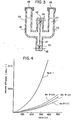
- Fig. 1 shows in exploded perspective the laminated or stacked structure of the metal-halogen secondary battery through which the electrolyte is circulated.
- electrodes 1 of the bipolar type and separators 2 are stacked as shown and clamped on both sides by aluminium clamping end plates 11.
- the stack of these electrodes and separators are united together by bolts 12 and nuts 13.
- the electrolyte is supplied from a manifold 14 through a channel 15 and a microchannel 1-9'to the electrode surface and kept in circulation by means not shown.
- the numeral 16 designates a plastic clamping end plate
- the numeral 17 an electrode end plate
- the numeral 18 a terminal comprized of a wire net.
- the aforementioned metal-halogen battery makes use of monovalent alkali metals such as Li, Na or K or divalent metals such as Zn, Cd, Ni, Co or Fe as metals, Cl, Br or I as halogen and aqueous or nonaqueous solutions as electrolyte.
- monovalent alkali metals such as Li, Na or K or divalent metals such as Zn, Cd, Ni, Co or Fe as metals, Cl, Br or I as halogen and aqueous or nonaqueous solutions as electrolyte.
- the electrodes comprizing a mixture of a synthetic resin material and electrically conductive substances such as metal powders or carbon powders have been used in connection with the aforementioned metal-halogen batteries because these electrodes can be fabricated at lower costs into desired shape because of improved formability of the aforementioned mixture and are excellent in halogen durability.
- the conventional electrically conductive plastic complex material is defective in that its volume resistivity is high and changes in accordance with variation of temperature; the constituting molecules of the plastic material are subject to disruption or cleavage in the electrolyte thus introducing to failure of the material; and, when the material is used as electrode of the metal-halogen secondary battery and used in an electrolyte, halogen penetration may be caused from one side to the other side of electrode thus occurrence of self-discharge and the resulting battery failure.
- the present invention relates to an electrically conductive plastic complex material comprizing a synthetic resin base material added with electrically conductive carbon black and inorganic filler, and characterized in that the inorganic filler is at least one selected from the group consisting of graphite, calcium carbonate, talcum, alumina, silica and titania.
- graphite used as inorganic filler is graphite treated by a dopant and active carbon is added to and mixed with graphite, the resulting mixture being formed to an electrically conductive plastic complex material product.
- the resulting formed article may be used as electrode for metal halogen battery or as components of electrical and electronic devices.
- thermosetting resins such as phenol, urea, melamine, epoxy, or alkyd
- thermoplastic resins such as polyolefin, polystyrene, PMMA, polyvinyl acetate, PVA, polyvinylidene chloride o: nylon, synthetic resin paint containing these resins, silicon rubbers such as SBR, butadiene rubber, polyisoprene rubber, EP rubber, NBR or polyurethane rubber, and a variety of synthetic fibers.
- one or more of the polyolefins such as high density polyethylene, normal chains type low density polyethylene, polypropyrene or ethylene-propyrene copolymer.
- Halogen durability of the resultant material may be improved by using the base synthetic resin material with density higher than 0.94 g/cm 3 in polyethylene, 0.90 g/cm 3 in polypropyrene and 0.90 g/cm 3 in ethylene-propylene copolymer.
- electrically conductive carbon black various products resulting from incomplete combustion or heat cracking of natural gas or liquid hydrocarbons may be used. However, the electrically conductive carbon blacks having the particle size in the range of 30 to 46nm, surface area in the range of 245 to 1000 m 2 /g, volatile matter contents in the range of 1 to 1.5 weight percent, pH in the range of 7.0 to 9.5 and DBP oil absroption in the range of 160 to 340 ml/100g, are most preferred.
- graphite can be used as it is, it may also be doped for further improving electrical conductivity of the conductive plastic complex material.
- dopants to be used for this purpose are bromine, iodine, iodine chloride, iodine bromide, sulfuric acid, nitric acid and arsenic(V) fluoride.
- active carbon added besides the aforementioned inorganic fillers are powdered or granulated active carbon such as pelletized, crushed, granulated powder or spherical carbon that are activated with chemicals or steam.
- the present inventors conducted repeated researches into various compositions of the synthetic base resin material (A), electrically conductive carbon black (B) and a variety of inorganic fillers (C). These mixtures were kneaded in a mixer or roll kneader, and then formed by a conventional forming machine to a desired shape and the properties of these formed pieces were measured.
- the present invention has been completed on the basis of .
- an electrically conductive plastic complex material comprizing a synthetic base resin material (component A), electrically conductive carbon black (component B) and inorganic filler (component C) which is one or more ingredients selected from the group consisting of graphite, calcium carbonate, talcum, alumina and titania, said electrically conductive plastic complex material being formed and used in electrolytes, that is, as electrode made from complex material.
- the electrically conductive plastic complex material of the present invention is comprized of 30 to 80 wt. percent and preferably 30 to 70 wt. percent, and most preferably 45 to 65 wt. percent of the component A, 5 to 40 wt. percent and preferably 5 to 35 wt. percent and most preferably 5 to 35 wt. percent of the component B and 5 to 65 wt. percent and preferably 15 to 65 wt. percent and most preferably 15 to 50 wt. percent of the component C, related to the total of the components.
- the component A lower in contents than those specified above, the resulting material is lowered in pliability and mechanical strength. With the component A higher in contents than those specified above, it is not possible to realize sufficient electrical conductivity.
- the electrically conductive plastic complex material of the aforementioned composition can be manufactured by using the conventional forming apparatus and endowed with excellent formability and electrical conductivity without significantly lowering its mechanical strength.
- the electrically conductive carbon (component C) is contained in the range of 5 to 50 wt. percent because the electrically conductive plastic complex material is lowered in electrical conductivity for carbon contents less than 5 wt. percent and the material becomes difficult to formation for carbon contents higher than 50 wt. percent.
- talcum (component C) should be contained in the range of 5 to 50 wt. percent in consideration that volume resistivity of the materia1 may be affected with variation of temperature for talcum contents less than 5 percent and becomes difficult to formation for talcum contents . higher than 50 percent.
- the electrically conductive plastic complex material of the present invention is not affected substantially in volume resistivity so that the electric or electronic devices made from this material also exhibit stable performance in spite of occasional variation of temperature.
- the inventive material is not affected substantially in volume resistivity. and thus may not consider the temperature variation of devices.
- the present inventors conducted a research into possible additives that will enable the ultimate plastic complex material exposed to electrolytes to be more durable and less susceptible to the electrolytes.
- a zinc bromide aqueous solution has been selected as electrolyte because it produces bromine (which is most aggressive) and also because it may be present as bromine aqueous solution when electrolyzed.
- a variety of polyolefins have been tested as to their durability to electrolytic products.
- the electrically conductive plastic complex material comprizing a mixture of the synthetic base resin material, electrically conductive carbon black and at least one of calcim carbonate, talcum, alumina, silica and titania as inorganic filler shows extremely divergent properties according as the polyolefin density lies above or below a critical value of 0.94 g/cm 3 in polyethylene.
- polyolefin density be in the range of about 0.94 g/cm 3 to 0.98 g/cm 3 in polyethylene.
- polyolefin, electrically conductive carbon black and the inorganic filler be in the ranges of 18 to 50, 1 to 25 and 25 to 75 wt. percents, respectively.
- the present inventors conducted repeated researches into compositions of electrode materials capable of obviating the aforementioned deficiency accrued from use of the carbon-plastic electrodes in conjunction with metal-halogen batteries. It has emerged from these researches that the electrodd formed by an electrically conductive plastic complex material comprized of a basic composition (carbon-plastic composition) consisting of the synthetic base resin material, carbon black and graphite and highly adsorptive active carbon operative to inhibit diffusion, into electrode of the active material (halogen) is effective to drastically reduce halogen diffusion while also reducing an electrical resistivity of electrode as compared with the conventional carbon-plastic electrode and markedly improving the energy efficiency of the storage battery.
- a basic composition carbon-plastic composition
- the novel electrode composed of the electrically conductive plastic complex material may be obtained by using active carbon as an adsorptive agent showing good adsorptivity and low electrical resistivity, adding 1 to 30 wt. percent of the active carbon into a carbon-plastic composition comprising a base synthetic resin material or matrix such as high-density polyethylene, normal chain type low-density polyethylene, polypropyrene or ethylene-propyrene copolymer, or another polyolefin, carbon black and graphite, and forming the mixture to a desired-shaped product.
- active carbon as an adsorptive agent showing good adsorptivity and low electrical resistivity
- the composition is heated in a pressure kneader with an initial temperature of 180°C, kneaded thoroughly, pre-heated at 150 to 170°C and formed to a desire-shaped electrode by using a heating press machine at a pressure of 100 kg/cm 2 .
- the amount of the ; diffused halogen was measured with a device shown in Fig. 3.
- the numeral 21 designates a disk-shaped sample sheet having a liquid contact surface 20mm diameter and lmm thickness.
- the numeral 23 designates a vessel containing 25 ml of an electrolyte 27 containing no bromine (3 mol of ZnBr 2 per liter of aqueous solution), and the numeral 24 a vessel containing 25 ml of an electrolyte 26 containing bromine ( 3 mol of ZnBr 2 per liter and 3 mol of Br2 per liter of aqueous solution).
- the numeral 22 designates a packing, the numeral 25 a tightening bolt and the numeral 28 a cap adapted for preventing vaporization of the electrolyte.
- the electrode sheet 21 is introduced into the vessel 23.
- the vessel 24 is tightened in a leakage free manner with the aid of the packing 22 and the tightening bolt 25.
- the electrolyte 26 containing bromine and the electrolyte 27 containing no bromine are introduced to the same level to eliminate the difference in liquid head.
- the amount of bromine (Br 2 ) diffused from the electrolyte 26 into the electrolyte 27 is measured with the aid of iodmetry.
- the inventive electrode made from electrically conductive plastic complex material comprized in turn of the carbon-plastic composition and active carbon shows a electrical resistivity equal to 0.1 to 0.11 ohm cm as electrode characteristics which represents about 60 percent of the resistivity for the conventional electrode comprized only of carbon-plastic material.
- the inventive electrode also showed a tensile strength equal to 370 to 37.5 kg/cm 2 which is higher about 25 percent than the value for the conventional electrode.
- the inventive electrode When immersed for 500 hours in a 95%-bromine liquid at room temperature, the inventive electrode showed a reduction only 3 to 4 percent of total strength and an increase only 3 to 6 percent of resistivity.
- the inventive electrode also showed markedly reduced bromine diffusion as compared with the conventional electrode as shown in Fig. 4 which shows the data obtained by using the aforementioned measurement unit.
- the inventive electrode may therefore be used advantageously as electrode made from the complex material..
- active carbon In consideration of the electrical conductivity of the electrode and the mechanical strength and workability, 1 to 30 wt. percent of active carbon is included in the composition as adsorbant. The-amount-of the graphite may be adjusted correspondingly. Active carbon may be pulverulent or granular, and may be in the pelletized, crushed, granulated powder or'spherical form, activated with steam or chemicals.
- the inventive electrode formed by electrically conductive plastic complex material added with active carbon has the following advantages.
- referential dumbell samples were prepared in accordance with JIS Z 1703 and their tensile strength was measured with the use of a tensile tester. The relation between the tensile strength of the tested sample and that of the untested sample was expressed in terms of the tensile strength retention ratio (percent).
- the test is the accelerated degradative test in which each sample was immersed in 94% - bromine solution.for 1000 hours at room temperature.
- the starting materials of the following composition were injected into a pressure kneader heated to 160°C and were kneaded for 15 minutes.
- the kneaded materials were formed by calender rolls to sheets 1mm thick and the electrical conductivity as well as tensile strength of the resulting samples were measured. The results are shown in the Table 3.
- Synthetic resin paint A 13 (55 wt. percent of the total) was introduced into a three-roll calender and conductive carbon black B 2 (10 wt. percent) with graphite C (35 wt. percent) was gradually added thereto. The resulting mixture was kneaded to an electrically conductive paint and the properties of the resulting samples were measured. The results are shown in Table 3.
- Example 3 The materials of the composition shown below were kneaded as in Example 1. The properties of the resulting samples are shown in Table 3.
- the starting material consisting of 60 wt. percent of the synthetic resin material A13 and 40 wt. percent of graphite C 1 were kneaded in the manner as described in Example 2 and the properties of the resulting samples were measured. The results are shown in Table 3.
- a pressure kneader consisting of a ceramic mixer tank was set to 150°C and the starting materials consisting of polyolefine synthetic resin material (A), carbon black (B) and doped graphite (C) were kneaded under kneading conditions ⁇ , ⁇ and the kneaded materials were pressed by calender rolls into sheets each 1mm thick. The properties of the resulting sheets as measured are shown in Fig. 3.
- Doped samples were obtained by immersing powdered graphite in a dopant for 20 hours. Excess dopant was removed by allowing the grpahite to stand for 4 to 5 hours in a draft at room temperature after the graphite was removed from the liquid.
- the a condition refers to kneading in which the components A and B are kneaded for 1 0 minutes, then the component C is added to the resulting kneaded product and and the resulting product with additive C is kneaded for 2 minutes, and the ⁇ condition to kneading in which a mixture of the components A, B and C are kneaded together for 15 minutes.
- the dopants used are also shown in Table 2.
- Graphite C 1-6 was obrained by the doping treatment as described in Example 3 with use of nitric acid as dopant.
- Synthetic resin paint A 13 50 wt. percent was introduced into a three-roll calender as in Example 2.
- To the resulting product were gradually added 25 wt. percent of carbon black ( B2 ) and 25 wt. percent of doped graphite (C 1-6 ).
- the resulting mixture was kneaded to an electrically conductive paint and the properties of the latter were measured.
- Powders of graphite C 1 were introduced in a stainless steel vessel, from which the air was evacuated.
- Arsenic fluoride (V) was introduced into the vessel to a pressure of 250mm Hg. Doping was carried out at this pressure for 5 days.
- 30 wt. percent of polypropyrene (A 9 ) and 5 wt. percent of carbon black (B 2 ) were introduced into the pressure kneader of the Example 3 and kneaded for 10 minutes.
- To the resulting kneaded product were added 65 wt. percent of the doped graphite C 1-7 .
- the resulting mixture was kneaded for two minutes and prepared into a sheet, lmm thick the properties of which were then measured. The results.are also shown in Table 3.
- the inventive material is significantly improved in electrical conductivity over the conventional material and compared favorably therewith in mechanical behavior, owing to the use of graphite and carbon black simultaneously, although the amount of additives to the synthetic resin material is same as used in the conventional electrically conductive material.
- compositions shown in Table 4 below were kneaded together in a Banbury mixer and pelletized in a pelletizer.
- the resulting products were pressed by a heating press into 100 x 100 mm sheets each 1mm thick,
- the pressing conditions were 200 0 C temperature and 300 kg/cm 2 pressure.
- compositions (in wt. percents) for the present and Comparative Example are shown in Table 4.
- the sheet manufactured from a mixture of polyethylene with density higher than 0.94 and at least one additive selected from the group consisting of calcium carbonate, talcum, alumina, silica and titania has an improved tensile strength retention ratio over the sheet manufactured from a mixture of polyethylene with density not higher than 0.94 and not containing these additives (calcium carbonate).
- curves a-1-4 and b-1-4 stand for values obtained with Exmaples 7-1-4 and comparative Examples 4-1-4, respectively.
- High-density polyethylene was used as base synthetic resin material to which were added carbon black and graphite to provide a basic composition to which was added pulverulent active carbon to provide the composition shown in Table 7.
- This electrode composition was kneaded thoroughly in.a pressure kneader at an initial temperature of 180°C and for 3 minutes at 60 rpm, and then kneaded for 12 minutes at 90 rpm. The kneaded material was clamped between heat press mold halves, pre-heated at 150 to 170°C for 5 minutes, then pressed for 5 minutes at 100 kg/cm 2 to an electrode sheet 1mm thick.
- the electrode thus obtained may be used in a bromine-zinc battery as typical of the secondary battery and diffusion of bromine as its active material was measured with the test piece of electrode by the device shown in Fig. 3 in the manner described above. The results are shown in Fig. 4.
- bromine diffusion differed markedly depending on whether active carbon has been added or not and that bromine diffusion is lowest with Shirasagi A No. 8-(1), and proceeds through a medium value with Shirasagi M No. 8-(2) to a maximum value with Carbo-Raffin No. 8-(3).
- electrode test samples No. 8-(1) - (3) and No. 5-1 were immersed in 95% bromine solution for 500 hours at room temperature and changes caused in tensile strength and volume resistivity were measured. The results are shown in Table 8 below.
- the electrode added with active carbon differs markedly in the tensile strength reduction rate and volume resistivity increase rate from the electrode not added with active coal.
- the electrode added with active carbon has a higher . tensile strength and a lower volume resistivity characteristic of high-quality electrodes.
Landscapes
- Chemical & Material Sciences (AREA)
- Chemical Kinetics & Catalysis (AREA)
- Organic Chemistry (AREA)
- Health & Medical Sciences (AREA)
- Medicinal Chemistry (AREA)
- Polymers & Plastics (AREA)
- General Chemical & Material Sciences (AREA)
- Engineering & Computer Science (AREA)
- Materials Engineering (AREA)
- Electrochemistry (AREA)
- Dispersion Chemistry (AREA)
- Spectroscopy & Molecular Physics (AREA)
- Physics & Mathematics (AREA)
- Composite Materials (AREA)
- Compositions Of Macromolecular Compounds (AREA)
- Hybrid Cells (AREA)
- Inert Electrodes (AREA)
- Conductive Materials (AREA)
Priority Applications (1)
| Application Number | Priority Date | Filing Date | Title |
|---|---|---|---|
| AT86102167T ATE63403T1 (de) | 1982-11-17 | 1983-11-15 | Elektrisch leitfaehiger kunststoff. |
Applications Claiming Priority (8)
| Application Number | Priority Date | Filing Date | Title |
|---|---|---|---|
| JP200383/82 | 1982-11-17 | ||
| JP20038382A JPS5991135A (ja) | 1982-11-17 | 1982-11-17 | プラスチツク導電材料 |
| JP57227117A JPS59120641A (ja) | 1982-12-27 | 1982-12-27 | 導電性プラスチツク材料 |
| JP227117/82 | 1982-12-27 | ||
| JP5795/83 | 1983-01-19 | ||
| JP579583A JPS59132504A (ja) | 1983-01-19 | 1983-01-19 | プラスチツク導電材料 |
| JP58010572A JPS59138067A (ja) | 1983-01-27 | 1983-01-27 | 金属−ハロゲン電池のプラスチツク電極 |
| JP10572/83 | 1983-01-27 |
Related Parent Applications (1)
| Application Number | Title | Priority Date | Filing Date |
|---|---|---|---|
| EP83306986.7 Division | 1983-11-15 |
Publications (3)
| Publication Number | Publication Date |
|---|---|
| EP0190772A2 true EP0190772A2 (de) | 1986-08-13 |
| EP0190772A3 EP0190772A3 (en) | 1987-01-28 |
| EP0190772B1 EP0190772B1 (de) | 1991-05-08 |
Family
ID=27454366
Family Applications (2)
| Application Number | Title | Priority Date | Filing Date |
|---|---|---|---|
| EP86102167A Expired - Lifetime EP0190772B1 (de) | 1982-11-17 | 1983-11-15 | Elektrisch leitfähiger Kunststoff |
| EP83306986A Expired - Lifetime EP0109824B1 (de) | 1982-11-17 | 1983-11-15 | Elektrisch leitfähiger zusammengesetzter Kunststoff |
Family Applications After (1)
| Application Number | Title | Priority Date | Filing Date |
|---|---|---|---|
| EP83306986A Expired - Lifetime EP0109824B1 (de) | 1982-11-17 | 1983-11-15 | Elektrisch leitfähiger zusammengesetzter Kunststoff |
Country Status (2)
| Country | Link |
|---|---|
| EP (2) | EP0190772B1 (de) |
| DE (2) | DE3382280D1 (de) |
Cited By (2)
| Publication number | Priority date | Publication date | Assignee | Title |
|---|---|---|---|---|
| WO2022195511A1 (en) * | 2021-03-18 | 2022-09-22 | Shpp Global Technologies B.V. | Electrically conductive compositions for battery electrode plates |
| EP4663694A1 (de) * | 2024-06-11 | 2025-12-17 | SHPP Global Technologies B.V. | Elektrisch leitfähige polyethylenverbindungen mit verbesserten eigenschaften |
Families Citing this family (16)
| Publication number | Priority date | Publication date | Assignee | Title |
|---|---|---|---|---|
| US4528213A (en) * | 1983-11-22 | 1985-07-09 | Rca Corporation | EMI/RFI Shielding composition |
| US4610811A (en) * | 1984-03-07 | 1986-09-09 | Mitsui Toatsu Chemicals, Inc. | Iodine-containing conductive resin composition |
| JPH0745622B2 (ja) * | 1986-03-31 | 1995-05-17 | 三菱瓦斯化学株式会社 | 導電性ポリアミド樹脂組成物 |
| JPH0813902B2 (ja) * | 1987-07-02 | 1996-02-14 | ライオン株式会社 | 導電性樹脂組成物 |
| US4963291A (en) * | 1988-06-13 | 1990-10-16 | Bercaw Robert M | Insulating electromagnetic shielding resin composition |
| DE3943420A1 (de) * | 1989-12-30 | 1991-07-04 | Zipperling Kessler & Co | Verfahren zur herstellung von antistatisch bzw. elektrisch leitfaehig ausgeruesteten polymeren zusammensetzungen |
| US5476612A (en) * | 1989-12-30 | 1995-12-19 | Zipperling Kessler & Co., (Gmbh & Co.). | Process for making antistatic or electrically conductive polymer compositions |
| EP0481228A3 (en) * | 1990-10-17 | 1992-09-02 | American Cyanamid Company | Induction curing electro-coatable seam filler |
| CA2061644A1 (en) * | 1991-03-05 | 1992-09-06 | Hisao Tanaka | Thermoplastic resin composition |
| WO2002015302A2 (en) * | 2000-08-14 | 2002-02-21 | World Properties Inc. | Thermosetting composition for electrochemical cell components and methods of making thereof |
| US7138203B2 (en) | 2001-01-19 | 2006-11-21 | World Properties, Inc. | Apparatus and method of manufacture of electrochemical cell components |
| GB0101401D0 (en) * | 2001-01-19 | 2001-03-07 | Atraverda Ltd | Electrode for a battery |
| FI2791947T3 (fi) | 2011-12-12 | 2023-06-08 | Circtec Knowledge Ltd | Hiilimustan käyttö määritellyn tilavuusominaisvastuksen omaavien yhdisteiden valmistamiseksi |
| CN113444310A (zh) * | 2020-03-27 | 2021-09-28 | 中国石油化工股份有限公司 | 一种导电聚烯烃复合材料及其制备方法 |
| CN114031863B (zh) * | 2021-10-27 | 2024-07-02 | 山东鲁泰控股集团有限公司石墨烯高分子复合材料研发中心 | 一种高导电ps/hdpe复合材料及其制备方法 |
| DE102024110345A1 (de) | 2024-04-12 | 2025-10-16 | Fraunhofer-Gesellschaft zur Förderung der angewandten Forschung eingetragener Verein | Elektrisch leitfähiger Kunststoff und seine Verwendung |
Family Cites Families (9)
| Publication number | Priority date | Publication date | Assignee | Title |
|---|---|---|---|---|
| FR2139653B1 (de) * | 1971-05-28 | 1973-05-25 | Rhone Poulenc Sa | |
| GB1485764A (en) * | 1973-08-24 | 1977-09-14 | Unigate Ltd | Manufacture of electrodes for electro-chemical cells |
| GB1495275A (en) * | 1974-06-04 | 1977-12-14 | Exxon Research Engineering Co | Conductive polyolefin compositions |
| JPS53129242A (en) * | 1977-04-18 | 1978-11-11 | Sekisui Chem Co Ltd | Chlorine-containing resin composition |
| DE2834390C2 (de) * | 1978-08-05 | 1982-06-24 | Preh, Elektrofeinmechanische Werke, Jakob Preh, Nachf. Gmbh & Co, 8740 Bad Neustadt | Elektrisch leitfähige Kunststoff- Formmasse für einstellbare Widerstände und Verfahren zu deren Herstellung |
| DE2923245A1 (de) * | 1979-06-08 | 1980-12-18 | Kabel Metallwerke Ghh | Extrudierbare, elektrisch leitfaehige polymermischung |
| EP0038718B1 (de) * | 1980-04-21 | 1986-08-27 | RAYCHEM CORPORATION (a California corporation) | Leitfähige Polymer-Zusammensetzung mit Füllstoffen |
| DE3176415D1 (en) * | 1980-04-21 | 1987-10-08 | Raychem Corp | Conductive polymer compositions containing fillers |
| JPS593496B2 (ja) * | 1981-04-20 | 1984-01-24 | ダイキン工業株式会社 | 充「てん」用グラフアイトの調製方法 |
-
1983
- 1983-11-15 DE DE8686102167T patent/DE3382280D1/de not_active Expired - Fee Related
- 1983-11-15 DE DE8383306986T patent/DE3381727D1/de not_active Expired - Fee Related
- 1983-11-15 EP EP86102167A patent/EP0190772B1/de not_active Expired - Lifetime
- 1983-11-15 EP EP83306986A patent/EP0109824B1/de not_active Expired - Lifetime
Cited By (4)
| Publication number | Priority date | Publication date | Assignee | Title |
|---|---|---|---|---|
| WO2022195511A1 (en) * | 2021-03-18 | 2022-09-22 | Shpp Global Technologies B.V. | Electrically conductive compositions for battery electrode plates |
| KR20230159514A (ko) * | 2021-03-18 | 2023-11-21 | 에스에이치피피 글로벌 테크놀러지스 비.브이. | 전지 전극 플레이트용 전기 전도성 조성물 |
| EP4663694A1 (de) * | 2024-06-11 | 2025-12-17 | SHPP Global Technologies B.V. | Elektrisch leitfähige polyethylenverbindungen mit verbesserten eigenschaften |
| WO2025257743A1 (en) * | 2024-06-11 | 2025-12-18 | Shpp Global Technologies B.V. | Electrically conductive polyethylene compounds having improved properties |
Also Published As
| Publication number | Publication date |
|---|---|
| EP0190772A3 (en) | 1987-01-28 |
| EP0190772B1 (de) | 1991-05-08 |
| DE3381727D1 (de) | 1990-08-16 |
| EP0109824A1 (de) | 1984-05-30 |
| EP0109824B1 (de) | 1990-07-11 |
| DE3382280D1 (de) | 1991-06-13 |
Similar Documents
| Publication | Publication Date | Title |
|---|---|---|
| EP0190772A2 (de) | Elektrisch leitfähiger Kunststoff | |
| AU670897B2 (en) | Alkaline manganese battery | |
| US4124747A (en) | Conductive polyolefin sheet element | |
| DE69321959T2 (de) | Elektrisch leitfähige Zusammensetzungen mit Russ Partikeln und Verfahren zur Herstellung derselben | |
| EP0196055B1 (de) | Aus aromatischen Kondensationspolymeren hergestellter poröser Gegenstand mit offenen Poren und seine Anwendung | |
| US4585578A (en) | Electrically conductive plastic complex material | |
| Geuskens et al. | The electrical conductivity of polymer blends filled with carbon-black | |
| US20050130022A1 (en) | Fuel cell separator | |
| CA1226894A (en) | Battery having cathode of sheet loaded with graphite and carbon sheet anode | |
| CA1057948A (en) | Conductive polyolefin compositions | |
| GB2053877A (en) | Cathode for solid electrolyte cell | |
| US4551267A (en) | Electrically conductive plastic complex material | |
| US4562113A (en) | Electrically conductive plastic complex material | |
| SI20040A (sl) | Prevodne zmesi poliacetalov | |
| JPS60258902A (ja) | 高分子正温度特性抵抗体の製造法 | |
| GB2156361A (en) | Iodine-containing conductive resin composition | |
| US20040232390A1 (en) | Highly conductive carbon/inherently conductive polymer composites | |
| CA1204154A (en) | Electrically conductive plastic electrode having a porous surface | |
| CA2317059A1 (en) | Electrically conducting members | |
| SU826469A1 (ru) | Электрощеточный материал | |
| JPH0626123B2 (ja) | 二次電池電極用導電性樹脂組成物 | |
| JPS59139572A (ja) | プラスチツク電極 | |
| JPH1027618A (ja) | 偏平形電池 | |
| Krohn et al. | Natural graphite filled polyolefins—electrical and electrochemical behavior | |
| JPS6225694B2 (de) |
Legal Events
| Date | Code | Title | Description |
|---|---|---|---|
| PUAI | Public reference made under article 153(3) epc to a published international application that has entered the european phase |
Free format text: ORIGINAL CODE: 0009012 |
|
| AC | Divisional application: reference to earlier application |
Ref document number: 109824 Country of ref document: EP |
|
| AK | Designated contracting states |
Kind code of ref document: A2 Designated state(s): AT DE GB SE |
|
| PUAL | Search report despatched |
Free format text: ORIGINAL CODE: 0009013 |
|
| AK | Designated contracting states |
Kind code of ref document: A3 Designated state(s): AT DE GB SE |
|
| 17P | Request for examination filed |
Effective date: 19870723 |
|
| 17Q | First examination report despatched |
Effective date: 19880805 |
|
| GRAA | (expected) grant |
Free format text: ORIGINAL CODE: 0009210 |
|
| AC | Divisional application: reference to earlier application |
Ref document number: 109824 Country of ref document: EP |
|
| AK | Designated contracting states |
Kind code of ref document: B1 Designated state(s): AT DE GB SE |
|
| REF | Corresponds to: |
Ref document number: 63403 Country of ref document: AT Date of ref document: 19910515 Kind code of ref document: T |
|
| REF | Corresponds to: |
Ref document number: 3382280 Country of ref document: DE Date of ref document: 19910613 |
|
| PLBE | No opposition filed within time limit |
Free format text: ORIGINAL CODE: 0009261 |
|
| STAA | Information on the status of an ep patent application or granted ep patent |
Free format text: STATUS: NO OPPOSITION FILED WITHIN TIME LIMIT |
|
| 26N | No opposition filed | ||
| EAL | Se: european patent in force in sweden |
Ref document number: 86102167.3 |
|
| PGFP | Annual fee paid to national office [announced via postgrant information from national office to epo] |
Ref country code: SE Payment date: 19961003 Year of fee payment: 14 |
|
| PGFP | Annual fee paid to national office [announced via postgrant information from national office to epo] |
Ref country code: GB Payment date: 19961112 Year of fee payment: 14 |
|
| PGFP | Annual fee paid to national office [announced via postgrant information from national office to epo] |
Ref country code: AT Payment date: 19961126 Year of fee payment: 14 |
|
| PGFP | Annual fee paid to national office [announced via postgrant information from national office to epo] |
Ref country code: DE Payment date: 19961221 Year of fee payment: 14 |
|
| PG25 | Lapsed in a contracting state [announced via postgrant information from national office to epo] |
Ref country code: GB Free format text: LAPSE BECAUSE OF NON-PAYMENT OF DUE FEES Effective date: 19971115 Ref country code: AT Free format text: LAPSE BECAUSE OF NON-PAYMENT OF DUE FEES Effective date: 19971115 |
|
| PG25 | Lapsed in a contracting state [announced via postgrant information from national office to epo] |
Ref country code: SE Free format text: LAPSE BECAUSE OF NON-PAYMENT OF DUE FEES Effective date: 19971116 |
|
| GBPC | Gb: european patent ceased through non-payment of renewal fee |
Effective date: 19971115 |
|
| PG25 | Lapsed in a contracting state [announced via postgrant information from national office to epo] |
Ref country code: DE Free format text: LAPSE BECAUSE OF NON-PAYMENT OF DUE FEES Effective date: 19980801 |
|
| EUG | Se: european patent has lapsed |
Ref document number: 86102167.3 |