EP0195385A2 - Méthode et appareil pour la fabrication de feuillard laminé à froid - Google Patents
Méthode et appareil pour la fabrication de feuillard laminé à froid Download PDFInfo
- Publication number
- EP0195385A2 EP0195385A2 EP86103479A EP86103479A EP0195385A2 EP 0195385 A2 EP0195385 A2 EP 0195385A2 EP 86103479 A EP86103479 A EP 86103479A EP 86103479 A EP86103479 A EP 86103479A EP 0195385 A2 EP0195385 A2 EP 0195385A2
- Authority
- EP
- European Patent Office
- Prior art keywords
- scale
- hot
- strip
- mill
- rolled
- Prior art date
- Legal status (The legal status is an assumption and is not a legal conclusion. Google has not performed a legal analysis and makes no representation as to the accuracy of the status listed.)
- Granted
Links
Images


Classifications
-
- B—PERFORMING OPERATIONS; TRANSPORTING
- B21—MECHANICAL METAL-WORKING WITHOUT ESSENTIALLY REMOVING MATERIAL; PUNCHING METAL
- B21B—ROLLING OF METAL
- B21B45/00—Devices for surface or other treatment of work, specially combined with or arranged in, or specially adapted for use in connection with, metal-rolling mills
- B21B45/04—Devices for surface or other treatment of work, specially combined with or arranged in, or specially adapted for use in connection with, metal-rolling mills for de-scaling, e.g. by brushing
- B21B45/06—Devices for surface or other treatment of work, specially combined with or arranged in, or specially adapted for use in connection with, metal-rolling mills for de-scaling, e.g. by brushing of strip material
-
- B—PERFORMING OPERATIONS; TRANSPORTING
- B21—MECHANICAL METAL-WORKING WITHOUT ESSENTIALLY REMOVING MATERIAL; PUNCHING METAL
- B21B—ROLLING OF METAL
- B21B1/00—Metal-rolling methods or mills for making semi-finished products of solid or profiled cross-section; Sequence of operations in milling trains; Layout of rolling-mill plant, e.g. grouping of stands; Succession of passes or of sectional pass alternations
- B21B1/22—Metal-rolling methods or mills for making semi-finished products of solid or profiled cross-section; Sequence of operations in milling trains; Layout of rolling-mill plant, e.g. grouping of stands; Succession of passes or of sectional pass alternations for rolling plates, strips, bands or sheets of indefinite length
- B21B1/24—Metal-rolling methods or mills for making semi-finished products of solid or profiled cross-section; Sequence of operations in milling trains; Layout of rolling-mill plant, e.g. grouping of stands; Succession of passes or of sectional pass alternations for rolling plates, strips, bands or sheets of indefinite length in a continuous or semi-continuous process
- B21B1/28—Metal-rolling methods or mills for making semi-finished products of solid or profiled cross-section; Sequence of operations in milling trains; Layout of rolling-mill plant, e.g. grouping of stands; Succession of passes or of sectional pass alternations for rolling plates, strips, bands or sheets of indefinite length in a continuous or semi-continuous process by cold-rolling, e.g. Steckel cold mill
-
- B—PERFORMING OPERATIONS; TRANSPORTING
- B21—MECHANICAL METAL-WORKING WITHOUT ESSENTIALLY REMOVING MATERIAL; PUNCHING METAL
- B21B—ROLLING OF METAL
- B21B38/00—Methods or devices for measuring, detecting or monitoring specially adapted for metal-rolling mills, e.g. position detection, inspection of the product
- B21B2038/004—Measuring scale thickness
-
- Y—GENERAL TAGGING OF NEW TECHNOLOGICAL DEVELOPMENTS; GENERAL TAGGING OF CROSS-SECTIONAL TECHNOLOGIES SPANNING OVER SEVERAL SECTIONS OF THE IPC; TECHNICAL SUBJECTS COVERED BY FORMER USPC CROSS-REFERENCE ART COLLECTIONS [XRACs] AND DIGESTS
- Y10—TECHNICAL SUBJECTS COVERED BY FORMER USPC
- Y10T—TECHNICAL SUBJECTS COVERED BY FORMER US CLASSIFICATION
- Y10T29/00—Metal working
- Y10T29/45—Scale remover or preventor
- Y10T29/4517—Rolling deformation or deflection
-
- Y—GENERAL TAGGING OF NEW TECHNOLOGICAL DEVELOPMENTS; GENERAL TAGGING OF CROSS-SECTIONAL TECHNOLOGIES SPANNING OVER SEVERAL SECTIONS OF THE IPC; TECHNICAL SUBJECTS COVERED BY FORMER USPC CROSS-REFERENCE ART COLLECTIONS [XRACs] AND DIGESTS
- Y10—TECHNICAL SUBJECTS COVERED BY FORMER USPC
- Y10T—TECHNICAL SUBJECTS COVERED BY FORMER US CLASSIFICATION
- Y10T29/00—Metal working
- Y10T29/45—Scale remover or preventor
- Y10T29/4567—Brush type
Definitions
- This invention relates to a method and apparatus for manufacturing cold-rolled steel strip and more particularly to a method and apparatus for removing the scale formed on the surface of hot-rolled steel strip that is used as the breakdown in the cold reduction process.
- the scale formed on the surface of hot-rolled coils which serve as the starting material must be removed before they are subjected to cold reduction in order to obtain finished products of satisfactory surface quality.
- A. popularly employed descaling practice is pickling by immersion in such acidic solutions as hydrocholic and sulphuric acids.
- the pickling rate of a coil can vary from one spot to another, such as in its leading end, middle and tail end. Accordingly, the leading and tail ends, which are usually slower to get pickled, cannot be pickled equally to the middle portion unless they are passed through a pickling tank at a slower speed.
- the speed drop in the pickling tank entails a reduction in the threading speed on the following tandem rolling mill, which in turn unavoidably affects the strip travel speed through the following continuous annealing furnace.
- the sped change in the continuous annealing furnace has a direct bearing on the quality of the product. Besides, it is extremely difficult to keep a change in the annealing condition under good control. To allow the downstream processes to remain unaffected by such a change in the pickling rate, a long looper must be installed, with additional capital expenditure and operational complexity ensuing.
- a descaling method according to Japanese Provisional Patent Publication No. 89318-1981 comprises breaking the mill scale of hot coils on a four-high temper mill and subsequent pickling.
- a method according to Japanese Provisional Patent Publication No. 127835-1975 and Japanese Patent Publication No. 142710-1982 removes the mill scale that has been broken on a four-high temper mill with sweeping means and then subjects the stock to light pickling, liquid honing or other descaling treatment.
- Another method according to Japanese Provisional Patent Publication No. 209415-1983 pickles away the mill scale that has been broken by a tension-leveller-type scale breaker.
- All these methods involves a step to mechanically break the scale on the surface, which is implemented by use of a four-high temper mill or a tension-leveller-type scale breaker. Giving light draft or tension- induced elongation, the four-high temper mill and tension-leveller-type scale breaker initiate cracks in intrincically brittle scale, eventually breaking it. The broken scale is removed from the hot coil surface in the next step.
- Elongation given to the travelling hot coil results in the occurrence of cracks in, and the subsequent breaking of, the brittle mill scale formed thereon, running perpendicularly to the direction of elongation.
- D escalability depends on the chemical composition of scale, the number of pores and cracks therein and the thickness thereof which, in turn, vary widely with the manufacturing conditions of hot coil. Accordingly, metal surface damage due to overpickling or insufficient descaling due to underpickling could occur unless hot coil is elongated to such an extent as will measure up to the descalability of the stock. If, for example, the amount of elongation is set to the material of the poorest descalability, steels or spots within the coil that are more sensitive to pickling might suffer from excessive melting of the base metal. Despite this, no attempt has been made to adjust the level of elongation to the descalability of the material.
- An object of this invention in view of the above, is to provide a continuous cold-rolled strip manufacturing apparatus that permits direct linkage of continuous pickling, cold reduction and annealing processes without employing a long looper.
- Another object of this invention is to provide a hot coil descaling method that can be implemented economically, efficiently and without fail in the manufacture of cold-rolled strip.
- a cold-rolled strip manufacturing line in which a continuous cold reduction mill and a continuous annealing furnace are directly linked, has a tension-leveller-type scale breaker that gives not more than 7 percent elongation to the stock handled, a scale scraping brush and an immersion-type continuous pickling tank provided, in that order, upstream of the continuous cold reduction mill.
- the tension-leveller-type scale breaker causes the material stock to elongate by 7 percent maximum over the entire length thereof, with the speed of travel through the pickling process substantially homogenized, before proceeding to the subsequent continuous cold reduction process. This eliminates the need for providing a long looper to absorb a change in the travel speed of the stock between the pickling tank and continuous cold reduction mill. Also, application of pre-pickling mechanical descaling permits cutting down the length of the pickling tank.
- the hot-rolled breakdown descaling method of this invention comprises the steps of breaking the mill scale formed on the surface of hot-rolled strip by imparting elongation to the travelling stock and removing the broken scale from the steel surface.
- the amount of elongation imparted is feed-forward controlled on the basis of the manufacturing conditions of the hot-rolled breakdown and/or the properties and amount of the mill . scale formed thereon.
- the properties of the mill scale depend on the chemical compostion (percentages of FeO, F e 3 0 4 and Fe 2 0 3 ) thereof, the density of cracks propagated therein, and some other factors.
- the manufacturing conditions affecting the level of elongation include the coiling temperature, cooling condition, steel type, finishing temperature, length of storage time and stacking condition. Some of these parameters, such as the coiling temperature, cooling condition and steel type, are combined for assessment as required. In effect, data transferred from a host computer at the hot rolling mill or other appropriate source are used.
- the properties and amount of mill scale are determined by automated detection through a scale meter on the entry side of the descaler, indirect visual observation through a ITV and a direct observation by an inspector, either singly or jointly.
- the scale meter determines the thickness of scale based on the angle of diffraction and intesity of x rays reflected from surface and subsurface of the stock. Detection of observation of scale is performed continuously or intermittently.
- the draft applied by the temper-mill scale breaker, the tensile force exerted by the tension-leveller-type scale breaker or the roll pressing force of the roller-leveller-type scale breaker is controlled. Assume, for example, that specific manufacturing conditions of hot-rolled breakdown or specific assessment results of scale condition point to a heavy scale buildup or poor descalabitily. On such occasions, the draft of the temper-mill-type scale breaker, the tensile force of the tension-leveller-type scale breaker or the roll pressing force of the roller-leveller-type scale breaker in increased accordingly. This type of adjustment is conducted from coil to coil or even within a single coil, as required.
- the breaking or exfoliating condition of scale is detected while scale breaking and descaling are being carried out, with the obtained data fed back to the preceding process for the control of elongation level.
- the detection of the breaking or exfoliating condition of scale which offers the base data for elongation control, is performed as in the case of the detection or observation of scale on the entry side of the descaling equipment mentioned above.
- the draft of the temper-mill-type scale breaker, the tensile force of the tension-leveller-type scale breaker or the roll pressing force of the roller-leveller-type scale breaker is controlled in accordance with the detected condition.
- those scale breaking forces are increased. This adjustment again is made from coil to coil or within a single coil.
- the percentage of elongation should preferably be kept at 7 percent or under. Because no remarkable saving in descaling time is achieved even if greater elongation is imparted. Of course, the percentage of elongation must be such that will produce large enough cracks to in the mill scale to permit subsequent descaling. This control is achieved by automatically or manually adjusting the tensile force of the tension-leveller-type scale breaker and other similar descaling equipment.
- Scale breaking is accomplished by a temper mill, a tension-leveller-type scale breaker, roller-leveller-type scale breaker or other devices engineered to elongate hot-rolled breakdowns.
- the broken scale is removed by at least one of brushing off, pickling, wet blasting and dry blasting. Any one of these methods may be used singly. And when the descalability of the stock is low, two of them such as brushing off and pickling or pickling and wet blasting, may be employed in combination.
- the breaking and removing of scale may be carried out off-line or separately from the cold reduction or continuous annealing process, or, otherwise, immediately prior to cold reduction or a combination of cold reduction and continuous annealing that is conducted in succession.
- the manufacturing method and apparatus according to this invention consistently provide large enough elongation to hot-rolled breakdowns for adequate descaling. As a result, no residual scale is present to impair the surface quality of the cold-rolled end product. Nor exists the need to consume greater power in the operation of temper-mill, tension-leveller or other type of scale breaker.
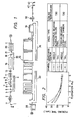
- Fig. 1 shows an example of a continuous cold reduction line comprising essentially a mechanical descaler 6, a pickling tank 14, a tandem cold reduction mill 26 and a continuous annealing furnace 32.
- the mechanical descaler 6 is made up of a tension-leveller-type scale breaker 7, which comprises bridles 8 and 10 and a set of bending rollers 9 interposed therebetween, and a brushing unit 11 comprising more than one scale-scrubbing brush rolls.
- a hot-rolled breakdown H to be processed travels from a payoff reel 1 through the bridle 3, a looper 4 and the bridle 5 to the mechanical descaler 6, and thence to the pickling tank 14 via a side trimmer 13.
- the breakdown H passes through a bridle 19, a looper 20 and another bridle 21 into the tandem mill 26 where it is rolled into cold-rolled strip C.
- the cold-rolled strip C moves forward to the annealing furnace 32 through an electrolytic cleaner 28.
- the annealed strip passes through a post treatment unit 34 and a skinpass mill 38 and is then taken up on a tension reel 40.
- the looper 4 is provided to allow the welding operation at a strip welder 2, while the looper 20 is for the width changing operation of the side trimmer 13.
- the strip welder 2 joins a previous coil H to a following coil H.
- a looper 30 is engineered for the roll and side changing operation at the tandem mill 26, while a looper 36 is for the coil splitting operation at the tension reel 40.
- the stock H is elongated by not more than 7 percent between the bridles 8 and 10 of the mechanical descaler 6 to initiate a large number of cracks in the mill scale on the surface thereof.
- the pickling tank 14 With the cracked scale scrubbed off at the brushing unit 11 and unwanted side edges removed by the side trimmier 13, the stock H passes into the pickling tank 14 where a substantially uniform rate of travel is maintained because the pickling rate differs little in the head-end, middle and tail-end portions of the coil H as will be described later.
- the looper 20 need not be long enough to absorb changes in the travel speed of strip that are usually encountered on conventional lines. Even without such provision, strip is fed to the tandem mill 26 at a substantially uniform speed, exercising no detrimental effect on the annealing furnace 32.
- the tension-leveller-type scale breaker 7 causes the pre-cold-rolled breakdown to elongate by 7 percent maximum. But, the extent of elongation should preferably be kept betweeen 2 and 5 percent for the following reason:
- the experiment was conducted by pickling 4 mm thick materials in a 10 percent (by weight) solution of hydrochloric acid at a temperature of 70°C and coiling up the pickled strip at a temperature CT of 730°C.
- approximately equal pickling time was recorded in the middle and tail-end portions, even on different types of steel, when 2 percent or greater elongation was imparted.
- the analogy in pickling time begins to dwindle when elongation reaches 5 percent.
- the tail-end portion that is intrinsically less descalable can be passed through the pickling tank at a higher speed substantially comparable to the travel speed of the middle portion that is easier to descale.
- a descaling method disclosed in Japanese Provisional Patent Publication No. 101220-1984 elongates the hot-rolled breakdown by at least 3 percent using a set of bending and stretching rollers. By so doing, a uniform pickling rate is secured across the width of the strip . in the following pickling process.
- this invention is based on a discovery that a substantially uniform pickling rate is obtained along the length of strip that is elongated by not more than 7 percent on a tension-leveller-type scale breaker prior to pickling. This knowledge is applied to a continuous cold reduction line comprising a continuous pickling, cold reduction and annealing unit. Clearly, this invention has entirely different object, construction, operation and effect from the technology of Japanese Provisional Patent Publication No. 101220-1984.
- the looper 20 is required to have a length of approximately 150 m on a typical mill having a production capacity of 220 ton per hour.
- this invention can do away with any longer looper length than approximately 75 m that is needed for changing the knife width on the side trimmer 13.
- the work load on the pickling tank 14 is lower than conventional, so much so shorter is the tank length, because the stock supplied thereto has been already descaled at the mechanical descaler 6.
- the tandem mill 26 performs high-efficiency rolling, permitting the strip to be passed through the subsequent annealing furnace 32 at a higher speed and turning out a greater tonnage of product.
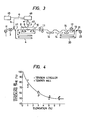
- FIG. 3 shows another preferred embodiment of this invention.
- parts similar to their counterparts in preferred embodiment I will be designated by similar reference characters, with no detailed description given thereto.
- a pickling tank 14 is followed by a hot rinse tank 15, a dryer 17, a bridle 19, an exit-end loop car 20, a bridle 21 and tension reel 23 in that order.
- a scale detector 41 is provided on the exit side of a welder 2.
- a control computer 46 Mitsubishi M60-30
- a controller 47 connected thereto are provided.
- a host computer 45 Mitsubishi M6O-3O
- the scale detector 41 are connected to the control computer 46.
- the hot-rolled breakdown H is elongated by not more than 7 percent at a tension-leveller-type scale breaker 7.
- a brush rool 11 scrubbs off the loosened mill scale from the steel furnace. Pickled in the pickling tank 14 and passed through the hot rinse tank 15 and some other following units, the stock H is coiled up on the tension reel 23.
- control computer 46 To the control computer 46 are inputted data "a” concerning the manufacturing conditions of the hot-rolled breakdown from the host computer 45 and data "b” concerning the properties and amount of scale from the scale detector 41.
- data "a" concerning the manufacturing conditions of the hot-rolled breakdown from the host computer 45
- data "b” concerning the properties and amount of scale from the scale detector 41.
- Fig. 4 exemplifies the relationship between the percent elongation given to the stock by a tension-leveller- and a temper-mill-type scale breaker and the saving achieved in descaling time.
- the ratio of saving in descaling time is defined as (T R/ T O ) x 100(%), where TO is the descaling time with the un-elongated stock and T R is that with the elongated stock.
- descaling time does not become shorter when the ratio of elongation exceeds 7 percent.
- the ratio of elongation should preferably be kept at a maximum of 7 percent while it must be high enough to initiate such cracks in the mill scale as will facilitate later descaling.
- Fig. 5 the optimum percent elongation for the descaling of the hot-rolled breakdown H is determined by the following procedure, which is shown in Fig. 5 in the form of a flow chart.
- the type or grade, cooling condition and coiling temperature of the hot-rolled stock are initially set in the control computer 46. Then, whether the steel type or grade, cooling condition and coiling temperature have been changed or not is checked one after another based on the data supplied from the host computer 45. If any change has been made, the setting on the changed parameter is modified. Next, the properties and quantity of scale determined by the scale detector 41 is inputted in the control computer 46, where the desired percent elongation is calculated on the basis of the supplied data.
- Fig. 6 shows an example of curves from which percent elongation is derived. Various curves are preliminarily drawn for various conditions and stored in the control computer 46.
- the desired percent elongation can be derived from the memorized curves.
- the obtained percent elongation "e” is outputted from the control computer 46 to the controller 47.
- the controller 47 Based on the supplied percent elongation, the controller 47 outputs the desired tensile force "f" to the tension-leveller-type scale breaker 7.
- Fig. 7 shows still another preferred embodiment of this invention, in which ITV cameras 42 and 43 are provided on the exit side of a brush roll 11 and a pickling tank 14. While the ITV camara 42 views the condition of scale breaking, the ITV camera 43 views the conditin of scale removal. The ITV cameras 42 and 43 are connected to a monitor television 51 on A hich the viewed conditions are displayed.
- Fig. 5 the optimum percent elongation for the descaling of the hot-rolled breakdown H is determined by the following procedure, which is shown in Fig. 5 in the form of a flow chart.
- the type or grade, cooling condition and coiling temperature of the hot-rolled stock are initially set ir the control computer 46.
- the obtained percent elongation "e” is outputted from the control computer 45 to a controller 47, which, in turn, outputs the desirea tensile force "f", which is determined on the basis of the percent elongation "e", to a tension leveller-type scale breaker 7.
- an inspector inputs the scale breaking and removal conditions displayed on the monitor television 53 into the control computer 46.
- control computer 46 increases the tensile force "f" outputted to the tension-leveller-type scale breaker 7, thereby increasing the percent elongation given to the hot-rolled stock H by 0.1 percent. The incremental increase in percent elongation "e” is repeated until scale has been thoroughly removed.
- Fig. 9 shows a line on which cold reduction and continuous annealing are continuously performed following scale breaking and removing.
- An exit-side loop car 20 and a bridle 21 are followed by a cold reduction mill train 26, an electrolytic cleaner 28, an entry-side loop car 30, a continuous annealing furnace 32, a post treatment unit for the annealed cold-rolled stock, an exit-side loop car 36, a skinpass mill 38 and a tension reel 40, in that order.
- the pickled hot-rolled stock H immediately undergoes cold reduction and continuous annealing.
- Fig. 10 shows a flow chart of the procedure by which percent elongation is controlled. Feedforward and feedback controls are performed in the same manner as that described with regard to the preceding preferred embodiments, except in that the speed of cold reduction is determined by considering the speed of strip travel in the continuous annealing furnace 32 because cold reduction and continuous annealing are performed in succession after descaling. Therefore, the entry-side speed of the cold reduction mill 26 is inputted in the control computer 46.
- percent elongation is claculated on the basis of the manufacturing and cooling conditions of the hot-rolled stock H, the data from the scale detector 41 and the entry-side speed of the cold reduction mill 26. From the entry-side speed of the cold reduction mill is first calculated the pickling speed. Then, the desired percent elongation is derived from the calculated pickling speed. When the entri-side speed of the cold reduction mill is low, for example, the pickling time will be longer and, therefore, the percent elongation given to the stock lower.
- Figs. 11 to 13 compare the electricity and roll costs incurred by the method of this invention with those of conventional methods.
- Fig. 11 is concerned with a process involving upto pickling and drying (which is implemented on the equipment shown in Fig. 3).
- the method according to this invention delivers savings of approximately 25 percent and 5 percent in electicity and roll costs, respectively.
- Fig. 12 is concerned with a process involving upto cold reduction (implemented on the equipment up to point A in Fig. 9).
- the savings in electricity and roll costs achieved by this method are approximatly 20 percent and 7 percent.
- Fig. 13 is concerned with a process involving upto continuous annealing (implemented on the whole line of equipment shown in Fig. 9).
- the electricity and roll costs savings achieved here are approximately 25 percent and 10 percent, respectively.
Landscapes
- Engineering & Computer Science (AREA)
- Mechanical Engineering (AREA)
- Cleaning And De-Greasing Of Metallic Materials By Chemical Methods (AREA)
- Heat Treatment Of Strip Materials And Filament Materials (AREA)
- Metal Rolling (AREA)
Priority Applications (1)
| Application Number | Priority Date | Filing Date | Title |
|---|---|---|---|
| AT86103479T ATE65721T1 (de) | 1985-03-15 | 1986-03-14 | Verfahren und vorrichtung zur herstellung von kaltgewalztem stahlband. |
Applications Claiming Priority (6)
| Application Number | Priority Date | Filing Date | Title |
|---|---|---|---|
| JP50344/85 | 1985-03-15 | ||
| JP60050344A JPS61209704A (ja) | 1985-03-15 | 1985-03-15 | 連続冷延鋼板製造設備 |
| JP261294/85 | 1985-11-22 | ||
| JP26129585A JPS62124018A (ja) | 1985-11-22 | 1985-11-22 | 熱延鋼板の脱スケ−ル方法 |
| JP261295/85 | 1985-11-22 | ||
| JP60261294A JPS62124017A (ja) | 1985-11-22 | 1985-11-22 | 熱延鋼板の脱スケ−ル方法 |
Publications (3)
| Publication Number | Publication Date |
|---|---|
| EP0195385A2 true EP0195385A2 (fr) | 1986-09-24 |
| EP0195385A3 EP0195385A3 (en) | 1987-05-13 |
| EP0195385B1 EP0195385B1 (fr) | 1991-07-31 |
Family
ID=27293928
Family Applications (1)
| Application Number | Title | Priority Date | Filing Date |
|---|---|---|---|
| EP86103479A Expired - Lifetime EP0195385B1 (fr) | 1985-03-15 | 1986-03-14 | Méthode et appareil pour la fabrication de feuillard laminé à froid |
Country Status (7)
| Country | Link |
|---|---|
| US (1) | US4872245A (fr) |
| EP (1) | EP0195385B1 (fr) |
| KR (1) | KR900007072B1 (fr) |
| BR (1) | BR8601145A (fr) |
| CA (1) | CA1268932A (fr) |
| DE (1) | DE3680560D1 (fr) |
| ES (1) | ES8703756A1 (fr) |
Cited By (10)
| Publication number | Priority date | Publication date | Assignee | Title |
|---|---|---|---|---|
| FR2605254A1 (fr) * | 1986-10-15 | 1988-04-22 | Bwg Bergwerk Walzwerk | Procede et train de laminage pour la fabrication de bandes metalliques dans un processus de laminage |
| EP0723024A1 (fr) * | 1994-12-22 | 1996-07-24 | SUNDWIGER EISENHÜTTE MASCHINENFABRIK GmbH & CO. | Procédé et une ligne de production en continu pour la fabrication de bande en acier laminée à froid |
| EP0769333A1 (fr) * | 1995-10-19 | 1997-04-23 | Usinor Sacilor | Procédé d'élaboration, sur une ligne, en continu, d'une bande de tole laminée d'acier inoxydable présentant un état de surface améliorée |
| EP0770707A1 (fr) * | 1995-09-01 | 1997-05-02 | Keramchemie GmbH | Procédé de fabrication en continu de bandes laminées au froid |
| WO1999016933A1 (fr) * | 1997-09-29 | 1999-04-08 | Siemens Aktiengesellschaft | Procede et dispositif pour decaper une bande metallique |
| NL1009863C2 (nl) * | 1998-08-14 | 2000-02-15 | Hoogovens Corporate Services B | Werkwijze voor het verwijderen van ijzeroxiden van een warmgewalste staalband. |
| AT413706B (de) * | 2001-11-12 | 2006-05-15 | Voest Alpine Ind Anlagen | Verfahren und vorrichtung zur behandlung eines metallbandes |
| IT201700056336A1 (it) * | 2017-05-24 | 2018-11-24 | Danieli Off Mecc | Impianto di pulizia per prodotti metallici |
| EP2969389B1 (fr) * | 2013-03-14 | 2021-02-24 | Siemens VAI Metals Technologies GmbH | Ligne de finition d'un produit métallique |
| CN115488161A (zh) * | 2021-06-18 | 2022-12-20 | 上海梅山钢铁股份有限公司 | 一种基于热轧来料数据的冷轧带钢起筋风险预警方法 |
Families Citing this family (31)
| Publication number | Priority date | Publication date | Assignee | Title |
|---|---|---|---|---|
| JP2814437B2 (ja) * | 1987-07-21 | 1998-10-22 | 川崎製鉄 株式会社 | 表面性状に優れた方向性けい素鋼板の製造方法 |
| US5292374A (en) * | 1988-11-15 | 1994-03-08 | Maschinenfabrik Andritz Actiengesellschft | Process and plant for pickling stainless steel strip |
| JP2613317B2 (ja) * | 1990-04-20 | 1997-05-28 | 川崎製鉄株式会社 | ステンレス鋼帯の焼鈍・脱スケール方法 |
| IT1244295B (it) * | 1990-07-09 | 1994-07-08 | Giovanni Arvedi | Processo ed impianto per l'ottenimento di nastri di acciaio avvolti, aventi caratteristiche di laminati a freddo ottenuti direttamente in linea di laminazione a caldo |
| US5203188A (en) * | 1991-09-16 | 1993-04-20 | Morgan Construction Company | System and method for monitoring a rolling mill |
| US5452188A (en) * | 1992-04-14 | 1995-09-19 | Green; Timothy M. | Modular strobe bar |
| DE4219712C2 (de) * | 1992-06-16 | 1996-09-05 | Agie Ag Ind Elektronik | Einrichtung und Verfahren zur Vorbehandlung einer beschichteten Drahtelektrode in einer funkenerosiven Drahtschneidemaschine |
| US5412966A (en) * | 1993-07-16 | 1995-05-09 | Worldclass Industries, Inc. | Push-pull pickle line |
| CA2139522C (fr) * | 1994-01-11 | 2008-03-18 | Michael F. Mcguire | Methode continue utilisee pour fabriquer un produit en acier inoxydable d'epaisseur definitive |
| DE69625997T2 (de) * | 1995-10-11 | 2004-01-22 | Nisshin Steel Co., Ltd. | Verfahren zum entzundern von stahlbandcoils durch walzen mit hohem walzdruck |
| JP2978437B2 (ja) * | 1996-02-08 | 1999-11-15 | 住友重機械工業株式会社 | 金属板の酸洗装置および酸洗方法 |
| US5879465A (en) * | 1996-12-20 | 1999-03-09 | Mckevitt; Patrick | Method and apparatus for descaling hot rolled stainless steel strip |
| EP0923420A1 (fr) * | 1996-12-26 | 1999-06-23 | J & L Specialty Steel, Inc. | Procede de brossage ameliorant la resistance a la corrosion et a l'oxydation |
| US5826818A (en) * | 1997-06-30 | 1998-10-27 | Kvaerner U.S. Inc. | Compact strip processing facility |
| US6088895A (en) * | 1999-01-21 | 2000-07-18 | Armco Inc. | Method for descaling hot rolled strip |
| WO2001061073A2 (fr) * | 2000-02-16 | 2001-08-23 | Sms Demag Aktiengesellschaft | Procede et dispositif pour le decapage d'un feuillard metallique lamine, notamment d'un feuillard d'acier |
| US6205830B1 (en) * | 2000-02-24 | 2001-03-27 | The Material Works, Ltd. | Method and apparatus for processing sheet metal |
| FR2807957B1 (fr) | 2000-04-21 | 2002-08-02 | Vai Clecim | Procede et installation de laminage a froid |
| JP3726770B2 (ja) * | 2001-04-27 | 2005-12-14 | 住友金属工業株式会社 | 連続酸洗方法および連続酸洗装置 |
| KR100478848B1 (ko) * | 2002-07-06 | 2005-03-28 | 주식회사 포스코 | 산세강판의 표면결함 검출 시스템 및 그 방법 |
| US6732561B2 (en) | 2002-09-23 | 2004-05-11 | The Material Works, Ltd. | Method and apparatus for leveling and conditioning sheet metal |
| US6814815B2 (en) * | 2003-04-07 | 2004-11-09 | The Material Works, Ltd. | Method of removing scale and inhibiting oxidation in processed sheet metal |
| US6814089B1 (en) | 2003-06-03 | 2004-11-09 | The Material Works, Ltd. | Conditioning liquid cleaning and recycling system for sheet metal conditioning apparatus |
| US20070044531A1 (en) * | 2005-08-31 | 2007-03-01 | Red Bud Industries, Inc. | Method and apparatus for conditioning sheet metal |
| US20090002686A1 (en) * | 2007-06-29 | 2009-01-01 | The Material Works, Ltd. | Sheet Metal Oxide Detector |
| CN103921059B (zh) * | 2014-03-27 | 2016-06-29 | 中冶南方工程技术有限公司 | 一种低酸耗冷轧带钢产品生产方法 |
| CN103921058B (zh) * | 2014-03-27 | 2016-06-29 | 中冶南方工程技术有限公司 | 一种低酸耗高表面质量的带钢表面氧化物清除方法 |
| US10022760B2 (en) | 2015-10-02 | 2018-07-17 | The Material Works, Ltd. | Cut-to-length steel coil processing line with stretcher leveler and temper mill |
| CN108515086A (zh) * | 2018-04-08 | 2018-09-11 | 江苏沃德赛模具科技有限公司 | 一种微米级超强度连续铝合金纤维的制造方法 |
| TWI770536B (zh) * | 2020-06-22 | 2022-07-11 | 中國鋼鐵股份有限公司 | 熱軋產品缺陷成因判斷方法及系統 |
| KR102910116B1 (ko) * | 2025-07-08 | 2026-01-09 | (주)삼신금속 | 이차전지 벤트용 강판의 무광 마감 표면 사상 제조 방법 |
Family Cites Families (21)
| Publication number | Priority date | Publication date | Assignee | Title |
|---|---|---|---|---|
| US2238667A (en) * | 1937-10-20 | 1941-04-15 | Wales Charles Clarke | Apparatus for treating strip steel |
| US2259277A (en) * | 1938-11-28 | 1941-10-14 | Continental Steel Corp | Method of pickling sheets or the like |
| US2196600A (en) * | 1939-02-06 | 1940-04-09 | Wean Engineering Co Inc | Method and apparatus for treating strip |
| US2359095A (en) * | 1939-10-17 | 1944-09-26 | American Steel & Wire Co | Continuous production of elongated metal stock |
| US3209429A (en) * | 1958-02-17 | 1965-10-05 | August Seuthe Maschf | Method and apparatus for descaling strip material, especially strip iron |
| US3039513A (en) * | 1960-04-13 | 1962-06-19 | Gpe Controls Inc | Roll position control |
| US3587276A (en) * | 1968-11-14 | 1971-06-28 | Allegheny Ludlum Steel | Process and apparatus for continuously processing steel and other materials |
| JPS5435594B2 (fr) * | 1973-08-21 | 1979-11-02 | ||
| DE2350503B1 (de) * | 1973-10-08 | 1975-01-23 | Bwg Bergwerk Walzwerk | Verfahren und Vorrichtung zum Entzundern und Planieren von Blechbaendern |
| JPS549974B2 (fr) * | 1974-03-28 | 1979-04-28 | ||
| US3918282A (en) * | 1974-09-04 | 1975-11-11 | Blaw Knox Foundry Mill Machine | Combination pickling-rolling mill |
| US4179913A (en) * | 1976-10-29 | 1979-12-25 | National Steel Corporation | Metal strip tensioning apparatus for use in continuous strip reduction cold mill and method |
| US4188812A (en) * | 1979-01-03 | 1980-02-19 | Ishikawajima-Harima Jukogyo Kabushiki Kaisha | Installation for production of continuously cold rolled sheet metal or strip |
| JPS5689318A (en) * | 1979-12-19 | 1981-07-20 | Ishikawajima Harima Heavy Ind Co Ltd | Pickling equipment |
| JPS56127777A (en) * | 1980-03-12 | 1981-10-06 | Nippon Kokan Kk <Nkk> | Descaling method for steel member |
| GB2072068B (en) * | 1980-03-21 | 1983-03-02 | Head Wrightson Mach | Removal of scale from steel strip |
| JPS5719105A (en) * | 1980-07-10 | 1982-02-01 | Nippon Steel Corp | Installation for producing cold rolled steel plate and surface treated steel plate |
| JPS5722803A (en) * | 1980-07-14 | 1982-02-05 | Sumitomo Metal Ind Ltd | Cold rolling installation for steel plate |
| LU83437A1 (fr) * | 1981-06-18 | 1983-04-06 | Centre Rech Metallurgique | Procede de fabrication de toles |
| JPS59136430A (ja) * | 1983-01-21 | 1984-08-06 | Nippon Steel Corp | 連続圧延焼鈍装置 |
| JPS59212115A (ja) * | 1983-05-14 | 1984-12-01 | Sumitomo Heavy Ind Ltd | 熱延鋼板のスケ−ル除去装置 |
-
1986
- 1986-03-11 KR KR1019860001735A patent/KR900007072B1/ko not_active Expired
- 1986-03-14 BR BR8601145A patent/BR8601145A/pt not_active IP Right Cessation
- 1986-03-14 CA CA000504111A patent/CA1268932A/fr not_active Expired - Lifetime
- 1986-03-14 ES ES553020A patent/ES8703756A1/es not_active Expired
- 1986-03-14 DE DE8686103479T patent/DE3680560D1/de not_active Expired - Lifetime
- 1986-03-14 EP EP86103479A patent/EP0195385B1/fr not_active Expired - Lifetime
-
1988
- 1988-01-11 US US07/143,311 patent/US4872245A/en not_active Expired - Lifetime
Cited By (21)
| Publication number | Priority date | Publication date | Assignee | Title |
|---|---|---|---|---|
| GB2197233A (en) * | 1986-10-15 | 1988-05-18 | Bwg Bergwerk Walzwerk | Rolling of metal strip |
| GB2197233B (en) * | 1986-10-15 | 1990-06-13 | Bwg Bergwerk Walzwerk | Rolling of metal strip |
| FR2605254A1 (fr) * | 1986-10-15 | 1988-04-22 | Bwg Bergwerk Walzwerk | Procede et train de laminage pour la fabrication de bandes metalliques dans un processus de laminage |
| EP0723024A1 (fr) * | 1994-12-22 | 1996-07-24 | SUNDWIGER EISENHÜTTE MASCHINENFABRIK GmbH & CO. | Procédé et une ligne de production en continu pour la fabrication de bande en acier laminée à froid |
| EP0770707A1 (fr) * | 1995-09-01 | 1997-05-02 | Keramchemie GmbH | Procédé de fabrication en continu de bandes laminées au froid |
| CN1065458C (zh) * | 1995-10-19 | 2001-05-09 | 犹齐诺公司 | 连续生产轧制的不锈钢板带的方法及其所用的连续生产线 |
| AU716533B2 (en) * | 1995-10-19 | 2000-02-24 | Ugine Sa | Process for the continuous production of a rolled stainless steel sheet strip and continuous production line for carrying out the process |
| FR2740061A1 (fr) * | 1995-10-19 | 1997-04-25 | Ugine Sa | Procede d'elaboration, sur une ligne, en continu, d'une bande de tole laminee d'acier inoxydable presentant un etat de surface amelioree |
| EP0769333A1 (fr) * | 1995-10-19 | 1997-04-23 | Usinor Sacilor | Procédé d'élaboration, sur une ligne, en continu, d'une bande de tole laminée d'acier inoxydable présentant un état de surface améliorée |
| AT413284B (de) * | 1997-09-29 | 2006-01-15 | Siemens Ag | Verfahren und einrichtung zum beizen eines metallbandes |
| US6419756B1 (en) | 1997-09-29 | 2002-07-16 | Siemens Aktiengellschaft | Process and equipment for pickling a metal strip |
| WO1999016933A1 (fr) * | 1997-09-29 | 1999-04-08 | Siemens Aktiengesellschaft | Procede et dispositif pour decaper une bande metallique |
| NL1009863C2 (nl) * | 1998-08-14 | 2000-02-15 | Hoogovens Corporate Services B | Werkwijze voor het verwijderen van ijzeroxiden van een warmgewalste staalband. |
| AT413706B (de) * | 2001-11-12 | 2006-05-15 | Voest Alpine Ind Anlagen | Verfahren und vorrichtung zur behandlung eines metallbandes |
| EP2969389B1 (fr) * | 2013-03-14 | 2021-02-24 | Siemens VAI Metals Technologies GmbH | Ligne de finition d'un produit métallique |
| IT201700056336A1 (it) * | 2017-05-24 | 2018-11-24 | Danieli Off Mecc | Impianto di pulizia per prodotti metallici |
| WO2018215966A1 (fr) * | 2017-05-24 | 2018-11-29 | Danieli & C. Officine Meccaniche S.P.A. | Installation de nettoyage pour produits métalliques |
| CN110914475A (zh) * | 2017-05-24 | 2020-03-24 | 丹尼尔和科菲森梅克尼齐有限公司 | 金属制品清理设备 |
| RU2737296C1 (ru) * | 2017-05-24 | 2020-11-26 | ДАНИЕЛИ И КО ОФФИЧИНЕ МЕККАНИКЕ С.п.А. | Установка для очистки металлических изделий |
| US11338341B2 (en) | 2017-05-24 | 2022-05-24 | Danieli & C. Officine Meccaniche S.P.A. | Cleaning plant for metal products |
| CN115488161A (zh) * | 2021-06-18 | 2022-12-20 | 上海梅山钢铁股份有限公司 | 一种基于热轧来料数据的冷轧带钢起筋风险预警方法 |
Also Published As
| Publication number | Publication date |
|---|---|
| EP0195385B1 (fr) | 1991-07-31 |
| EP0195385A3 (en) | 1987-05-13 |
| KR860007036A (ko) | 1986-10-06 |
| BR8601145A (pt) | 1986-11-25 |
| CA1268932A (fr) | 1990-05-15 |
| KR900007072B1 (ko) | 1990-09-28 |
| ES8703756A1 (es) | 1987-03-16 |
| US4872245A (en) | 1989-10-10 |
| DE3680560D1 (de) | 1991-09-05 |
| ES553020A0 (es) | 1987-03-16 |
Similar Documents
| Publication | Publication Date | Title |
|---|---|---|
| US4872245A (en) | Method and apparatus for manufacturing cold-rolled steel strip | |
| JP3888396B2 (ja) | 圧延ステンレス鋼板の連続製造方法と、それを実施するための製造ライン | |
| CN101376212B (zh) | 以白皮钢卷产制产品钢卷的冷轧连续生产线 | |
| EP0664340A2 (fr) | Procédé continu pour la fabrication de produits en acier inoxydable aux dimensions finales | |
| US5412966A (en) | Push-pull pickle line | |
| US5725696A (en) | Process and plant for production of raw stainless steel castings | |
| US6096137A (en) | Pickling plant and method of controlling the same | |
| JPS6254194B2 (fr) | ||
| JPH0461048B2 (fr) | ||
| JP3518316B2 (ja) | 酸洗プラントの制御方法とその酸洗プラント | |
| DE19505324C2 (de) | Verfahren zum Herstellen von kaltgewalzten Stahlbändern, insbesondere Edelstahlbändern, und Bandbehandlungslinie | |
| JP2639001B2 (ja) | 圧延設備 | |
| US20060053617A1 (en) | Method and device for the continuous production of metallic strips | |
| JP2725545B2 (ja) | 冷間圧延機を含む複合ラインの制御方法 | |
| JPS56122611A (en) | Method and apparatus for manufacture cold rolled sheet product | |
| JP5087759B2 (ja) | 連続焼鈍酸洗ライン向け熱間圧延ステンレス鋼帯の製造方法 | |
| JPS62124017A (ja) | 熱延鋼板の脱スケ−ル方法 | |
| JPS5877702A (ja) | 熱間圧延ステンレス鋼帯の製造方法および装置 | |
| JPS62124018A (ja) | 熱延鋼板の脱スケ−ル方法 | |
| JPH0824936A (ja) | 金属帯の圧延方法および設備 | |
| JPH0230303A (ja) | 棒鋼および線材の熱間圧延方法 | |
| JPH0517827A (ja) | ステンレス鋼帯の焼鈍・脱スケール方法 | |
| JPS63174719A (ja) | 綿材のスケ−ル除去方法 | |
| JPH0247282B2 (fr) | ||
| JP3443286B2 (ja) | 酸洗設備 |
Legal Events
| Date | Code | Title | Description |
|---|---|---|---|
| PUAI | Public reference made under article 153(3) epc to a published international application that has entered the european phase |
Free format text: ORIGINAL CODE: 0009012 |
|
| AK | Designated contracting states |
Kind code of ref document: A2 Designated state(s): AT BE DE FR GB IT NL SE |
|
| PUAL | Search report despatched |
Free format text: ORIGINAL CODE: 0009013 |
|
| AK | Designated contracting states |
Kind code of ref document: A3 Designated state(s): AT BE DE FR GB IT NL SE |
|
| 17P | Request for examination filed |
Effective date: 19871111 |
|
| 17Q | First examination report despatched |
Effective date: 19890111 |
|
| GRAA | (expected) grant |
Free format text: ORIGINAL CODE: 0009210 |
|
| AK | Designated contracting states |
Kind code of ref document: B1 Designated state(s): AT BE DE FR GB IT NL SE |
|
| REF | Corresponds to: |
Ref document number: 65721 Country of ref document: AT Date of ref document: 19910815 Kind code of ref document: T |
|
| REF | Corresponds to: |
Ref document number: 3680560 Country of ref document: DE Date of ref document: 19910905 |
|
| ET | Fr: translation filed | ||
| ITF | It: translation for a ep patent filed | ||
| PLBE | No opposition filed within time limit |
Free format text: ORIGINAL CODE: 0009261 |
|
| STAA | Information on the status of an ep patent application or granted ep patent |
Free format text: STATUS: NO OPPOSITION FILED WITHIN TIME LIMIT |
|
| 26N | No opposition filed | ||
| EAL | Se: european patent in force in sweden |
Ref document number: 86103479.1 |
|
| PGFP | Annual fee paid to national office [announced via postgrant information from national office to epo] |
Ref country code: FR Payment date: 19960126 Year of fee payment: 11 |
|
| PGFP | Annual fee paid to national office [announced via postgrant information from national office to epo] |
Ref country code: GB Payment date: 19960305 Year of fee payment: 11 |
|
| PGFP | Annual fee paid to national office [announced via postgrant information from national office to epo] |
Ref country code: DE Payment date: 19960313 Year of fee payment: 11 Ref country code: AT Payment date: 19960313 Year of fee payment: 11 |
|
| PGFP | Annual fee paid to national office [announced via postgrant information from national office to epo] |
Ref country code: SE Payment date: 19960315 Year of fee payment: 11 |
|
| PGFP | Annual fee paid to national office [announced via postgrant information from national office to epo] |
Ref country code: NL Payment date: 19960328 Year of fee payment: 11 |
|
| PGFP | Annual fee paid to national office [announced via postgrant information from national office to epo] |
Ref country code: BE Payment date: 19960502 Year of fee payment: 11 |
|
| PG25 | Lapsed in a contracting state [announced via postgrant information from national office to epo] |
Ref country code: GB Effective date: 19970314 Ref country code: AT Effective date: 19970314 |
|
| PG25 | Lapsed in a contracting state [announced via postgrant information from national office to epo] |
Ref country code: SE Effective date: 19970315 |
|
| PG25 | Lapsed in a contracting state [announced via postgrant information from national office to epo] |
Ref country code: BE Effective date: 19970331 |
|
| BERE | Be: lapsed |
Owner name: NIPPON STEEL CORP. Effective date: 19970331 |
|
| PG25 | Lapsed in a contracting state [announced via postgrant information from national office to epo] |
Ref country code: NL Effective date: 19971001 |
|
| GBPC | Gb: european patent ceased through non-payment of renewal fee |
Effective date: 19970314 |
|
| PG25 | Lapsed in a contracting state [announced via postgrant information from national office to epo] |
Ref country code: FR Free format text: LAPSE BECAUSE OF NON-PAYMENT OF DUE FEES Effective date: 19971128 |
|
| NLV4 | Nl: lapsed or anulled due to non-payment of the annual fee |
Effective date: 19971001 |
|
| PG25 | Lapsed in a contracting state [announced via postgrant information from national office to epo] |
Ref country code: DE Effective date: 19971202 |
|
| EUG | Se: european patent has lapsed |
Ref document number: 86103479.1 |
|
| REG | Reference to a national code |
Ref country code: FR Ref legal event code: ST |
|
| PG25 | Lapsed in a contracting state [announced via postgrant information from national office to epo] |
Ref country code: IT Free format text: LAPSE BECAUSE OF NON-PAYMENT OF DUE FEES;WARNING: LAPSES OF ITALIAN PATENTS WITH EFFECTIVE DATE BEFORE 2007 MAY HAVE OCCURRED AT ANY TIME BEFORE 2007. THE CORRECT EFFECTIVE DATE MAY BE DIFFERENT FROM THE ONE RECORDED. Effective date: 20050314 |