EP0199193A2 - Thermoplastische Formmassen aus Polycarbonaten, Pfropfpolymerisaten und Copolymerisaten - Google Patents
Thermoplastische Formmassen aus Polycarbonaten, Pfropfpolymerisaten und Copolymerisaten Download PDFInfo
- Publication number
- EP0199193A2 EP0199193A2 EP86104877A EP86104877A EP0199193A2 EP 0199193 A2 EP0199193 A2 EP 0199193A2 EP 86104877 A EP86104877 A EP 86104877A EP 86104877 A EP86104877 A EP 86104877A EP 0199193 A2 EP0199193 A2 EP 0199193A2
- Authority
- EP
- European Patent Office
- Prior art keywords
- weight
- methyl methacrylate
- parts
- molding compositions
- acrylonitrile
- Prior art date
- Legal status (The legal status is an assumption and is not a legal conclusion. Google has not performed a legal analysis and makes no representation as to the accuracy of the status listed.)
- Granted
Links
Images




Classifications
-
- C—CHEMISTRY; METALLURGY
- C08—ORGANIC MACROMOLECULAR COMPOUNDS; THEIR PREPARATION OR CHEMICAL WORKING-UP; COMPOSITIONS BASED THEREON
- C08G—MACROMOLECULAR COMPOUNDS OBTAINED OTHERWISE THAN BY REACTIONS ONLY INVOLVING UNSATURATED CARBON-TO-CARBON BONDS
- C08G64/00—Macromolecular compounds obtained by reactions forming a carbonic ester link in the main chain of the macromolecule
- C08G64/04—Aromatic polycarbonates
- C08G64/06—Aromatic polycarbonates not containing aliphatic unsaturation
- C08G64/08—Aromatic polycarbonates not containing aliphatic unsaturation containing atoms other than carbon, hydrogen or oxygen
- C08G64/085—Aromatic polycarbonates not containing aliphatic unsaturation containing atoms other than carbon, hydrogen or oxygen containing silicon
-
- C—CHEMISTRY; METALLURGY
- C08—ORGANIC MACROMOLECULAR COMPOUNDS; THEIR PREPARATION OR CHEMICAL WORKING-UP; COMPOSITIONS BASED THEREON
- C08L—COMPOSITIONS OF MACROMOLECULAR COMPOUNDS
- C08L69/00—Compositions of polycarbonates; Compositions of derivatives of polycarbonates
Definitions
- the molding compositions according to the invention insofar as they contain A, B1 and Cl, have only a single thermoplastic loss modulus maximum, which results in a significantly improved miscibility of the components compared to the prior art.
- the products according to the invention have a very uniform rubber distribution in the respective mixture, are characterized by very good toughness, thermal stability and a significantly improved heat resistance.
- Mixtures that contain components B.1 as components also have a matt surface.
- DT-AS 1 170 141 mixtures of 90-30% by weight of polycarbonate and 10-70% by weight of a graft polymer which is prepared from polybutadiene and a mixture of acrylonitrile and vinyl hydrocarbons are known.
- DT-AS 2 259 565 discloses polycarbonate / graft polymer copolymer (70-30 / 30-70 / 0-75% by weight) - mixtures, the graft polymers by polymerizing styrene, methyl methacrylate in combination with acrylonitrile and / or methyl methacrylate in one Rubber and the copolymers of 95-50% styrene, ⁇ -methylstyrene, methacrylate or mixtures thereof and 5-50% acrylonitrile, methyl methacrylate or mixtures thereof. These compositions have improved flow line strength.
- DOS 1 810 993 describes PC / graft polymer / copolymer mixtures, the vinyl aromatic compound to be used being predominantly ⁇ -methylstyrene. Mixtures of this type have a high heat resistance, but a lower impact strength than styrene / acrylonitrile systems.
- EP 89 540 describes polycarbonate mixtures of thermoplastic polycarbonates, polymers of C 1 -C 4 -alkyl esters of methacrylic acid and methyl methacrylate-grafted alkyl acrylate rubber. They are characterized by high aging resistance, thermal stability, good raw tone, high impact strength and homogeneous surface.
- Polycarbonate blends with products which are composed of more than two free-radically polymerizable monomers are e.g. described in JA 56 / 131-657, where a graft polymer composed of mixtures of styrene, vinyl toluene, methyl methacrylate, acrylonitrile, methyl acrylate, hydroxyethyl acrylate or ethyl methacrylate is used on a diene rubber.
- JA 57 / 185-340 contains polycarbonate mixtures, the copolymer being composed of 20-65% by weight of methyl methacrylate, 20-60% by weight of ⁇ -methylstyrene and 5-40% by weight of acrylonitrile.
- the products are characterized by high temperature stability, toughness and good processability.
- JA 57 / 168-937 describes Polycarbonatabmischungen containing copolymer as a product of aromatic vinyl compounds, cyano-containing vinyl compounds and alkyl esters of unsaturated Carboxylverbindun g en, and a graft polymer of these monomers, ethylene-propylene rubber.
- JA 57/040 536 mentions as a copolymer for a polycarbonate / graft polymer / copolymer mixture a product composed of 73-83% by weight of ⁇ -methylstyrene, 17 to 27% by weight of acrylonitrile and less than 10% by weight of methyl methacrylate .
- a heat-resistant, impact-resistant polycarbonate mixture which contains a copolymer of ⁇ -methylstyrene, acrylonitrile, methacrylic acid ester and / or styrene is described in JA 571147 535.
- Polycarbonates according to component A which are suitable according to the invention are both homopolycarbonates and copolycarbonates, the diphenols of the formula (Ia) being used only for the preparation of copolycarbonates with the diphenols of the formula (I), the proportion by weight of diphenols of the formula (Ia) in the Copolycarbonates in each case between 1 and 20% by weight, preferably between 1.5 and 15% by weight and in particular between 2 and 10% by weight, based in each case on the total weight of the diphenols of the formulas (I) and (Ia) used lies.
- diphenols of the formula (I) are either known from the literature or can be prepared by processes known from the literature; Polydiorganosiloxanes with hydroxy-aryloxy end groups according to Formula (Ia) are also known (see, for example, US Pat. No. 3,419,634) or can be prepared by methods known from the mineral.
- Suitable chain terminators are, for example, phenol, p-chlorophenol, p-tert-butylphenol or 2,4,6-tribromophenol, but also long-chain alkylphenols such as 4- (1,3-tetramethyl-butyl) phenol, according to DE-OS 2 842 005 or monoalkylphenols or dialkylphenols with a total of 8 to 20 carbon atoms in the alkyl substituents according to German patent application P-3506472.2 (Le A 23 654), such as, for example, p-nonylphenol, 3,5-di-tert.-butylphenol, p-tert.- Octylphenol, p-dodecylphenol, 2- (3,5-dimethyl-heptyl) phenol and 4- (3,5-dimethylheptyl) phenol.
- long-chain alkylphenols such as 4- (1,3-tetramethyl-butyl) phenol, according to DE-OS 2 8
- the polycarbonates according to component A which are suitable according to the invention have average weight average molecular weights (Mw, measured, for example, by ultracentrifugation or scattered light measurement) of 10,000 to 200,000, preferably 20,000 to 80,000.
- Mw average weight average molecular weights
- Suitable diphenols of the formula (I) are, for example, hydroquinone, resorcinol, 4,4'-dihydroxydiphenyl, 2,2-bis- (4- hydroxyphenyl) propane, 2,4-bis (9-hydroxyphenyl) -2-methylbutane, 1,1-bis (4-hydroxyphenyl) cyclohexane, 2,2-bis (3-chloro-4-hydroxyphenyl) propane, 2,2-bis (3,5-dichloro-4-hydroxyphenyl) propane and 2,2-bis (3,5-dibromo-4-hydroxyphenyl) propane.
- Preferred diphenols of the formula (I) are 2,2-bis (4-hydroxyphenyl) propane, 2,2-bis (3,5-dichloro-4-hydroxyphenyl) propane, 2,2-bis (3rd , 5-dibromo-4-hydroxyphenyl) propane and 1,1-bis (4-hydroxyphenyl) cyclohexane.
- Suitable diphenols of the formula (Ia) are those in which R is methyl, ethyl, eropyl, n-butyl, tert-butyl and phenyl.
- Preferred diphenols of the formula (Ia) are those of the formula (Ib) wherein the R's are the same and have the meaning given above, that is to say methyl, etc., and phenyl and "m" is in turn an integer between 5 and 100, preferably between 20 and 80.
- the diphenols of the formula (Ia) can be prepared, for example, from the corresponding bis-chlorine compounds (II) and the diphenols (1), for example according to US Pat. No. 3,419,634, column 3, in combination with US Pat. No. 3,182,662.
- polycarbonates according to component A which are suitable according to the invention can be branched in a known manner, and preferably by incorporating from 0.05 to 2.0 mol%, based on the sum of the diphenols used, of three or more than three-functional compounds, for example those with three or more than three phenolic OH groups.
- preferred polycarbonates are the copolycarbonates of bisphenol A with up to 15 mol%, based on the molar sum of diphenols, of 2,2-bis (3,5-dibromo-4-hydroxyphenyl) propane or the copolycarbonates of the diphenols of the formula (I) with 1 to 20% by weight of diphenols of the formula (Ia), preferably of the formula (Ib), based on the total weight of the diphenols (I) and (la), or (I ) and (Ib).
- Rubbers suitable for producing the graft polymers according to component B are, in particular, polybutadiene, butadiene / styrene copolymers with up to 30% by weight, based on the rubber weight, of a lower alkyl ester of acrylic or methacrylic acid (for example methyl methacrylate, ethyl acrylate, methyl acrylate or ethyl methacrylate).
- a lower alkyl ester of acrylic or methacrylic acid for example methyl methacrylate, ethyl acrylate, methyl acrylate or ethyl methacrylate.
- Other suitable rubbers are, for example, polyisoprene or polychloroprene.
- alkyl acrylate rubbers based on C 1 -C 8 -alkyl acrylates in particular ethyl, butyl, ethylhexyl acrylate.
- alkyl acrylate rubbers can optionally contain up to 30% by weight, based on the rubber weight, of monomers such as vinyl acetate, acrylonitrile, styrene, methyl methacrylate and / or vinyl ether in copolymerized form. These alkyl acrylate rubbers can also contain smaller amounts, preferably up to 5% by weight, based on the weight of the rubber, of crosslinking ethylenically unsaturated monomers.
- Such crosslinkers are, for example, alkylene diol di (meth) acrylates, polyester di (meth) acrylates, divinyibenzene, tri-vinylbenzene, triallyl cyanurate, allyl (meth) acrylate, butadiene or isoprene.
- alkyl acrylate rubbers are known.
- Acrylate rubbers as a graft base can also be products which contain a crosslinked diene rubber from one or more conjugated dienes, such as polybutadiene, or a copolymer of a conjugated diene with an ethylenically unsaturated monomer, such as styrene and / or acrylonitrile as the core.
- Other suitable rubbers are, for example, EPDM rubbers, ie rubbers made of ethylene, propylene and an unconjugated diene monomer.
- Preferred rubbers for the preparation of the graft polymers B.1 and B.2 are diene monomer and alkyl acrylate rubbers.
- the rubbers are present in the graft polymers B.1 and B.2 as at least partially crosslinked particles with an average particle size of 0.09 to 5 ⁇ m, in particular 0.1 to 1 ⁇ m.
- the graft polymers B are prepared by radical graft copolymerization of the monomer mixtures B.1.1 or B.2.1 and B.2.2 defined at the outset in the presence of the rubbers B.1.2 or B.2.3 to be grafted and are all known.
- Preferred production processes for the graft polymer list B are emulsion, solution, bulk or suspension polymerization.
- Particularly preferred graft polymers B.2 are the so-called ABS polymers.
- P-methylstyrene and halostyrene may be mentioned as core-substituted styrene.
- Preferred copolymers according to component C.2 are those of at least one monomer from the series styrene, ⁇ -methylstyrene, alkylated styrene, halostyrene according to C.2.1 with at least one monomer from the series acrylonitrile, methacrylonitrile, methyl methacrylate, maleic anhydride according to C.2.2.
- Copolymers according to components C.I. and C.2 are often formed in the graft polymerization to produce components B.1 and B.2 as by-products, especially when large amounts of monomers are grafted onto small amounts of rubber.
- copolymers according to component C are resinous, thermoplastic and rubber-free.
- Particularly preferred copolymers C.1. are those made from 34.5% by weight of ⁇ -methylstyrene, 55.5% by weight of methyl methacrylate and 10% by weight of acrylonitrile.
- Particularly preferred copolymers C.2 are those made from styrene with acrylonitrile and optionally with methyl methacrylate. Particularly preferred weight ratios in the thermoplastic copolymer C.2 are 60 to 80% by weight of C.2.1 and 40 to 20% by weight of C.2.2.
- the copolymers according to components C.1 and C.2 are known and can be prepared by radical polymerization, in particular by emulsion, suspension, solution or bulk polymerization.
- the copolymers according to components C.1 and C.2 preferably have molecular weights Mw (weight average, determined by light scattering or sedimentation) between 15,000 and 200,000.
- the molding compositions according to the invention can contain other additives known for polycarbonate / graft polymer / copolymer molding compositions, such as stabilizers, pigments, flow agents, flame retardants, mold release agents and / or antistatic agents in the customary amounts.
- additives known for polycarbonate / graft polymer / copolymer molding compositions such as stabilizers, pigments, flow agents, flame retardants, mold release agents and / or antistatic agents in the customary amounts.
- the molding compositions according to the invention containing components A, B, C and, if appropriate, other known additives, such as stabilizers, pigments, flow agents, flame retardants, mold release agents and / or antistatic agents, are prepared by mixing the respective constituents in a known manner and then at temperatures of 200 ° C to 330 ° C in conventional units such as internal kneaders, extruders or twin-screw extruders melt-compounded or melt-extruded.
- the present invention thus also relates to a process for the preparation of thermoplastic molding compositions comprising components A, B, C and, if appropriate, stabilizers, pigments, flow agents, flame retardants, mold release agents and / or antistatic agents, which is characterized in that components A, B , C and optionally stabilizers, pigments, flow agents, flame retardants, mold release agents and / or antistatic agents are mixed in a known manner and then melt-compounded or melt-extruded at temperatures of 200 ° C. to 330 ° C. in conventional units.
- the mixing of the individual components can be carried out in a known manner both successively and sumultaneously, both at about 20 ° C (room temperature) and at a higher temperature.
- molding compositions of the present invention can be used for the production of moldings of any kind.
- moldings can be produced by injection molding.
- moldings that can be produced are: Housing parts of all kinds (e.g. for household appliances such as juicers, coffee machines; mixers) or cover plates for the construction sector and parts for the motor vehicle sector. They are also used in the field of electrical engineering because they have very good electrical properties.
- Another form of processing is the production of molded articles by deep drawing from previously produced plates and foils.
- Particle size always means average particle diameter d 50 , determined by ultracentrifuge measurements according to W. Scholtan et al., Kolloid-Z u. Z. Polymers 250 (1972) 782-796.
- the determination of the siloxane content in the polydiorganosiloxane-polycarbonate block copolymer i.e. the proportion of the dimethylsiloxy units in% by weight, based on the total weight of the block copolymer, was carried out gravimetrically and by nuclear magnetic resonance spectrometry.
- the degree of polymerization Pn determined by determining the end group on the siloxane prepolymer (formula Ia) is given as the average siloxane block length.
- Copolycarbonate based on bisphenol A and 5% by weight polydimethylsiloxane of block length (P n ) 40, with a relative solution viscosity of 1.31, measured in CH 2 C1 2 at 25 ° C and a concentration of 0.5 g / 100 ml.
- thermoplastic copolymer of 34.5 ⁇ -methylstyrene, 55.5% by weight of methyl methacrylate and 10% by weight of acrylonitrile, with an intrinsic viscosity of [ ⁇ ] 0.56 d1 / g (measurement in dimethylformamide at 25 ° C) made by emulsion polymerization.
- the Vicat heat resistance was determined in accordance with DIN 53 460. f
- the Izod impact strength was determined on bars measuring 2.5 x 1/2 x 118 "in accordance with ASTM-D-256.
- the thermostability was determined using the Izod impact strength in accordance with ASTM-D-256 at 300 ° C. Injection molded test specimens.
- the surface quality was determined visually on spray bodies (sample plates measuring 60 x 40 x 2 mm), which were produced at a spraying temperature of 280 ° C.
- the molding compositions were produced on a 1.3-1 internal kneader at a temperature of 200-220 ° C.
- the test specimens were produced by injection molding at, unless otherwise noted, 260 ° C.
- the examples according to the invention show that by using the graft polymers B.1 and / or the copolymers C.1 according to the invention, mixtures are obtained which, in addition to excellent toughness, even at production temperatures of 300 ° C., have a heat resistance which is significantly higher than that of the prior art have.
- the use of the graft polymers B.1 according to the invention leads to moldings which have a matt surface.
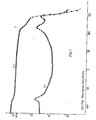
- the shear modulus curves of the comparative tests 7 and 8 are shown in FIGS. 1 and 3, and those of the tests 1 and 6 according to the invention are shown in FIGS. 2 and 4.
- the mixtures according to the invention have only a single thermoplastic loss modulus maximum in the range above 100 ° C. This suggests a significantly better miscibility of the components according to the invention.
- the shear modulus curves were obtained with a Rheometrics Dynamic (RDS 7700). This device works with a forced torsional vibration with a frequency of 1 Hz.
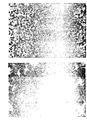
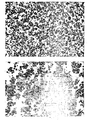
- FIG. 5 and FIGS. 6-9 show electron micrographs of ultrathin sections (OsO 4 contrasted) from comparative experiment 7 and experiments 1 to 4 according to the invention.
- the magnifications are each 7500: 1 in the upper image and 25000: 1 in the lower image of the figures . It is clear from the figures that by using the products Bla, Blb and / or C.1 according to the invention, a significantly more uniform distribution of the graft rubber in the mixture is achieved compared to the prior art, which also demonstrates an improved miscibility of the systems according to the invention.
Landscapes
- Chemical & Material Sciences (AREA)
- Health & Medical Sciences (AREA)
- Chemical Kinetics & Catalysis (AREA)
- Medicinal Chemistry (AREA)
- Polymers & Plastics (AREA)
- Organic Chemistry (AREA)
- Compositions Of Macromolecular Compounds (AREA)
Abstract
Description
- Gegenstand der vorliegenden Erfindung sind thermoplastische Formmassen enthaltend
- A. 20 bis 80 Gew.-Teile an aromatischen, thermoplastischen Polycarbonaten,
- B. 10 bis 60 Gew.-Teile an Pfropfpolymerisaten B.1 und/oder B.2, wobei
- B.1 durch Pfropfen von 5 bis 90 Teilen einer Mischung aus
- B.1.1 30 bis 40 Gew.-%, vorzugsweise 34.5 Gew.-% α-Methylstyrol, 52 bis 62 Gew.-%, vorzugsweise 55,5 Gew.-% Methylmethacrylat und 4 bis 14 Gew.-%, vorzugsweise 10 Gew.-% Acrylnitril, wobei die Summe der Gewichtsprozente jeweils 100 beträgt, auf
- B.1.2 95 bis 10 Gew.-Teile eines Kautschukes mit einer Glastemperatur TG ≤ 10°C, erhältlich ist, und wobei
- B.2 durch Pfropfen von 5 bis 90 Gew.-Teilen einer Mischung aus
- B.2.1 50 bis 95 Gew.-% Styrol, α-Methylstyrol, kernsubstituiertem Styrol, Methylmethacrylat oder Mischungen daraus, und
- B.2.2 5 bis 50 Gew.-% (Meth)Acrylnitril, Methylmethacrylat, Maleinsäureanhydrid, N-substituiertem Maleinimid oder Mischungen daraus, auf
- B.2.3 95 bis 10 Gew.-Teile eines Kautschuks mit einer Glastemperature TG ≤ 10°C erhältlich ist, und
- C. 10 bis 70 Gew.-Teile an thermoplastischen Copolymerisaten C.1 und/oder C.2, wobei
- C.1 durch Copolymerisation von 30 bis 40 Gew.-%, vorzugsweise 34.5 Gew.-% α-Methylstyrol, 52 bis 62 Gew.-%, vorzugsweise 55,5 Gew.-% Methylmethacrylat und 4 bis 14 Gew.-%, vorzugsweise 10 Gew.-% Acrylnitril, wobei die Summe der Gewichtsprozente wieder jeweils 100 beträgt, erhältlich ist, und wobei
- C.2 durch Copolymerisation von C.2.1 50 bis 95 Gew.-% Styrol, α-Methylstyrol, kernsubstituiertem Styrol, Methylmethacrylat oder Mischungen daraus und
- C.2.2 5 bis 50 Gew.-% (Meth)Acrylnitril, Methylmethacrylat, Maleinsäureanhydrid, N-substituiertem Maleinimid oder Mischungen daraus erhältlich ist,
wobei- 1. die Summe der Gewichtsteile A + B + C immer jeweils 100 ist,
- 2. bei gleichzeitigem Vorliegen von B.1 und B.2 das Gewichtsverhältnis von B.l zu B.2 zwischen 50:50 und 95:5 liegt,
- 3. bei gleichzeitigem Vorliegen von C.l und C.2 das Gewichtsverhältnis von C.1 zu C.2 auch zwischen 50:50 und 95:5 liegt, und
- 4. entweder B.1 oder C.1 oder B.1 und C.1 in der Formmasse vorliegen müssen.
- Die erfindungsgemäßen Formmassen soweit sie A, Bl und Cl enthalten, haben nur ein einziges Thermoplast-Verlustmodulmaximum, was in einer wesentlich verbesserten Mischbarkeit der Komponenten gegenüber dem Stand der Technik resultiert.
- Die erfindungsgemäßen Produkte besitzen eine sehr gleichmäßige Kautschukverteilung in der jeweiligen Abmischung, zeichnen sich durch sehr gute Zähigkeit, Thermostabilität und eine deutlich verbesserte Wärmeformbeständigkeit aus.
- Abmischungen, die die Komponenten B.1 als Bestandteile enthalten, zeigen zusätzlich eine matte Oberfläche.
- Gemäß DT-AS 1 170 141 sind Mischungen aus 90 - 30 Gew.-% Polycarbonat und 10 - 70 Gew.-% eines Pfropfpolymerisats, das aus Polybutadien und einer Mischung aus Acrylnitril und Vinylkohlenwasserstoffen hergestellt wird, bekannt.
- Aus DT-AS 2 259 565 sind Polycarbonat/Pfropfpolymerisatt Copolymerisat (70 - 30 / 30 - 70 / 0 - 75 Gew.-%)-Mischungen bekannt, wobei die Pfropfpolymerisate durch Polymerisation von Styrol, Methylmethacrylat in Kombination mit Acrylnitril undloder Methylmethacrylat auf einen Kautschuk und die Copolymerisate aus 95 - 50 % Styrol, α-Methylstyrol, Methacrylat oder Mischungen daraus und 5 - 50 % Acrylnitril, Methylmethacrylat oder Mischungen daraus hergestellt werden. Diese Zusammensetzungen besitzen eine verbesserte Fließnahtfestigkeit.
- DOS 1 810 993 beschreibt PC/Pfropfpolymerisat/Copolymerisat-Mischungen, wobei die einzusetzende vinylaromatische Verbindung vorwiegend α-Methylstyrol ist. Solche Mischungen besitzen eine hohe Wärmeformbeständigkeit, jedoch eine schlechtere Kerbschlagzähigkeit als Styrol/Acrylnitril-Systeme.
- In der EP 89 540 sind Polycarbonatabmischungen aus thermoplastischen Polycarbonaten, Polymerisaten von C1-C4-Alkyl- estern der Methacrylsäure und Methylmethacrylatgepfropftem Acrylsäurealkylester-Kautschuk beschrieben. Sie zeichnen sich durch hohe Alterungsbeständigkeit, Thermostabilität, gutem Rohton, hoher Kerbschlagzähigkeit und homogener Oberfläche aus.
- Polycarbonatabmischungen mit Produkten, die aus mehr als zwei radikalisch polymerisierbaren Monomeren aufgebaut sind, sind z.B. beschrieben in JA 56/131-657, wo ein Pfropfpolymerisat aus Mischungen von Styrol, Vinyltoluol, Methylmethacrylat, Acrylnitril, Methylacrylat, Hydroxyethylacrylat oder Ethylmethacrylat auf einem Dienkautschuk eingesetzt wird.
- JA 57/185-340 beinhaltet Polycarbonatabmischungen, wobei das Copolymer aufgebaut ist aus 20 - 65 Gew.-X Methylmethacrylat, 20 - 60 Gew.-X α-Methylstyrol und 5 - 40 Gew.-X Acrylnitril. Die Produkte zeichnen sich durch hohe Temperaturstabilität, Zähigkeit und gute Verarbeitbarkeit aus.
- JA 57/168-937 beschreibt Polycarbonatabmischungen, die als Copolymer ein Produkt aus aromatischen Vinylverbindungen, Cyangruppen-haltige Vinylverbindungen und Alkylester von ungesättigten Carboxylverbindungen sowie ein Pfropfpolymerisat aus diesen Monomeren auf Ethylen-Propylen-Kautschuk enthalten.
- In JA 57/040 536 wird als Copolymer für eine Polycarbonat/ Pfropfpolymer/Copolymer-Mischung ein Produkt aus 73 - 83 Gew,-% α-Methylstyrol, 17 bis 27 Gew.-% Acrylnitril und weniger als 10 Gew.-% Methylmethacrylat erwähnt.
- Eine hitzebeständige, schlagzähe Polycarbonatmischung, die ein Copolymer aus α-Methylstyrol, Acrylnitril, Methacrylsäureester und/oder Styrol enthält, wird in JA 571147 535 beschrieben.
- Erfindungsgemäß geeignete, thermoplastische, aromatische Polycarbonate gemäß Komponente A sind solche auf Basis der Diphenole der Formel (I)

- worin "A" eine Einfachbindung, ein C1-C5-Alkylen, ein C2-C5-Alkyliden, ein C5-C6-Cycloalkyliden, -S- oder -S02-, Hal, Chlor oder Brom, "x" 0, 1 oder 2 und "n" 1 oder null sind und gegebenenfalls der Formel (Ia)

- worin "A", Hal, "x" und "n" die für Formel (I) genannte Bedeutung haben, und die R's gleich oder verschieden sind und ein lineares C1-C20-Alkyl, verzweigtes C3-C20-Alkyl oder C6-C20-Aryl, vorzugsweise CH3, sind und "m" eine ganze Zahl zwischen 5 und 100, vorzugsweise zwischen 20 und 80, ist.
- Erfindungsgemäß geeignete Polycarbonate gemäß Komponente A sind sowohl Homopolycarbonate als auch Copolycarbonate, wobei die Diphenole der Formel (Ia) nur für die Herstellung von Copolycarbonaten mit den Diphenolen der Formel (I) eingesetzt werden, wobei der Gewichtsanteil an Diphenolen der Formel (Ia) in den Copolycarbonaten jeweils zwischen 1 und 20 Gew.-%, vorzugsweise zwischen 1,5 und 15 Gew.-% und insbesondere zwischen 2 und 10 Gew.-X, bezogen jeweils auf die Gewichtssumme der eingesetzten Diphenole der Formel (I) und (Ia) liegt.
- Die Diphenole der Formel (I) sind entweder literaturbekannt oder nach literaturbekannten Verfahren herstellbar; Polydiorganosiloxane mit Hydroxy-aryloxy-Endgruppen gemäß Formel (Ia) sind ebenfalls bekannt (siehe beispielsweise US-Patent 3 419 634) beziehungsweise nach lileralurbekannten Verfahren herstellbar.
- Die Herstellung der erfindungsgemäß geeigneten Polycarbonate gemäß Komponente A ist literaturbekannt und kann beispielsweise mit Phosgen nach dem Phasengrenzflächenverfahren oder mit Phosgen nach dem Verfahren in homogener Phase (dem sogenannten Pyridinverfahren) erfolgen, wobei das jeweils einzustellende Molekulargewicht in bekannter Weise durch eine entsprechende Menge an bekannten Kettenabbrechern erzielt wird. (Bezüglich Polydiorganosiloxanhaltigen Polycarbonaten siehe beispielsweise DE-OS 3 334 782.
- Geeignete Kettenabbrecher sind beispielsweise Phenol, p-Chlorphenol, p-tert.-Butylphenol oder 2,4,6-Tribromphenol, aber auch langkettige Alkylphenole wie 4-(1,3 Tetramethyl-butyl)-phenol, gemäß DE-OS 2 842 005 oder Monoalkylphenole oder Dialkylphenole mit insgesamt 8 bis 20 C-Atomen in den Alkylsubstituenten gemäß deutscher Patentanmeldung P-3506472.2 (Le A 23 654), wie beispielsweise p-Nonylphenol, 3,5-di-tert.-Butylphenol, p-tert.-Octylphenol, p-Dodecylphenol, 2-(3,5-dimethyl-heptyl)-phenol und 4-(3,5-Dimethylheptyl)-phenol.
- Die erfindungsgemäß geeigneten Polycarbonate gemäß Komponente A haben mittlere Gewichtsmittelmolekulargewichte (Mw, gemessen beispielsweise durch Ultrazentrifugation oder Streulichtmessung) von 10 000 bis 200 000, vorzugsweise von 20 000 bis 80 000.
- Geeignete Diphenole der Formel (I) sind beispielsweise Hydrochinon, Resorcin, 4,4'-Dihydroxydiphenyl, 2,2-Bis-(4-hydroxyphenyl)-propan, 2,4-Bis-(9-hydroxyphenyl)-2-methylbutan, 1,1-Bis-(4-hydroxyphenyl)-cyclohexan, 2,2-Bis-(3-chlor-4-hydroxyphenyl)-propan, 2,2-Bis-(3,5-dichlor-4-hydroxyphenyl)-propan und 2,2-Bis-(3,5-dibrom-4-hydroxyphenyl)-propan.
- Bevorzugte Diphenole der Formel (I) sind 2,2-Bis-(4-hydroxyphenyl)-propan, 2,2-Bis-(3,5-dichlor-4-hydroxyphenyl)-propan, 2,2-Bis-(3,5-dibrom-4-hydroxyphenyl)-propan und 1,1-Bis-(4-hydroxyphenyl)-cyclohexan.
- Geeignete Diphenole der Formel (Ia) sind solche in denen R Methyl, Ethyl, Eropyl, n-Butyl, tert.-Butyl und Phenyl ist.
- Bevorzugte Diphenole der Formel (Ia) sind die der Formel (Ib)

- Die Herstellung der Diphenole der Formel (Ia) kann beispielsweise aus den entsprechenden Bis-chlorverbindungen (II)
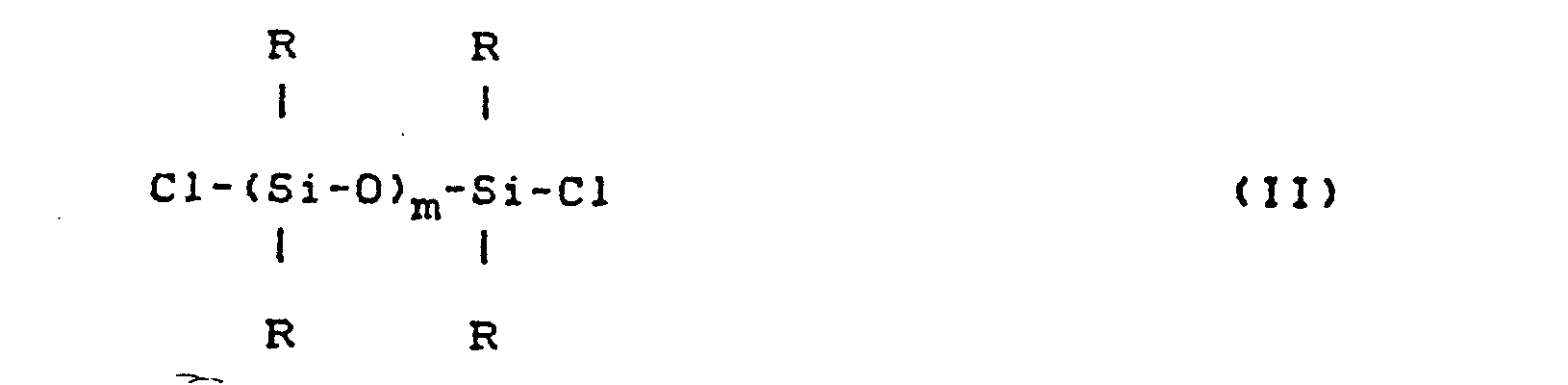
- In den Bis-chlorverbindungen (II) haben R und "m" die Bedeutung wie in den Diphenolen (Ia) bzw. (Ib).
- Die erfindungsgemäß geeigneten Polycarbonate gemäß Komponente A können in bekannter Weise verzweigt sein, undzwar vorzugsweise durch den Einbau von 0,05 bis 2,0 Mol-%, bezogen auf die Summe der eingesetzten Diphenole, an drei-oder mehr als dreifunktionellen Verbindungen, beispielsweise solchen mit drei oder mehr als drei phenolischen OH-Gruppen.
- Bevorzugte Polycarbonate sind neben dem Bisphenol A-Homopolycarbonat die Copolycarbonate von Bisphenol A mit bis zu 15 Mol-%, bezogen auf die Molsumme an Diphenolen, an 2,2-Bis-(3,5-dibrom-4-hydroxyphenyl)-propan oder die Copolycarbonate der Diphenole der Formel (I) mit 1 bis 20 Gew.-% an Diphenolen der Formel (Ia), vorzugsweise der Formel (Ib), bezogen auf die Gewichtssumme der Diphenole (I) und (la), bzw. (I) und (Ib).
- Zur Herstellung der Pfropfpolymerisate gemäß Komponente B geeignete Kautschuke sind insbesondere Polybutadien, Butadien/Styrol-Copolymerisate mit bis zu 30 Gew.-%, bezogen auf Kautschukgewicht, eines niederen Alkylesters von Acryl- oder Methacrylsäure (beispielsweise Methylmethacrylat, Ethylacrylat, Methylacrylat oder Ethylmethacrylat). Weitere geeignete Kautschuke sind beispielsweise Polyisopren oder Polychloropren. Geeignet sind weiterhin Alkylacrylatkautschuke auf der Basis von C1-C8-Alkylacrylaten, insbesondere Ethyl-, Butyl-, Ethylhexylacrylat. Diese Alkylacrylatkautschuke können gegebenenfalls bis zu 30 Gew.-%, bezogen auf Kautschukgewicht, Monomere wie Vinylacetat, Acrylnitril, Styrol, Methylmethacrylat und/oder Vinylether copolymerisiert enthalten. Diese Alkylacrylatkautschuke können weiterhin kleinere Mengen, vorzugsweise bis zu 5 Gew.-%, bezogen auf 'Kautschukgewicht, vernetzend wirkender, ethylenisch ungesättigter Monomerer enthalten. Solche Vernetzer sind zum Beispiel Alkylendioldi(meth)-acrylate, Polyesterdi-(meth)-acrylate, Divinyibenzol, Tri-Vinylbenzol, Triallylcyanurat, Allyl-(meth)-acrylat, Butadien oder Isopren. Solche Alkylacrylatkautschuke sind bekannt. Acrylatkautschuke als Pfropfgrundlage können auch Produkte sein, die einen vernetzten Dienkautschuk aus einem oder mehreren konjugierten Dienen, wie Polybutadien, oder ein Copolymerisat eines konjugierten Diens mit einem ethylenisch ungesättigten Monomer, wie Styrol undloder Acrylnitril als Kern enthalten. Andere geeignete Kautschuke sind zum Beispiel EPDM-Kautschuke, also Kautschuke aus Ethylen, Propylen und einem unkonjugierten Dienmonomer.
- Bevorzugte Kautschuke zur Herstellung der Pfropfpolymerisate B.1 und B.2 sind Dienmonomer- und Alkylacrylatkautschuke.
- Die Kautschuke liegen in den Pfropfpolymerisaten B.1 und B.2 als wenigstens partiell vernetzte Teilchen einer mittleren Teilchengröße von 0,09 bis 5 σm, insbesondere von 0,1 bis 1 σm vor. Die Pfropfpolymerisate B werden durch radikalische Pfropfcopolymerisation der eingangs definierten Monomerengemische B.1.1 bzw. B.2.1 und B.2.2 in Gegenwart der zu pfropfenden Kautschuke B.1.2 bzw. B.2.3 hergestellt und sind durchweg bekannt. Bevorzugte Herstellungsverfahren für die Pfropfpolymeriste B sind Emulsions-, Lösungs-, Masse- oder Suspensionspolymerisation. Besonders bevorzugte Pfropfpolymerisate B.2 sind die sogenannten ABS-Polymerisate. Als kernsubstituiertes Styrol sei p-Methylstyrol und Halogenstyrol genannt.
- Bevorzugte Copolymerisate gemäß Komponente C.2 sind solche aus wenigstens einem Monomeren aus der Reihe Styrol, α-Methylstyrol, kernalkyliertem-Styrol, Halogenstyrol gemäß C.2.1 mit wenigstens einem Monomeren aus der Reihe Acrylnitril, Methacrylnitril, Methylmethacrylat, Maleinsäureanhydrid gemäß C.2.2.
- Copolymerisate gemäß Komponenten C.l. und C.2 entstehen häufig bei der Pfropfpolymerisation zur Herstellung der Komponenten B.1 und B.2 als Nebenprodukte, besonders dann, wenn große Mengen Monomere auf kleine Mengen Kautschuk gepfropft werden.
- Die erfindungsgemäß einzusetzende Menge an Copolymerisaten C von 10 bis 70 Gew.-Teilen, bezogen auf 100 Gew.-Teile A + B + C, bezieht diese Nebenprodukte der Pfropfpolymerisation nicht mit ein.
- Die Copolymerisate gemäß Komponente C sind harzartig, thermoplastisch und kautschukfrei.
- Besonders bevorzugte Copolymerisate C.1. sind solche aus 34,5 Gew.-% α-Methylstyrol, 55,5 Gew.-% Methylmethacrylat und 10 Gew.-% Acrylnitril.
- Besonders bevorzugte Copolymerisate C.2 sind solche aus Styrol mit Acrylnitril und gegebenenfalls mit Methylmethacrylat. Besonders bevorzugte Gewichtsverhältnisse im thermoplastischen Copolymerisat C.2 sind 60 bis 80 Ge.-% C.2.1 und 40 bis 20 Gew.-% C.2.2.
- Die Copolymerisate gemäß Komponenten C.1 und C.2 sind bekannt und lassen sich durch radikalische Polymerisation, insbesondere durch Emulsions-, Suspension-, Lösungs- oder Massepolymerisation herstellen. Die Copolymerisate gemäß Komponenten C.1 und C.2 besitzen vorzugsweise Molekulargewichte Mw (Gewichtsmittel, ermittelt durch Lichtstreuung oder Sedimentation) zwischen 15 000 und 200 000.
- Die erfindungsgemäßen Formmassen können weitere für Polycarbonat/Pfropfpolymerisat/Copolymerisat-Formmassen bekannte Zusätze, wie Stabilisatoren, Pigmente, Fließmittel, Flammschutzmittel, Entformungsmittel undloder Antistatika in den üblichen Mengen enthalten.
- Die erfindungsgemäßen Formmassen enthaltend die Komponenten A, B, C und gegebenenfalls weitere bekannte Zusätze, wie Stabilisatoren, Pigmente, Fließmittel, Flammschutzmittel, Entformungsmittel und/oder Antistatika werden hergestellt, indem man die jeweiligen Bestandteile in bekannter Weise vermischt und dann bei Temperaturen von 200°C bis 330°C in üblichen Aggregaten wie Innenknetern, Extrudern oder Doppelwellenschnecken schmelzcompoundiert oder schmelzextrudiert.
- Gegenstand der vorliegenden Erfindung ist somit auch ein Verfahren zur Herstellung von thermoplastischen Formmassen enthaltend die Komponenten A, B, C und gegebenenfalls Stabilisatoren, Pigmente, Fließmittel, Flammschutzmittel, Entformungsmittel und/oder Antistatika, das dadurch gekennzeichnet ist, daß man die Komponenten A, B, C und gegebenenfalls Stabilisatoren, Pigmente, Fließmittel, Flammschutzmittel, Entformungsmittel undloder Antistatika in bekannter Weise vermischt und dann bei Temperaturen von 200'C bis 330°C in üblichen Aggregaten schmelzcompoundiert oder schmelzextrudiert.
- Die Vermischung der einzelnen Bestandteile kann in bekannter Weise sowohl sukzessive als auch sumultan erfolgen, und zwar sowohl bei etwa 20°C (Raumtemperatur) als auch bei höherer Temperatur.
- Die Formmassen der vorliegenden Erfindung können zur Herstellung von Formkörpern jeder Art verwendet werden. Insbesondere können Formkörper durch Spritzguß hergestellt werden. Beispiele für herstellbare Formkörper sind: Gehäuseteile jeder Art (z.B. für Haushaltsgeräte wie Saftpressen, Kaffeemaschinen; Mixer) oder Abdeckplatten für den Bausektor und Teile für den Kfz-Sektor. Sie werden außerdem auf dem Gebiet der Elektrotechnik eingesetzt, weil sie sehr gute elektrische Eigenschaften haben.
- Eine weitere Form der Verarbeitung ist die Herstellung von Formkörpern durch Tiefziehen aus vorher hergestellten Platten und Folien.
- Teilchengröße bedeutet immer mittlerer Teilchendurchmesser d50, ermittelt durch Ultrazentrifugenmessungen nach W. Scholtan et al., Kolloid-Z u. Z. Polymere 250 (1972) 782 - 796.
- Die Bestimmung des-Siloxangehaltes im Polydiorganosiloxan-Polycarbonat-Blockcopolymeren, d.h. des Anteils der Dimethylsiloxy-Einheiten in Gew.-X, bezogen auf das Gesamtgewicht des Blockcopolymeren, erfolgte gravimetrisch und durch Kernresonanzspektrometrie. Als mittlere Siloxanblocklänge wird der durch Bestimmung der Endgruppe am Siloxan-Prepolymer (Formel Ia) ermittelte Polymerisationsgrad Pn angegeben.
- Eingesetzte Polykondensate und Polymerisate:
- Polycarbonate aus 2,2-Bis-(4-hydroxyphenyl)-propan (Bisphenol A) mit einer relativen Lösungsviskosität von 1,26 - 1,28, gemessen in Methylenchlorid bei 25°C und einer Konzentration von 0,5 Gew.-%.
- Copolycarbonat auf Basis von Bisphenol A und 5 Gew.-% Polydimethylsiloxan der Blocklänge (Pn) 40, mit einer relativen Lösungsviskosität von 1,31, gemessen in CH2C12 bei 25°C und einer Konzentration von 0,5 g / 100 ml.
- Ein Pfropfpolymerisat aus 50 Gew.-% einer Monomermischung aus 34,5 Gew.-% α-Methylstyrol, 55,5 Gew.-% Methylmethacrylat und 10 Gew.-% Acrylnitril auf 50 Gew.-% eines teilchenförmigen Polybutadiens einer mittleren Teilchengröße (d50) von 0,4 µm, erhalten durch Emulsionspolymerisation.
- Ein Pfropfpolymerisat aus 50 Gew.-% einer Monomerenmischung aus 34,5 Gew.-% α-Methylstyrol, 55,5 % Methylmethacrylat und 10 Gew.-% Acrylnitril auf 50 Gew.-X eines teilchenförmigen Polybutadiens einer mittleren Teilchengröße (d50) von 0,1 um, erhalten durch Emulsionspolymerisation.
- Styrol/Acrylnitril-Pfropfpolymerisat von 50 Gew.-X Styrol/Acrylnitril-Gemisch (im Gew.-Verhältnis von 72 :
- 28) auf 50 % teilchenförmiges Polybutadien einer mittleren Teilchengröße (d50) von 0,4 um, erhalten durch Emulsionspolymerisation.
- Ein thermoplastisches Copolymerisat aus 34,5 α-Methylstyrol, 55,5 Gew.-% Methylmethacrylat und 10 Gew.-% Acrylnitril, mit einer Grenzviskosität von [η] = 0,56 d1/g (Messung in Dimethylformamid bei 25°C), hergestellt durch Emulsionspolymerisation.
- Styrol/Acrylnitril-Copolymerisat mit einer Styrol/Acrylnitril-Verhältnis von 72 : 28 und einer Grenzviskosität von [η] = 0,55 d1/g (Messung in Dimethylformamid bei 20°C).
- Die Bestimmung der Wärmeformbeständigkeit nach Vicat erfolgte gemäß DIN 53 460. f Die Bestimmung der Kerbschlagzähigkeit nach Izod erfolgte an Stäben der Abmessung 2,5 x 1/2 x 118" gemäß ASTM-D-256. Die Bestimmung der Thermostabilität erfolgte über die Izod-Kerbschlagzähigkeit gemäß ASTM-D-256 an bei 300°C über Spritzguß hergestellten Prüfkörpern.
- Die Bestimmung der Oberflächenbeschaffenheit erfolgte visuell an Spritzkörpern (Musterplatten der Größe 60 x 40 x 2 mm), die bei einer Spritztemperatur von 280°C hergestellt wurden.
- Die Herstellung der Formmassen erfolgte auf einem 1,3-1-Innenkneter bei einer Temperatur von 200 - 220°C. Die Prüfkörper wurden durch Spritzguß bei, wenn nicht anders vermerkt, 260°C hergestellt.
- Die erfindungsgemäßen Beispiele zeigen, daß durch Verwendung der erfindungsgemäßen Pfropfpolymerisate B.1 und/oder der erfindungsgemäßen Copolymerisate C.1 Abmischungen erhalten werden, die neben einer ausgezeichneten Zähigkeit, auch bei Herstelltemperaturen von 300°C, eine deutlich gegenüber dem Stand der Technik erhöhte Wärmeformbeständigkeit besitzen. Der Einsatz der erfindungsgemäßen Pfropfpolymerisate B.1 führt obendrein zu Formkörpern, die eine matte Oberfläche besitzen.

- Die Schubmodulkurven wurden mit einem Rheometrics Dynamic (RDS 7700) erhalten. Dieses Gerät arbeitet mit einer erzwungenen Torsionsschwingung mit einer Frequenz von 1 Hz. (G' stellt den Speicher, G" den Verlustmodul dar). Als Prüfkörper wurde ein NKS-Stab, hergestellt bei 260°C durch Spritzguß, eingesetzt.
- Die Figur 5 und die Figuren 6 - 9 zeigen elektronenmikroskopische Aufnahmen von Ultradünnschnitten (OsO4-kontrastiert) des Vergleichsversuches 7 sowie der erfindungsgemäßen Versuche 1 bis 4. Die Vergrößerungen sind jeweils 7500:1 im oberen Bild und 25000:1 im unteren Bild der Figuren. Aus den Figuren geht klar hervor, daß durch Verwendung der erfindungsgemäßen Produkte B.l.a, B.l.b undloder C.1 gegenüber dem Stand der Technik eine deutlich gleichmäßigere Verteilung des Pfropfkautschuks in der Mischung erreicht wird, was ebenfalls eine verbesserte Mischbarkeit der erfindungsgemäßen Systeme belegt.
Claims (9)

wobei

Ansprüche 1 bis 6, dadurch gekennzeichnet, daß man die Komponenten A, B und C in bekannter Weise vermischt und dann bei Temperaturen von 200°C bis 330°C in üblichen Aggregaten schmelzcompoundiert oder schmelzextrudiert.
Applications Claiming Priority (2)
| Application Number | Priority Date | Filing Date | Title |
|---|---|---|---|
| DE3514185 | 1985-04-19 | ||
| DE19853514185 DE3514185A1 (de) | 1985-04-19 | 1985-04-19 | Thermoplastische formmassen aus polycarbonaten, pfropfpolymerisaten und copolymerisaten |
Publications (3)
| Publication Number | Publication Date |
|---|---|
| EP0199193A2 true EP0199193A2 (de) | 1986-10-29 |
| EP0199193A3 EP0199193A3 (en) | 1987-09-02 |
| EP0199193B1 EP0199193B1 (de) | 1989-11-15 |
Family
ID=6268598
Family Applications (1)
| Application Number | Title | Priority Date | Filing Date |
|---|---|---|---|
| EP86104877A Expired EP0199193B1 (de) | 1985-04-19 | 1986-04-09 | Thermoplastische Formmassen aus Polycarbonaten, Pfropfpolymerisaten und Copolymerisaten |
Country Status (5)
| Country | Link |
|---|---|
| US (1) | US4683265A (de) |
| EP (1) | EP0199193B1 (de) |
| JP (1) | JPS61247754A (de) |
| CA (1) | CA1272323A (de) |
| DE (2) | DE3514185A1 (de) |
Cited By (3)
| Publication number | Priority date | Publication date | Assignee | Title |
|---|---|---|---|---|
| EP0255641A3 (en) * | 1986-08-02 | 1988-07-06 | Bayer Ag | Thermoplastic moulding compositions from polycarbonates and tercopolymers |
| EP0260558A3 (en) * | 1986-09-17 | 1990-07-18 | Bayer Ag | Non-aging thermoplastic moulding composition with a good degree of toughness |
| EP0375648A3 (de) * | 1988-12-19 | 1991-10-02 | Monsanto Europe S.A./N.V. | Harz-Zusammensetzungen |
Families Citing this family (13)
| Publication number | Priority date | Publication date | Assignee | Title |
|---|---|---|---|---|
| DE3704488A1 (de) * | 1987-02-13 | 1988-08-25 | Bayer Ag | Antistatische, thermoplastische formmassen auf basis von polycarbonaten und vinylaromatpolymerisaten |
| US5270385A (en) * | 1987-02-13 | 1993-12-14 | Bayer Aktiengesellschaft | Antistatic, thermoplastic moulding compounds based on aromatic polycarbonates and aromatic vinyl polymers |
| DE3707360A1 (de) * | 1987-03-07 | 1988-09-15 | Bayer Ag | Thermoplastische formmassen |
| DE3738109A1 (de) * | 1987-11-10 | 1989-05-18 | Bayer Ag | Mischungen von polycarbonaten mit siloxanhaltigen pfropfpolymerisaten |
| US4886855A (en) * | 1988-03-08 | 1989-12-12 | Borg-Warner Chemicals, Inc. | Polymer blends of polycarbonate styrene terpolymer and ABS resin |
| DE3808839A1 (de) * | 1988-03-17 | 1989-10-05 | Bayer Ag | Thermoplastische formmassen enthaltend spezielle copolymere |
| MX9102498A (es) * | 1990-12-14 | 1993-01-01 | Cyro Ind | Mezclas de multipolimeros de acrilico modificados con caucho, u policarbonatos; y metodo para la fabricacion de las mismas. |
| DE4121975A1 (de) * | 1991-07-03 | 1993-01-07 | Basf Ag | Thermoplastische formmassen auf der basis von polycarbonaten, styrol/acrylnitril-polymerisaten und polyolefinen |
| TW222660B (de) * | 1992-02-25 | 1994-04-21 | Gen Electric | |
| US5336701A (en) * | 1992-09-28 | 1994-08-09 | General Electric Company | Process improvement for improved color reduced gloss thermoplastic compositions |
| US5536780A (en) * | 1993-08-20 | 1996-07-16 | General Electric Company | Process for the manufacture of low gloss resins |
| ES2191178T3 (es) | 1996-05-30 | 2003-09-01 | Basf Ag | Masas de moldeo termoplasticas a base de policarbonatos y polimeros de estireno/acrilonitrilo, que contienen para la mejora de sus propiedades copolimeros a base de (met)acrilato de alquilo. |
| DE102008036406A1 (de) * | 2008-08-05 | 2010-02-11 | Bayer Materialscience Ag | Modifizierte Polycarbonate mit verbesserten Oberflächeneigenschaften |
Family Cites Families (9)
| Publication number | Priority date | Publication date | Assignee | Title |
|---|---|---|---|---|
| ZA6807675B (de) * | 1968-11-22 | |||
| DE2818679A1 (de) * | 1978-04-27 | 1979-10-31 | Bayer Ag | Thermoplastische formmassen |
| DE3277772D1 (en) * | 1981-09-09 | 1988-01-14 | Sumitomo Naugatuck | Thermoplastic composition |
| NL8105437A (nl) * | 1981-12-02 | 1983-07-01 | Stamicarbon | Polymeercompositie. |
| JPS5966450A (ja) * | 1982-10-07 | 1984-04-14 | Sumitomo Naugatuck Co Ltd | 熱可塑性樹脂組成物 |
| DE3334782A1 (de) * | 1983-04-19 | 1984-10-25 | Bayer Ag, 5090 Leverkusen | Verfahren zur herstellung von polydiorganosiloxanen mit hydroxyaryloxy-endgruppen |
| DE3332325A1 (de) * | 1983-09-08 | 1985-03-28 | Basf Ag, 6700 Ludwigshafen | Thermoplastische formmasse |
| DE3333721A1 (de) * | 1983-09-17 | 1985-04-04 | Bayer Ag, 5090 Leverkusen | Abs-polycarbonat-mischungen mit verbesserter flammwidrigkeit |
| US4530965A (en) * | 1984-02-10 | 1985-07-23 | Atlantic Richfield Company | Polymeric molding composition containing styrenic copolymer, polycarbonate and MBS polymer |
-
1985
- 1985-04-19 DE DE19853514185 patent/DE3514185A1/de not_active Withdrawn
-
1986
- 1986-04-07 US US06/848,587 patent/US4683265A/en not_active Expired - Fee Related
- 1986-04-09 DE DE8686104877T patent/DE3666957D1/de not_active Expired
- 1986-04-09 EP EP86104877A patent/EP0199193B1/de not_active Expired
- 1986-04-17 CA CA000506900A patent/CA1272323A/en not_active Expired - Lifetime
- 1986-04-18 JP JP61088438A patent/JPS61247754A/ja active Pending
Cited By (3)
| Publication number | Priority date | Publication date | Assignee | Title |
|---|---|---|---|---|
| EP0255641A3 (en) * | 1986-08-02 | 1988-07-06 | Bayer Ag | Thermoplastic moulding compositions from polycarbonates and tercopolymers |
| EP0260558A3 (en) * | 1986-09-17 | 1990-07-18 | Bayer Ag | Non-aging thermoplastic moulding composition with a good degree of toughness |
| EP0375648A3 (de) * | 1988-12-19 | 1991-10-02 | Monsanto Europe S.A./N.V. | Harz-Zusammensetzungen |
Also Published As
| Publication number | Publication date |
|---|---|
| DE3666957D1 (en) | 1989-12-21 |
| JPS61247754A (ja) | 1986-11-05 |
| EP0199193A3 (en) | 1987-09-02 |
| DE3514185A1 (de) | 1986-10-23 |
| US4683265A (en) | 1987-07-28 |
| EP0199193B1 (de) | 1989-11-15 |
| CA1272323A (en) | 1990-07-31 |
Similar Documents
| Publication | Publication Date | Title |
|---|---|---|
| EP0260558B1 (de) | Alterungsbeständige thermoplastische Formmassen mit guter Zähigkeit | |
| US4937285A (en) | Use of redox graft polymers to improve the petroleum-resistance of thermoplastic, aromatic polycarbonate and/or polyester carbonate moulding compositions | |
| EP0199193B1 (de) | Thermoplastische Formmassen aus Polycarbonaten, Pfropfpolymerisaten und Copolymerisaten | |
| EP0704488B2 (de) | Polycarbonat-Formmassen mit verbesserter Zähigkeit | |
| EP0158931A1 (de) | Thermoplastische Formmassen auf Basis von Polycarbonat-Pfropfpolymerisat-Gemischen | |
| EP0210510A1 (de) | Thermoplastische Formmassen mit verbesserter Verarbeitbarkeit | |
| EP0312929A2 (de) | Thermoplastische Formmasse, Verfahren zu ihrer Herstellung und deren Verwendung | |
| EP0270950B1 (de) | Thermoplastische Formmassen auf Basis spezieller Pfropfpolymerisate | |
| EP0224805B1 (de) | Thermoplastische Polycarbonatformmassen | |
| EP0179290B1 (de) | Thermoplastische Formmassen mit verbesserter Wärmeformbeständigkeit | |
| DE3619059A1 (de) | Leicht entformbare formmassen | |
| US4826918A (en) | Polycarbonate moulding composition with improved flow and processiblity | |
| EP0206006A1 (de) | Thermoplastische Formmassen mit verbesserter Fliessnahtfestigkeit | |
| EP0337105B1 (de) | Thermoplastische Formmassen enthaltend aliphatische Polycarbonate | |
| EP0278348B1 (de) | Antistatische, thermoplastische Formmassen auf Basis von Polycarbonaten und Pfropfcopolymerisaten | |
| EP0224111A2 (de) | Thermoplastische Formmassen auf Basis Polyphenylenoxid-Polycarbonat-Blockkondensaten | |
| EP0456030A2 (de) | Polycarbonat-ABS-Formmassen | |
| EP0372336B1 (de) | Hochschlagzähe Polycarbonat-Formmassen | |
| EP0285984B1 (de) | Thermoplastische Formmasse mit verbessertem Spannungsrissverhalten | |
| EP0207327B1 (de) | Thermoplastische Formmassen | |
| EP0176811B1 (de) | Neue Stabilisatoren für ABS-Kunststoffe und ABS-Legierungen | |
| EP0255641B1 (de) | Thermoplastische Formmassen aus Polycarbonat und Terpolymerisaten | |
| EP1151031B1 (de) | Polycarbonat formmassen mit antistatischen eingenschaften | |
| EP0601473A1 (de) | Thermoplastische Formmassen auf der Basis von Polycarbonaten, Pfropfpolymerisaten und Styrol/Acrylnitril-Copolymerisaten | |
| EP0499927B1 (de) | Benzinbeständige Polycarbonat-Formmassen |
Legal Events
| Date | Code | Title | Description |
|---|---|---|---|
| PUAI | Public reference made under article 153(3) epc to a published international application that has entered the european phase |
Free format text: ORIGINAL CODE: 0009012 |
|
| 17P | Request for examination filed |
Effective date: 19860409 |
|
| AK | Designated contracting states |
Kind code of ref document: A2 Designated state(s): DE FR GB IT NL |
|
| PUAL | Search report despatched |
Free format text: ORIGINAL CODE: 0009013 |
|
| AK | Designated contracting states |
Kind code of ref document: A3 Designated state(s): DE FR GB IT NL |
|
| 17Q | First examination report despatched |
Effective date: 19890426 |
|
| GRAA | (expected) grant |
Free format text: ORIGINAL CODE: 0009210 |
|
| AK | Designated contracting states |
Kind code of ref document: B1 Designated state(s): DE FR GB IT NL |
|
| ITF | It: translation for a ep patent filed | ||
| ET | Fr: translation filed | ||
| REF | Corresponds to: |
Ref document number: 3666957 Country of ref document: DE Date of ref document: 19891221 |
|
| GBT | Gb: translation of ep patent filed (gb section 77(6)(a)/1977) | ||
| PLBE | No opposition filed within time limit |
Free format text: ORIGINAL CODE: 0009261 |
|
| STAA | Information on the status of an ep patent application or granted ep patent |
Free format text: STATUS: NO OPPOSITION FILED WITHIN TIME LIMIT |
|
| 26N | No opposition filed | ||
| ITTA | It: last paid annual fee | ||
| PGFP | Annual fee paid to national office [announced via postgrant information from national office to epo] |
Ref country code: GB Payment date: 19920327 Year of fee payment: 7 Ref country code: FR Payment date: 19920327 Year of fee payment: 7 |
|
| PGFP | Annual fee paid to national office [announced via postgrant information from national office to epo] |
Ref country code: NL Payment date: 19920430 Year of fee payment: 7 |
|
| PG25 | Lapsed in a contracting state [announced via postgrant information from national office to epo] |
Ref country code: GB Effective date: 19930409 |
|
| PG25 | Lapsed in a contracting state [announced via postgrant information from national office to epo] |
Ref country code: NL Effective date: 19931101 |
|
| GBPC | Gb: european patent ceased through non-payment of renewal fee |
Effective date: 19930409 |
|
| NLV4 | Nl: lapsed or anulled due to non-payment of the annual fee | ||
| PG25 | Lapsed in a contracting state [announced via postgrant information from national office to epo] |
Ref country code: FR Effective date: 19931229 |
|
| REG | Reference to a national code |
Ref country code: FR Ref legal event code: ST |
|
| PGFP | Annual fee paid to national office [announced via postgrant information from national office to epo] |
Ref country code: DE Payment date: 19940314 Year of fee payment: 9 |
|
| PG25 | Lapsed in a contracting state [announced via postgrant information from national office to epo] |
Ref country code: DE Effective date: 19960103 |
|
| PG25 | Lapsed in a contracting state [announced via postgrant information from national office to epo] |
Ref country code: IT Free format text: LAPSE BECAUSE OF NON-PAYMENT OF DUE FEES;WARNING: LAPSES OF ITALIAN PATENTS WITH EFFECTIVE DATE BEFORE 2007 MAY HAVE OCCURRED AT ANY TIME BEFORE 2007. THE CORRECT EFFECTIVE DATE MAY BE DIFFERENT FROM THE ONE RECORDED. Effective date: 20050409 |